3rd to 10th September – the ‘last post’

Standard

Profuse apologies to our followers for the long delay in posting this last post.  We reached the ‘finale’ to our journey in a kind of roundabout way.  As mentioned before, Flavio left Brittany a little prematurely by plane on the 2nd Sept both to see his mother who’d had a fall and was poorly and to attend Matt and Abi’s wedding.  We’re happy to say Flavio’s mother recovered and is now doing reasonably well.

Judith stayed on in Evas, helping Lynne and Graham with the considerable gardening work, and touching up some scratches on Brenda with ‘nano’ touch-up solution restoring her to her original splendour, and finally driving up to St Malo to catch the ferry to Portsmouth on the 10th Sept.  There, Flavio joined her for the last triumphant leg of the journey back to Barnes, London.
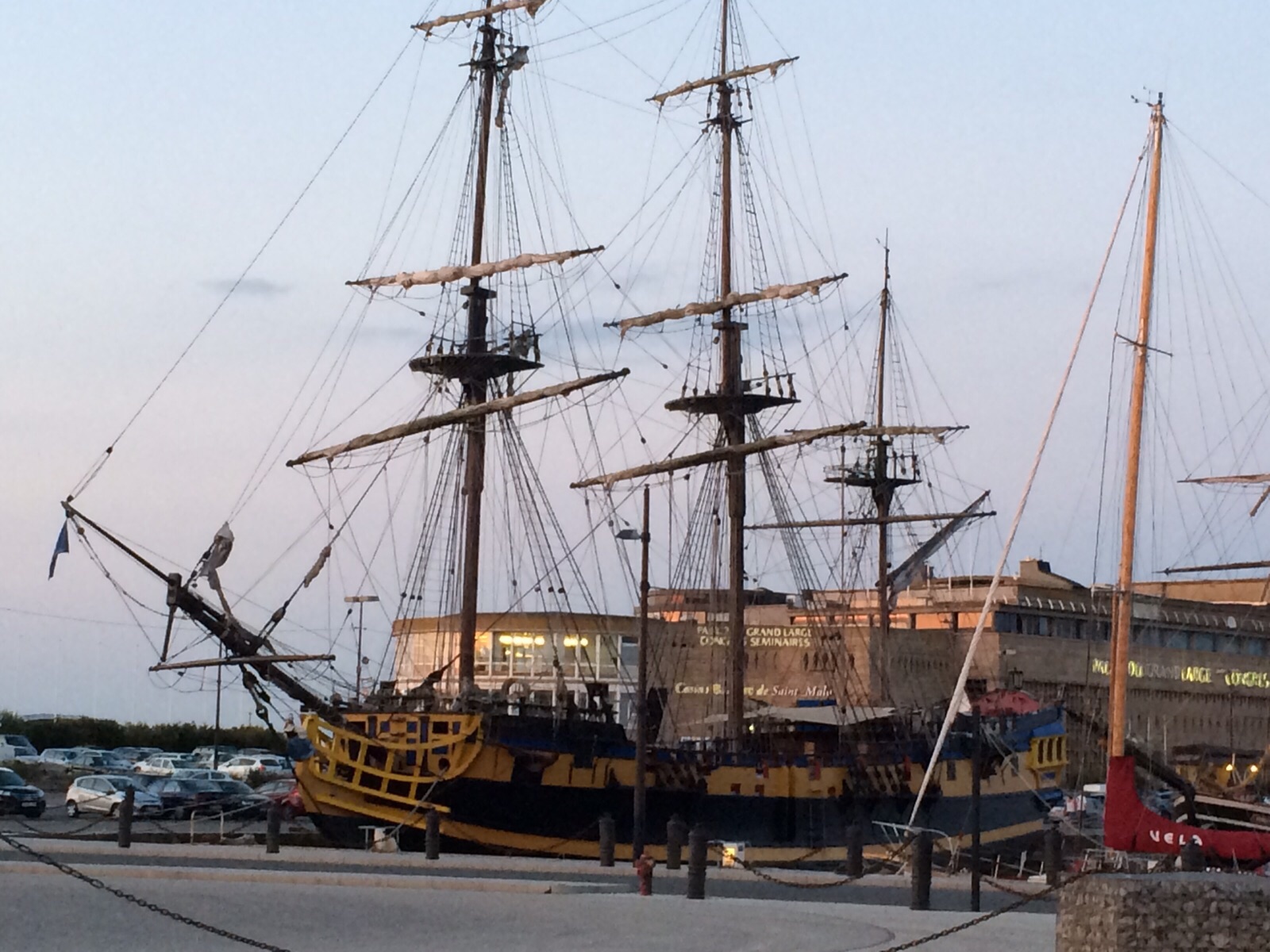
Leaving St Malo.

Leaving St Malo (not on this galleon!)
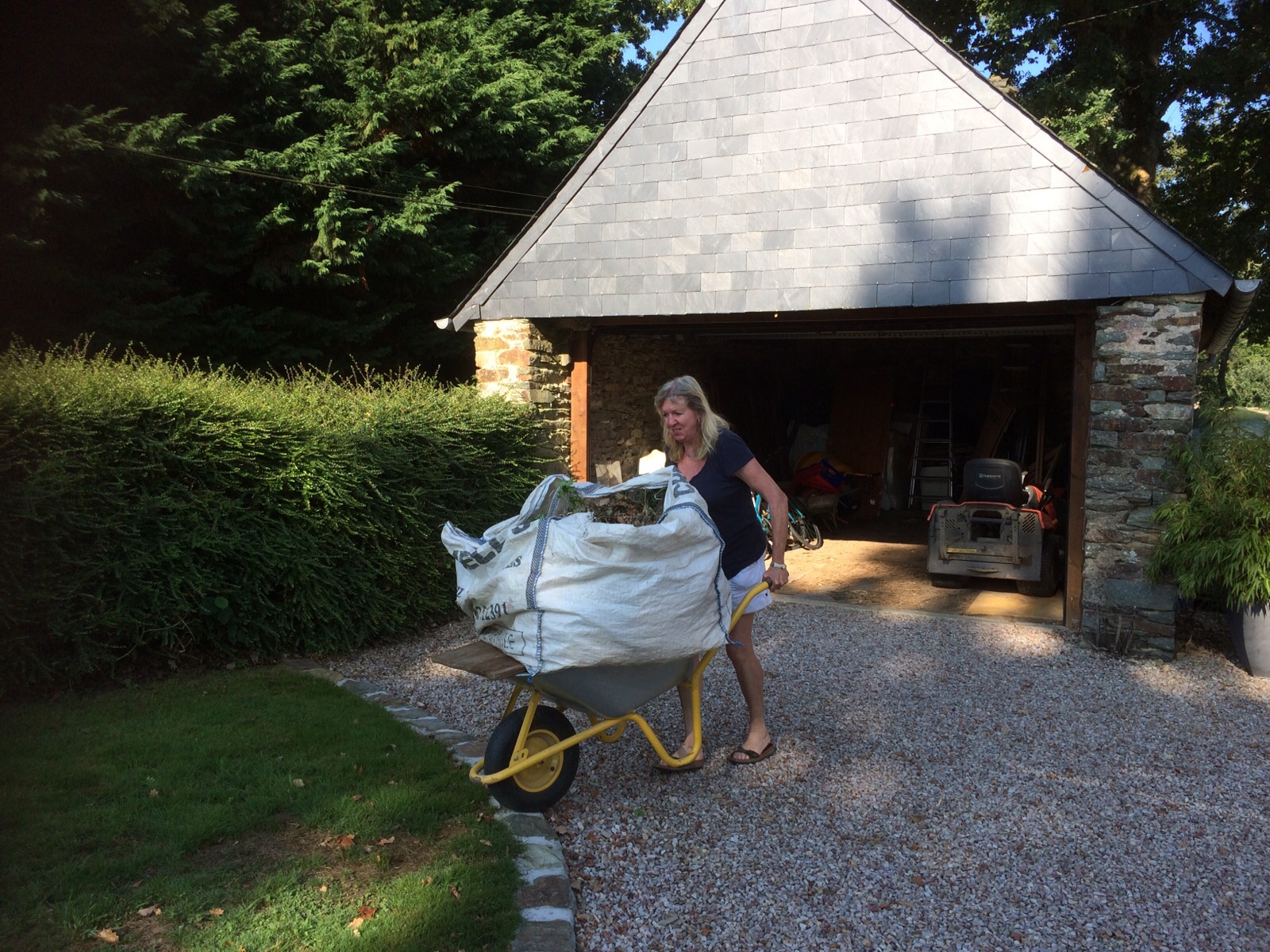
Judith on gardening duty in Evas.
Judith on gardening duty in Evas.


Arrival back in the UK.
Arrival back in the UK.

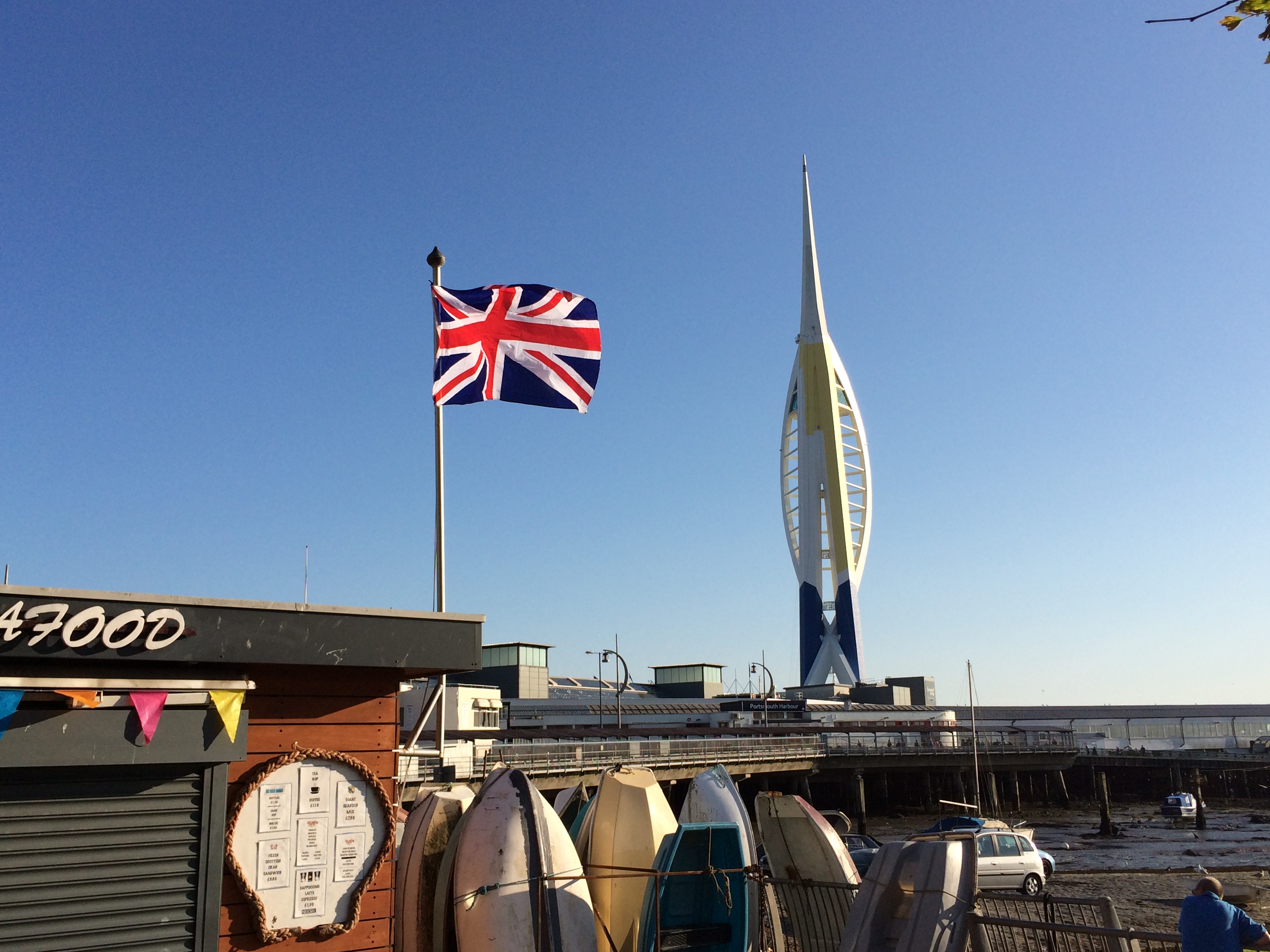
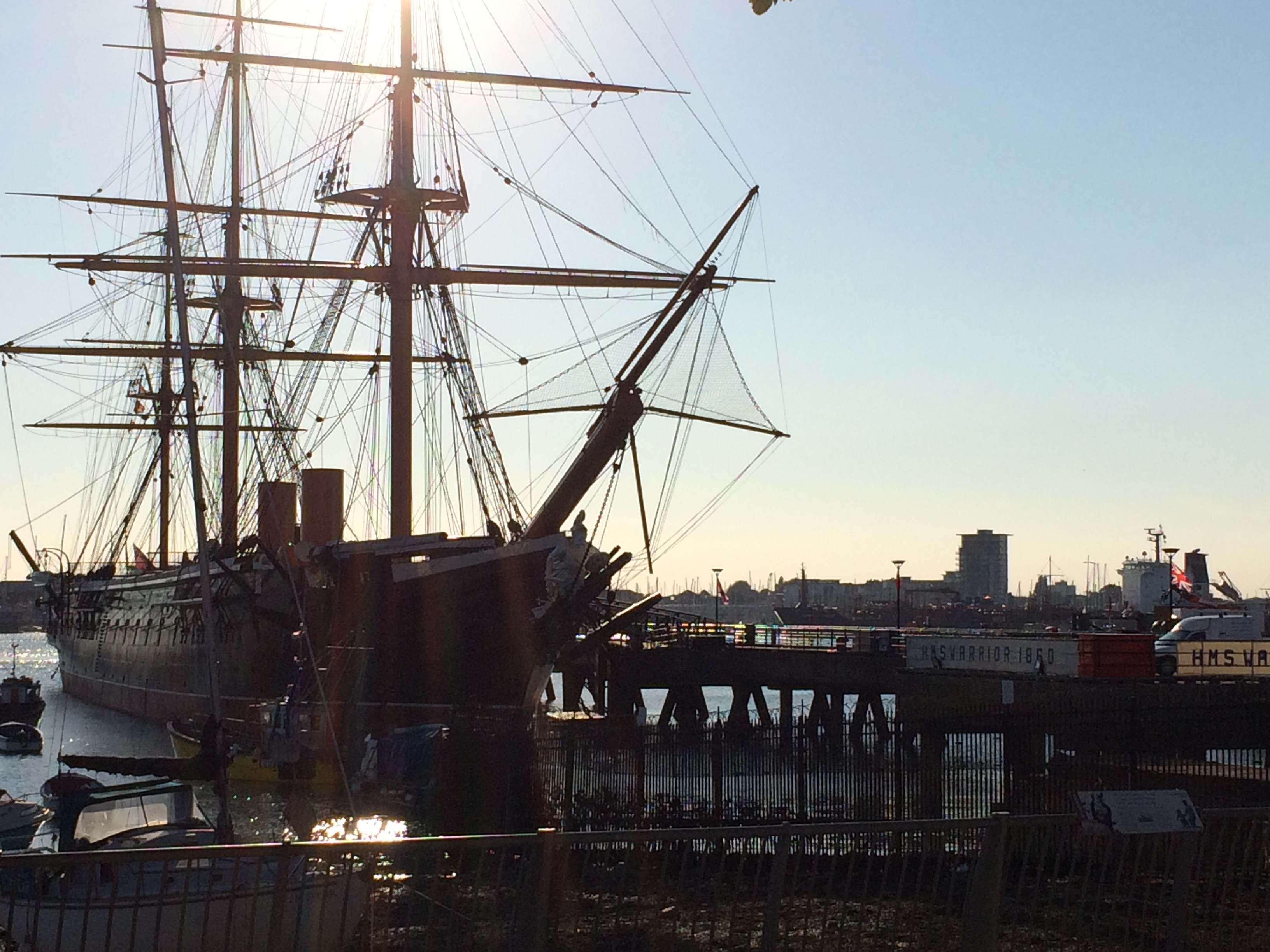
Portsmouth historic harbour.
Portsmouth historic harbour.


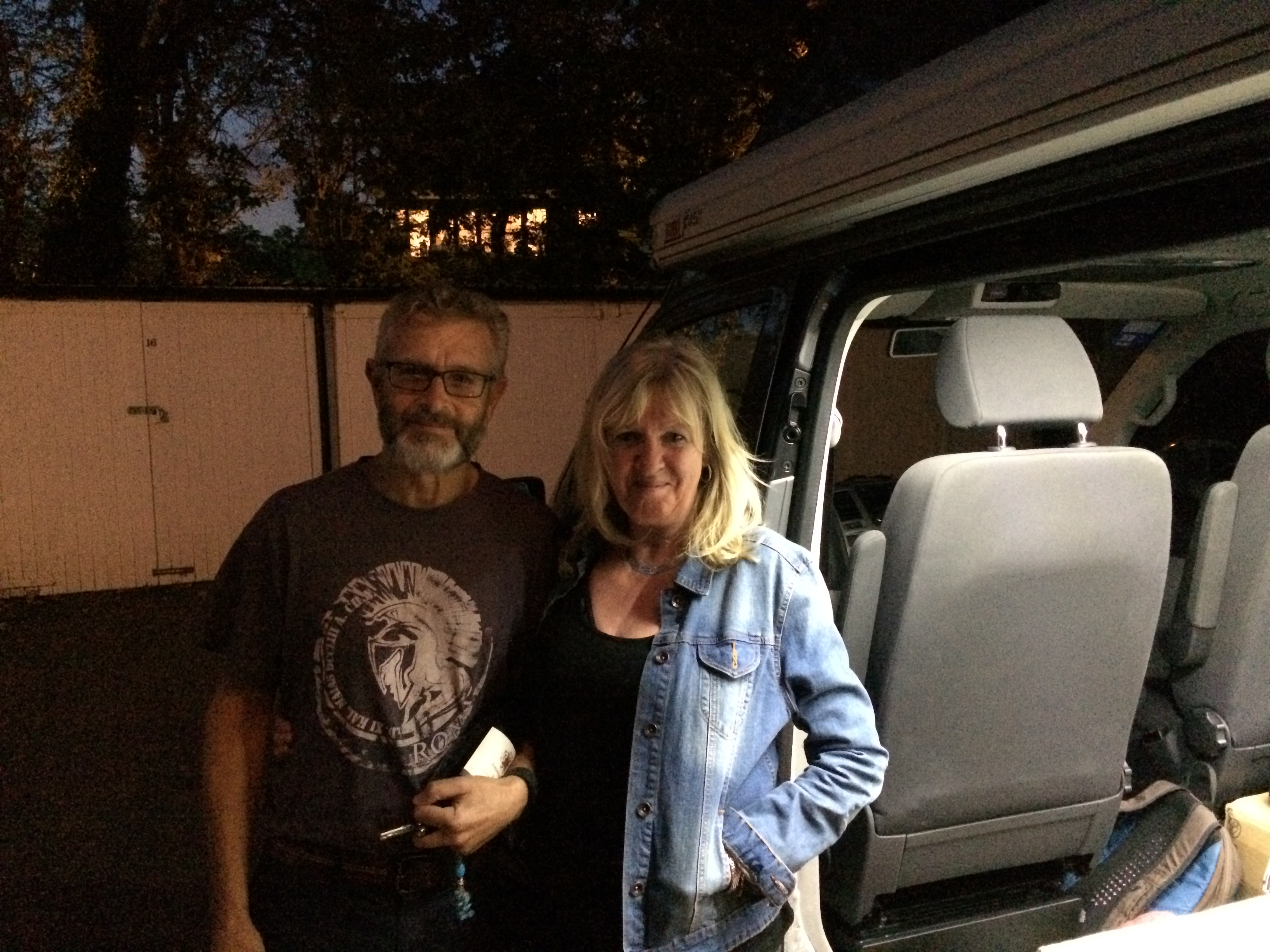
Arrival back in Barnes.
Arrival back in Barnes.

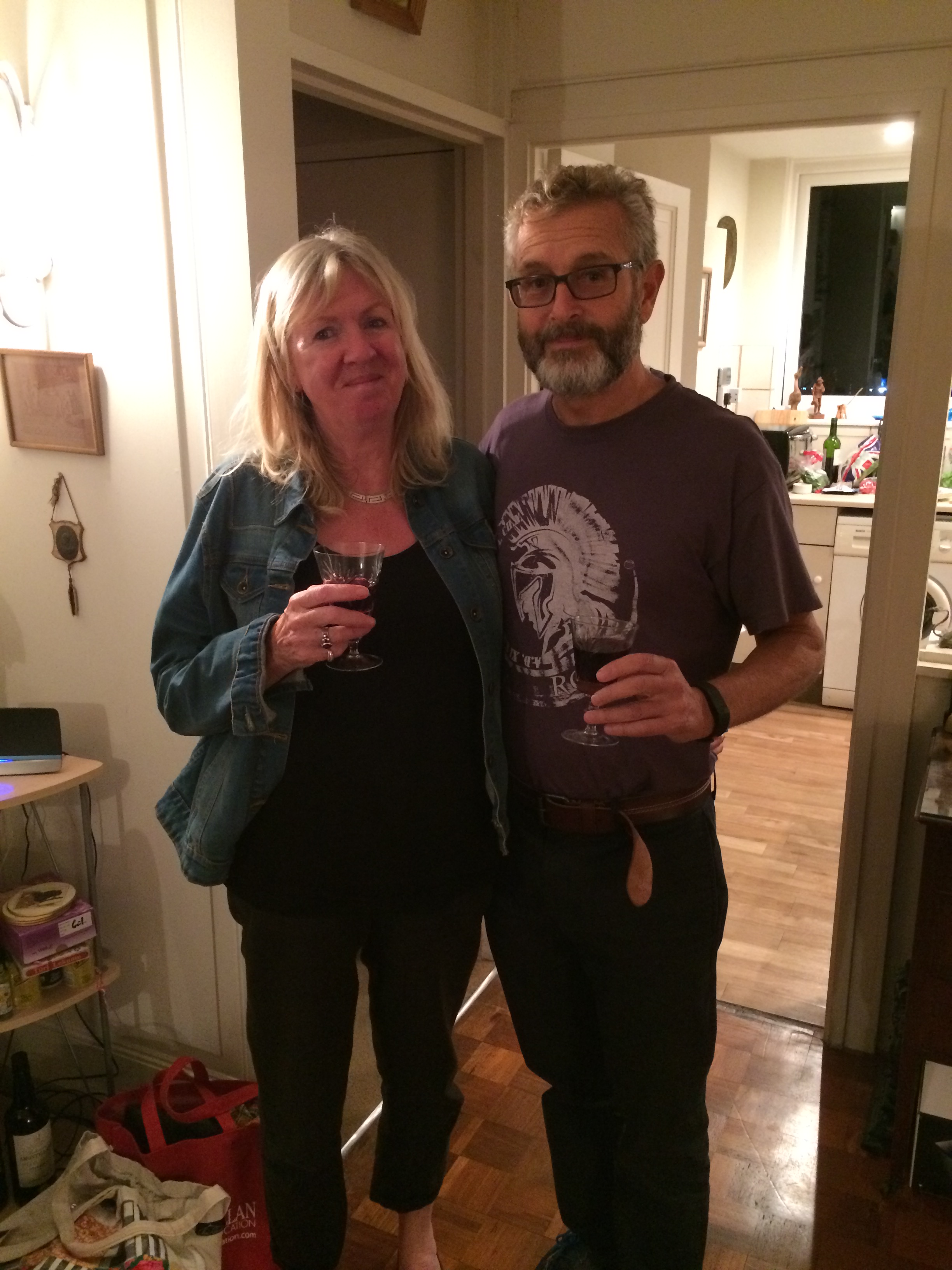
Celebrating with a glass of Fitou.

Celebrating with a glass of Fitou.


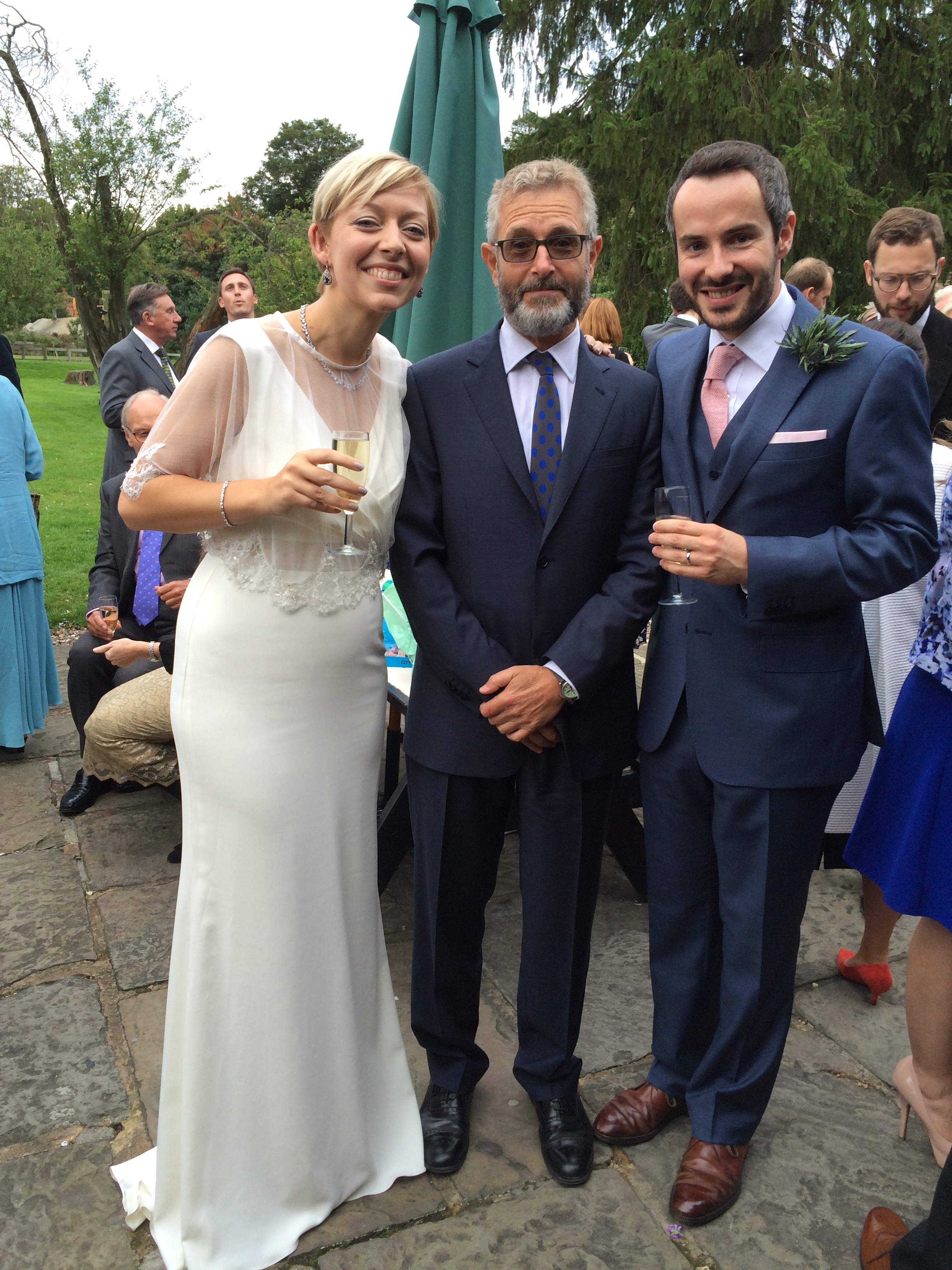
Autumn had arrived early and there was definitely a chill in the air.  We had another wedding to look forward to a few days after our return – Daisy’s and Alex’s.  Daisy is one of Lucy and Dereck’s three lovely daughters, all  already mentioned in our Carcassone post.  It was wonderful to have been able to be there, knowing how much it would have meant to dear Dereck.
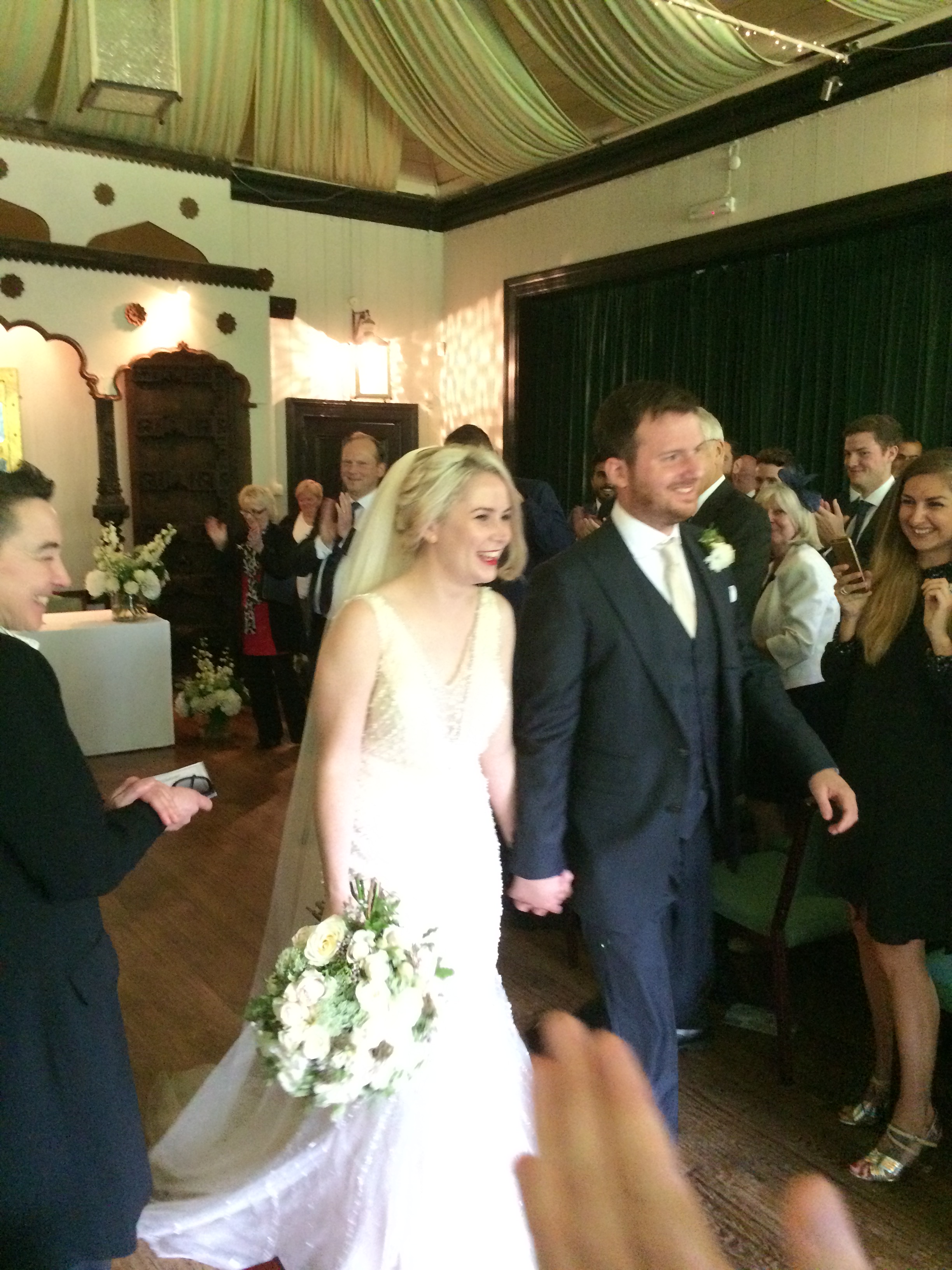
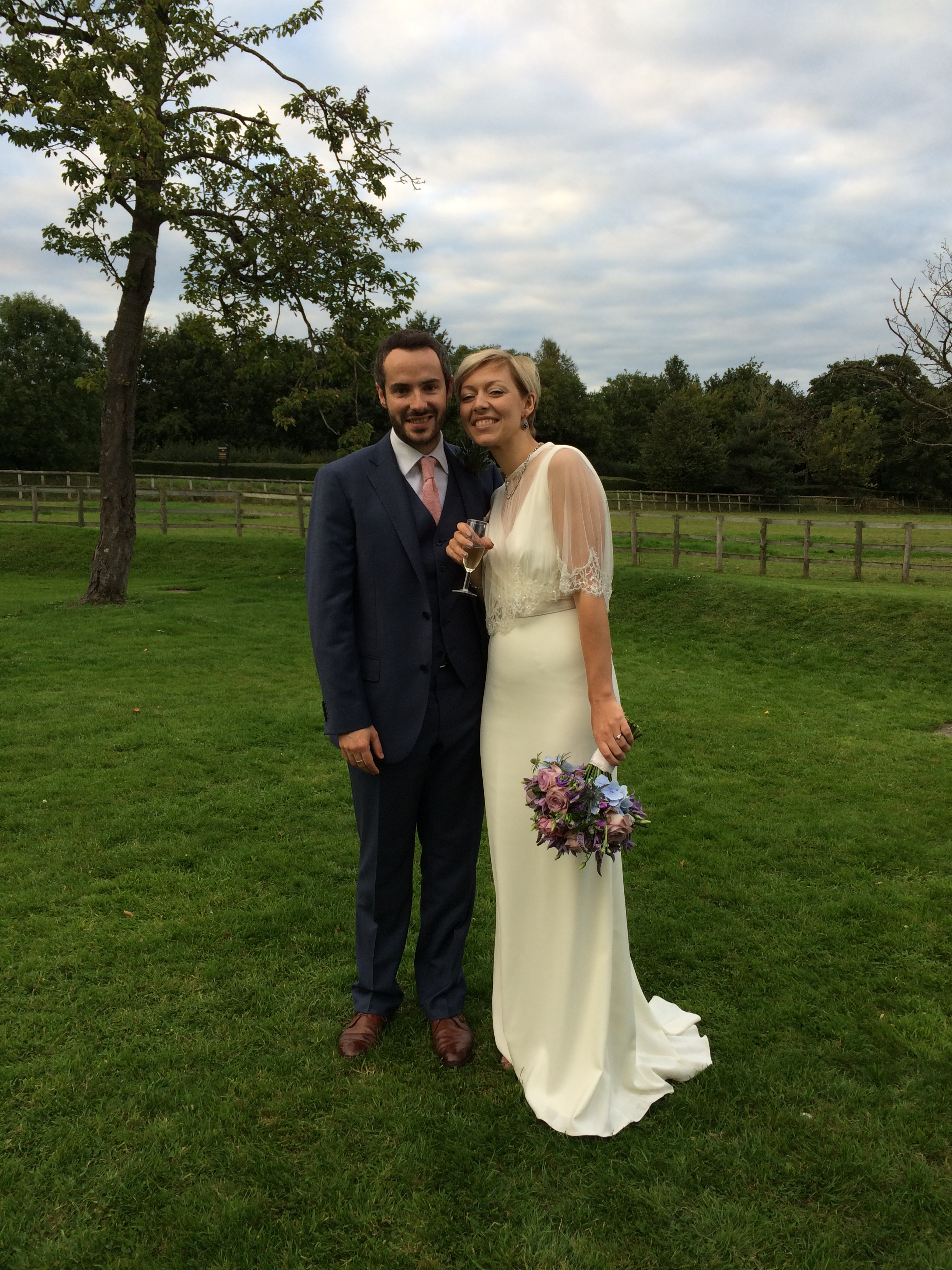
The lovely couple - Daisy and Alex.

The lovely couple – Daisy and Alex.

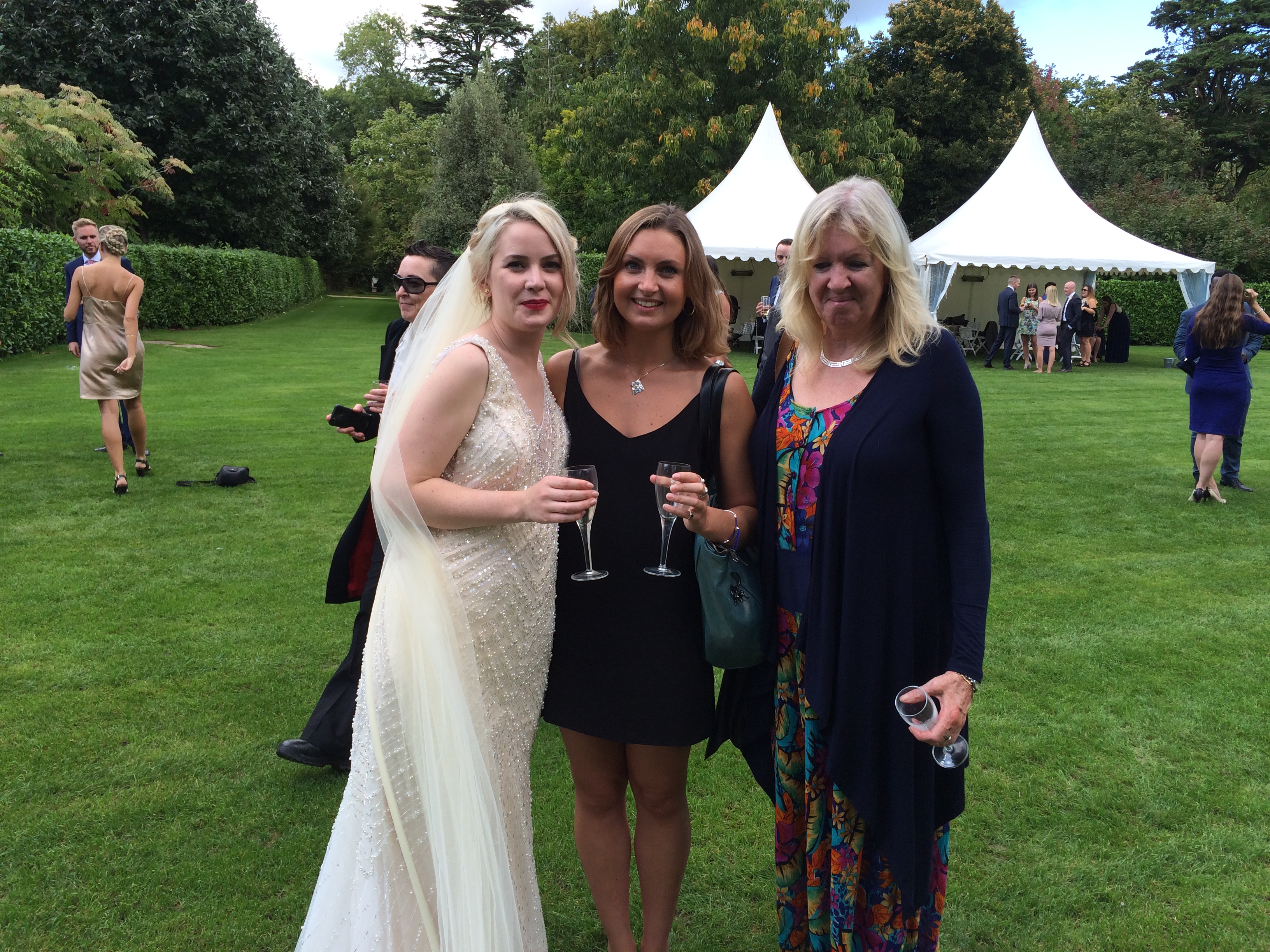
Judith and Catherine with Daisy on her big day.

Judith and Catherine with Daisy on her big day. Catherine and Daisy were childhood friends in Egypt in the 1990s.


It was good to be reunited with old friends of Dereck's and Lucy's.

It was good to be reunited with old friends of Dereck’s and Lucy’s (Flavio looking like Gerry Adams, he was told!)
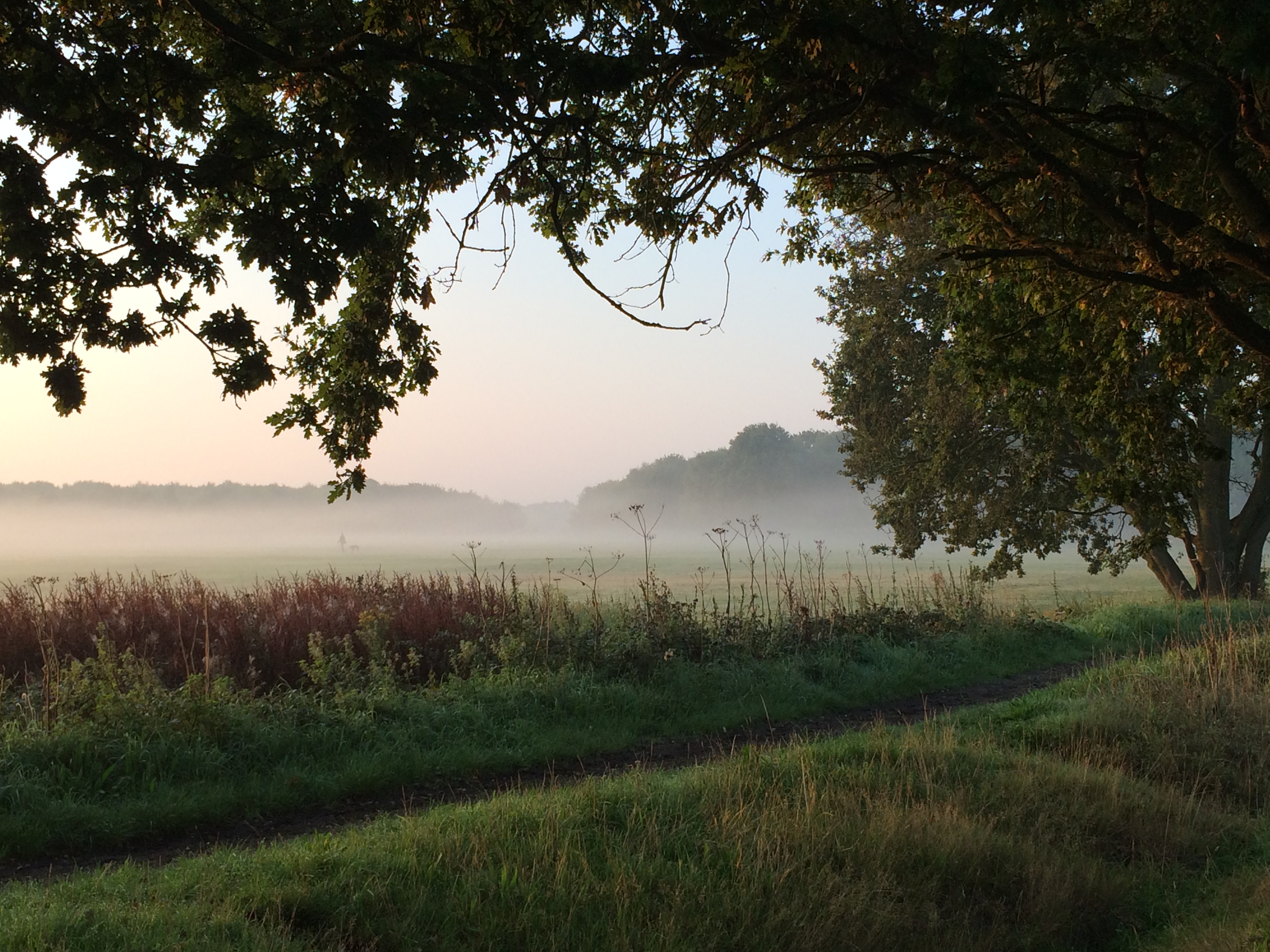
Definitely an autumnal feel to the air.

Definitely an autumnal feel to the air in mid-September (Wimbledon Common).


It should have been a time to reflect back on our journey.  But first we needed to organise moving back into our house in Wimbledon Park which was in a bit of a shabby state after being rented for 3 years.  Before our belongings could be moved down from the attic room, some urgent redecorating was necessary so we set about giving the two rooms in the worst state a facelift.  With a bit more time on our hands, we found the work mildly therapeutic.  We did have an infestation of moths in the attic however, having forgotten to put out moth balls.

Time for a touch of decorating .. and the odd bit of doodling

Time for a touch of decorating .. and the odd self-portrait!

And the deck in the garden needed a good power-clean.

And the deck in the garden needed a good power-clean.


We'd forgotten to put moth balls in the attic and had rugs and clothes ruined.

We’d forgotten to put moth balls in the attic and had rugs and qlims bought in Iran ruined.


Decorating work over, we had a brand new spare bedroom..
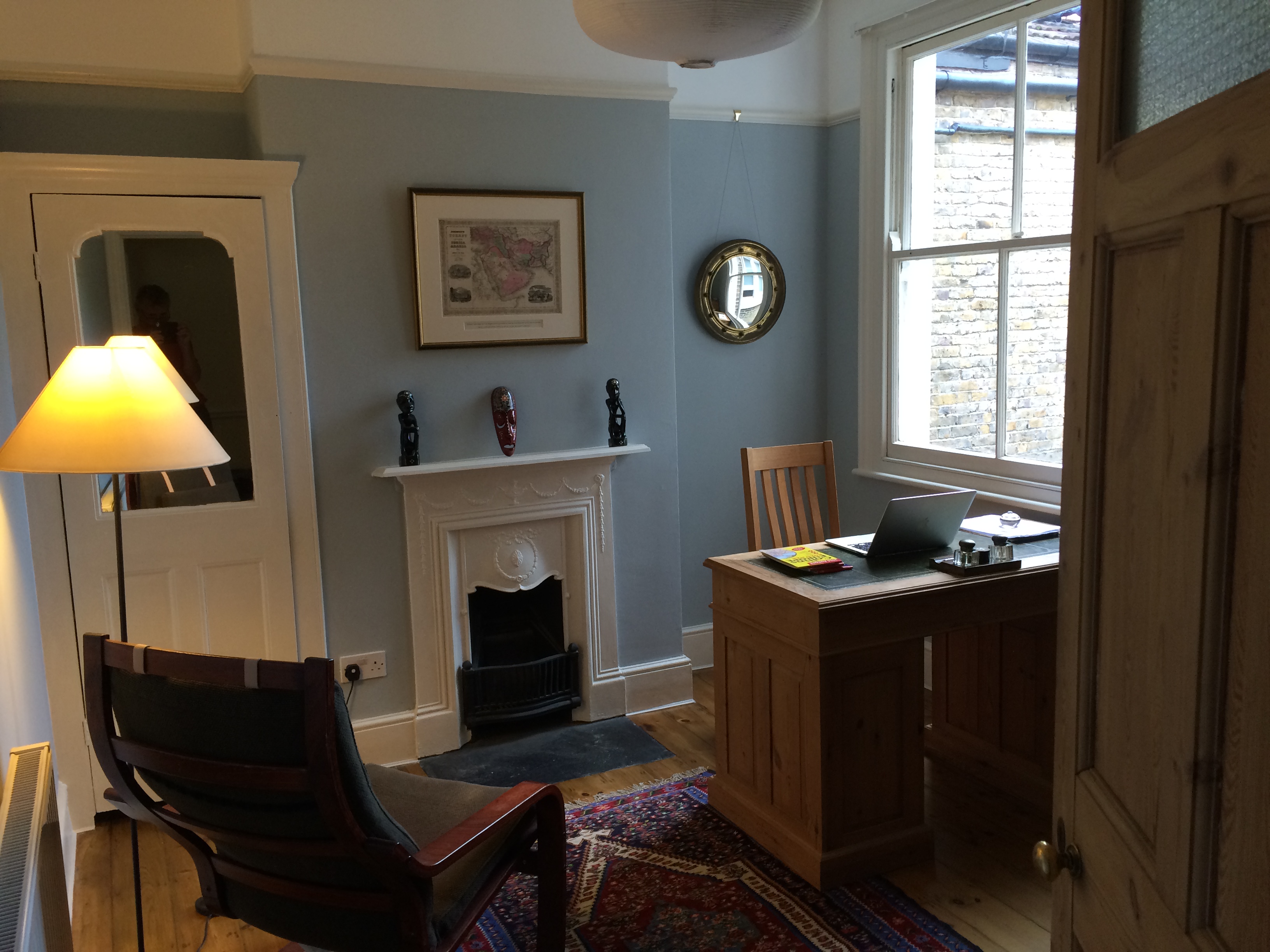
Decorating work over, we had a brand new spare bedroom..

.. and a new study.

.. and a new study.


In the meantime, the early autumnal chill had been pushed back and replaced by an Indian summer, which was very welcome.
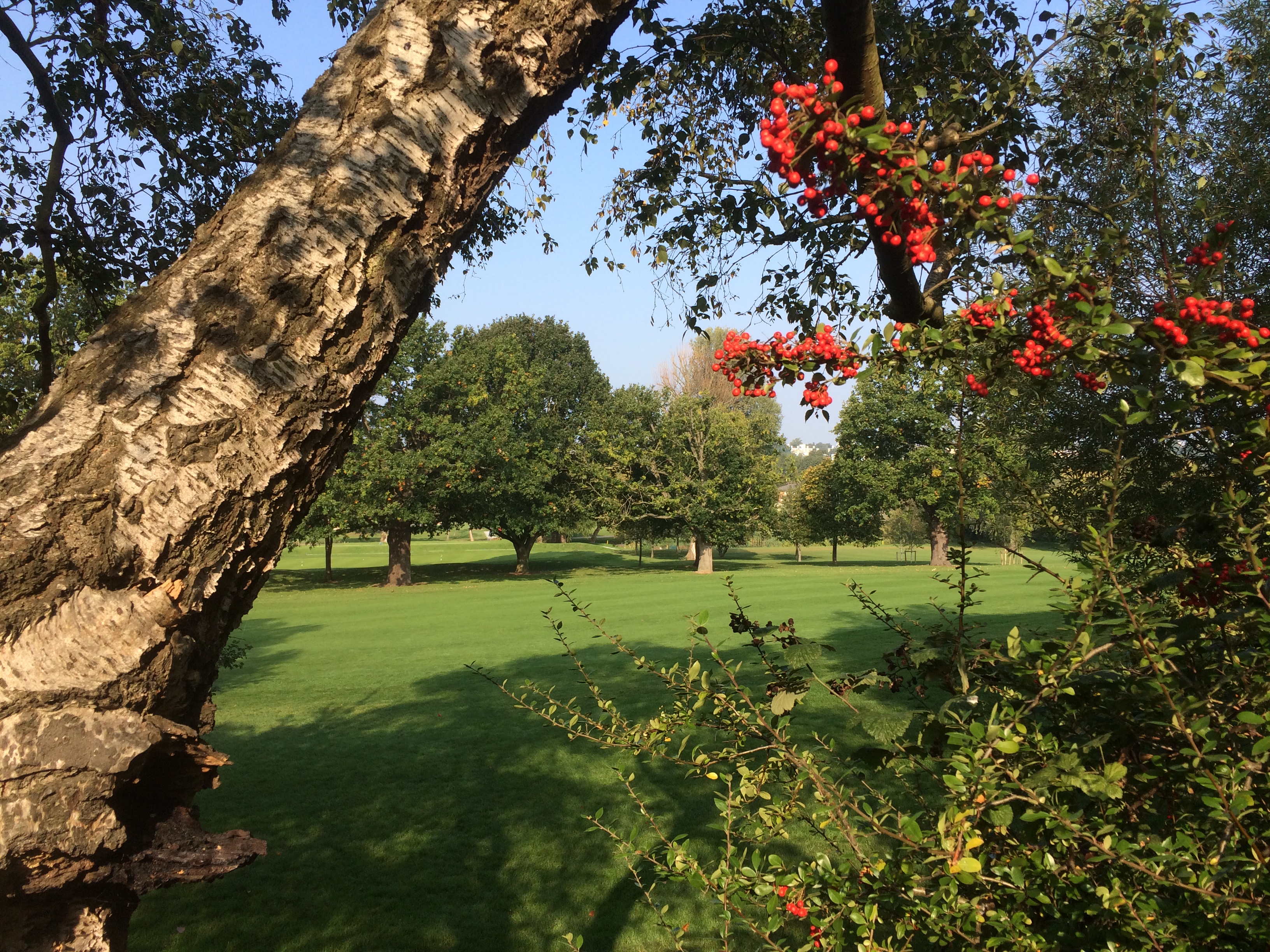
Pleasantly surprised by an Indian summer.

Pleasantly surprised by a glorious Indian summer (Wimbledon Park).
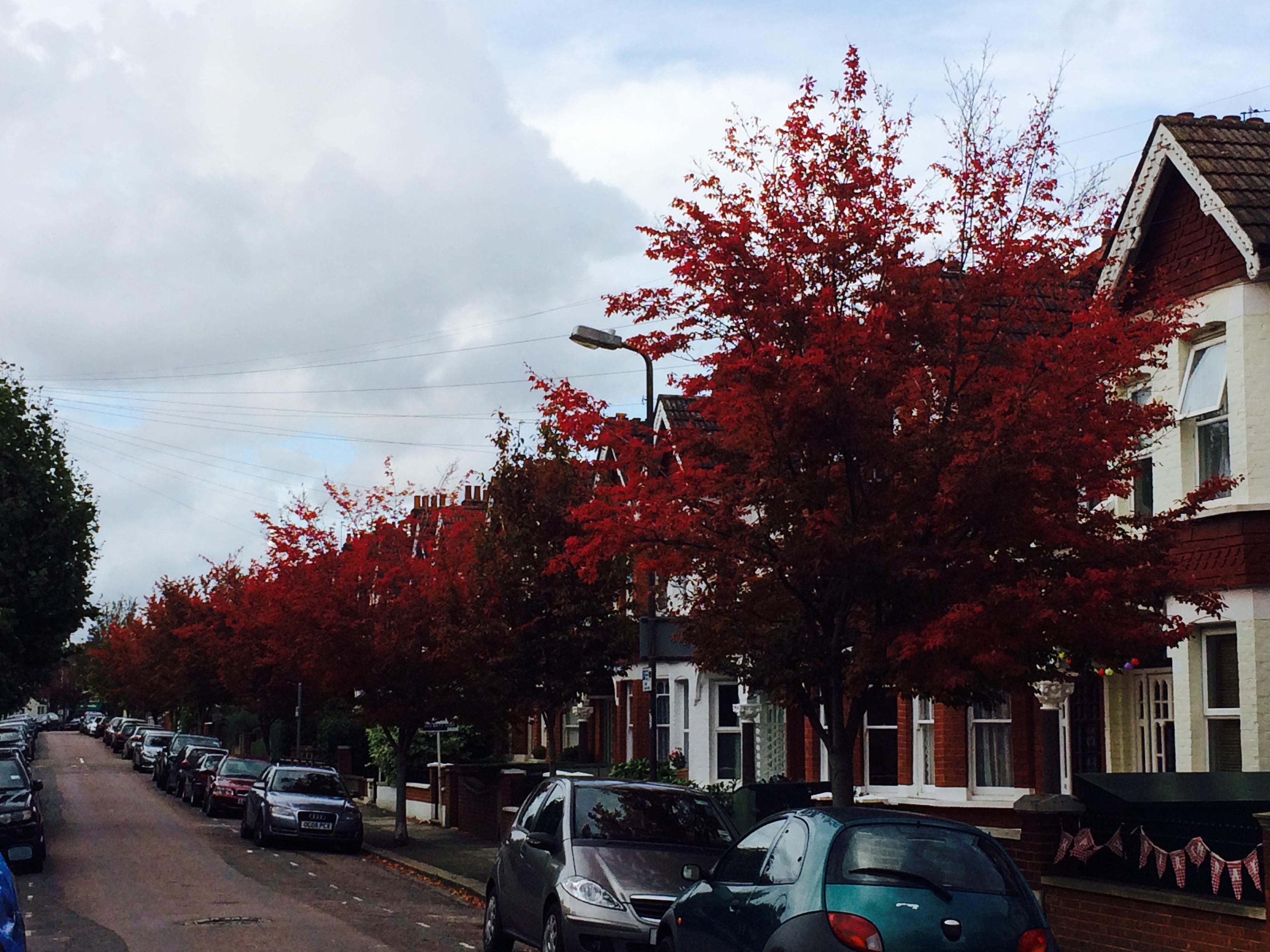
.. though autumn was very much here.

.. though autumn was very much here.


Finally, to round things off nicely, we hopped across to Ireland to see our son Simon and his girlfriend Lucy who are both doing Masters at Cork University.  The highlight was a visit (and marathon walk) around Killarney National Park.

Catherine in the meantime had left for Seville where she will be teaching primary school children English  and drama over the coming school year. It feels good to know we’ll all be on the same continent for a change!

Simon and Lucy in Killarney National Park.

Simon and Lucy in Killarney National Park.


Killarney National Park.

Killarney National Park.


IMG_6784


And so, at the end of our journey – our European adventure – what can we say?  That in three and a half months, we covered 15,400 kms (9,500 miles), equivalent to 1.5 times the distance to Bejing or the full distance to Texas the long way round. And that we took in 8 countries and made a total of 51 stops.  We certainly came back feeling that we knew and appreciated Europe better and better understood its common characteristics as well as differences.

The refugee and migrant crisis tragically unfolding during our journey was a poignant reminder that Europe is the haven of peace, tolerance, fairness and affluence that the dispossessed the world over dream of – and that’s hardly surprising. Our journey therefore was never going to be one bedevilled with dangers at every turn.  Europe is on the whole a civilised and orderly place and Europeans are by and large amiable people.

And Europeans on the continent are true Europeans in the sense that they feel at home not only in their own country but also when they cross borders, often speaking each others’ languages in preference to English, and that’s nice.  Therein lies a mild paradox – their sense of belonging to Europe quite often co-exists not only with national but also with regional pride and sometimes rivalry.

Another debate raging in the background during our journey was that of the EU and more specifically Greece’s predicament.  When all the economic arguments are exhausted however, there remains an enduring sense that Europeans are bound together by the shared experience of two world wars and a common will to never again let intolerance divide them because the prospect of renewed conflict is just too terrifying.  So the concept of a united Europe will surely prevail, even as it struggles to find ways to manage and accommodate the consequences of conflict and deprivation elsewhere and especially in the Middle East.  Because another characteristic of Europe, and one which we were very much aware of during our travels, is its growing and inescapable diversity.

We said at the start we weren’t setting out on this journey with any preconceived aims.  Our itinerary was fairly ‘safe’ being in Europe but we were a little nervous about the dangers of long hours of driving and generally whether we’d have the stamina to keep going, maintain the pace and not least, live out of a van for over three months.  It wasn’t until we’d gone round the whole of Spain and Portugal and reached southern France that we dared think about aiming to get to Greece by the beginning of August. We just didn’t know what we were capable of.  But we grew in confidence, learnt to cope with mishaps when they happened, the elements,  as well as, it has to be said, the odd disagreement (not that many really!).

We’ve also learnt a few things we would do better next time (pack fewer things but be prepared for all weathers, plan visits to cities better, update the TomTom, avoid the hottest and most crowded month of 20 Jul to 20 Aug).  But we’re pleased to say that on the whole, we thoroughly enjoyed the experience, enjoyed Europe, the places we saw, the people we met and talked to, the towns, cities and countryside we visited, the food we ate, the wine we drank, the seas and lakes we swam in, the hills we climbed and above all, enjoyed all the Nature that is so plentiful and so beautiful in Europe.  Since we’ve come back, one of the first questions we’re asked is what were our highlights.  They are too many and they are all as we’ve summed up above.

Above all, we feel very fortunate that we were able to embark on this journey and we are grateful to have come back safely.

A very big thank you to all our friends for faithfully following us on the blog and for all your very kind encouragement and support all along.  God bless.
IMG_6237


IMG_6304


27th August – 2nd September back to Malestroit then a wedding..

Standard

Our night in Loches turned out to be our last night in a campsite on this journey. It was a rather cool and wet night and we retreated to Brenda’s basic comfort and warmth to watch an episode of ‘True Detective’.  The episode was called ‘Who Goes There’ in which the search for Reggie Ledoux leads the detectives Martin and Rust to a motorcycle gang called ‘The Iron Crusaders’, for whom Rust worked undercover in the past. As Rust manages to persuade the gang he’s bona fide and to take him deep into the heartland of a drug gang’s territory, all hell breaks loose and the noise level shoots up a few decibels.  Just as we think we should perhaps turn the volume down, loud thumps on the side of the van make us jump. “Fermez ceci!” (Turn that off) says an angry voice in the dark. We open the side door to see a grey haired man a bit older than us starting to walk away.  “D’accord on va baisser” (OK we’ll turn it down) we say.  “Pas baisser, il faut fermer ca.  Ou vous vous croyez?”.  (No, you’ve got to turn it off.  Where do you think you are?)  We turned it off – it was nearly the end anyway and we’d seen it before but only realised half way through. But it left us feeling a bit embarrassed at being told off for anti-social behaviour after 3 months of campervanning but also slightly annoyed – surely he could have asked in a nicer way, we’re all reasonable people, and there was a touch of the ‘you can’t behave like that here, you’re not in England now you know’ in his tone.

We crossed the Pays de la Loire and arrived in the Morbihan region of Brittany in the late afternoon.  The plan had been for us to house and cat-sit for Judith’s sister Lynne and brother-in-law Graham during the whole of September but there was a change of plan and Flavio took a flight back to the UK from Rennes on the 2nd September both to see his mother and to attend a wedding, and Judith followed in Brenda via St Malo on the 10th.

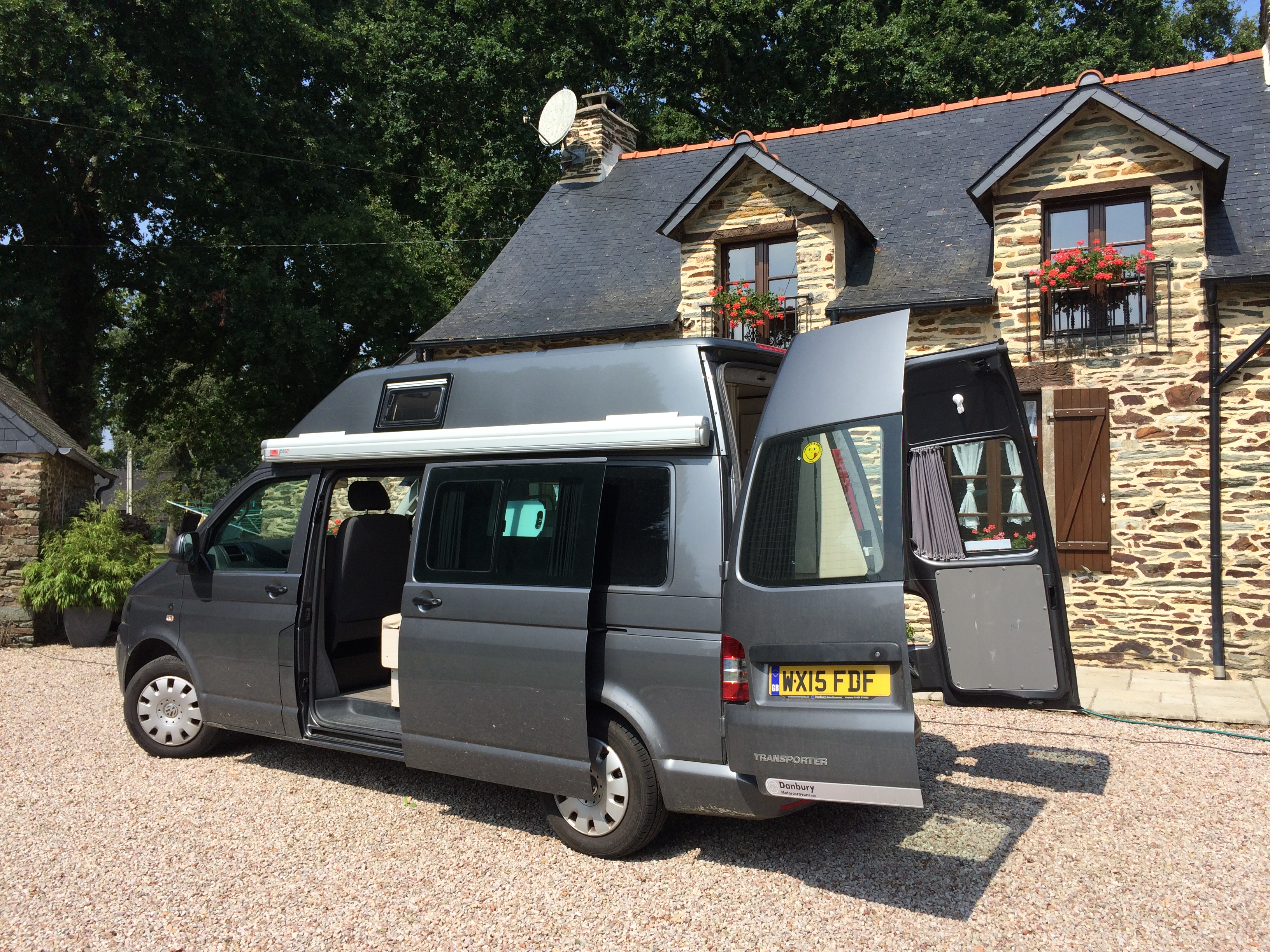
Back in Evas, Brenda gets a thorough valet service.

Back in Evas, Brenda gets a thorough valet service.

Tucking into a comforting dinner of bangers and mash.

Tucking into a comforting dinner of bangers and mash.


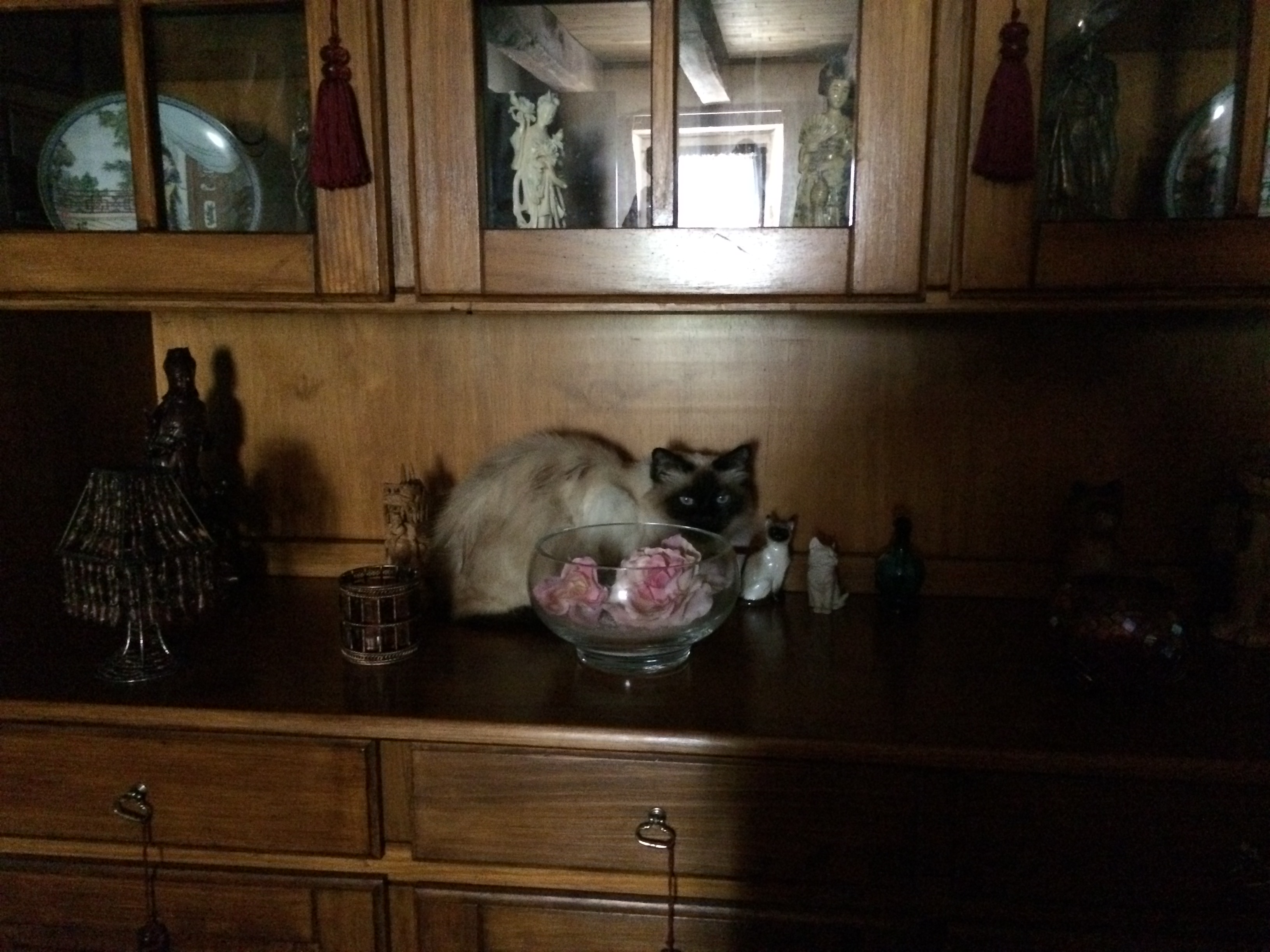
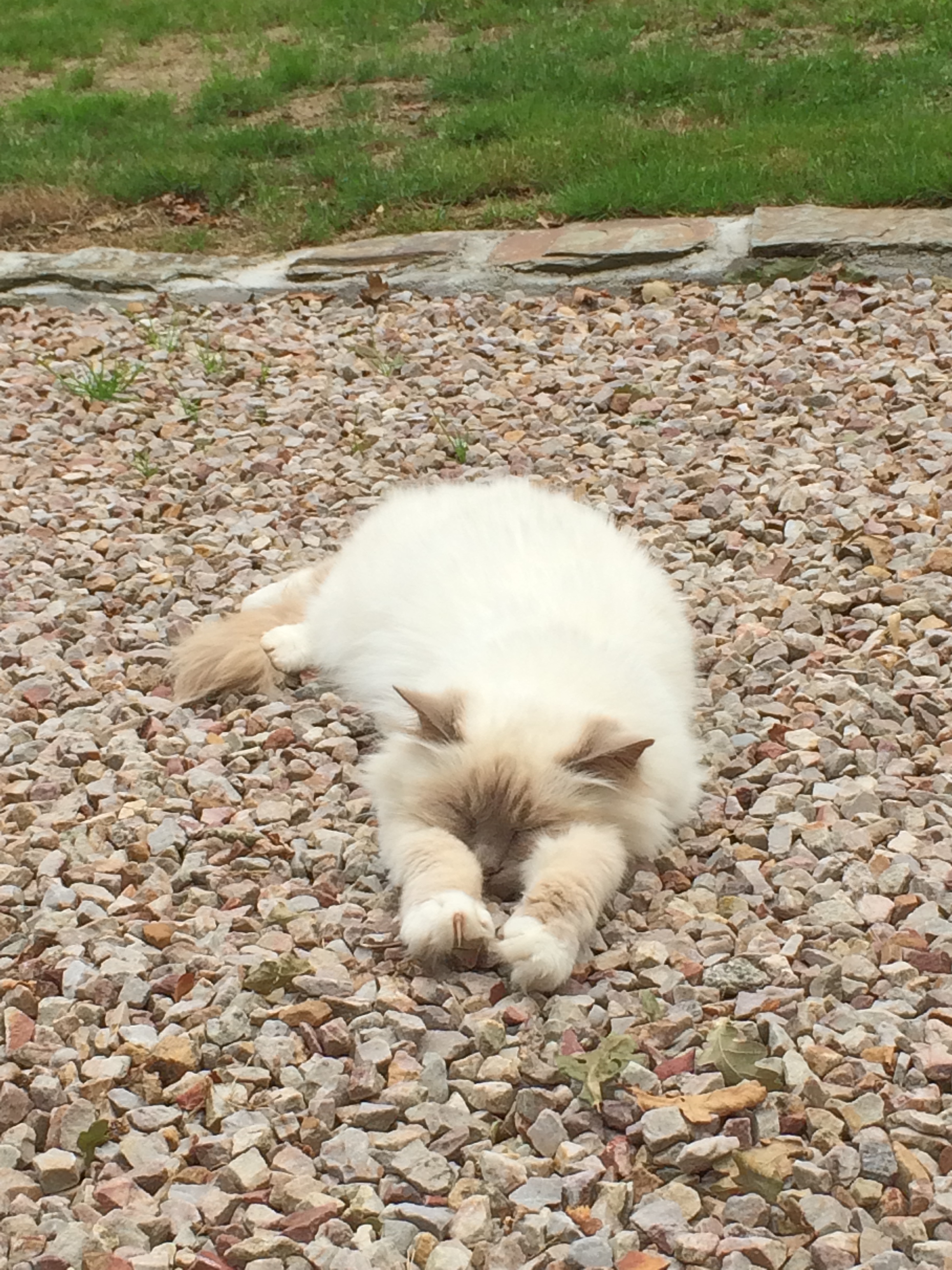
Sasha, one of the two Afghan cats we were supposed to look after decides to camouflage itself.

Sasha, one of the two Afghan cats we were supposed to look after decides to camouflage itself.

While the other, Anoushka, pretends to be a hedgehog.

While the other, Anoushka, pretends to be a hedgehog.


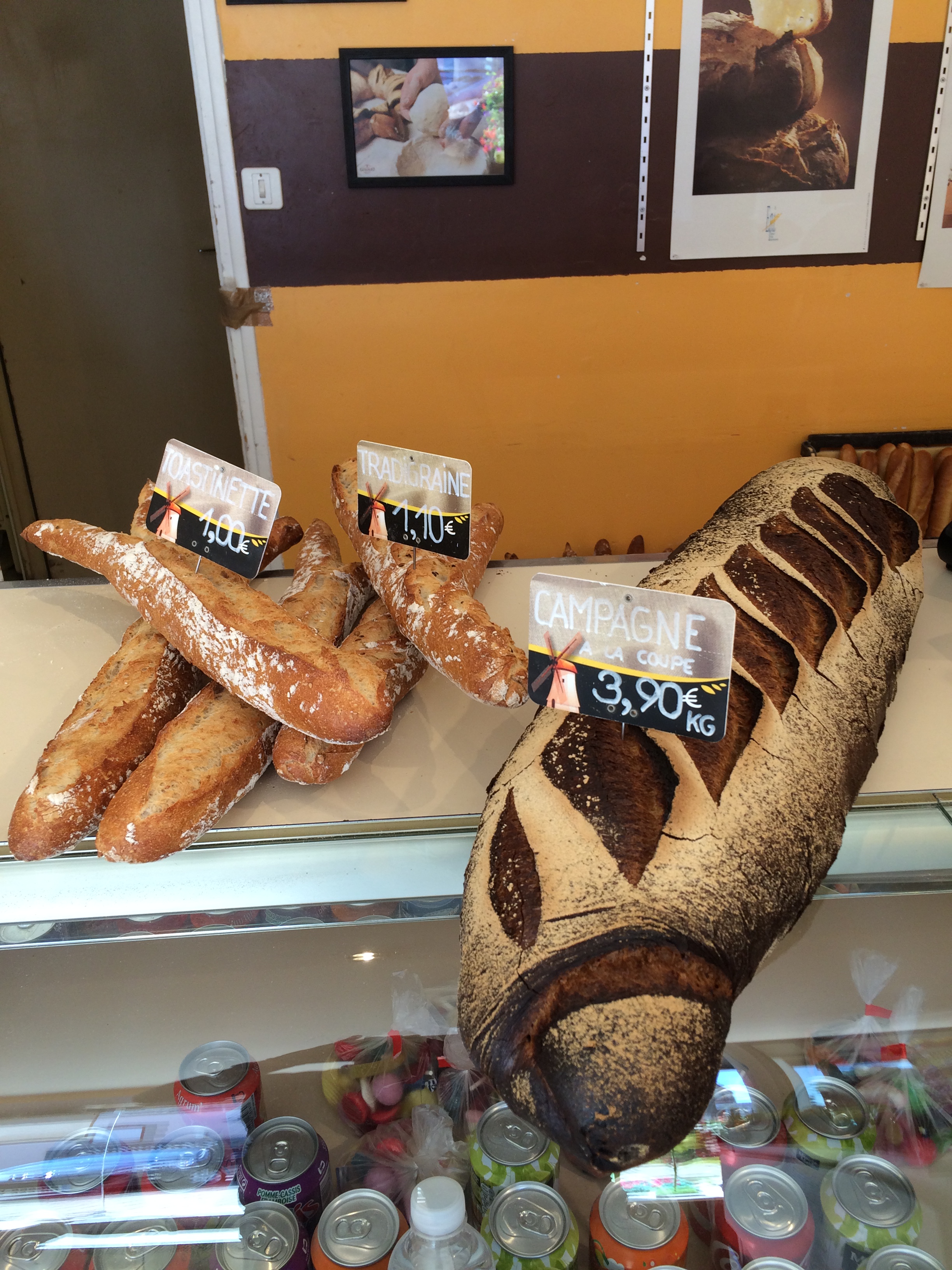
On our daily trips to the boulangerie..

On our daily trips to the boulangerie..

We take advantage of the b

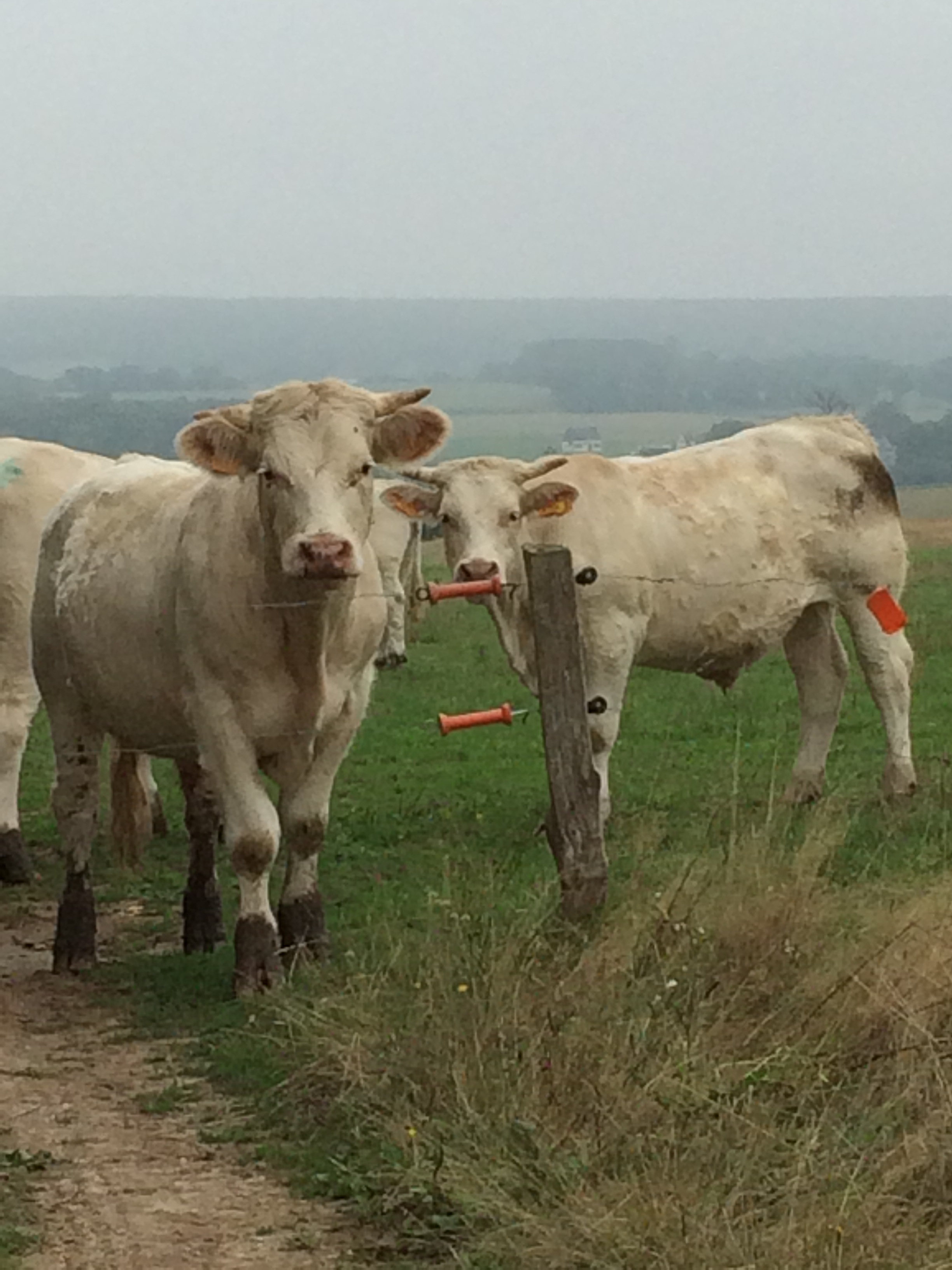
We enjoy the agricultural landscape.


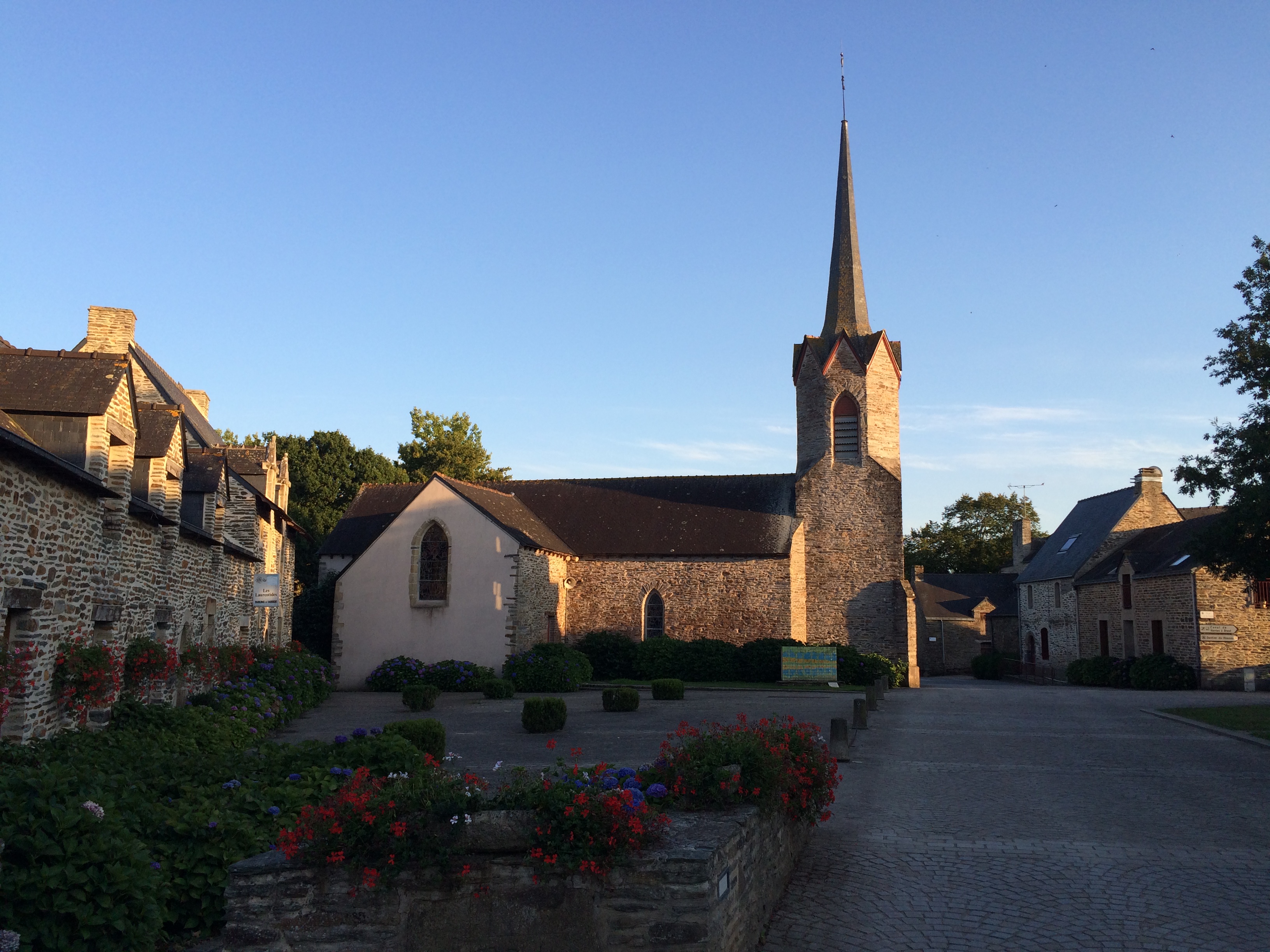
Saint-Laurent-sur-Oust, next door to Evas.

Saint-Laurent-sur-Oust, next door to Evas.

Saint-Jacques airport, Rennes.

Saint-Jacques airport, Rennes.


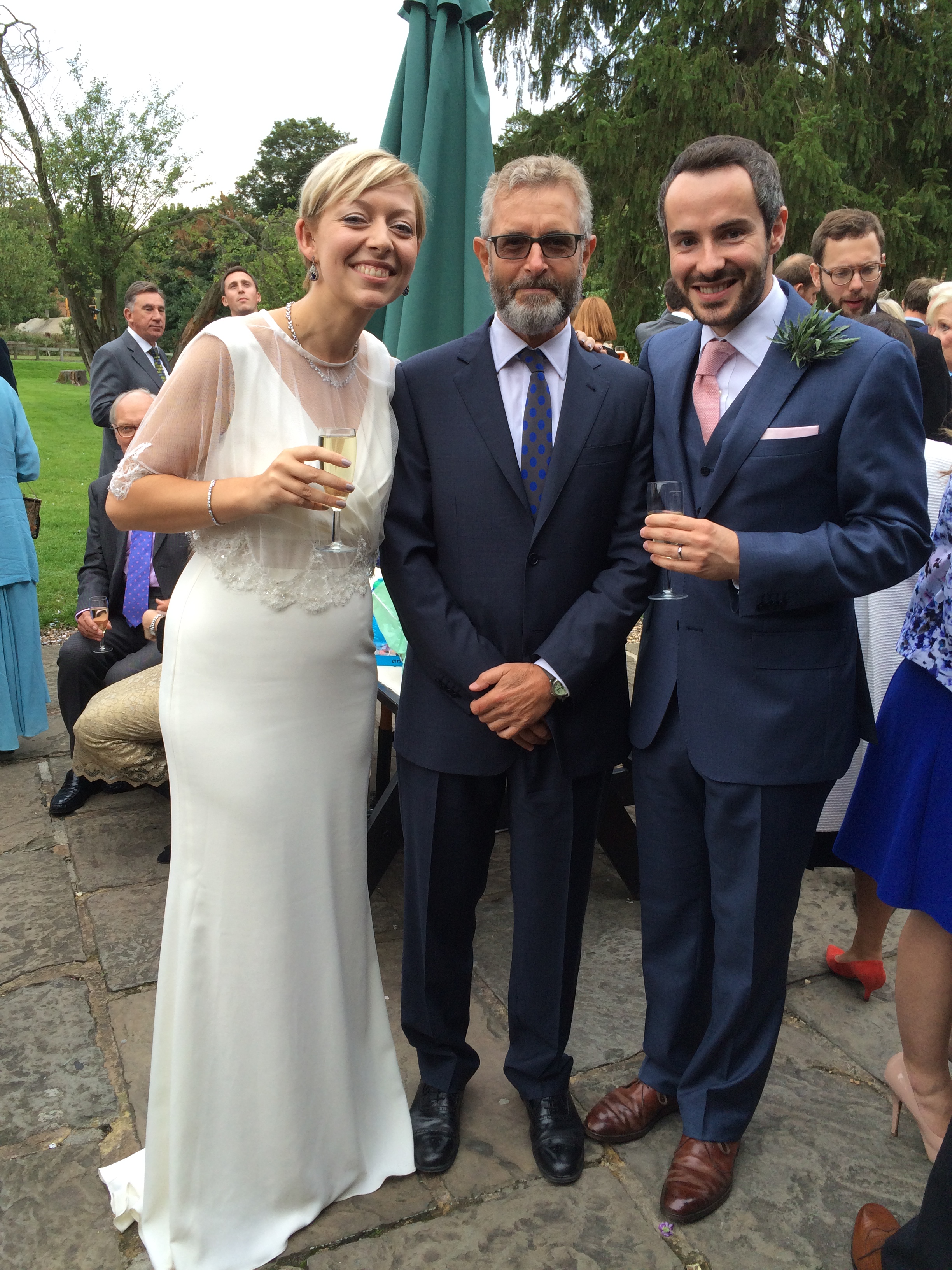
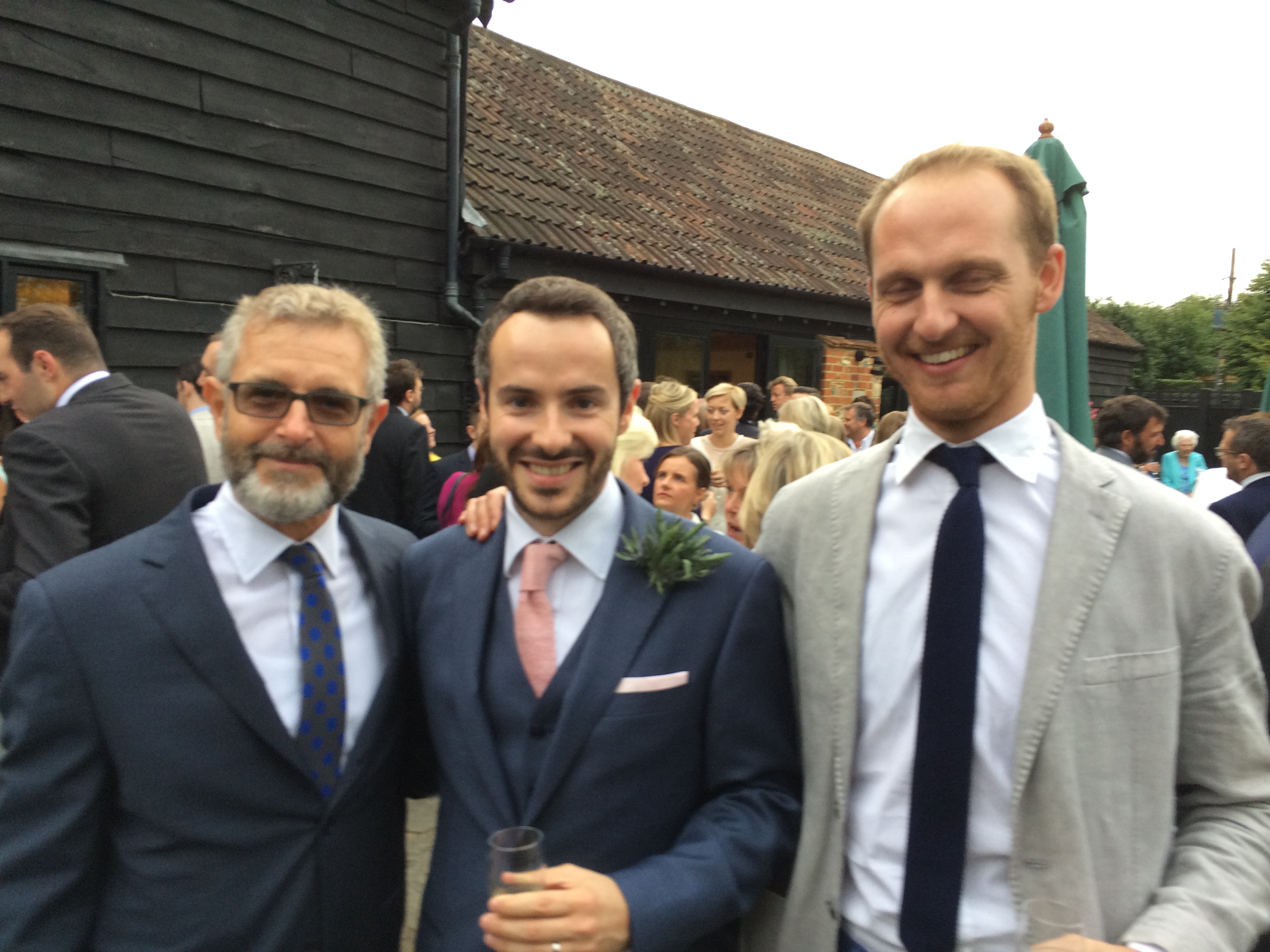
Our friends’ Matthew and Abigail’s wedding in Burnham on the 4th September was delightful and we wish them every happiness.  Matt took over from Flavio as Middle East Regional Director at Macmillan when he retired in February and Flavio was very relieved to leave the regional business in such expert hands. He was also very grateful to have had such a great send-off organised by Matt in London in April and with the Cairo team in Cairo earlier – as well as others by the Palestinians in Ramallah and by the Saudis at the London Bookfair.  It was lovely to see Matt and Abi on their big day and to wish them well and a very happy honeymoon (a thoroughly deserved full month) in Italy.
Matt and Abi signing the register.

Matt and Abi signing the register.


A truly joyous and fun day!

A truly joyous and fun day!


Very glad to have been there.

Very glad to have been there.

Abi and Matt looking like the truly perfect couple.

Abi and Matt looking like the truly perfect couple.


Flavio's farewell at Macmillan's in London in April.

Flavio’s farewell at Macmillan in London in April.

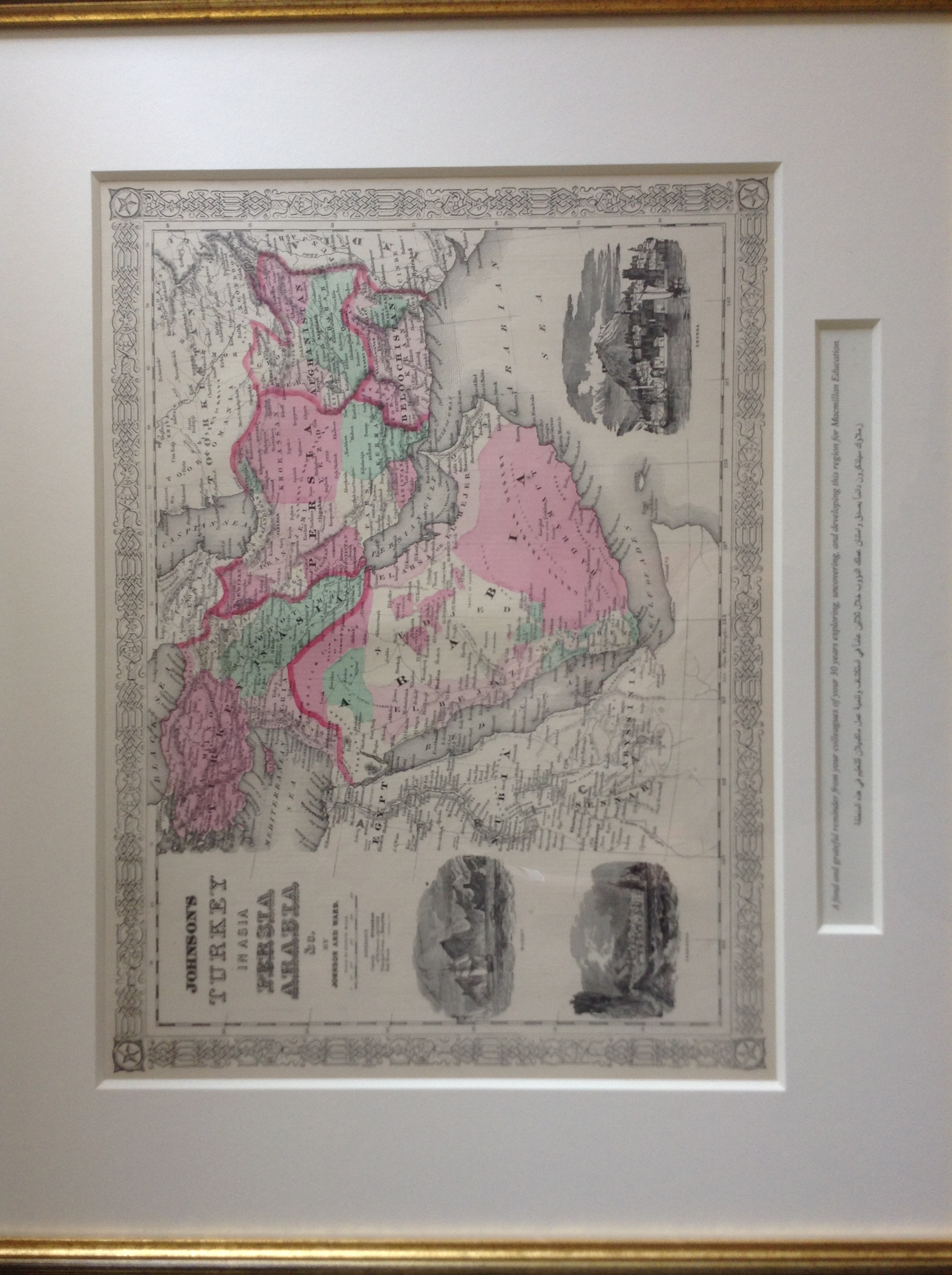
And the beautiful and very thoughtful gift of an antique map of the Middle East organised by Matt.

And the beautiful and very thoughtful gift of an antique map of the Middle East organised by Matt.


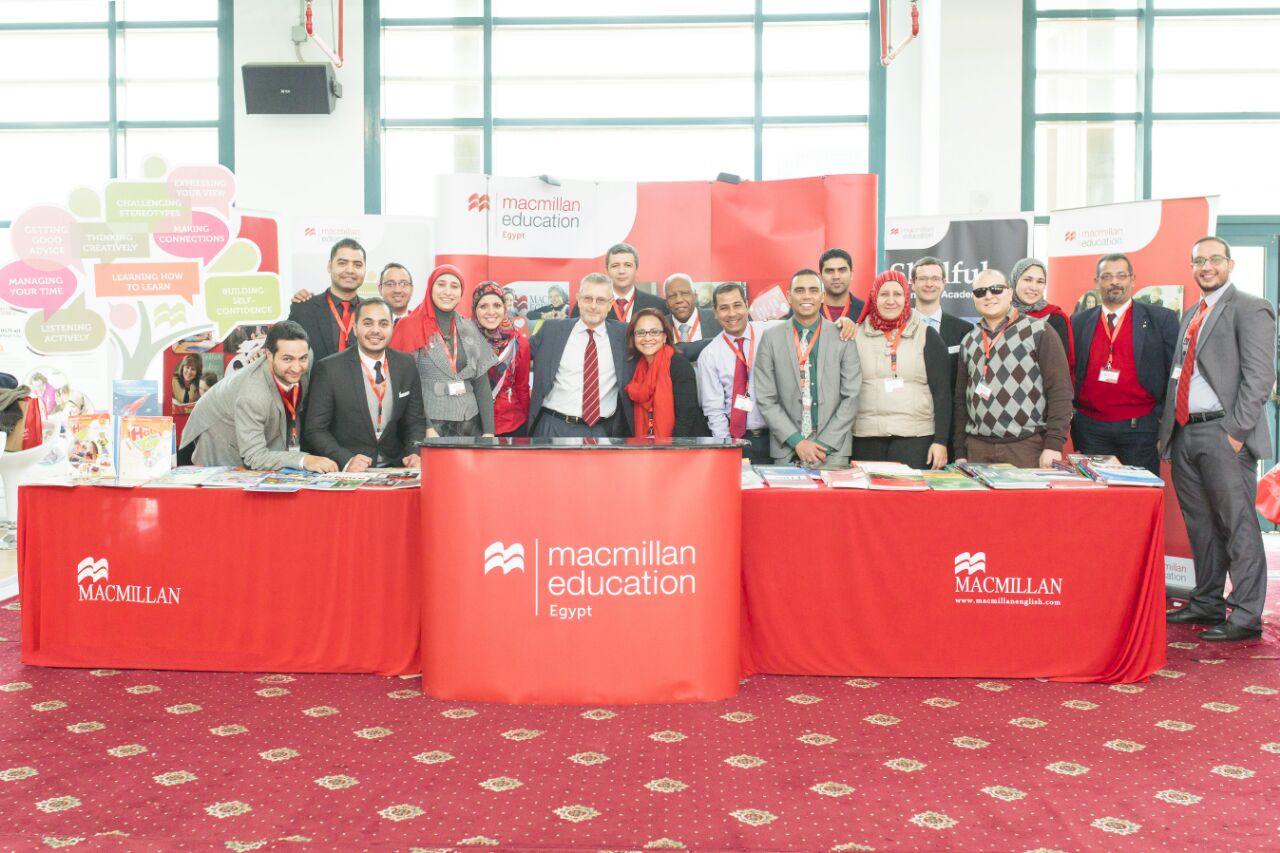
And with the Macmillan Egypt team in Cairo in January.

And with the Macmillan Egypt team in Cairo in January.


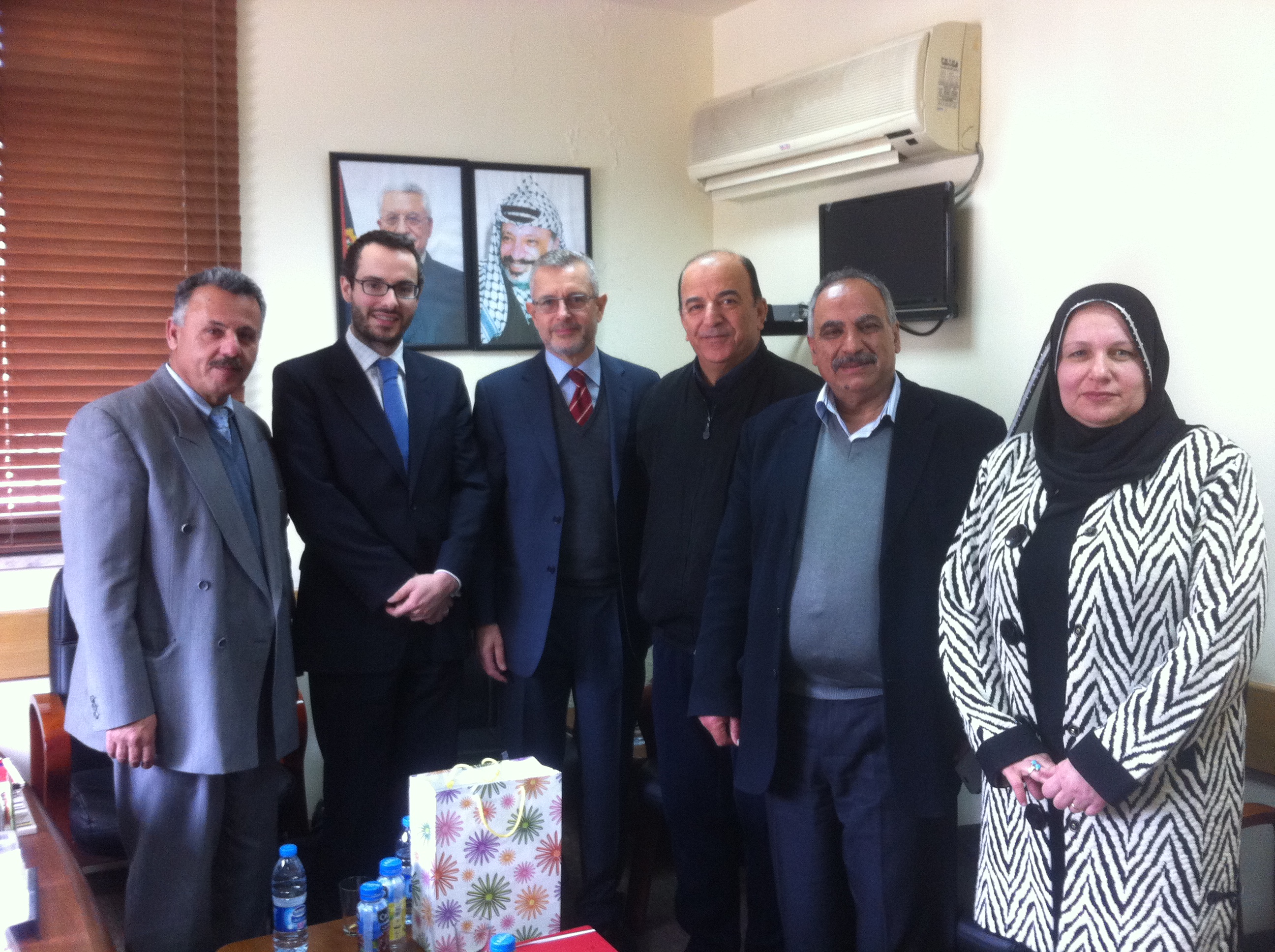
The send-off by the Palestinian MoE in Ramallah in February.

The send-off by the Palestinian MoE in Ramallah in February.


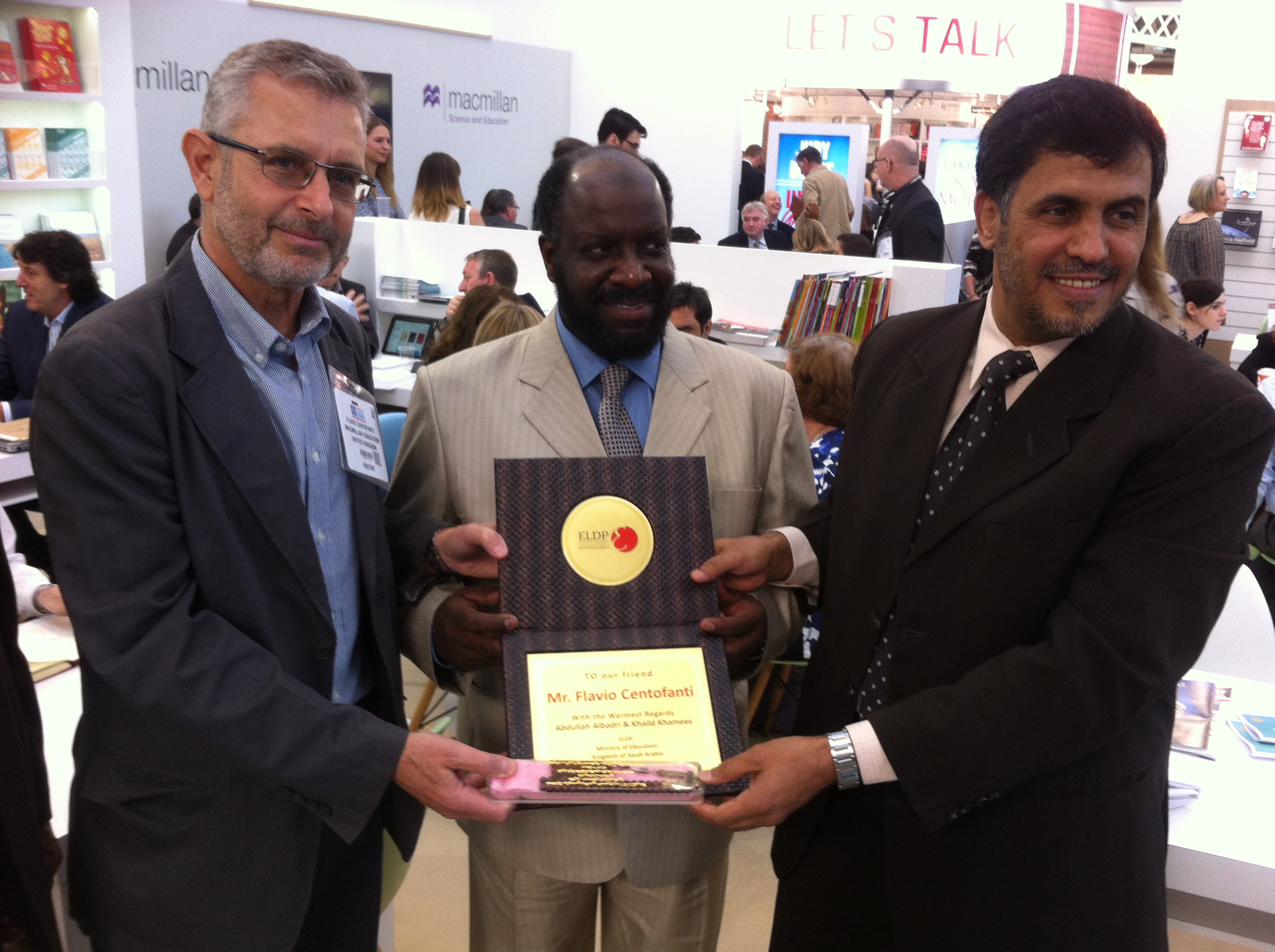
And by the Saudi MoE at the London Bookfair.

And by the Saudi MoE at the London Bookfair

With ex-Macmillan colleagues in Oxford in May.

With ex-Macmillan colleagues in Oxford in May.


This may not be of any direct relevance to the journey but it was a prelude to it. After the decision to retire and therefore leave Cairo we discussed what we should do next and came up with the idea of a 3-month trip around Europe to act as an interlude between full-time work and retirement and to give us time to think about what to do next.  Coming back to attend Matt’s wedding seemed to round things off nicely as he was such an important part of my last few months with Macmillan and indeed made my leaving so much easier and less stressful.

IMG_6380


25th to 26th August – Vichy and Loches

Standard

Next stop on our way back to Brittany after our first stop there in early June was Vichy where we would stay the night as guests of our friends Steve and Jane Thompson.  Steve and Flavio had been fellow Arabic and linguistics students at PCL (now Westminster University) back in the 1970s and more lately worked together as ELT author / publisher at Macmillan.  Being both ELT freelancers, Steve and Jane had opted for la belle vie in France.  Like us, they too have had spells in the Middle East at different times in their lives so we had much in common to talk about – as well as of course, Steve’s and Flavio’s old days when they would have been wearing flared trousers and denim jackets and playing highly competitive table football to the sound of Comfortably Numb at the PCL cafeteria in Red Lion Square in Holborn. We spent a lovely evening with them at Bellerive in Vichy and dined at the Table d’Antoine Restaurant in the centre ville.

With our friends Steve and Jane on the bridge over the river Allier in Bellerive, Vichy.

With our friends Steve and Jane on the bridge over the river Allier in Bellerive, Vichy.

The Bellerive-sur-Allier district in Vichy.

The Bellerive-sur-Allier district in Vichy.


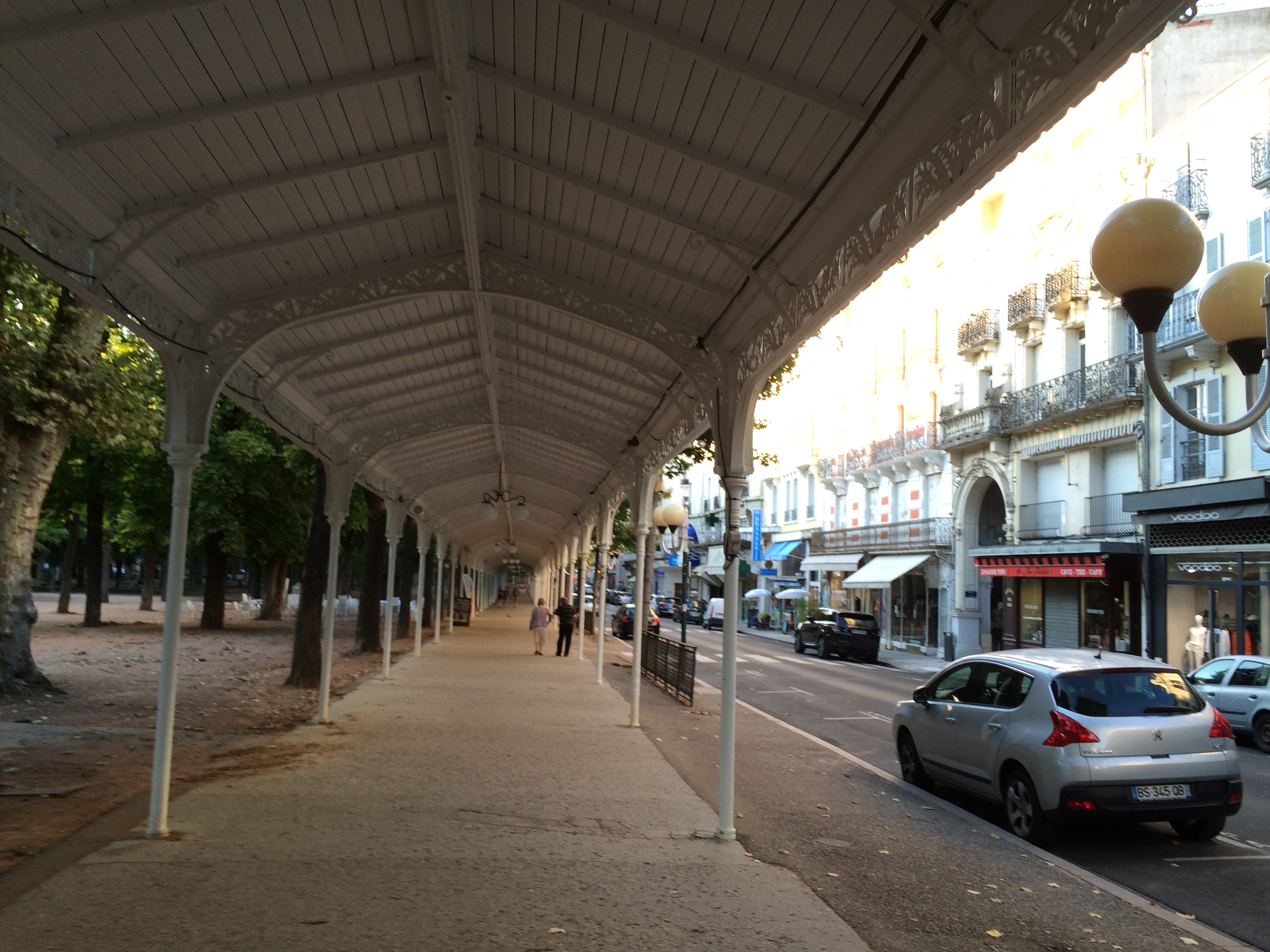
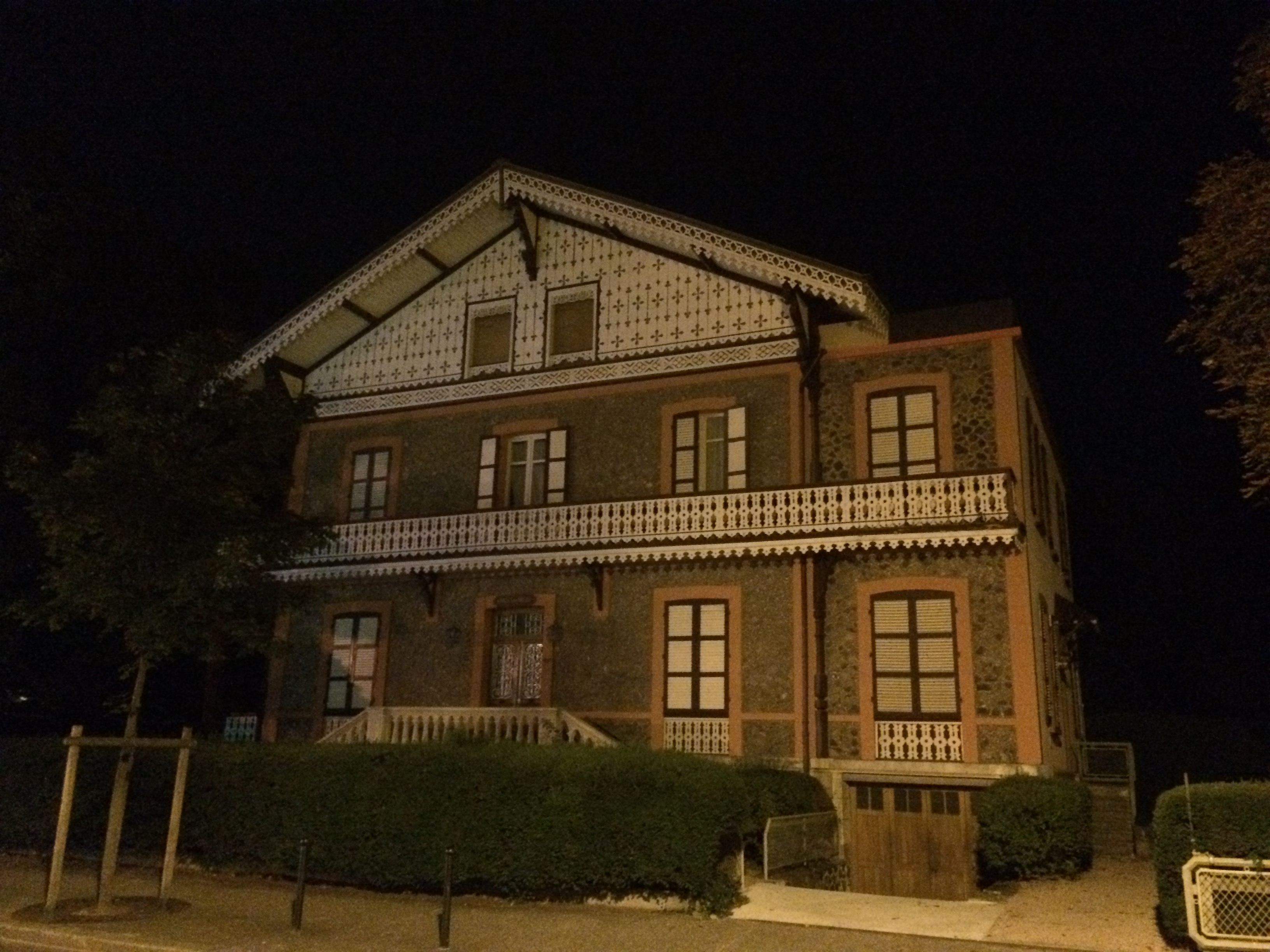
Vichy is known as a spa and resort town but also as the seat of government and de facto capital of ‘Vichy France’ headed by Marshal Petain during the WWII Nazi German occupation from 1940 to 1944.  It lies on the Allier river in Auvergne in central France and its architecture is very much that of a spa town, with many grand villas which would have been built for the well-heeled, though we’re not sure they were to our taste.

A covered avenue in Vichy.

A covered avenue in the spa town of Vichy.

A grand villa in central Vichy.

A grand villa in central Vichy.


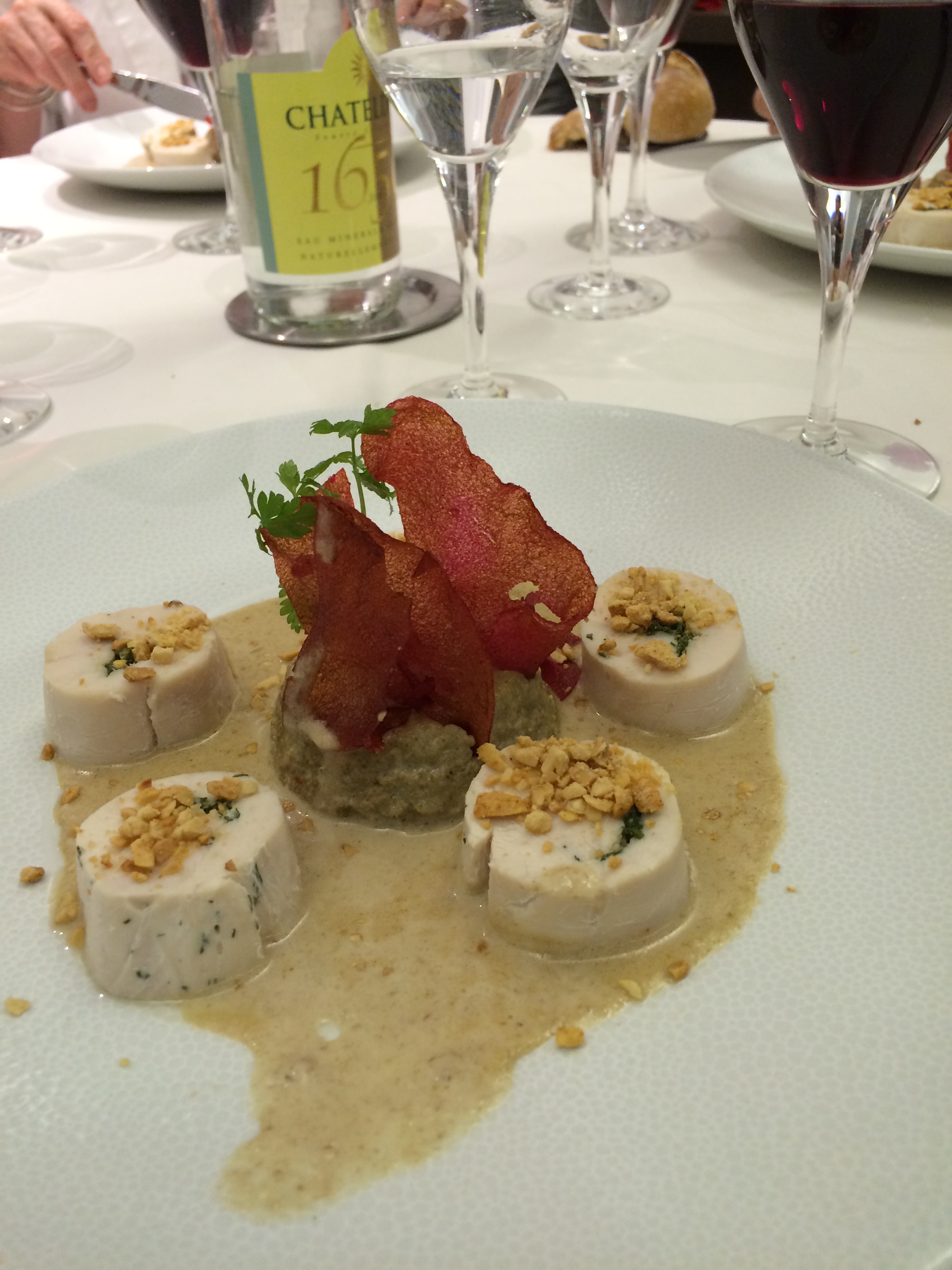
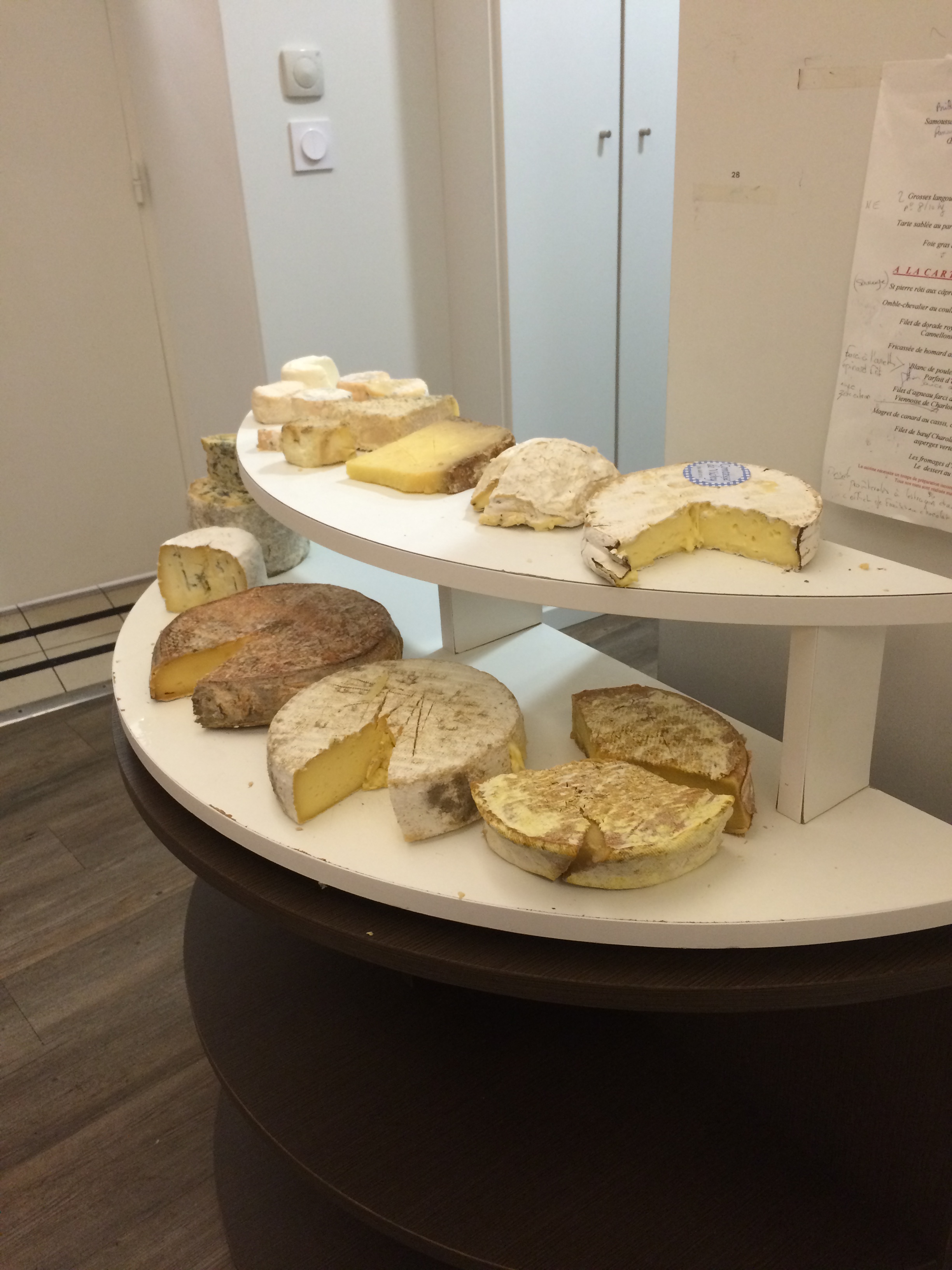
The dinner at La Table d’Antoine was very classy and Judith and I felt a little self-conscious in our tatty campers’ clothes!  Antoine didn’t disappoint however – the quality of the food was first-rate and not the sort of thing you can ever hope to emulate at home.  We went for the ‘Decouverte du Terroir’ (Regional Cuisine) 3-course menu which came with ‘mise-en-bouche, pre-dessert et mignardises’ meaning that between the courses we had extra little ‘mouth-teasers’ as well as the regional cheeses before dessert!  In the very best tradition of good restaurants in France, each time our different courses were put in front of  us, the head waiter would decorously stand back, wait for a pause in the conversation, and inform us in detail what each dish consisted of – “Messieurs/dames, la tarte sablee au parmesan, truite marinee avec compote de citron jaune” (lemon and cheese pie with marinated trout) or  “le blanc de poulet fermier d’Auvergne sauce satay avec parfait d’aubergine fumee” (farm-reared Auvergne chicken with satay sauce and smoked aubergine flan) before, ritual over, giving us a little bow and stepping back discreetly.

"Messieurs/dames,

“Messieurs/dames, le blanc de poulet fermier d’Auvergne sauce satay avec parfait d’aubergine fumee.”

Selection of regional cheeses at La Table d'Antoine in Vichy.

Selection of regional cheeses at La Table d’Antoine in Vichy.


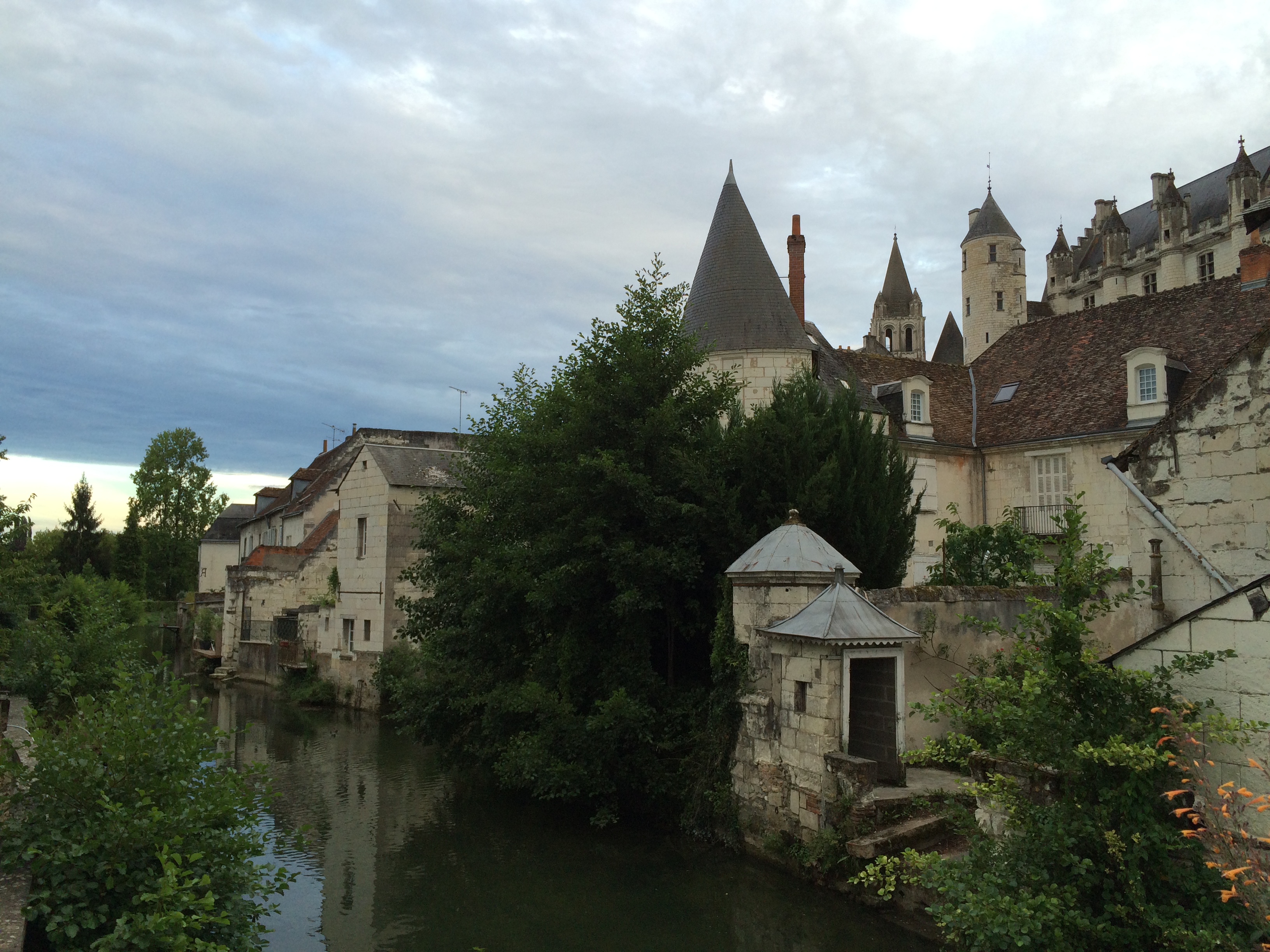
After saying goodbye to Steve and Jane and wishing them a happy and badly needed holiday in Greece, we put the Tom Tom away and followed the most direct route in the direction of the Morbihan in Brittany, crossing the Indre-et-Loire, Pays de la Loire and Loire Atlantique in the process.  Brittany was just a touch too far though to cover comfortably in one day and so we stopped off for probably what was to be our last campsite stop in a the medieval town of Loches in the Indre-et-Loire, 45 kms southeast of Tours.  Loches has an impressive castle – the Chateau de Loches – which was a residence of the Counts of Anjou then the kings of France, after it was seized from King John of England by Philip Augustus in c AD 1250.
On the way to Loches, we passed the pretty little towns of Saint-Poucain-sur-Sioule and Vallon-en-Sully. By then, the weather had well and truly turned and we had a wet and coldish night, which came as a bit of a shock after the sizzling temperatures of less than a week earlier.

Sait-Pourcain-sur-Sioule.

Sait-Pourcain-sur-Sioule.

Vallon-en-Sully.

Vallon-en-Sully.


The medieval town of Loches on the Indre river.

The medieval town of Loches.

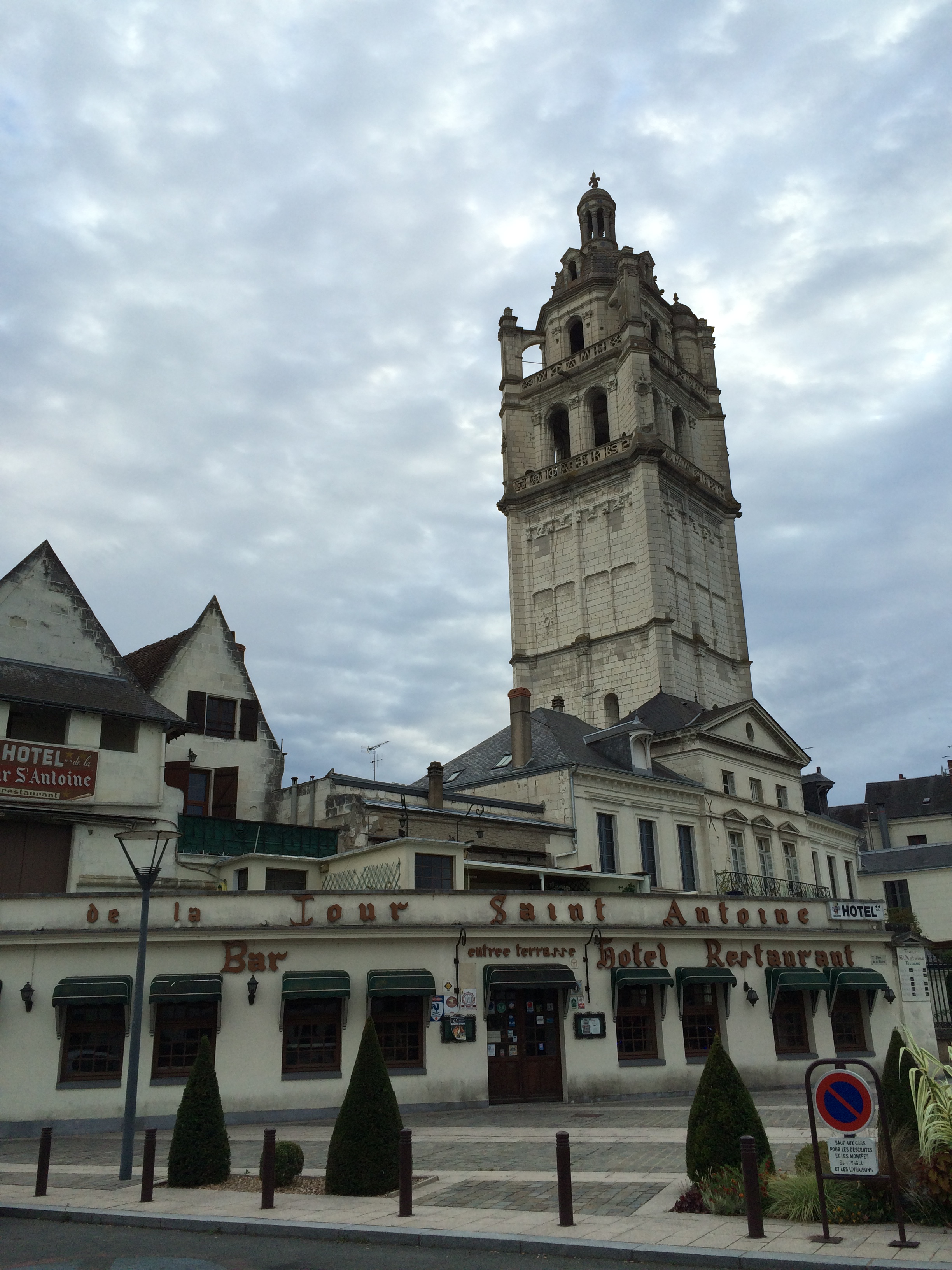
St Anthony Tower in Loches.

St Anthony Tower in Loches.


Old gate in Loches.

Old gate in Loches.

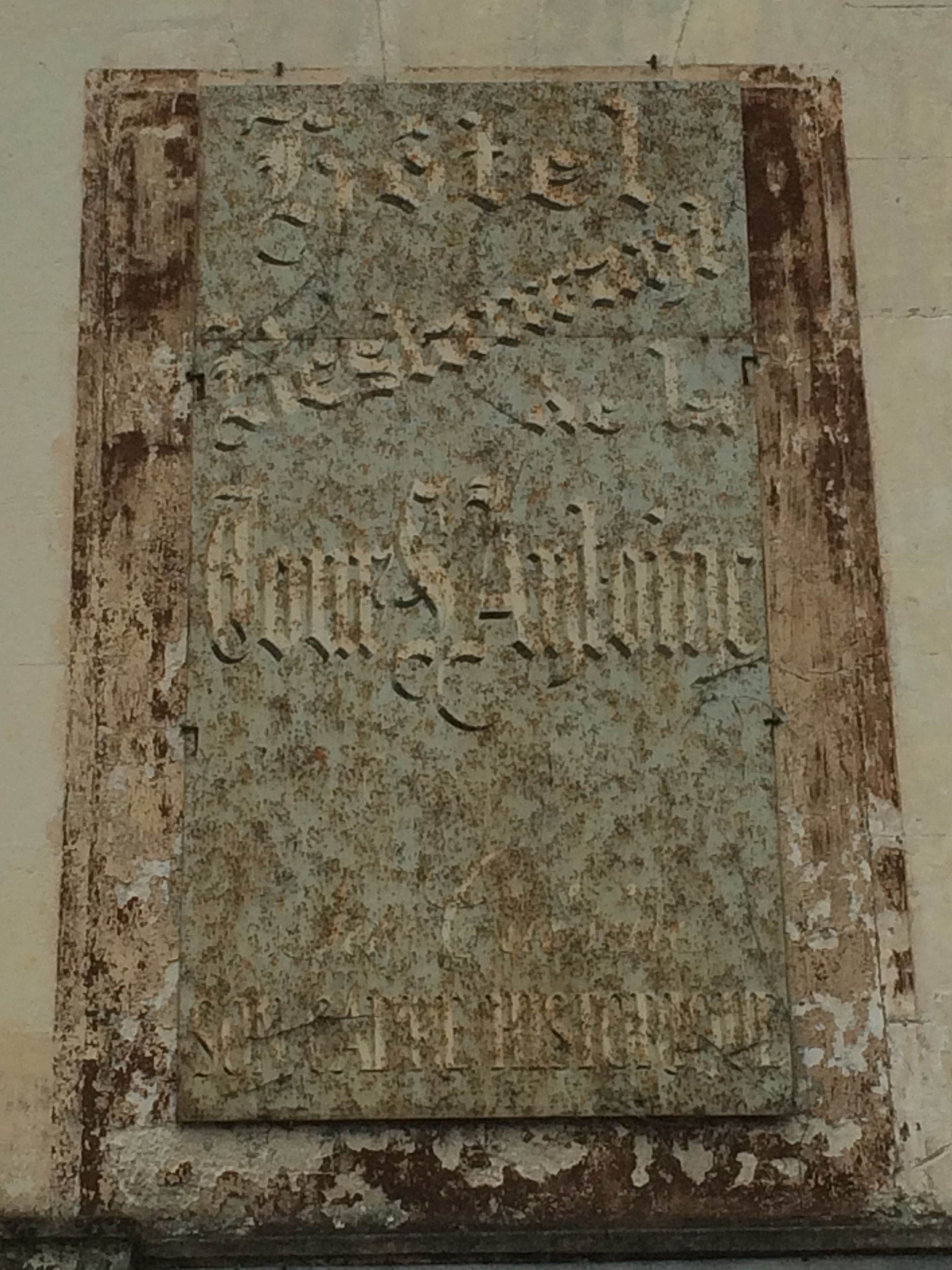
Original 'Hotel de la Tours St Antoine' sign.

Original ‘Hotel de la Tours St Antoine’ sign.


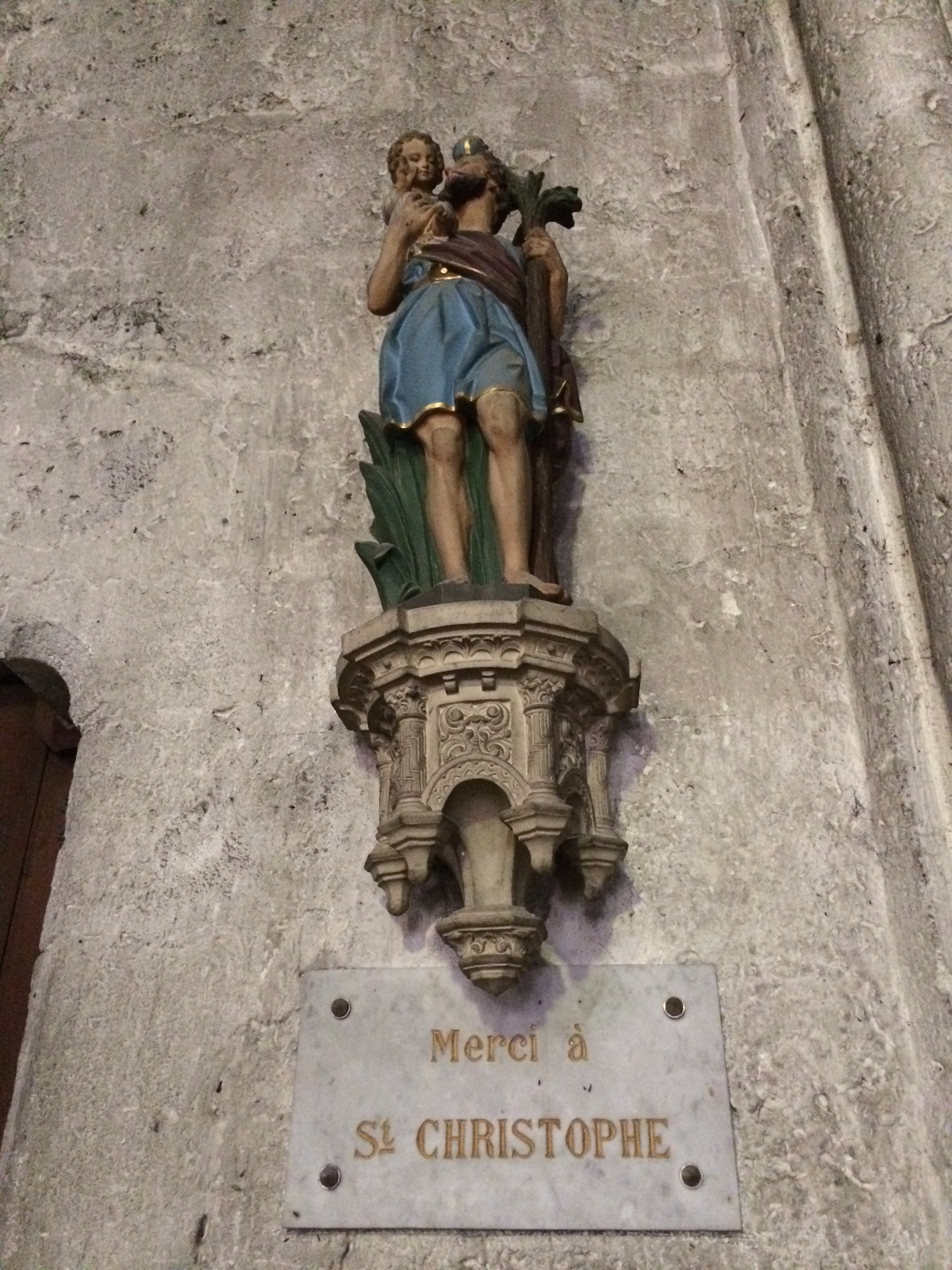
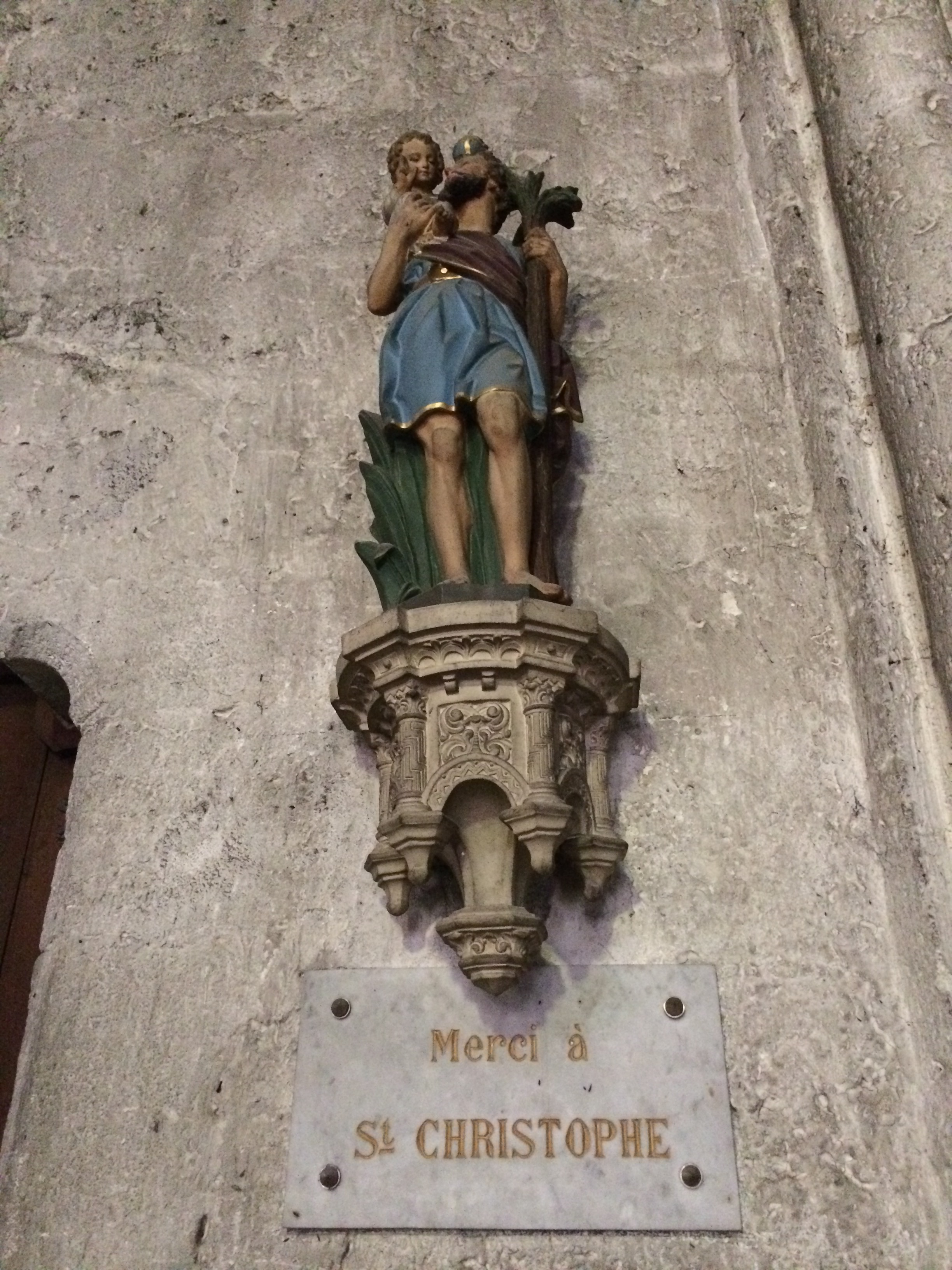
In Saint-Pourcain, we had stopped for a light lunch and also visited the Eglise Sainte Croix (Church of the Holy Cross) where, as if pre-destined to do so now that we’d almost reached the end of our journey, we saw a statue of St Christopher (the saint of travellers) bearing the inscription “Merci a St Christophe” underneath. Yes indeed, we were thankful.


"Merci a Saint Christophe."

“Merci a Saint Christophe.”

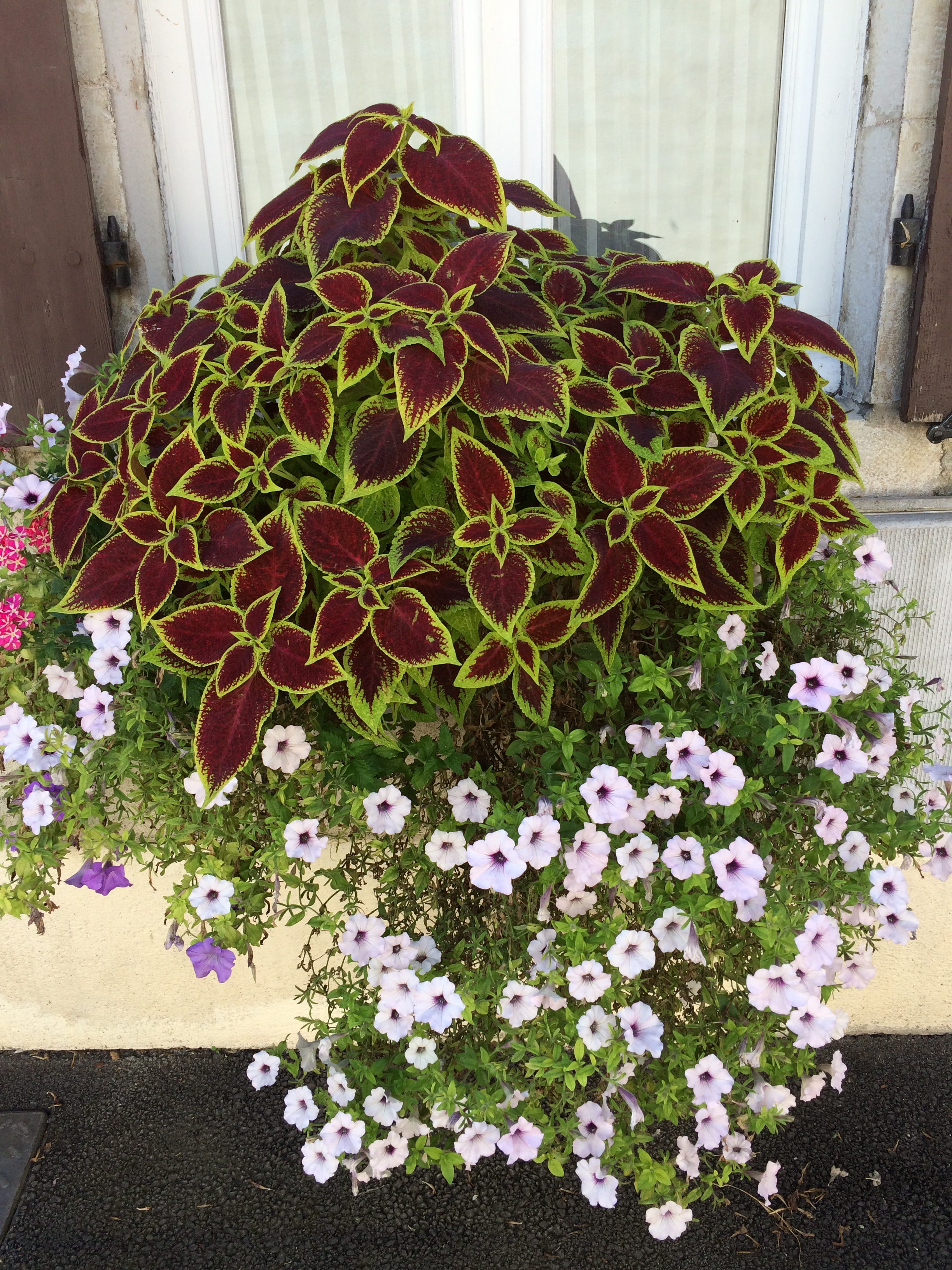
A beautiful window-sill in Saint-Pourcain.

A beautiful window-sill in Saint-Pourcain.


IMG_6333

Tuesday 22nd to Friday 25th August – back across the Alps and onto the Rhone-Alpes

Standard

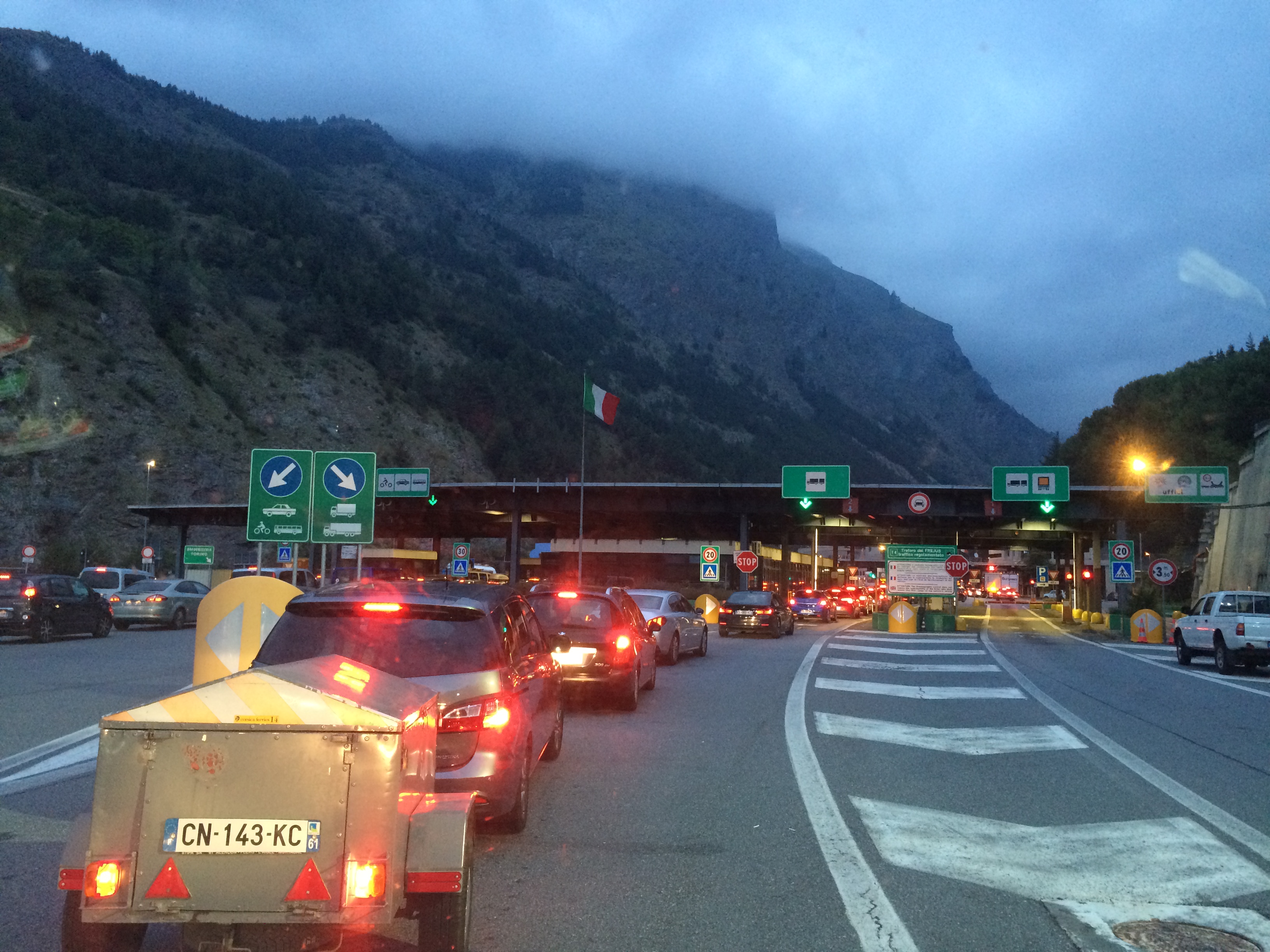
It was already quite late when we left Lomazzo. But the drive out of Lombardy, through Piemonte and across the Alps took much longer than we’d expected and this was not helped by a severe bottleneck at the entrance to the Frejus tunnel at Bardonecchia.  It was just our luck that we’d hit the busiest week in the year for returning French holiday-makers.  We thought the congestion was caused by passport or customs controls but it turned out to be just the queues at the toll booths.  56 Euros for the crossing seemed a bit steep but then this was Europe and all the technical expertise and orderliness doesn’t come cheap. With the wait, it took nearly two hours to get across.

Long wait at Bardonecchia to get across the Frejus Tunnel to France.

Long wait at Bardonecchia to go through the Frejus Tunnel to France and it was already 7.30pm.

The tunnel emerges in the Savoie in France, one of the departements of the Rhone-Alpes region.

The Rhône-Alpes borders Switzerland as well as Italy. Its Massif Central mountains and dramatic canyons carved by the Ardèche River are popular for hiking and rafting. Both the Rhone and the Saone also flow through the region and meet at Lyon.   Lyon, the regional capital, is a cultural and gastronomic hub with Renaissance and medieval buildings in its centre. 

Shortly after reaching France, it was 9.30pm and we had not found a suitable campsite on our route.  Instead, Judith found a cheap B&B near Chambery through lastminute.com which we paid for in advance.  When we finally found the place though at 11pm it was sunk in darkness and no one was there.  We rang the hotel number only to be told there must have been a mistake and they were full.  Several phone calls to lastminute.com proved a waste of time; it was far too late to start looking for campsites or other accommodation and, finally giving up at nearly 1pm we resorted to spending the night in an ‘aire’ (a temporary rest stop with toilet facilities) on the side of the motorway mostly used by lorry drivers but also desperate campervanners!  This had to rank as one of our worst nights of the journey and unfortunately Catherine was also with us so it may well have tarnished her view of campervanning for quite a long time!  In the morning, after a strong coffee from the motorway cafe, we were ready to get back on the road.

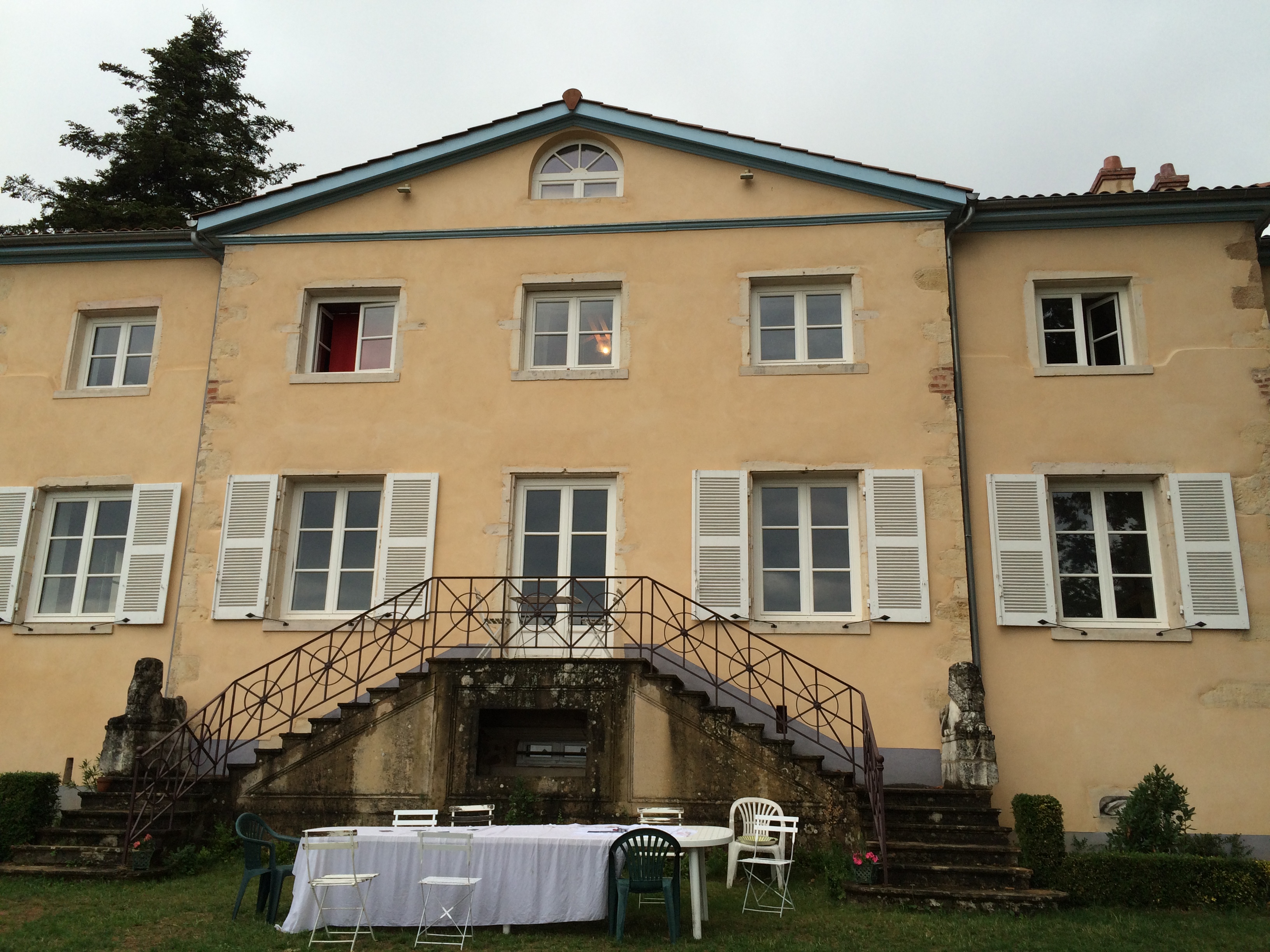
We would have liked to spend a bit of time in Lyon but we we had to get to Brittany by the 27th and fit in two visits to friends in-between and friends are more important.  First, we were headed for Blace in the Beaujolais area, about 70 kms north west of Lyon to see Blandine and Laurent who we’d been friends with when we lived in Clapham Park in the 90s. Judith and Blandine worked well together as active members of their respective PTAs and Laurent was a Master of Wine working on several projects. They bought a lovely big but run-down house in Blace with acres of vineyards and eventually moved there in the 2000s. Shortly afterwards, a major fire destroyed large parts of the house but the insurance money enabled them to rebuild it all beautifully.  They called it the ‘Chateau de l’Hestrange’.

The beautiful Chateau de l'Hestrange in Blace.

The beautiful Chateau de l’Hestrange in Blace.

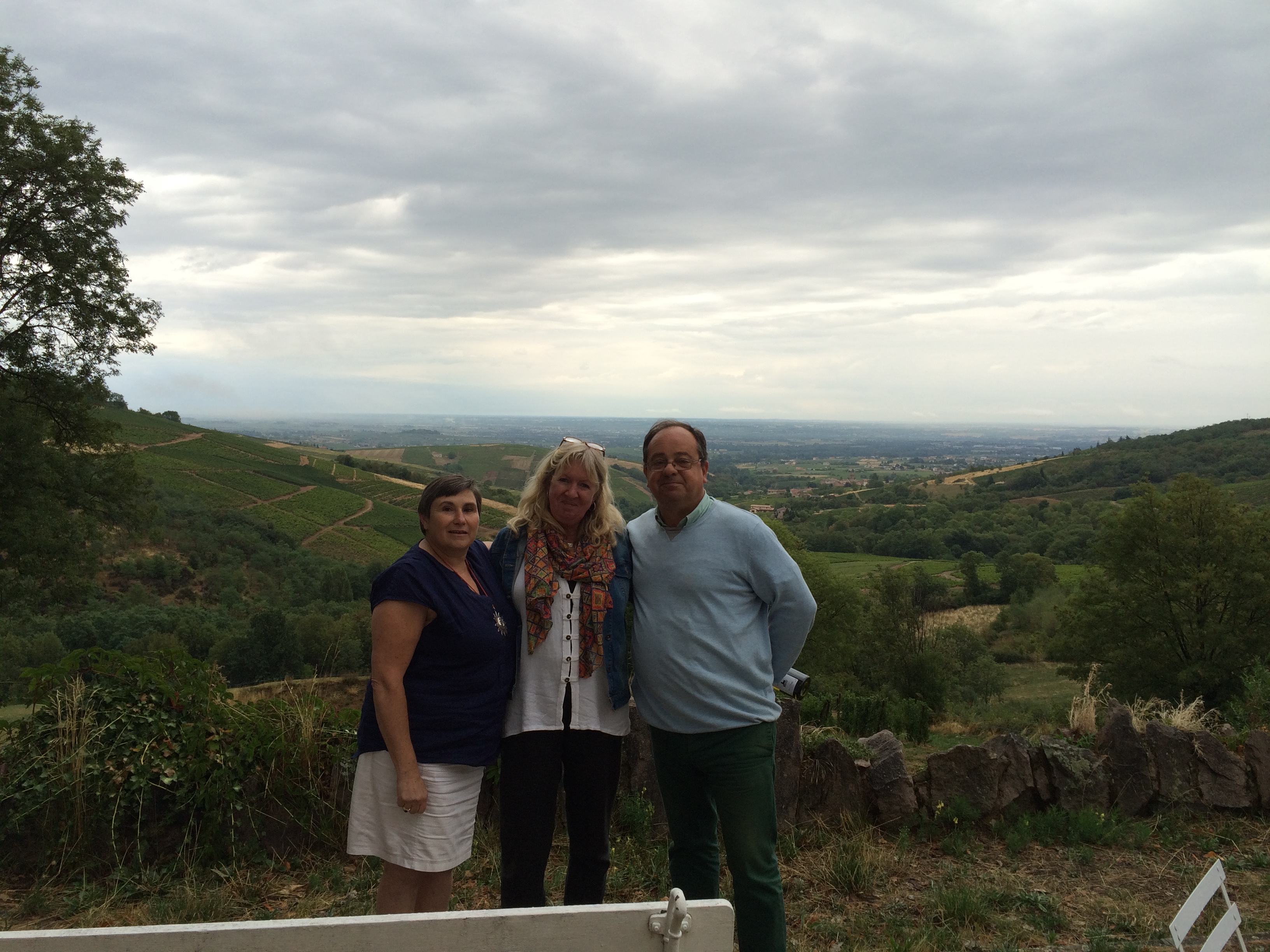
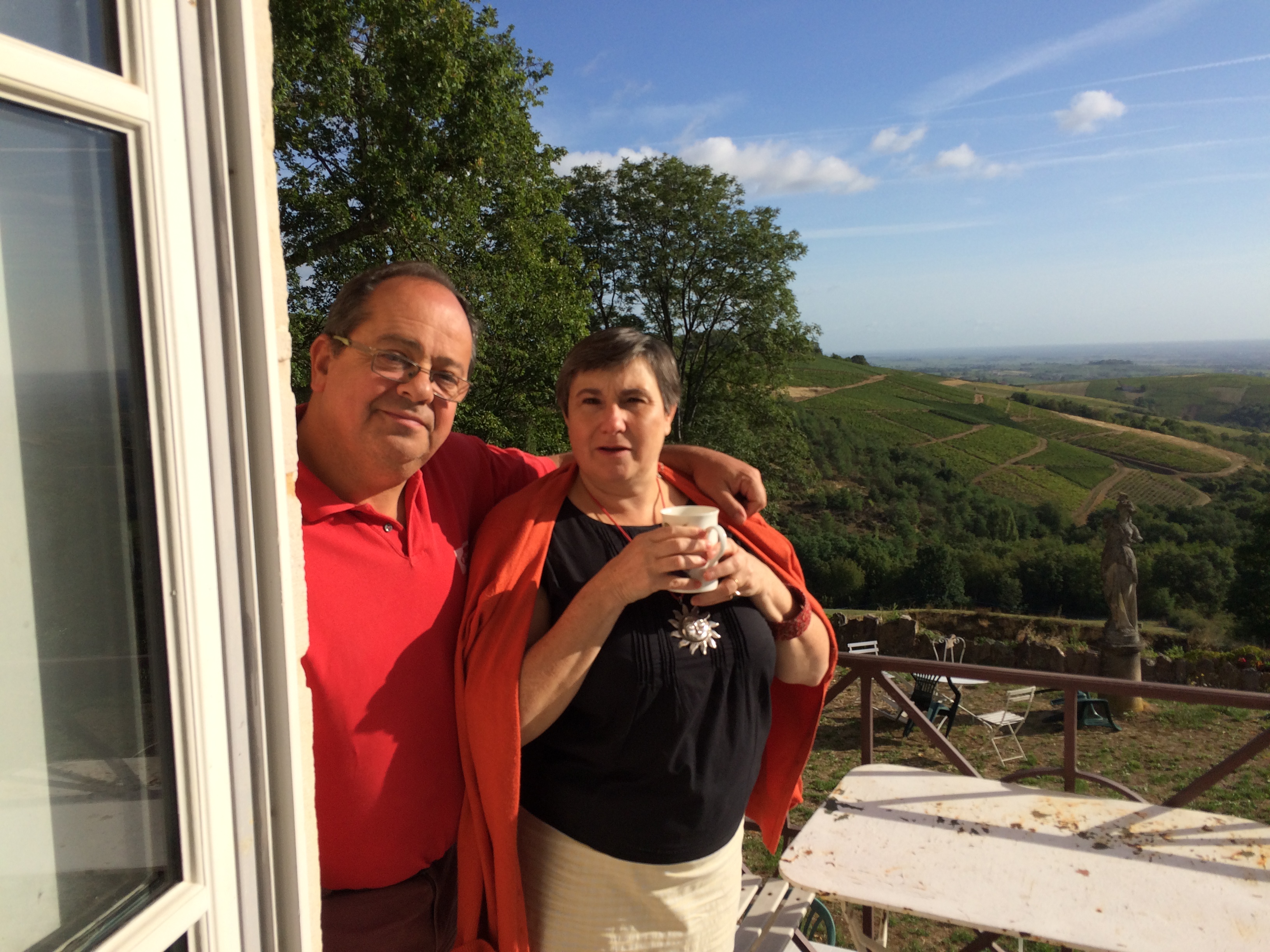
Our good friends from our Clapham days - Laurent and Blandine Metdge-Toppin.

Our good friends from our Clapham days – Laurent and Blandine Metdge-Toppin.


The elegant dining room at Chateau de l'Hestrange.

The elegant dining room at Chateau de l’Hestrange.


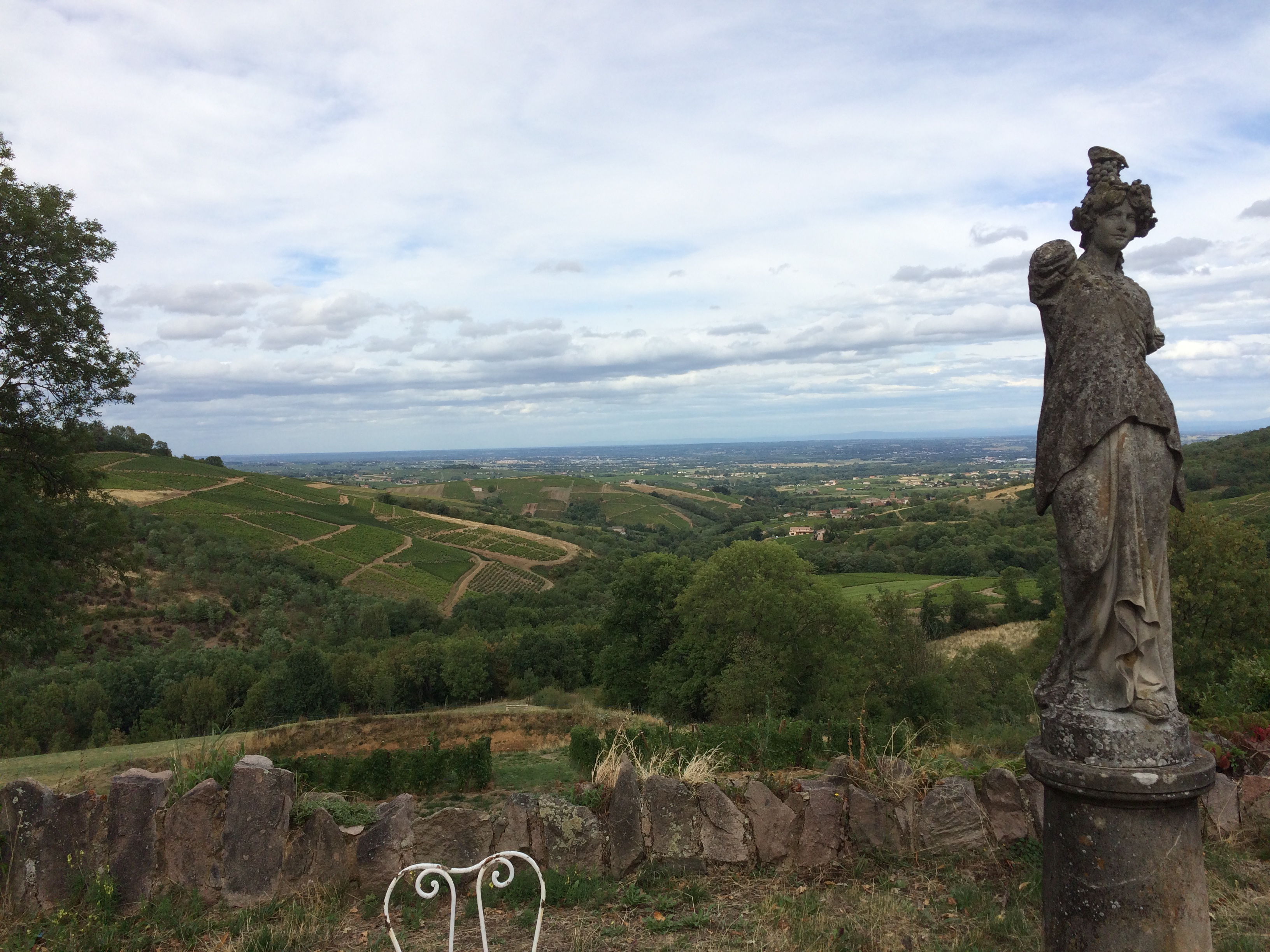
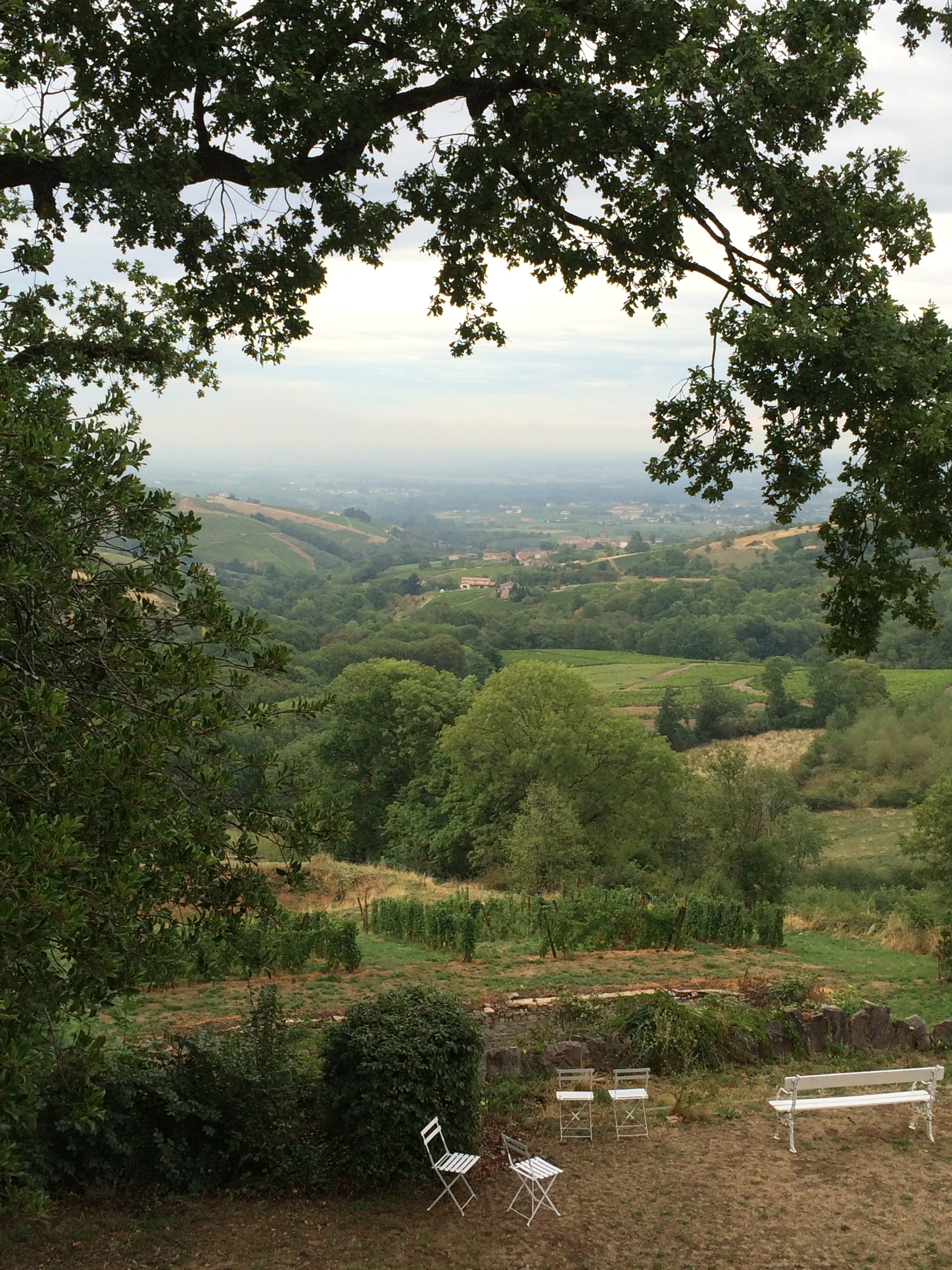
The view from the terrace.

The view from the terrace.


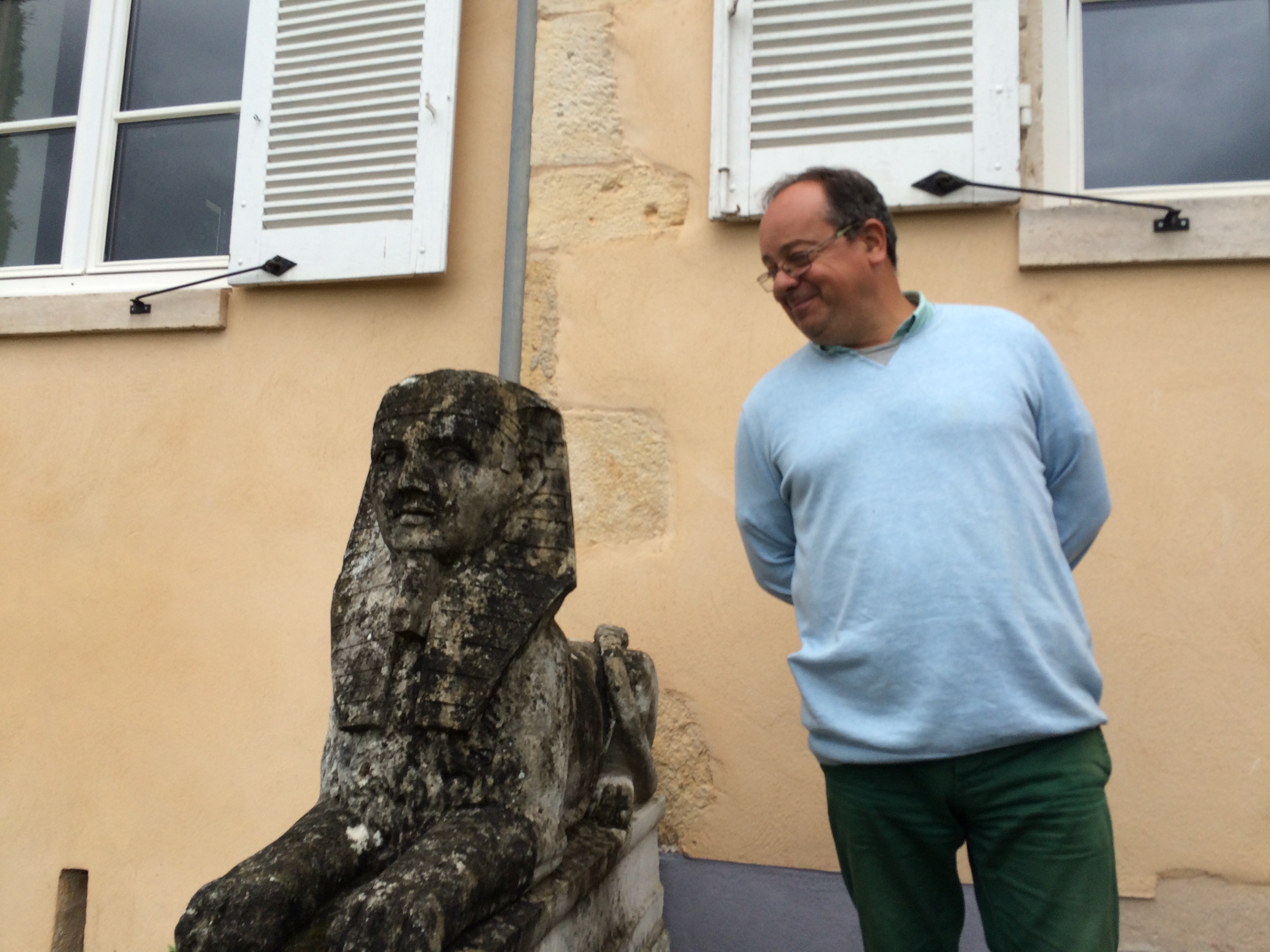
The two sphinxes at the back of the house were put there by a previous 19th century owner who had made his riches in Egypt.

The two sphinxes at the back of the house were put there by a previous 19th century owner who had made his riches in Egypt.


H

H


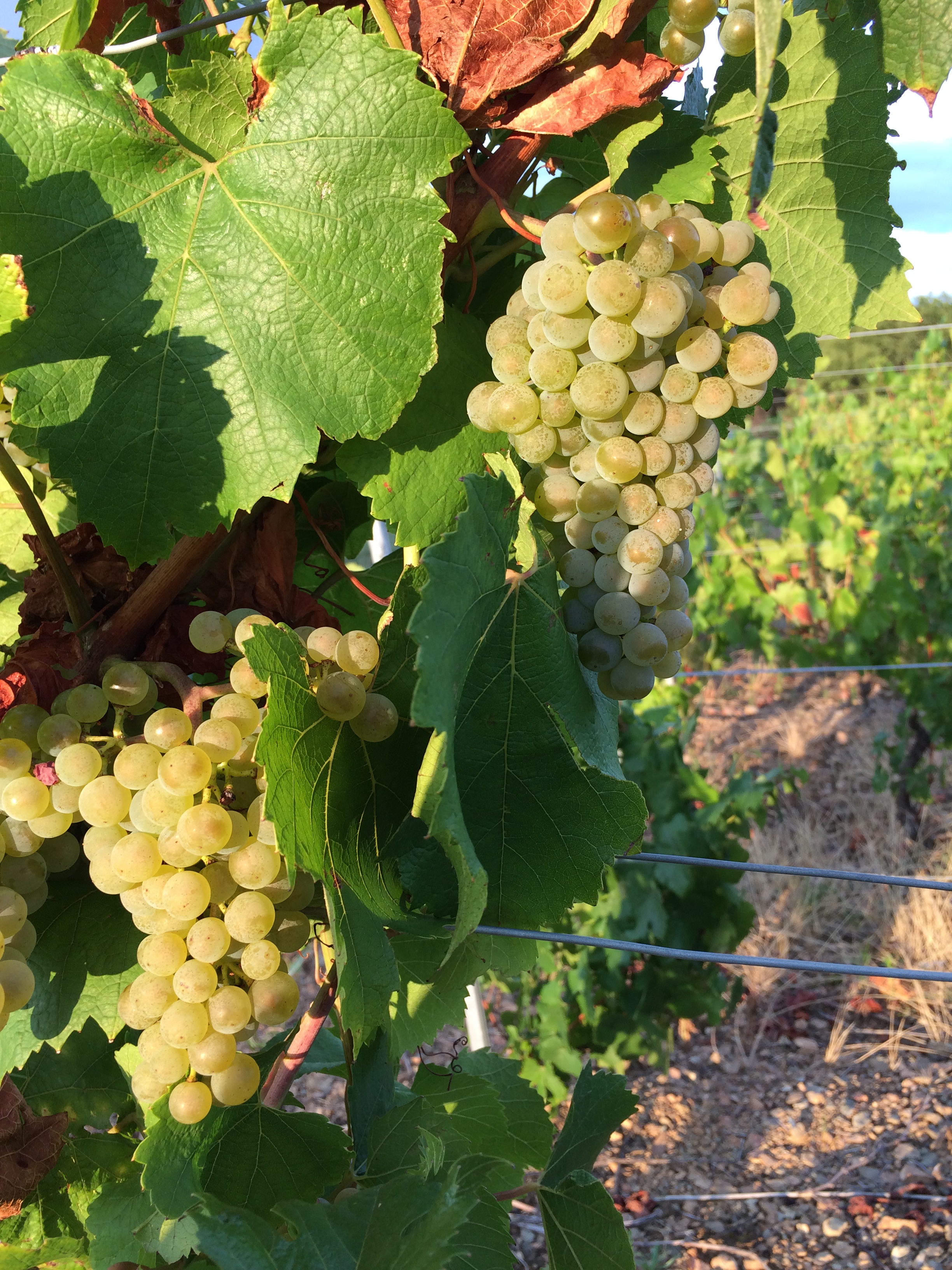
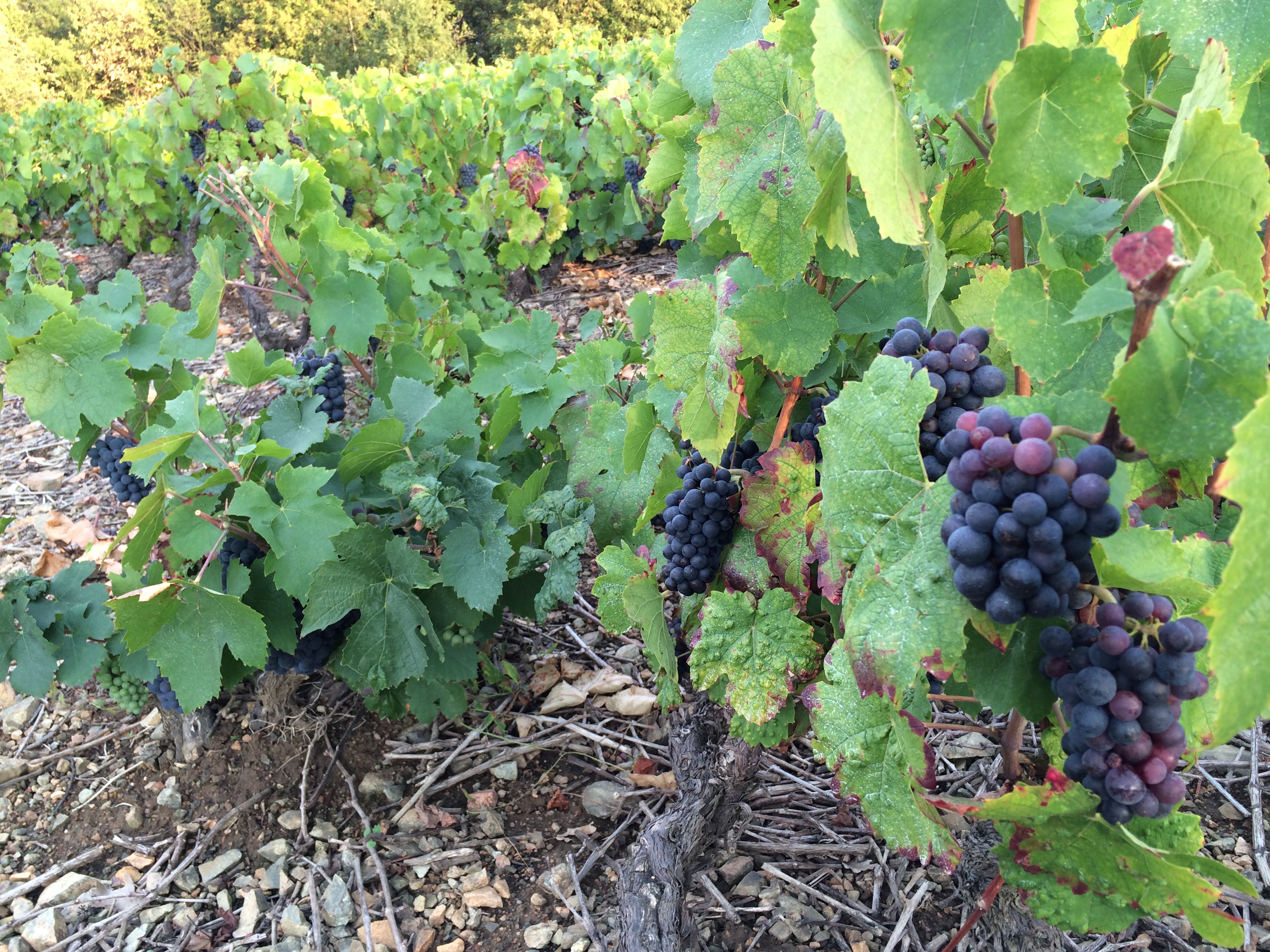
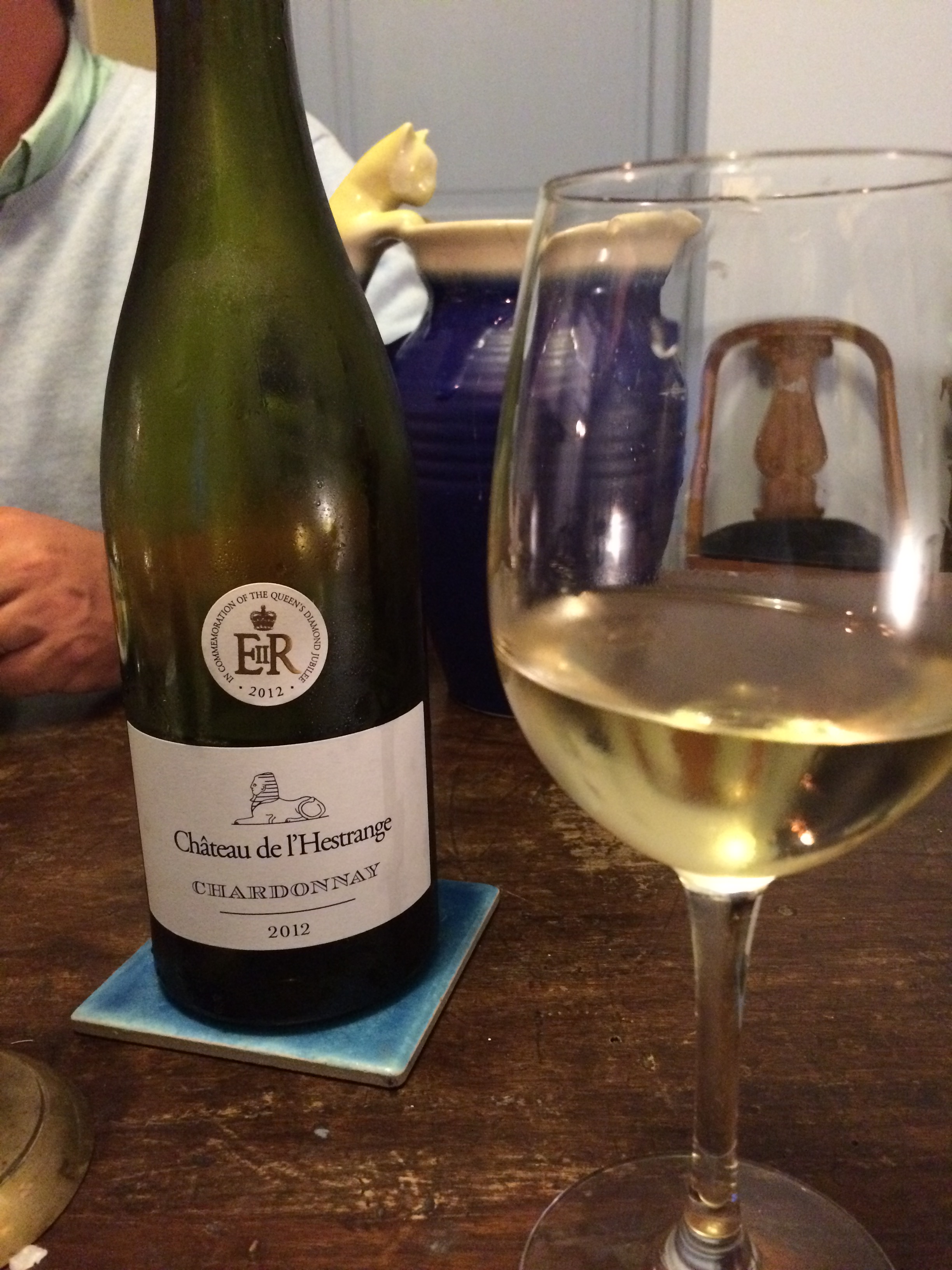
Blace is situated in the Beaujolais region of the Rhone.  For some reason, Beaujolais has for a while now been out of fashion and doesn’t sell well – in fact, there had been 6 suicides amongst winegrowers in the region in the past year alone. Very wisely, Laurent has over the past few years diversified his vineyards by growing Chardonnay as well as Gamay Noir grapes and producing Cremant, Chardonnay and aged Beaujolais, all of which we tried and were quite superb.  Laurent had even approached Buckingham Palace asking if he could dedicate his 2012 Chardonnay to the Queen’s Diamond Jubilee and he got a letter back saying yes and ordering several cases!

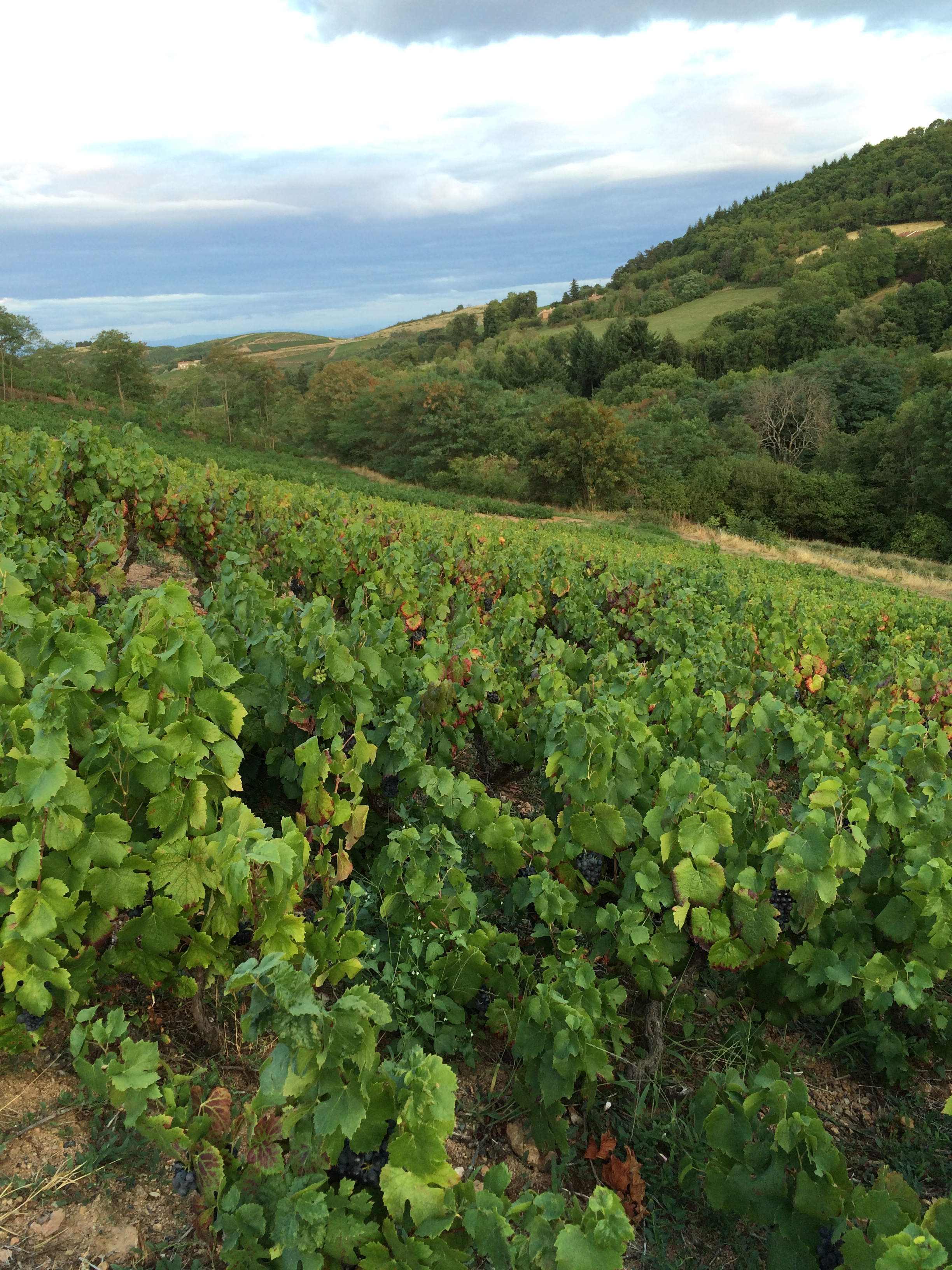
Chardonnay grapes at Chateau de l'Hestrange.

Chardonnay grapes at Chateau de l’Hestrange.


Gamay Noir grapes.

Gamay Noir grapes.


Chateau de l'Hestrange Chardonnay - in commemoration of ER's Diamond Jubilee.

Chateau de l’Hestrange Chardonnay – in commemoration of ER’s Diamond Jubilee.


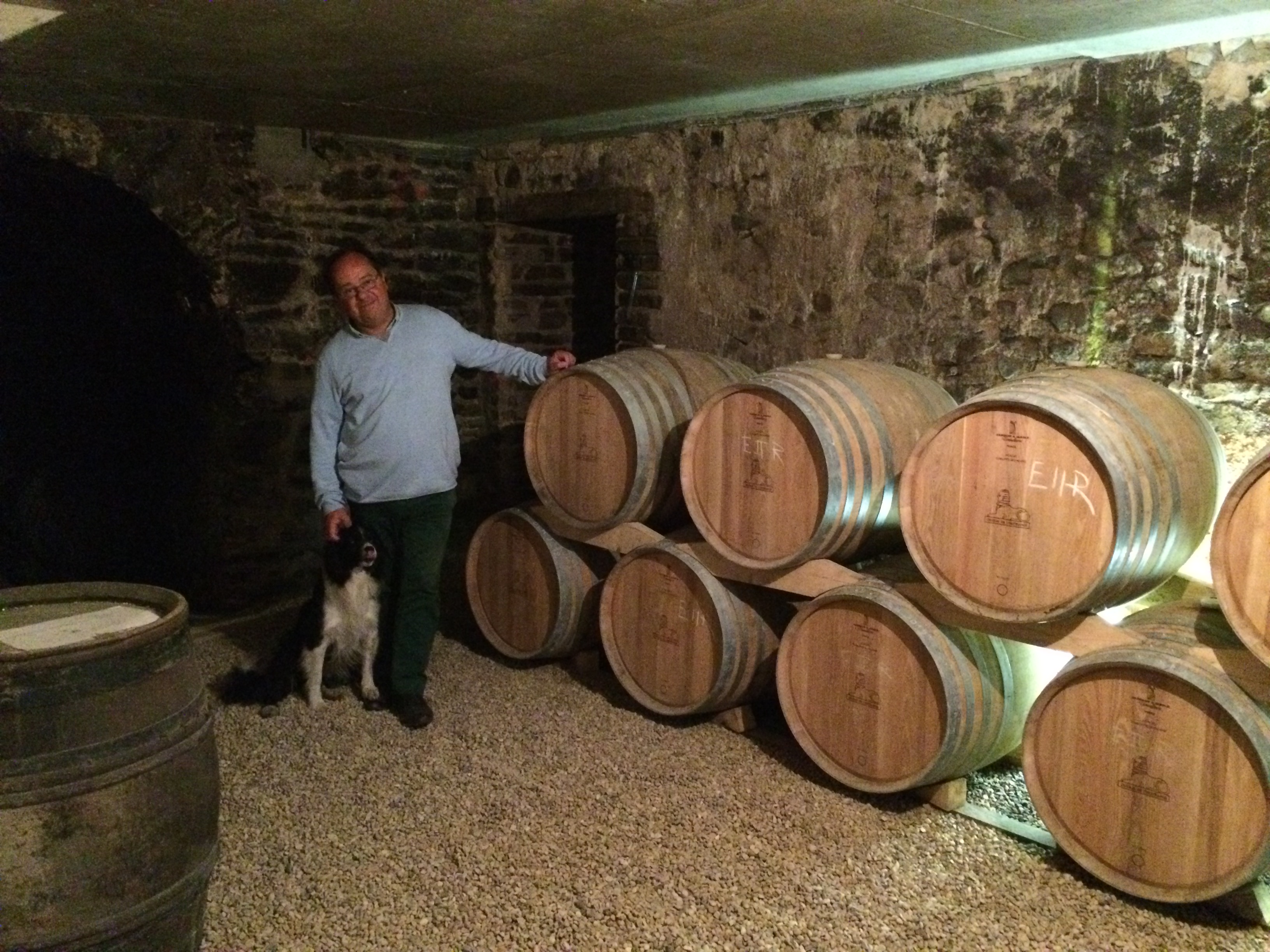
Laurent and Merlot in the cellar at Chateau de l'Hestrange.

Laurent in the cellar at Chateau de l’Hestrange with Merlot loyally by his side.


IMG_6249


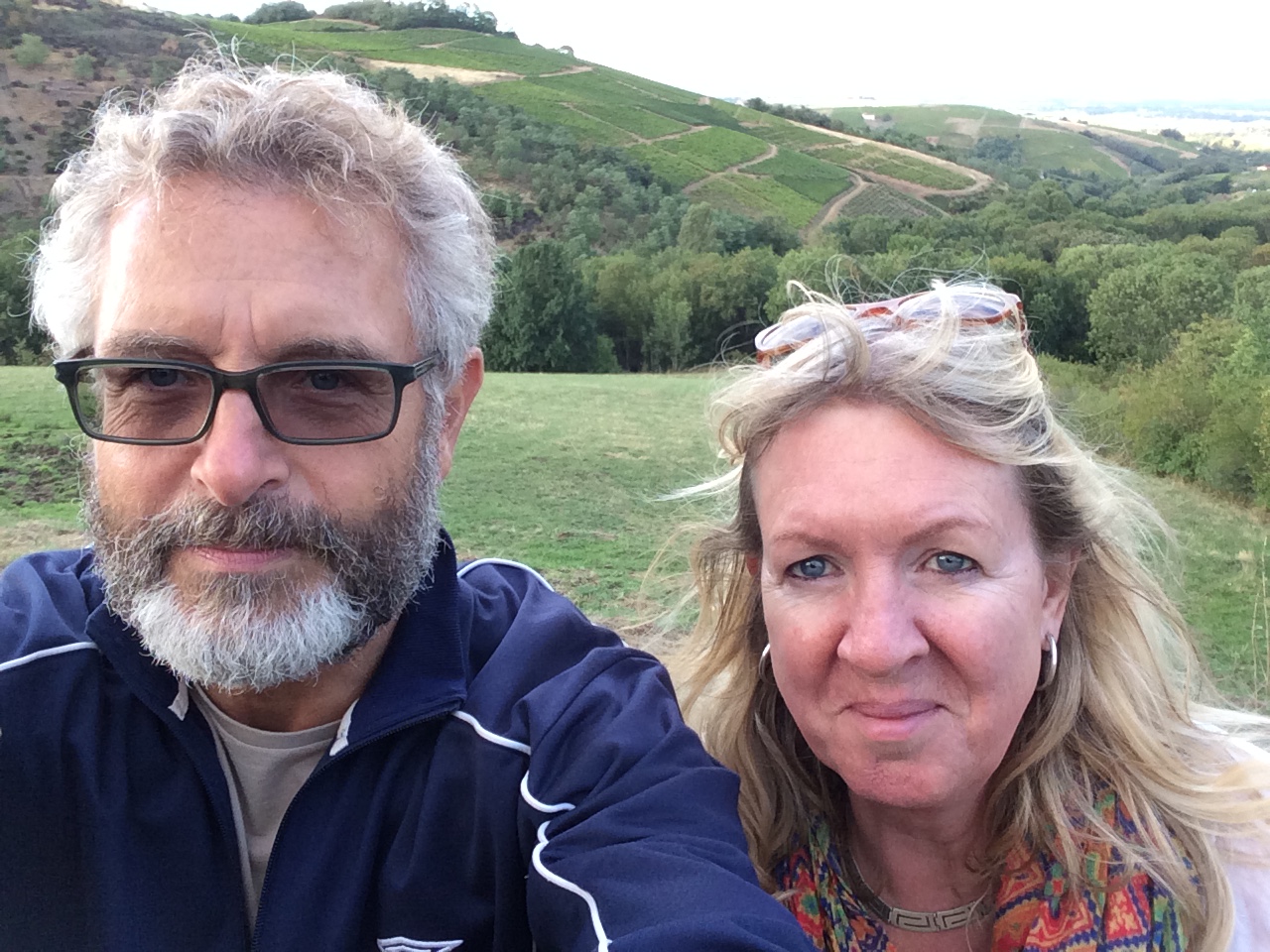
We spent two very pleasant days with Blandine and Laurent as well as two of their grown-up children Delphine and Elzear and trusty border collie Merlot at Chateau de l’Hestrange.  The grape-picking harvest was due to start the next day, first for the Cremant and a week later for the rest of the vines and they were glad to have had a bit of rain in the last few days to give the grapes that last boost after a very hot summer.  It sounded exciting and it was tempting to stay and help with the harvest (the last time Flavio did the vendange was after the very hot summer of 1976 in Blois). But we had to move on so we promised to come back and help with next year’s harvest.

A diner de campagne with Blandine and Laurent in their lovely dining room.

A diner de campagne with Blandine and Laurent in their lovely dining room.

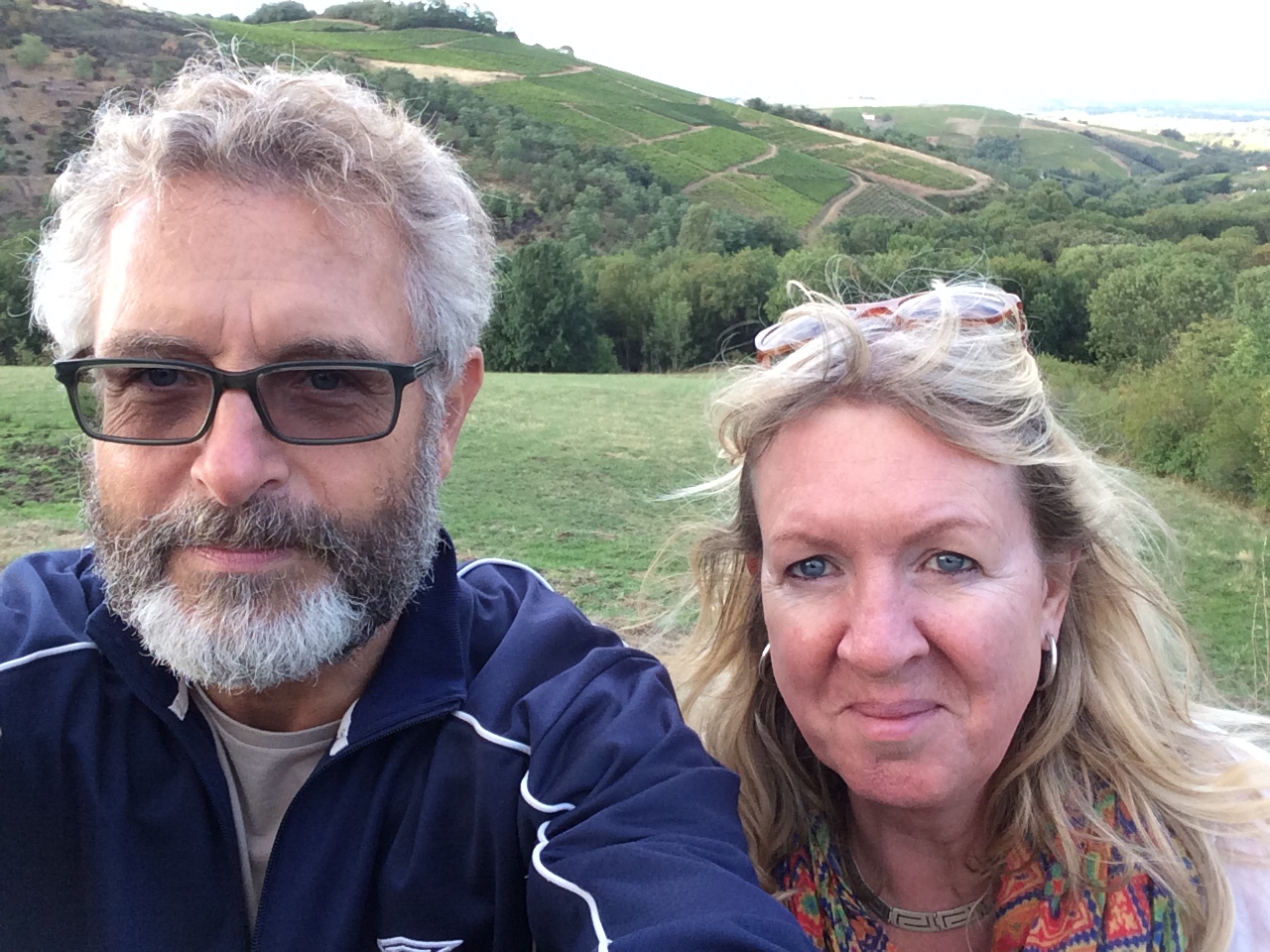
Judith with Blandine and Laurent.

Judith with Blandine and Laurent on the terrace.


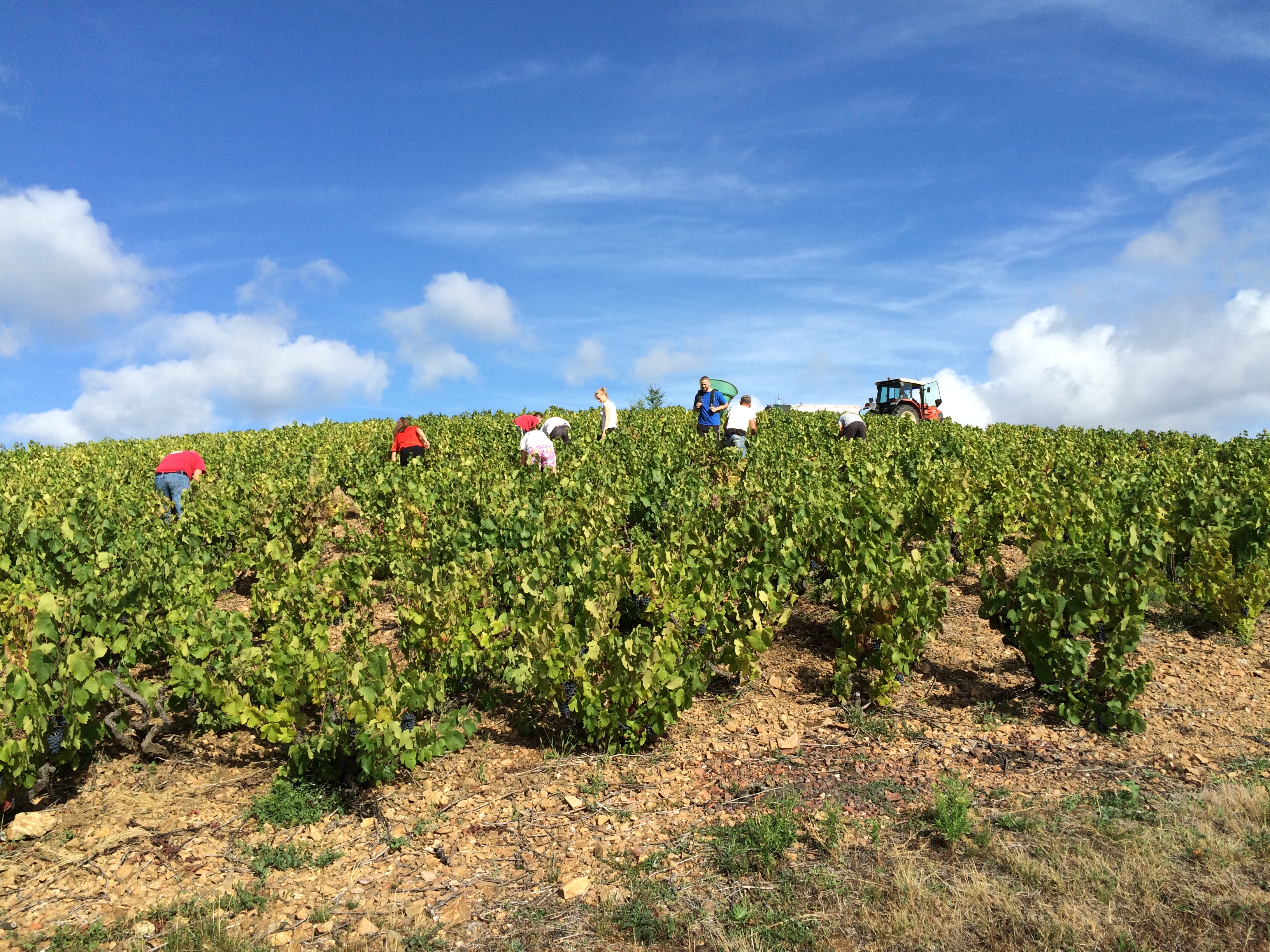
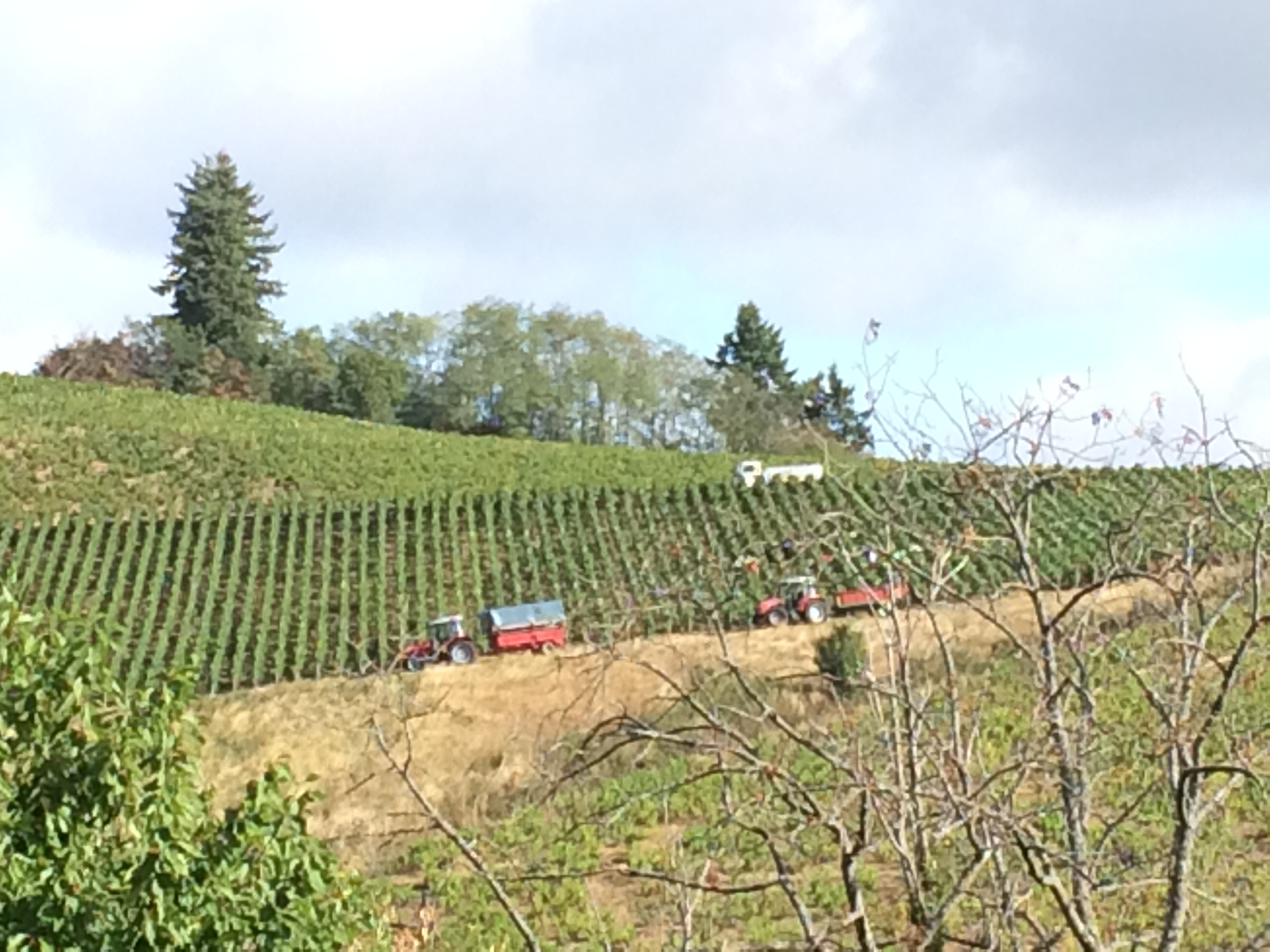
Because of the rain, Laurent had put off the start of the grape-picking by a day but on the morning of the second day, grape-pickers could be seen on the slopes adjoining l’Hestrange. A walk to take a closer look seemed a compelling thought.  There was something satisfying and timeless in the sight of this essentially quiet, almost religious activity.  The long months of pruning and tending the vines and hoping for the right weather at the right time were finally over and it was now time to gather the grapes.  It was not only an economic activity (for many winegrowers it’s not particularly profitable) – it was a preservation of a way of life.

Grape-picking begins in Blace.

Grape-picking begins in Blace.

Not just an economic activity but preserving a tradition and a way of life.

Not just an economic activity but preserving a tradition and a way of life.


We really liked the countryside around Blace and Villefranche – the vine-covered undulating hills interspersed with coppices are irresistibly gentle and seductive. It was a joy just to take a walk surrounded by vines and tranquil vistas all around. We decided that of all the regions we’d seen in France we liked the Rhone, the Languedoc-Roussillon, the Loire, the Aquitaine and other wine-growing areas best – something about doing something for the love and preservation of that way of life – though there is something very relaxing about Brittany too, despite the weather!

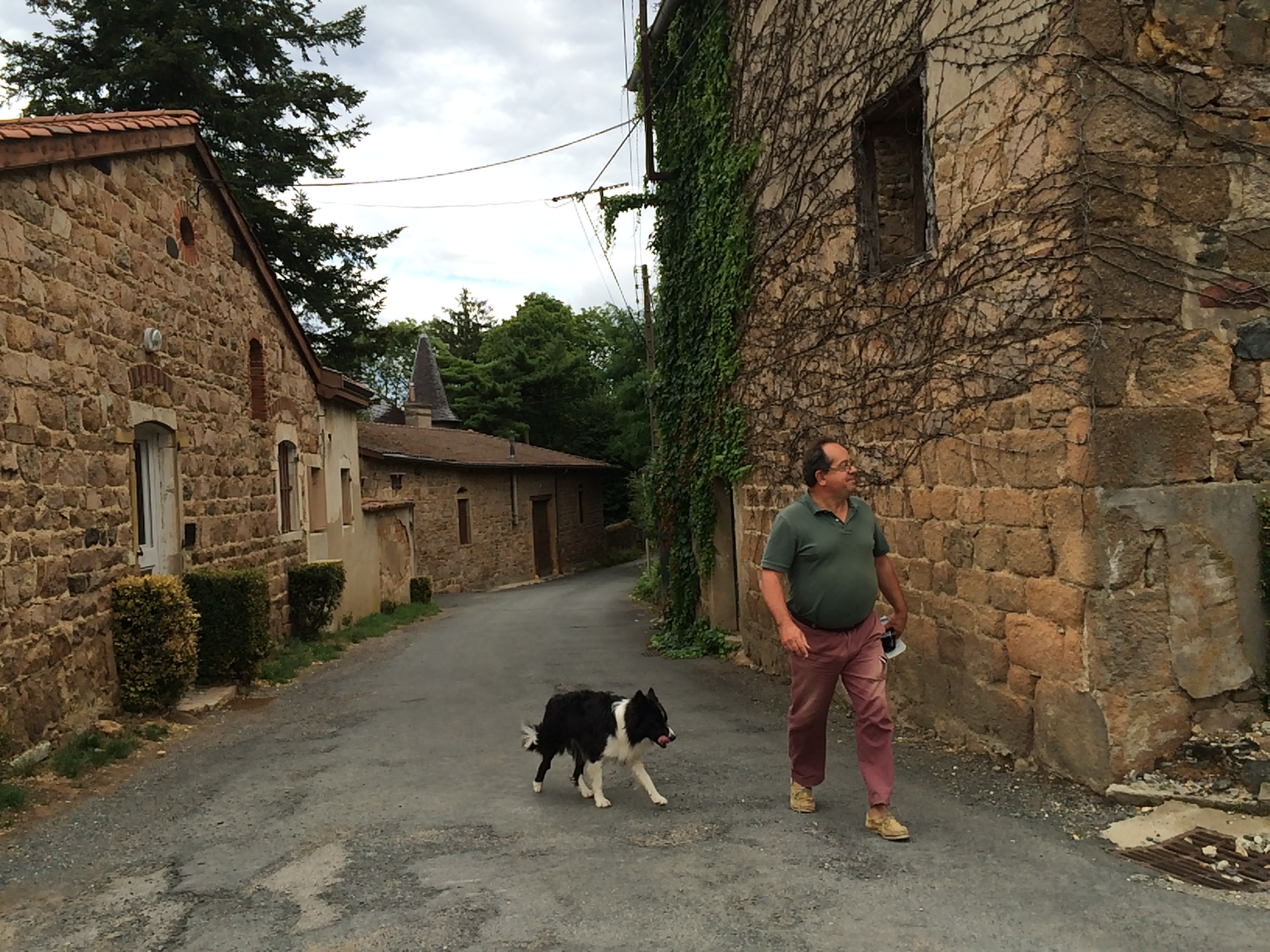
Another thing we really liked was Merlot the dog – aren’t border collies great?  But no, we’re not getting a dog when we get back.

Merlot the Chateau l'Hestrange dog.

Merlot the dutiful Chateau l’Hestrange dog.

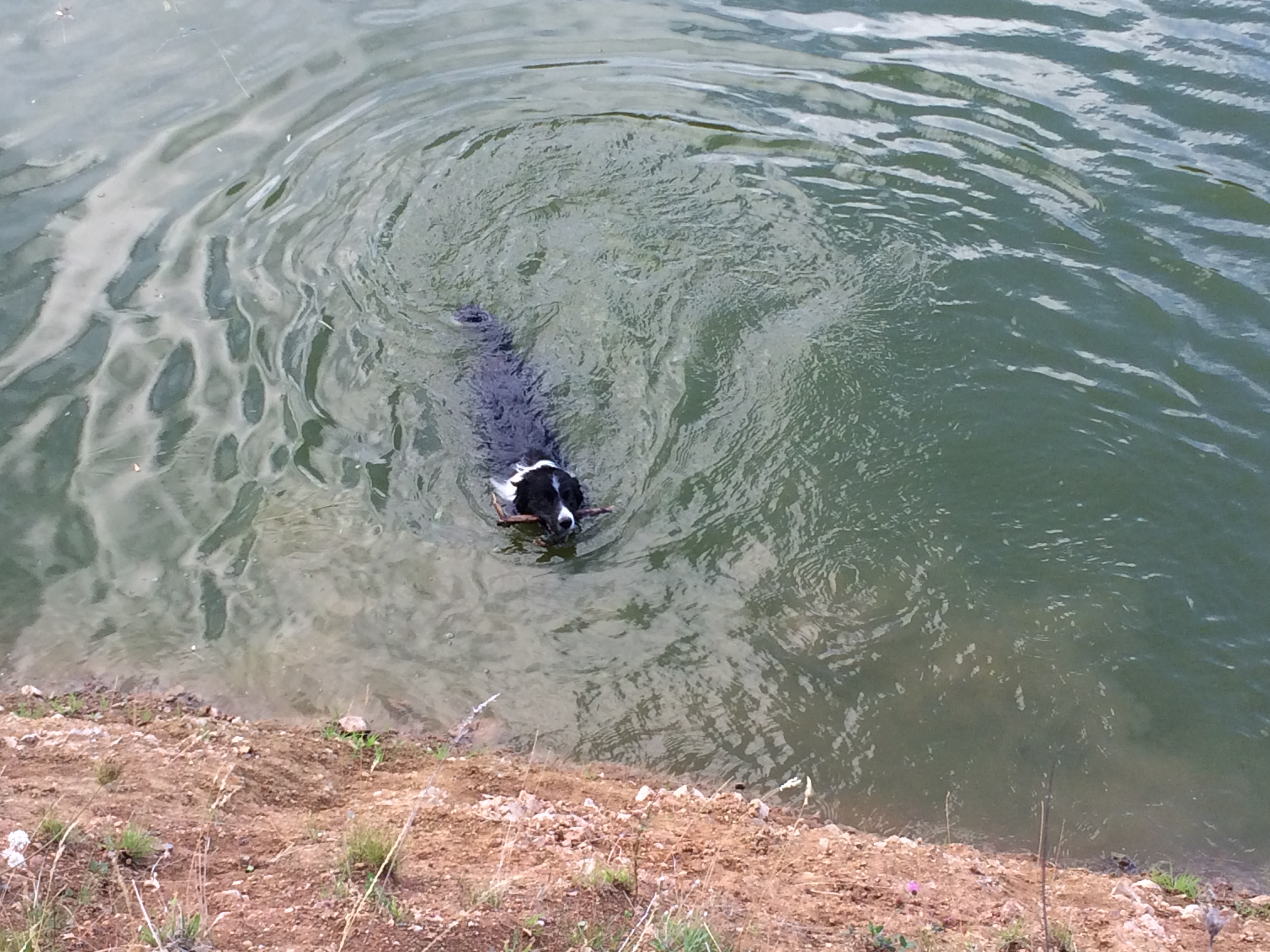
Always up for a dive in the pond..

Always up for a dive in the pond..


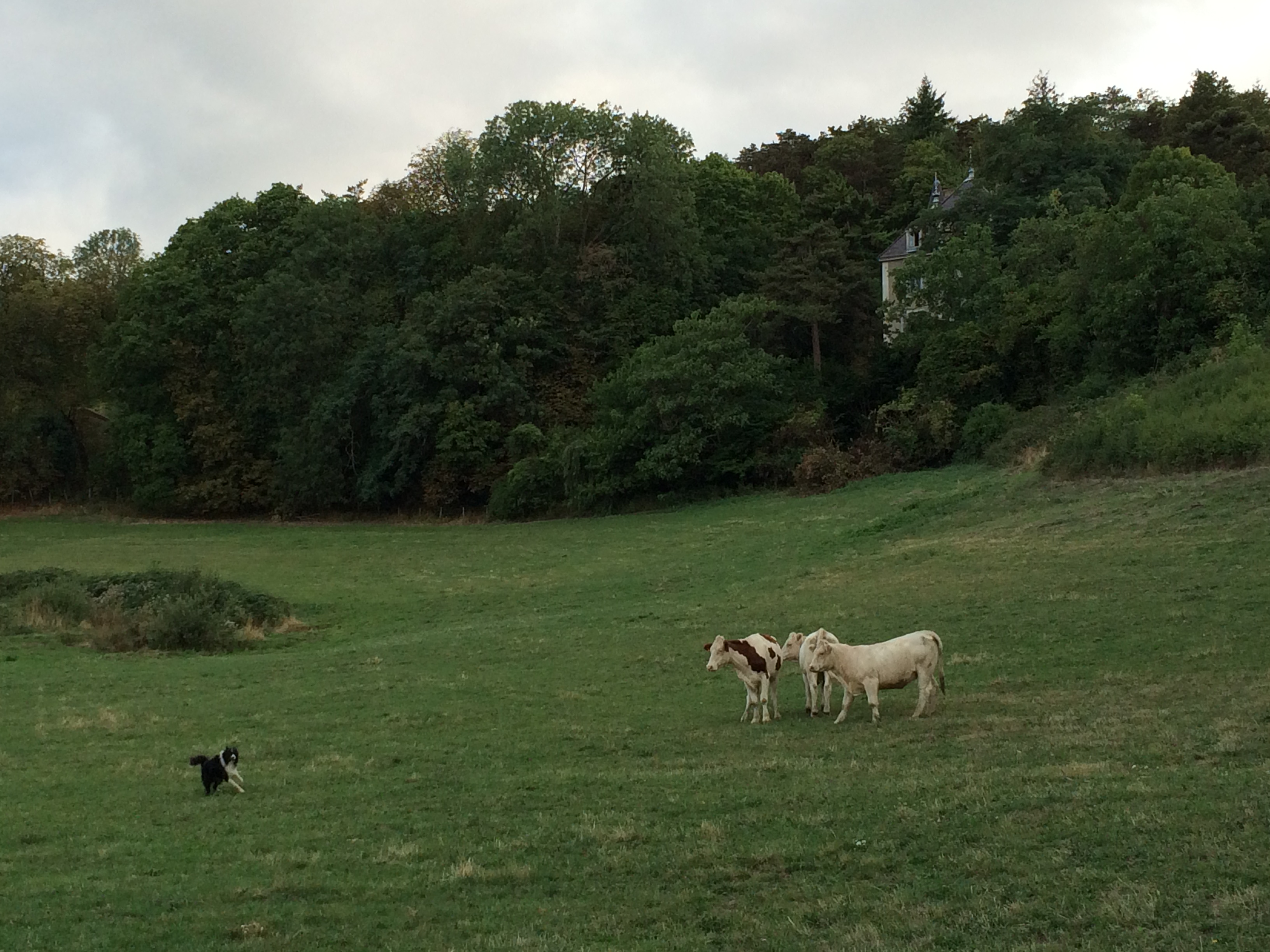
..or some barking at the bulls..

..or keeping the bulls in check..

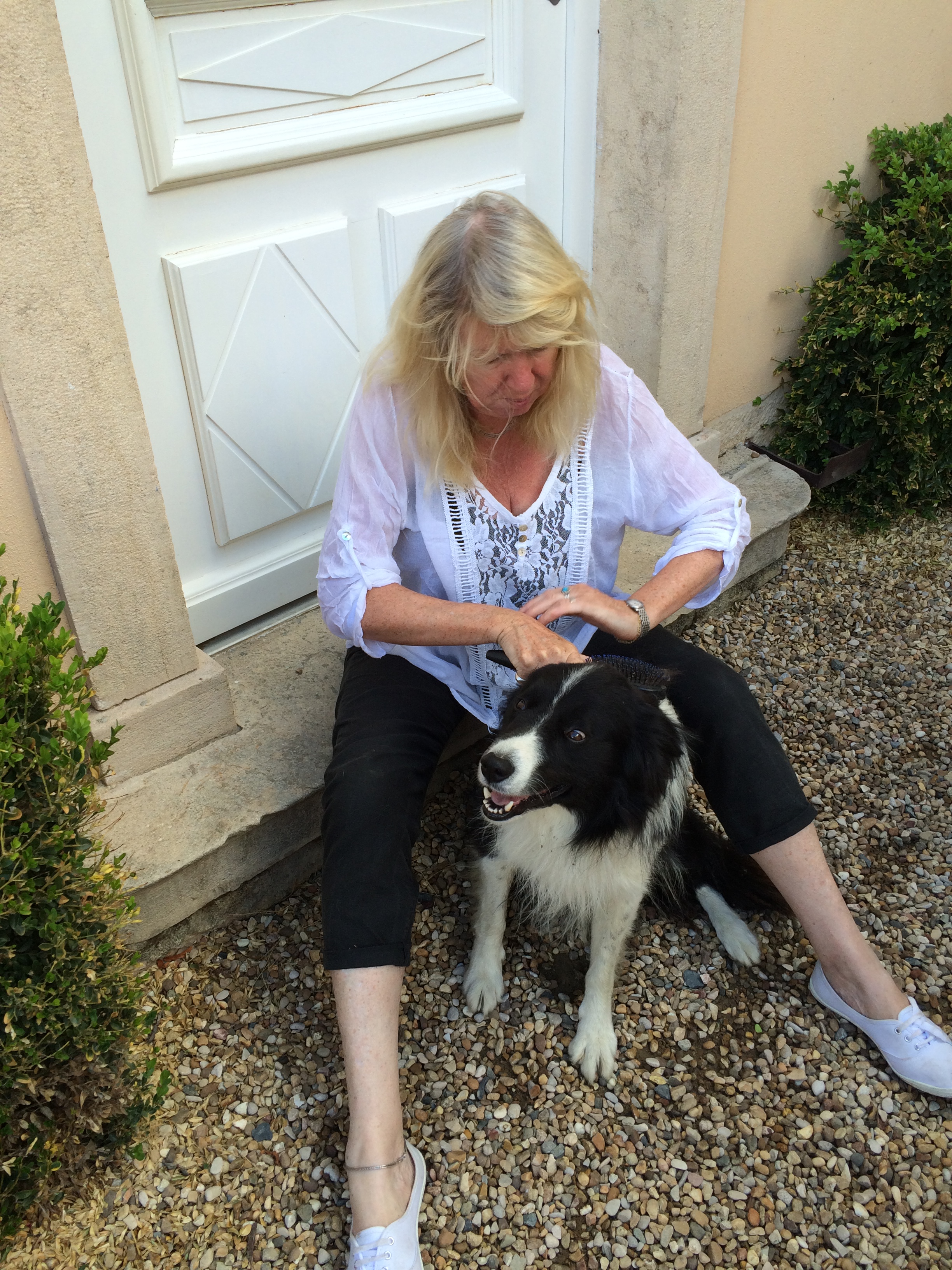
..or some grooming..

..or some grooming..


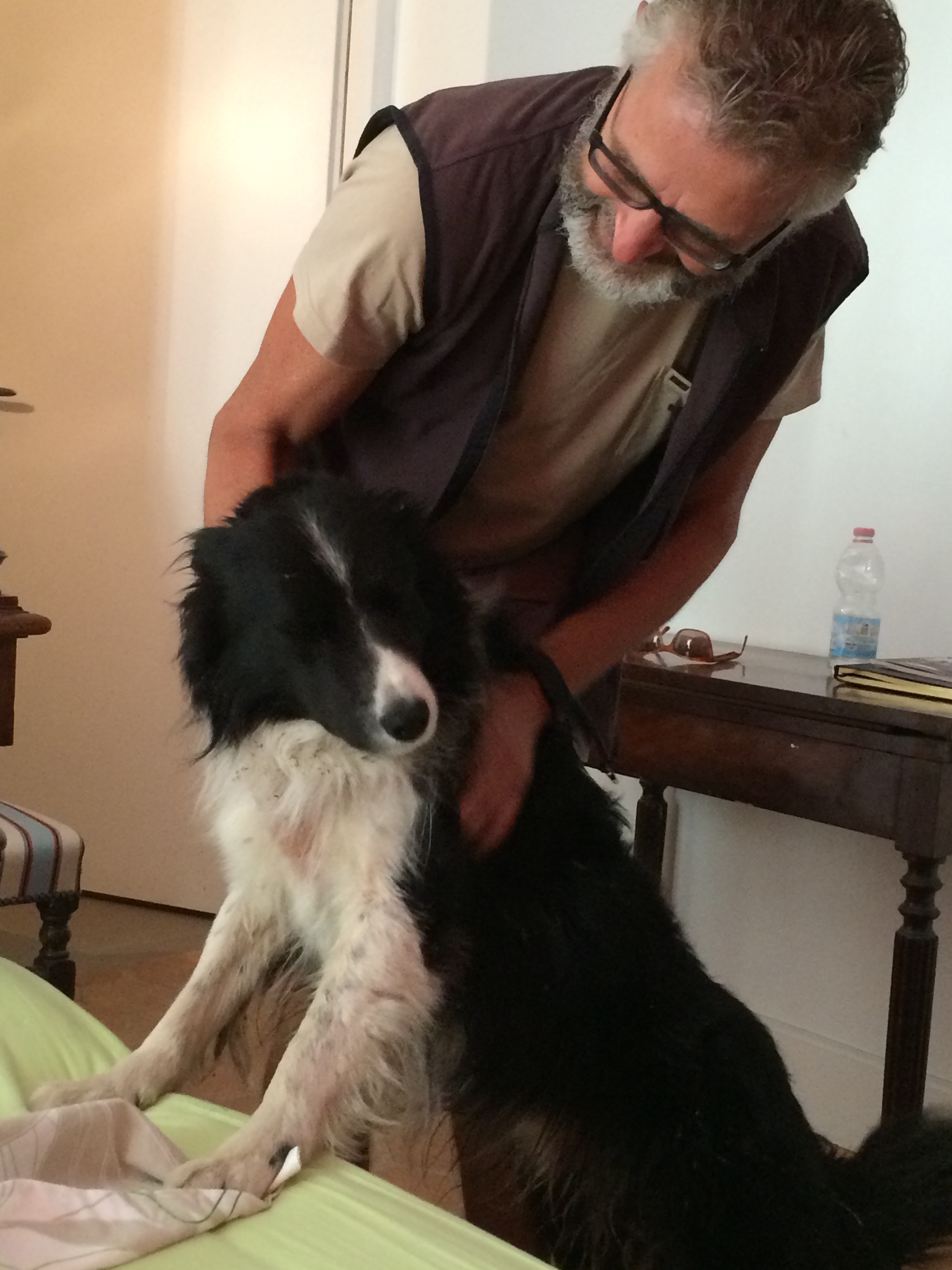
..or some messing about in the bedroom where he's not allowed..

..or some messing about in the bedroom where he’s not allowed..


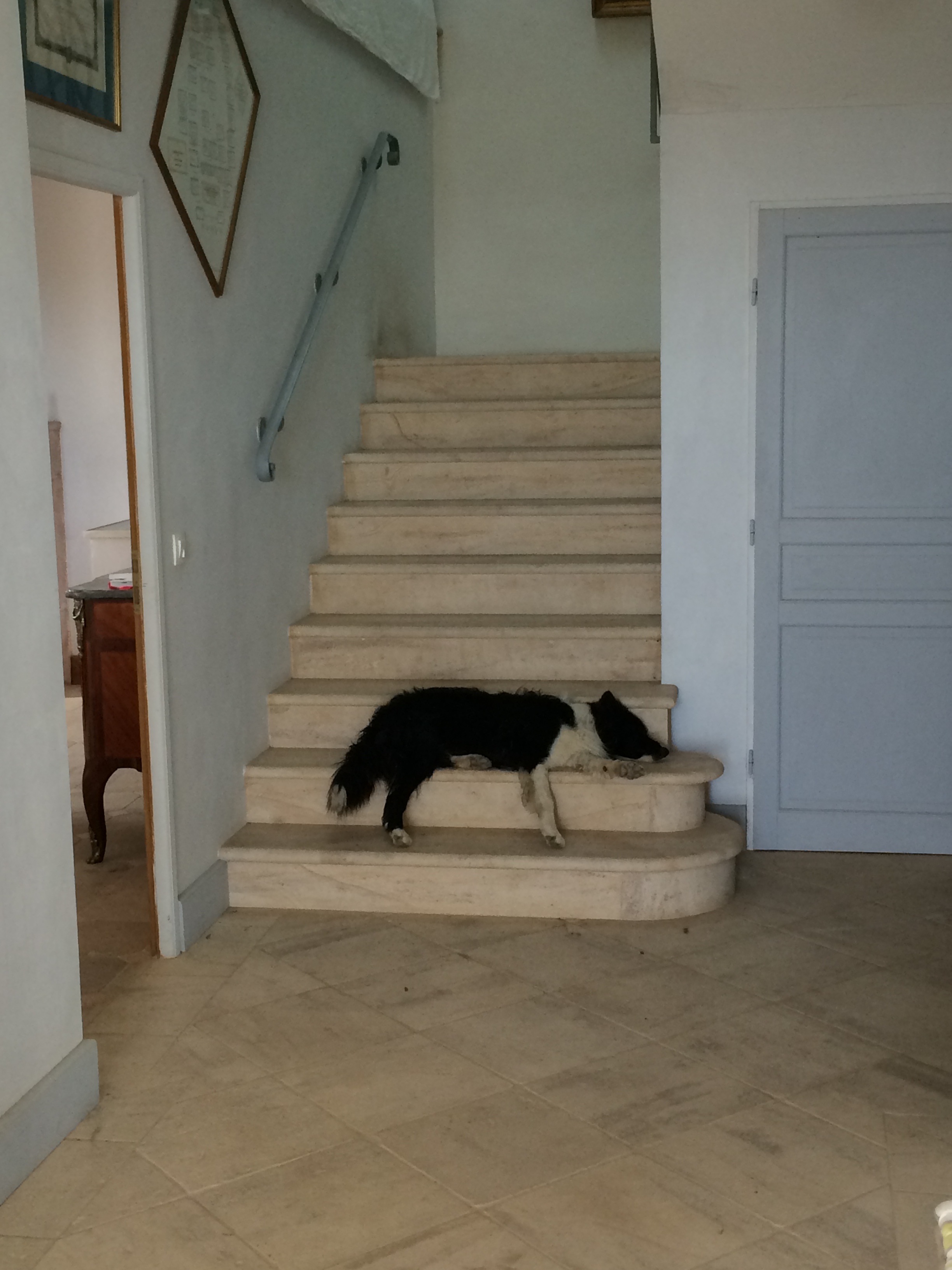
..or some impromptu snoozing on the stairs after all the activity.

..or some impromptu snoozing on the stairs after all the activity.


IMG_6209

IMG_6237

Tuesday 18th to Saturday 22nd August – Igoumenitsa to Ancona and onto Milan and Lake Como

Standard

The Greek ferry from Igoumenitsa in the north western corner of Greece to Ancona in Italy was due to leave at 9pm on the 18th.  The most expedient thing was to leave in the late morning and complete the 6-hour drive in one day – besides, it allowed us to squeeze one extra day in Milina.  The drive took us back through Agria and Volos and past Trikala, Kalabaka and Ionnina.

Agria.

Agria.

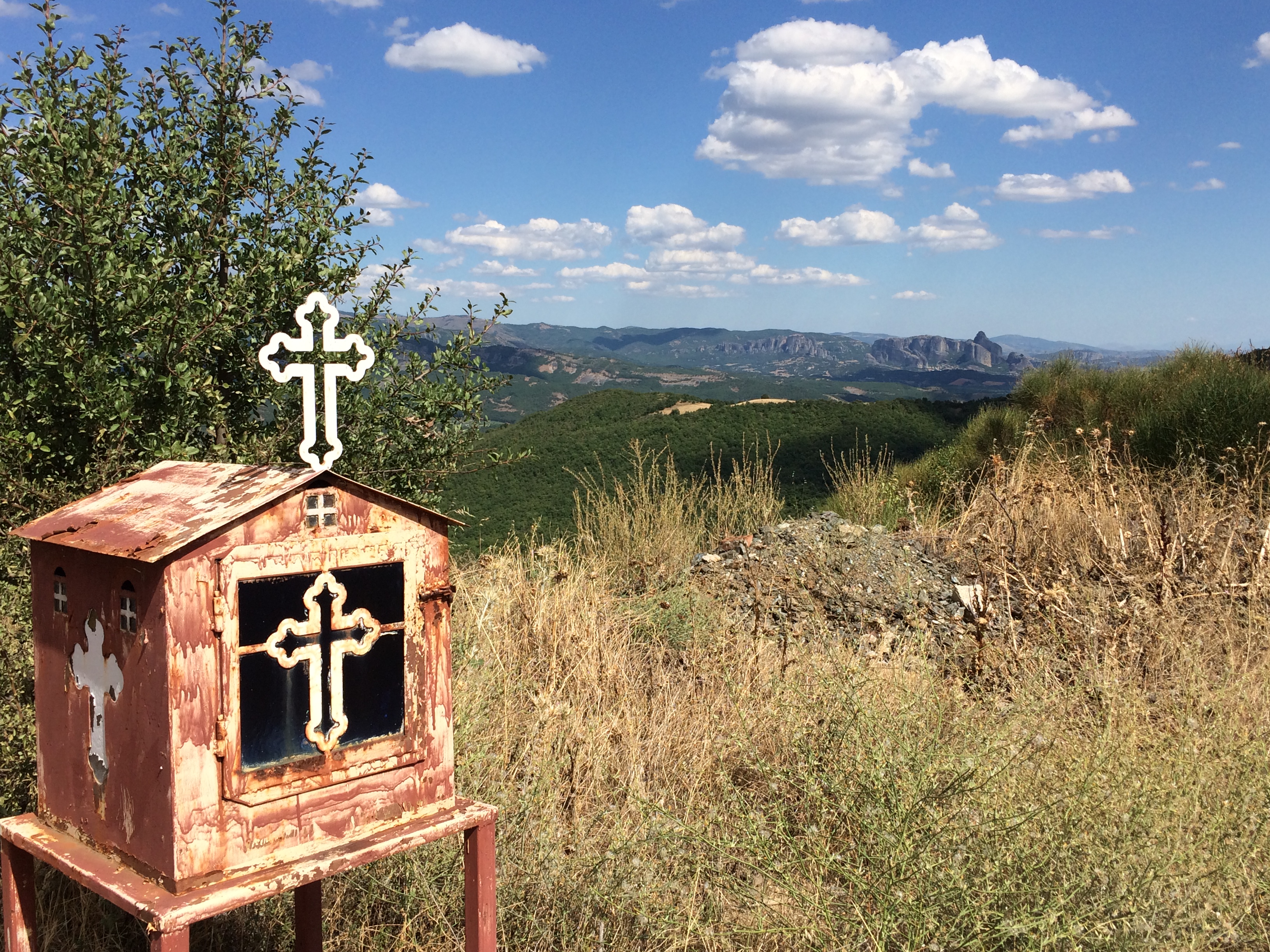
Kalabaka. The roads are in Greece are dotted with shrines such as these.

Kalabaka. The roads in Greece are dotted with shrines such as these.


IMG_6015


The ferry arrived an hour later than its scheduled departure time but the seemingly impossible number of vehicles waiting at the terminal were ushered on board impressively quickly if a little shambolically.   We headed straight for our cabin and settled in for the night crossing which was smooth apart from a thunderstorm in the morning – that, and another dose of offhand service from the surly waiters at breakfast – what is it with waiters on ferries? Perhaps because of the storm, arrival in (a very wet) Ancona was two hours later than scheduled and we had less time than we’d planned to make it to our next destination – Bologna, for the second time, where we would spend the night and show Catherine our favourite spots.

Our Greek ferry puts its engines into reverse to dock into position in Igoumenitsa.

Our Greek ferry puts its engines into reverse to dock into position in Igoumenitsa.

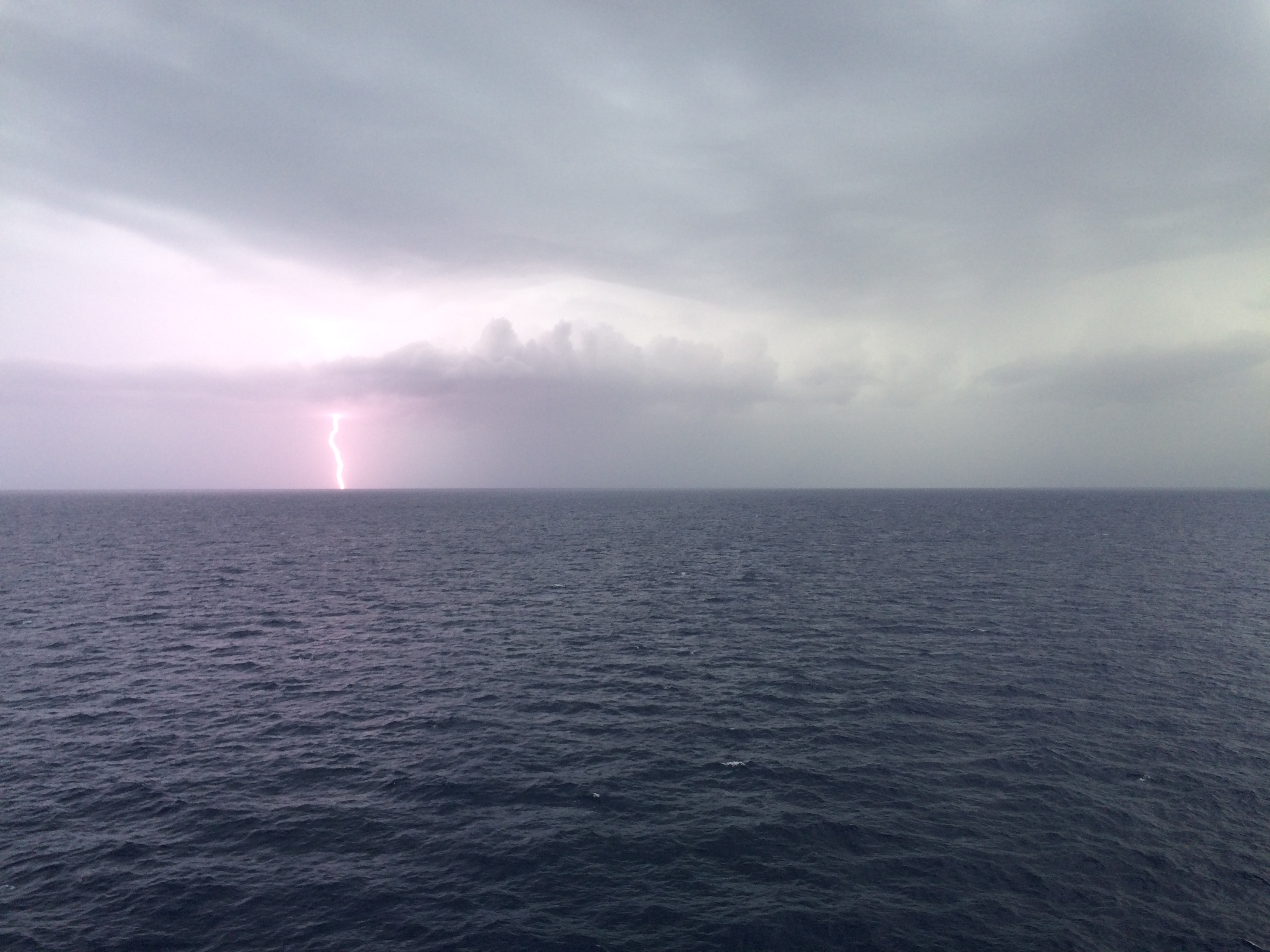
Thunderstorm at sea.

Thunderstorm at sea.


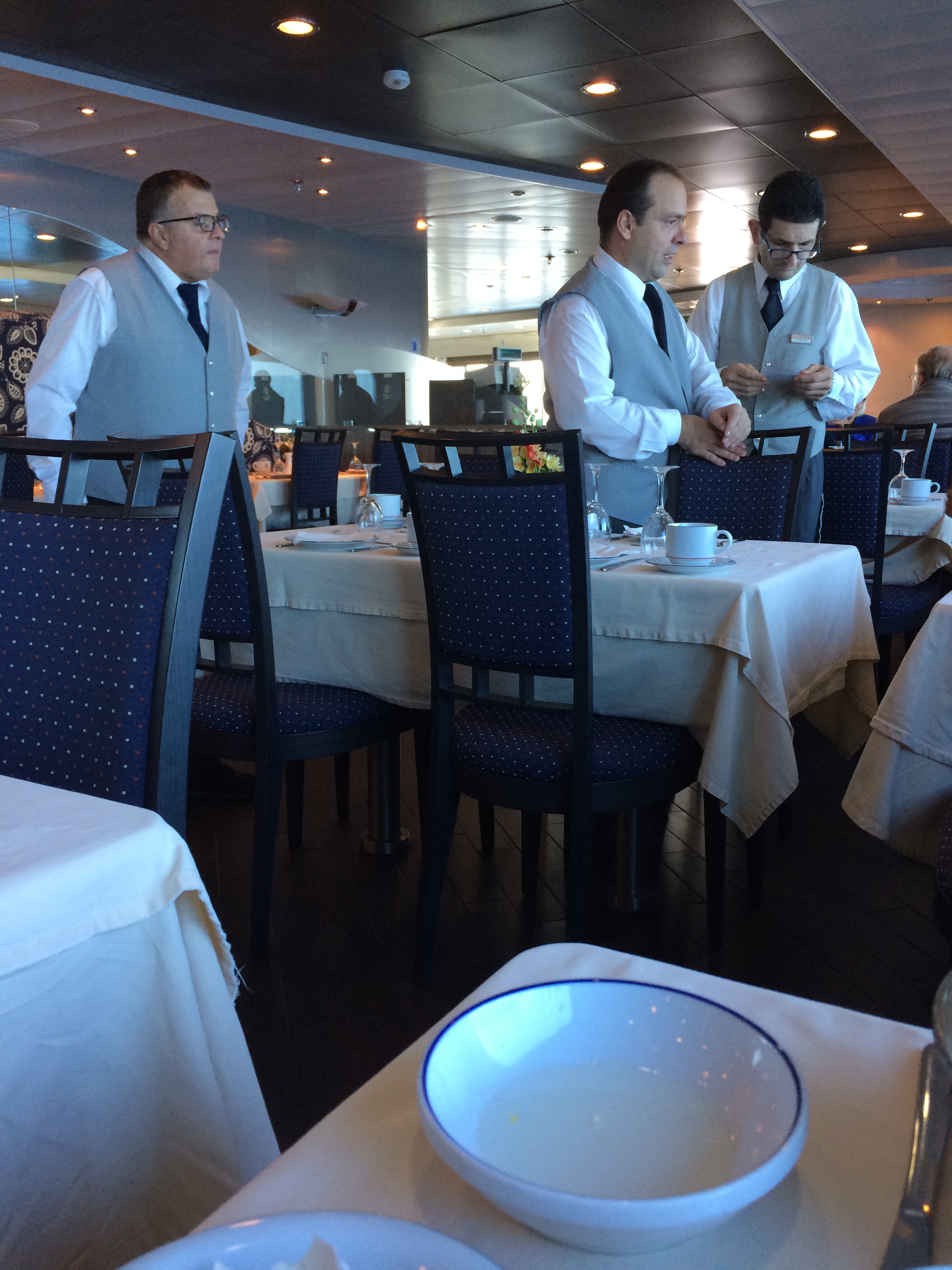
Surly waiters .. again!

And surly waiters .. again! Look at that body language!


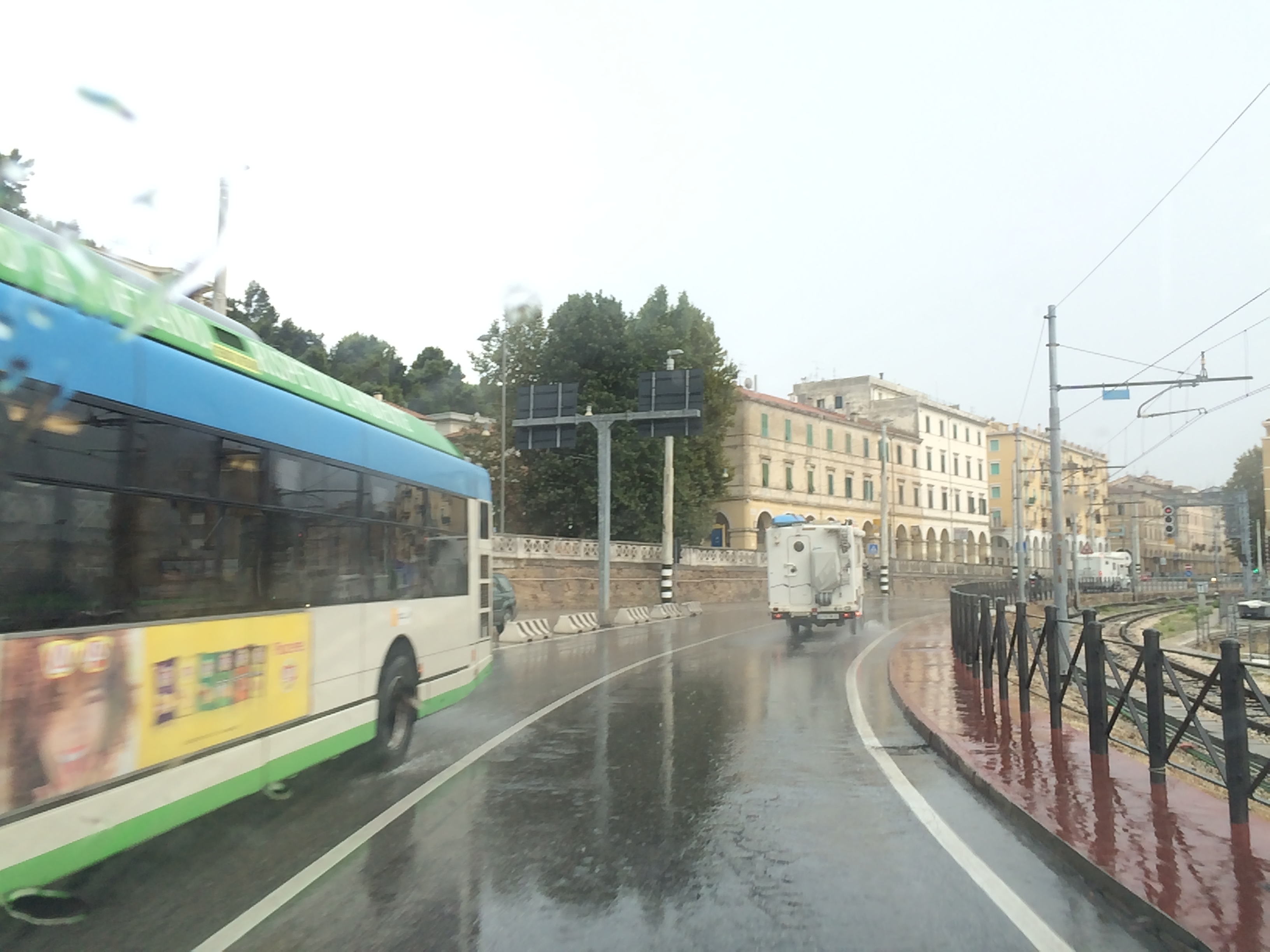
Arrival in Ancona - after the record heatwave, rain and much cooler weather has arrived on the Adriatic.

Arrival in Ancona – after the record heatwave, rain and much cooler weather had arrived on the Adriatic.


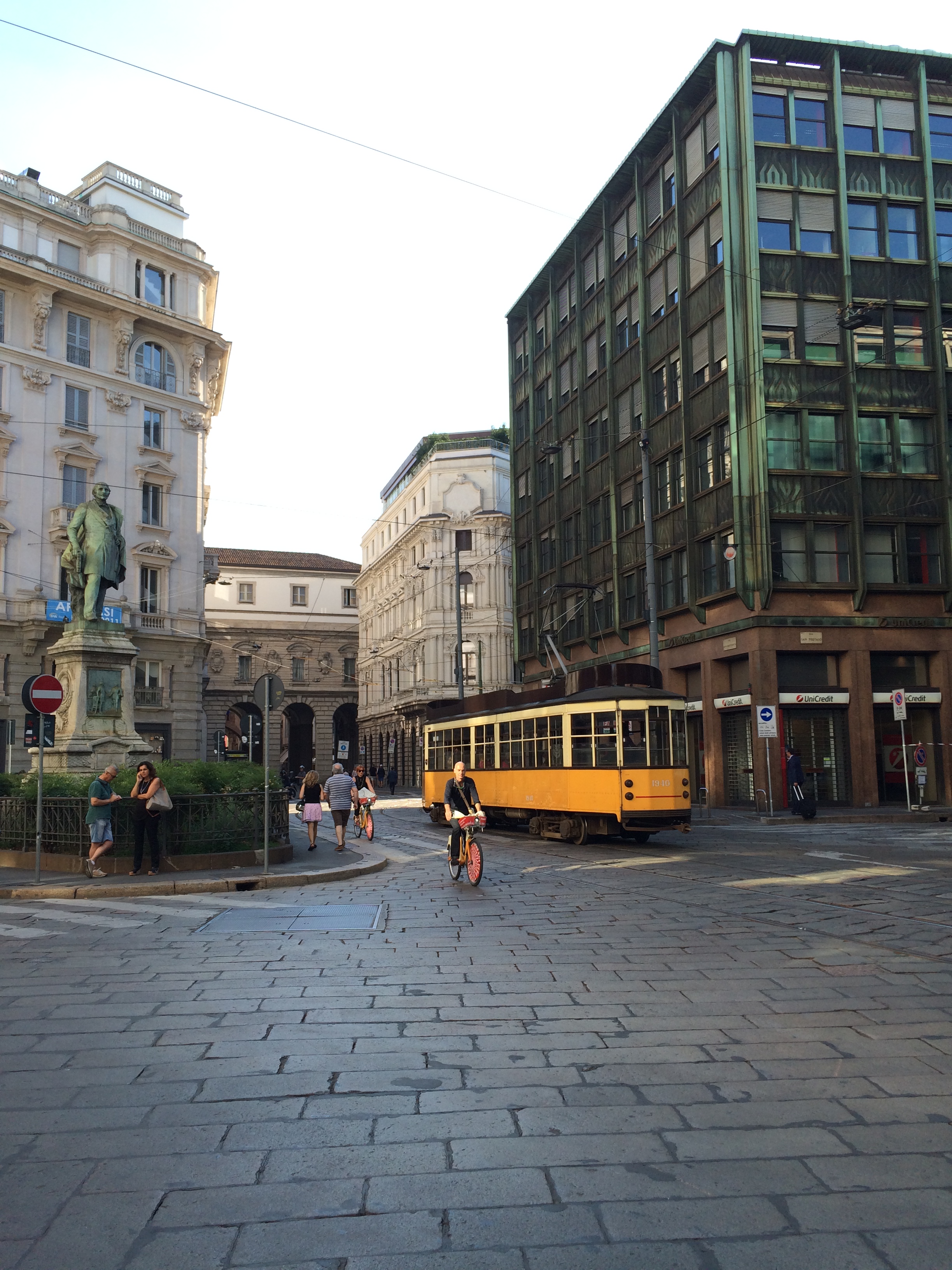
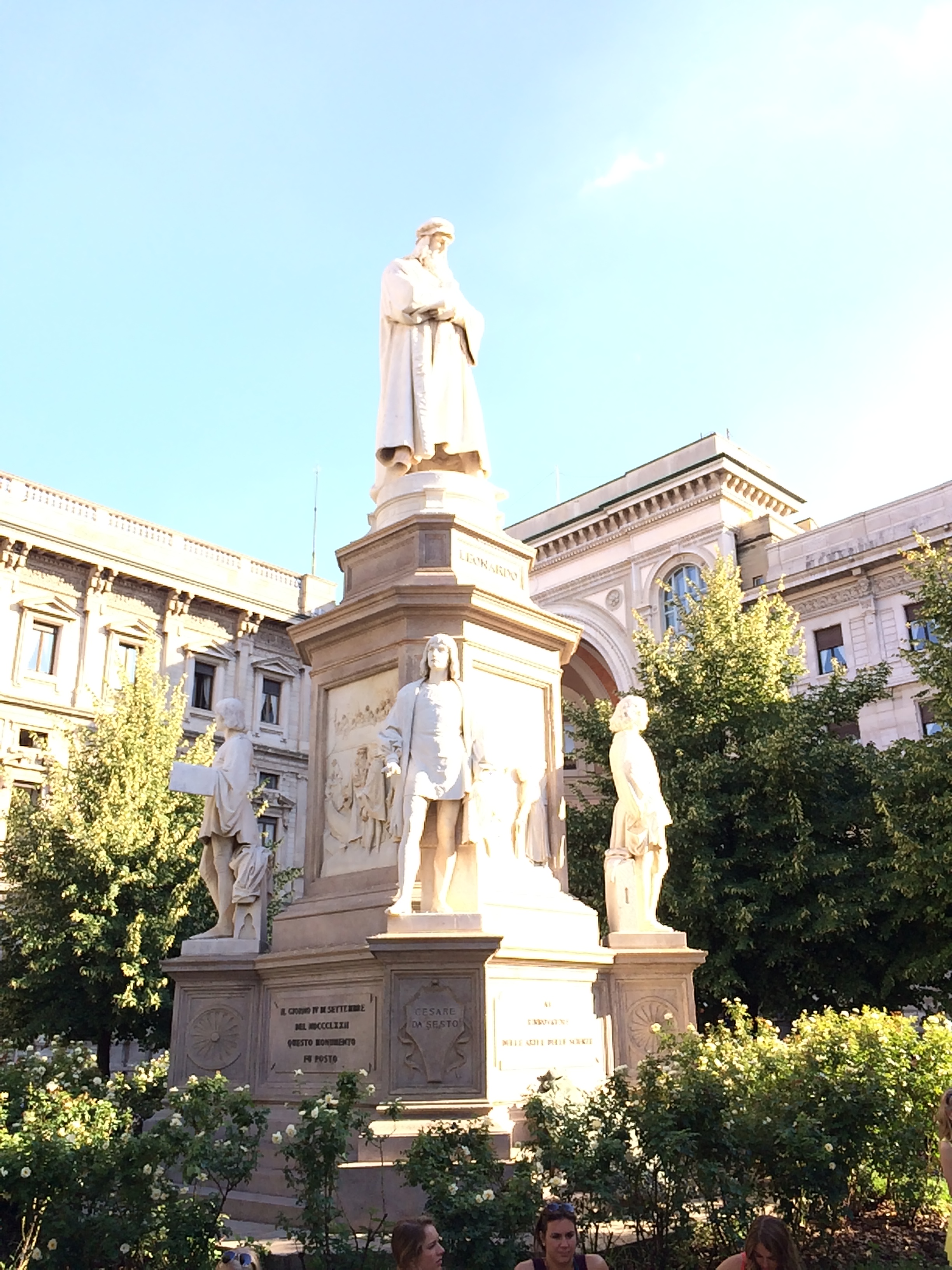
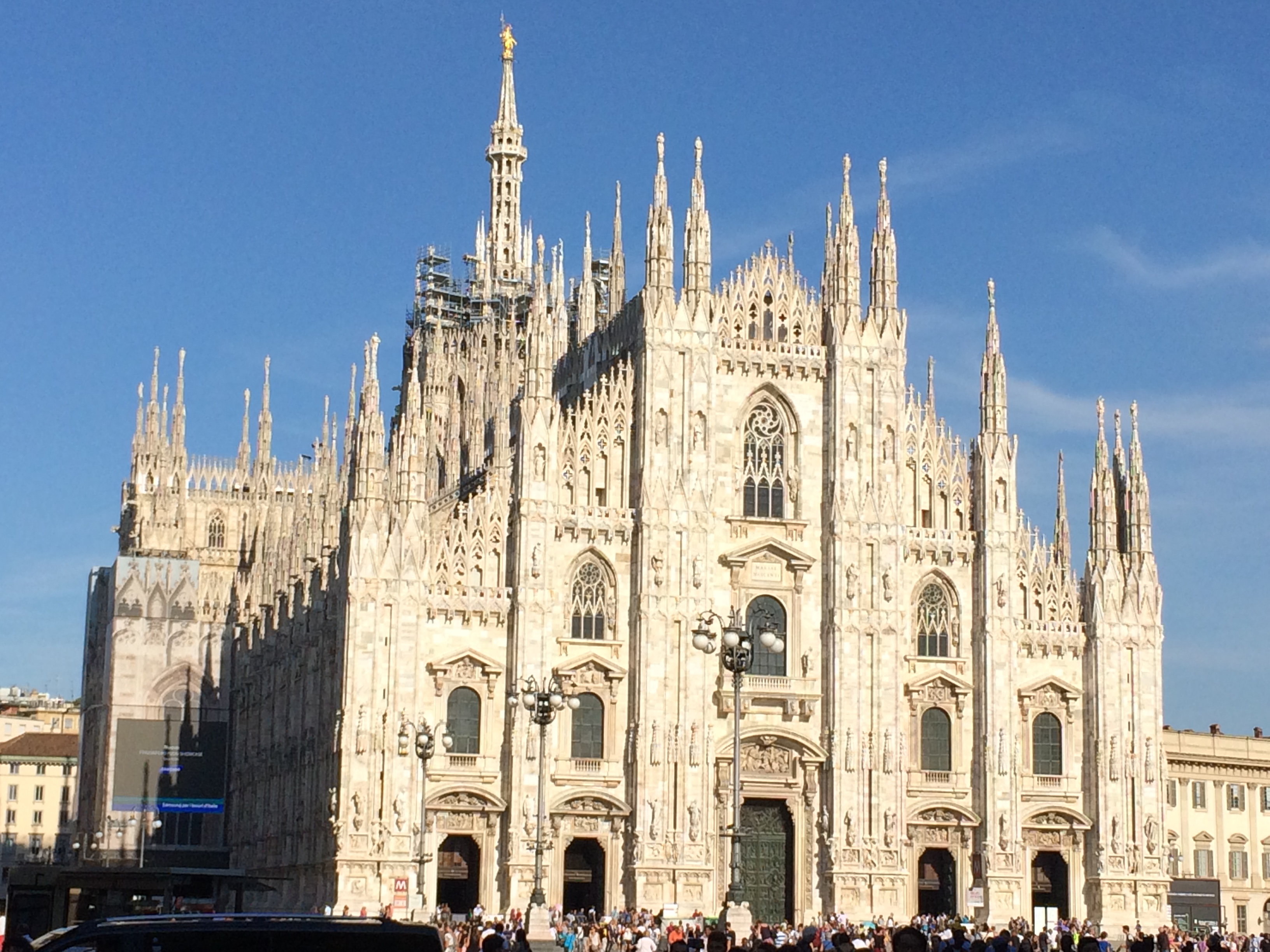
Our next destination was Lake Como to visit relatives of Flavio’s who’d moved back to Italy from Egypt.  Our route however took us very close to Milan and it seemed a shame to miss the opportunity to take a quick look at Italy’s most elegant and sophisticated city. That it certainly was, with prices to match – 30-odd Euros for two (very fancy) ice-creams, a fancy jam-tart and coffees! Shamefully, we didn’t research the history of the city but were impressed by the magnificent Gothic extravagance of the Duomo but less so by the Scala which was a surprisingly dull building.  More interesting was the statue of Leonardo da Vinci across the road from it, with the simple inscription “Leonardo”.

Monte Nero-Bergamo, Milan - a city of elegance and sophistication.

Monte Nero-Bergamo, Milan – a city of elegance and sophistication.


"Leonardo".

“Leonardo”.


The magnificent Duomo, Milan.

The magnificent Duomo, Milan.


A very elegant - and expensive - Milanese gelato.

A very elegant – and expensive – Milanese gelato.


A quirky bit of architecture in Milan.

A quirky bit of architecture in Milan.

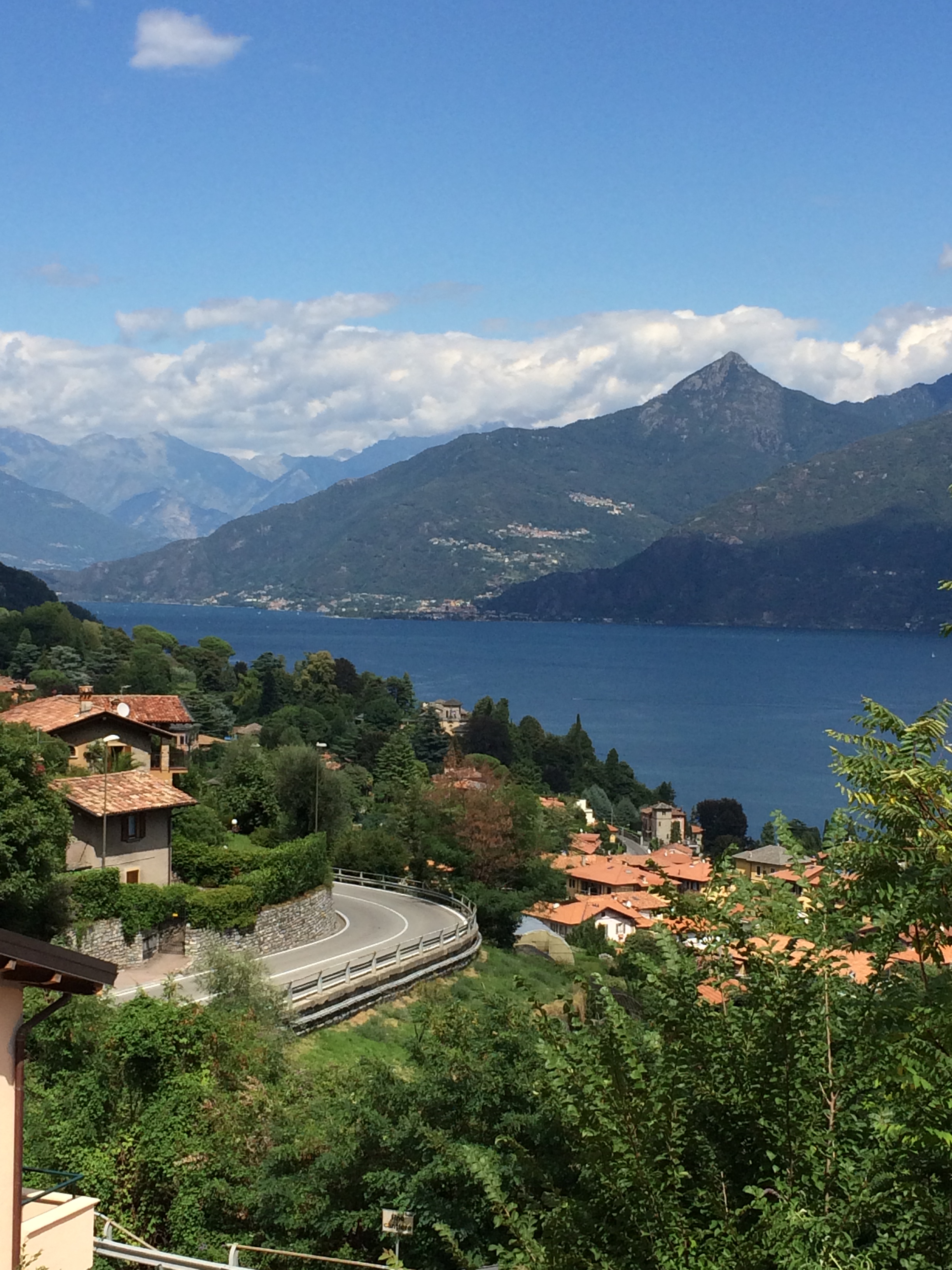
The campsite we’d plumped for was not the most convenient in terms of proximity to Flavio’s relatives but it enabled us to see a part of Italy that was new to us.  It was at Piano Porlezza, at the top end of Lake Como, very close to Lake Lugano and the Swiss border but it was one of just two campsites in the area so we had little choice.  The drive to it through the often scarily narrow mountain road following the contour of the lake and through one picturesque village after another was seemingly endless and it was dark by the time we arrived.  We had stopped at a small supermercato just before and though it had just closed they took pity on us and let us in (hard to imagine this in London) so we’d managed to get some emergency provisions for supper ie some local wine and something to go with it!

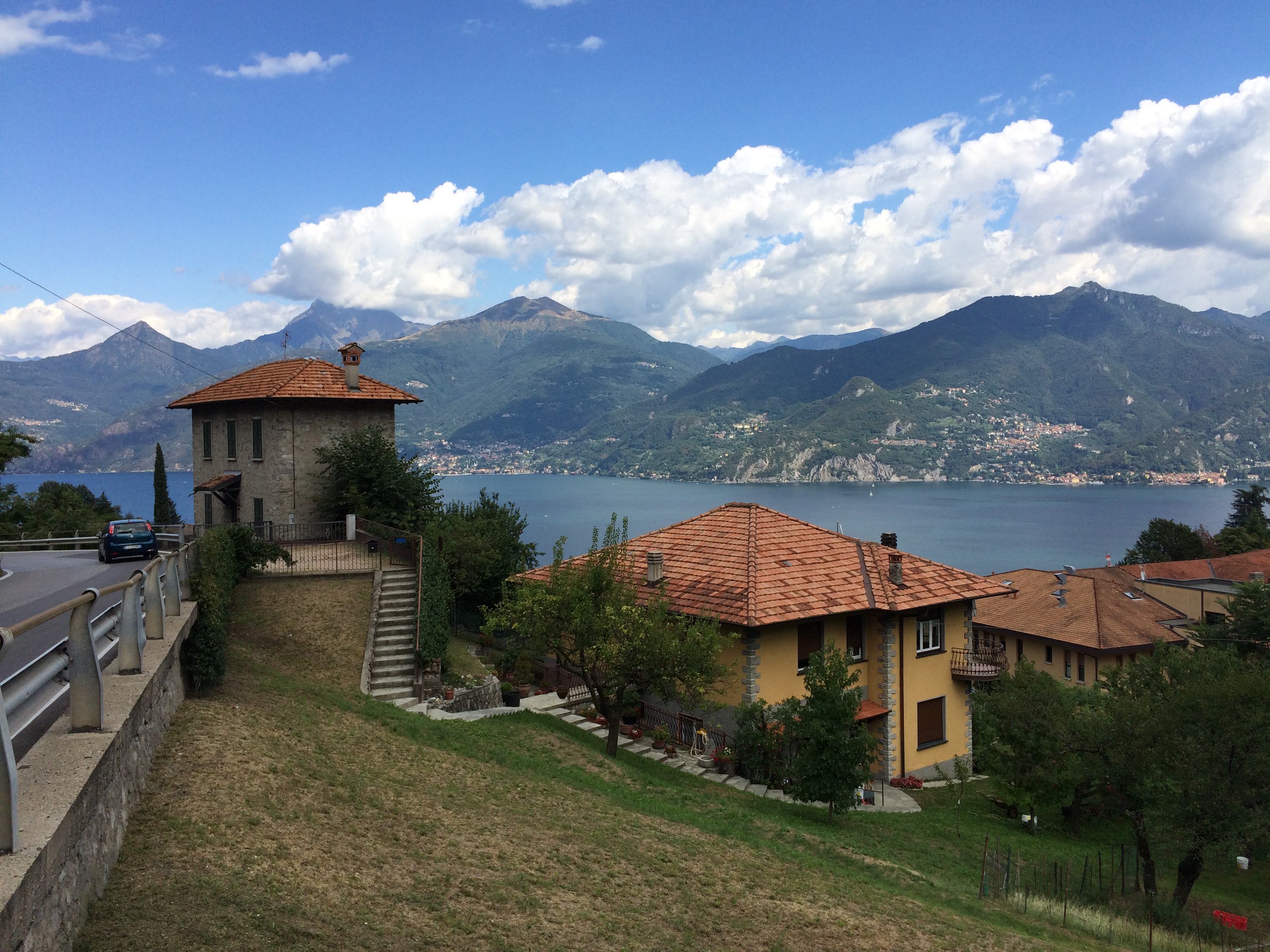
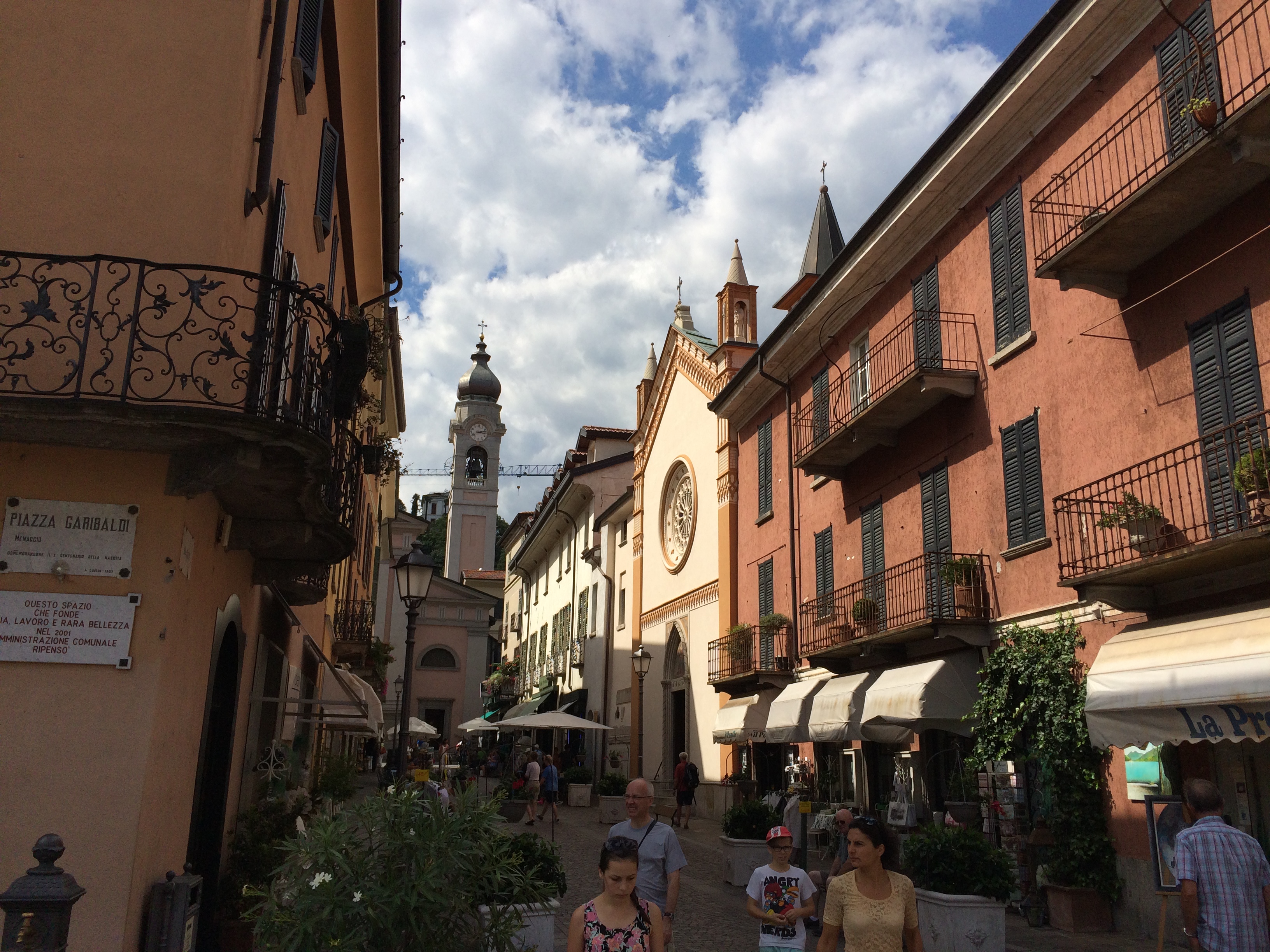
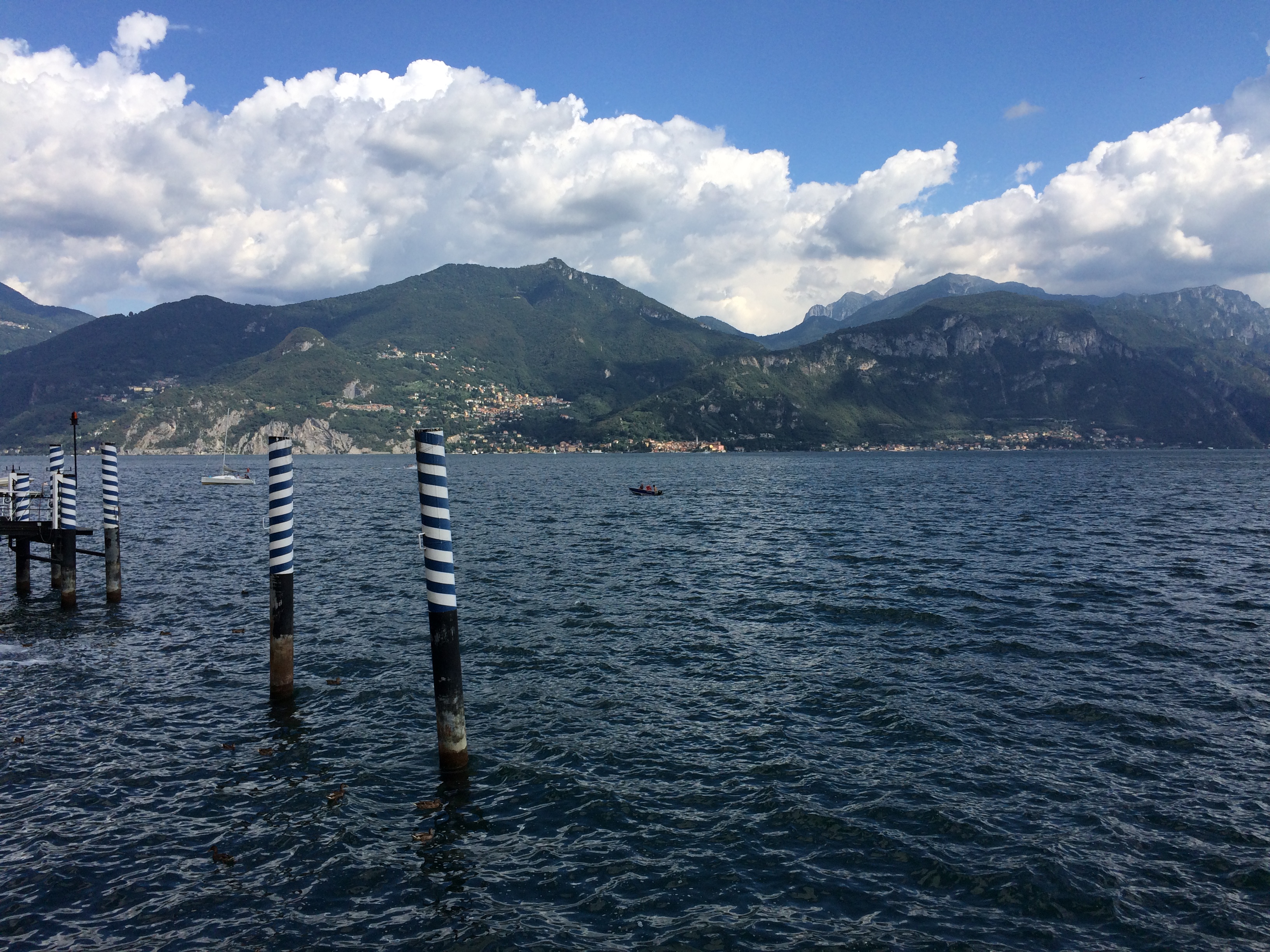
The weather had cooled down quite a bit and the next day seemed a good opportunity to explore the area via a long walk which took us down to the quintessential Italian lakeside town of Menaggio on the western side of Lake Como on the way down to which the views were quite spectacular.  Menaggio was a walled city during Roman times and remnants of the wall could still be seen.  Now, apart from being a very beautiful cool summer resort especially popular with the Germans, it’s also the place Mussolini tried to take refuge in when his luck finally ran out.

On the walk down to Menaggio.

On the walk down to Menaggio.


Spectacular views of Lake Como and surrounding mountains.

Spectacular views of Lake Como and surrounding mountains.


The popular Piazza Garibaldi in Menaggio.

The popular Piazza Garibaldi in Menaggio.

View of Lake Como from Menaggio.

View of Lake Como from Menaggio.


15 Via Castellino da Castello - one of several grand villas in Menaggio.

15 Via Castellino da Castello – one of several grand villas in Menaggio.

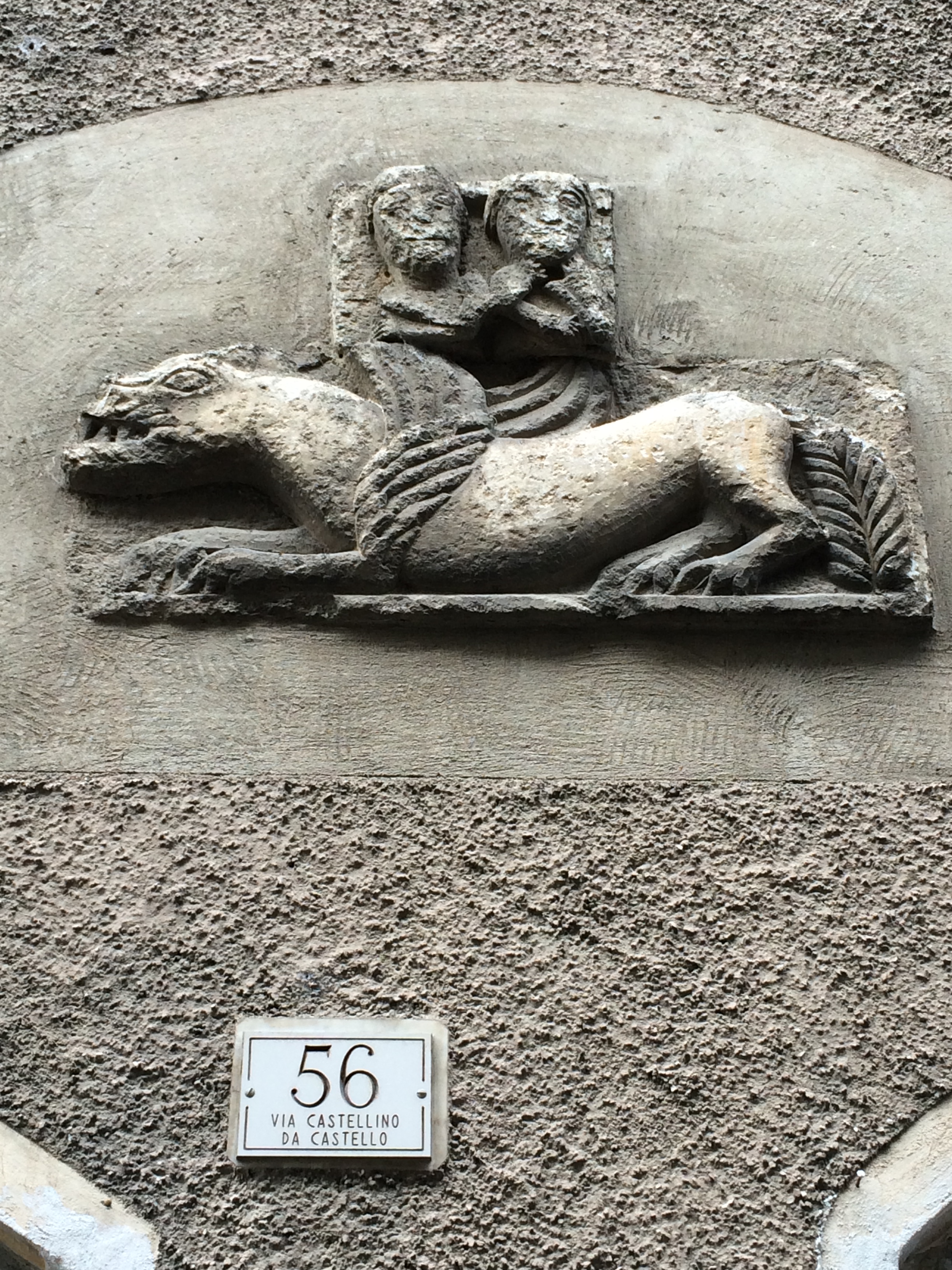
56 Via Castellino di Castello.

56 Via Castellino di Castello.


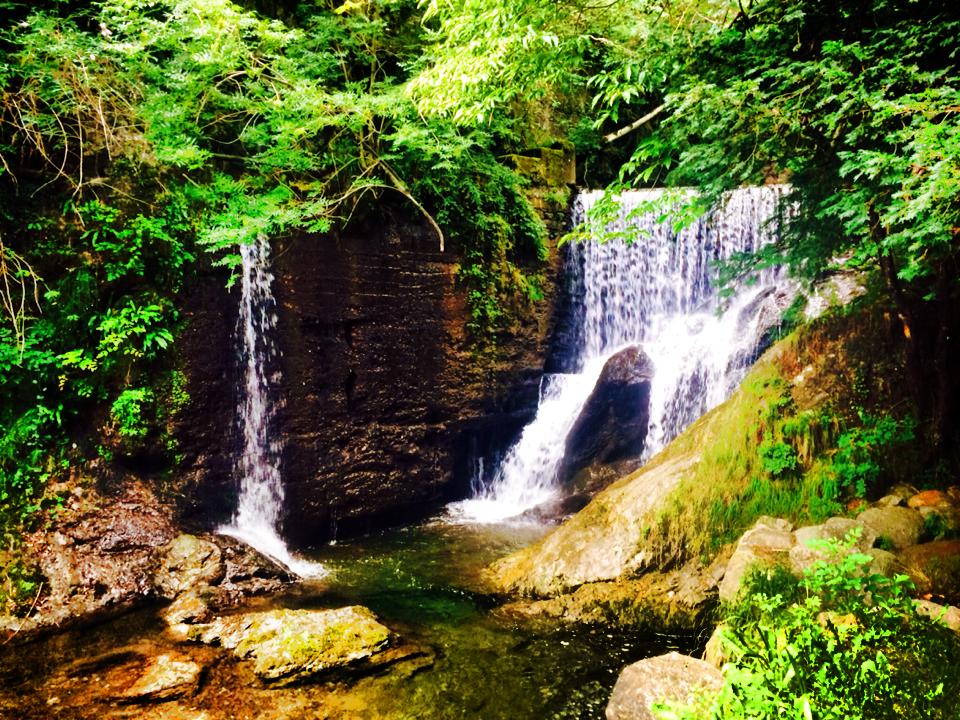
The walk back to the campsite took us through a densely wooded and hilly path which was quite a challenge but invigorating.  In the middle of it, a stunning waterfall.  The entire walk was almost 20 kms and we arrived back at sunset with aching feet and limbs.

11892230_10156014011075381_529192849056118322_n

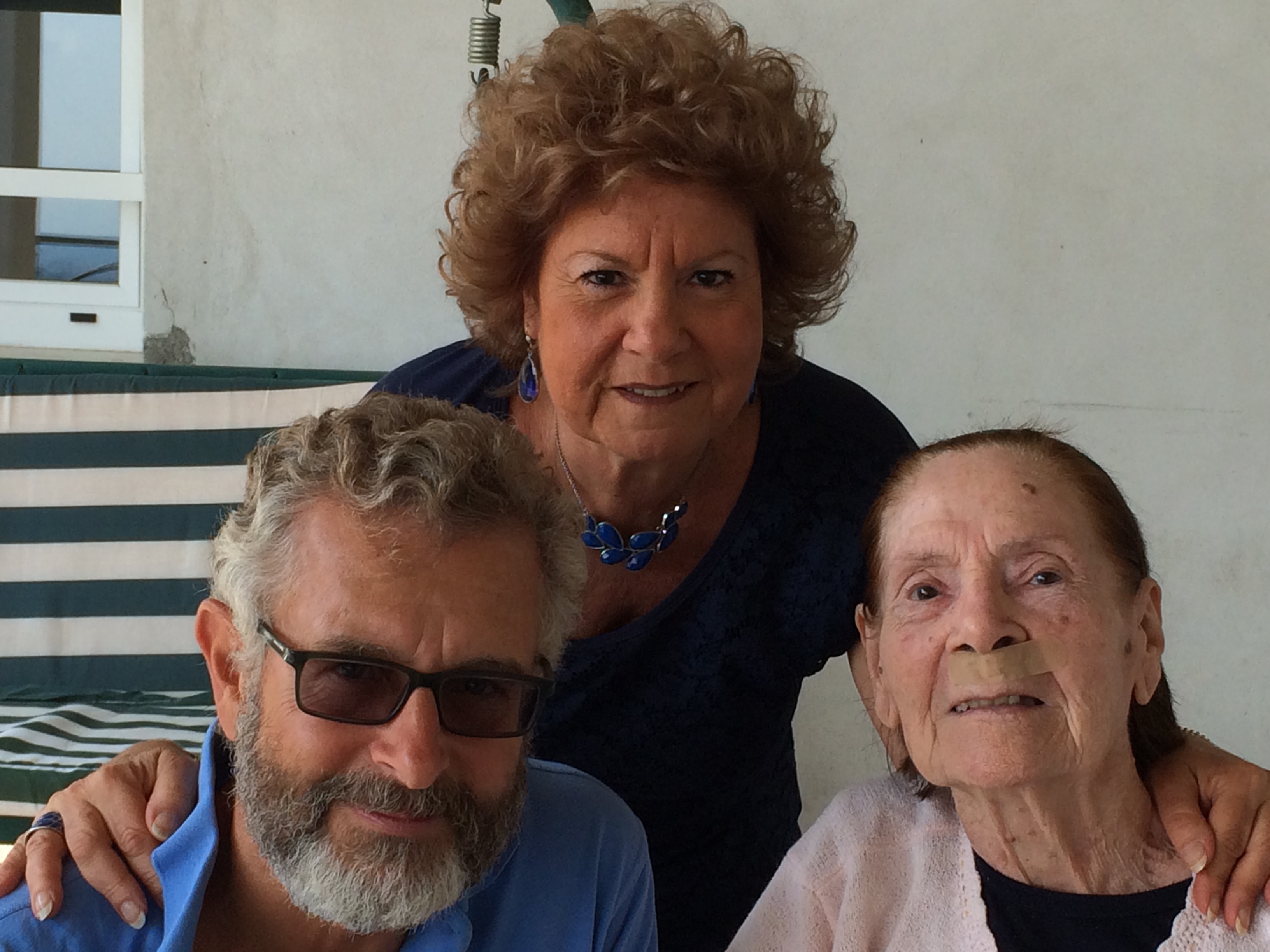
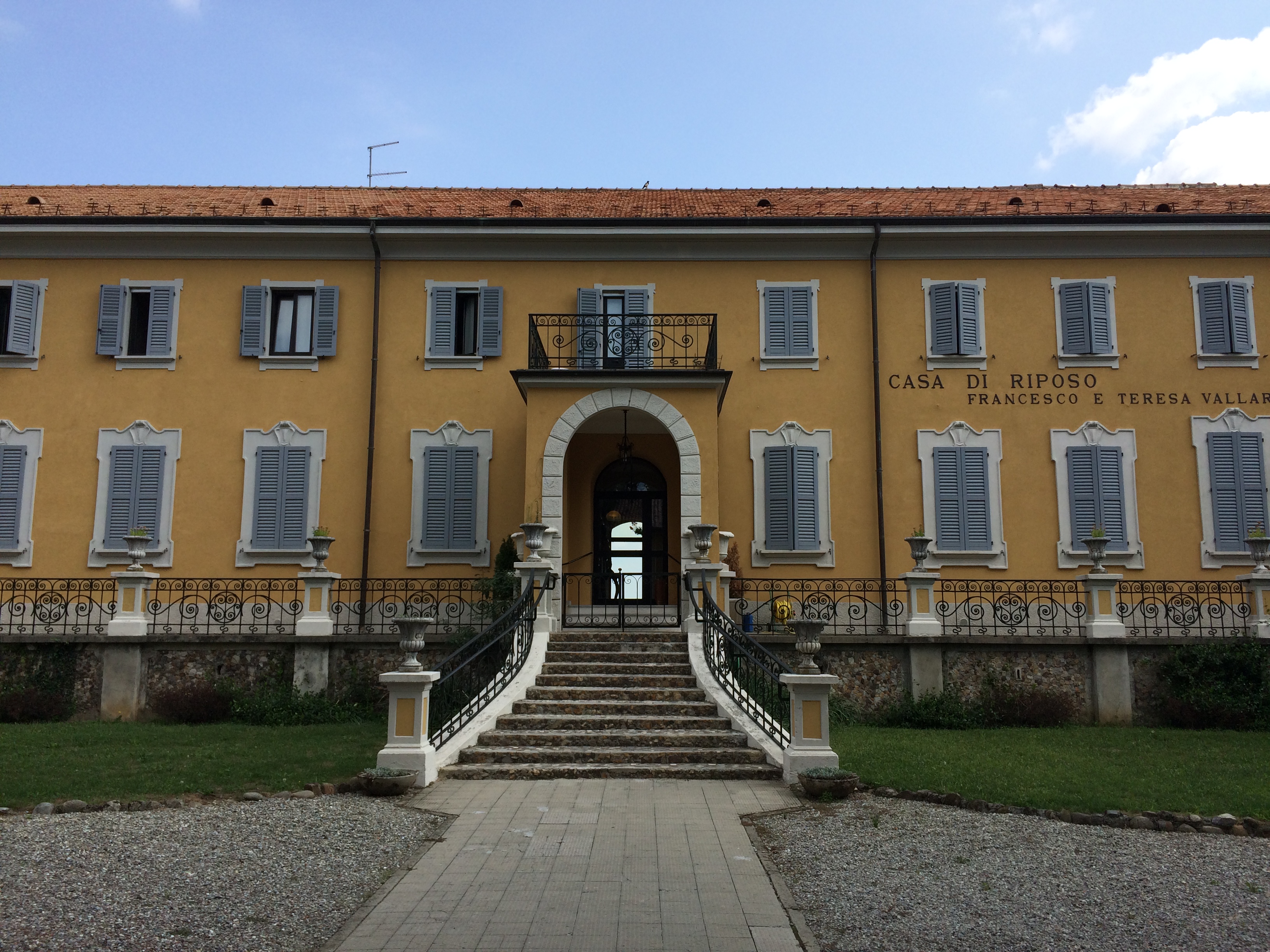
Flavio’s father Simon was born in Alexandria, Egypt, as was his grandfather Galileo.  Both were architects though Simon turned to interior design when he (a little reluctantly) emigrated to London in 1968 following further clampdowns on the foreign community by Nasser after the 6-day war.  Galileo was one of 6 brothers and sisters and one brother, Edmondo, was father to Armando, also an architect but in Cairo.  Armando died in the late 90s leaving behind his wife Rita and daughter Silvana, who now lived in Lombardy, Italy.  This was a good opportunity for Flavio to see them both so we first went to meet Silvana in Lomazzo who took us to see Rita, who was now in a home or Casa di Riposo (house of rest) as it’s called in Italian in a splendid old mansion donated to the community by Cecilio Vallardi, a local dignitary in the town of Appiano.

Seeing Rita was a very emotional moment as she had been a very kind woman, loved by everyone, especially the children and she and Flavio’s mother had been very close. It was sad to see her old-age sadness but also good to see her momentary happiness at this unexpected reunion.

Back in Lomazzo for coffee, Silvana and Flavio exchanged a few memories of the antics they used to get up to as children – “ti ricordi quando ci facevamo dispetti tua sorella e me contro di te / quando ti ho sbatacchiato sulla testa con l’altalena?” (Do you remember when your sister and I used to tease you and try and get you into trouble / when I knocked you on the head with the swing?) and such like.

It was good to see them and it was past 2pm when we left. We now had to race against time to get to our next destination – Blace in the Beaujolais-growing area near Lyons by the following afternoon, where we were to spend a day or two with our vineyard-owning friends Laurent and Blandine before the vendange started on the 15th when it would get too busy.

Flavio with aunt Rita and cousin Silvana.

Flavio with aunt Rita and cousin Silvana.

Remembering old times and mourning the passage of time.

Remembering old times and mourning the passage of time.


The magnificent Cecilio Vallardi Casa di Riposo at Appiano.

The magnificent Cecilio Vallardi Casa di Riposo at Appiano.

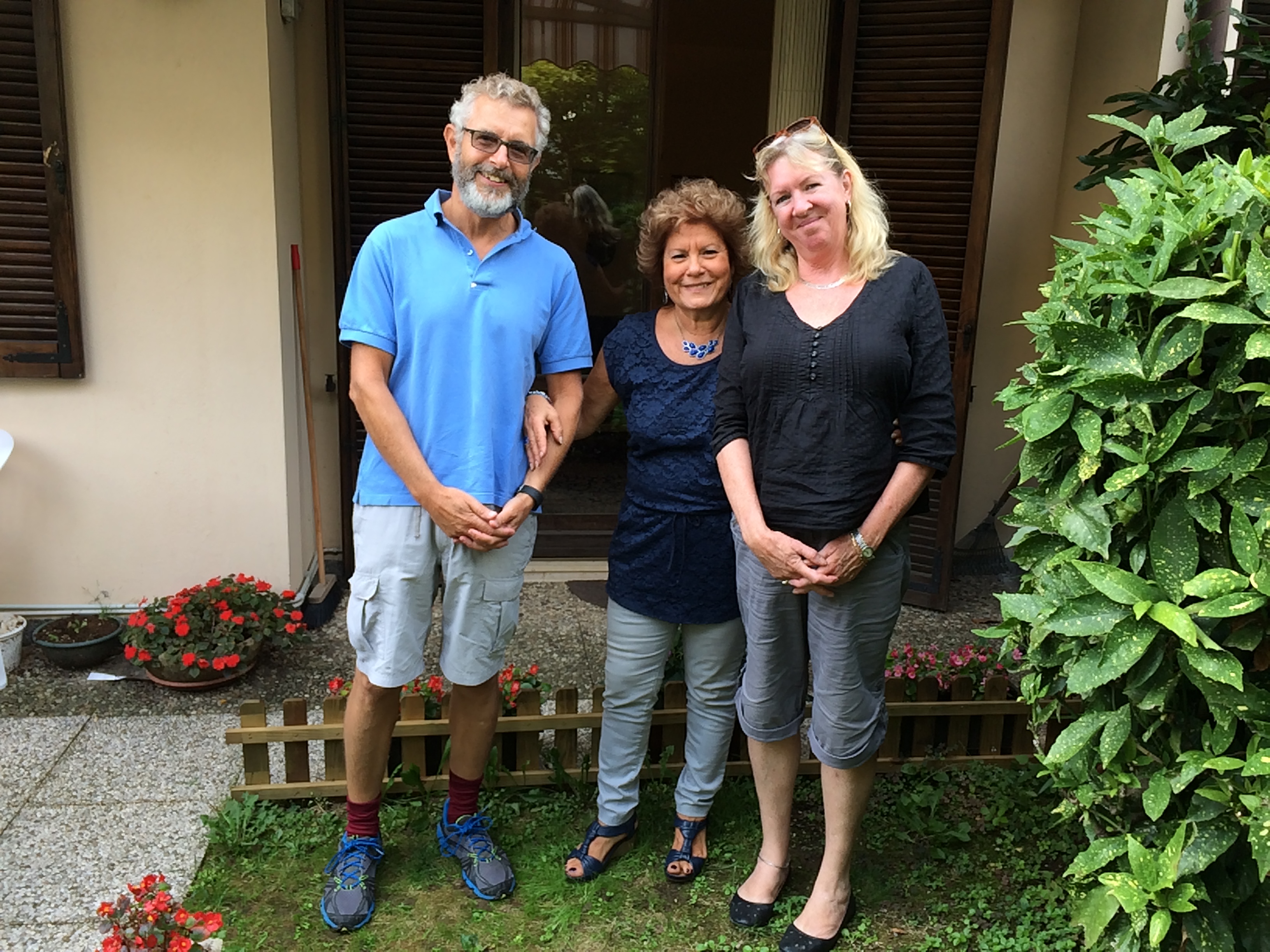
With Silvana in her garden in Lomazzo.

With Silvana in her garden in Lomazzo.


With Silvana and husband Giampiero.

With Silvana and husband Giampiero.

IMG_6154


Thursday 6th to Monday 17th August – Greece

Standard

After our two and a half months of travelling, Greece had been our goal and we viewed it as a natural finishing line – our ‘Ithaca’ in a way.  The rest of the trip would be the return journey, in as straight a line as possible, first back to Brittany where we would be house and cat-sitting and then to London.

We entered Greece from the border with Albania in the north west and spent a night in Ionnina followed by two days by the sea at the foot of Mount Olympus and a night near Thessaloniki after picking up our daughter Catherine from the airport.  And finally by just over a week spent as grateful guests of our carissimi amici Rob and Rachel in the wonderful village of Milina in the glorious Pelion Peninsula.  Lying half-way between Thessaloniki and Athens on the eastern side of the Greek mainland, the peninsula curls into the Pagasitikos Gulf almost rejoining the mainland and trapping within it a calm and serene sea.

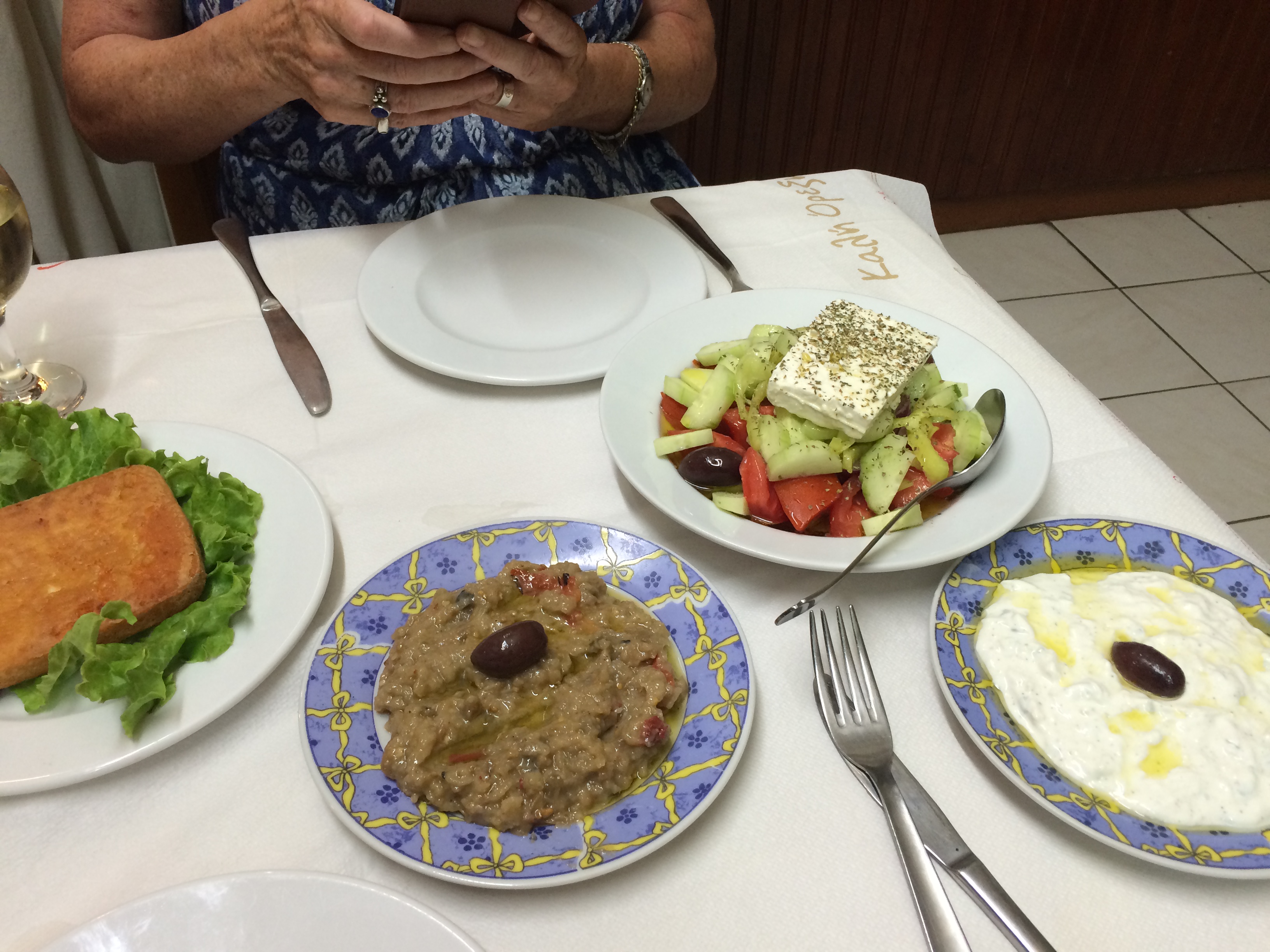
First Greek meal, in Ionnina - Greek salad, tsatsiki, aubergine dip and fried Halloumi-like cheese (though mustn't say Halloumi)

First Greek meal, in Ionnina – Greek salad, tsatsiki, aubergine dip and fried Halloumi-like cheese (though mustn’t say Halloumi!)

Passing through Korinos and approaching Mount Olympus south of Thessaloniki.

Passing through Korinos and approaching Mount Olympus south of Thessaloniki.


Describing Pelion – with its sleepy seaside and hill-top villages linked by donkey tracks, landscapes unchanged for millennia, translucent coves and forested peaks speckled with terra-cotta roofs – makes it sound like a myth.  But its remoteness, thanks to which it was a monastic retreat and a stronghold of resistance to Turkish occupation for 4 centuries, has ensured it has remained relatively untouched.  It’s been our favourite place in Greece for over 20 years and returning to it after a long adventurous journey felt reassuring and comforting.

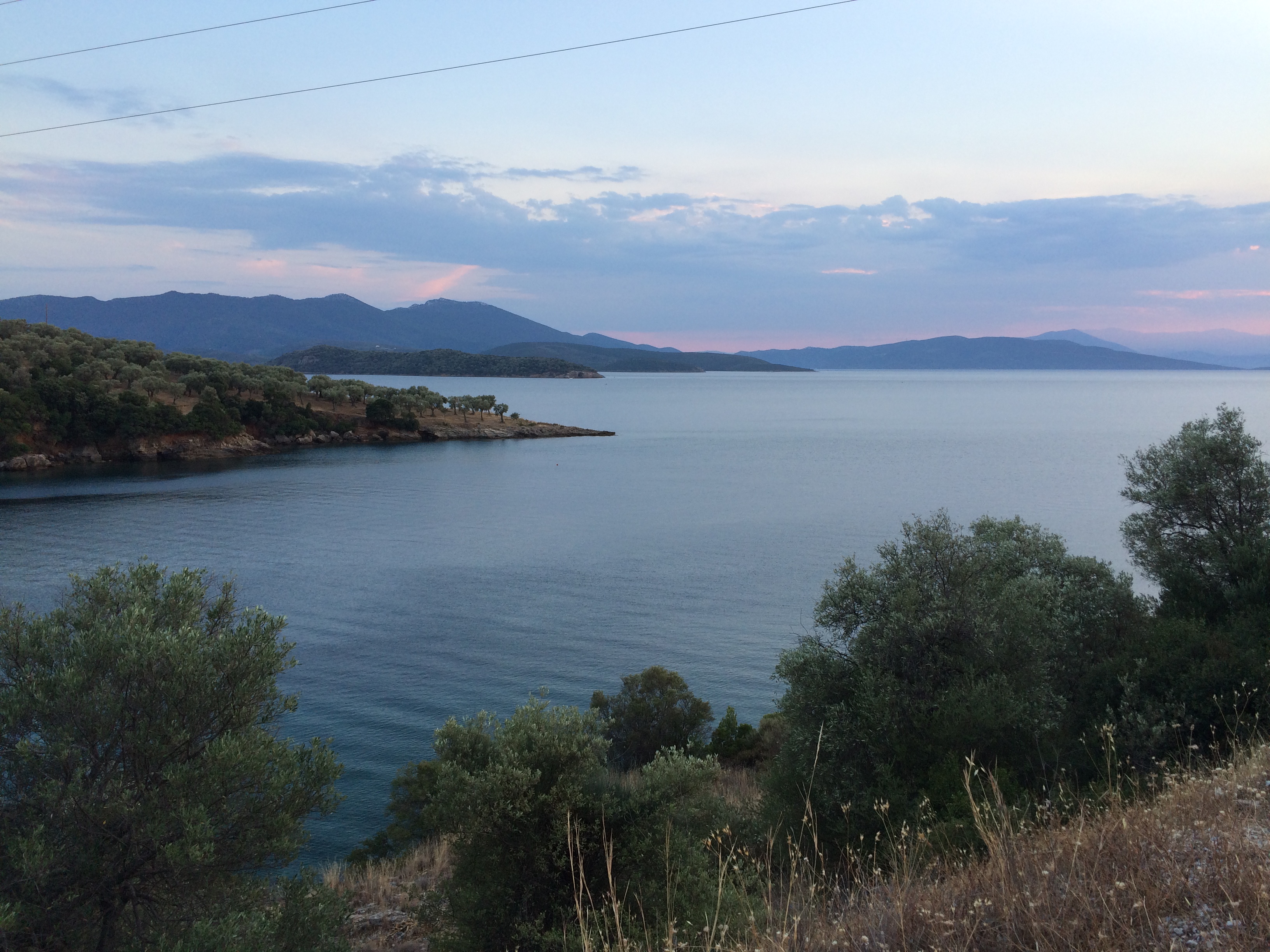
The glassy Pagasitikos Gulf, as seen from Argalasti in Pelion.

The glassy Pagasitikos Gulf, as seen from Argalasti on the Pelion peninsula.

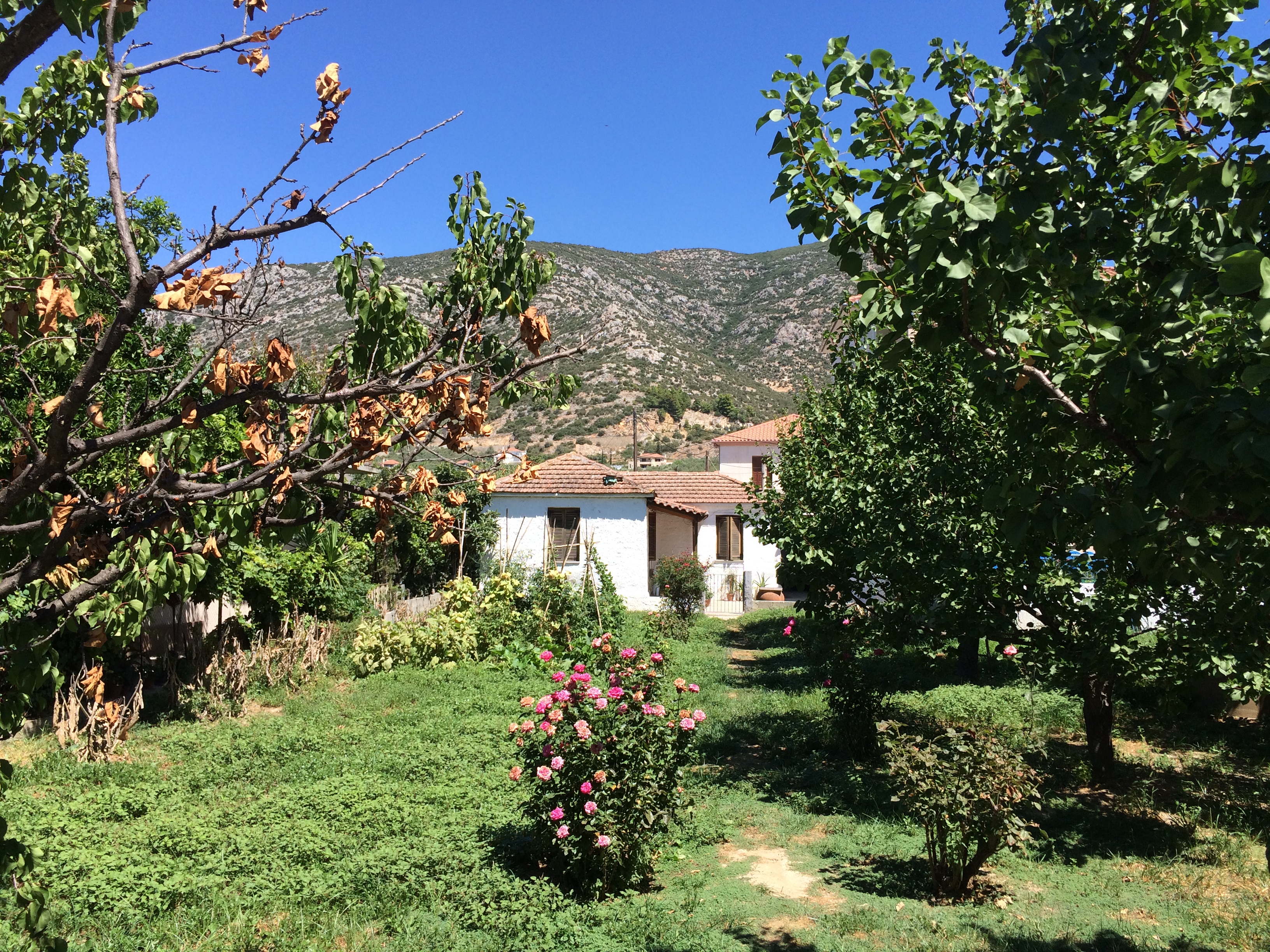
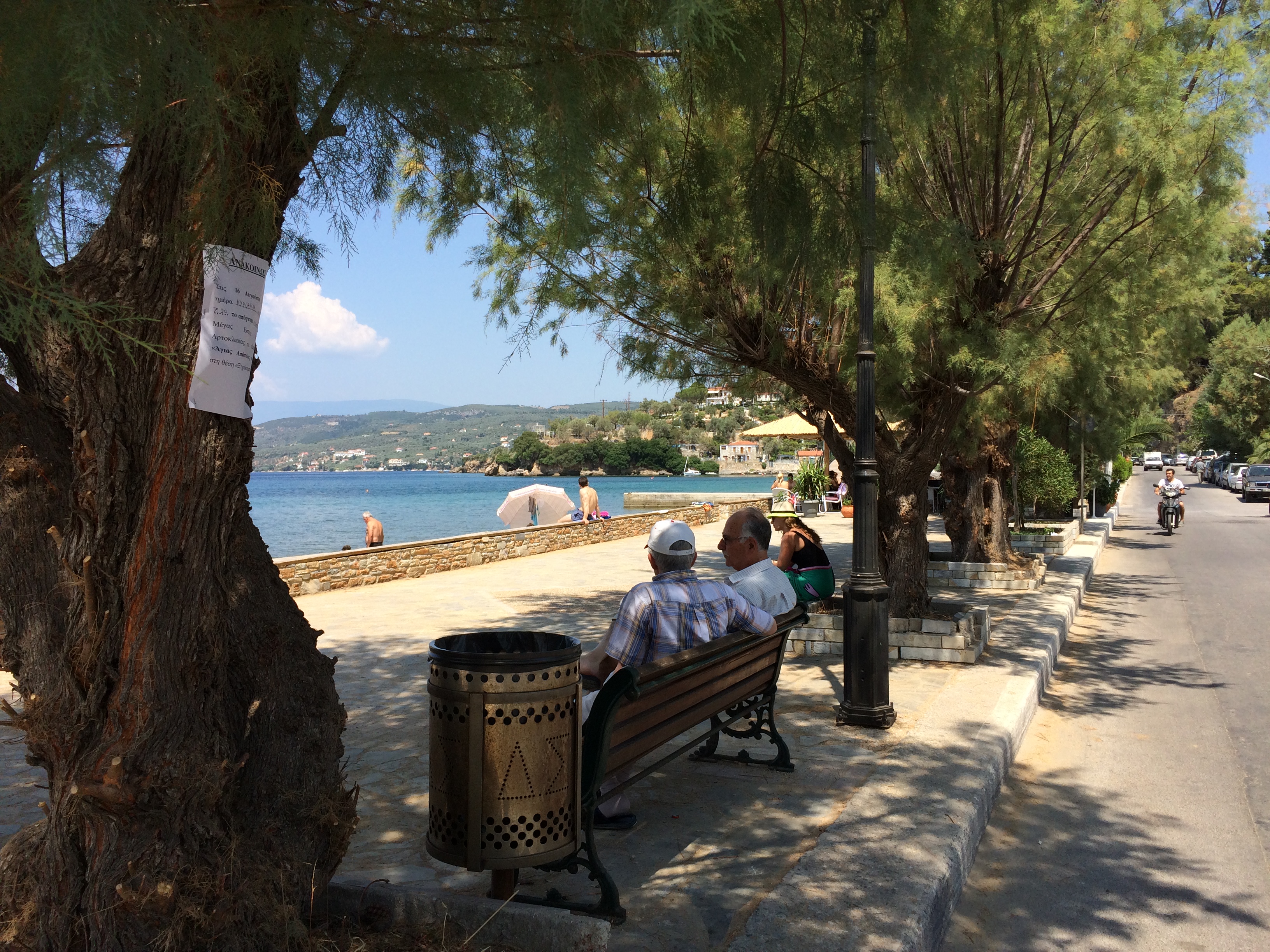
The quiet and peaceful village of Milina in Pelion.

The unspoilt and peaceful village of Milina in Pelion.


A typical street on the uphill slopes in Milina.

A typical street on the uphill slopes in Milina.


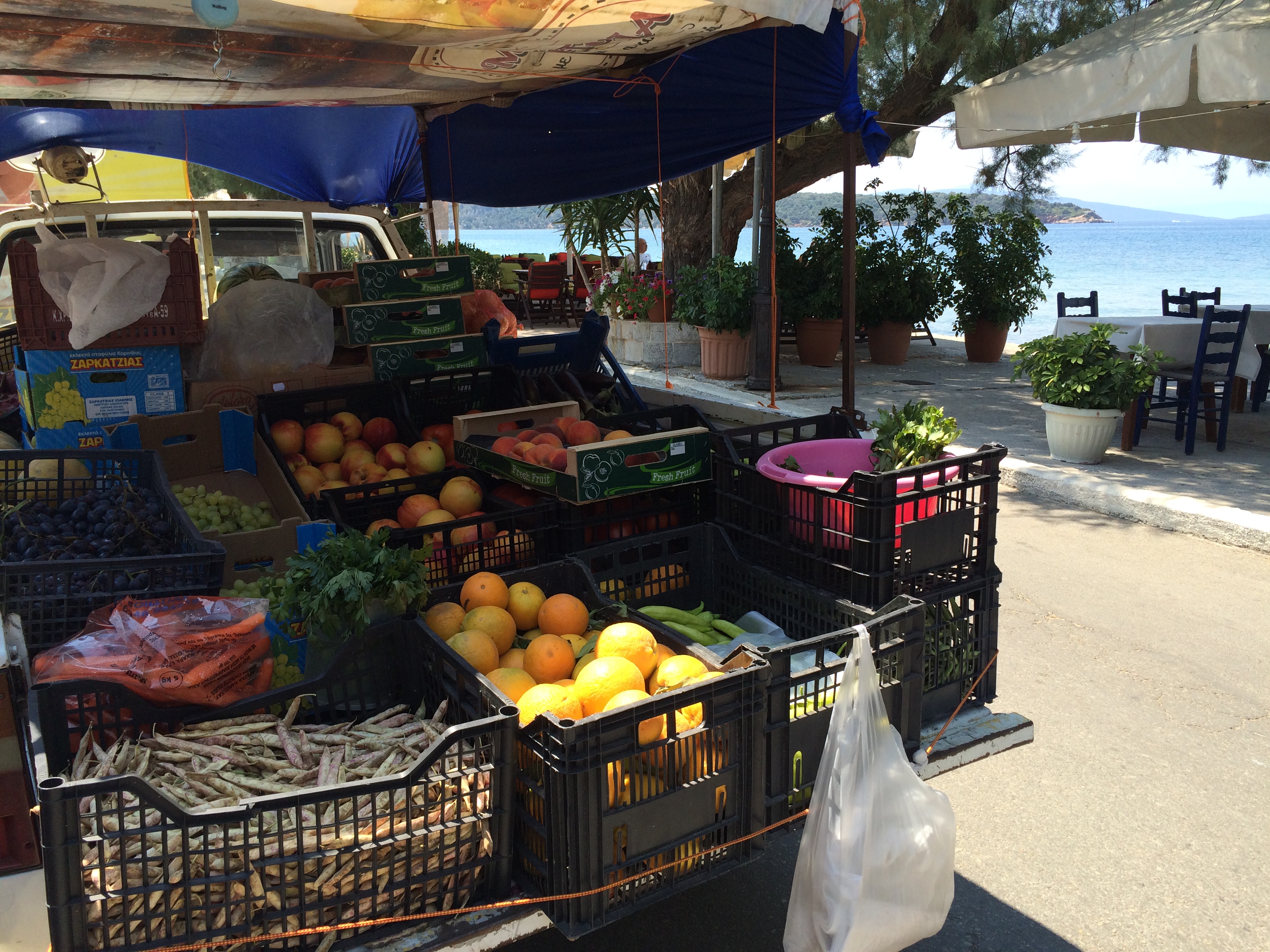
A fruit and veg van in the early morning on the seafront in Milina.

A fruit and veg van in the early morning on the seafront in Milina.


M

M


IMG_5935


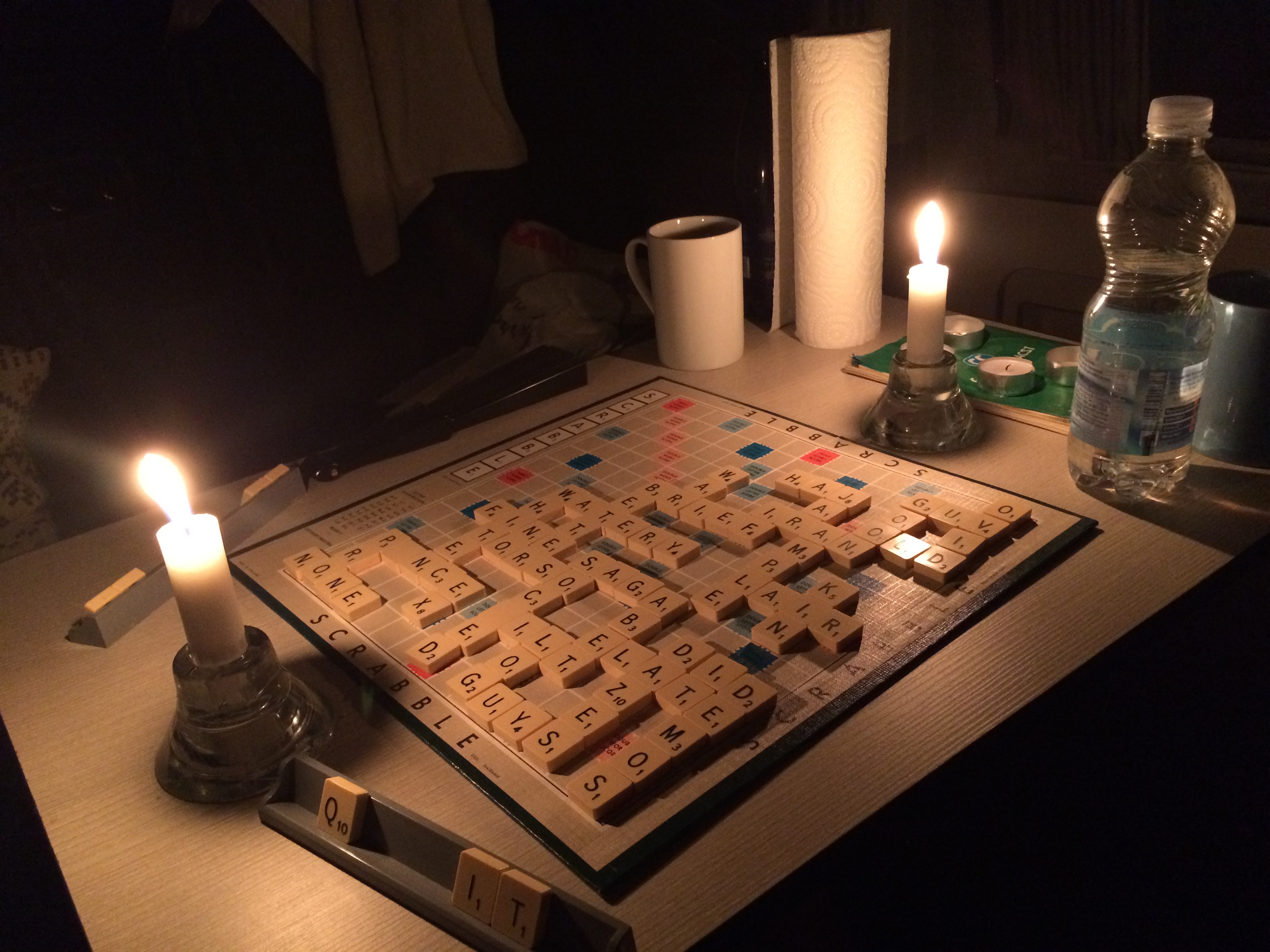
After the unbearable heatwave, the stormy weather had arrived.  Three nights in a row, no sooner had we arrived somewhere new in the early evening than the heavens had opened up – first in Montenegro, then in Tirana, then Ionnina.  As we arrived at the Poseidon campsite in Anatolikos Olympus on the fourth evening, we could see the dark clouds that seemed to be following us gathering over the Mount.  Sure enough, shortly after we’d got ourselves settled, Zeus unleashed the most almighty thunderstorm right over our heads which cut off the power supply and lasted most of the night.  We were confined to the van, a meagre meal of cold chick peas and tuna and a game of scrabble by candlelight (which Judith won).

The dark clouds that seemed to be following us gathering ominously over Mount Olympus.

The dark clouds that seemed to be following us gathering ominously over Mount Olympus.

Black-out at the Poseidon campsite and scrabble by candle-light.

Black-out at the Poseidon campsite and scrabble by candle-light.


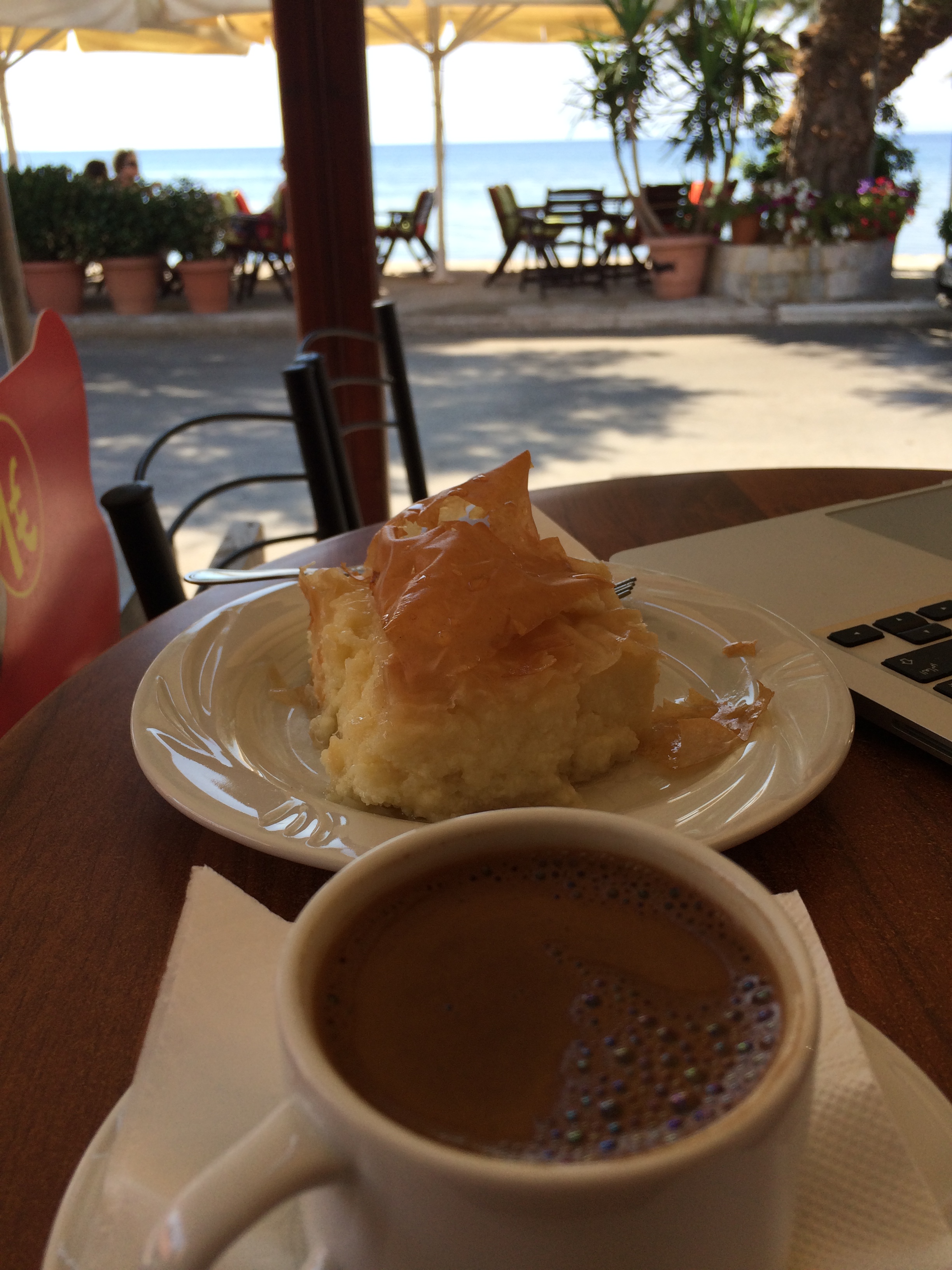
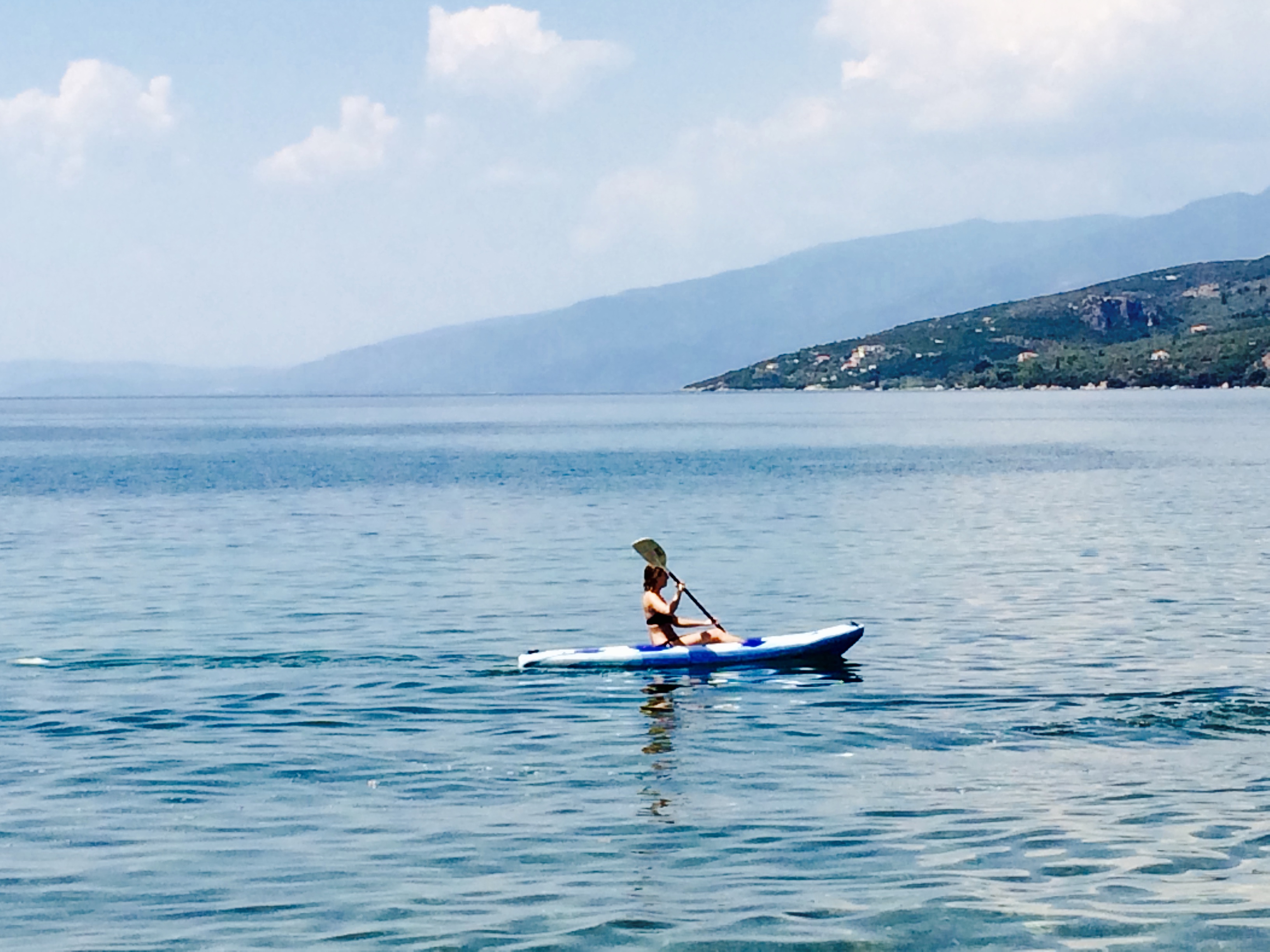
Our week in Milina was just the breather we needed after weeks of constant movement.  The sea of the Gulf was as calm and clear as we hoped it would be and we spent much time in it, with Flavio often having two or three longish swims a day – on one occasion meeting us in a restaurant in the next bay in Chorto in the early evening – while Catherine would disappear off kayaking for two or three hours. Mid-mornings would be spent contemplating the peaceful view from one of the cafes along the seafront, possibly indulging in a very sweet ‘galatobouriko’ or ‘loucoumades’ with our coffee, which it’s advisable to have without sugar to counteract the sweetness of the pastry.

Greek coffee and 'galatobouriko' (advisable to have the coffee without sugar).

Greek coffee and ‘galatobouriko’ (advisable to have the coffee without sugar).


Catherine kayaking for hours in perfect conditions.

Catherine kayaking for hours in perfect conditions.


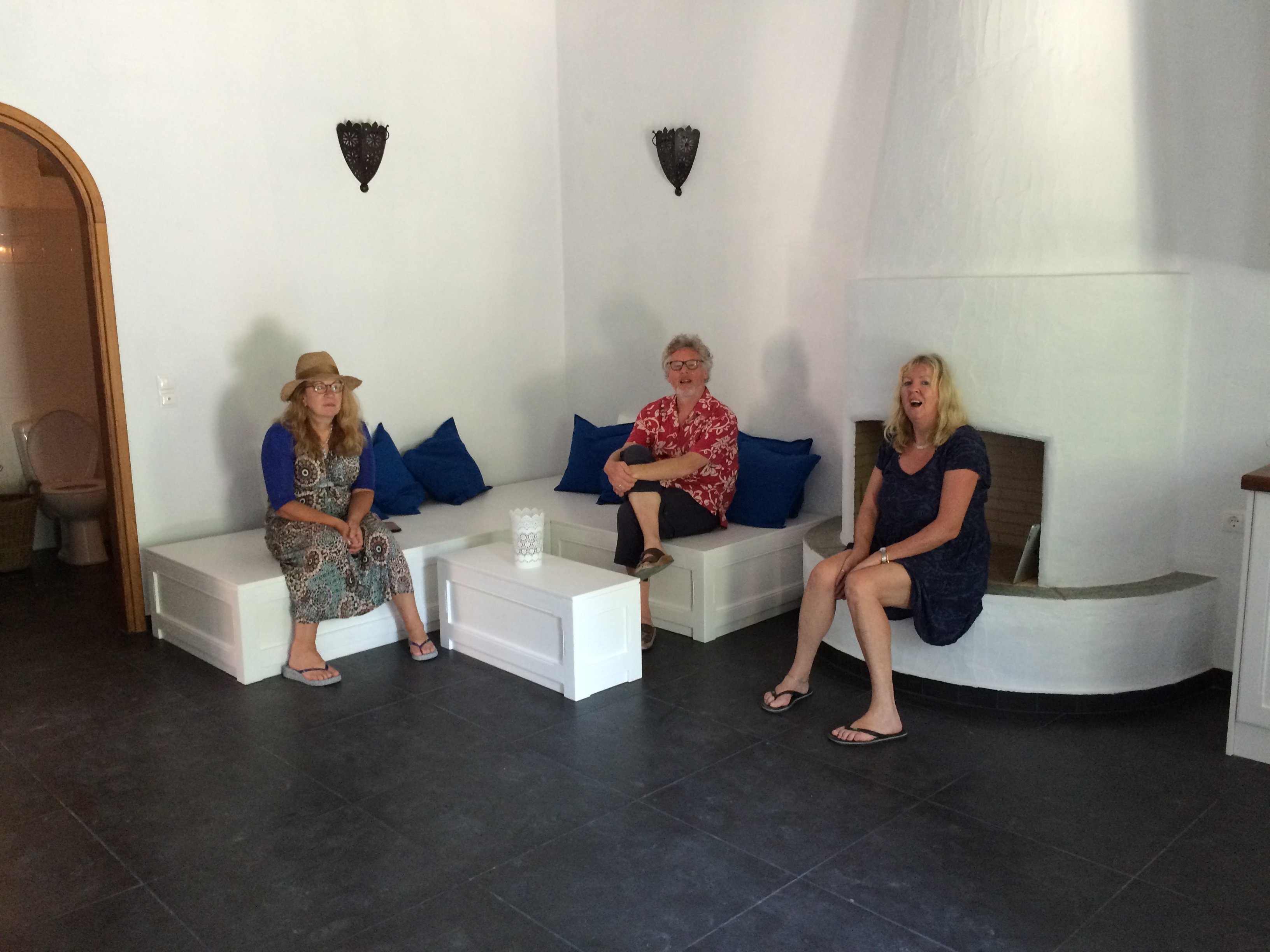
The entire time, we were fortunate not only to have a break from the close confinement of sleeping in Brenda (much as we missed her) but to have the luxury of comfortable and air-conditioned sleeping quarters in Rob and Rachel’s beautifully renovated ‘spitaki’ (house), for which we were very grateful indeed.

In Rachel and Rob's comfortable and elegantly furnished spitaki.

In Rachel and Rob’s elegantly furnished spitaki.

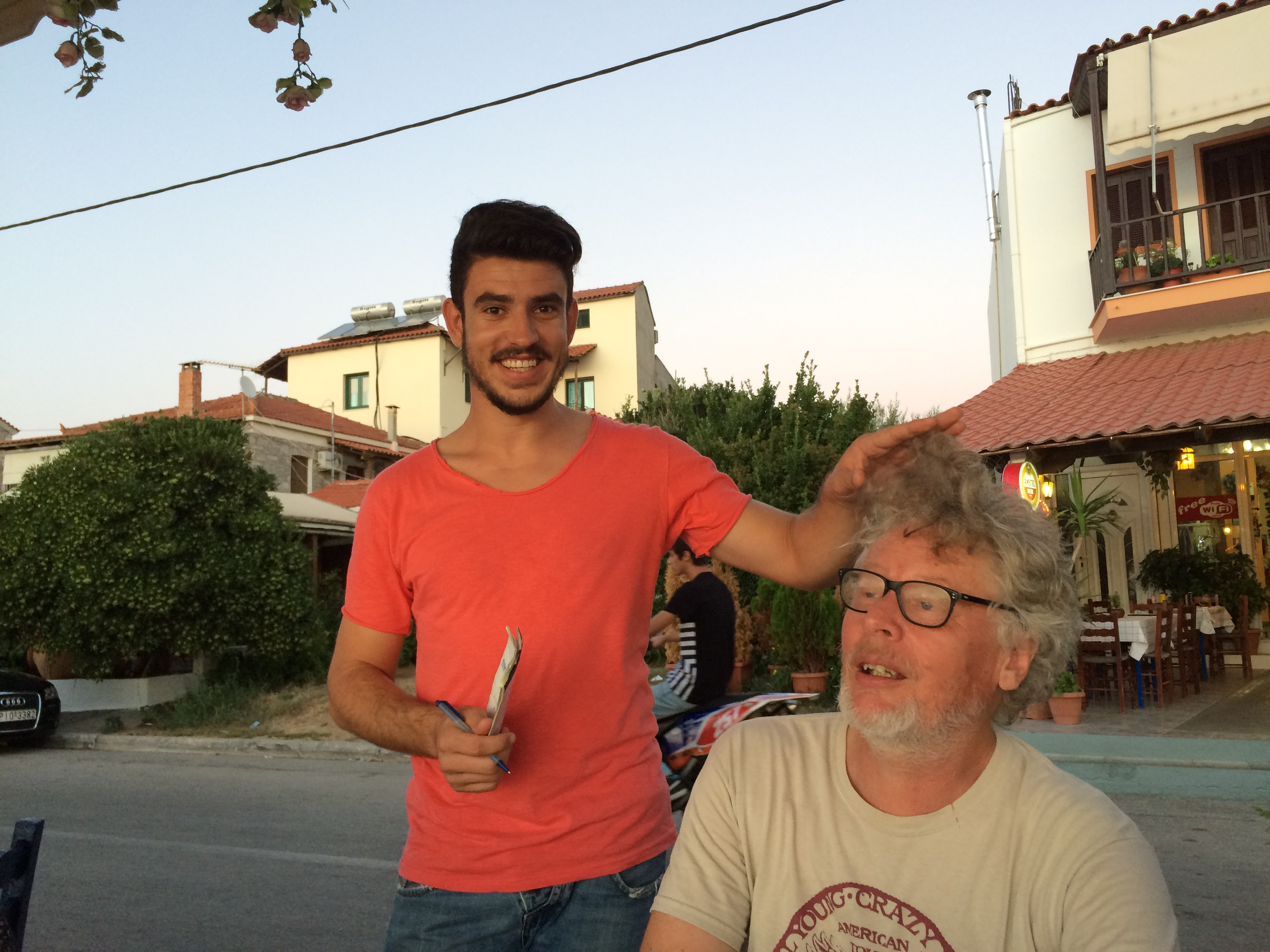
Ari the Albanian ruffling Rob's hair in a show of fondness.
Aris the Albanian ruffling Rob’s hair in a show of fondness.


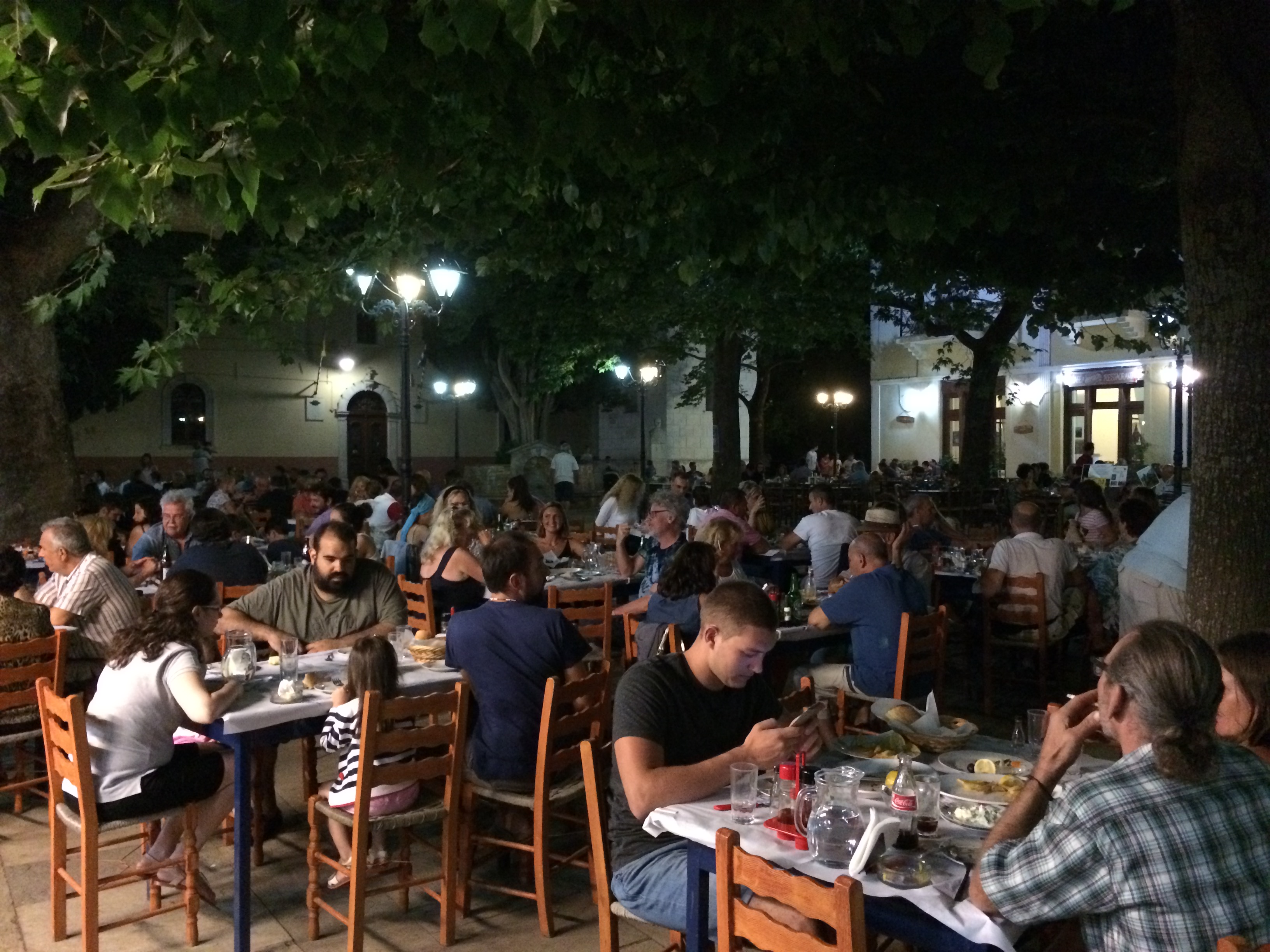
Feeling energetic one evening, we climbed up to the top of the hill using the old donkey track which led to the lovely village of Lafkos where we had the best food available at a place run by a Stalin lookalike.  It was widely known that he had been whacked over the head with a frying pan by his wife upon her discovering his infidelities but that didn’t appear to have excessively dented his confidence.

The long climb up to Lafkos.
The long climb up to Lafkos.
 

Rob and Rachel looking undefeated at the half-way point on the hour-long climb up to Lafkos.

Rob and Rachel looking undefeated at the half-way point on the hour-long climb up to Lafkos.


The lively village square in Lafkos.

The lively village square in Lafkos.

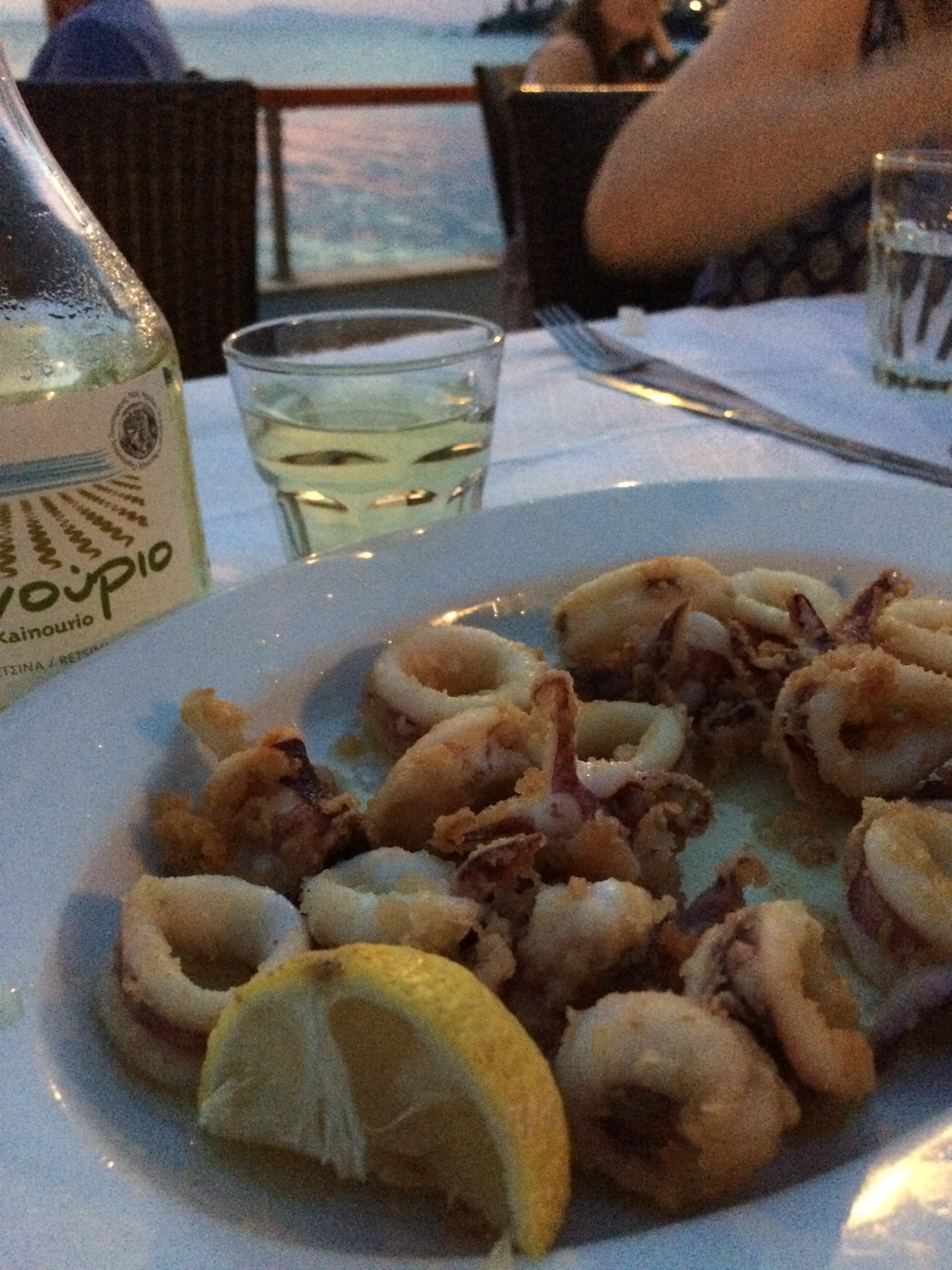
Fried calamari and retsina.

Fried calamari and retsina.


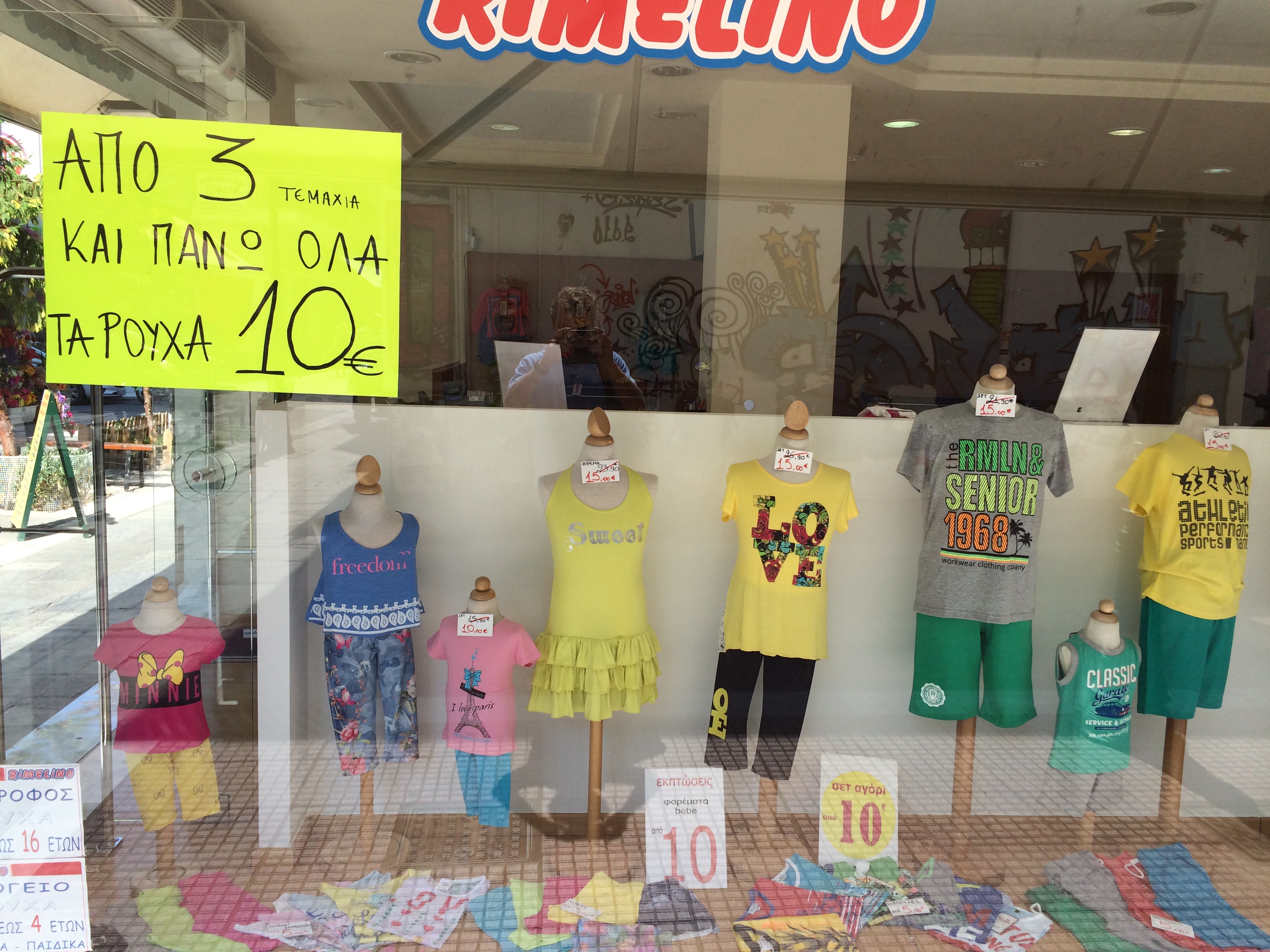
On a morning visit to Volos, the nearest city to Milina, to help Rob and Rachel pick up new furnishings we noticed that many shops were slashing their already fairly low prices.

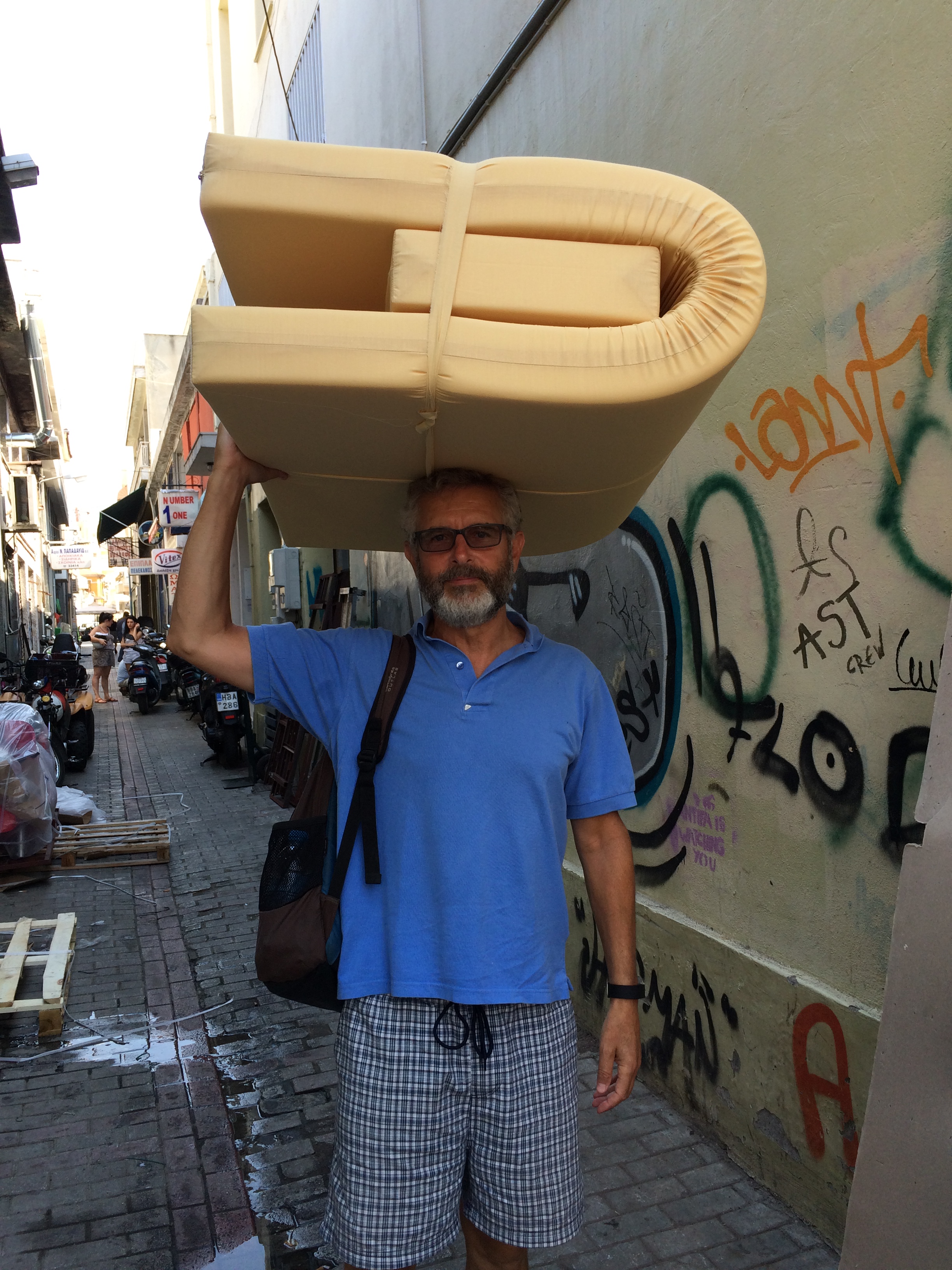
Carrying a (very light) made to measure foam mattress for the spitaki.

Carrying a (very light) made to measure foam mattress for the spitaki.


Price-slashing in austerity-ridden Greece.

Price-slashing in austerity-ridden Greece.


It would be difficult to spend a few days in Greece these days following the events of earlier this summer without wondering what the effect of the horror stories we’ve heard is on ordinary people, or at least how people feel.  Barely touching the surface, and without presuming to say anything authoritative on the subject, it was interesting to note a few views picked up at random.

  • There was Yoanna, from the bakery (serving those delicious ‘galatobourikos’!).  She works for Star Alliance in Germany and was in Milina on holiday but works every day to help her mother in her bakery.  She’s cross about what is happening and doesn’t think she will be able to continue working in Germany.
  • Kean, a waiter in one of the restaurants, who doesn’t know why he was given an Irish name by his parents. He didn’t think there was any future for him in Greece.  Worked 4 years in Holland and a year in Bali.  Was also there on holiday but working flat out to make ends meet.
  • Stathis, cafe and restaurant owner.  Claimed to make just one Euro out of every 20 after all the taxes had been deducted! The only way to survive is to under-declare earnings.  Business was slow, with fewer foreigners and Greeks had less money to spend.
  • Kyriakos, 15 year old waiter at Stathis’s restaurant who looked a bit like a young Robert de Niro. He thought there was no point in worrying whose fault it was  – Europe or ‘our politicians’ – or wallowing in self-questioning, Greeks had to brace themselves for a difficult few years.  But Greece would come back on top eventually.  He believed in looking ahead and was thinking of going into computing.
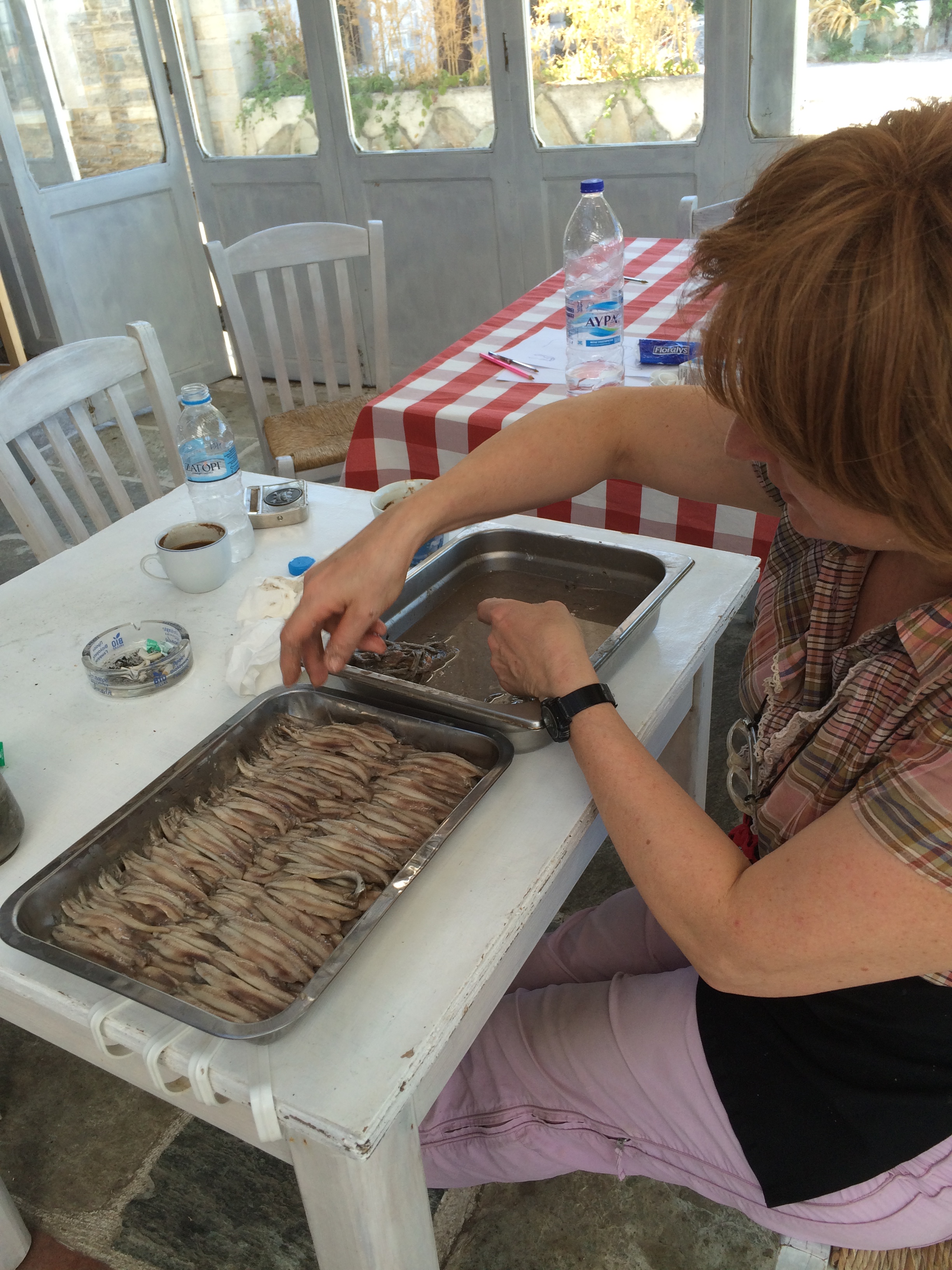
  • Sofia, Stathis’s wife, who would not be drawn on the subject and believed in simply carrying on, as she continued cleaning her large tray of anchovies.
  • George the 55 year old distance swimmer, who swam 2kms 4 days a week all year and was not able to reveal his views as conversation was limited during the short pauses while swimming!

If there were a prize, it would have to go to the young Kyriakos, for his clarity, optimism and far-sightedness.  It must be hoped that there are many others like Kyriakos and that with them, Greece will emerge strong again.

Sofia cleaning anchovies at Stathis's - no point in soul-searching.

Sofia cleaning anchovies at Stathis’s – no point in endless soul-searching.

Yoanna, helping her mother in the bakery while on holiday from Germany.

Yoanna, helping her mother in the bakery while on holiday from Germany.


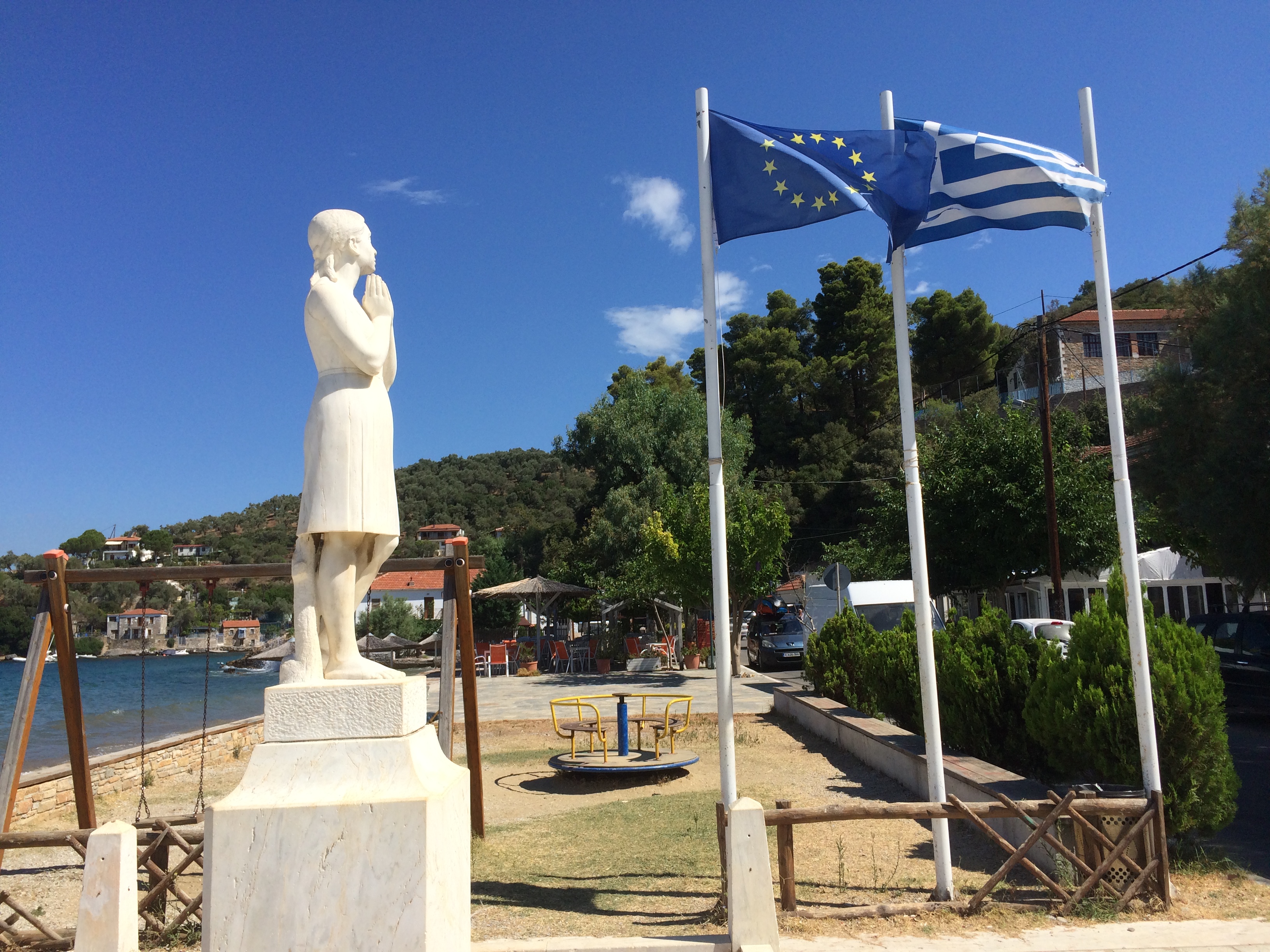
A statue to all 'victims' in Milina by a famous local sculptor. Praying to Europe and Greece for better times?

A statue to all ‘victims’ in Milina by a famous local sculptor. Praying to Europe and Greece for better times?

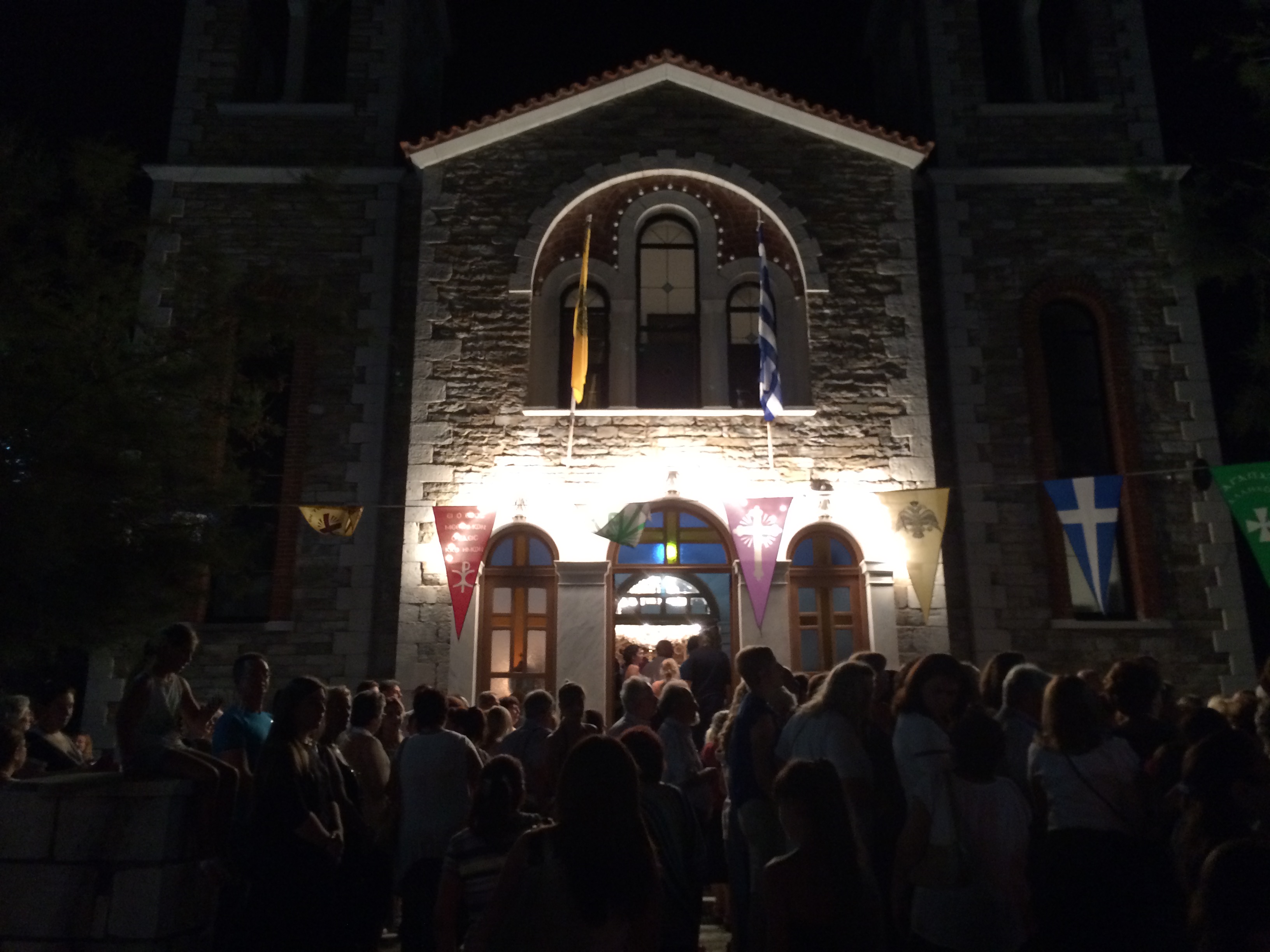
People overflowing from the church at Milina on Ascention Day on 15th August.

People overflowing from the church at Milina on Ascention Day on 15th August.


IMG_5835


5-18 August. –  Greece


Wednesday 5th – Thursday 6th August – Albania

Standard
We hadn't planned to come through Albania but it was quite exciting being in what was until not long ago one of the last bastions of Soviet-style communism.

We hadn’t planned to come through Albania but it was quite exciting being in what was until not long ago one of the last bastions of Soviet-style communism (though it inclined more towards Maoism).

We entered Albania with some trepidation after reading reports of appalling road conditions and dare-devil drivers but were pleasantly surprised by both the good roads (apparently built by the Italians) and the driving.  Whoever wrote such alarming reports had obviously never been to Cairo!

Until the demise of the communist system in 1991/2 there had only been c600 cars on the roads, all belonging to party officials.   The communist regime which came to power in 1947 banned religion, long hair, beards and Levi’s amongst other things.  They did however introduce many improvements.  Land reforms led to Albania becoming self-sufficient in food. Educational reforms meant that by 1955 adult literacy had been eliminated.  

Albania now seems to be at pains to distance itself from its communist legacy while still retaining its predominantly secular character.

Albania now seems to be at pains to distance itself from its recent communist past while still retaining its predominantly secular character.

And a universal healthcare service. (Apart from that, what did Communism do for us..? :))  Once the regime fell much of the country’s wealth was invested in pyramid banking schemes which collapsed during the late 90s leading to mass protests. Parliamentary democracy was established in 1998 but old habits die hard and the main political parties are reported to employ the system of patronage that existed before for party members, so every four years when the government changes so do the beneficiaries of the patronage.  This corrupt practice we were told was the main impediment to continuity and consistency in government policies.

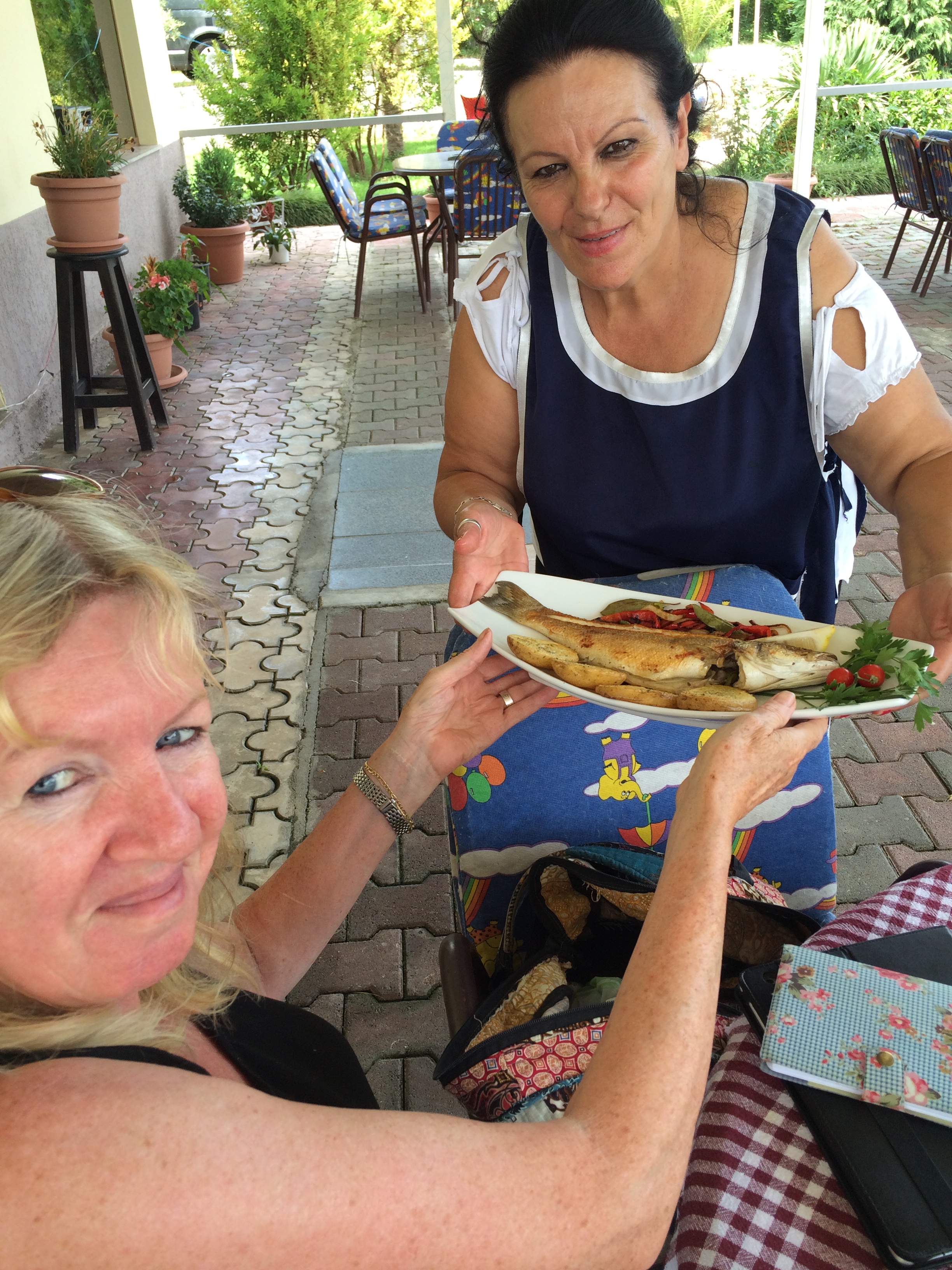
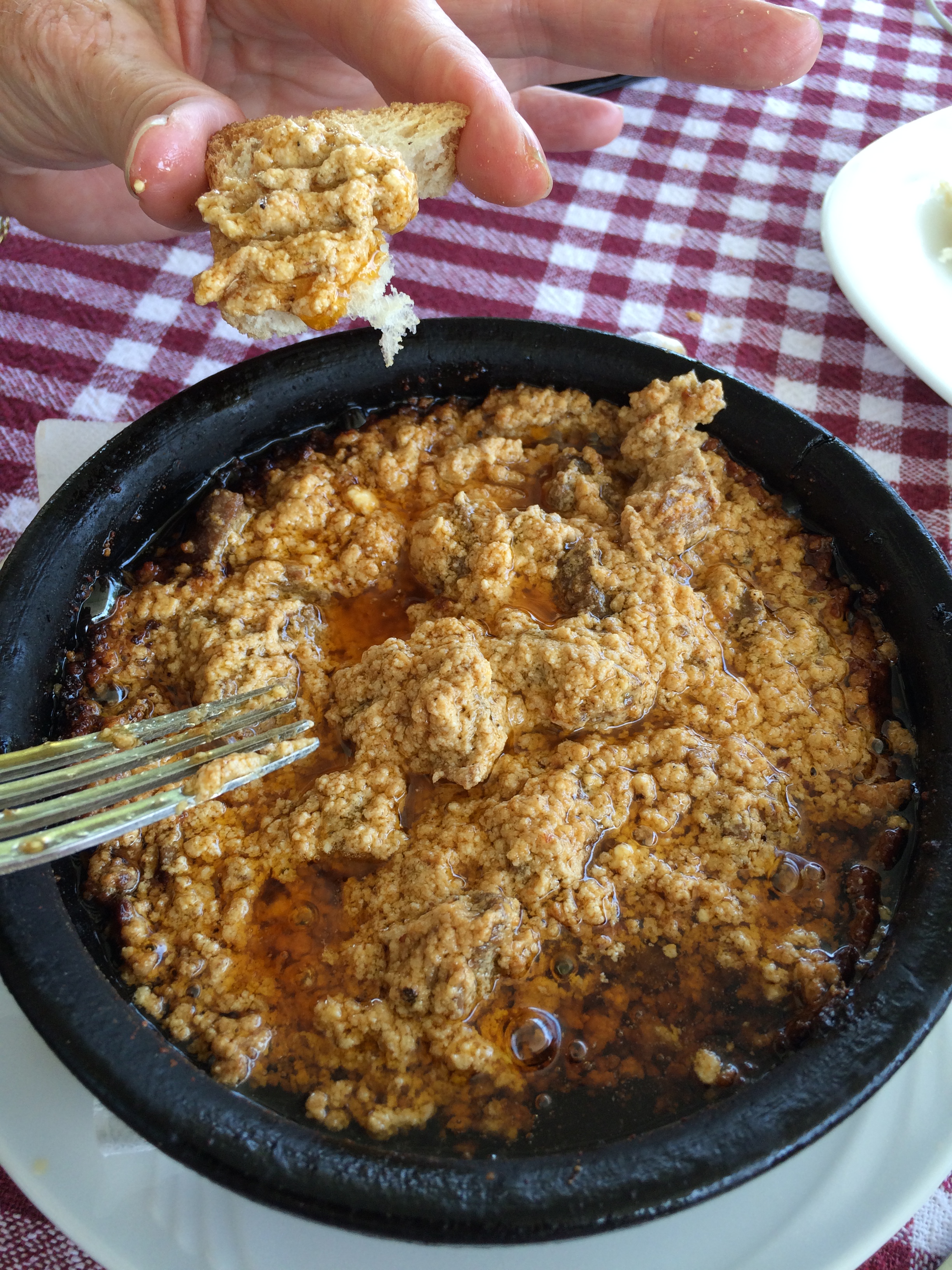
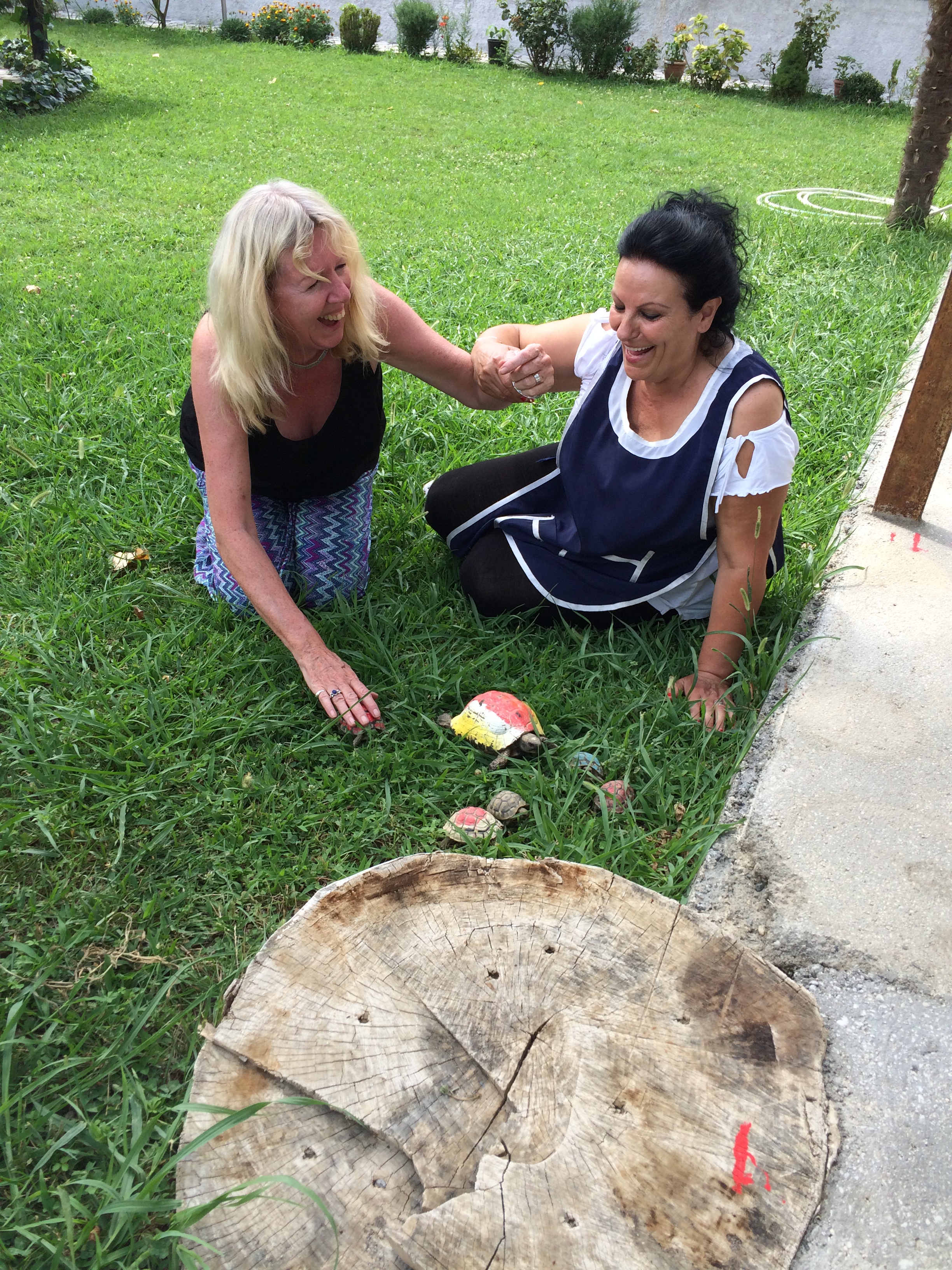
Shortly after crossing the border we stopped for something to eat in a little place called ‘Zusi’ on the confluence of the Buna and Drina rivers. It was a charming little restaurant-cum-resthouse run by a lovely lady called Stella.  She had no English or Italian at all but we somehow managed to communicate and had a sort of Albanian lesson thrown in for free with our very tasty and inexpensive meal.  She was very keen that we try the fresh fish as well as what seemed to be a staple dish in Albania – Taz – a kind of tagine made of lamb, cottage cheese and egg.  After the meal,  Stella brought out all her pet tortoises to show Judith and with an endearing child-like innocence, insisted that she sit with her to play with them on the lawn and, like two little girls, they did just that.  All in all, we had a busy and fun time and Stella did her best to retain us as long as possible – she seemed reluctant to let us go!

The lovely Stella lovingly serving us our lunch at her charming little restaurant in the village of Zusi shortly after crossing the border.

The lovely Stella lovingly serving us our lunch at her charming little restaurant in the village of Zusi close to the border.


The staple dish of 'Taz' - sort of Albanian comfort food made of cooked cottage cheese, lamb and egg to scoop us with bread.

The tasty staple dish of ‘Taz’ – sort of Albanian comfort food made of cooked cottage cheese, lamb and egg to scoop us with bread.


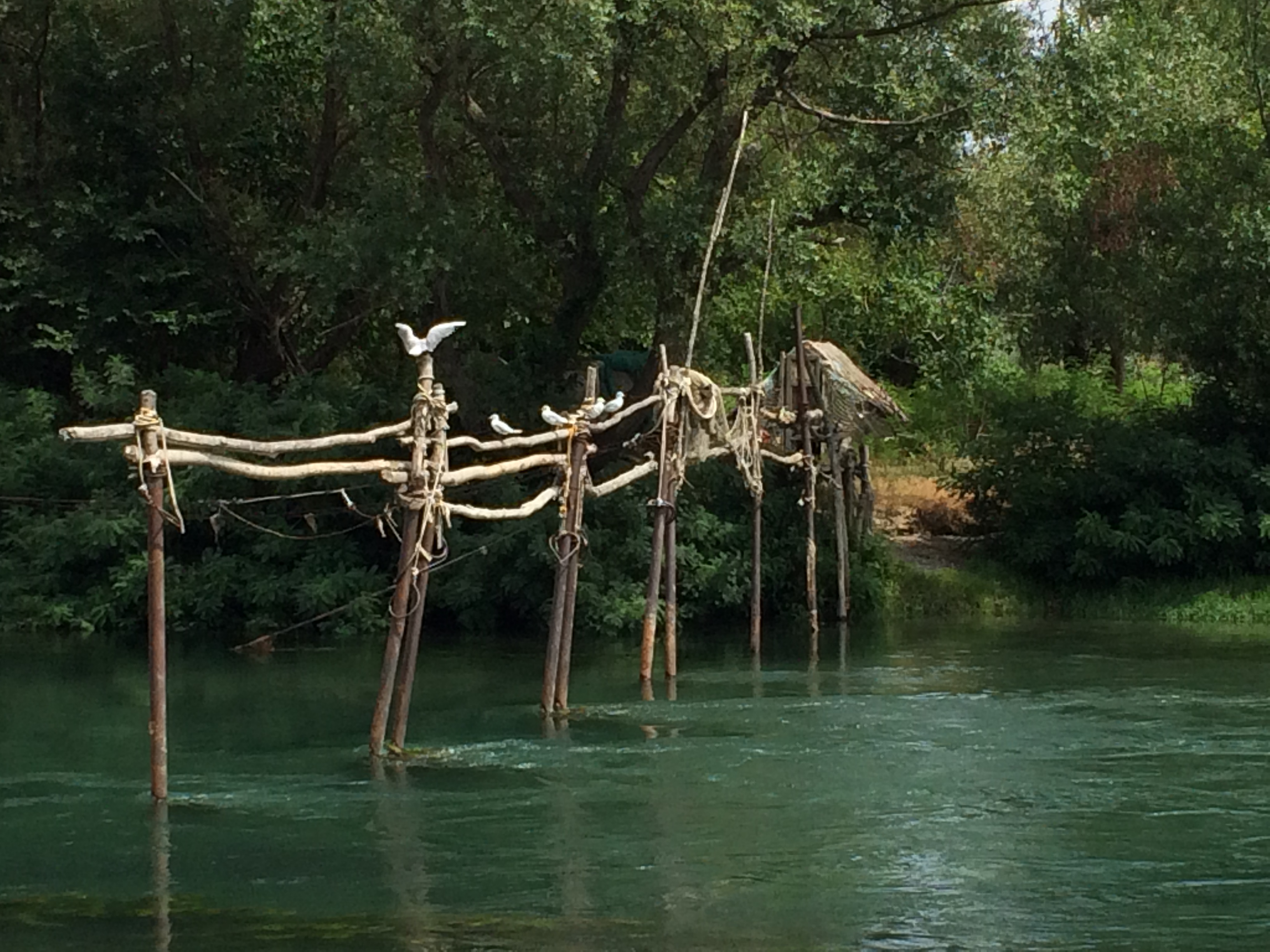
Stella's place lies on the banks of the confluence between

Stella’s place lies on the banks of the confluence of the Buna and Drina rivers.  Again, a similar fishing system consisting of a primitive wooden structure could be seen across from the restaurant.


After lunch, Stella deploys tactics to keep us longer - like bringing out her tortoises for Judith to play with!

After lunch, Stella deploys tactics to keep us longer – like bringing out her tortoises for Judith to play with!


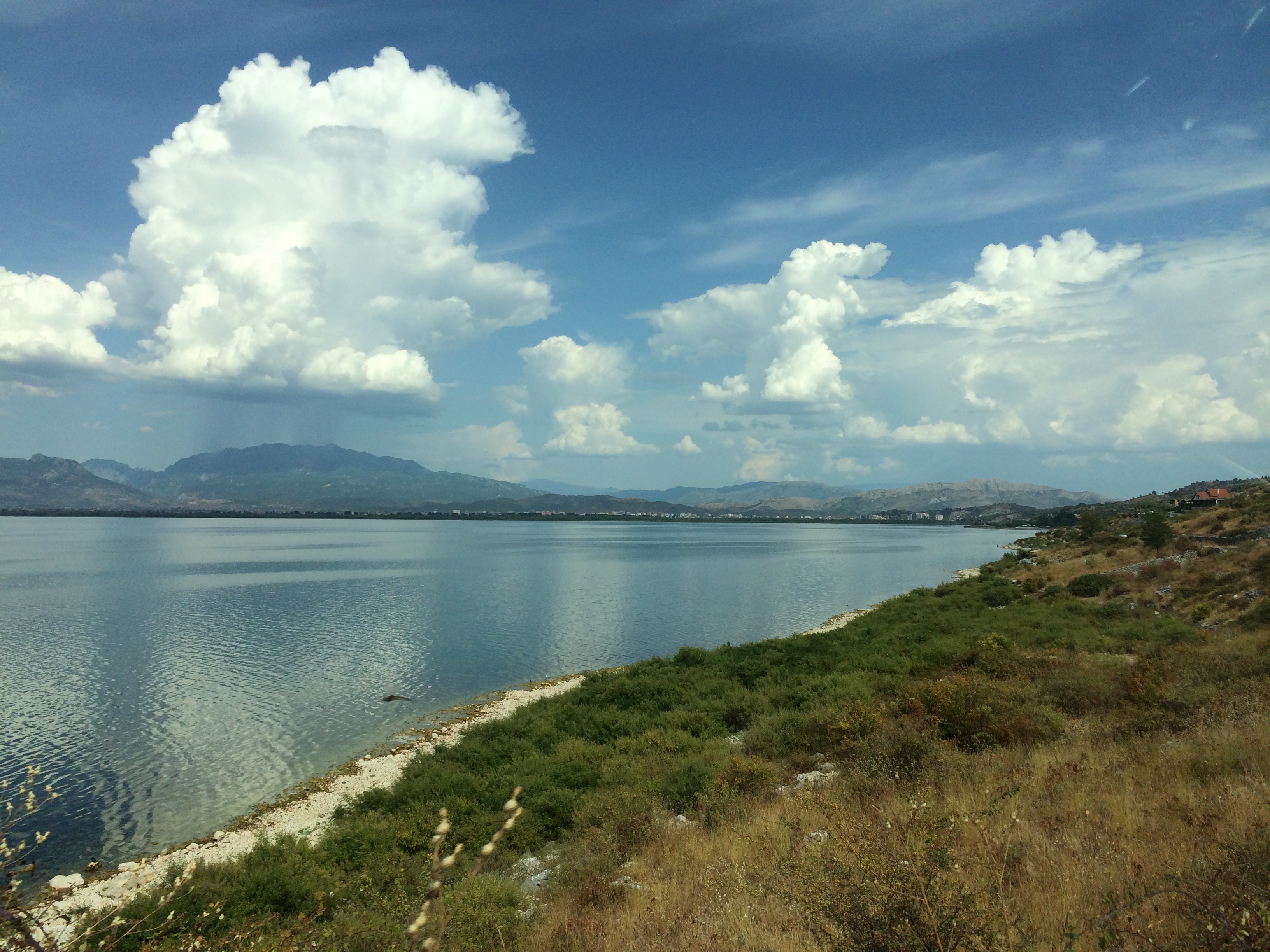
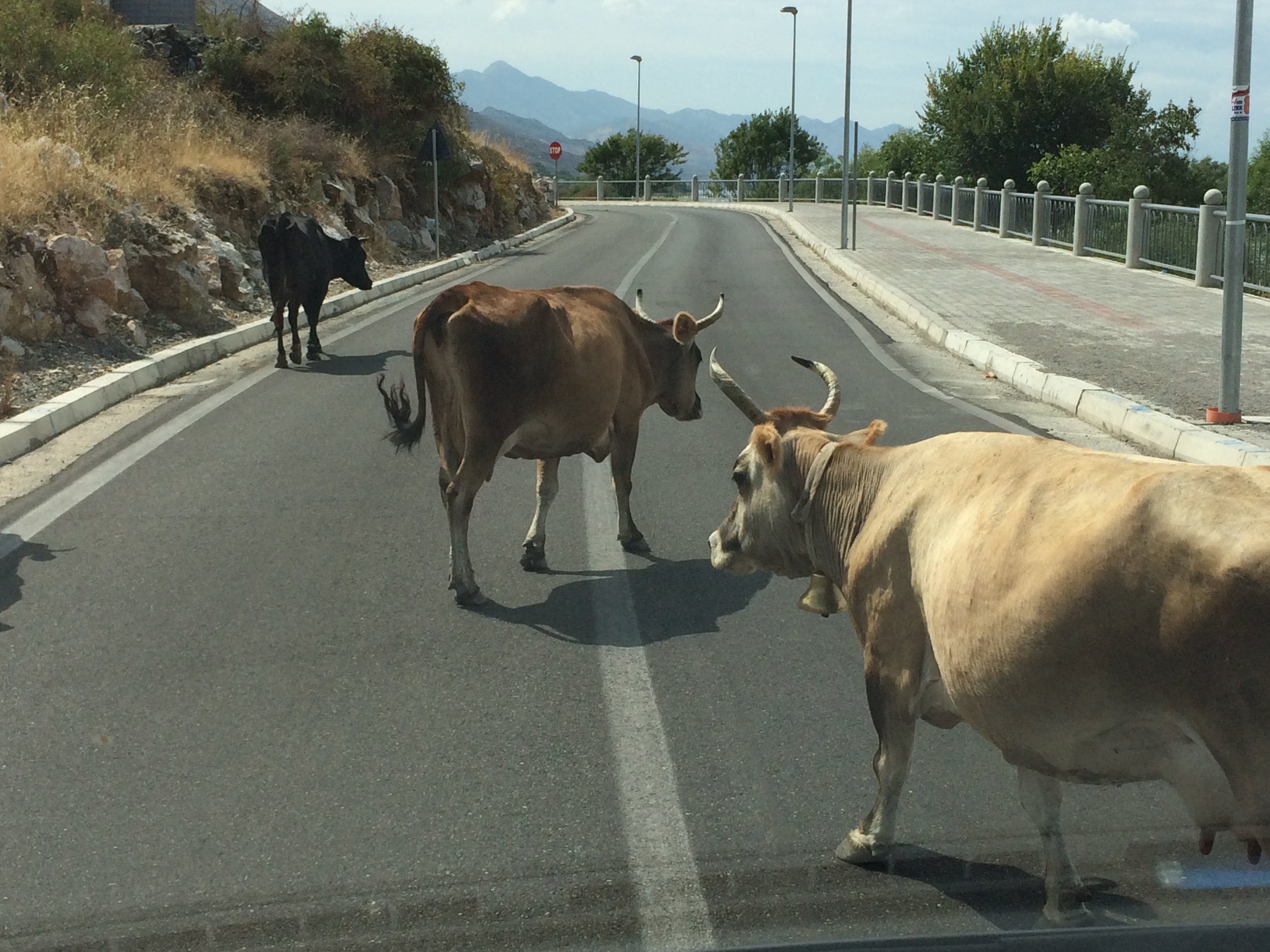
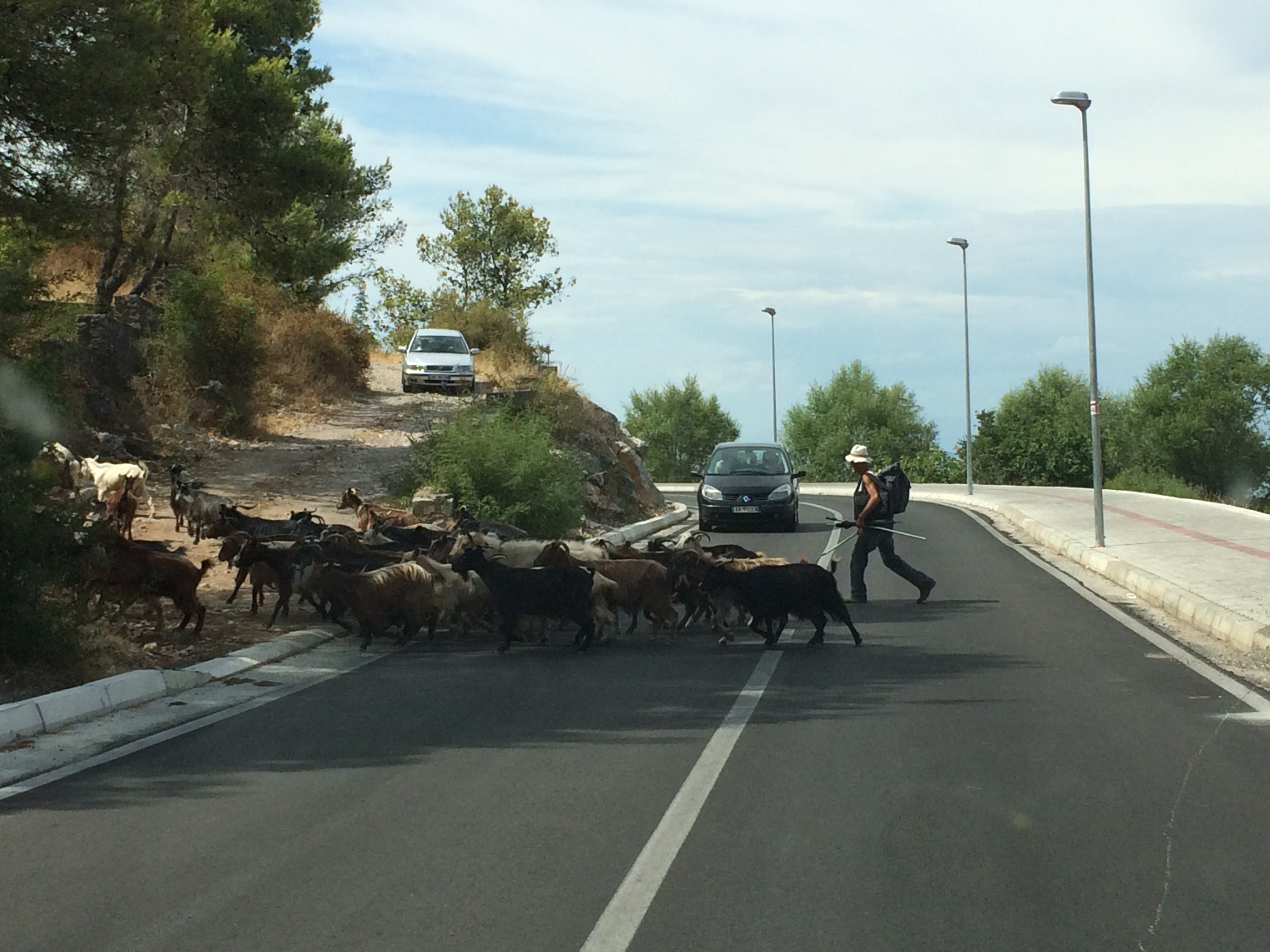
Nicely satiated and armed with the word ‘thank you’ (faliminderit) we set off for Tirane.  We had trouble with the signs though and taking a wrong turn on the outskirts of the key northern town of Shkodeir we drove along a very narrow road by the coast.  We asked an old woman if we were on the road to Tirane and she shook her head.  One thing we had read was that for yes Albanians shake their heads and for no they nod, so thinking she meant yes we continued until the road suddenly came to an abrupt end.  Later we discovered that some Albanians now follow the Western nods and shakes, very confusing.  The hour or so it took to get back wasn’t wasted however as the road took us along the banks of a remote and stunningly beautiful large lake.  Here and there, the odd locals could be seen taking a dip or enjoying sitting by the lake but it was mostly completely unspoilt and mesmerizingly primitive – on 3 or 4 occasions we were forced to brake to let a herd of sheep or cows decide which way they wanted to go as they nonchalantly crossed the road.

The stunningly beautiful lake near Shkodeir we accidentally discovered.

The stunningly beautiful lake near Shkodeir we accidentally discovered.

The lake near Shkodeir - mesmerizingly beautiful.

The lake near Shkodeir – mesmerizingly beautiful.


..and cows wandering across the road.

..and cows wandering across the road.

Sheep crossing..

Sheep crossing..


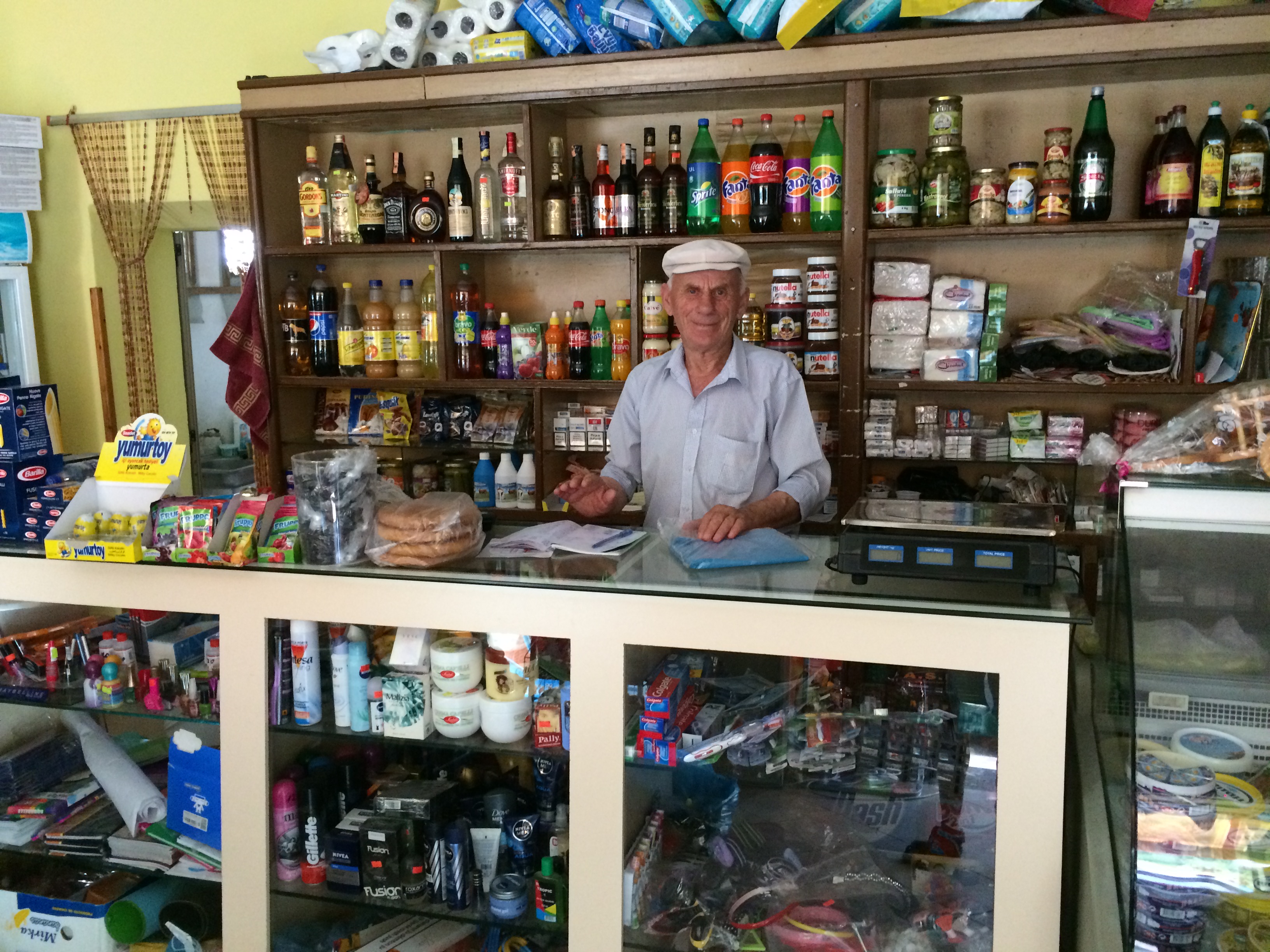
A grocery store we stopped at to ask the way.

A grocery store we stopped at to ask the way.


S

S


We eventually did get onto the right road and had an uneventful journey to the capital.  We marvelled at the number of petrol garages along the road along with the number of shrines, testament to those killed in road accidents.

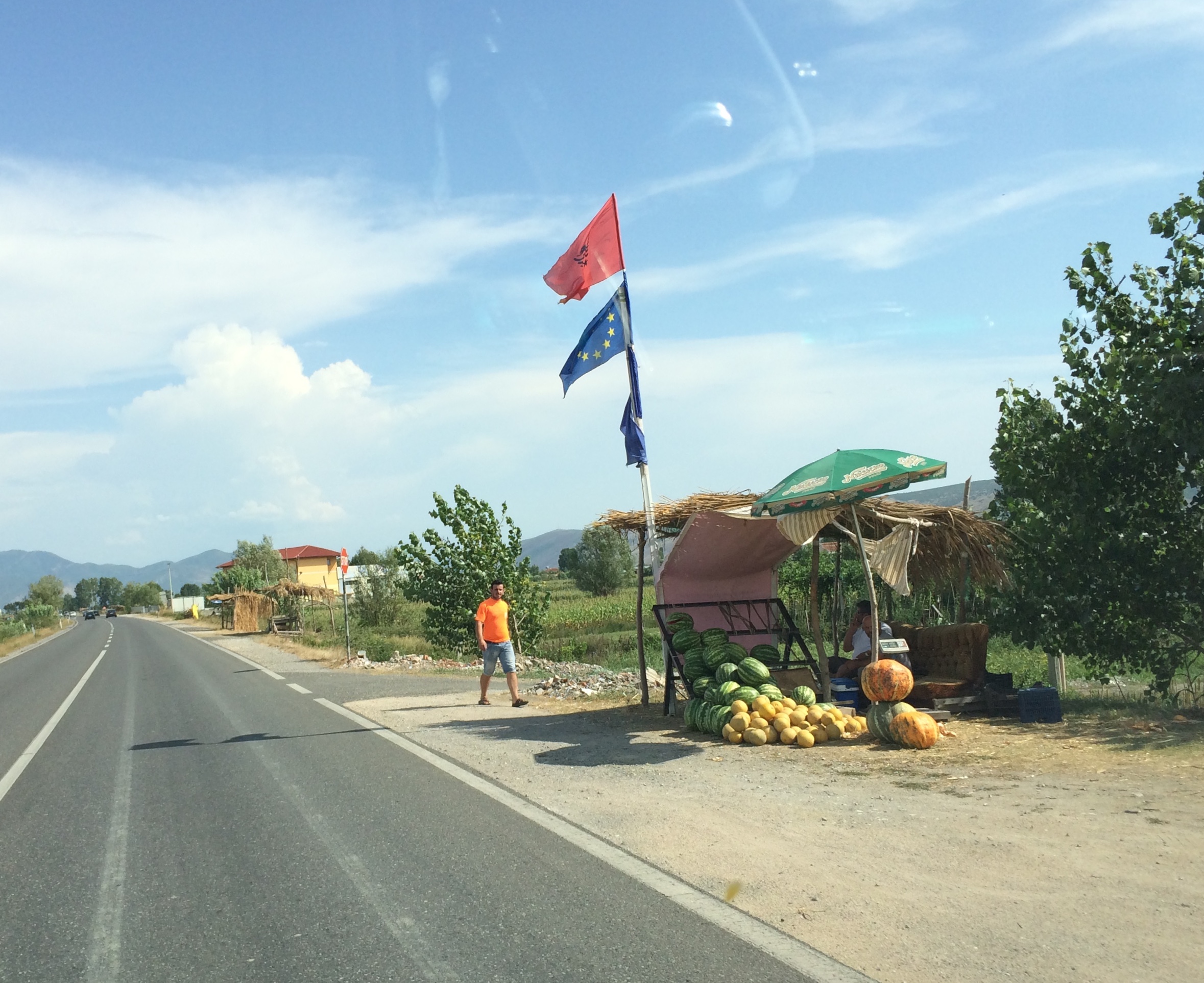
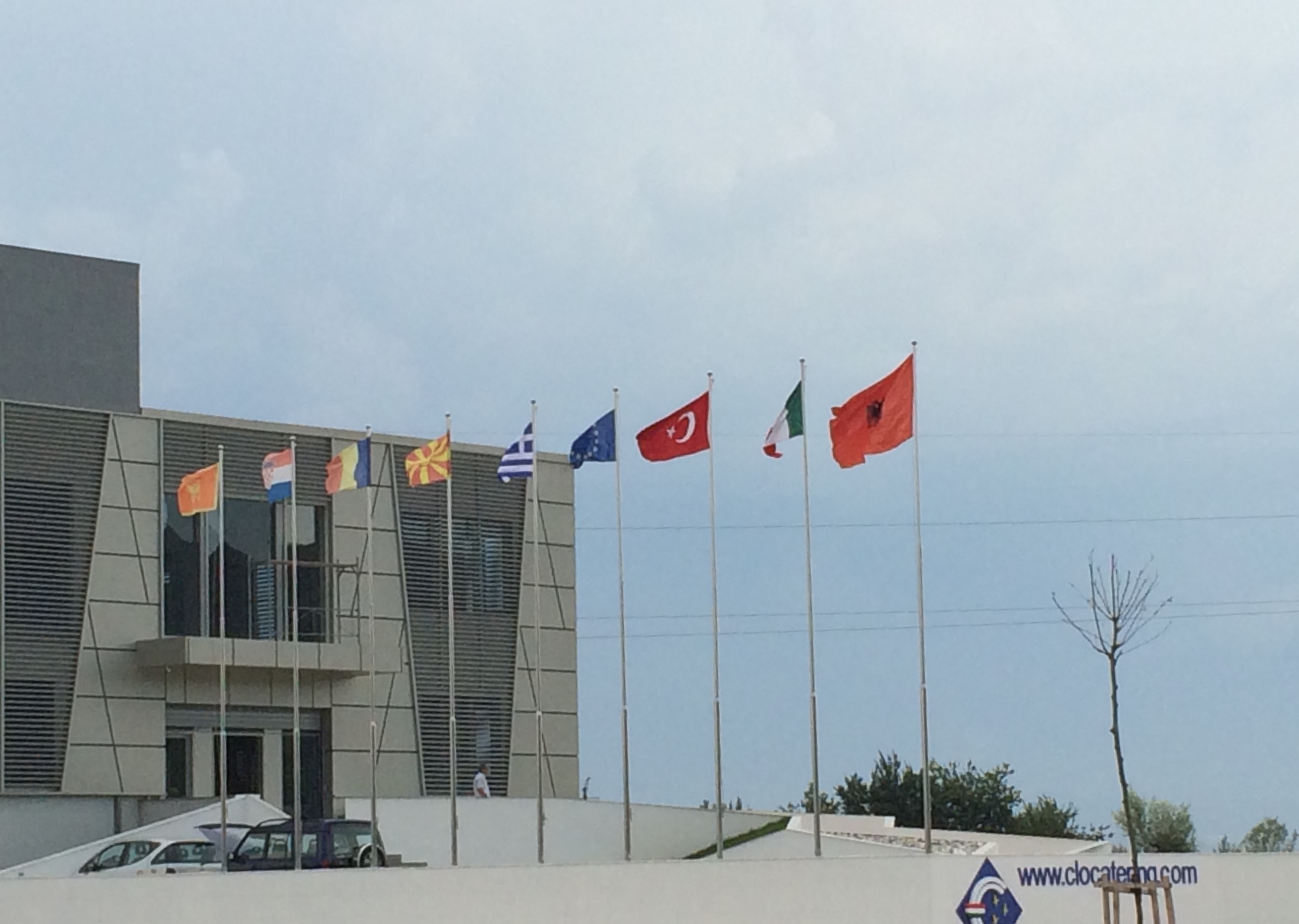
The road to Tirane - the EU flag often fluttering next to the Albanian flag pointing to aspirations for deeper integration with Europe.

The road to Tirane – the EU flag often fluttering next to the Albanian flag pointing to aspirations for deeper integration with Europe.

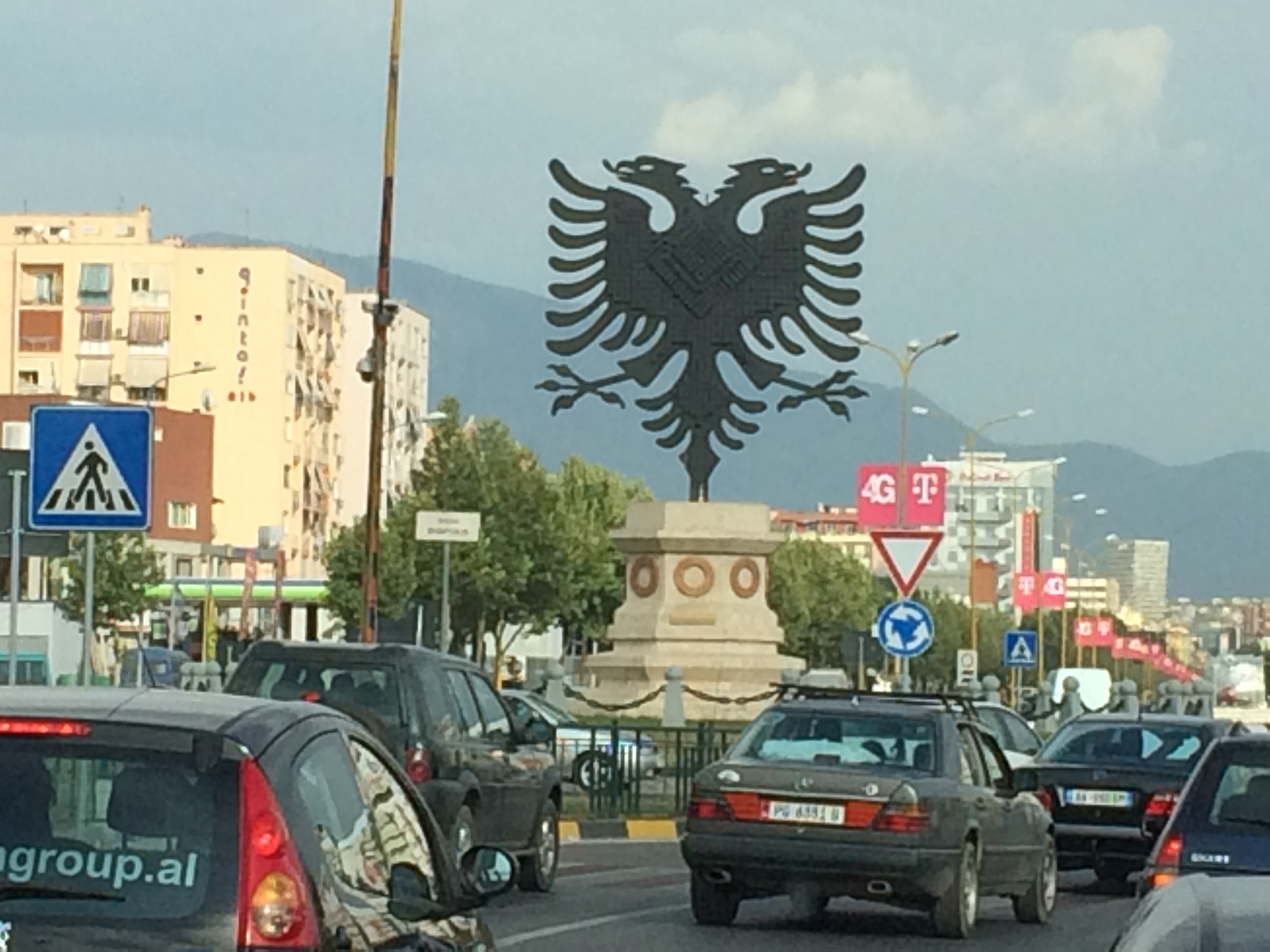
Arrival in Tirana.

Arrival in Tirana.


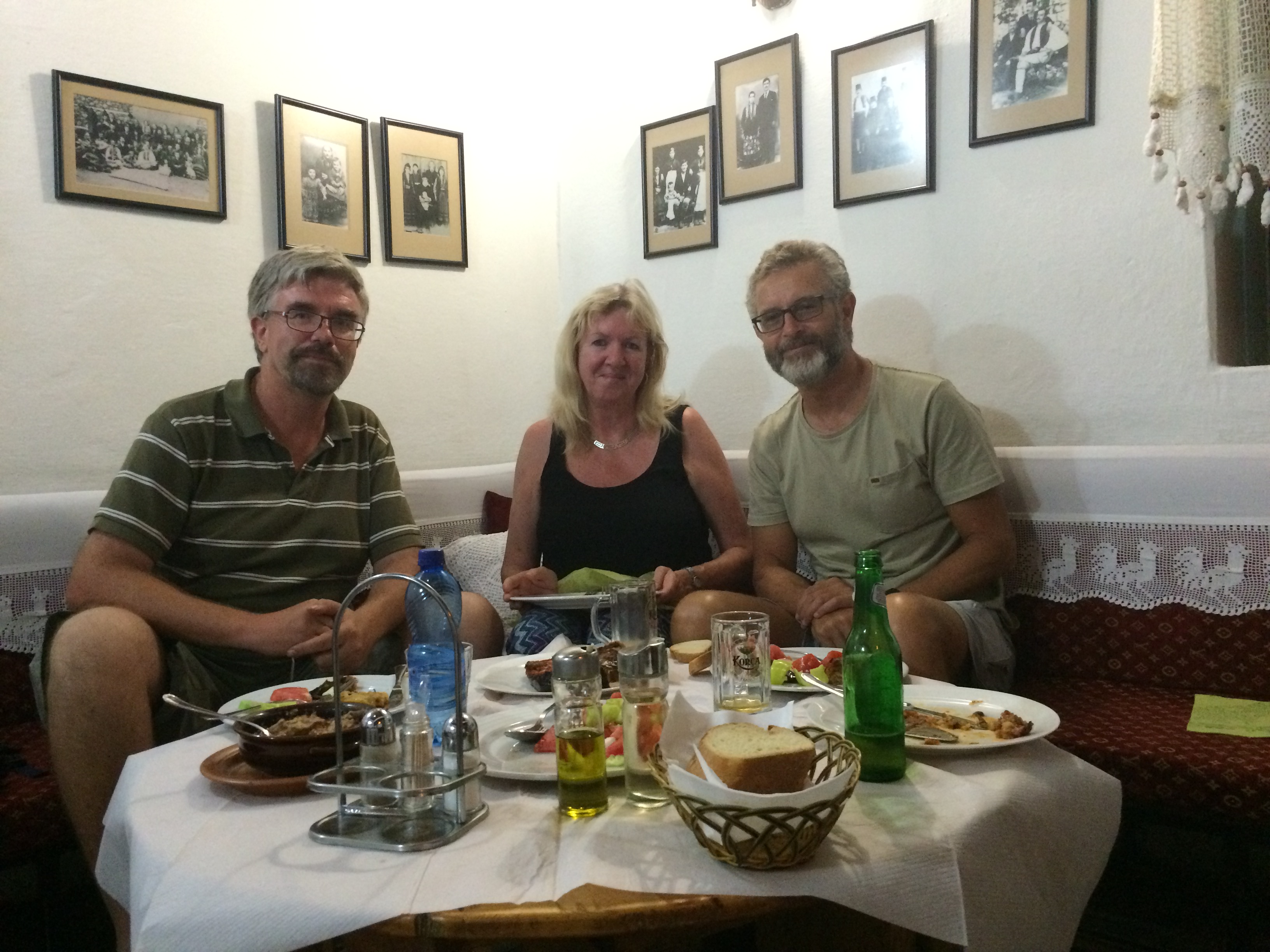
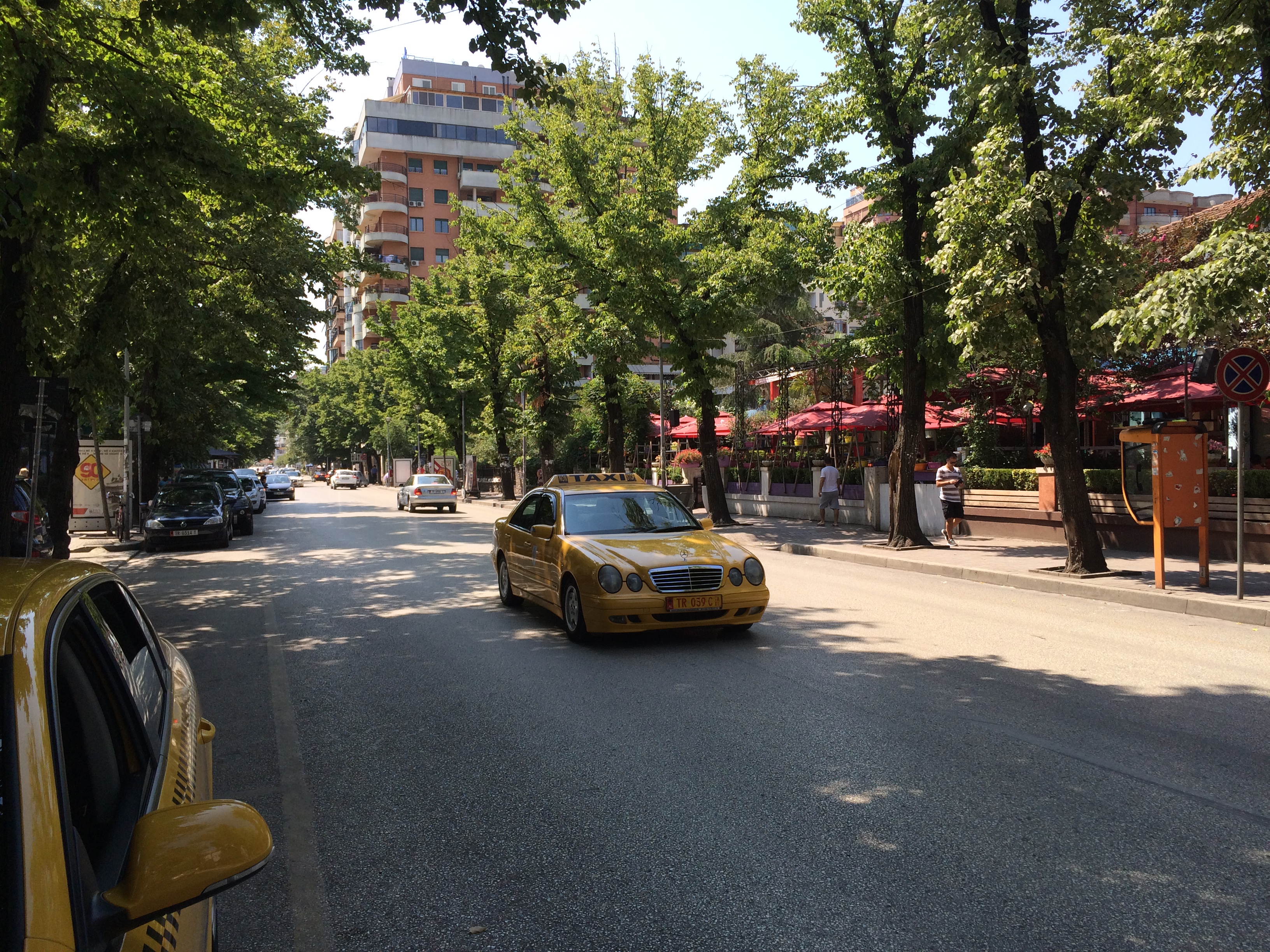
First impressions on arriving in Tirane was of a modern, well organised city.  We headed straight to the tourist information and got maps and details of a hotel.  Whilst looking at the maps we were kindly helped by Claudi, a Swiss man who has lived in Albanian for 18 years, is married to an Albanian, worked first with an aid agency supporting street children but now as a tour guide and speaks fluent Albanian.  After checking in to our hotel, we went with Claudi for supper at a restaurant that specialised in traditional Albanian food, which was excellent and Albanian beer which was even better.

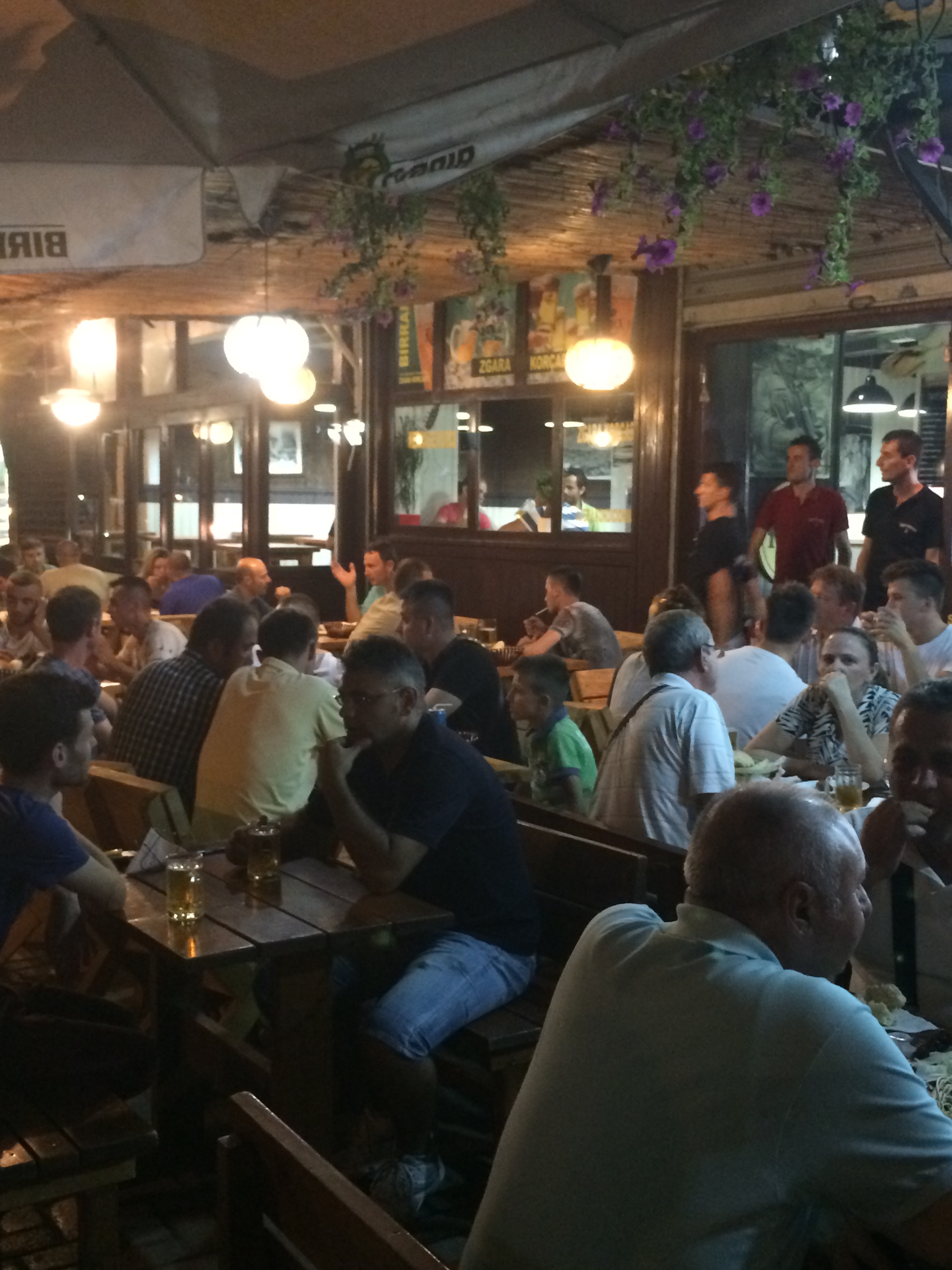
Tirana has a lively cafe culture with people seen drinking beer often even in the morning.

Tirana has a lively cafe culture with people seen drinking beer often even in the morning.

With Claudi who came to rescue us an was a brilliant guide and a fountain of knowledge on all things Albanian.

With Claudi who came to rescue us an was a brilliant guide and a fountain of knowledge on all things Albanian.


Claudi talked at length about Albania since the fall of communism which was fascinating and we learnt that :

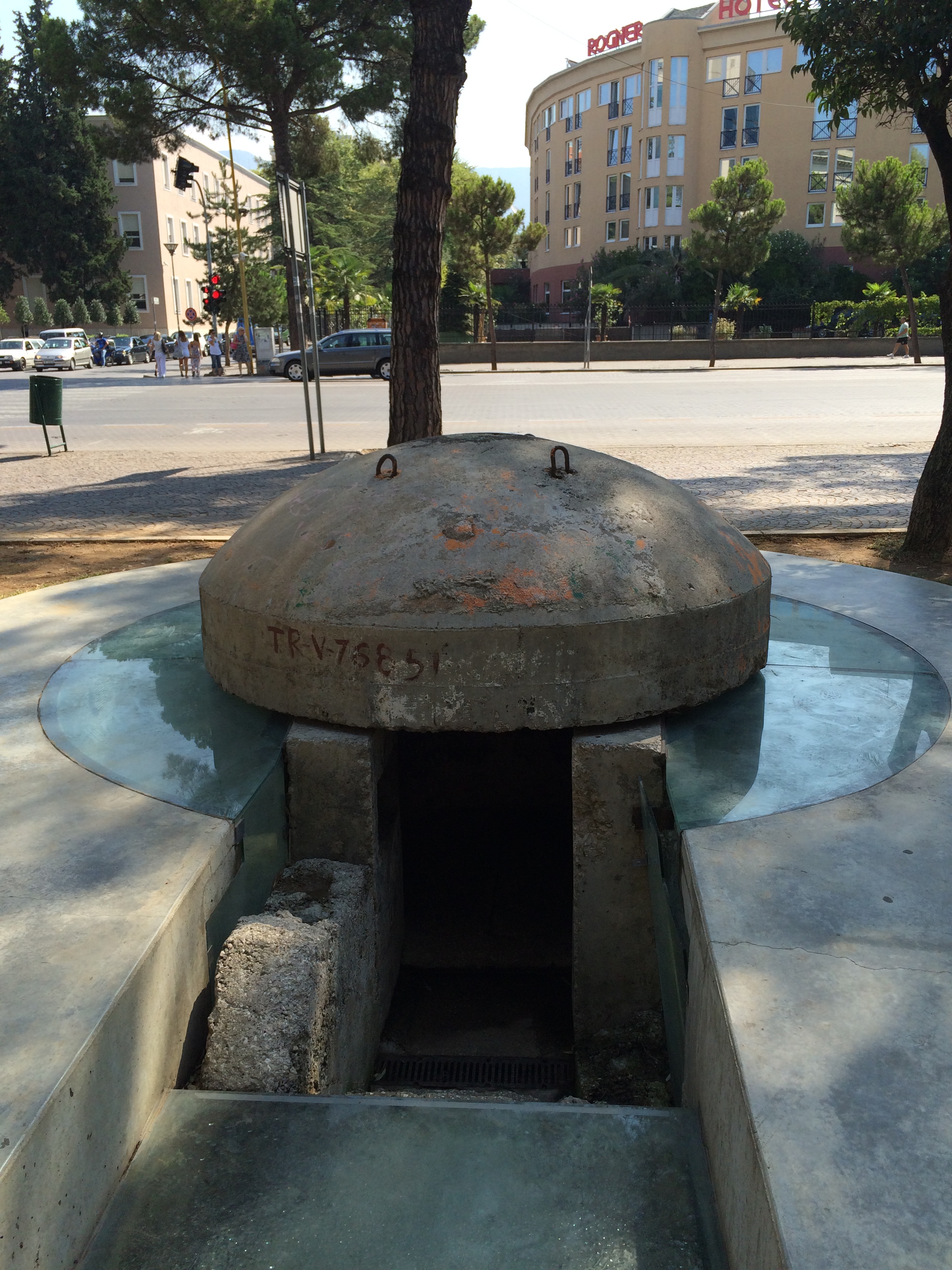
– Albania is full of concrete bunkers that were built to defend Albania against foreign decadent invaders and which was really a ploy to keep the population insecure and dependent on the regime for protection.  Debate is still raging about the future of the bunkers – should they be kept, utilised and transformed into useful edifices or destroyed as ugly reminders of a despotic old regime;

One of the thousands of bunkers dotting the country - a legacy of

One of the thousands of bunkers dotting the country – a legacy of Enver Hoxa.

Another bunker on the road to Castrolezij in the south.

Another bunker on the road to Castrolezij in the south.


– Most Albanians spoke some Italian as, during the communist regime, to access news from outside Albania they had to tune their radios into Italy, the nearest place to receive a signal. Many homes had illegal ariels which went up at night time;

– Waste disposal was a serious problem (Albania’s most serious problem according to Claudi), particularly the flow of raw sewage into the sea;

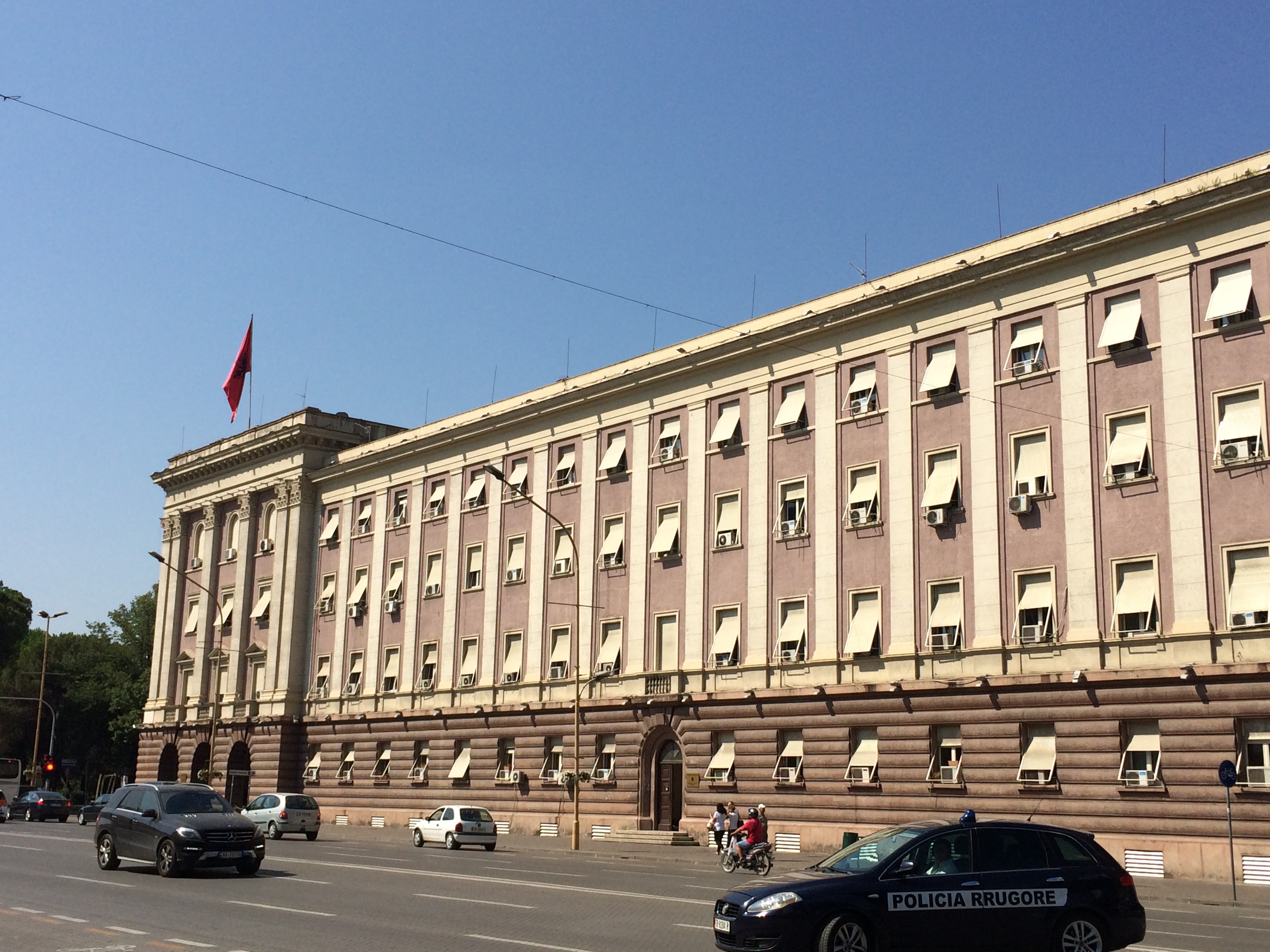
A governmental building in central Tirana.

A governmental building in central Tirana.


A church in central Tirana.

A church in central Tirana.


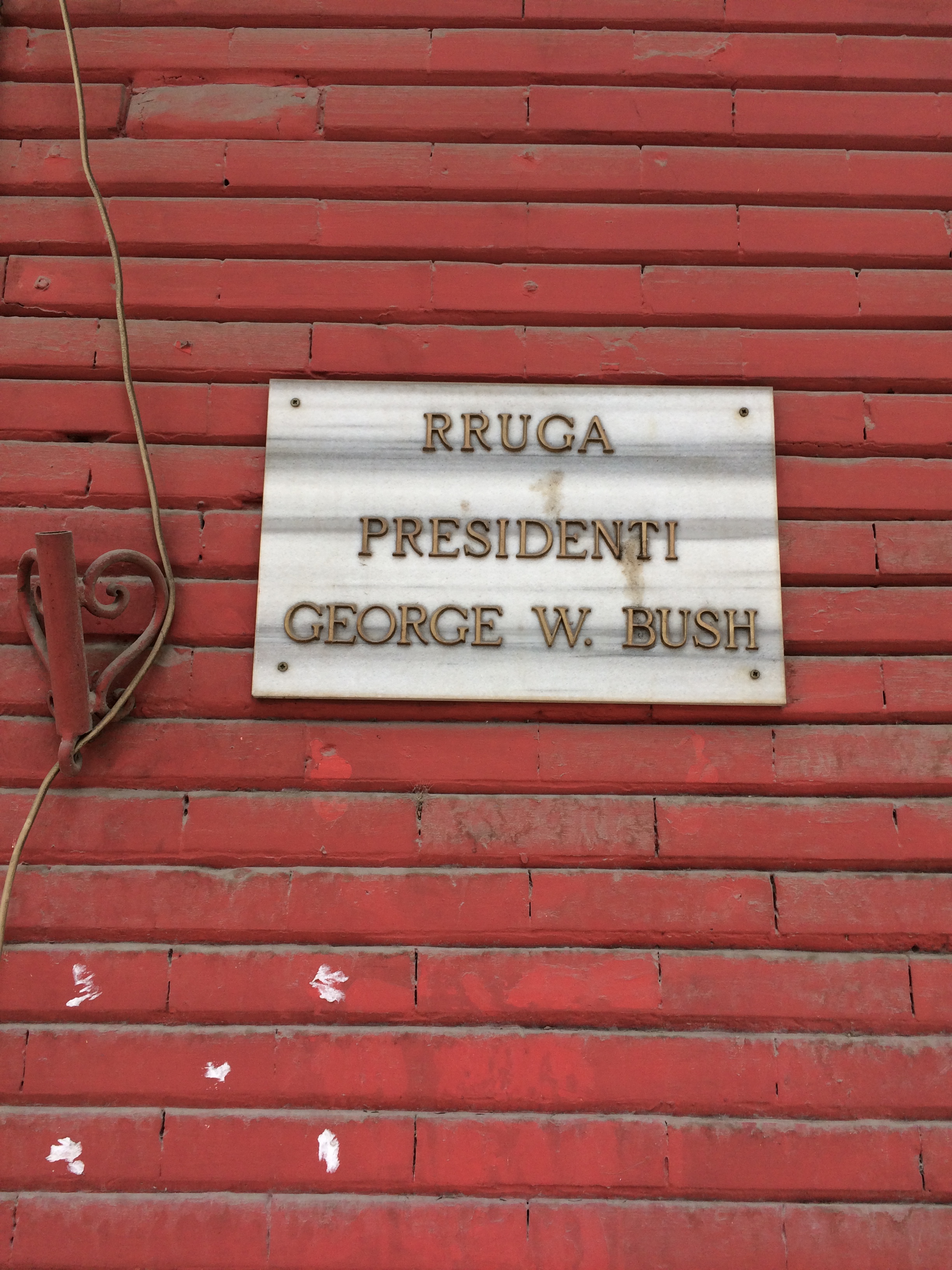
There's even a George W Bush street in Tirana.

There’s even a George W Bush street in Tirana.


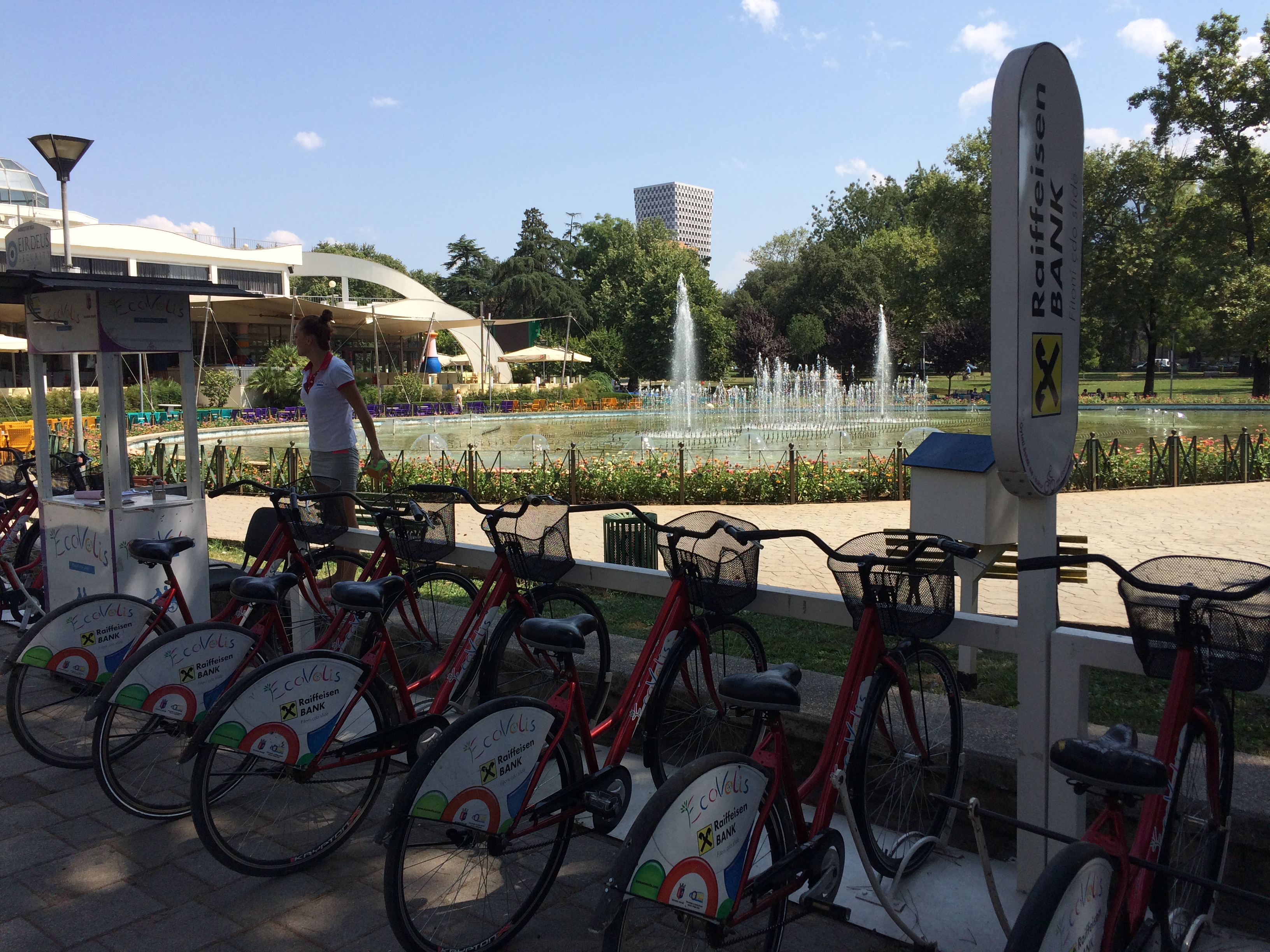
City bikes in Tirana.

City bikes in Tirana.


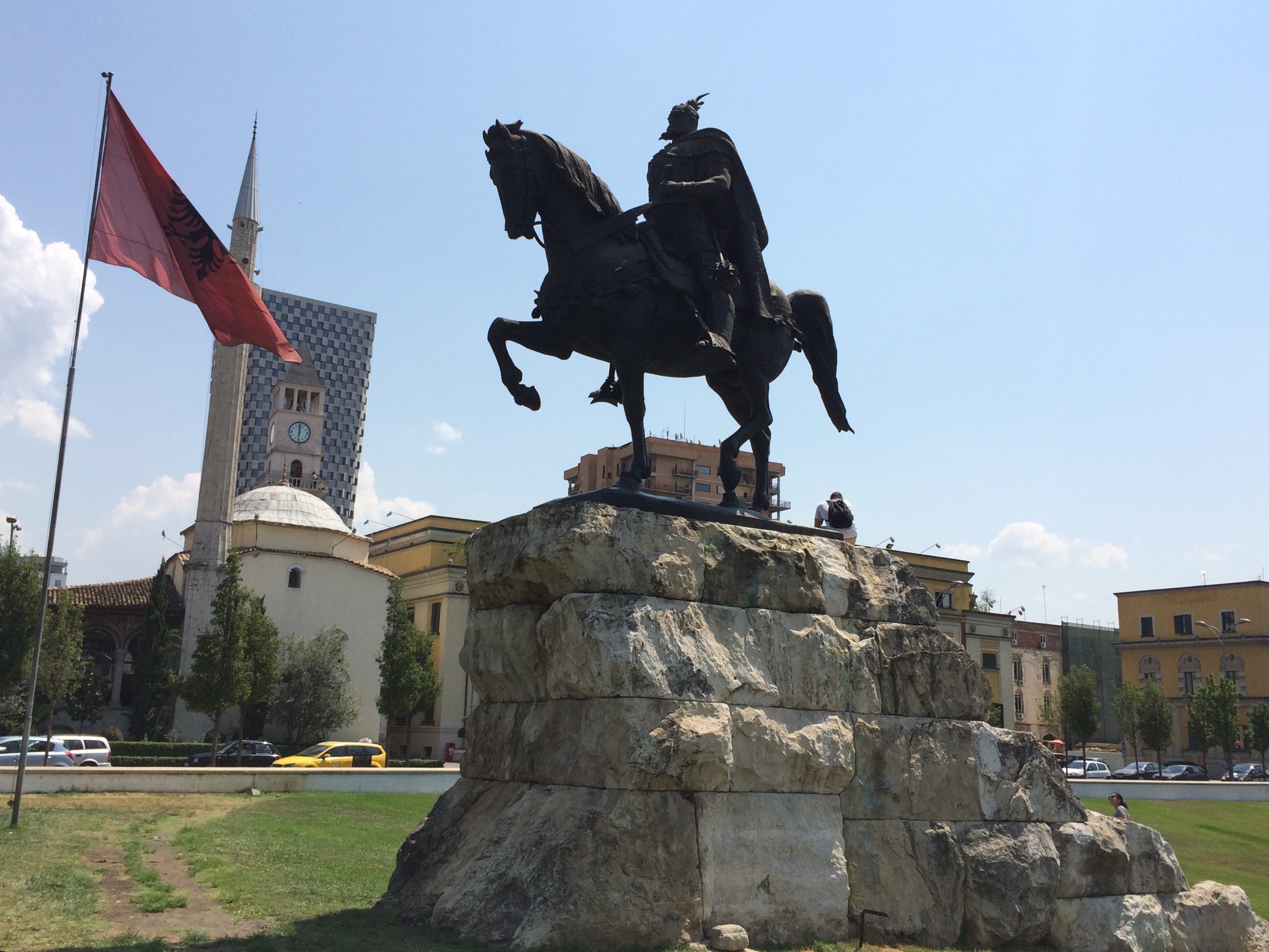
– The most revered historical figure was Skanderberg or Iskander or Gjergj Kastrioti, the former Ottoman ruler of Albania who fought the Turks and defeated them in 13 attempted invasions  to create an independent state;

Albania's hero - Skanderberg or Iskander or

Albania’s hero – Skanderberg or Iskander or Gjergj Kastrioti who repelled repeated Turkish invasions and founded Albania as an independent state.

– Albanians are distancing themselves from both their Islamic and Communist past, maintaining their secular state and looking toward Western Europe;

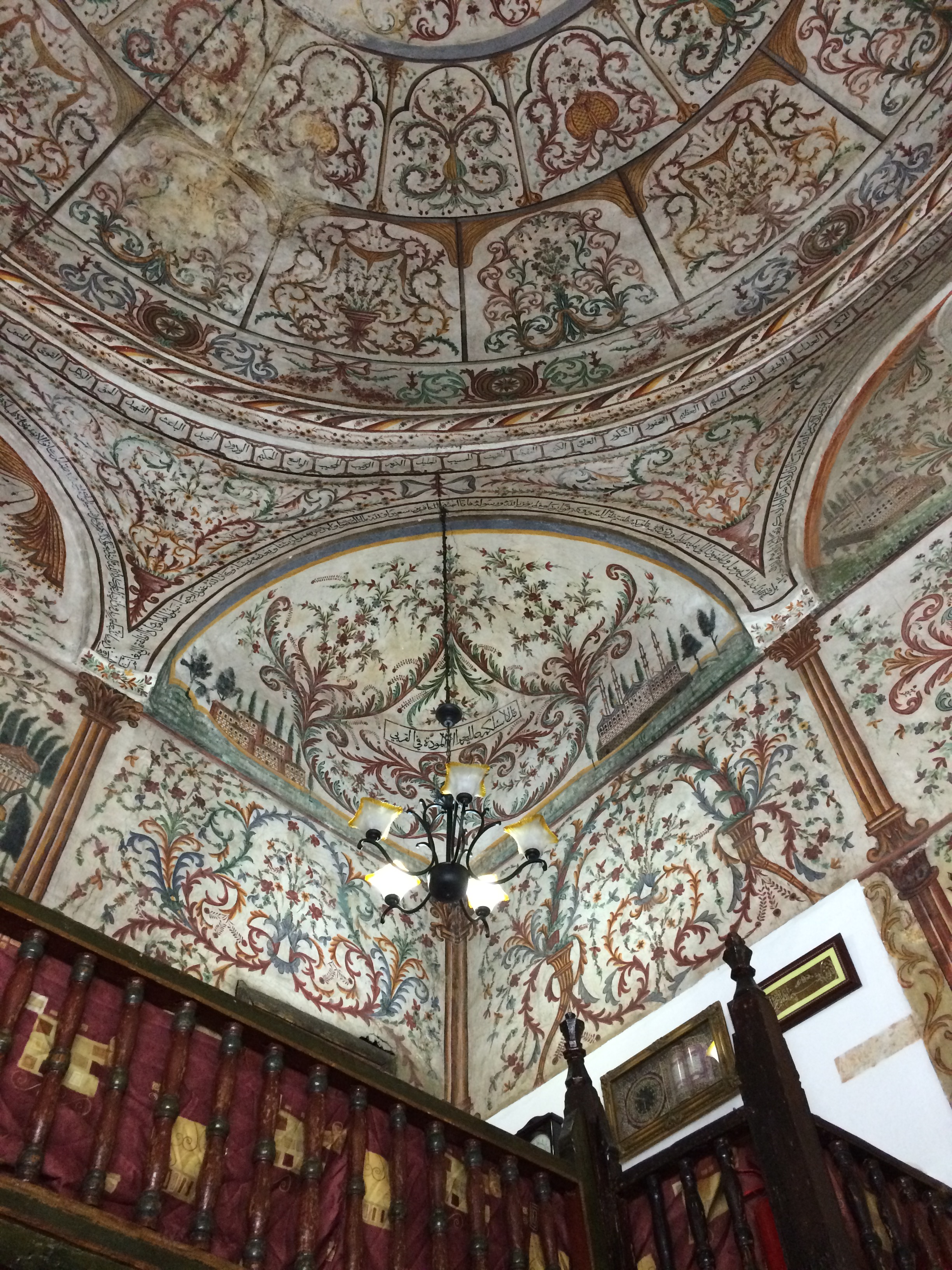
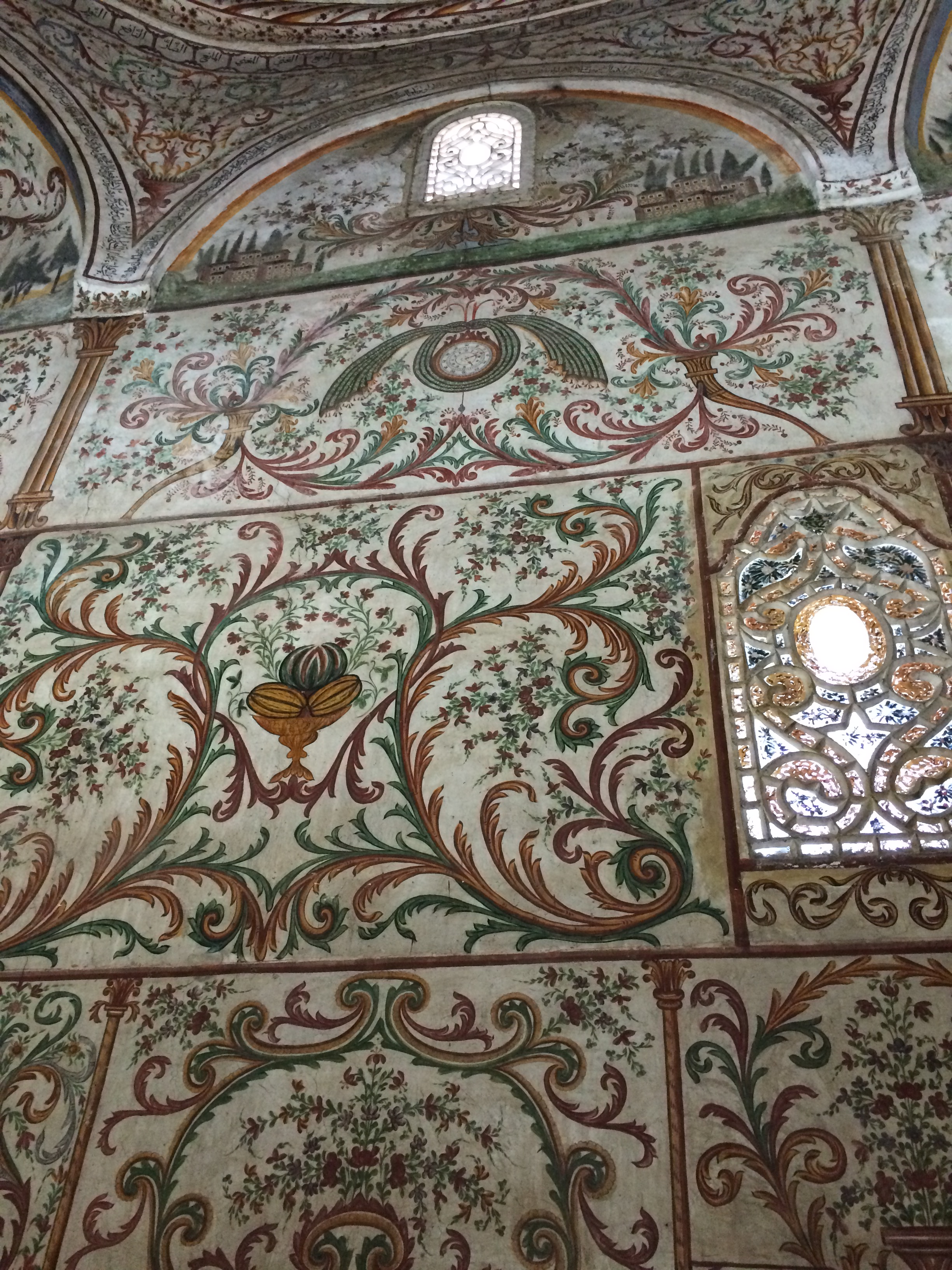
– There aren’t very many old places of interest in Tirana.  One of the oldest is the Et’hem Bey Mosque built in 1823 by Molla Bey, the grandson of Suleiman Pasha, closed under communist rule and re-opened as a house of worship in 1991 after 10,000 people dared to attend without permission from the authorities, an event which marked the rebirth of religious freedom in the country;

The inside of the Et'hem Bey Mosque re-opened as place of religious worship in 1991.

The inside of the Et’hem Bey Mosque re-opened as place of religious worship in 1991.


A detail from the ceiling of the mosque.

A detail from the ceiling of the mosque.


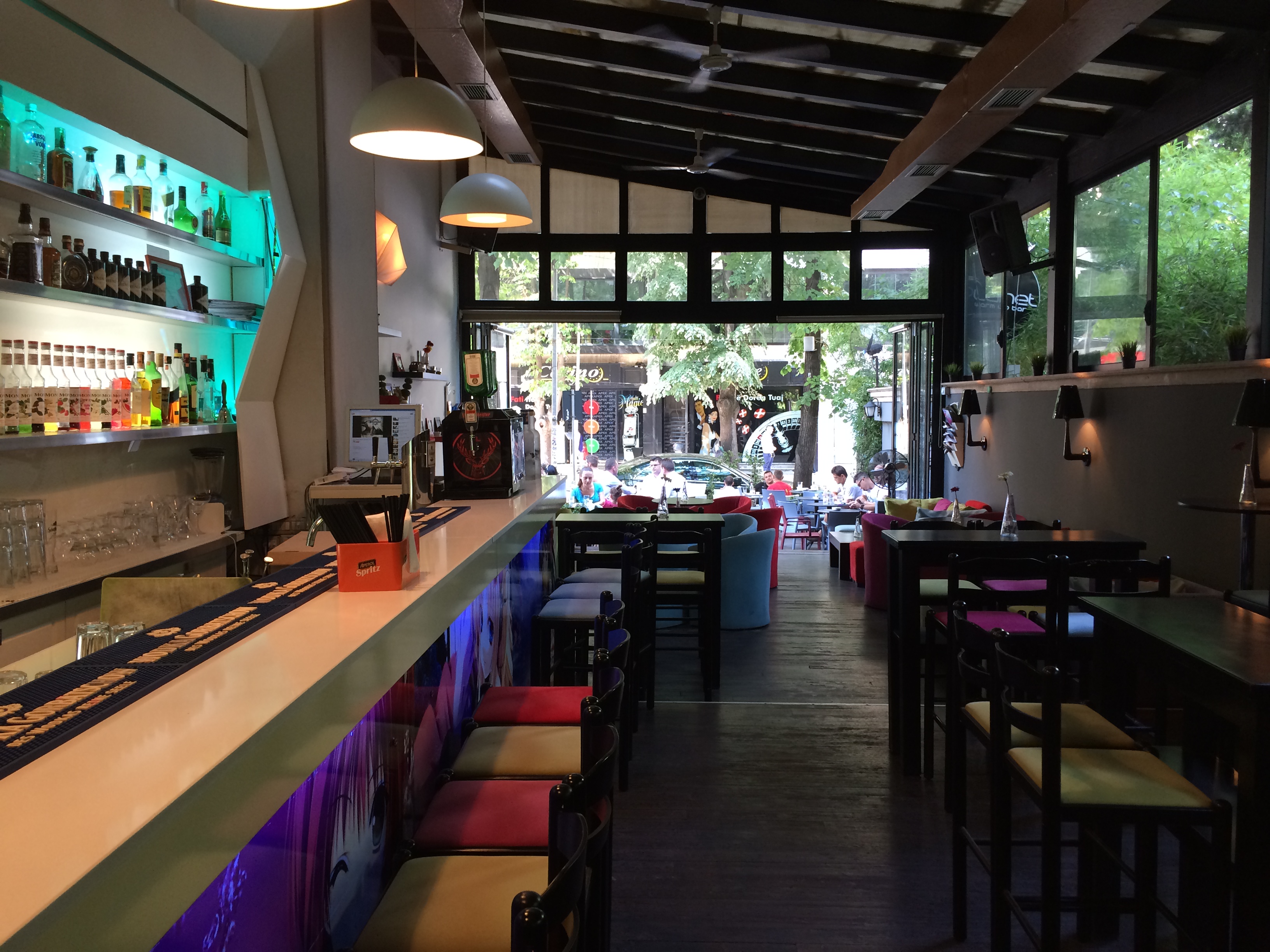
– The section of Tirane which housed Enver Hoxha and certain party officials has now been regenerated into a chic downtown area full of coffee shops and high-end shops;

A cafe within the perimeter of Enver Hoxa's old quarters, now regenerated into a fashionable downtown area.

A cafe within the perimeter of Enver Hoxa’s old quarters, now regenerated into a fashionable downtown area.


It's now a chic modern district.

It’s now a chic modern district.


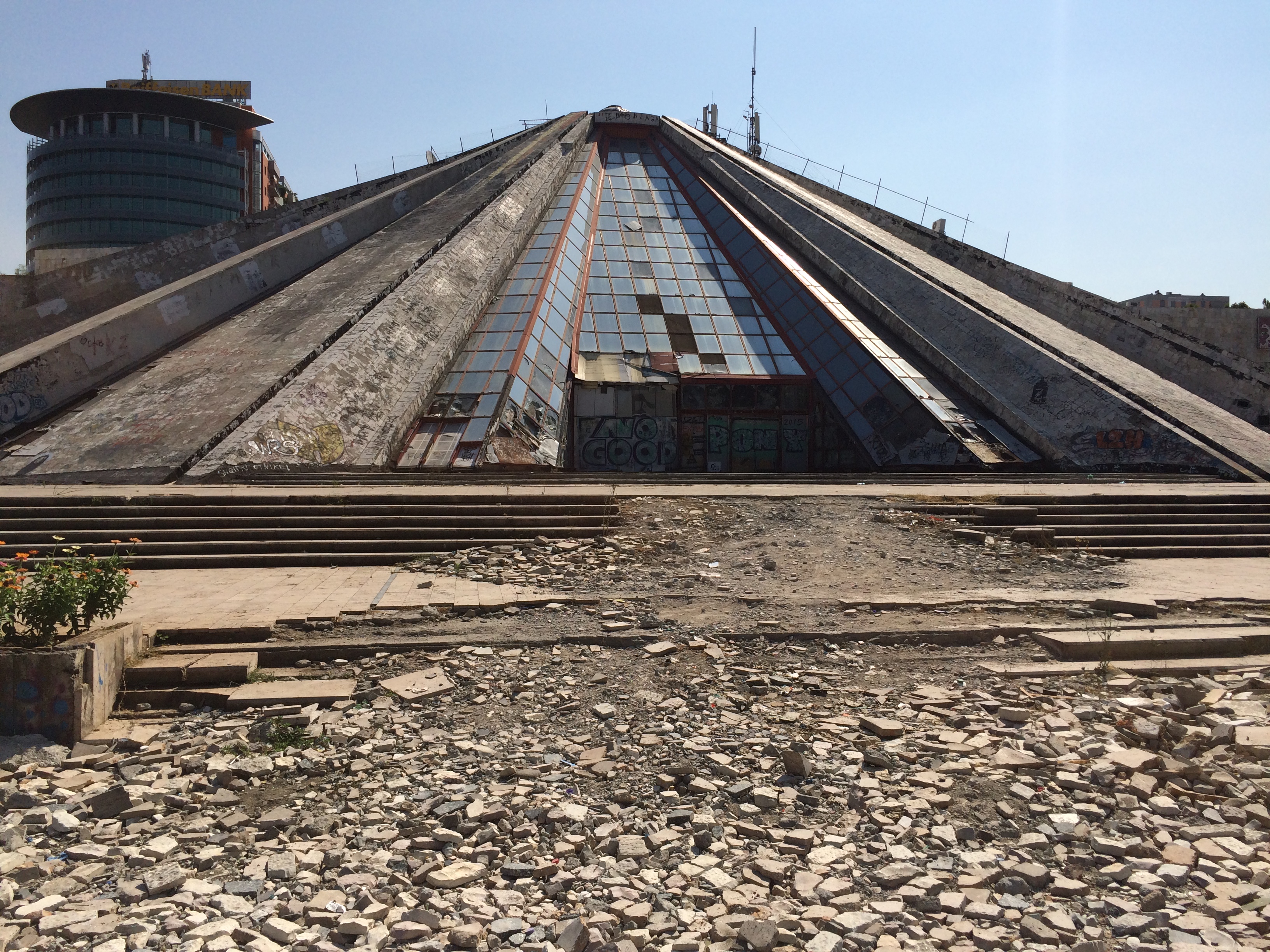
– The ‘pyramid’, dedicated to the achievement of Enver Hoxha and designed by his daughter and son-in-law is now a graffitied ruin and what to do with it is still being hotly debated;

Enver Hoxa's 'pyramid', semi vandalised. Debate continues around what to do with it.

Enver Hoxha’s ‘pyramid’, semi-vandalised. Debate continues around what to do with it.

– Mother Teresa of Calcutta was an Albanian and her order has a convent in Tirane;

– Albania has a problem with street children, mainly Romany children, who are not to be confused with gypsies;

After a brief but fascinating visit to a country as yet untouched by tourism we set off again on our travels to Greece arriving in Ioannina in the early evening.

Modern Albania is eager to integrate with Europe and the rest of the world.

Modern Albania is eager to integrate with Europe and the rest of the world.

The main part of our odyssey ends in Greece staying in Milina, Greece with very dear friends of ours, Rachel and Rob.  A lovely relaxing end to a long and eventful journey.  Our daughter Catherine joined us and a blissful week was had.

IMG_5602

Sunday 2nd to Tuesday 4th August – Bari to Dubrovnik and onto Montenegro

Standard

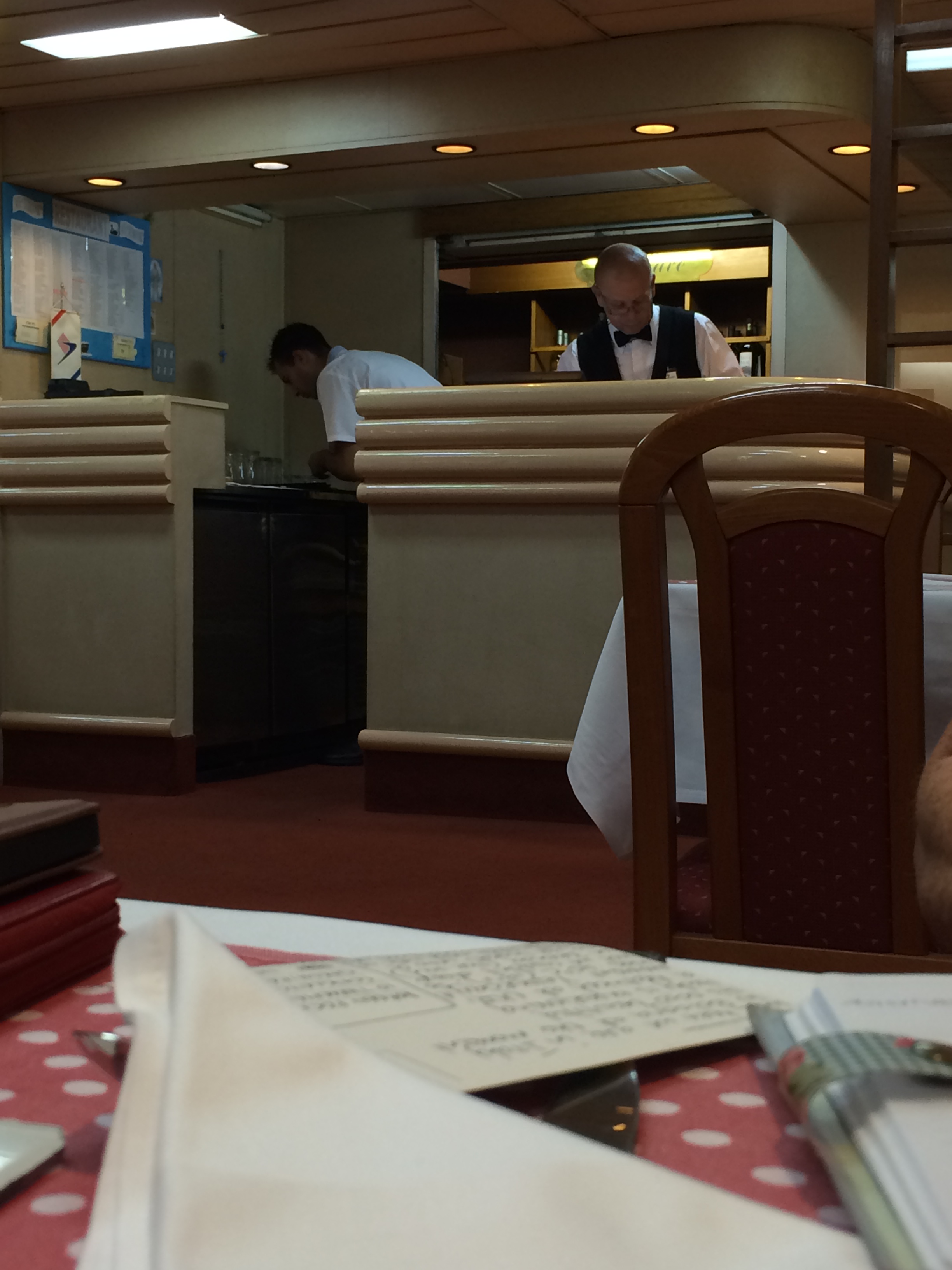
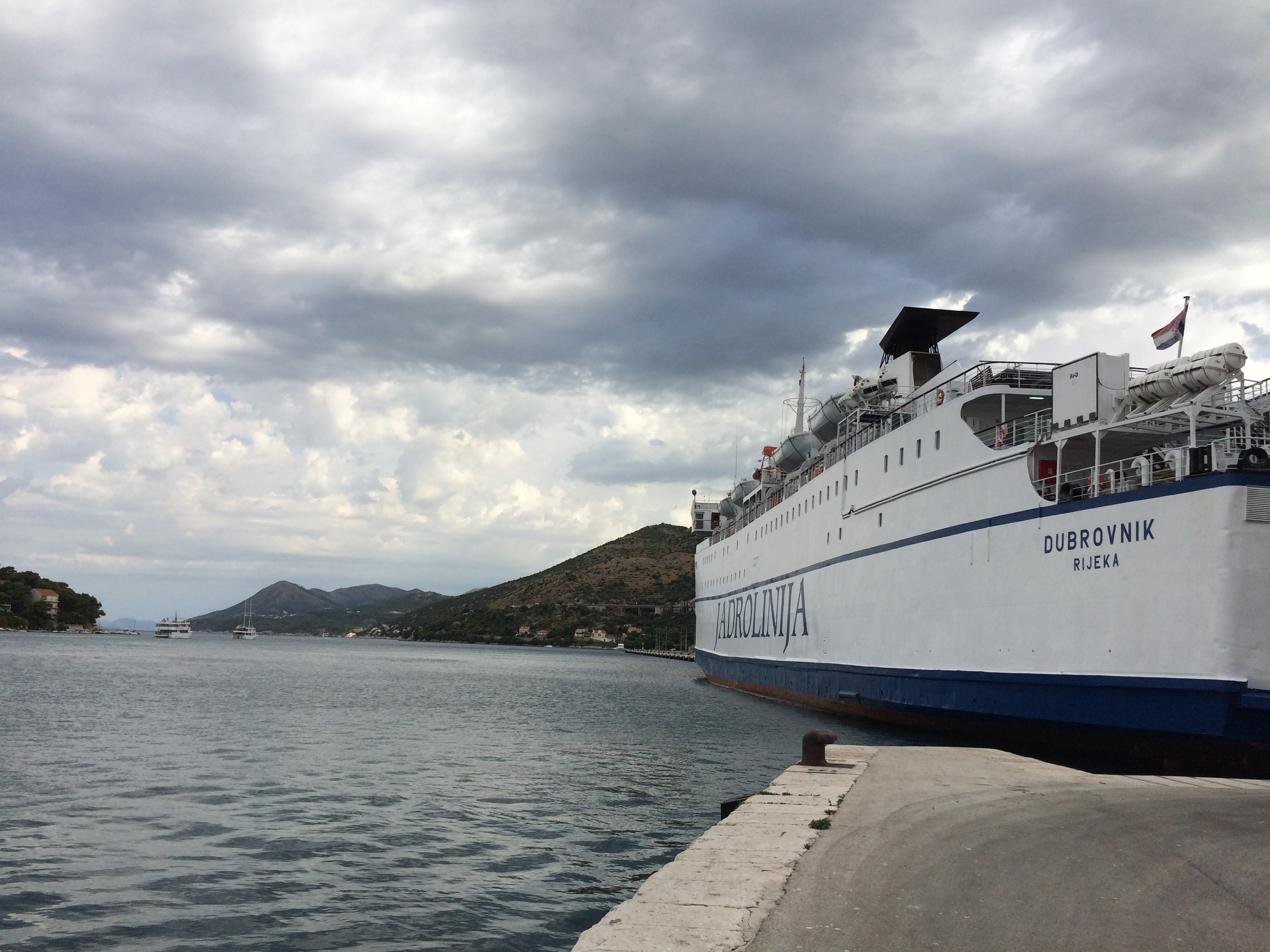
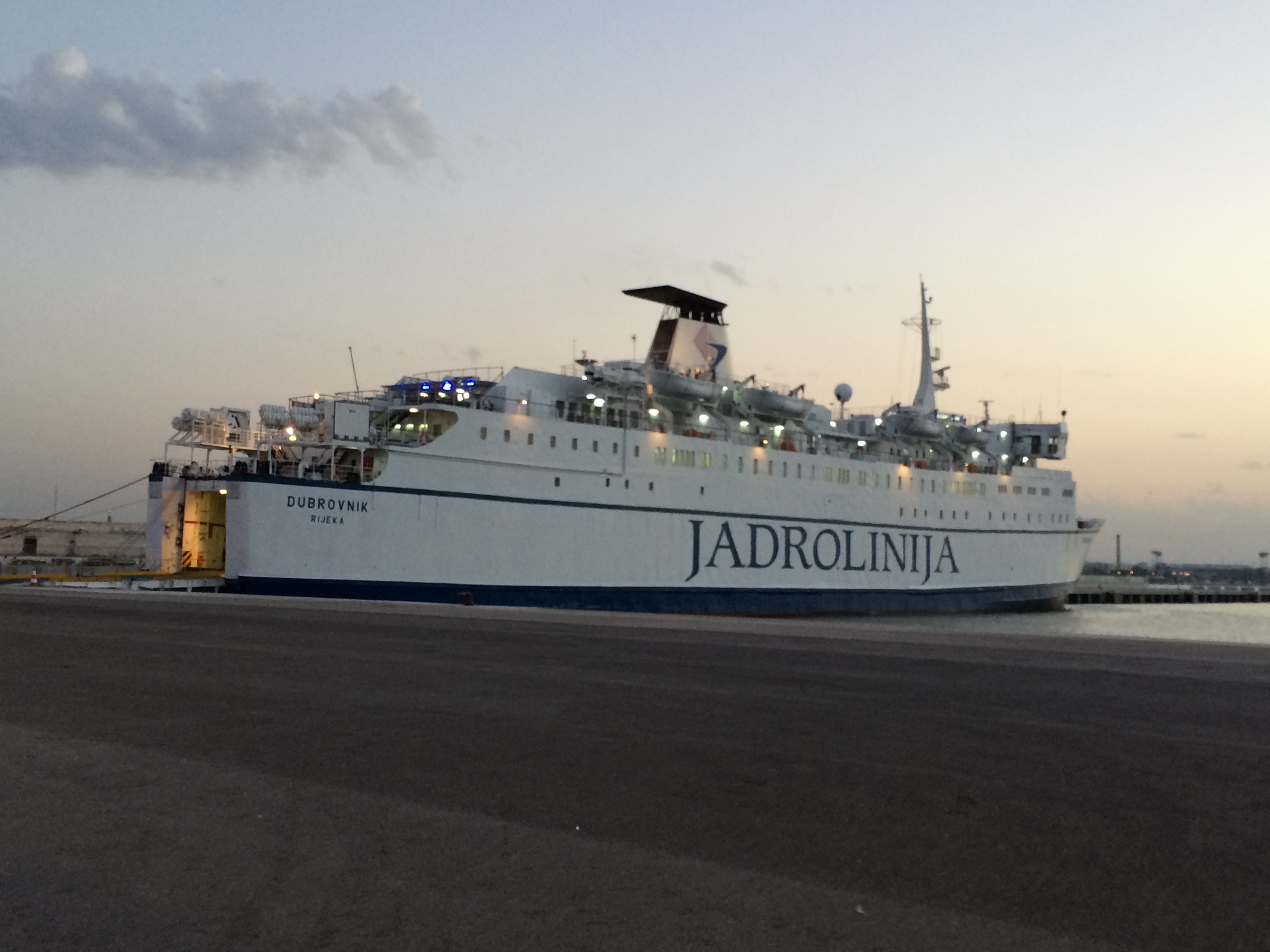
Overnight ferry on a Croatian Jadrolinija ferry to Dubrovnik in Croatia.  Thinking we’d dine on the boat before we retired to our cabin we were disappointed with our dining experience. The waiter had to be the most surly waiter that ever served food on the seven seas. Not only did he lack any customer service skills, he got both our orders completely wrong despite repeating the order back to us and conspicuously jotting everything down in his order book.

Our surly waiter on the Jadrolinija ferry to Dubrovnik.

Our surly waiter on the Jadrolinija ferry to Dubrovnik.

Arrival in Dubrovnik.

Arrival in Dubrovnik.

IMG_5379

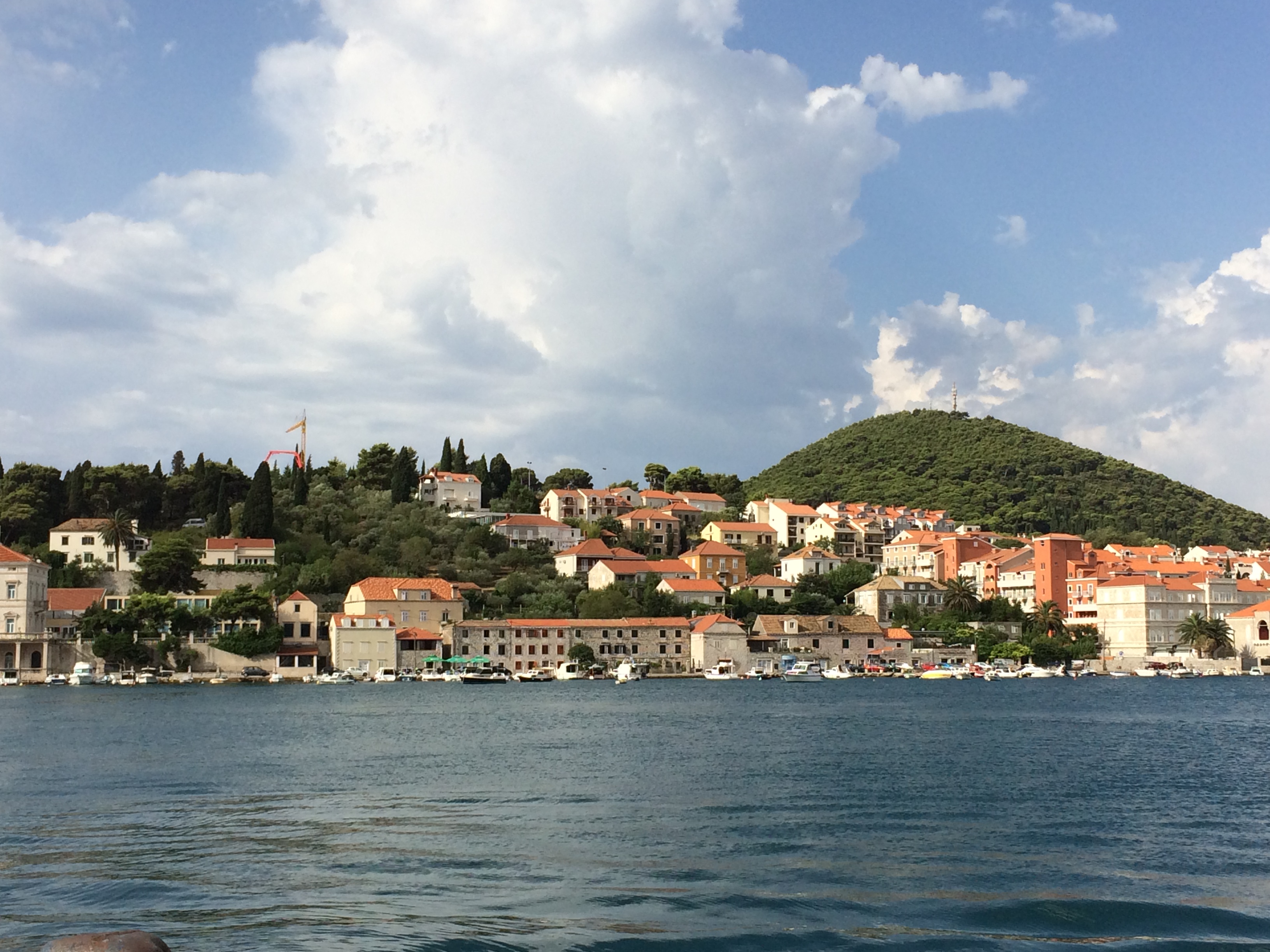
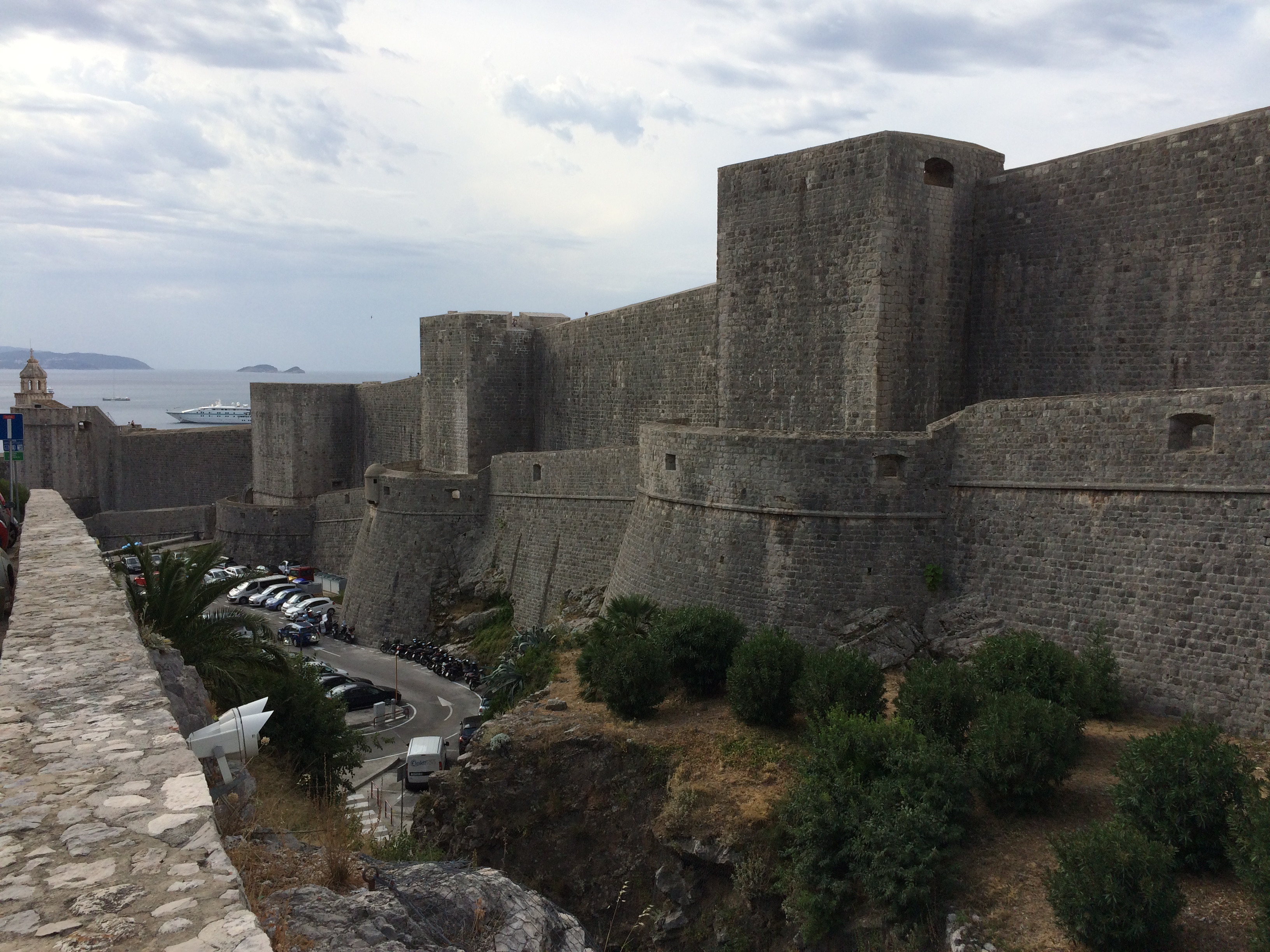
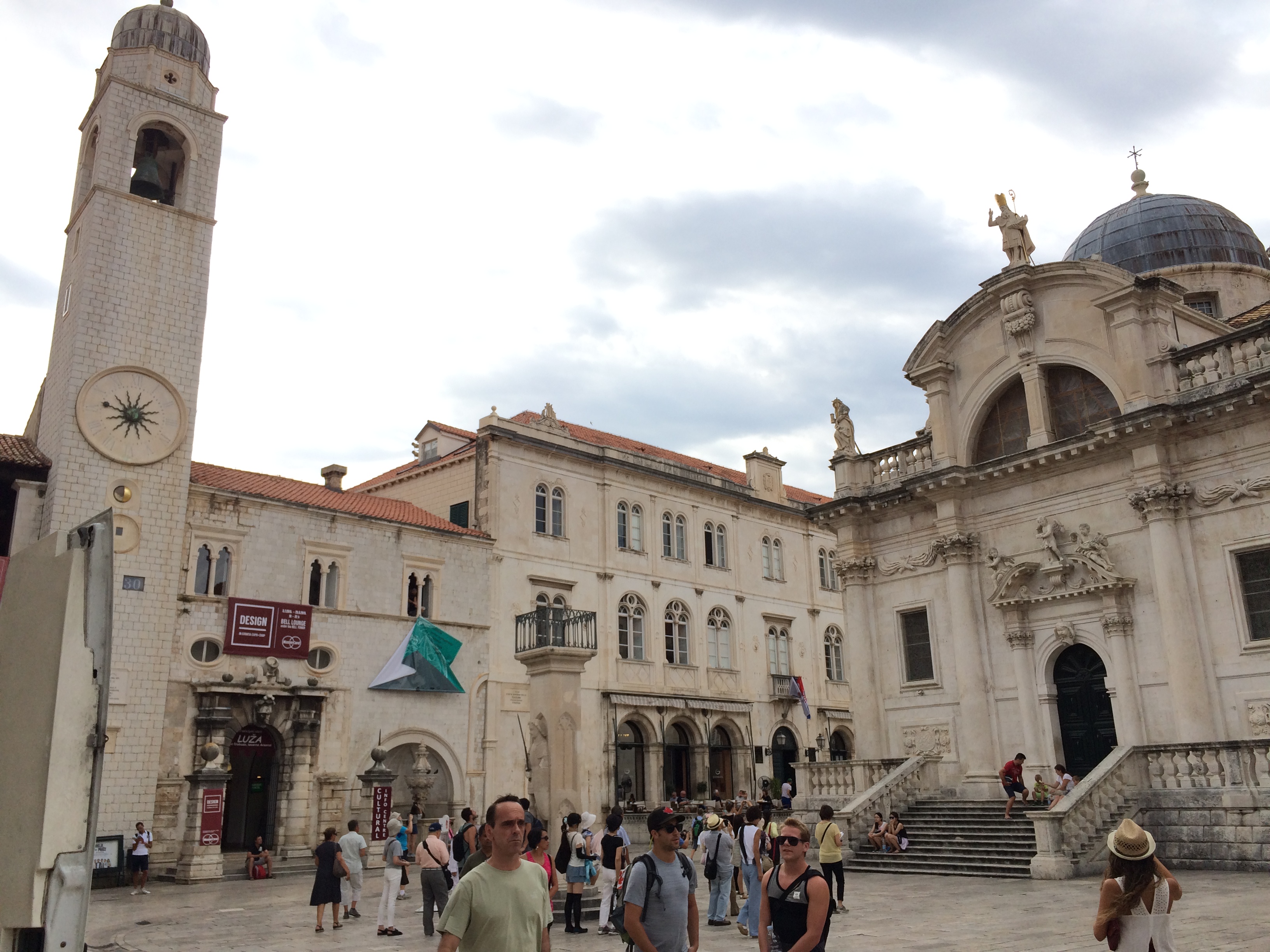
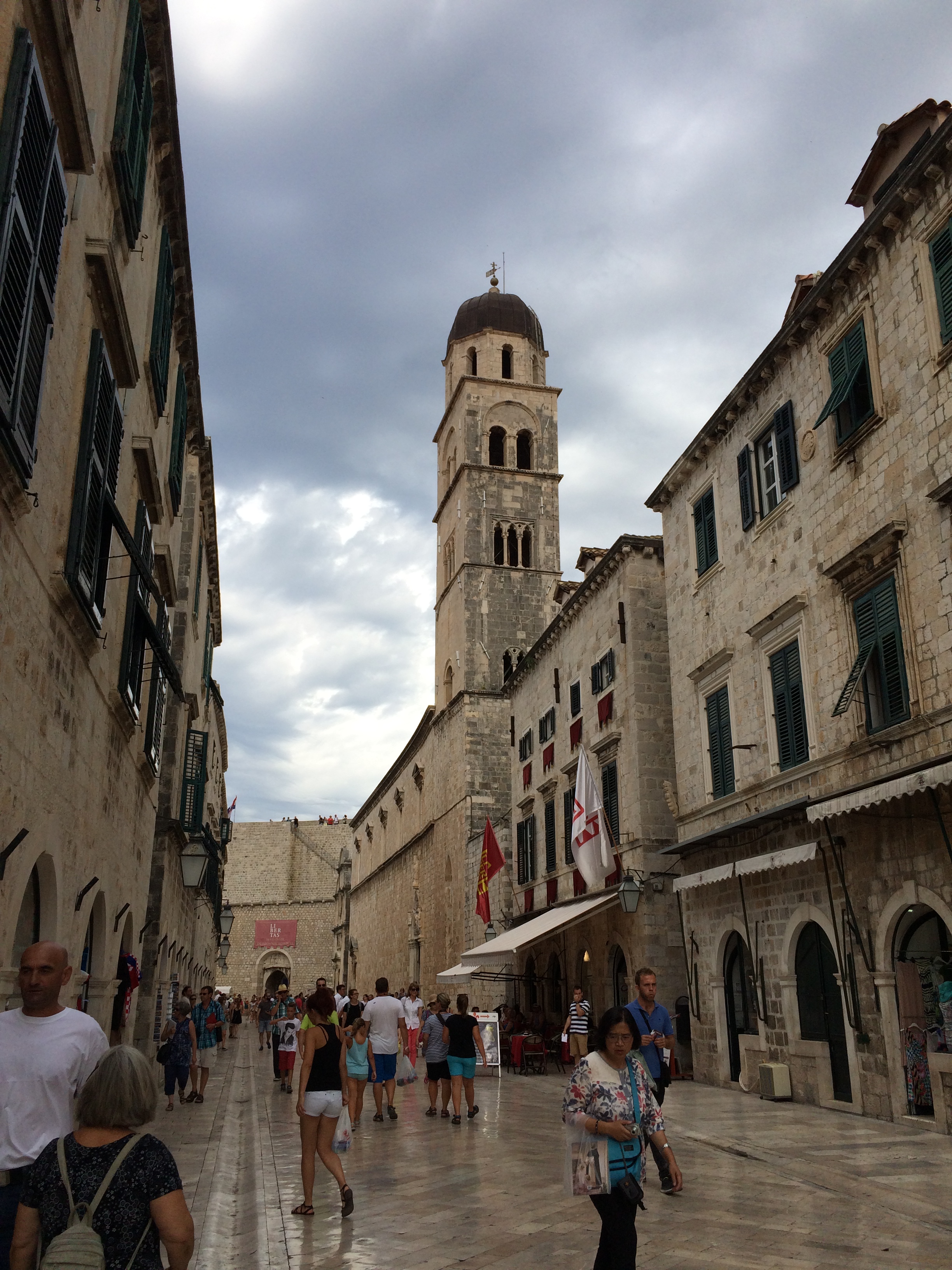
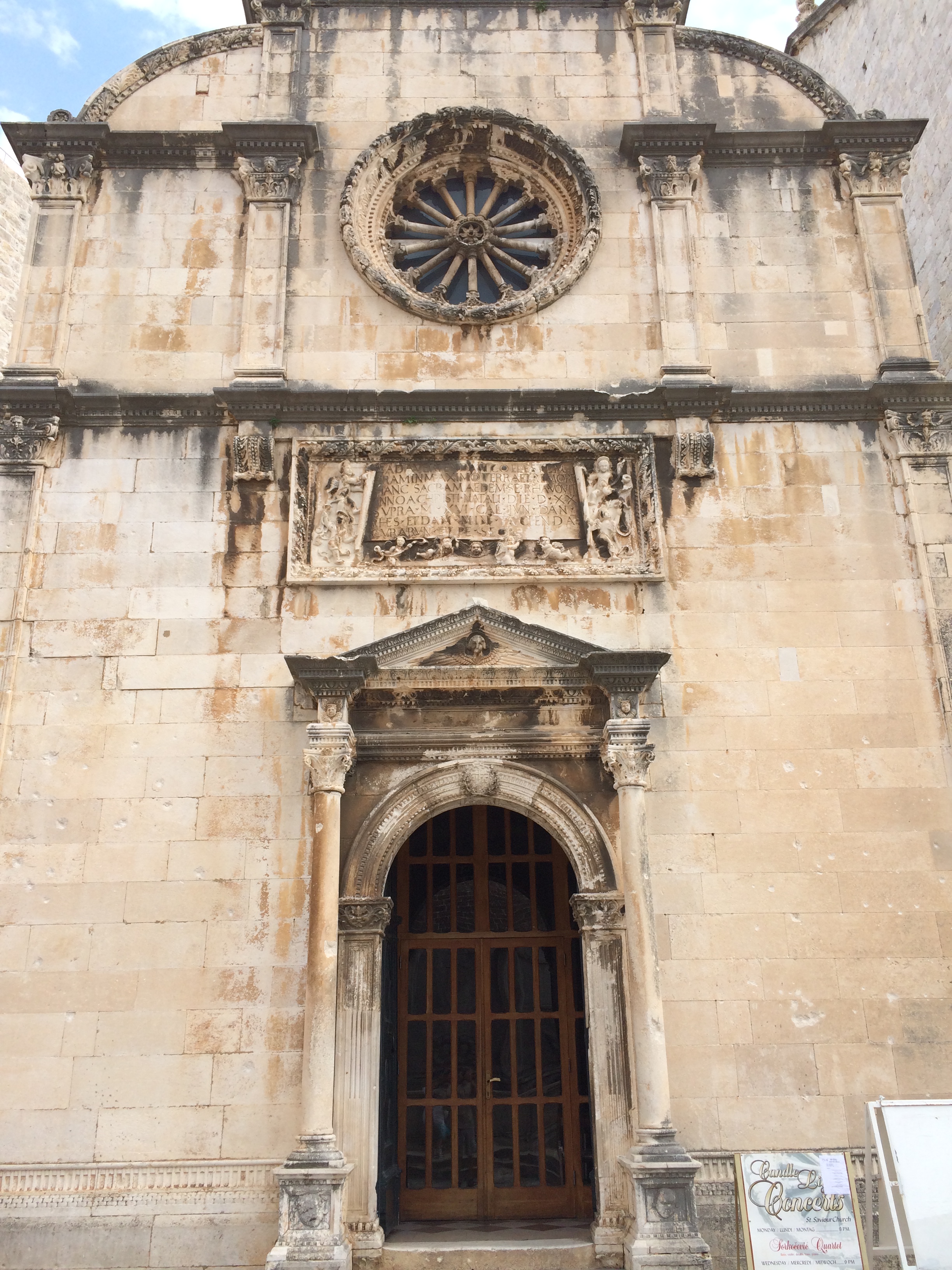
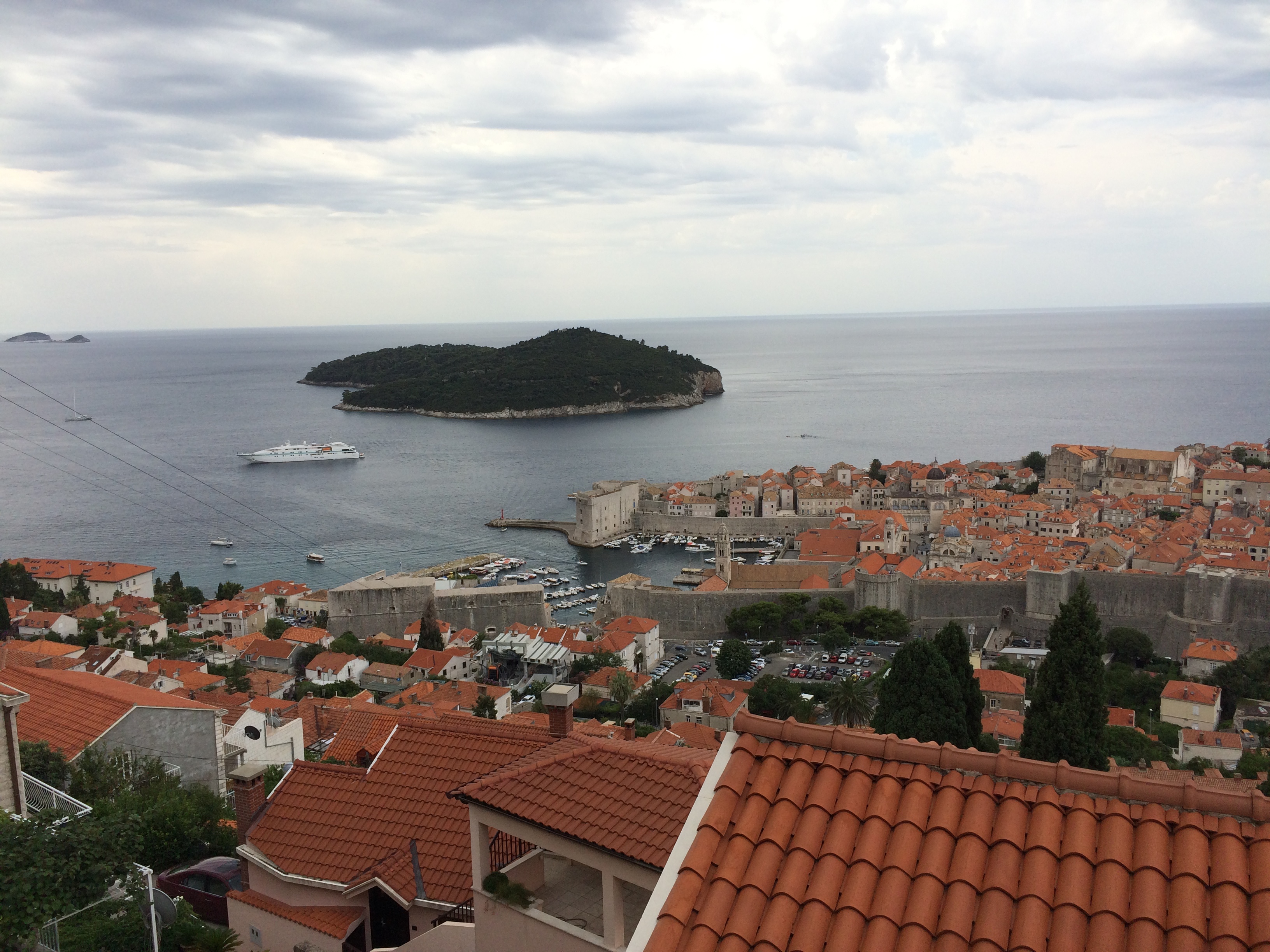
First impressions on leaving the ferry was that Dubrovnik was a beautiful city, the hills sloping down to the port with white houses with terracotta roofs interspersed with cypress trees.  It was unfortunate that we wouldn’t have much time to spend here as the plan was to get to Greece to meet our daughter Catherine who was arriving in Thessaloniki on the 8th.  We did manage a brief visit to the medieval walled city which was truly amazing and was ‘King’s Landing’ in Game of Thrones – indeed tour operators were offering Game of Thrones tours around the city where the series was made.  They have even reconstructed an ‘Iron Throne’.  The walls, encircling the city for almost two kilometres, were at some points six metres wide. The place was very busy with tourists and we kept our visit quite short.

View of Dubrovnik's medieval walled city from the outside.

View of Dubrovnik’s medieval walled city from the outside.

Inside Dubrovnik's medieval city.

Inside Dubrovnik’s medieval city.

A very popular tourist attraction, made more popular by 'Game of Thrones'.

A very popular tourist attraction, made more popular by ‘Game of Thrones’.

D

D

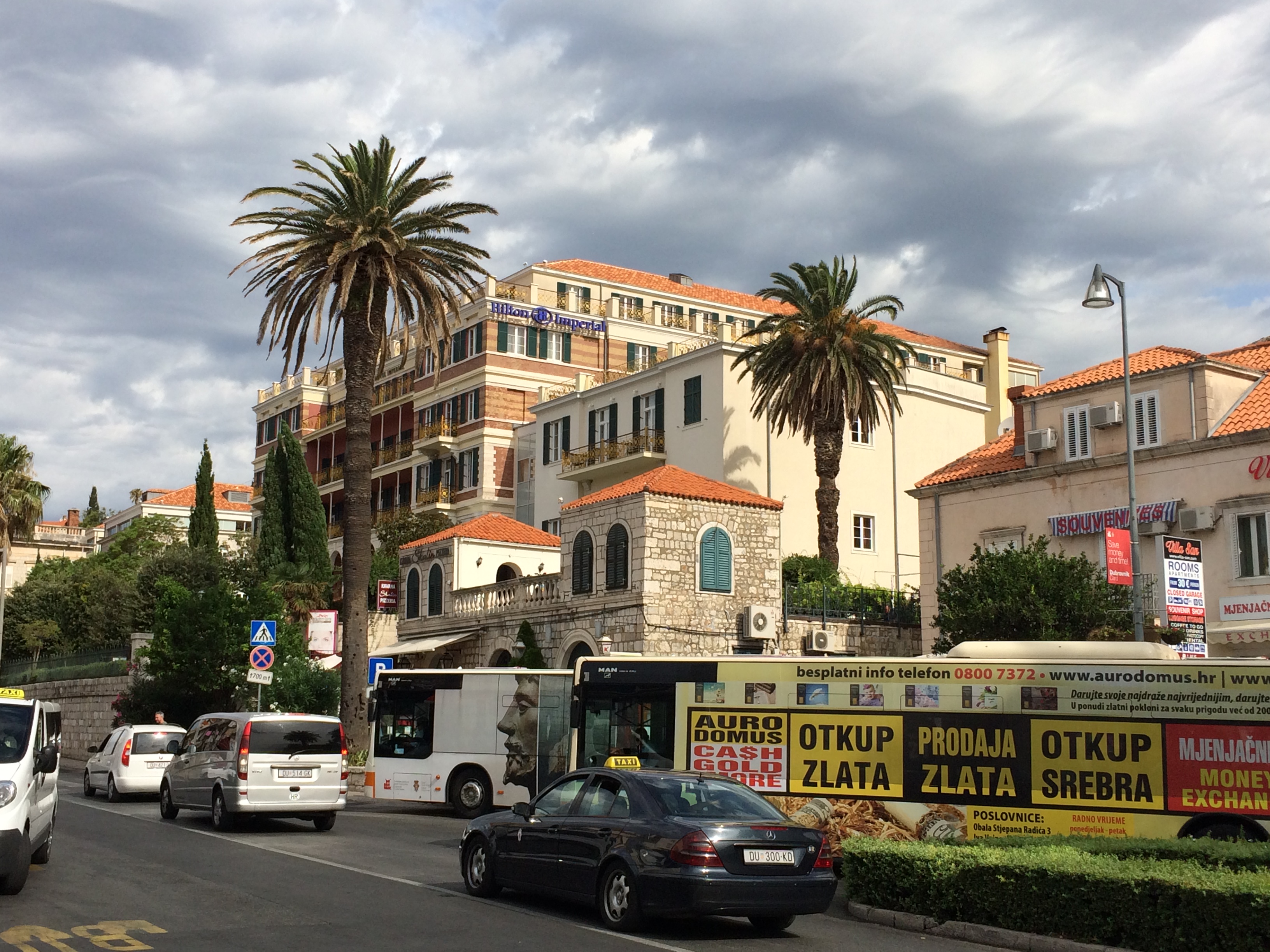
According to Wikipedia, Dubrovnik is one of the most prominent tourist attractions in the Mediterranean, which began with the construction of the Hotel Imperial in 1897.  Sadly, considerable damage was inflicted on Dubrovnik by the forces from Serbia and Montenegro during the breakup of Yugoslavia.

The imposing Hotel Imperial in Dubrovnik.

The imposing Hotel Imperial in Dubrovnik, built in 1897.

IMG_5413

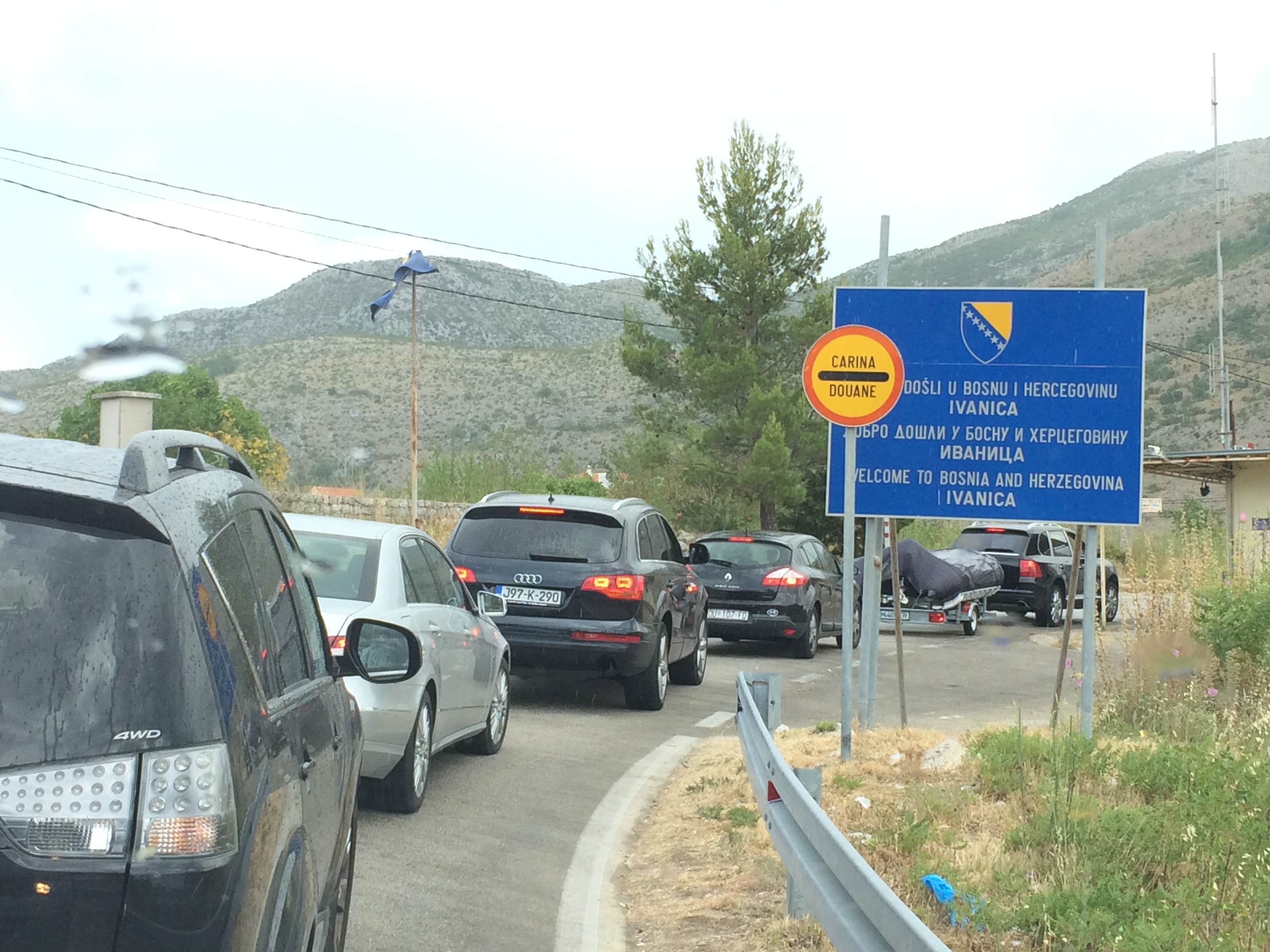
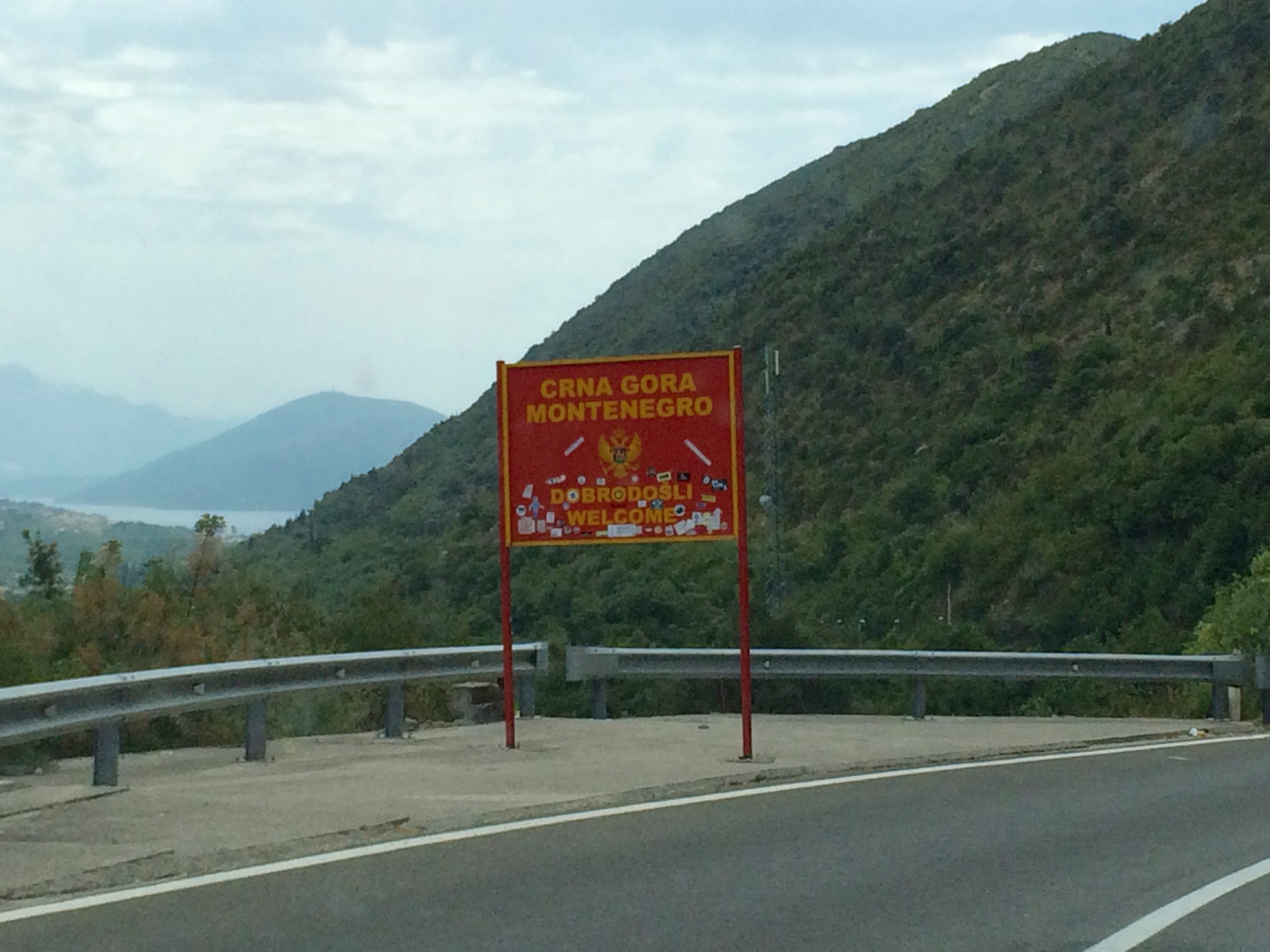
Our original plan included a drive through Bosnia and Macedonia (FYRM) so we left Croatia and drove into Bosnia.  The border guards were so unpleasant and the purchase of a green card so prohibitive that we decided to turn around and go via Montenegro and Albania instead.  However, we can claim to have at least crossed into Bosnia for all of 200 meters or so.

The queue of cars waiting to cross into Bosnia and Herzegovina (or Ivanica as it is called locally).

The queue of cars waiting to cross into Bosnia and Herzegovina (or Ivanica as it is called locally).

We turn round and head for Montenegro instead.

We turn round and head for Montenegro instead.

IMG_5455

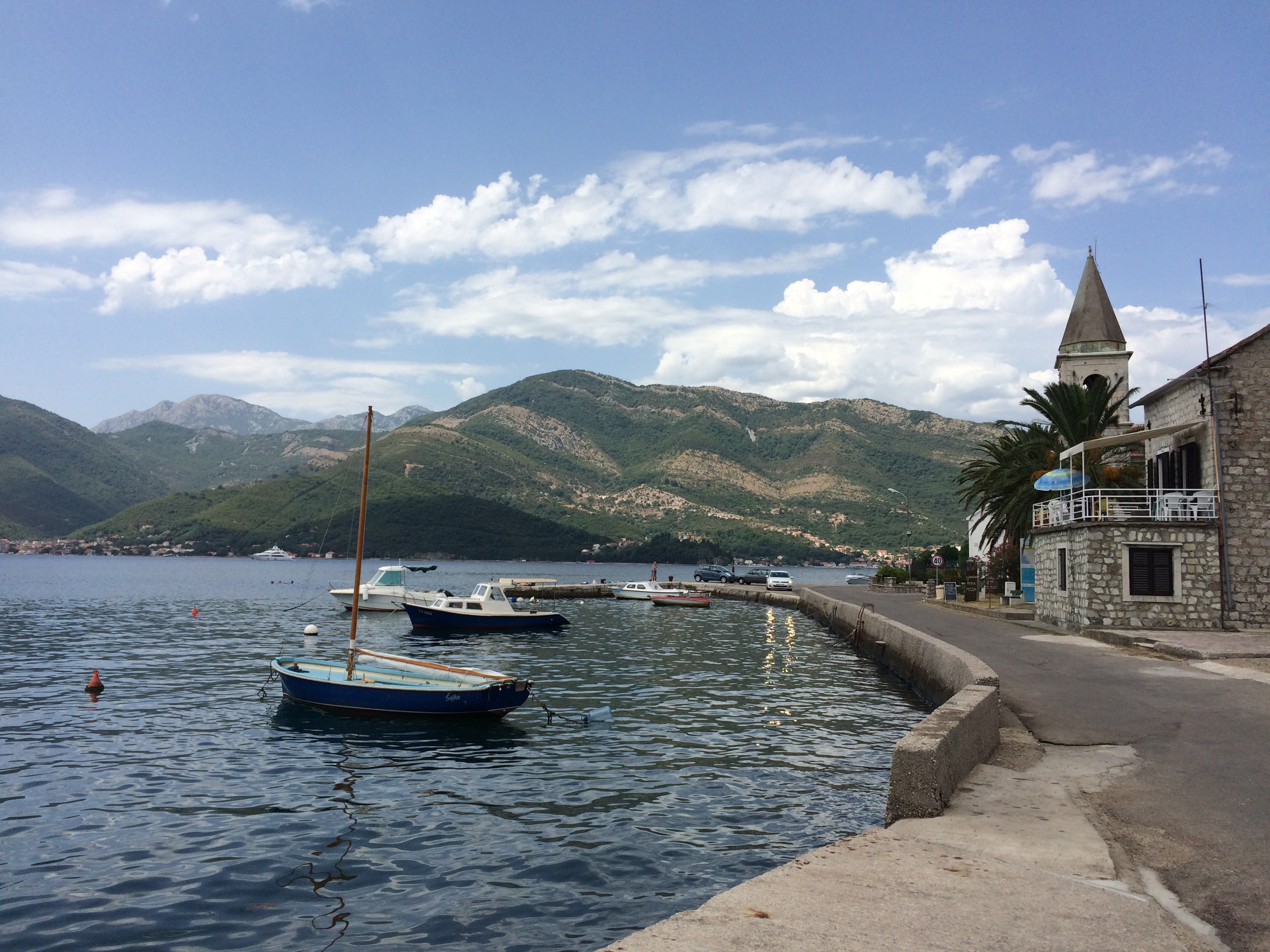
Following Montenegro’s beautiful coastline, we stopped at the picturesque seaside village of Tivat at a small hotel for lunch.  The Carruba Eco Hotel (www.septemberhotels.com) and restaurant overlooking the sea were lovely, the food excellent and the waiters kind and helpful and in marked contrast to our experience on the overnight ferry the night before!  Many Brits are buying second homes in Montenegro and we could see why – the north coast is quite stunning.

The charming small village and hotel where we stopped for lunch.

The charming small village and hotel where we stopped for lunch.

Delicious grilled squid Montenegran-style.

Delicious grilled squid Montenegran-style.

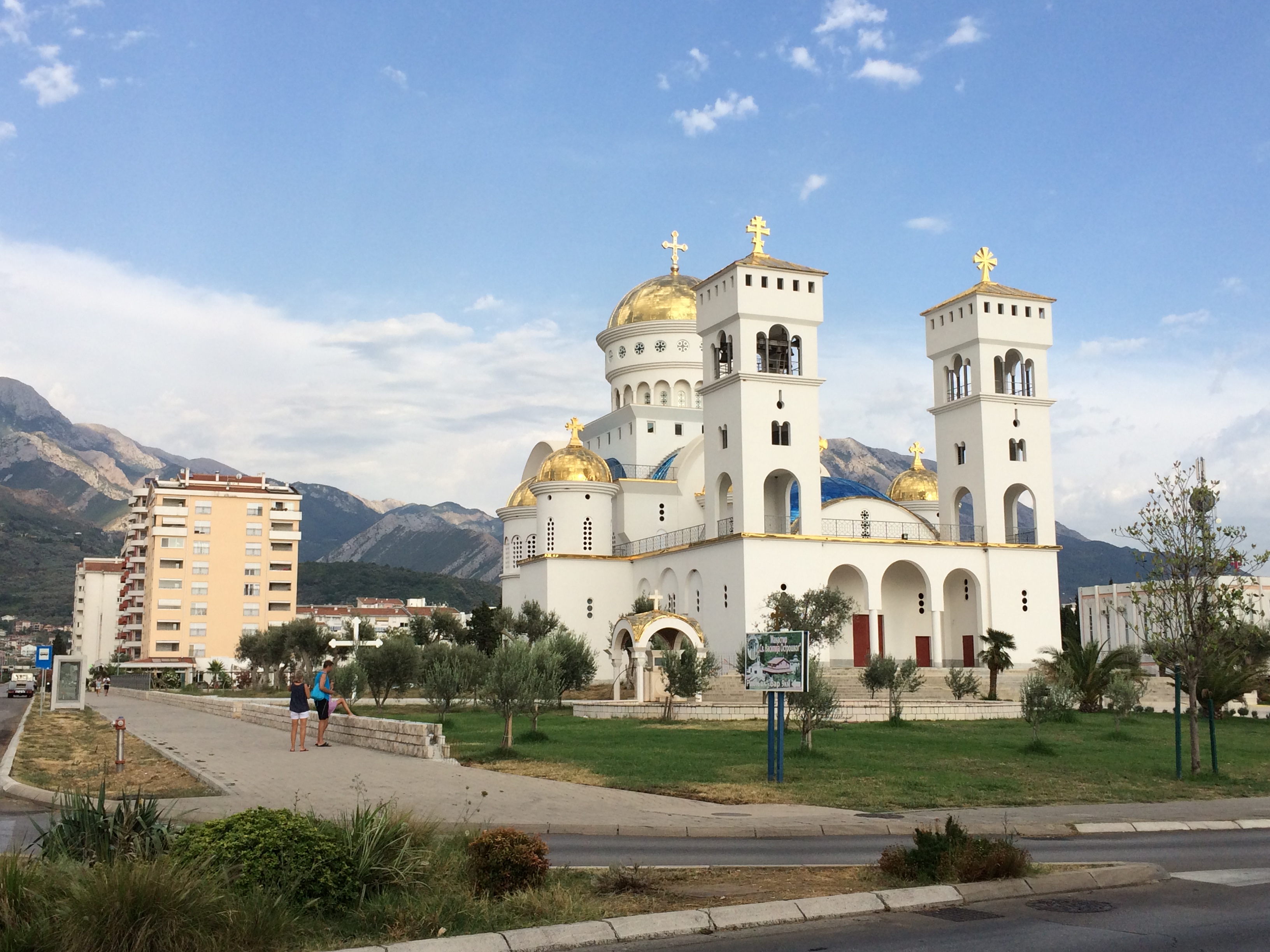
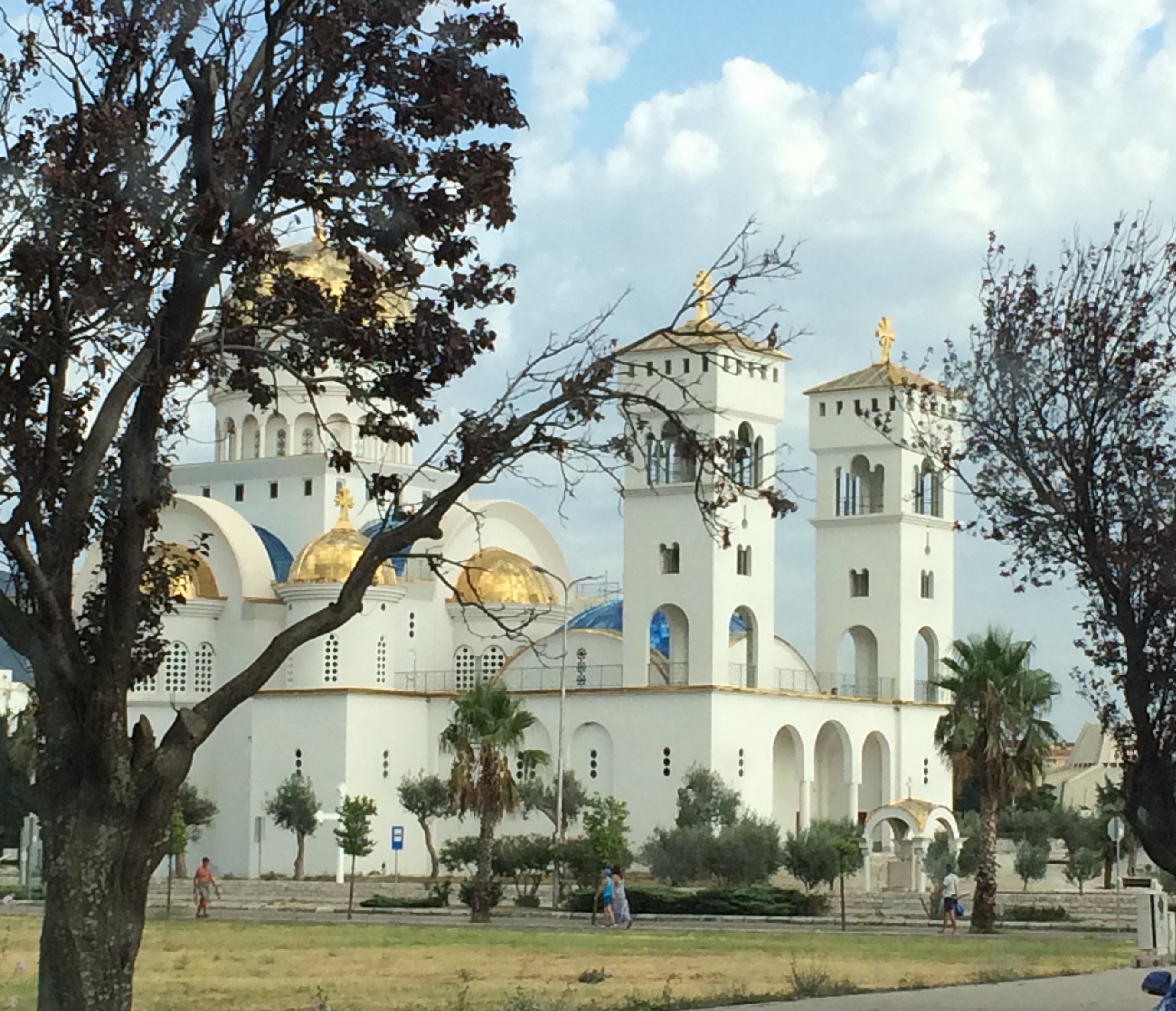
Moving further south we arrive at a town called ‘Bar’ which is of no specific interest and looks quite nondescript, until that is we spot a most magnificent church, newly-built and standing out like the crown jewels in a jumble sale.  We stop to take photos and find out what it’s called.  Everything is in Montenegran and the only other people there admiring it are Polish and unable to help.  We ask an attendant at the petrol station across the road and she has to go inside to ask what it’s called! “Sveti Yohan Vladimir” she comes back saying.  We assume ‘Sveti’ to mean ‘Saint’.

Sveti Yohan Vladimir cathdral

Sveti Yohan Vladimir cathedral in Bar, Montenegro.

Another view of the amazing cathedral in Bar.

Another view of the amazing cathedral in Bar.

Heading further south after leaving Bar, the beaches become more crowded and ‘seaside-like’.   It seemed common for men to walk around bare chested, often in their speedos, walking with a strut which was slightly intimidating.  We spent a long time looking for a campsite without success and decided to find a hotel, also without success.  Lots of signs advertised rooms to let and this is what we did.  Our initial very positive impressions very quickly faded as we were shown to our room which was made even worse as, at that moment, the heavens opened and torrential rain poured down.

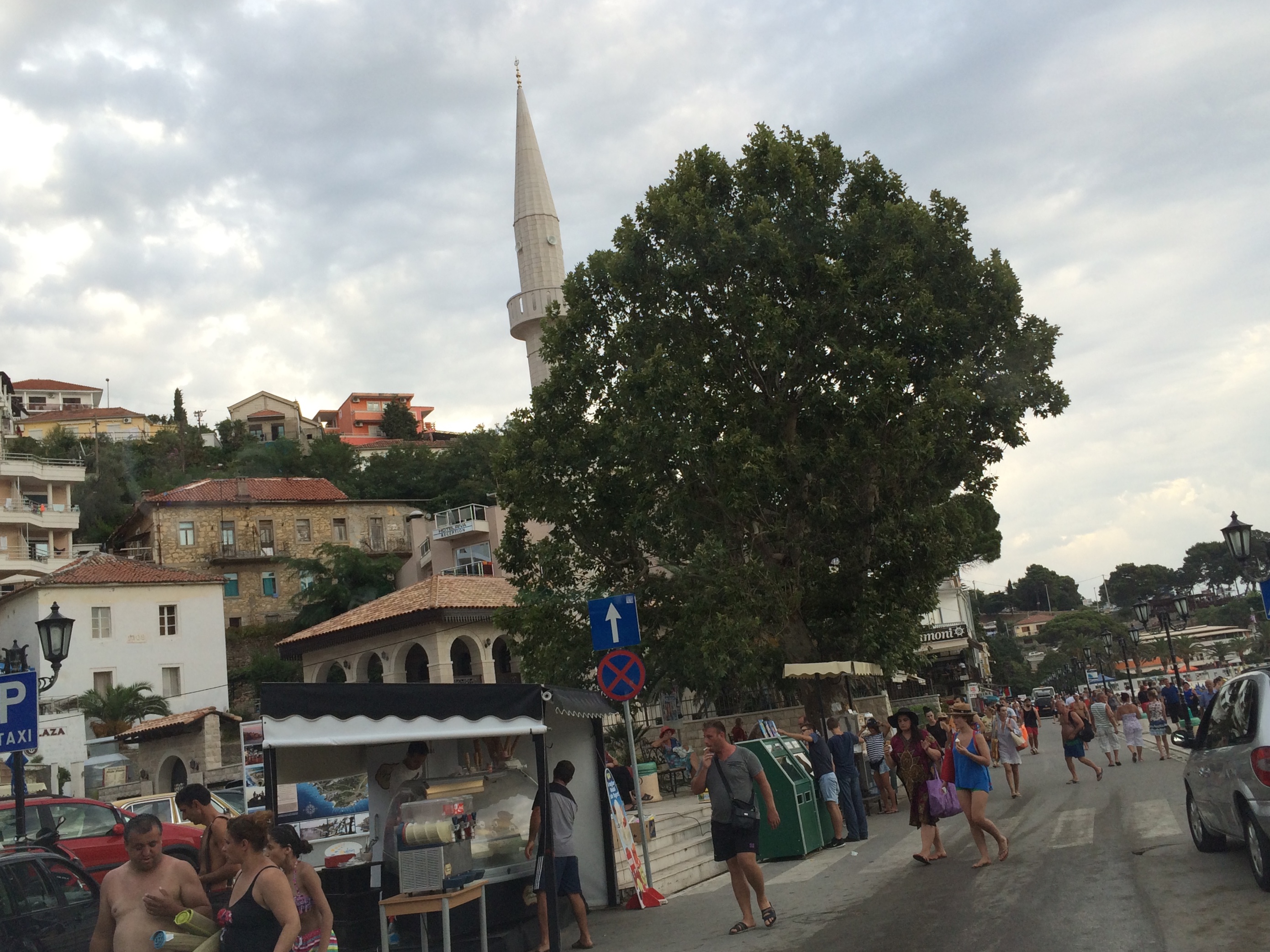
As we move further south in Montenegro, evidence of the changing ethnic mix becomes more apparent.

As we move further south in Montenegro, evidence of the changing ethnic mix becomes more apparent.

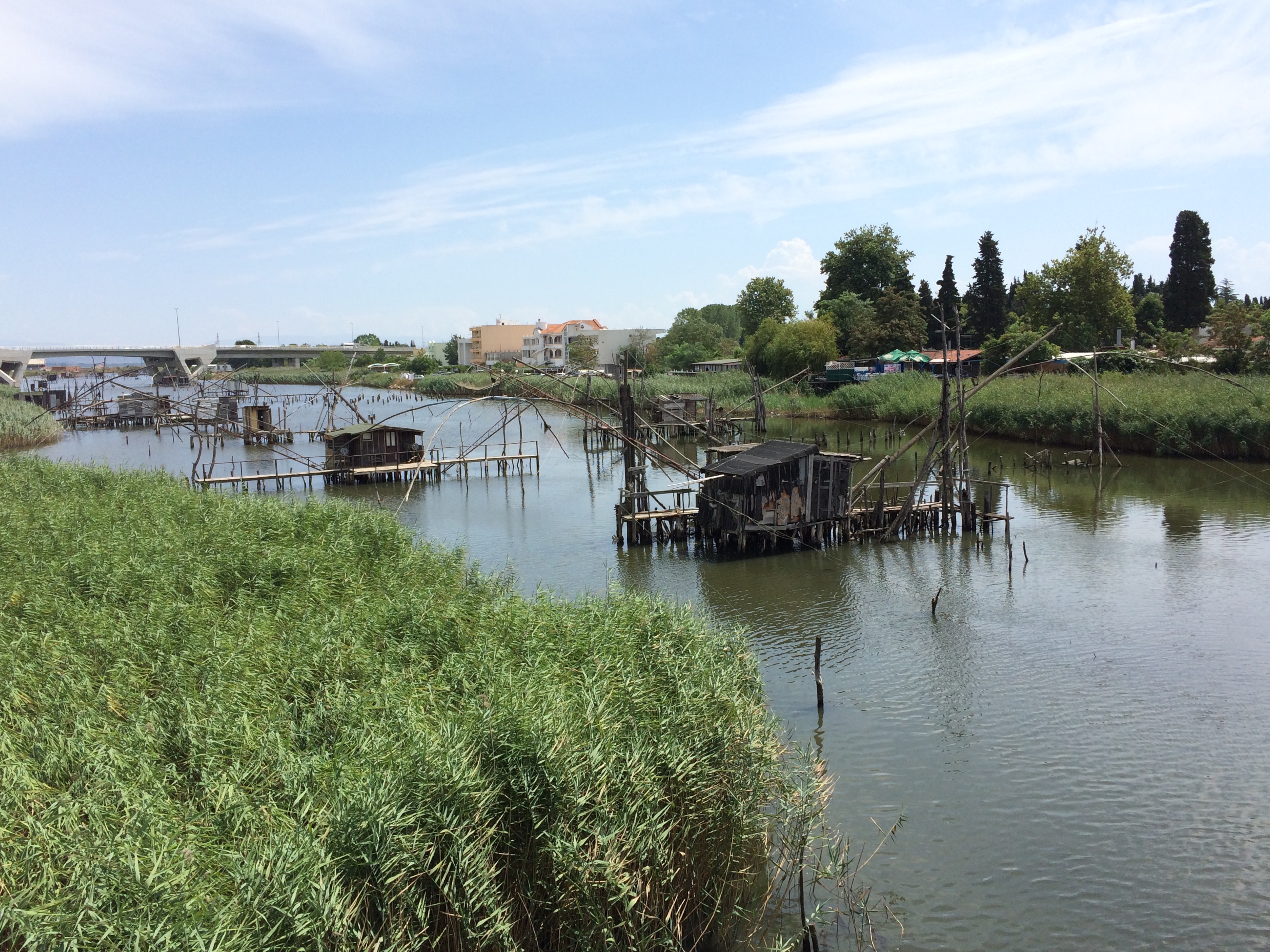
Distinctive river fishing method, reminiscent of the overhanging wooden structures we saw in Vieste in Puglia.

Distinctive river fishing method, reminiscent of the overhanging wooden structures we saw on the Italian side of the Adriatic.

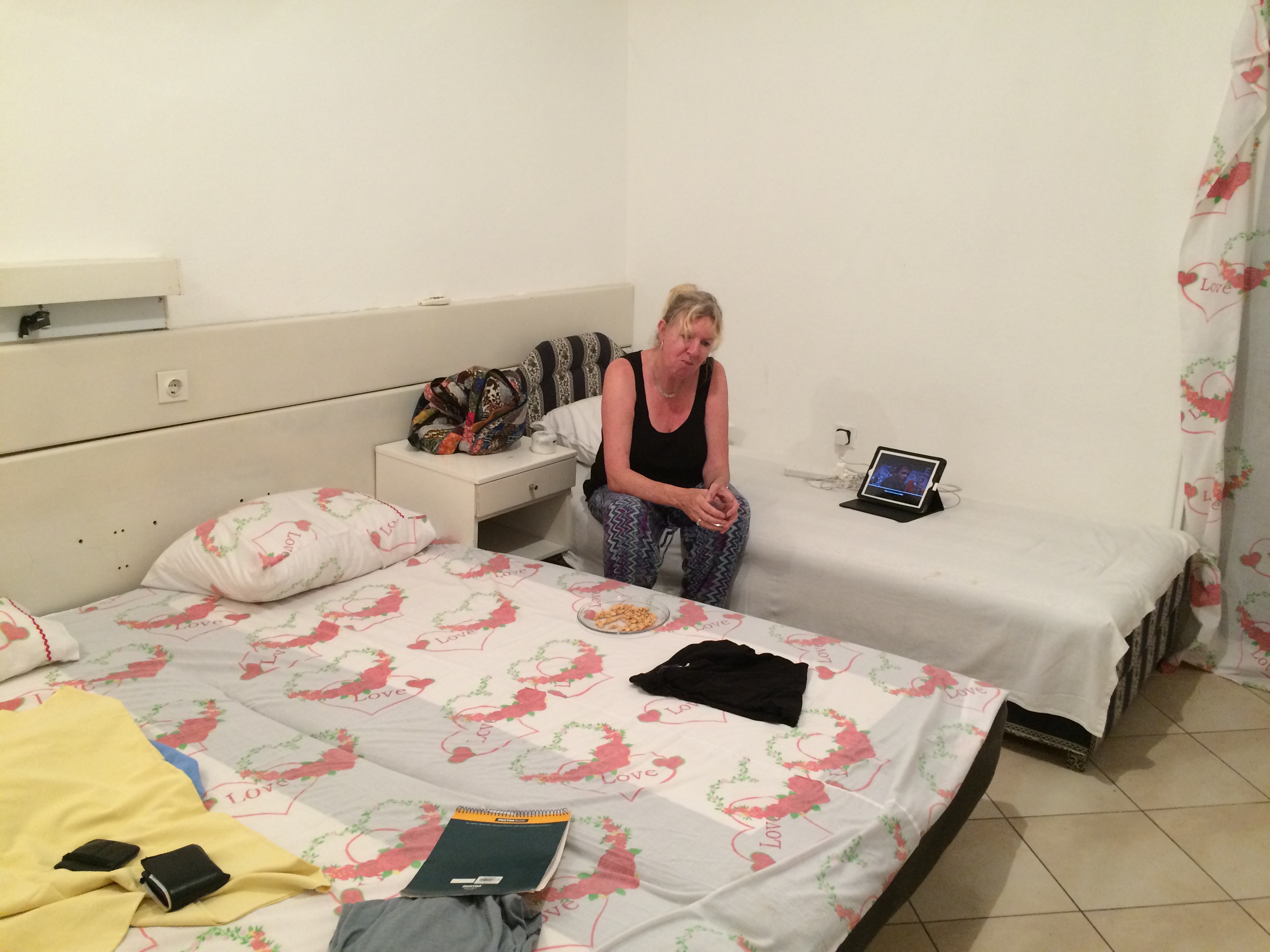
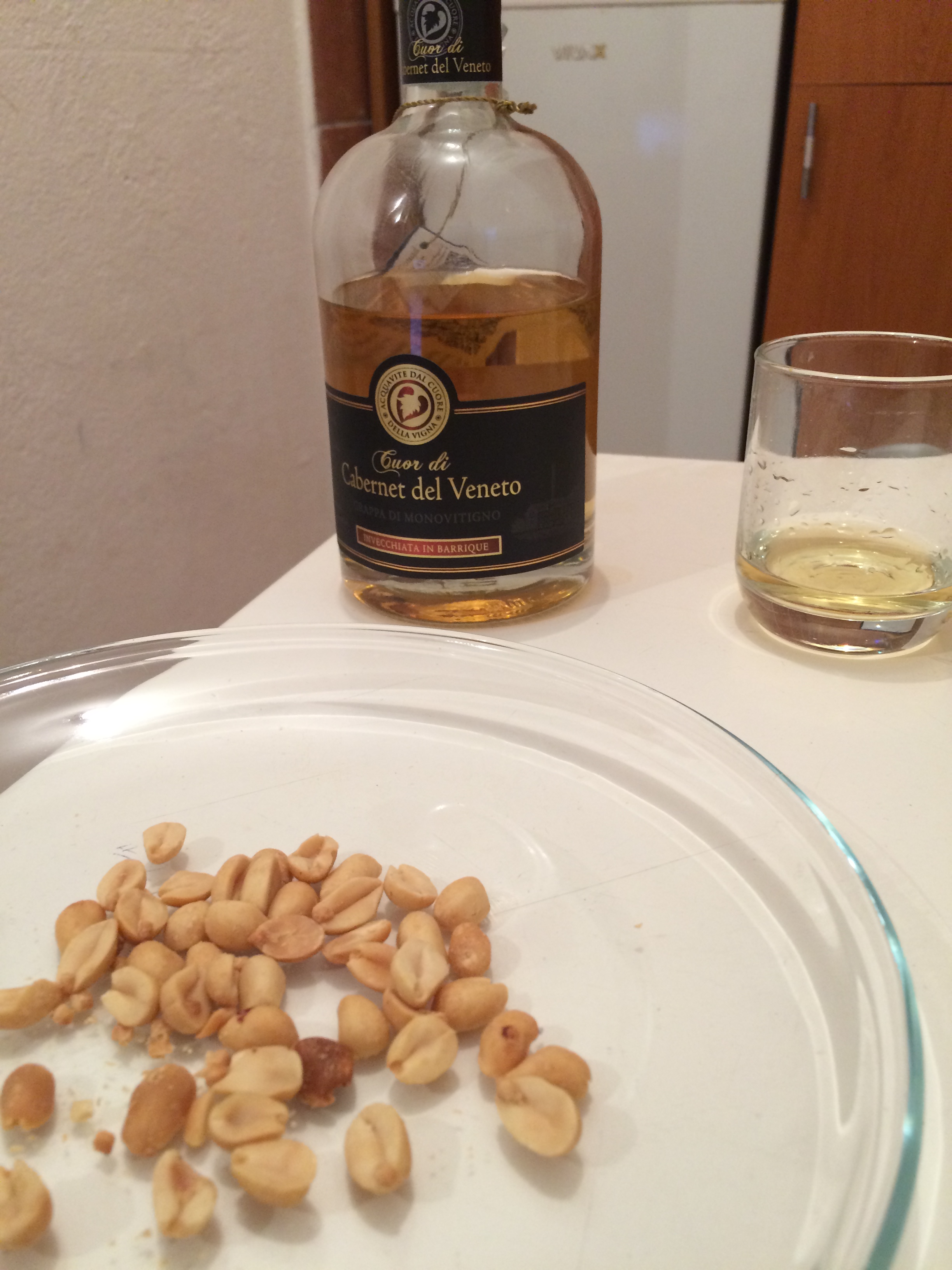
It was a ground floor room which contained two beds, an area that could loosely be described as a kitchenette and a bathroom.  It was dirty, neglected, had broken fittings and no curtains at the windows. When the people upstairs used their bathroom it resonated in ours!  It also cost €50s which was nothing short of robbery.  We got some things from Brenda, put a sheet up to cover the window, ate a supper of peanuts and drank half a bottle of grappa!

The Euro 50 'room' with no curtains and dirty bathroom and dodgy plumbing we were obliged to spend a night in.

The Euro 50 ‘room’ with no curtains, dirty bathroom and dodgy plumbing we were obliged to spend a night in.

A supper of peanuts and half a bottle of grappa to make it bearable.

A supper of peanuts and half a bottle of grappa to make it bearable.

Next morning we left as quickly as possible.  The owner came to say goodbye and had the cheek to ask if we had liked the room!

Our next destination was Albania and we were excited and curious to see if much had changed since the demise of Enva Hocker (not that we’d seen it before!).

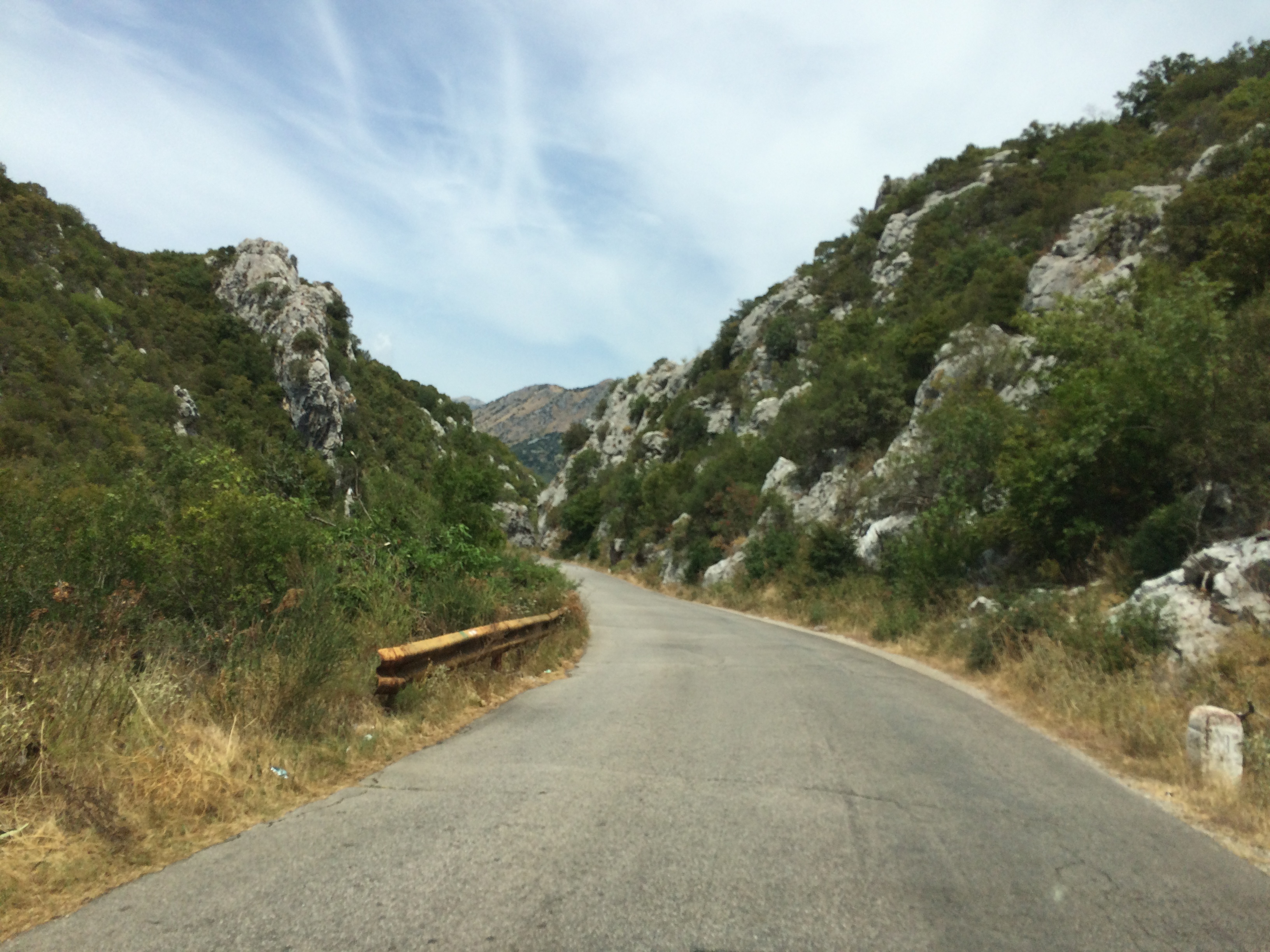
The road to Albania.

The road to Albania.

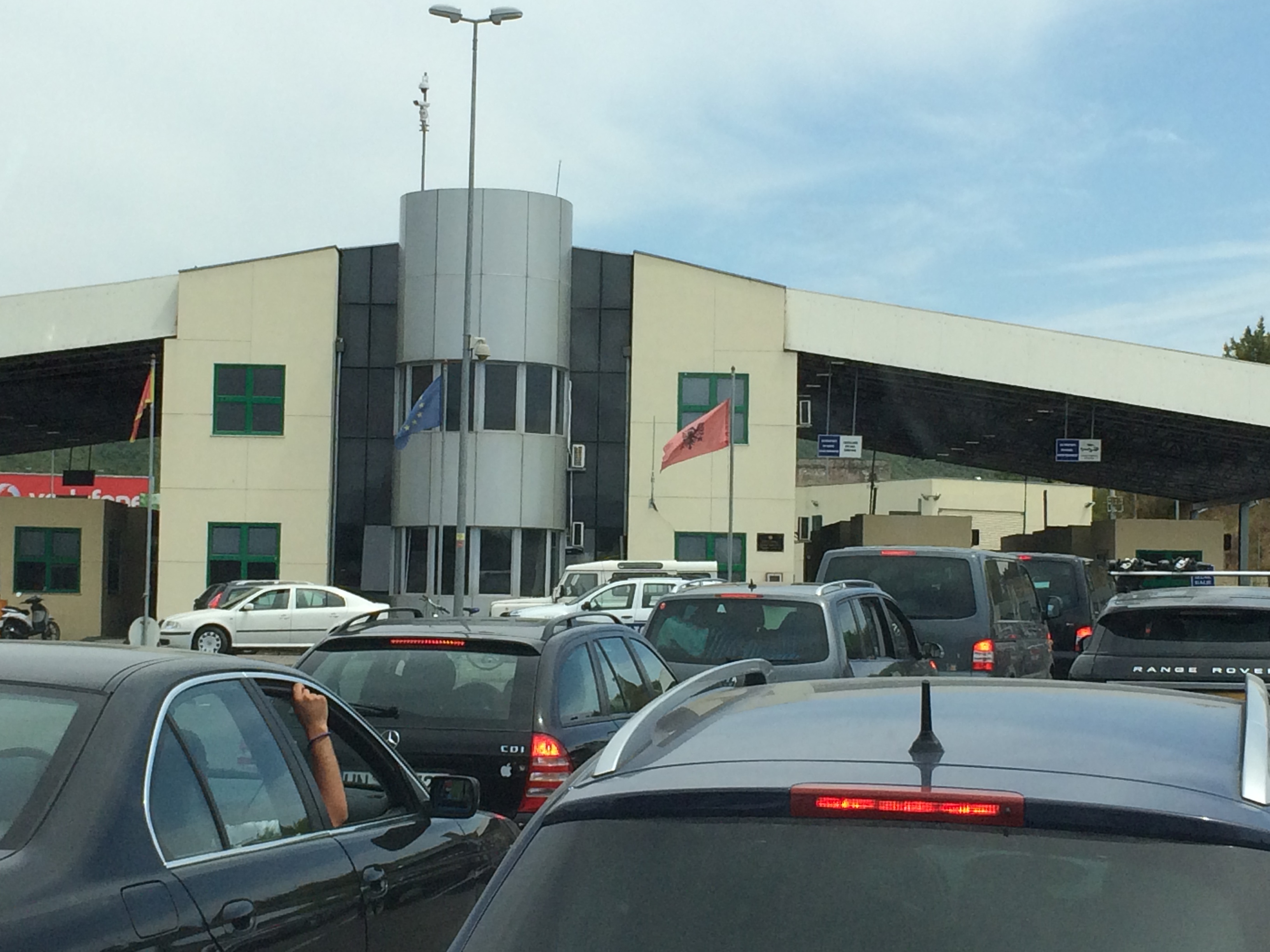
The Albanian border.

The Albanian border.

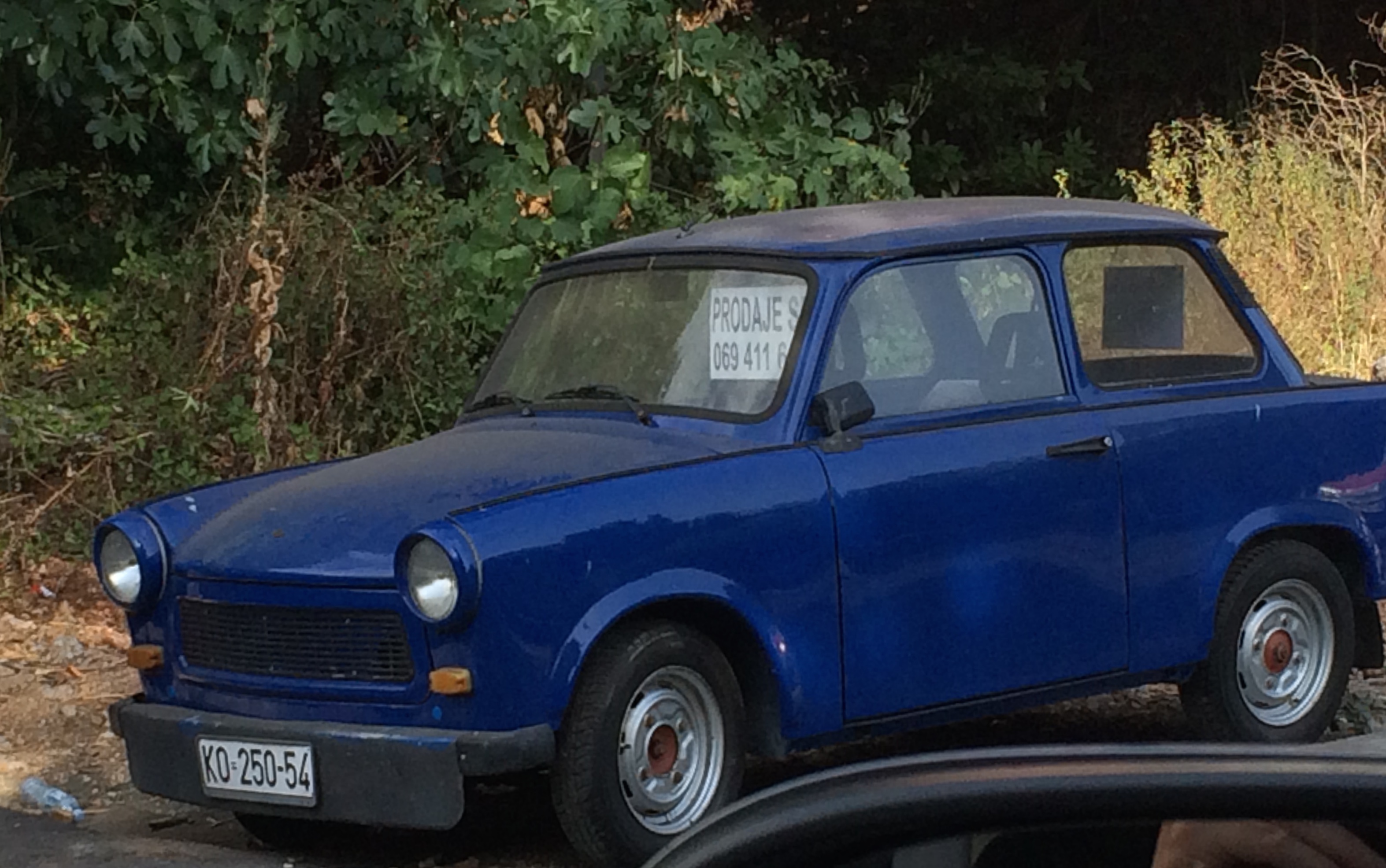
An old Eastern-block era car for sale.

An old Eastern-block era car for sale.

IMG_5459

Saturday 1st – Sunday 2nd August – Alberobello and Lecce

Standard

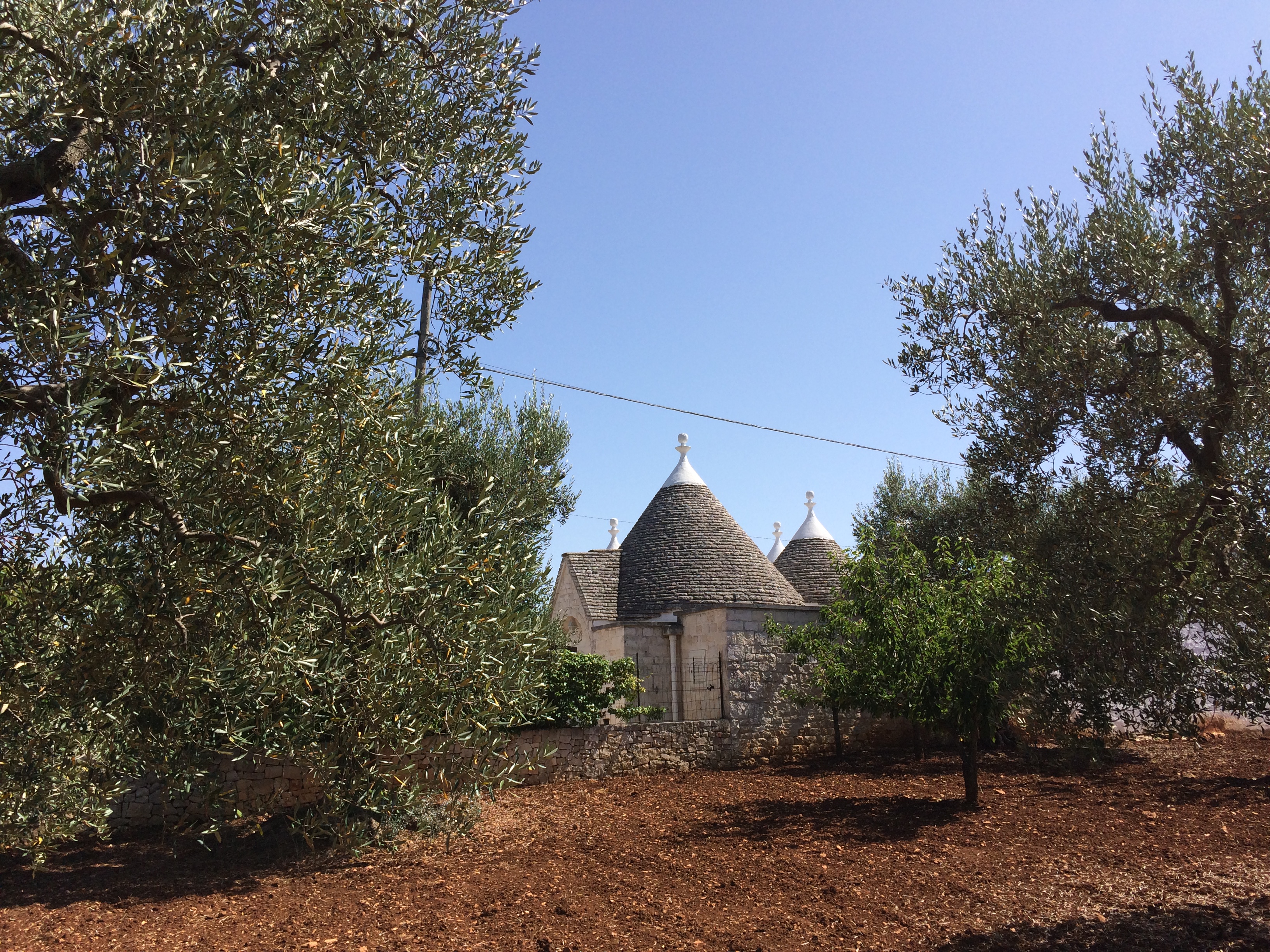
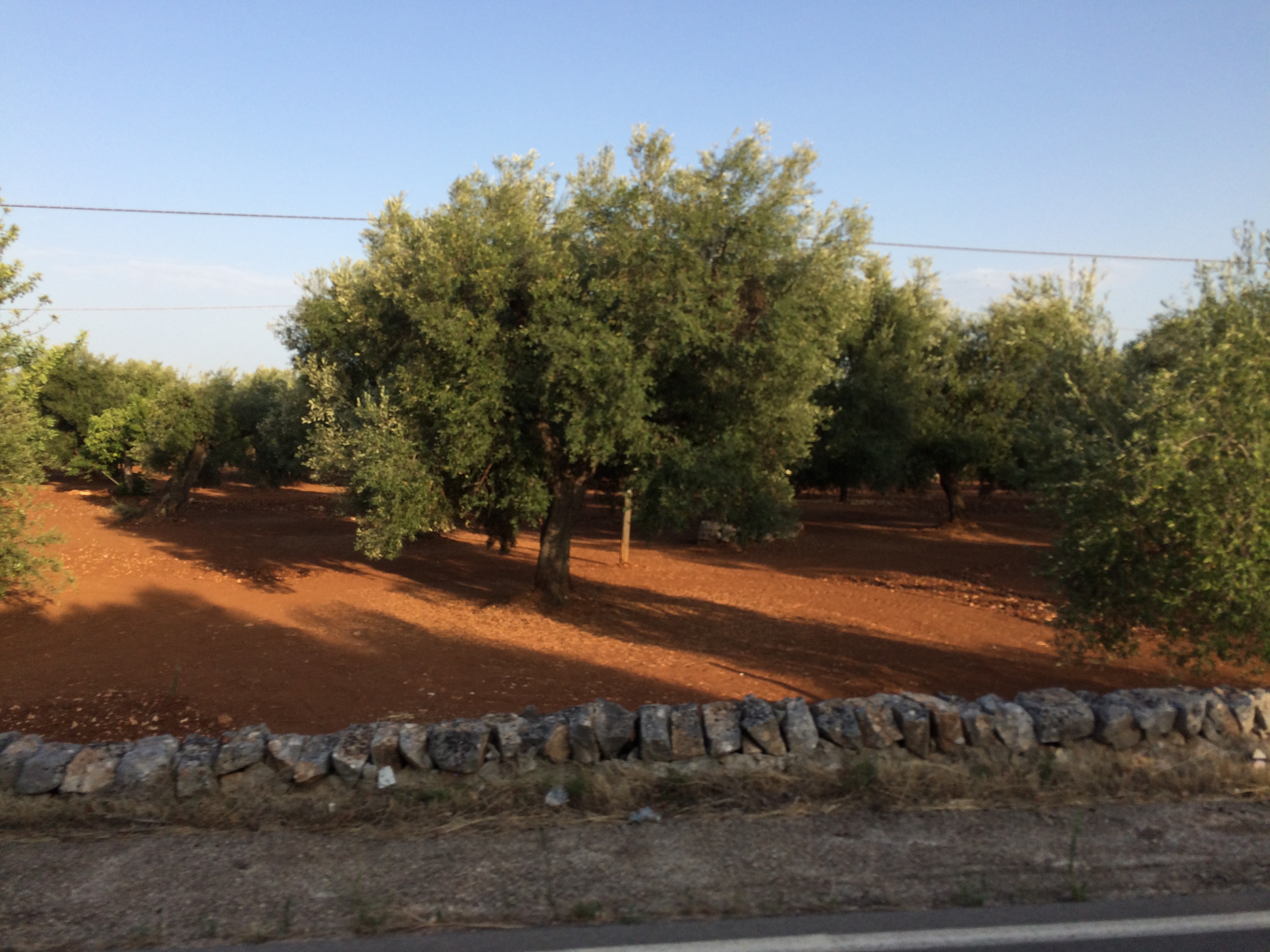
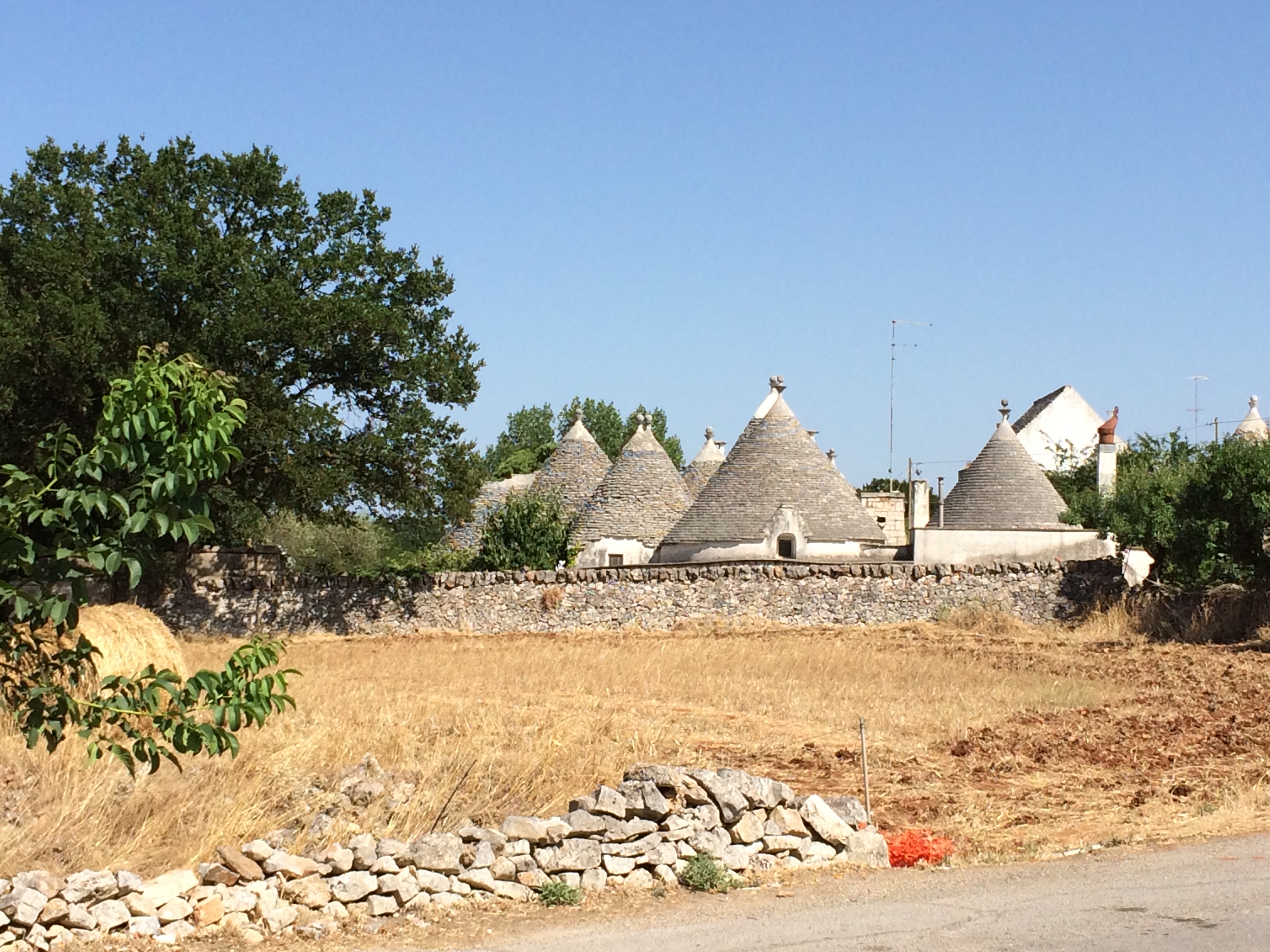
Leaving Bari, we were heading south towards Lecce.  Around Monopoli however, we started spotting small apparently derelict hobbit-like huts in the middle of fields and olive groves.  We’d heard of these and assumed they were around Lecce, but seeing signs to ‘Alberobello – citta dei trelli‘ pointing inland, we thought they’d be worth a quick look and took the turning.  The road took us up beautiful hilly countryside, with more recently-built trulli cottages springing up more and more frequently and rich red clay soil and olive groves all around.  We realized that trulli were not just interesting remnants of old disused dwellings but very much the standard style of cottage people built and lived in in this area.  That’s not to say all houses were trulli but many were and sometimes, cottages were a combination of conventional houses with trulli attached. The overall effect of trulli cottages, olive groves and red soil was very aesthetically pleasing.

Trulli become more frequent as we approach Arbarobello.

Trulli become more frequent as we approach Arberobello.

Rich red soil and olive groves all around.

Rich red soil and olive groves all around.

Trulli in Locorotondo (the round place) on the way from Albarobello to Lecce.

Trulli in Locorotondo (the round place) on the way from Alberobello to Lecce.

IMG_5260

Another thing that was also quite pleasing was that the air at this higher altitude became cooler and less humid. After the last few days of relentless heat and debilitating humidity, it was heaven to be able to breathe some fresher air and there was actually a breeze up here – we’d forgotten what that felt like! It was early evening by the time we reached the outskirts of Alberobello (literally meaning ‘the beautiful tree’) and spotting the ‘Camping dei Trulli’ a few kilometers before reaching the town we had no trouble in deciding that this was where we would spend the night or maybe even the next two nights.  We cycled into Alberobello that evening and drove to Lecce the next day and back to the campsite though that was a longer drive than we’d anticipated and Lecce itself left us, its rather grandiose ostentatious and baroque architecture notwithstanding, somewhat indifferent. To be fair though, it was probably more to do with us reaching saturation point as regards historical city tours.

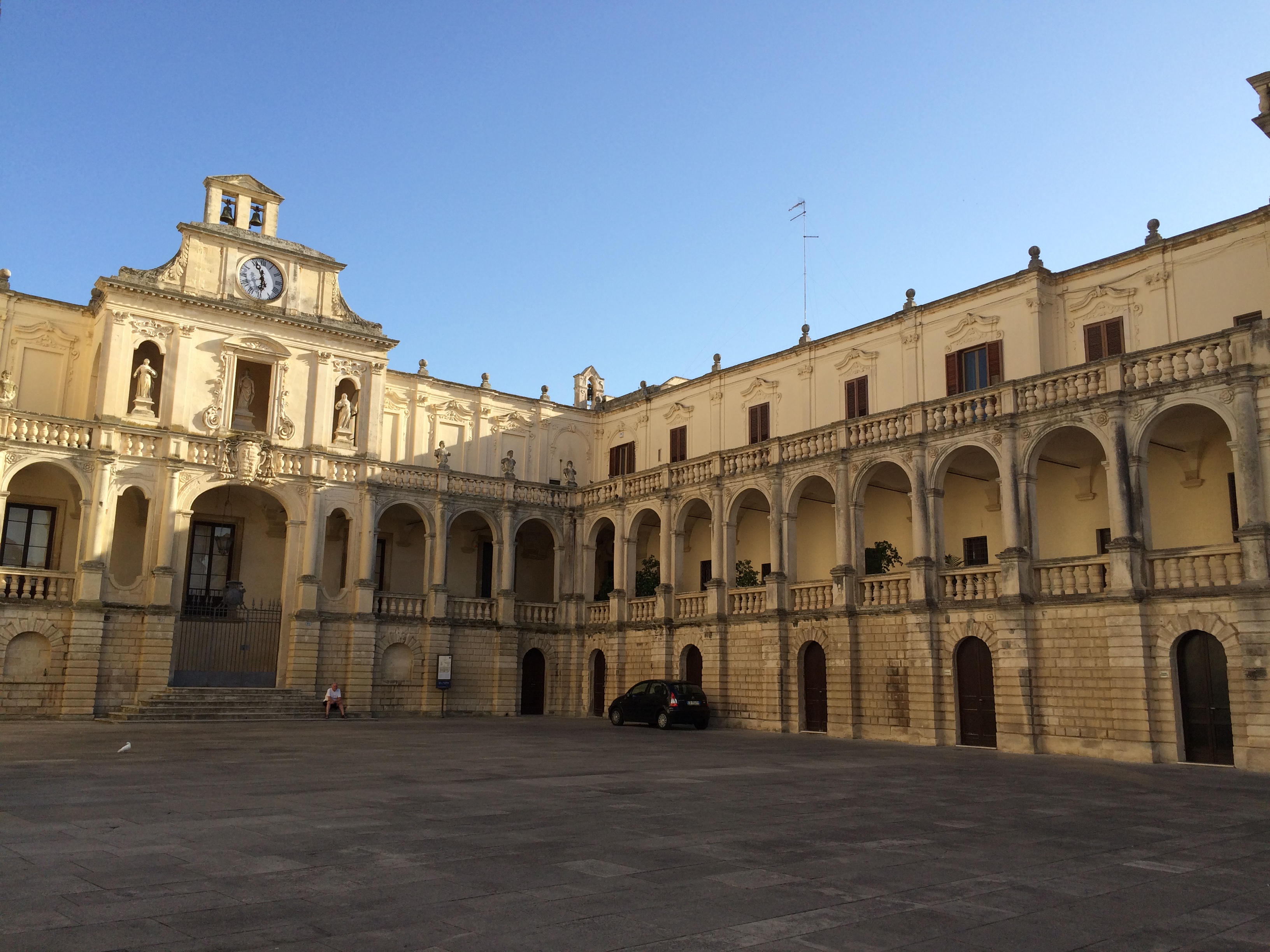
The Piazza Duomo, Lecce.

The Piazza Duomo, Lecce.

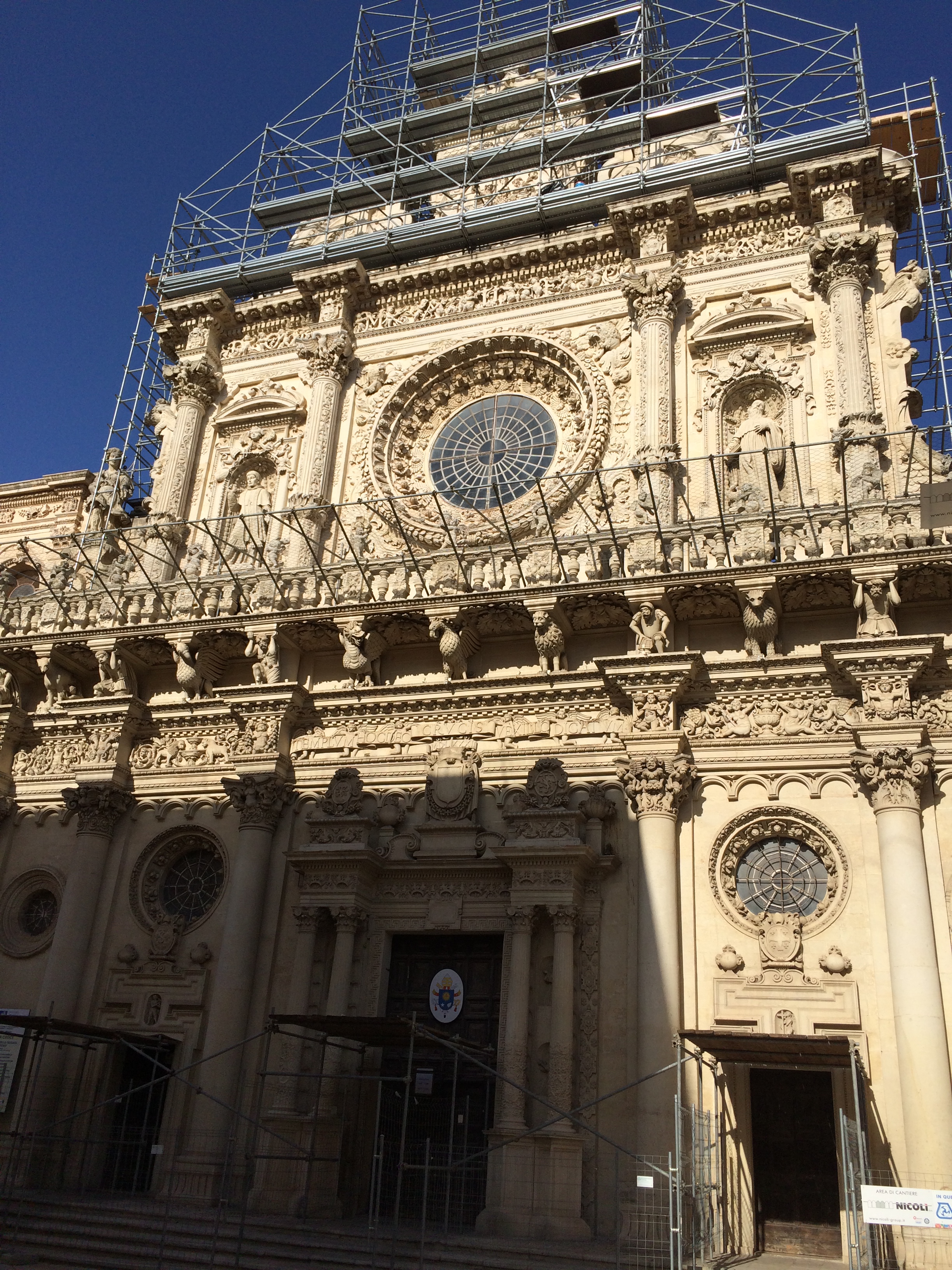
The Basilica and Celestine Convent in Lecce - an example of Leccese Baroque.

The Basilica and Celestine Convent in Lecce – an example of Leccese Baroque.

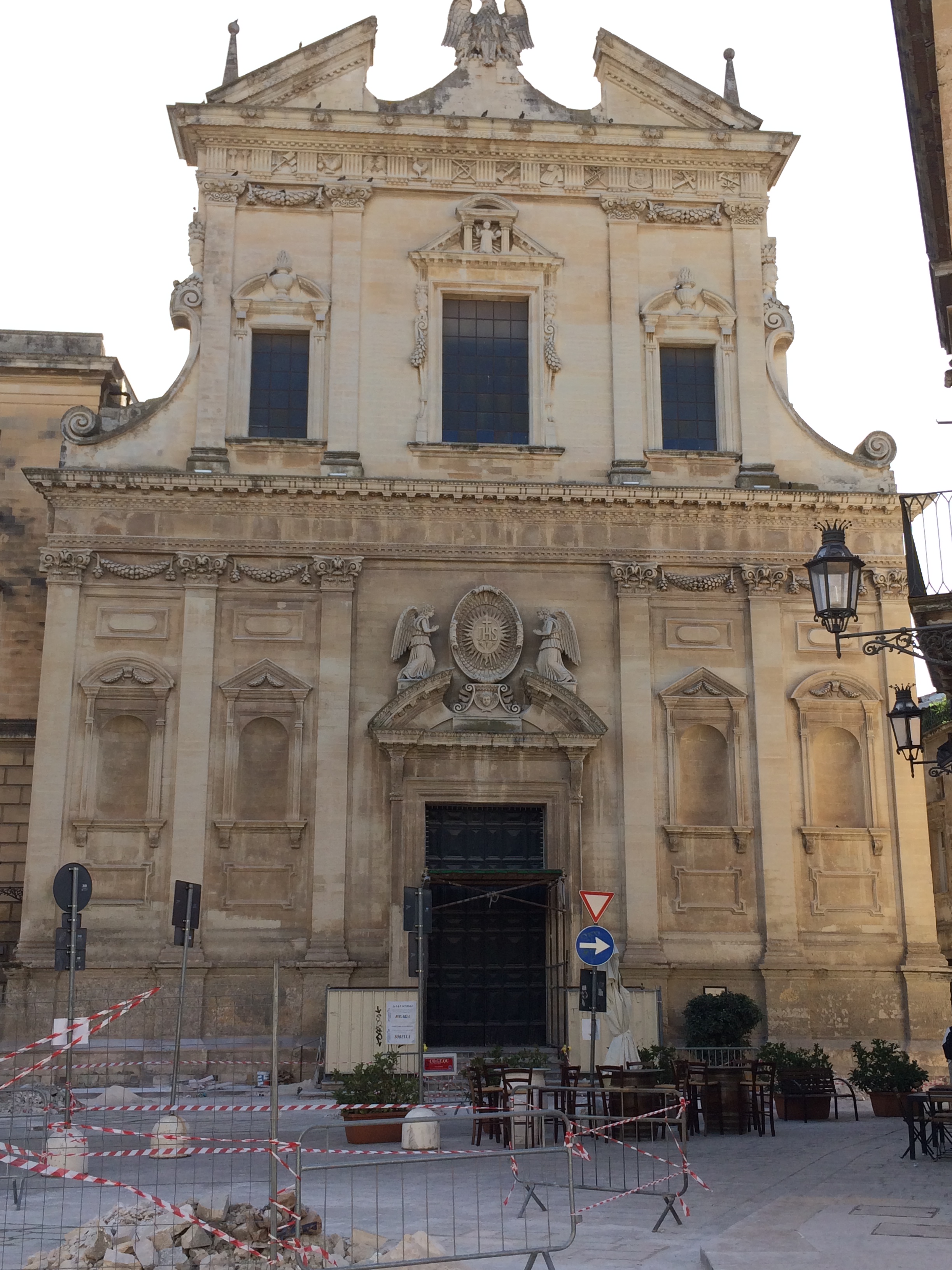
Another example of florid Lecce Baroque.

Another example of florid Lecce Baroque – the Santa Chiara cathedral.

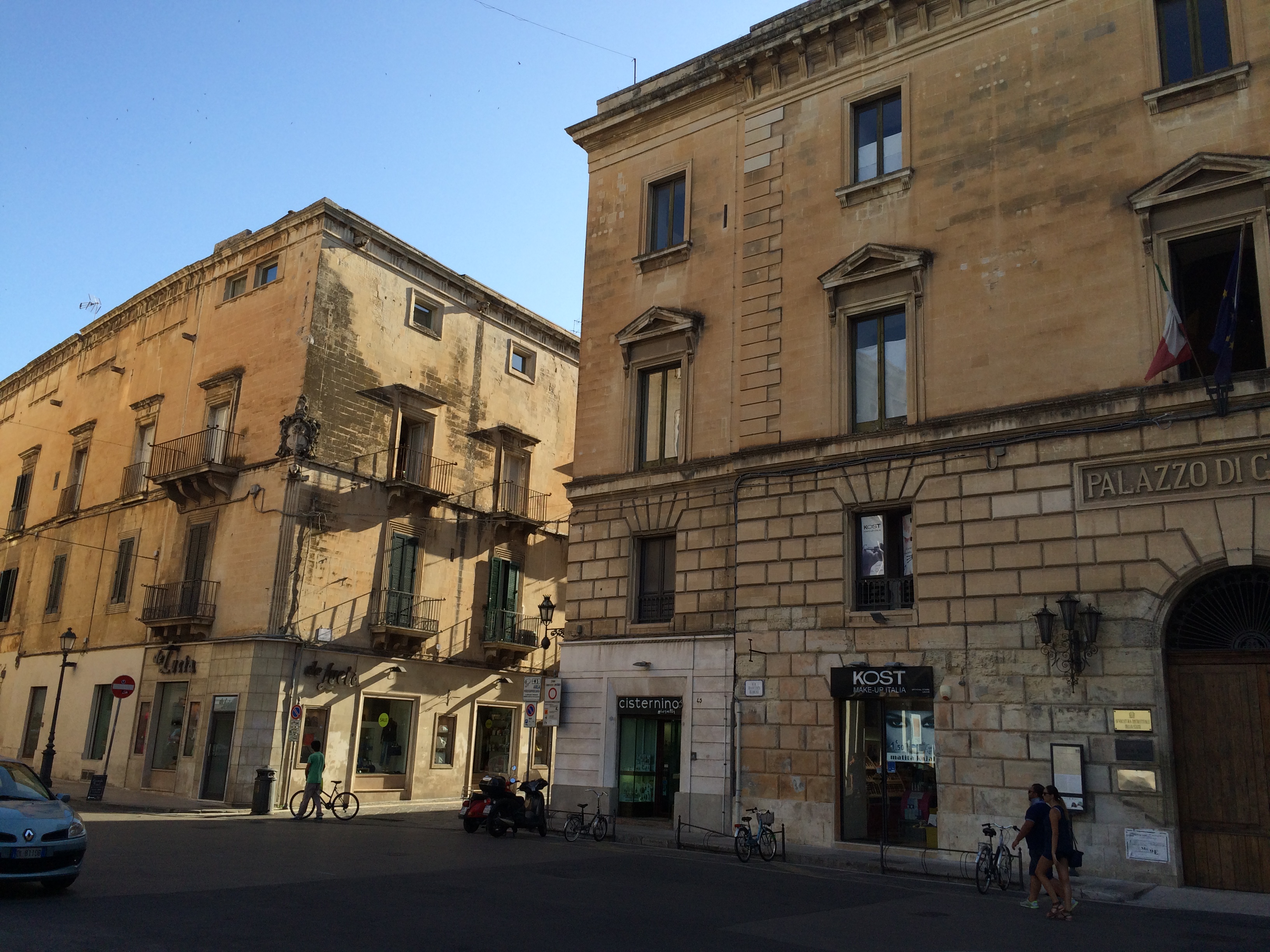
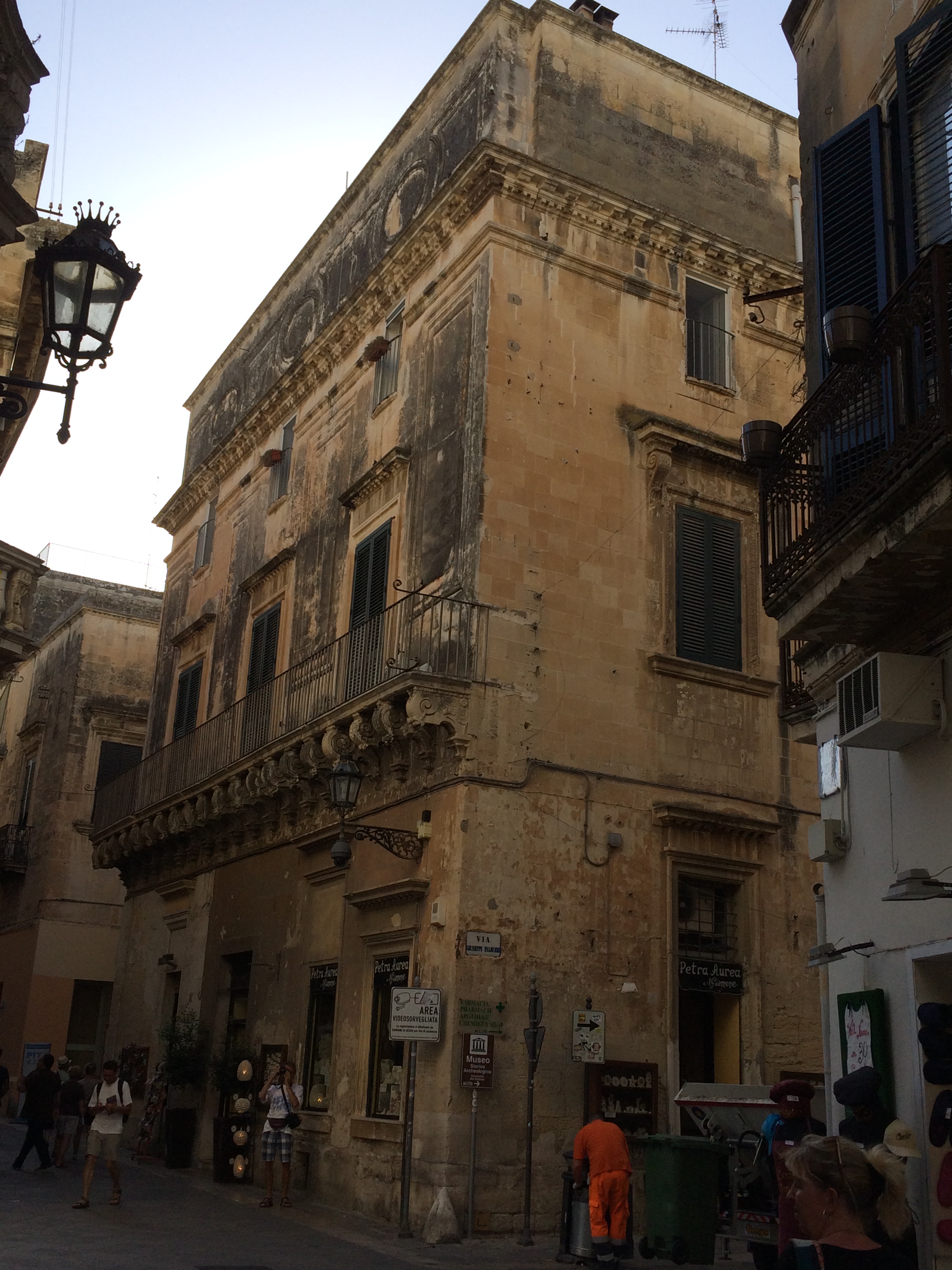
A street near the central square in Lecce.

A street near the central square in Lecce.

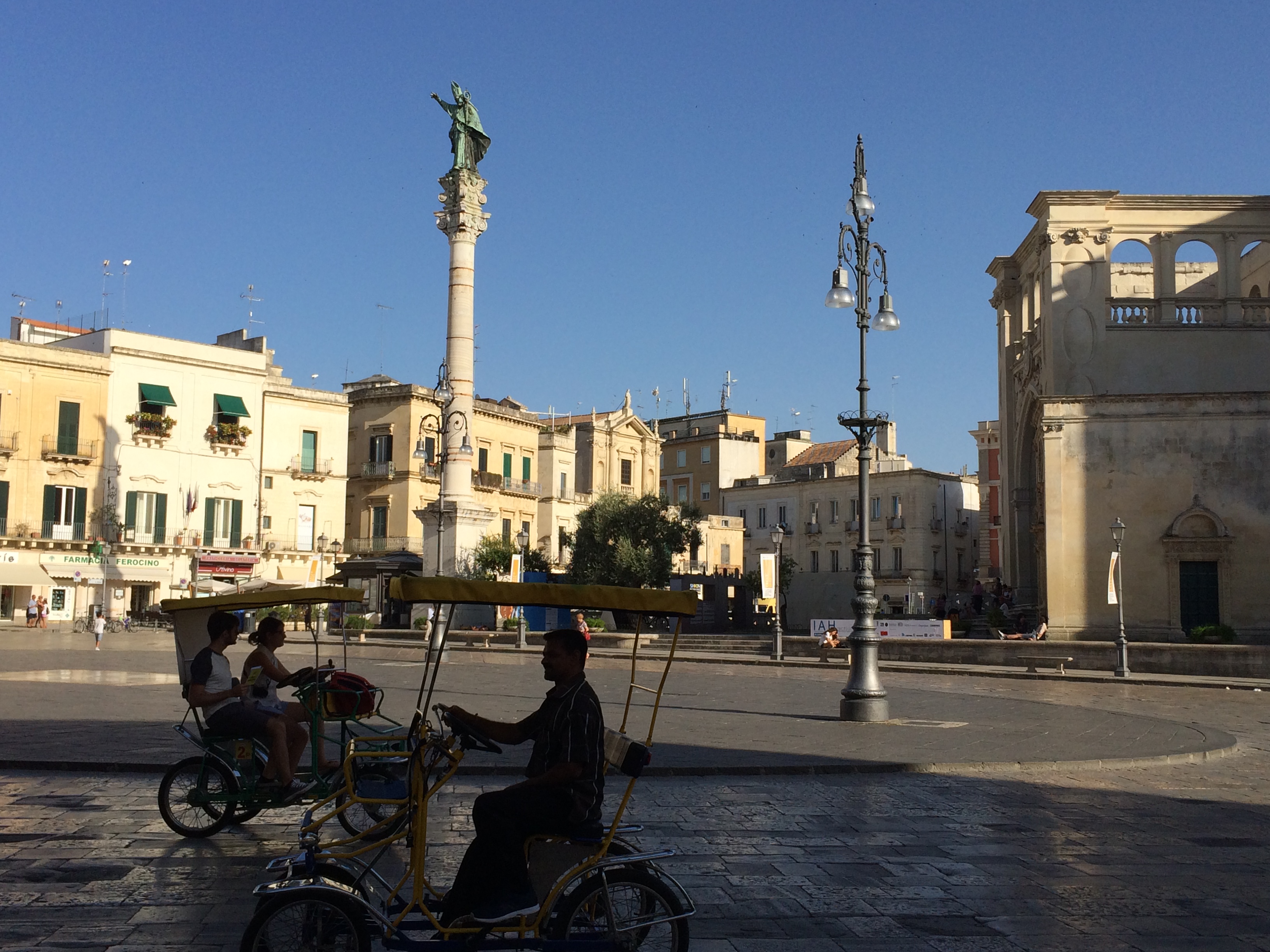
The central square dominated by the statue of a former Pope and the Roman amphitheater beneath it.

The central square dominated by the votive column supporting a statue of the saint-protector of the city, Sant’Oronzo to whom was attributed the fact that the city was spared the plague that ravaged the whole of Southern Italy in 1656.

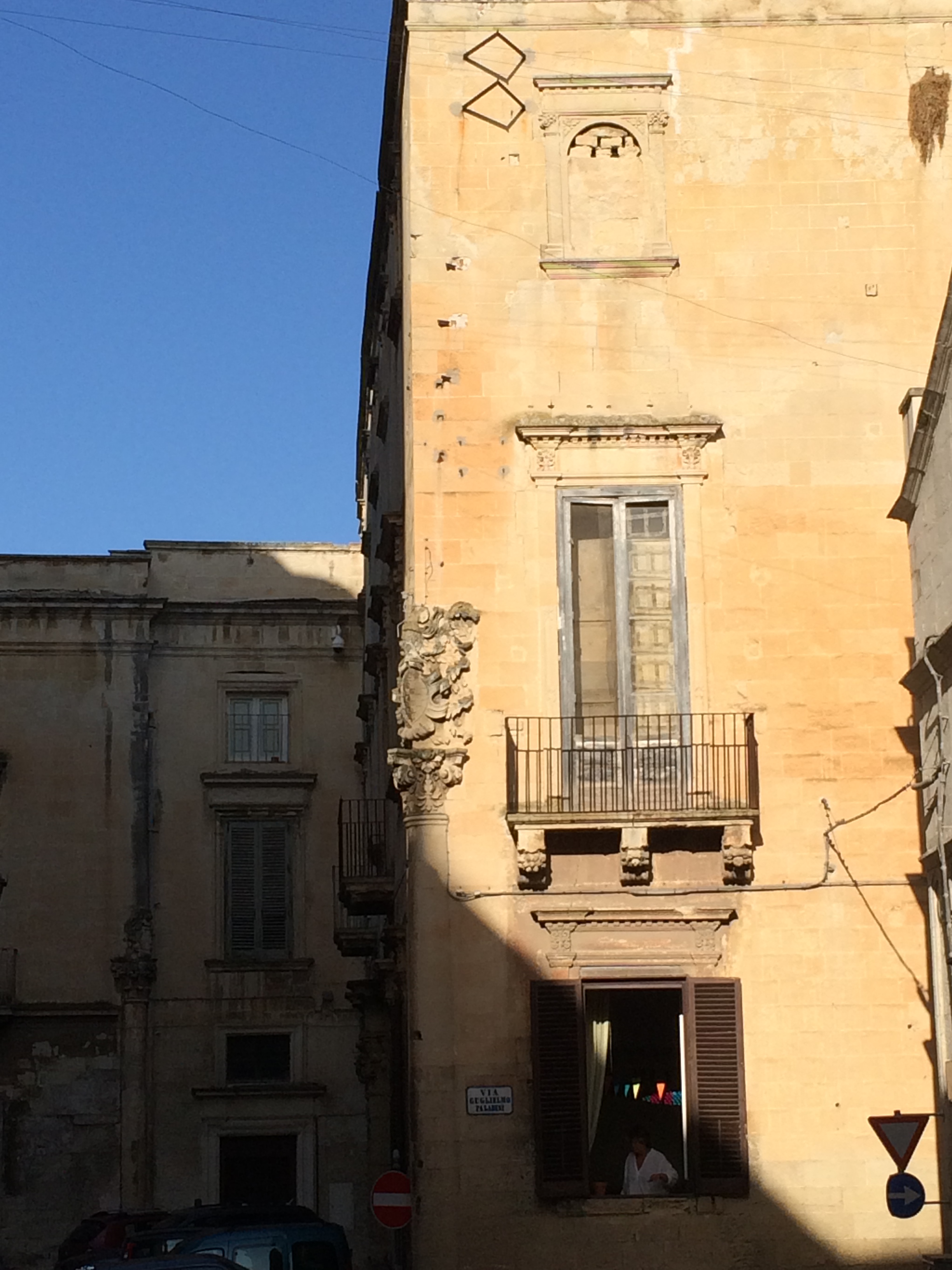
More ornate architecture.

More ornate architecture.

L

L

L

L


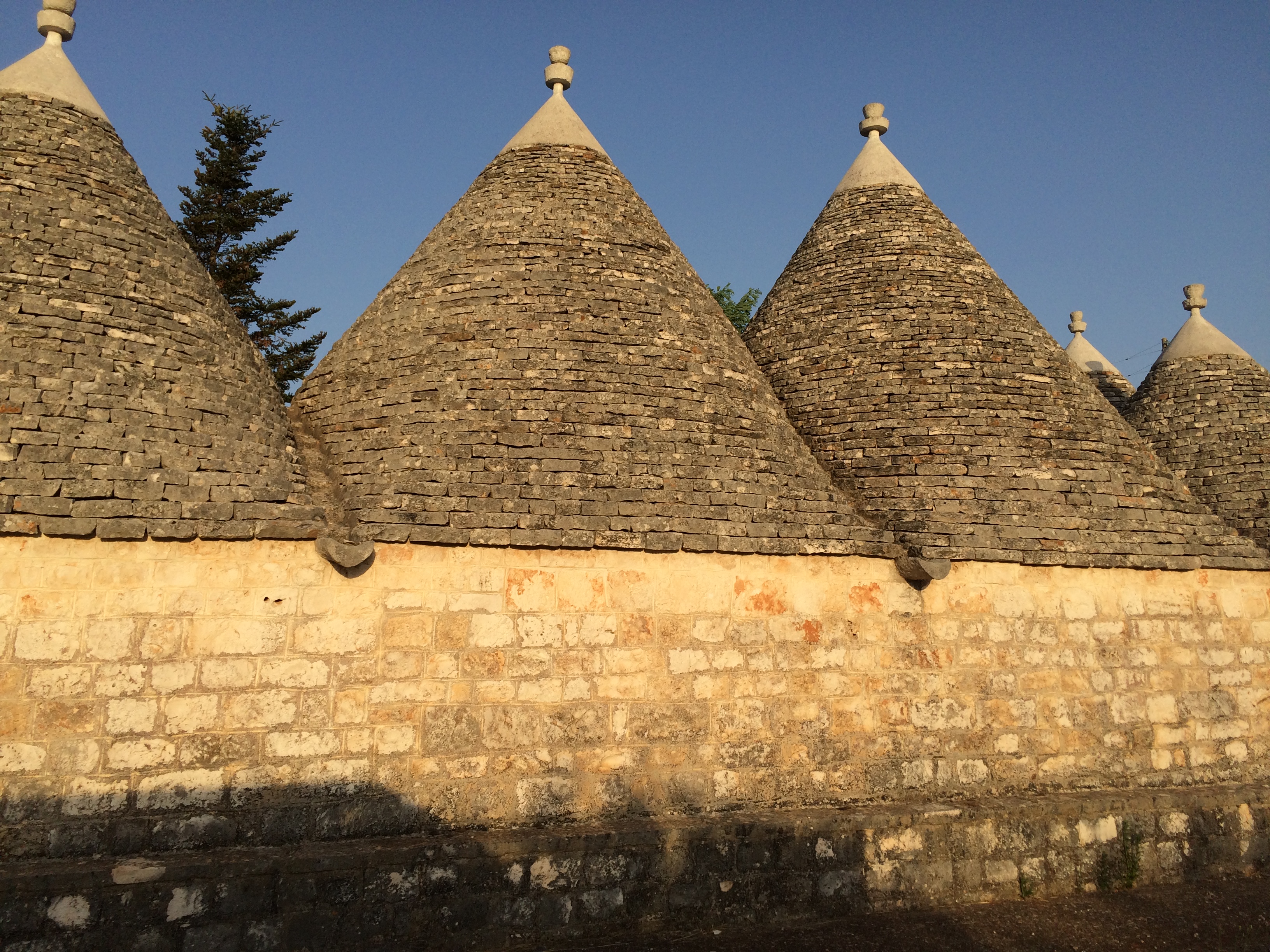
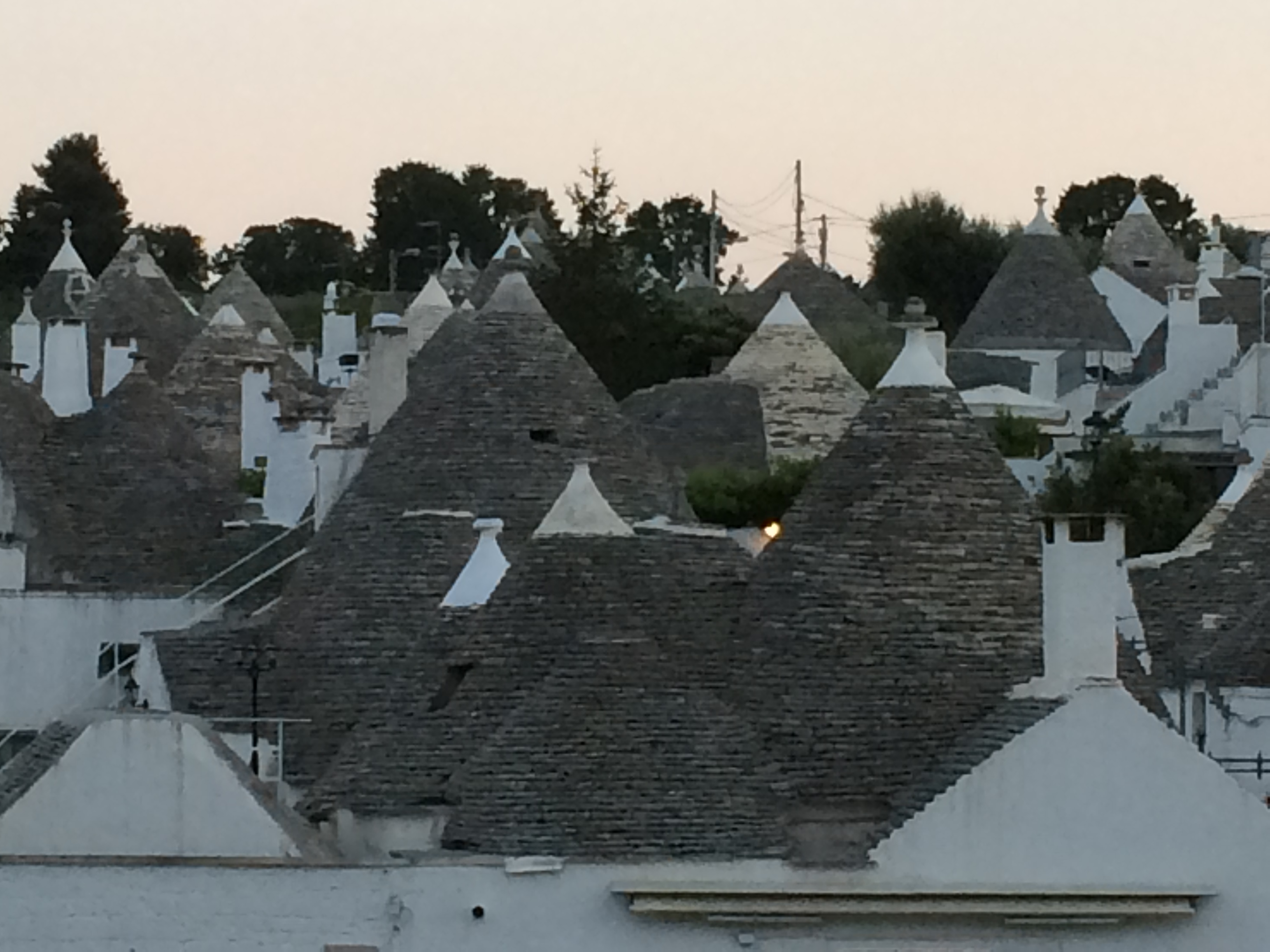
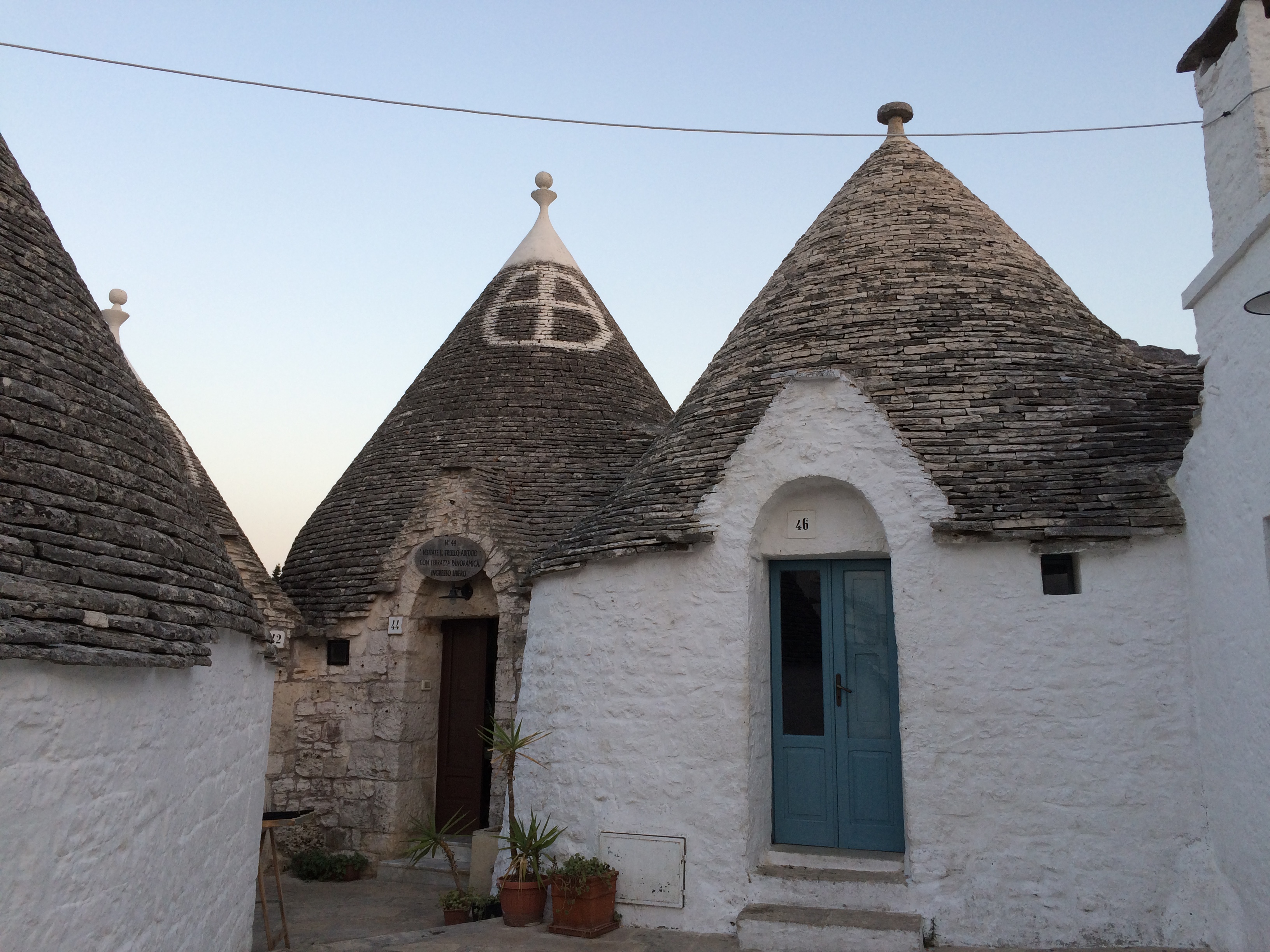
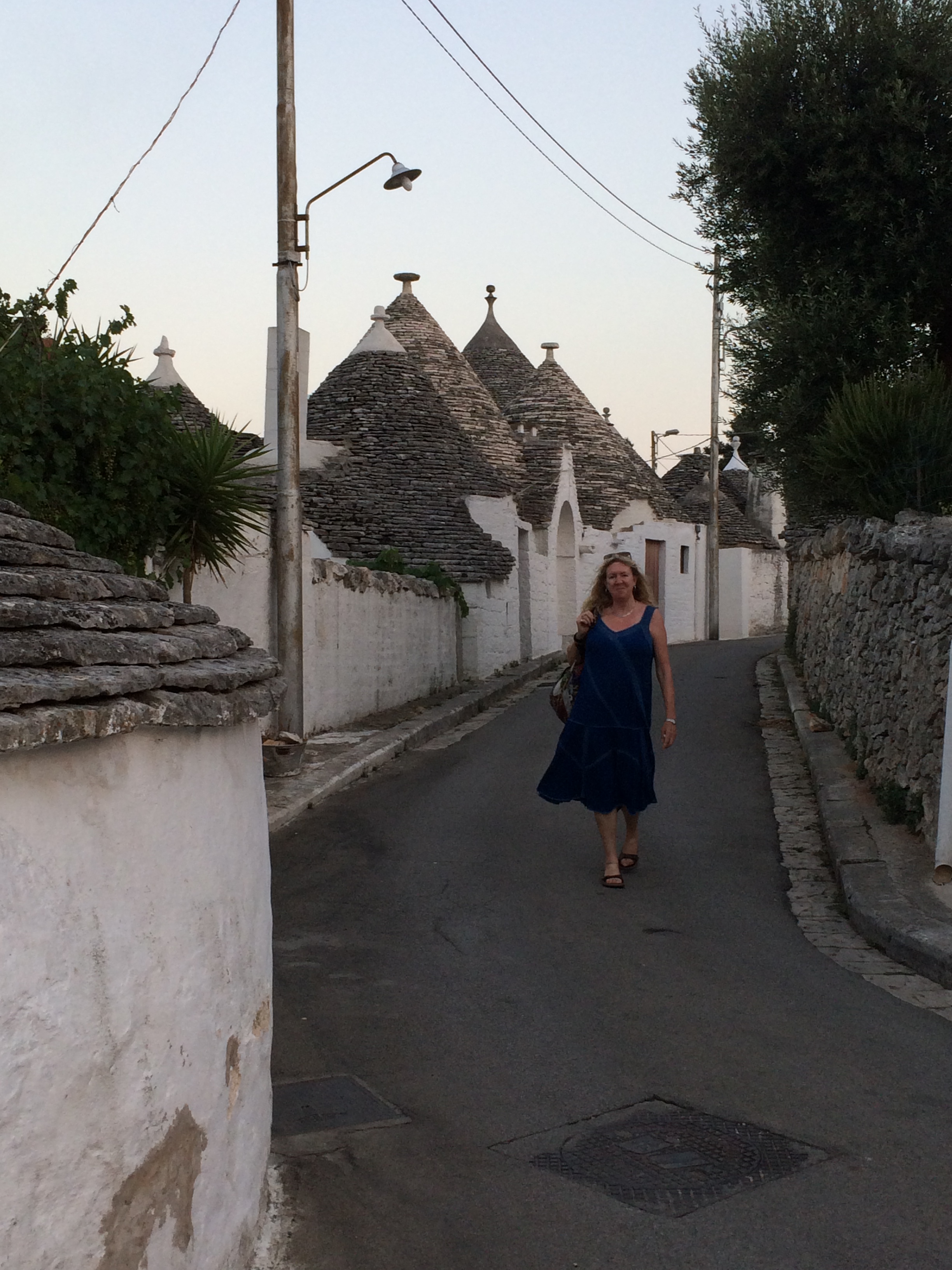
Alberobello is a World Heritage site.  Its famous trulli are dry stone huts with conical roofs which can be seen all around this part of Puglia, where they litter the landscape and look quite distinctive.  The walls are very thick and they were usually built in groups of up to (and never more than) five , with interconnecting doors.  Originally designed for agricultural workers, storage and animal stock they’ve now been incorporated into larger dwellings. Some trulli have signs inscribed on their roofs which denote the stonemason who built them.  It was a little disappointing to find that Alberobello itself had been turned into a little theme-park for tourists with everything in it designed to cater for tourists and little sign of an authentic living, breathing village.  Many houses had signs inviting people to come inside to see what an authentic old trullo looks like indoors, only to find that it was yet another gift and souvenir shop.  It’s of course hypocrisy of the highest order to say this, but one thing we found a bit depressing on this journey was the extent to which anything or place which is of interest being repackaged and served up to the visitor by the tourist industry before you have a chance to discover it for yourself, as would have been the case perhaps not so long ago.

Albarobello village - a World Heritage Site, but a little too touristic.

Alberobello village – a World Heritage Site, but a little too touristic.

Some trulli have signs on the roofs denoting the architect, though it's also claimed they have more ancient origins.

Some trulli have signs on the roofs denoting the architect, though it’s also claimed they have more ancient origins.

J

Judith in Alberobello.

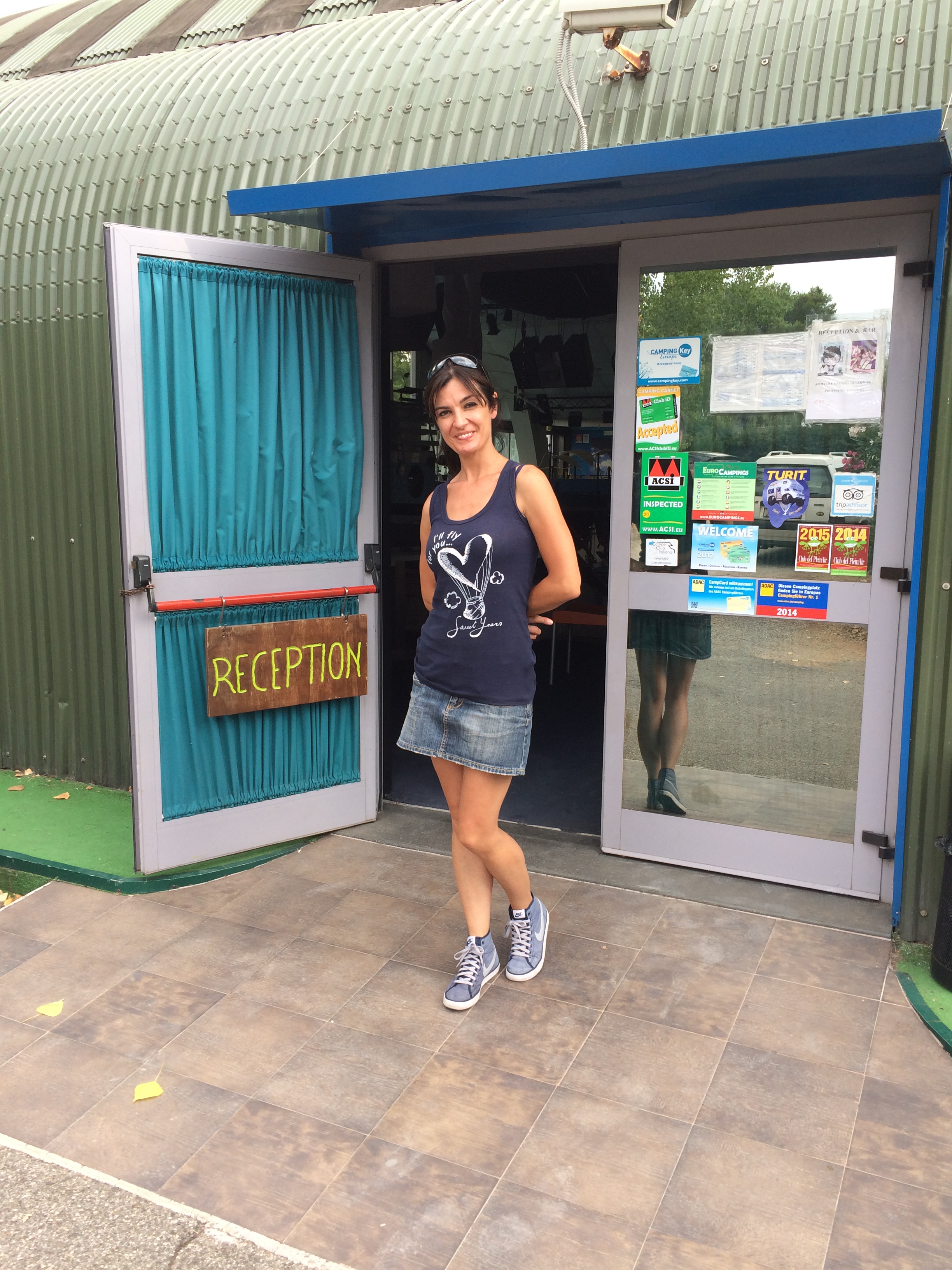
The Camping dei Trulli, catering mainly for Italian campers was lovely if a touch noisy though this seems to be a common feature of Italian campsites at this time of year and from as early as 10am a large loudspeaker at the swimming pool would blare out Italian rap (!).  The pool was a decent size though and a separate lane had been cordoned off for lap-swimmers, a very unusual and highly-appreciated feature – though children clearly neither understand nor respect the concept and swimming laps can easily turn into giving demos of different strokes or having pretend races with assorted kids who wander into the lane!

It was expertly managed by Connie who was not only friendly, helpful and charming the whole time but also very knowledgeable about the history of Puglia.  At one point Flavio found her in animated conversation with another local figure about Frederick II and they were both agreed he was right to be considered the most gifted and extraordinary of the medieval Roman Emperors.  He spoke many languages and was a great diplomatist. Through his early years in Sicily, he knew Arabic and all the Arab rulers.  He was the only one to manage to bring back from Jerusalem the keys to the Holy Sepulcher without spilling a drop of blood – when he went to Rome to present them to the Pope, he was duly ex-communicated for his trouble, they said laughing!

Connie, the very helpful, efficient and knowledgeable manager of the 'Camping dei Trulli'.

Connie, the very helpful, efficient and knowledgeable manager of the ‘Camping dei Trulli’.

We became friends with Guillaume and Fabienne, a French couple who kindly invited us to visit them in Paris on our way back.  It started when Guillaume reversed their car into a tree soon after they arrived and the back window shattered.  We went to their aid with a dustpan and brush saying we admired their their calm and equanimity, to which they joked that they had ‘found their arberobello’.

Guillame, Fabienne, Julos and Salome who we got to know after they 'found their arbaro bello'!

Guillame, Fabienne, Julos and Salome who we got to know after they ‘found their arbero bello’!


The 'arbero bello' at the Camping dei Trulli!

The ‘arbero bello’ at the Camping dei Trulli!


We drove in the late afternoon on the Sunday back to Bari to catch the ferry to Dubrovnik.  We were both sad to be leaving Italy but will be taking the ferry back to Ancona from Greece on 18th August so it is a brief parting.

Back in Bari.

Back in Bari.

Before boarding the Croatian ferry for the overnight crossing to Dubrovnik.

Before boarding the Croatian ferry for the overnight crossing to Dubrovnik.


IMG_5361

Friday 31st July – Bari

Standard

After leaving Trani, we spent an uncomfortable night in the sweltering heat at a campsite in Giovinazzo just south of Bari, poorly mitigated by a difficult swim off the rocky beach nearby.  Later, a Reggae concert on the beach continued well into the night.

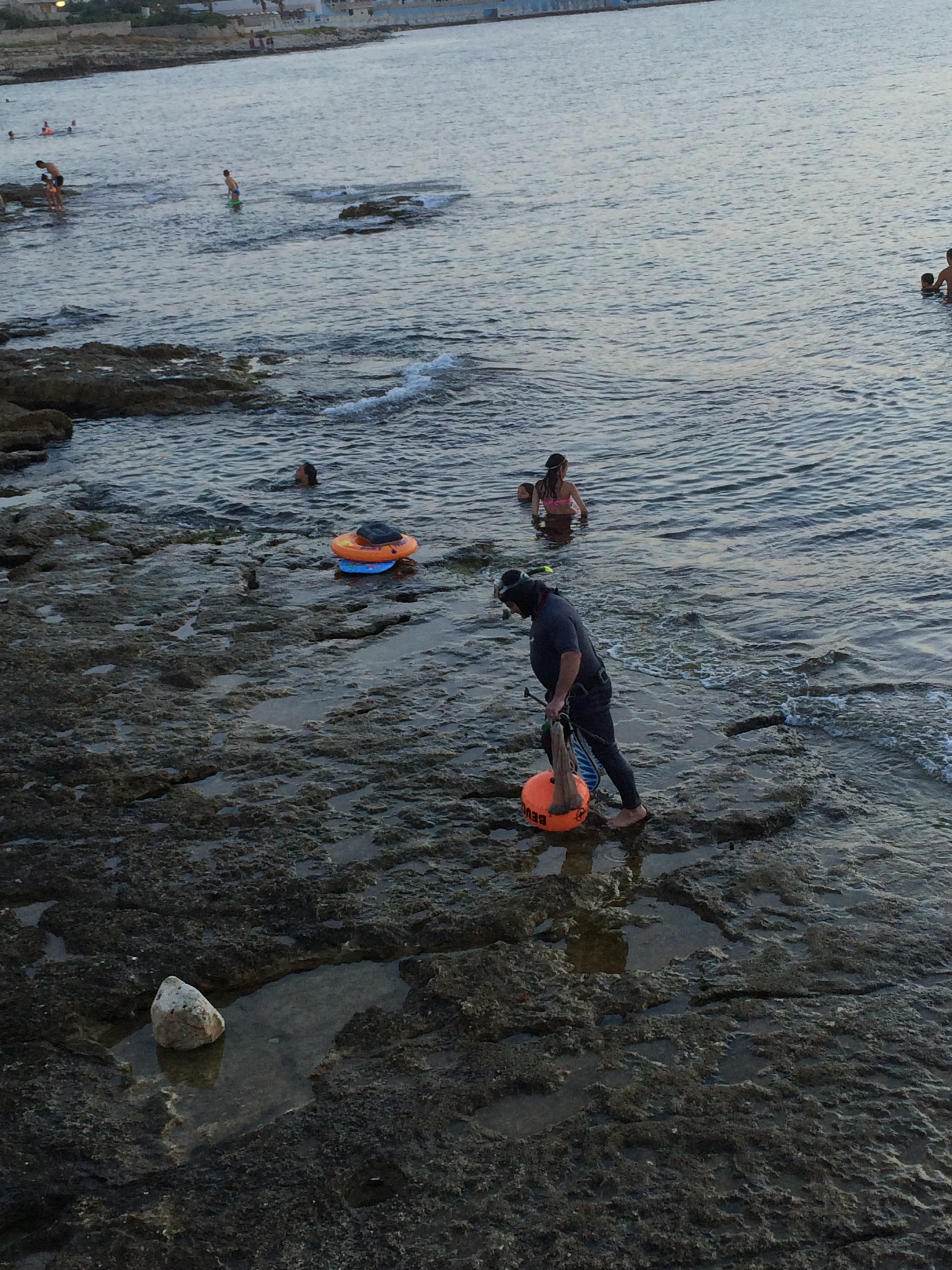
The rocky beach off Giovineza south of Bari. Not very pleasant to swim off.

The rocky beach off Giovinazzo south of Bari. Not very pleasant to swim off.

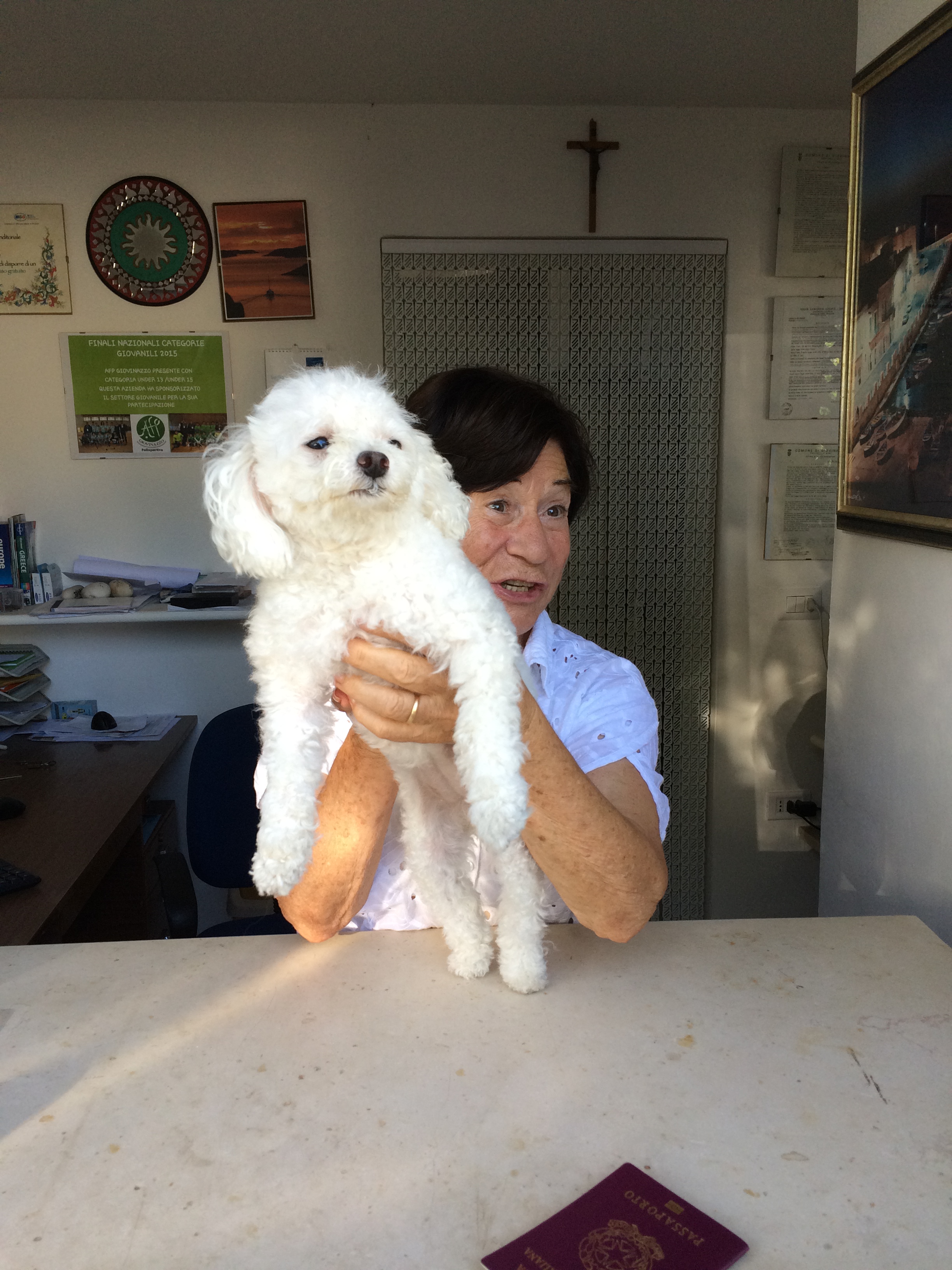
'Sissi' the campsite poodle greeting us at the Gioninazzi campsite.

‘Sissi’ the campsite poodle greeting us at the Giovinazzi campsite.

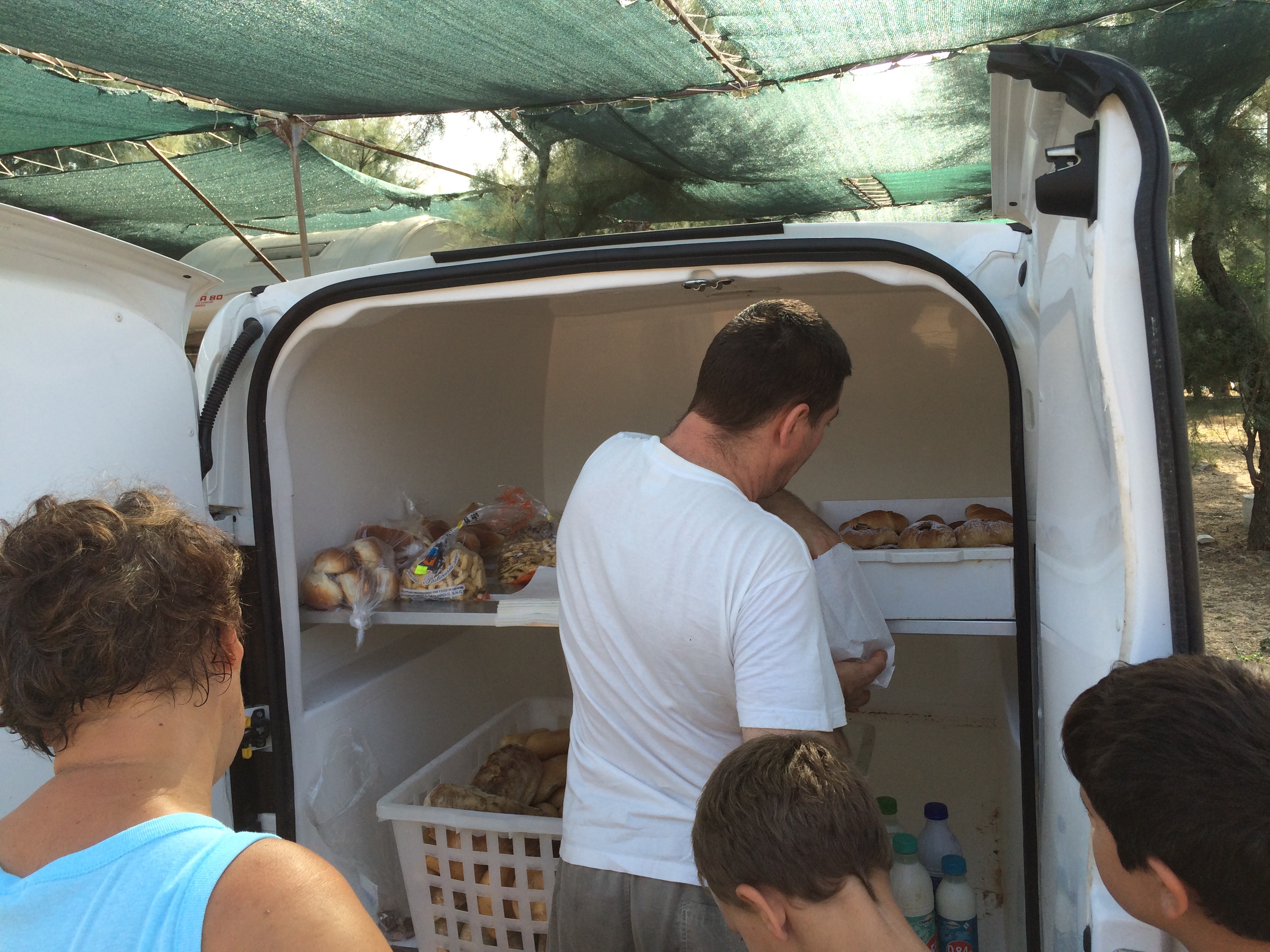
Queuing up for bread at the Giovinazza campsite in the morning.

Queuing up for bread from the ‘fornaio’s’ van at the Giovinazza campsite in the morning.

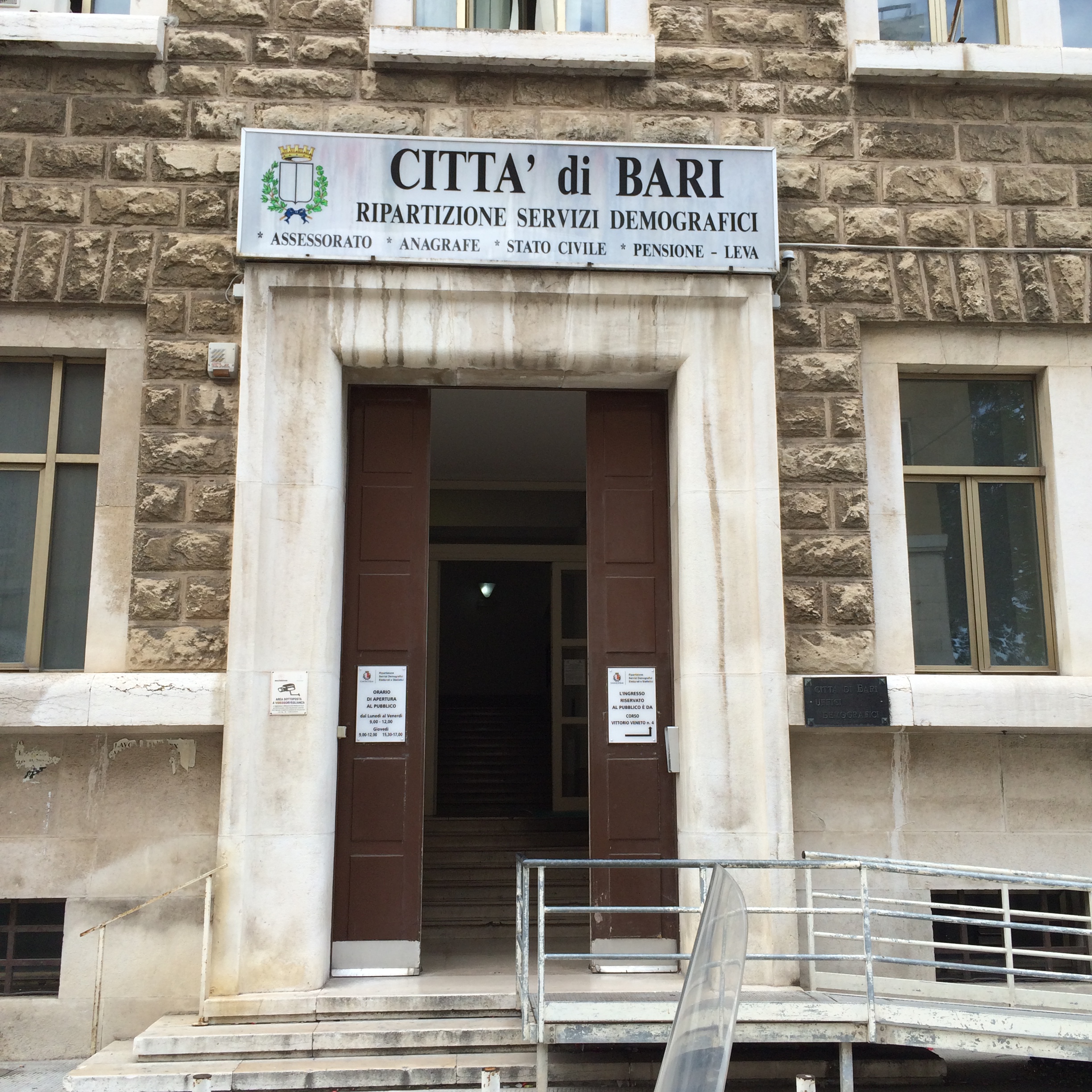
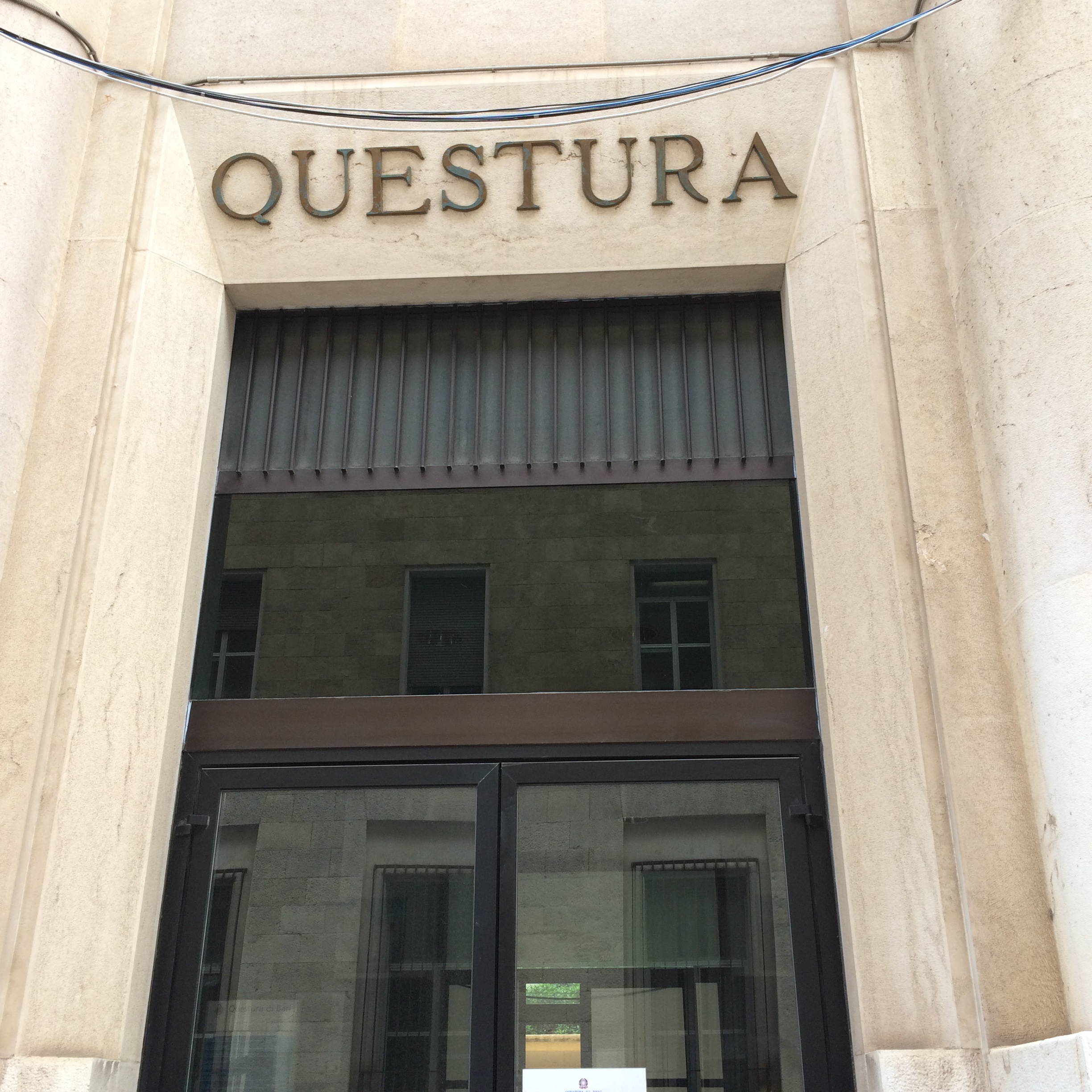
Bari is the capital city of the of the Puglia region on the Adriatic Sea. It’s the second largest city in southern Italy after Naples and a major port and this is where the Centofanti saga continued.  First we went to the Commune di Bari, Demographic Records Office to try to get Galileo’s passport details in the hope his application contained information about his parents only to be told that all passport applications are all held in the Questura for Puglia, (the Police archives in Bari).   So off we go to the Police Station to be told the archive office is closed and that anyway an application should be made in writing before we can proceed with any search.

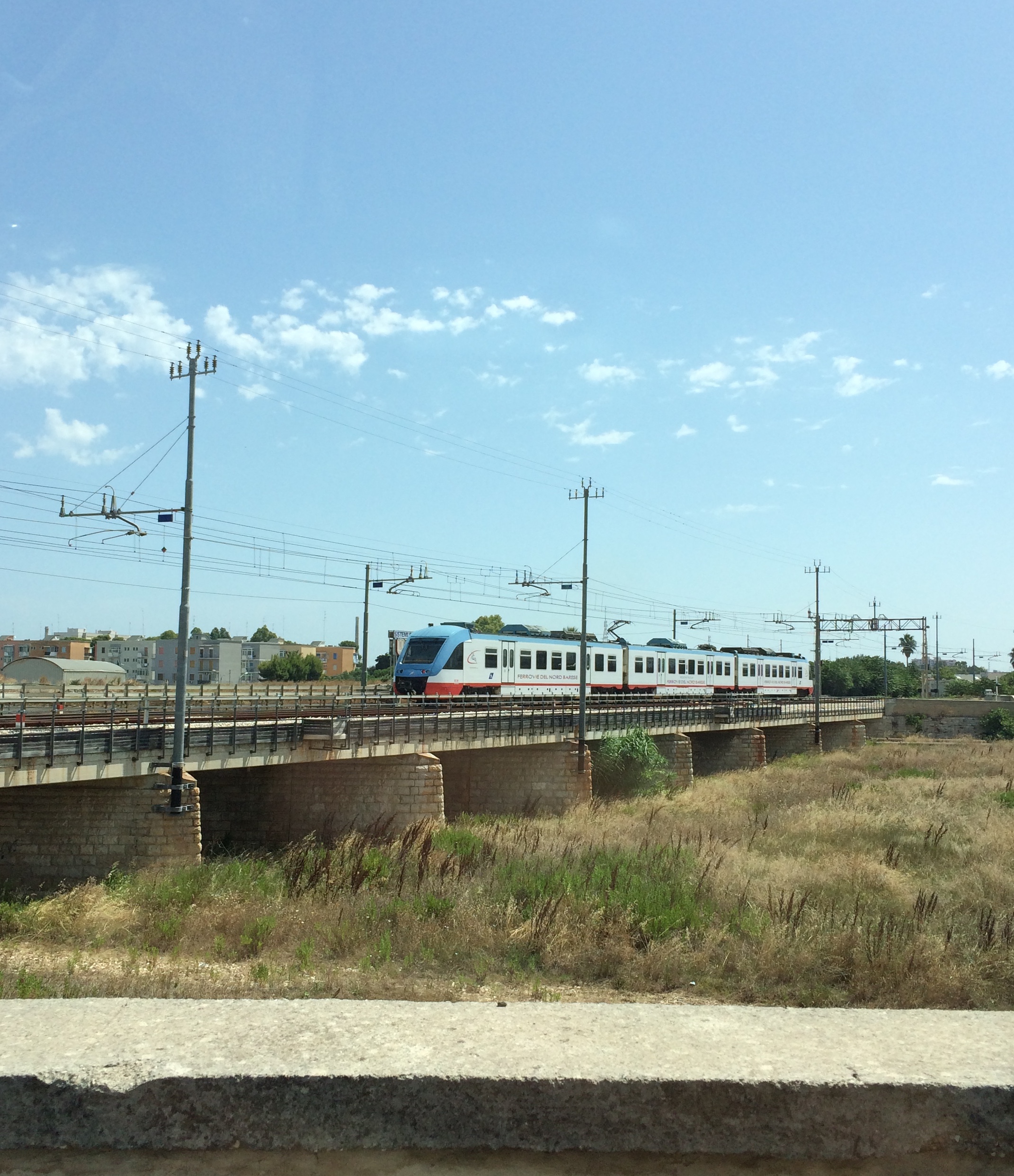
Arriving in Bari. Poor roads but a high-speed train.

Arriving in Bari. Poor roads but a high-speed train.

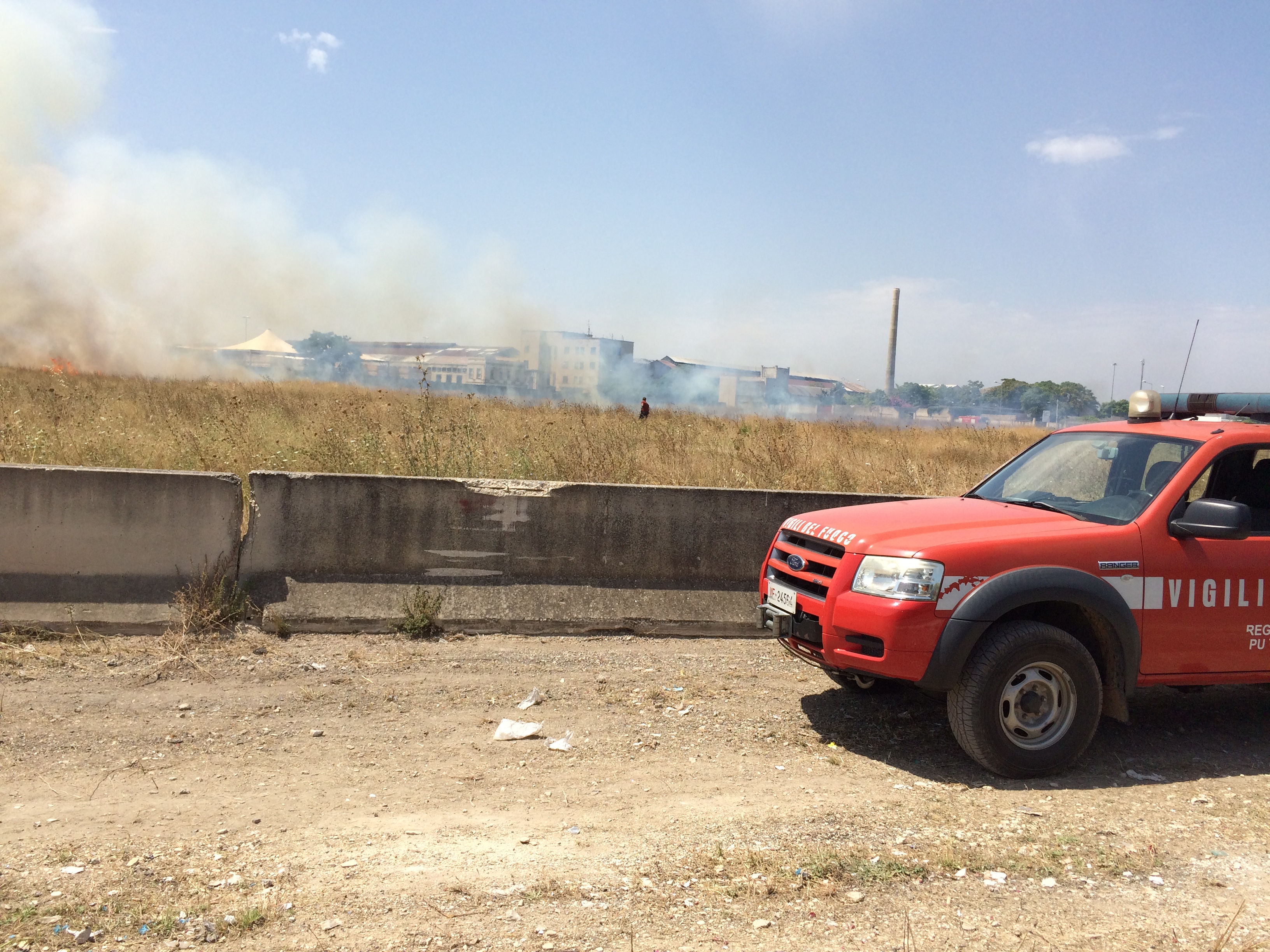
The Fire Brigade battling to control a fire in a field on the outskirts of the city.

The Fire Brigade battling to control a fire in a field on the outskirts of the city. Not surprising fires are igniting given the very hot and arid conditions.

The Registry Office at the Commune is only open from 9-12 except for Thursdays when it also opens in the afternoon. We just make it in time.

The Demographic Records Office at the Commune of Bari is only open from 9-12 except for Thursdays when it also opens in the afternoon. We just make it in time.

The 'Questura' or police station where all records of passport applications are kept.

The ‘Questura’ or police station where all records of passport applications are kept.

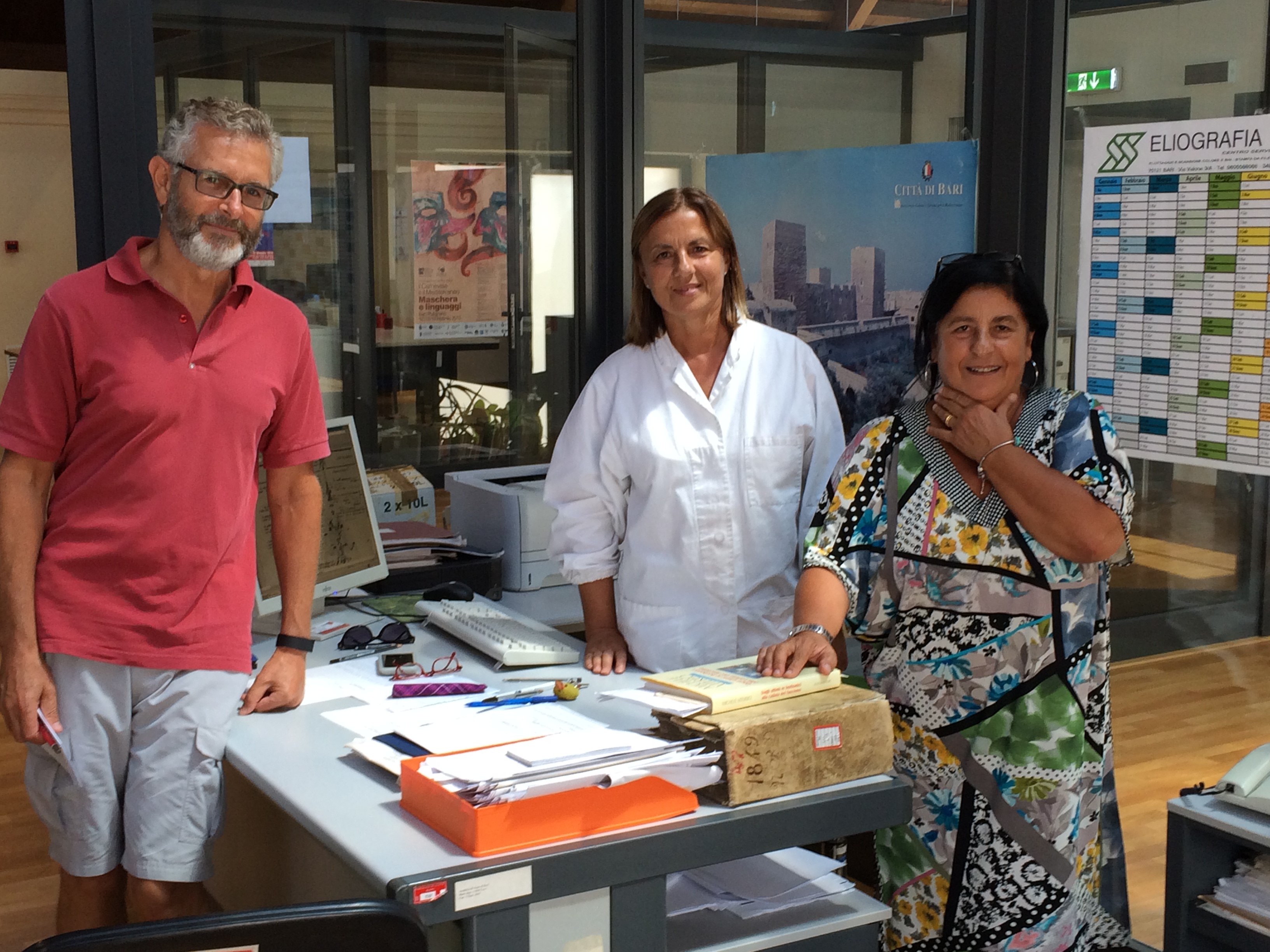
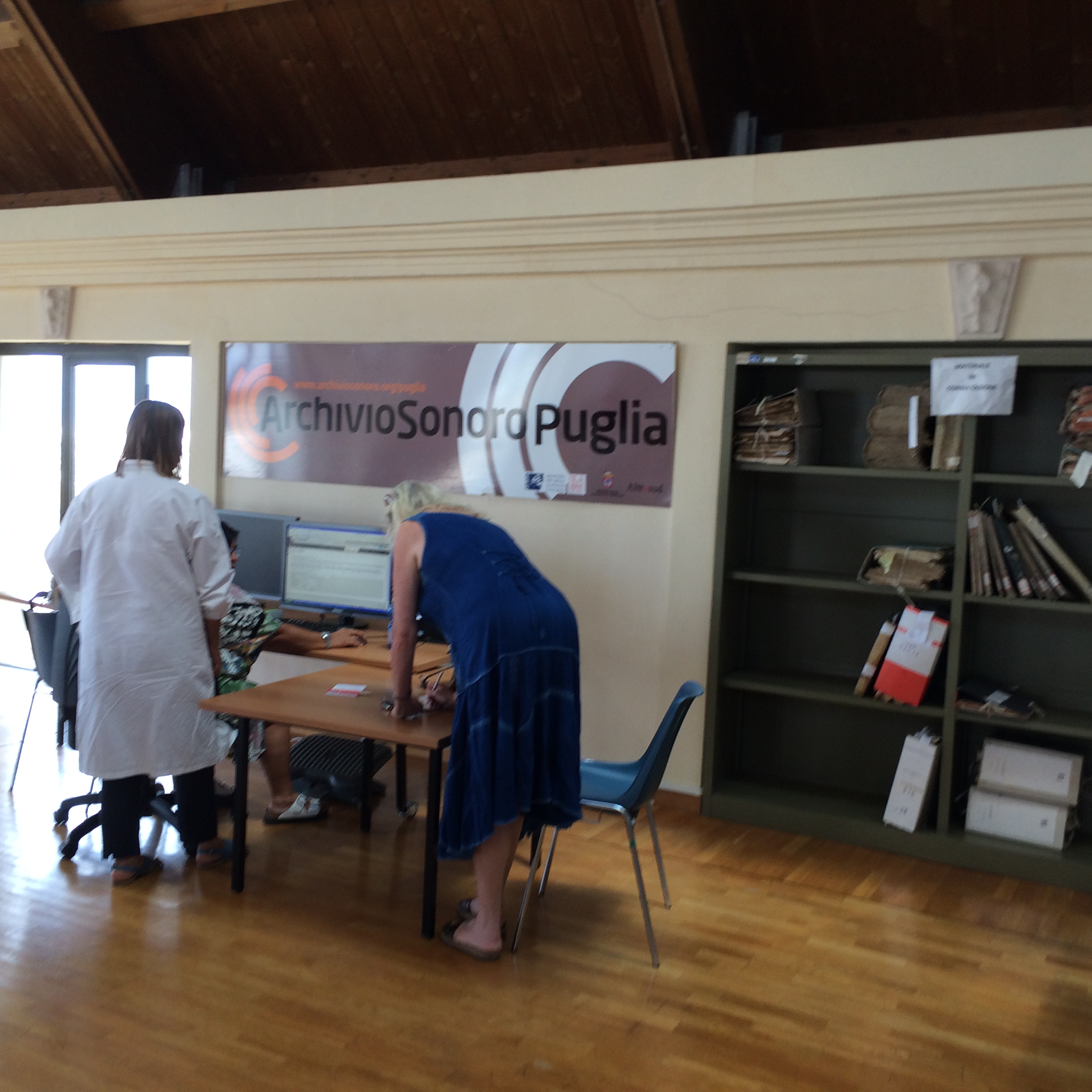
Undaunted we went to the State Archives Office where old registers from Puglia are being filmed and stored online.  Despite attempts at the entrance to put us off, first saying the office was closed and then that everyone was out at lunch and wouldn’t be back as it was the weekend, once inside the people were friendly and welcoming. Two in particular – Rosella Perna and Mariolina Pansini – were absolute gems.  They warmed to our cause, put off their lunch and proceeded to search the Trani registers and bingo! –  there was a Centofanti in the Trani register.  The documents bore the mark (curiously, in English, not Italian) “water damaged” and the writing was very difficult to decipher.  The name “Centofanti”, written in the typical italic calligraphy of the time was however unmistakable but the first name very difficult to make out.  Ms Perna and Ms Pansini complained about how badly people wrote in those days but it was clearly the damage to the documents that was the problem. They thought the name started with an ‘R’ and could have been ‘Renato’ or ‘Rocco’. They gave us details on how to access and search the archives on the portal (‘Il Portale Archivistico degli Antenati‘) and suggested we look at marriage entries as they would give us family details – we should look under the registro ‘Napoleonico’ for 1809-15, ‘Restaurazione’ for 1816-61 and ‘Italiano’ for 1861-1900.  Our search for Flavio’s grandfather would come under ‘Restaurazione’.

The State Archive Office in Bari holding old records for the whole of Puglia.

The State Archive Office in Bari holding old records for the whole of Puglia.

The incredibly kind and helpful Ms Rossella Perna and Ms Mariolina Pansini at the Archivio di Stato, Bari.

The incredibly kind and helpful Ms Rossella Perna and Ms Mariolina Pansini at the Archivio di Stato, Bari.

Judith having a go at deciphering the names on the 'Portale degli Antenati'.

Judith having a go at deciphering the names on the ‘Portale degli Antenati’.

After a short stroll in the city to look for a replacement tent (which we eventually found and bought from the puzzlingly-named “Mercoledi Santo” (Ash Wednesday) camping shop, as well as another unproductive search for a slightly bigger electric fan, which the whole country seems to have run out of thanks to the heatwave, we had 2 days until our ferry out of Bari and decided to spend them venturing a little further south near Lecce.

Bari's 'Teatro Petruzzelli'.

Bari’s ‘Teatro Petruzzelli’.

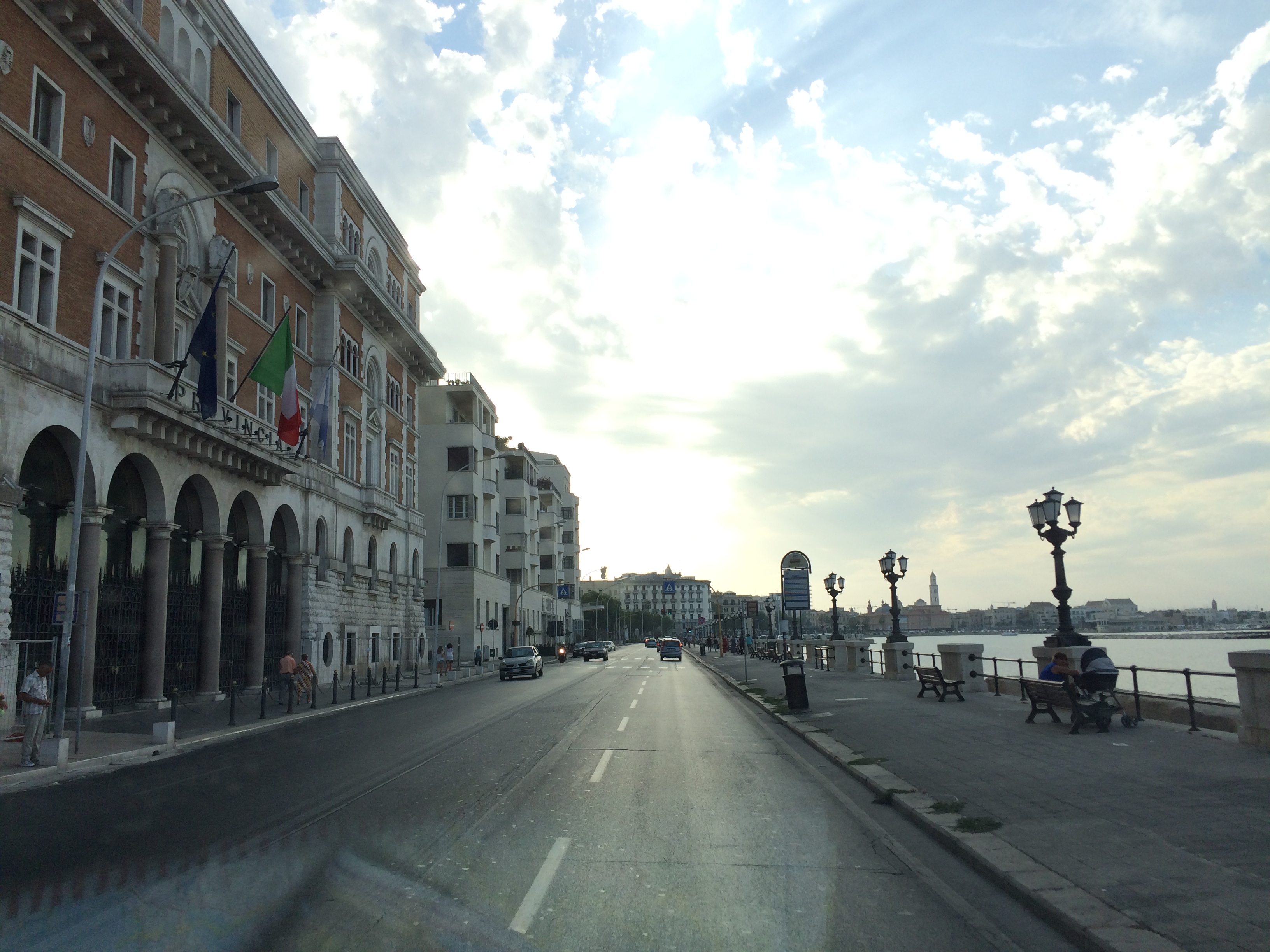
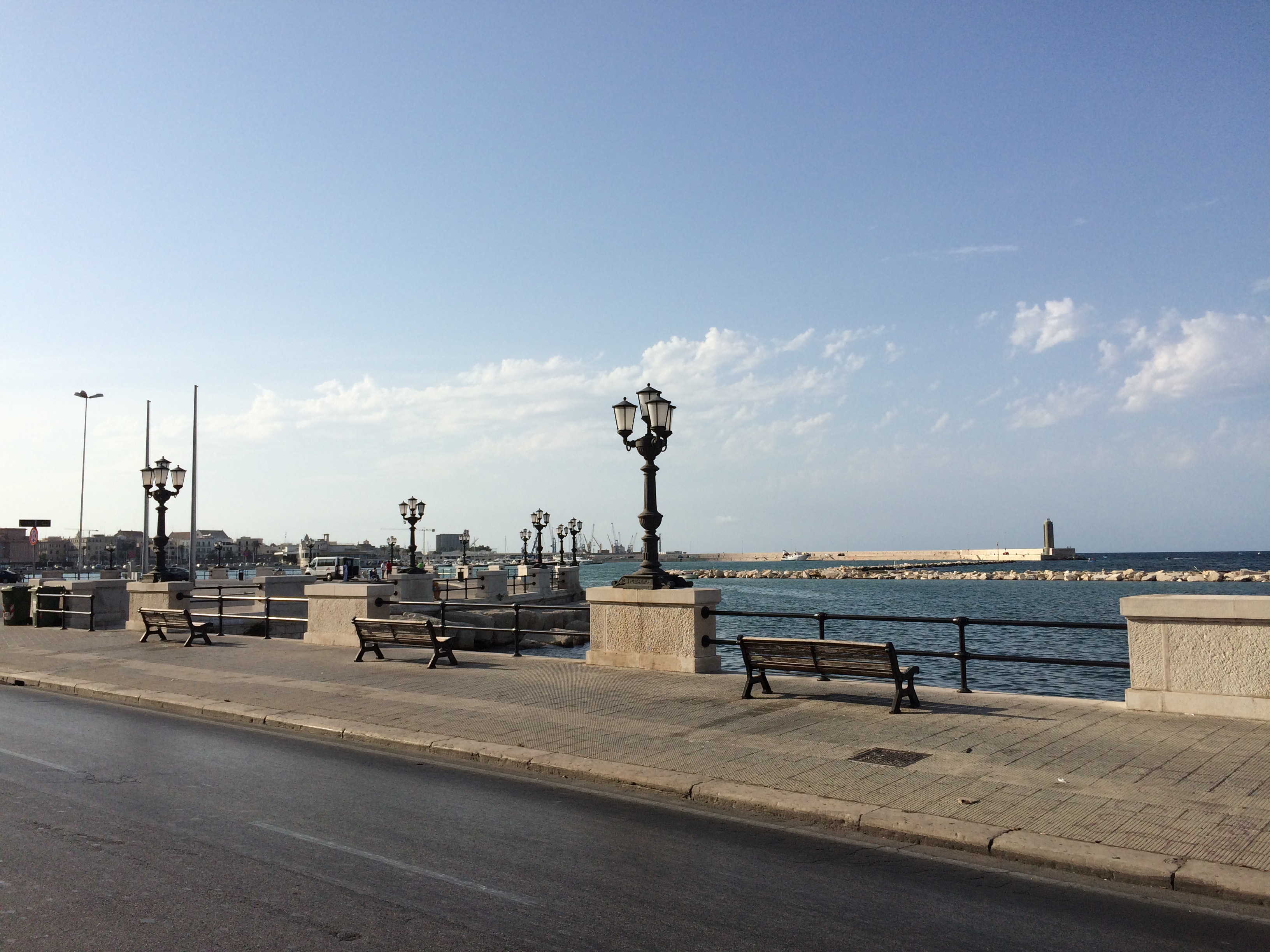
Bari's 'corniche' leading up to the ferry port.

Bari’s ‘corniche’ leading up to the ferry port.

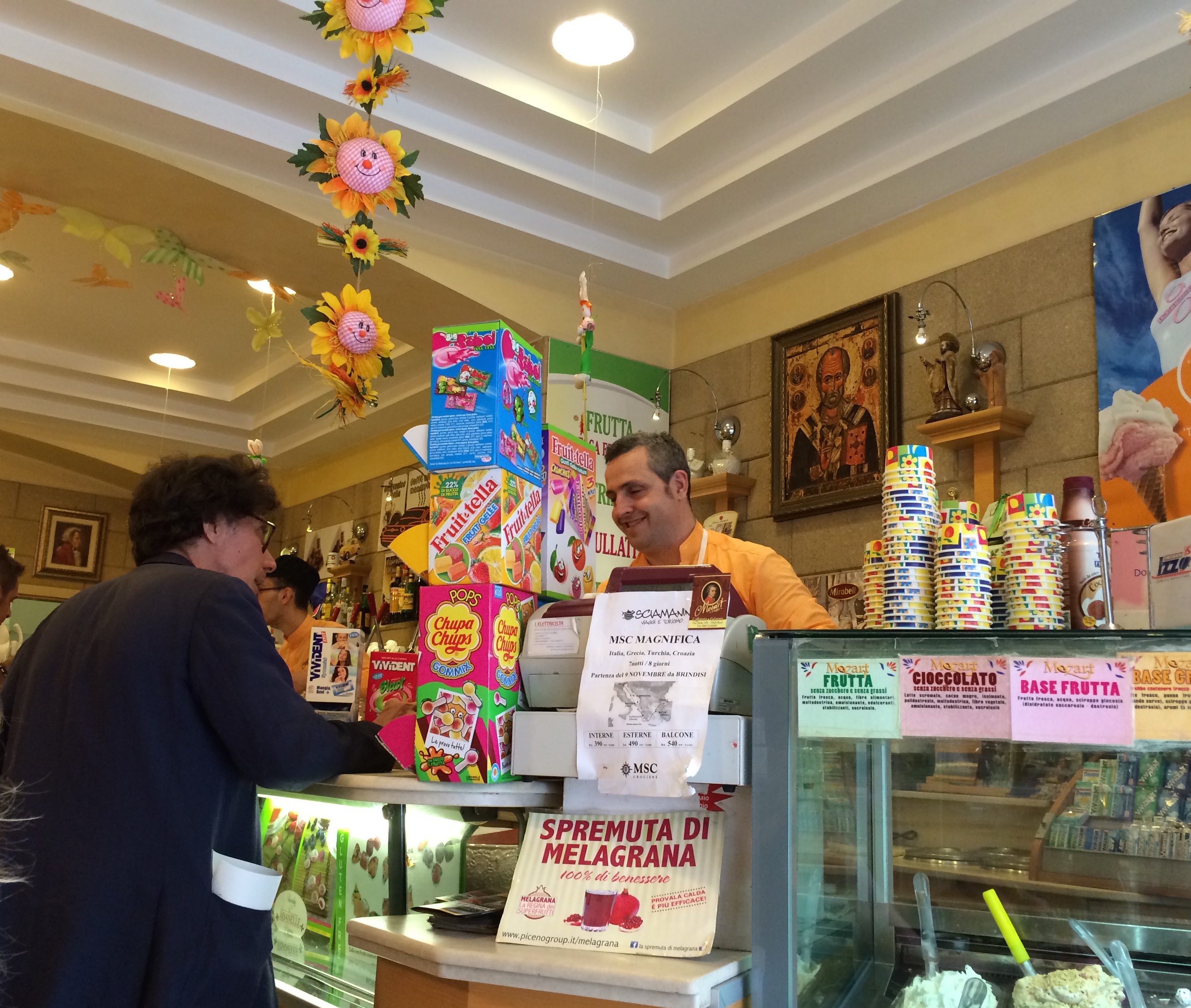
First though, we stopped at the Mozart Caffeteria/Gelateria at the Via Melo for a caffe and gelato, watched over by a rather grumpy-looking San Nicola di Bari.  It seemed to cater for interesting ‘intellectual’ members of Bari society – academics perhaps and professional types.

The Mozart Caffe, Via Melo, Bari.

The Mozart Caffe, Via Melo, Bari.

A very low-fat 'myrtila' gelato.

A very low-fat ‘myrtila’ gelato.

The Mozart Caffe, catering for Bari's intelligentsia.

The Mozart Caffe, catering for Bari’s intelligentsia.

IMG_5227