Monthly Archives: June 2015

Thursday 25th and Friday 26th June – two nights in the Serra da Estrella natural park

Standard

We were aiming for Coimbra as our next destination so from Lisbon, we followed the Rio Tejo valley north past Santarem, Alcanena, Ourem and Leira. We found a campsite that sounded appealing on the banks of the river Ava in the Serra da Estrella natural park east of Coimbra. The spot was so relaxing and, with the opportunity to spend a day walking in the surrounding hills for a bit of exercise, we decided to stay an extra night and drop the visit to Coimbra. Coimbra is an important regional centre outside Lisbon and Porto and served as the capital of Portugal between 1131 and 1255.  It is also known for its cultural life, revolving around its university (the oldest in Portugal). The fact that it is its university rather than a castle that dominates the city, Ivan said in Lisbon, speaks volumes for the priorities of the city and is its greatest virtue.  It is therefore a shame that we gave Coimbra a miss but we have had to make choices on this journey and come to terms with the fact that we can’t see everything and be everywhere without tiring ourselves out.

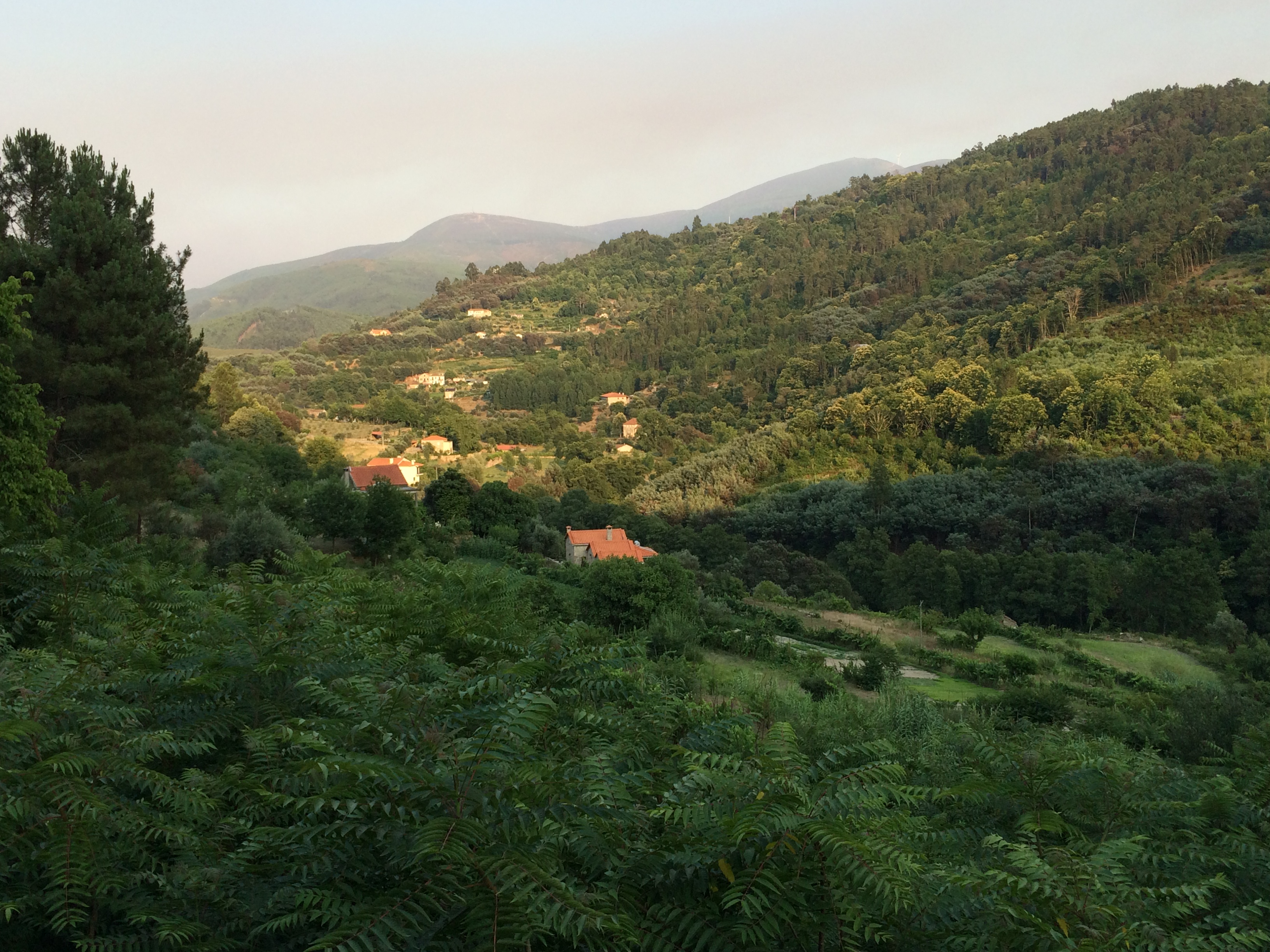
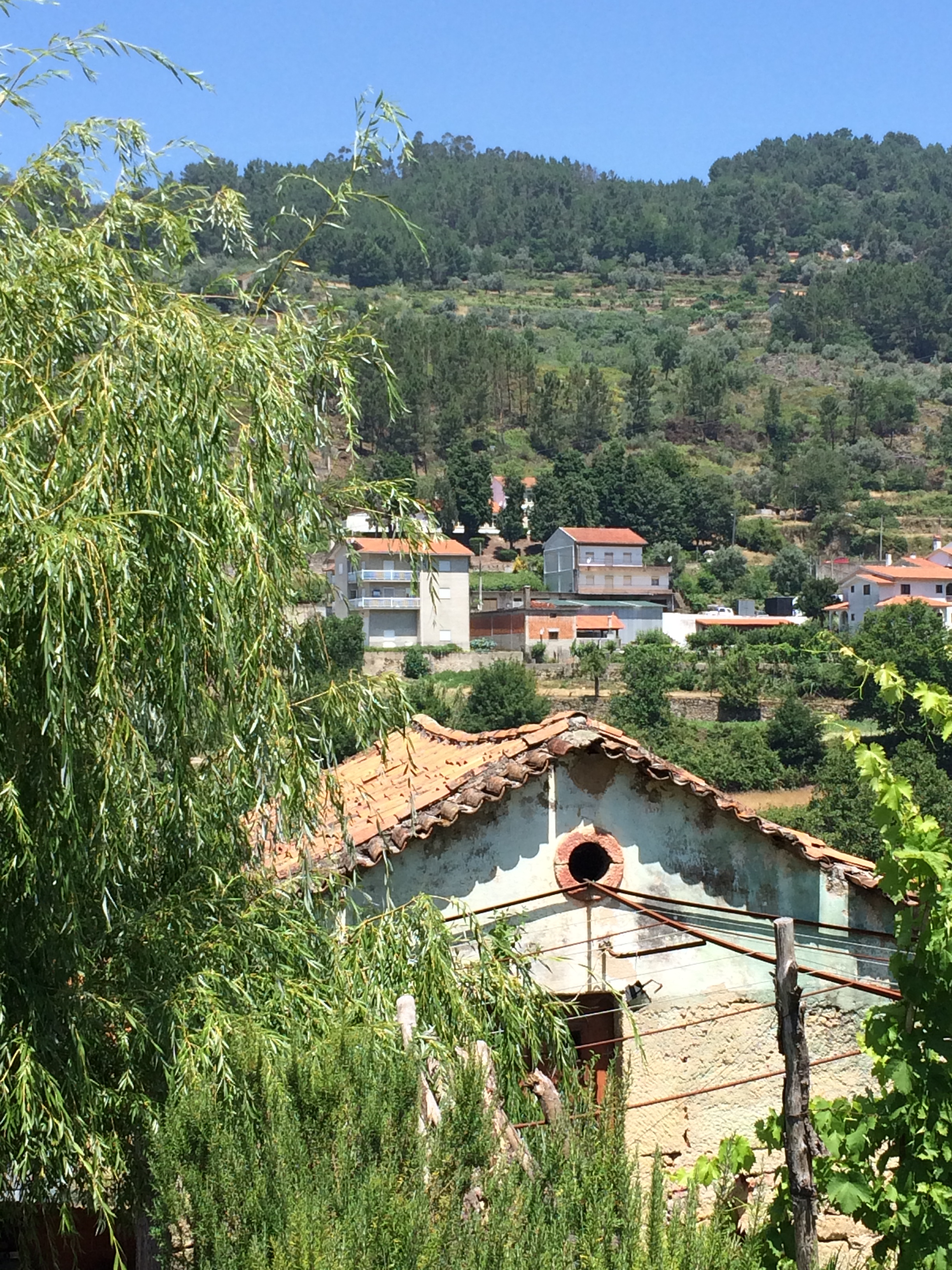
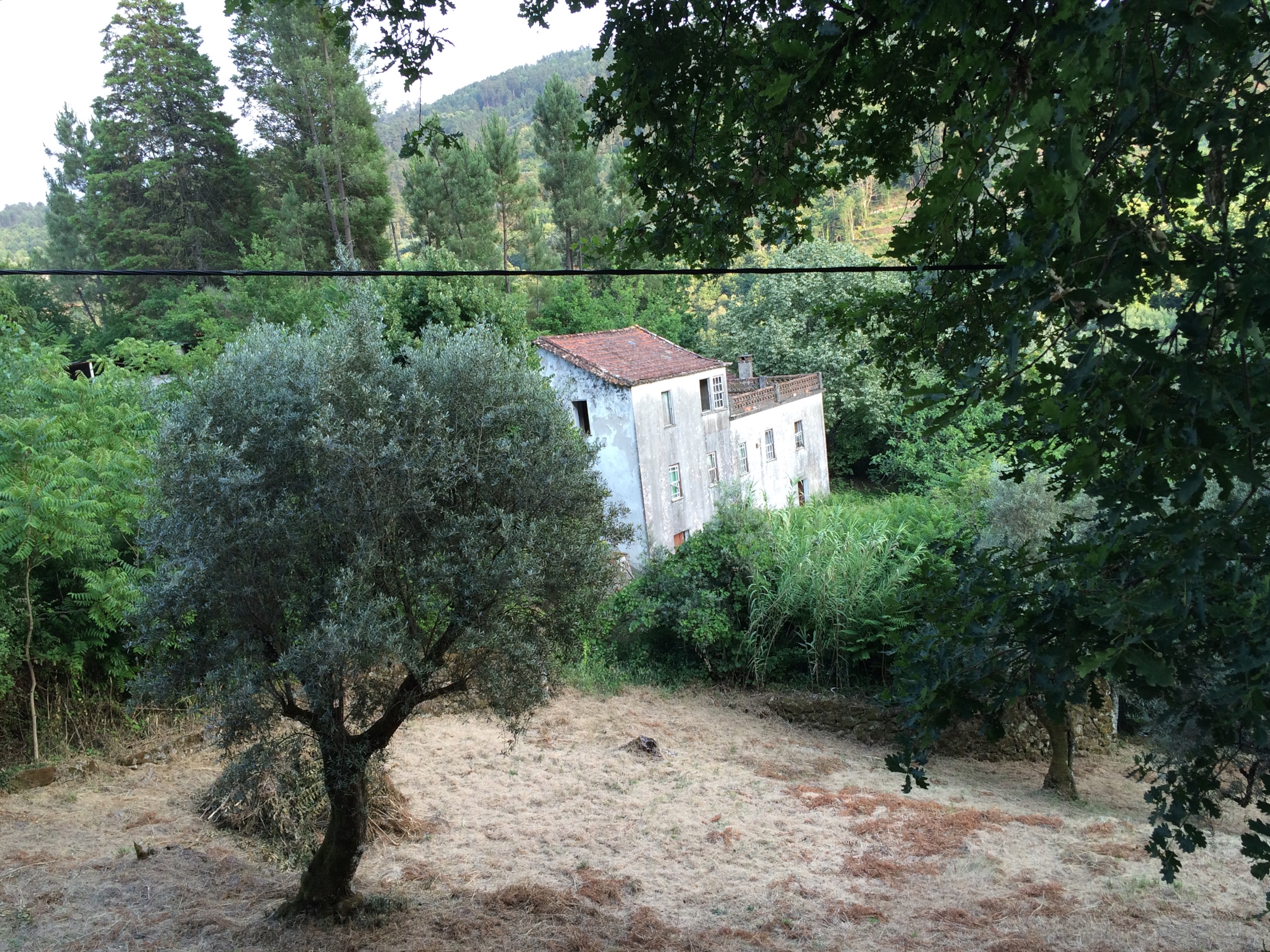
In the early evening, as we were approaching our spot on the river Ava and climbed higher and higher before descending down the valley, it was as if we’d entered a land of Gothic fairy tales or stepped into a Constable painting. It was impossible not to stop and get out of the van to take photos of the scenes beneath us.

Scenes of perfect bucolic tranquility in the Serra de Estrella natural park.

Scenes of perfect bucolic tranquility in the Serra da Estrella natural park.

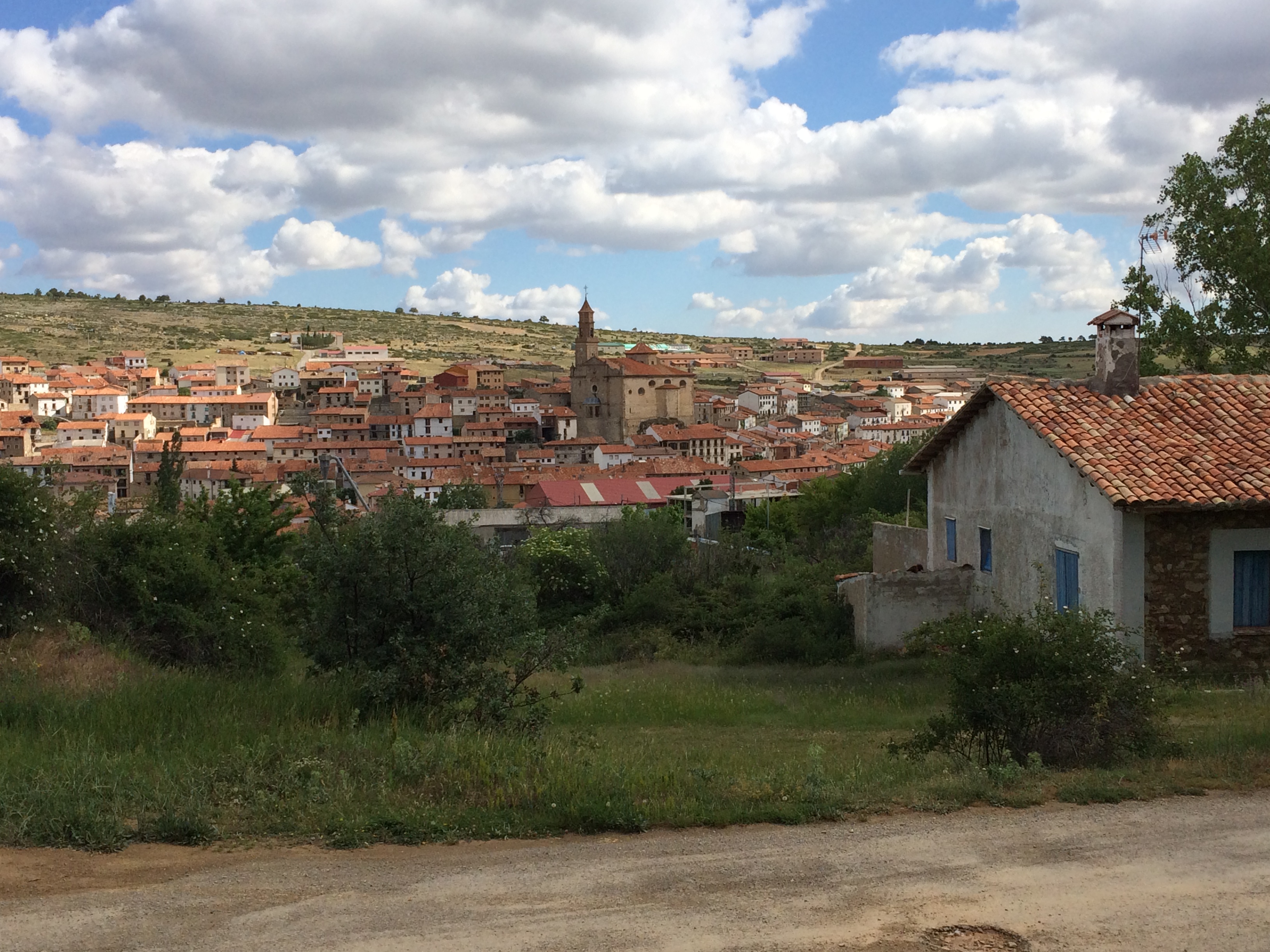
Oliveira do Hospital in the Serra de Estrella.

Oliveira do Hospital in the Serra da Estrella.

IMG_3092

The Parque Campismo was in the peaceful village of Ponte das 3 Entradas on the banks of the river Avo. It was run by a Dutch couple, small, friendly and laid back with a hippyish bar and a communal kitchen area – a bit like a commune, with guests even helping with tidying and pulling out weeds in the grounds.

At the entrance to the campsite is a poem written on a piece of slate.  It’s by the local poet, Dr Vasco de Campos, who lives in the village.  Later we saw short verses and poems by him dotted all around the village and in the next village along.  This one read something like (this is very rough guessing as I forgot to ask someone to translate it properly):

Poem by Vasco de Campos at entrance to the Parque Campismo.

Poem by Vasco de Campos at entrance to the Parque Campismo.

“Welcome travellers to the tent that gives you shelter; here you’ll find peace, you will not find arrogance; the clear waters of the Alva endlessly sing a happy song under the shade of our mountains, dearest friend of all Nature”.

There was access to the river and we were invited to get in but the water was dark and on finding out that we might encounter the odd ‘harmless’ river snake, we gave the idea of a swim a miss and went out in search of a meal instead.  This involved a brisk 2 km walk out of the village to get to the Verandas Verdes which we were told served wholesome country food and had marvelous views over the valley.  The latter was true and as for the food, our main courses were unremarkable but the starter which we hadn’t asked for and was plonked in front of us was interesting country food – slices of tightly-packed meat and rice wrapped in sausage skin with rough country bread.  We went for the house wine from the region which turned out to be very pleasant – it was made mainly from the Touriga Nacional grape which we hadn’t heard of before.

The Parque Campismo at Ponte de 3 Entraps run by a Dutch couple.

The Parque Campismo at Ponte de 3 Entradas run by a Dutch couple.

The river at the bottom of the Ponte de 3 Entradas campsite.

The river at the bottom of the Ponte de 3 Entradas campsite.

The wholesome country starter of tightly-packed meat and rice at the Verandas Verdes restaurant.

The wholesome country starter of tightly-packed meat and rice at the Verandas Verdes restaurant.

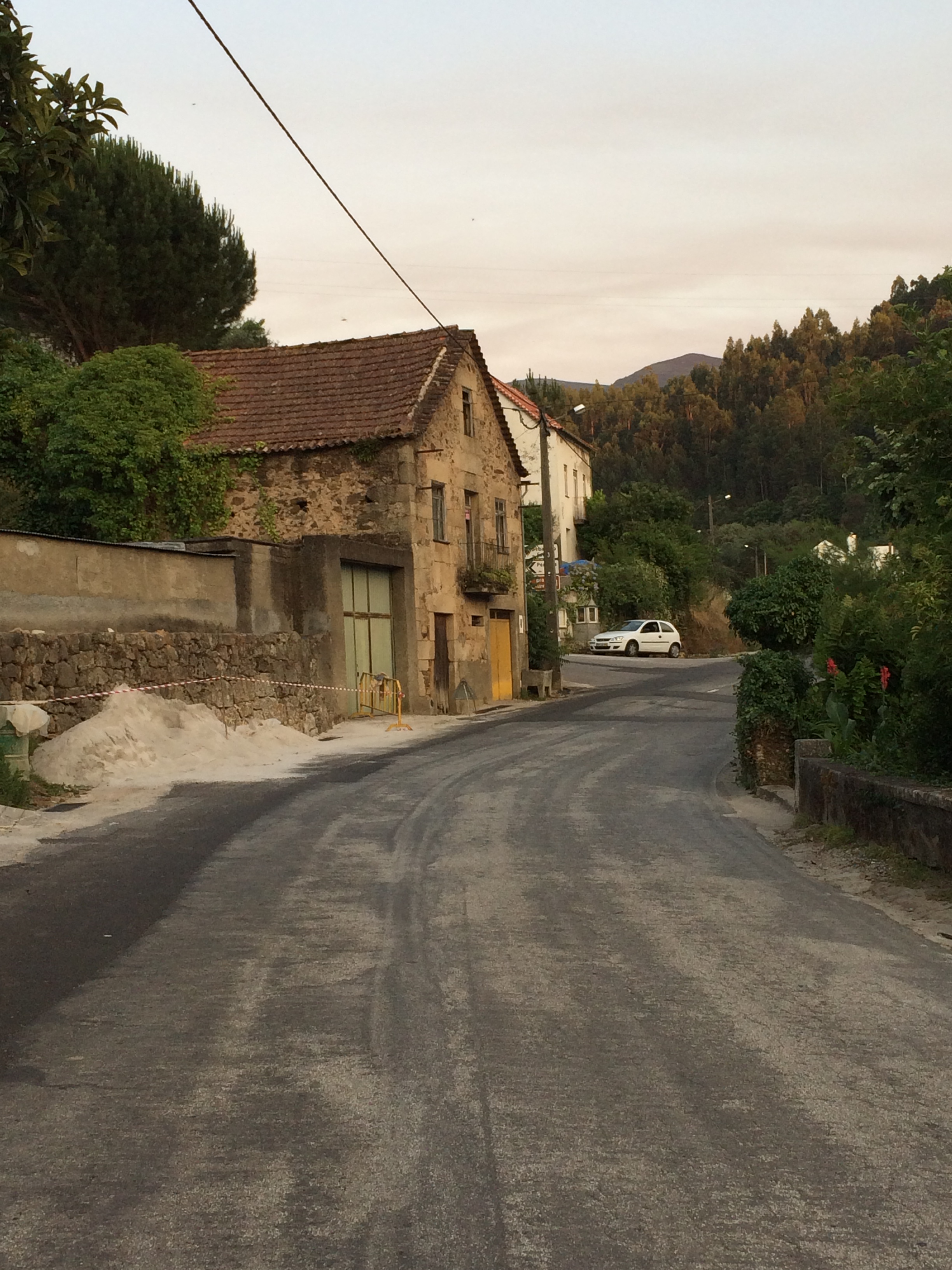
The sleepy village of Ponte de Tres Entradas.

The sleepy village of Ponte de Tres Entradas.

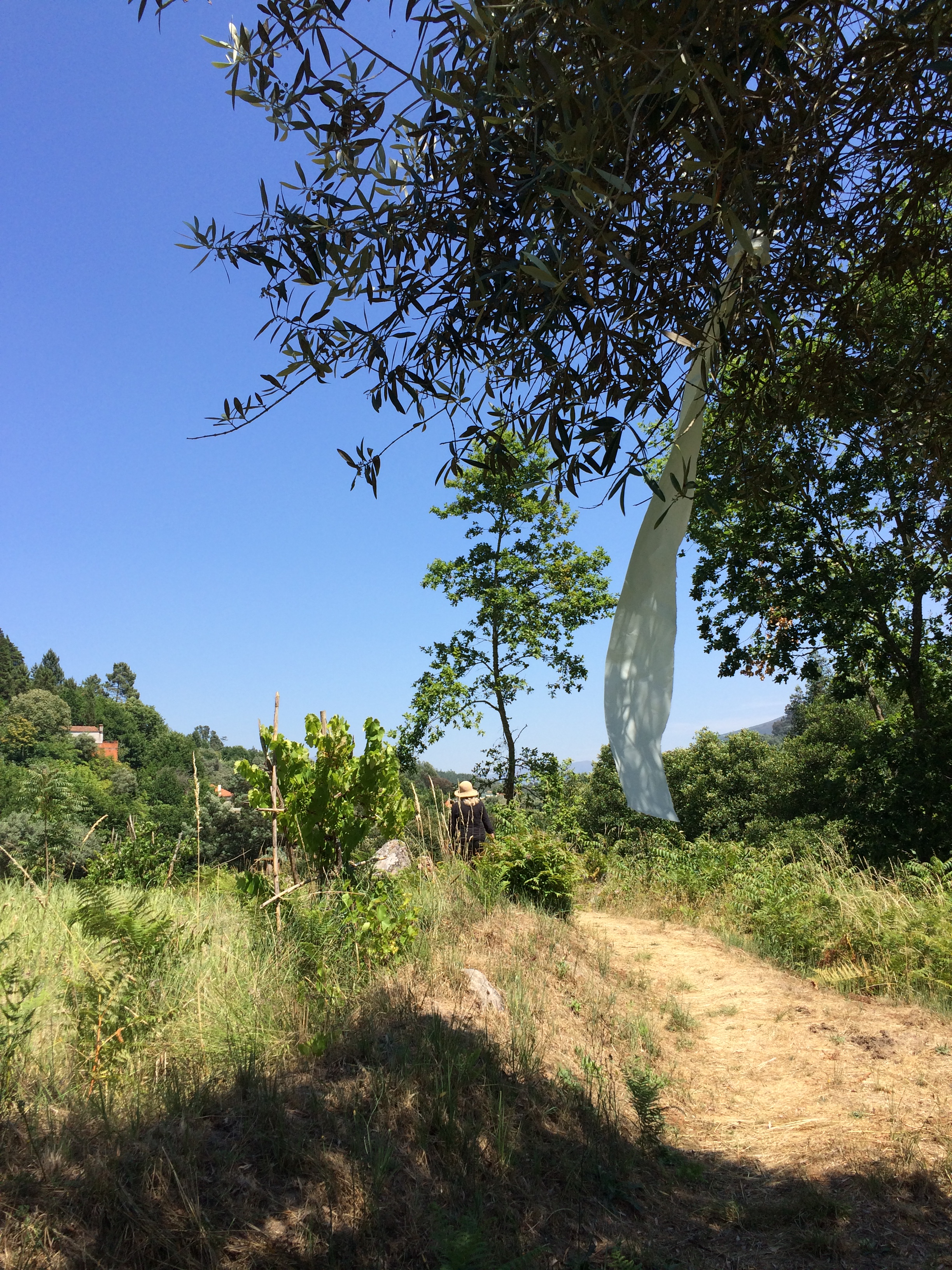
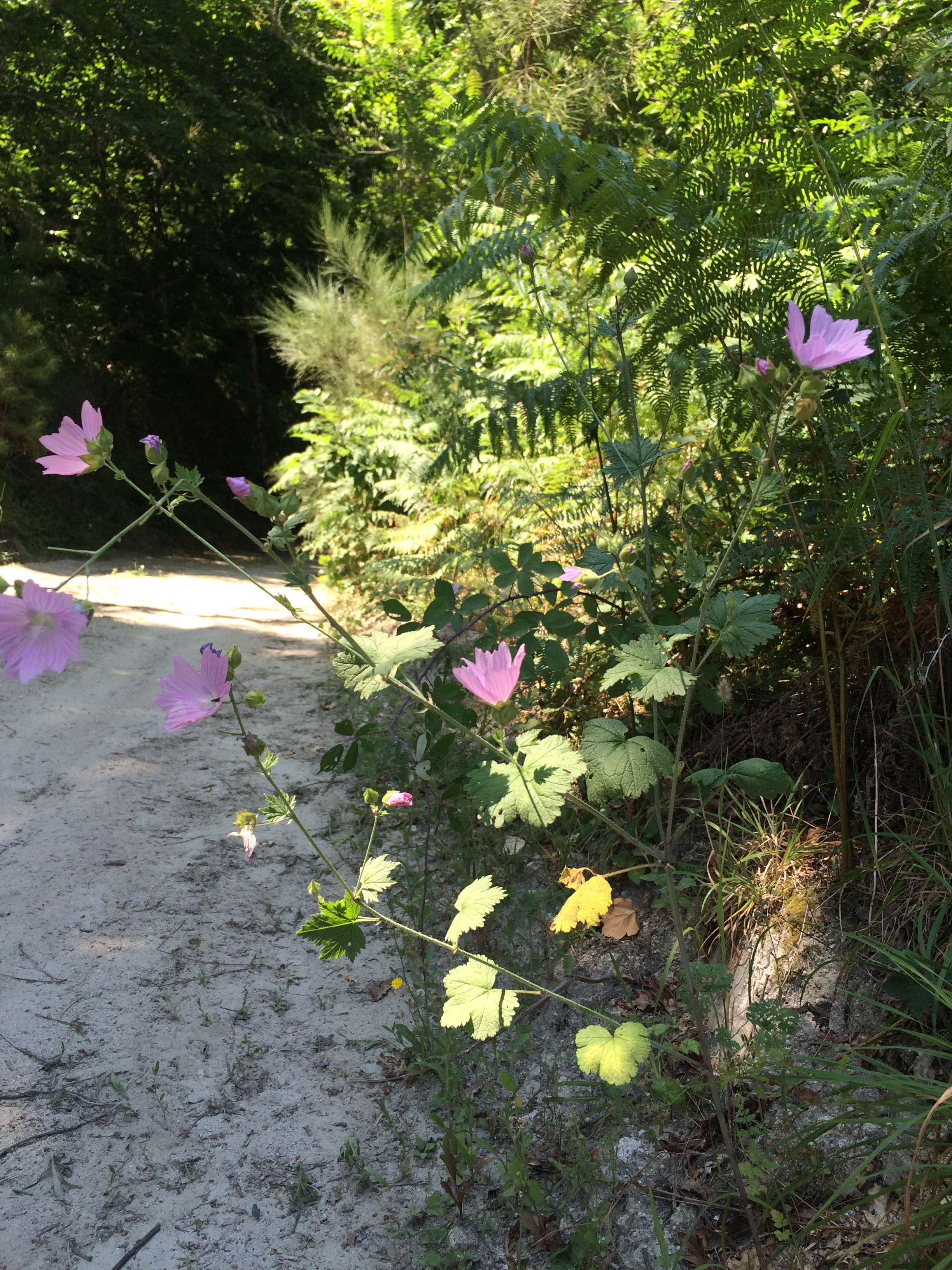
The temperature had reached  32 degrees that afternoon, but by nightfall, it dropped sharply and it got pretty chilly during the night – again, we regretted getting rid of that extra blanket! In the morning though, the weather was absolutely perfect.  Our plan was to set off on an 8 km walk over the hills to the village of Avo and back along the other side of the river.  We were advised to leave early as the temperature rises quite quickly but predictably enough, it was nearly midday by the time we set off.  It was a hot and challenging walk but enjoyable nonetheless. White ribbons had been tied to branches etc along the way to guide us.  In Avo, as we stopped for a coffee and a snack, the river looked more enticing so as usual, I had to have a dip, before realizing that on the other side of the village there was a river beach I could have used instead of getting stung by nettles and cut by sharp stones underfoot.

We came across no one else on the walk.

We came across no one else on the walk.

Setting off on our 8 km hill walk.

Setting off on our 8 km hill walk.

Some psychological pepping up.

Some psychological pepping up.

Olive trees along the path.

Olive trees along the path.

Arrival at Avo.

Arrival at Avo.

An old house in Avo.

An old house in Avo.

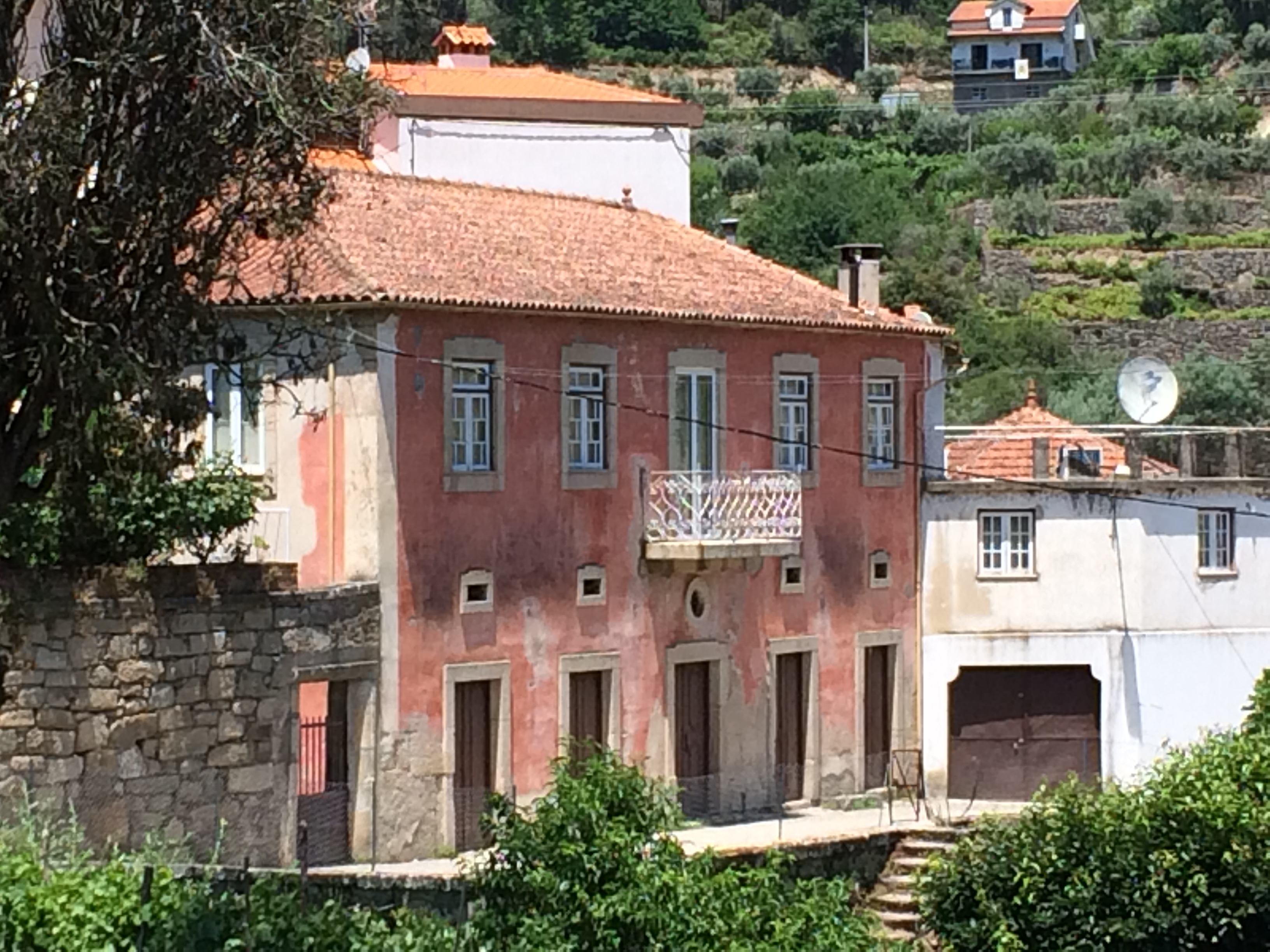
Grander house in Avo.

Grander house in Avo.

A refreshing dip in the river.

A refreshing dip in the river.

White ribbons to guide us on the way.

White ribbons to guide us on the way.

Walking back to Ponte de Tres Entradas - note the white ribbon in front of Judith.

Walking back to Ponte de Tres Entradas – note the white ribbon in front of Judith.

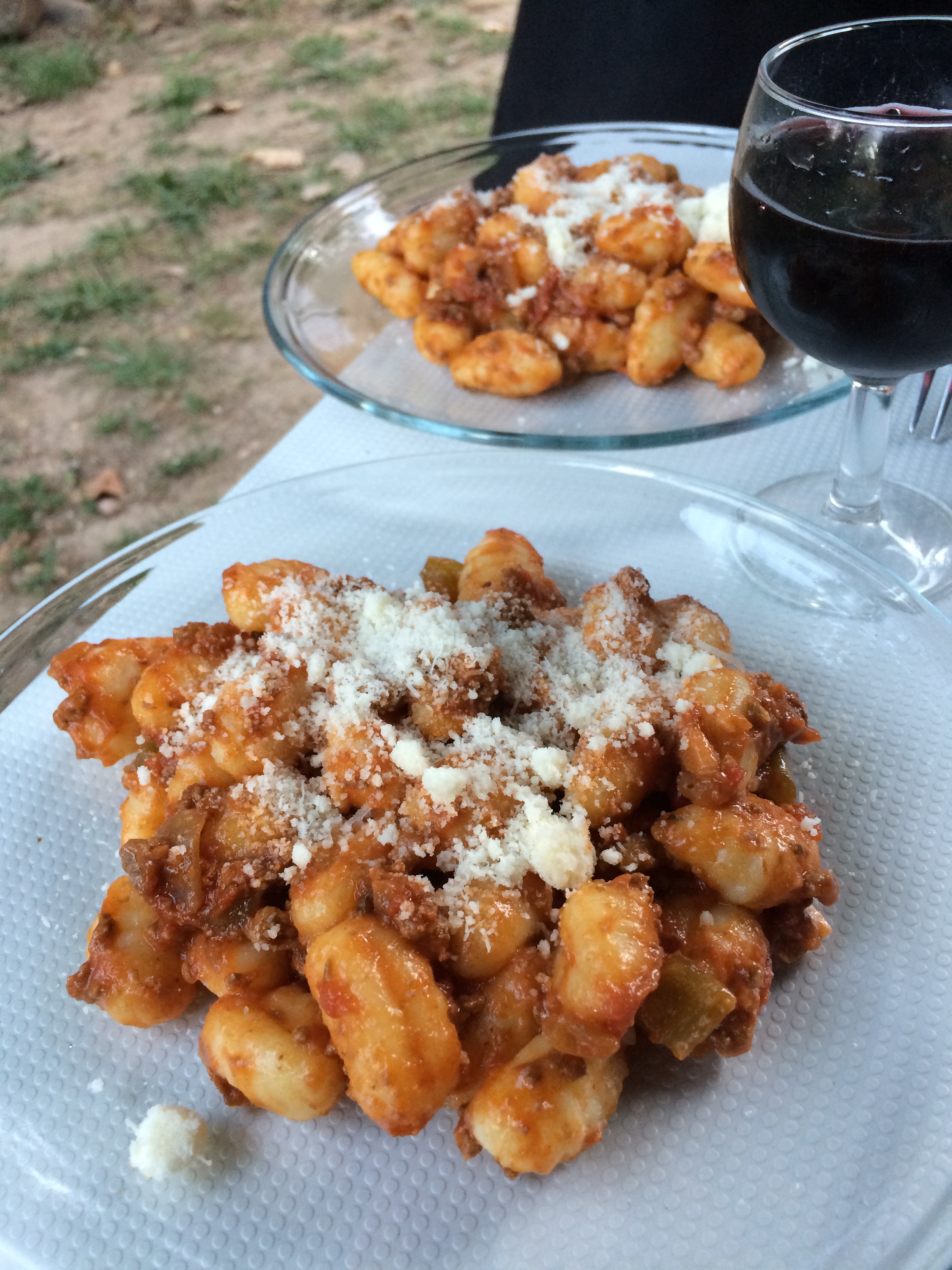
In the evening, we decide to have a simple meal of tuna fish salad followed by gnocchi with the rest of a bolognese sauce we’d made earlier in the week  – much needed carbo-loading after the walk.

A bit of comfort food - gnocchi and ragout sauce with parmesan.

A bit of comfort food – gnocchi and ragout sauce with parmesan.

We leave refreshed in the morning and head for Porto.

IMG_3123

IMG_3113

Wednesday 24th June – a day in Lisbon aka ‘Allis Ubbo’, the enchanting port.

Standard

From our base in Costa Caparica, we readied ourselves for a day’s visit to Lisbon.  Costa Caparica is on the other side of the vast inland sea that is the mouth of the Rio Tejo (Tagus), the longest river in the Iberian Peninsula.  Including the bus ride to the ferry and a quick and efficient ferry crossing the whole journey took an hour or so.

What’s immediately obvious is why Lisbon is one of the world’s longest-founded cities and became so important. Its massive sheltered natural harbour made it an important seaport for trade between the Mediterranean Sea and northern Europe.  Its proximity to southern and extreme western Europe as well as Africa and access to the Americas made it ideally placed for exploration and commerce.  The waterfront is lined with miles of docks, wharfs and drydock facilities that can accommodate the largest oil tankers.

Lisbon's vast natural harbour can accommodate the largest oil tankers.

It was immediately obvious why Lisbon became such a strategic, rich and important city.

The enchanting city of Lisbon or

The enchanting city of Lisbon or “Allis Ubo” as the Phoenicians called it.


But what intrigued us was how a small country of c 90,000 square kms (roughly the size of Ireland if you include Northern Ireland), with a population of no more than 2 mil at the height of its power, could become such a great imperial power to rival Spain, England and France.  It’s as if Ireland had become a great colonial power in the 15th and 16th centuries. It’s true Holland is smaller but it didn’t have anything like the reach and global spread throughout all continents that Portugal had.

Since early times, fishing and overseas trade have been Portugal’s main economic activity. But for centuries it was under the thumb of succeeding occupiers and was often ruled from neighbouring Leon or Galicia or Cordoba in Spain. It became an independent country under Alfonso I in 1128 but it was still not a powerful nation.  But by the 15th and 16th centuries it became a leading European power which while not dominant in European affairs, had an extensive colonial trading empire.

The answer seems to lie with the genius of legendary figures like Prince Henry the Navigator, Nunu Alvares Pereira (hence our waiter’s name in Evora!), Vasco de Gama, Alfonso de Albuquerque and other visionary naval explorers.  That coupled with Portugal’s strategic location and great advances in geographic, mathematical, scientific knowledge and above all, naval technology.  All that combined therefore made Portugal a powerful ‘thalassocracy’ (from ‘thalassa’ meaning sea and ‘keratin’ meaning to rule) which enabled it to build up a vast empire in South America, Africa, Asia and Oceania.  

It was the first to capture a foothold in Africa and bring back African gold from the Gold Coast bypassing Arab caravans in the Sahara. In 1499 Vasco de Gama discovered a route to India. In the next decade China, Japan, Madagascar, Goa, Ceylon and Mauritius were reached. In 1515, Portugal seized Hormuz and established relations with Persia.  Did you know that in 1521 Portugal even captured and occupied Bahrain for 80 years?!

Portugal’s golden age of discovery lasted 2 centuries.  But gradually, it lost wealth and status as the English, French and Dutch surrounded and conquered its widely scattered trading posts and territories.

It declined further after its defeat at Alcacer Quibir in Morocco in 1578 and was then was devastated by a terrible earthquake, fire and tsunami that destroyed a large part of Lisbon and killed a third of its inhabitants. It was weakened further during the Napoleonic wars and with the loss of its largest colony, Brazil, in 1822.

In 1910 a revolution deposed the monarchy. A military coup in 1926 installed a dictatorship that lasted until 1974, when it was ousted by a new government that brought in sweeping democratic reforms and granted independence to most remaining colonies in 1975.

But the fact remains that Portugal’s moment in history was in the 15th century and early 16th century. At a time when England was engaged in a bitter division between the houses of Lancaster and York and the persecution of heretics; when France was also drawn into the Hundred Years War and civil unrest between the Armagnacs and the Burgundians; and Spain had just started the Inquisition ordered by Ferdinand and Isabella, Portugal was developing ocean-going skills and starting a new age of discovery.

But like the Phoenicians before them who opened up the Mediterranean for the Romans after them, they were bound to eventually lose control of their colonies to more powerful and militarily ruthless powers. Clearly, that’s not to condone their or other colonialists’ plundering of the places and peoples they colonized of course!

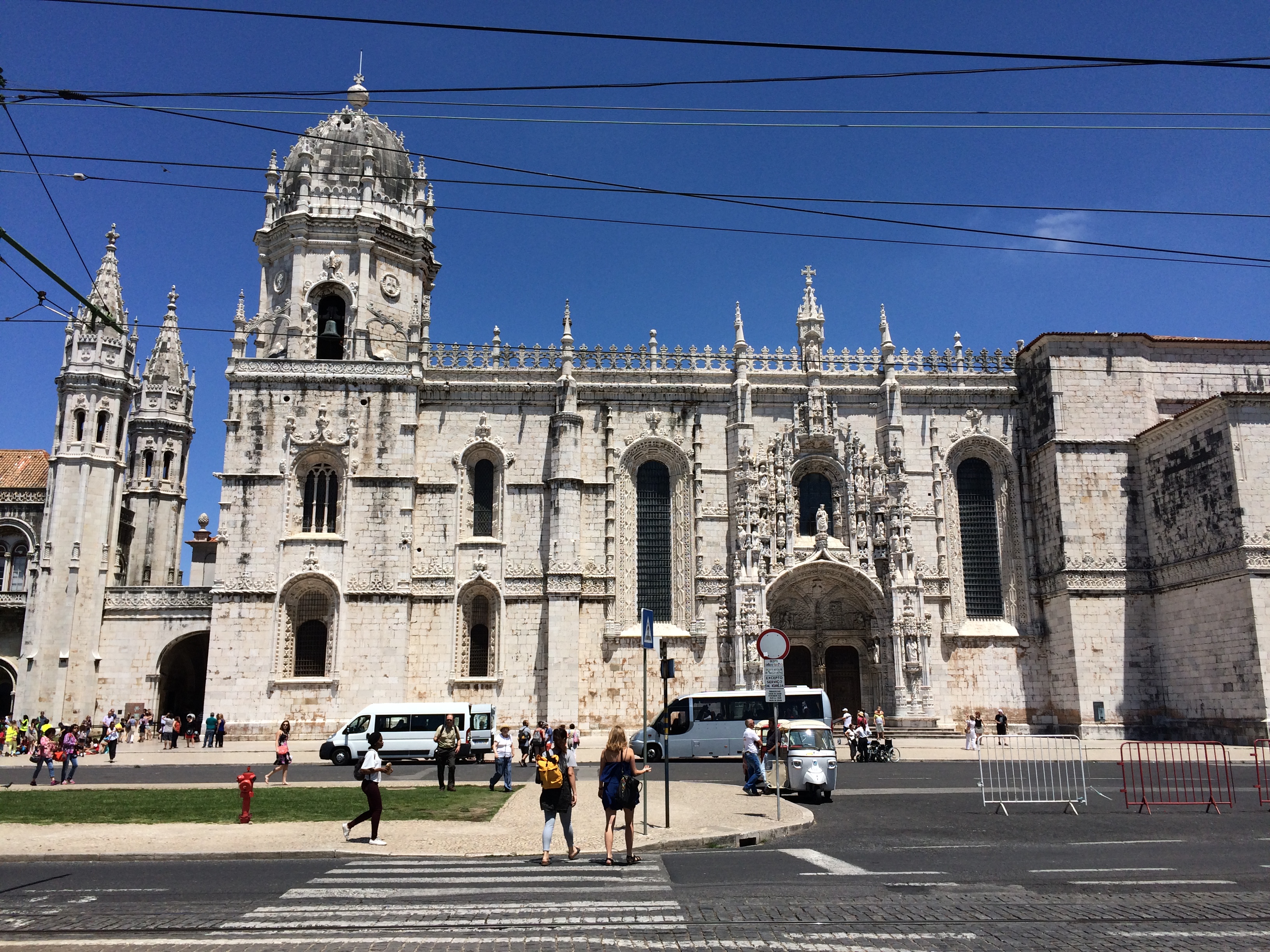
We got off the ferry at Belem, a few kilometers south of the historic centre.  The name is derived from Bethlehem and it’s historically very significant in itself as it was from here that Vasco de Gama set sail to discover the sea route to India and other naval expeditions left from.  It therefore symbolizes the golden age of the Voyages of Discovery.  It has for instance, the Mosteiro dos Jeronimo, the construction of which was ordered in honour of Vasco de Gama in 1501 and was completed a century later.  Also the Padrao dos Descombrimento which commemorates the 500th anniversary of the death of Henry the Navigator.  And the Belem Tower, a military outpost built to protect the Tagus estuary.

We stopped at the Pateis de Belem patisserie to try their famous pateis de Belem – very similar to the pateis de nata we’d had the day before but more creamy!

The Mosteiro dos Jeronimo in Belem.

The Mosteiro dos Jeronimo in Belem.


The famous Pateis de Belem patisserie.

The famous Pateis de Belem patisserie.


A large statue of Jesus overlooks the port of Belem arms outstretched protectively

A large statue of Jesus overlooks the port of Belem arms outstretched protectively.

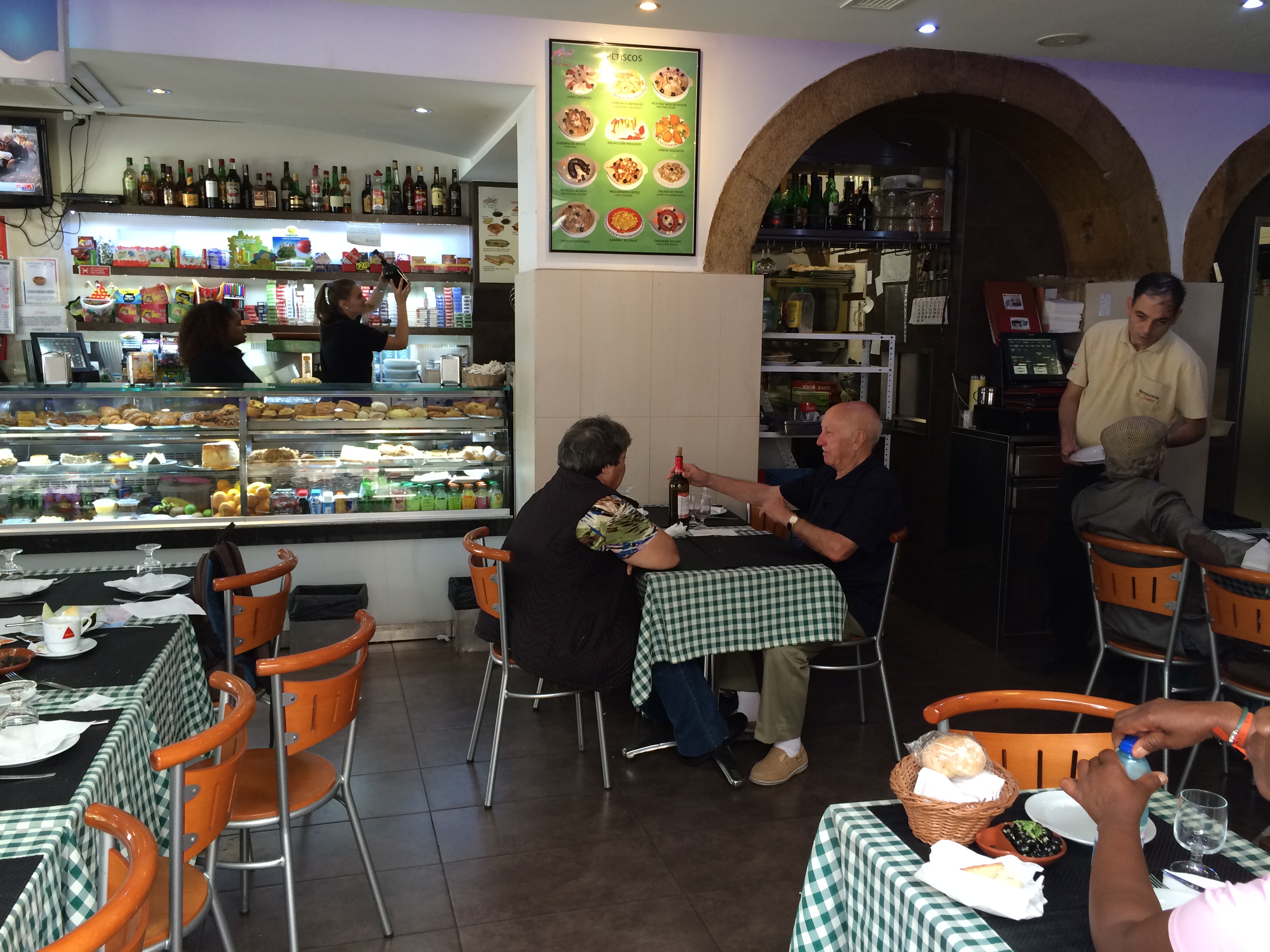
From Belem we took a modern tram into the centre of town and arrive in the main square where we’re advised by some French visitors to avoid the touristic restaurants and look instead in the side streets. This is exactly what we do and order what everyone else in the restaurant seems to be eating – a kind of mixed ‘pot-au-feu’ of lots of slightly overcooked different things, or a Portuguese stew.  We were OK with the lean bits of meat and potato and cabbage but couldn’t quite handle everything on the plate.

Little non-touristic restaurants in the side-streets are best, we were advised.

Little non-touristic restaurants in the side-streets are best, we were advised.


Portuguese 'pot-au-feu' - not entirely to our taste.

Portuguese ‘pot-au-feu’ – not entirely to our taste.


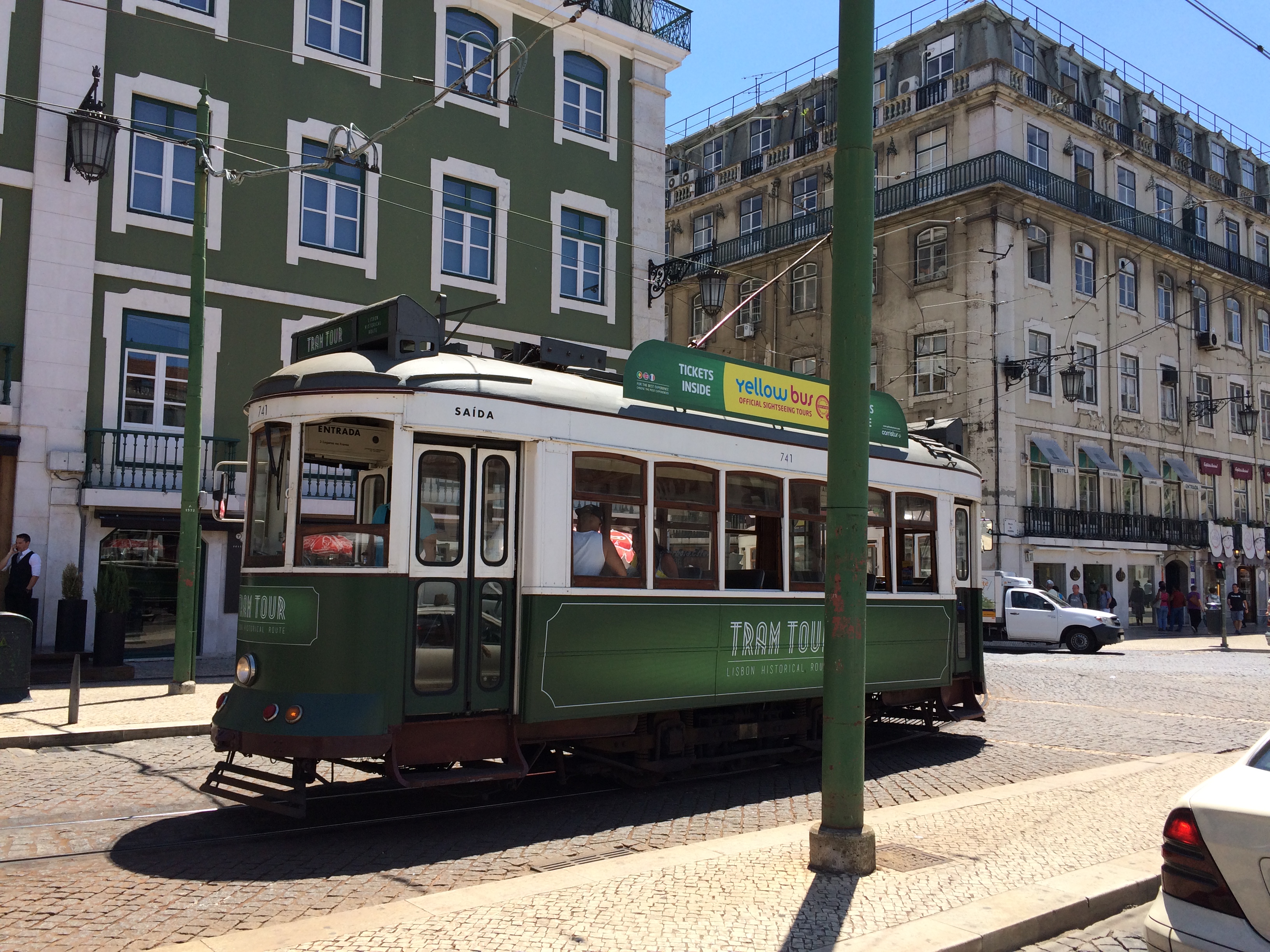
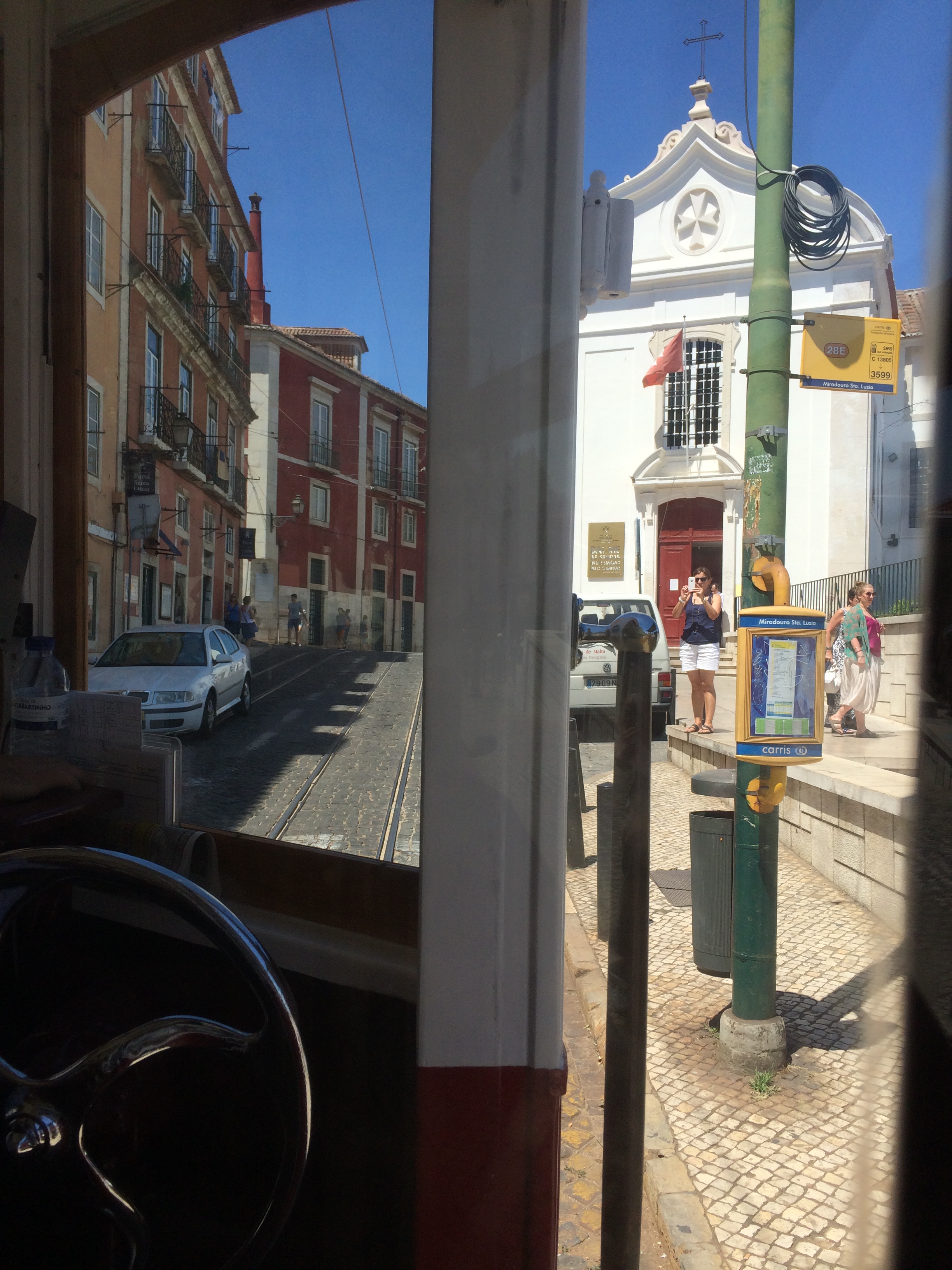
The Tourist Information kiosk in Belem had advised us to take the No 28 old tram that did a complete tour of the old centre.  The queue for this was so long however that we decided to go for an alternative though more expensive tourist tram doing a similar tour.

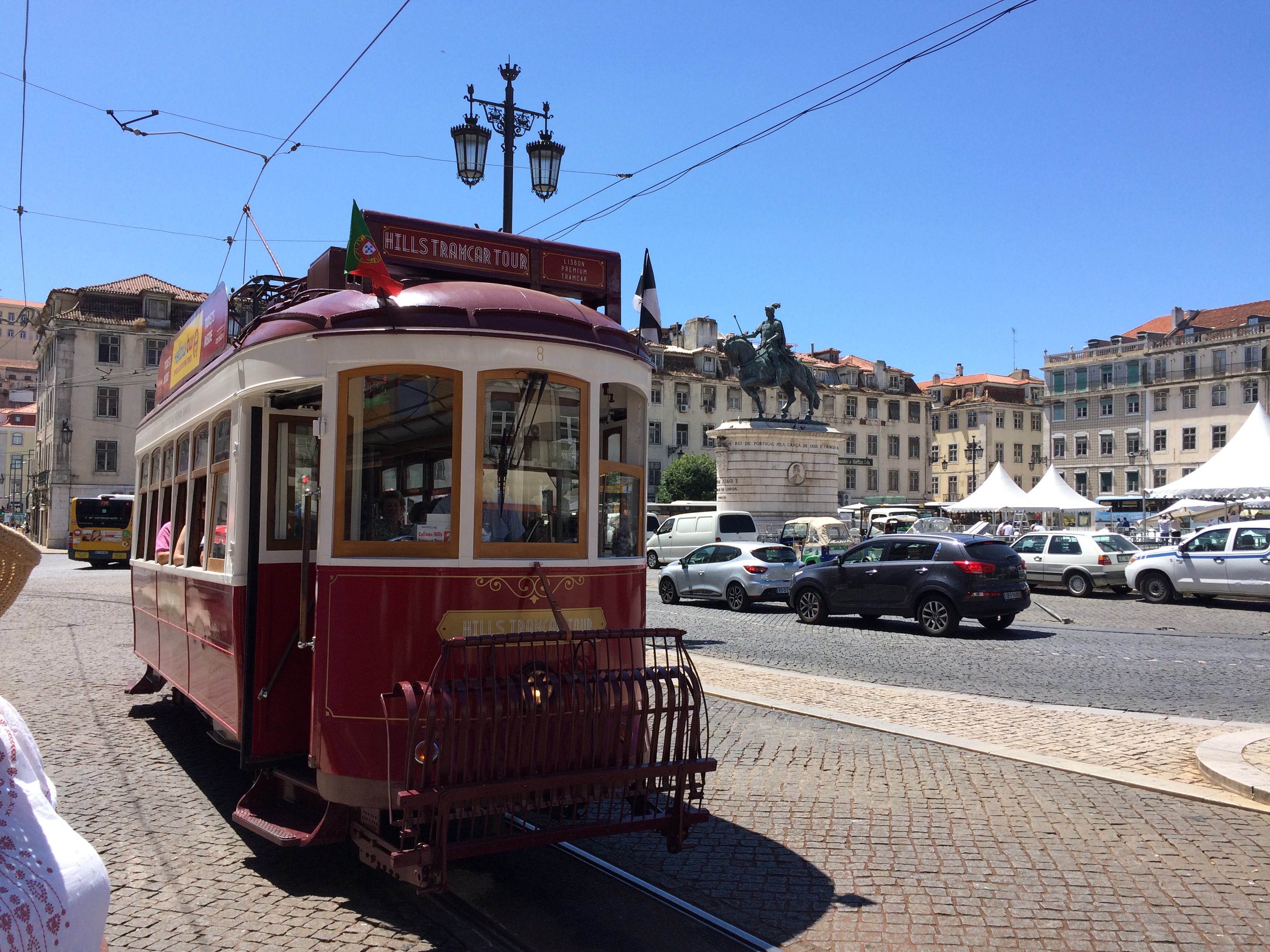
Taking one of the old-style tramcars is the most exciting way to see the old town.

Taking one of the quaint old-style tramcars is the most exciting way to see the old town.


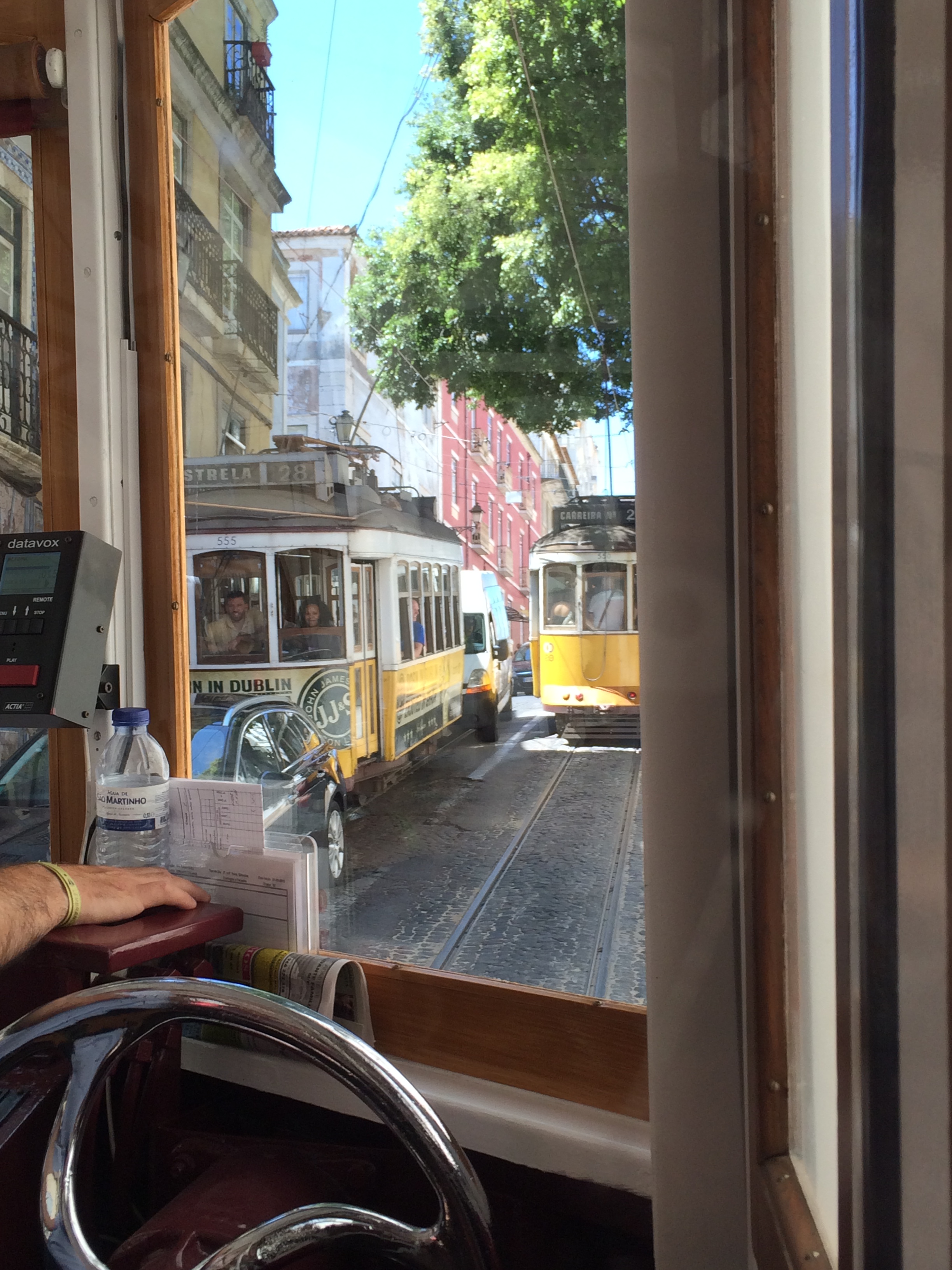
It’s hard to believe how these tramcars have survived labouring up and down the hilly narrow roads in fierce competition with every other road user.

Hard to believe how these old tram cars have survived in modern Lisbon - they are in fact fighting for survival.

Hard to believe how these old tram cars have survived in modern Lisbon – they are in fact fighting for survival.


The drivers are superbly skilled.

The drivers are superbly skilled.


The old tams have become emblematic of Lisbon and are all part of its irresistible charm.

The old tams have become emblematic of Lisbon and are all part of its irresistible charm.


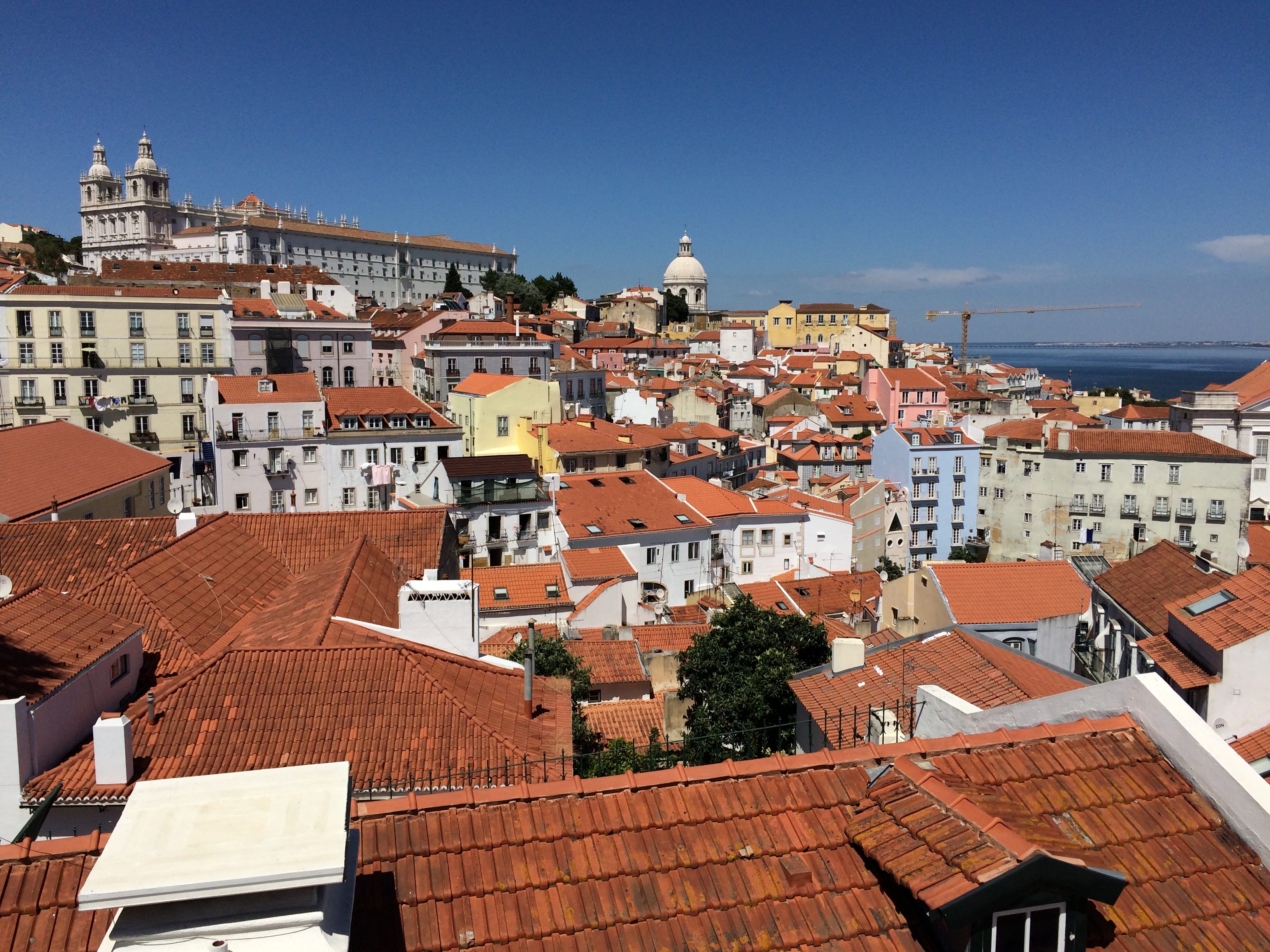
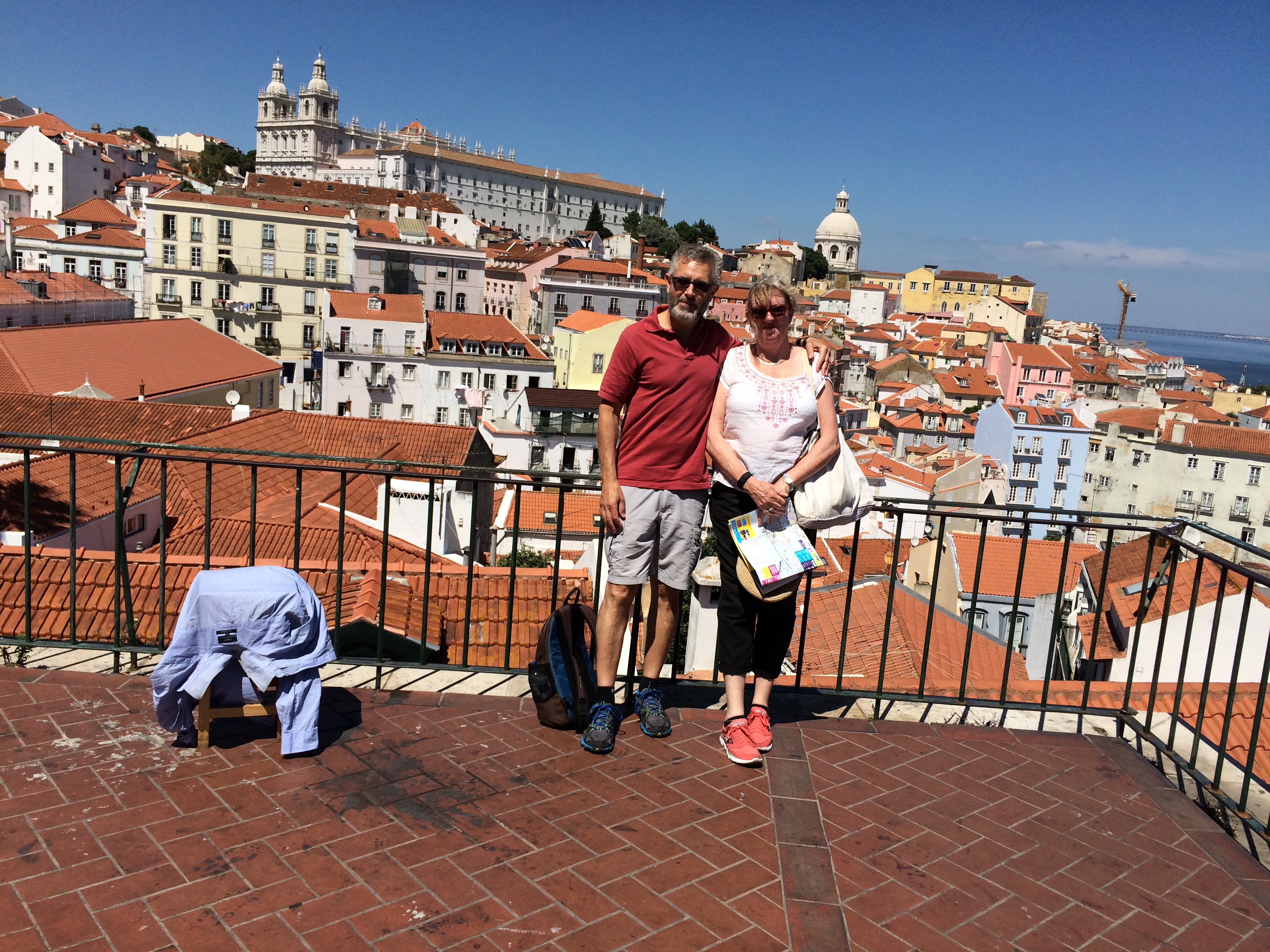
We reach a high point on our tramcar tour where we can’t resist getting off.  It’s Sao Miguel square from which you can stand on a terrace giving a magnificent view of the old city, with the colourful and popular Alfama quarter below and the cathedral and pantheon in the distance.  On the square is a statue of the benevolent figure of St Vincent, the patron saint of Lisbon.  We pay a seller from Monte Verde to take some photos of us.

The magnificent view of Lisbon from Sao Miguel.

The magnificent view of Lisbon from Sao Miguel.


A seller of iPhone selfie holders kindly takes a photo.

A seller of iPhone selfie holders kindly takes a photo.

The benevolent figure of St Vincent, Lisbon's patron saint.

The benevolent figure of St Vincent, Lisbon’s patron saint.

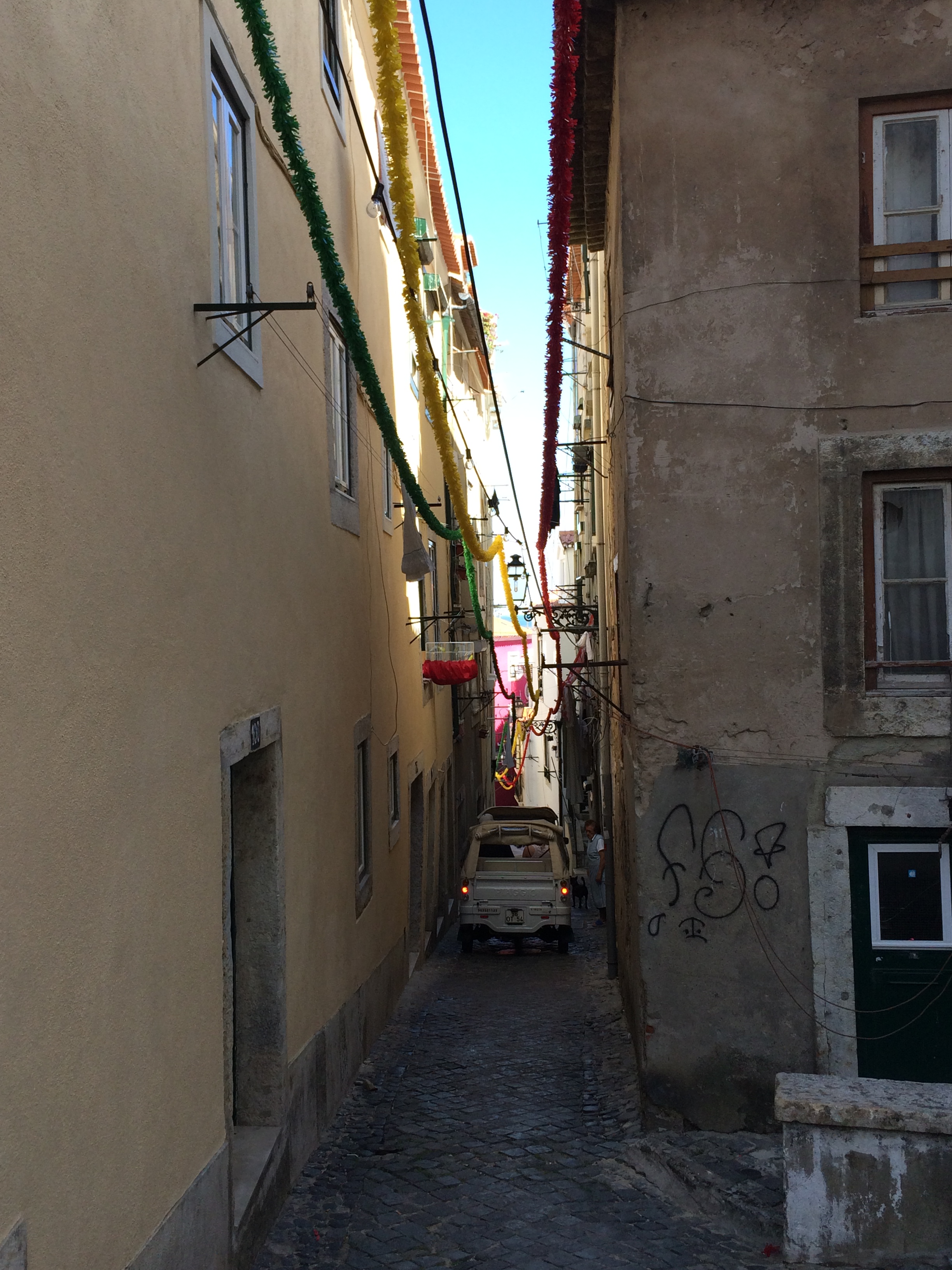
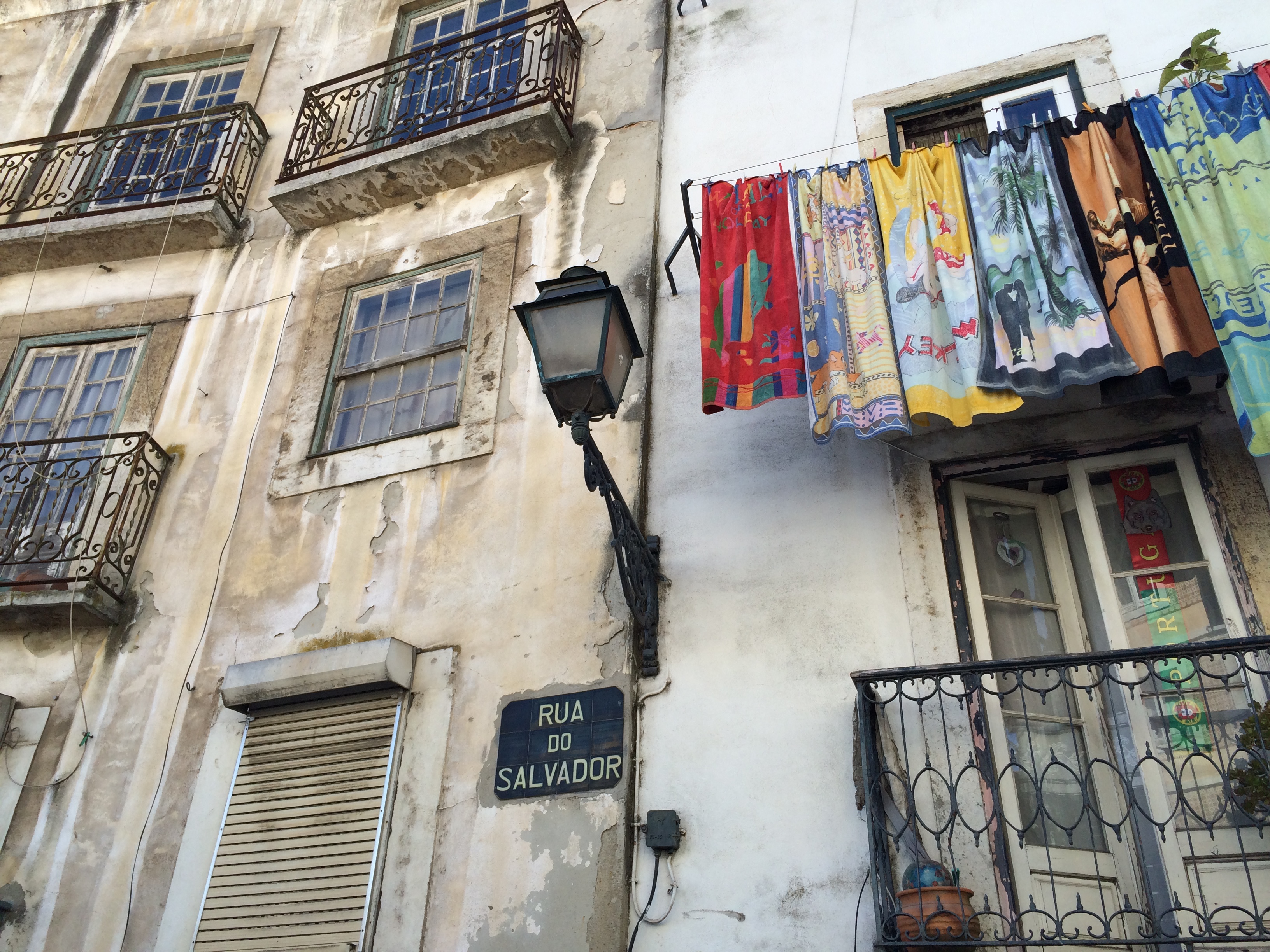
We spend most of the rest of the afternoon strolling through the colourful narrow lanes of the old Alfama district dating back to Arab times.  The lanes are so impossibly narrow it’s hard to see how any form of vehicles can pass through them and yet they do try nonetheless.  We were mesmerized by the sight of a truck trying to pass then getting hopelessly stuck and spending a good 20 minutes maneuvering back again, whilst another motorist was blocking the way behind! Felt a bit like Cairo!

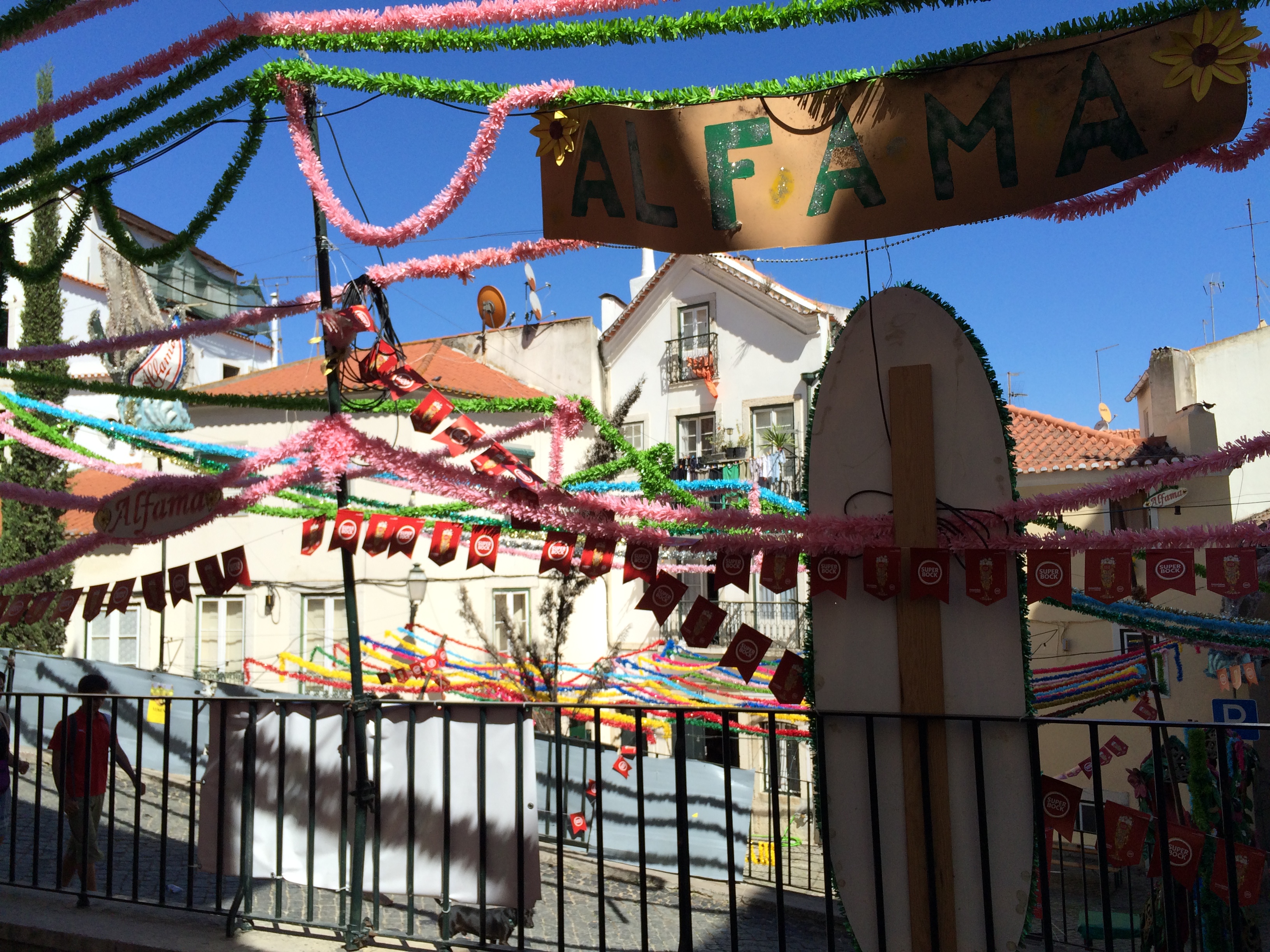
The lanes of Alfama were all bedecked with multi-coloured ribbons and garlands in preparation for the final culmination of a month-long celebration of the feast of St Anthony.

Every now and then, as people were lighting the charcoal and preparing the food for the barbecues that would be cooked in the evening, the melancholy sound of a ‘Fado’ singer would ring out and reverberate around the walls of the old quarter.  ‘Fado’ is the characteristic music of Alfama and is the product of the rich variety of cultural and musical influences Lisbon absorbed through its cosmopolitan history.  It sounded very much like Napolitan or Sicilian music, but apparently, it’s mostly much sadder as many of the themes revolve around the loss and grief experienced by women during Portugal’s naval explorations.

The lanes are impossibly narrow yet cars still try to pass through.

The lanes are impossibly narrow yet cars still try to pass through.

The colourful Alfama district - celebrations were in full flow for the feast of St Anthony.

The colourful Alfama district – celebrations were in full flow for the feast of St Anthony.


As does religion.

As does religion.

A devotion to the arts features prominently.

A devotion to the arts features prominently.


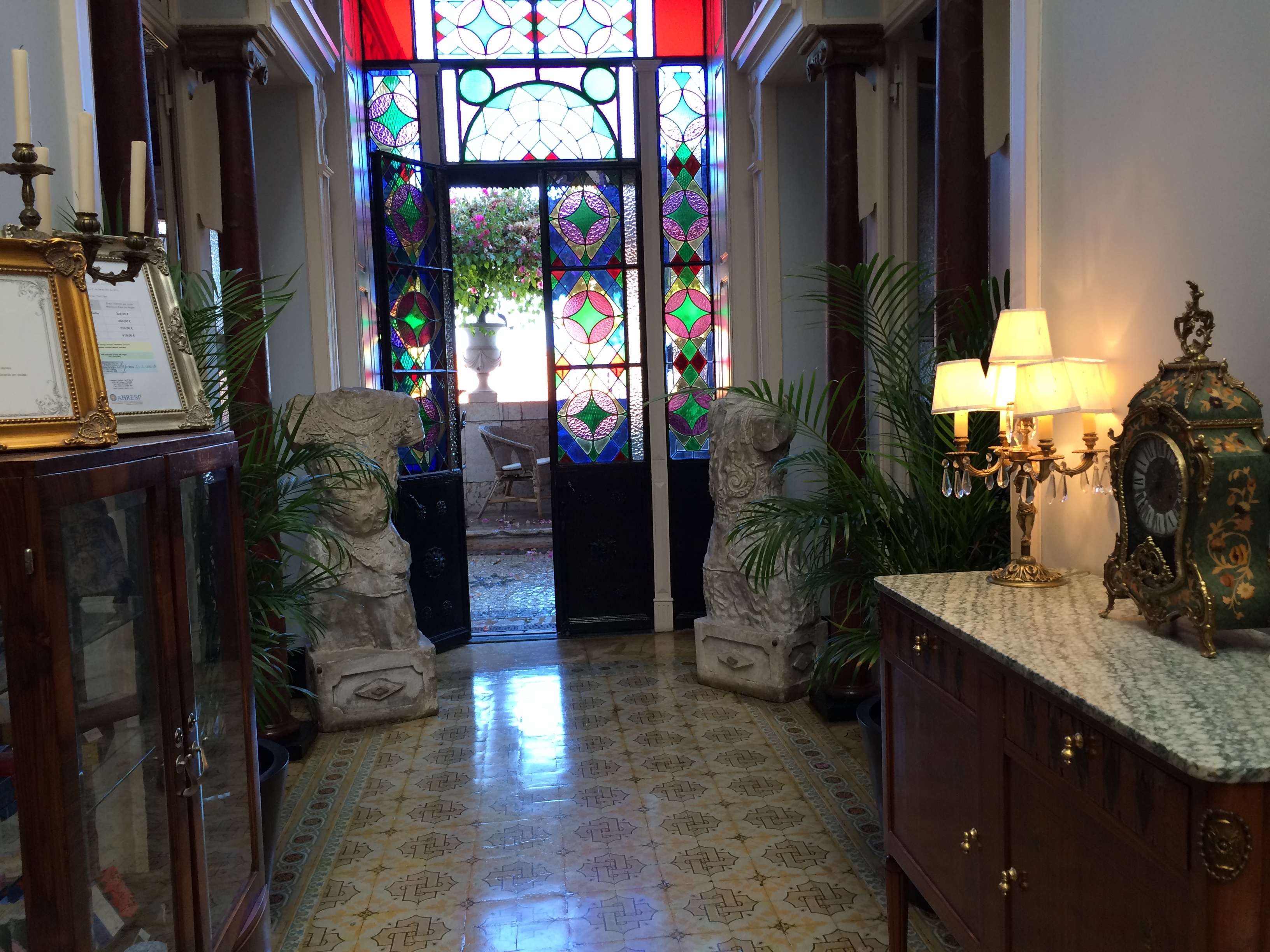
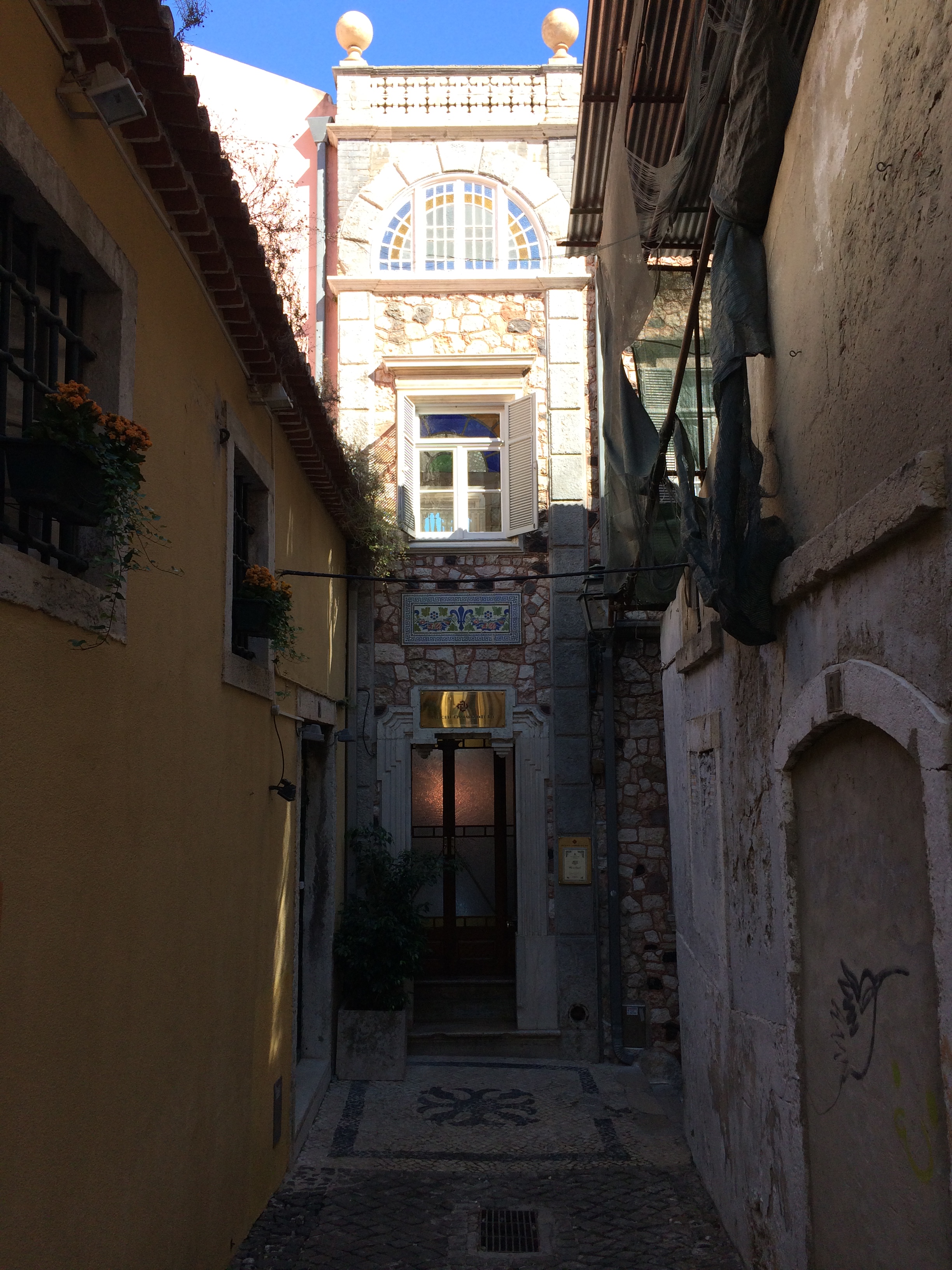
We find a beautiful old house that’s now a hotel – the Palacete Chafariz d’el Rei – so go in to take a look.  We’re greeted by a charming young man, Ivan, who tells us the house was built by a gentleman who made his riches in Brazil.  It’s called The Fountain of Kings because it’s actually built on top of a fountain that no longer works.  Ivan is very keen that we stay there the next time we come, but at prices ranging between 230 and 400 Euros a night we think it’s unlikely but we don’t rule it out completely so as not to disappoint him.

The beautiful hallway in the Chafariz d'El Rei.

The beautiful hallway in the Chafariz d’El Rei.

The elegant but unassuming entrance to the Chafariz d'El Rei Hotel in Alfama.

The elegant but unassuming entrance to the Chafariz d’El Rei Hotel in Alfama.


IMG_3027


IMG_2983

Monday 22nd and Tuesday 23rd June – charming medieval Evora and arrival at Costa de Caparica

Standard

After climbing a gentle hill above the Alentejo plain, we arrive at the town of Evora, where we were staying for the night, at the very comfortable Orbitur Campismo (one of a chain and very well-run).

Evora was a Celtic settlement before becoming an important centre of Roman Iberia.  It declined under the Visigoths (them again!) but flourished as a centre of trade under the Moors – at which time it was called Yabura.  It enjoyed a golden age in the 14th-16th centuries, became an archbishopric and  and got its own Jesuit university.  It was plundered by French forces in 1808 and suffered another decline which ironically protected its fine old medieval centre from development.  Its population today is smaller than it was then.

It’s now one of Portugal’s most beautifully-preserved medieval towns.  The 14th century walls surround narrow lanes, an elaborate medieval cathedral and cloister, columns of the Templo Romano and a pretty town square – the Praca do Giraldo, which witnessed some gruesome scenes during the Inquisition.

It’s now a lively university town again and the restaurants serve Alentajan specialities.

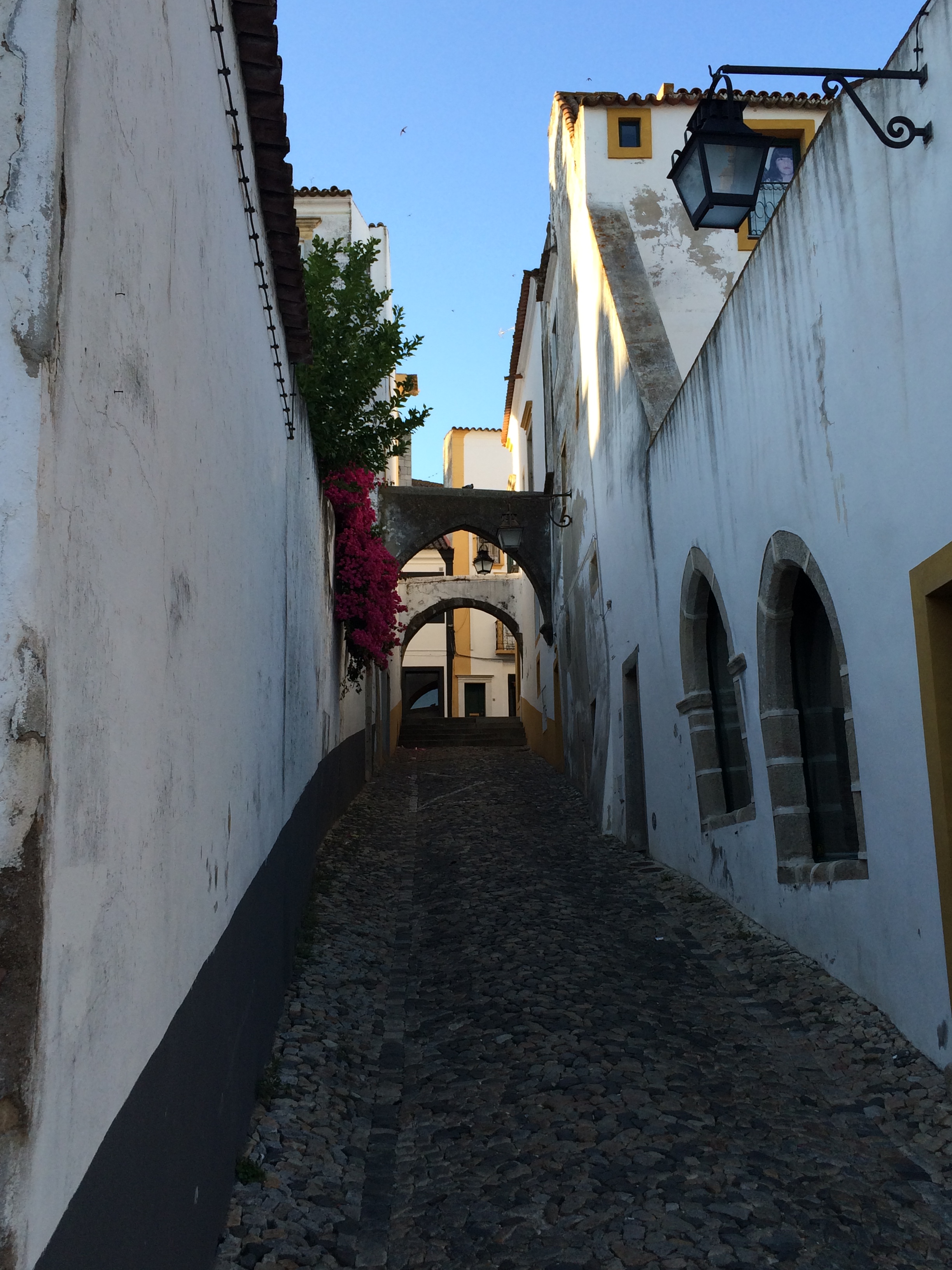
Narrow medieval winding lanes.

Narrow medieval winding lanes.

The medieval Se e Sao Pedro Cathedral and cloisters in Evora.

The medieval Se e Sao Pedro Cathedral and cloisters in Evora.


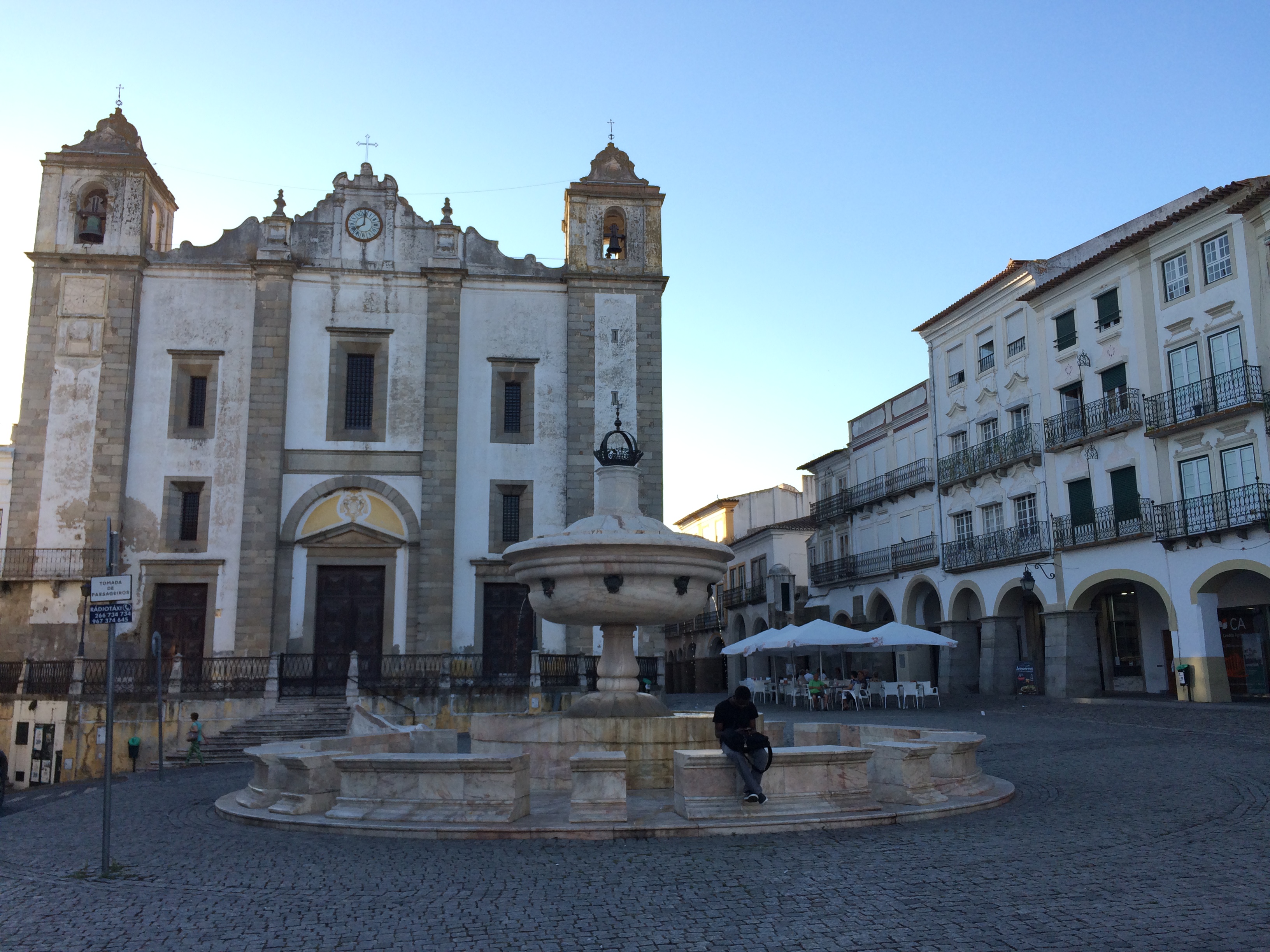
Despite its beauty, the Praca de Giraldo was once the site of gruesome  events during the Inquisition.

Despite its beauty, the Praca de Giraldo was once the site of gruesome events during the Inquisition.

The medieval town square - Praca do Giraldo - with the 'Agencia do Banco de Portugal in the background.

The medieval town square – Praca do Giraldo – with the ‘Agencia do Banco de Portugal in the background.


Remnants of the columns  of the Templo Romano - Evora became an important centre for the Romans.

Remnants of the columns of the Templo Romano – Evora became an important centre for the Romans.


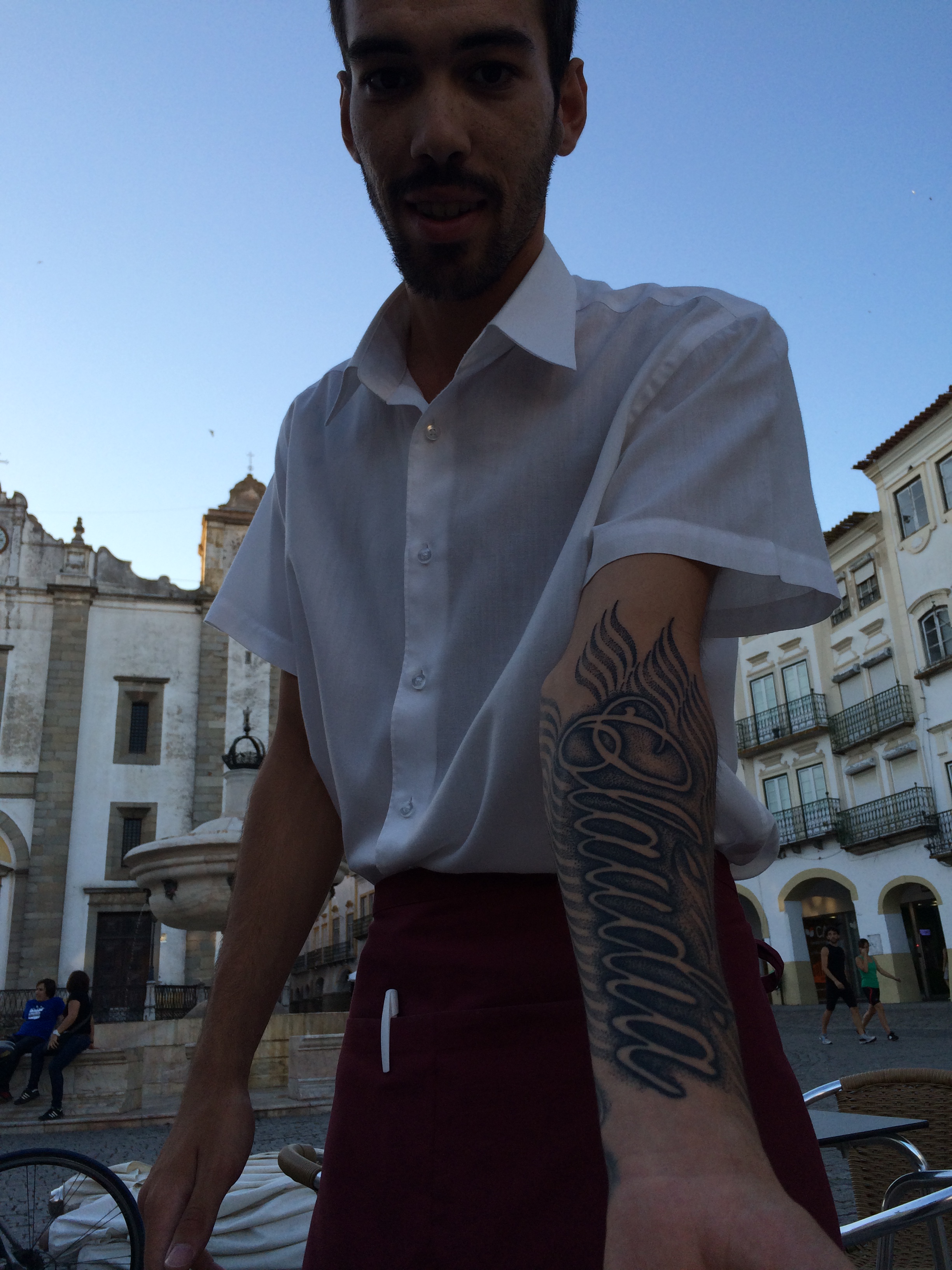
The town is not too far from the campsite so we cycle into town for a ‘shufti’.  A Fair is being held in honor of St Juan, the patron saint of this area so we cycle through but see nothing of particular interest so carry on climbing up the hill.  We happen upon the old cathedral and convent which are closed.  On the steps are gathered a group of young women full of youthful exuberance and laughter.  No doubt students. We arrive at the large square (Praca do Giraldo) and have an aperitif.  Our waiter is very sweet and doesn’t mind being quizzed.  His name is Nunu Rafael Barbosa-…. (didn’t catch the second part of his double-barrelled name but he said it was traditional for everyone to have two Christian names and two surnames, from each side of the family).  He was from Figuera, a large seaside town further north but had moved down to support his separated mother and 8 brothers and sisters (he was the eldest).  The situation in Portugal had improved but was dire 2-3 years ago.  There was no work, cafes and restaurants were closing and people were being thrown out into the street.  He went to France to find work but 6 months later his friends said things had picked up.  He didn’t complete his studies because he needed to work to support his mother and brothers and sisters.  On his left forearm were two tatoos – on one side was Barbosa, his mother’s maiden name and the other, Claudia, his mother’s name.  How sweet – what would be the chances of seeing such demonstrable devotion elsewhere?

Nunu Rafael, with his mother's name, Claudia, tattooed on his left arm.

Nunu Rafael, with his mother’s name, Claudia, tattooed on his left arm.

After climbing higher up still to see the old Roman columns where the old baths once were, we wander around the old winding cobbled lanes and find a restaurant offering Alentejan cuisine.  The Ebora Megalithica is charmingly hidden away and opens up onto a wonderful little inner courtyard.  It’s staffed entirely by students who are now on their summer vacation.  They’re extremely sweet and helpful.  They’re both from the region. One is studying Landscape Engineering and the other Tourism and Hospitality.  The special Alentejan roasted chicken is off as it was so popular so we go for the ‘Bacalhau a Gomes de Sa’, which is basically a fisherman’s pie but with lots of things added to it to make it much more tasty.  As a starter we have antipasti that include ‘farinheira’, a dip that tastes a bit like hummus but is made with flour and ground sausage.  We go for a red wine (a Syrah) from Alentejo called Monte Velho which is excellent.

The Alenteyan fisherman's pie.

The Alenteyan fisherman’s pie – ‘bacalhau a gomez de sa’.

Octopus saladand 'farinheira'.

Octopus salad and ‘farinheira’.


Next morning, the weather has turned a little overcast and quite cool, almost chilly. It’s not unwelcome though it’s cooler than I expected for my swim in the campsite’s impressive pool, which of course, I can’t resist.

We set off for our next destination in the Costa de Caparico on the outskirts of Lisbon, ready to spend a good day in Lisbon the next day.  Brenda has only had one wash since we left almost exactly a month ago now and as we turn into a Brico-Marche for a gas-jar refill (they seem to last about 3 weeks) we take advantage of the jet-wash to give Brenda a good spray. A little apprehensively as the last time we did this in Bayonne it rained for a whole week practically non-stop.

Brenda gets her second jet-wash.

Brenda gets her second jet-wash.

Coming back from the car wash, we spot a great little 2 CV.

Coming back from the car wash, we spot a great little 2 CV.

The road to Lisbon again features the northern Alentejan plain, cork tree forests, the odd line of stork nests, some vineyards and olive groves. We pass through Montemor-o-Novo, Vendas Nova, Palmela, Corrojos and Almada (another name of obviously Arabic origin) until we arrive at the Campismo Orbitur on the other side of the mighty Rio Tejo that from here looks like the ocean.

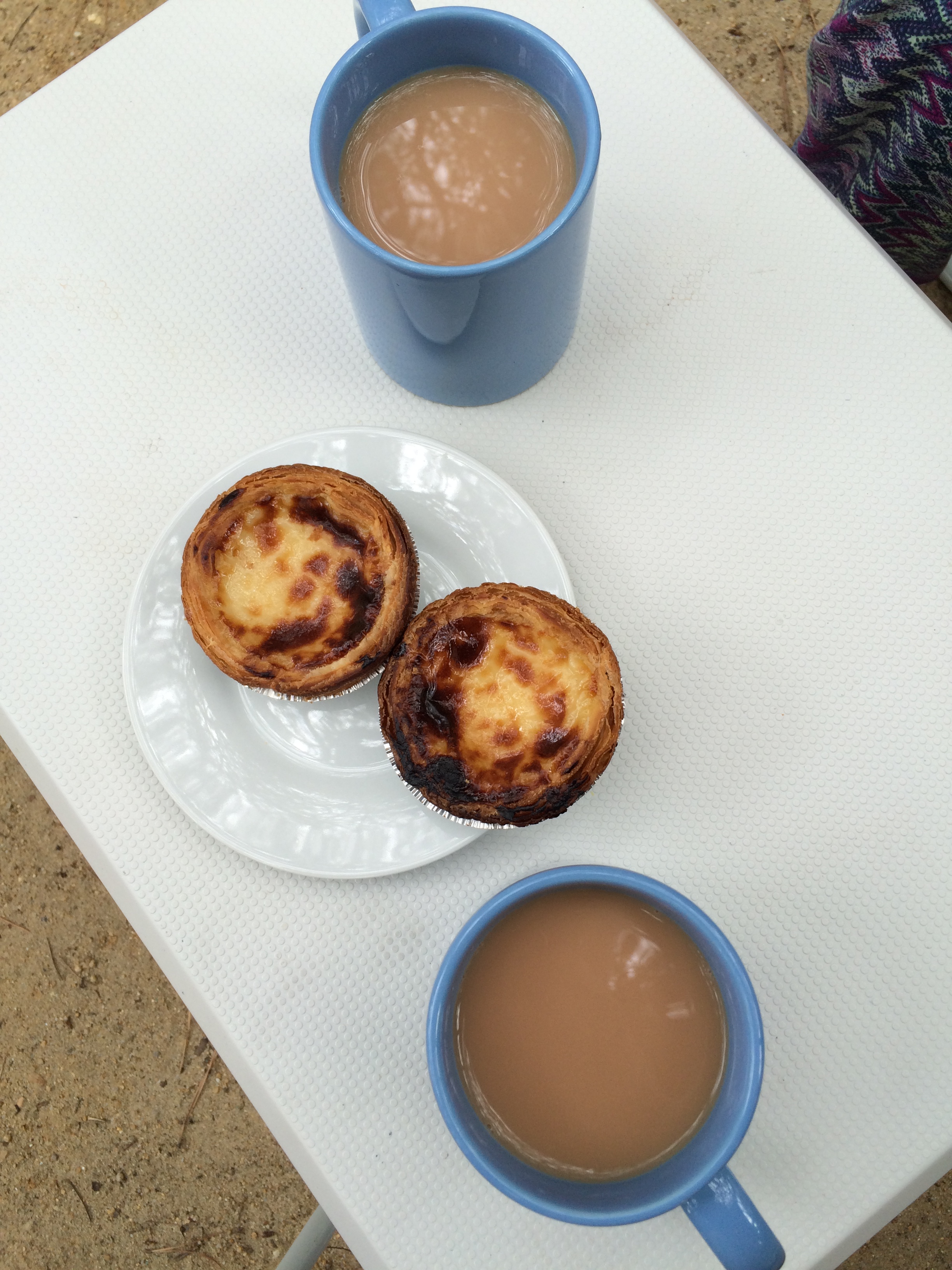
When we arrive, it’s time for tea for two with the ubiquitous ‘pastel de nada’, very tasty Portuguese custard tarts made with flaky rather than shortcrust pastry.

Tea and pastels de nada for two.

Tea and pastels de nata for two.

Saturday 20th to Monday 22nd June – Portugal, finalmente!

Standard

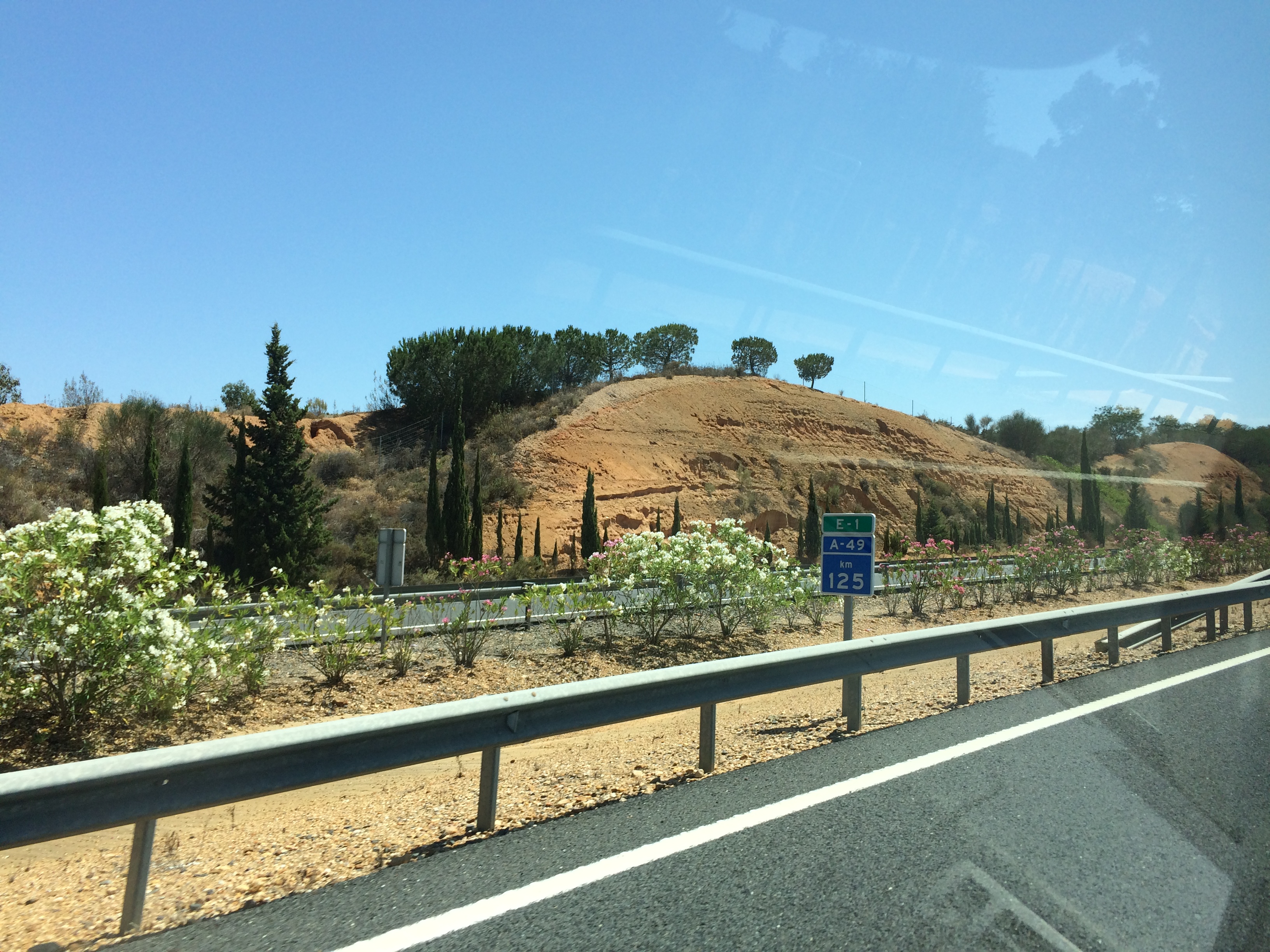
It’s lunchtime by the time we leave Seville and we take a straight road to the border which takes us through San Juan de Aznalfarache, Cartaya, Lepe and Villablanca until we reach the bridge over Rio Cuadiana at Avamonte at just after 3pm.

Driving past Cartaya.

Driving past Cartaya.

Avamonte.

Avamonte – almost at the border.

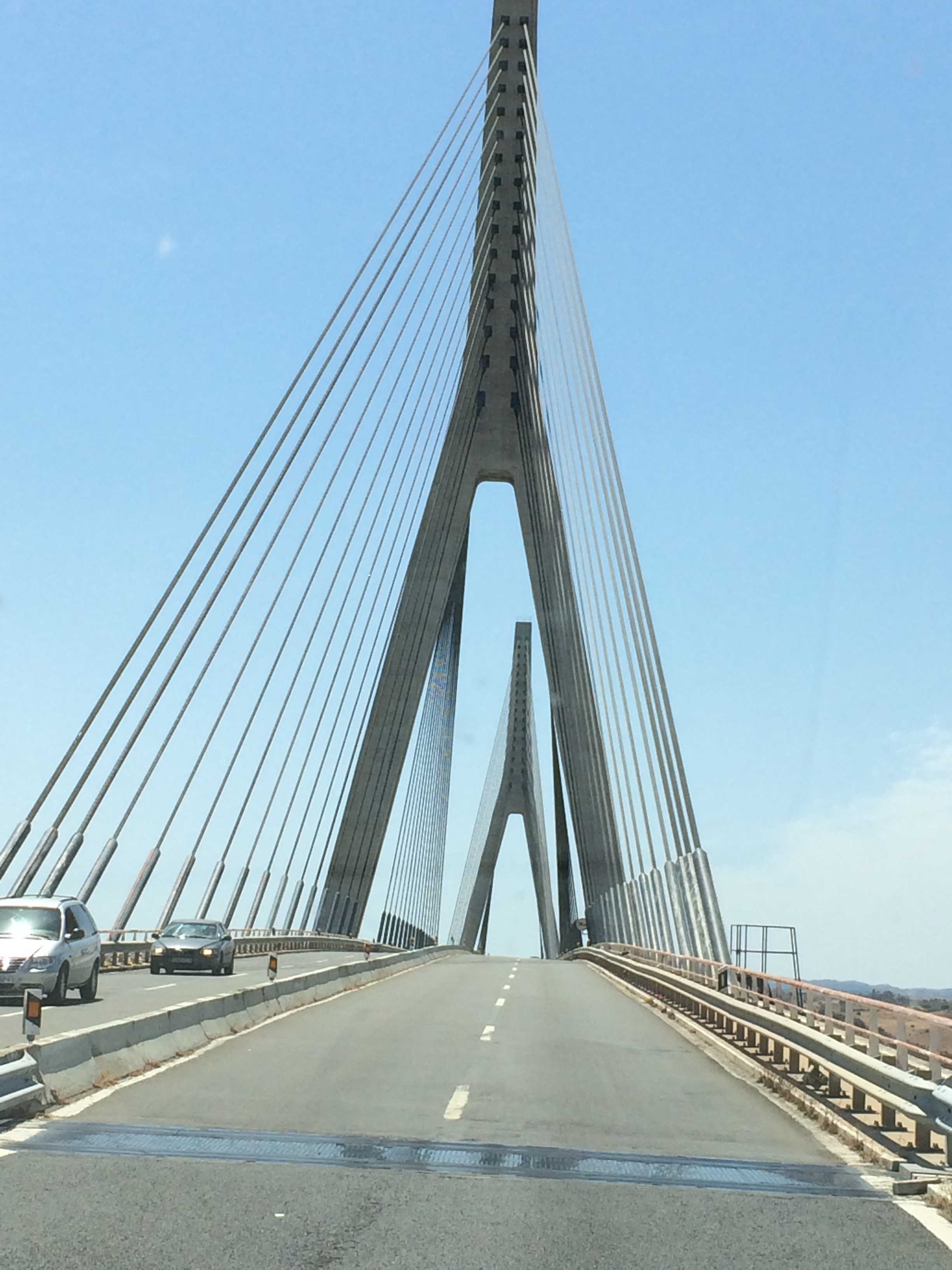
The bridge over Rio Guadiana at Avamonte crossing over to Portugal.

The bridge over Rio Guadiana at Castro Marim crossing over to Portugal.

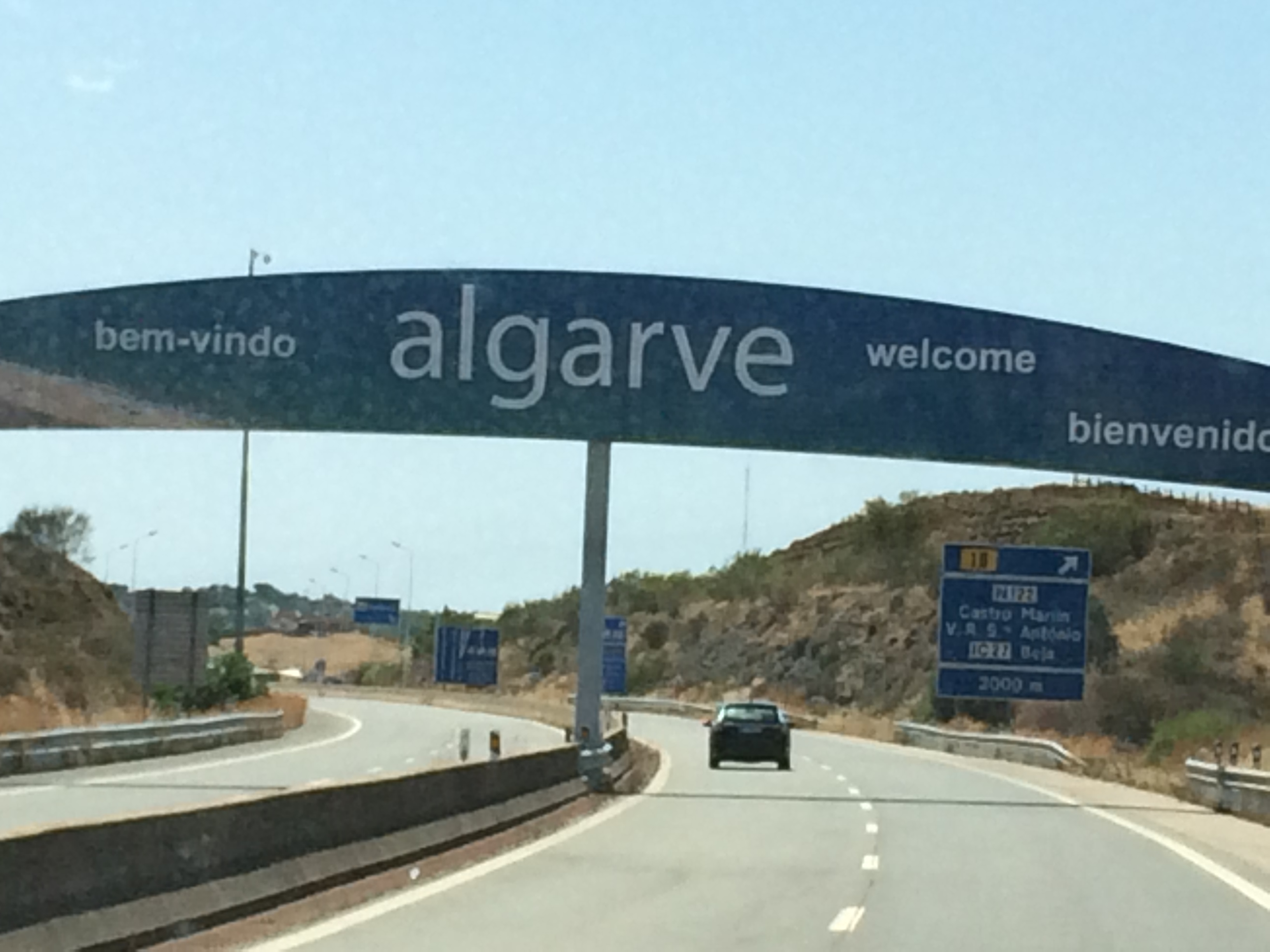
Over the bridge at Castro Marim and a banner over the road wishes us “Bem-vindo Algarve”.   It feels exhilarating – this is a place neither of us has been to before and we’re also reaching the furthermost western point in our journey. It feels at once like we’ve broken a psychological barrier and that the real adventure has begun.

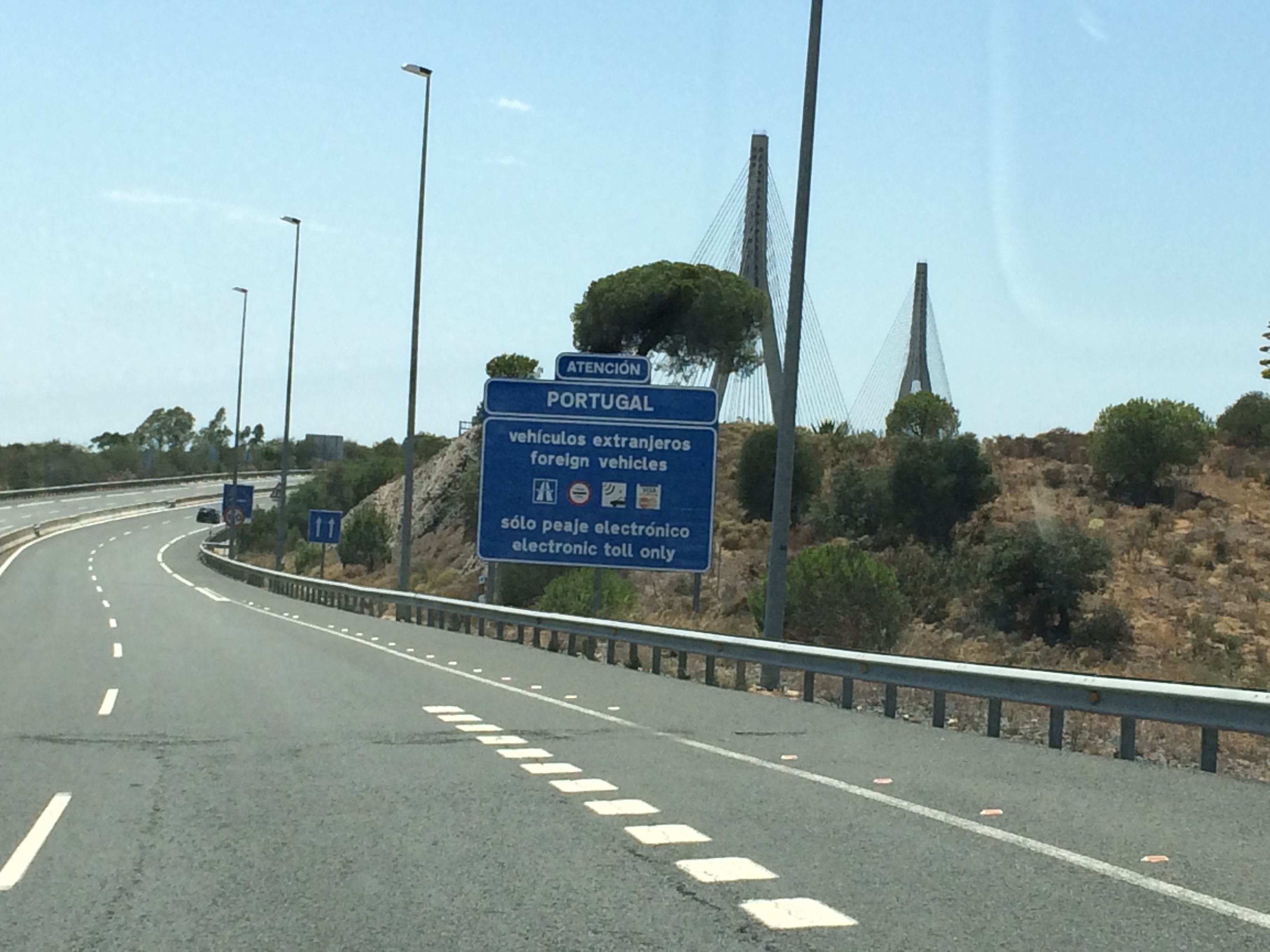
Arrival in Portugal.

Arrival in Portugal.

And in the Algarve.

And in the Algarve.

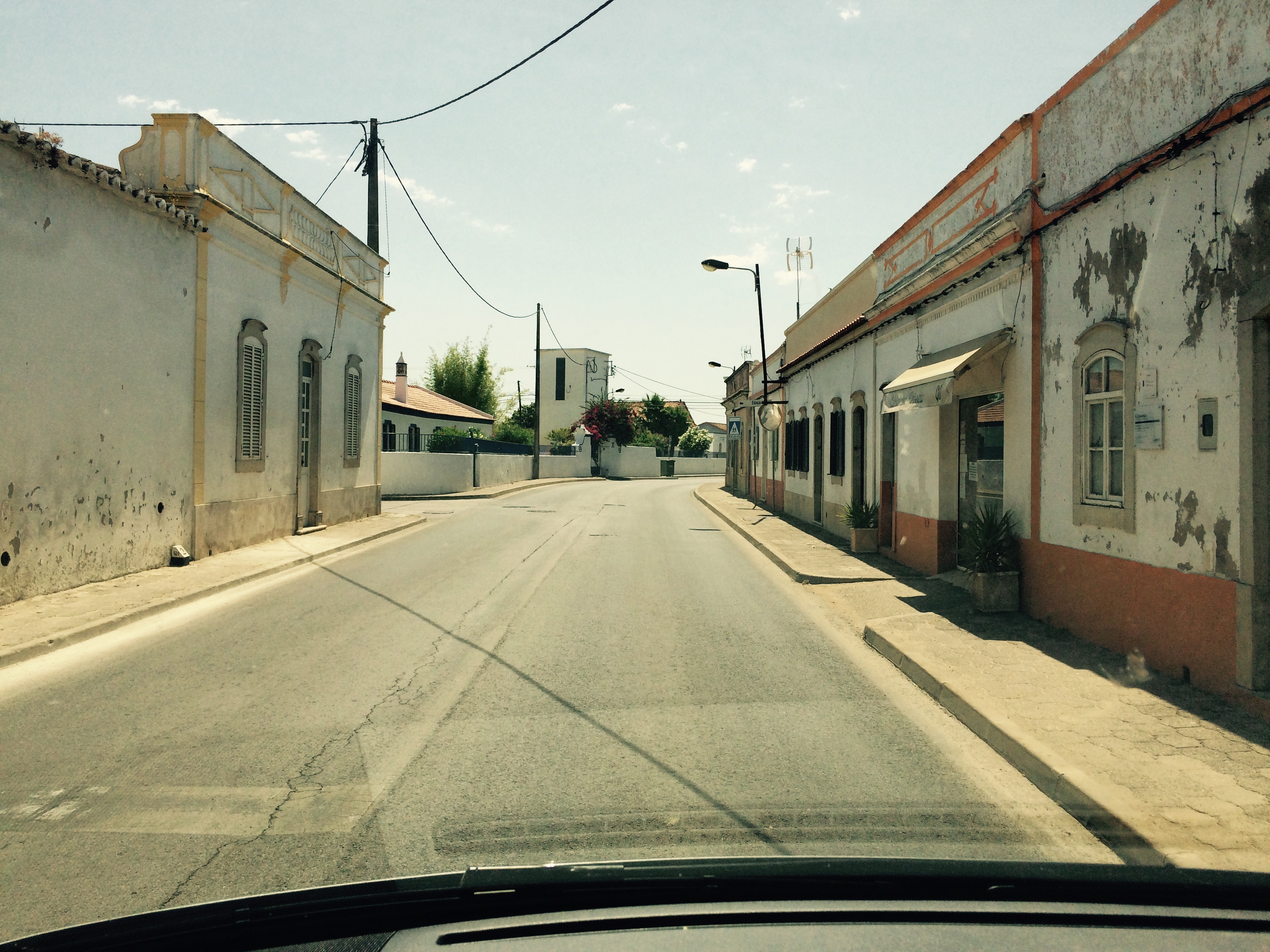
We drive past the small towns of Tavira and Luz before arriving at Olhao where we were to camp for the next two nights. Though basic, it’s a friendly site, close to a fishing village and a popular beach on a lagoon.

Driving through slightly shabby Luz.

Driving through slightly shabby Luz.

The simple and friendly 'Campismo' at Olhelo

The simple and friendly ‘Campismo’ at Olhao.

Miguel welcomes us and is quite chatty. He’s amused to find out my name as his full name is actually Flavio Miguel. There is a town near Porto in the north where all the Flavios (or ‘Flaviencen’) as he says, come from. Naturally, we decide we must try and visit it.  He also talks about what a tough time Portugal has had economically, but the Algarve has done better, deriving half its revenue from tourism and the other half from fishing.  The campsite has done well recently and the latest big influx has come not from the Dutch but from the French – and they come with very smart and expensive campervans – are they selling their houses and just travelling around?  I’d do that if I could says Flavio Miguel.

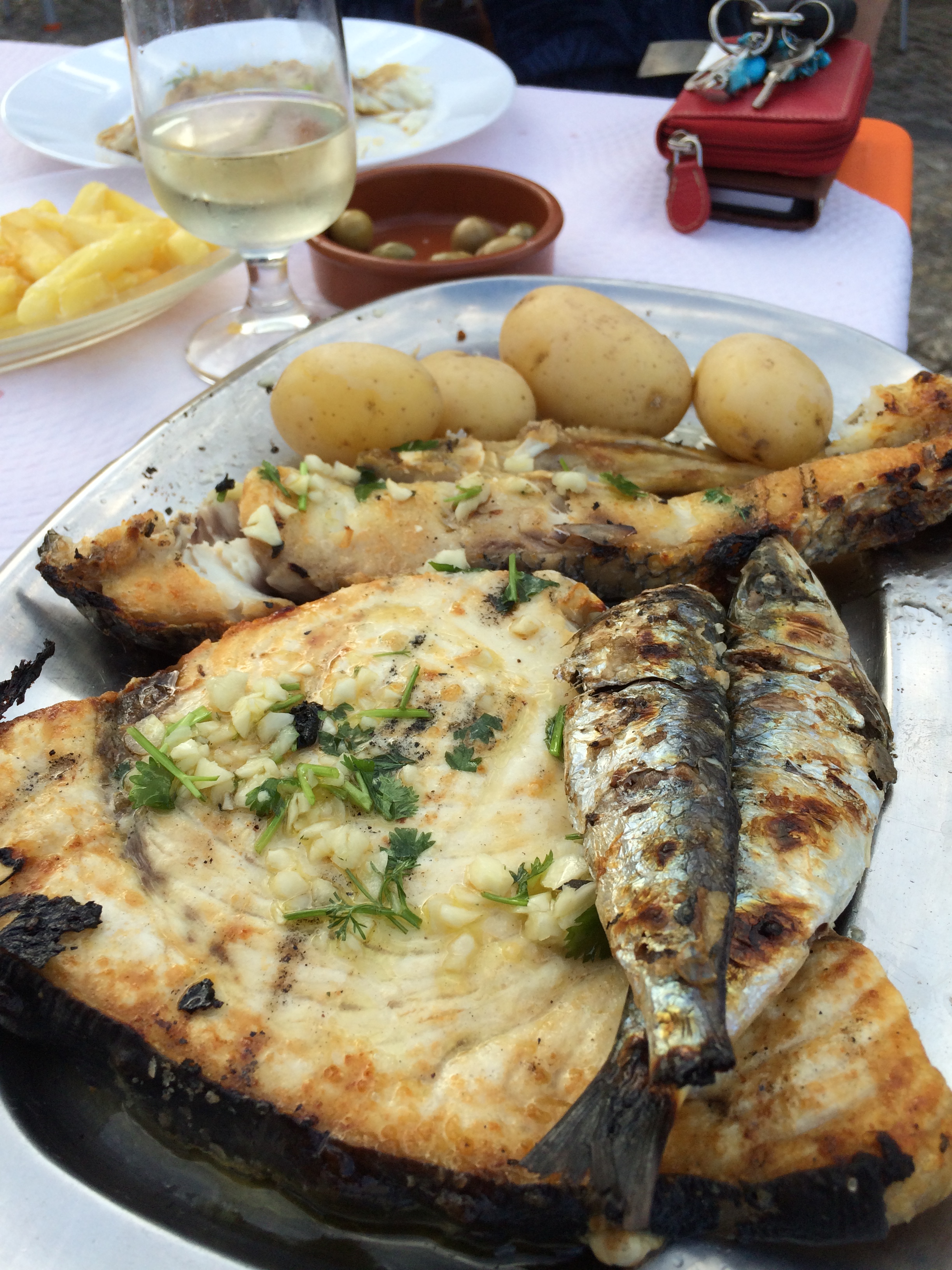
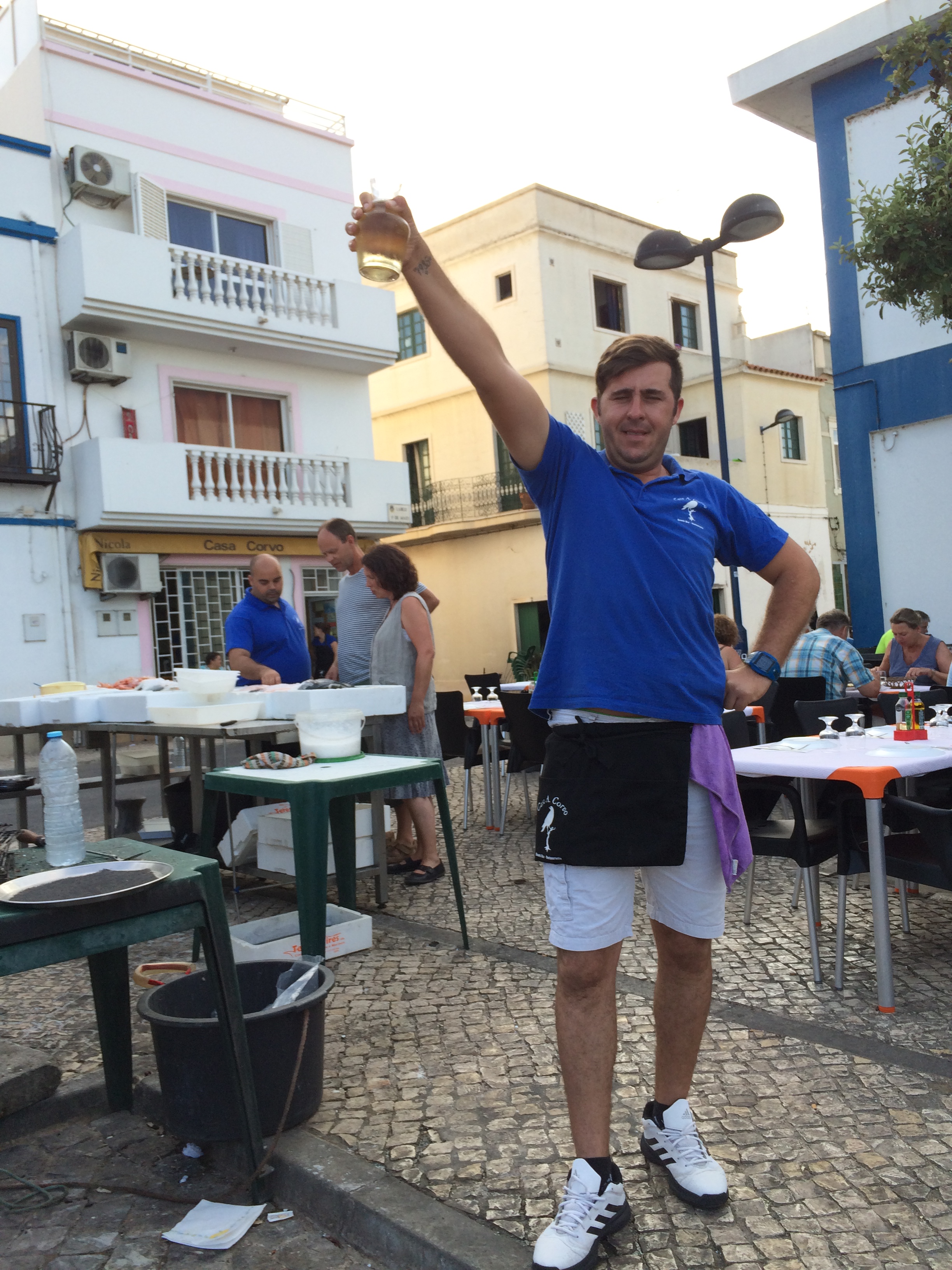
Once set up and hooked up, we head for the lagoon for a refreshing dip. Though nearly 6pm the beach is teeming with people in a sea of multi-coloured umbrellas. The water is a little colder than we’d expected but it revives us. Then it’s time for a wander through the fishing village where we have an excellent simple grilled fish meal from a selection of fresh fish we’re asked to choose from.   ‘Batata frita o cusida?” (chips or boiled potatoes?) asks our jovial waiter whose name is actually ‘Joka’. (Interesting that they say ‘batata’ (as in Arabic) rather than ‘patata’. When we ask for the bill he thinks for a while then says 20. Not bad at all.

Olhao village.

Olhao village.

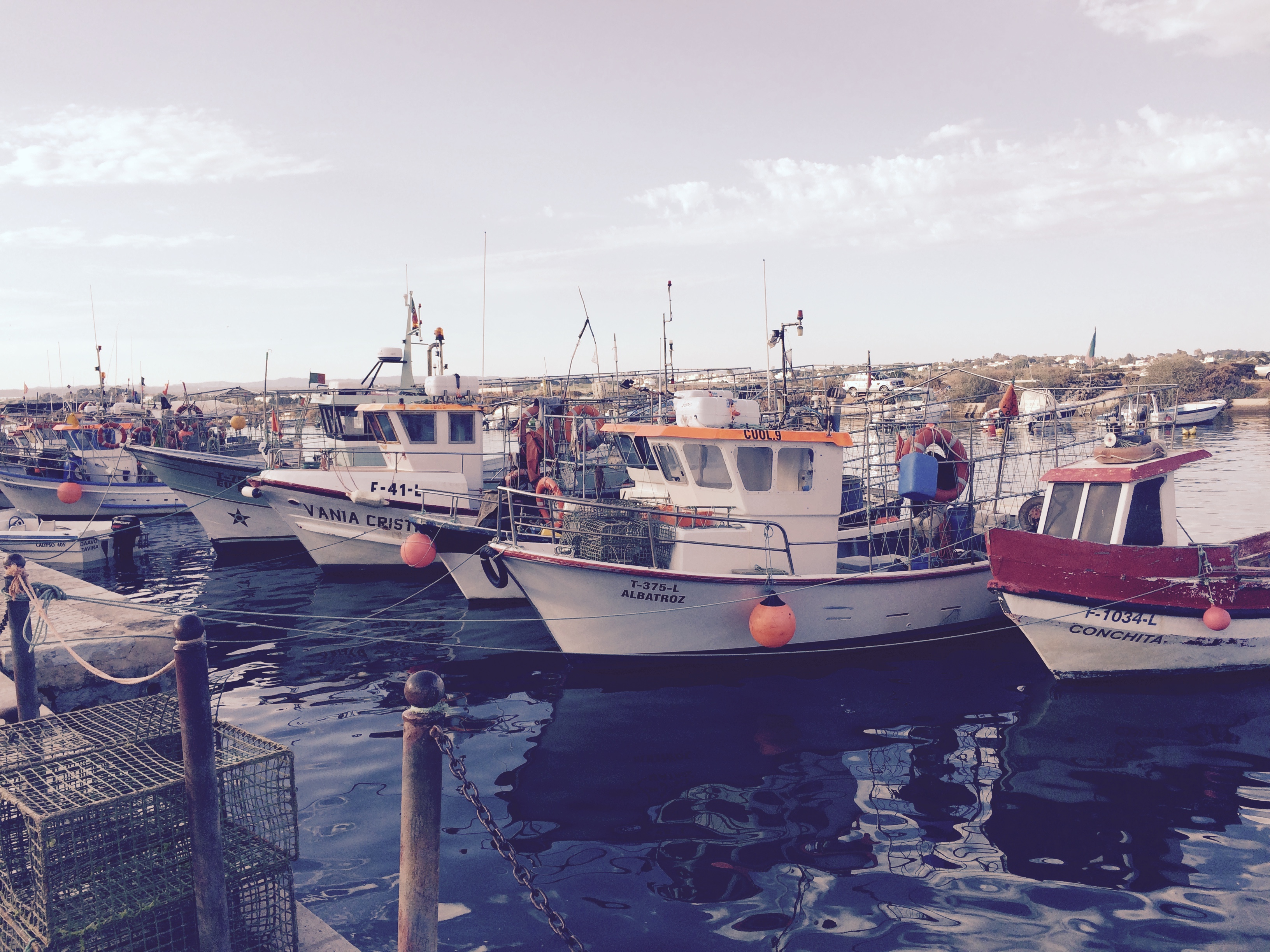
The picturesque fishing port of Olhao.

The picturesque fishing port of Olhao.

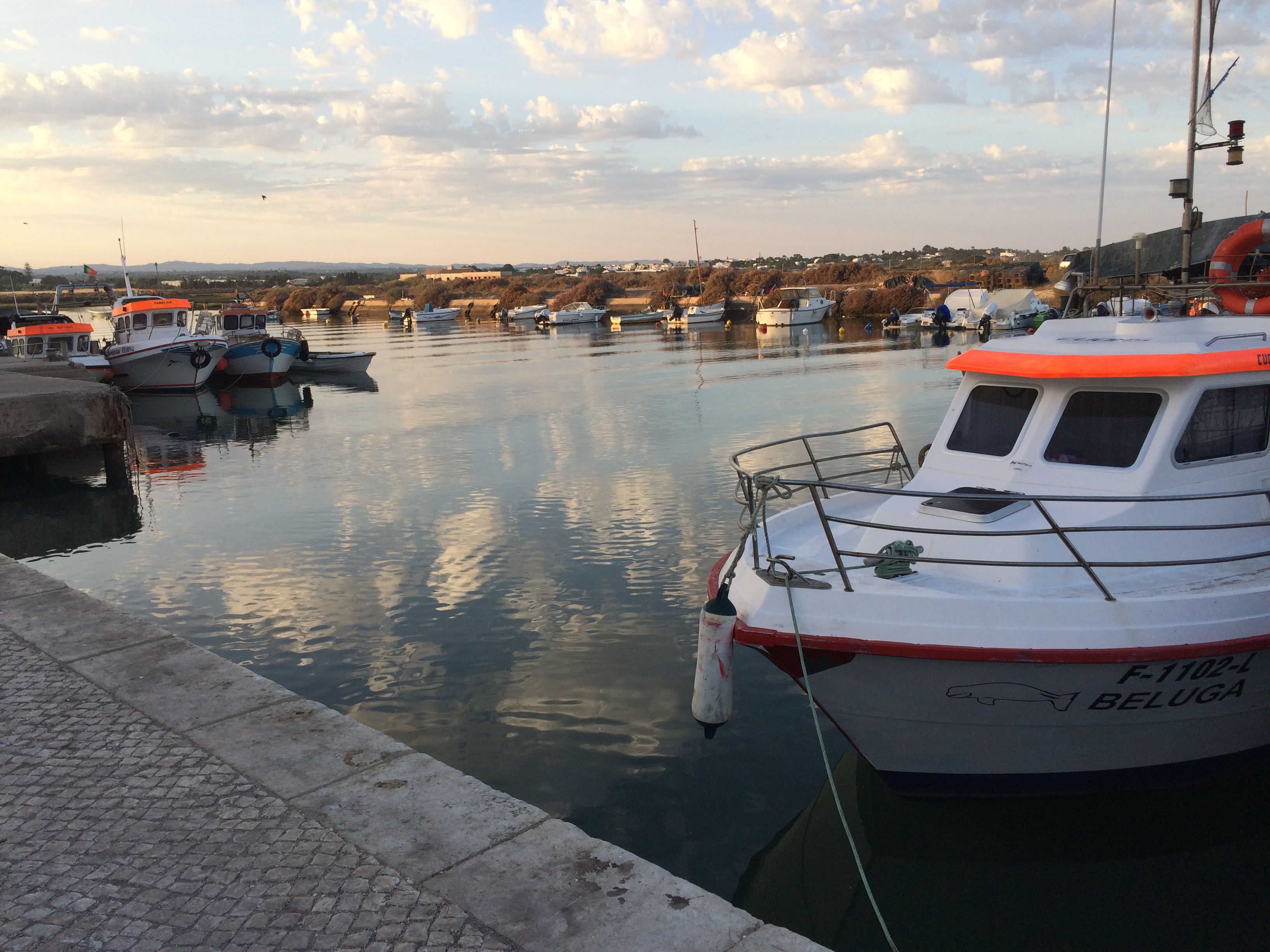
Olhao fishing port at sunset.

Olhao fishing port at sunset.

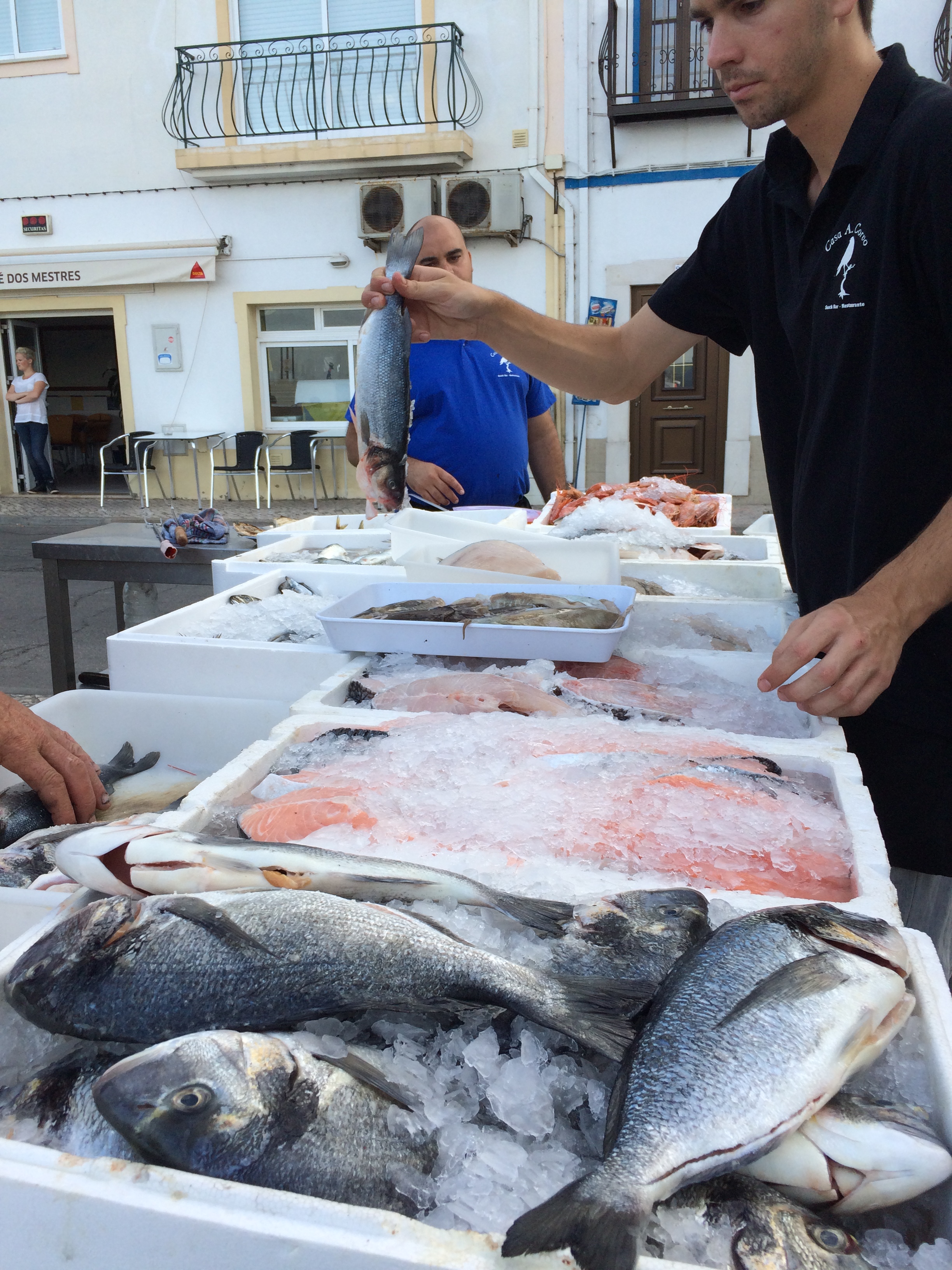
We must select our fish for grilling at the restaurant.

We must select our fish for grilling at the restaurant.

And now grilled, with chopped coriander and garlic and 'batata cusida'.

And now grilled, with chopped coriander and garlic and ‘batata cusida’.

Joka our playful waiter.

Joka our playful waiter.

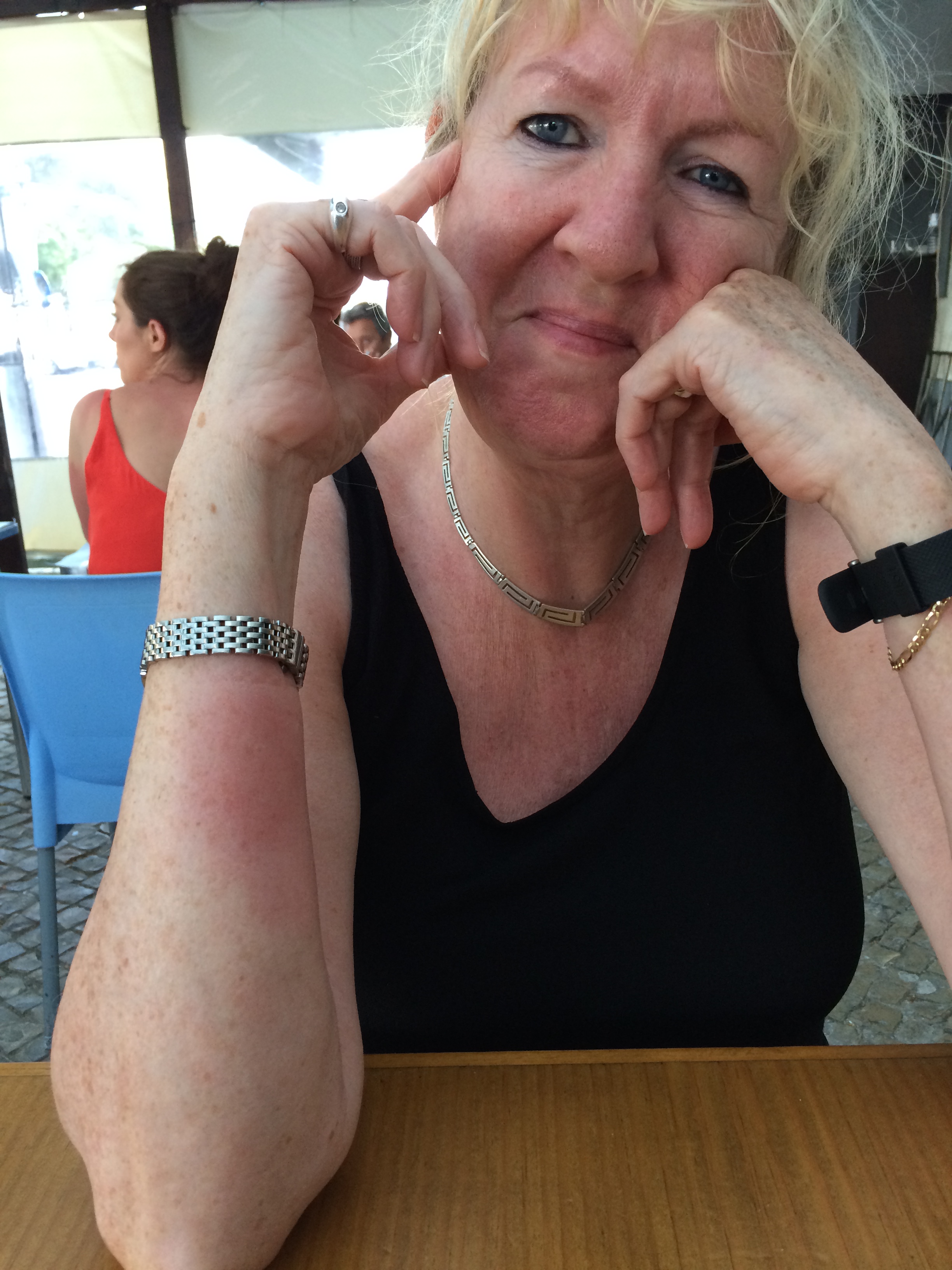
The next day is spent ‘chilling’ and generally recharging our batteries. Longer swim in the morning followed by some catching up with the blog. The tide is low so I swim to the other side of the lagoon where men are squatting digging up cockles from just below the wet black sand. The low point of the day is when Judith is stung on the arm by a wasp and has a hyper-reaction. The ‘Allergex’ cream we’d brought from Egypt helps as do the anti-histamine tablets but it takes a full 3 days for the redness and swelling to subside. Poor thing!

Judith's nasty wasp sting.

Judith’s nasty wasp sting.

Cool-looking 'Quattrelle' spotted on our way back to the campsite.

Cool-looking ‘Quattrelle’ spotted on our way back to the campsite.

On Monday 22nd, we set off straight due north for Evora, which is roughly half way to Lisbon. In doing so we’re sadly missing out the south west corner of the Algarve as it would take too long, and we decide it would only be beaches and holiday destinations anyway. (Later, we meet some Austrians at the campsite in Evora who tell us they’ve come from there and it is spectacularly beautiful. Ah well.)

The Tomtom frustratingly takes us almost all the way back to the Spanish border before turning us north again. We travel through the northern Algarve and then the plains of Alentejo on fairly empty roads and past forests and forests of cork trees (or Quercus suber to use their proper botanical name) – in fact, apart from some eucalyptus, the odd vineyard and olive grove, there was nothing but cork trees the entire way, clearly cultivated, some young, others quite old. They look like small oak trees (they are in fact a type of oak) and some looked naked with their bark stripped off from the ground to three quarters of the way up. It was clear to see why Portugal produces 50% of the world’s cork.

Forests of cork trees on the Alentejo plains.

Forests of cork trees on the Alentejo plains.

Other interesting facts about cork trees:

  • They’re also found in Spain, Algeria, Morocco, France, Italy and Tunisia.
  • They have a thick insulating bark that is waterproof and also resistant to fire so protects the tree from forest fires.
  • When the bark is extracted, a new one grows making it a renewable resource.
  • Harvesting does not harm the tree, provided it’s not stripped too deep.
  • It can be harvested every 9-12 years and a tree can be harvested about 12 times in its lifetime.
  • Harvesting is done entirely by hand, using a small axe.
  • Cork trees live to about 150-250 years.
  • It’s illegal to cut down cork trees in Portugal without permission from the Ministry of Agriculture.
  • The European cork industry produces 300,000 tonnes a year at a value of Euros 1.5bn and employing 300,000 people.
Young cork trees near Beja.

Young cork trees near Beja.

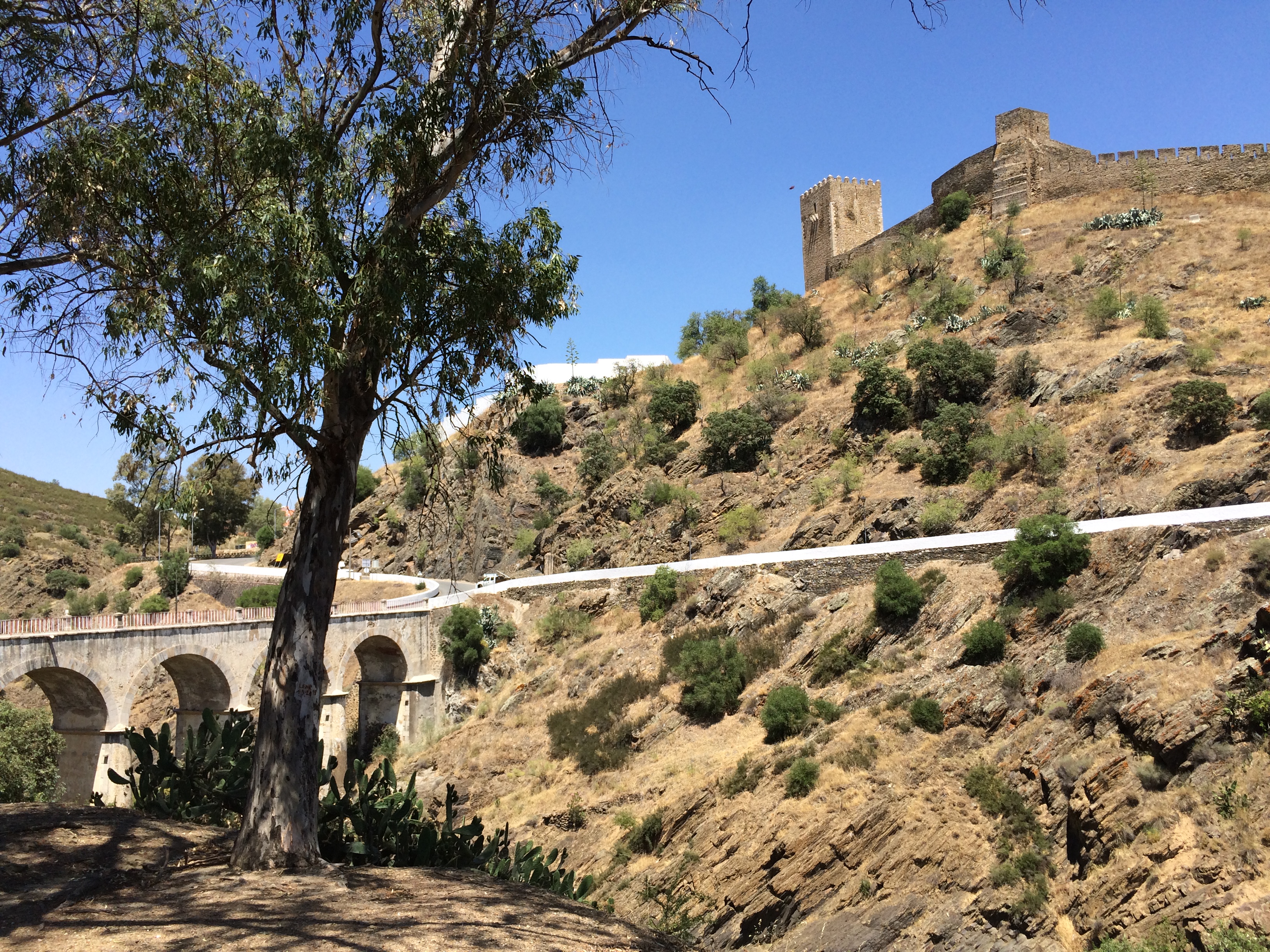
The route takes us through the beautiful and historical little town of Mertola situated in an area of outstanding beauty. It has a fort which was originally built by the Romans, reinforced by the Arabs and finally the crusaders as well as a church which still has essential features (like the mihrab) of the mosque it once was.

The charming little old town of Mertola with the old Roman/Arab/crusader fort high up.

The charming little old town of Mertola with the old Roman/Arab/crusader fort high up.

We stopped for an ice cream (‘gelado’) which we’re starting to do more and more frequently we’ve noticed.

The gelado seller in Mertola.

The gelado seller in Mertola.

We seem to be eating more of these!

We seem to be eating more of these!

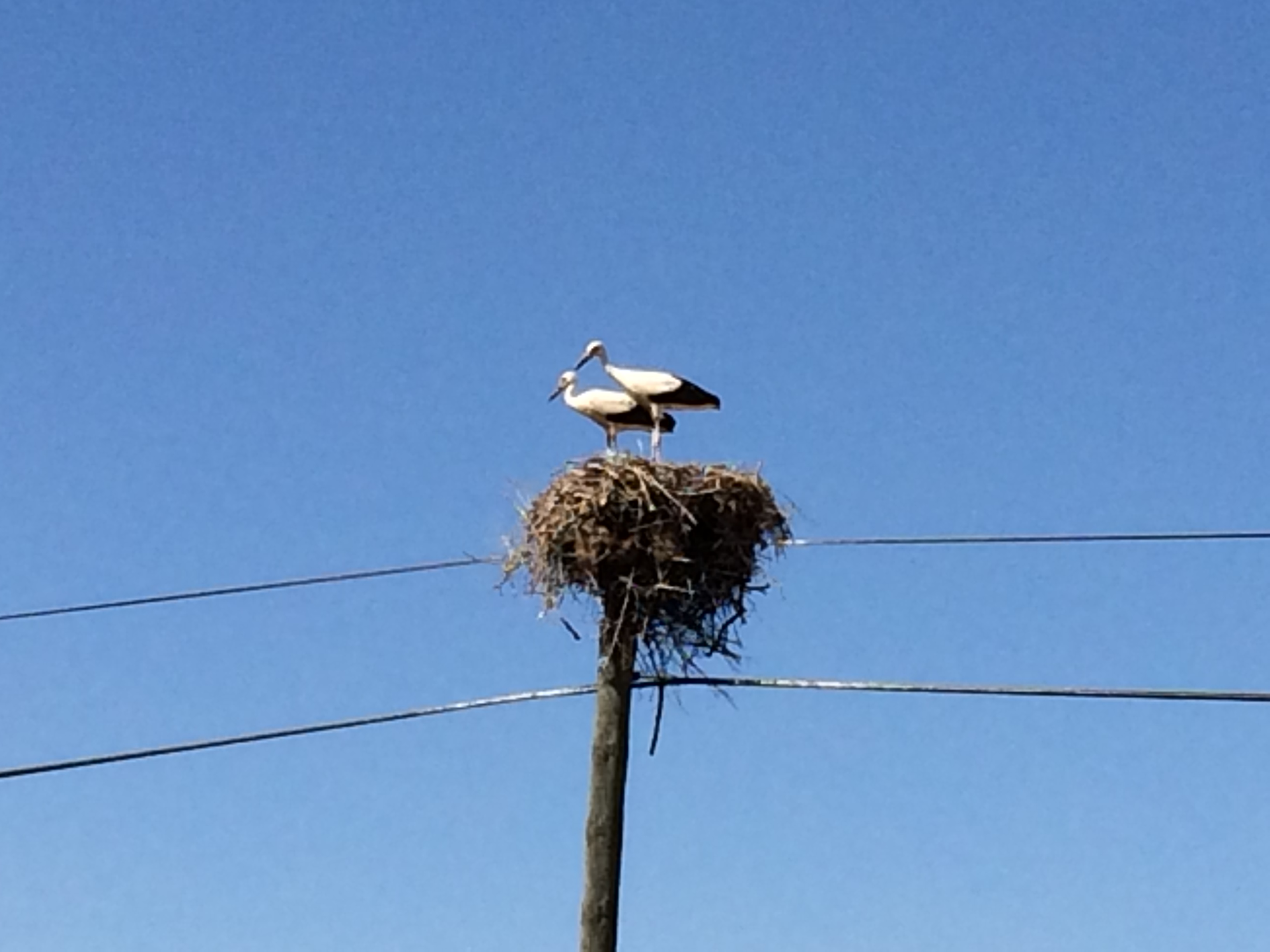
Apart from cork trees, the other interesting feature of this region, at this time of year at least, are the storks nesting on top of telegraph poles. The sight of them perched on top of a whole line of telegraph posts is quite astonishing.

A line of stork nests along the side of the road.

A line of stork nests along the side of the road.

Seen from closer us, there was always a pair of storks but sometimes three storks in a nest.

Seen from closer up, there was always a pair of storks but sometimes three storks in a nest.

The road continues, empty and peaceful, to the celestial sound of Mozart’s Agnus Dei. We drive past Beja, Vidigueira, Portel (where we see a large estate probably belonging to a ‘cork baron’) until we reach our campsite at Evora.

Evora, called Yabura by the Arabs.

Evora, called Yabura by the Arabs.

Friday 19th June – to Seville

Standard

We must confess straight away to the title here being a little misleading, because shamefully, we didn’t give Seville enough time. We were still feeling shattered from our exertions in Granada and our bad night in Olvera the night before and my back was playing up again – all I could think of was of finding somewhere comfortable and cool to lie down and rest my back. And, it was getting very hot.

On the way, we stopped briefly in the little town of Olvera to buy some bread.  In the bakery, we’re tempted by some doughnut-like sugar-dusted pastries which we’re told are called ’empanadillas’ (little ’empanadas’).  We buy four and have them later with a cup of tea – they’re quite tasty, if no doubt cholesterol-heavy.  Olvera seems livelier than any other small town we’ve driven through so far and there’s an old fort at the top of the hill.

'Empanadillas' - tasty cinammon-flavoured little doughnuts.

‘Empanadillas’ – tasty cinammon-flavoured little doughnuts.

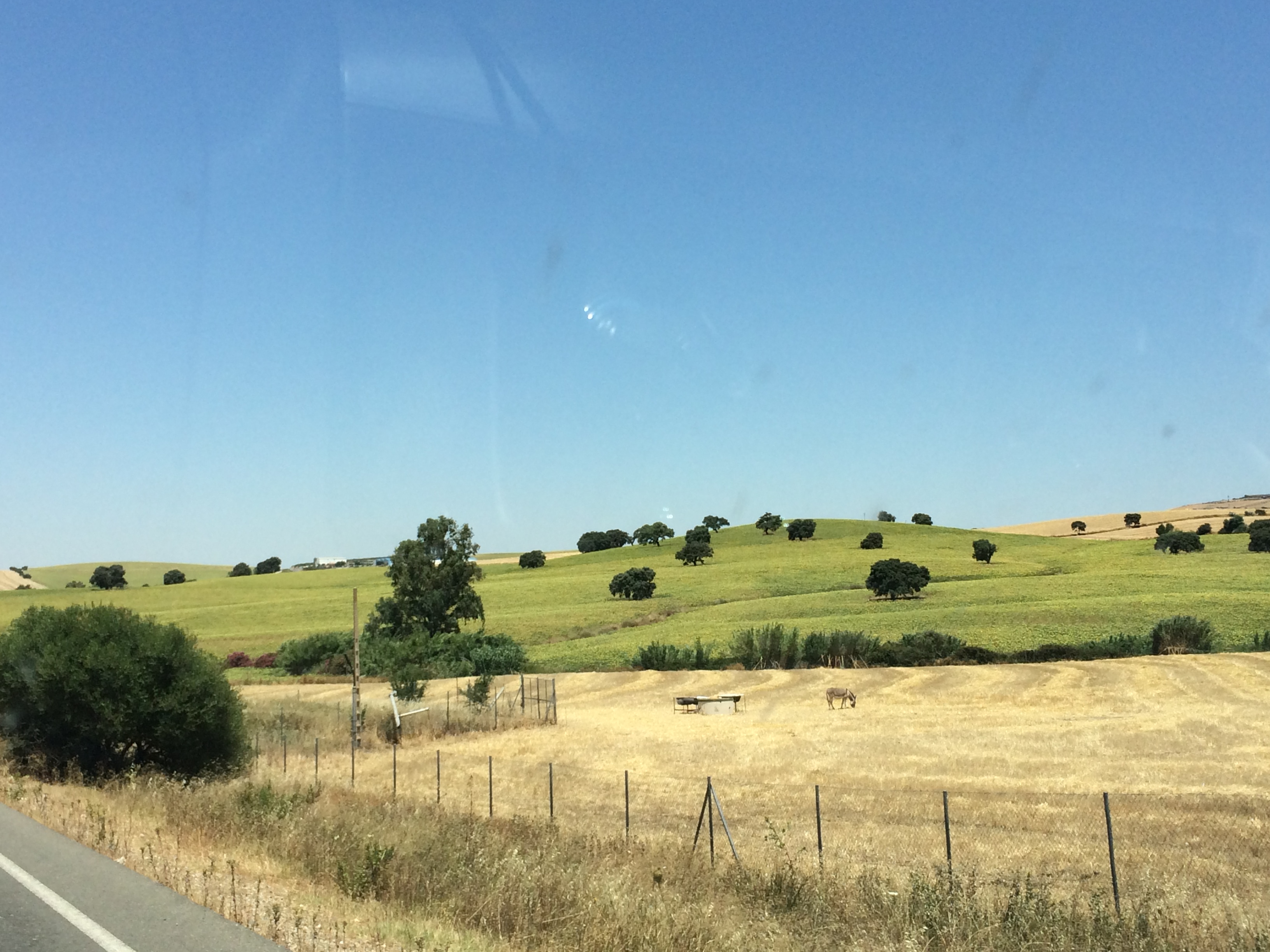
Beyond Olvera, the road to Seville is fairly flat though around El Coronil we appear to be going through Teletubby land as Judith says as well as sunflower fields where the sunflowers oddly seem to be facing away from the sun and drooping downwards.

'Teletubby' land near El Coronil.

‘Teletubby’ land near El Coronil.

Sunflowers facing away from the sun.

Sunflowers facing away from the sun.

There seemed to be no decent campsites in or around Seville. Judith found a good offer at the Andalusia Palace Hotel in a district of Seville called ‘Heliopolis’ – we clearly gravitate naturally towards Heliopolises – and by 5pm we had parked (abandoned?) Brenda round the corner and checked into the quite large, very busy and non-descript modern hotel.

The Andalus Palace Hotel in Heliopolis, Seviile.

The Andalus Palace Hotel in Heliopolis, Seviile.

Seville’s history follows a by now familiar pattern. It was an important river port for the Romans lying on the Rio Guadalquivir which was navigable to the Atlantic 80 kms away.   In Muslim Spain, it was called ‘Ishbiliyyah’ and became the most important of the small Muslim kingdoms (‘taifas’) following the collapse of the Cordoba caliphate. For a time, the poet-king Al-Mutamid presided over a tolerant and hedonistic court in the Alcazar Palace. The strict Almohads took over in the 12th century and made Seville their capital. The city then fell to Fernando III of Castille in 1248. It thrived when it was granted the monopoly of all commerce with the Americas and in the 16th century became a rich and cosmopolitan city. Tragically, a plague hit the city in 1649 and killed half the inhabitants.   The river also became silted up and Seville lost the trade with the Americas to Cadiz after which it fell into decline. In the 1980s it became the capital of the new autonomous region of Andalusia and the Expo 92 exhibition brought it millions of visitors. It’s now Spain’s 4th biggest city and has a varied economy based on tourism, commerce, technology and industry.

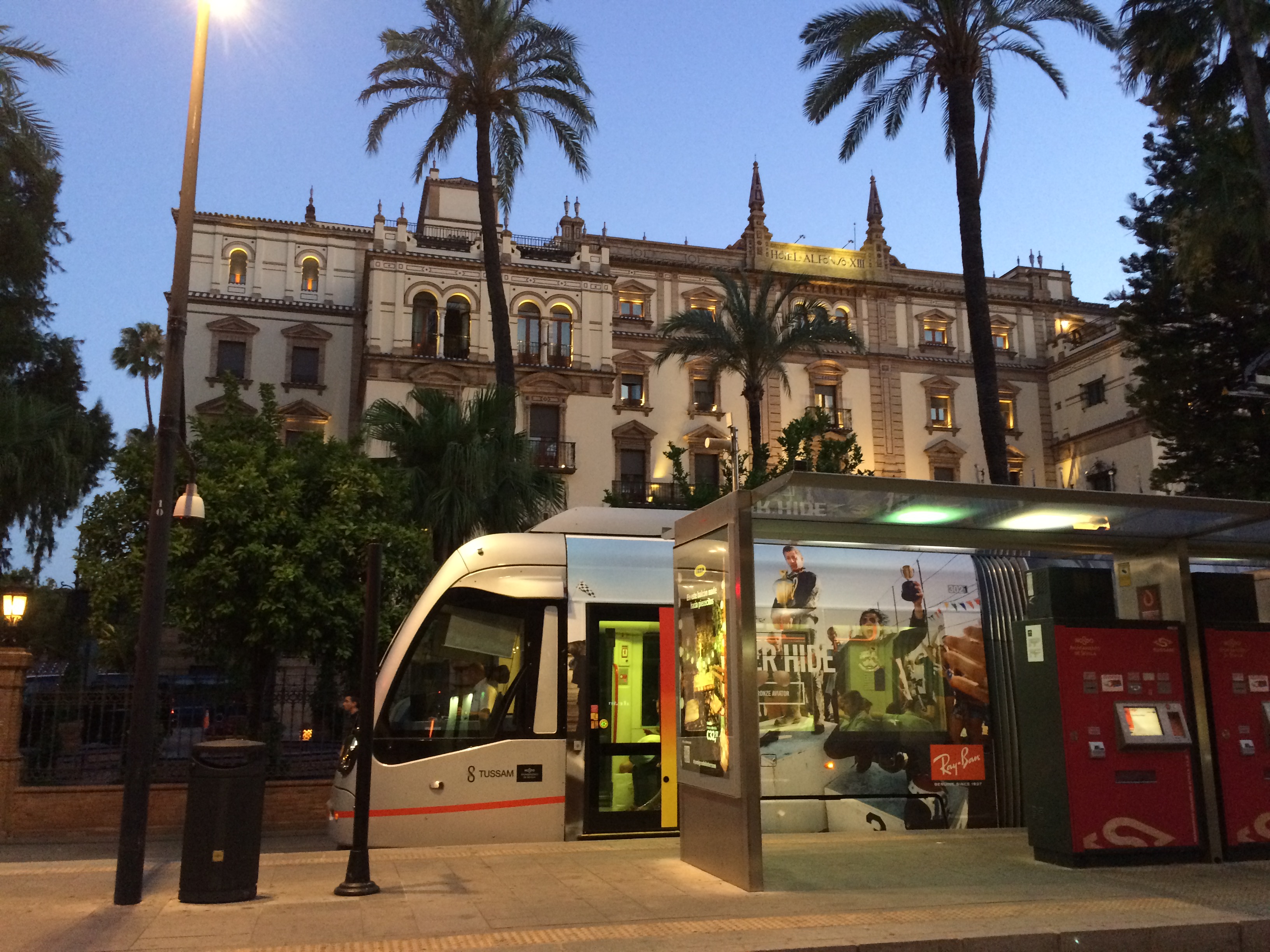
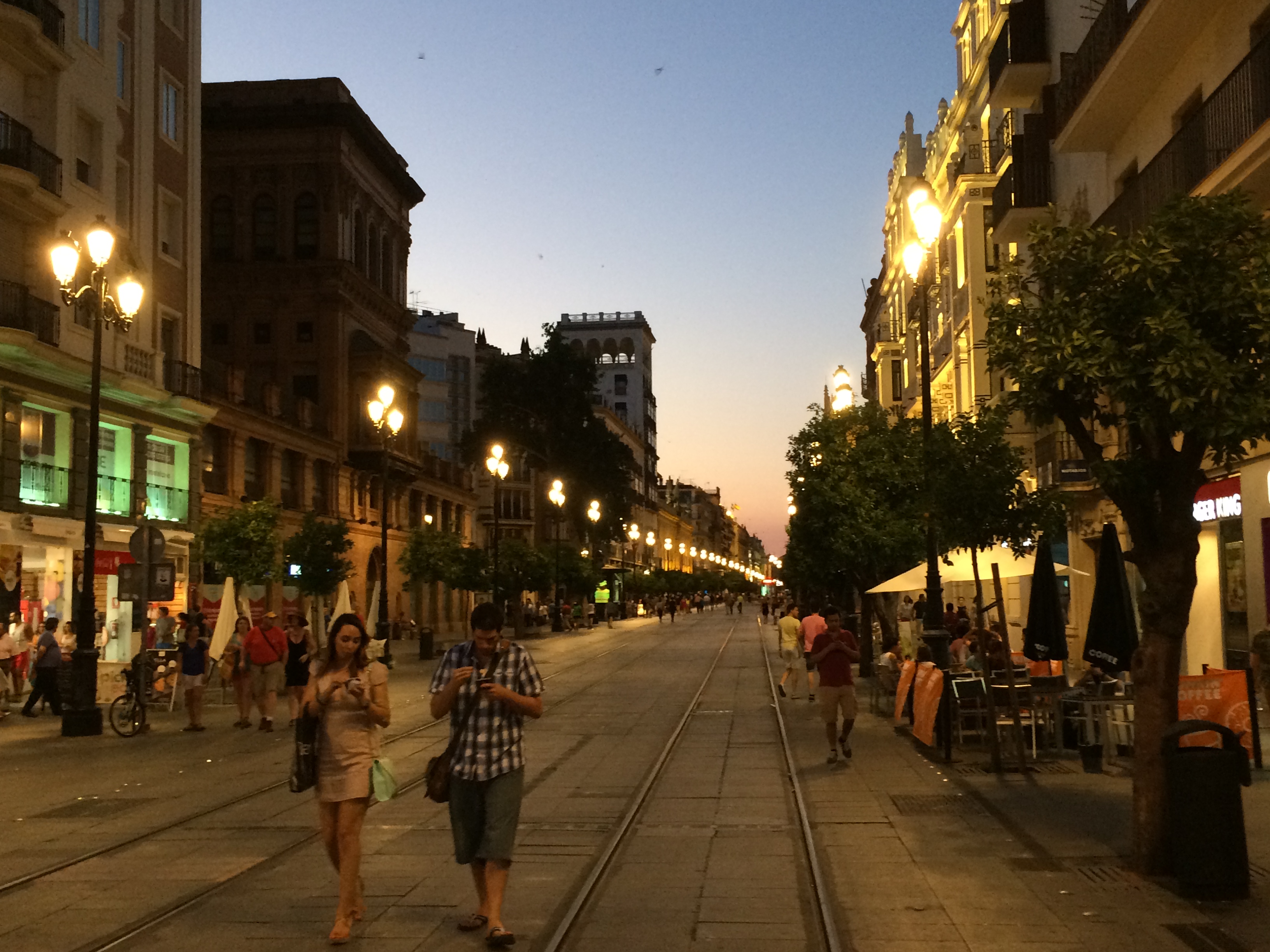
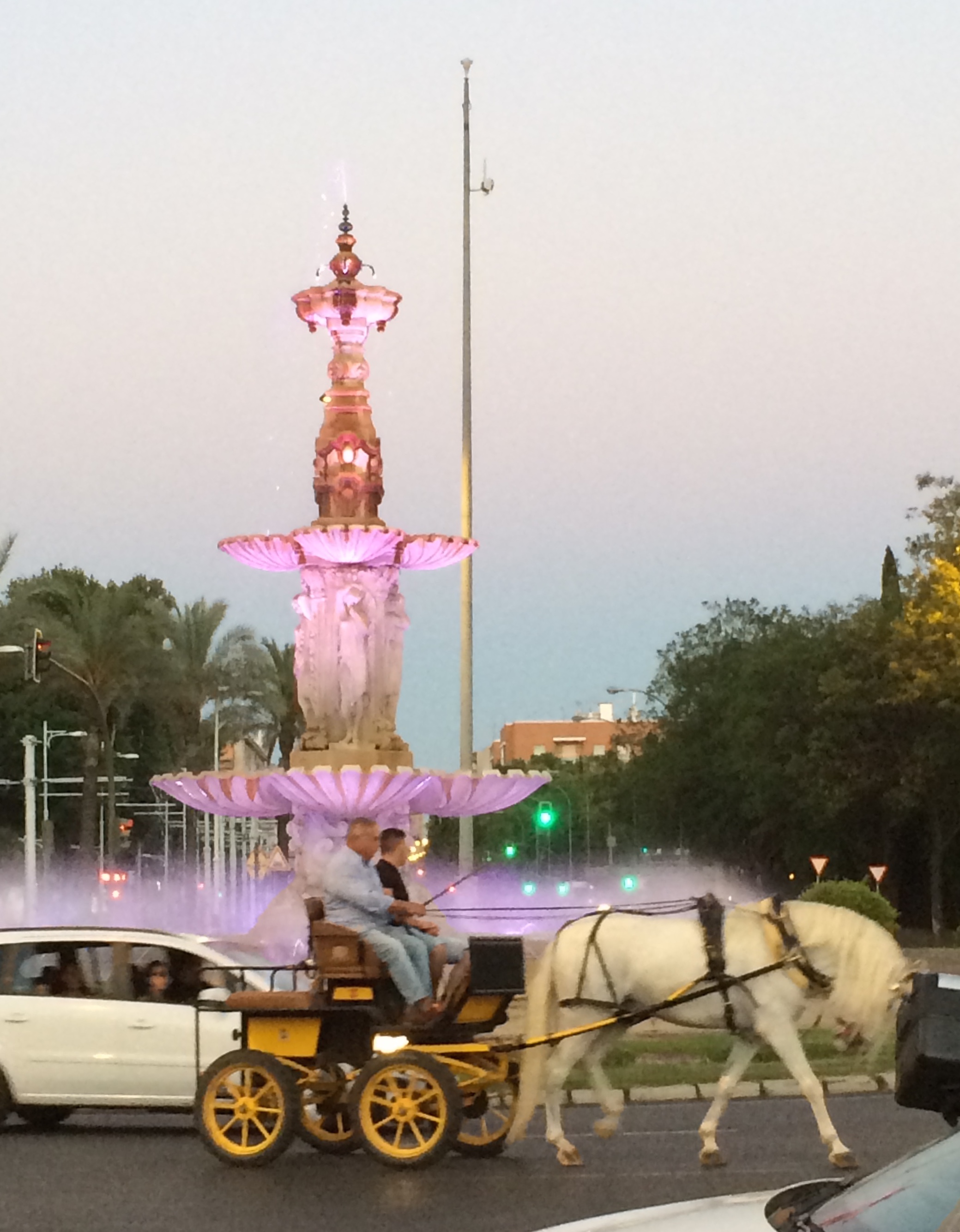
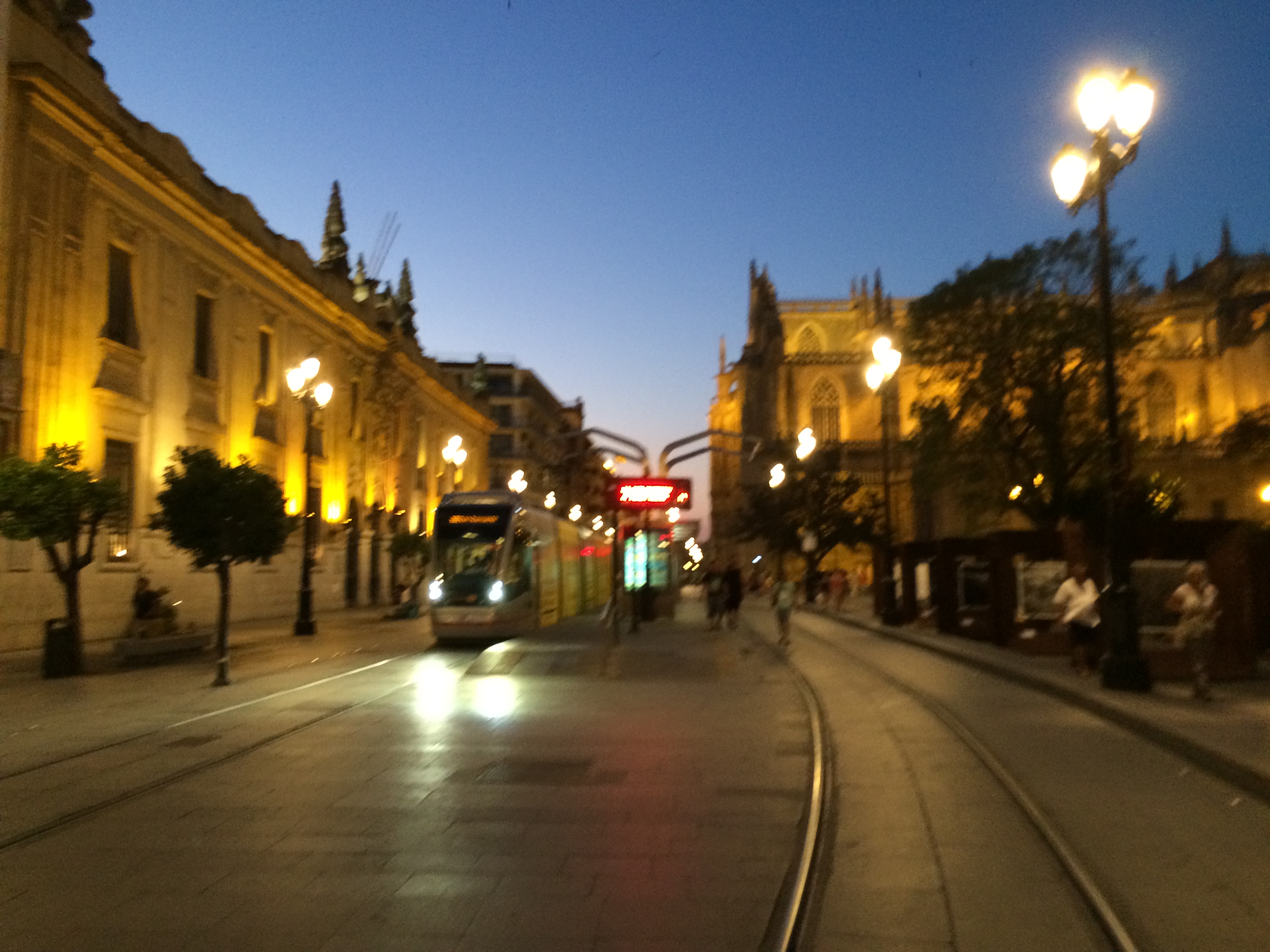
After a restorative 3-hour rest (and in Judith’s case, a refreshing dip in the pool), we summon our energies and take the bus into the centre of town to take a quick look around and for a bite to eat. It’s 9.30 by the time we arrive in the old and most touristic quarter of Santa Cruz and all we have time for is a short stroll to soak in the atmosphere. The entire area is sensibly pedestrianized with the exception of trams and splendid-looking horse and carriages with large bright yellow wheels, that look like something out of ‘Gone with the Wind’.

One of the grand palaces in the pedestrianized quarter of Santa Cruz plus tram.

One of the grand palaces in the pedestrianized quarter of Santa Cruz plus tram.

Pedestrianized quarter of Santa Cruz.

Pedestrianized quarter of Santa Cruz.

Horse-drawn carriages outside the 'Archivo de Indias', the administrative  building that dealt with all commerce with the Americas.

Horse-drawn carriages outside the ‘Archivo de Indias’, the administrative building that dealt with all commerce with the Americas.

Pink fountain in Santa Cruz.

Pink fountain in Santa Cruz.

Santa Cruz.

Santa Cruz.

We eventually move a little away from Santa Cruz and into a grid of narrow passages in neighbouring Arenal where we’d been told we’d find authentic Sevillian food. The place we plump for turns out to be a tapas restaurant which is fine as it’s already 10.30. The selection of cold and hot tapas is OK but not especially memorable, the mackerel and tomatoes and potato and aioli probably being the tastiest but the white verdejo at least is from the Seville area and very refreshing.

The district of Arenal.

The district of Arenal.

Tapas in Arenal, Seville.

Tapas in Arenal, Seville.

As we make our way back at 11.30 it looks like the evening is just getting started. The restaurants are full, the noise levels are rising and the eating and drinking is in full flow. Here and there, someone’s playing a guitar. We wait at the bus stop for our bus back to the hotel and realize just across the road is the Arena del Toro, the Royal Bullring, which seems slightly surreal – so they really do exist!

IMG_2704

The Royal Bullring of Seville.

The Royal Bullring of Seville.

Seville is certainly a lively, vibrant city and a larger metropolis than we’d expected it to be. It is touristic, but it’s also a place full of joie de vivre, as we imagine all Spanish cities are at night.

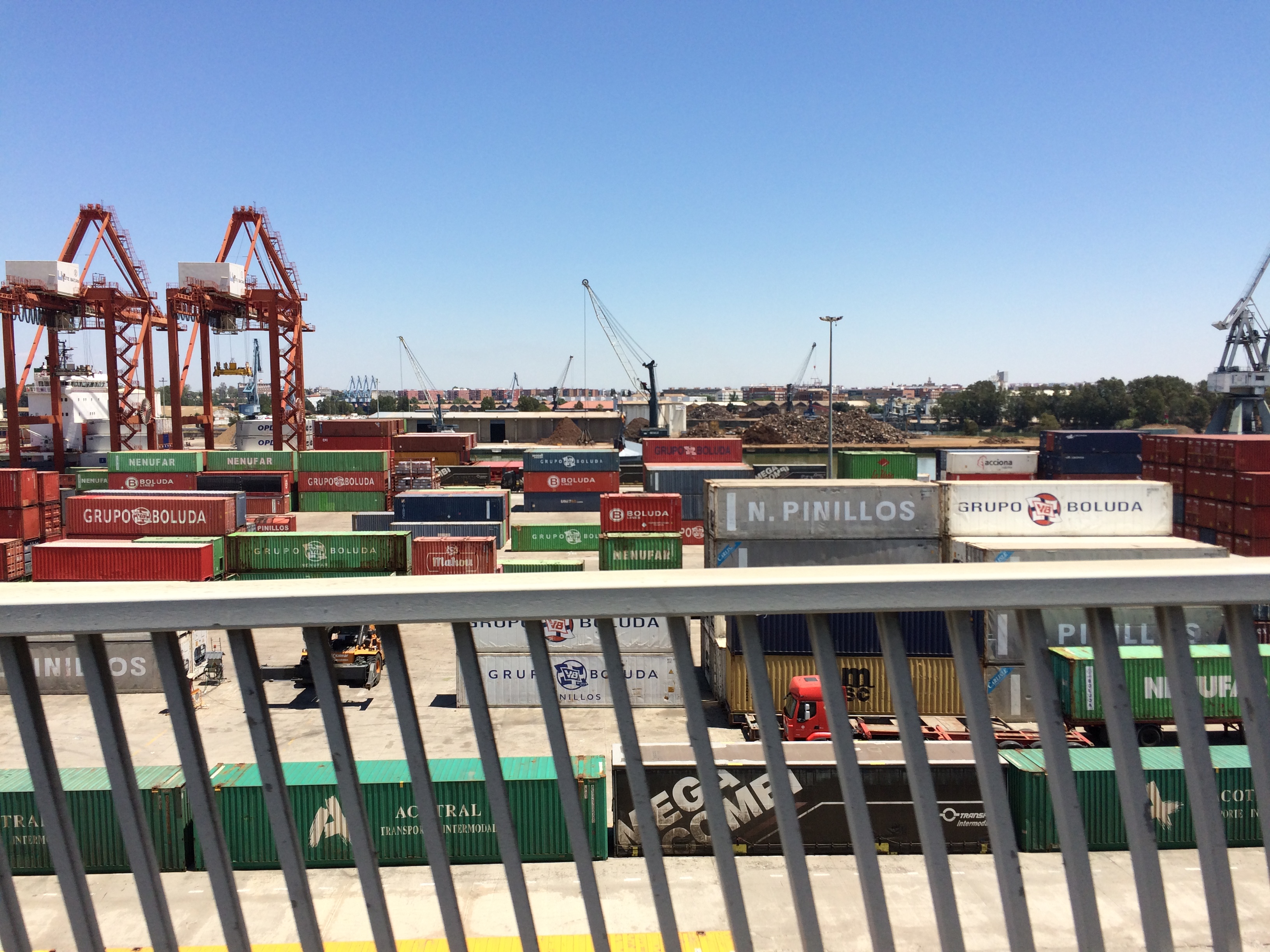
As we left the next morning after an excellent café and croissant, which in Seville they put a light sugar glaze on top of, we drove past the port and it also brought home to us what a busy commercial hub Seville is as well, which again, is something we hadn’t expected.

Seville is Spain's only river port and its 4th biggest city.

Seville is Spain’s only river port and its 4th biggest city.

Much-needed sustenance before hitting the road again.

Much-needed sustenance before hitting the road again.

Thursday 18th June – Magnificent Granada

Standard

Let’s take a step back at this stage and take a look at the fascinating history of Muslim rule in Spain. After the fall of the Western Roman Empire in AD 476 the whole of the Iberian Peninsula (present-day Spain and Portugal) fell under the domination of the Teutonic tribe of Visigoths. At the start of the 8th century AD, this started to fall apart due to internal divisions. Under the leadership of Tariq Ibn Ziyad, the Ummayad Muslim armies landed in Gibraltar in 711 and after an 8-year campaign defeated and killed the last Visigoth king on the battlefield.

 Historical sources say that the Islamic Caliphate had not specifically targeted Spain for conquest but the disarray in the ranks of the Visigoths created an opportunity that Ibn Ziyad exploited successfully. Muslim forces then tried to press their advantage by moving north-east across the Pyrenees towards France but were defeated by the Frankish Christian Charles Martel at the Battle of Tours in AD 732. So they reached as far north as Tours!

 Retreating to the Iberian Peninsula, Islamic rule there lasted for varying periods ranging from 30 years in Galicia in the north west to 780 years in the area of Granada, the last remaining stronghold (the Emirate of Granada) after the ‘Reconquista’ began under the Catholic armies of Queen Isabella I of Castille and King Ferdinand II of Aragon.

 Muslim history in the Iberian Peninsula passed through around 9 stages starting with paying direct allegiance to the Caliph in Damascus (711-756) to the Kingdom of Granada (1212–1492) and finally to the Alfujarra revolts against increasing discrimination by the new Catholic rulers (1568-1571).

 Throughout most of this time, there was said to be a peaceful co-existence of Muslims, Jews and Christians known as the ‘Convivencia’ – the 3 religions borrowed from each other, benefiting by the blooming of philosophy and the medieval sciences in the Middle East. Other scholars have questioned to what extent the ‘convivencia’ represented true pluralism. But significantly, Muslims only constituted a majority of the population by the end of the 14th century. Muslims came not only from North Africa but from the Middle East and Iran. The appearance of Sufis is especially important because Sufism’s greatest sheikh, Ibn Arabi was himself from Murcia.

 Today there are around 1 mil Muslims in Spain, the majority being immigrants from North Africa.

 Granada (paraphrasing from Lonely Planet)

 Now in Granada itself, Muslim forces took over from the Visigoths in 711 with the aid of the Jewish community around the foot of Alhambra in what was called ‘Garnata al Jahud’ (Jahud meaning Jews) from which the name Granada derives.

 After the fall of Cordoba in 1236 and Seville in 1248, Muslims sought refuge in Granada where Mohammed Ibn Yusuf Ibn Nasr had set up and independent emirate. This ‘Nasrid’ emirate became the final remnant of Al-Andalus, ruled from the Alhambra Palace for 250 years.

Granada became one of the richest cities in medieval Europe, flourishing with its population of traders and artisans and 2 centuries of artistic and scientific splendor followed.

 As the 15th century wore on, a power struggle for the succession and a civil war set the stage for Christian armies taking advantage and in 1491, laying siege to the city.

The Muslim ruler Boabdil surrendered in return for concessions on religious freedoms and 30,000 gold coins. But after a period of tolerance, religious persecution eventually ensued, the Jews were expelled and revolts by the Muslims also led to their eventual expulsion from Spain in the 17th century.

 Granada sank into decline until interest in it from the Romantic movement revived it as a national heritage in the 1830s.

Another black period was when the Nationalists killed an estimated 4000 ‘Granadinos’ with left or liberal connections at the start of the civil war.


Apologies for the lengthy historical background but that is first and foremost what Granada epitomises – an important c700 years of Spain’s history, and seeing the place requires a basic appreciation of the whole of Spain’s Islamic past.

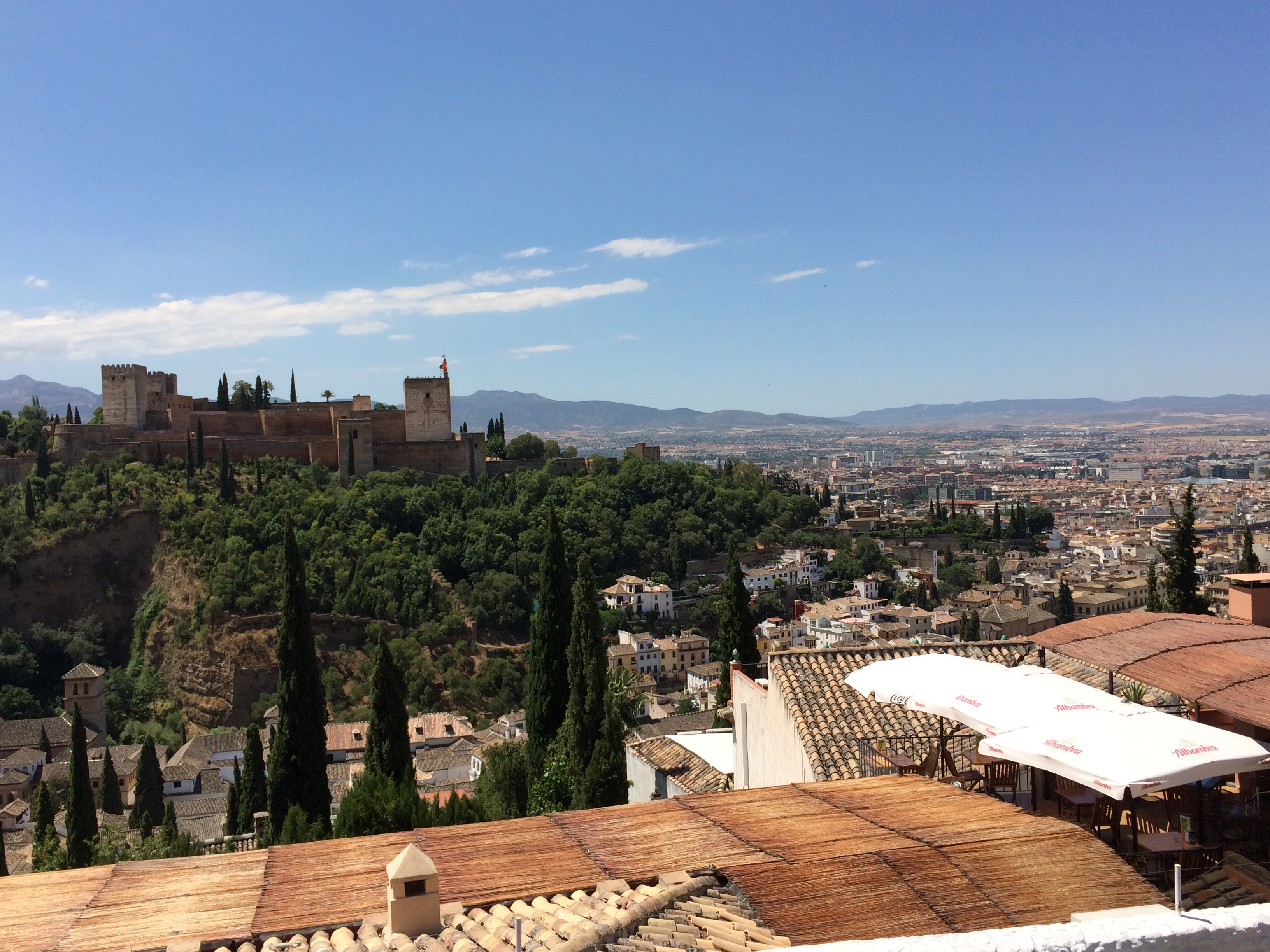
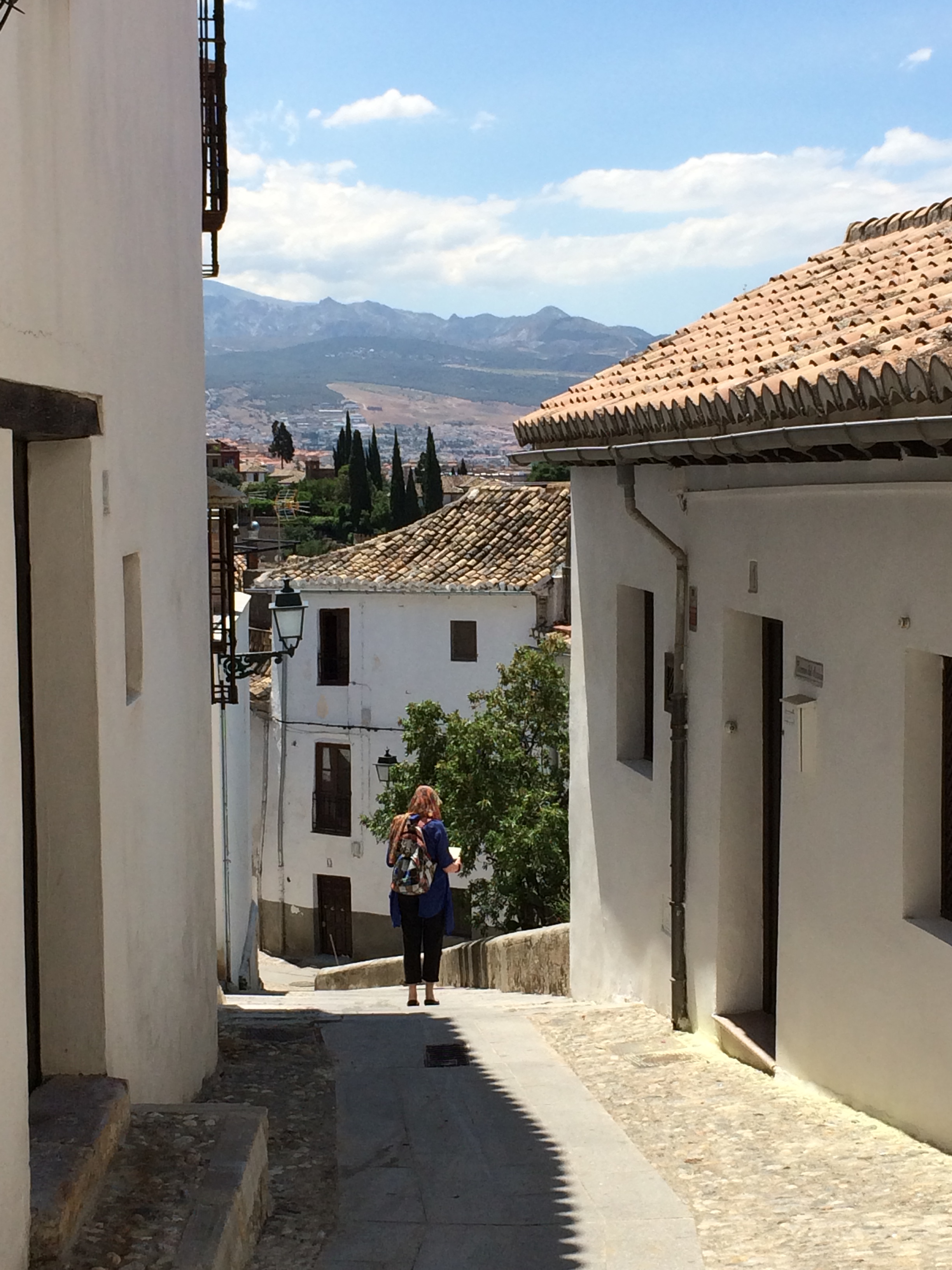
We had not been able to pre-book a visit to the Alhambra Palace in the morning and had therefore only obtained a slot for 2pm onwards. We arrived at 11am. Our plan, as we had been advised to do, was to park Brenda at one of the relatively expensive but convenient car parks adjoining the Palace, strategically situated atop Granada’s highest vantage point. Then walk round the side of the Palace walls down the steep descent to the bottom of the valley where the old part of town was, with its narrow alleyways and souk then up the other side of the valley, through even narrower labyrinthine cobbled alleys in the Albaicin Quarter and up to the San Nicolas hill-top which afforded a wonderful view of the Citadel.  All of which we did.
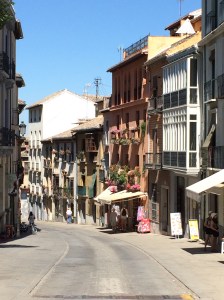
Down San Matias Realejo leading to the old town centre from Alhambra Palace.
Down San Matias Realejo leading to the old town centre from Alhambra Palace.


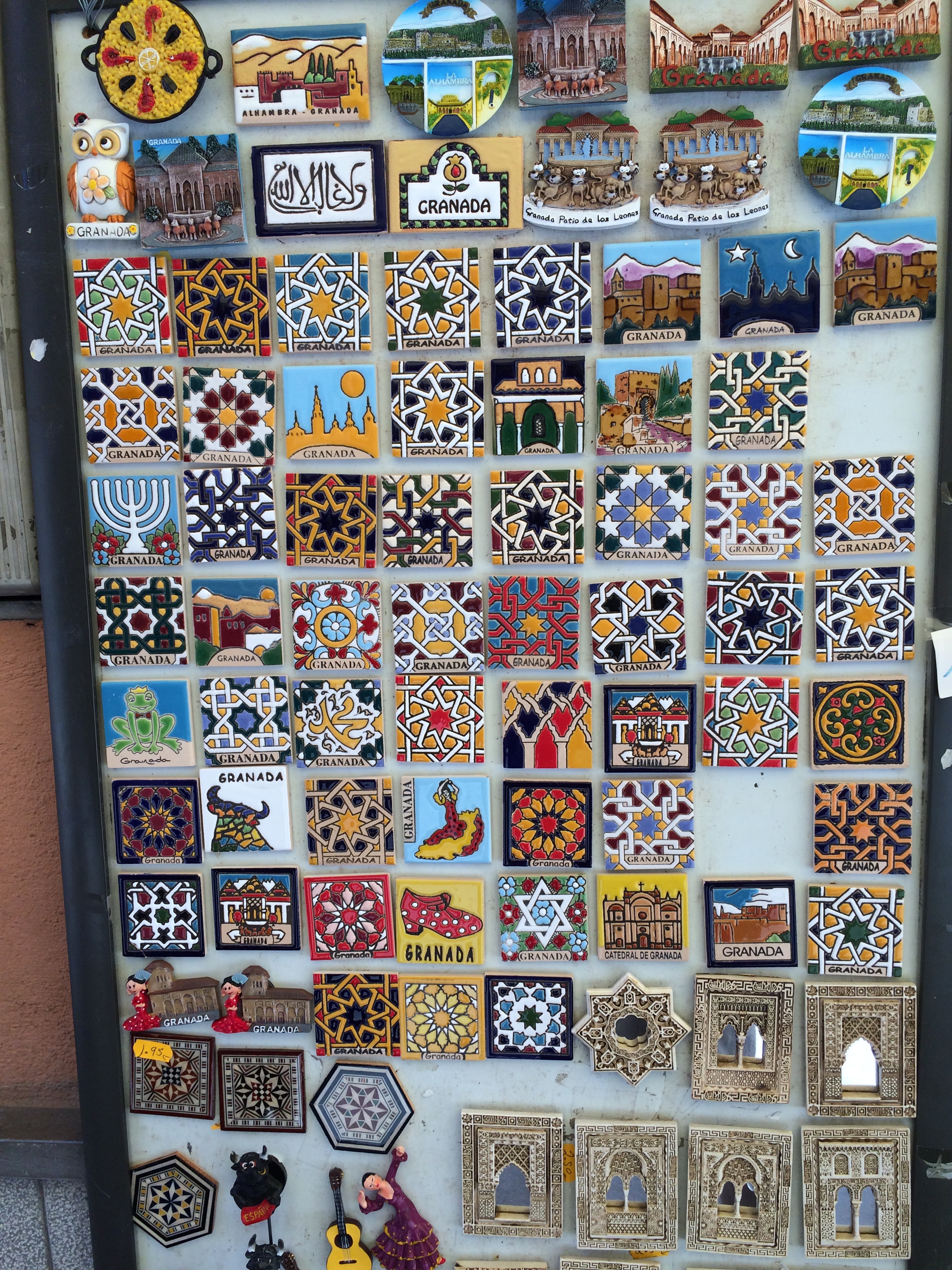
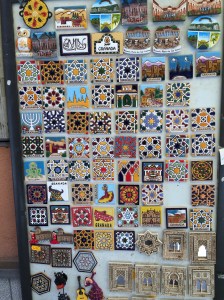
Fridge magnets for sale on San Matias Realejo.
Fridge magnets for sale on San Matias Realejo.


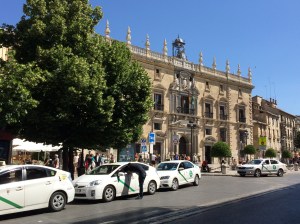
Granada Plaza Nueva.
Granada Plaza Nueva.


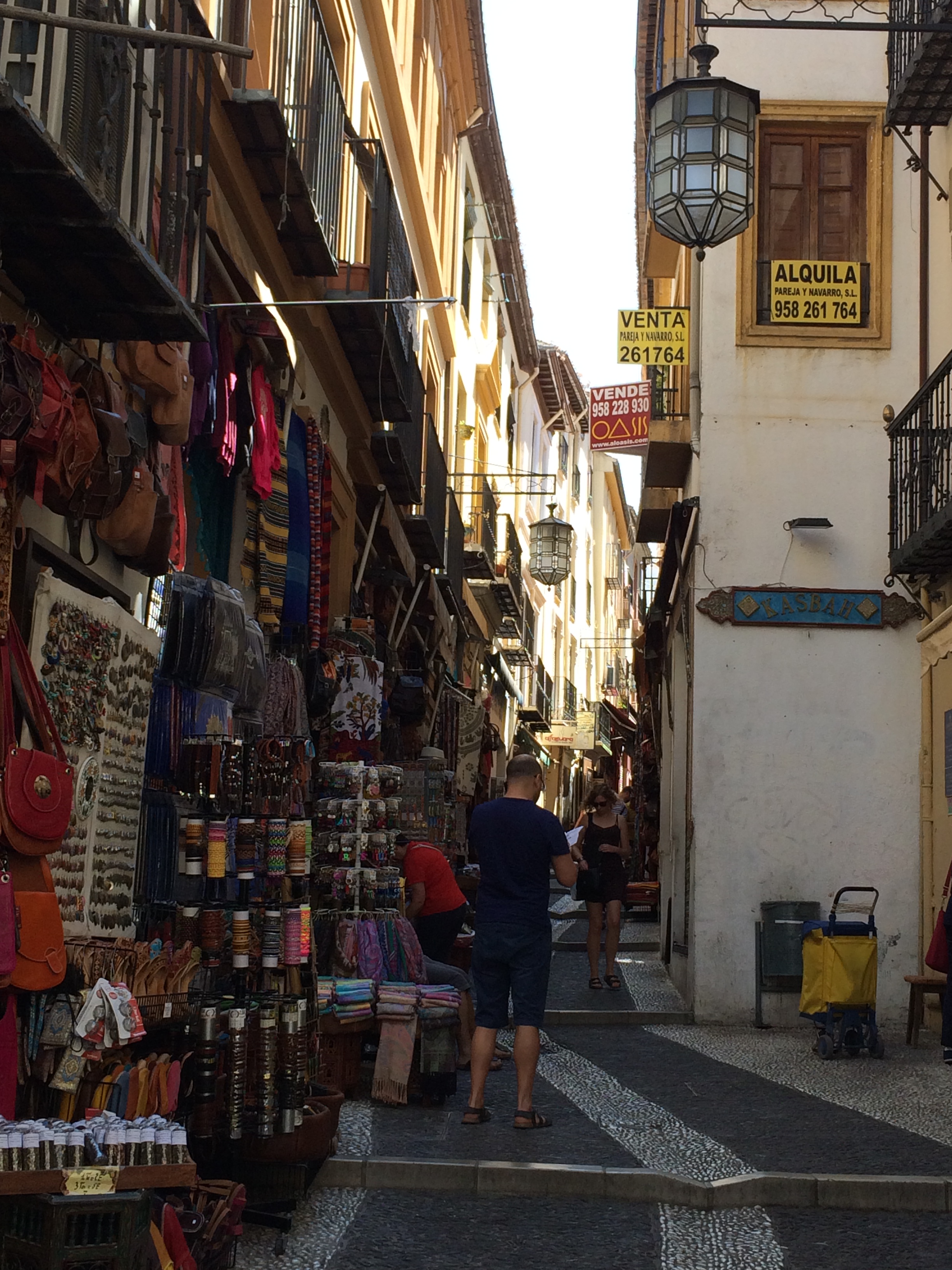
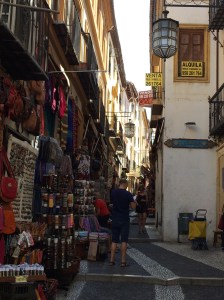
Calle Elvira - the souk in old Granada.

Calle Elvira – the souk in old Granada.


Half-way up, we stop briefly for a coffee outside the church of San Gregorio Betico on the spot where two Franciscan priests had allegedly been martyred for preaching in the doorway of the mosque in Alhambra. The coffee came in glasses and tasted more like watered down Turkish coffee than americanos.  Juan, who served us was chatty.  He was a native of Granada. Asked about any vestiges of Muslim ancestry, he said yes, he believed 30% of Granada’s inhabitants were Muslim.  His own half-sister was called Jamila and her father, his step-father, was called Najib.  Somehow we found that 30% hard to believe.

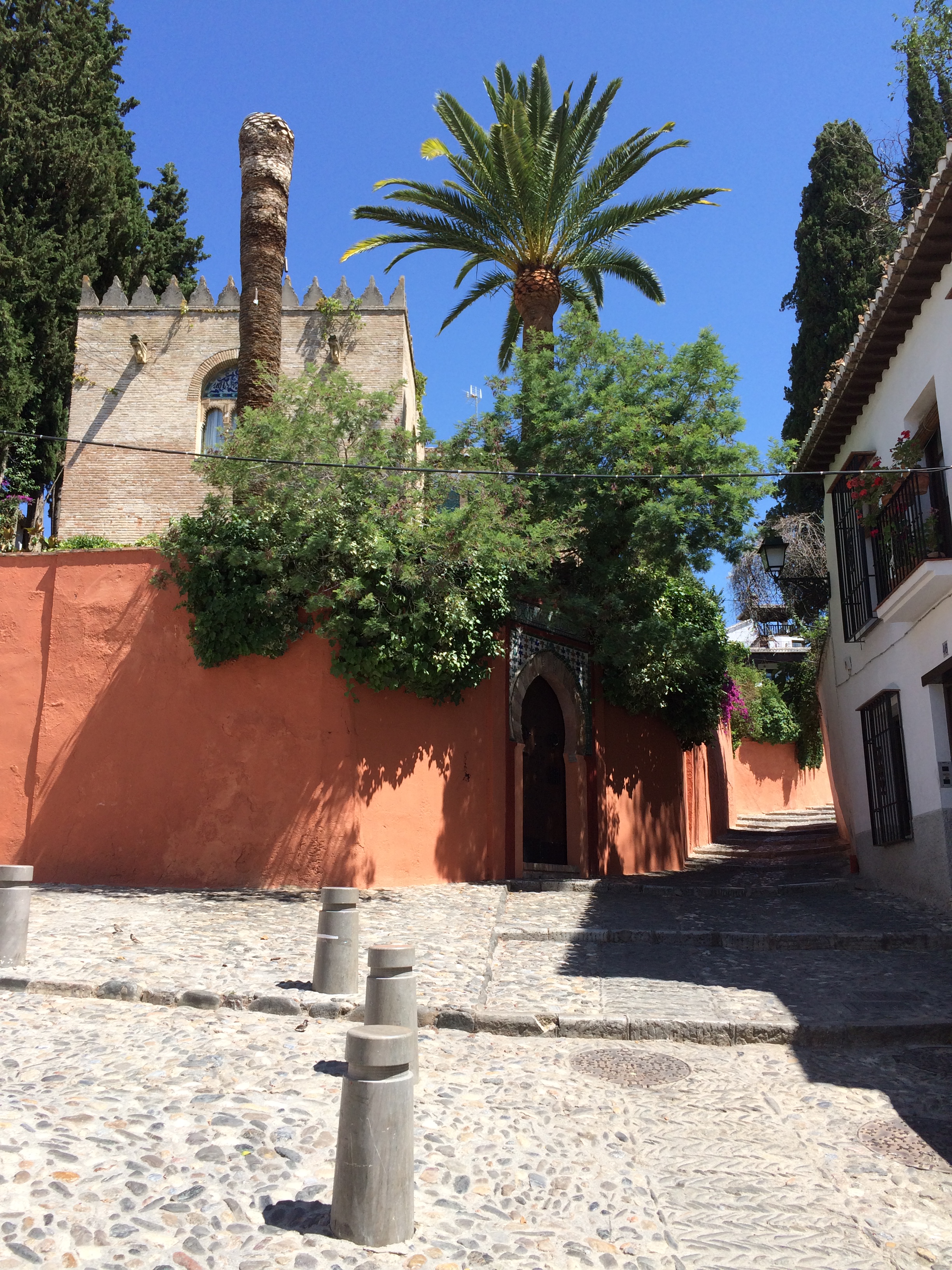
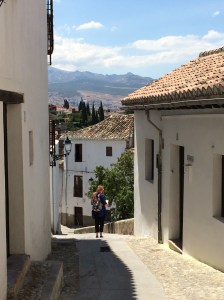
The Albaicin Quarter, going steeply back uphill to San Nicolas.
The Albaicin Quarter, going steeply back uphill to San Nicolas.


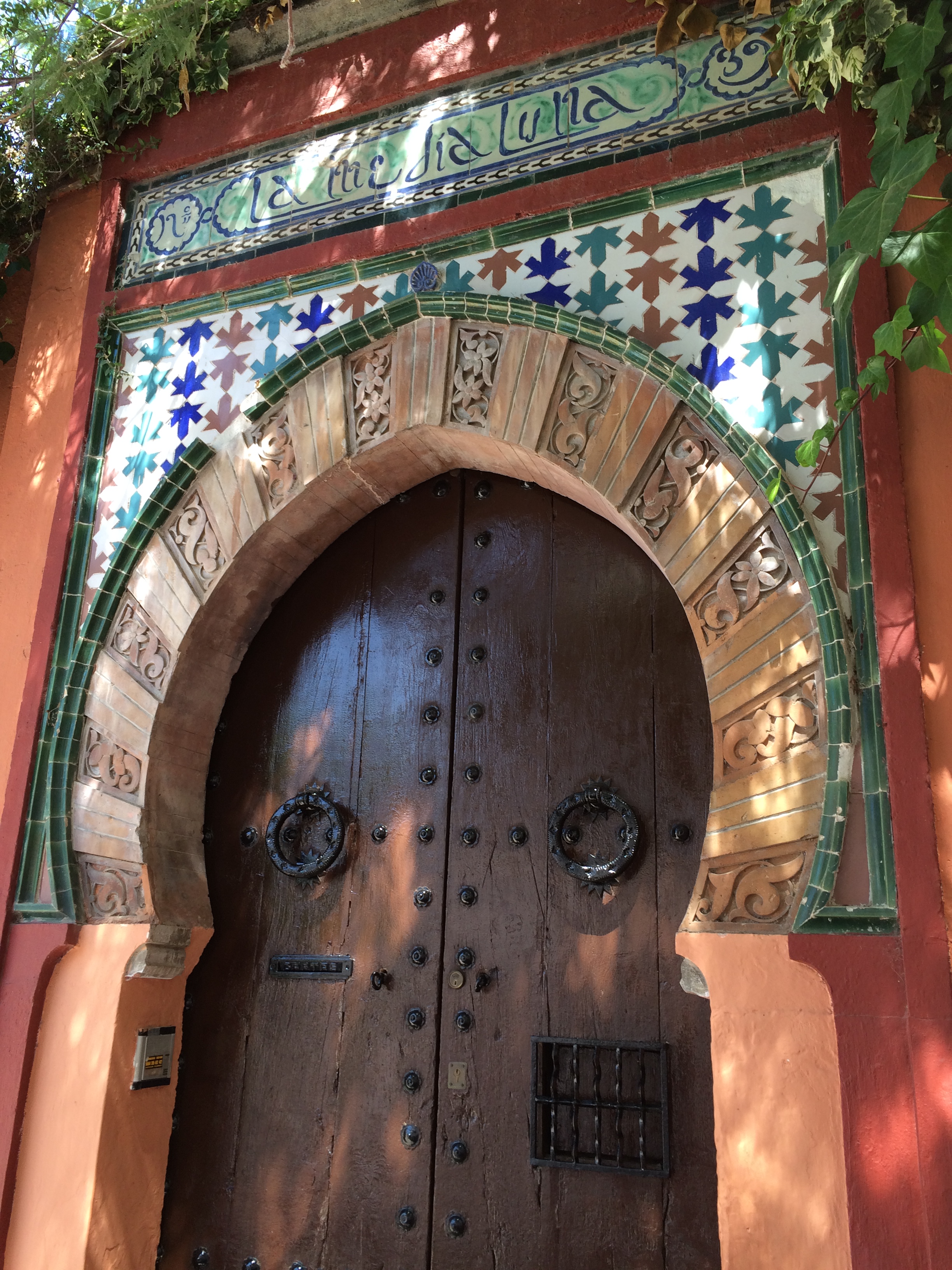
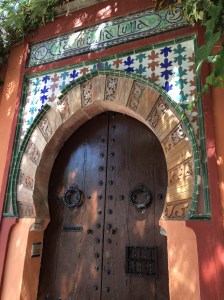
A splendid old gate in the Albaicin Quarter. The inscription above looks lie it's Arabic but it's not. It reads "La lue dia luna" which must mean "moonlight".

A splendid old gate in the Albaicin Quarter. The inscription above looks lie it’s Arabic but it’s not. It reads “La lue dia luna” which must mean “moonlight”.
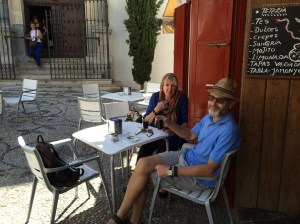


Juan the waiter offers to take a photo of us.  Behind, the Church of San Gregorio Betico.

Juan the waiter offers to take a photo of us. Behind, the Church of San Gregorio Betico.

A bit higher up, we run into a oldish man playing a guitar and singing a melancholy tune.  It seems to say something like “Every moment that I’m away from you my dear Galicia, my heart weeps”.  Interesting that Galicia is the area in Spain where Muslim rule lasted the shortest time – 28 years, compared to Granada’s 720!

"Every moment I'm far from you my dear Galicia my heart weeps".

“Every moment I’m far from you my dear Galicia my heart weeps”.


Still climbing in the Albaicin Quarter, it's looking quite Middle Eastern.

Still climbing in the Albaicin Quarter, it’s looking quite Middle Eastern.


So far, all of this has been a physical feat in itself. The trouble was, after grabbing a ‘jambon’ and tomato sandwich on San Nicolas, we needed to retrace our steps and do the whole thing all over again in reverse – and get there half an hour earlier than our allotted slot of 2pm to collect our pre-bought tickets. It was a hot day and by the time we reached half way up the other side of the valley on the return walk, we were feeling well and truly flaked out. And we had yet to visit the Palace and grounds. By the end of our visit, we felt we had performed a considerable athletic feat and we clocked some very good mileage on our Fitbits!

View from San Nicolas with Alhambra Palace visible on the adjacent hill.
View from San Nicolas with Alhambra Palace visible on the adjacent hill.


Making our way back down the valley.
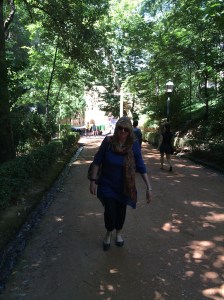
Making our way back down the valley.


And back up again on the other side to the Palace.

And back up again on the other side to the Palace.


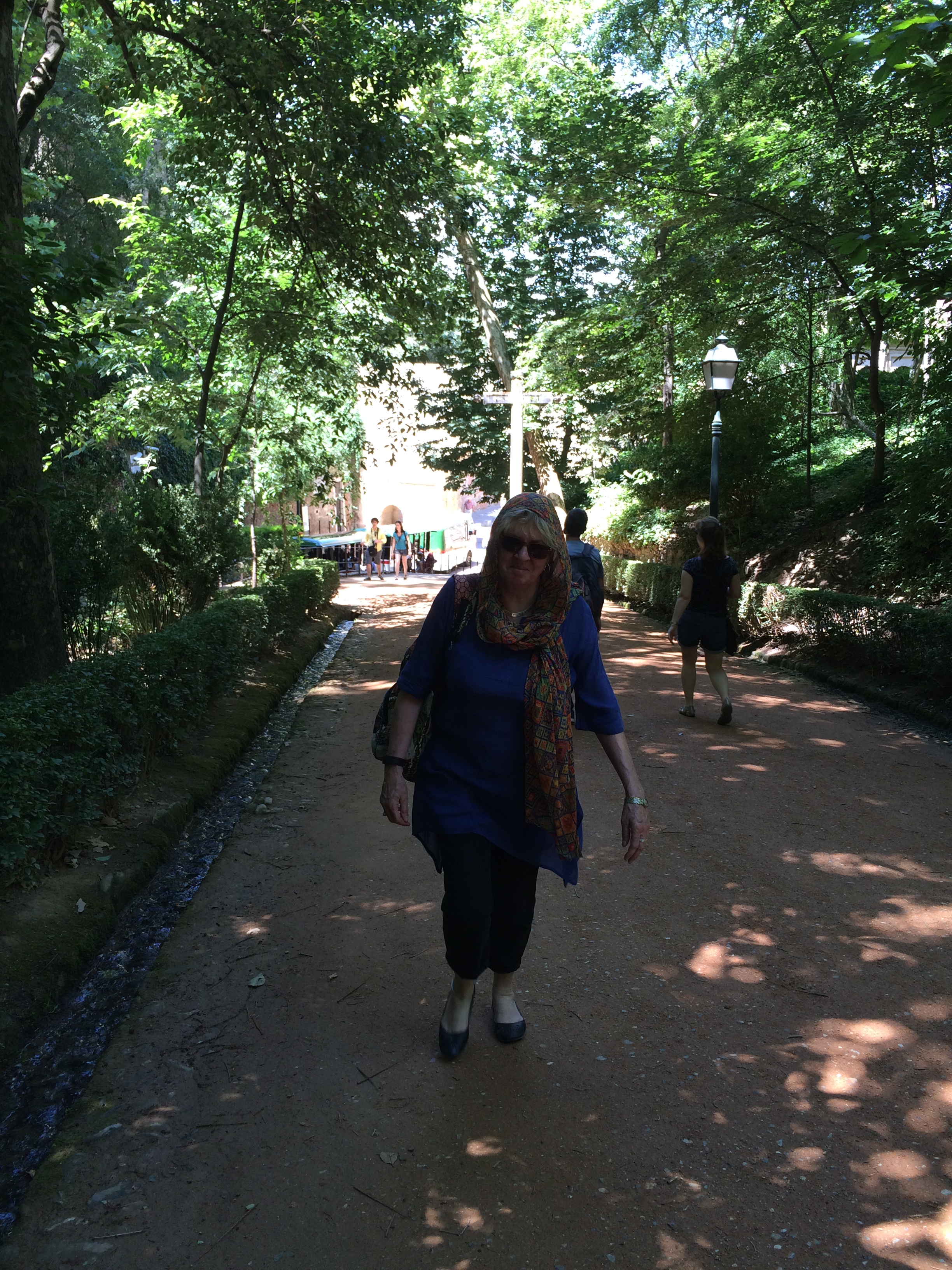
One great help in all of this was Granada’s wonderfully temperate climate. Despite the high temperatures, the area around the Palace lies 750 m above sea level and in addition, still has the old Arab system consisting of water running down the sides of walkways and fountains to create natural cooling wherever one goes. Shade is also provided by the abundant vegetation. The freshness of the air reminded me a bit of parts of Jerusalem or Bloudan and Zabadany in Northern Syria or the Shouf mountain above Beirut.

There is not much more to say about our visit to Granada and the Alhambra Palace except that we liked the place very much but were shattered by the end of the day.  It was touristic but not excessively so. We were pleasantly surprised by the number of young people who were there, admiring the splendour and this remnant of a unique part of Spain’s (and Europe’s) history.

One thing that did puzzle us slightly was the absence of visitors from the Arab world (or at least any that looked obviously like they were from the Arab or Islamic world or who spoke Arabic for instance – the majority looking like Europeans and people from the Far East).

The rest of the story of our visit can be told through some of the photos we took.
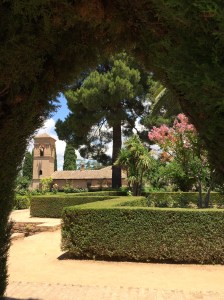
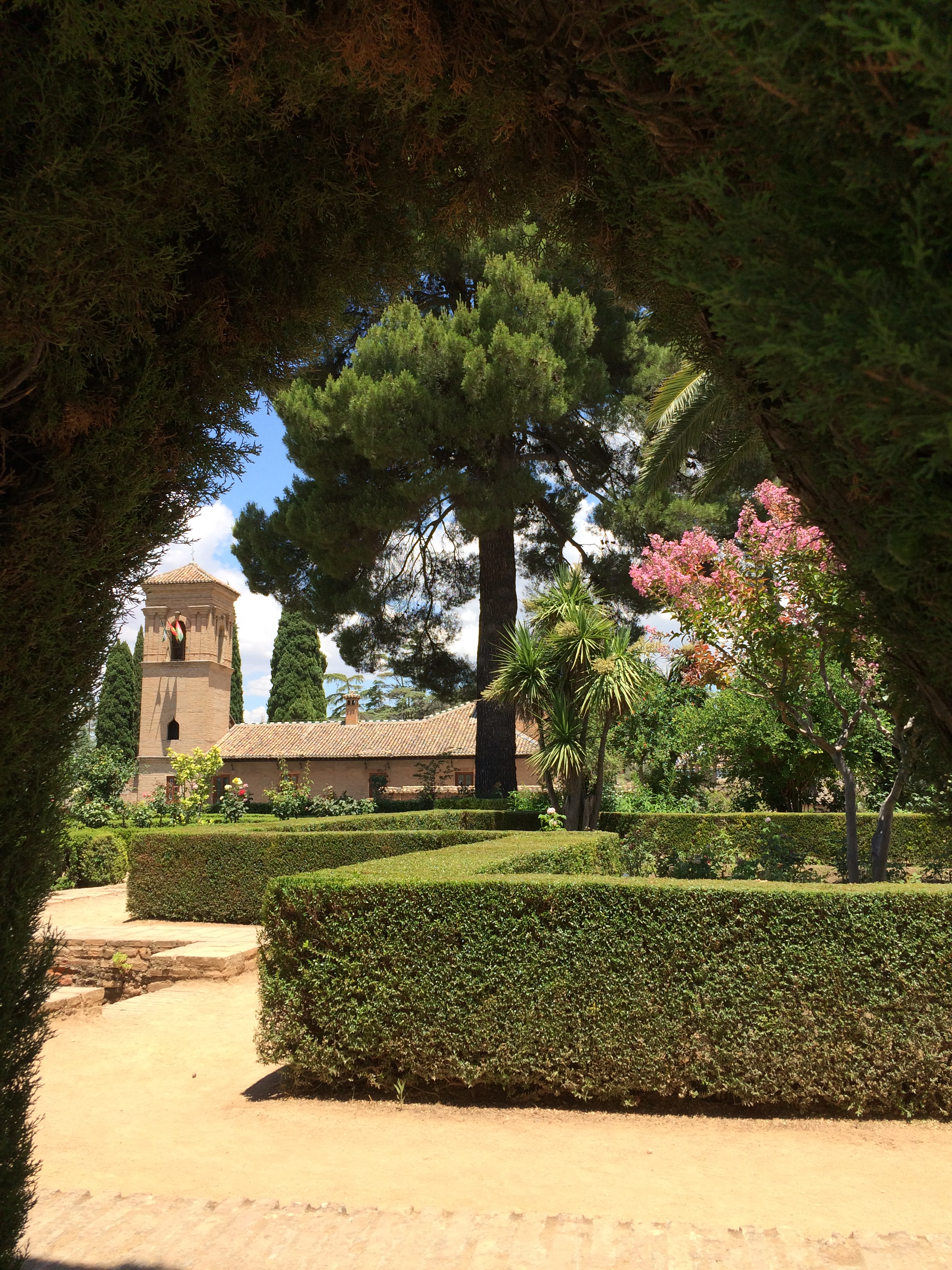
Alhambra Palace gardens.
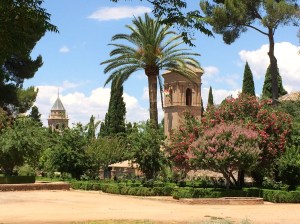
Alhambra Palace gardens.

Alhambra Palace as one enters the grounds.

Alhambra Palace as one enters the grounds.


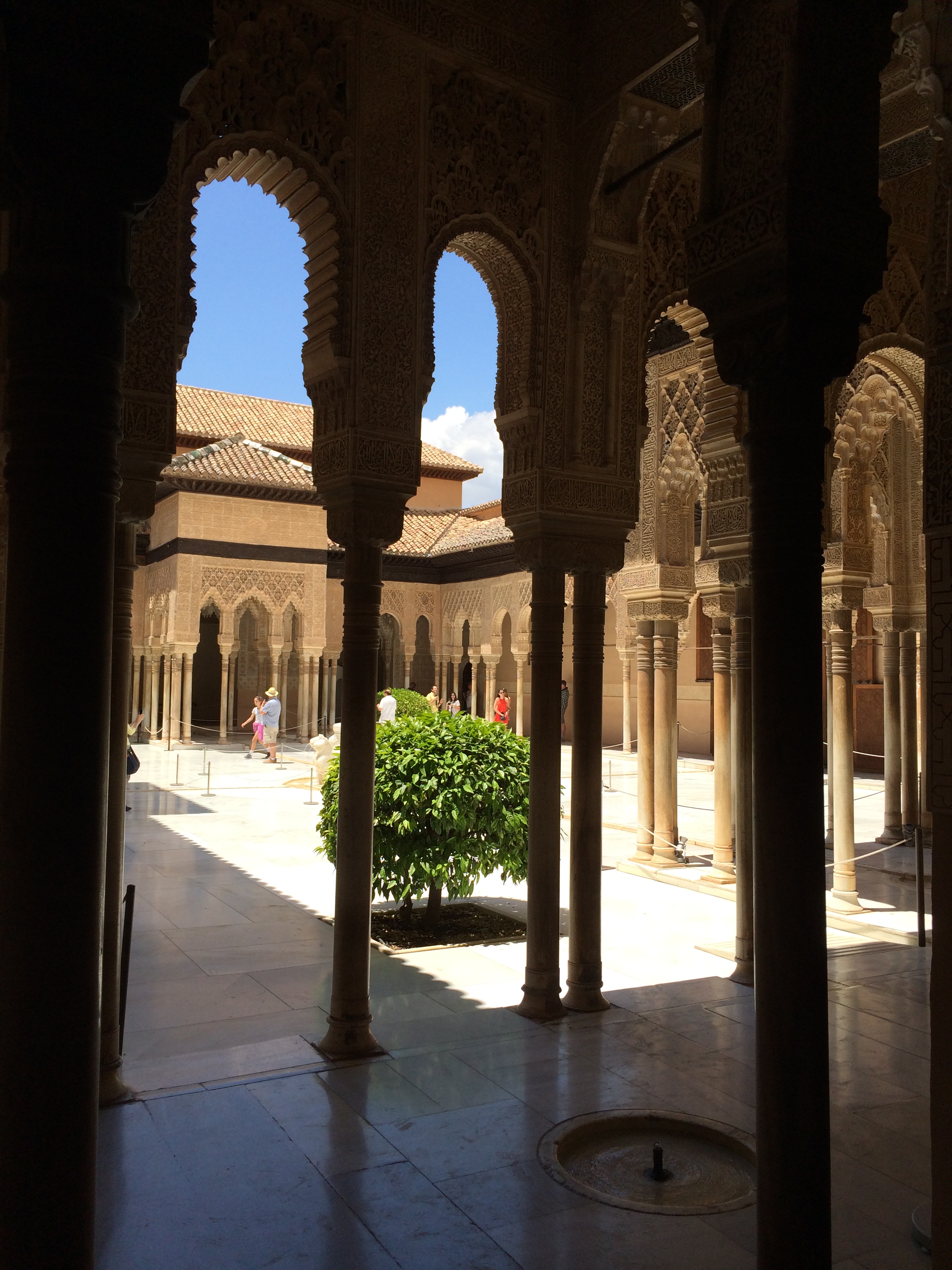
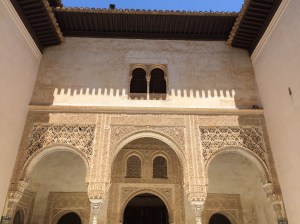
Inner courtyard in Nasrid Palace.  Surprised to see animal sculptures under fountain dating back to earlier period but kept by Nasri.

Inner courtyard in Nasrid Palace. Surprised to see animal sculptures under fountain dating back to earlier period but kept by Nasri.

View to inner courtyard in the Nasrid Palace.
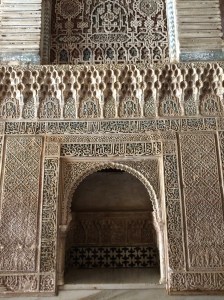
View to inner courtyard in the Nasrid Palace.


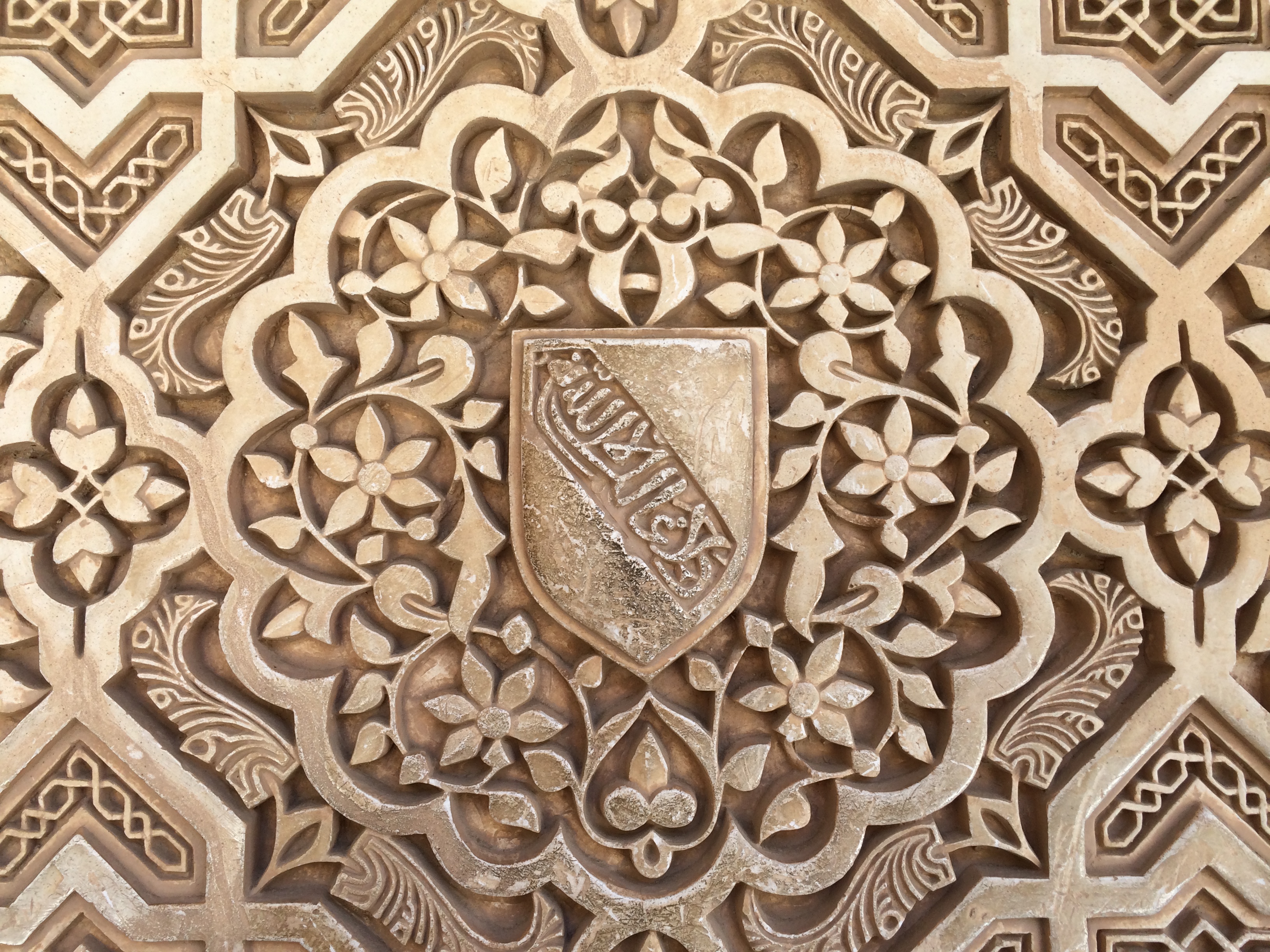
Every square inch has been sculpted and engraved.
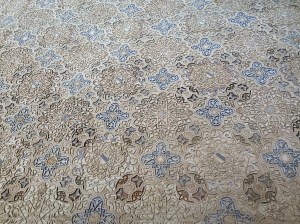
Every square inch has been sculpted and engraved.


Incredible intricate geometrical design on walls of every room in the Nasrid Palace.

Incredible intricate geometrical design on walls of every room in the Nasrid Palace.


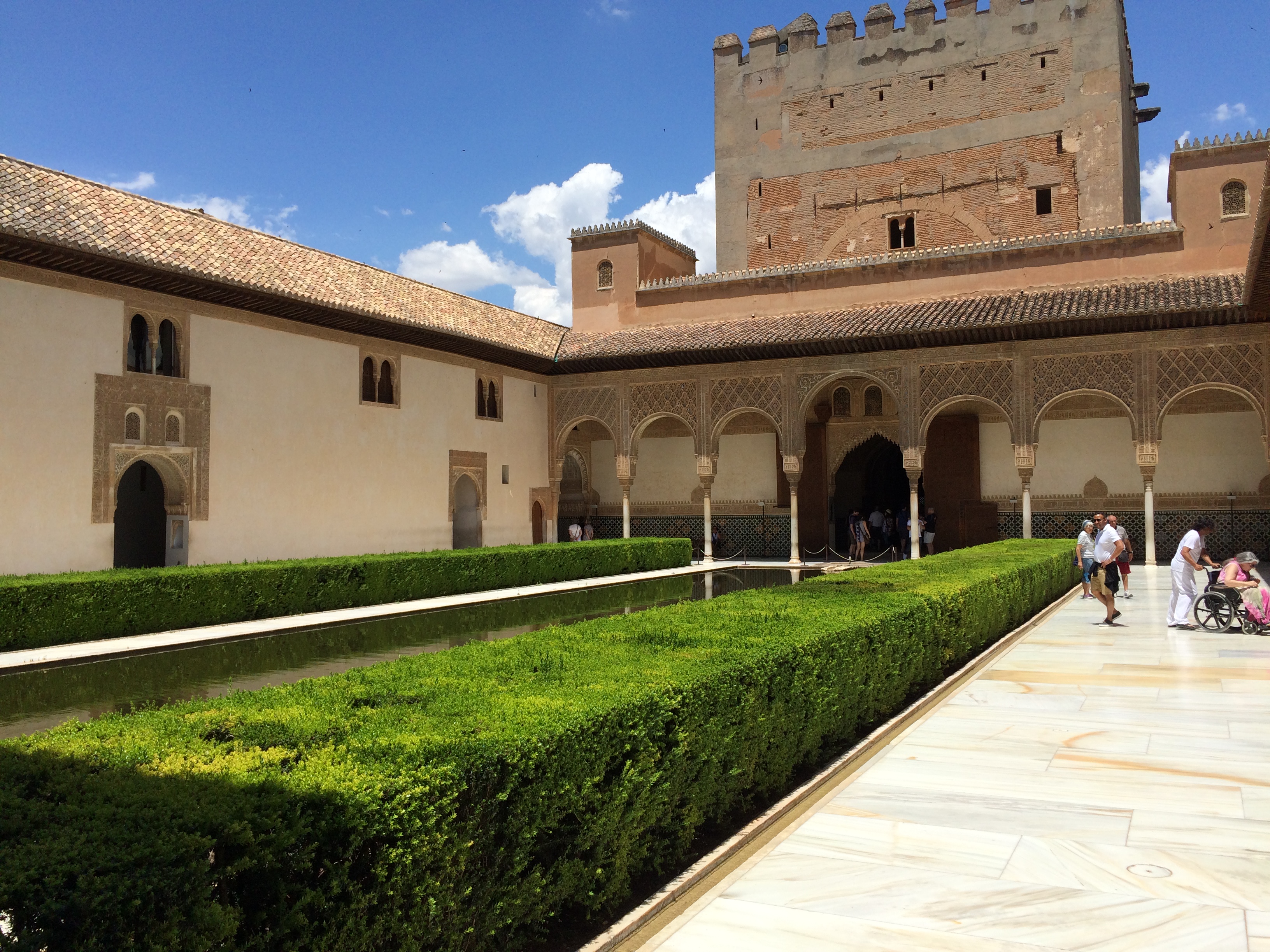
Nasrin Palace.

Nasrin Palace.

Pool in Nasrin Palace.
Pool in Nasrin Palace.


Every bit of the walls has been worked on.

Perfect geometrical forms.


The inscription "La ghalib illallah" was everywhere. It means "God alone is omnipotent".

The inscription “La ghalib illallah” was everywhere. It means “God alone is omnipotent”.
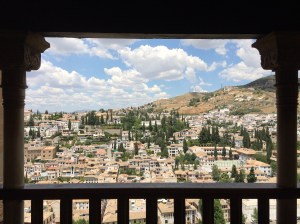


IMG_2642

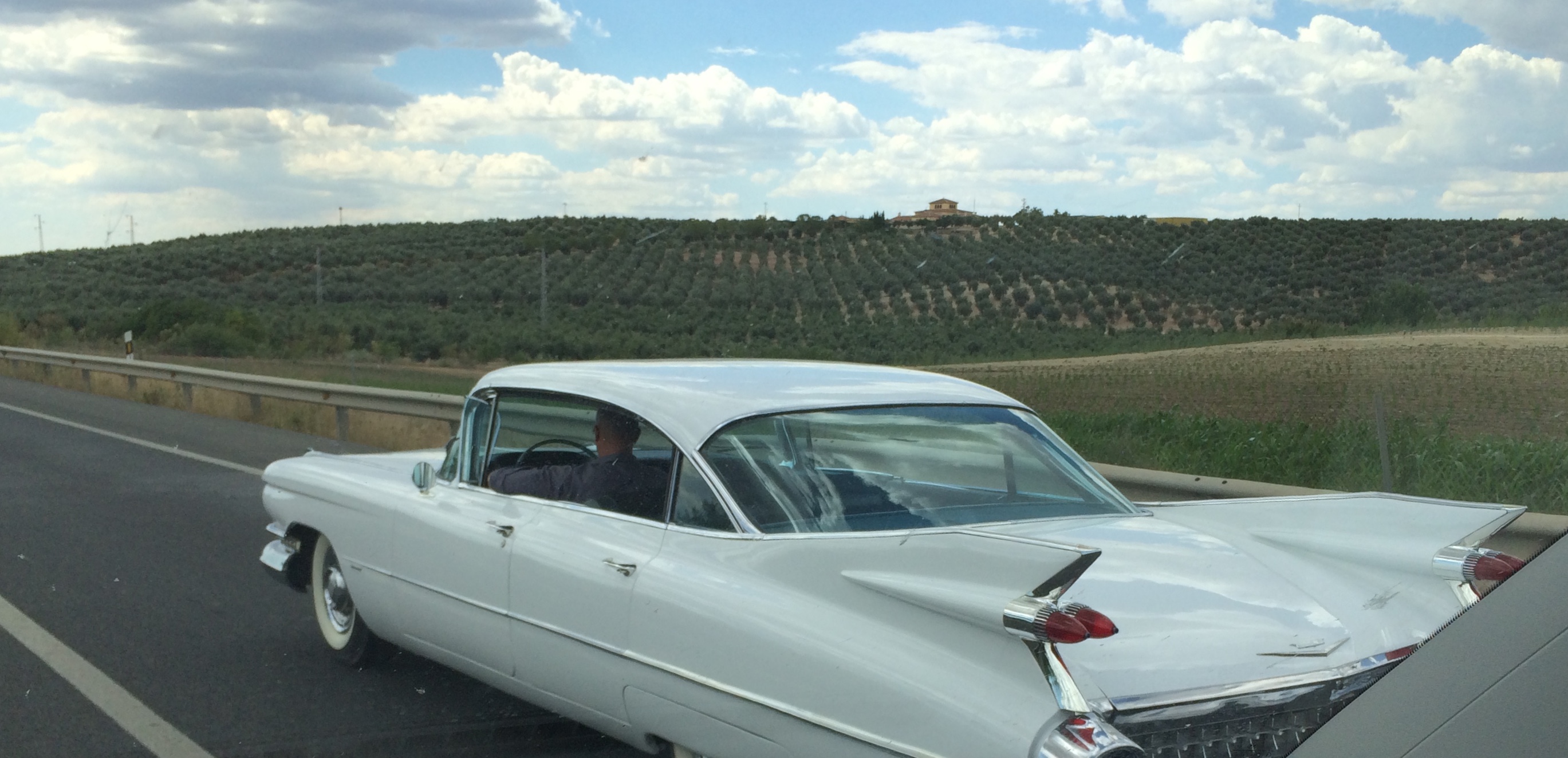
It’s been a fascinating visit but exhausting and we realise we’ve overdone it a bit. We’d planned to drive all the way to Seville but decide that we haven’t got the strength for a long drive so opt for a campsite about half of the way there near a place called Olvera.  It’s a little high up so we’re hoping will be a little cooler, as we’d been warned it starts to get seriously hot around Seville.  Bright sunflower fields light up the sides of the road as we pass Campillos and Canete la Real. We overtake a splendid old white Chevrolet gliding decadently along at Pinos Puente.  “Slow down, you move too fast … looking for fun and feeling groovy” say Simon and Garfunkel.

Canete la Real
Canete la Real

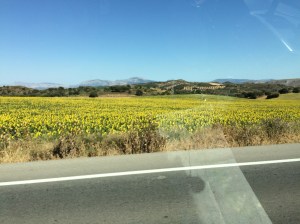
Sunflower fields light up the sides of the road around Campilos.
Sunflower fields light up the sides of the road around Campilos.


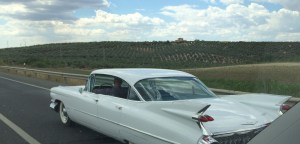
We pass an old white Chevrolet gliding decadently along.

We pass an old white Chevrolet gliding decadently along.

The campsite is a real disappointment. It’s new and has been badly designed, with no shade at all and most pitches on uneven ground.  Although high up, it’s in the middle of deforested agricultural land with a pig farm nearby, a strong smell of manure and insects of every description galore.  We’re both exhausted but somehow muster the energy to make a Spanish omelette before collapsing.  After an uncomfortable night we wake up more tired than the night before and I’ve developed another crippling back-ache.  We decide that we have been moving too fast and must indeed slow down.  There is no way we have the strength to visit Seville, so agree to book ourselves into a last minute cheap deal hotel in Seville and sleep it off.  Hotel Al-Andalus Palace Sevilla, foam bath and comfy bed here we come.

Impromptu Spanish omelette.
Impromptu Spanish omelette.


Wednesday 17th – the road to Granada

Standard

Time to move on. We’ve still got a long way to go and tempting as it was to stay on and linger at Camping Los Madriles a few more days (which would have still been nothing compared to the months other aficionados spend there), we can’t afford that kind of luxury.

Besides, moving on provides its own incentive – the addiction and thrill of having sampled something interesting, but energized by the prospect of something new and different. Like the ‘Lone Ranger’ whose mystique only lasts as long as he keeps riding off into the sunset. It could be there’s something of the nomad in all of us, that our default, elemental state is to keep moving in life.

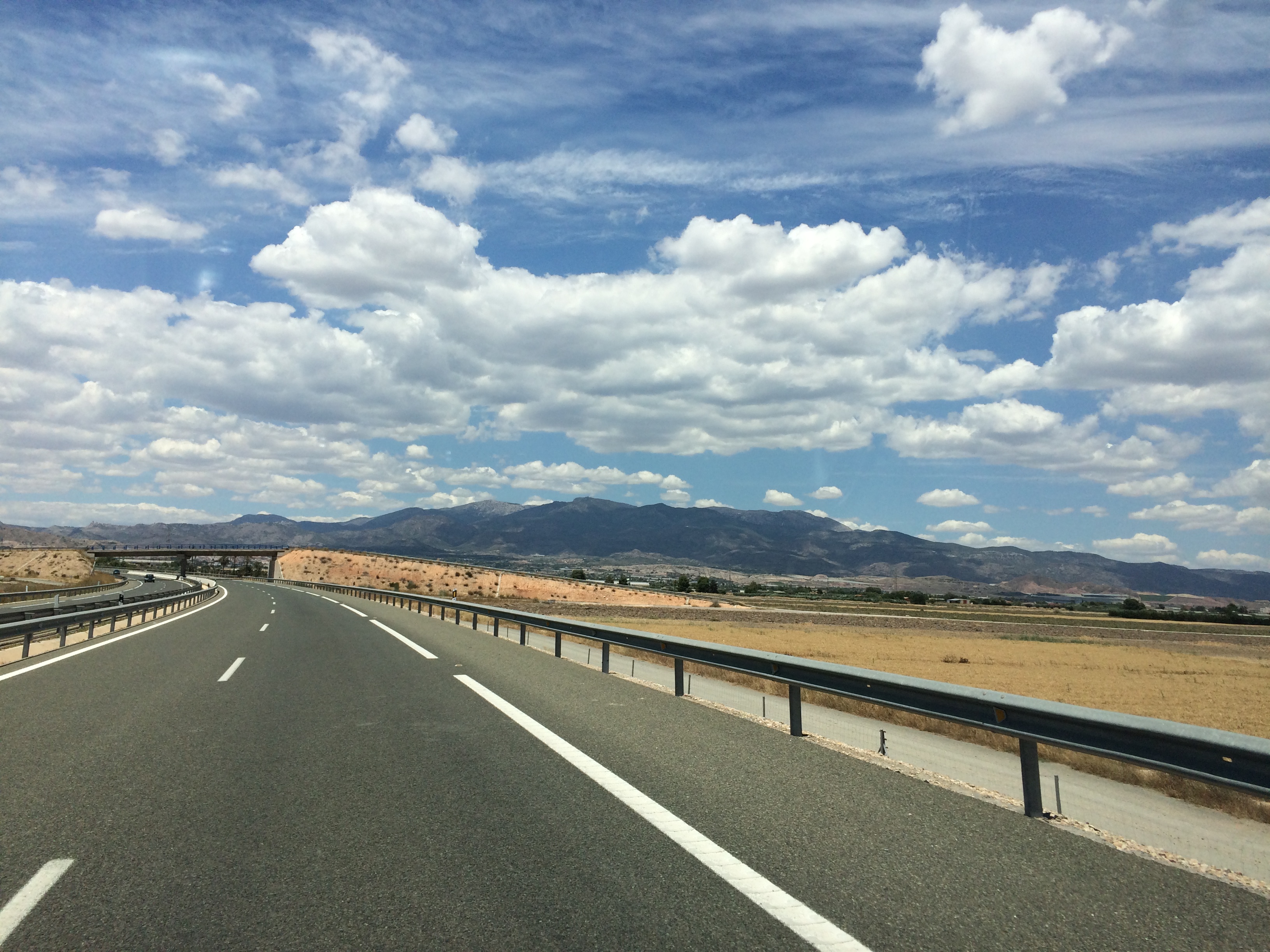
On the road again.

On the road again.

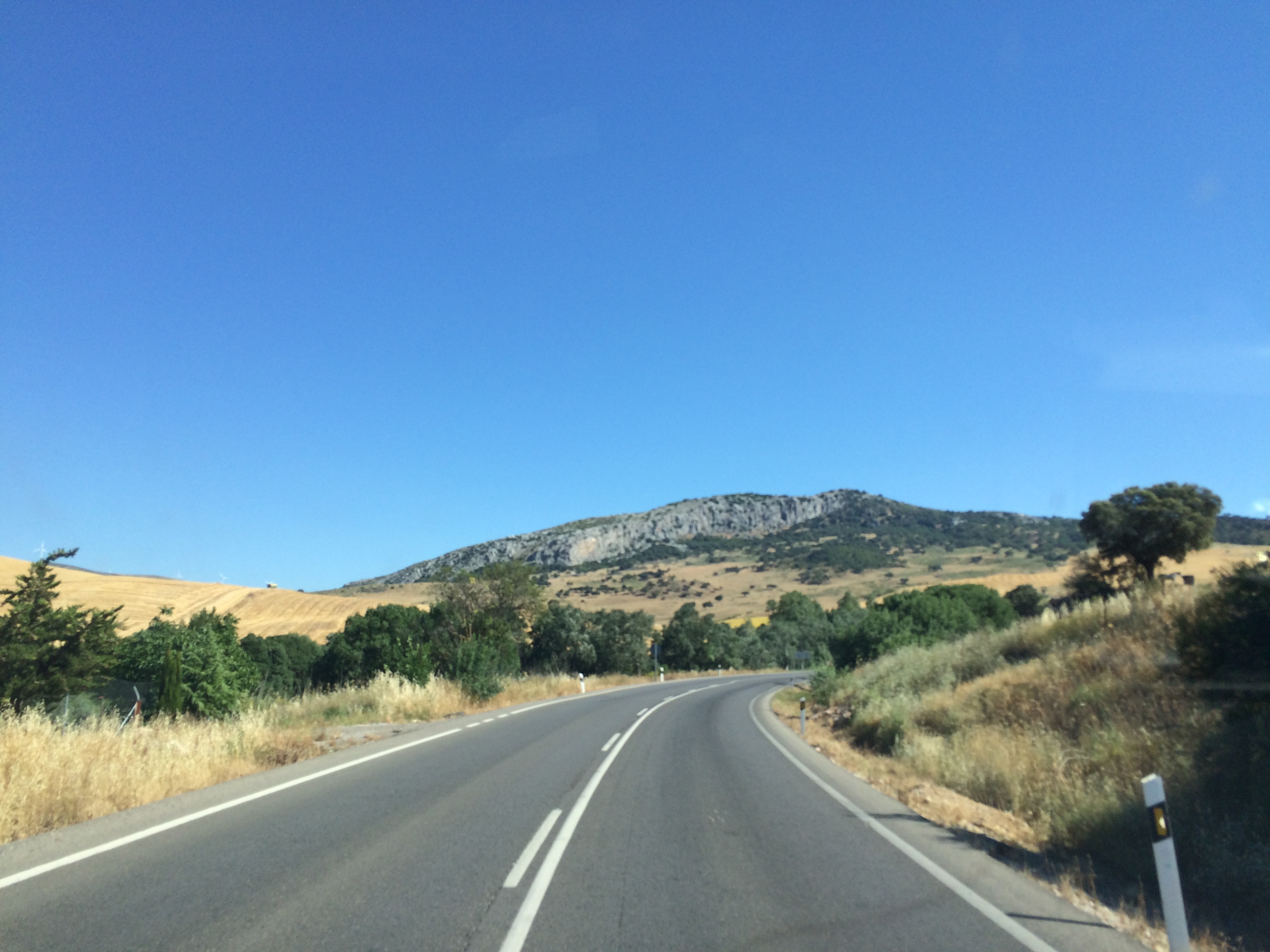
The road to Granada.

The road to Granada.

In the Epic of Gilgamesh, King of Uruk in Mesopotamia c 2650BC we’re told: “Life is a bridge, cross it but build no house upon it”. And Issa (Jesus) son of Mary is said to have echoed the same words: ”The world is a bridge, pass over it, but build no house upon it. He who hopes for a day, may hope for eternity, but the world endures but for an hour; spend it in prayer, for the rest is unseen”. I love that – “the world endures but for an hour, spend it in prayer, for the rest is unseen”. Would Enrique have been satisfied with that as that answer as opposed to the one I gave him? Is this close enough to what ‘spiritual’ means as opposed to institutional faith?

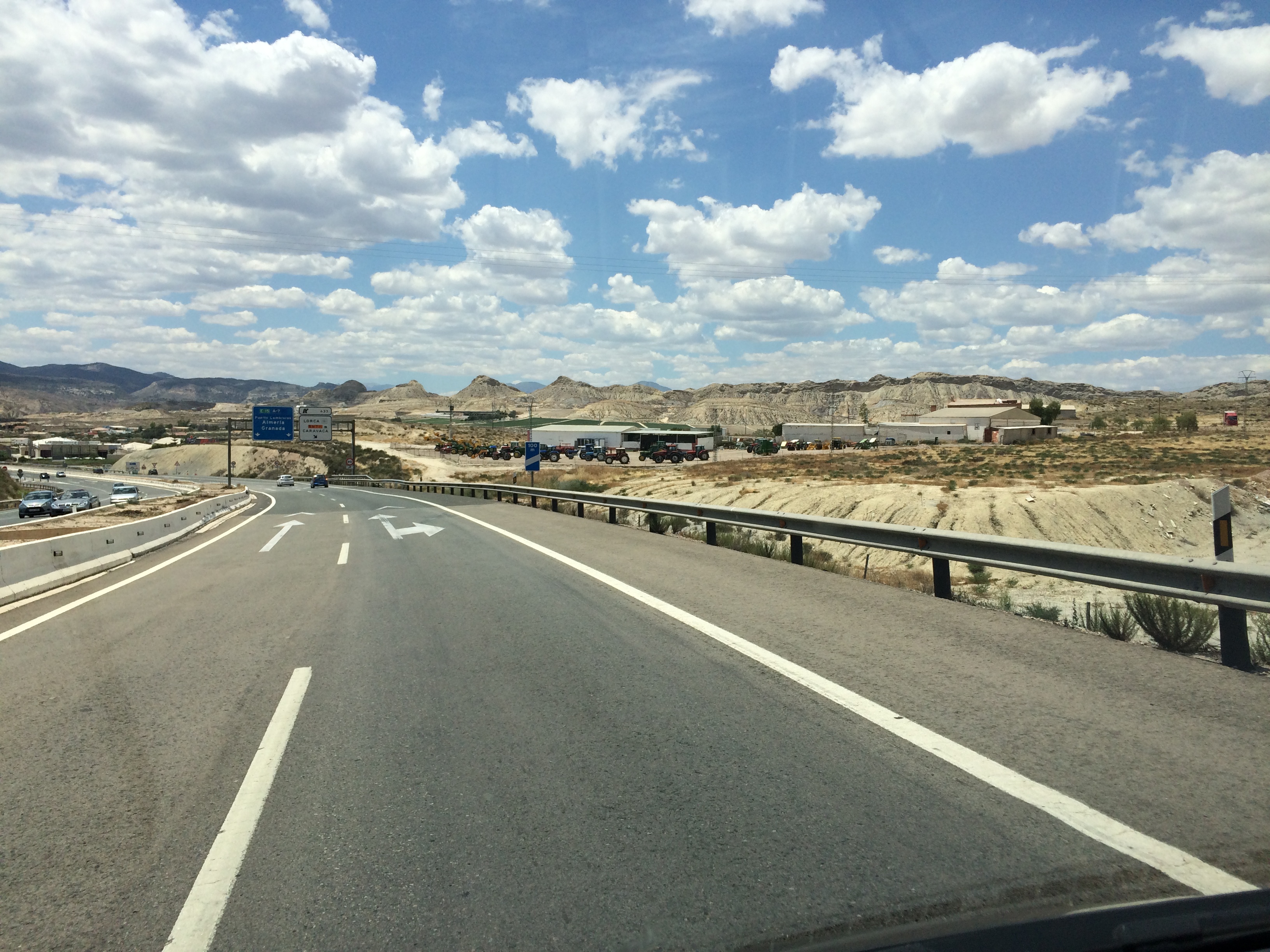
Going past Lorca.

“The world endures but for an hour – spend it in prayer, the rest is unseen”.

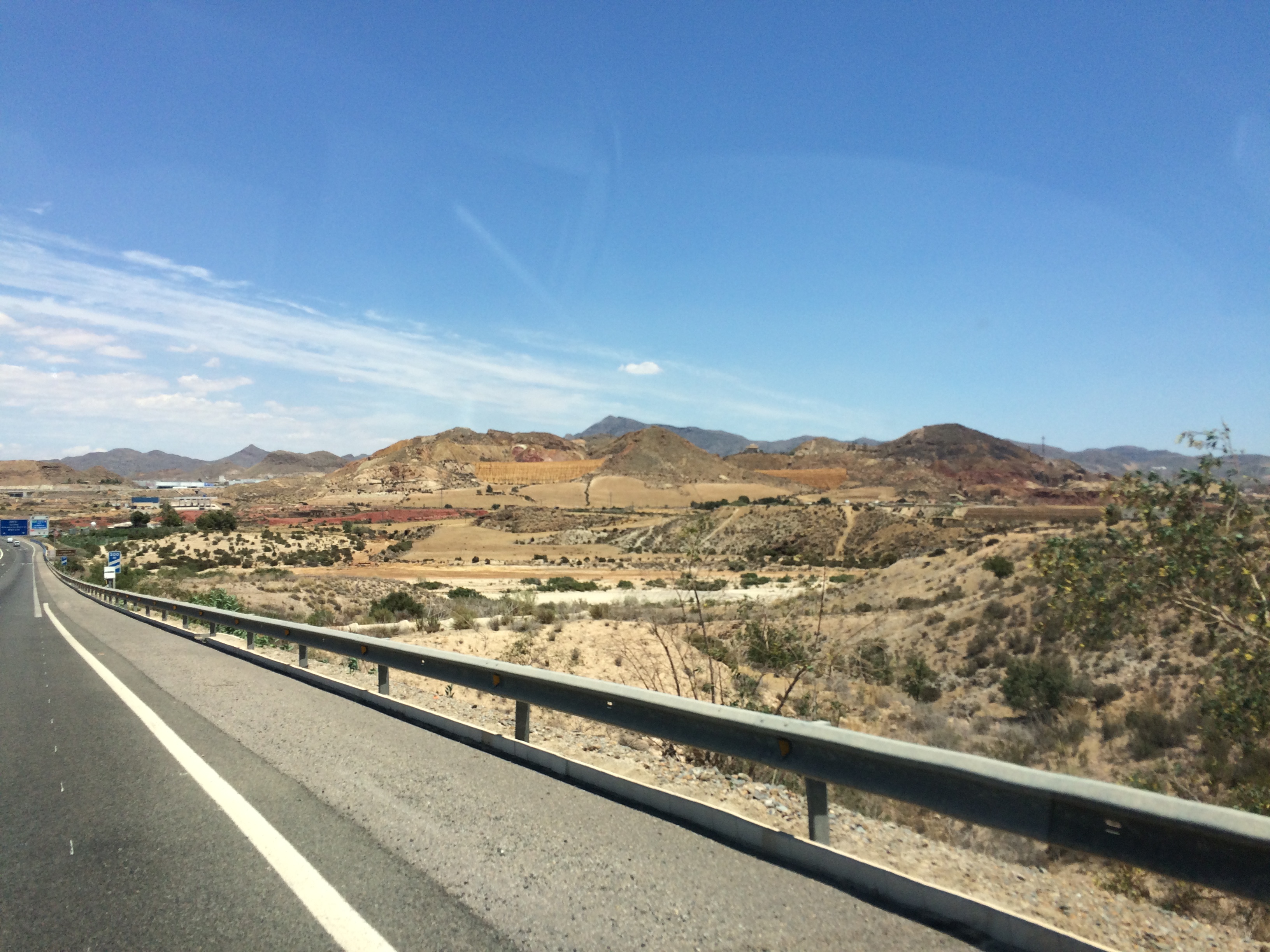
We’re headed for Granada and it’s a fair drive. We pass Mazaron, Saladillo, Totana, Lorca, Cullar and the landscape continues to be stark, arid and rocky.

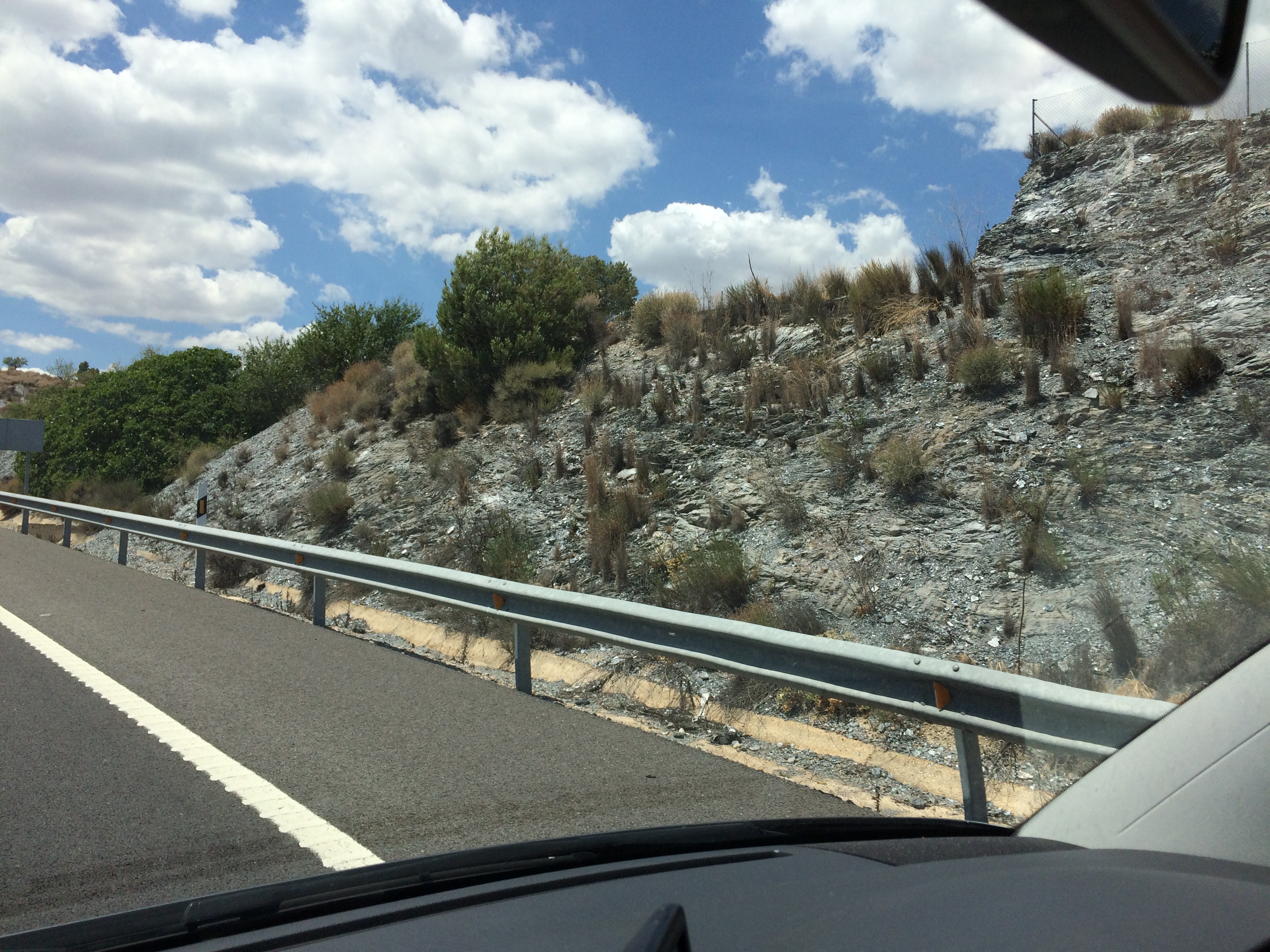
Rocky, slate ground as we approach the Sierra Nevada.

Rocky, slate ground as we approach the Sierra Nevada.

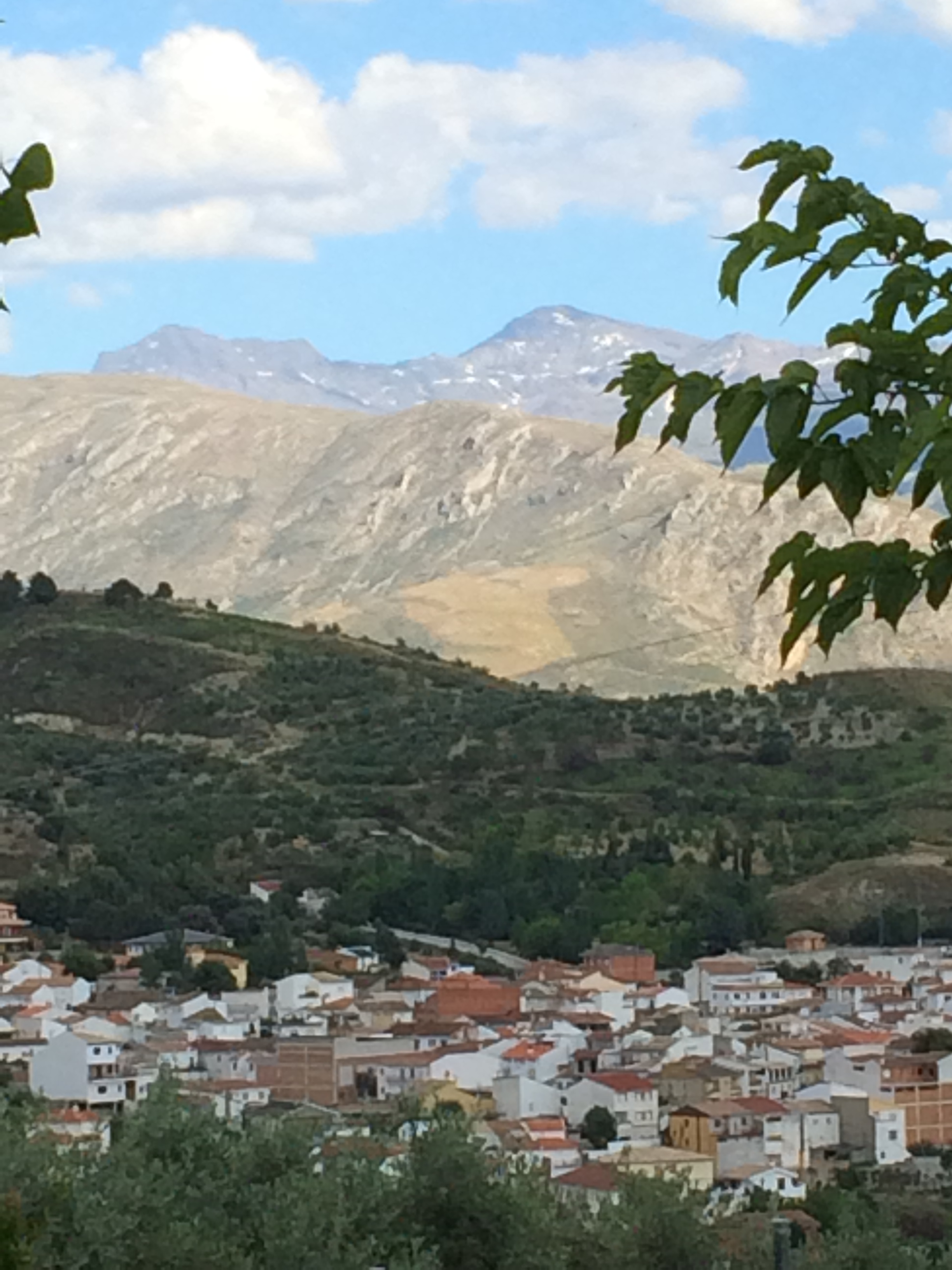
By the time we reach Guadix and Purullena the humbling heights of Sierra Nevada come into view.

Driving past Velez-Rubio with Sierra Nevada looming in the distance.

Driving past Velez-Rubio with Sierra Nevada looming in the distance.

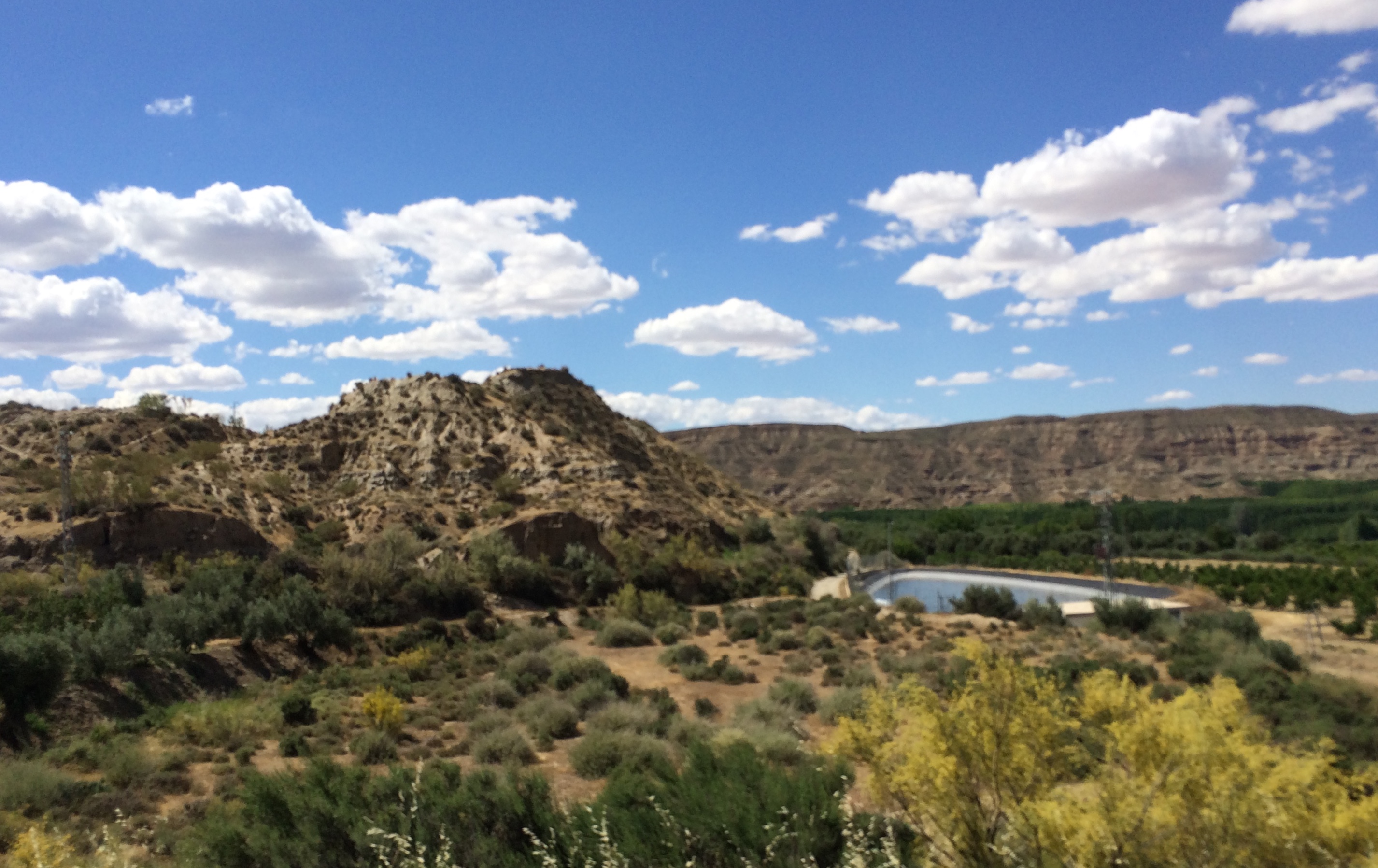
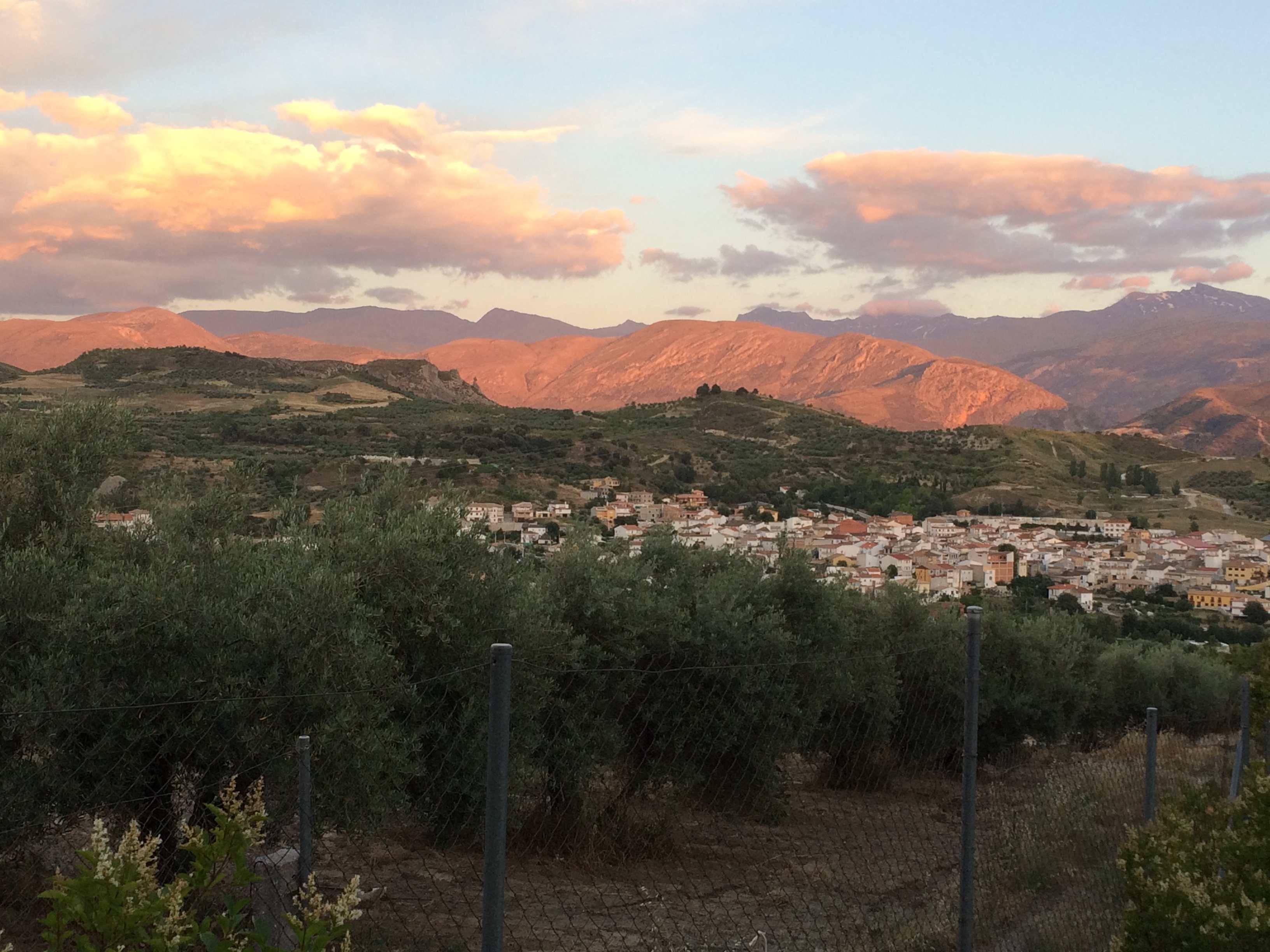
The view from Purullena.

The view from Purullena.

View from Purulent.

View from Purullena.

“All these things we’ll one day swallow whole and fade out again and fade out again” wails Thom York of Radiohead. Olive groves line the road again.

Olive groves in Diezma.

Olive groves in Diezma.

At 5pm we arrive at the Beas de Granada campsite, small and cosy, perched high up and with a stunning view of the Sierra Nevada mountain range. It’s fairly busy and we meet other friendly Brits there including an ex-head-teacher travelling on his own who we hit it off with, as we tend to with anyone who’s worked in education, and who gives us good advice. The site is perfect to use as a base from which to visit Granada and come back to and most people just catch the bus which stops conveniently just outside the entrance to the site. Our plan however is to drive into Granada the next day, visit Alhambra and the old city and drive to Seville – and this is what we set off to do despite advice that this is a touch too exhausting, which turns out to be quite true as we were to discover.

View from Beas de Granada campsite.

View from Beas de Granada campsite.

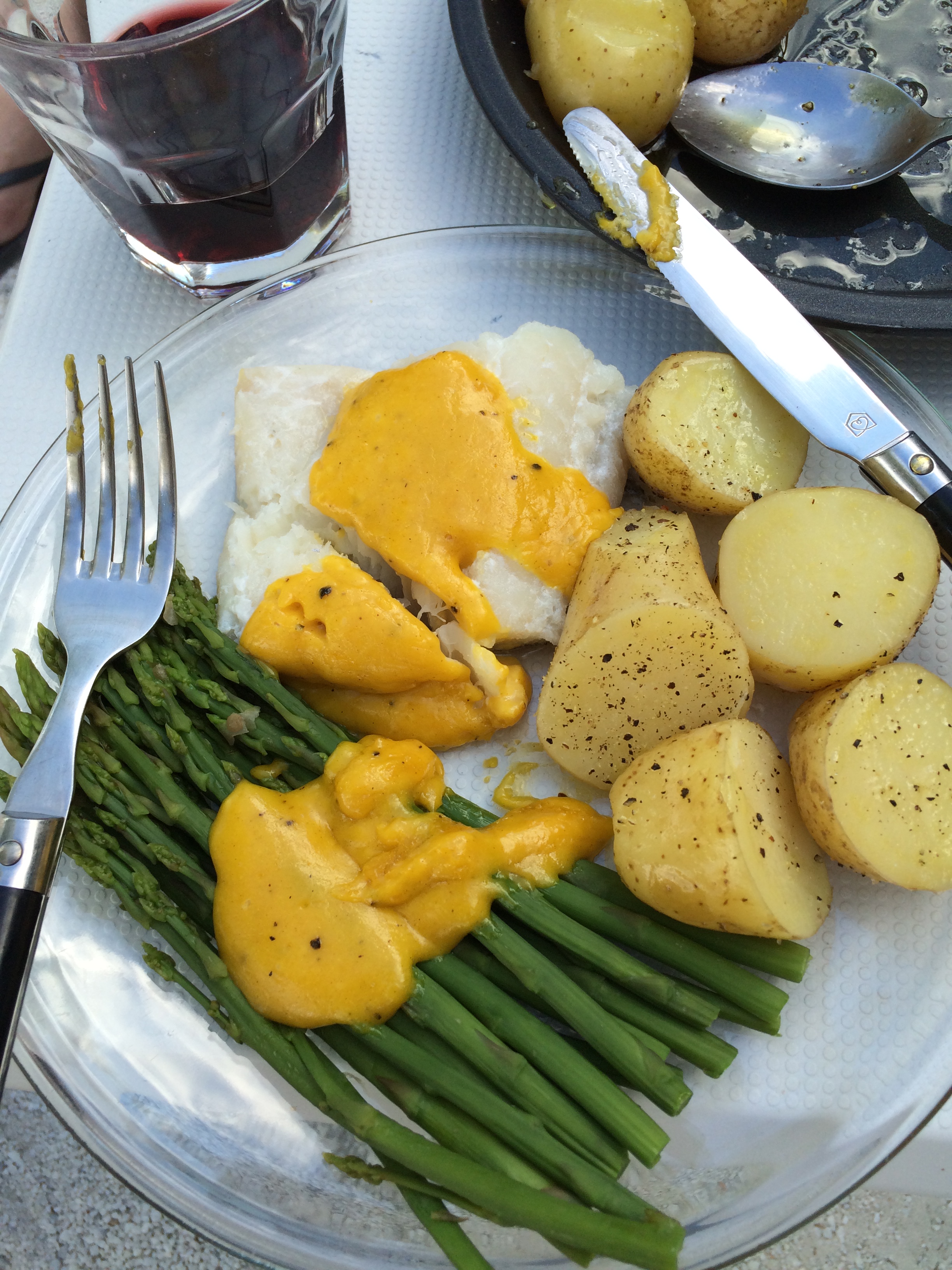
In the meantime however, we settle in for the night on a good pitch with a great view of Sierra Nevada and Judith makes a very tasty poached Baccalau fish (cod) with new potatoes and asparagus and hollandaise sauce (the high cholesterol content of the latter compensated for by the healthiness of the former or so we hope). All washed down with the rest of the 2013 El Coto Rioja we’d got from a motorway Carrefour. We were never that keen on Rioja, but in Spain at least, it really does taste rather good.

Judith's poached cod, asparagus and new potatoes with hollandaise  sauce.

Judith’s poached cod, asparagus and new potatoes with hollandaise
sauce.

IMG_2551

Photo of Beas de Granada at sunset

Monday 15th and Tuesday 16th June – Cartagena on the Costa Calida

Standard

I’ve found myself saying on a few occasions so far: “We’re not on holiday”. That’s right – there’s a difference between being on holiday and travelling.   For us this isn’t an extended holiday – the proof being that so far it’s not been all comfort and luxury. It’s a ‘journey of discovery’. Travelling has its rewards of course but all holiday-style comfort it is not, and this is compounded by the pace we’re trying to move at. We’re constantly trying to strike a balance between ‘visiting’ places and experiencing something of the local culture and making progress with our journey. In short, it’s slightly knackering.

From Valencia, we therefore consciously circumvent the well-known holiday resorts of the Costa Blanca and head for Cartagena on the Costa Calida, just south of Murcia. Acres and acres of olive and citrus groves line the road. It seems the rain has not had its last word yet and again, we see the dark clouds looming and we get a fair amount of rain and high winds around Xativa, Vallada and La Font de la Figuera (some great names of places) but we manage to evade the worst of it and by the time we get to Monforte del Cid and Candesol the landscape has changed and become quite a bit more arid. At Candesol, we see a sign in Arabic showing the direction of the ferry to the Spanish enclaves of Ceuta and Melilla in North Africa.

Acres of olive and citrus groves along the route to Murcia.

Acres of olive and citrus groves along the route to Murcia.


Wind and rain continue to pursue us in Valada and La Font de la Figuera.

Wind and rain continue to pursue us in Valada and La Font de la Figuera.


The landscape turns more arid around Monforte del Cid.

The landscape turns more arid around Monforte del Cid.


We arrive in Cartagena by 7pm and it looks like Arizona. The road rises steeply and suddenly we find ourselves overlooking a stunning coastline just over the hills.   As we come steeply down on the other side, our campsite, the Camping Los Madriles, is nestled on slightly elevated ground overlooking a magnificent azure bay and the little town of Isla Plana.

Steep hills appear as we approach Cartagena.

Steep hills appear as we approach Cartagena.


Isla Plana stunningly comes into sight as we reach the top of the hill overlooking it.

Isla Plana stunningly comes into sight as we reach the top of the hill overlooking it.


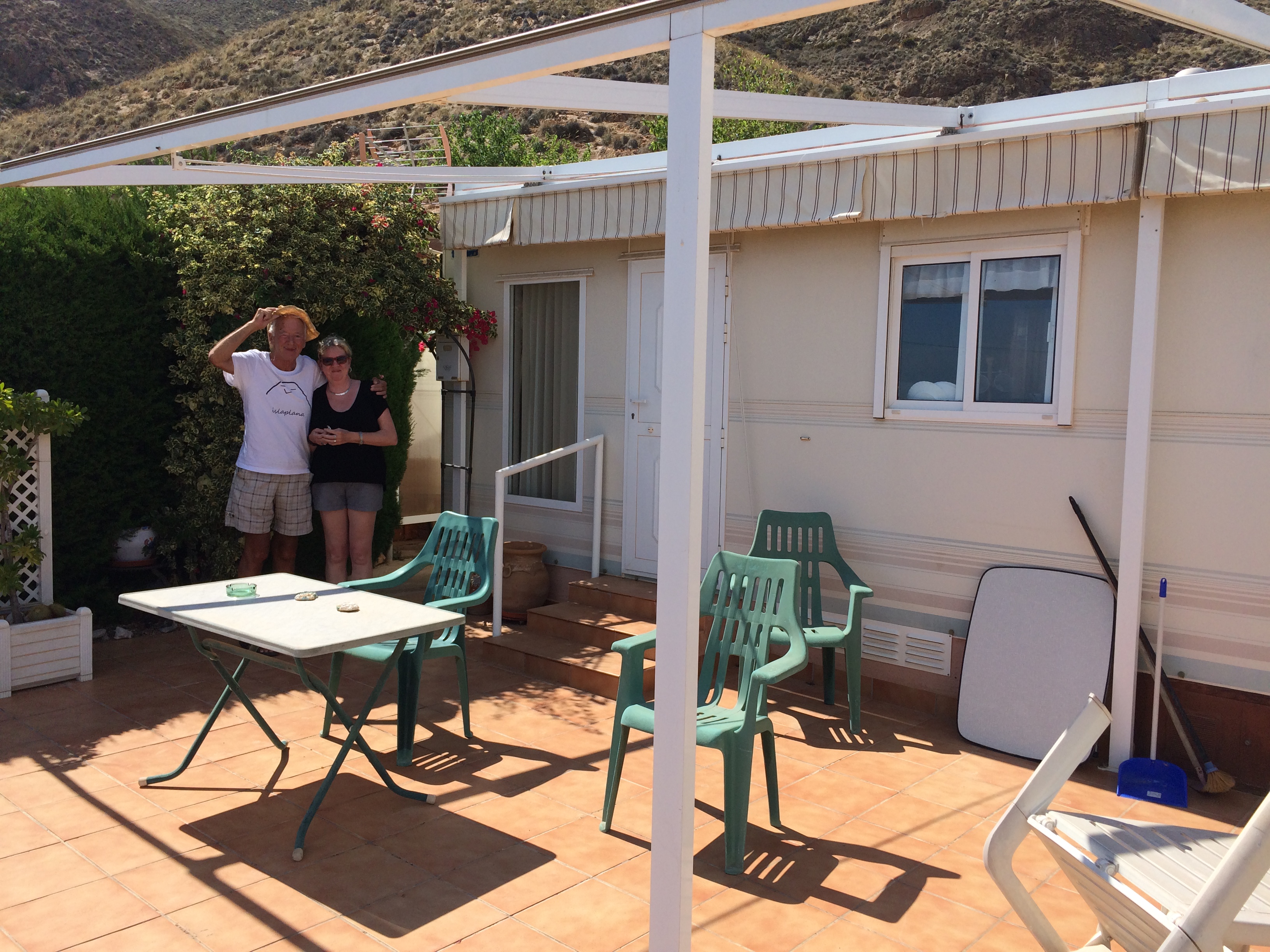
It’s a real 5-star campsite, very well designed, with good-sized and shaded pitches laid out on escarpments at different levels, as well as its own permanent caravans and ‘casitas’ that people rent for the whole year even if they only come for a few months. Bougainvillea and hibiscus bushes all around. This was a relatively quiet time for them (apparently they’re full in winter) but the people we saw and spoke to there were more like permanent or semi-permanent residents. A Danish retired couple who after spending years travelling around France and Spain only ever come here now for 4 months every year. Ditto a Dutch retired school teacher and his wife. And Barry, the 80-year old former bookmaker from Cork in Ireland, who’s bought his own ‘casita’ right at the very top of the site and returns to Ireland for just 3 months a year. He was in the bar in the afternoon methodically drinking his bottles of Heineken lagers. “How many of these have you had?” “This is my fifth” “And will you have more tonight?” “Oh I might have a little vino”. He invited us to go up and see his ‘casita’ and managed the steep hill with amazing dexterity given both the beers and his age. It’s probably what keeps him fit, seeing as he’s never had to see a doctor in Spain. The view from the garden of his casita was breathtaking but inside it was an absolute tip. “Can you get cleaners here?” “Oh yes it is a bit messy, I should maybe tidy up” he grinned with probably little intention of doing anything of the sort.

Brenda happily parked in one of Camping Los Madriles's flowery 'parceles'.

Brenda happily parked in one of Camping Los Madriles’s flowery ‘parceles’.


Colourful hibiscus and bougainvillea bushes - unmistakably Mediterranean.

Colourful hibiscus and bougainvillea bushes – unmistakably Mediterranean.


Barry from Cork showing off his 'casita'.

Barry from Cork showing off his ‘casita’.


The view from the garden of Barry's casita.

The view from the garden of Barry’s casita.


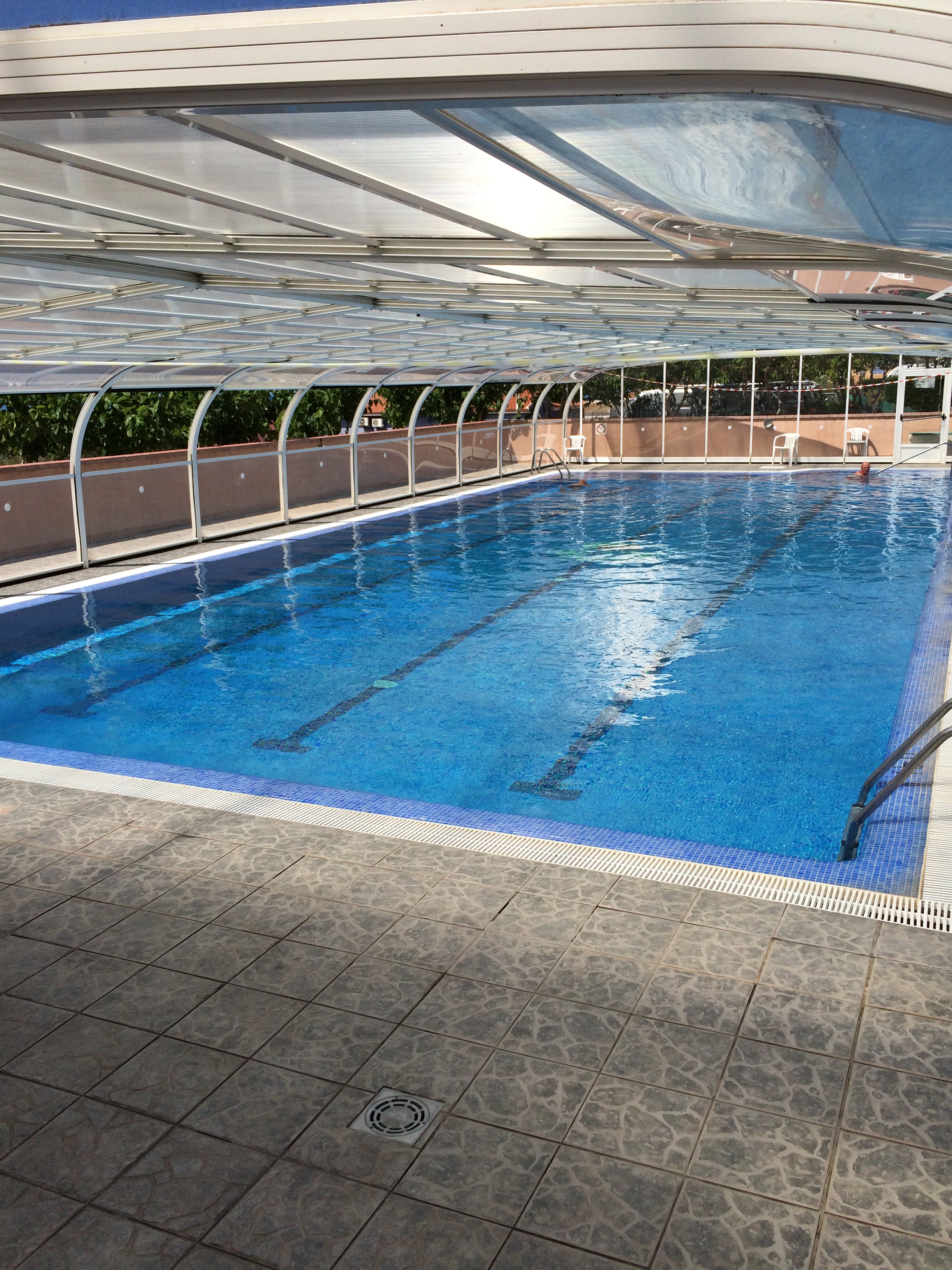
But the ‘piece de resistance’ at the site is its pool facilities. Two pools, one for bathing in and another, shaded from the relentless sun, rectangular in shape and good-sized for proper swimming. Both are filled daily with spring water coming down from the hills, then emptied every night ready to be re-filled again in the morning with fresh spring water. The water comes down warm and slightly salty but is supposed to be very good for you. A kind of spa. We stayed two nights but I only discovered the rectangular pool on the second day so only managed one swim but it was a good one.

One of the two pools at Camping Los Madriles, daily filled with warm spring water.

One of the two pools at Camping Los Madriles, daily filled with warm spring water.

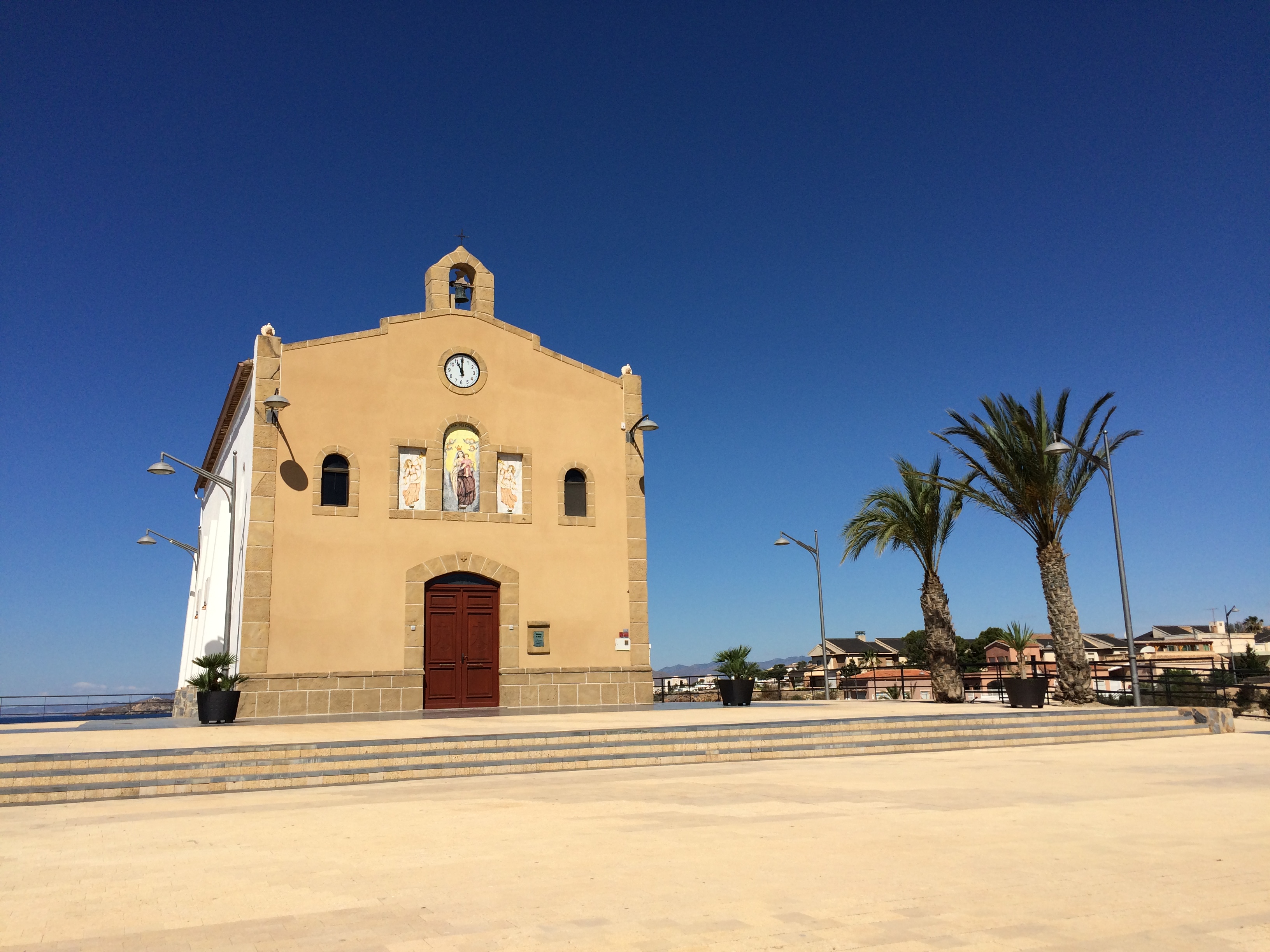
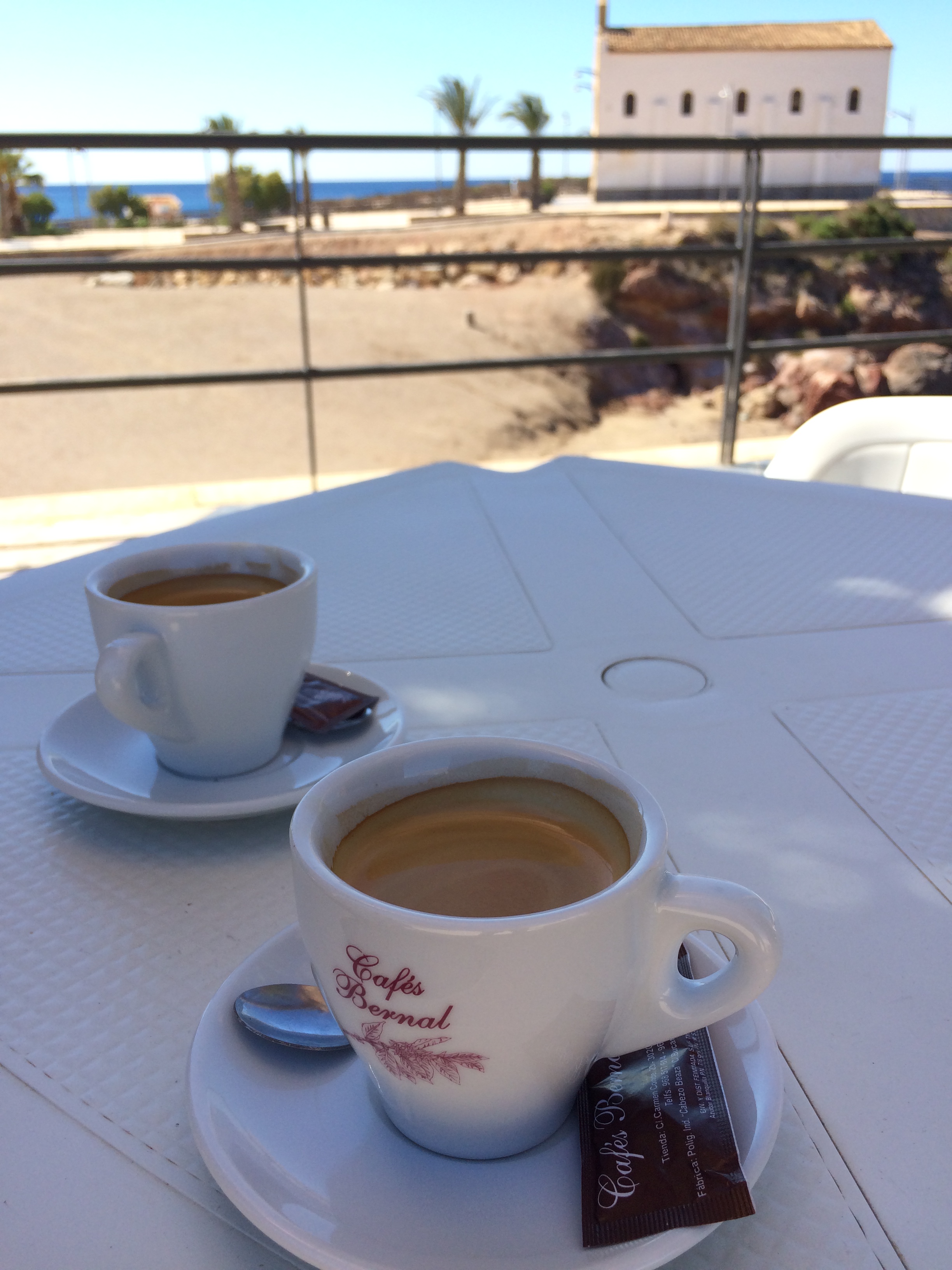
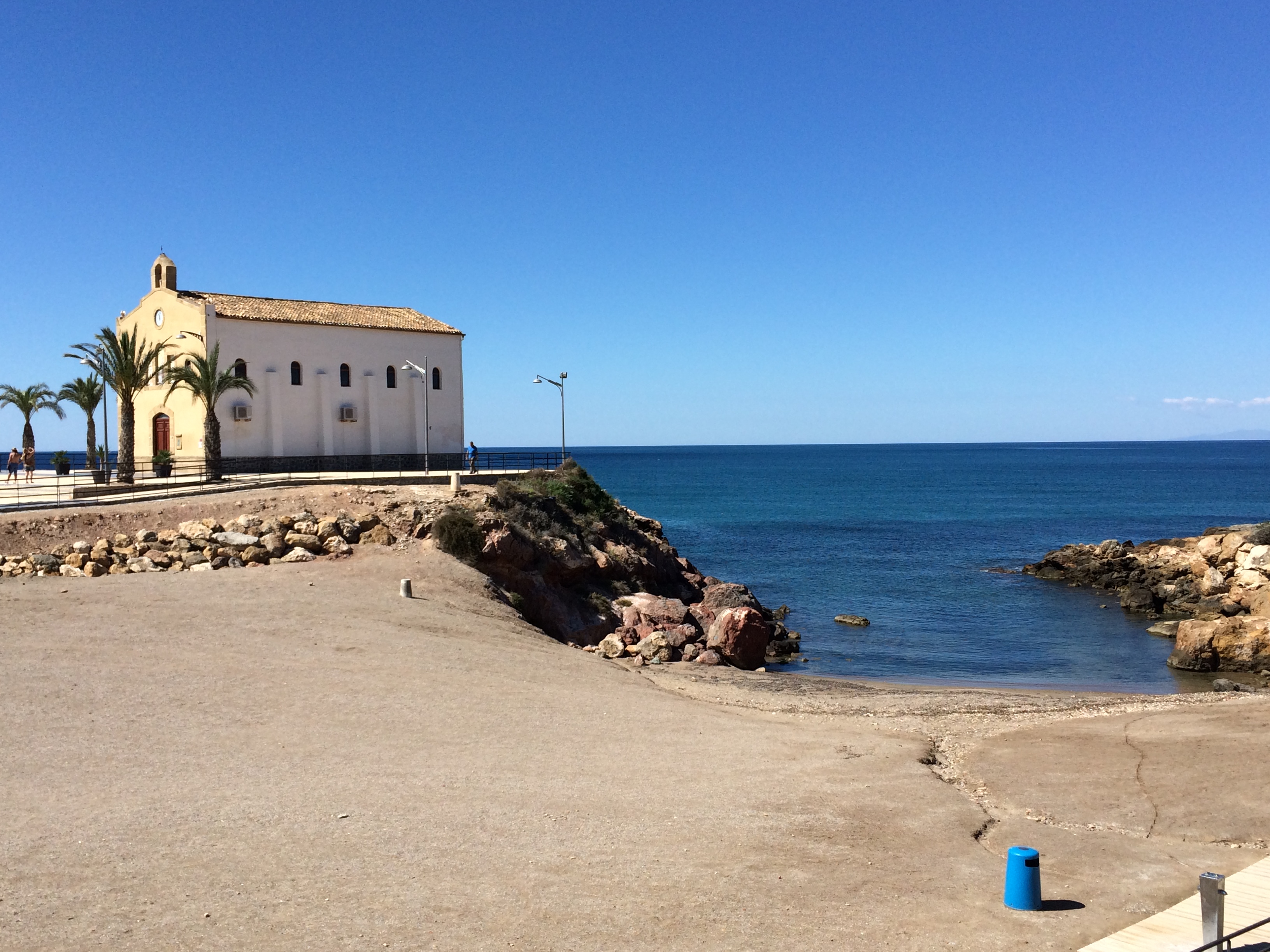
On Tuesday morning, we make a fairly early start and take our bikes down to the little town of Isla Plana 2 kms down the coast for a coffee at the town’s social club café but seemingly popular with Brits who are either living or holidaying there. It overlooks a lovely bay and beach with a picturesque old church on the edge of it.

It provides a very pleasant view as we sit drinking our café Americanos.

Old chapel at Isla Plana.

Old chapel at Isla Plana.


Cafe americano at the Isla Plana Social Club.

Cafe americano at the Isla Plana Social Club.


Having decided we liked the little town and that it had two or three places to eat, we agreed we would come back in the evening for dinner. In the meantime, we cycled another 5 kms in the opposite direction back past the campsite again, where we were told there were nice beaches. The summer season has clearly not yet properly begun as there aren’t many people around. The beaches are pebbly but sandy a little further in and we find somewhere for an invigorating swim. We then manage to cycle back, stopping at a little supermercado for a few provisions where the three people in there are all bellowing at each other – which is a slightly Middle Eastern trait we’ve noticed in Spain – all in time for a light lunch made up of all our left overs to empty the tiny fridge.

Gorgeous view of coastline with Isla Plana at other end of the bay.

Gorgeous view of coastline with Isla Plana at other end of the bay.

After the encounter with Barry in the afternoon, we get ready to walk down to Isla Plana for a proper meal for a change. Though we’d both forgotten, it was our 33rd wedding anniversary but for some reason we both had a strong sense that we should do something outside our normal routine tonight so perhaps subconsciously we knew. We rarely both remember. We seem to take it in turns and this year, Judith remembered first, her memory jogged by something I’d said earlier that afternoon. But we managed to mark the occasion and the restaurant gave us a glass of Spanish bubbly on the house. The food was good – Dover sole and loin of pork – and excellent value for money, at under 35 Euros.

We both subconsciously knew it was a special occasion - our 33rd wedding anniversary.

We both subconsciously knew it was a special occasion – our 33rd wedding anniversary.


La hermosa Segnora in the main plaza in Isla Plana at sunset.

La hermosa Segnora in the main plaza in Isla Plana at sunset.


On our way we pass the small chapel on the bay again and while I try to decipher a historical notice in Spanish in front of a strange dome-like structure near the chapel that turns out to be some sort of ancient ‘bagno’ fed from warm spring water coming down from the hills, Judith is engaged in conversation by a jolly avuncular man who’s in the process of locking the chapel door. They seem to be talking and laughing which is strange considering he speaks no English at all and Judith admits she hasn’t a clue what he’s saying but his manner and laughter are infectious. As I walk up he questions me in that searching, over-familiar Mediterranean style which can be intimidating but I recognize and sort of welcome. I’ve been managing reasonably well so far using basically Italian and adding ‘os’ at the end of words and turning ‘c’ into ‘th’, ‘g’ into ‘kh’ and ‘ll’ into ‘y’. I sort of understand their gist most of the time and they mine.

Enrique is intrigued by Judith being English and me Italian and asks quizzically how that works. “Mui bien” I say but he peers into my eyes for some reason not convinced! He tells me he worked for Ford motor company as an electrical engineer for 30 years in Valencia. He wants to show us where the other restaurant is and it’s beginning to look like he’s attaching himself to us for the evening. We start to move off in the opposite direction saying we’re going to have an aperitif at the social club. “Adios, encatado” I say. He grabs my arm, peers into my eyes again and asks almost accusingly: “Tu crees in Dio?” So it was me there was clearly something about he didn’t quite trust.

IMG_2454

Saturday 13th to Tuesday 16th June – Calatayud to Valencia via Orhuela del Tremedal and Sagunto

Standard

We leave Camping Sevinan and the ants on the morning of Saturday the 13th heading in the direction of Valencia where at least the weather forecast appears more propitious. We’re now in the plains of the Sierra de Solorio and no sooner have we set off than dark clouds start to gather again.

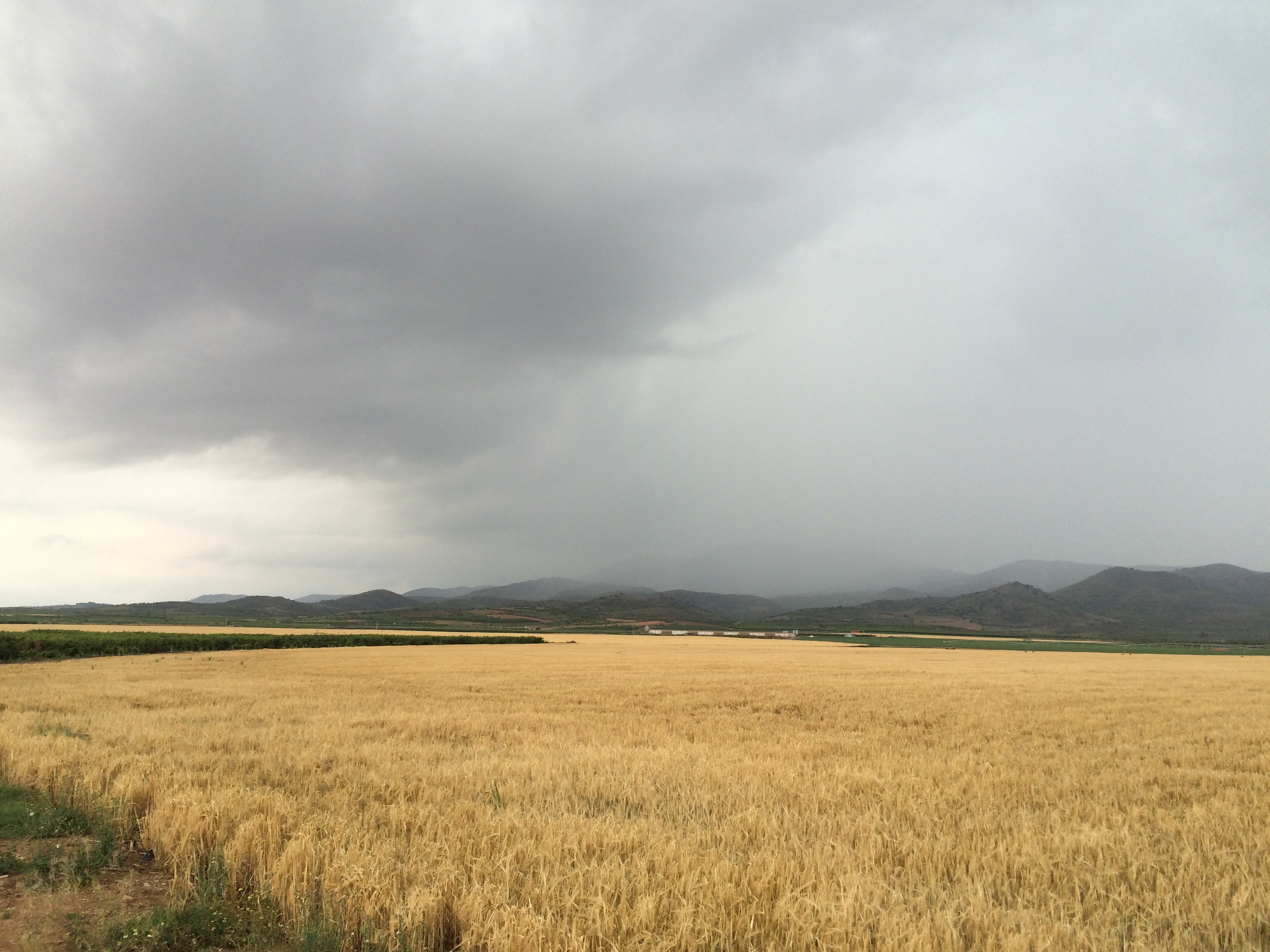
Dark clouds gather over the horizon in Almonacid de la Sierra.

Dark clouds gather over the horizon in Almonacid de la Sierra.

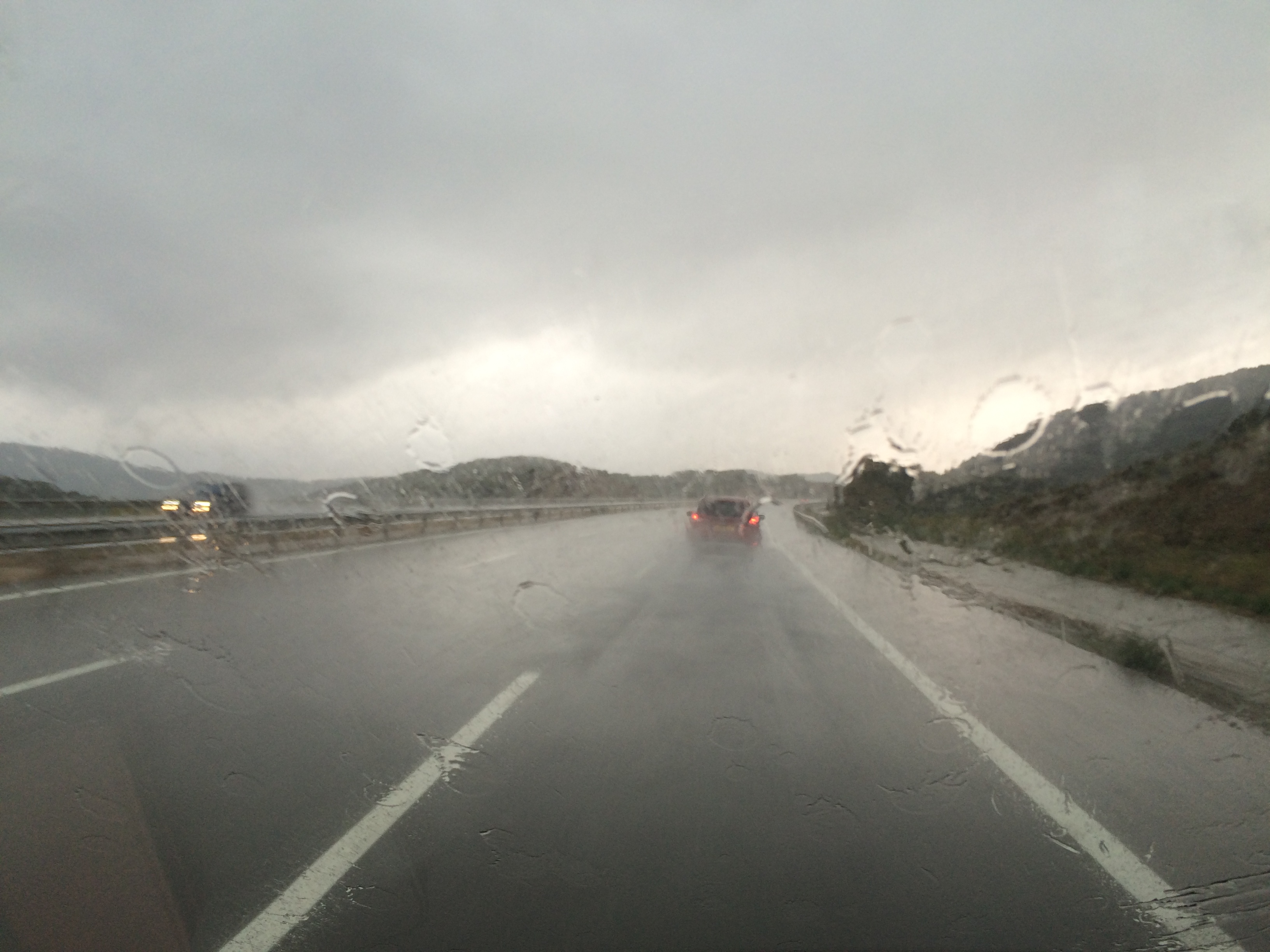
We go past Carinera, Paniza, Calamocha as the rain starts lashing down and strong winds pick up. By the time we reach Villafranca and Singra the windscreen wipers can barely cope with the almighty downpour. Brenda is a high-top and is being seriously buffeted by the wind. It might be true that the rain in Spain falls mainly on the plain but at the moment it seems to be falling absolutely everywhere and all the time! We pass a motorcyclist who’s had to slow right down to avoid being swept off the road and we smile sympathetically at him. He smiles back through the visor in his bell helmet. I used to be a biker and know only too well how miserable it is riding in heavy rain and wind.

Strong winds and heavy rain as we pass Paniza.

Strong winds and heavy rain as we pass Paniza.

The downpour is relentless over Villafranca.

The downpour is relentless over Villafranca.

As we reach Torrelarcel, there’s a temporary dramatic parting of the dark clouds as lighter clouds take their place – the sky looks like something on the ceiling of the Sistine Chapel. Maria Callas is singing La Wally by Catalani with all her soul and her divine voice adds to the dramatic effect. The motorcyclist overtakes us slowing down slightly as he does so to smile and give us a V sign (the polite one!) then he rides off – we’re too slow, pity that would have been a nice photo. The respite is only a short one however – as we arrive at Santa Eulalia, it’s looking apocalyptic again.

Dramatic sky over Torrelacarcel as the dark clouds begin to part.

Dramatic sky over Torrelacarcel as the dark clouds begin to part.

.. but come back as we reach Santa Eulalia.

.. but come back as we reach Santa Eulalia.

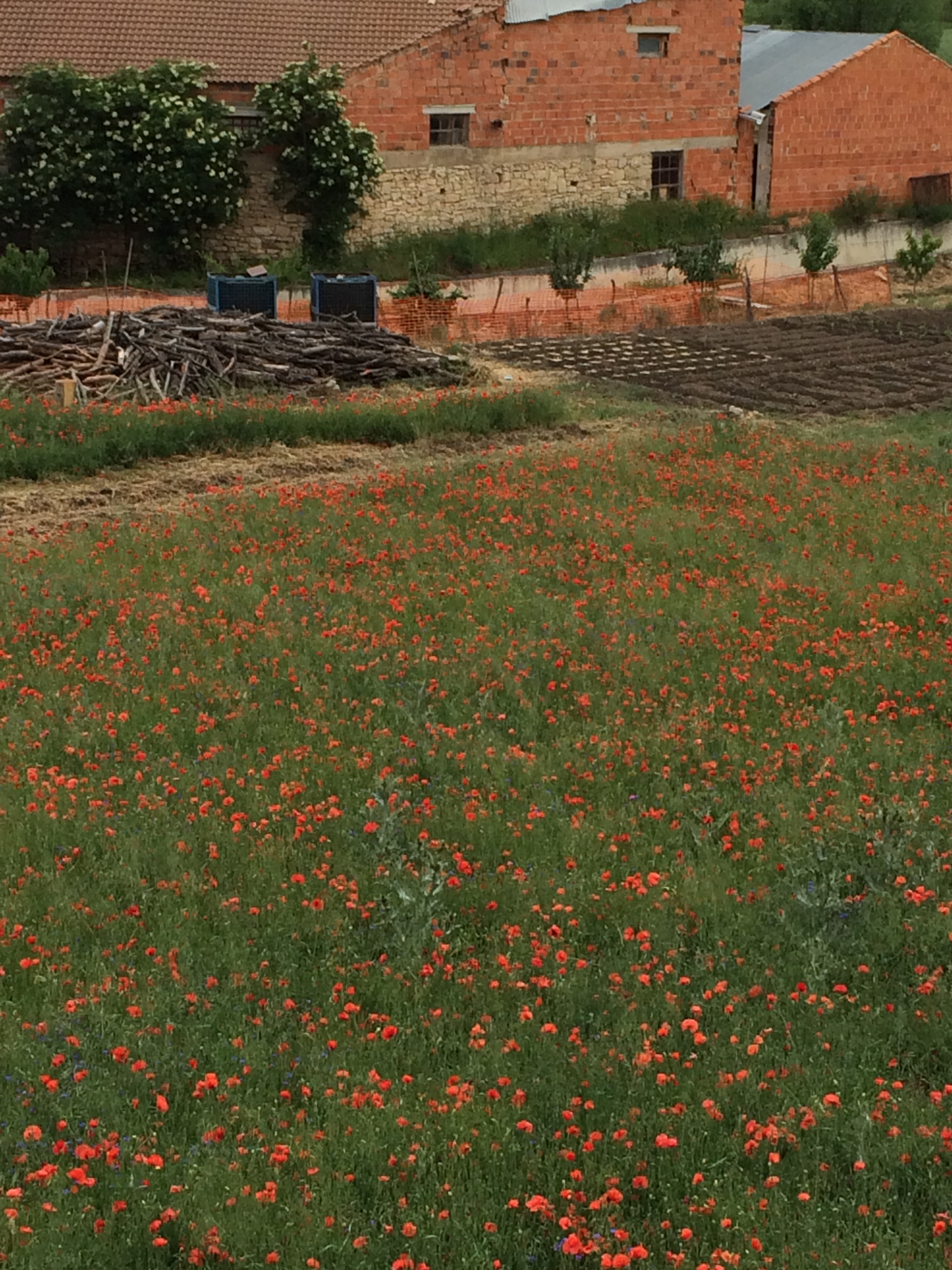
It’s still raining when we get to Pozondon with a sign next to it saying it’s a heritage site (‘Centro interpretacion arquitectura traditional’). Old ramshackle crumbling homesteads line the road. We drive through the village and stop briefly to take photos. Not a soul in sight. It’s like a ghost town. We drive out again having seen Pozondon but none of its inhabitants.

Pozondon is advertised as a heritage site but no sign of any people.

Pozondon is advertised as a heritage site but no sign of any people.

It’s been such a dreadful journey, we decide to stop at a campsite nearby in the Sierra de Albarracin. It’s in a place called Orhuela del Tremedal but what we don’t realize is that we’ve been gradually climbing for quite a while and Orhuela as we’re told by the Campsite owner, lies 1500m high. The site is pretty basic and we get the feeling we’re intruding on something when we arrive at the reception-cum-bar where the owner and a group of friends still seem to be finishing off a boozy lunch at 5pm. It’s a little bit fresh when we arrive and install ourselves at the very basic site.

View of Orihuela from the 1500m high campsite where we froze that night.

View of Orihuela from the 1500m high campsite where we froze that night.

But the temperature drops quickly. We put on a jacket and walk down and back up again into Orhuela village to try and find a restaurant. It’s a pretty looking old village from a distance but closer up, it’s clearly struggling economically. We go into a bar that looks like it could also serve food but are greeted by about 10 pairs of eyes staring unwelcomingly at us. Again that feeling that we’d interrupted something – this time, apart from the drinking, a bull-fighting tournament they were watching on the TV on the wall – honestly! We turn and go straight back out again and ask some women sitting outside where we can find somewhere that serves food – they point to the end of the road and say something about ‘ultima’. The place we find looks more promising as it says restaurant outside, but yet again, as soon as we step inside we interrupt a small group of people sitting at the bar and busy drinking – “nada comido”.

Judith beginning to feel chilly as the temperature drops.

Judith beginning to feel chilly as the temperature drops.

The rustic but unwelcoming village of Orihuela - we're at a loss to find somewhere that serves food.

The rustic but unwelcoming village of Orihuela – we’re at a loss to find somewhere that serves food.

So it’s back to the campsite and that chicken consommé and tin of cassoulet we’d fortunately bought in a Carrefour City (that’s their equivalent to Tesco Express or other mini-marts) before we left France. Actually, it was just the ticket as it was staring to get quite nippy. In fact that was just the beginning –the temperature dropped so low during the night that we had to sleep fully clothed and we still froze as of course we’d left warm blankets in Brittany and had only kept thin cotton ones. The wind had also picked up again and there was a terrible cold draft in the van all night – in a word, we had an awful night and slept very badly.

The best thing for it therefore was to have a hot shower in the morning, eat some hot porridge and set off as soon as physically possible, which is what we did. The aim was to get to the warm coast around Valencia and absorb some of that Mediterranean sun at last. Maria Callas again, this time she’s singing plaintively: “Reponds a ma tendresse, reponds a ma tendresse” in Saint Saens’s Samson and Delila . We stopped at Terual as it looked nice from a distance but in fact offered nothing of any particular interest. We had in fact yet to drive through a village or small town which, as happens in France all the time, immediately looks inviting with its boulangerie, café bistrot offering the day’s ‘formule’ and obligatory little town square and mairie. We did find a café though and had a coffee and Spanish pasties.

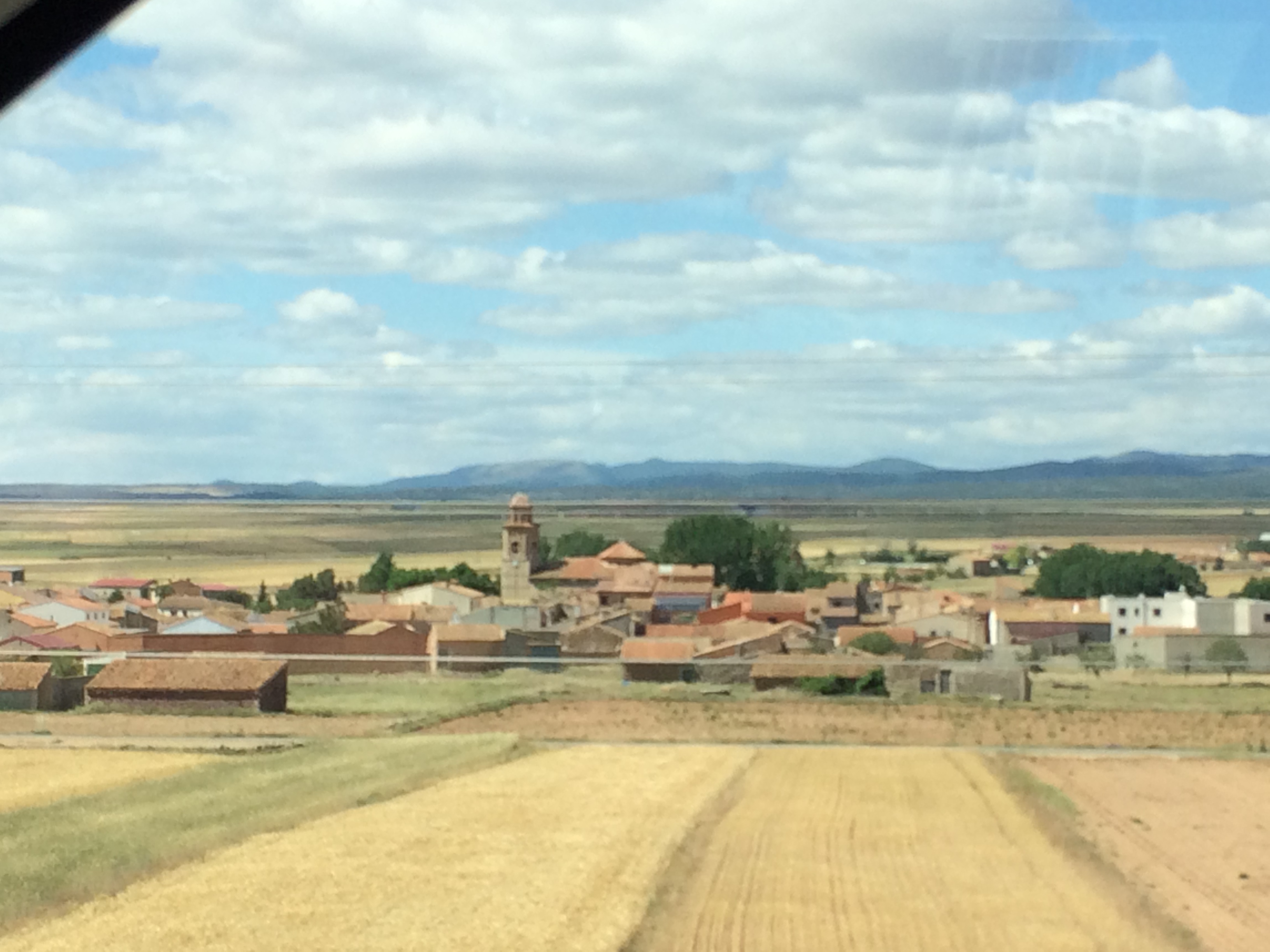
The town of Terual on the way to Sagunta near Valencia.

The town of Terual on the way to Sagunta near Valencia.

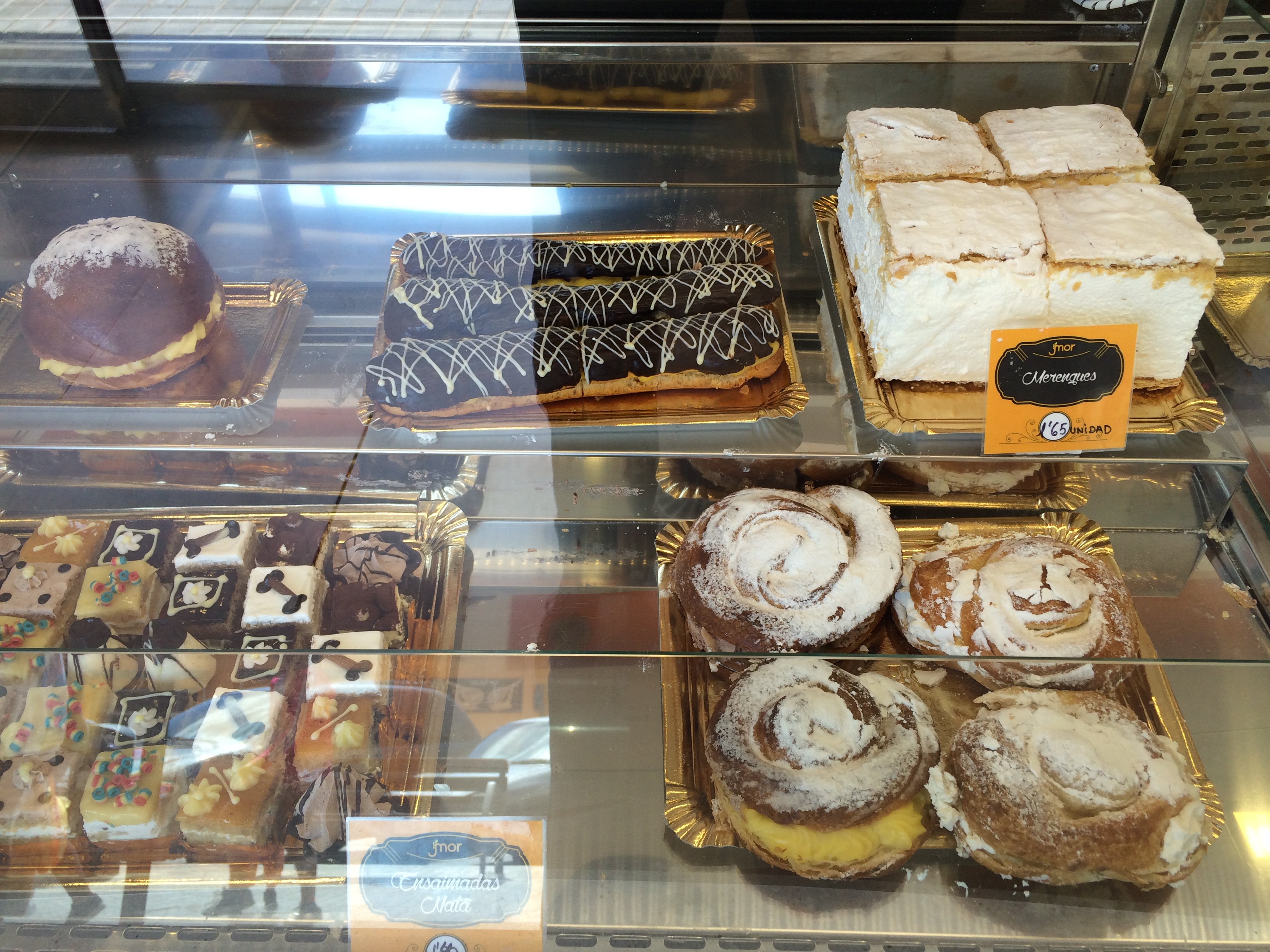
A brief stop in Terual for a coffee and Spanish savoury pasties.

A brief stop in Terual for a coffee and Spanish savoury pasties.

We agree the cakes don't look particularly appetizing.

We agree the cakes don’t look particularly appetizing.

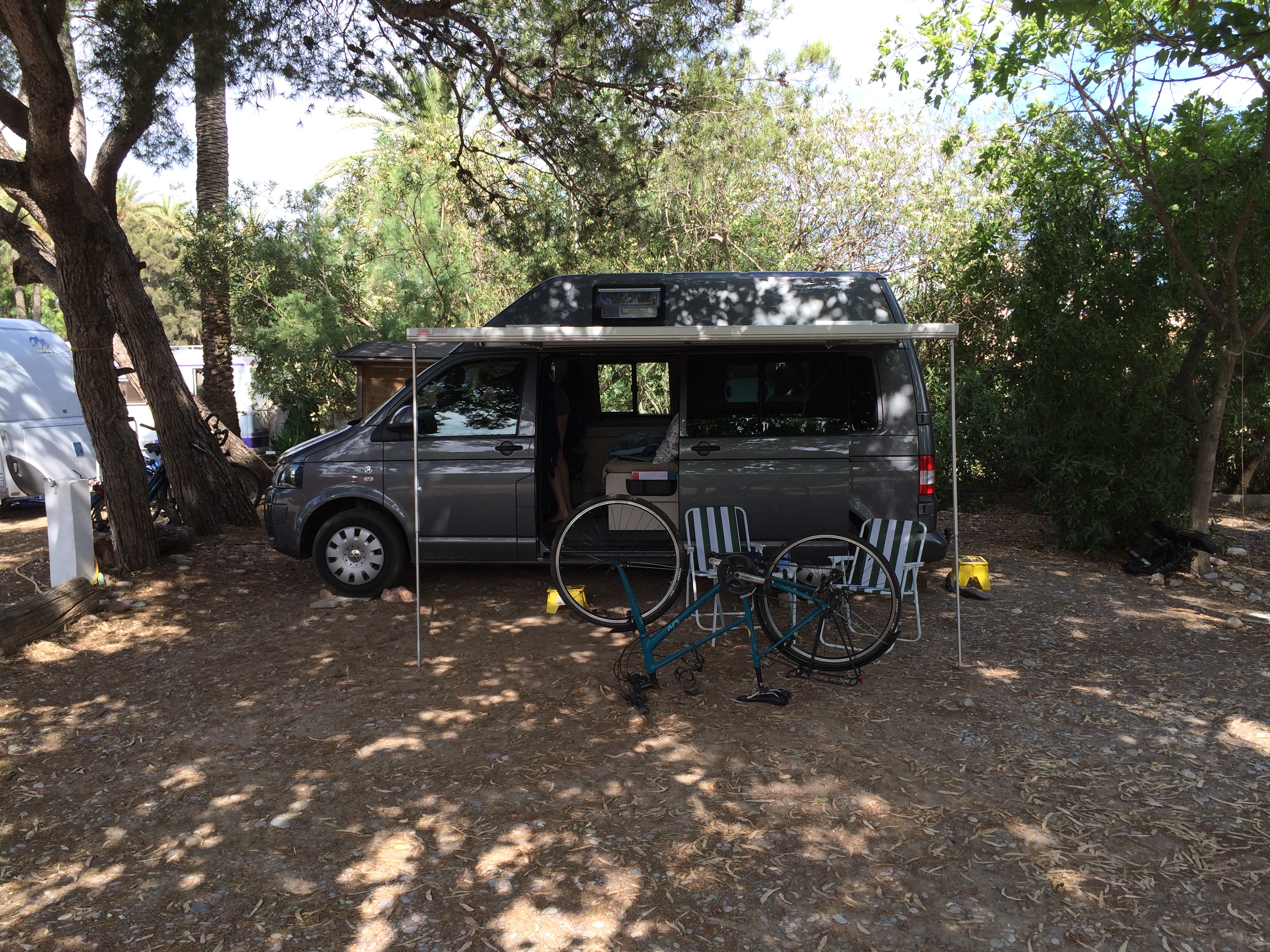
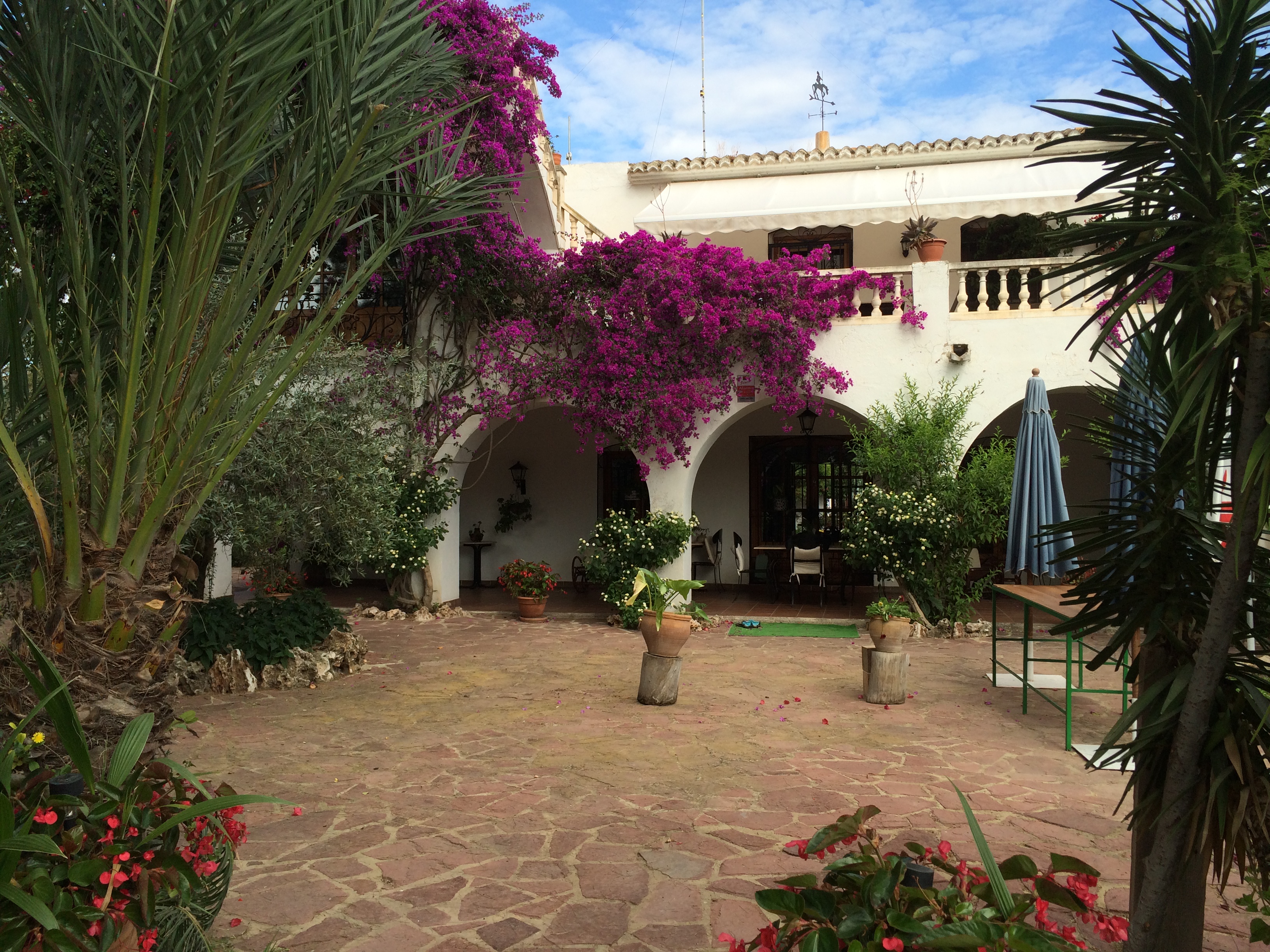
Sagunto lies 40 kms or so north of Valencia but had been advertised as a site right by the sea with its own beach, which was just the antidote we needed to the arctic conditions of the night before. It was busy when we arrived, with quite a few children – it must be a place popular with locals at weekends. It’s warm but very windy and the sea is a bit rough but this doesn’t deter us and we’re soon in the water after setting ourselves up. The site is more like a caravan park and is very settled – there seem to be a few people there who are more or less permanently encamped and have enlarged their encampments with additional tents, small caravans, awnings and plants and little gardens. There are also permanent ‘casitas’ on the site complete with small inner courtyards surrounded by bright red and white bougainvilleas.

The campsite at Sagunto.

The campsite at Sagunto.

A pretty little villa at the Sagunto campsite.

A pretty little villa at the Sagunto campsite.

The sea at Sagunto - it had calmed down the next morning - time for a good swim before we set off again.

The sea at Sagunto – it had calmed down the next morning – time for a good swim before we set off again.

After an early dinner of pesto pasta and good catch-up with the blog, we set off again in the morning for a quick tour of Valencia before heading to our next destination – Cartagena just south west of Murcia, avoiding the busier holiday destinations of Alicante, Benidorm etc on the coast.

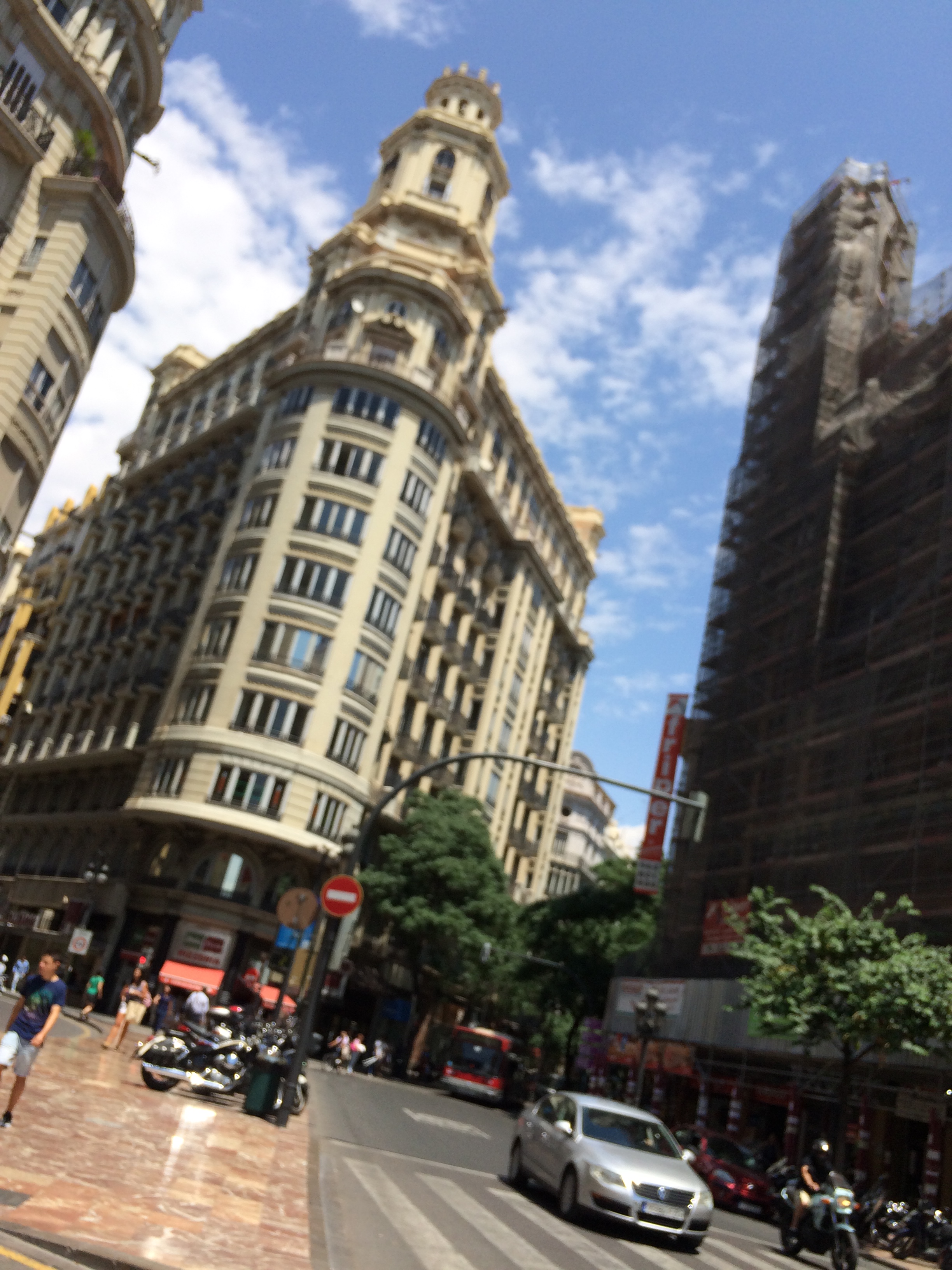
Valencia immediately strikes us as a very appealing and vibrant city. The trouble we encounter, as happened in other places, is that all the car parks we see signs to are underground and have a height restriction of 2m or 2.2m maximum, which is too low for the high-topped Brenda who is 2.5m. After finding ourselves going round the city centre for the third time and trying unsuccessfully to fit in the one parking space on the road we could find, we abandon the idea of stopping and content ourselves again with just a drive around the city. It’s a pity as it looked like a very agreeable place to stop at for a coffee or a bite to eat and to explore further and the weather was perfect. Still, at least we know we like it and will come back again sometime in the future. The central Plaza was particularly beautiful.

The main Plaza in beautiful Valencia. It had a statue of a wise-looking Arab man in the centre. We didn't find out who it was.

The main Plaza in beautiful Valencia. It had a statue of a wise-looking Arab man in the centre. We didn’t find out who it was.

Valencia city centre.

Valencia city centre.

An interesting-looking bridge in Valencia.

An interesting-looking bridge in Valencia.

IMG_2358

Friday 12th – Zaragoza to Calatayud

Standard
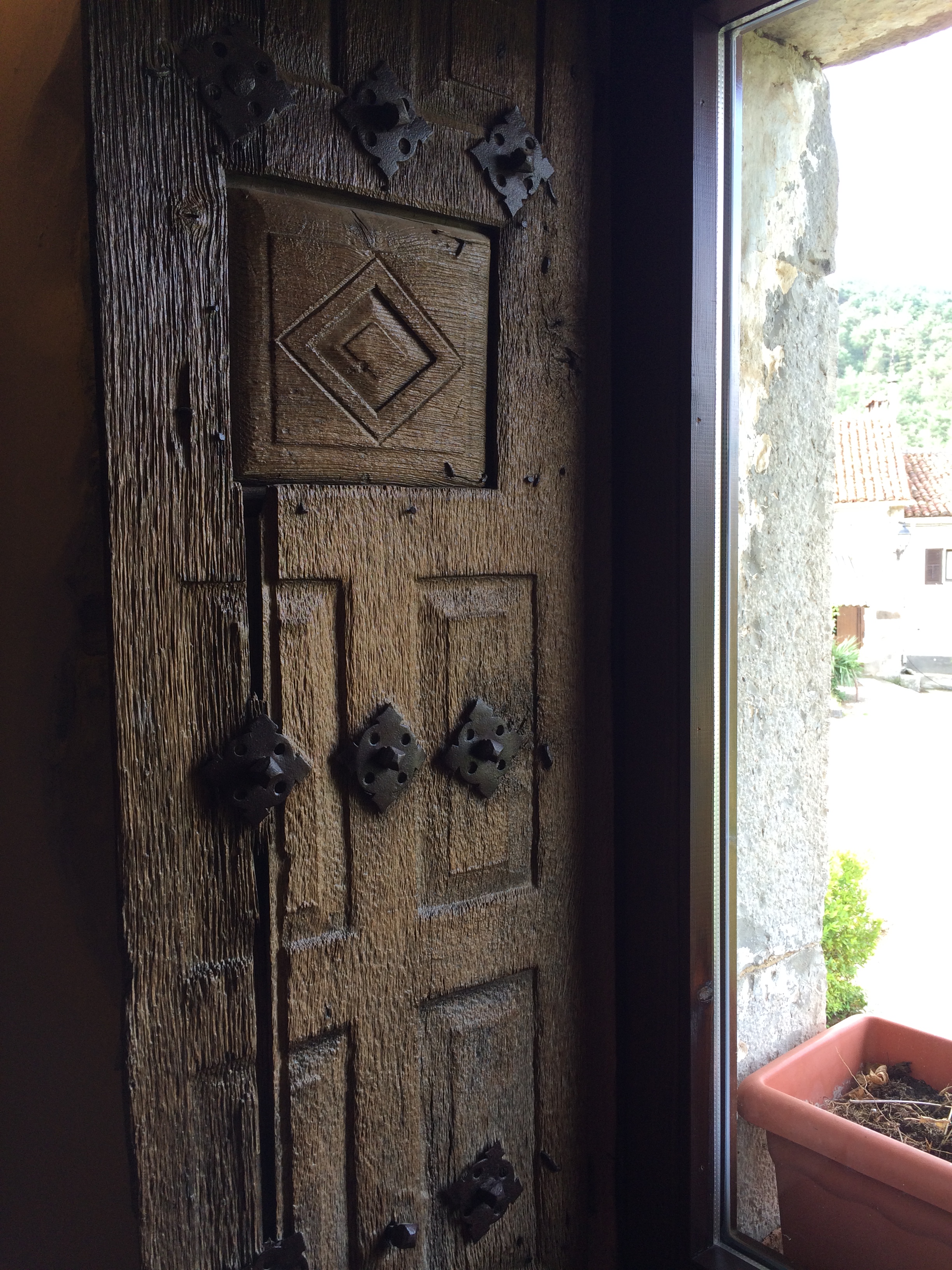
Old wooden shutter at the Akerreta Hotel.

Old wooden shutter at the Akerreta Hotel.

And so we reluctantly left our temporary refuge at the Akerreta Hotel restored by a hot bath and a warming meal with bona fide pilgrims in the convivial little pilgrims’ restaurant in the nearby village of Larrasoana the night before.

Our plan was to escape the unsettled weather and head south west to Valencia then Murcia and Granada before entering Portugal from the south.  But it seemed sensible to turn slightly east first to take a look at Zaragoza as it was close and sounded intriguing.  My grandfather had visited it a long time ago when he’d travelled there by sea from Alexandria and had spoken fondly of it. And the name sounded a bit like Zarathustra and Zoroaster – would we find there a clue to the mystery of the ‘eternal recurrence of events’?

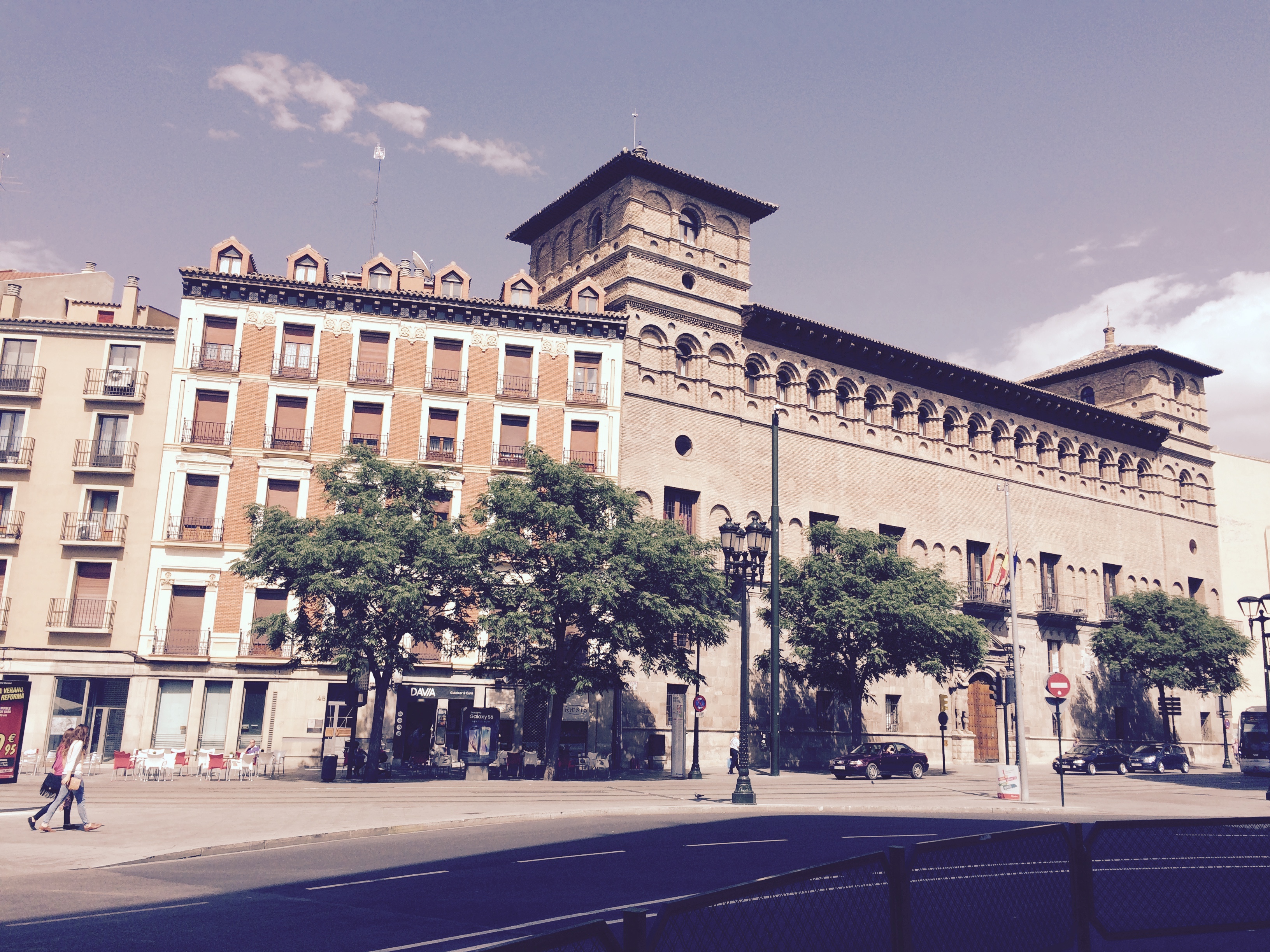
True to what was now becoming a bit of a pattern in our sightseeing, we only had a couple of hours in the end to take a look at the city.  The first thing that struck us was that most shops seemed to be shut – so it was really true that everything stops for a long lunch and siesta in Spain until 5pm.  Another thing we were surprised at was that Zaragoza was Muslim-ruled between AD 714 and AD 1118 – that’s 400 years!  And that there were in fact power-struggles between different Muslim ruling clans within Spain.  Was there a Sunni / Shia schism even then? I guess we’ll find out more when we explore Granada and Seville.  It is said that Muslim influence reached as far north as Tours in France at one point, so it’s really no surprise that it lasted so long in Spain.  The Aljaferia Palace is of course the most obvious remnant of the period but the Catedral de la Seo also clearly betrays its Islamic origins, with its light blue tiled domes and spires that were obviously once minarets.  But even the Our Lady of the Pilar Basilica (so called because St James was said to have seen a vision of the Virgin Mary on a pillar) looked unmistakably Islamic in architecture. Unfortunately we weren’t able to see the inside of any of them but we strolled around the city and took in its atmosphere.

The Justice Palace in Zaragoza.

The Justice Palace in Zaragoza.

The Islamic origin of the architecture is evident.

The Islamic origin of the architecture is evident.


Our stroll takes us through avenues served by a modern tramway system, pleasant squares and even a red light district.  The city seems however somehow to lack vitality except when we reach the Plaza del Pilar, outside the Basilica, a huge plaza with, in one corner and continuing round surrounding alleyways, a lively outside market with stalls selling all kinds of produce – ham, sausages and saucissons featuring prominently. The square itself was reminiscent of the large midan outside the main mosque in Isfahan.

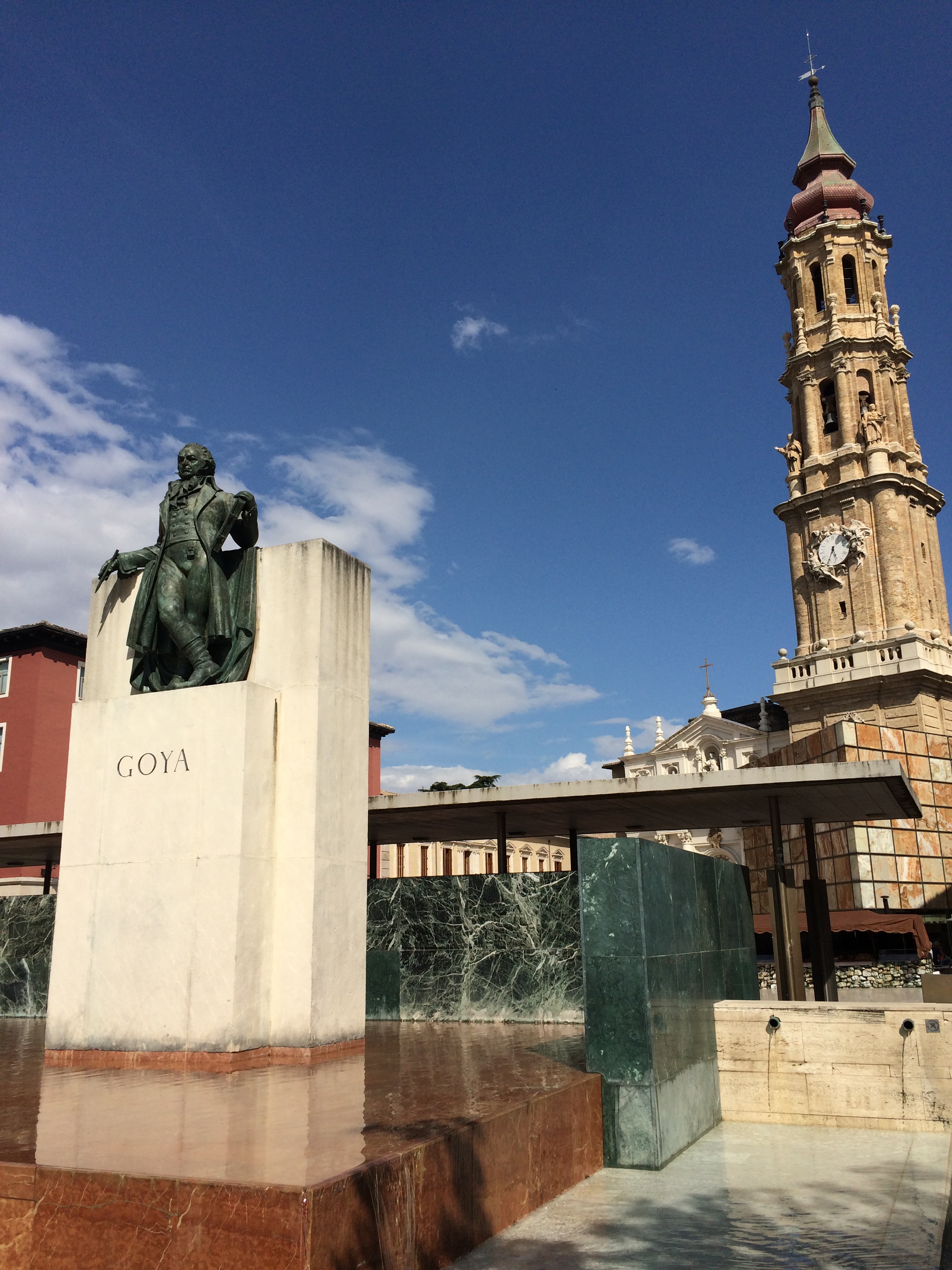
A statue of Goya on the Plaza del Pilar with in the background, the Cathedral of La Seo.

A statue of Goya on the Plaza del Pilar with in the background, the Cathedral of La Seo.


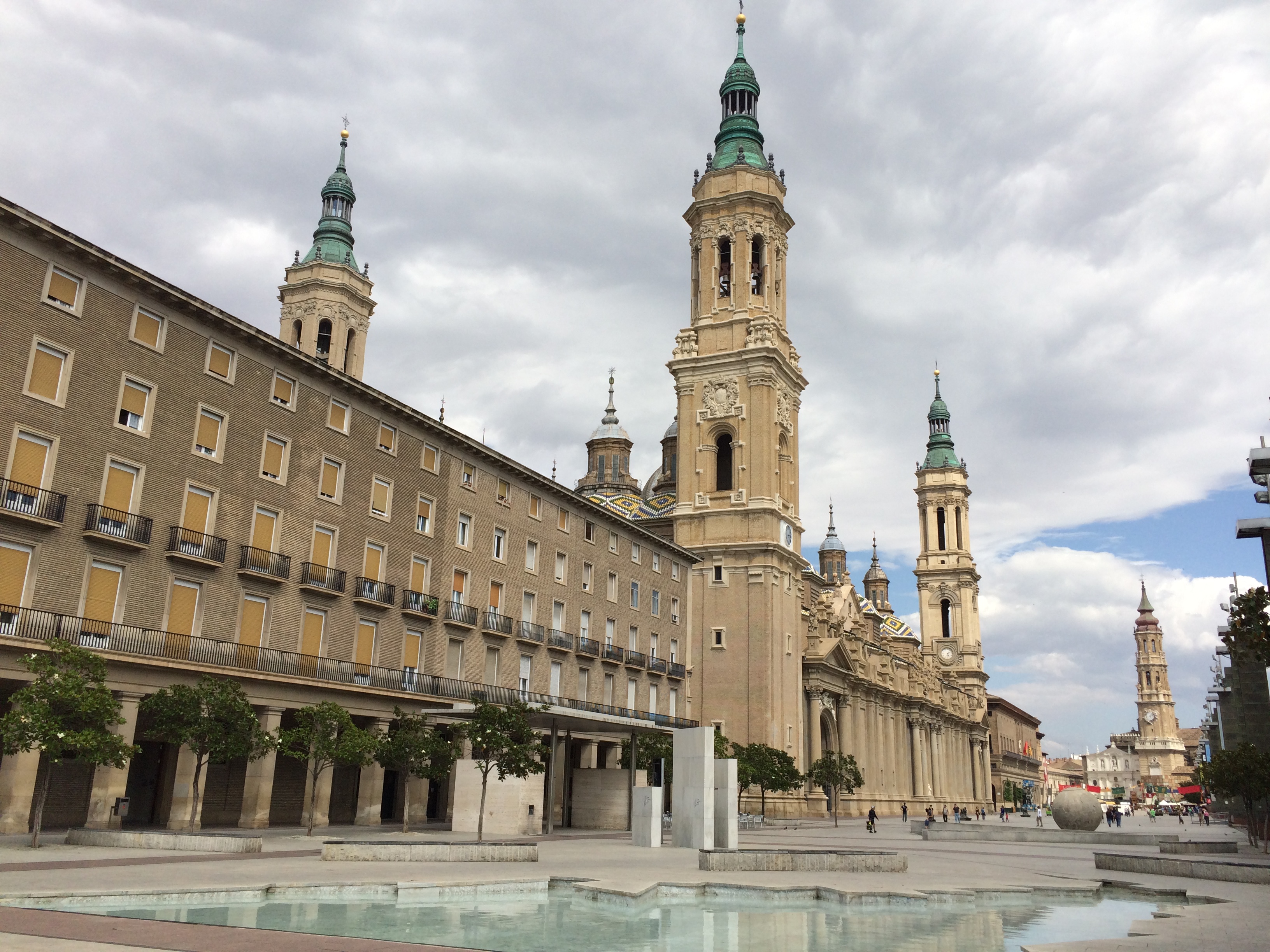
The Basilica and Plaza del Pilar, reminiscent of the large square outside the main mosque in Isfahan.

The Basilica and Plaza del Pilar, reminiscent of the large square outside the main mosque in Isfahan.


Ham, sausage and saucisson shop off the Plaza del Pilar market.

Ham, sausage and saucisson shop off the Plaza del Pilar market.


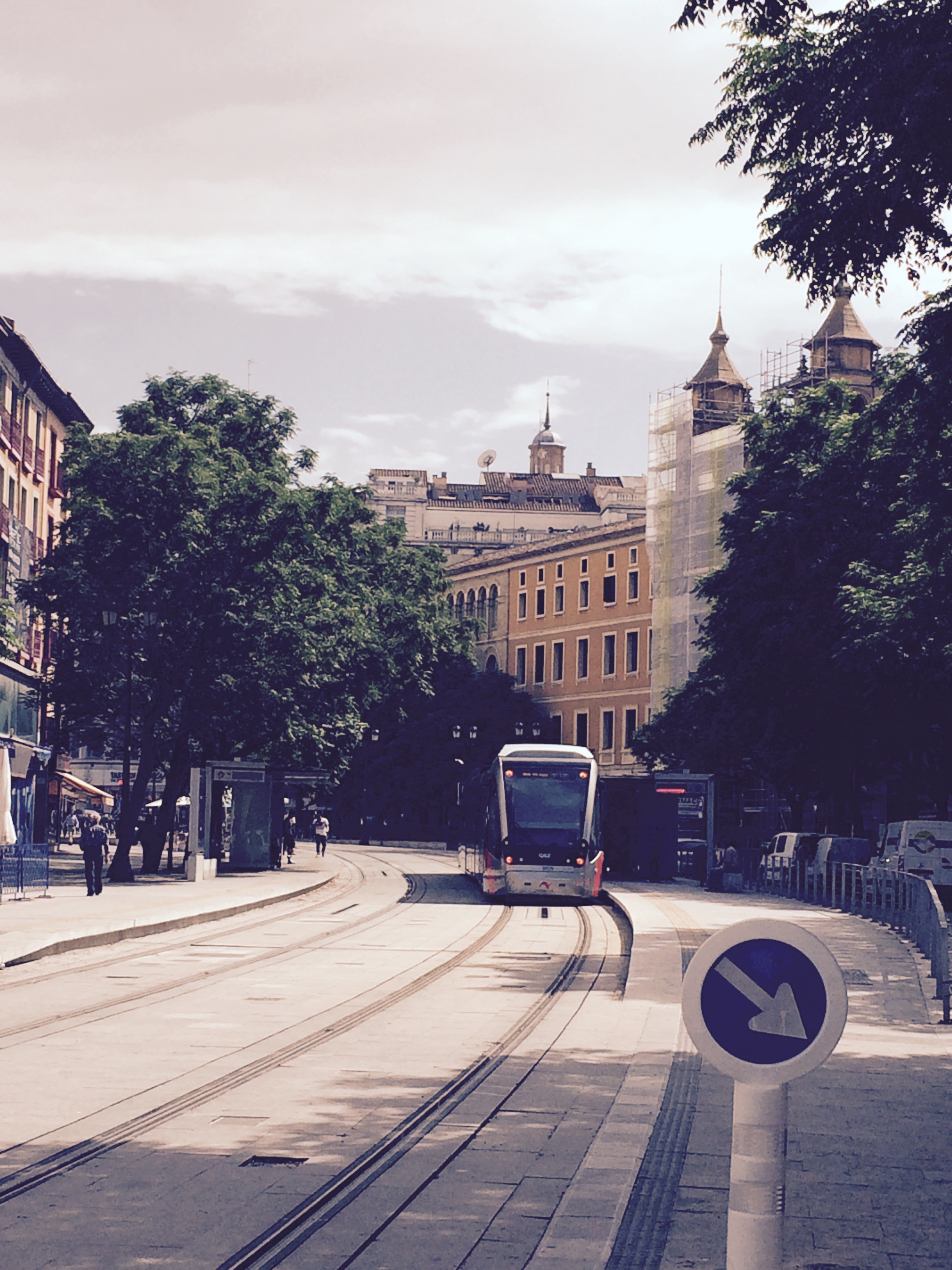
An avenue in central Zaragoza.

An avenue in central Zaragoza.

Zaragoza was of course at the heart of Aragon culture. On the way back to the van, we come across a father and daughter, spectacularly dressed up in full Aragon military uniform getting ready to take part in a commemorative event in the Plaza De Los Stilos which has at the centre of it a striking monument to all the heroes of the sieges of Zaragoza.

Getting ready to take part in commemorative event in the Plaza De Los Stilos.

Getting ready to take part in commemorative event in the Plaza De Los Stilos.


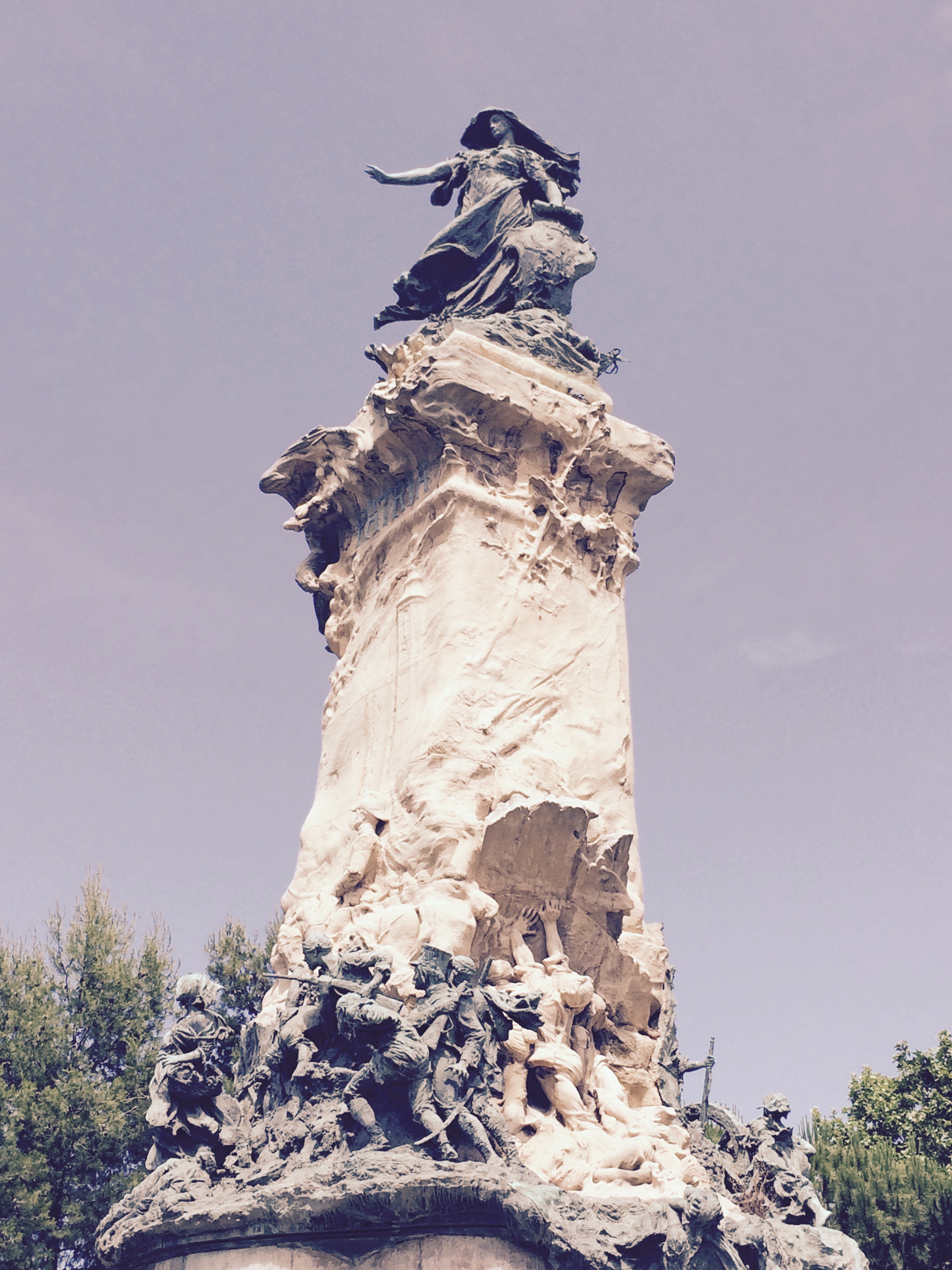
The monument in the Plaza de Los Stilos dedicated to all the defenders of the sieges of Zaragoza.

The monument in the Plaza de Los Stilos dedicated to all the defenders of the sieges of Zaragoza.


Judith contemplating whether Aragon fashion would suit her.

Judith contemplating whether she’d look fetching in a cheeky little Aragon dress.

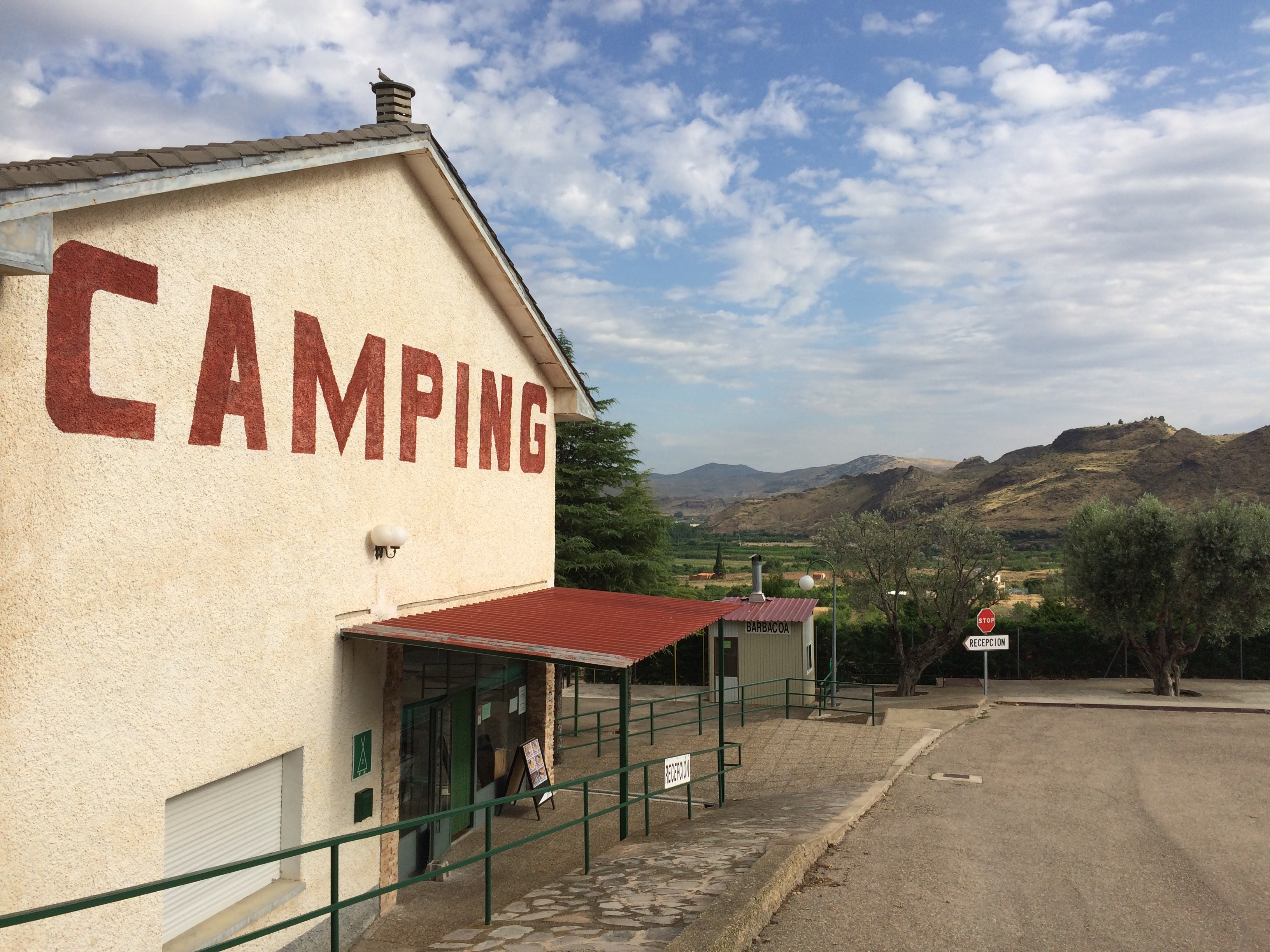
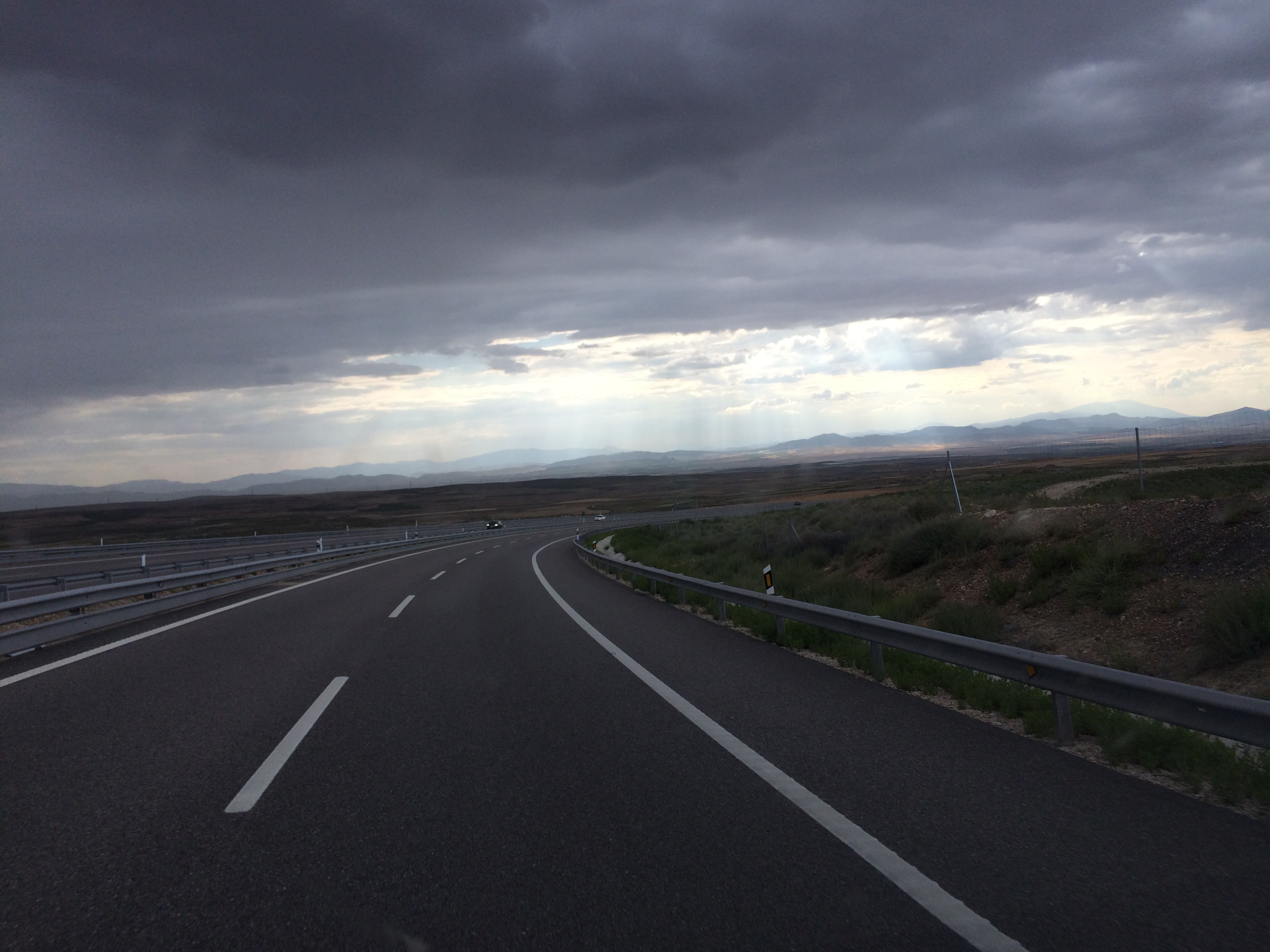
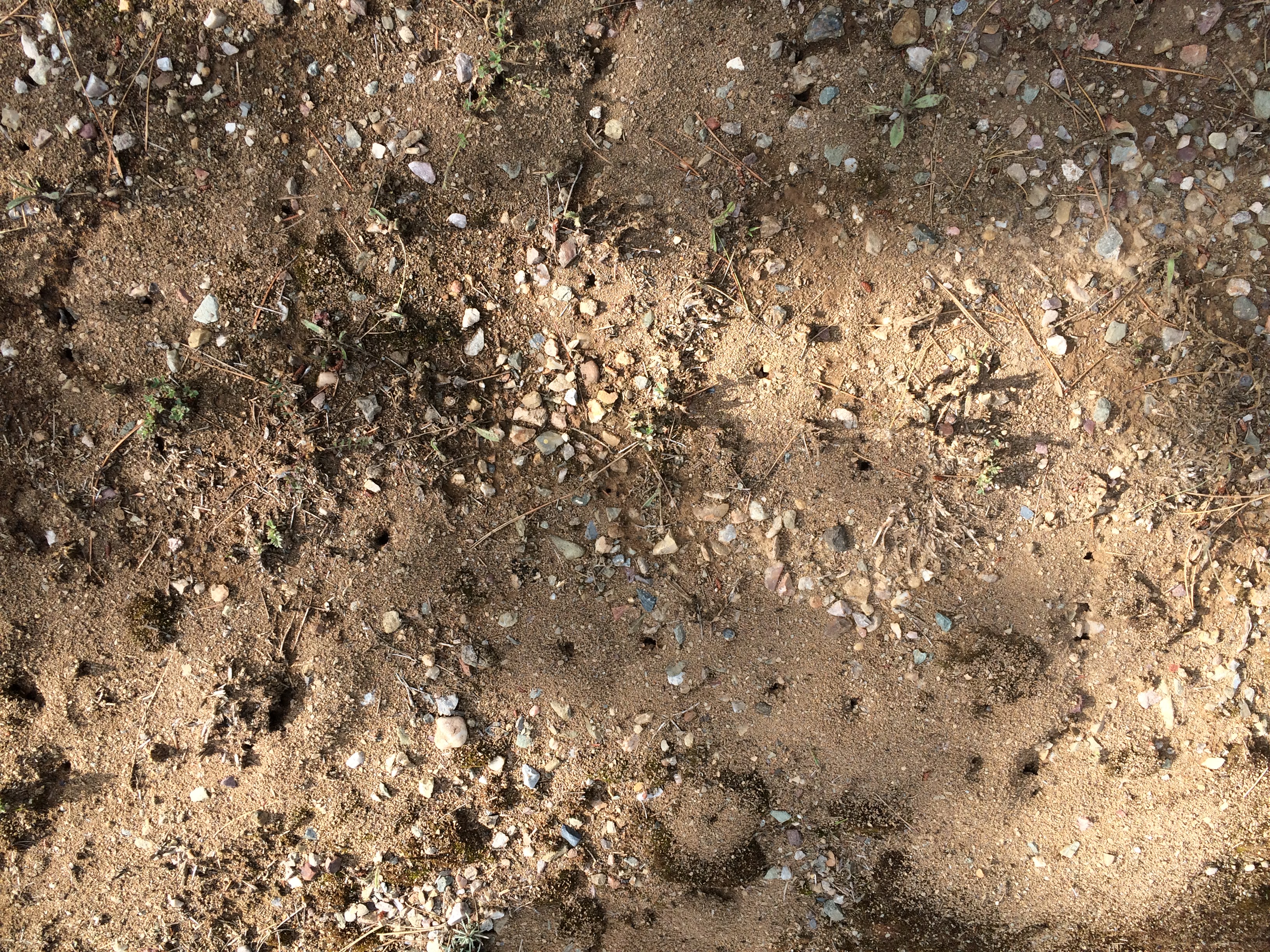
Back on the road, dark foreboding clouds fill the horizon, but somehow we manage to evade the thunderstorms this time. Johnny Cash is singing ‘Hurt’ which seems to go with the brooding scenery. We find a campsite in the area of Calatayud (again very obviously an Arabic name meaning Citadel of Ayud) just 150 kms or so west of Zaragoza in the direction of Madrid.  It’s the Camping Sabinan and it’s already 7pm by the time we arrive.  As campsites go, it’s not the best kept we’ve had so far, has basic facilities and, as we quickly find out, is infested with ants.  It takes us a while to find a patch that is relatively ant-free.

Camping Savanna - promising setting but poor facilities.

Camping Savanna – promising setting but poor facilities.

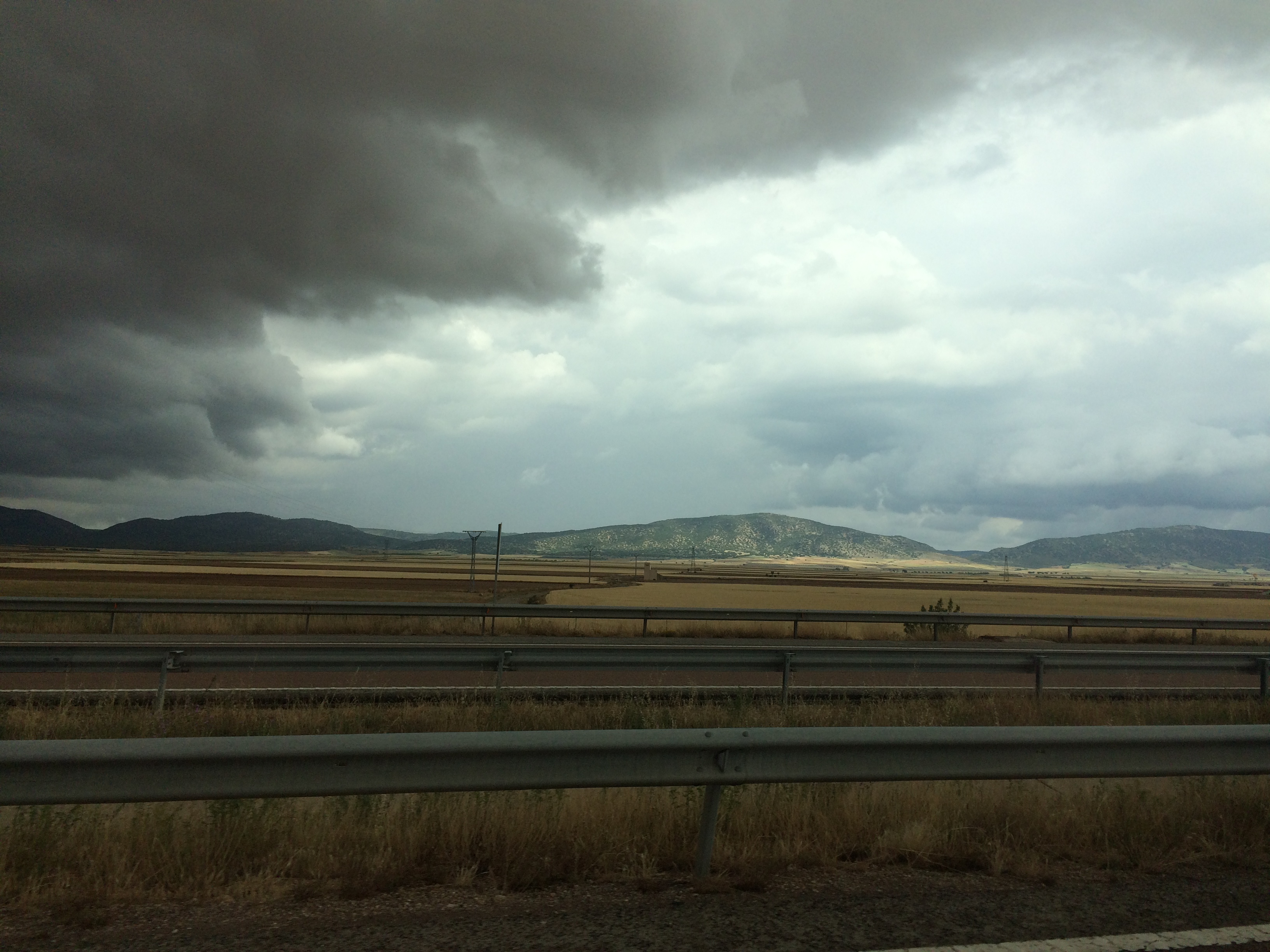
Dark clouds fill the horizon as we leave Zaragoza heading for Calatayud to the west.

Dark clouds fill the horizon as we leave Zaragoza heading for Calatayud to the west.


And infested with ants!

And infested with ants!

We do our best to ignore the ants and set about making a dinner of chicken in mushrooms and white wine with the ingredients we’d bought in Zaragoza.  A very simple and tasty recipe with the added advantage that it requires opening a bottle of dry white wine which you can sample, Galloping Gourmet style, as you’re preparing the dish.

Chicken and mushrooms in white wine

Start by putting some lardons (or beef bacon) in a frying pan with a drop of olive oil.  When the fat from the lardons has started to melt, add some goujons of chicken breast.  Make sure they’re starting to brown slightly then add a finely chopped white onion or a couple of shallots and allow to sweat for a few minutes.  Keeping the heat quite high add the white wine (enough to just cover the chicken) or some chicken or vegetable stock and bring to the boil then turn down the heat (but not too much).  Then add the roughly chopped mushrooms and either some chopped green and red peppers or, as in this case, the sweet pimentos we had left from France (keeping a few raw ones to sprinkle on top).  Add a bit of hot water or more stock to stop the sauce being too intense.  Then season to taste and add a herb like tarragon or fines herbes or herbes de Provence.  Turn down the heat and cook for a further 15 minutes or so then voila – it’s ready, all that’s needed just before serving is the addition of a couple of spoonfuls of creme freche or sour cream and possible a sprinkling of paprika or cayenne pepper and serve with basmati rice and salad or new potatoes and thin green beans (al dente).  Or, as we did because we were hungry and it was late, just some cut up baguette. Bon appetit!
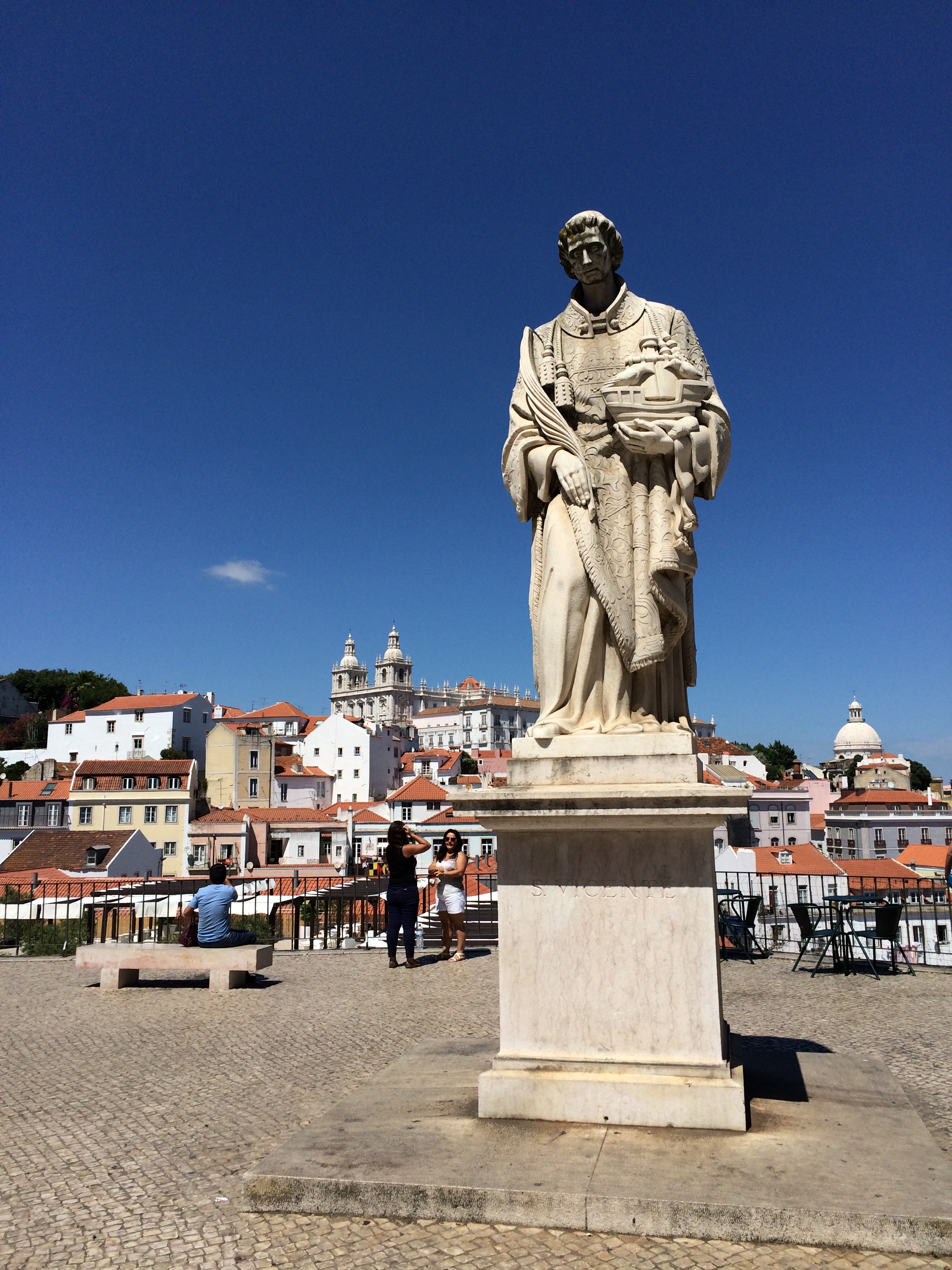
Chicken with mushrooms and white wine.

Chicken and mushrooms in white wine.