Now the point about this blog is that it is meant to be neither a travel guide nor a recounting of the history of the places we visit. The short time we can allow ourselves to spend in any one town or city can only give us a glimpse of the place and leave us with an impression of its character and atmosphere. In the process we realize we may not be doing justice to every place we visit. But log our progress, experiences and impressions is all we can do.
In contrast to Bordeaux, we were bowled over by Bayonne. Quite simply, there wasn’t one part of it we saw that we didn’t find architecturally fascinating, well preserved and aesthetically pleasing. It seemed to have one gorgeous avenue after another. Much restoration work was also underway. It wasn’t swarming with tourists and the shops and restaurants seemed to cater for discerning locals rather than visitors. It just had the feel of a place where locals tried hard to preserve the beauty of their surroundings and local traditions with no sign of the big brands. Here a furniture restorer, there a traditional book binder, an artisan chocolatier or a cafe selling vinyl records (Judith spotted a old poster advertising a Blind Faith concert, which took her back!) or a shop still making the ‘Makhila’, the traditional walking stick which has been made in Bayonne for centuries and is an important symbol of Basque culture.
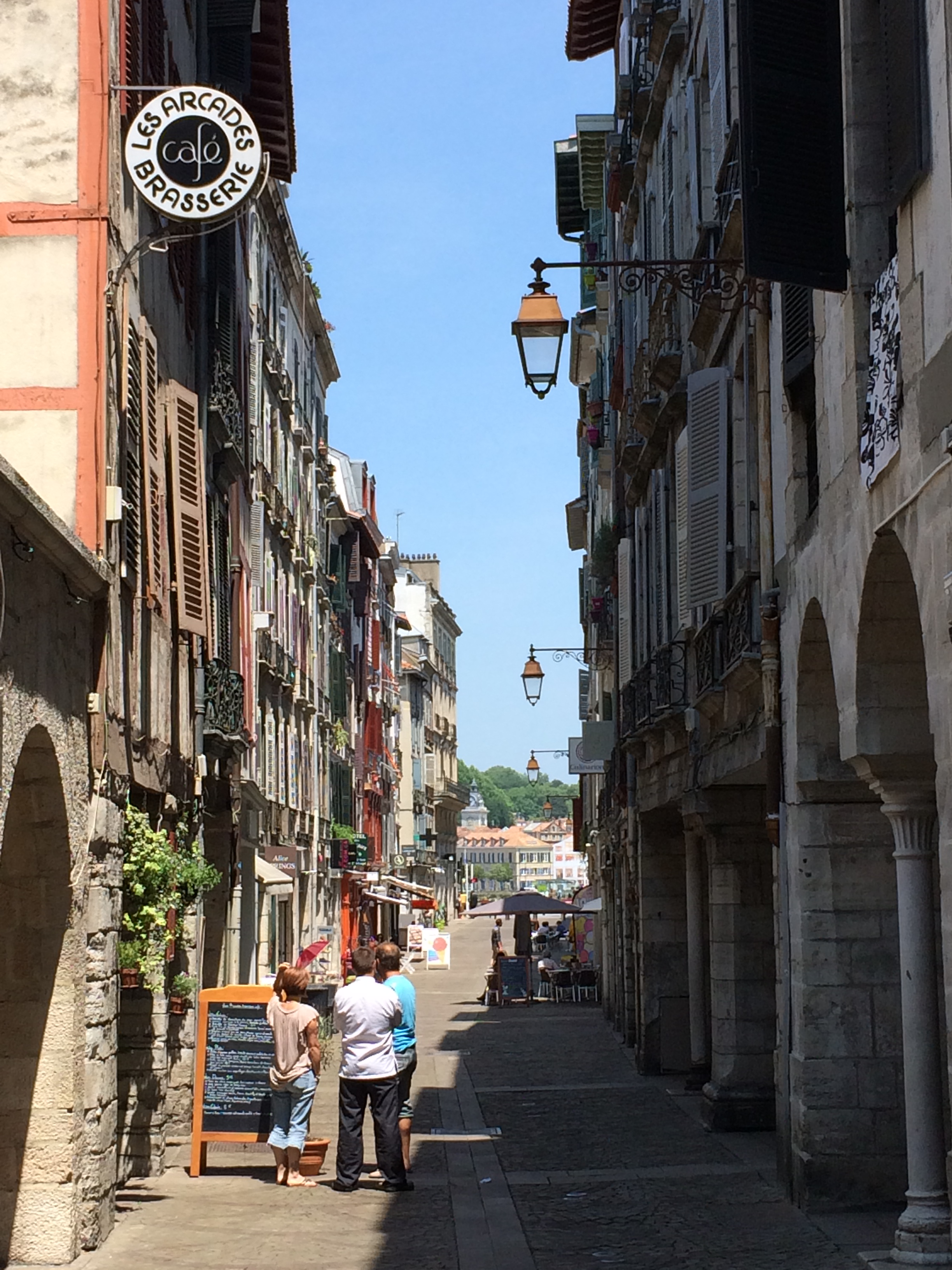
The charming avenues and alleyways of Bayonne.
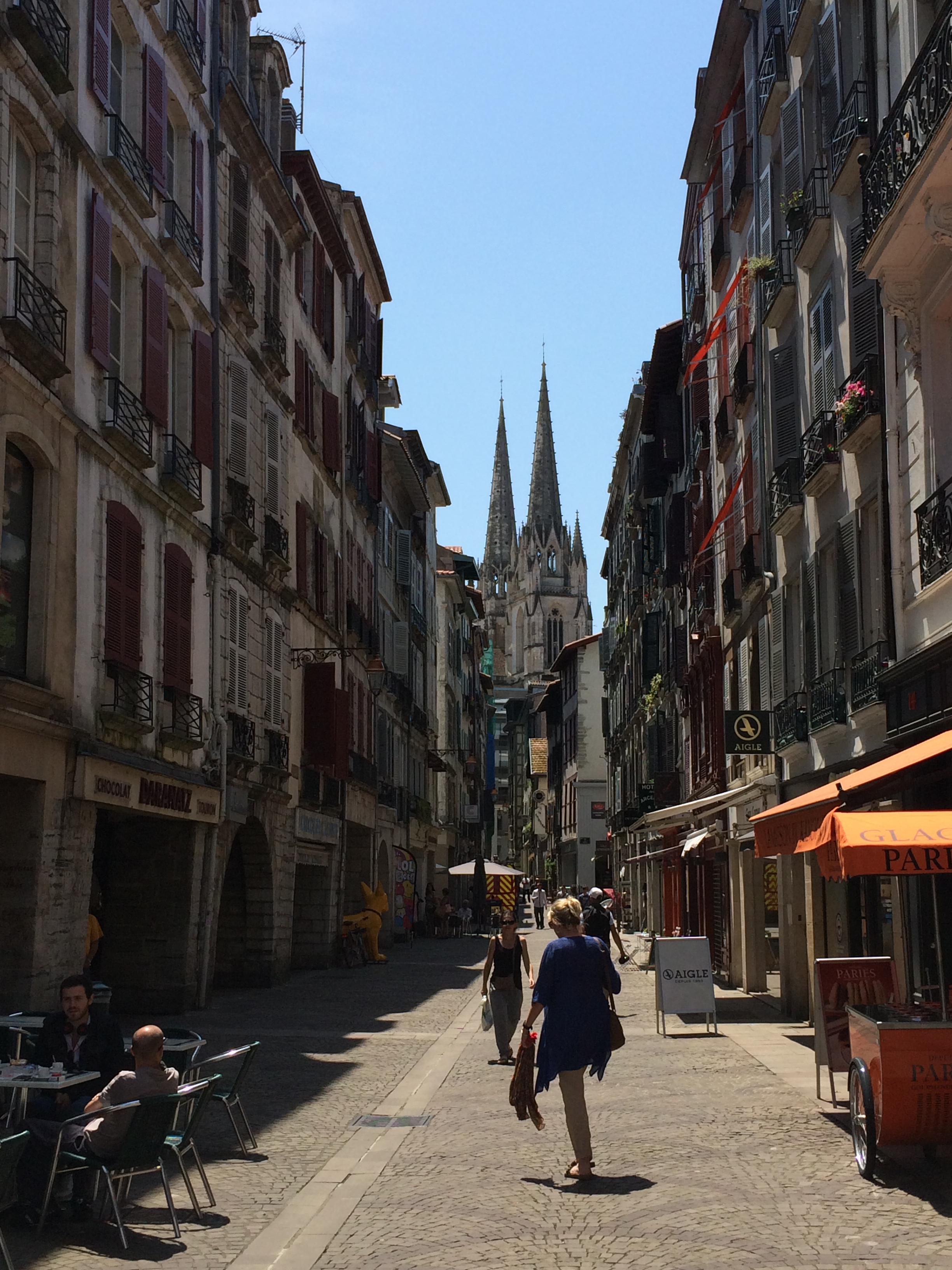
Bayonne city centre.
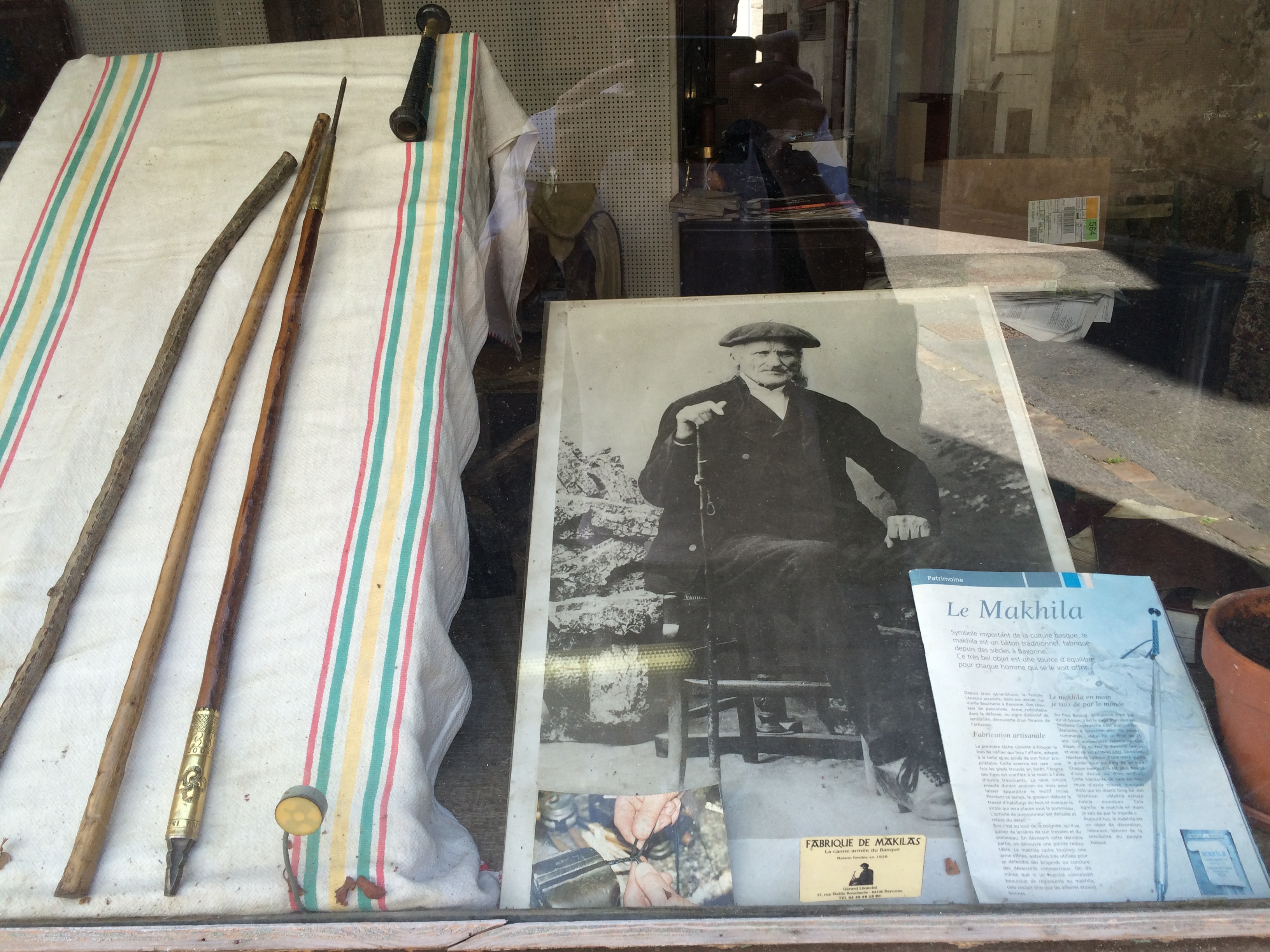
Old shop still making the ‘Makhila’, the traditional Basque walking stick and symbol of Basque culture.

Old book-binding shop.

La Tour Vieille (the Old Tower) – part of an old defence system dating back to Roman times.
Bayonne was of course the capital of the Basque region. Its ‘Chateau Vieux’ was built on the site of a Roman castle and, the plaque says, was inhabited by Don Alphonso the Fighter, King of Navarre (1130); the Black Prince; Don Pedro the Cruel, King of Castille (1367); Louis IX (1463); Francis I (1526); Charles IX (1565); Louis XIV (1660); Marie Anne of Neubourg, Queen of Spain (1706) and General Palafox, Defender of Saragossa (1809). So lots of history there and a reminder of the tug of war between France and Spain the city must have been at the centre of for centuries.
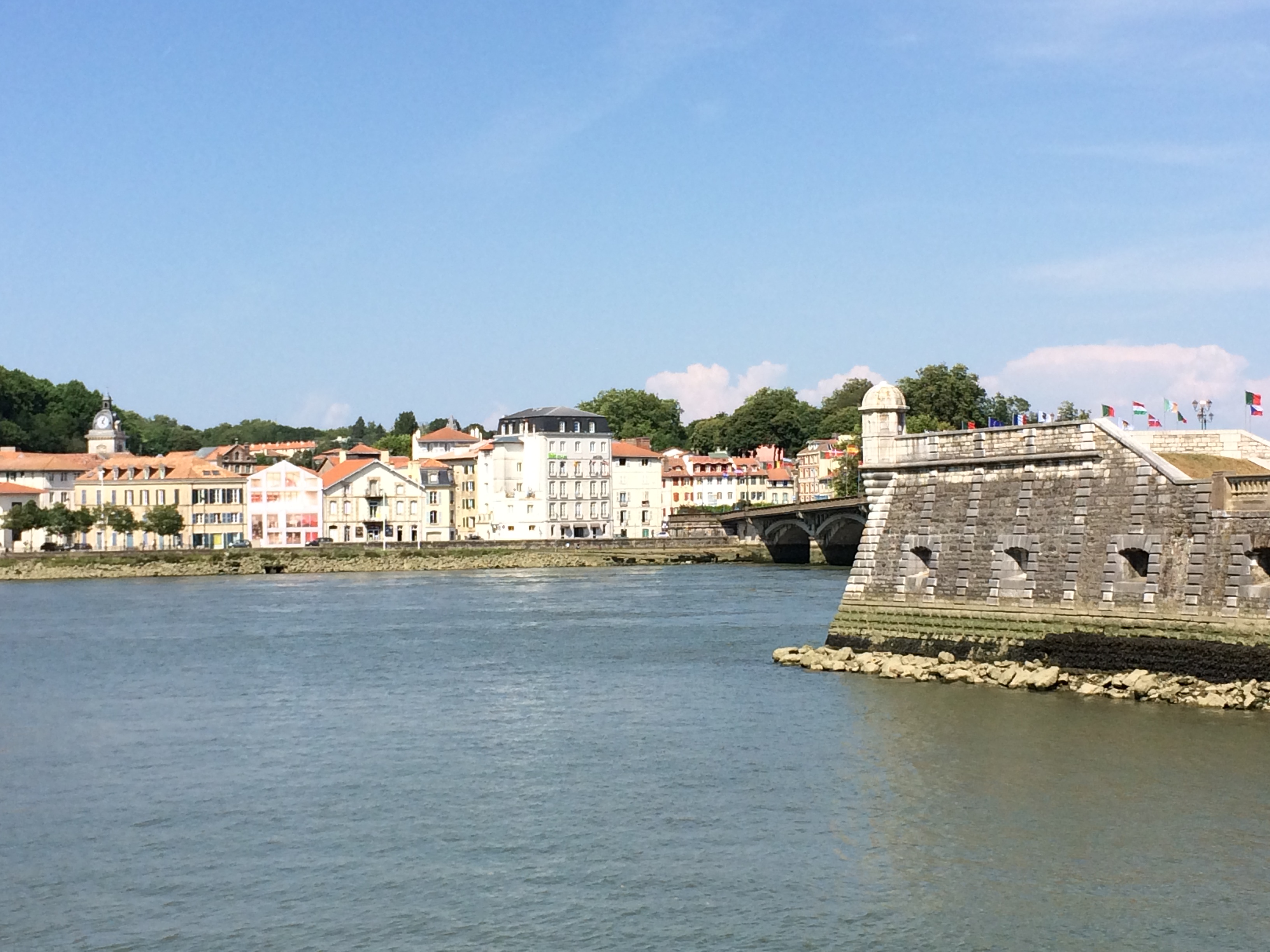
On arrival in Bayonne.
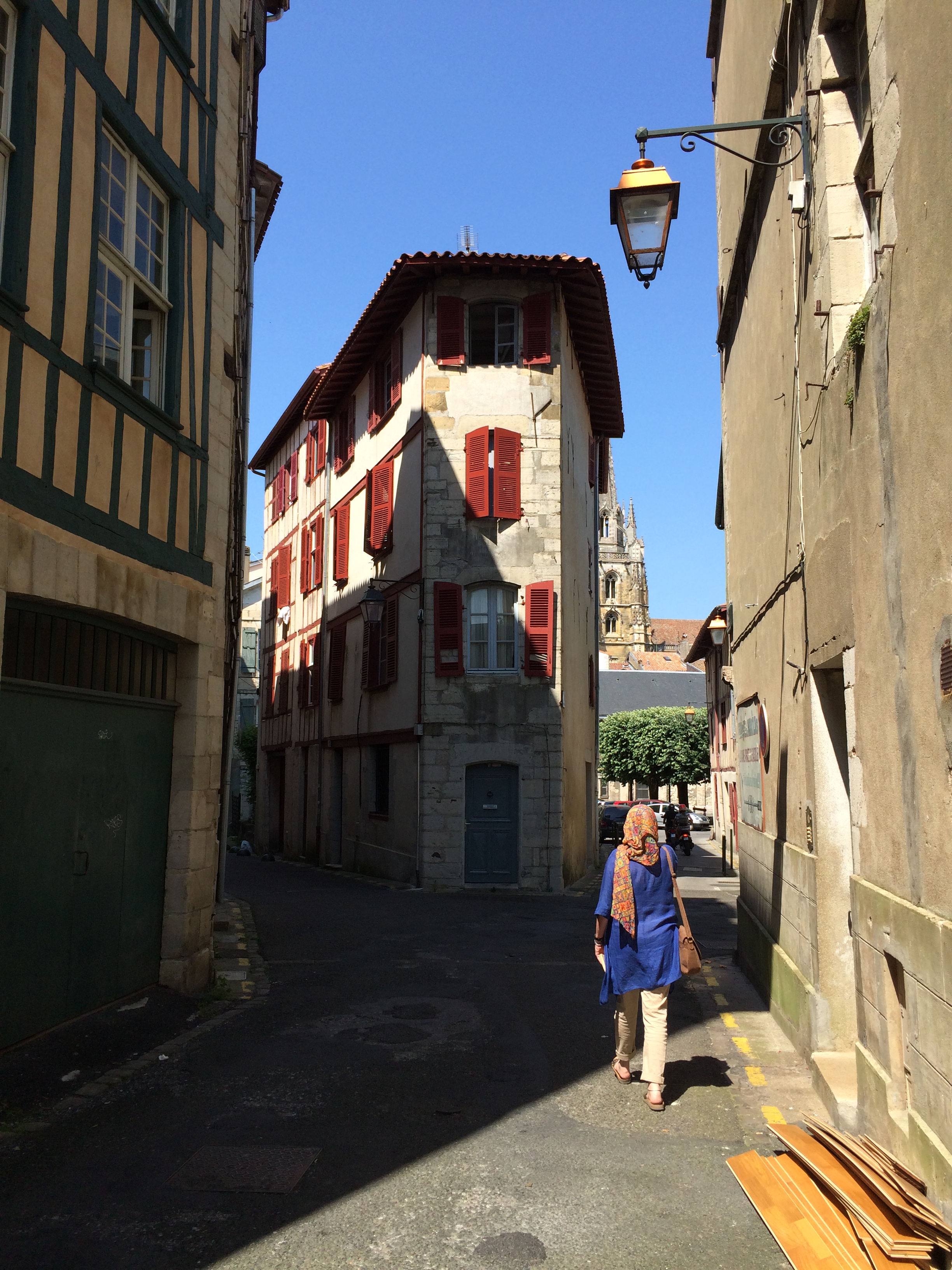
Bayonne is a relaxing and quaint city to stroll around in.
We find a chocolatier the like of which we have never seen before. We’re tempted but it’s too warm to carry chocolate in our backpacks all day and the prices are guilt-inducing anyway. Later we see somewhere a reference to the city’s less illustrious past as a trading centre for slaves and with the slave ships came the cocoa bean – so that explains it. We find a restaurant which agrees to serve us just coffee and a sandwich but we’re so seduced by the menu and the aromas from the kitchen that we decide to sample some Basque food. I have a fantastic dish of ‘chipirons grilles a la plancha’ – ultra fresh grilled calamari with green beans and garlic and herbs and Judith almost chooses an ‘axoa’, a Basque-style veal piccata but the waitress tells her she probably won’t want veal as she is English and persuades her to go for a steak tartare instead.
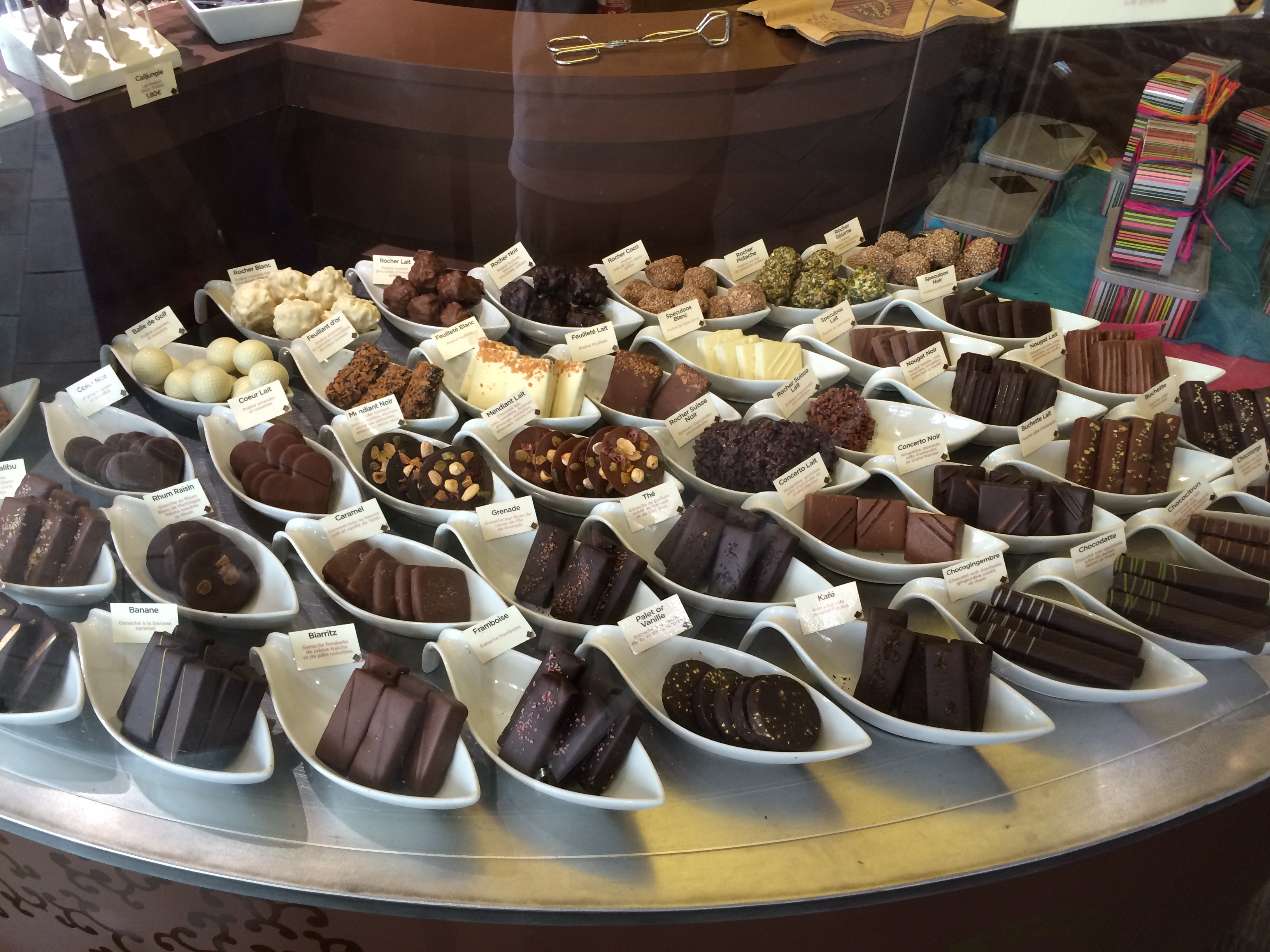
Bayonne’s less illustrious past as a slave-trading port means it’s also famous for its excellent chocolate-making.
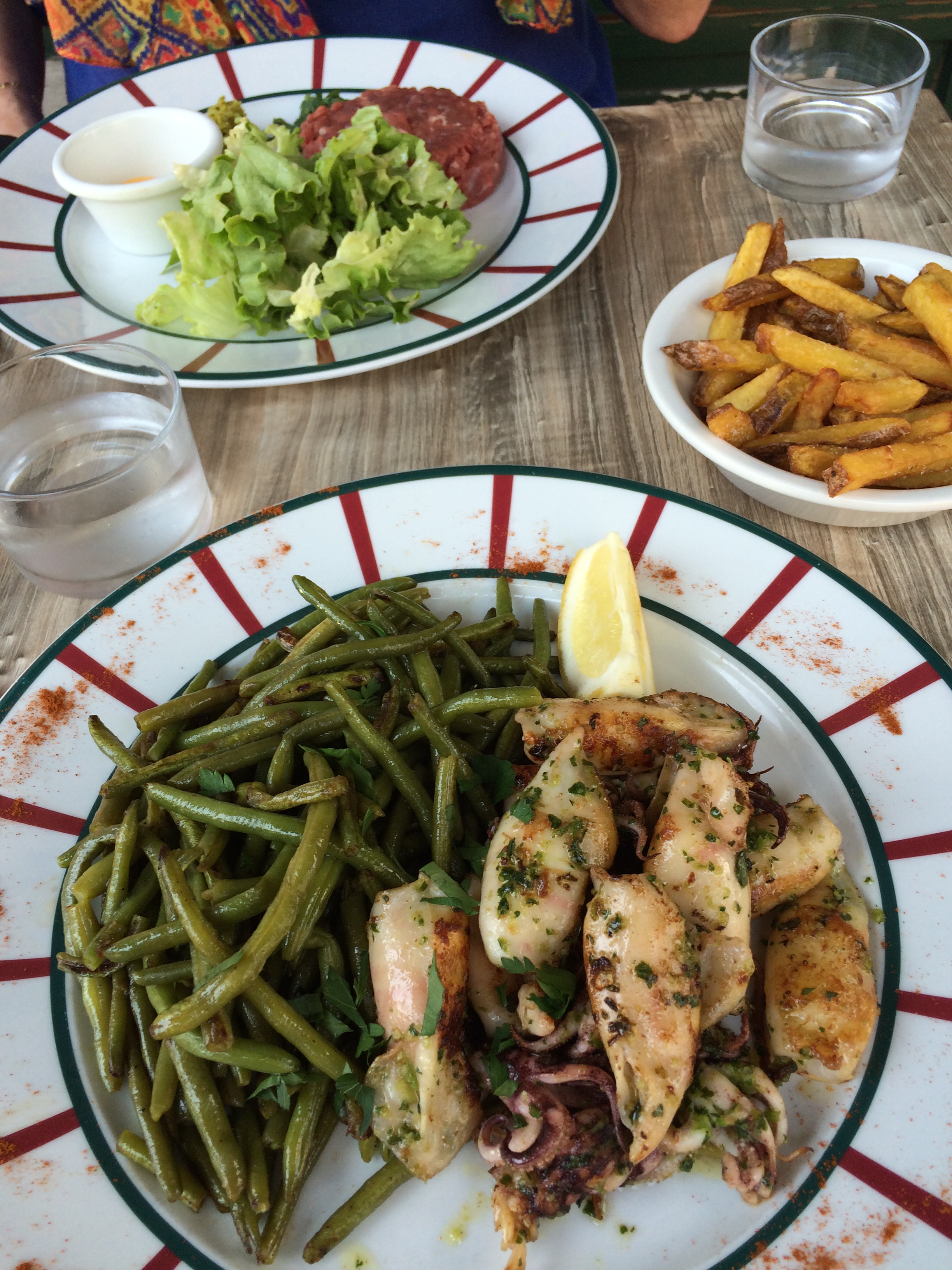
‘Chipirons’, Basque-style grilled calamari tossed in garlic and herbs with green beans cooked al dente. They were scrumptious.
On the way to Bayonne, we had been intrigued by a sign pointing to the ‘Cimetiere des Anglais’ (English cemetery) and stopped the car to investigate. Which Anglais? Why did they die there? In the Middle Ages or more recently? Despite the sign, it wasn’t easy to find and when we did find it in a small clearing in a wood, it was a small burial ground of no more than 6 square metres containing a dozen or so headstones. One read: “ Burial Place of the Officers of the Third Guards who fell in the Sortie from the Citadel of Bayonne on the 14th of April 1814. This ground forming part of the site of the Camp of their Regiment, it was enclosed by the last surviving Sister of Captain Holburne, A.D. 1876.” Another read: “Sacred to the Memory of Francis R.T. Holburne, … who was severely wounded while gallantly leading his men against the sortie made by the French from Bayonne April 14th 1814 and died of his wound April 23rd 1815. He lies buried in the cemetery. His loss was deeply deplored by his afflicted family and all who knew him.”
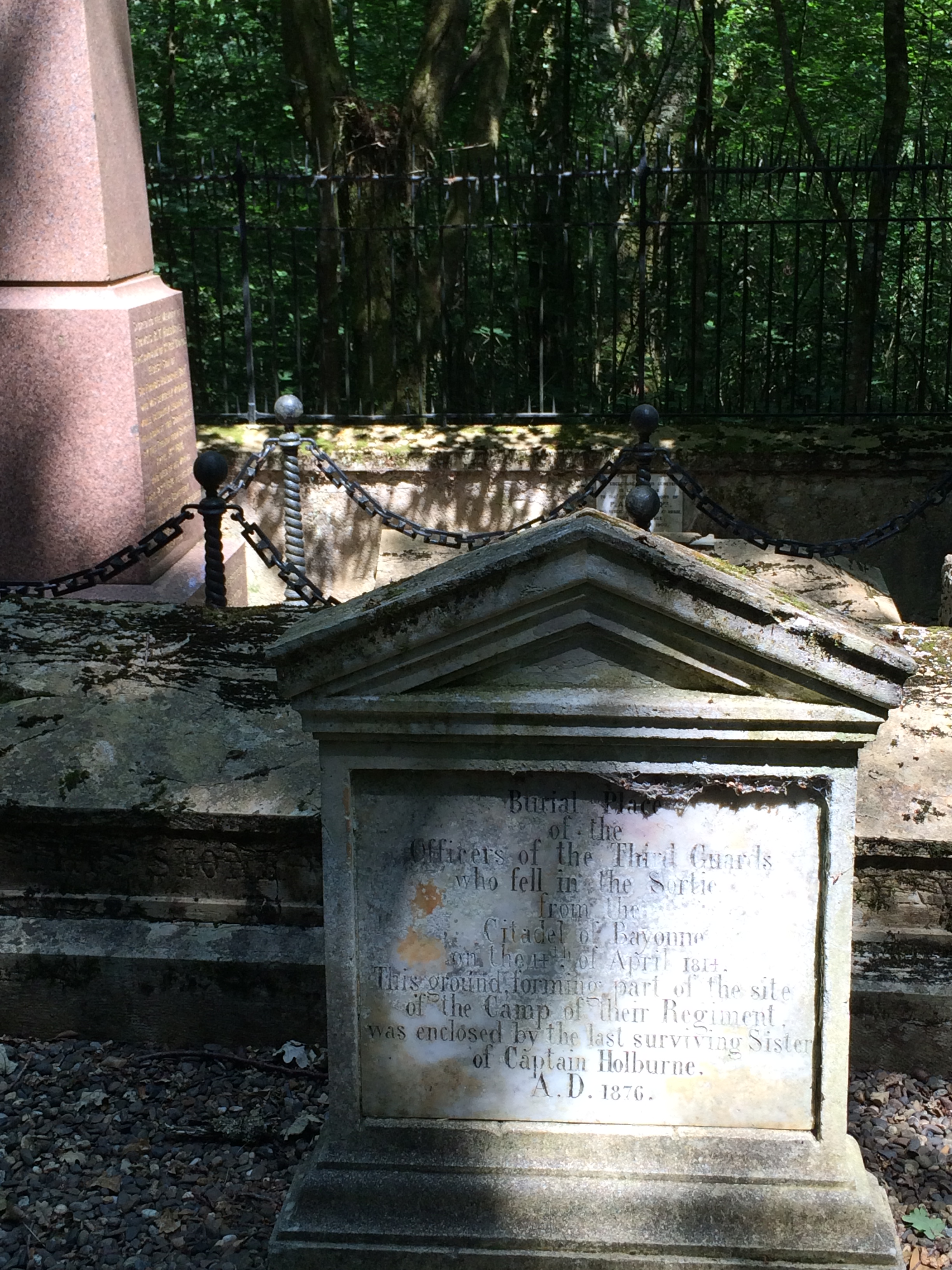
Headstone in honour of the officers of the Third Guards who fell in a French sortie on 14 April 1814 at Le Cimetiere des Anglais.
So while Britain prepares to celebrate the 200th anniversary of Waterloo, it’s interesting to note that there was fighting deep in south western France only a year earlier and that the English got a beating there. Poor Captain Holburne died of his wounds just 2 months too early to hear the consoling news of Wellington’s victory.

Commemorative stone in honour of Captain Francis Holburne who died of wounds inflicted on 14 April 1814 at the Cimetiere des Anglais near Bayonne.
After Bayonne, we drive to what’s advertised as the only campsite in Biarritz. We feel lucky to have found a space as it seems really busy. But having installed ourselves we realize that it is in fact full of motorcycle enthusiasts awaiting the start of a “Waves and Wheels” festival. It doesn’t take too many bikers revving up their machines to make us decide to leave and find a quieter spot. And this time we strike lucky, with the Camping Goyetchea (which means ‘The House on Top’), perched at the top of a hill, near the village of Saint-Pee-Sur-Nivelle, with beautiful views of the Pyrenees all around, a hardworking and helpful campsite manager and a decent-sized pool as well. The only drawback as it would turn out was the freak weather!
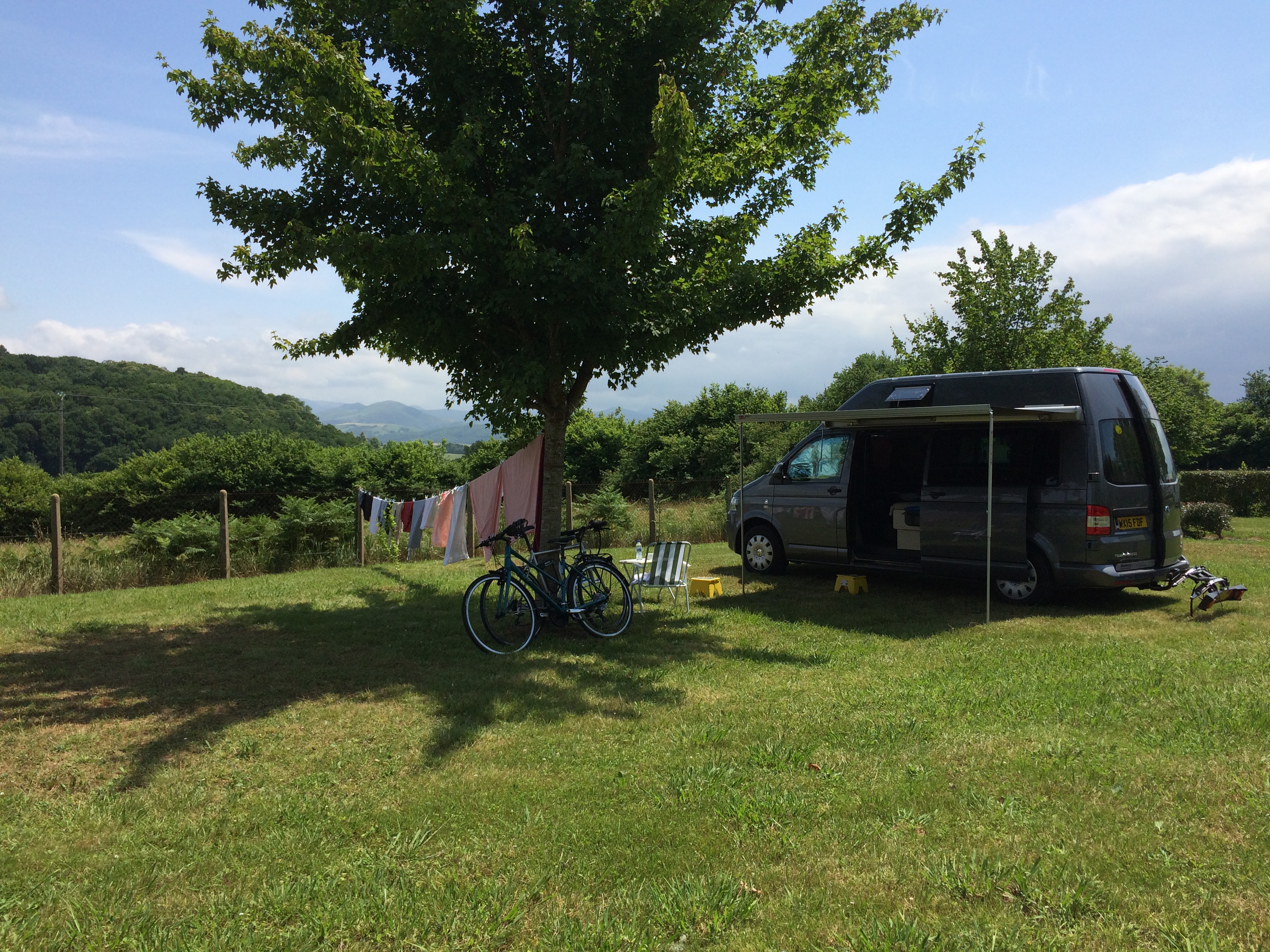
Bliss at the Camping Goyetchea (The House on Top) in Saint-Pee-Sur-Nivelle. Delightful to stay at with wonderful views of the Pyrenees. We’d definitely come back here again.

 Travels with our van
Great day’s blog!
LikeLike
Thank you Bonnie.
LikeLike