Monthly Archives: July 2015

Monday 20th and Tuesday 21st July – Lake Garda, Lombardy via Asti and Alessandria

Standard

Struggling with temperatures of 40C+ we headed in the direction of Lake Garda which we mistakenly thought would provide some respite from the heat and some fresher air.  How wrong we were!

On the way, we decided to take a quick look at Alessandria for the simple reason that Flavio felt sentimentally compelled to visit it as an Italian Alexandrian from Egypt. First, our route took us through Margarita, Moglia Nera (meaning ‘Black Wife’!), Pollenzo and Asti, where we stopped for a light lunch.  Asti was pleasant enough, though not remarkable, but by the time we got to Alessandria it was the hottest time of the afternoon and we could see from our weather App that Alessandria had clocked up some of the highest temperatures in the whole of Italy – and this during a heatwave.  We were physically only able to give it a cursory look but in any case, when we asked to be directed to the most interesting part of town, there really wasn’t anything of any note. Stopping at a pharmacist, we were told that (unlike the Egyptian Alexandria) Alessandria got its name from its founder, Pope Alexander II.  Parking the car at the open-air car park (essential for our Brenda being a ‘high-top’ and not always easy to find) we saw an old man standing in the sun next to the payment machines, hunched over and looking as though he was about to faint.  We went over to ask if he was alright and if we could ring someone to come and pick him up.  He said he was OK and that he was suffering from an ulcer.  He refused to move out of the sun and sit on a bench in the shade but accepted some water.  When we came back after our visit (must have been an hour or so) we were amazed to find him still hunched over in the same spot in the unbearable heat.  A man sitting across the way in the shade explained that he was there every day hoping people paying for the parking would spare some ‘spiccioli’.
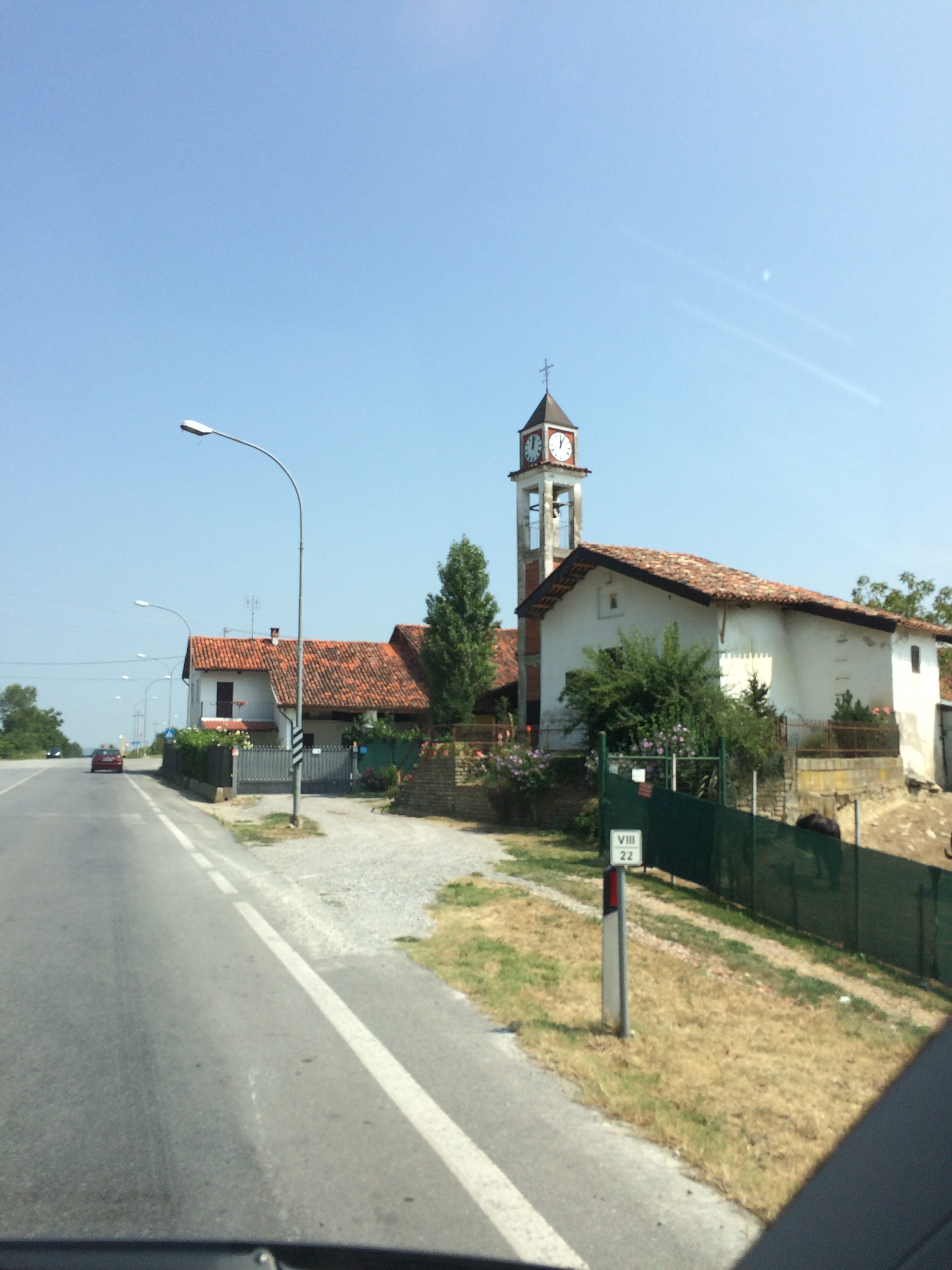
The little town of Margarita.

The little town of Margarita.

The castle at Pollenzo.
The castle at Pollenzo.

First 'caffe' in Italy - in Asti.

First ‘caffe’ in Italy – in Asti.

The central piazza in Asti.

The Piazza Medici in Asti.

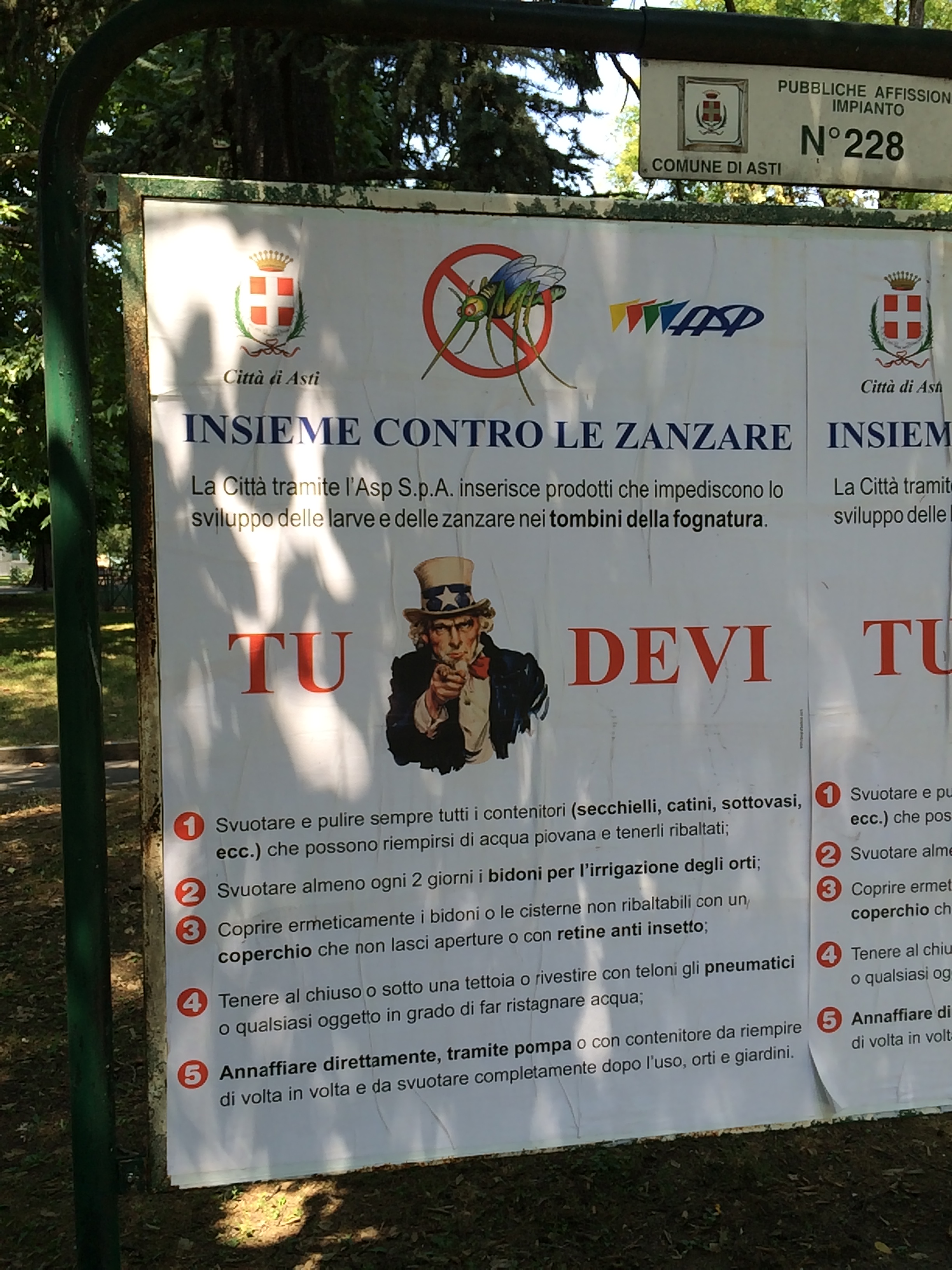
Poster advising people of Asti what they can do to combat mosquitoes.  Seems to be a serious problem in Asti.

Poster advising people of Asti what they can do to combat mosquitoes. Seems to be a serious problem in Asti.
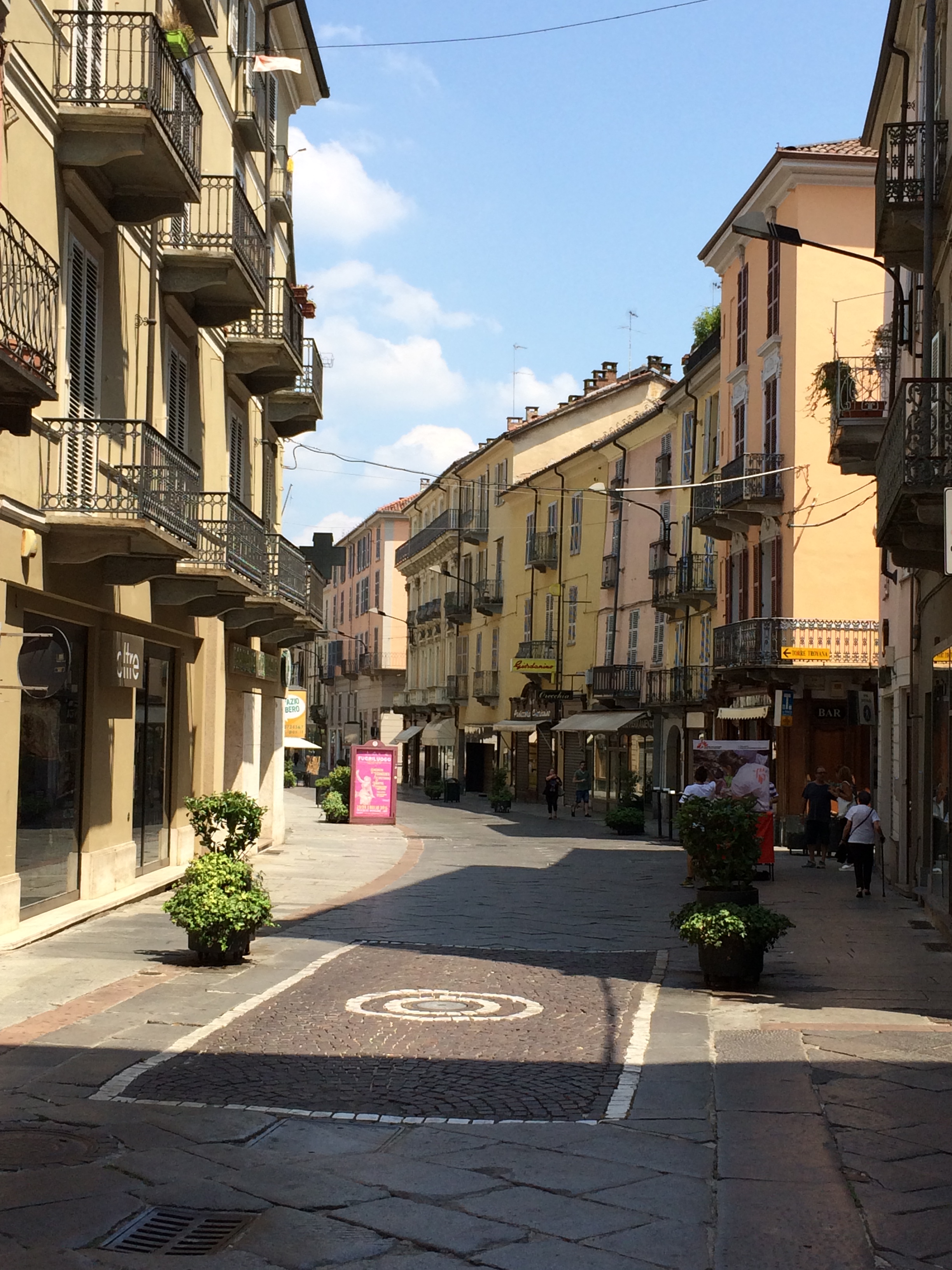
Asti was a pleasant town to walk through - somewhat marred by the intense heat though.
Asti was a pleasant town to walk through – somewhat marred by the intense heat though.

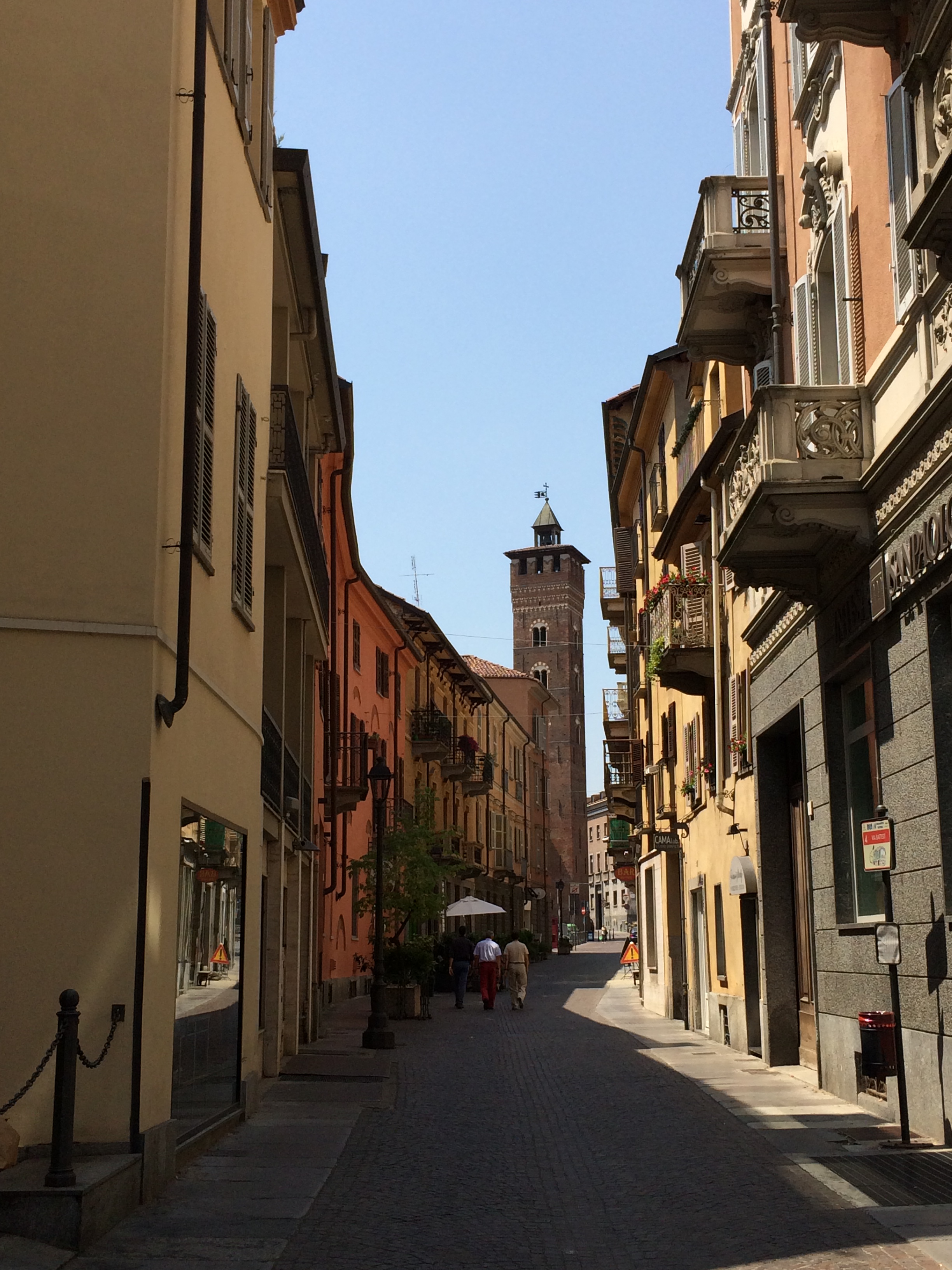
A typical street in Asti.

A typical street in Asti.

Arrival in Alessandria.
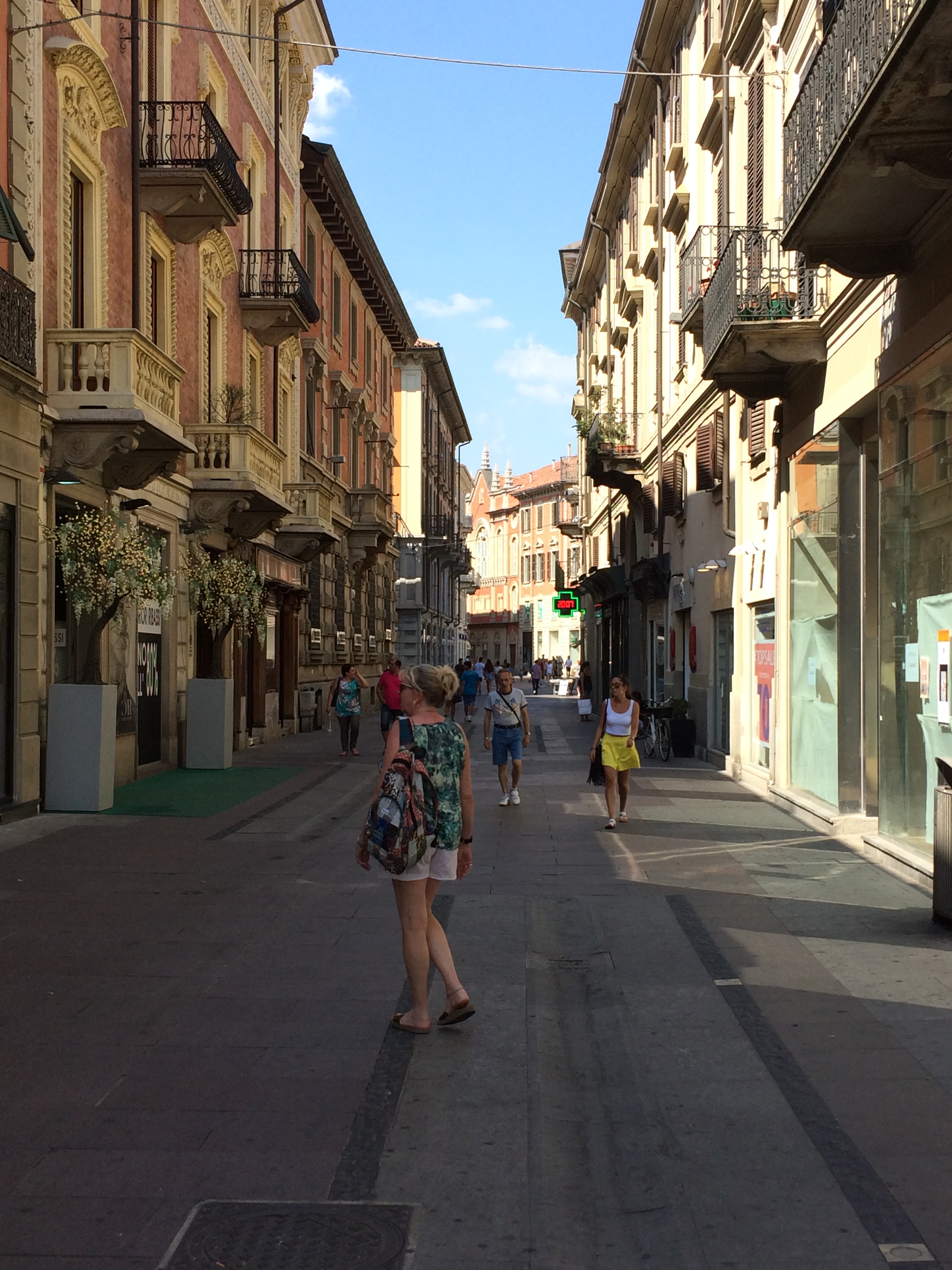
Arrival in Alessandria.

The Corso Roma in Alessandria.

The Corso Roma in Alessandria.

Monument to 'Alexandria and its sons who died for the unity and independence of the fatherland.

Monument to ‘Alexandria and its sons who died for the unity and independence of the fatherland.

Banner outside the 'Cinema Moderno' in Alessandria saying

Banner outside the ‘Cinema Moderno’ in Alessandria saying “Alessandria resists” – closure perhaps?
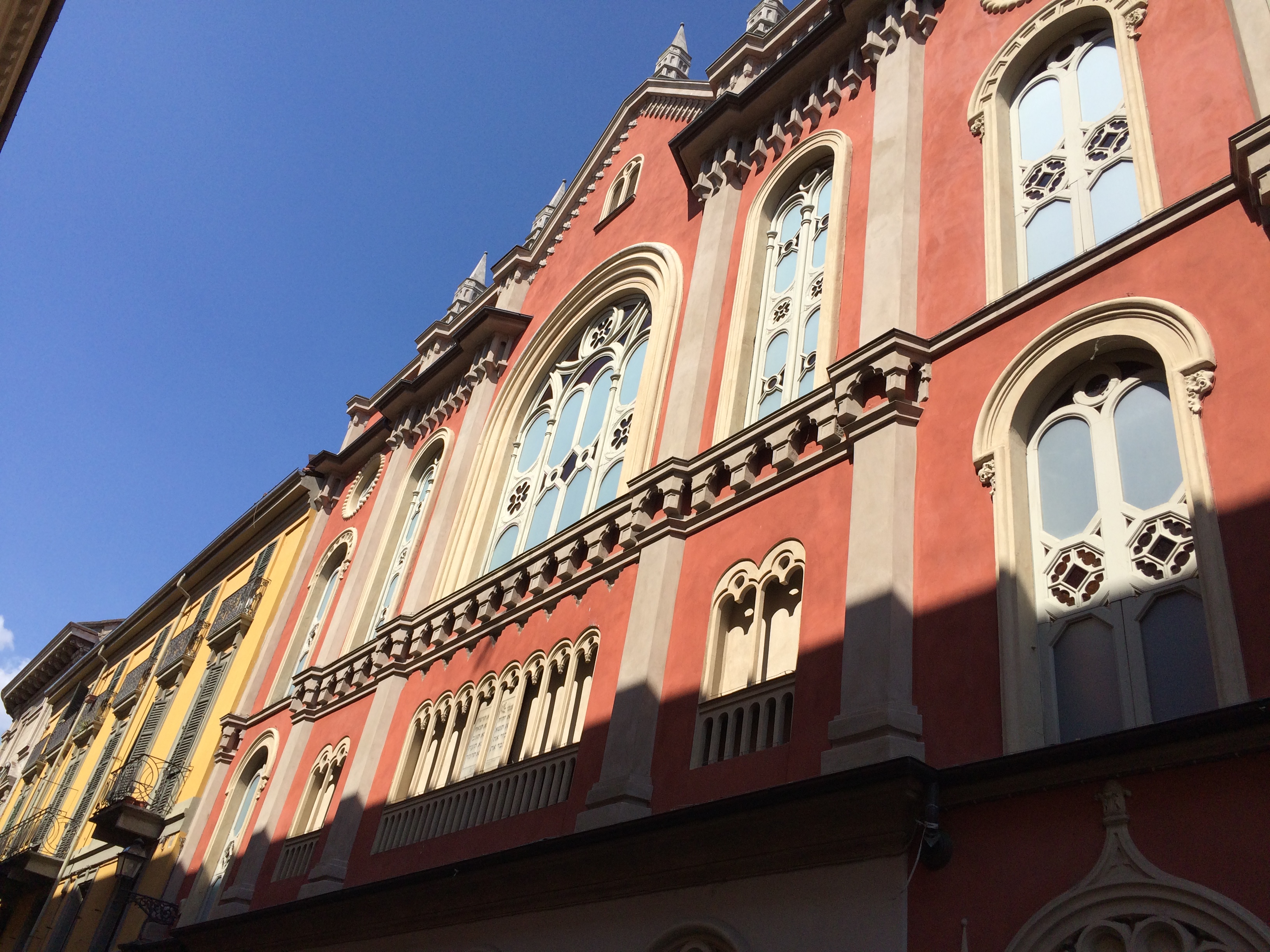
A building that looks like it could have been a former synagogue in Alessandria.

A building that looks like it could have been a former synagogue in Alessandria.

Engraving outside the building that reads:

Engraving outside the building that reads: “Love your neighbour as you love yourself. Between 1939-1945 some 6 mil Jews were deported, martyred, suppressed. This tribute to so much innocent blood spilt – atrocious offence against humanity – has inspired in every heart feelings of justice, brotherhood and love. The community of Alessandria remembers its victims.”

Vegetable seller in Alessandria.

Vegetable seller in Alessandria.

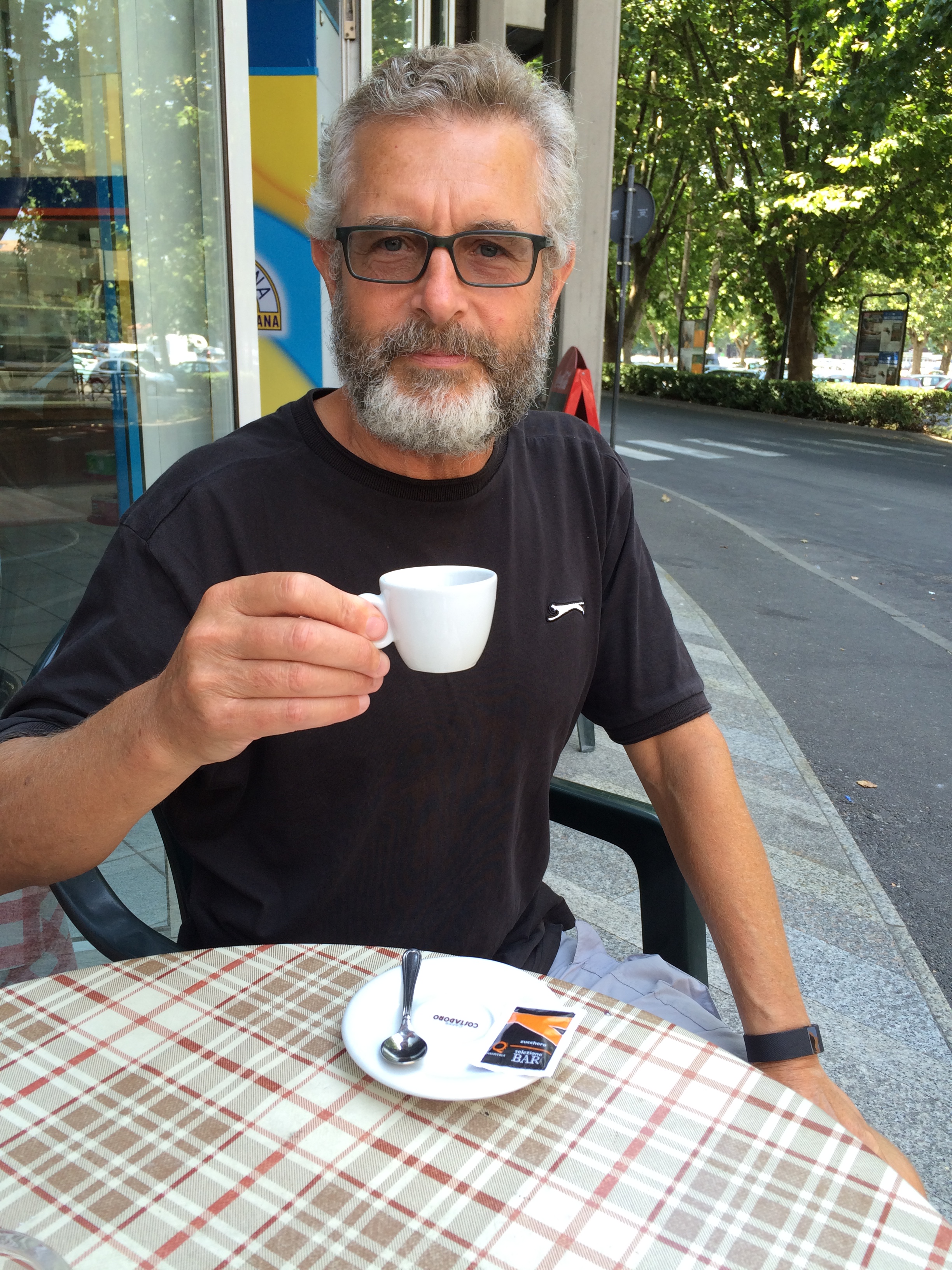
Flavio in Alessandria, Italy not his native Alexandria.

Flavio in Alessandria, Italy not his native Alexandria.

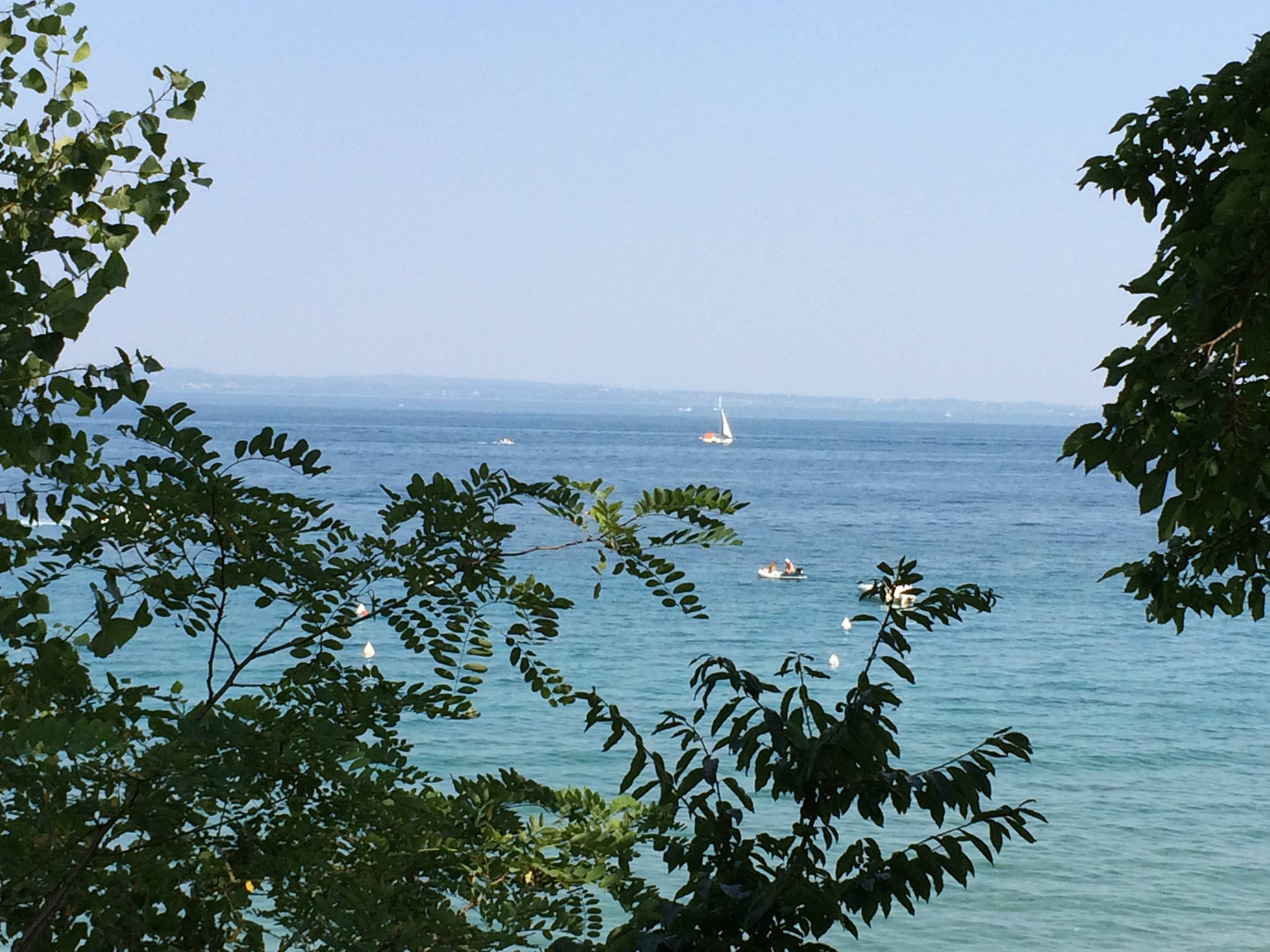
Lake Garda was a popular destination for Romans as it is now for modern-day Italians as well as German and Dutch holiday-makers, especially Germans.  The campsite was lovely but large, quite pricey and very full.  The heat and humidity were oppressive, with no respite and not a whiff of air when you most needed it at the end of the day – it was as if the lake hit the doldrums at around 6pm and though the temperature eventually went down a few degrees by the small hours, it was very difficult to sleep.  Flavio even ended up lying down at the end of the pontoon over the lake at 3am to try and catch a hint of cool air. The only respite was our swims in the lake which mercifully was still cool, being quite deep – they became quite frequent out of sheer necessity.

Lake Garda which provided some respite from the intense heat and humidity.
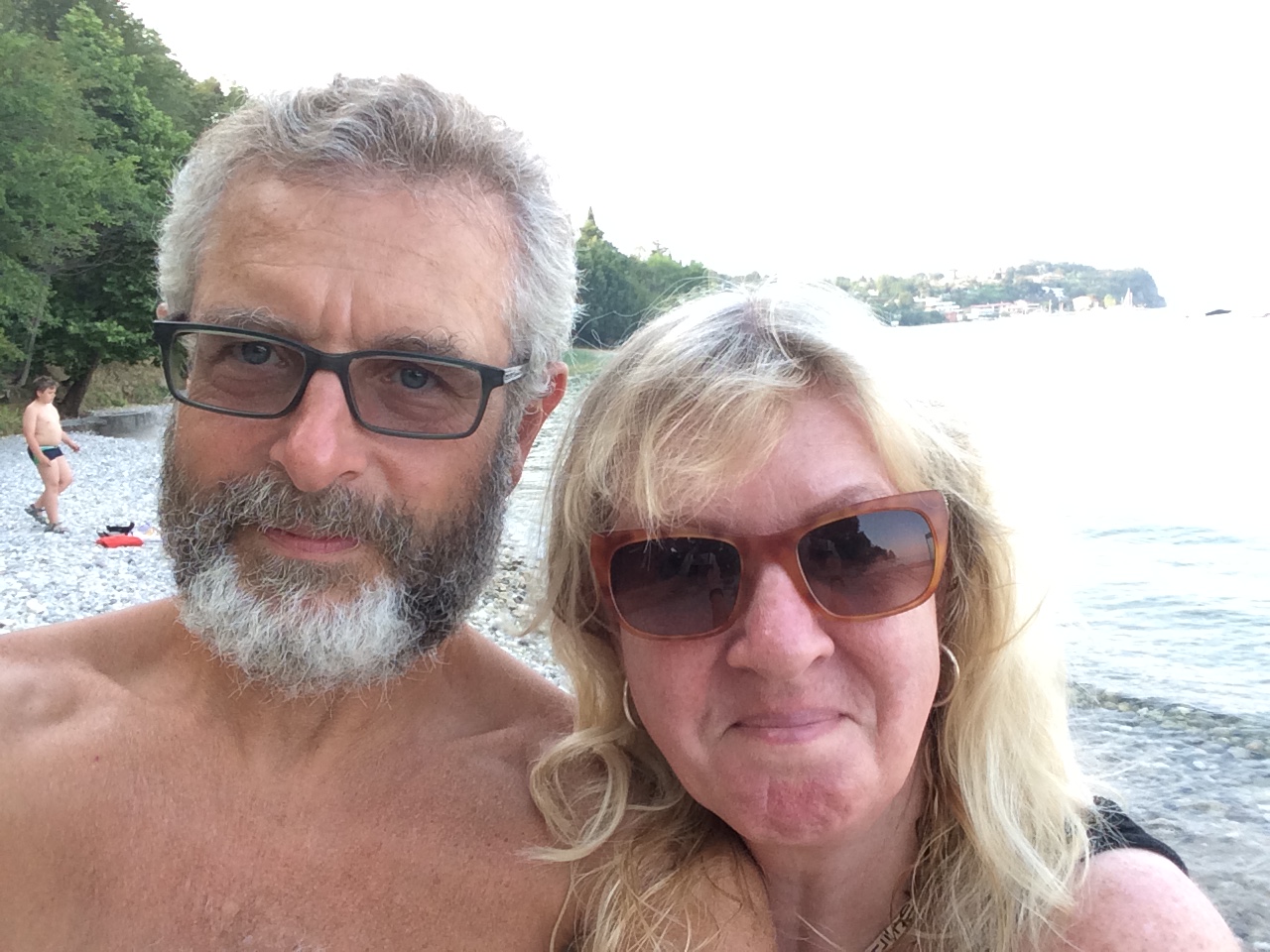
Lake Garda which provided some respite from the intense heat and humidity.

Keeping cheerful despite the heat.

Keeping cheerful despite the heat.

On the second night walked to the local village, Manerba del Garda, for an ‘Italian experience’ only to find the village full of German and Dutch tourists and the market full of stalls run by Africans selling mostly goods from China and India.  Surprisingly, we were having trouble finding any place to eat so we stopped to ask a couple of sophisticated-looking elderly local women sitting and chatting outside their homes for advice.  In a manner which seemed vaguely familiar they answered in a lengthy, sceptical and grumbling but ultimately not terribly helpful sort of way and finally suggested a place that had changed management recently down the road but whether it was any good or indeed whether we’d find it open or not, they really couldn’t say – in fact everything pointed to them having serious doubts, both about this and very probably pretty much anything else we might have asked them about – it all felt so familiar!  (Never expect a short answer in Italy!)

On the walk to the village of Manerba del Garda.
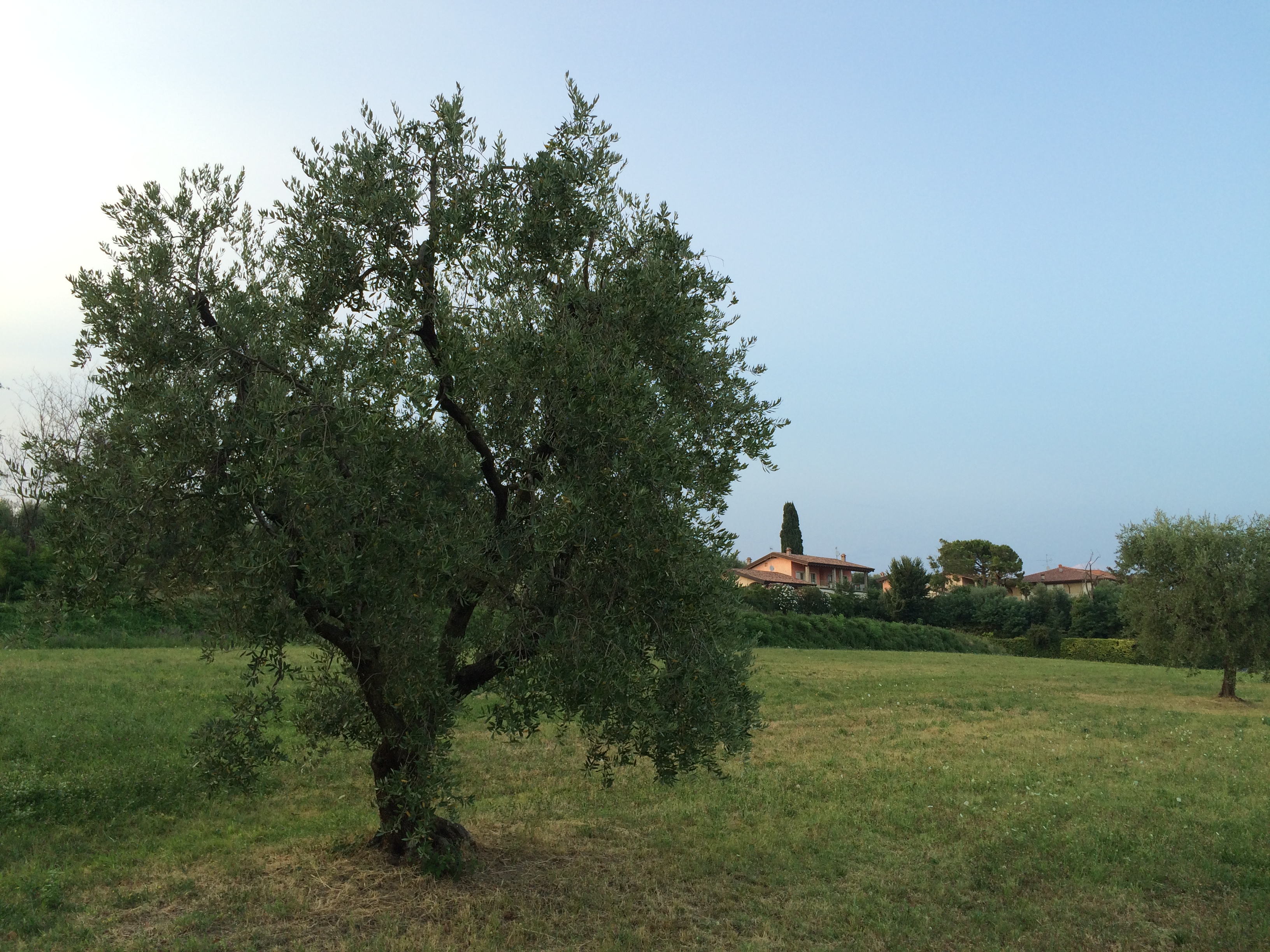
On the walk to the village of Manerba del Garda.

A heavy olive as well as wine-growing area.

A heavy olive as well as wine-growing area.

We walked to the edge of town until we found the restaurant.  Mercifully, it had air conditioning, which is surprisingly difficult to find. The homemade pasta was superb and Matteo the chef came out to greet us and explain that he was trying to keep alive the local cuisine of the region.  The wine too was a new experience – a white Lugana from the village of Desenzano (the next village along) which was was very pleasant indeed and matched our pasta dishes of ‘ravioloni with a chicken and rabbit filling’ and ‘tagliatelle al pomodoro’ perfectly.
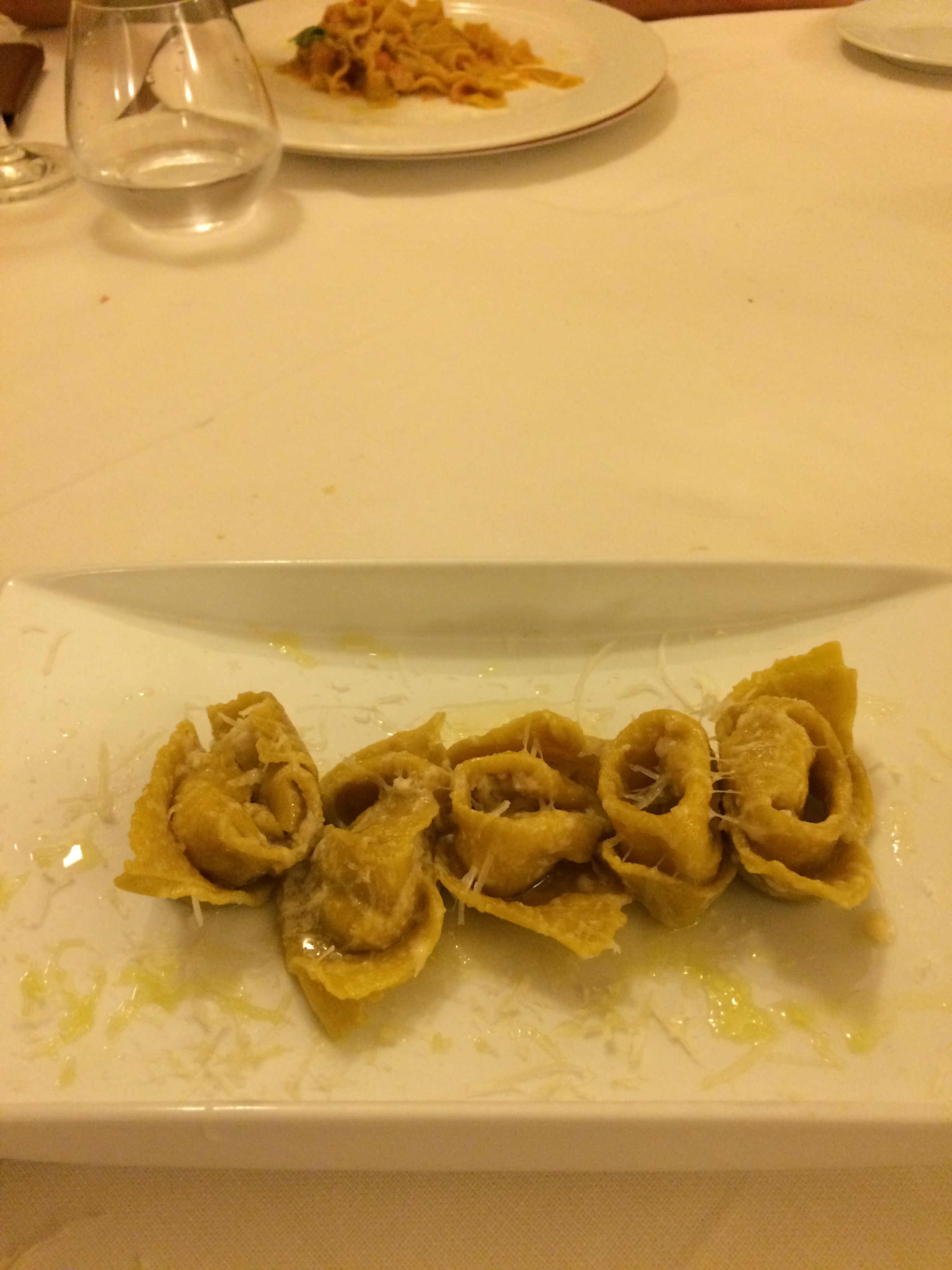
The ravioloni con farcia bianca, burro di malga and 24 month old Grand Padano cheese.
The ravioloni con farcia bianca, burro di malga and 24 month old Grand Padano cheese.

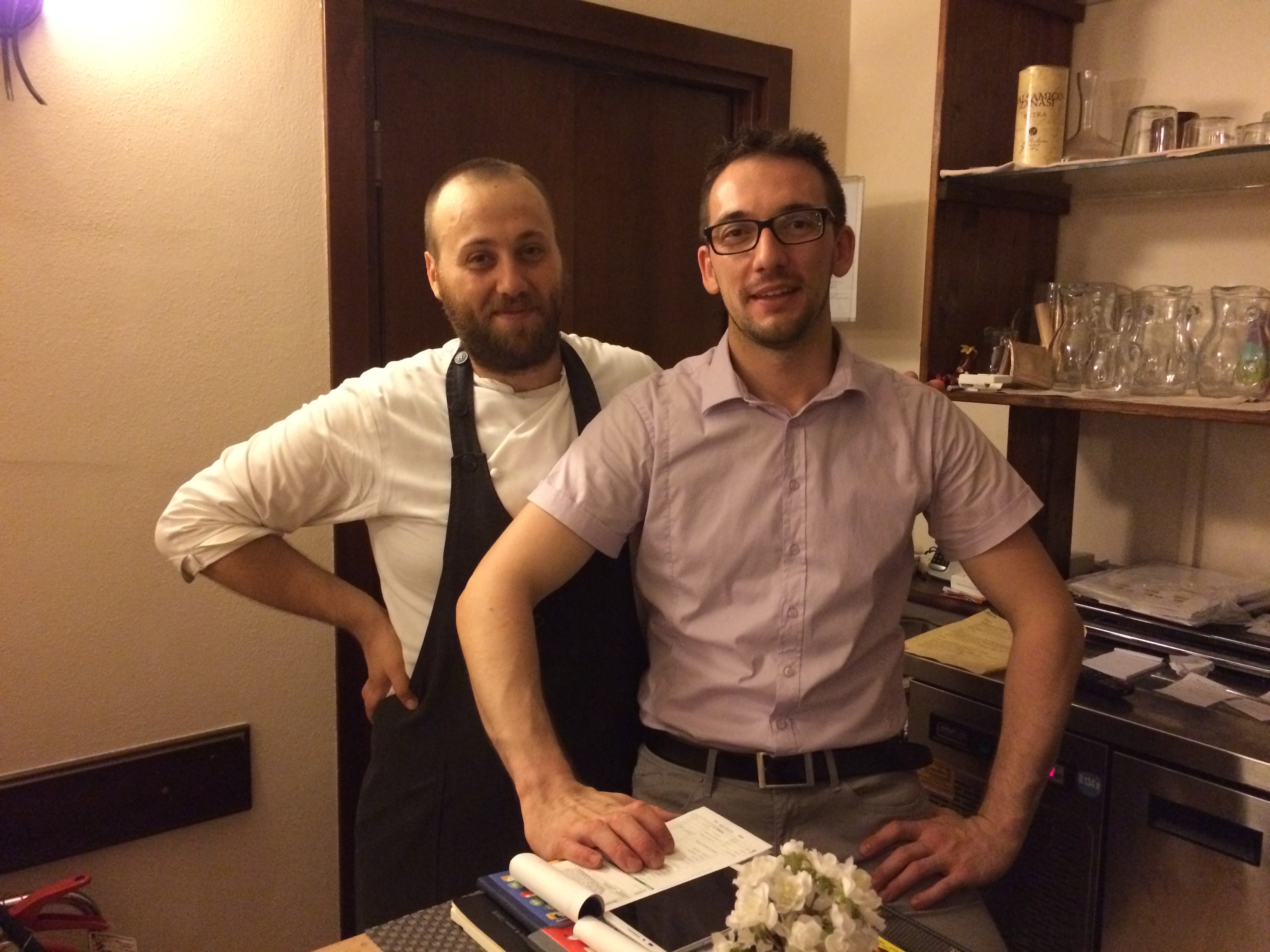
Great service from Matteo the chef and Simone.

Great service from Matteo the chef and Simone. Trying to keep alive local cuisine.

Booked ferry to Dubrovnik as we decided we would drive to Greece via Croatia, Bosnia and Herzegovina, Serbia and Macedonia (cautiously bypassing Albania although we were tempted).
IMG_4406

Sunday 19th July – to Italy

Standard

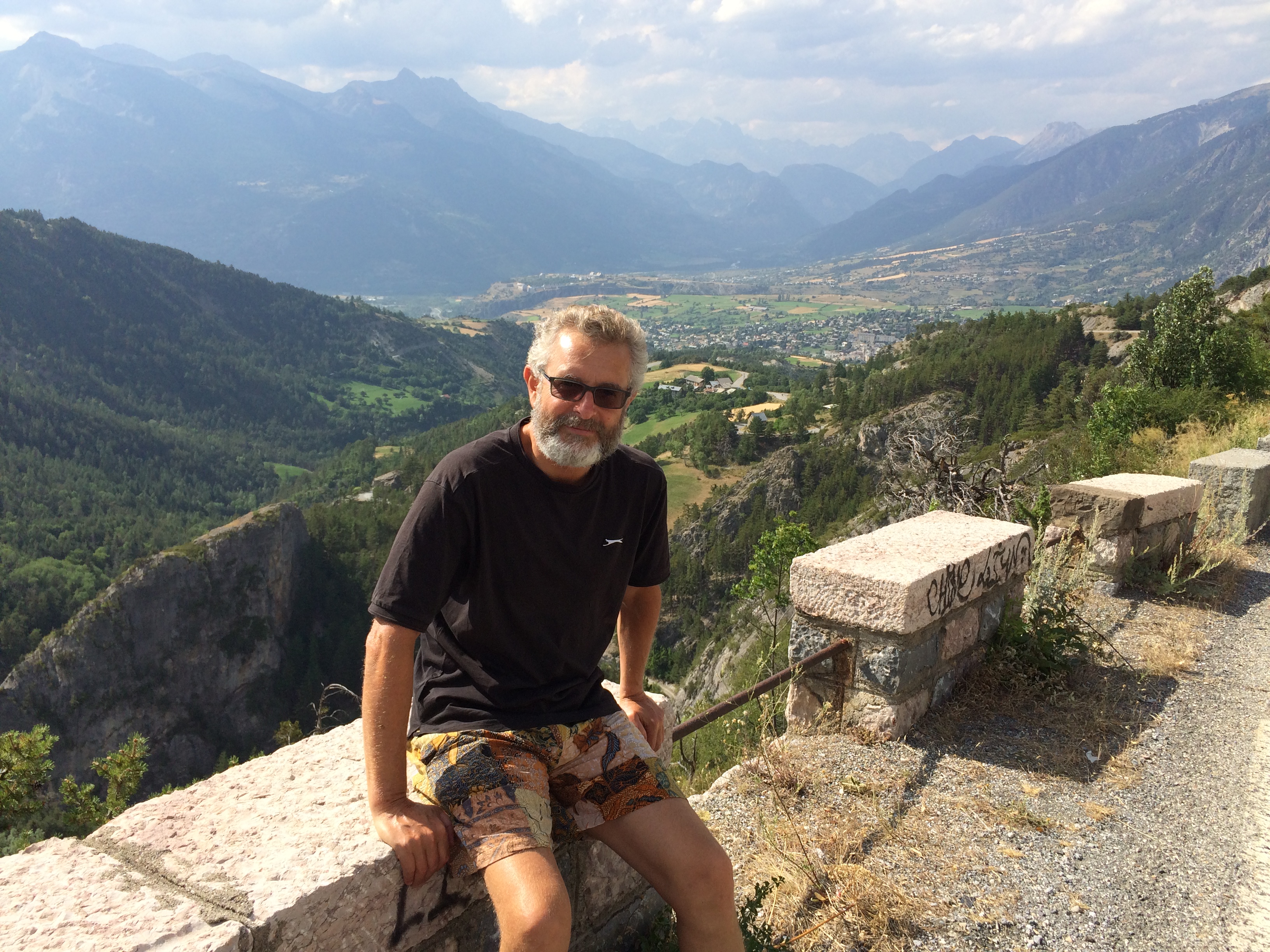
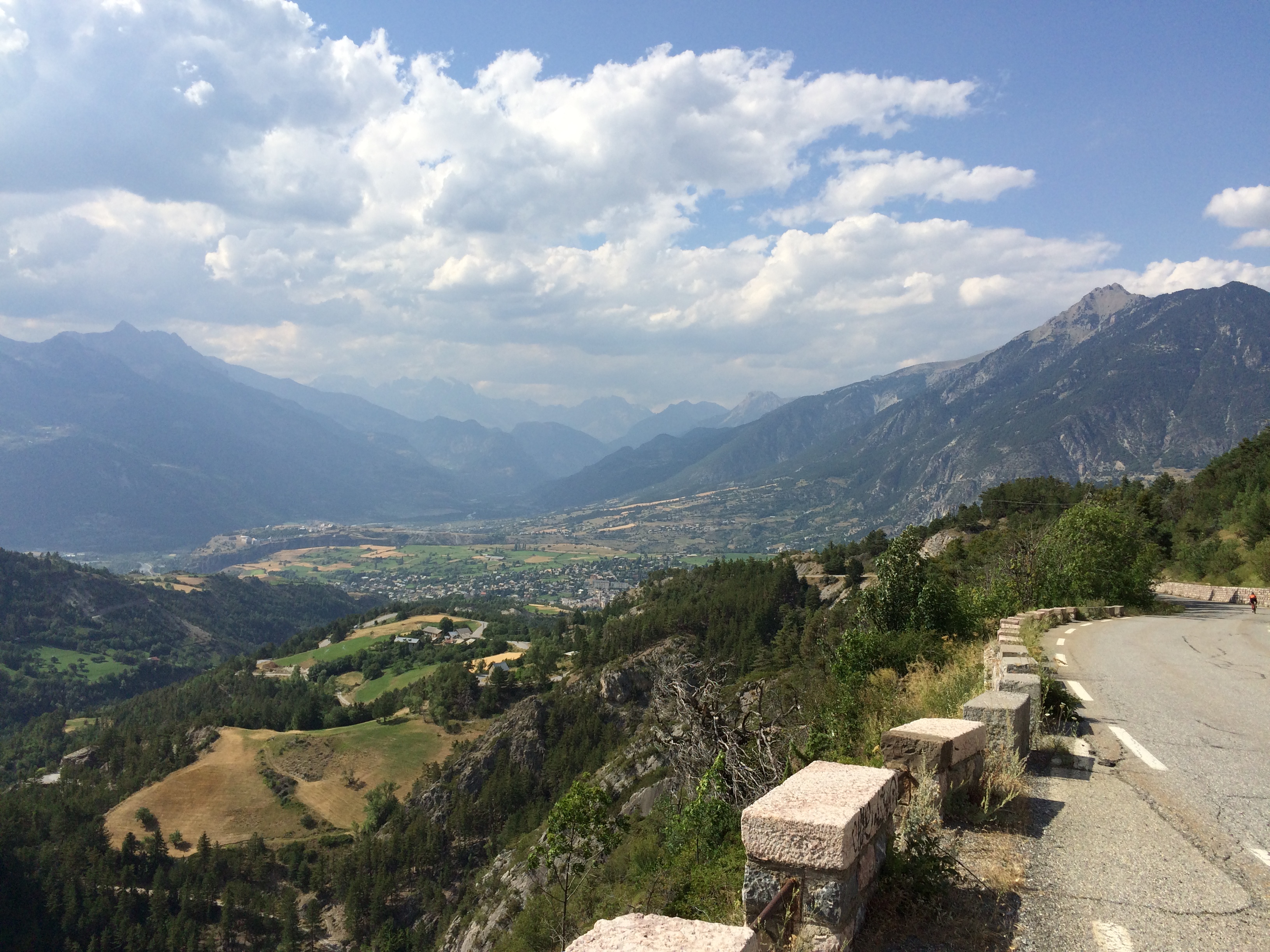
Leaving Guillestre, we climbed higher and higher still, through the ski resorts of Saint-Marcellin-de Vars and Les Claux until we reached the summit of the Col de Vars at Saint-Paul-sur-Ubaye, 2109 metres above sea level.   The views were staggering.  The temperature was dropping rapidly as the altitude increased, from 38 C to just 19 C at the top, which came as a great momentary relief, and we even had some rainfall.

Climbing up from Guillestre, the views were staggering.

Climbing up from Guillestre, the views were staggering.

Saint-Marcellin-de-Vars

Saint-Marcellin-de-Vars

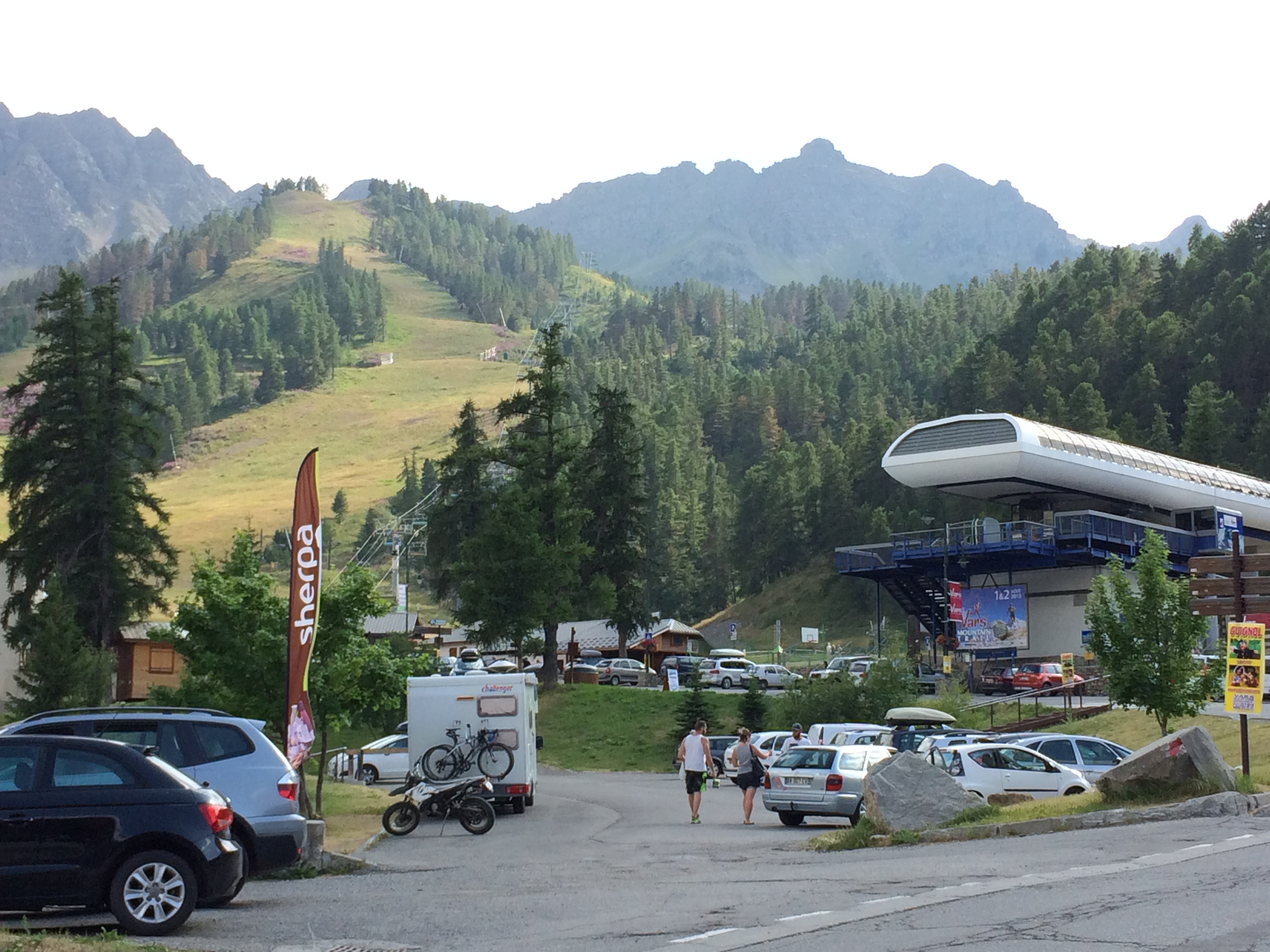
The ski resort of Les Claux with the 'piste' visible on the left and the ski-lift station on the right.

The ski resort of Les Claux with the ‘piste’ visible on the left and the ski-lift station on the right.

The 2109 m summit of the Col de Vars.

The 2109 m summit of the Col de Vars.

IMG_4309

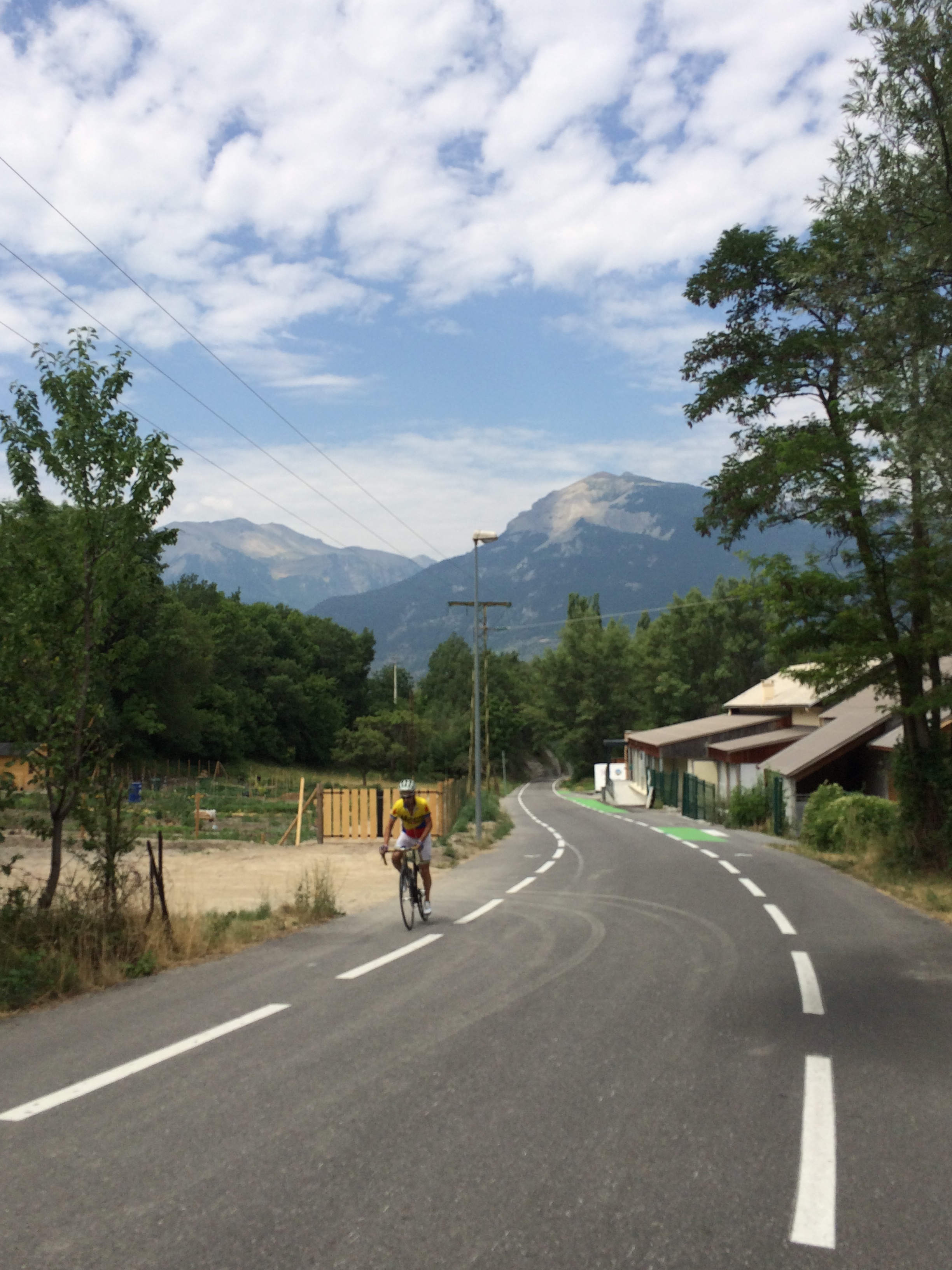
On our way up, as well as when we reached the summit and on the descent, we came across athletic and determined-looking lycra-clad cyclists taking on the mountain.  Some were teenagers (one boy we asked was 12!) and others much older, and some were no doubt taking on the ‘Brevet des 7 cols Uboyens’ cyclotourism challenge – conquering the 7 peaks in the area and getting a certificate!

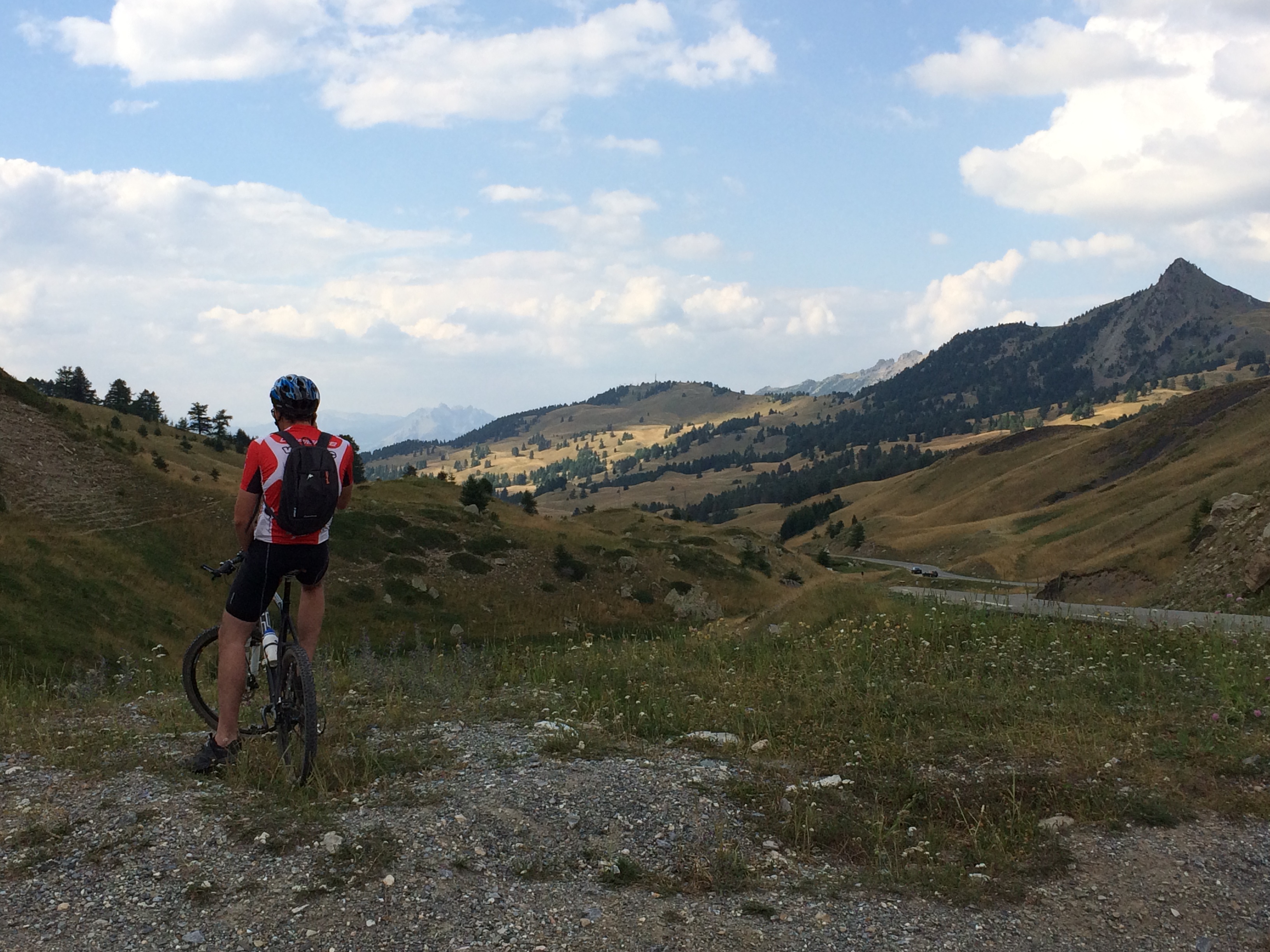
One of several cyclists we saw tackling the 2109 m Col de Vars.

One of several cyclists we saw tackling the 2109 m Col de Vars.

These two had reached the summit - they were 15 and 18 years old.

These two had reached the summit in 35 minutes, they said – they were 15 and 18 years old.

IMG_4307

Approaching the border with Italy our journey was delayed by a landslide – that is, there had been a landslide because of heavy rain the night before and the road was temporarily closed.  Speaking to some of the other French and Italian motorists, it was better to wait until the road opened again rather than take the alternative, much longer and more tortuous route. So this is what we did. The rain had resulted in tons of greyish mud running down the mountains over the roads.

Tons of grey mud cleared away after the landslide that closed dangerous mountain roads approaching the Italian border.

Tons of grey mud cleared away after the landslide that closed dangerous mountain roads approaching the Italian border.

Road maintenance services still at work clearing the mud.

Road maintenance services still at work clearing the mud.

On entering Italy we were surprised to see the Cathar cross displayed on flags and posters. Looking this up, we realized that part of the Piemonte region on the Italian side of the Alps is referred to as Occitan where Oc is spoken and has been recognised and is protected by the Italian government as a minority language!

This part of Italian Piemont is known as Occitan.

This part of Italian Piemont is known as Occitan where the Oc language is recognised and protected by the Italian government.

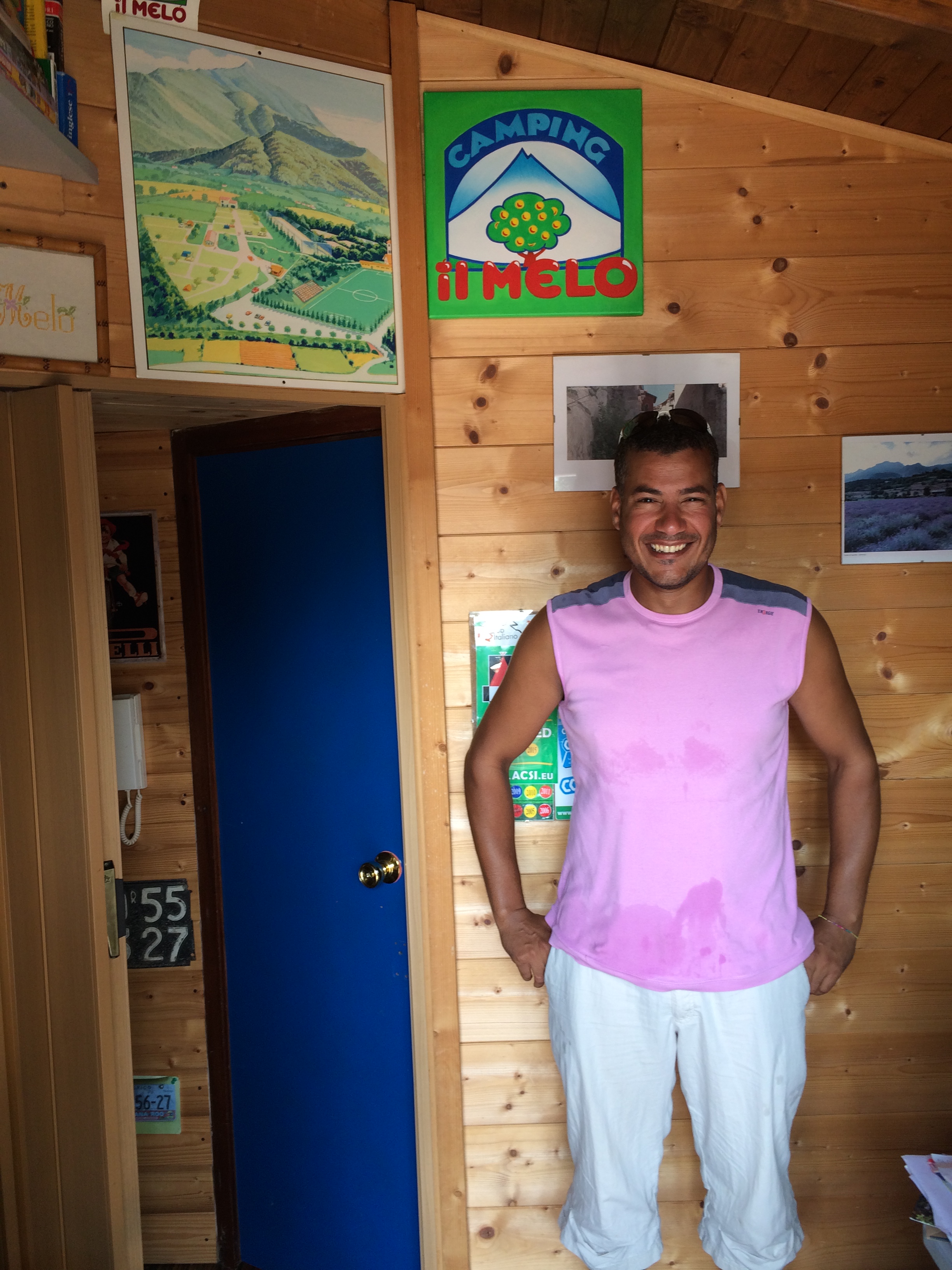
We drove on through Argentera, Pietraporzio, Sambuco and Vinadio (which looked very old an intriguing).  But it was late so we headed for one of the nearest campsites we could find – the ‘Il Melo Camping’ in Cuneo.  After an introductory chat with the owner in Italian, it didn’t take long for us to realise there was something very familiar about him, in terms of his general appearance and manner that is.  ‘Abdu’ turned out to be a ‘Saeedi’ Egyptian from Luxor who met his Italian wife while he was working and she was holidaying in Safaga on the red sea!  He had come to Italy and bought the campsite 5 years ago, and again, as for Mahmoud in Guillestre, managed to turn it around through sheer hard work and meeting the customer’s needs.  We chatted in Arabic as though we were old friends and it felt reassuring, though slightly incongruous!  It seems we’re destined to come across reminders of the Middle East wherever we go.  Abdu also bore an uncanny resemblance to Ayman, Flavio’s hairdresser in Cairo!

Abdu from Luxor, owner of the 'Il Melo' (the apple tree) campsite in Cuneo, Piemonte.

Abdu from Luxor, owner of the ‘Il Melo’ (the apple tree) campsite in Cuneo, Piemonte.

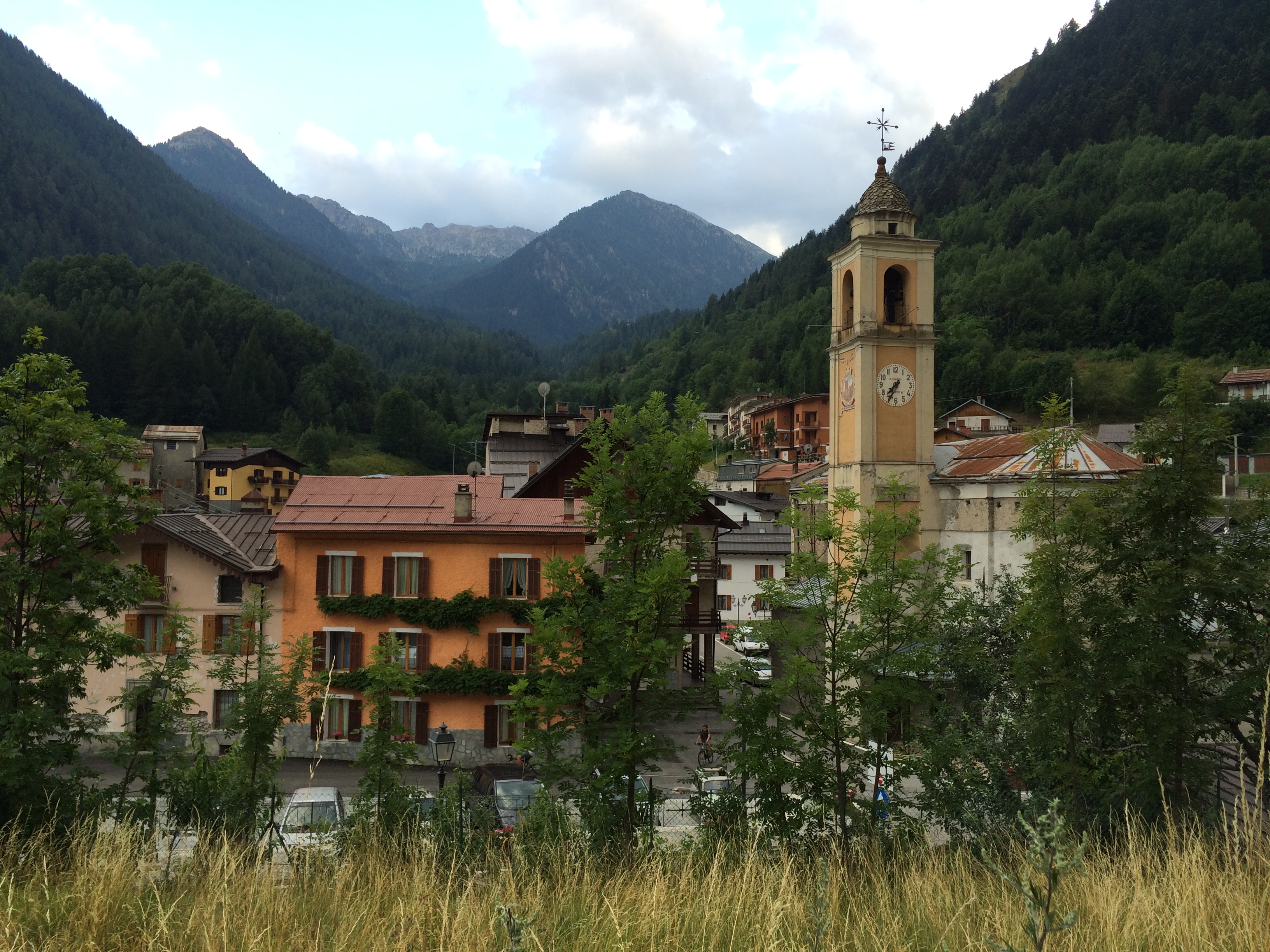
Pietraporzio, just inside the Italian border in Piemonte.

Pietraporzio, just inside the Italian border in Piemonte.

Vinadio - looked old and intriguing.

Vinadio – looked old and intriguing.

Judith half-way up the Col  de Vars.

F

F

IMG_4332

17th and 18th July – Guillestre in the Hautes-Alpes

Standard

The Lac de Serre-Poncon at Rousset was amazing but the campsite was one of these large holiday-camp types which we’re not enamoured with (we may already have mentioned this!). We wanted to spend a couple more days in France before crossing into Italy in more tranquil surroundings. Driving higher up still and more north east towards Briancon, past Chorges, Clamensane, Embrun, Chateauroux-les-Alpes and Risoul, we chanced upon the Camping Villard, 2kms from the picturesque Alpine village of Guillestre.  It’s amazing how even in summer Alpine villages make you think of Christmas – something about all those Christmas trees.

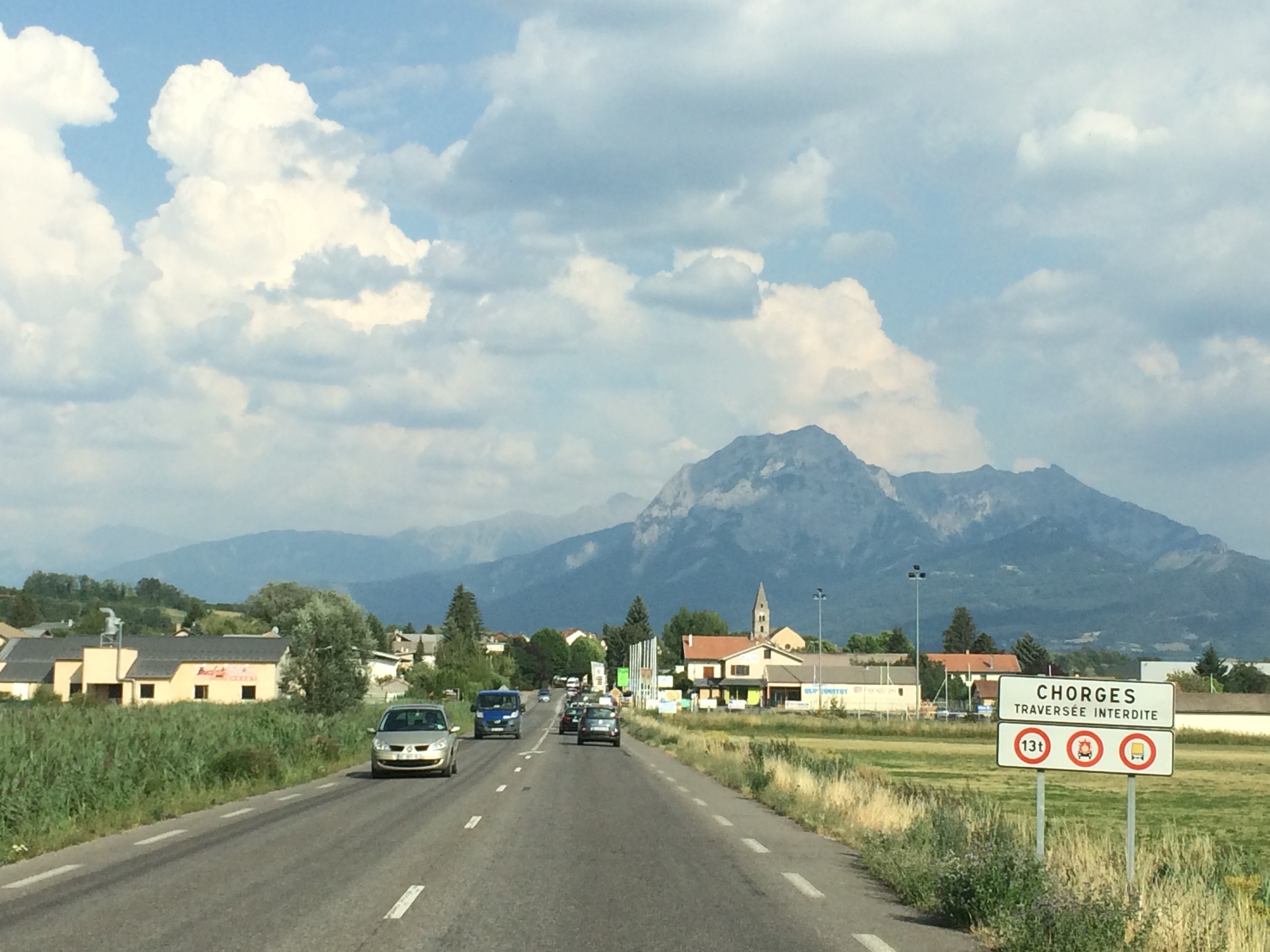
Chorges with the Col de Vars looming in the distance.

Chorges with the Col de Vars looming in the distance.

Clamensane.

Clamensane.

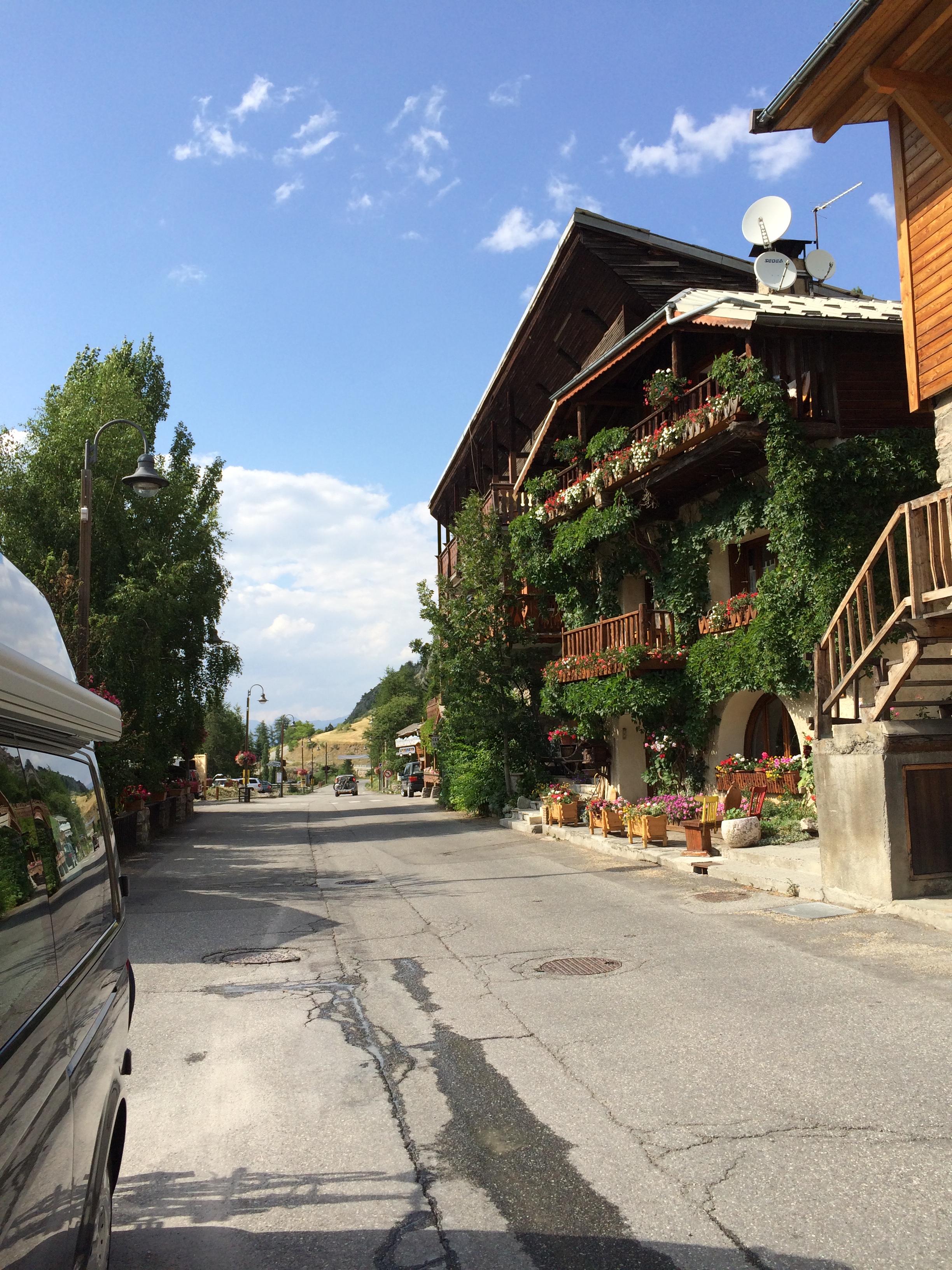
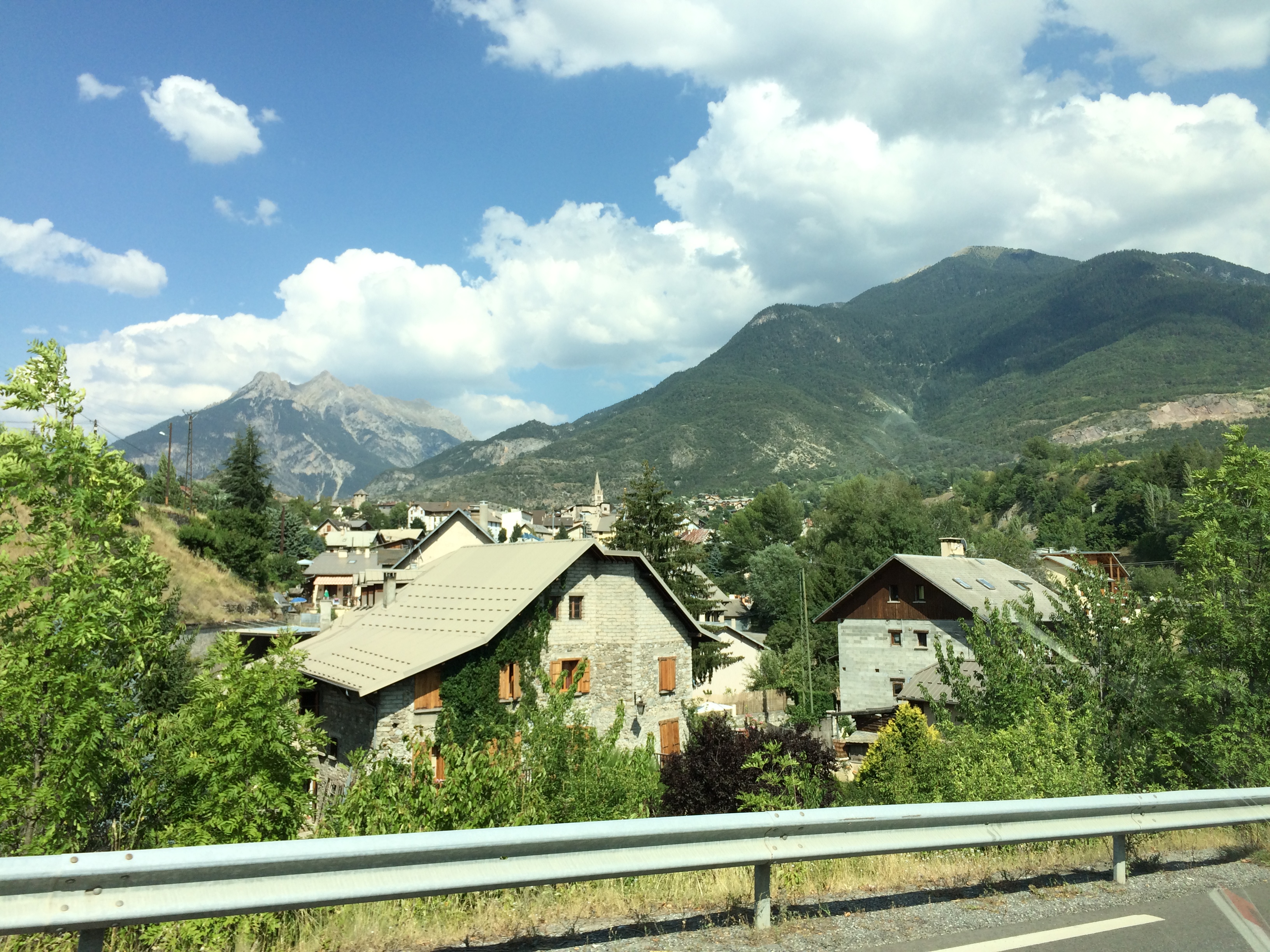
The picturesque village of Guillestre - looks a bit Christmassy even in summer.

The picturesque village of Guillestre – looks a bit Christmassy even in summer.

Another view of Guillestre.

Another view of Guillestre.

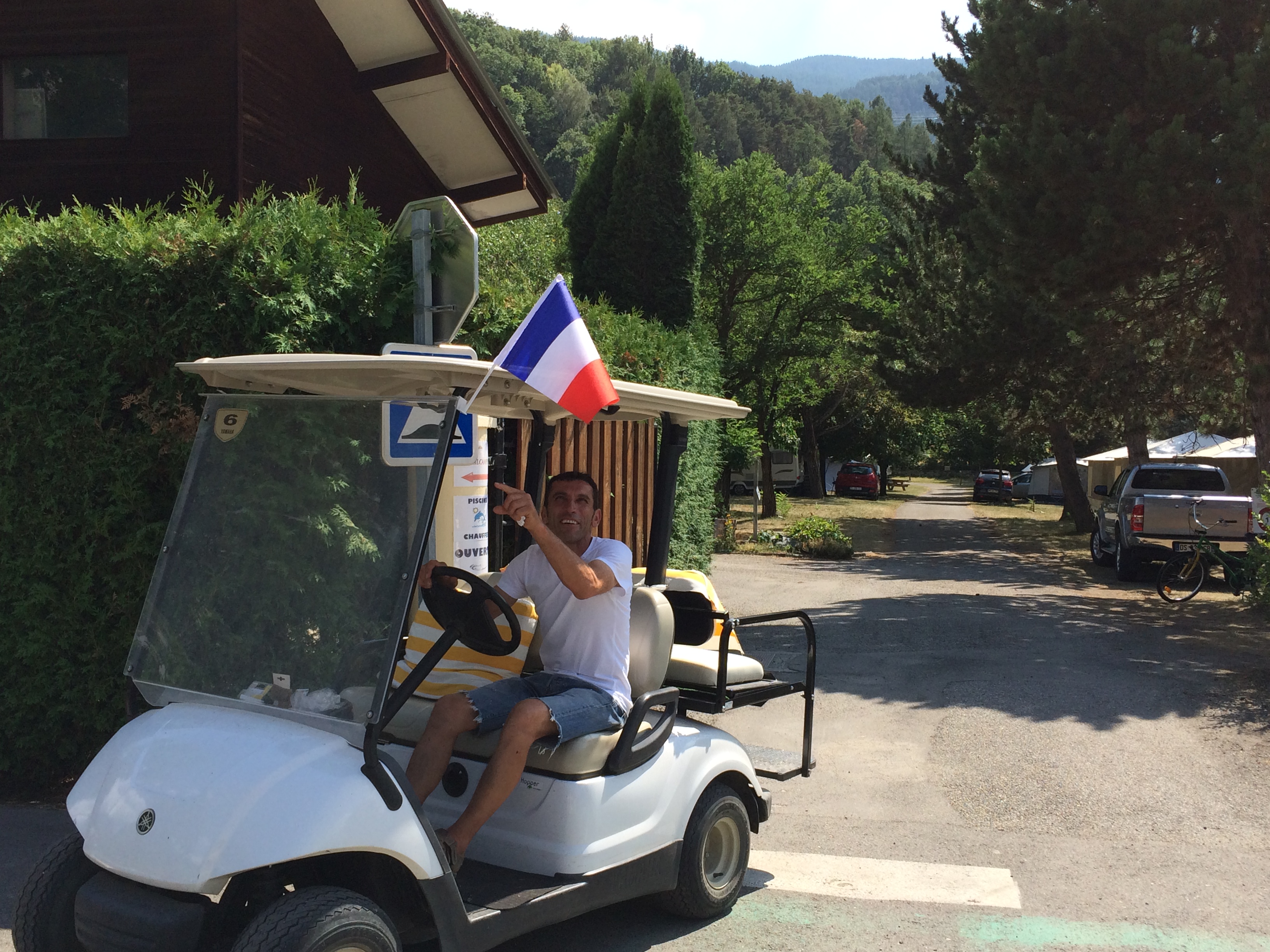
We were aiming for another campsite along the same road but something about Camping Villard attracted us.  An extremely energetic and affable man welcomed us and made us feel immediately at home and when we said we’d stay two nights he said he hoped we’d like it so much we’d stay two weeks (I almost heard the phrase ‘inshallah’ sotto voce!) He introduced himself as ‘Mam’ and when we looked puzzled he said it was actually short for ‘Mahmoud’ in a way which suggested he hadn’t had to explain this for a while. Mam and his wife Domininique had bought the failing site 5 years ago and had turned it around.  Running a campsite involves a great deal of hard work, staff is expensive and for people like Mam and Dominique who are prepared to put in a major part of the work themselves it can be a rewarding and profitable enterprise. Mahmoud had travelled to Paris 30 years ago at his father’s insistence to join his older brother for studies but had soon started working as a mechanical engineer and it was his wife Dominique who had come up with the idea of buying a campsite.  They and their lovely staff have worked very hard to turn the site into a charming, relaxing and very welcoming place and one we would highly recommend.

Mam (Mahmoud) and Dominique standing outside the Reception of their charming and superbly-run Camping Villard near Guillestre.

Mam (Mahmoud) and Dominique standing outside the Reception of their charming and superbly-run Camping Villard near Guillestre.

Staying at Camping Villard was a joy - Mam and Dominique made us feel completely at home.

Staying at Camping Villard was a joy – Mam and Dominique made us feel completely at home (and the fantastic pool was an extra bonus)..

Mahmoud was constantly on the go - he never stopped.

Mahmoud was constantly on the go. He had forgotten it was the Eid when we arrived and was going to have to spend an hour on the phone congratulating everyone at home in Damsacus.

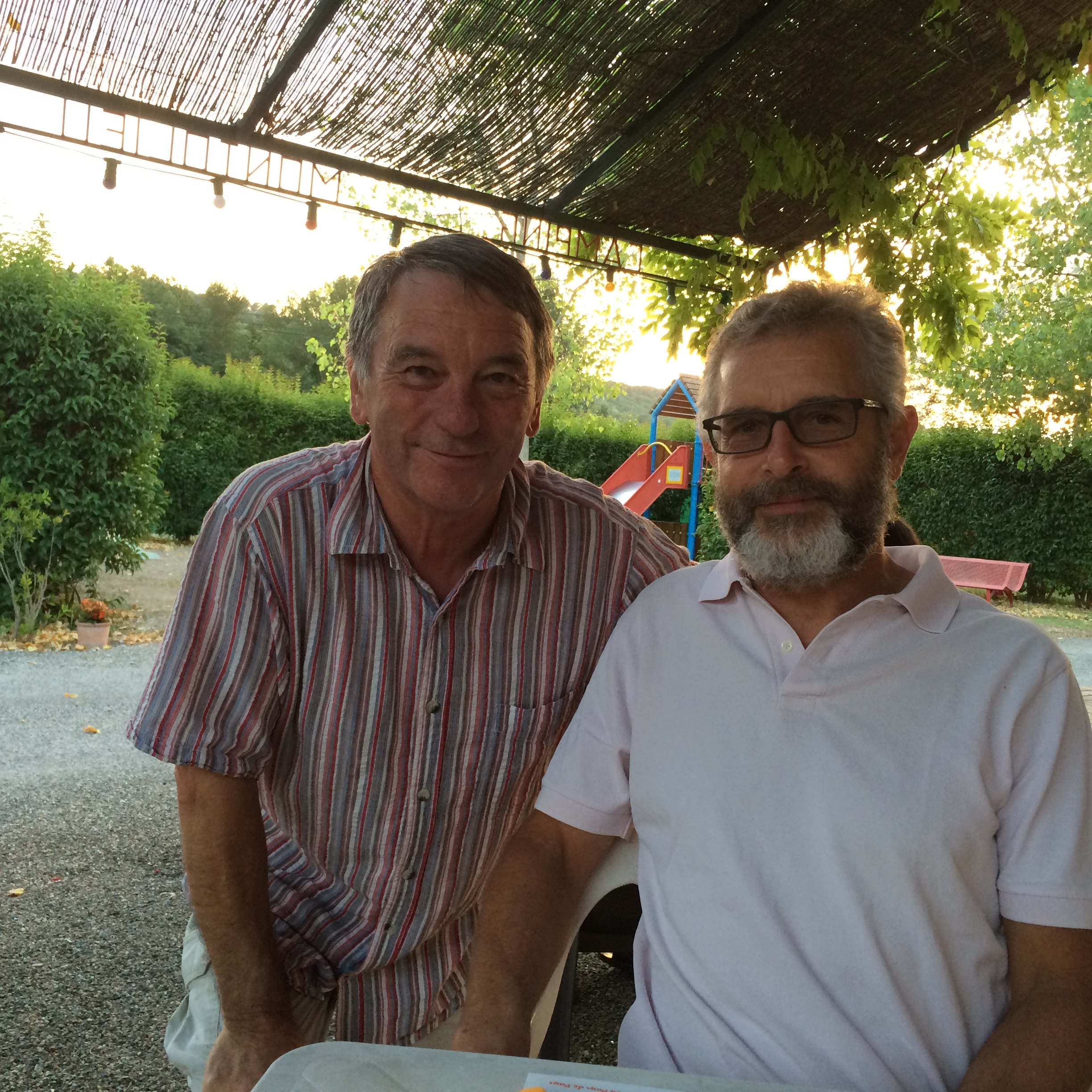
With Alain Iemmi a fellow estranged Italian with whom Flavio had several animated conversations and saw eye to eye with on a number of burning issues of the day!

With Alain Iemmi, a fellow estranged Italian with whom Flavio had several animated conversations and saw eye to eye with on a number of burning issues of the day!

We even had our own little mountain stream flowing at the side of our pitch!

We even had our own little mountain stream flowing at the side of our pitch!

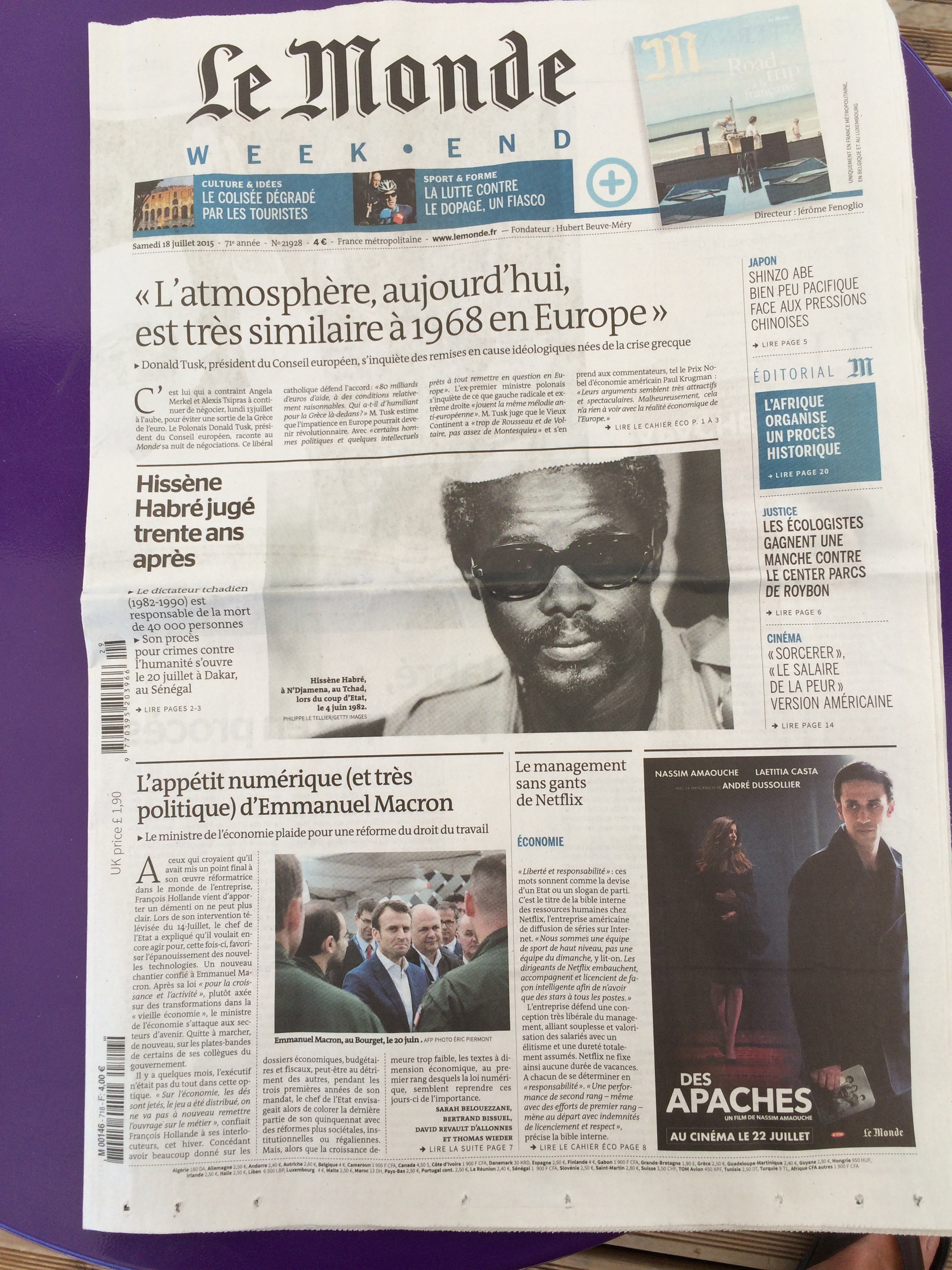
Talking of issues of the day, a quick look Saturday the 18th’s issue of Le Monde featured the following:

– Donald Tusk, President of the Council of Europe saying that the political and economic conditions we’re currently going through are very similar to Europe in 1968.

– A leader on the real implications of the ‘Greek tragedy’ and Donald Tusk again saying ‘there’s nothing humiliating about an 86 bn Euro loan.

– Hissene Habre on trial in Senegal 30 years after he was held responsible for the death of 40,000 people.

– An article on Ramadan not necessarily meaning the end of fasting.

– An leader on the Vienna Accord with Iran representing a real chance for peace in the ME.

– Something on indignant locals in Vallauris campaigning against the Saudi Royals and 500 people retinue persuading the authorities to close a local beach for them.

– Something on the ‘secret radicalisation’ of the extremist who killed 4 soldiers in Tenessee.

– A double-page spread on the art of efficient packing your holiday bags!

Donald Tusk: "Conditions in Europe are similar to those of 1968".

Donald Tusk: “Conditions in Europe are similar to those of 1968”.

It was here we decided to get rid of surplus items/assorted clutter we thought we couldn’t live without!  This meant going uphill to Guillestre centre and catch the post office before it closed at midday.  We’d strapped the two boxes on the back of Judith’s bike (which has a rack) but Dominique saw us struggle and promptly rescued us by dropping what she was doing to kindly give us a lift.  We then spent a an hour or so taking a look at Guillestre.  Someone we got talking to told us she had been made redundant from the hotel she’d been working in because times were hard and the trend was now moving towards camping (or ‘glamping’ as the new expression goes) as people were feeling the pinch.

Guillestre advertises itself as a very ‘sporty’ place.  That was clear from the procession of keen cyclists we saw heading for the hills while we were sipping our ‘allonge.

Guillestre centre.  The area is popular with keen and athletic cyclists.

Guillestre centre. The area is popular with keen and athletic cyclists.

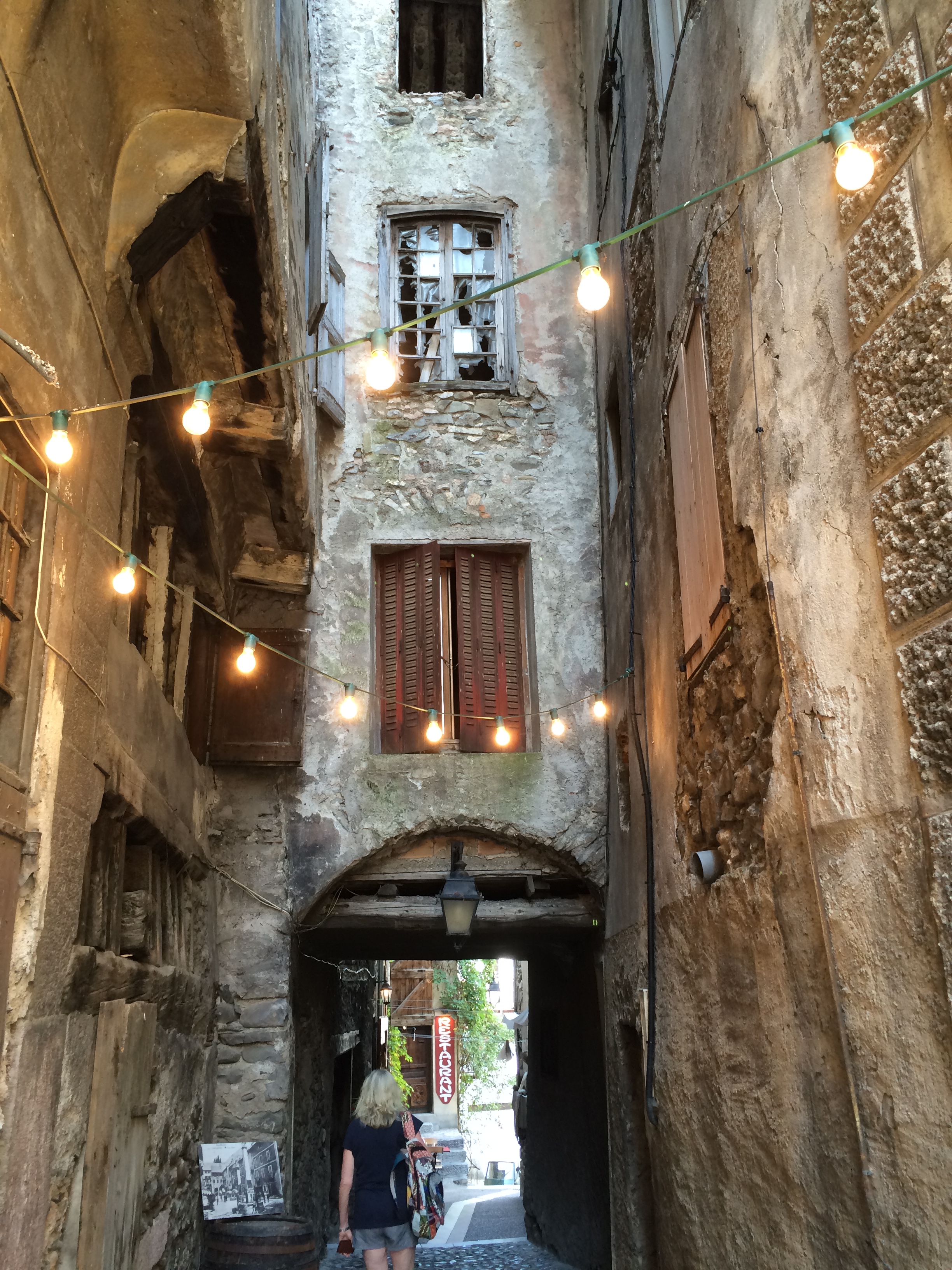
A narrow alley-way in Guillestre.

A narrow alley-way in Guillestre.

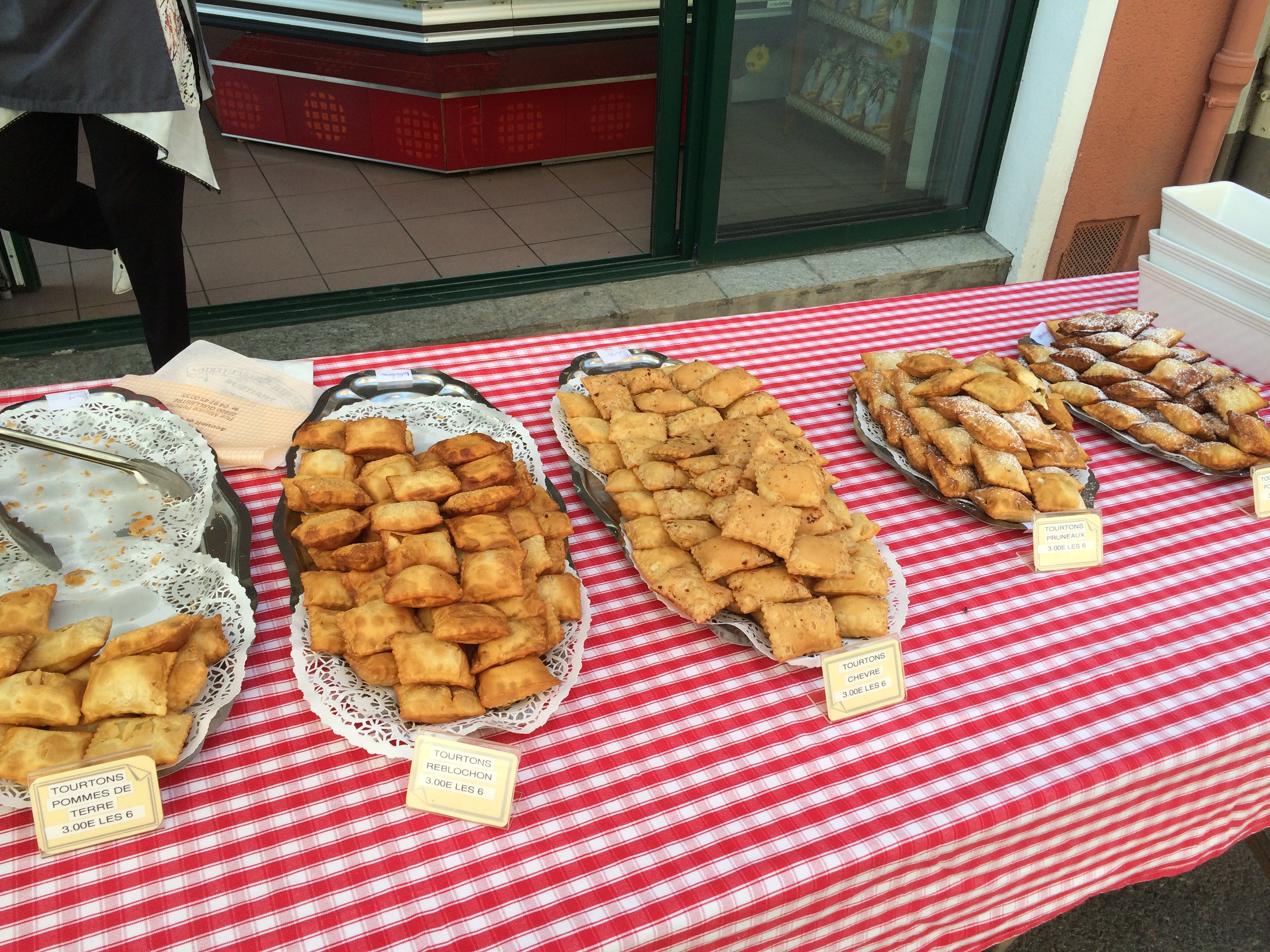
Specialities of the region -  'Tourtons' stuffed with potatoes, Reblochon or goat cheese or prunes. We forgot to buy some.

Specialities of the region – ‘Tourtons’ stuffed with potatoes, Reblochon or goat cheese or prunes. We forgot to buy some.

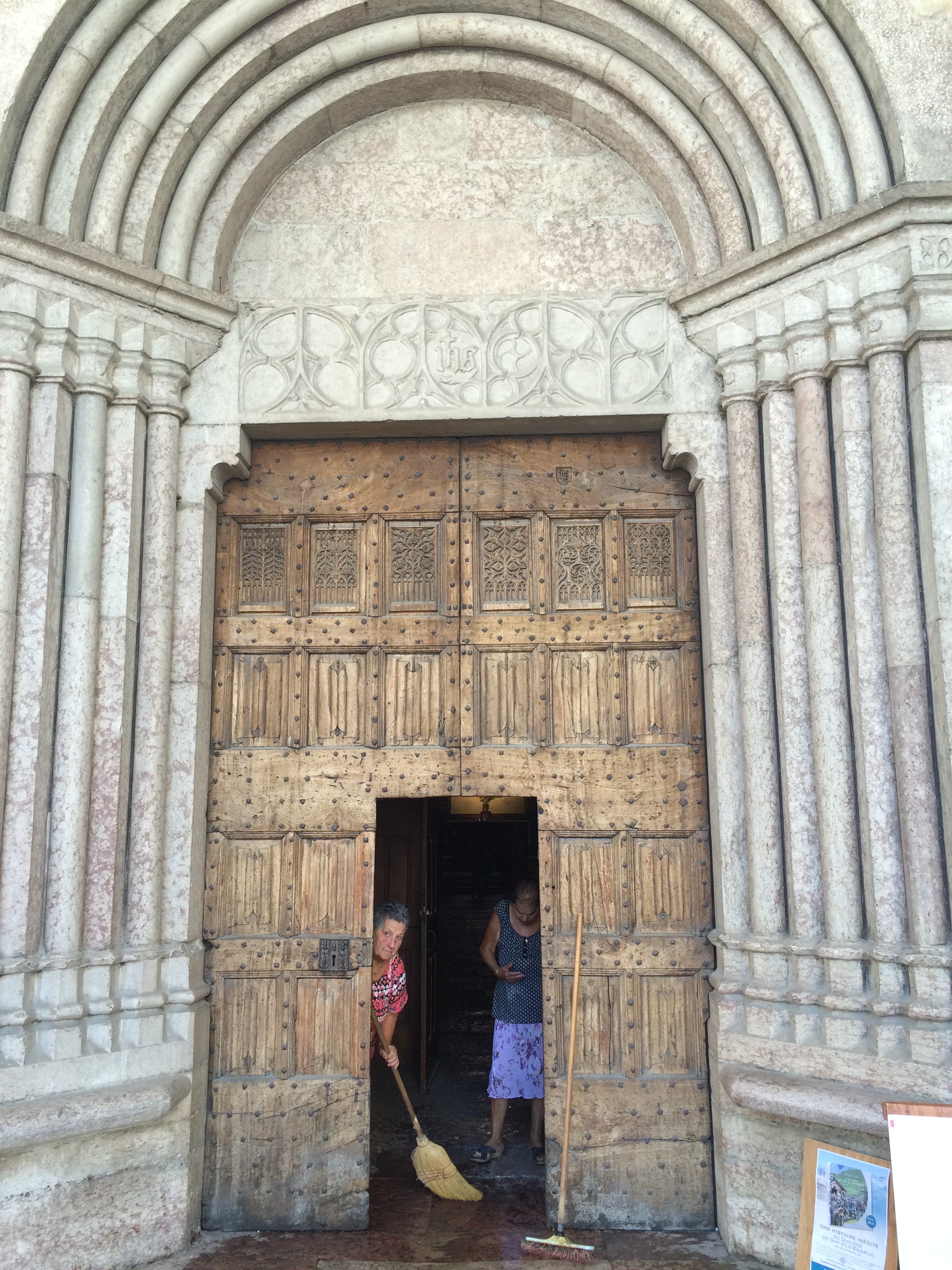
Keeping the front of the local church at Guillestre clean.

Keeping the front of the local church at Guillestre clean.

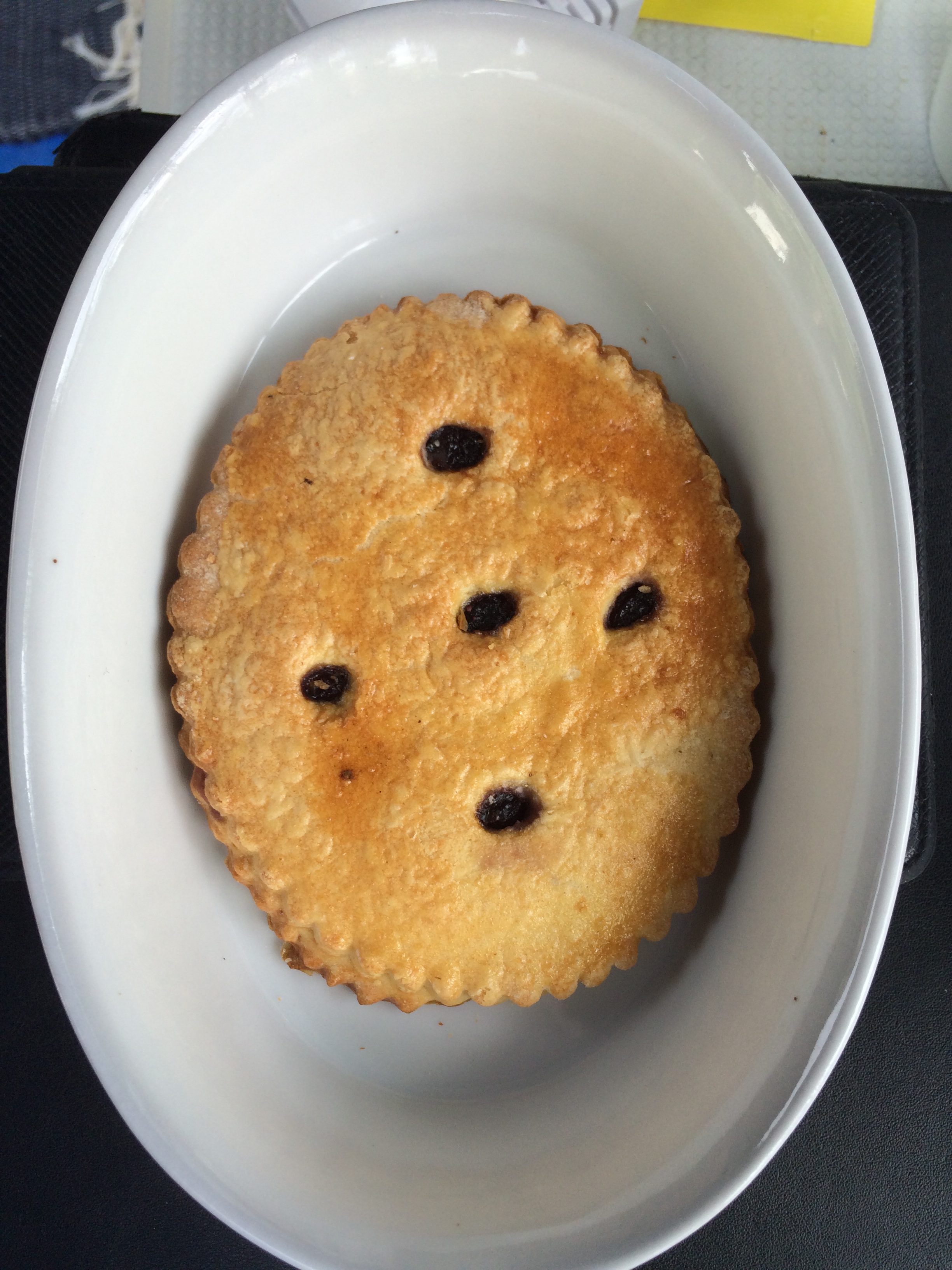
We did have one of these though - a typical jam tart from Guillestre.

We did have one of these though – a typical jam tart from Guillestre.

IMG_4234

15th and 16th July – Haute-Provence and Hautes-Alpes

Standard

After leaving Marseille we were faced with two choices – continue down the Cote d’Azur and into Italy via the Alpes-Maritimes or head north east for the Hautes-Alpes entering Italy through Piemonte. It was hot and humid, Christian had warned us the coast would be heaving and we felt mountain air was what was needed. So off we set for a place called Rousset near the town of Gap in the Alps only to find it was still hot but at least there was a large lake without the crowds one would find on the coast.  On the way, we passed Peyrolles-en-Provence, Oraison, the striking town of Sisteron, Upaix and Tallard.  Evidence of the ‘secheresse’ (drought) was everywhere.

Giant sprinklers in action in Oraison to combat the widespread drought in the whole region.

Giant sprinklers in action in Oraison to combat the widespread drought in the whole region.

The striking village of Sisteron in Haute-Provence.

The striking village of Sisteron in Haute-Provence.

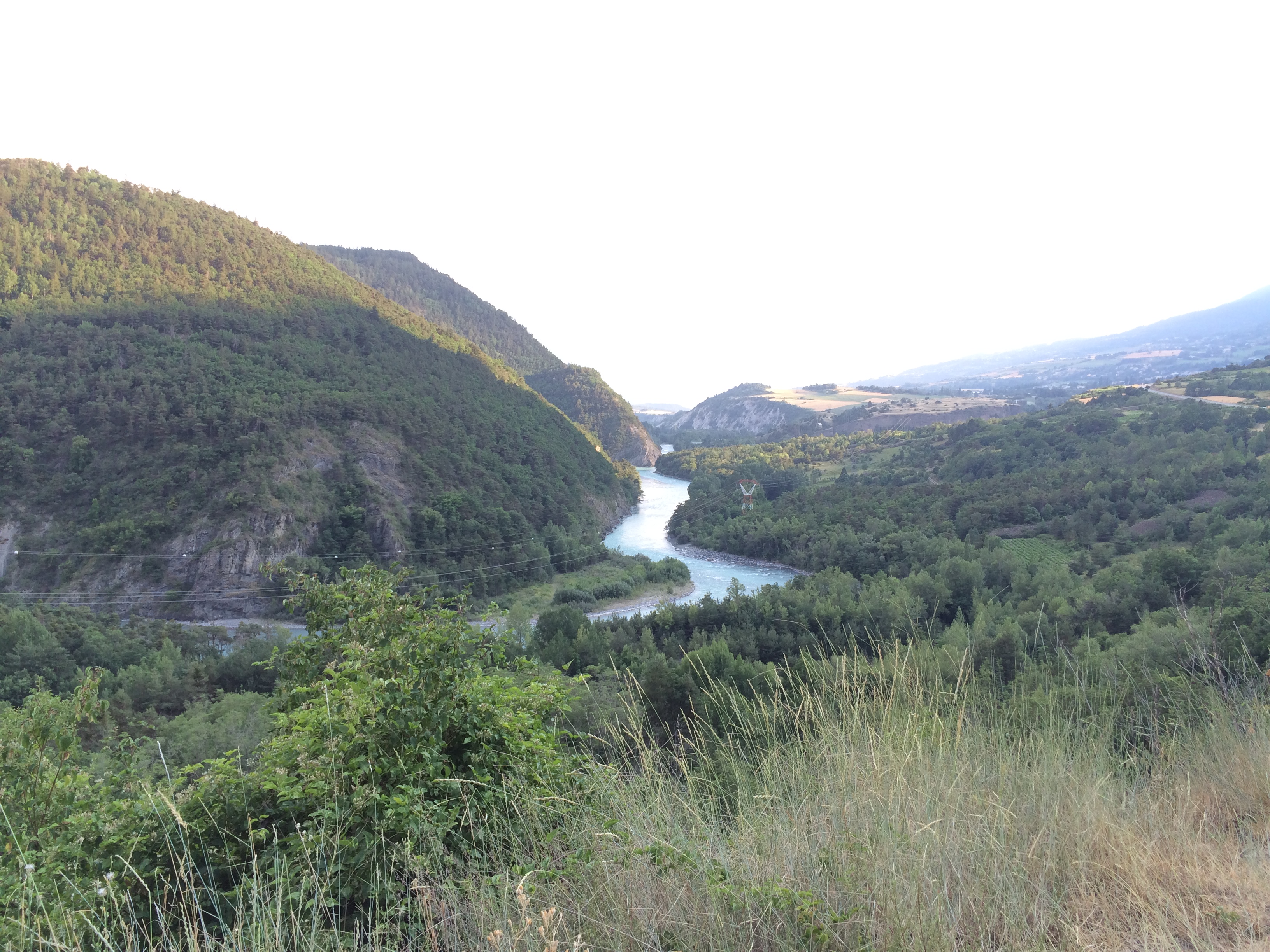
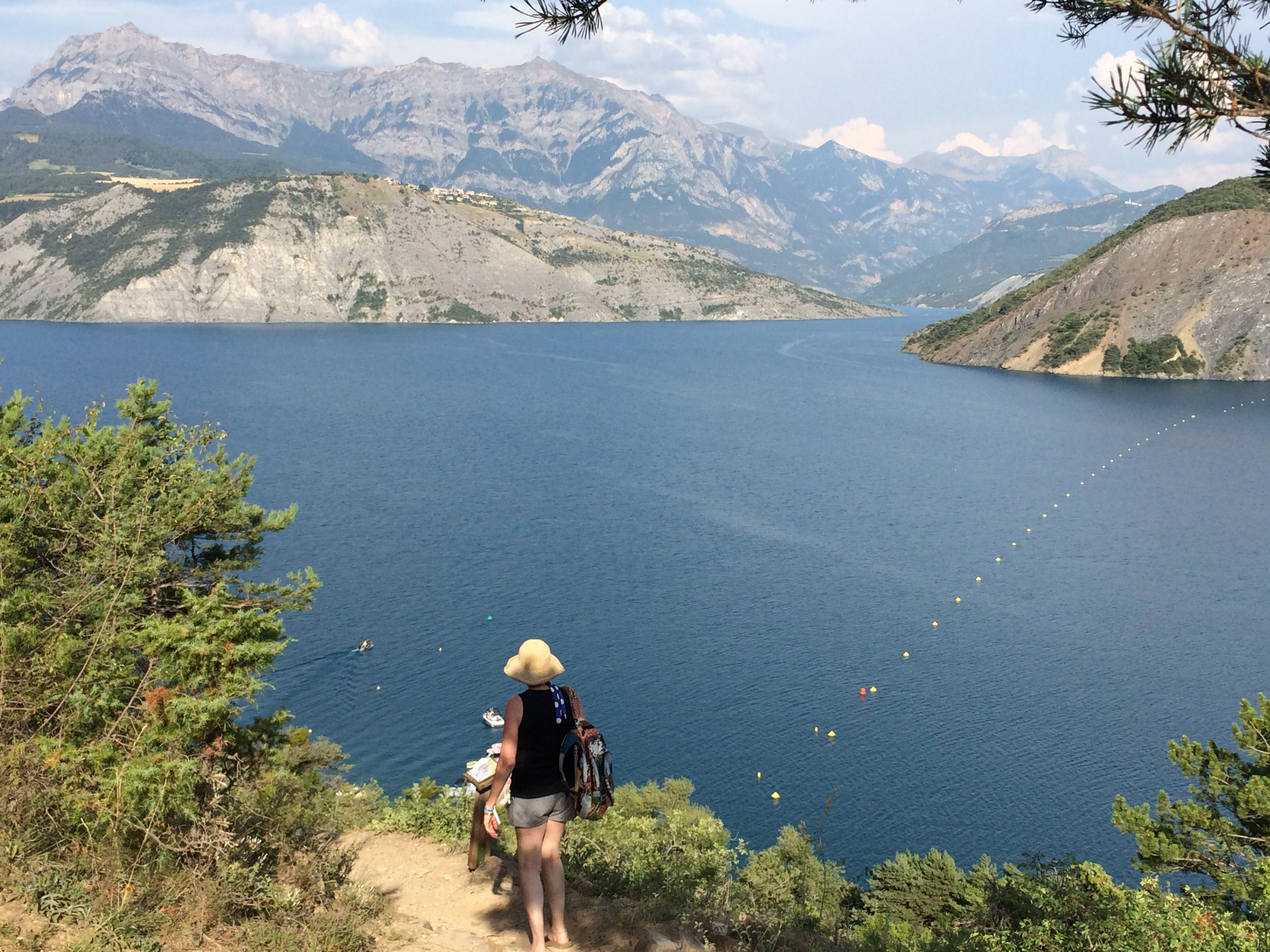
We camped by Lac De Serre-Poncon, a huge artificial and quite spectacular lake which is fed by the rivers Durance and Ubaye. Waters from the lake also drive the largest hydro-electric dam in Europe. Swimming in the lake was bliss but also available if one was so inclined were wind-surfing, water-skiing, diving and boating.

The impressive man-made Lac   and hydro-electric dam. Flowing into it are the rivers Ubaye (right) and Durance (left).

The impressive man-made Lac de Serre-Poncon and hydro-electric dam. Flowing into it are the rivers Ubaye (right) and Durance (left).

It was still very hot and humid even at this altitude and so a refreshing swim in the lake was very welcome

It was still very hot and humid even at this altitude and so a refreshing swim in the lake was very welcome.

We took the footpath down to the lake for extra exercise!

We took the footpath down to the lake for a bit of extra exercise!

Back up, a selfie seemed in order!

Back up, a selfie seemed in order!

Thinking Brenda needed an infusion of brake fluid we set off with mild alarm for Gap, the nearest large town which had a VW garage. After a quick inspection however it was a bit embarrassing to be told that we were looking at the wrong side of the chamber – i.e. the front where the thickness of the plastic doesn’t show the real level – and the actual fluid level was perfectly normal.  And by the way, we should remember that lights and alarms come on at the first sign of anything untoward so we shouldn’t question VW efficiency. So off we set again, this time to a campsite higher up near the Alpine village of Guillestre next to the fast-flowing Durance river where we spotted white-water rafting whilst extreme cyclists could be seen tackling the endurance climb to the nearby 2100m Col de Vars.

IMG_4182

Monday 13th and Tuesday 14th July – Chateauneuf-du-Pape and Marseille

Standard

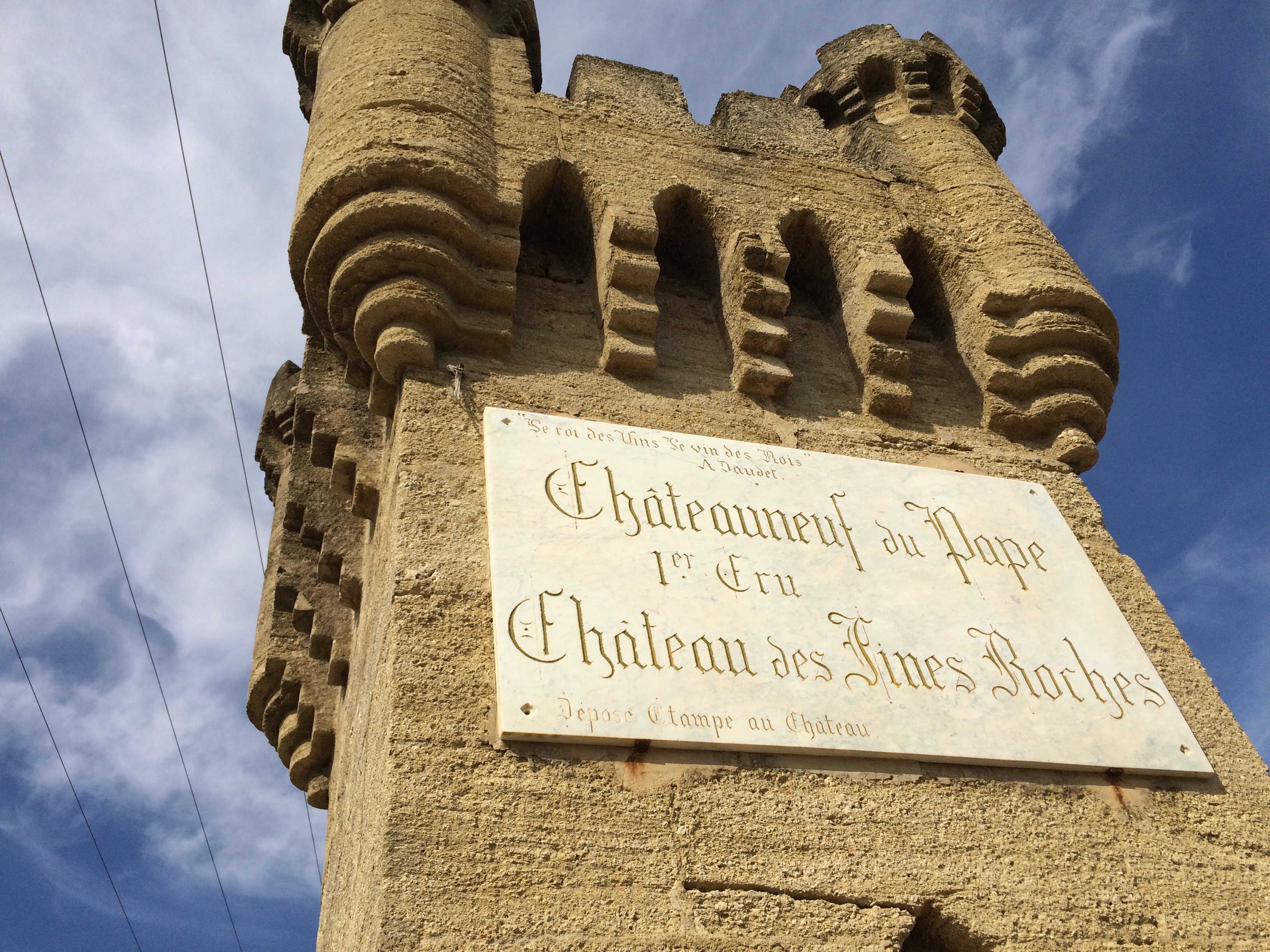
Looking for somewhere to spend the night before a visit to Marseille the next day to see relatives of Flavio from Alexandria, we found an interesting campsite deep in Chateauneuf-du-Pape country, surrounded by vineyards.  As for the whole of the Midi, the ground was very dry and we noticed the soil under the vines was more pebbly and porous.

The grand entrance to the Chateau La Nerthe in the Chateauneuf-du-Pape denomination.

The grand entrance to the Chateau La Nerthe in the Chateauneuf-du-Pape denomination.


Soil dry and more pebbly than other wine growing regions we'd seen.  Does this account for the special quality of the wine?

Soil dry and more pebbly than other wine growing regions we’d seen. Does this account for the special quality of the wine?


A lovely friendly and informal campsite, perfect apart from the deafening  noise from the cicadas.   It really was a loud and never-ending din. The surrounding trees were covered in the ‘shells’ of the cicadas. Amazingly, they live underground for most of their lives, living on sap from roots of trees. They exit the earth, climb the trees, shed their skins go up in the trees, mate, lays eggs and spend the rest of their short lives making maddening noises in campsites! The eggs they lay fall to the ground and once hatched they burrow underground and the cycle goes on.

We put up the hammock given to Flavio as a birthday present by our son Simon and his girlfriend Lucy when we visited them in Indonesia for Christmas and New Year.  It was great and Flavio managed to fall asleep in it despite the cicadas!

Discarded cicada shell - there were hundreds of them stuck to the trunks of trees.

Discarded cicada shell – there were hundreds of them stuck to the trunks of trees.


Finally trying out the hammock - managed to fall asleep despite the cicadas!

Finally trying out the hammock – managed to fall asleep despite the cicadas!


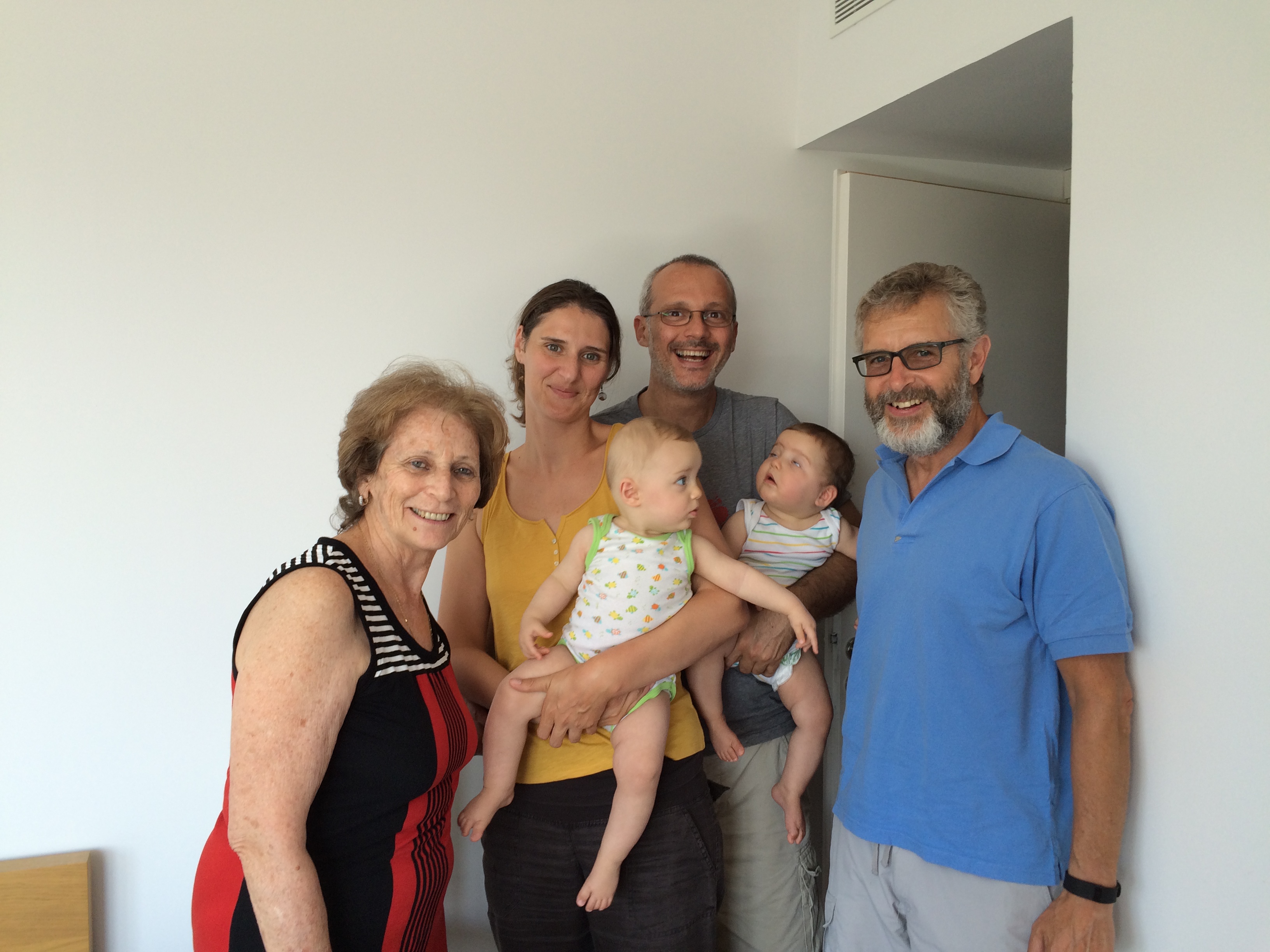
The next morning was Bastille Day and a holiday in France.  We bought two bottles of the good stuff and set off  for Marseille to visit relatives of Flavio’s not seen for a long time.  It was lovely to see Titi (Florence), Christian, his wife Aurelie and the gorgeous twins Ella and Rose after such a long time and we had a wonderful lunch.  Surrounding us throughout it all was the memory of Joseph Fares (Zouzou) who was a truly remarkable man and doctor and pillar of Alexandrian society who donated half his time to offering free consultations to poor Egyptians, quite apart from his cultural and other philanthropic work.

We had been to Marseille many years ago (around 1990!) when we travelled down to the south in our old VW beetle where we parked it and took a ferry to Corsica.  We decided therefore to skip a further visit of the city and to ‘truck on’ to our next destination a propos of which we were very fortunate to have some very good advice from Christian.

A lovely day spent in Marseille with Titi, Christian, Aurelie and the twins Ella and Rose.

A lovely day spent in Marseille with Titi, Christian, Aurelie and the cute twins Ella and Rose.


IMG_4021

Monday 13th July – Avignon, ‘home of the Popes’

Standard

IMG_3991

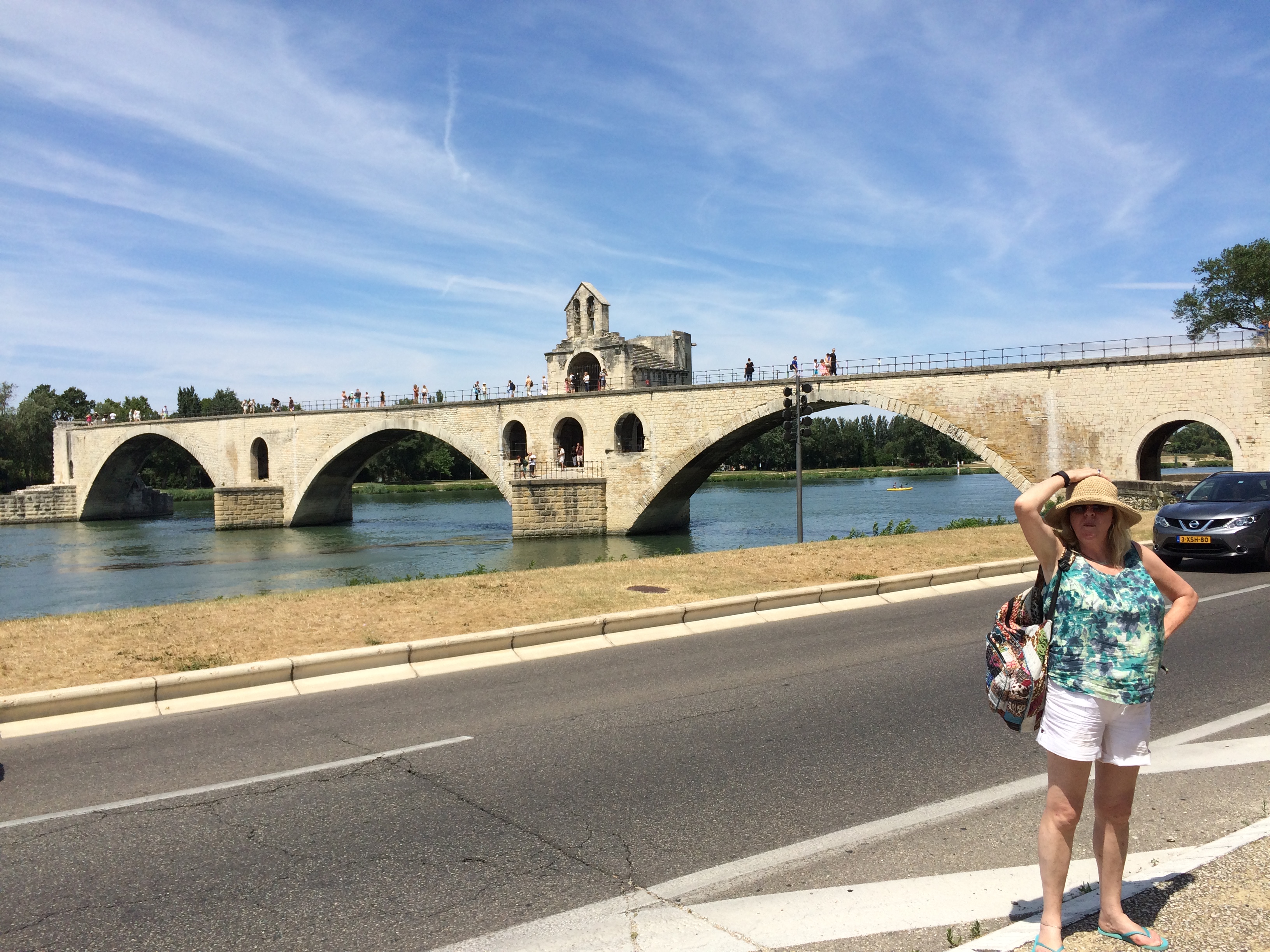
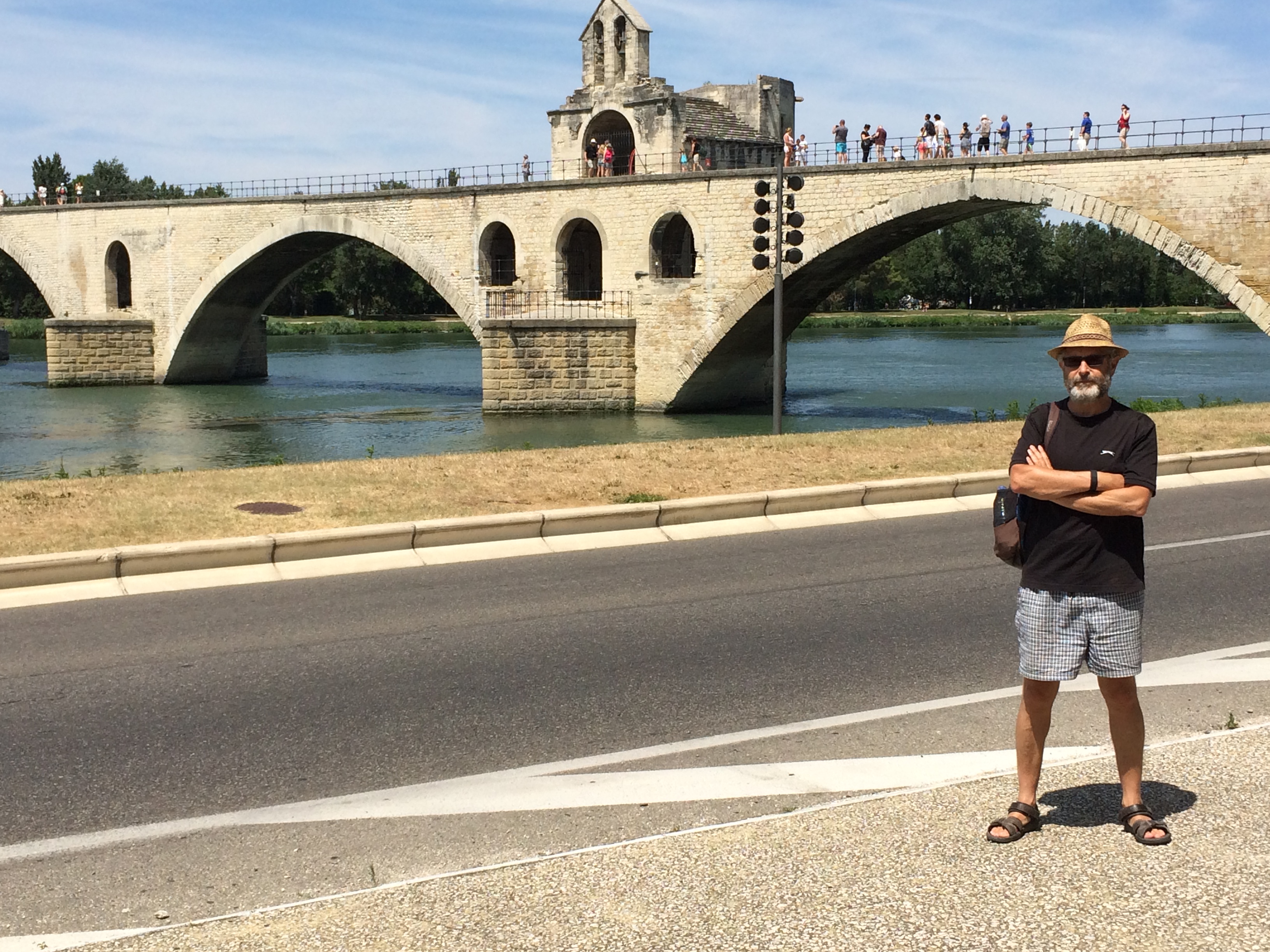
What a beautiful city, with its old town centre surrounded by medieval stone ramparts. Our arrival coincided with the Avignon Festival, very similar to the Edinburgh Festival, so the city was crowded. Avignon, a city in the Departement of Vaucluse in Provence, is set on the Rhône River. From 1309 to 1377, it was the seat of the Catholic popes, and remained under papal rule until becoming part of France in 1791, during the French Revolution.  At one time, there was a rival papacy in Avignon to that of Rome. At the centre of Avignon is the massive Palais des Papes and nearby the remains of the Saint-Bénezet bridge, more famously known as the Pont d’Avignon.  The city attracts 4 mil tourists a year including 150k or so who come for the annual festival.  We didn’t go ‘sur le pont’ but did go ‘devant le pont’.

Not 'sur' but 'devant' le Pont d'Avignon..

Not ‘sur’ but ‘devant’ le Pont d’Avignon..

'.. on croise les bras??'

‘.. on croise les bras??’

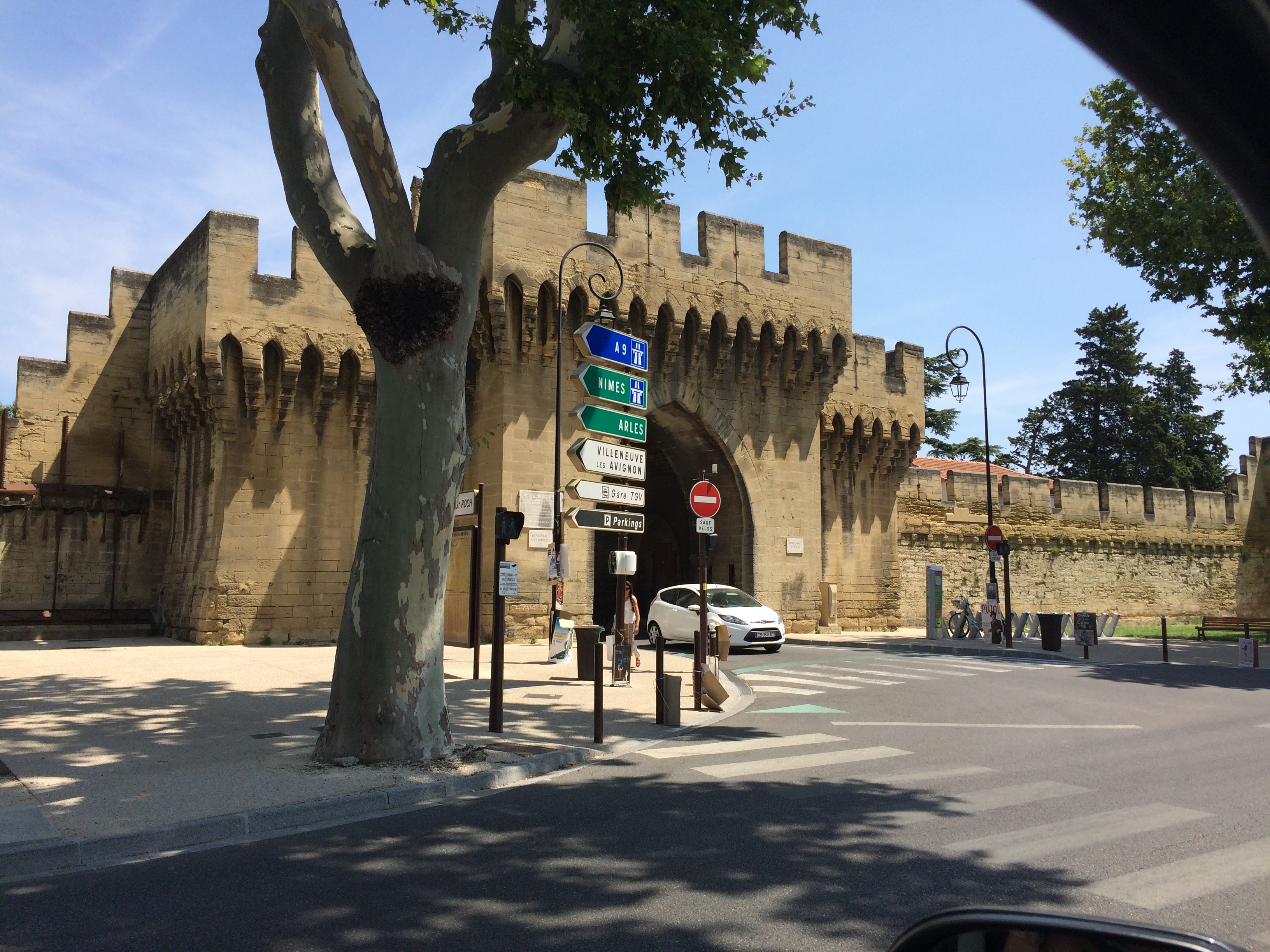
What’s impressive about Avignon as you approach the city is its beautiful and very well-preserved 14th century ramparts.  Avignon is in fact one of the few French cities to have preserved its old walls. Around 12,000 of the city’s 90,000 inhabitants live within the old centre.

The 'Porte St Roch' gate in Avignon.

The ‘Porte St Roch’ gate, part of the old ramparts of Avignon old town.

4 mil visitors annually.

4 mil visitors annually

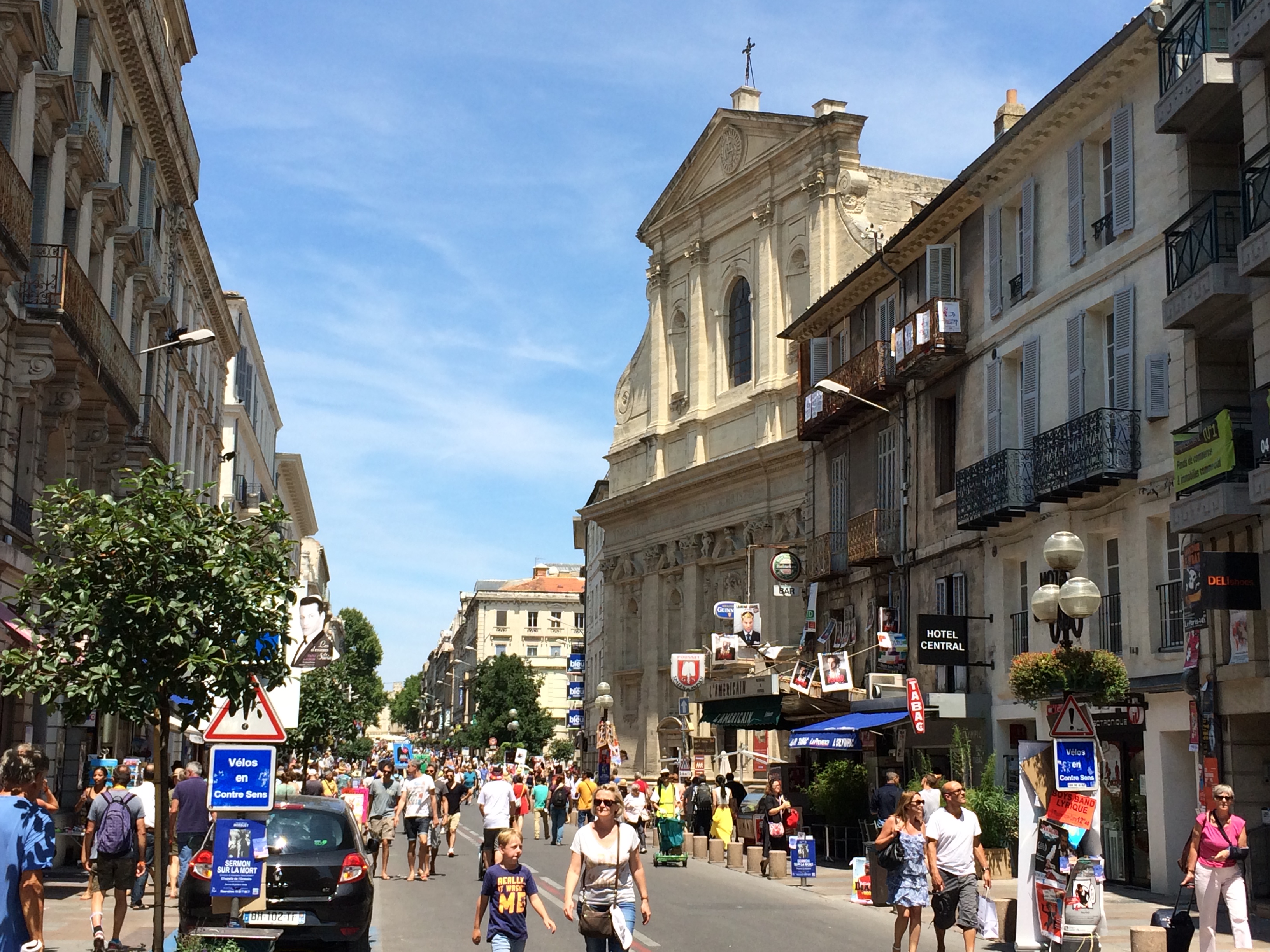
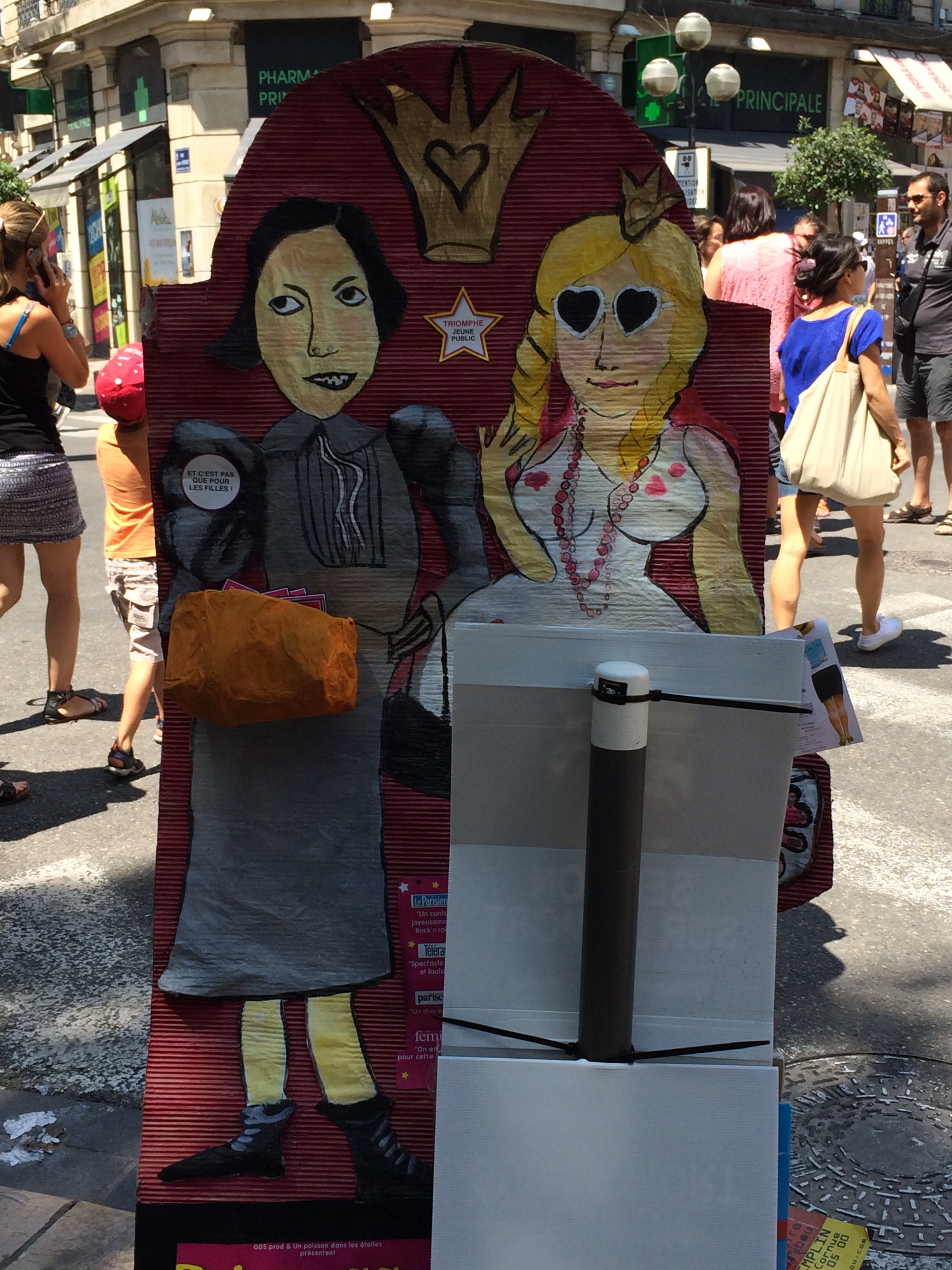
The town was vibrant and brimming with cultural activities of all kinds.  It was good to see dozens of young people enthusiastically promoting plays which would be staged that night.  They surely can’t make very much profit out of these and they must do it out of sheer passion.  We were leafleted several times by friendly amateur actors who, when we explained we were only there for the afternoon, would simply say good-naturedly “merci pour etre venus” (thank you for coming).

We arrived during the annual cultural festival with dozens of young people promoting their plays and cultural events.

We arrived during the annual cultural festival with dozens of young people promoting their plays and cultural events.

Someone playing the Oud near the main square.

Someone playing the Oud near the main square.

Advertising another cultural event.

Advertising another cultural event.

IMG_4006

Massage being offered in front of the old Mint on the main square.

1

A quaint old building on the 'Promenade des Papes'.

A quaint old building on the ‘Promenade des Papes’.

The Palais des Papes and behind it, the Cathedral built in 1100 and later renovated in characteristic Provencal Romanesque style.

The Palais des Papes and behind it, the Cathedral built in 1100 and later renovated in characteristic Provencal Romanesque style.

The mighty Rhone at Avignon.

The mighty Rhone at Avignon.

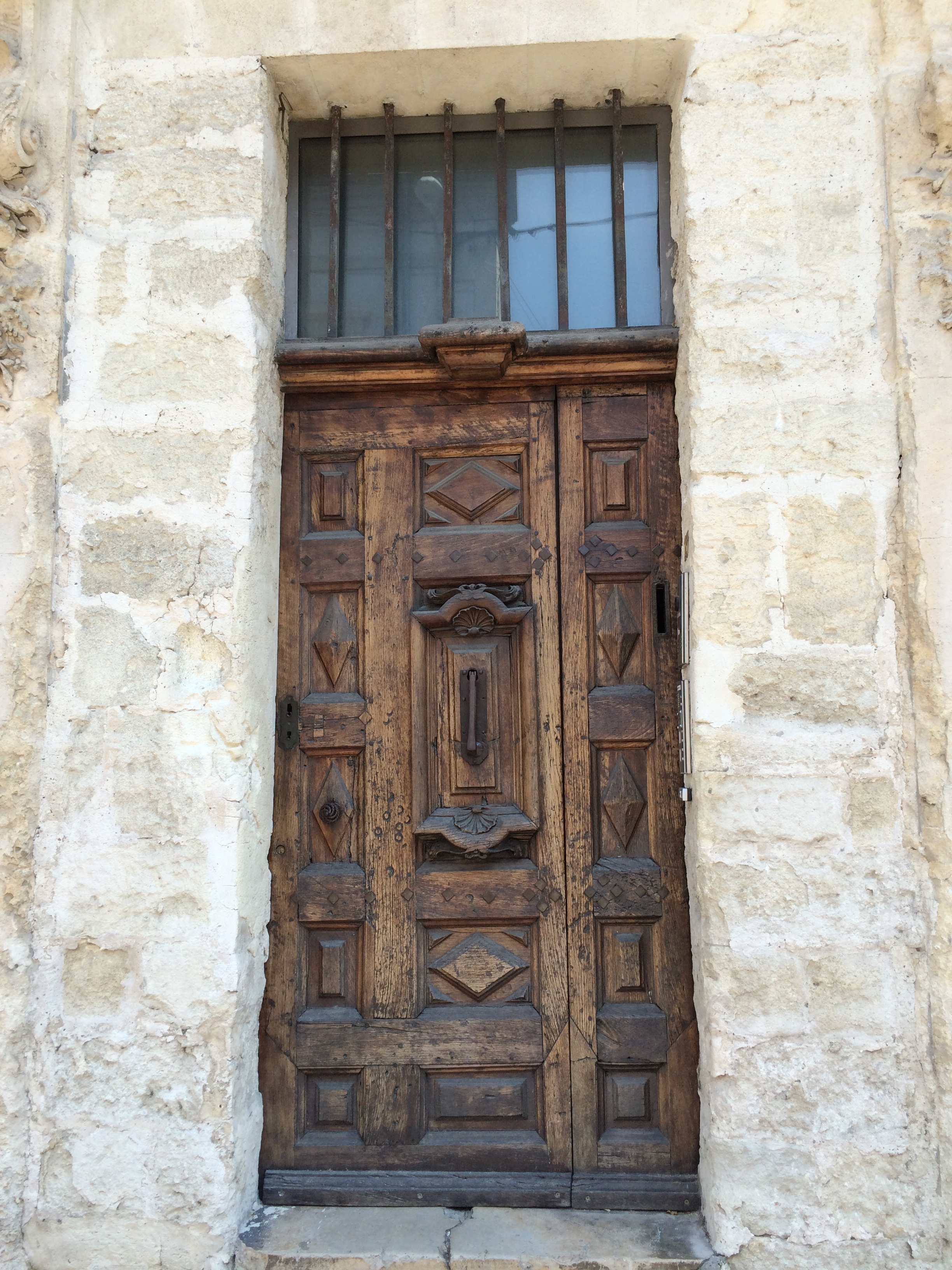
Old door of the 'Eglise des Minimes' church where Cardinal Richelieu once said mass.

Old door of the ‘Eglise des Minimes’ church where Cardinal Richelieu once said mass.

IMG_4008

9th to 11th July – The Languedoc and Aude, Pays Cathare

Standard

Kill them all. God will know his own.” Thus spoke the battle commander, Cistercian Abbott and holy man, Arnaud Amaury, in charge of the sacking at Beziers at the start of the Albigensian crusade in 1209. The only crusade against a Christian country, instigated by Pope Innocent III which killed more than half a million men, women and children in the Languedoc over two decades.

The village of Fontcouverte in the Languedoc.

The village of Fontcouverte in the Languedoc.

The Languedoc, also called Pays Cathare (Cathar country) as is the whole Departement of the Aude, consists of the central region of the south of France including the western Mediterranean coast, stretching from the Rhone valley in the east to the Spanish border in the south west, and is one of France’s major wine-growing areas and known for its Cotes de Rhones and of course, Chateau-Neuf-du-Pape.  It is breathtakingly beautiful – vast fertile lands, mountains, valleys and, as you drive through, the fortresses and abbeys high in the hills giving witness to the time of the Cathars. It’s impossible to talk about the Languedoc without reference to the Cathars. Who were they?

The Aude is Cathar

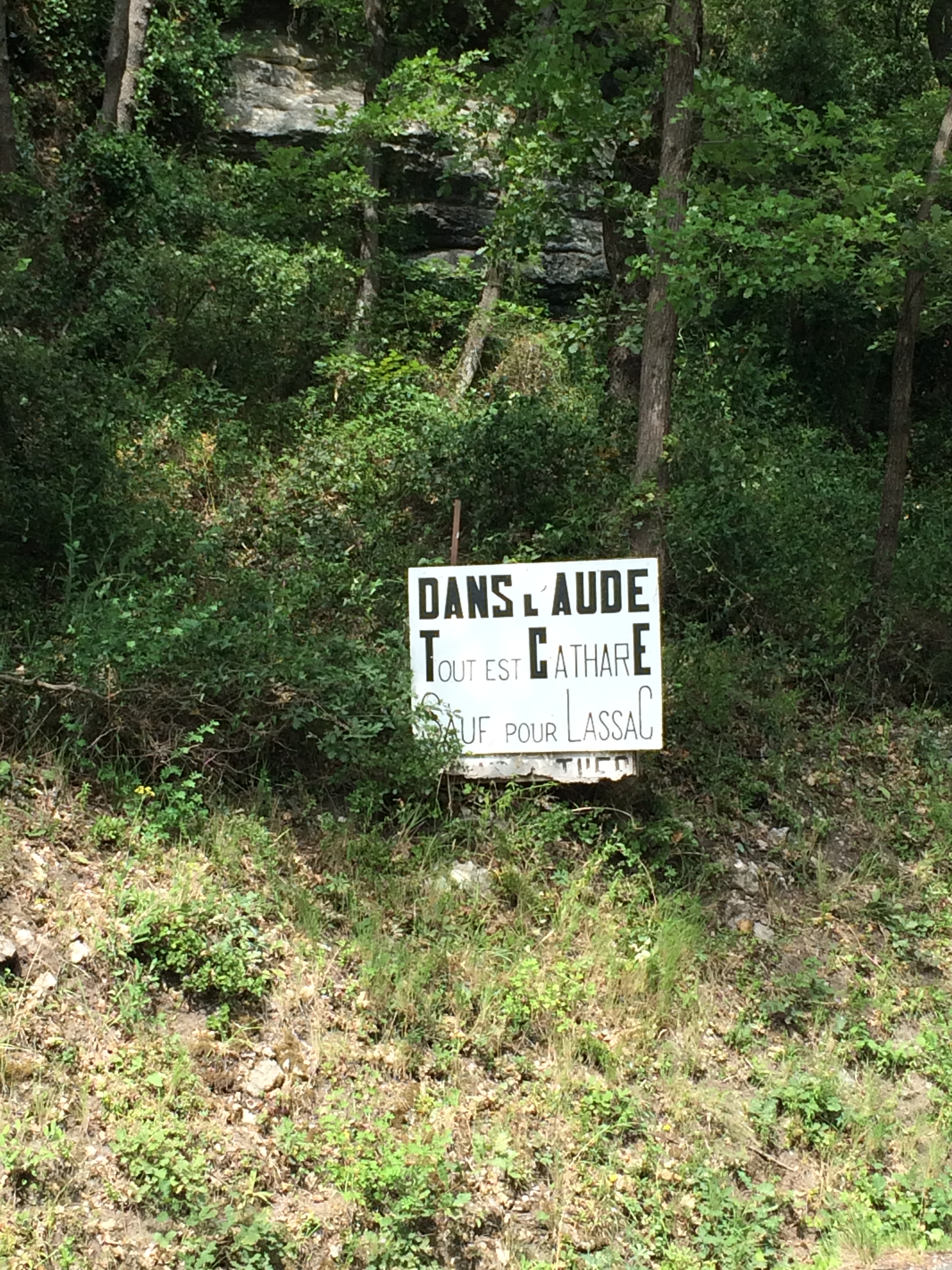
All along the route to Lastours, banners proclaiming “In the Aude, all is Cathar except Lassac” in a protest against plans to set up a landfill site there.

The origins of the Cathars remain a mystery but they first appeared in Europe in the 11th century. As ‘Dualists’ they believed in two principles – a good creator God and his evil adversary, the devil. Cathars called themselves Christians but rejected any idea of priesthood or the use of church buildings. Cathar faith consisted of believers, secular people and ‘Parfaits’ (good Christians) who had renounced worldly pleasures and lived a monastic life. They were the ‘clergymen’ who had received baptism (consolamentum) and would administer the baptism of the dying to secular believers. They had one prayer, the Lord’s Prayer, they were strict in their adherence to poverty, honesty, not killing and not swearing oaths. They regarded women as equals and that all non-procreative sex was better than procreative sex. Apropos this, Catholic propaganda of the time referred to this as ‘bugger’, from the word Bougre.

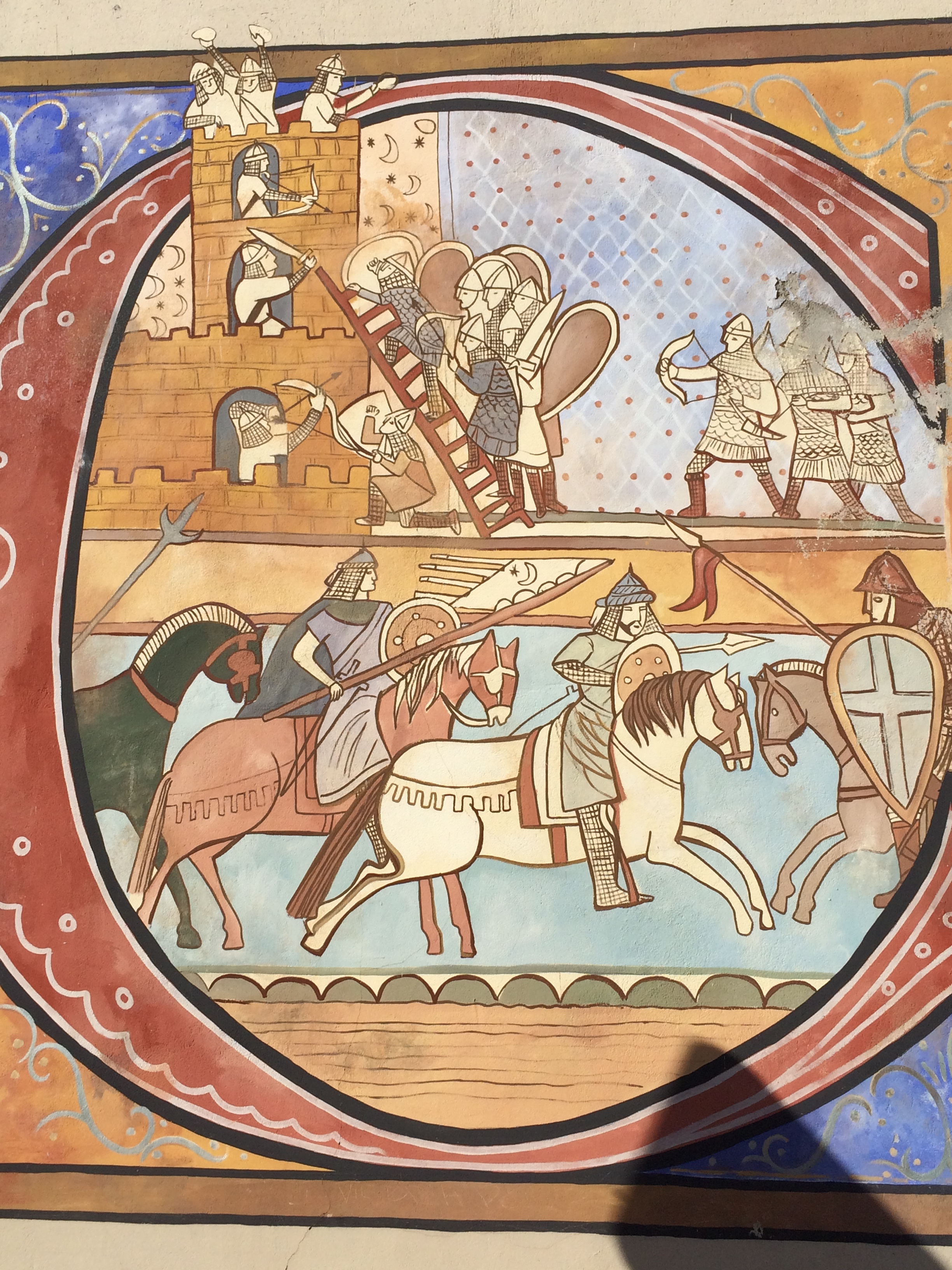
Prior to the crusade the Languedoc was known for its wealth, high culture, tolerance and liberalism.  It was the land of the Troubadour and chivalry. The language of Oc was the language of culture. The Cathar faith became the major religion in the area, supported by the nobility as well as the common people. This was most probably in response to the corrupt and decadent Roman Catholic Church of the time which tried to fight Catharism with propaganda, debate, creating new religious orders that embraced poverty. When all proved unsuccessful, there was only one option left – the Albigensian Crusade.

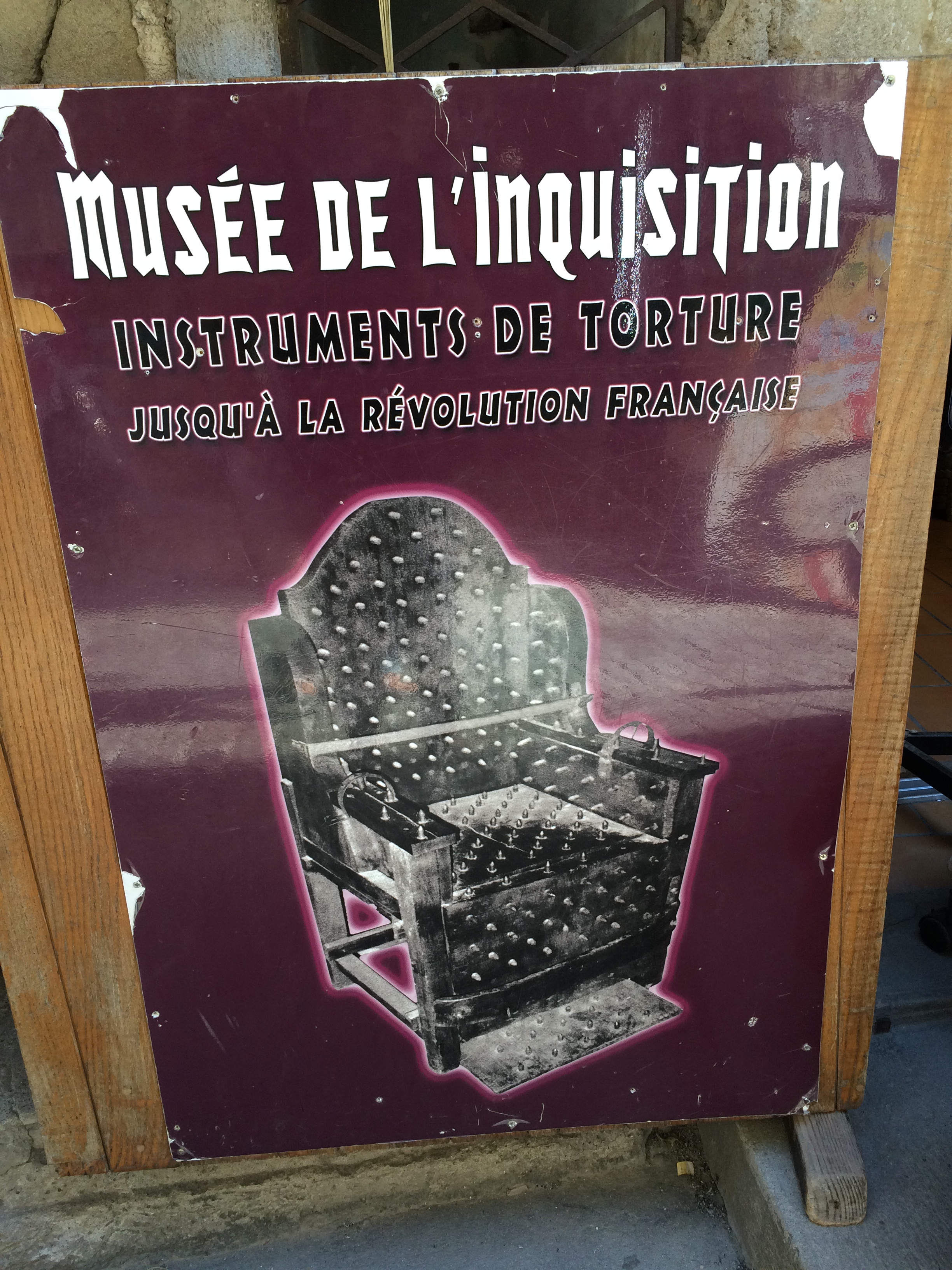
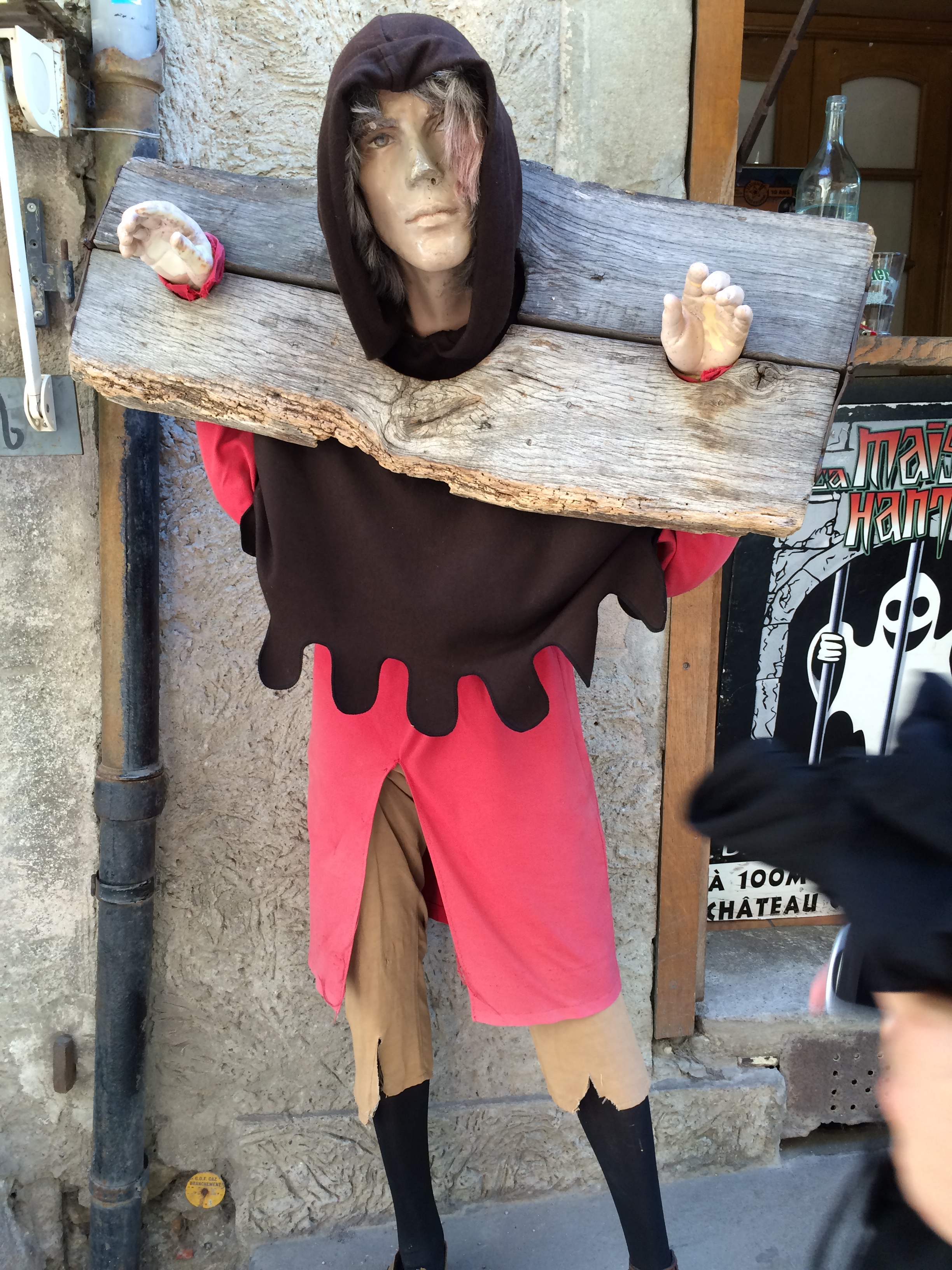
The 'Inquisition' spread to include heretical catholics in the Albigensian crusade.

The ‘Inquisition’ spread to include heretical catholics in the Albigensian crusade.

IMG_3872

The annihilation of the Cathars laid the groundwork for later inquisitions.

From 1209, a war of terror was waged against the indigenous population of the Languedoc and their rulers. The Crusaders killed locals indiscriminately, Catholics as well as Cathars. Lands were annexed to France. Educated and tolerant Languedoc rulers were replaced by much less tolerant ones.  Dominic Guzmán (later Saint Dominic) founded the Dominican Order, which became a ‘papal police force’, to wipe out the last vestiges of resistance. Persecution of Jews and other minorities was initiated and the culture of the Troubadours and their sophisticated world-view was lost. Lay learning was discouraged and the reading of the bible became a capital crime.  The end-result was the economic decline of the Languedoc to become the poorest region in France. The language of the area, Occitan, once the foremost literary language in Europe became a disparaged regional dialect referred to as patois.

The crusade provided proof that a sustained campaign of genocide and terror can work and the annihilation of the Cathars laid the groundwork for later inquisitions and genocides. As Voltaire said “there was never anything as unjust as the war against the Albigensians”.

Despite this, as you travel around there is an enduring echo of the Cathars in the Languedoc which we became very aware of during our stay. Our campsite, the Camping de Montolieu, was a small, relaxed, friendly and family-run campsite just outside Montolieu, a lovely village which rivals Hay on Wye in second-hand book shops. Despite the shortage of space in Brenda Flavio managed to purchase two old hardbacks – Corneille’s Tragedies and JJ Rousseau’s Emile.

IMG_3939

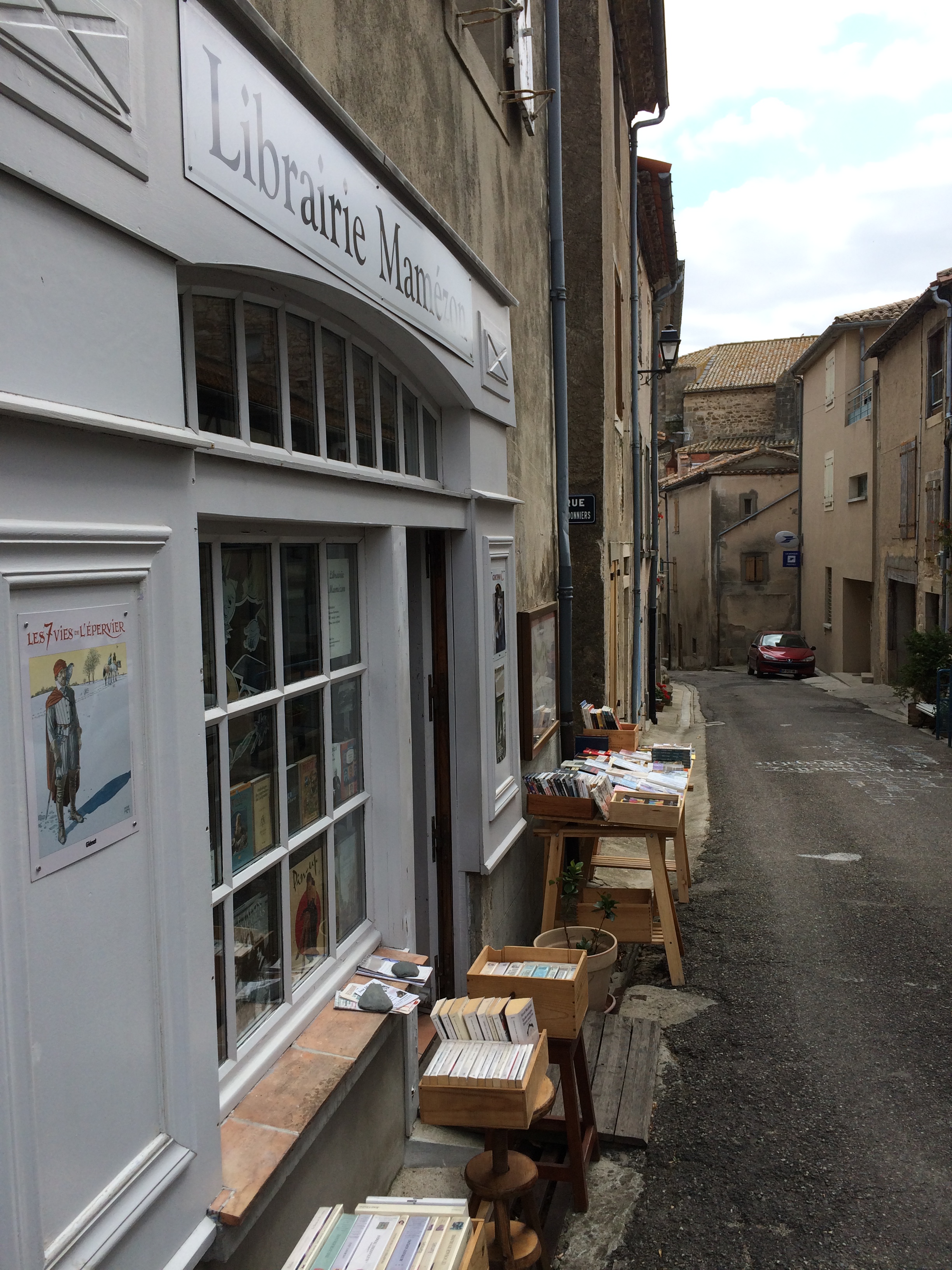
Montolieu – “village du livre”.

What better way to start our journey of discovery of the Pays des Cathars than from such a charming campsite – that was until a group of ‘travellers’ arrived to challenge our liberal views and the nerves of all other campers on the site. The party consisted of three families of 18 adults and children who proceeded to turn the campsite into a noisy, disruptive nightmare. A buffer zone was soon established as campers quietly moved to positions farther away. The travellers left after two days to a collective sigh of relief from the remaining campers and the charming owners, Nicole and Andre. They left behind a trail of destruction and took with them a bicycle from the camp and a bra of Judith’s from the washing line.   Despite them we had a great time and they in fact created a bonhomie among fellow campers and kept us all going through dinner that evening.


The charming small and (usually) quiet Camping Montolieu and its convivial atmosphere.

The charming small and (usually) quiet Camping Montolieu and its convivial atmosphere.

Whilst there we cycled into Carcasonne partly along the

We really liked Andre who runs the Camping Montolieu with Nicole.  Loved the accent and the way he rolled his 'rs' like a lot of people from the region.

We really liked Andre who runs the Camping Montolieu with Nicole. Loved the accent and the way he rolled his ‘rs’ like a lot of people from the region.

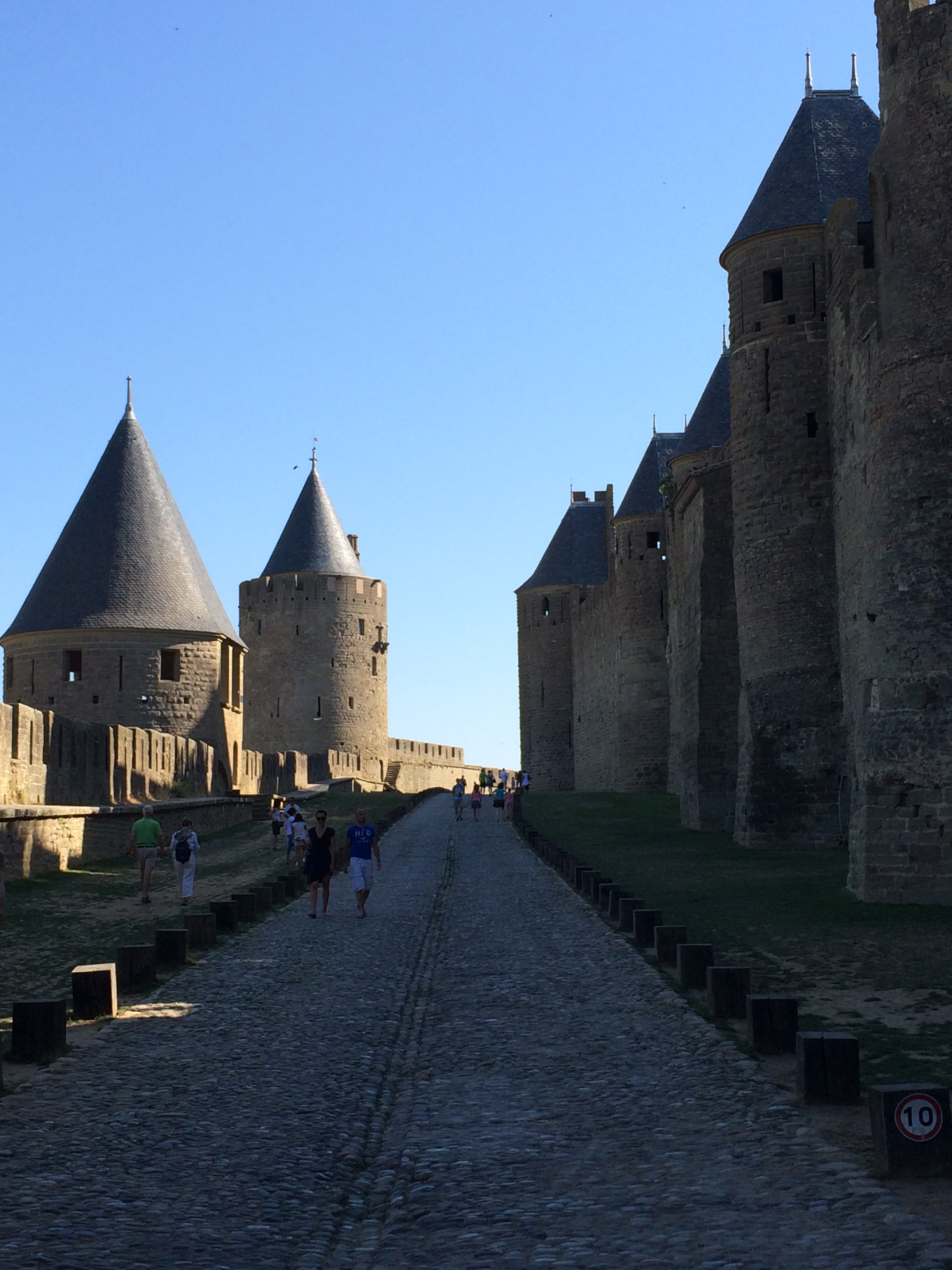
Midi canal. Carcasonne is famous not only for Kevin Costner and Alan Rickman in ‘Robin Hood Prince of Thieves’ there but also for its medieval fortress, Cite de Carcasonne with two outer walls, 53 towers, a drawbridge and ditch. Carcassonne played a role in the Albigensian Crusades, when the city was a Cathar stronghold. In August 1209 the crusading army of the Abbot Arnaud Amalric forced the surrender of the city. The Viscount of Carcassonne, Raymond-Roger de Trencavel was imprisoned whilst negotiating his city’s surrender and died in mysterious circumstances three months later in his dungeon.

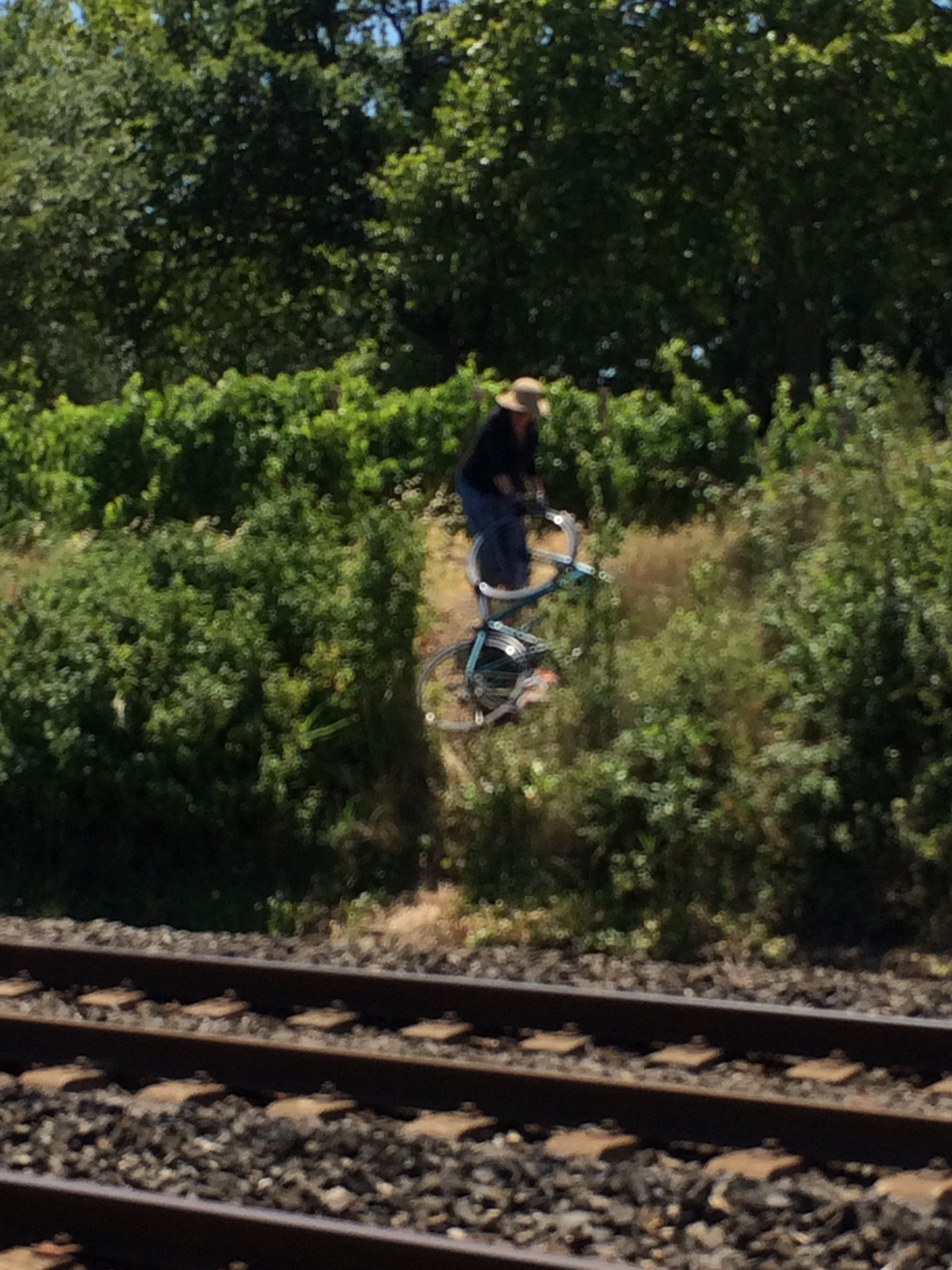
Cycling to Carcassonne, we lost the path and had to cross through vineyards.

Cycling to Carcassonne, we lost the path and had to cross through vineyards.


.. and over railway tracks!

.. and over railway tracks!


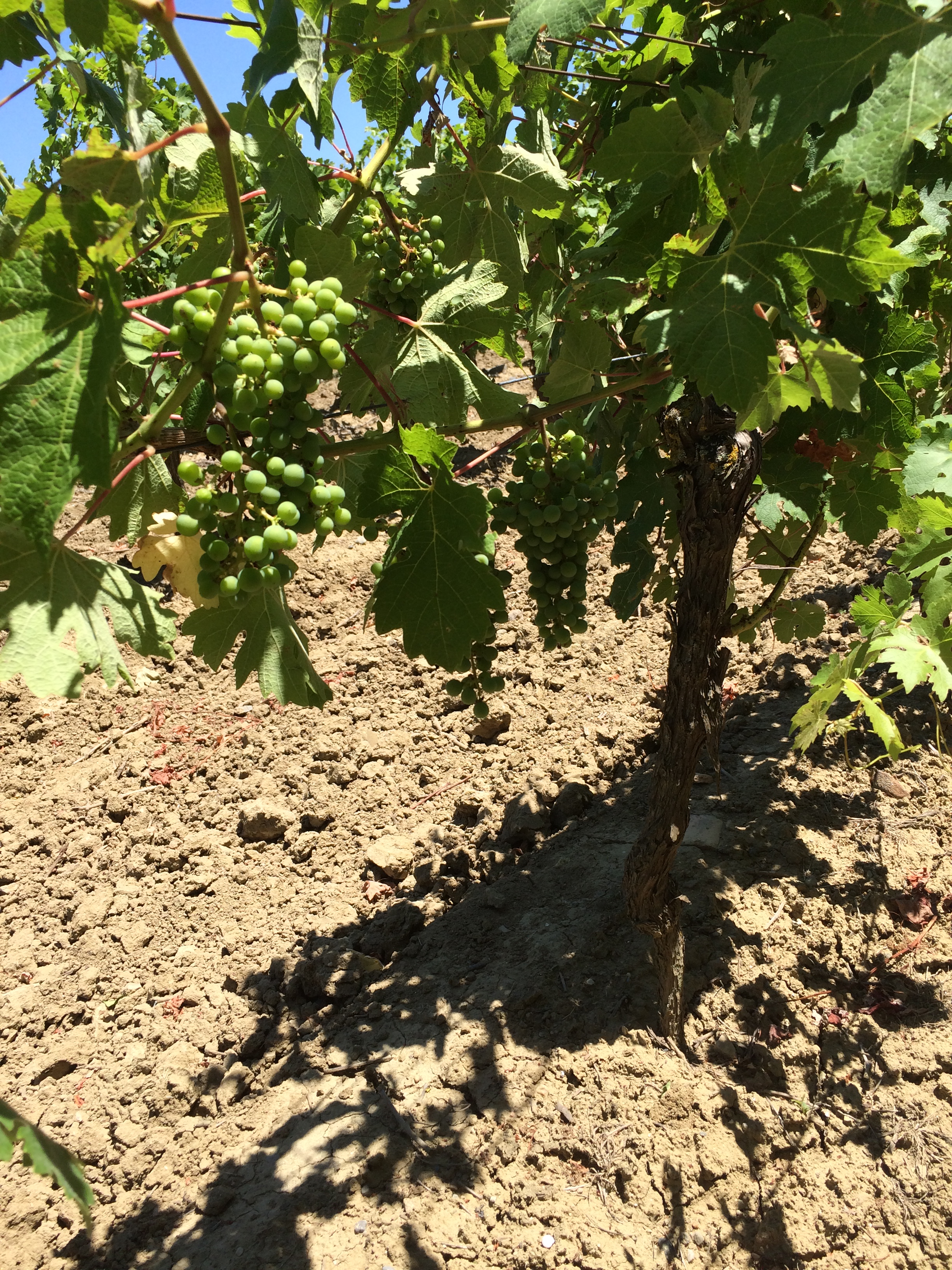
After a long drought, the soil was very dry and grapes not well-formed for the time of year. The sunflowers too were very small.

After a long drought, the soil was very dry and grapes not well-formed for the time of year. The sunflowers too were very small.


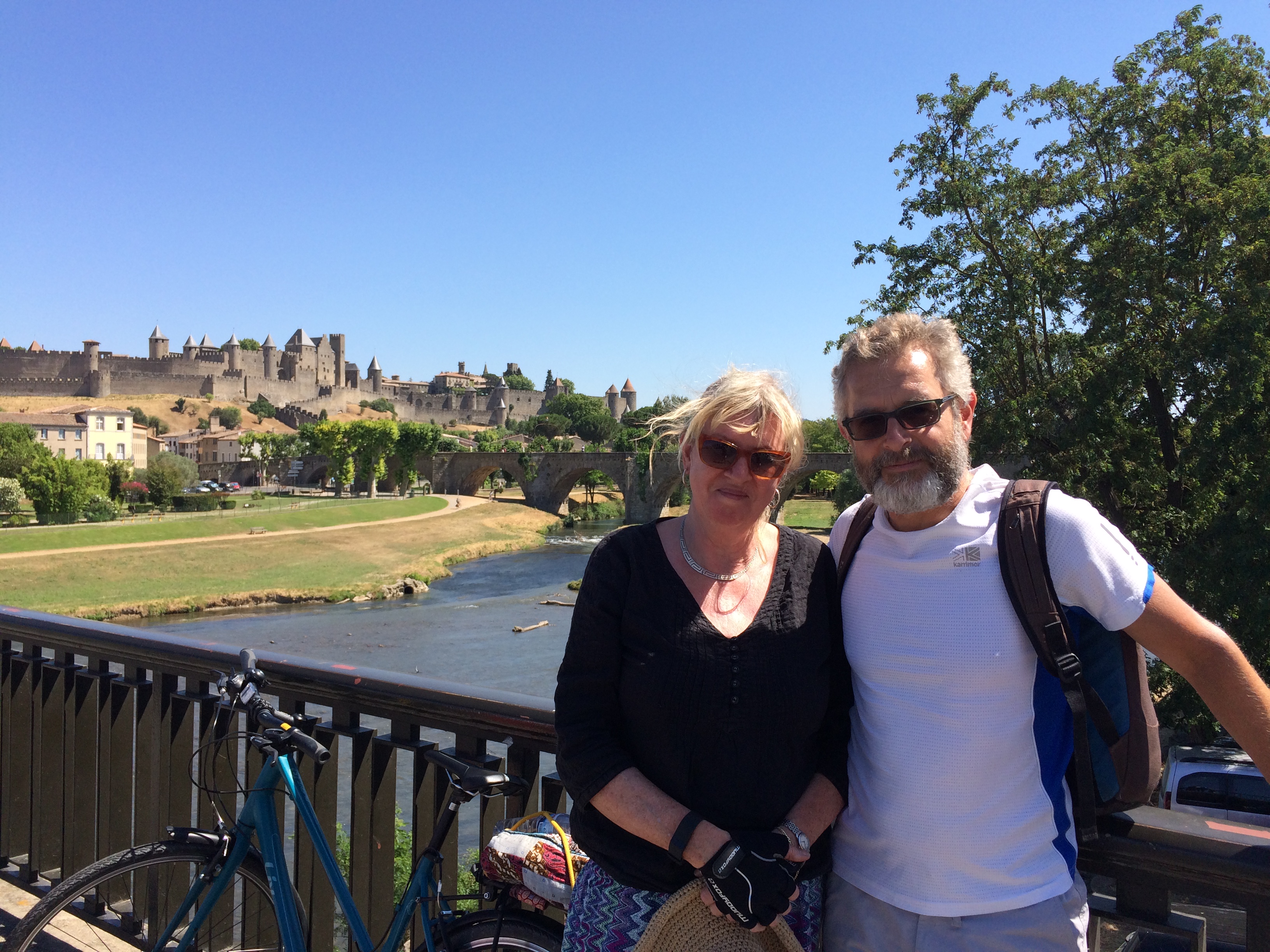
Finally, arrival in Carcassonne - had our photo taken by a friendly Chinese student.

Finally, arrival in Carcassonne – had our photo taken by a friendly Chinese student.


A view of the amazingly well-preserved Cite de Carcassonne from within the old walls.

A view of the amazingly well-preserved Cite de Carcassonne from within the old walls.


Outside, a series of 9 sculptures by Guy Ferrer spelling the word "TOLERANCE".

Outside, a series of 9 sculptures by Guy Ferrer spelling the word “TOLERANCE”.


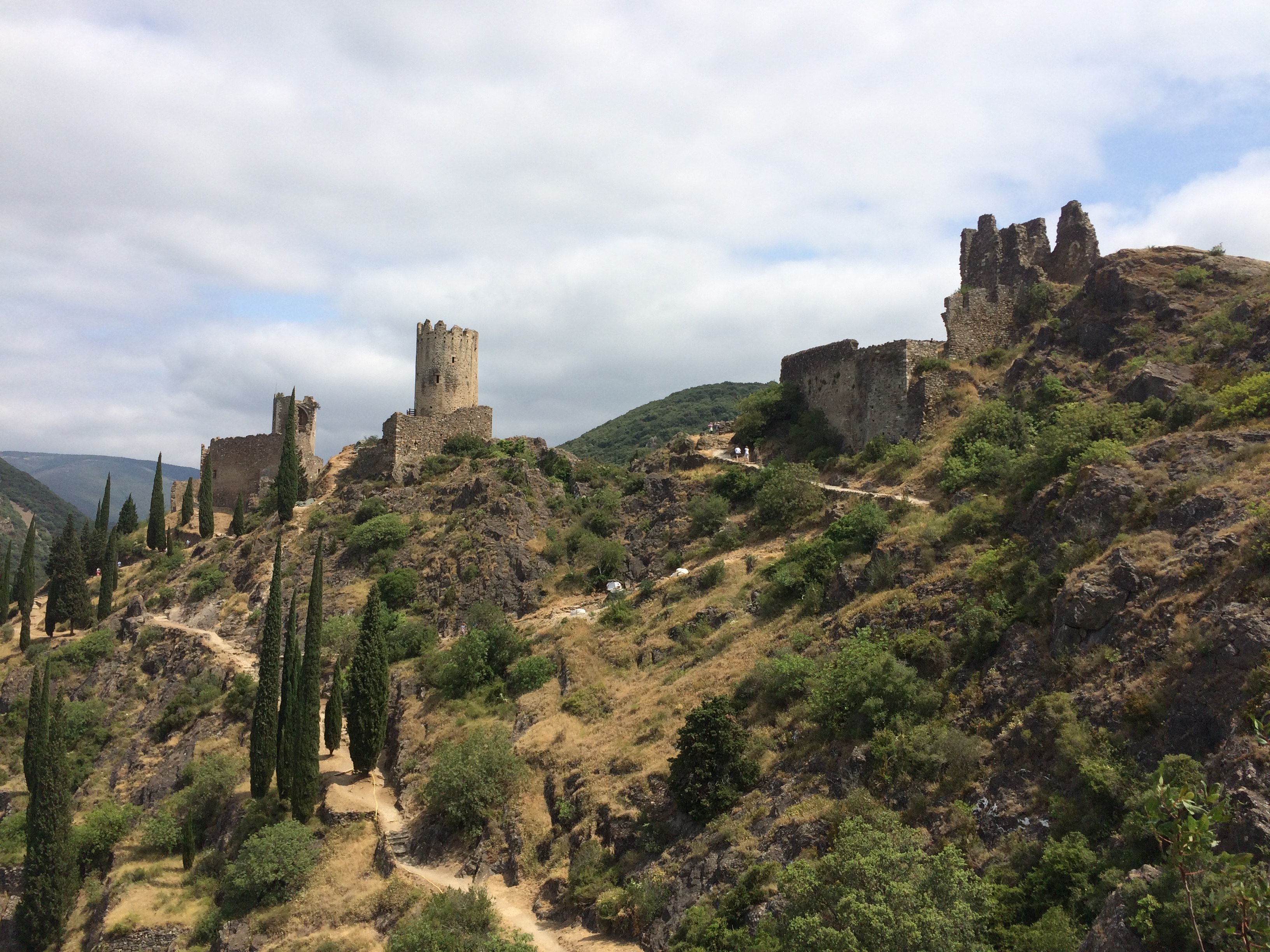
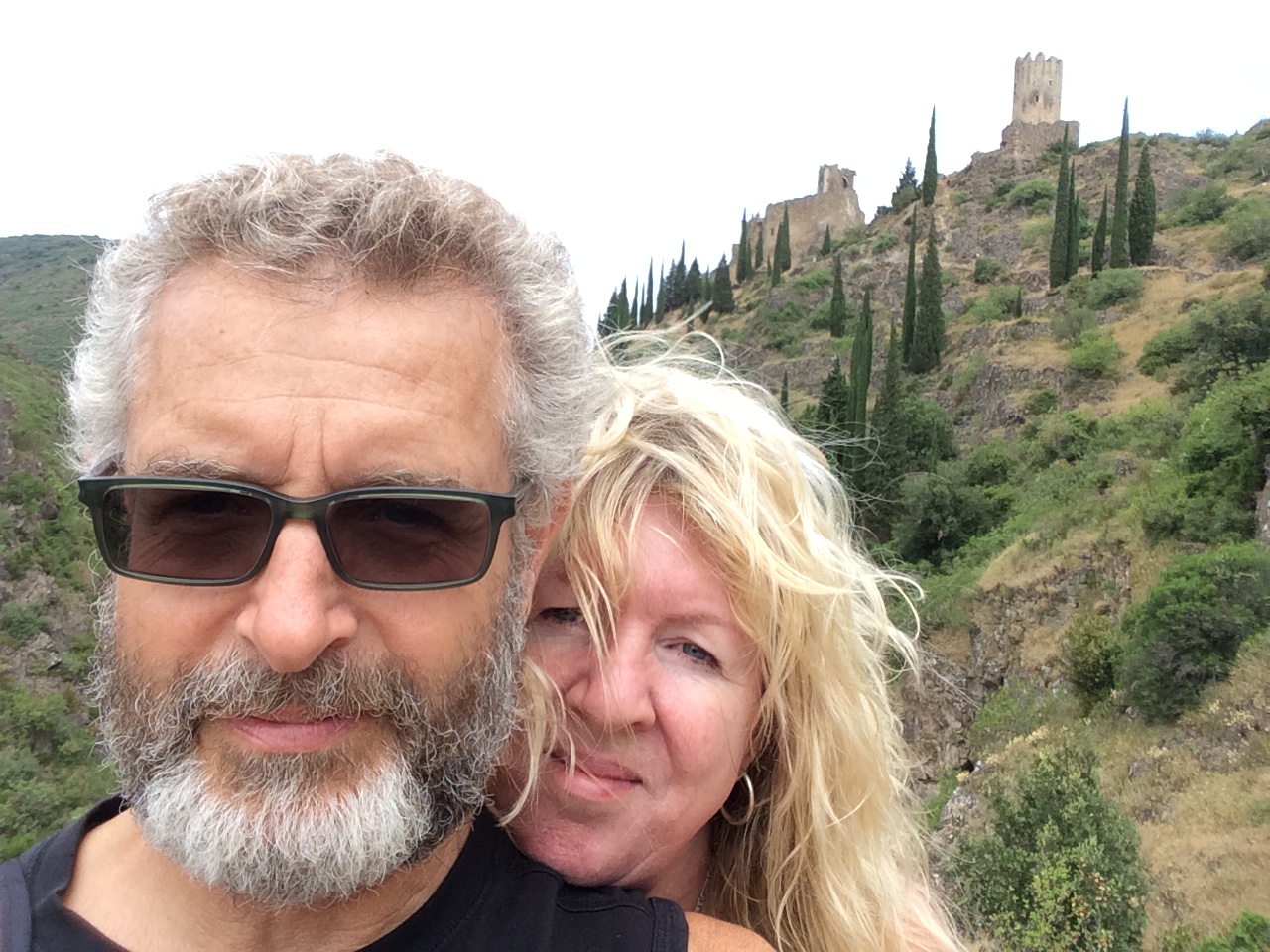
We also visited the four Cathar castles – Cabaret, Surdespine, la Tour Régine and Quertinheux – on a rocky spur above the village of Lastours. They were built at an altitude of 300m along a rock wall just 400m long by 50m wide. It was a long, hot climb and descent which played havoc with our knees. During the Albigensian crusade they were closely linked to the followers of Catharism with the Lords and villages surrounding the castles welcoming many Cathars.   In fact Cabaret became the seat of the Cathar bishop of Carcassès. Eventually the villages and the castles were plundered and then rebuilt to become royal fortresses. Interestingly, in the 16th century, the castles provided sanctuary to French Huguenots (Protestants).

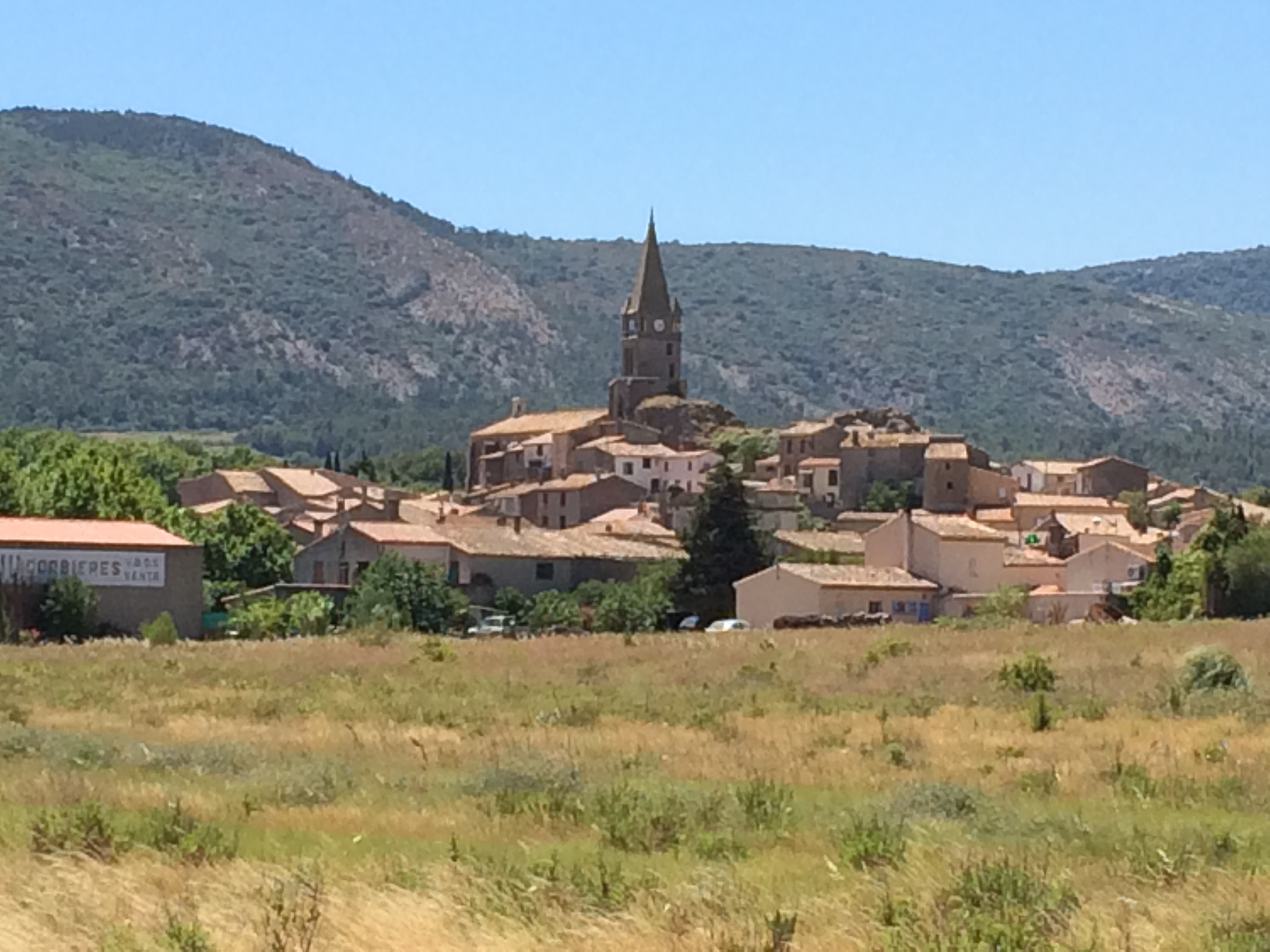
The village of Lastours above which lie the remnants of the four Cathar fortresses.

The village of Lastours above which lie the remnants of the four Cathar fortresses.

Three of the castles are visible here.

Three of the castles are visible here.


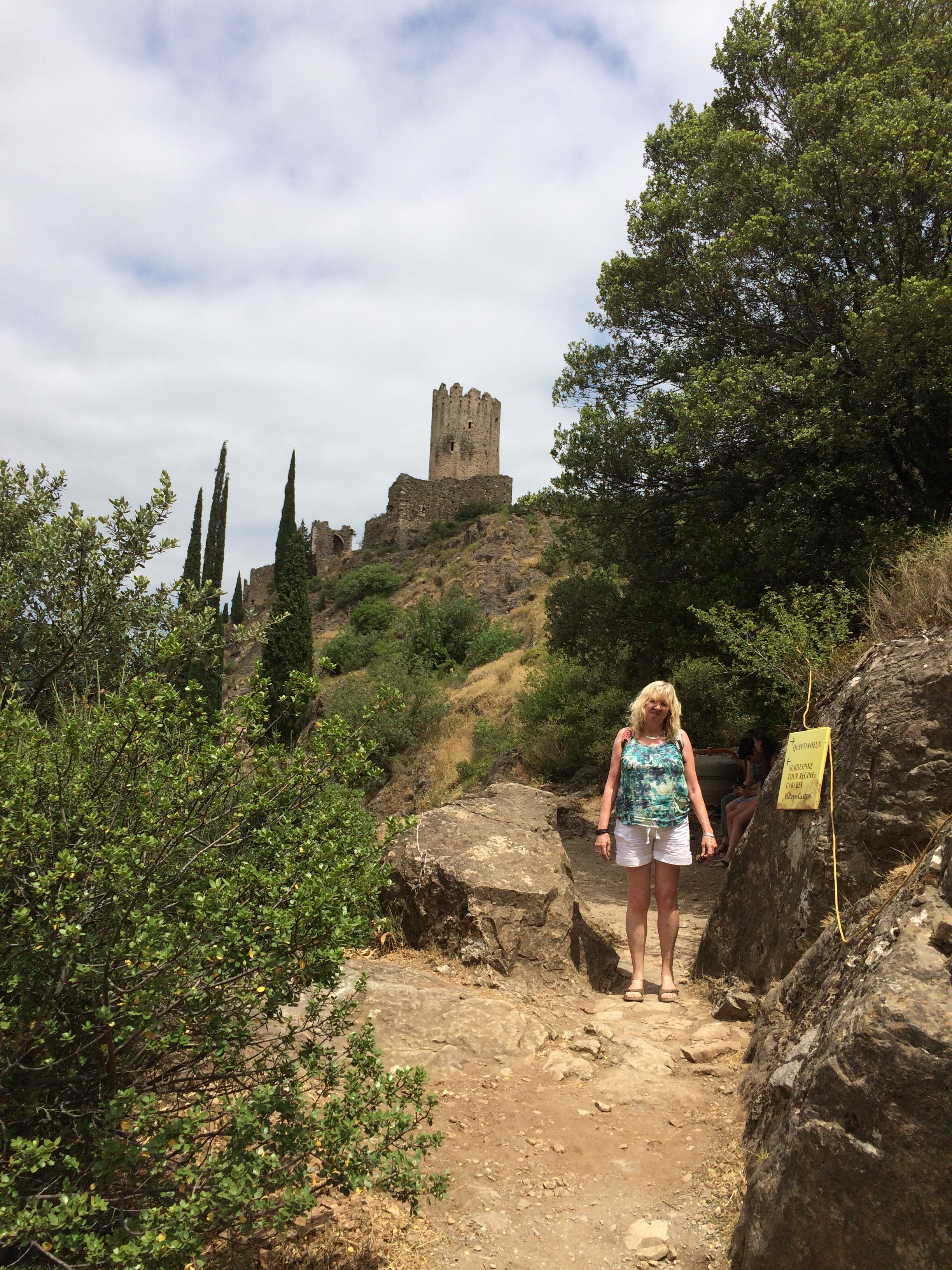
.. hard climb..

.. hard climb..

It was a long..

It was a long..


.. but we made it.  Impossible to conceive of what it must have been like for people living here.

.. but we made it. Impossible to conceive though of what it must have been like for people living here.

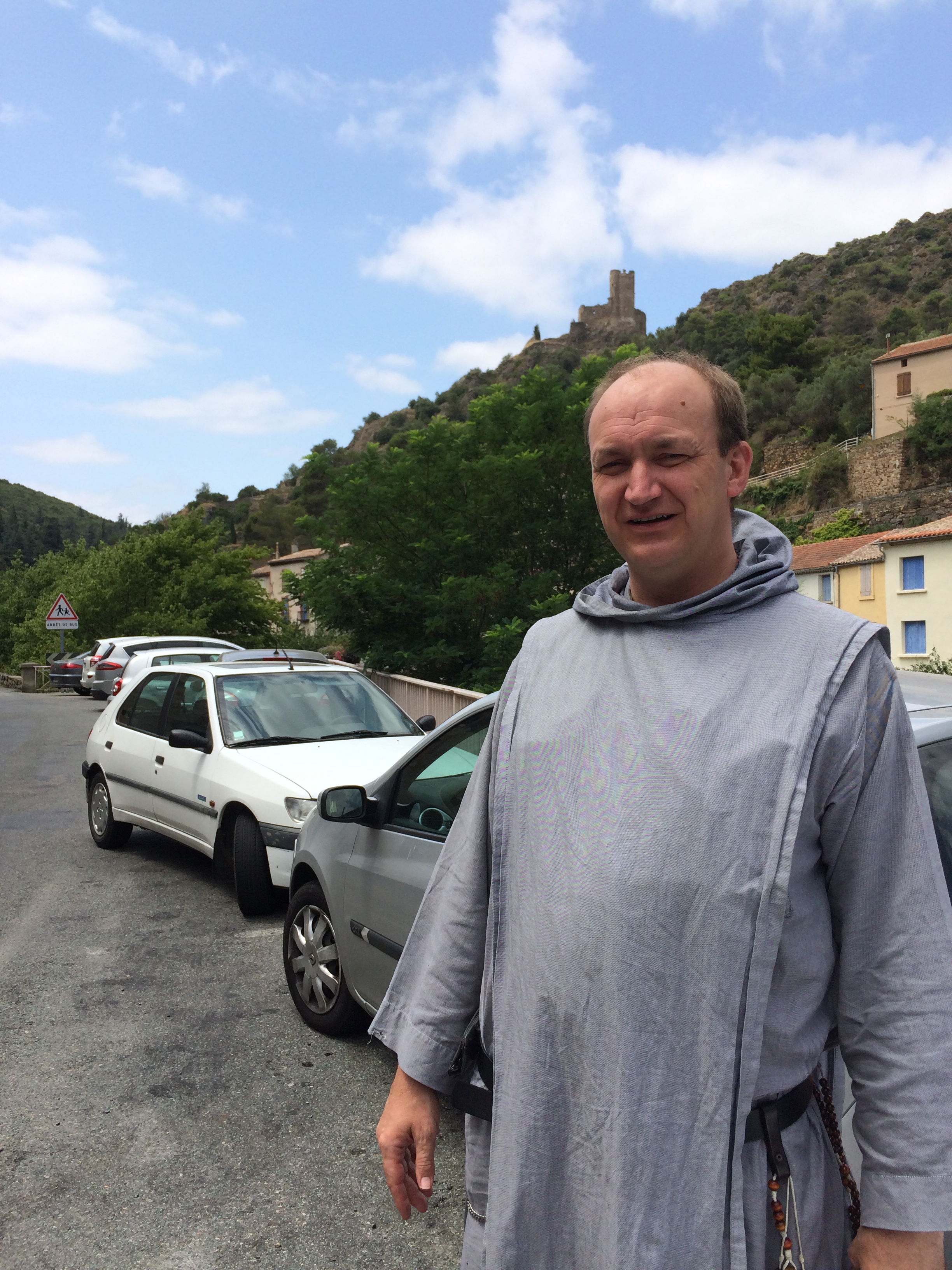
During lunch, Flavio, forgetting that the Cathars had been all but exterminated in the thirteenth century, spied a chap in a long grey habit and mistook him for a Cathar Parfait. You can imagine his disappointment when going to speak to him that he turned out to be a monk from the order of St John. an order established following dissatisfaction from some quarters of the Catholic church to the second Vatican Council, which brought modernising reforms to the church.  When asked what his take was on the Cathars, Brother Arnaud said they ‘had an idea of purity which was isolationist’ and that people looked at them now with a romantic eye but in the context of their own time they were in reality quite aggressive – “ils tuaient des gens” (they killed people too).

Brother Arnaud who Flavio mistook for a Cathar 'Parfait'. "The Cathars had an idea of purity which isolated them", he said.

Brother Arnaud who Flavio comically mistook for a Cathar ‘Parfait’. “The Cathars had an idea of purity which isolated them”, he said.

We left the Languedoc with every intention of returning and exploring more of this hauntingly beautiful region.

Acres of vineyards in Cabardes area (where Montolieu is situated).

Acres of vineyards in the Cabardes area (where Montolieu is situated).
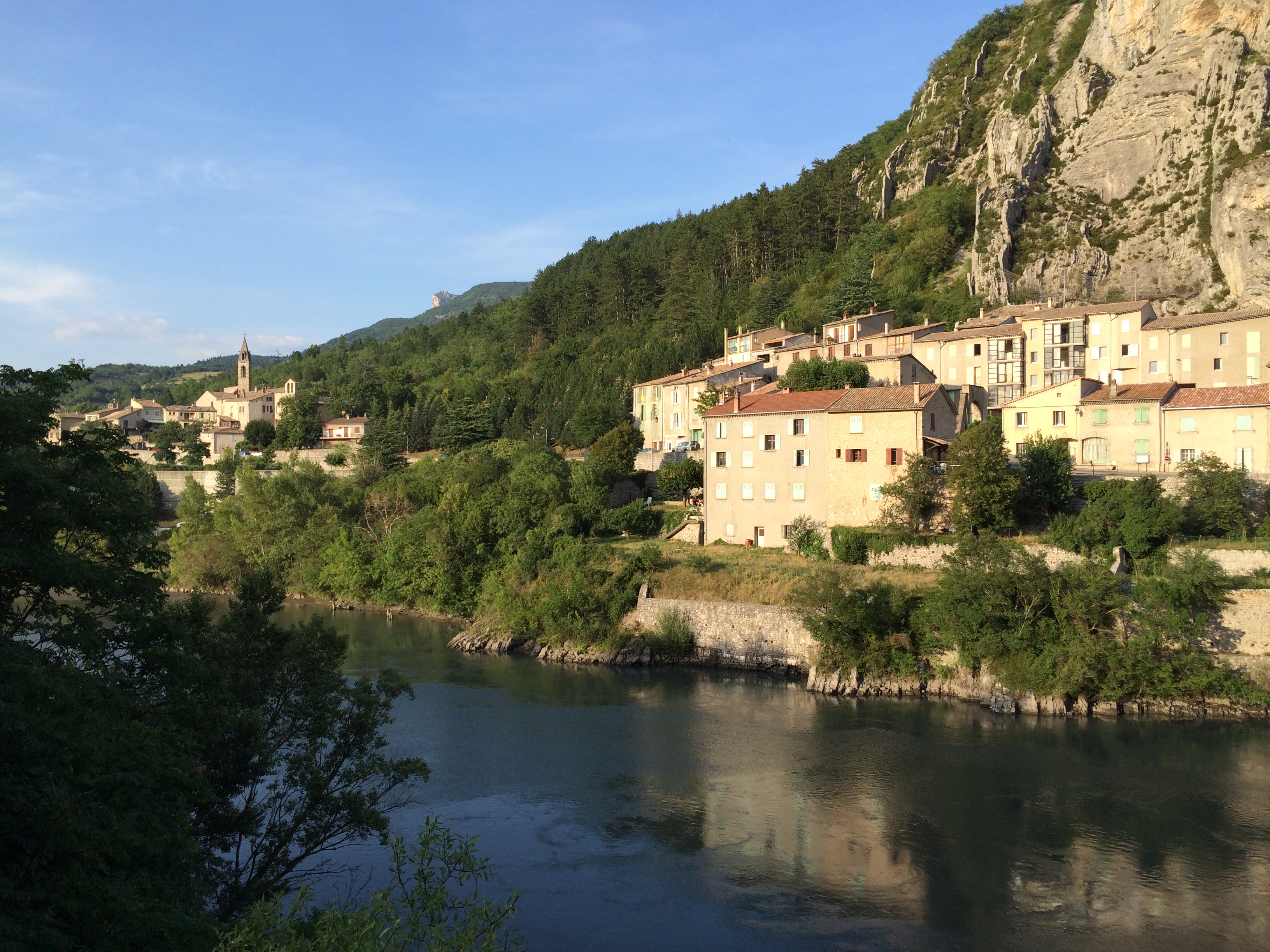
View of Cite de Carcassonne from the old bridge.

View of Cite de Carcassonne from the old bridge.


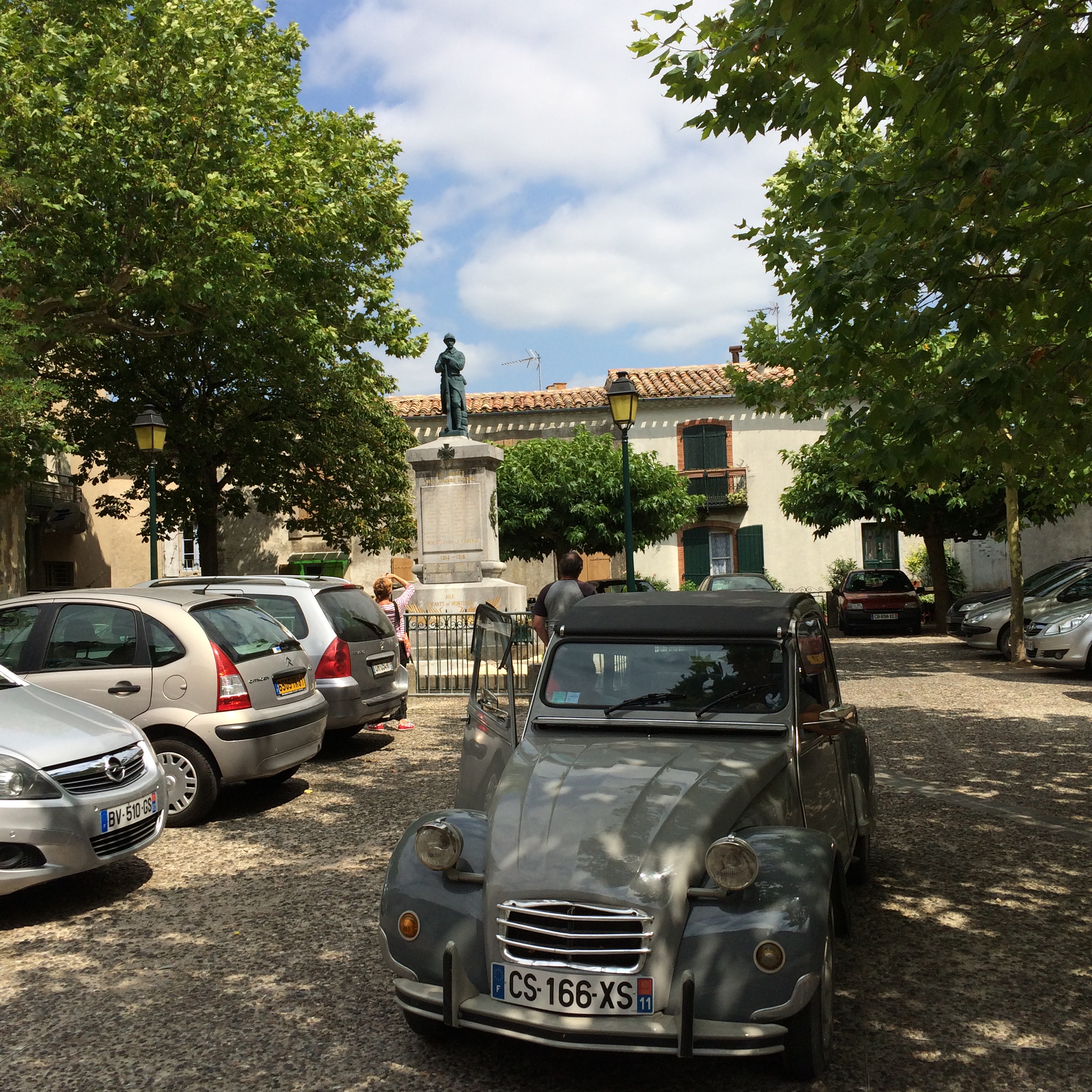
An old 2 CV in Montolieu.

An old 2 CV in Montolieu.

Rue de la Mairie, Montolieu.

Rue de la Mairie, Montolieu.


IMG_3880

The journey so far – “wealthy with what you’ve gained on the way, not expecting Ithaca to make you rich”

Standard

IMG_4031

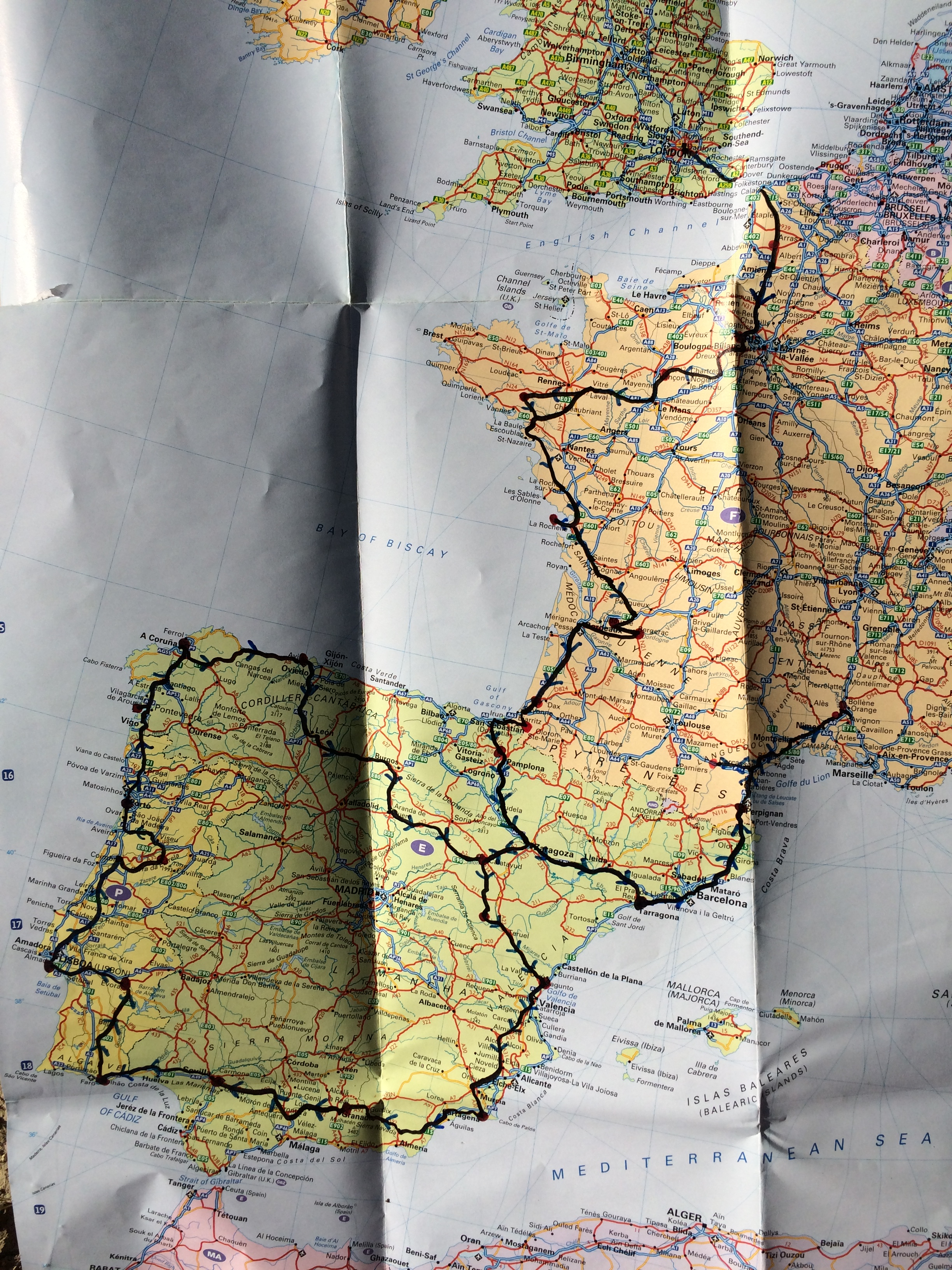
As we arrived in the evocative town of Avignon in Provence in France on the 13th July after a month and 20 days on the road, we had covered roughly half our estimated total journey:

  • 4,600 miles (7450 kms)
  • 50 days of travel.
  • Average of 92 miles (150 kms) of travel per day.
  • 30 campsites.
  • Average time spent in each campsite (after factoring in the week spent in Brittany): 1.4 days.

We started off eager to make progress with the journey and anxious not to linger too long in any one place (av 1.4 days). Taking account of time needed to visit towns and cities and catching up with daily tasks including writing the blog, this led to a certain amount of tension and freneticism. Part of it was worry about what lay ahead, how hard it would be, whether we could do it and whether we had completely underestimated what we had undertaken.  Now that we’ve reached what we think is half-way point and we’ve got into our stride, we’re a little less anxious about the unknowns including our own abilities and what pace we can travel at.
We’ve decided therefore that it’s not ‘whacky races’ as Judith says and that we can move at a more leisurely pace without necessarily seeing every town, city or place of interest on the way.  In any case, going to these places often consists of simply mixing with thousands of other tourists and ending up seeing, not the city itself and its people, but what the tourist industry you get drawn into wants you to see – taking all the right photos and ticking all the boxes. Though we can’t presume to have always succeeded, our experience has been that it’s possible to get a better feel for a place by going to the out of the way spots and meeting locals going about their lives. Though of course seeing important sites and understanding their historical significance is fascinating and enlightening.

Other facts we have discovered about campervanning:

  • You can live quite comfortably in a van!  Though it takes quite a few bangs on the head to remember to duck in the right places (typically getting in and out), even in a high-top.
  • Though we tried, we should have been even more careful about packing.  We needed less than we thought and have ended up sending back two cartons of unwanted clothes etc.
  • It’s not difficult to eat well and make perfectly reasonable meals on a 2-ring burner.
  • It’s not necessary, nor a good idea, to stock up on food as space is limited, the fridge is very small and food doesn’t last.  So the baguette is strictly for the day.
  • Campsites vary enormously – generally, we’ve found that you get a far better experience in smaller, family-run sites than the big, all-singing and dancing 4-star camping extravaganzas.
  • Less so than with camping perhaps, but much is weather-dependent. We may be in a van but we spend most of our stationary time out of it.
  • Being mostly outdoors, we’re constantly exposed to nature. This means mainly insects who come in a multitude of varieties and often find their way in as well.
  • Barbers and hairdressers seem redundant!
Barbers seem redundant!

Barbers and hairdressers seem redundant!

We’re thankful to Robert, a former headteacher we met when we were camping outside Granada and who has already been mentioned, who reminded us of the great Alexandrian poet Constantine Cavaffy’s poem ‘Ithaca’ a taster of which it would be good to quote at this point:

“As you set out for Ithaka
hope your road is a long one,
full of adventure, full of discovery…

Keep Ithaka always in your mind.
Arriving there is what you’re destined for.
But don’t hurry the journey at all.
Better if it lasts for years,
so you’re old by the time you reach the island,
wealthy with all you’ve gained on the way,
not expecting Ithaka to make you rich…”

“Como gusta a nos otros”

Standard

As we leave Spain, a few last words about this fascinating country:

It’s a big country and it certainly does rain on the plain, as we experienced. (They could have done with some of this in southern France which has been experiencing a bit of a drought.)

Each area we visited displayed strong regional identities redolent of the time when Spain consisted of various kingdoms and principalities with each region (Basque, Aragon, Castille, Murcia, Andalusia, Galicia, the Asturias, Catalonia) proudly flying their own flag alongside the Spanish flag, celebrating their own traditions and saints’ days, showing off their own regional dishes and battling to keep alive their own language or dialect. Experts are still debating about the origin of the Basque language which bears no relation to Latin. In some cases of course there are clear aspirations for all-out independence even though they already have a form of autonomy.

The Asturian flag alongside the Spanish flag during the 3-day San Pedro celebrations in Cudillero.

The Asturian flag alongside the Spanish flag during the 3-day San Pedro celebrations in Cudillero.

An Asturian outside storeroom - many houses have them.  We didn't know what they were at first.

An Asturian outside storeroom – many houses have them. We didn’t know what they were at first.

Having spent a lot of time in the Middle East, we were very aware of remnants of Spain’s Islamic period whether it be in place names, architecture or general culture. But we couldn’t decide whether there was perhaps just a touch of denial about this Islamic heritage considering that the Arabs occupied a large part of Spain for almost 700 years. Apart from the obvious tourist attractions of Grenada, Cordoba and Seville and the whole of Andalusia,  we were surprised at the evidence of Arabic influence throughout the whole Iberian Peninsula and hadn’t appreciated how extensive, and in some cases prolonged, the Islamic presence had been.  It was more evident in Aragon for instance than we had expected and finding an old long-derelict mosque in the small town of Alhama brought this home to us.  Considering the importance of the ‘Reconquista’ in Spanish and Portuguese history as well as the constant reminders of this in imagery and statues in churches, that is perhaps not surprising.  But it left us wondering what modern-day Spaniards and Portuguese feel was the contribution of the Islamic period to their culture and whether some of it at least was positive and enlightening.  At the time, the Muslim rulers claimed to have instituted a system or at least a spirit of ‘convivenca’ but scholars are now debating to what extent this amounted to true pluralism. All interesting thoughts to ponder over as the modern world finds itself having to grapple with the vital issue of rising immigration and true religious coexistence.

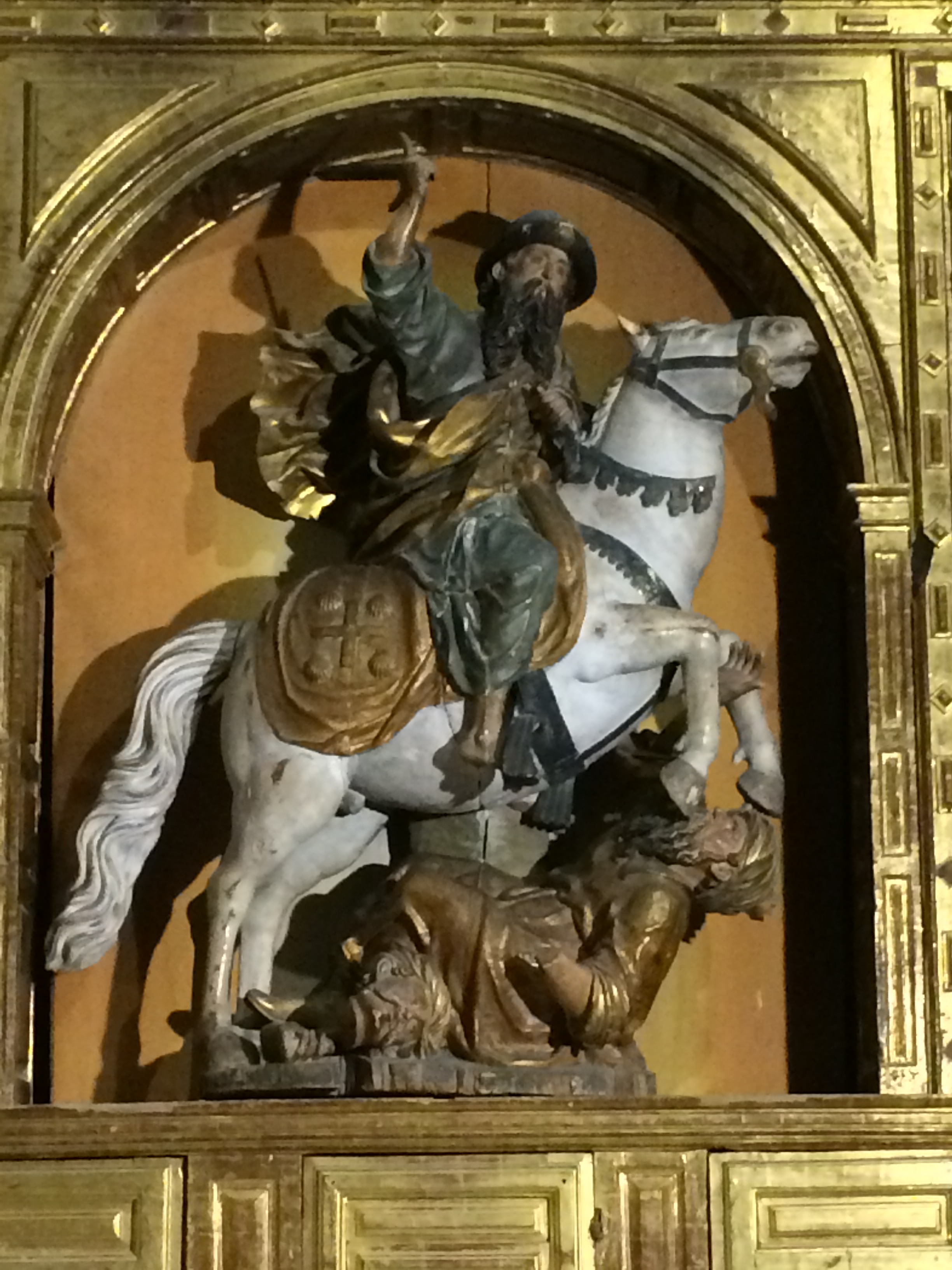
Depiction of reconquista in church in Catrojeriz.

Depiction of the reconquista in a church in Catrojeriz.

Depiction of the Virgin Mary trampling on the enemy.

Depiction of the Virgin Mary standing victorious over the head of a Saracen.

Reading Spain’s history as we travelled we were horrified at  the appalling vandalism of the Napoleonic armies who sacked and pillaged their way through many parts of Spain and indeed Portugal.  We asked some French people we met what they thought about that and what they thought Napoleon’s strategy was exactly. They agreed and said the only strategy was to destabilise the region as much as possible so he could install his own brothers and cousins in their place and build his own empire.

Having lived in multicultural London for many years we were surprised at how relatively few different ethnic groups there seem to be in Spain, even in the larger cities, and also slightly surprised (considering Spain is one of the largest ELT markets in the world) by the number of people who really had very little English or none at all.  We’re not saying that out of any spirit of linguistic imperialism but just in the knowledge of the huge amount of ELT teaching there has been in Spain for decades.

As in Portugal, seafood is a major part of the Spanish diet as is pork.  More often than we’d expected, meals come with chips.  We didn’t think this was this for the English, of whom we came across very few (though admittedly we avoided the Costa del Sol). By far the majority of campers we came across were from Holland, after the Spanish that is.  Some of the regional dishes like in the Asturias were very interesting, but overall we thought every day Spanish cuisine as served in most ordinary cafes and restaurants was not always terribly healthy.

Fairly typical menu in restaurants in Barcelona.

Fairly typical menu in restaurants in Barcelona.

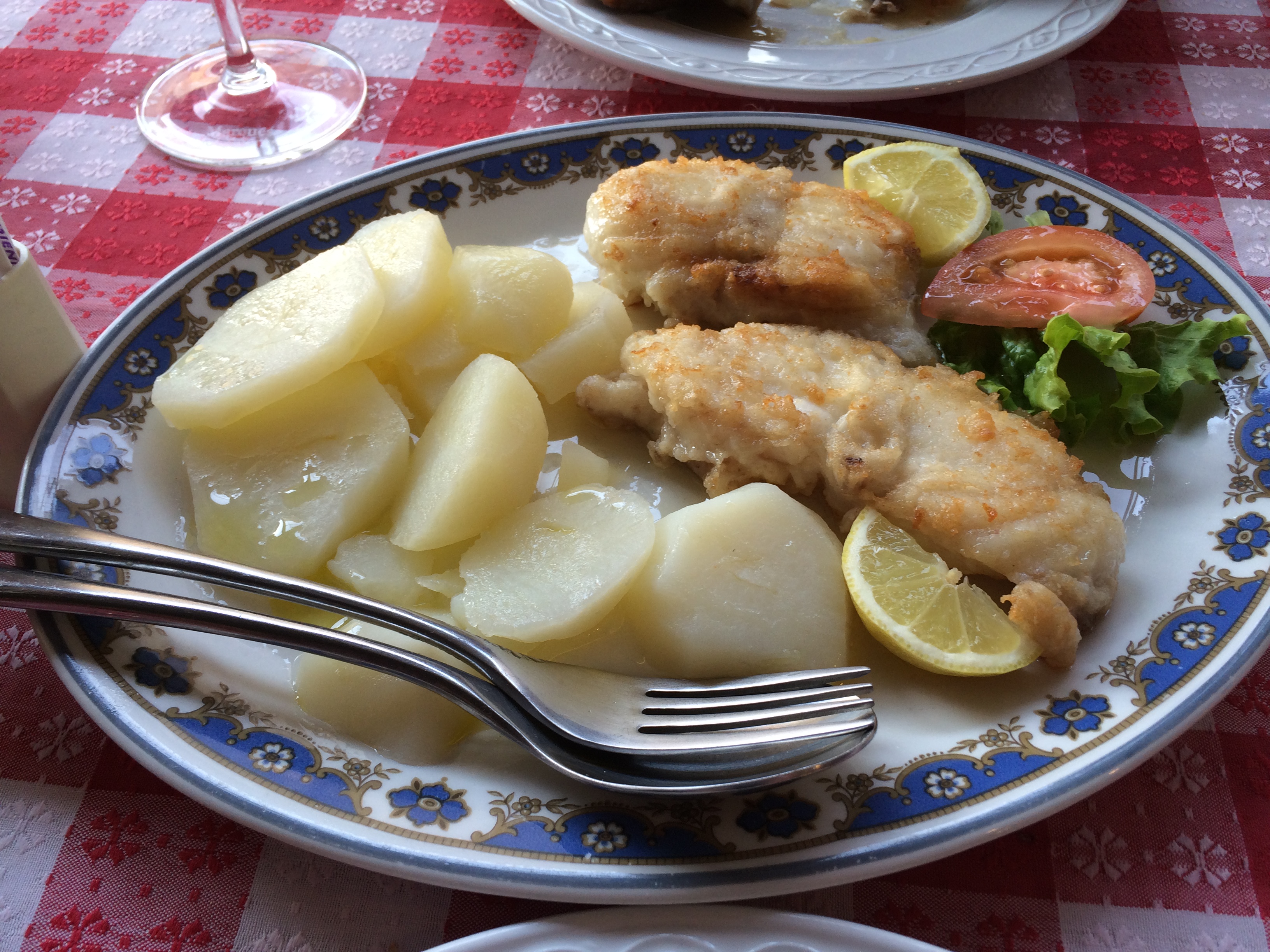
But sometimes the food can be simple and delicious as in this dish of 'rate' fish from Galicia.

But sometimes the food can be simple and delicious as in this dish of ‘rate’ fish from Galicia.

But the size of the bread loaves in the countryside is amazing.

And the size of the bread loaves in the countryside is amazing.

Also like Portugal, everywhere we travelled there was evidence of financial hardship and a failing economy, even in the more touristic areas businesses were closed/having liquidations sales or up for sale.  With unemployment levels at over 20% (is this really right?) Spain is struggling yet despite this it is a vibrant, exciting, fascinating (if somewhat noisy) country and has left us with a desire to return and discover more of it charms.

Spain gives the impression of being an industrious, ‘self-contained’, ‘self-sufficient’ country, fiercely proud of its own character and traditions, including of course, bull-fighting.  The proof being the giant black silhouette of the fierce Spanish bull greeting drivers at the entrance to each region (with the exception perhaps of Catalonia).  It almost looks defiant – like Spain itself. “We’re big enough, strong enough, proud enough, to do como gusta a nos otros”!

IMG_2275

Tuesday 7th and Wednesday 8th July – Barcelona

Standard

7th July

We’re heading for Barcelona.  We stayed on a campsite a few kilometers out of the city by the coast which was pretty grim and dusty but we only planned on staying one night, determined to get up early and go into Barcelona.   Our neighbours, a Swedish family, arrived shortly after us.  We sat sipping our chilled rose and watched them setting up camp, erecting their tent etc. It took almost two hours and made Brenda seem like such a luxury.  Their two teenage sons looked on with a look in their eyes I recognise seeing in our own children when they were that age, that any predicament in life is preferable to camping with your parents!

8th June
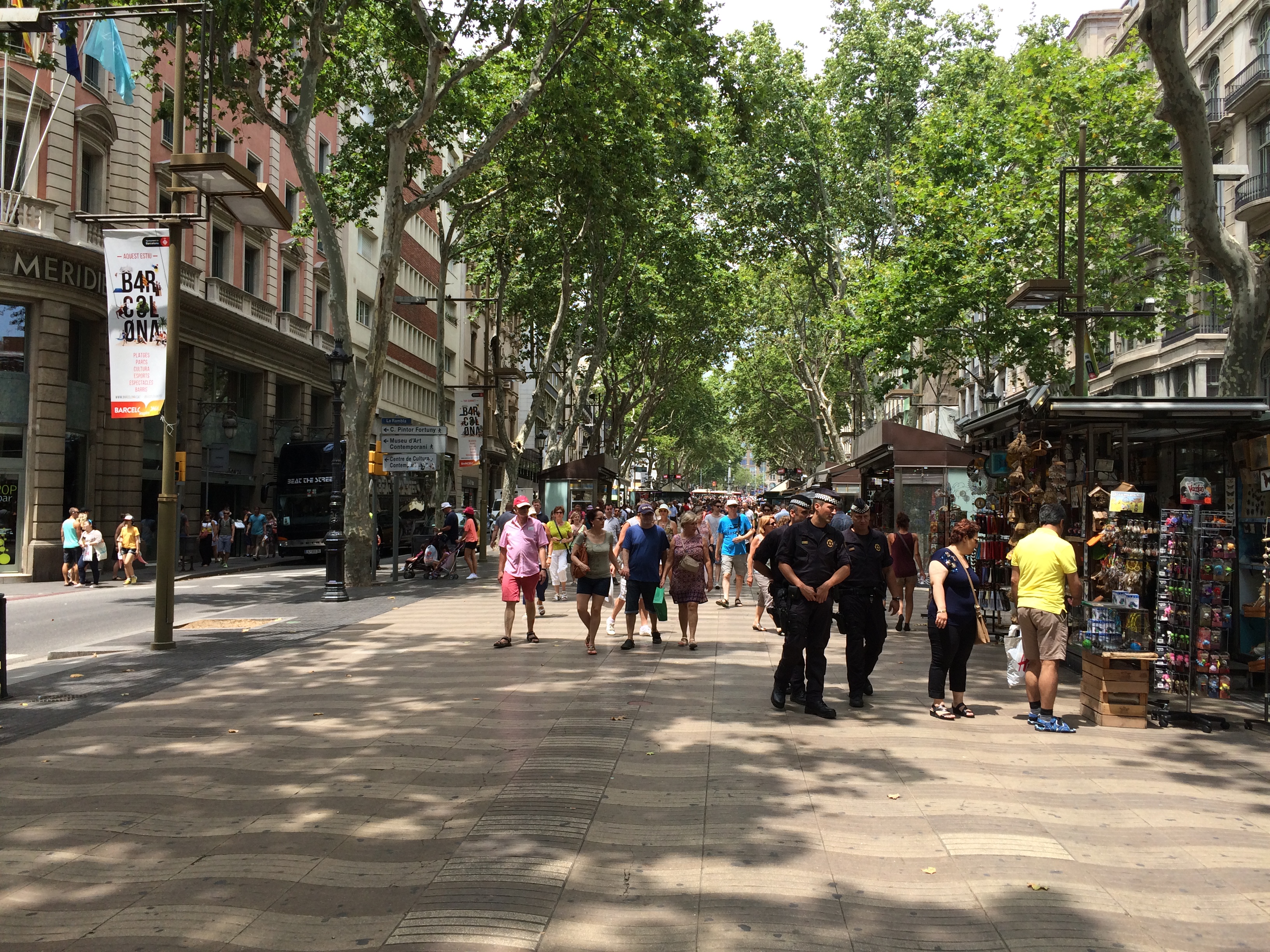
Barcelona, capital of the autonomous community of Catalonia.  It’s hard to know what to say about Barcelona – modern, colourful, lively, exuberant, full of tourists.  We followed some of the ‘recommended sites’ and rambled down ‘La Rambla’, a busy boulevard with traffic on either side and a central walkway teeming with tourists and stalls selling lots of merchandise from China. Spanish police were much in evidence, suggesting we should beware of pickpockets.
The popular and touristic  'Ramblas de Canaletes' known as 'La Rambla'.

The popular and touristic ‘Ramblas de Canaletes’ known as ‘La Rambla’.

 
Stalls lining the Rambla central walkway.

Stalls lining the Rambla central walkway.

Taxis in Barcelona are the same colour as Alexandria taxis.

Taxis in Barcelona are the same colour as Alexandria taxis.

A woman (or man?) advertising the 'Erotic Museum' on La Rambla.

A woman (or man?) advertising the ‘Erotic Museum’ on La Rambla.

We stopped at the much-vaunted Viena Cafe for a light lunch. It’s supposed to be the place to get the best sandwich in Barcelona and it looked promising with its art nouveau decor, quaint sushi-style circular bar surrounding the serving area, classical music and even ornamental grand piano. The sandwich was good but the tired-looking aubergine salad was unceremoniously plonked in front of us in a cheap plastic bowl.  Despite these ‘disappointments’ it is a remarkable city and well worth a visit.  From La Rambla we walked down to the ‘El Born’ district whose relaxed and more bohemian atmosphere was more to our taste.  There was a surprising amount of begging in the city, but it took creative forms like women singing operatic tunes in front of the cathedral in Placa Nova or the man ‘fishing’ for coins in El Born.  We saw several men (including one with a young boy) going through rubbish bins.
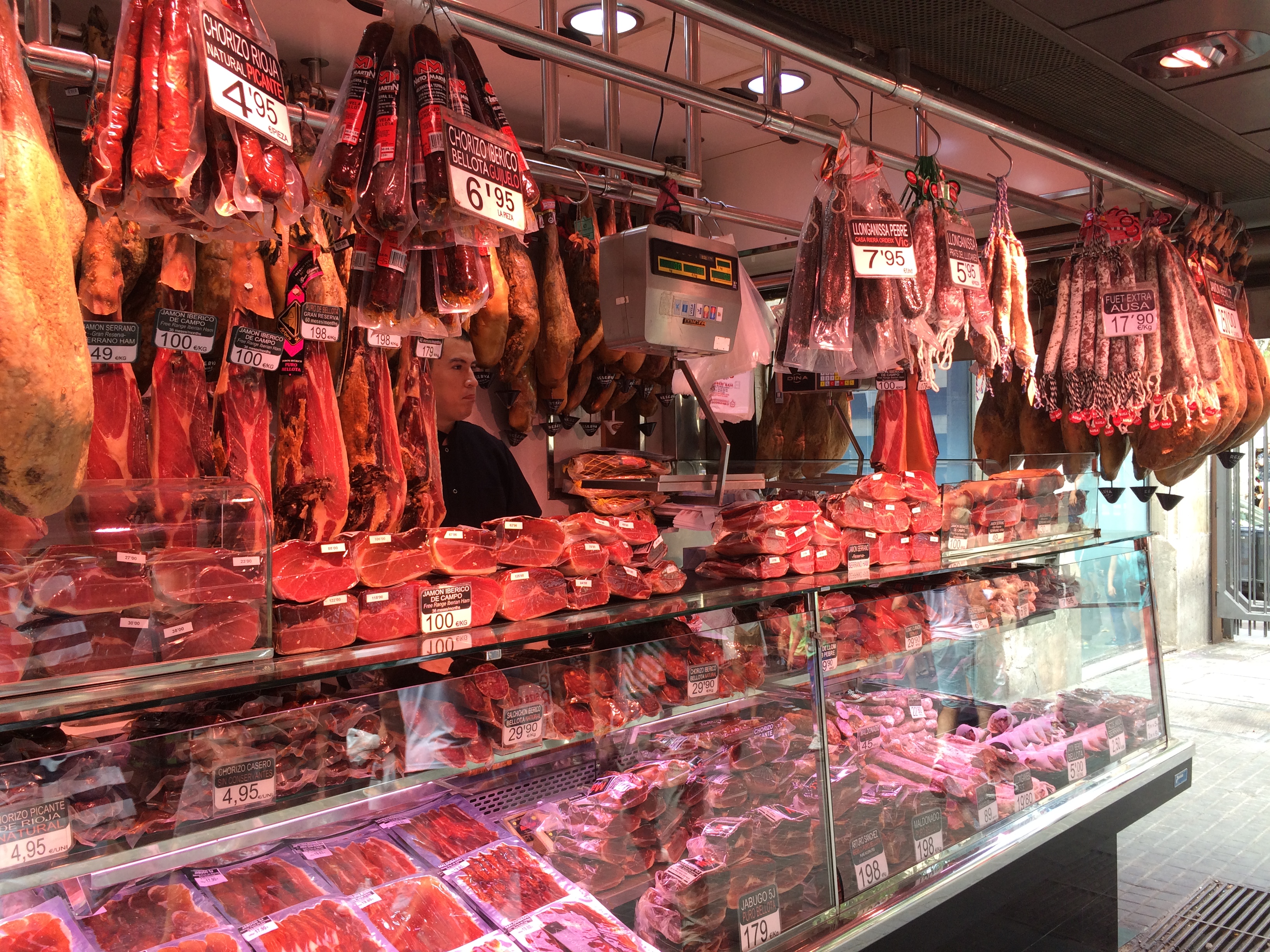
A ham and sausage stall in the covered market off La Rambla.  Pork as well as fish feature highly in Spanish cuisine.

A ham and sausage stall in the covered market off La Rambla. Pork as well as fish feature highly in Spanish cuisine.

Outside the famous 'Viena Cafe'.

Outside the famous ‘Viena Cafe’.

A cycle-friendly city.

A cycle-friendly city.

The tired-looking aubergine and feta salad served in a plastic dish at the Viena Cafe.

The tired-looking aubergine and feta salad served in a plastic dish at the Viena Cafe.

During the Spanish Civil War, Barcelona and Catalonia were fiercely republican. The resistance of Barcelona to Franco and the eventual fall of the city on 26 January 1939 to Franco’s troops caused a mass exodus of civilians to the French border and had devastating results including the abolition of autonomous Catalan institutions and the suppression of the Catalan language.  
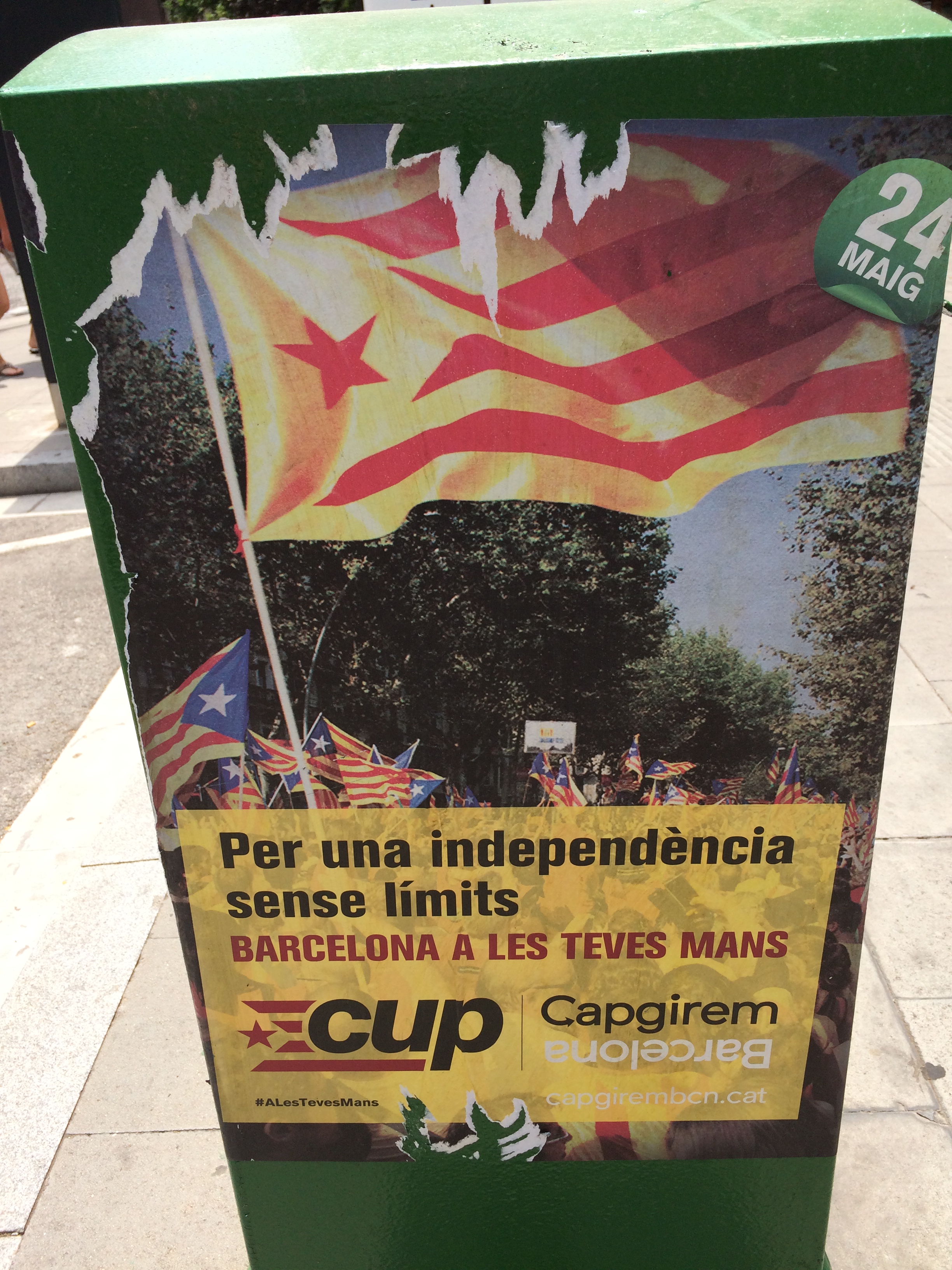
Poster campaigning for Catalonian independence.

Poster campaigning for Catalonian independence.

 What was truly remarkable was the work of architect Antoni Gaudí, which can be seen throughout the city. His best-known work is the immense but still unfinished church of the Sagrada Família, which has been under construction since 1882, and is still financed by private donations. 2026 is the planned completion date.  Its difficult to know how to describe his work – it’s hugely impressive but there is almost a child-like prehistoric feel about it.
The as yet unfinished and 'awe-inspiring' Sagrada Familia cathedral.

The as yet unfinished and ‘awe-inspiring’ Sagrada Familia cathedral.

 
IMG_3788
After a long hot day walking and exploring, we got back into Brenda and contemplated one last stop in Spain but decided to head straight for the Aude in France instead.  Somehow we were hankering for some older home-like familiarity.
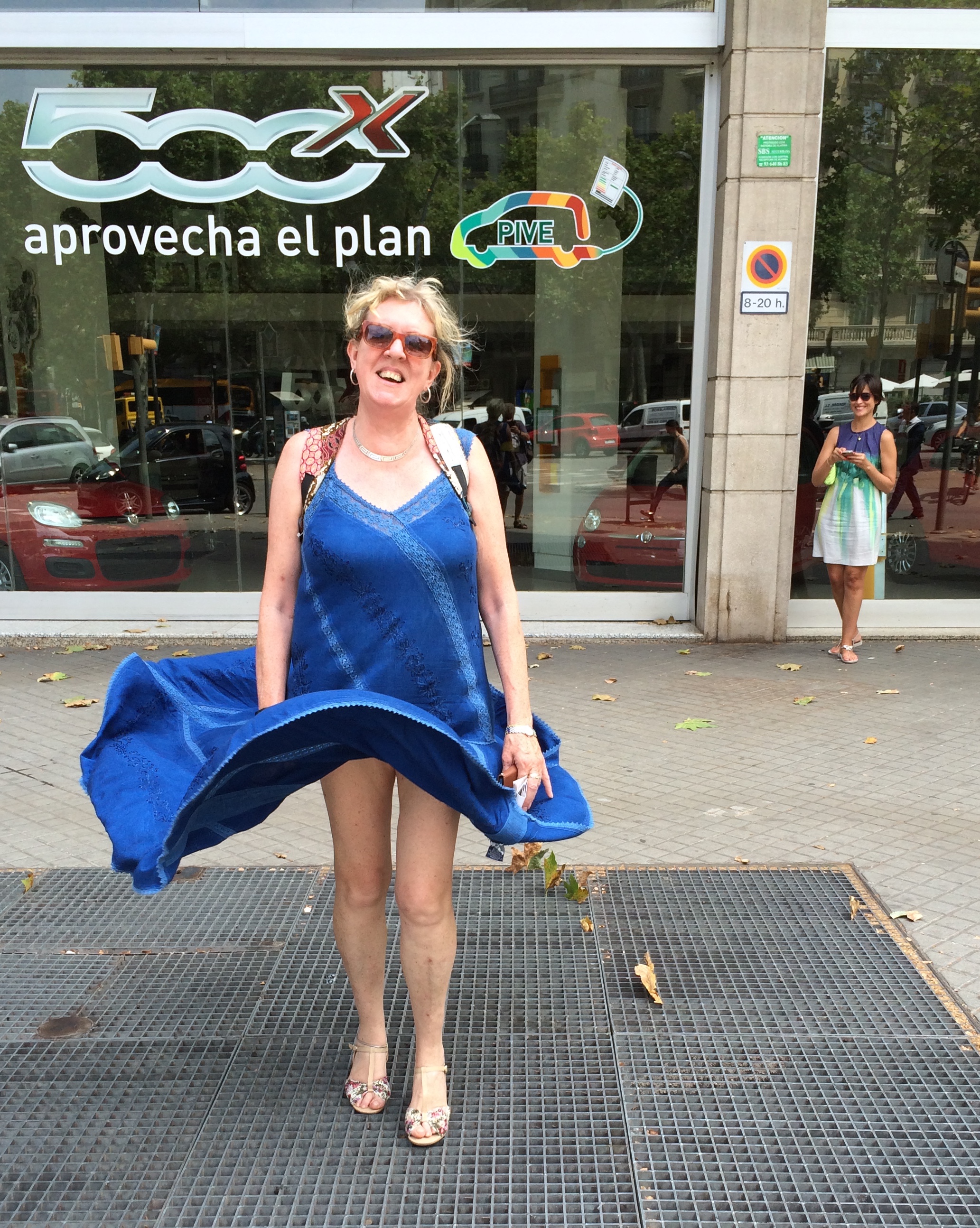
On the considerable walk back to the car (we’d parked it on the outskirts and had taken the tube to the centre), Judith got an unexpected bit of respite from the heat in the form of some upward flowing ventilation. It seemed to be in keeping with the ‘sympatico’ spirit of the city.

A bit of unexpected fresh air during our walk back to Brenda.

A bit of unexpected fresh air during our walk back to Brenda.