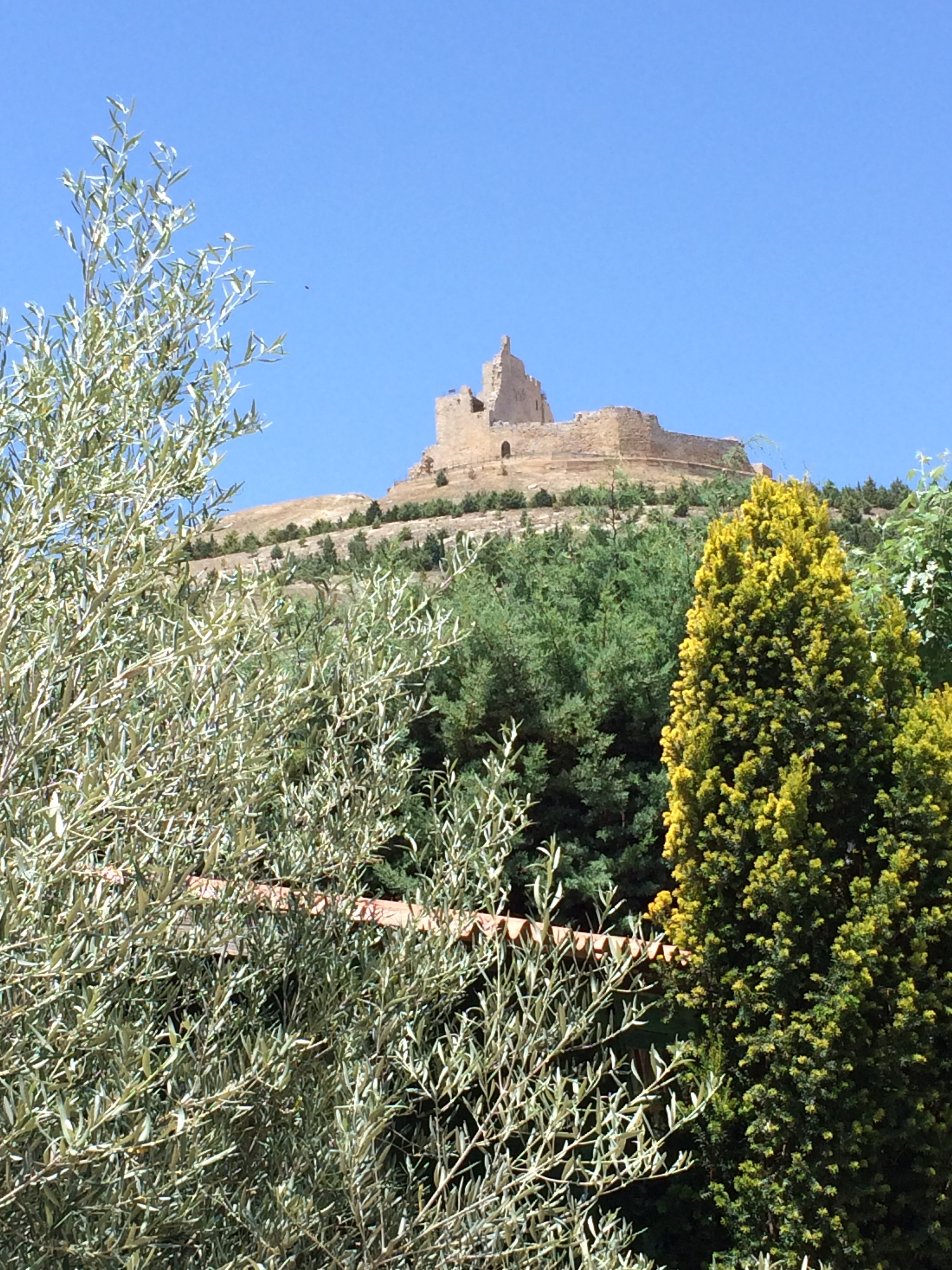
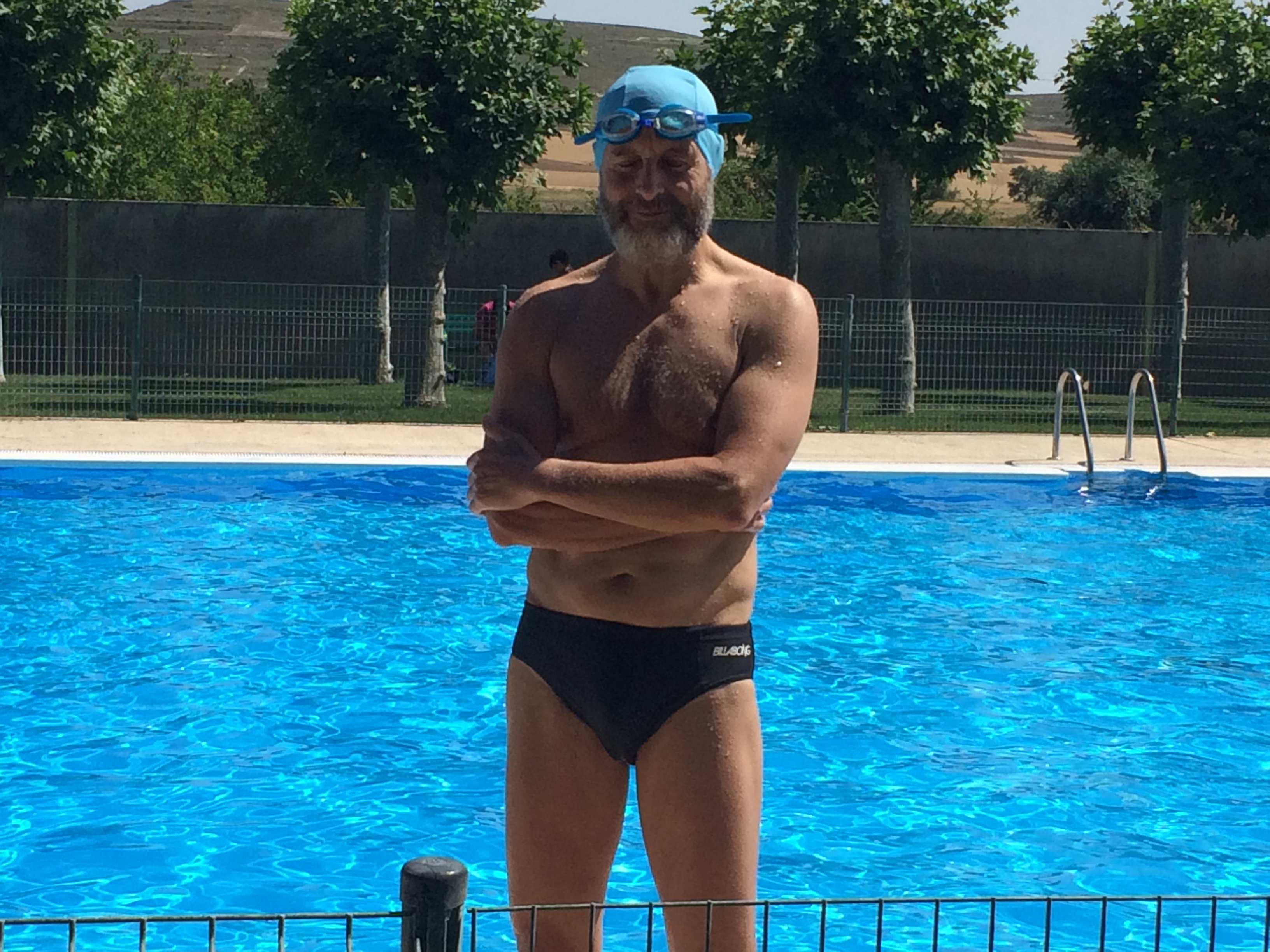
From Leon we travelled to Castrojeriz near Zaragossa which was on the Camino de Santiago route and the aptly named Campsite Camino Santiago. The Campsite was at the base of a hill on which a Knights Templar castle stood (the area is steeped in Knights Templar/Holy Grail legend). It was a lovely family-run campsite which cooked delicious lamb joints in a traditional outside oven. After a very long and hot cycle we swam in a municipal pool close to the campsite. We had the pool to ourselves, which was bliss, until siesta time was over and within seconds the pool was overflowing with families.
The relaxing campsite at Castrojeriz, on the Camino de Santiago trail, which was becoming a recurring theme during our tour of Spain.
The Knights Templar castle on the hill overlooking the campsite.
12K cycle ride to nearby Castrillo de Murcia.
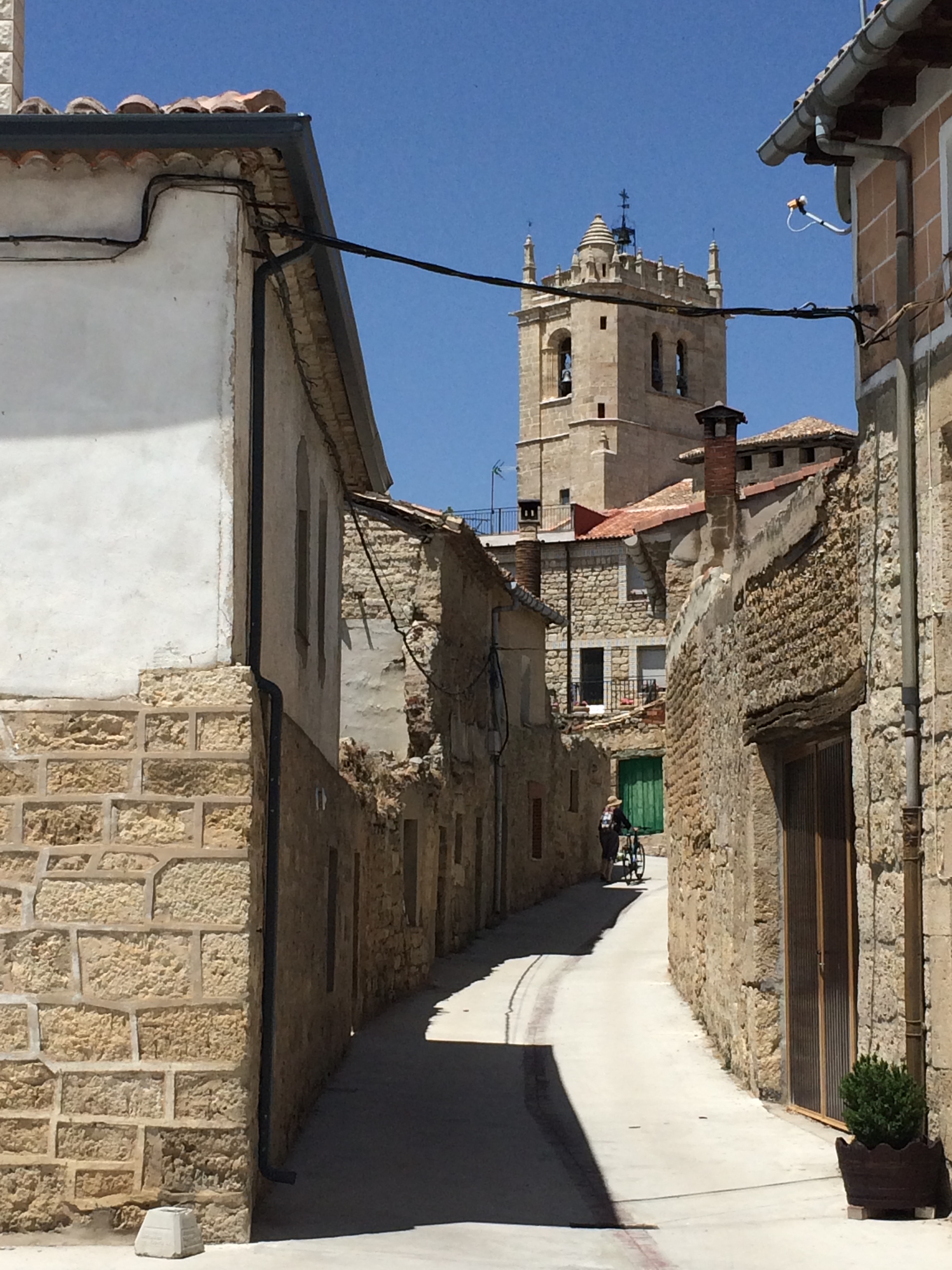
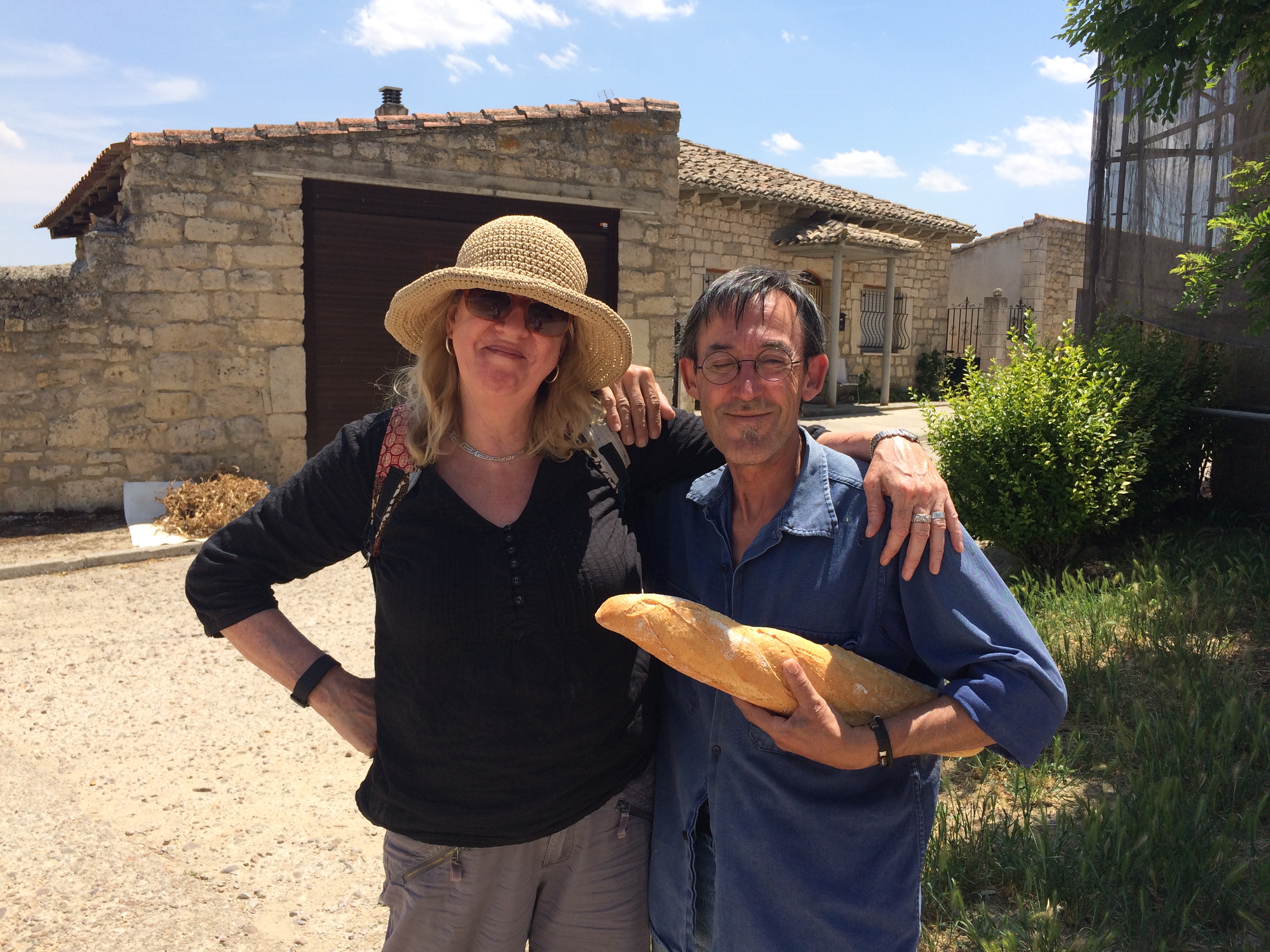
We stopped half way through our cycle ride seeking shelter from the relentless heat and sunshine and to eat our picnic at Castrillo de Murcia. The bread van pulled up alongside and an elderly lady called Epiphania came out of her house to buy her bread and to collect her little terrier who had turned his nose up at the morsel of ham we’d offered him. She tried to converse with us but we realized pretty soon that our problem wasn’t so much linguistic as that she was deaf as a door post. We did succeed in speaking to a rather diminutive man (also drawn out by the bread van) called Ramon who had previously given us directions back to Castrojeriz. Ramon was a 62 year old former nurse who had worked in San Sebastian all his life and was now retired with a reasonable state pension of 1,000 Euros a month which he felt content with. He had never married and lived alone. He was happy to meet a fellow nurse in Judith and wasted no time to stretch his neck to kiss her. It seemed appropriate to take a photo of the two ex-nurses together.
The sleepy village of Castrillo de Murcia.


Ramon, the retired ex-nurse happy to meet another nurse.
Heavenly swim at the municipal pool after the hot cycle during the quiet siesta time.
Lamb cooked in the campsite’s outside open oven. Our first roast in a long time!

A brief overnight stop in Nuevalos, where Flavio did a lake swim, and then on to the coast, desperate for a sea breeze. Spain is experiencing a heat wave with temperatures going up to 45 degrees C. This really was quite an uncomfortable campsite, ‘terraced’ and badly designed, on top of which it was unbearably hot and sticky, obliging us to sleep with the side door open which then meant having to contend with insects and mosquitoes despite the insecticide burners. We were glad to get away from that region of Spain that seemed to be experiencing the highest temperatures and head for the coast. We decided that in terms of both topography and weather, we were less keen on Aragon than other regions.
On the way to Nuevalos, we passed Mahamud and Alhama and came across this old abandoned mosque which has clearly been derelict for centuries.
An interesting detail of the long-derelict mosque at Alhama de Aragon.


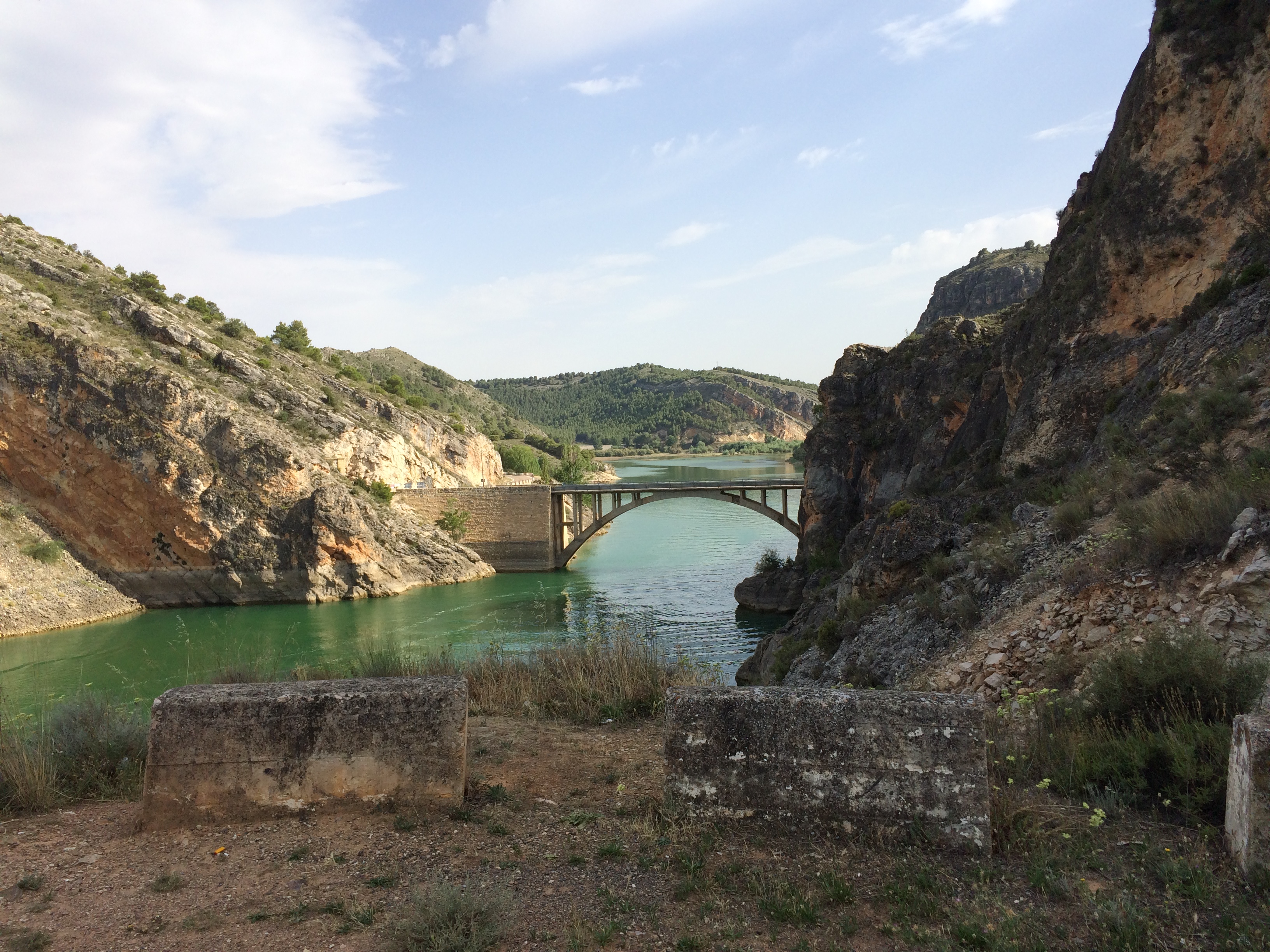
The lake at Nuevalos. We were also told there were spectacular waterfalls nearby but the temperatures were unbearable and we were eager to get to escape to the coast.
As we leave Nuevalos, we spot two local young women taking photos of each other draped over their car in the scorching temperatures – each to his own we thought!

We stayed at a comfortable and well-run campsite just outside Taragona (Camping Las Palmeras) and managed to secure a pitch opposite the sea. Two days were spent cooling down in the sea with a brief foray into Taragona although we both felt we’d reached critical mass with medieval quarters and cathedrals in such unforgiving temperatures. Flavio found that he could be in the sea within 5 mins of waking up in the morning and that was an excellent way to start the day. There were a few jelly fish but the water was clear enough to see them in good time and avoid them.
The Spanish have taken camping to the next level. Apart from a caravan with awning they have a kitchen tent with stove and fridge freezer, a dining/sitting room tent with flat screen TV, a bathroom tent and other tents with no known purpose. It seems it’s normal for families to stay in one place all summer with the menfolk leaving their families on Sunday evenings to travel to work, returning the following Friday.
The coast at last – and our breezy campsite right by the sea -the Camping Las Palmeras!

We were now in Catalonia where memories of Franco’s dictatorship are strong, with many tents and buildings flying the Catalonian independence flag. We did see some Spanish graffiti warning the Catalans that the Spanish were coming which seemed a little incomprehensible to us as most of the people at the campsite were Spanish.
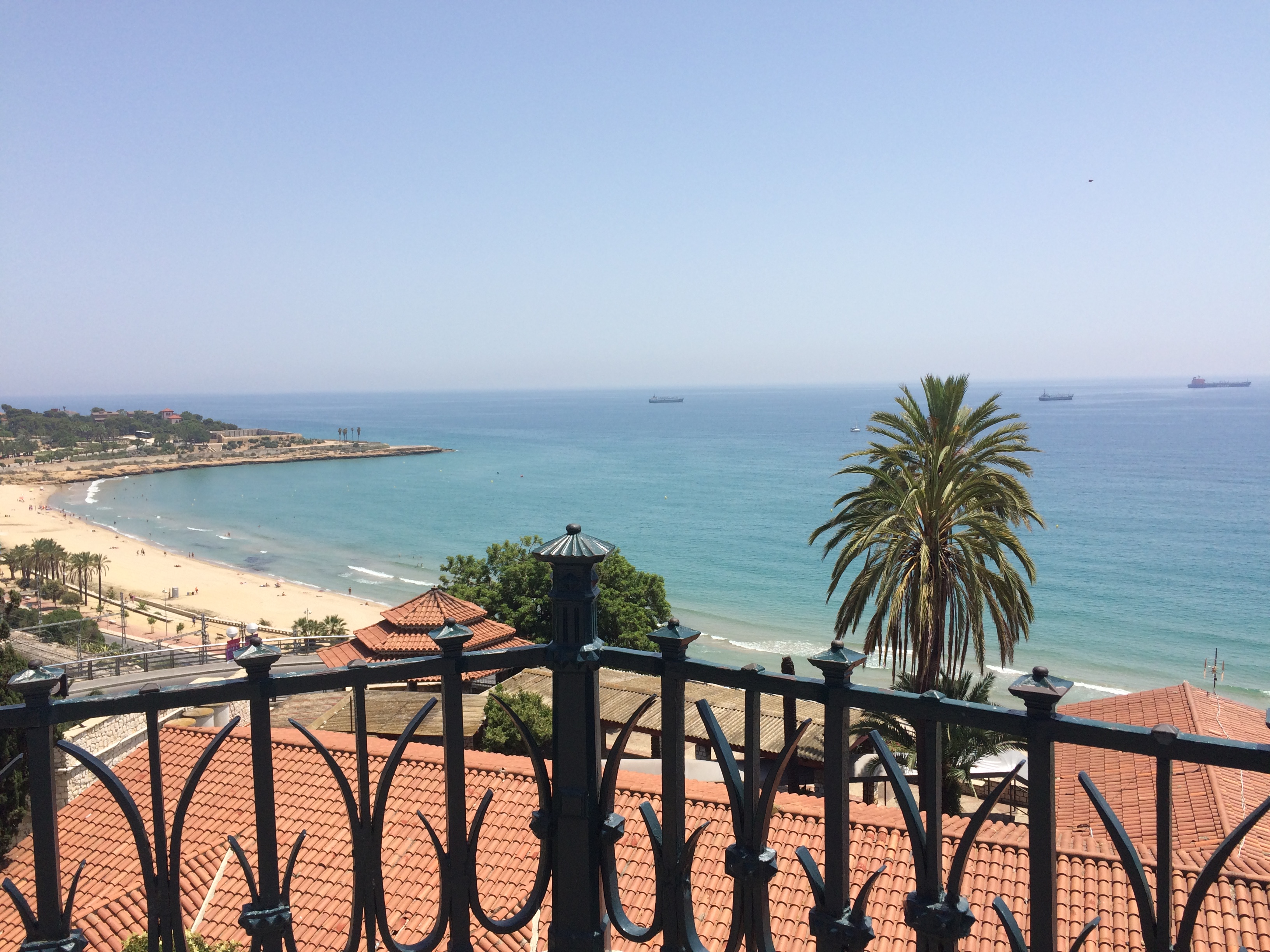
We spent half a day in Tarragona itself, easily accessible from the campsite on the No 12 bus. The first thing that struck us was the stunning view of the sea from a broad balcony at the end of the main boulevard (the Carrer del Comte de Rius). Tarragona was an important city for the Romans and there are consequently several places of interest dating back to Roman times, like the amphitheater, the Bera Arch and the Scipio Tower. Not much however is left of the medieval city following its wholesale sacking at the hands of General Suchet’s French and Italian troops in June 1811, after which the city went down from 12,000 to a mere 300 inhabitants and fell into decline.

Much of medieval Tarragona was destroyed during the 3-day ‘free sacking’ of the city by French and Italian troops in 1811. The last stand by the locals was on the Cathedral steps.

One of the best things about Tarragona is the wonderful seafront on a slight hill. In the foreground is the Roman amphitheater.

After the sacking ordered by General Suchet in 1811, the population of the city plummeted from 12,000 to just 300.
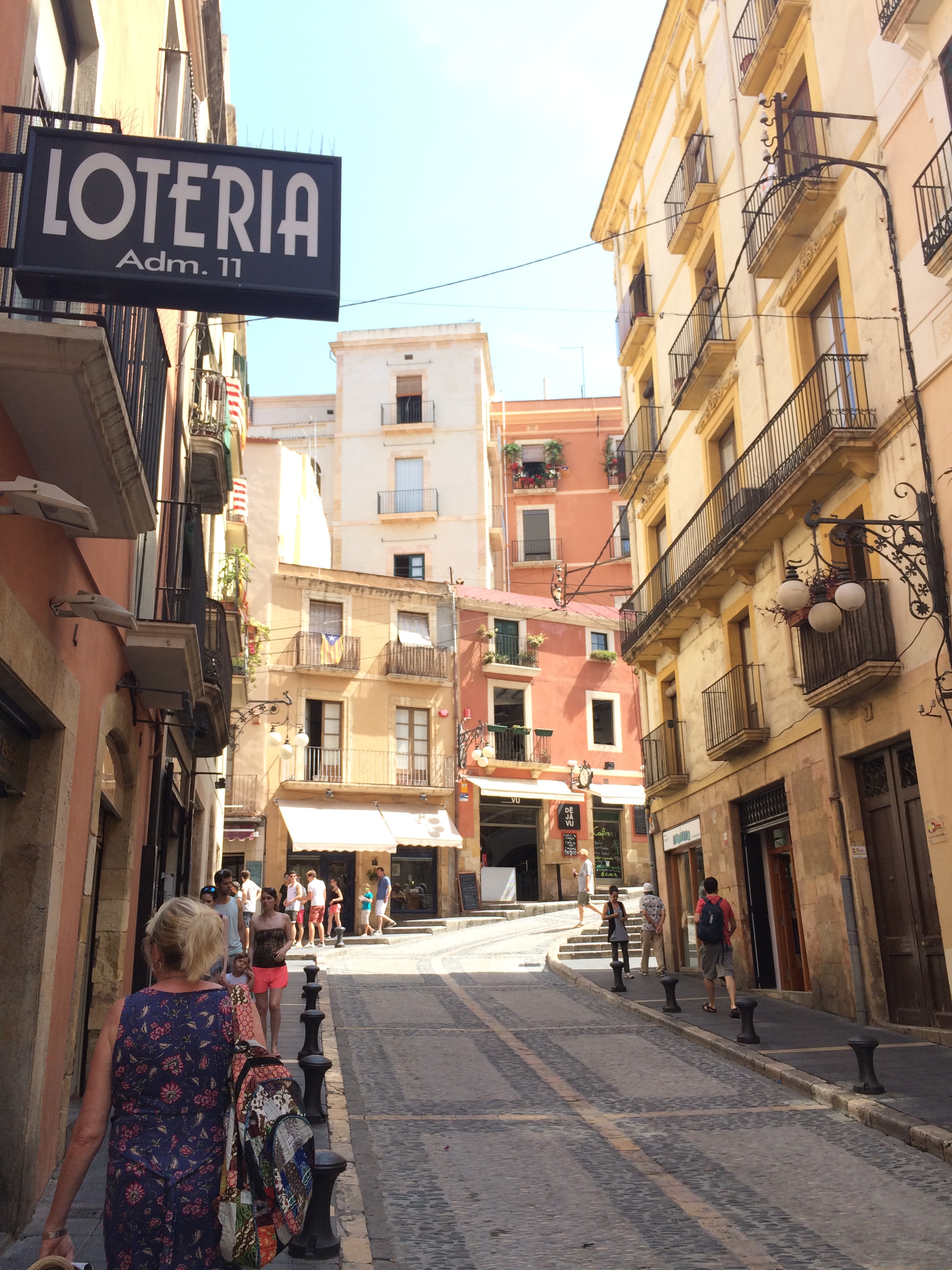
Tarragona is a very pleasant town to spend a day in.
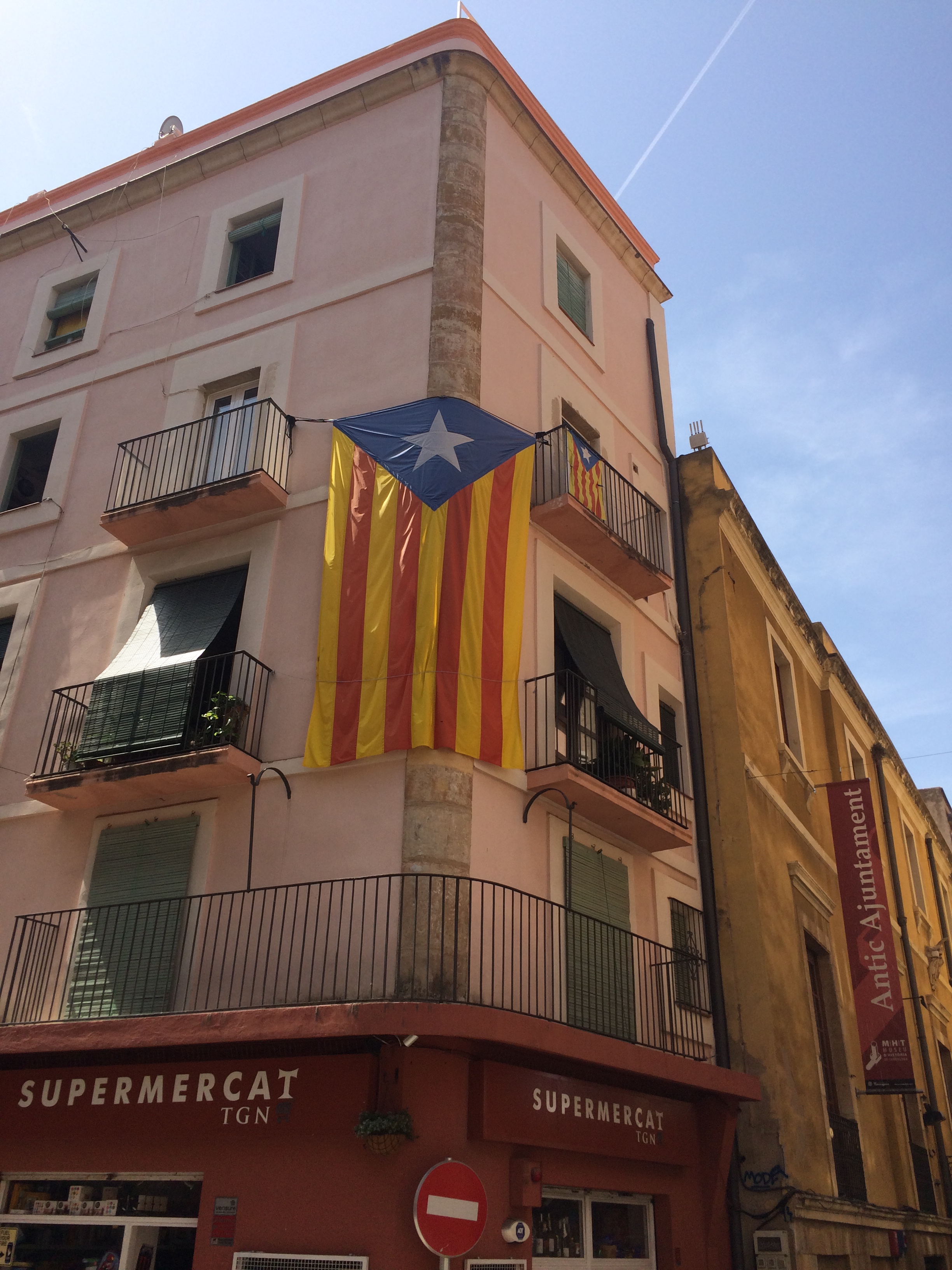
Now Tarragona is a centre of Catalonian independence (though we did see some Real Madrid shirts for sale!)
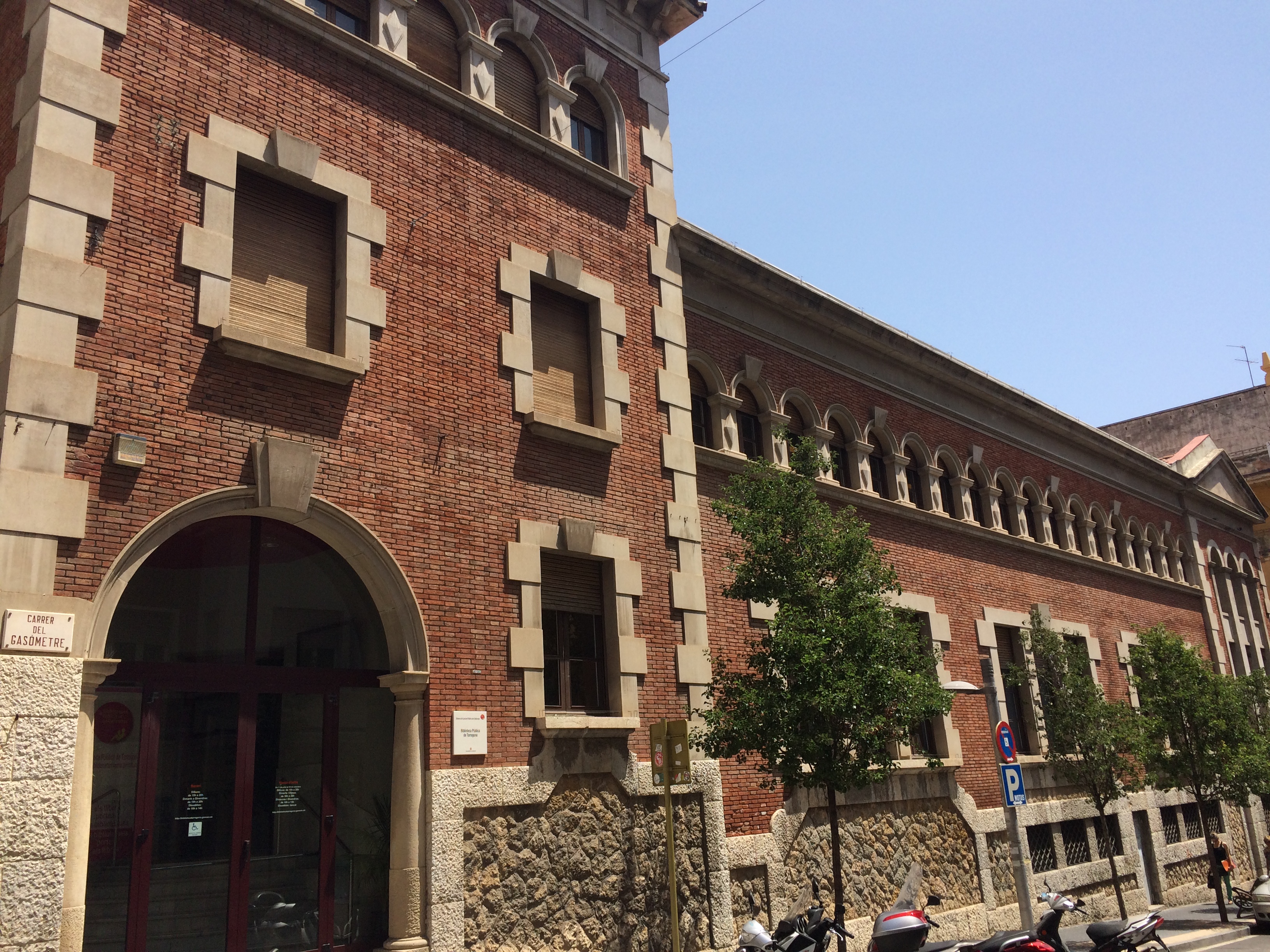
Tarragona’s public library – the architecture reminded us of the College Saint Marc in Alexandria.
Apart from visiting Taragona and swimming we were following what was happening in Greece. The ‘No vote’ was a victory for democracy but one can’t help being anxious at the hurt the Greek people are experiencing.
 Travels with our van
Just to say that I’m still enjoying your blog and read it with great enthusiasm, albeit with a touch of envy. Keep going!
LikeLike
Thanks Simon and apologies again for the slow acknowledgement. I know we’re not applying ourselves to it as much – it started causing a bit of stress – but are trying to keep going, so thanks very much for your support. There were a few spelling and grammatical mistakes in the last one which I hope I’ve now corrected! We’re in the French Alps at the moment. Next stop Italy then hopefully Greece!
LikeLike