Monthly Archives: August 2015

Thursday 6th to Monday 17th August – Greece

Standard

After our two and a half months of travelling, Greece had been our goal and we viewed it as a natural finishing line – our ‘Ithaca’ in a way.  The rest of the trip would be the return journey, in as straight a line as possible, first back to Brittany where we would be house and cat-sitting and then to London.

We entered Greece from the border with Albania in the north west and spent a night in Ionnina followed by two days by the sea at the foot of Mount Olympus and a night near Thessaloniki after picking up our daughter Catherine from the airport.  And finally by just over a week spent as grateful guests of our carissimi amici Rob and Rachel in the wonderful village of Milina in the glorious Pelion Peninsula.  Lying half-way between Thessaloniki and Athens on the eastern side of the Greek mainland, the peninsula curls into the Pagasitikos Gulf almost rejoining the mainland and trapping within it a calm and serene sea.
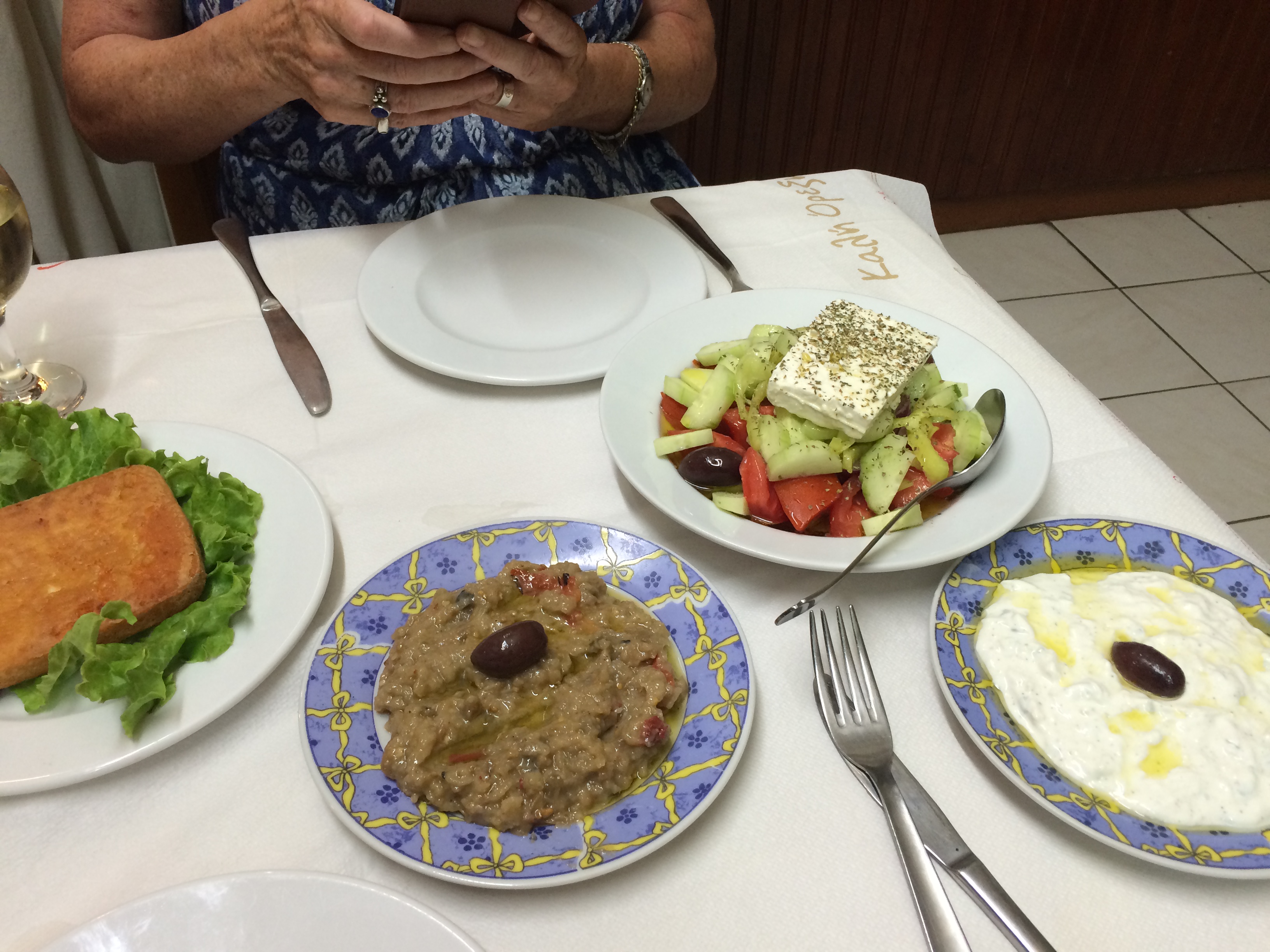
First Greek meal, in Ionnina - Greek salad, tsatsiki, aubergine dip and fried Halloumi-like cheese (though mustn't say Halloumi)

First Greek meal, in Ionnina – Greek salad, tsatsiki, aubergine dip and fried Halloumi-like cheese (though mustn’t say Halloumi!)
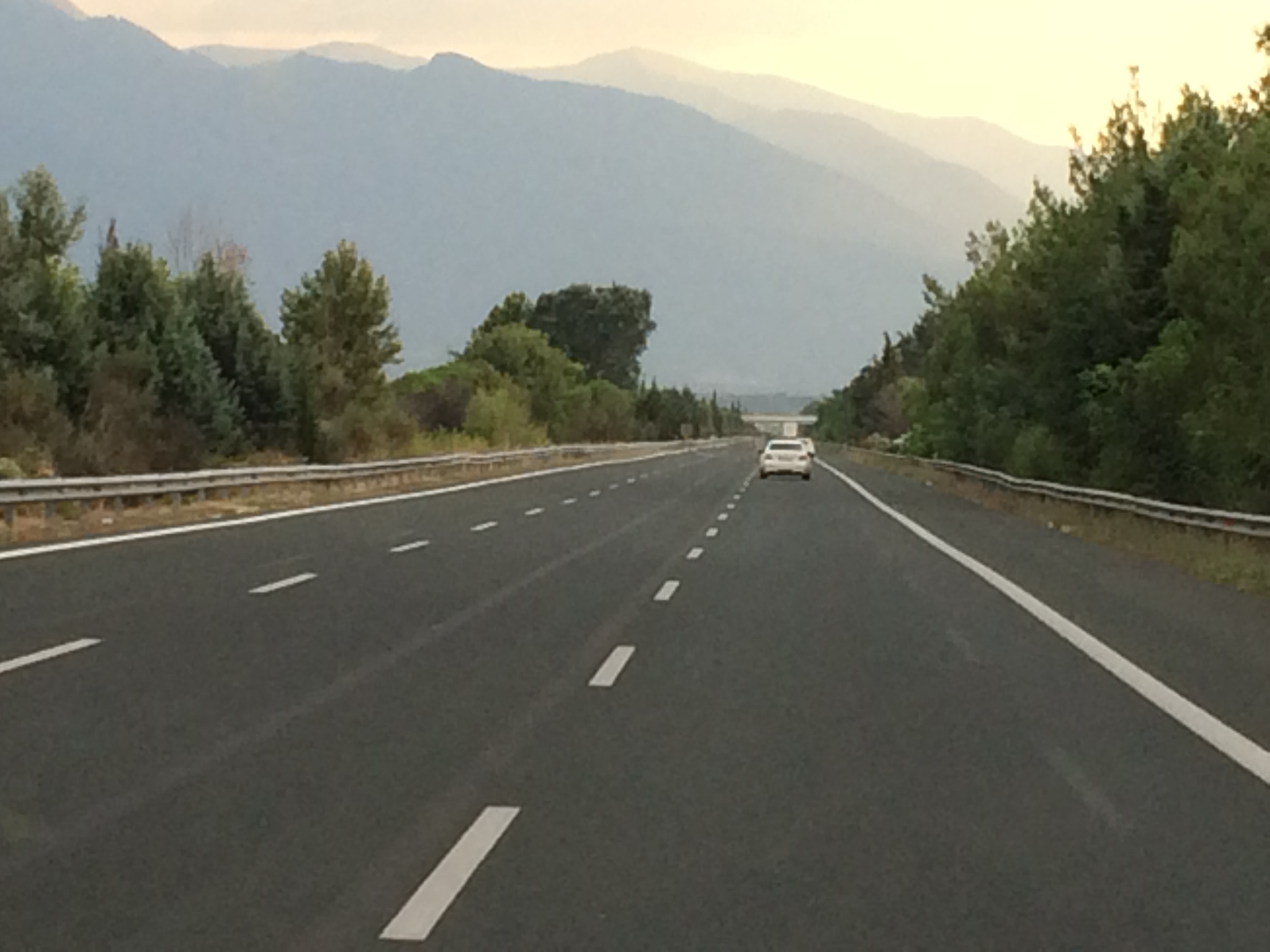
Passing through Korinos and approaching Mount Olympus south of Thessaloniki.

Passing through Korinos and approaching Mount Olympus south of Thessaloniki.


Describing Pelion – with its sleepy seaside and hill-top villages linked by donkey tracks, landscapes unchanged for millennia, translucent coves and forested peaks speckled with terra-cotta roofs – makes it sound like a myth.  But its remoteness, thanks to which it was a monastic retreat and a stronghold of resistance to Turkish occupation for 4 centuries, has ensured it has remained relatively untouched.  It’s been our favourite place in Greece for over 20 years and returning to it after a long adventurous journey felt reassuring and comforting.
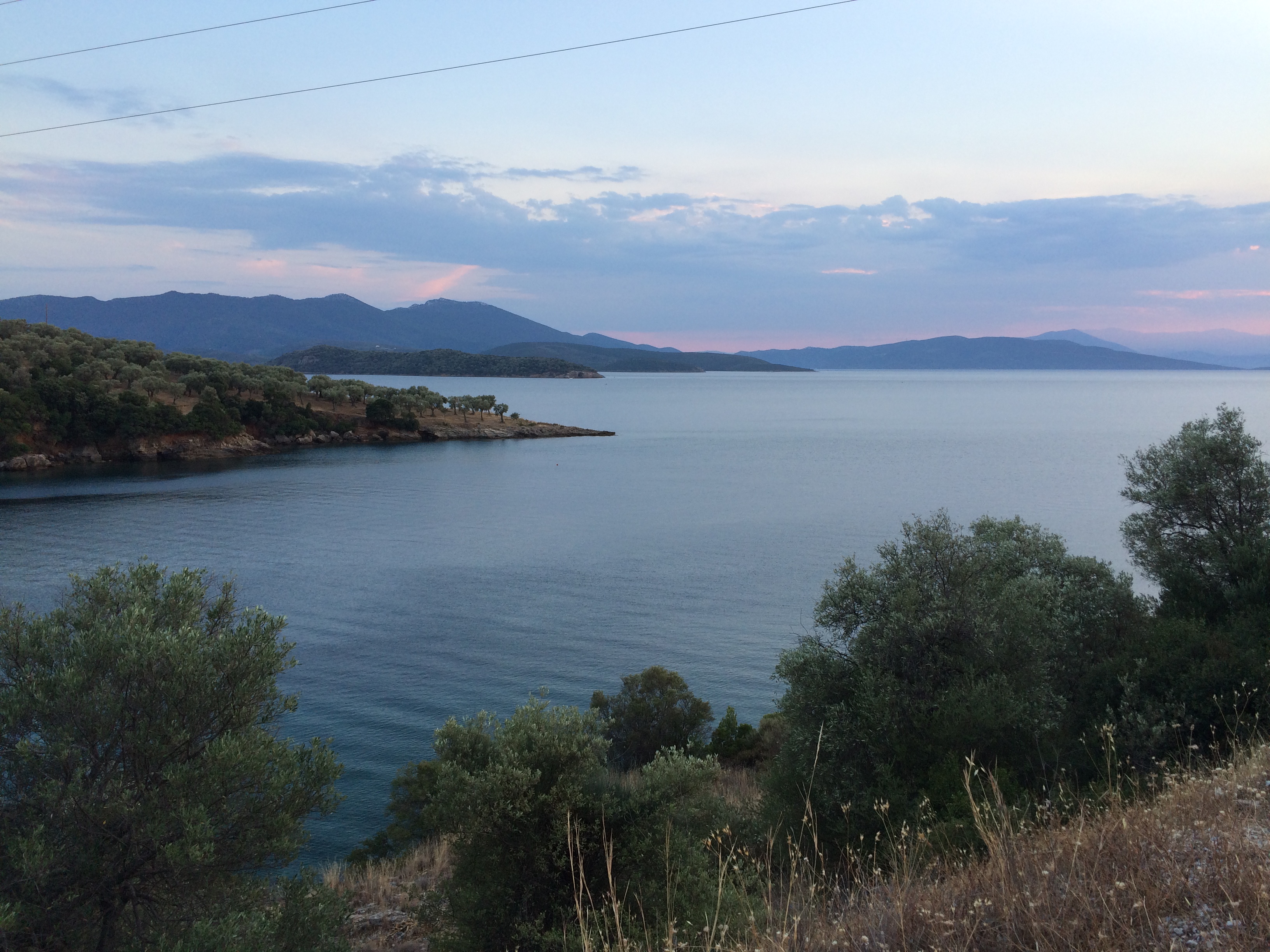
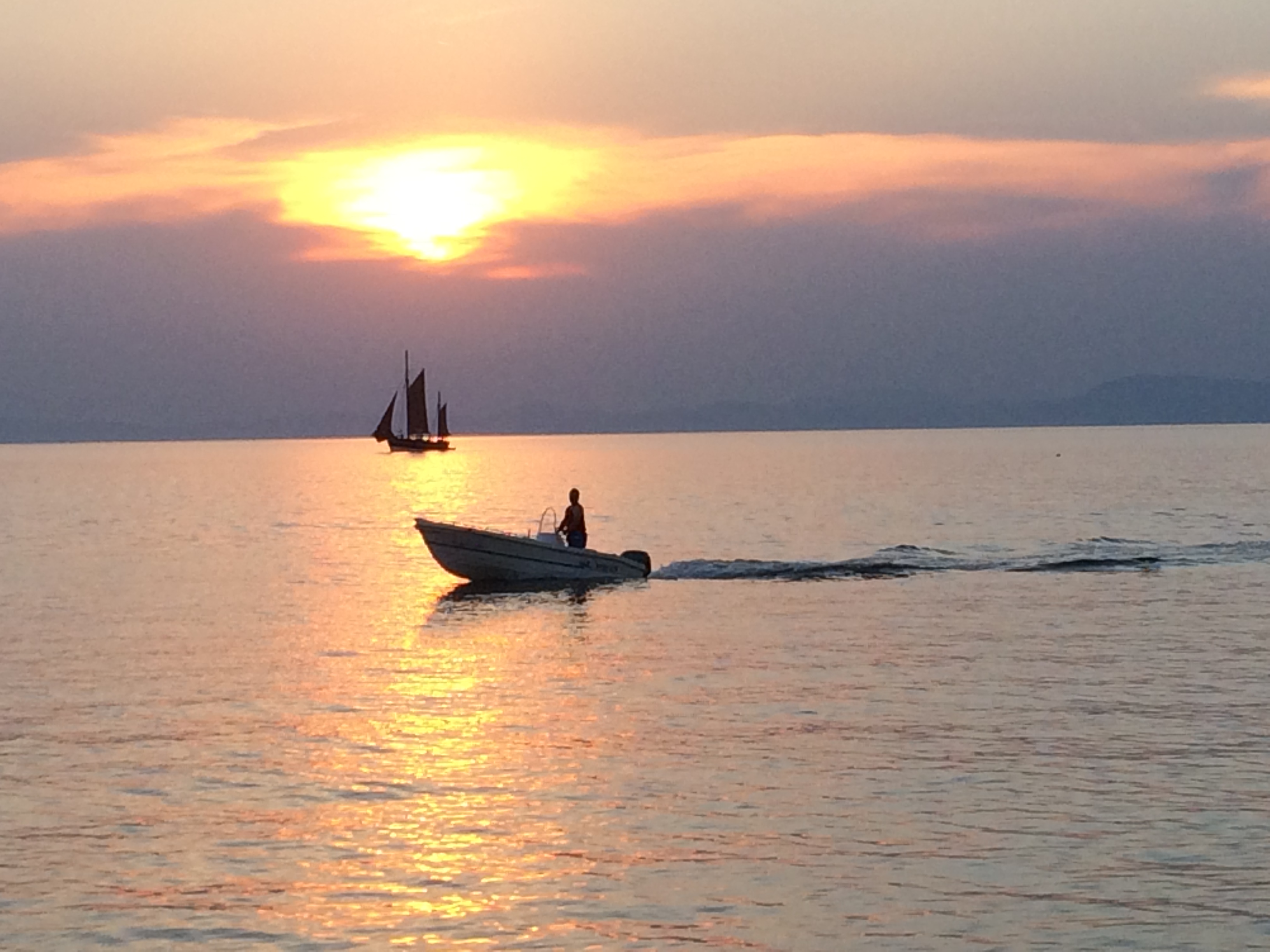
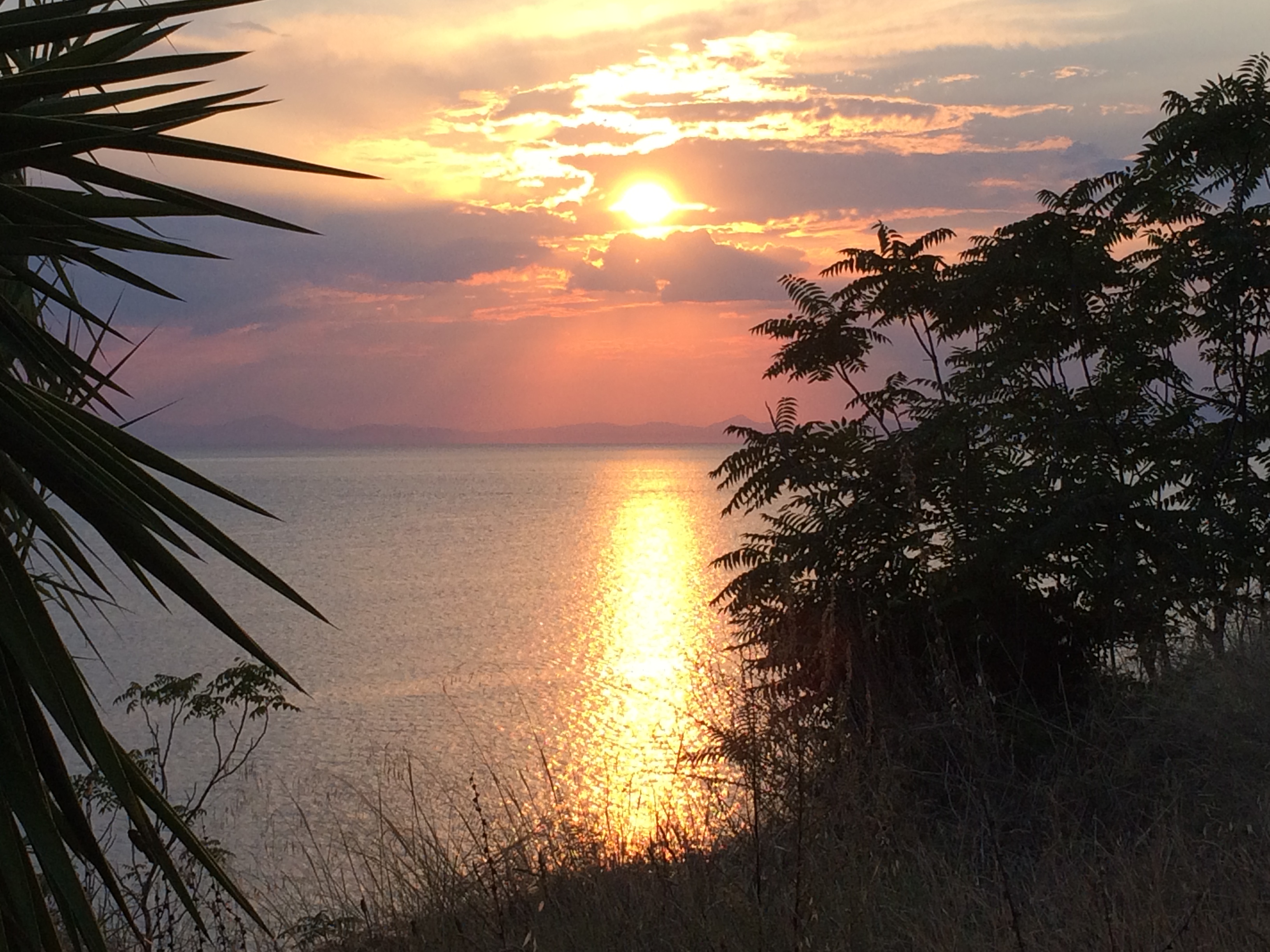
The glassy Pagasitikos Gulf, as seen from Argalasti in Pelion.

The glassy Pagasitikos Gulf, as seen from Argalasti on the Pelion peninsula.
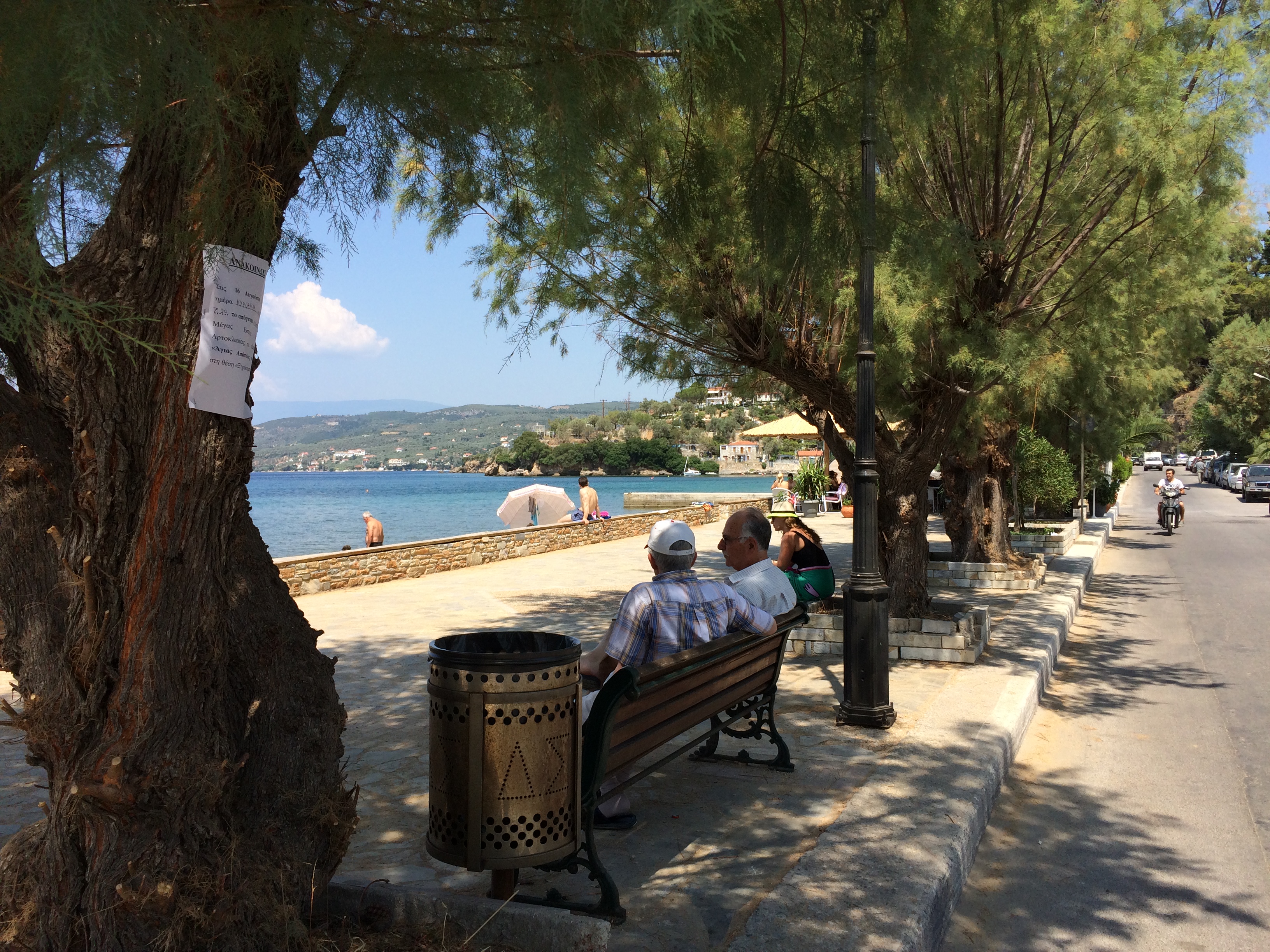
The quiet and peaceful village of Milina in Pelion.

The unspoilt and peaceful village of Milina in Pelion.


A typical street on the uphill slopes in Milina.
A typical street on the uphill slopes in Milina.


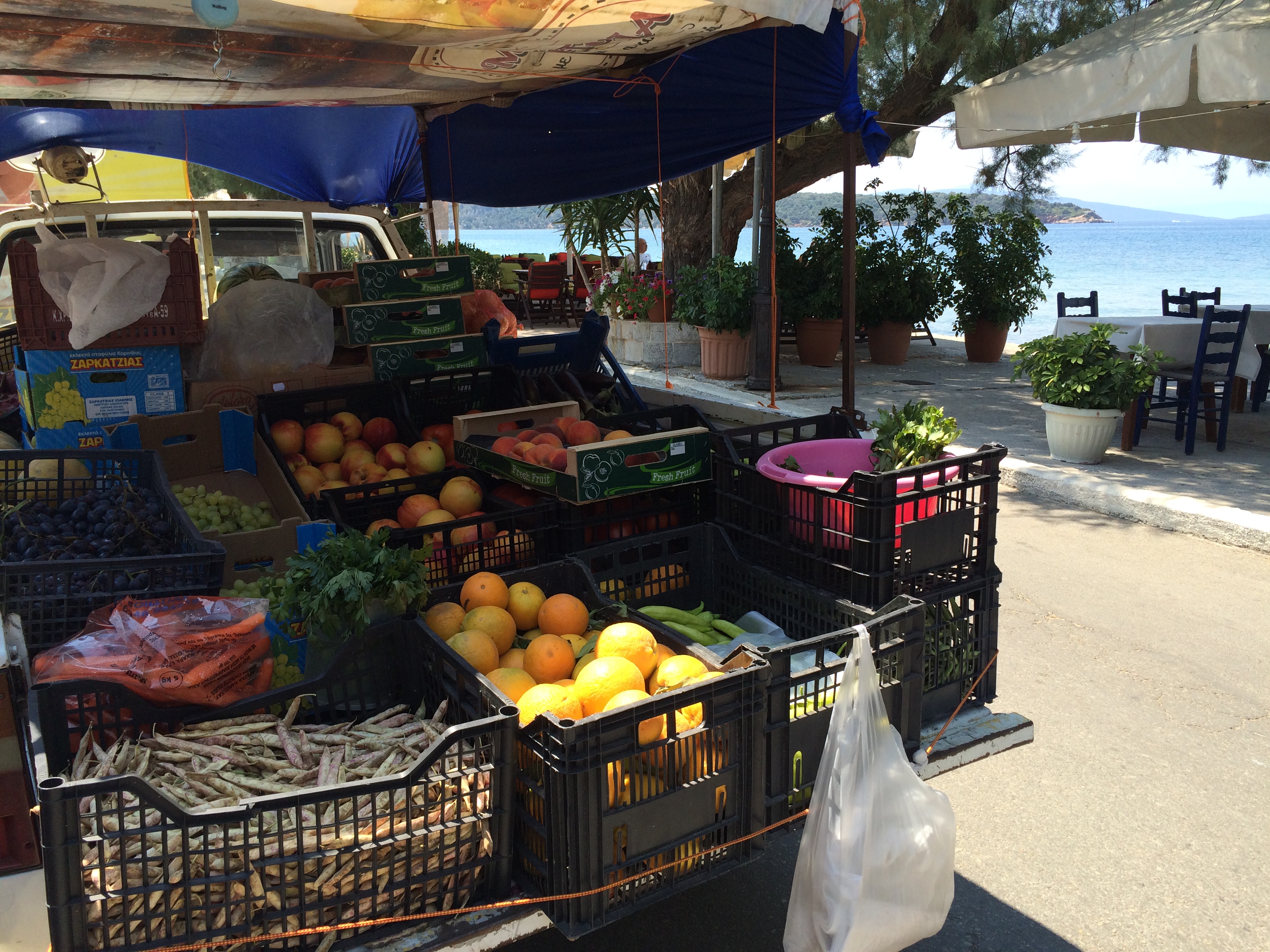
A fruit and veg van in the early morning on the seafront in Milina.
A fruit and veg van in the early morning on the seafront in Milina.


M
M


IMG_5935


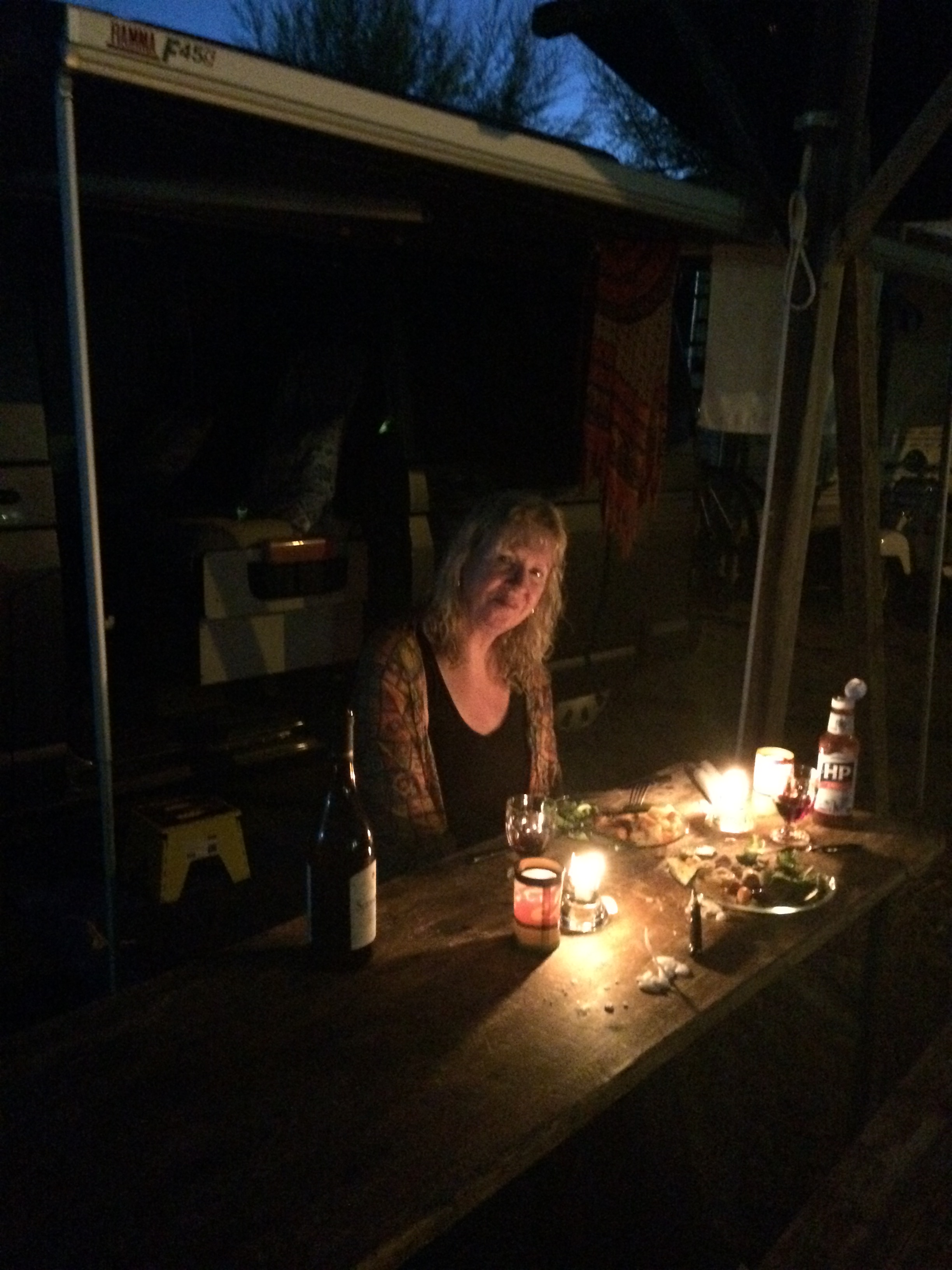
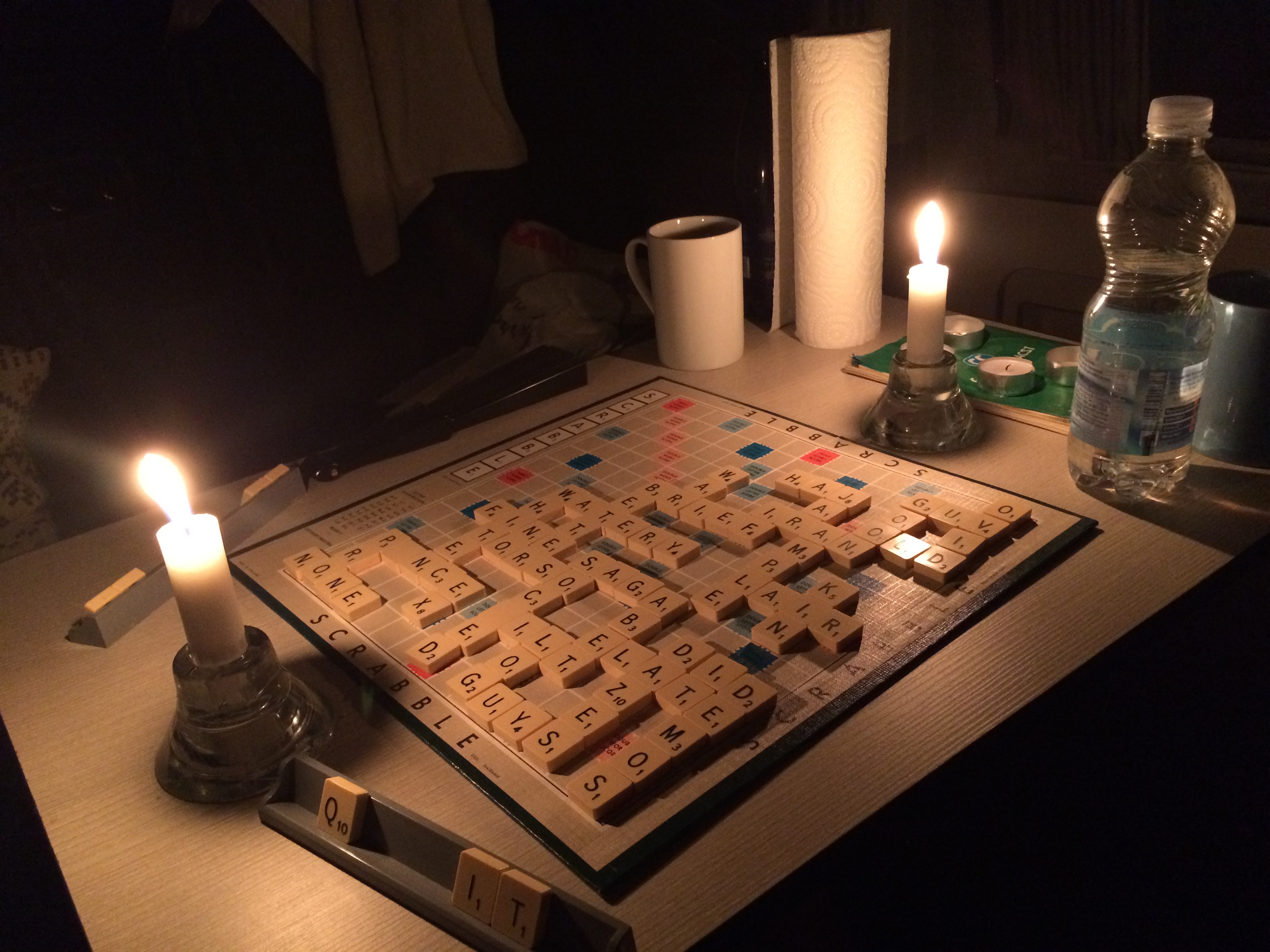
After the unbearable heatwave, the stormy weather had arrived.  Three nights in a row, no sooner had we arrived somewhere new in the early evening than the heavens had opened up – first in Montenegro, then in Tirana, then Ionnina.  As we arrived at the Poseidon campsite in Anatolikos Olympus on the fourth evening, we could see the dark clouds that seemed to be following us gathering over the Mount.  Sure enough, shortly after we’d got ourselves settled, Zeus unleashed the most almighty thunderstorm right over our heads which cut off the power supply and lasted most of the night.  We were confined to the van, a meagre meal of cold chick peas and tuna and a game of scrabble by candlelight (which Judith won).
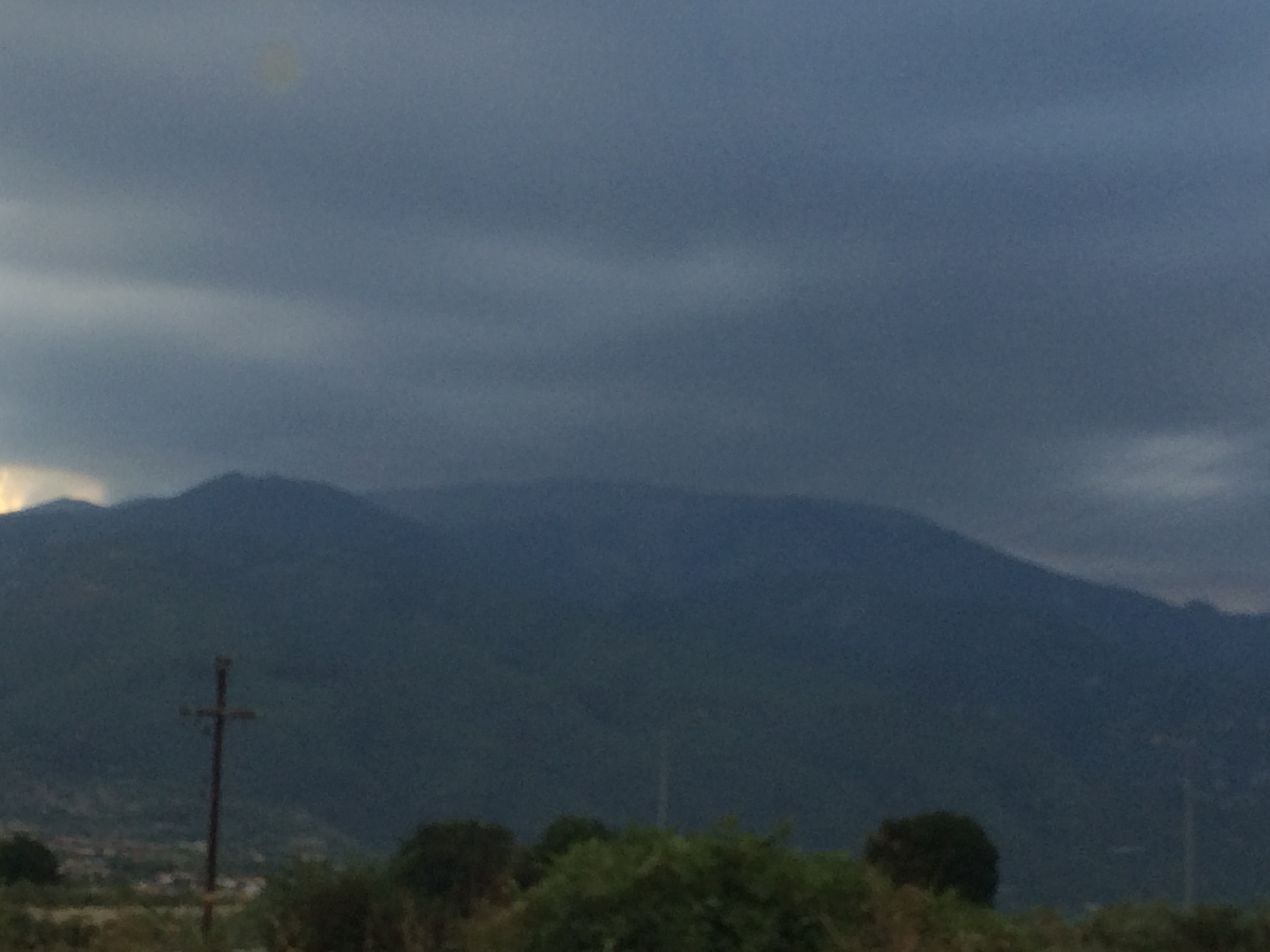
The dark clouds that seemed to be following us gathering ominously over Mount Olympus.
The dark clouds that seemed to be following us gathering ominously over Mount Olympus.

Black-out at the Poseidon campsite and scrabble by candle-light.

Black-out at the Poseidon campsite and scrabble by candle-light.


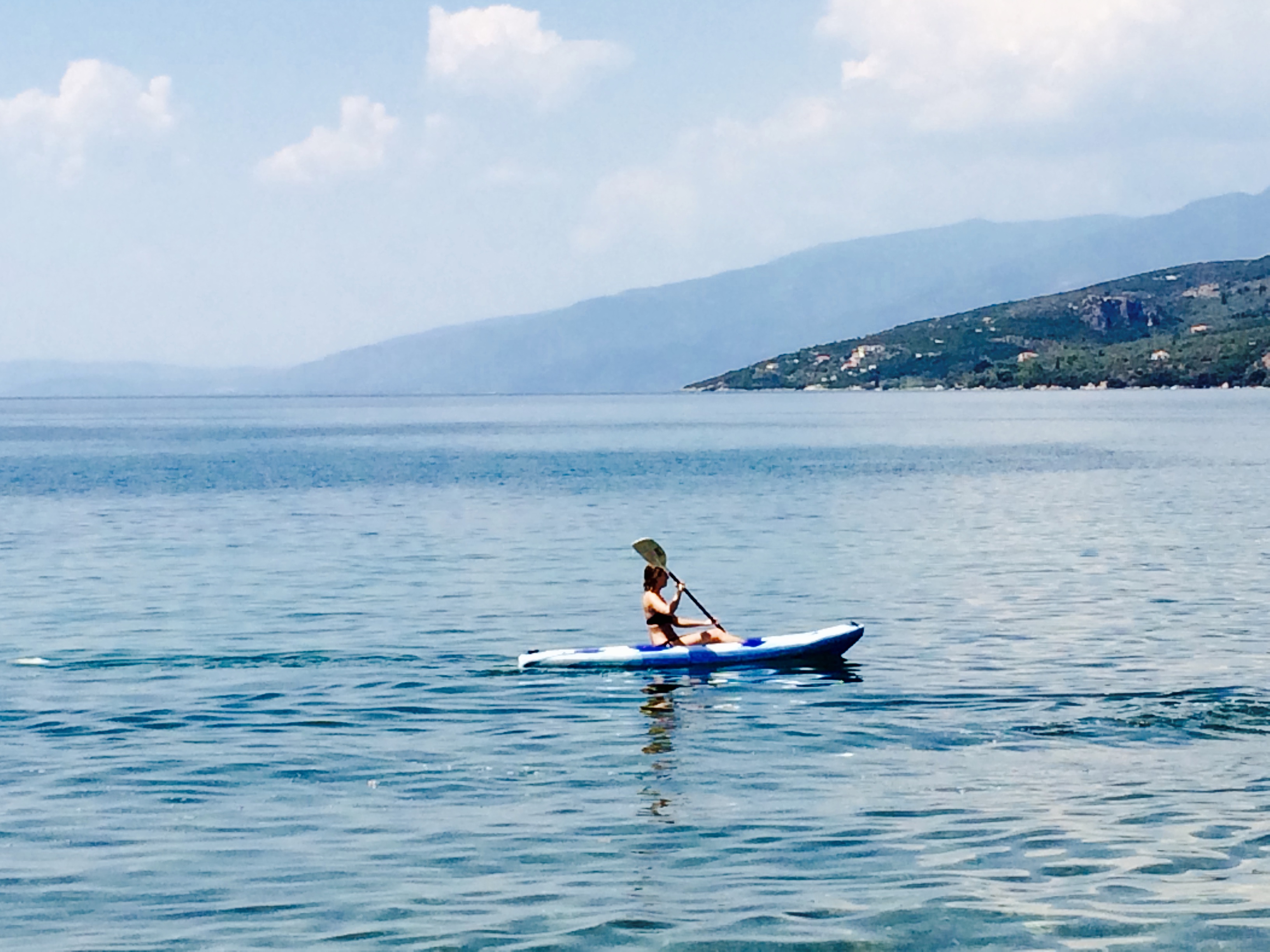
Our week in Milina was just the breather we needed after weeks of constant movement.  The sea of the Gulf was as calm and clear as we hoped it would be and we spent much time in it, with Flavio often having two or three longish swims a day – on one occasion meeting us in a restaurant in the next bay in Chorto in the early evening – while Catherine would disappear off kayaking for two or three hours. Mid-mornings would be spent contemplating the peaceful view from one of the cafes along the seafront, possibly indulging in a very sweet ‘galatobouriko’ or ‘loucoumades’ with our coffee, which it’s advisable to have without sugar to counteract the sweetness of the pastry.
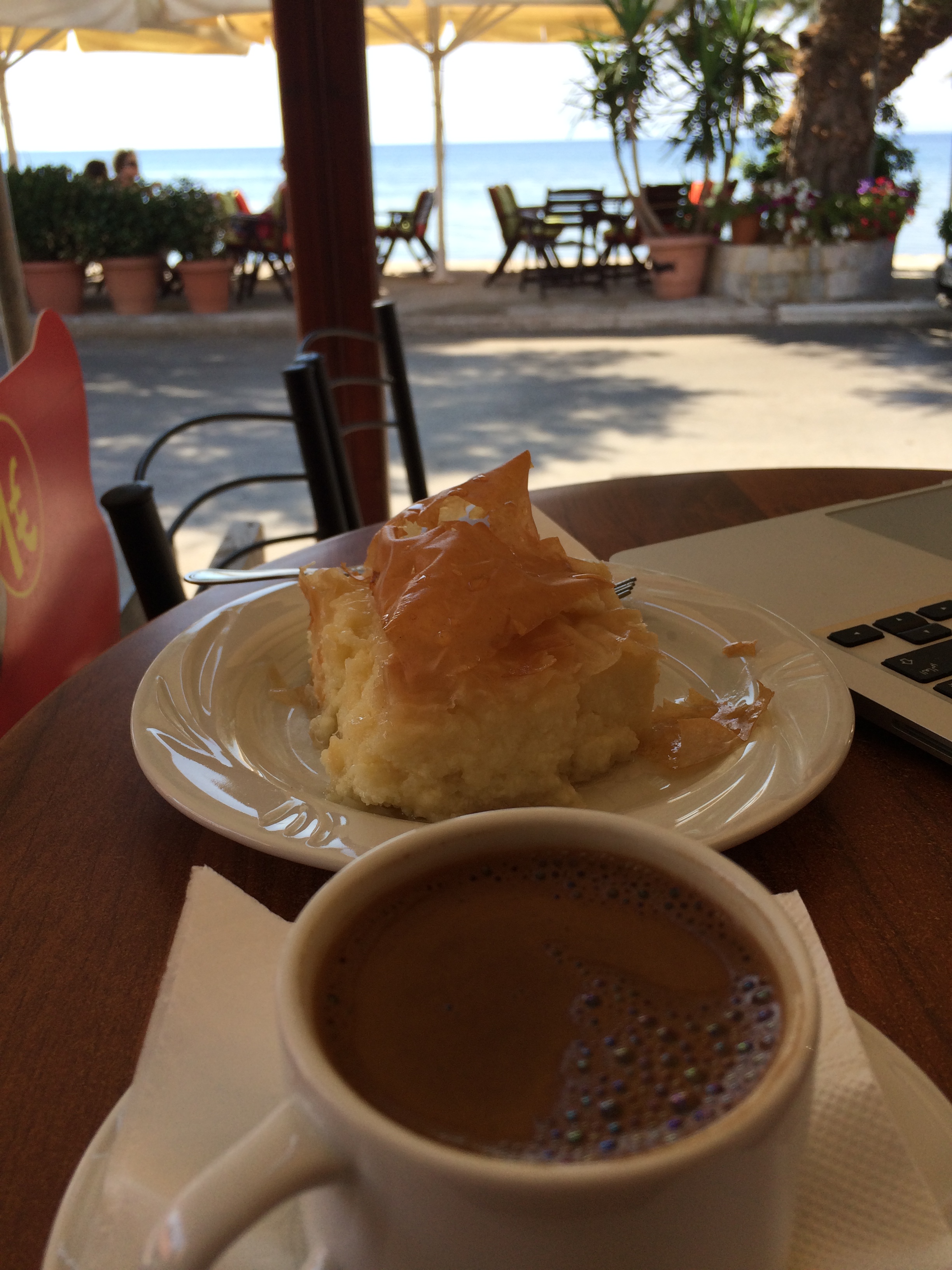
Greek coffee and 'galatobouriko' (advisable to have the coffee without sugar).
Greek coffee and ‘galatobouriko’ (advisable to have the coffee without sugar).


Catherine kayaking for hours in perfect conditions.

Catherine kayaking for hours in perfect conditions.


The entire time, we were fortunate not only to have a break from the close confinement of sleeping in Brenda (much as we missed her) but to have the luxury of comfortable and air-conditioned sleeping quarters in Rob and Rachel’s beautifully renovated ‘spitaki’ (house), for which we were very grateful indeed.
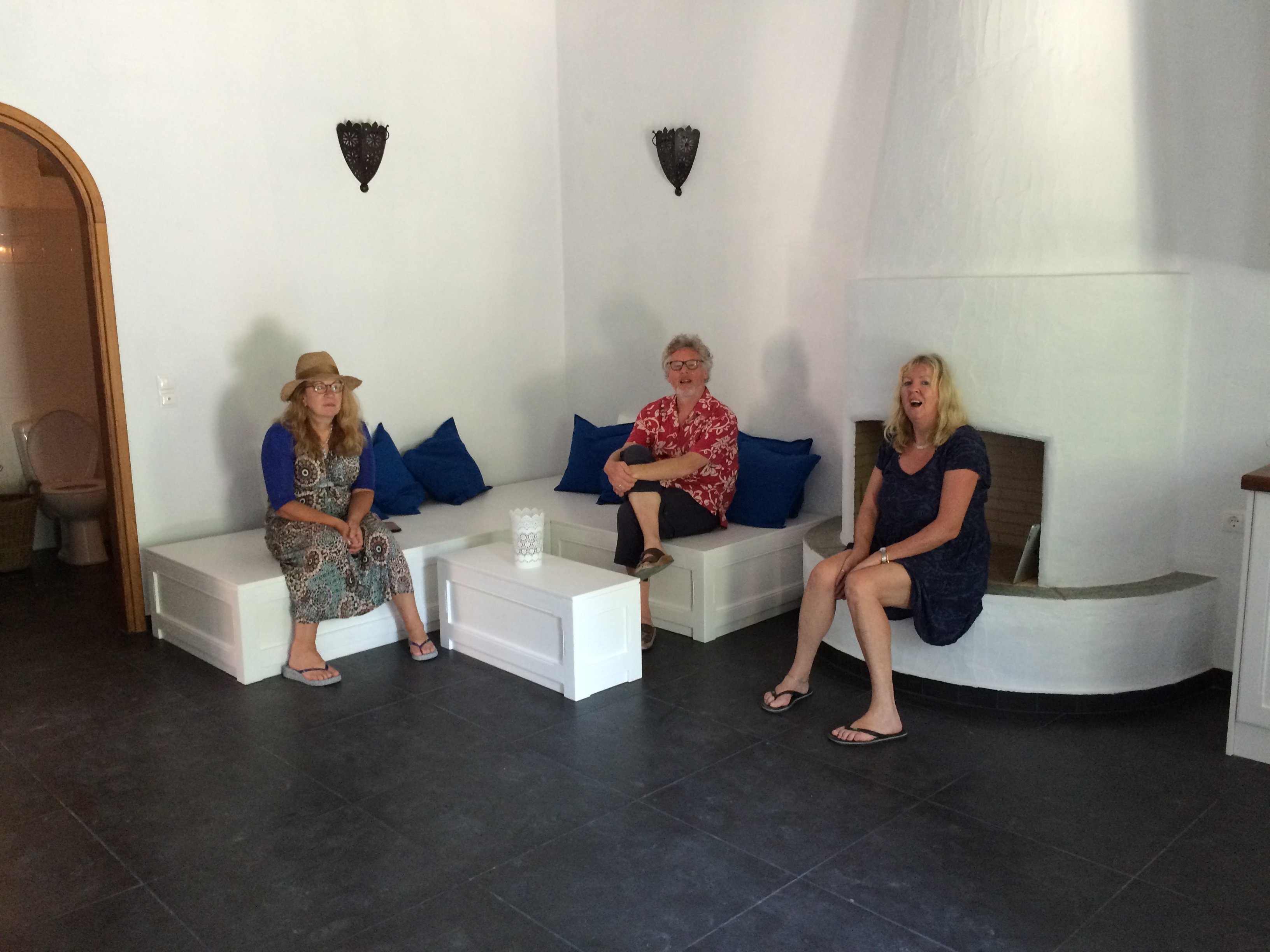
In Rachel and Rob's comfortable and elegantly furnished spitaki.

In Rachel and Rob’s elegantly furnished spitaki.
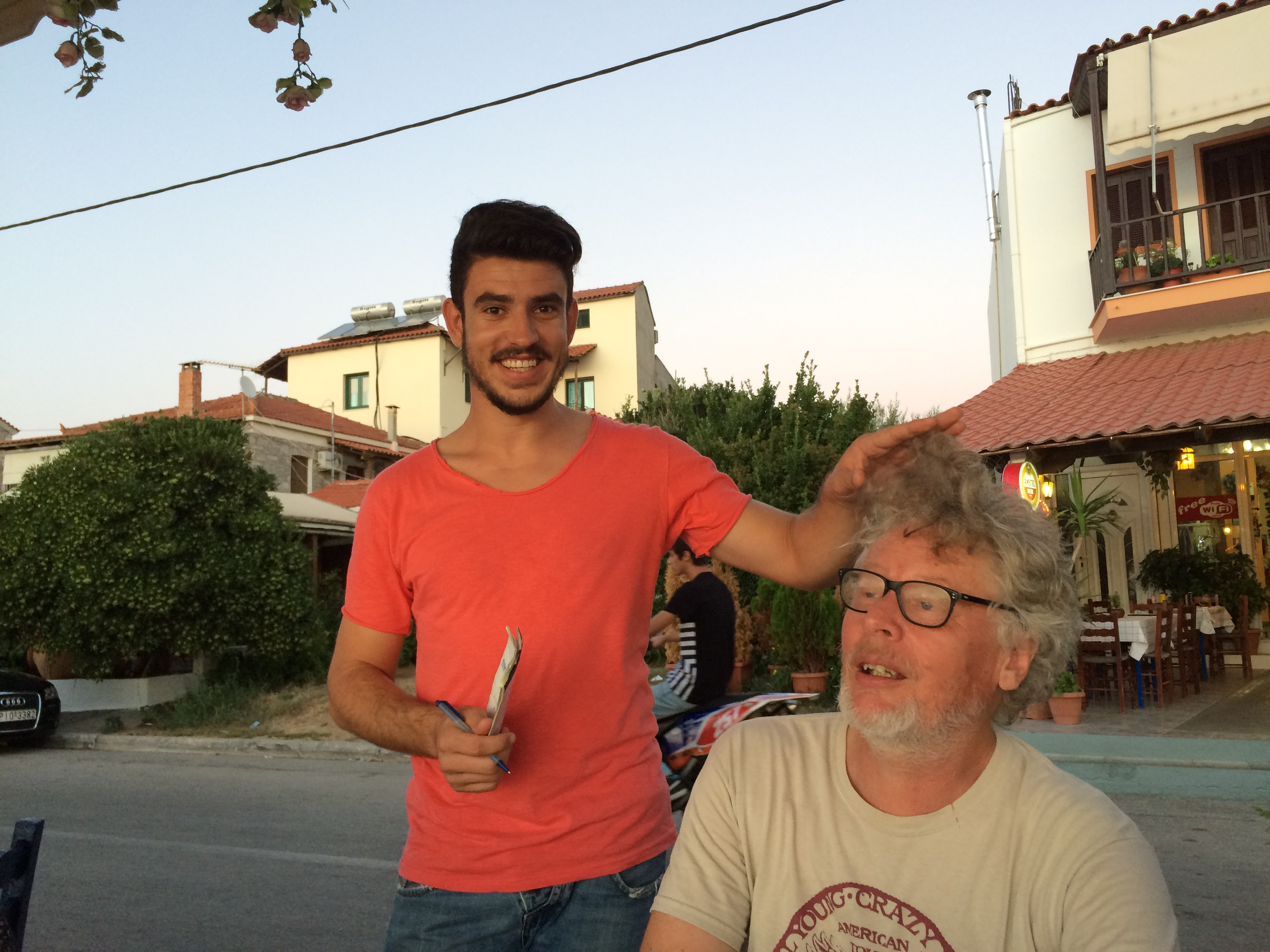
Ari the Albanian ruffling Rob's hair in a show of fondness.

Aris the Albanian ruffling Rob’s hair in a show of fondness.


Feeling energetic one evening, we climbed up to the top of the hill using the old donkey track which led to the lovely village of Lafkos where we had the best food available at a place run by a Stalin lookalike.  It was widely known that he had been whacked over the head with a frying pan by his wife upon her discovering his infidelities but that didn’t appear to have excessively dented his confidence.

The long climb up to Lafkos.
The long climb up to Lafkos.


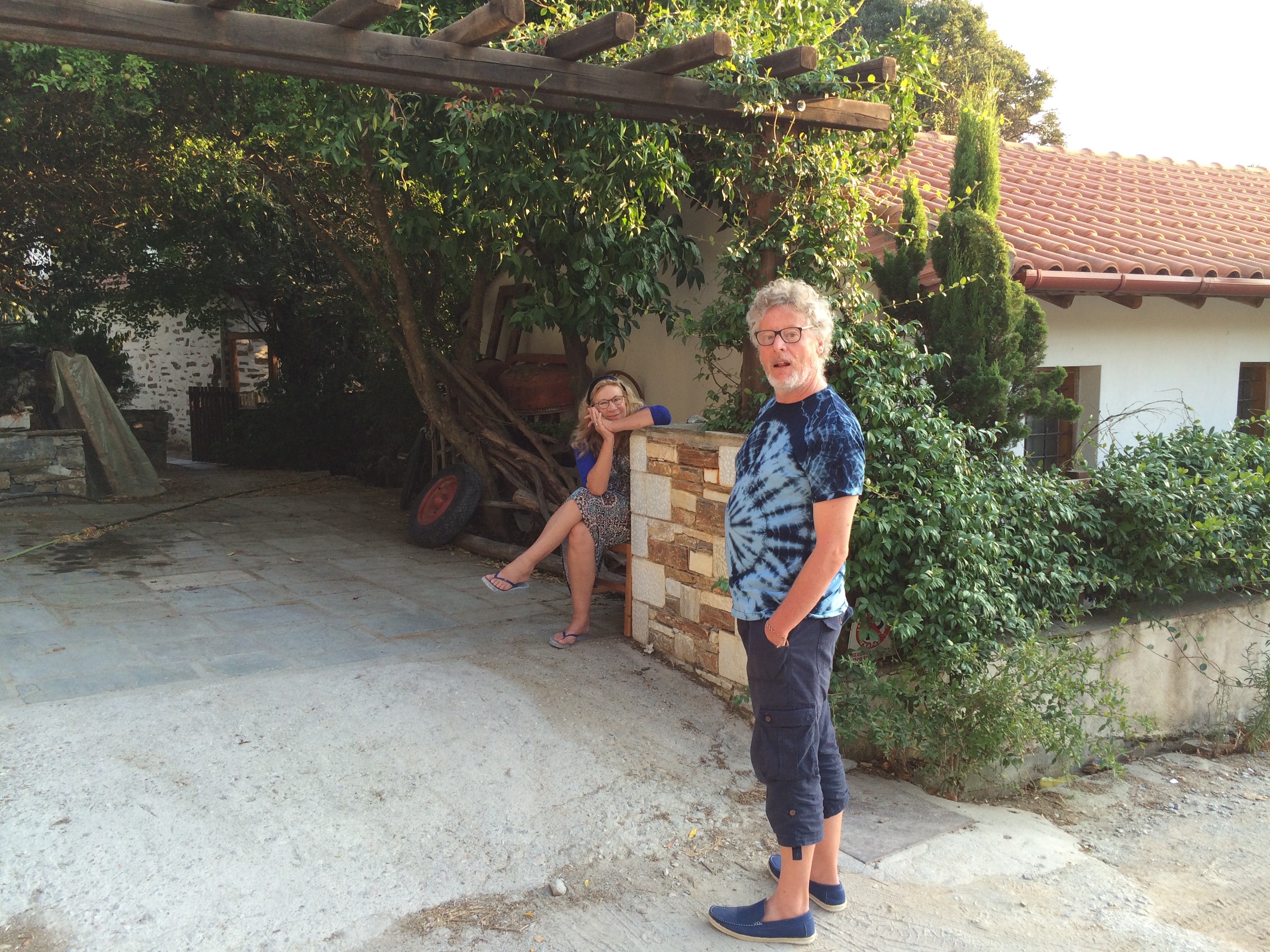
Rob and Rachel looking undefeated at the half-way point on the hour-long climb up to Lafkos.

Rob and Rachel looking undefeated at the half-way point on the hour-long climb up to Lafkos.
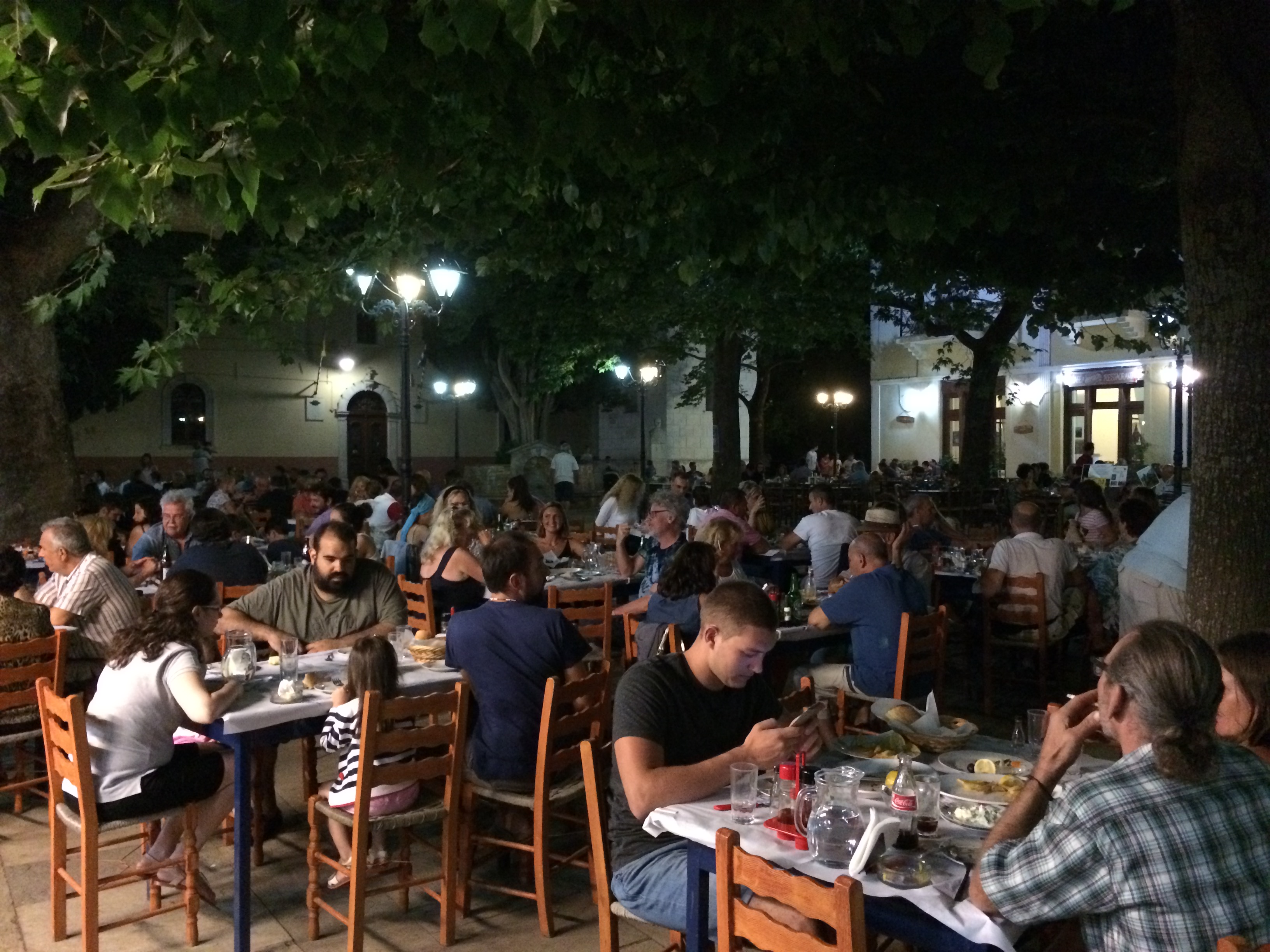


The lively village square in Lafkos.
The lively village square in Lafkos.

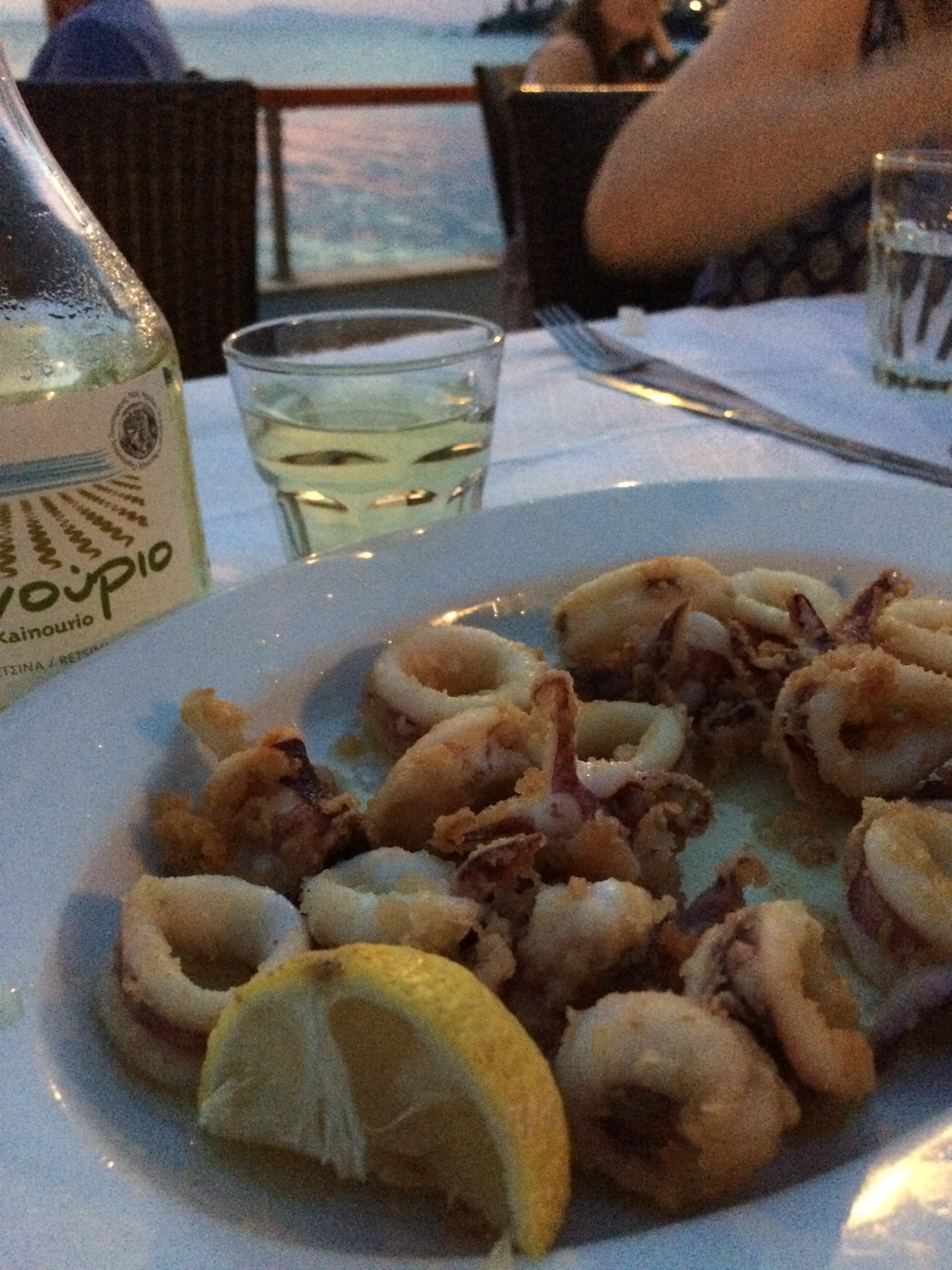
Fried calamari and retsina.

Fried calamari and retsina.


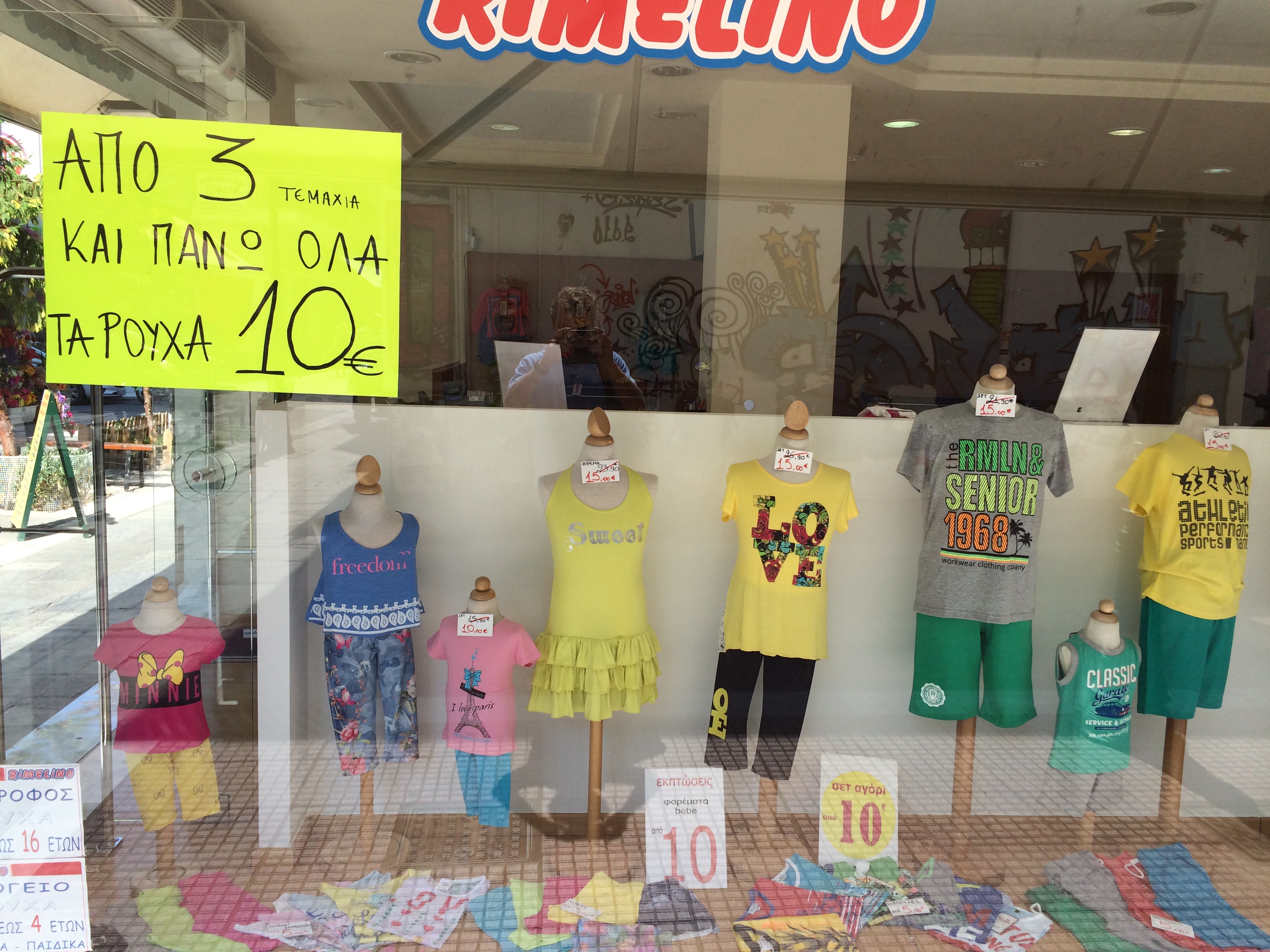
On a morning visit to Volos, the nearest city to Milina, to help Rob and Rachel pick up new furnishings we noticed that many shops were slashing their already fairly low prices.
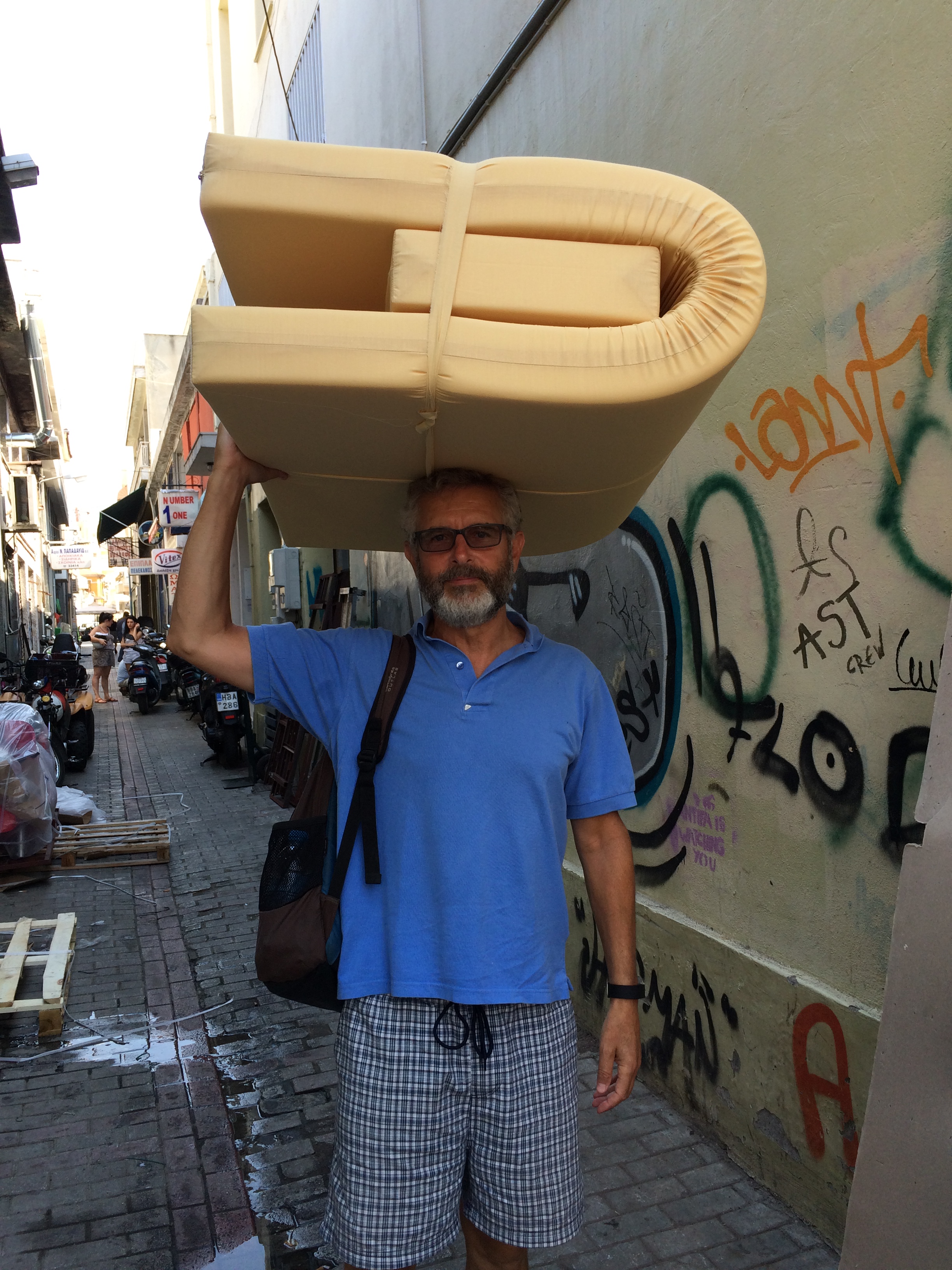
Carrying a (very light) made to measure foam mattress for the spitaki.
Carrying a (very light) made to measure foam mattress for the spitaki.


Price-slashing in austerity-ridden Greece.

Price-slashing in austerity-ridden Greece.


It would be difficult to spend a few days in Greece these days following the events of earlier this summer without wondering what the effect of the horror stories we’ve heard is on ordinary people, or at least how people feel.  Barely touching the surface, and without presuming to say anything authoritative on the subject, it was interesting to note a few views picked up at random.

  • There was Yoanna, from the bakery (serving those delicious ‘galatobourikos’!).  She works for Star Alliance in Germany and was in Milina on holiday but works every day to help her mother in her bakery.  She’s cross about what is happening and doesn’t think she will be able to continue working in Germany.
  • Kean, a waiter in one of the restaurants, who doesn’t know why he was given an Irish name by his parents. He didn’t think there was any future for him in Greece.  Worked 4 years in Holland and a year in Bali.  Was also there on holiday but working flat out to make ends meet.
  • Stathis, cafe and restaurant owner.  Claimed to make just one Euro out of every 20 after all the taxes had been deducted! The only way to survive is to under-declare earnings.  Business was slow, with fewer foreigners and Greeks had less money to spend.
  • Kyriakos, 15 year old waiter at Stathis’s restaurant who looked a bit like a young Robert de Niro. He thought there was no point in worrying whose fault it was  – Europe or ‘our politicians’ – or wallowing in self-questioning, Greeks had to brace themselves for a difficult few years.  But Greece would come back on top eventually.  He believed in looking ahead and was thinking of going into computing.
  • Sofia, Stathis’s wife, who would not be drawn on the subject and believed in simply carrying on, as she continued cleaning her large tray of anchovies.
  • George the 55 year old distance swimmer, who swam 2kms 4 days a week all year and was not able to reveal his views as conversation was limited during the short pauses while swimming!

If there were a prize, it would have to go to the young Kyriakos, for his clarity, optimism and far-sightedness.  It must be hoped that there are many others like Kyriakos and that with them, Greece will emerge strong again.
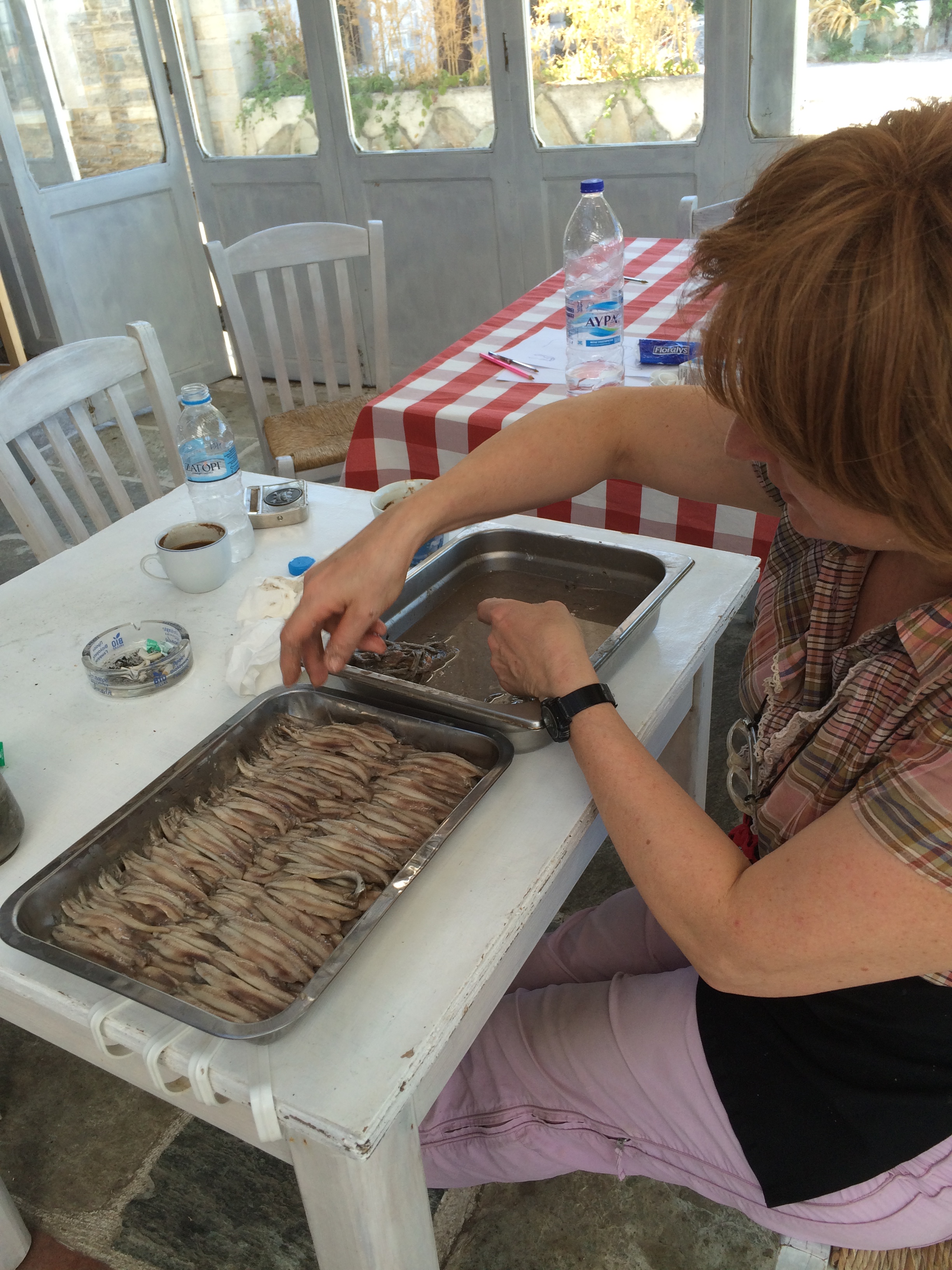
Sofia cleaning anchovies at Stathis's - no point in soul-searching.

Sofia cleaning anchovies at Stathis’s – no point in endless soul-searching.
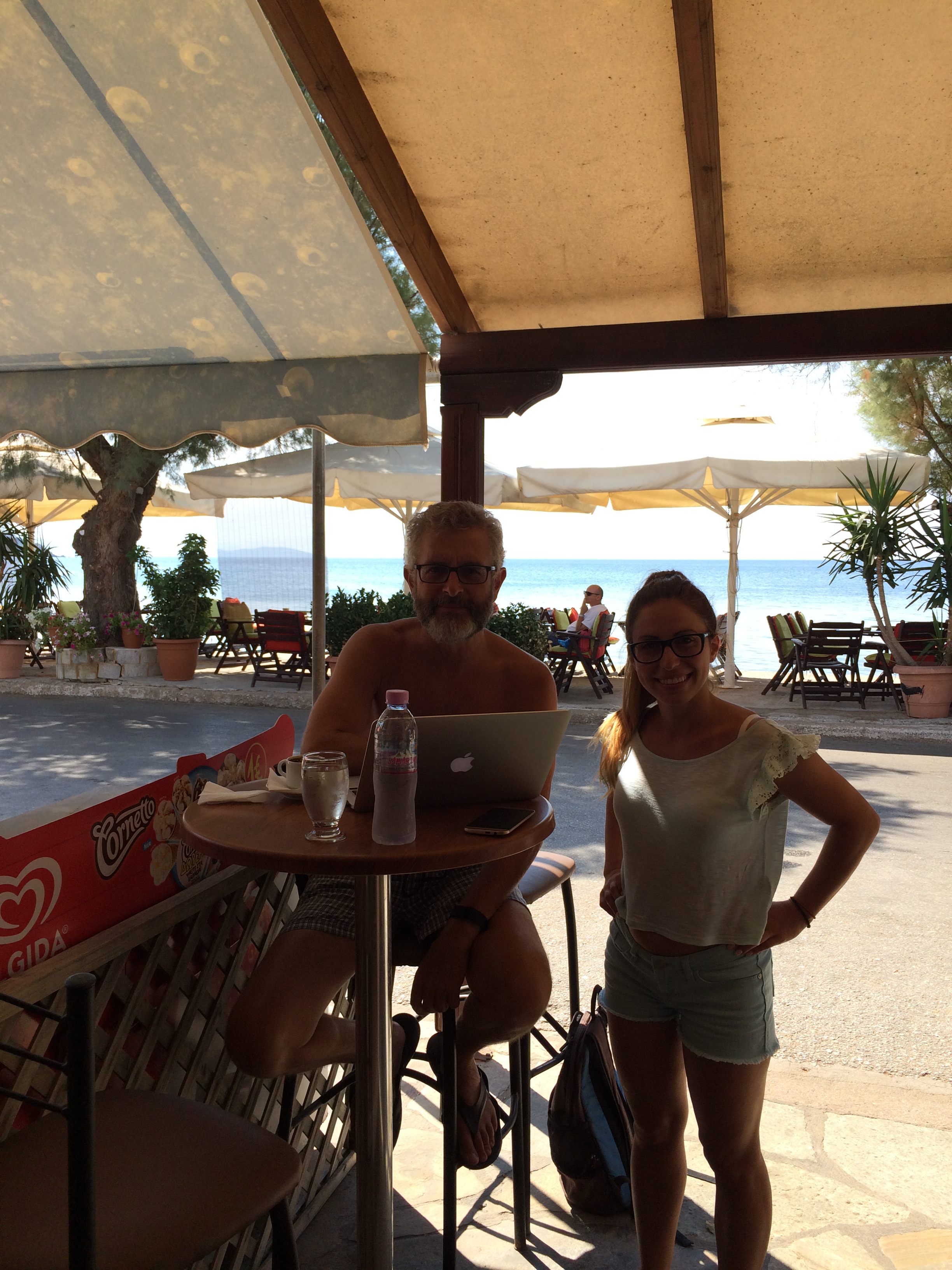
Yoanna, helping her mother in the bakery while on holiday from Germany.
Yoanna, helping her mother in the bakery while on holiday from Germany.


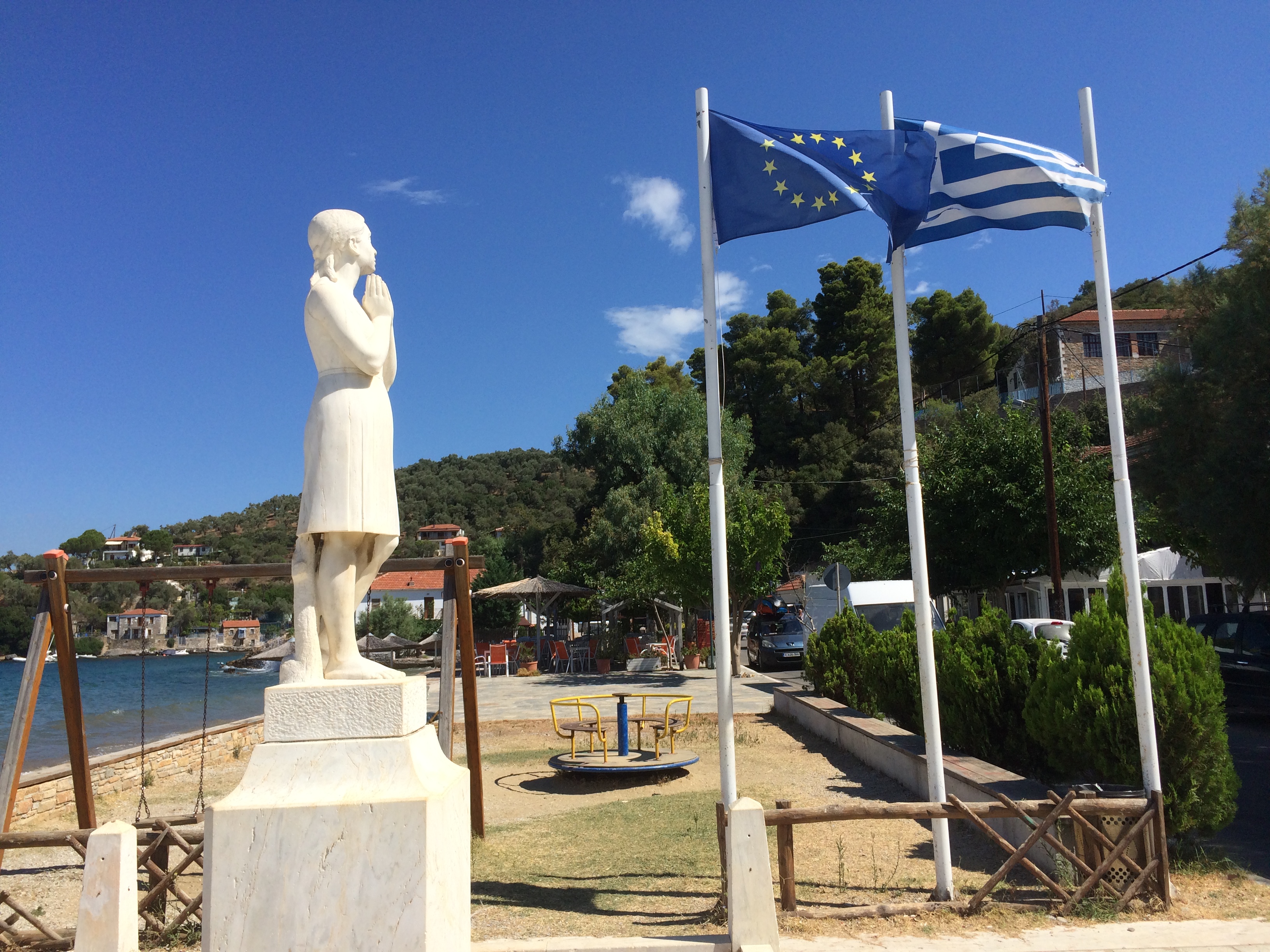
A statue to all 'victims' in Milina by a famous local sculptor. Praying to Europe and Greece for better times?

A statue to all ‘victims’ in Milina by a famous local sculptor. Praying to Europe and Greece for better times?
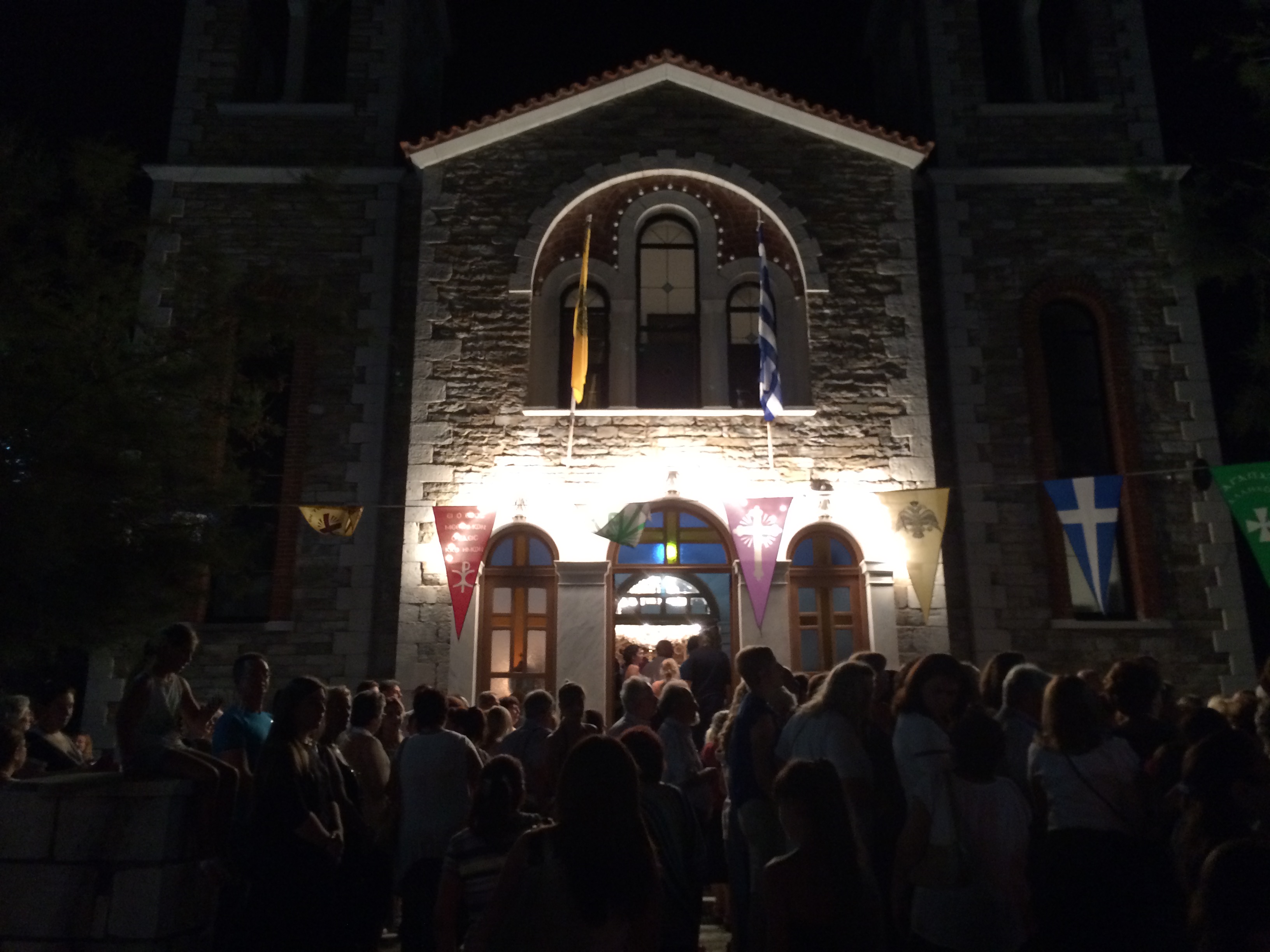
People overflowing from the church at Milina on Ascention Day on 15th August.
People overflowing from the church at Milina on Ascention Day on 15th August.


IMG_5835


5-18 August. –  Greece


Wednesday 5th – Thursday 6th August – Albania

Standard
We hadn't planned to come through Albania but it was quite exciting being in what was until not long ago one of the last bastions of Soviet-style communism.

We hadn’t planned to come through Albania but it was quite exciting being in what was until not long ago one of the last bastions of Soviet-style communism (though it inclined more towards Maoism).

We entered Albania with some trepidation after reading reports of appalling road conditions and dare-devil drivers but were pleasantly surprised by both the good roads (apparently built by the Italians) and the driving.  Whoever wrote such alarming reports had obviously never been to Cairo!

Until the demise of the communist system in 1991/2 there had only been c600 cars on the roads, all belonging to party officials.   The communist regime which came to power in 1947 banned religion, long hair, beards and Levi’s amongst other things.  They did however introduce many improvements.  Land reforms led to Albania becoming self-sufficient in food. Educational reforms meant that by 1955 adult literacy had been eliminated.  

Albania now seems to be at pains to distance itself from its communist legacy while still retaining its predominantly secular character.

Albania now seems to be at pains to distance itself from its recent communist past while still retaining its predominantly secular character.

And a universal healthcare service. (Apart from that, what did Communism do for us..? :))  Once the regime fell much of the country’s wealth was invested in pyramid banking schemes which collapsed during the late 90s leading to mass protests. Parliamentary democracy was established in 1998 but old habits die hard and the main political parties are reported to employ the system of patronage that existed before for party members, so every four years when the government changes so do the beneficiaries of the patronage.  This corrupt practice we were told was the main impediment to continuity and consistency in government policies.

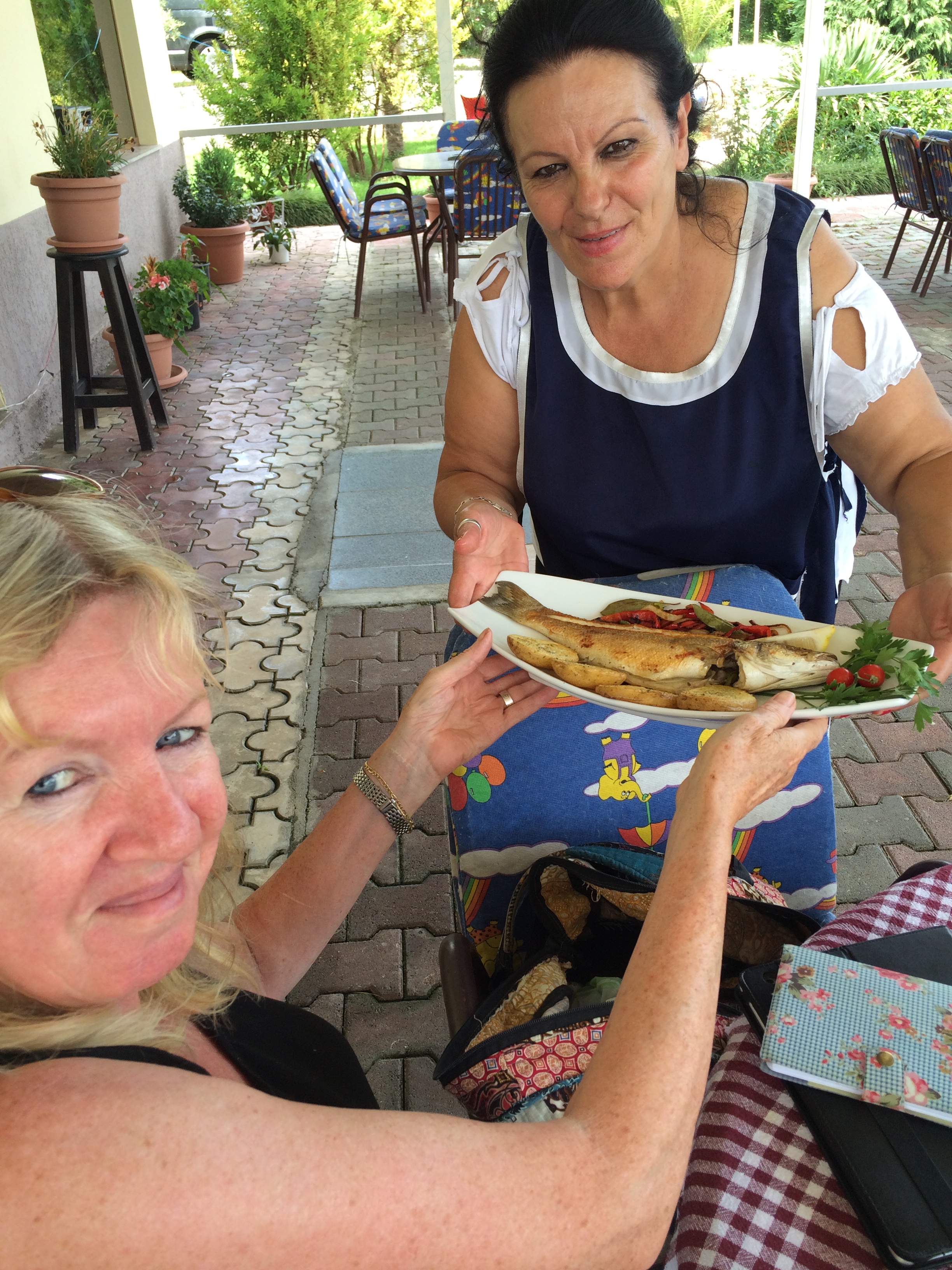
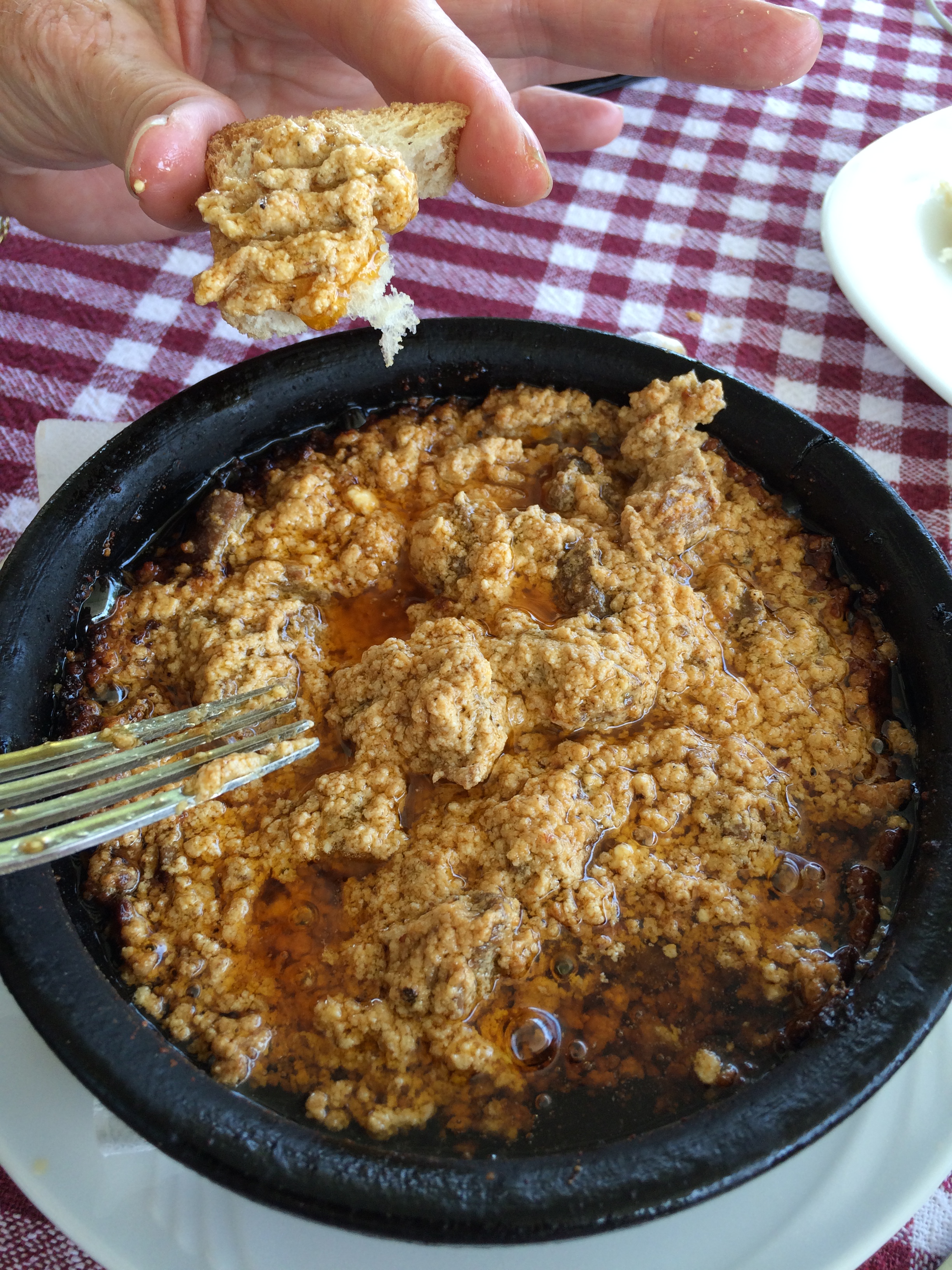
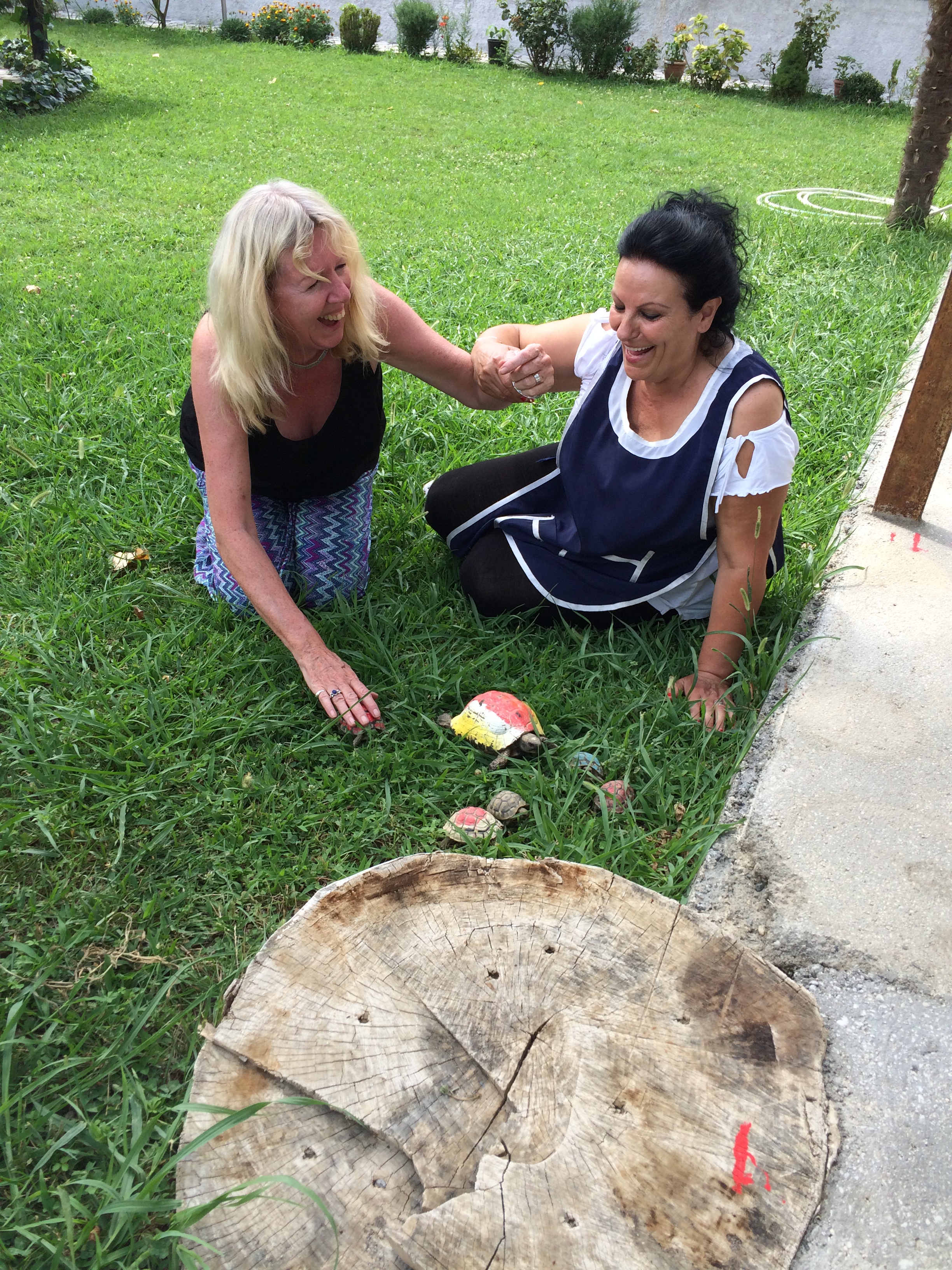
Shortly after crossing the border we stopped for something to eat in a little place called ‘Zusi’ on the confluence of the Buna and Drina rivers. It was a charming little restaurant-cum-resthouse run by a lovely lady called Stella.  She had no English or Italian at all but we somehow managed to communicate and had a sort of Albanian lesson thrown in for free with our very tasty and inexpensive meal.  She was very keen that we try the fresh fish as well as what seemed to be a staple dish in Albania – Taz – a kind of tagine made of lamb, cottage cheese and egg.  After the meal,  Stella brought out all her pet tortoises to show Judith and with an endearing child-like innocence, insisted that she sit with her to play with them on the lawn and, like two little girls, they did just that.  All in all, we had a busy and fun time and Stella did her best to retain us as long as possible – she seemed reluctant to let us go!

The lovely Stella lovingly serving us our lunch at her charming little restaurant in the village of Zusi shortly after crossing the border.

The lovely Stella lovingly serving us our lunch at her charming little restaurant in the village of Zusi close to the border.


The staple dish of 'Taz' - sort of Albanian comfort food made of cooked cottage cheese, lamb and egg to scoop us with bread.

The tasty staple dish of ‘Taz’ – sort of Albanian comfort food made of cooked cottage cheese, lamb and egg to scoop us with bread.


Stella's place lies on the banks of the confluence between

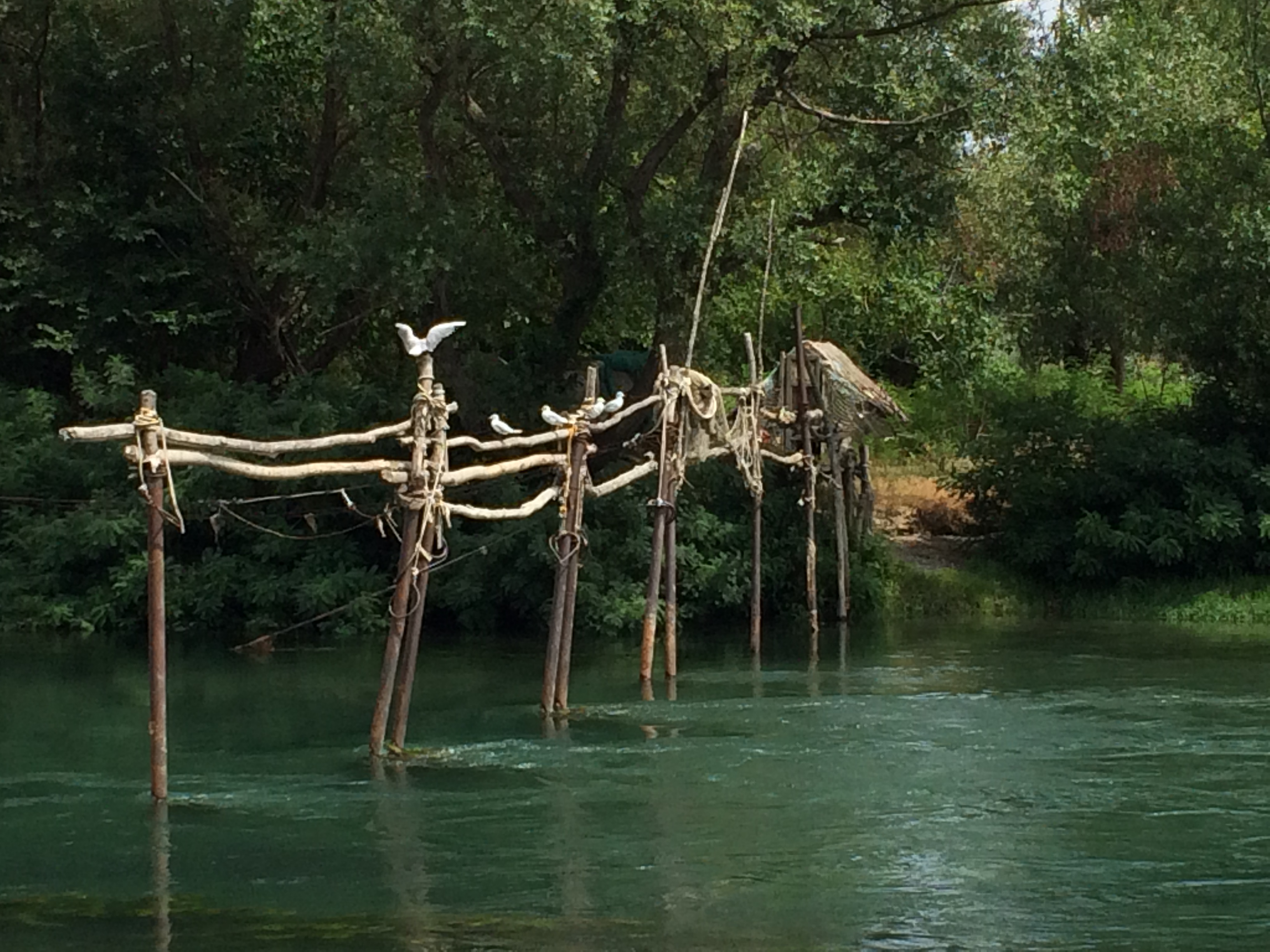
Stella’s place lies on the banks of the confluence of the Buna and Drina rivers.  Again, a similar fishing system consisting of a primitive wooden structure could be seen across from the restaurant.


After lunch, Stella deploys tactics to keep us longer - like bringing out her tortoises for Judith to play with!

After lunch, Stella deploys tactics to keep us longer – like bringing out her tortoises for Judith to play with!


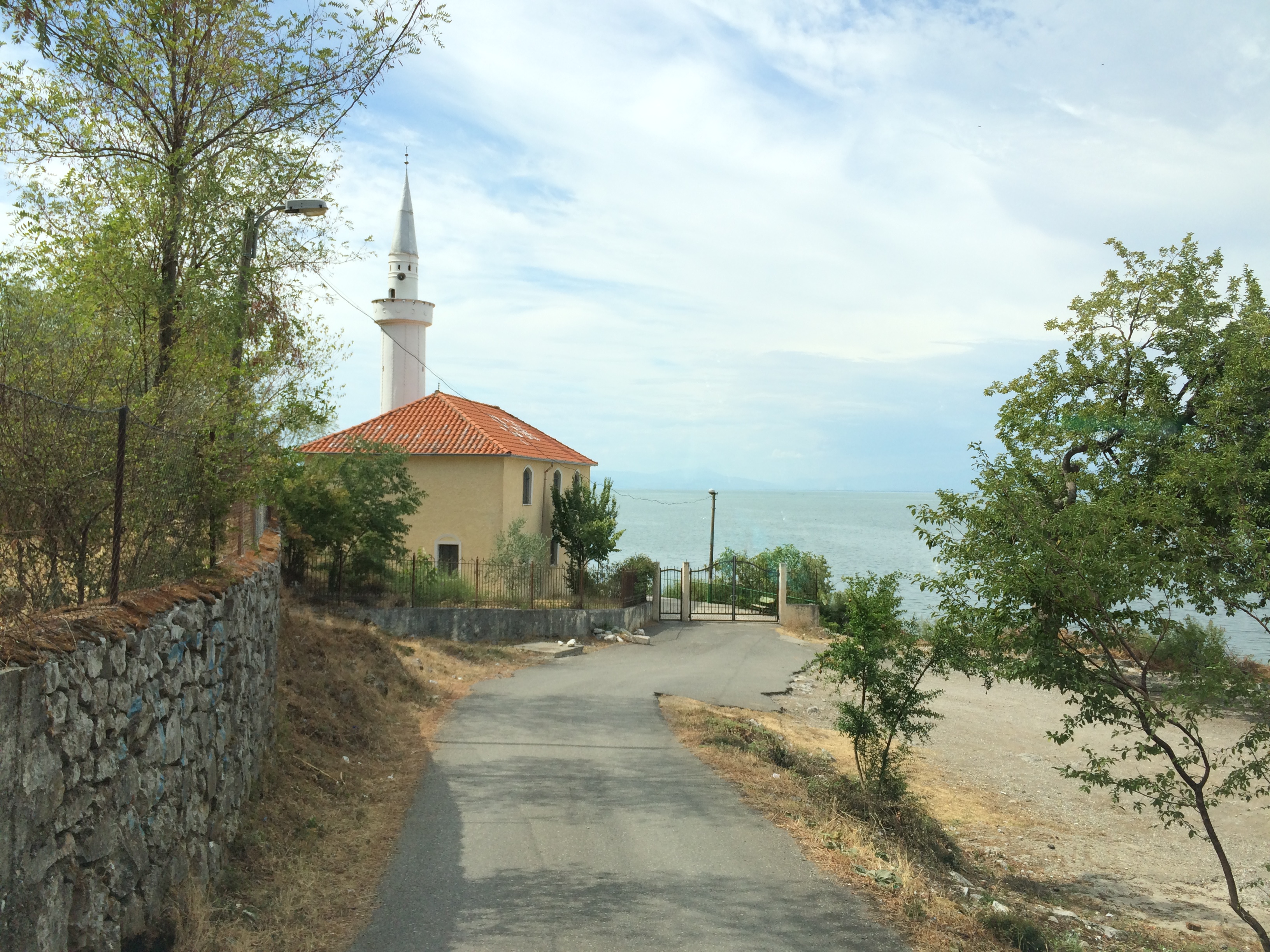
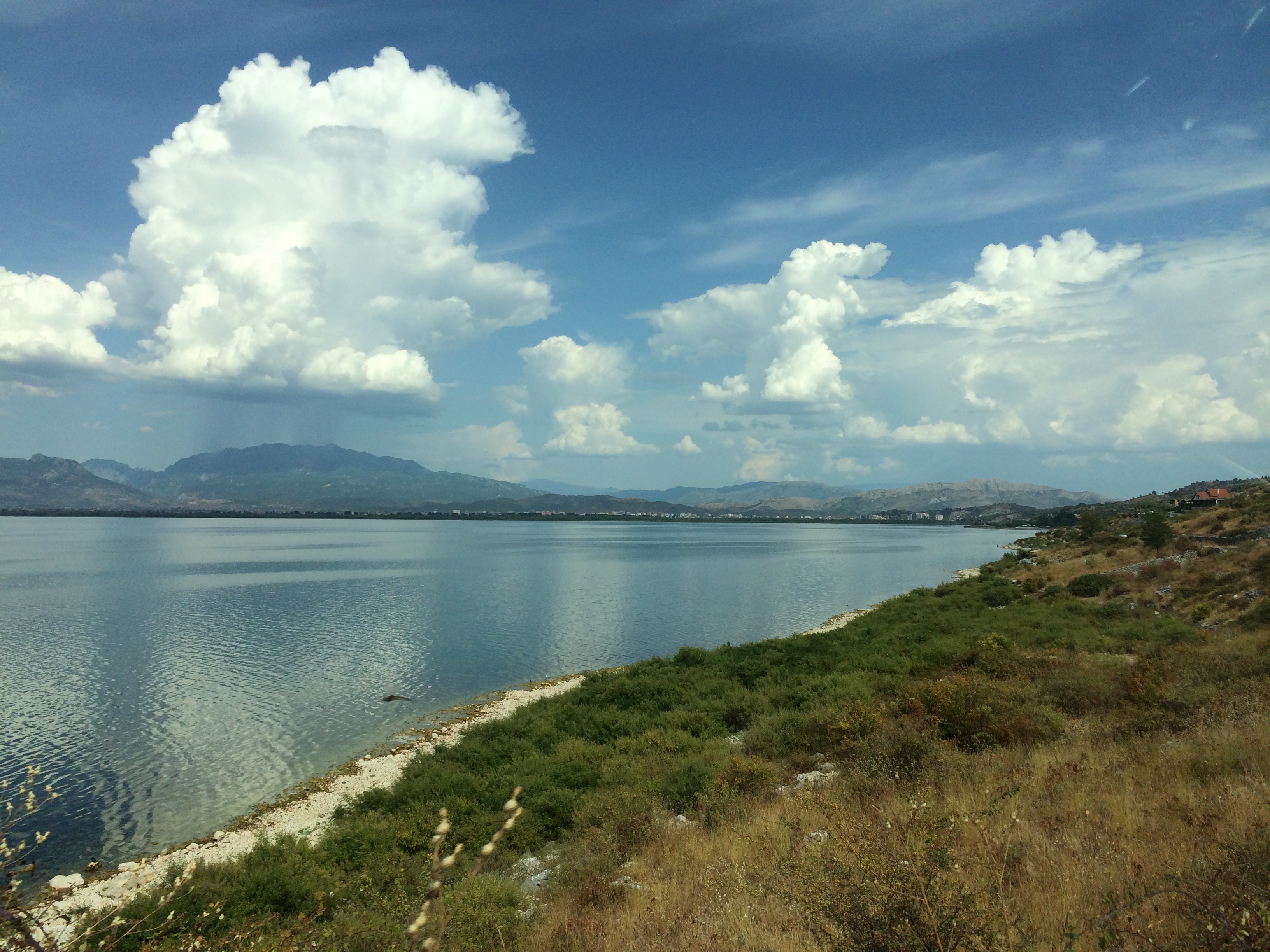
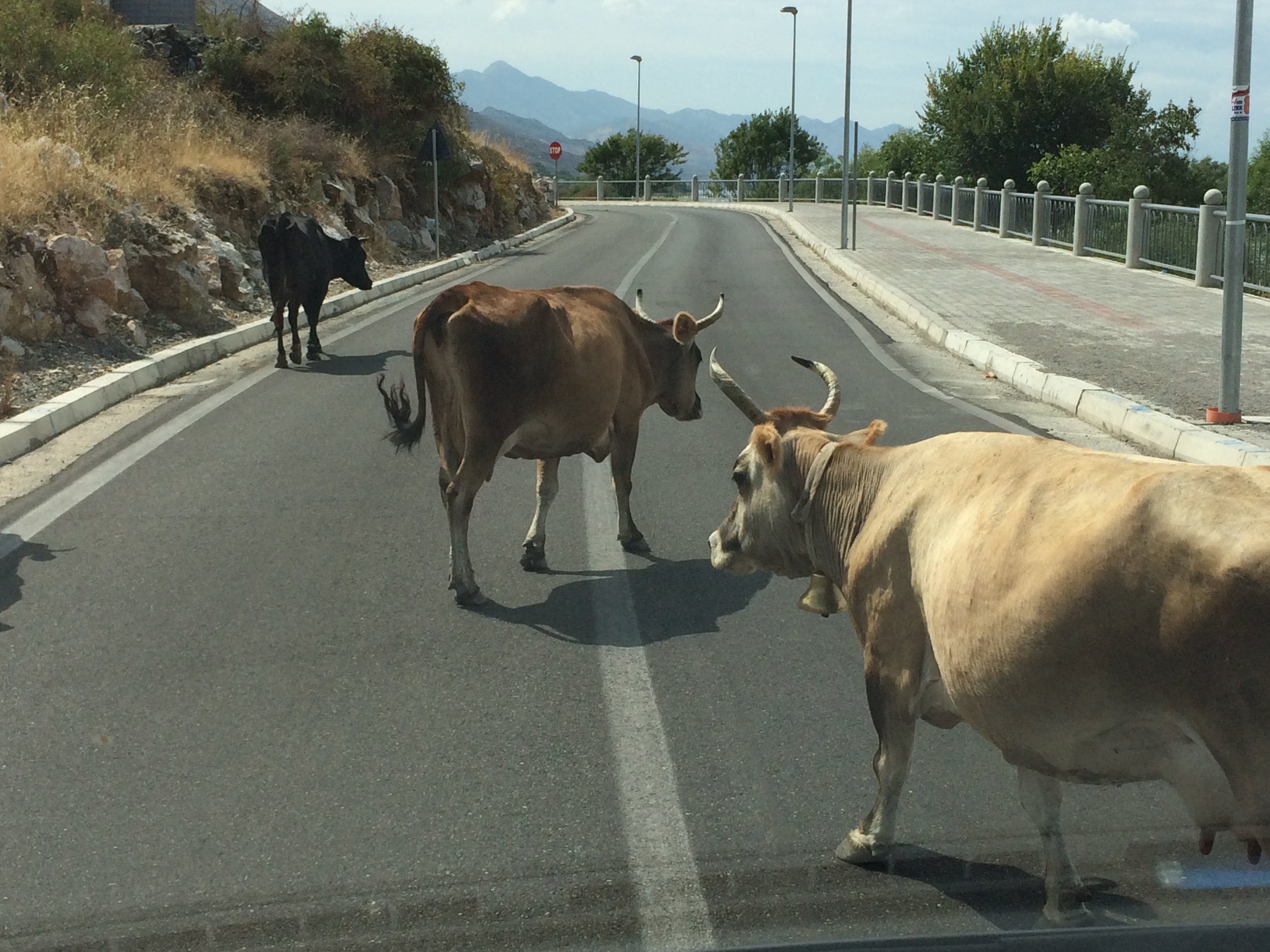
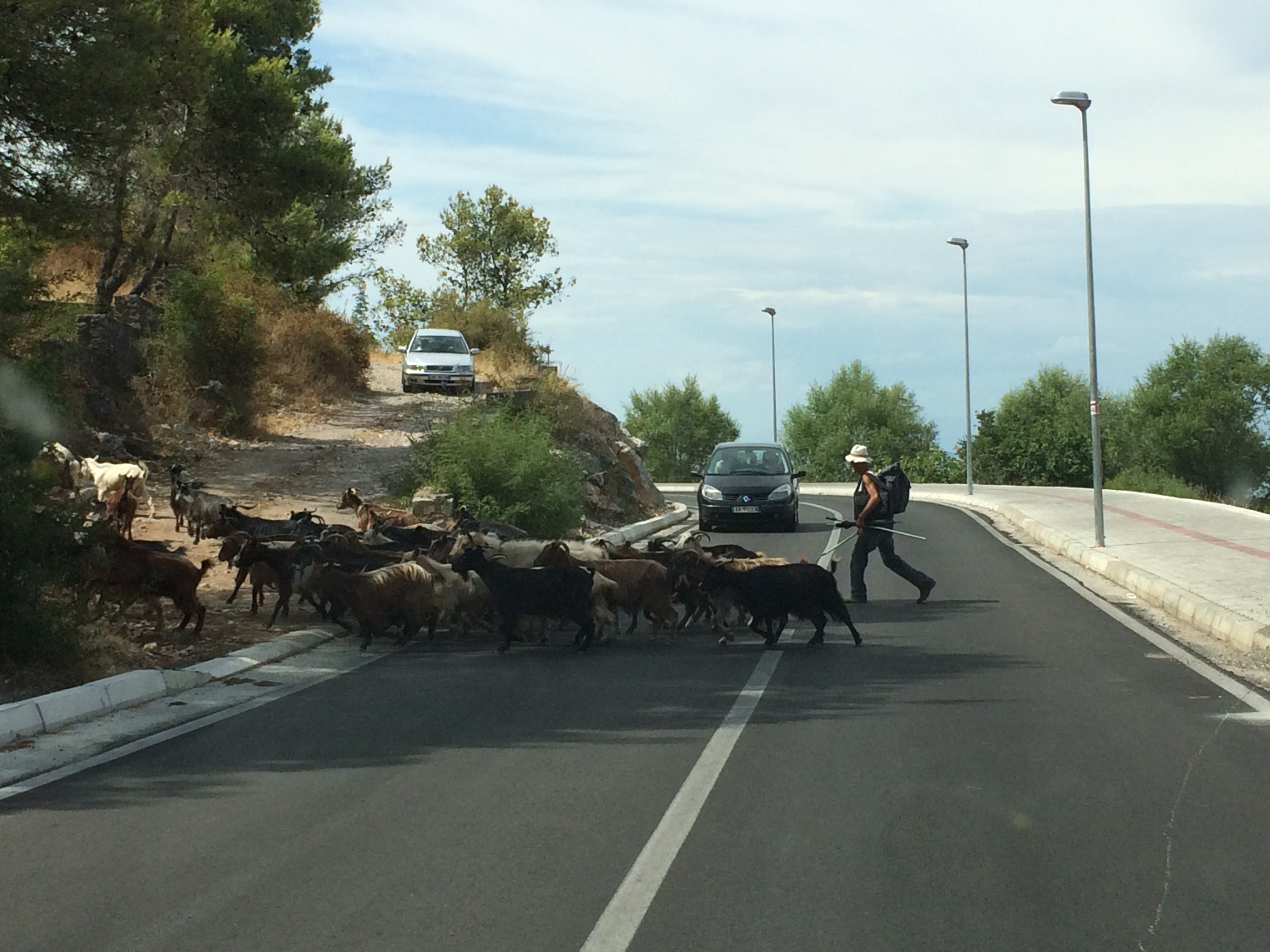
Nicely satiated and armed with the word ‘thank you’ (faliminderit) we set off for Tirane.  We had trouble with the signs though and taking a wrong turn on the outskirts of the key northern town of Shkodeir we drove along a very narrow road by the coast.  We asked an old woman if we were on the road to Tirane and she shook her head.  One thing we had read was that for yes Albanians shake their heads and for no they nod, so thinking she meant yes we continued until the road suddenly came to an abrupt end.  Later we discovered that some Albanians now follow the Western nods and shakes, very confusing.  The hour or so it took to get back wasn’t wasted however as the road took us along the banks of a remote and stunningly beautiful large lake.  Here and there, the odd locals could be seen taking a dip or enjoying sitting by the lake but it was mostly completely unspoilt and mesmerizingly primitive – on 3 or 4 occasions we were forced to brake to let a herd of sheep or cows decide which way they wanted to go as they nonchalantly crossed the road.

The stunningly beautiful lake near Shkodeir we accidentally discovered.

The stunningly beautiful lake near Shkodeir we accidentally discovered.

The lake near Shkodeir - mesmerizingly beautiful.

The lake near Shkodeir – mesmerizingly beautiful.


..and cows wandering across the road.

..and cows wandering across the road.

Sheep crossing..

Sheep crossing..


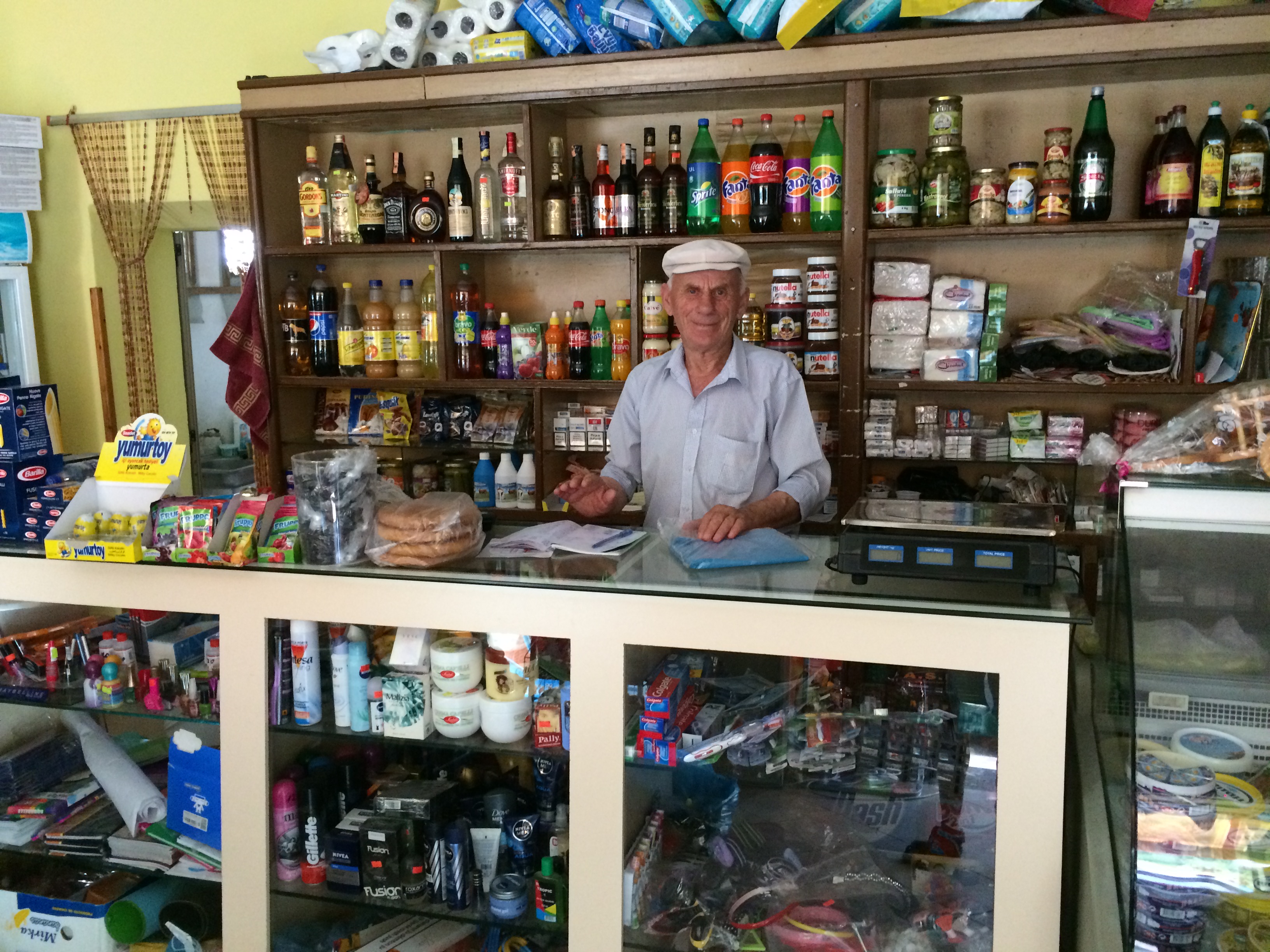
A grocery store we stopped at to ask the way.

A grocery store we stopped at to ask the way.


S

S


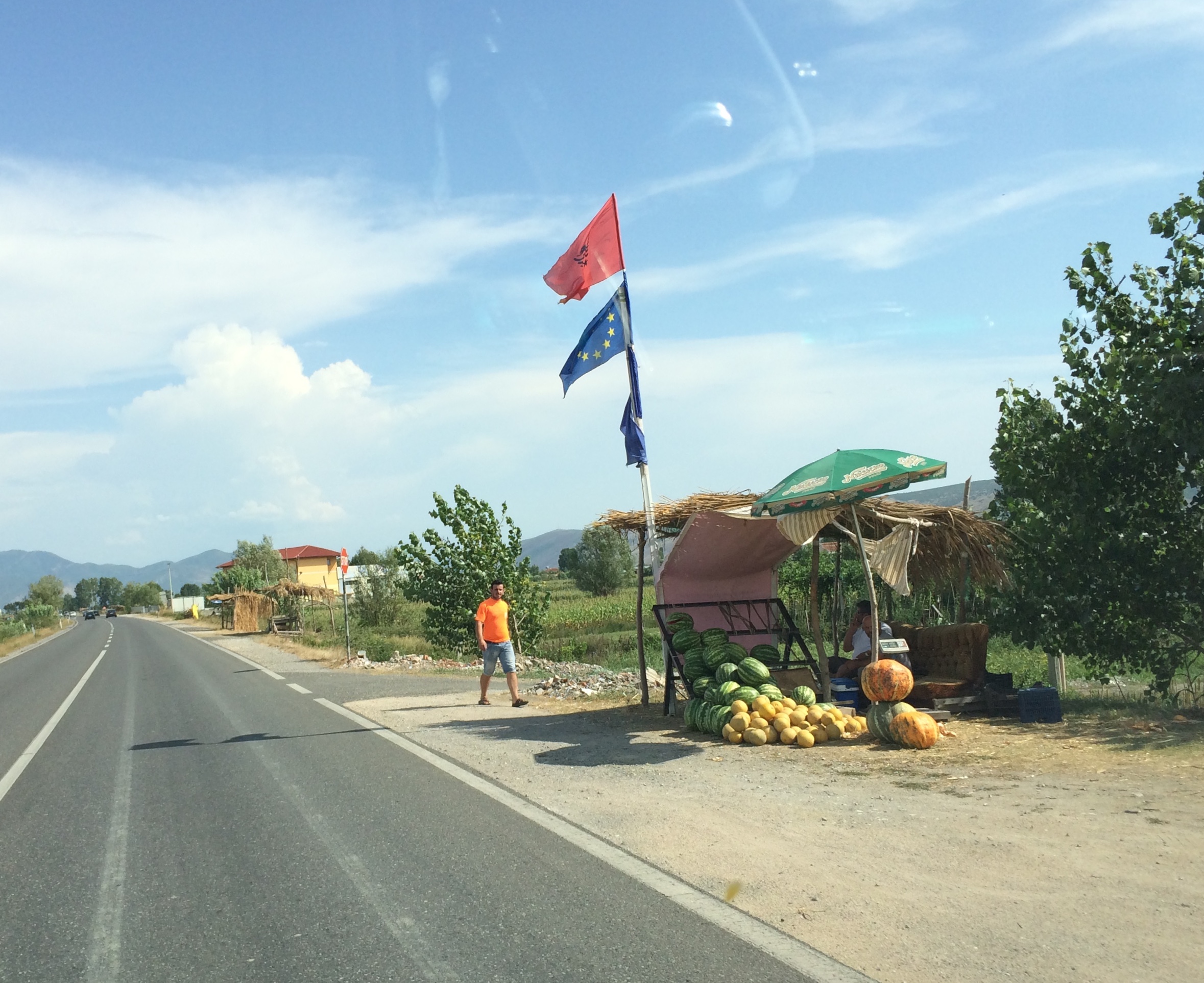
We eventually did get onto the right road and had an uneventful journey to the capital.  We marvelled at the number of petrol garages along the road along with the number of shrines, testament to those killed in road accidents.

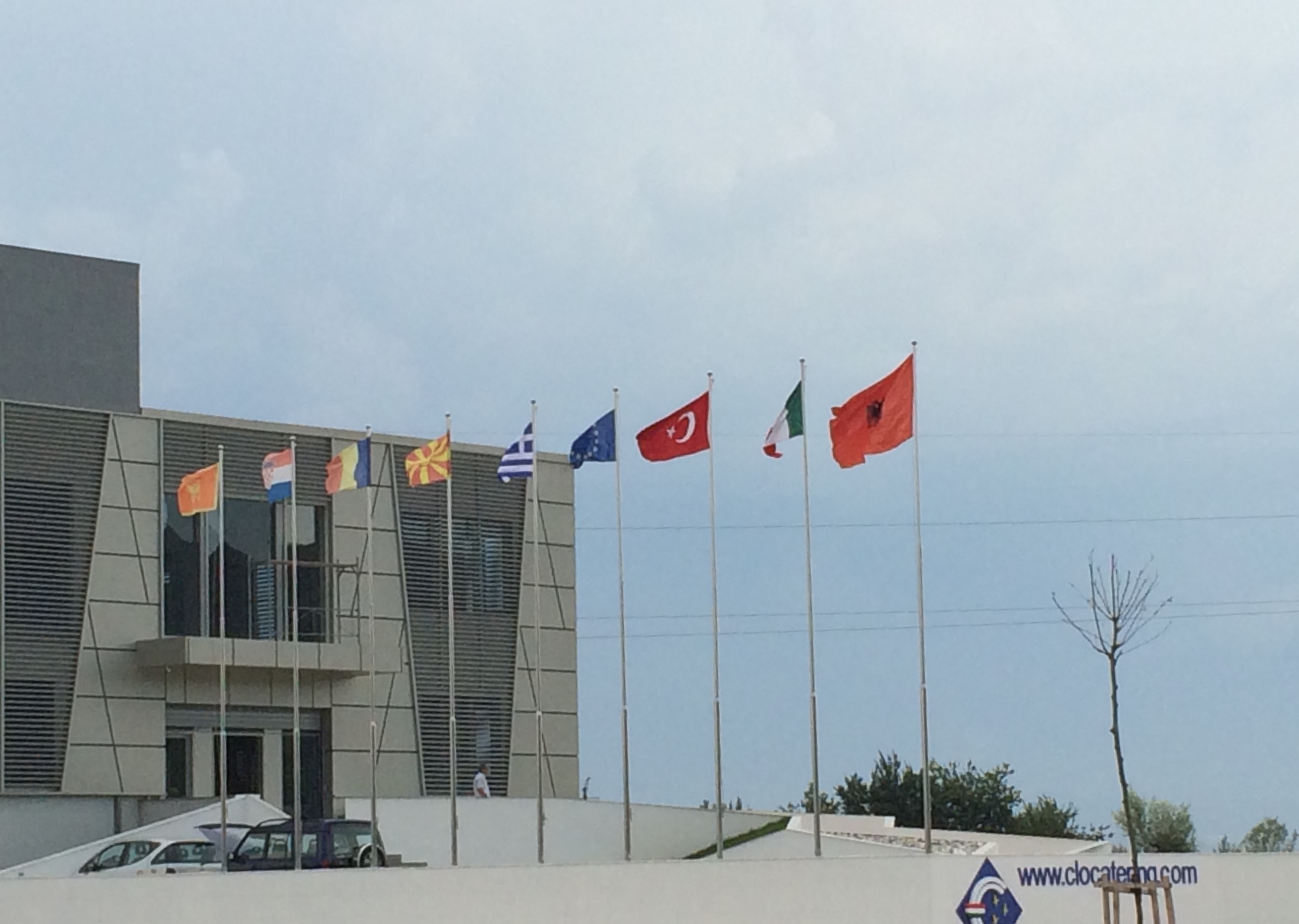
The road to Tirane - the EU flag often fluttering next to the Albanian flag pointing to aspirations for deeper integration with Europe.

The road to Tirane – the EU flag often fluttering next to the Albanian flag pointing to aspirations for deeper integration with Europe.

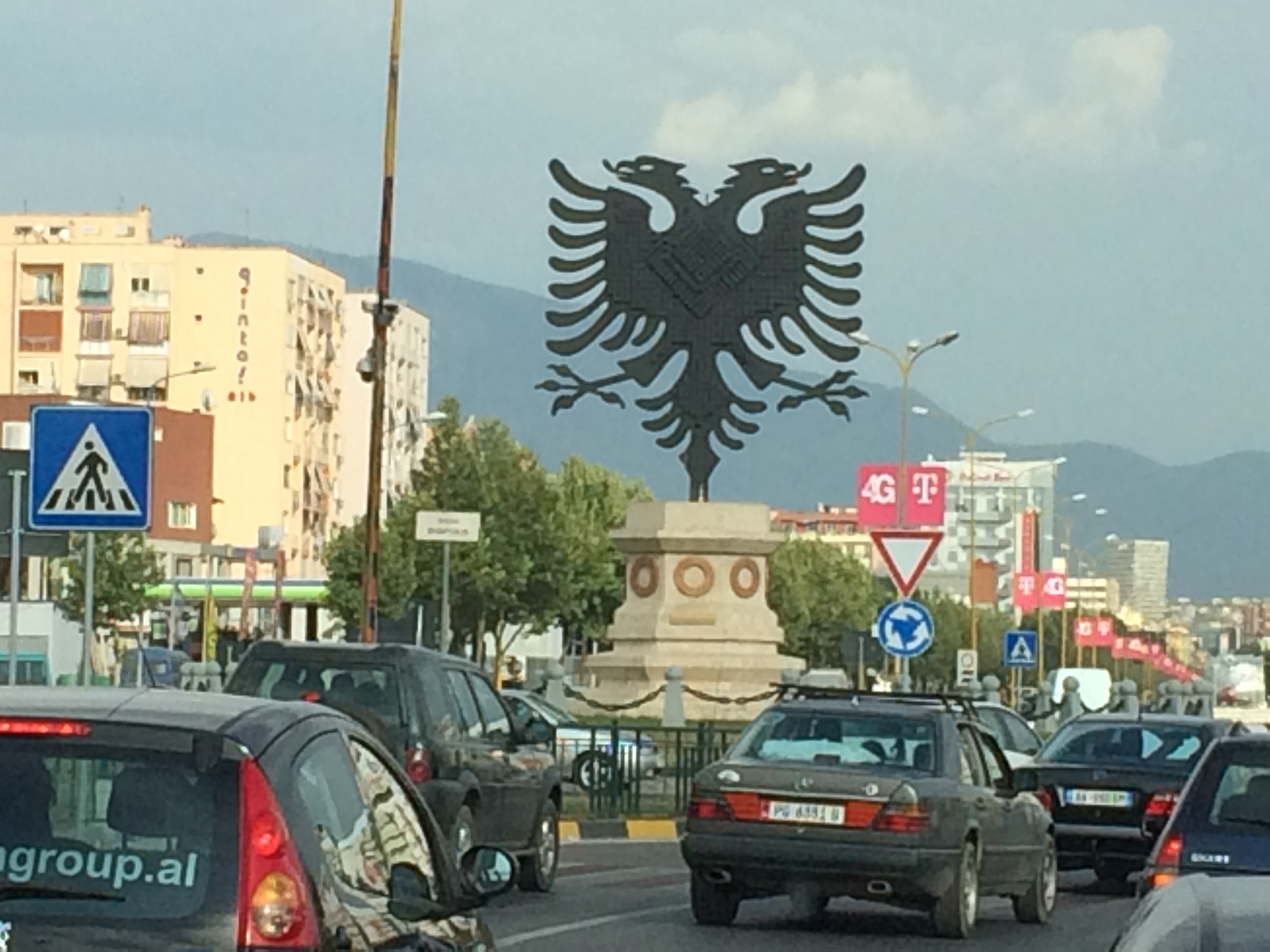
Arrival in Tirana.

Arrival in Tirana.


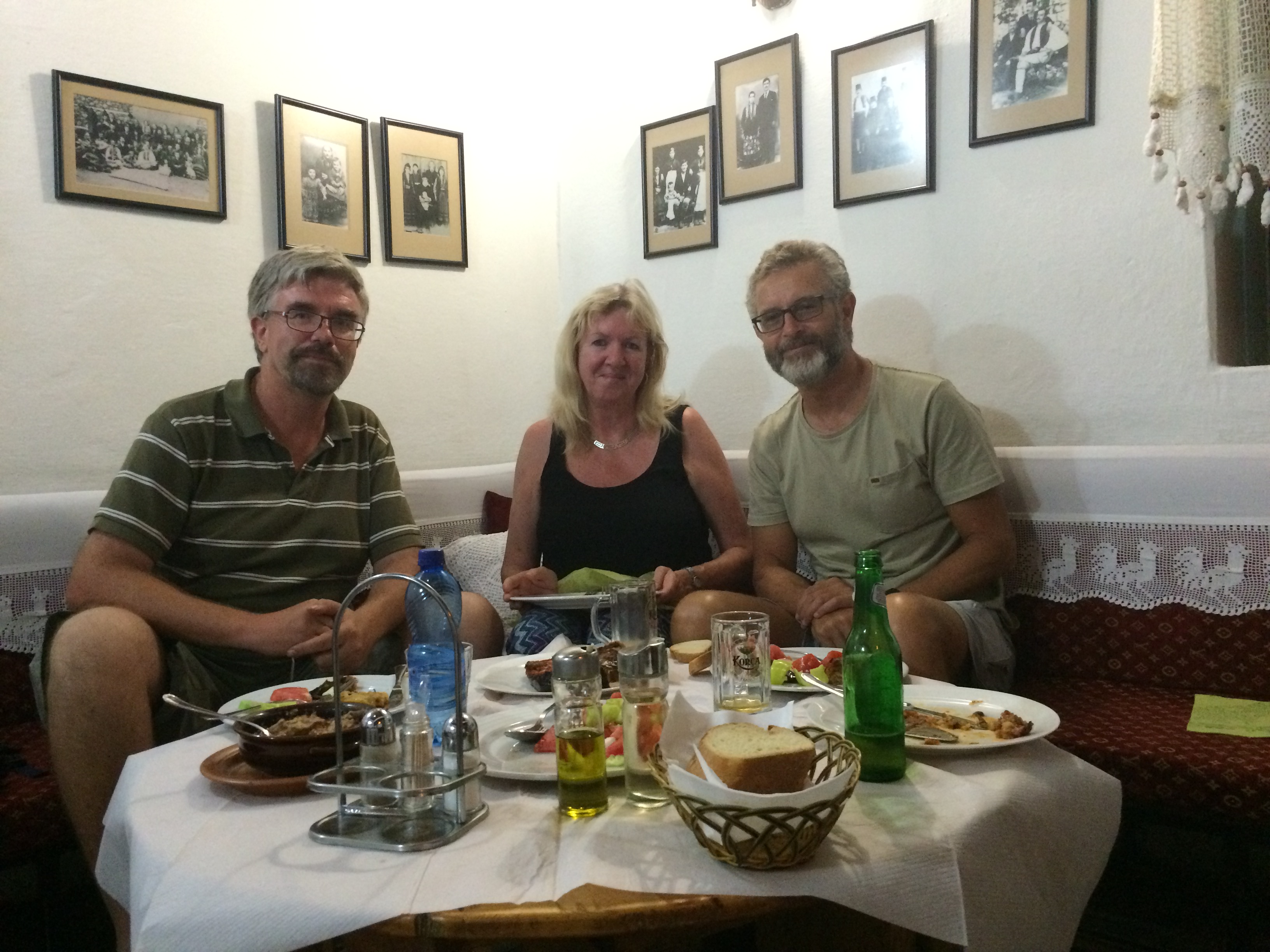
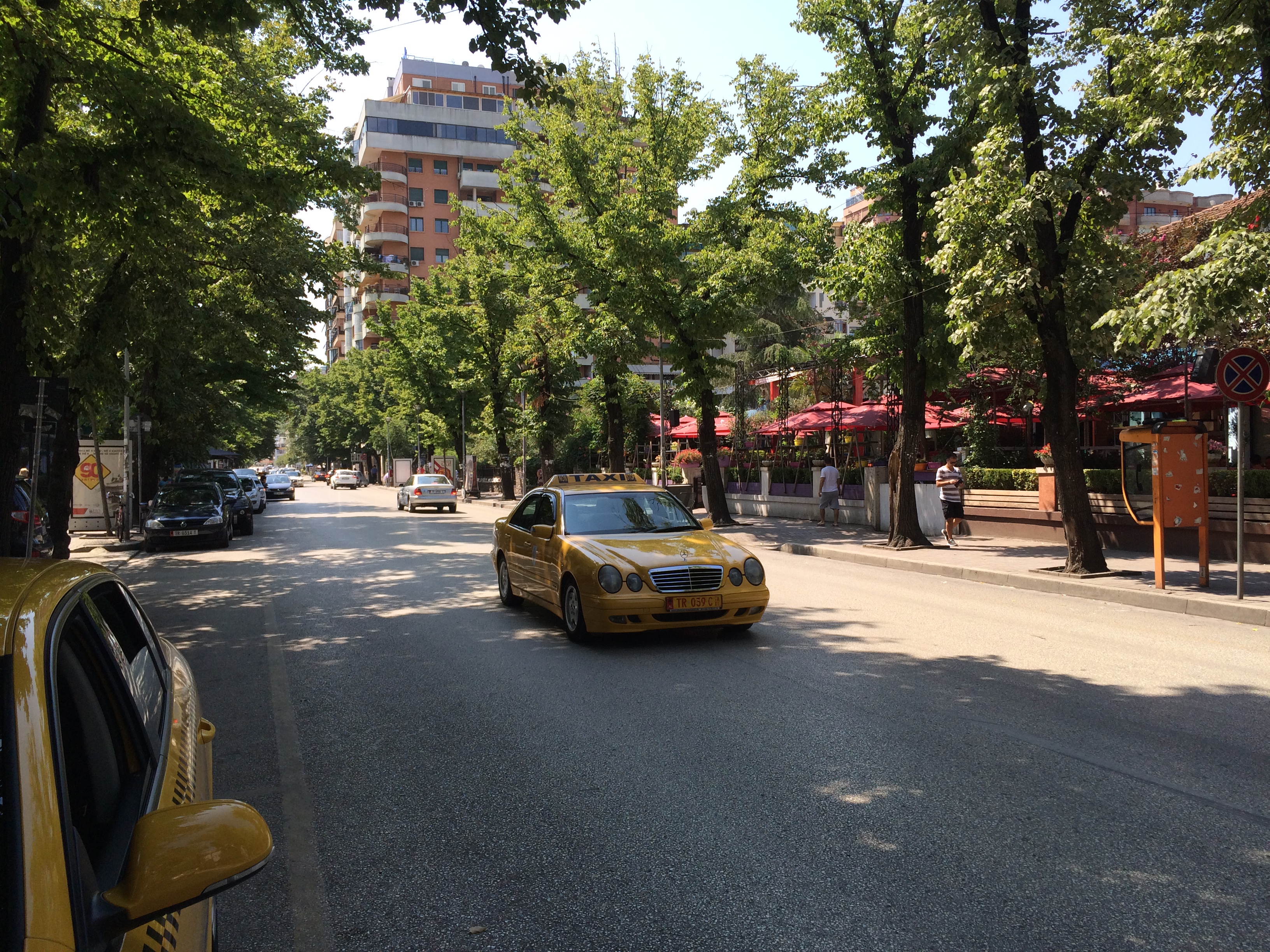
First impressions on arriving in Tirane was of a modern, well organised city.  We headed straight to the tourist information and got maps and details of a hotel.  Whilst looking at the maps we were kindly helped by Claudi, a Swiss man who has lived in Albanian for 18 years, is married to an Albanian, worked first with an aid agency supporting street children but now as a tour guide and speaks fluent Albanian.  After checking in to our hotel, we went with Claudi for supper at a restaurant that specialised in traditional Albanian food, which was excellent and Albanian beer which was even better.

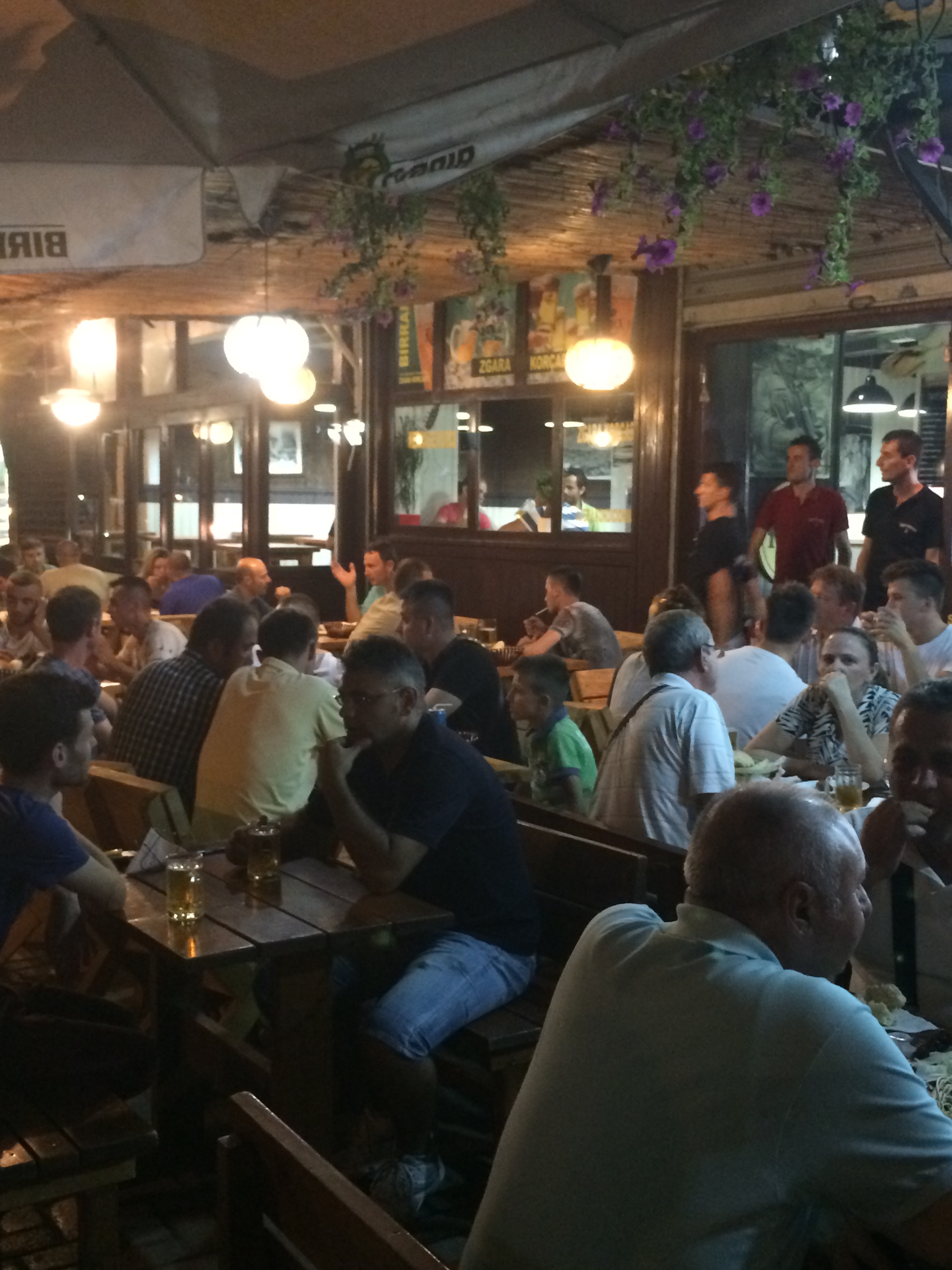
Tirana has a lively cafe culture with people seen drinking beer often even in the morning.

Tirana has a lively cafe culture with people seen drinking beer often even in the morning.

With Claudi who came to rescue us an was a brilliant guide and a fountain of knowledge on all things Albanian.

With Claudi who came to rescue us an was a brilliant guide and a fountain of knowledge on all things Albanian.


Claudi talked at length about Albania since the fall of communism which was fascinating and we learnt that :

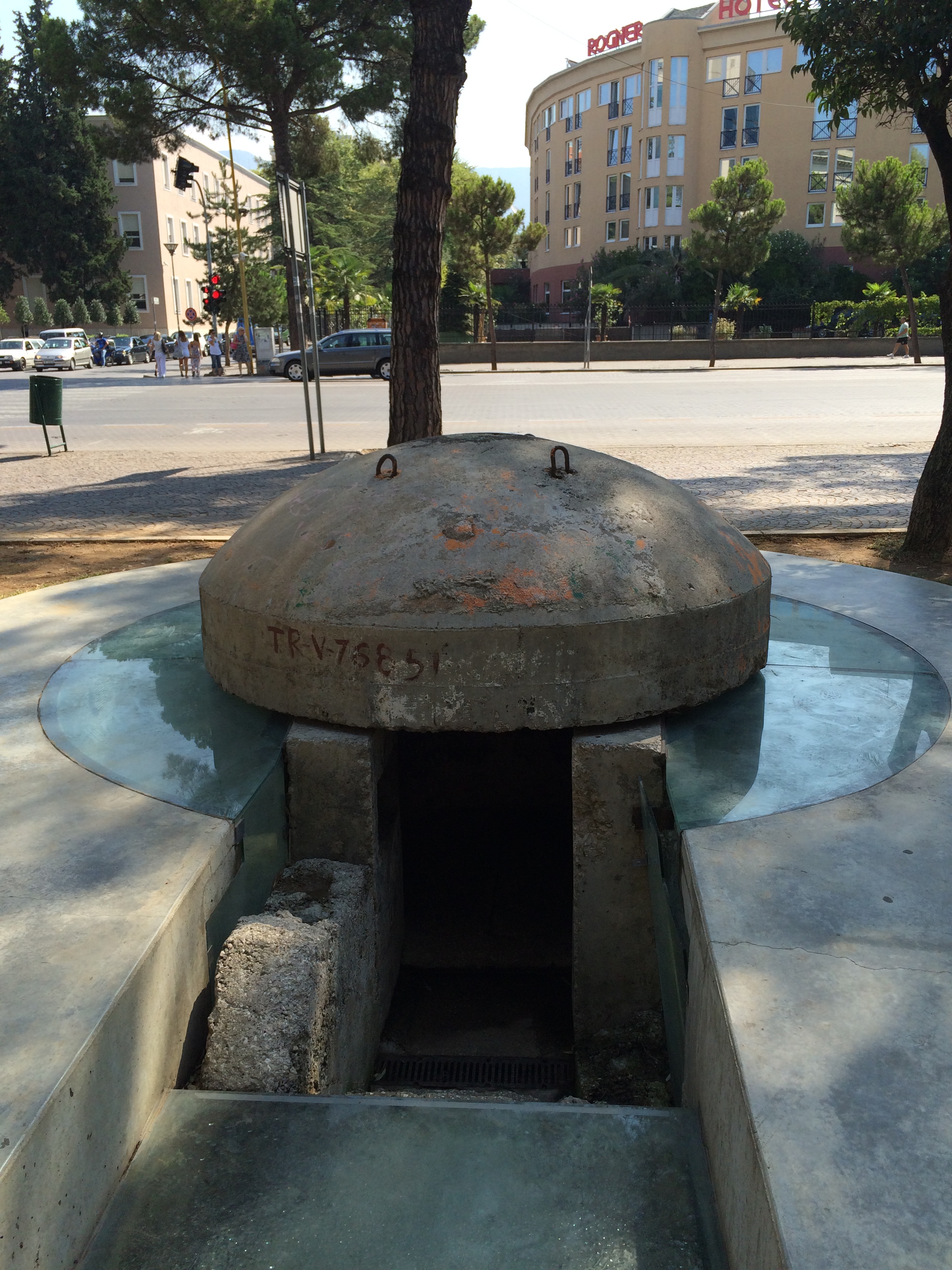
– Albania is full of concrete bunkers that were built to defend Albania against foreign decadent invaders and which was really a ploy to keep the population insecure and dependent on the regime for protection.  Debate is still raging about the future of the bunkers – should they be kept, utilised and transformed into useful edifices or destroyed as ugly reminders of a despotic old regime;

One of the thousands of bunkers dotting the country - a legacy of

One of the thousands of bunkers dotting the country – a legacy of Enver Hoxa.

Another bunker on the road to Castrolezij in the south.

Another bunker on the road to Castrolezij in the south.


– Most Albanians spoke some Italian as, during the communist regime, to access news from outside Albania they had to tune their radios into Italy, the nearest place to receive a signal. Many homes had illegal ariels which went up at night time;

– Waste disposal was a serious problem (Albania’s most serious problem according to Claudi), particularly the flow of raw sewage into the sea;

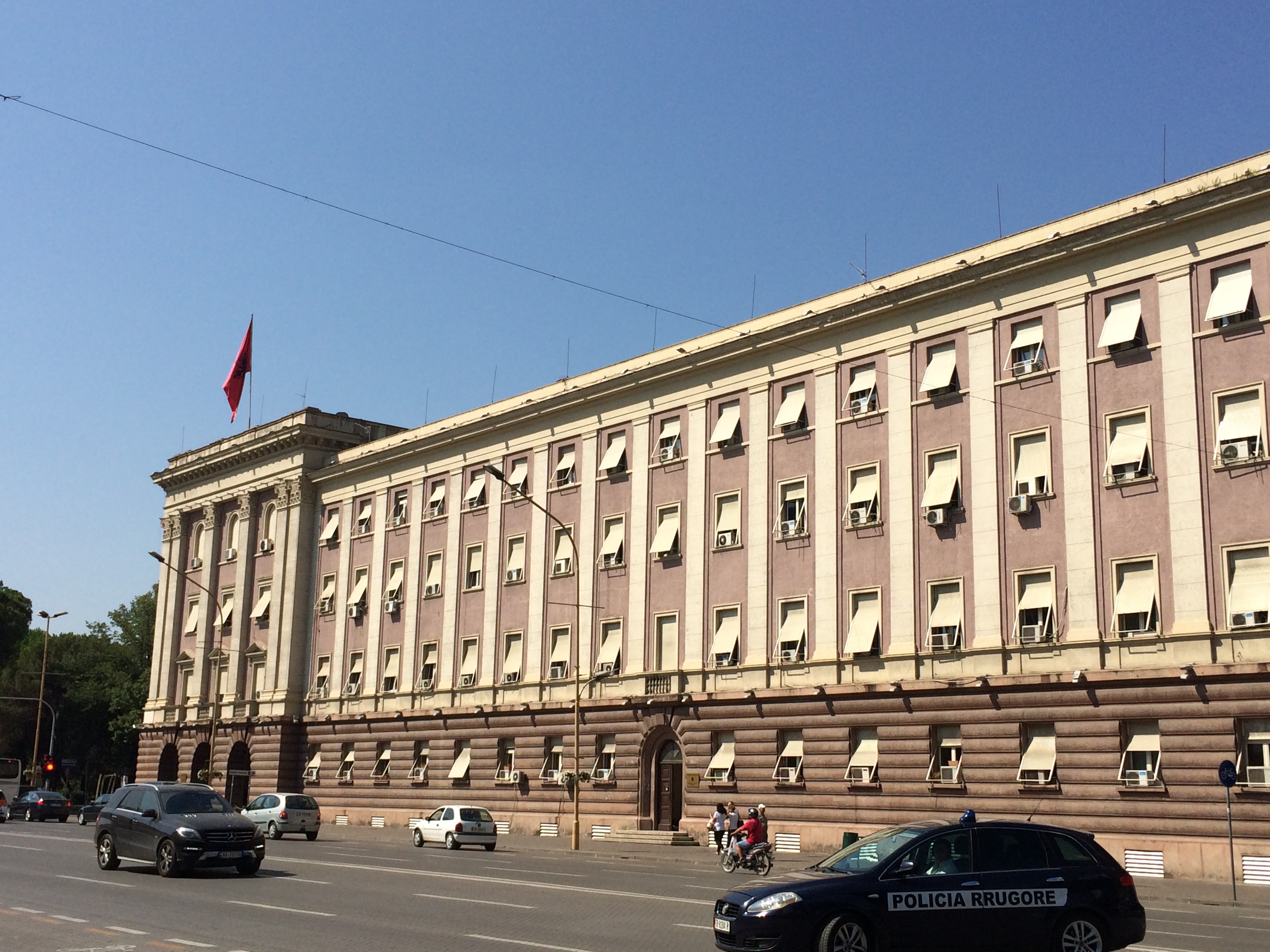
A governmental building in central Tirana.

A governmental building in central Tirana.


A church in central Tirana.

A church in central Tirana.


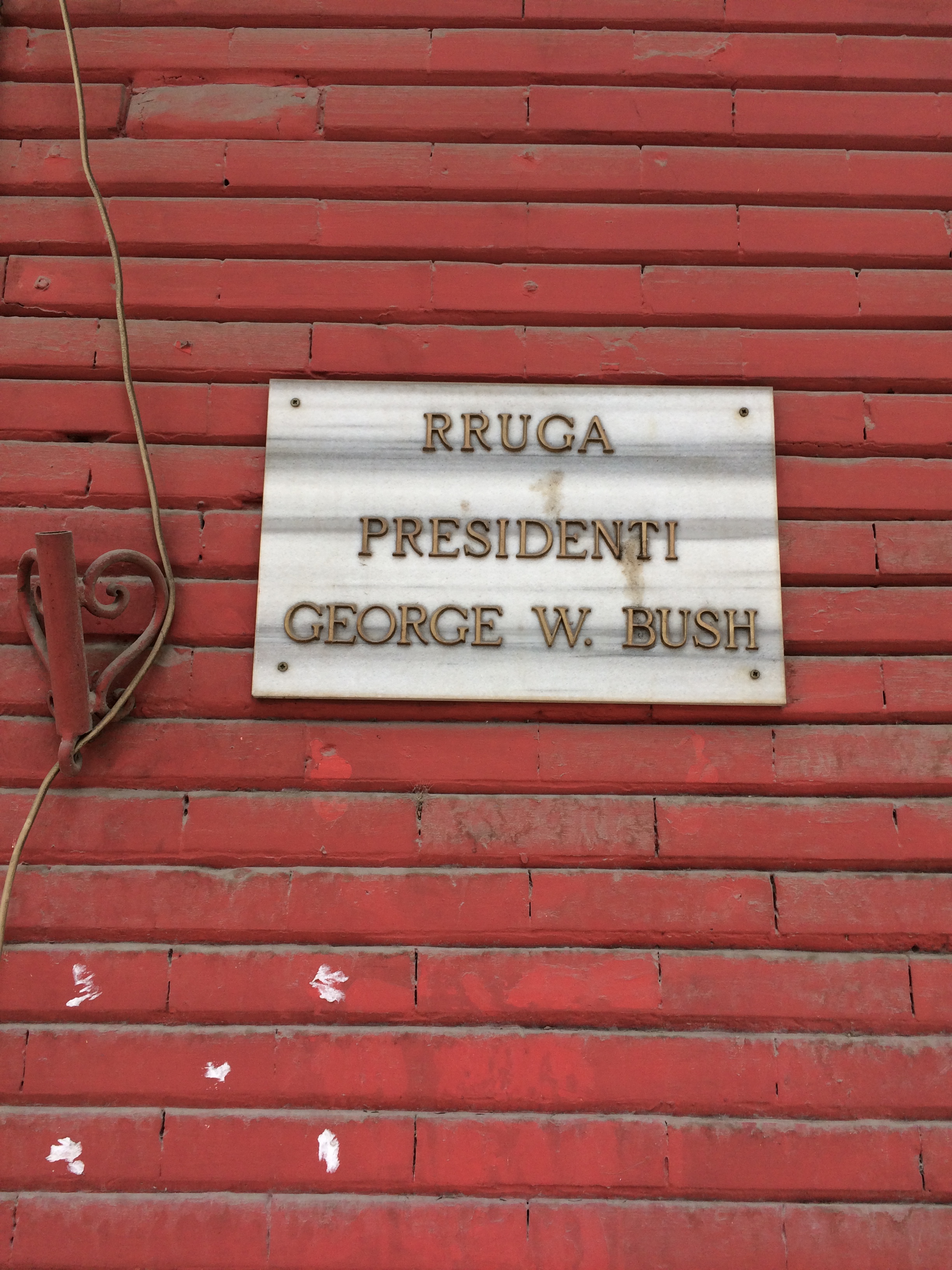
There's even a George W Bush street in Tirana.

There’s even a George W Bush street in Tirana.


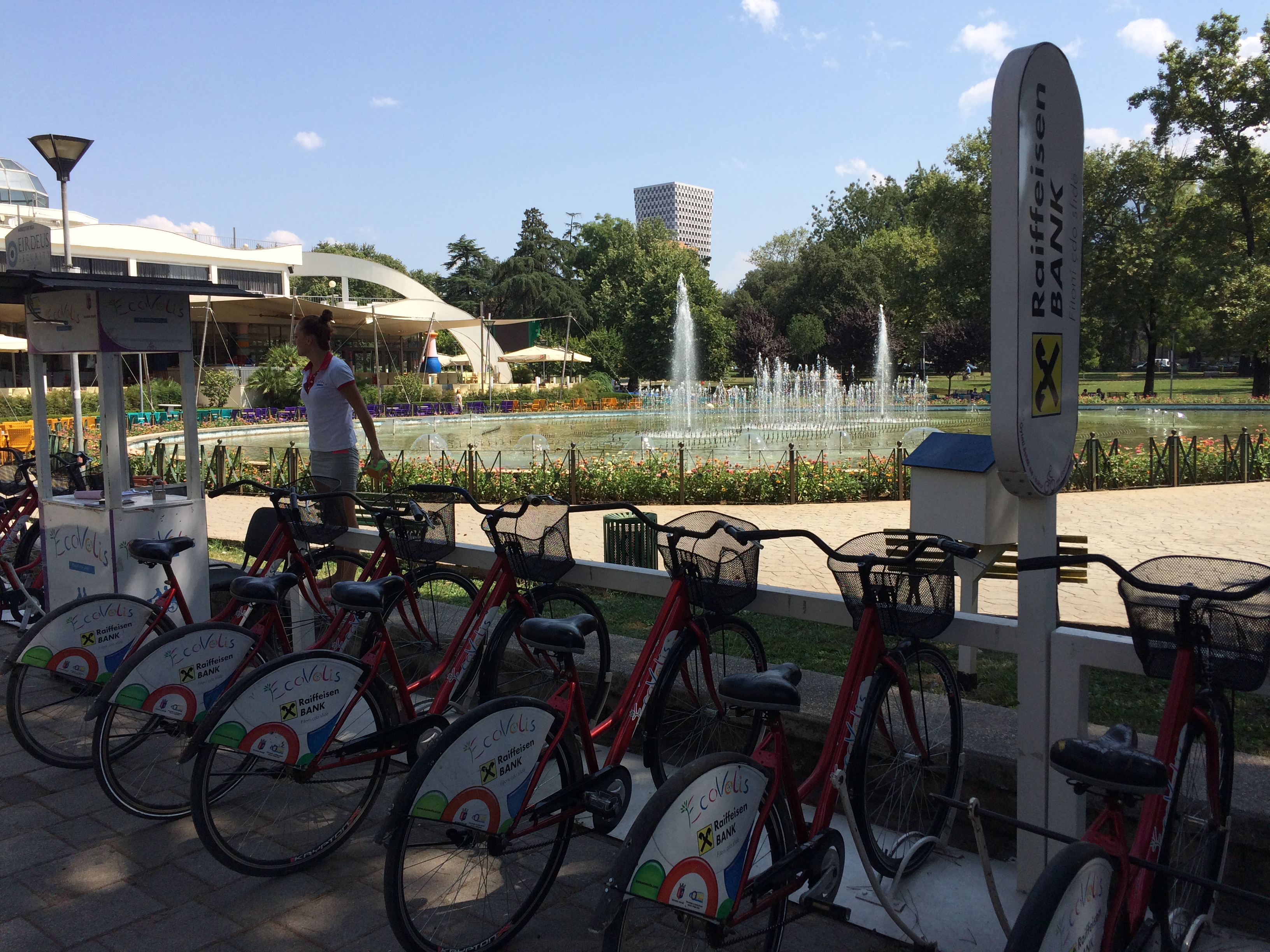
City bikes in Tirana.

City bikes in Tirana.


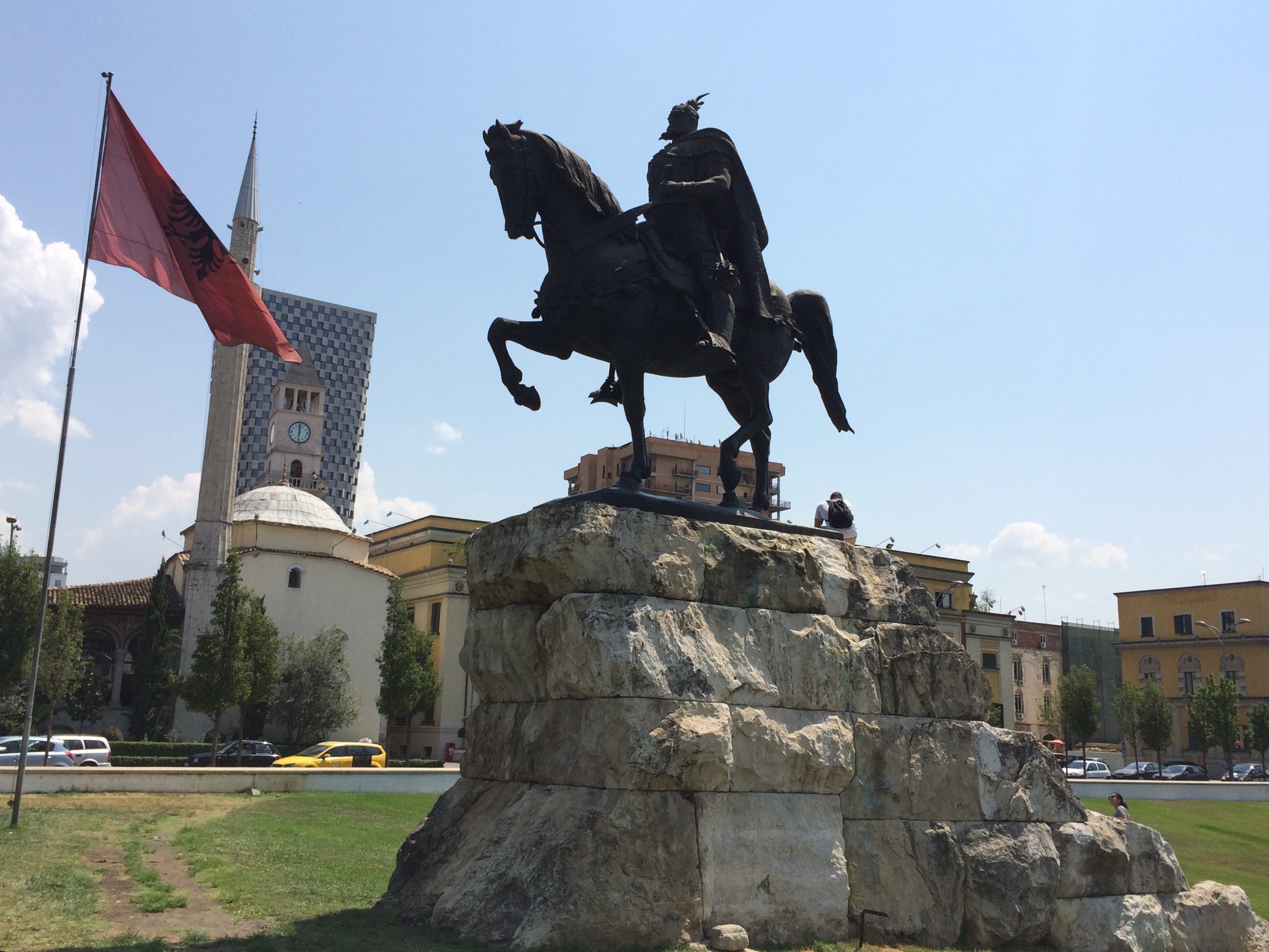
– The most revered historical figure was Skanderberg or Iskander or Gjergj Kastrioti, the former Ottoman ruler of Albania who fought the Turks and defeated them in 13 attempted invasions  to create an independent state;

Albania's hero - Skanderberg or Iskander or

Albania’s hero – Skanderberg or Iskander or Gjergj Kastrioti who repelled repeated Turkish invasions and founded Albania as an independent state.

– Albanians are distancing themselves from both their Islamic and Communist past, maintaining their secular state and looking toward Western Europe;

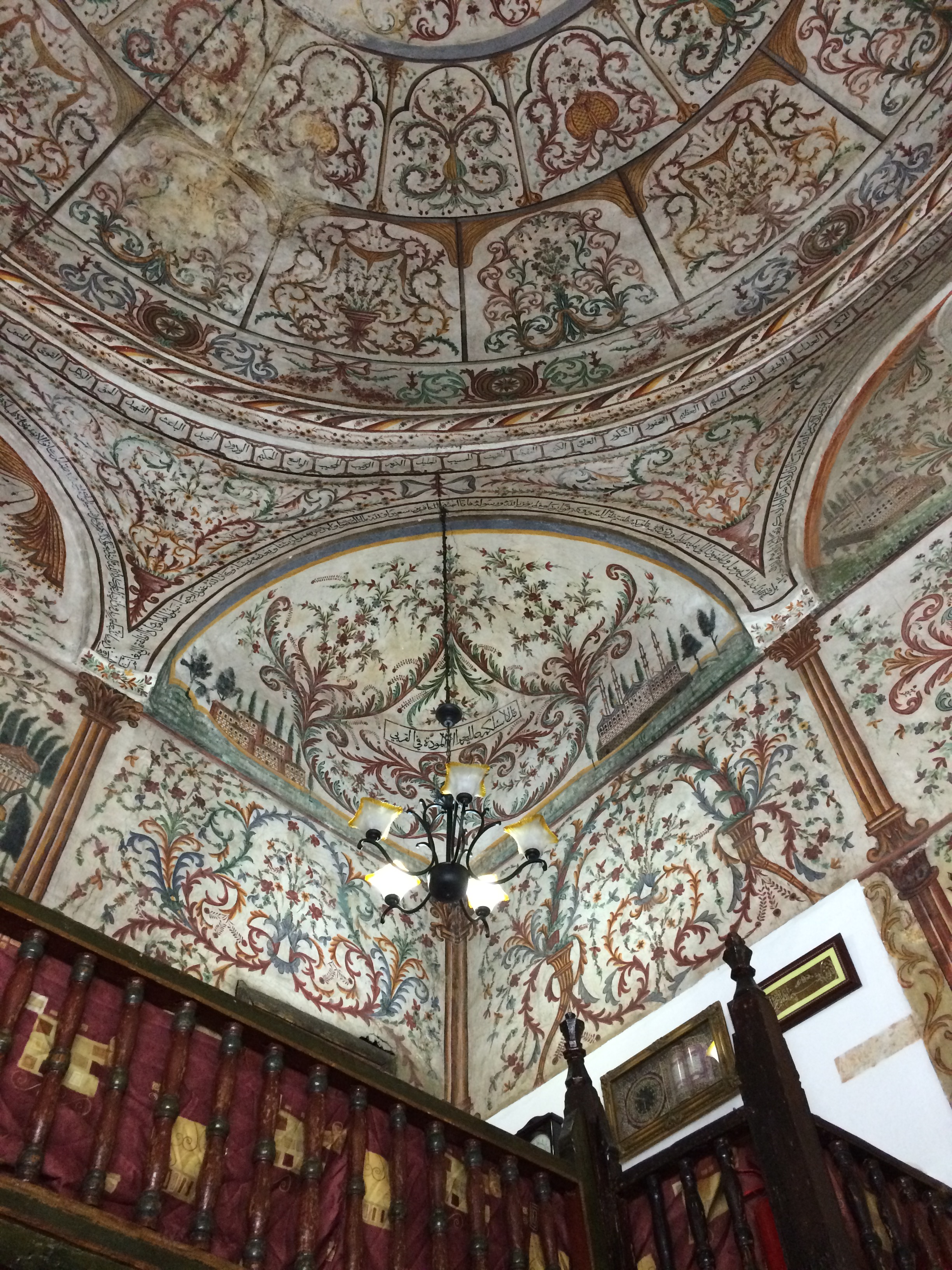
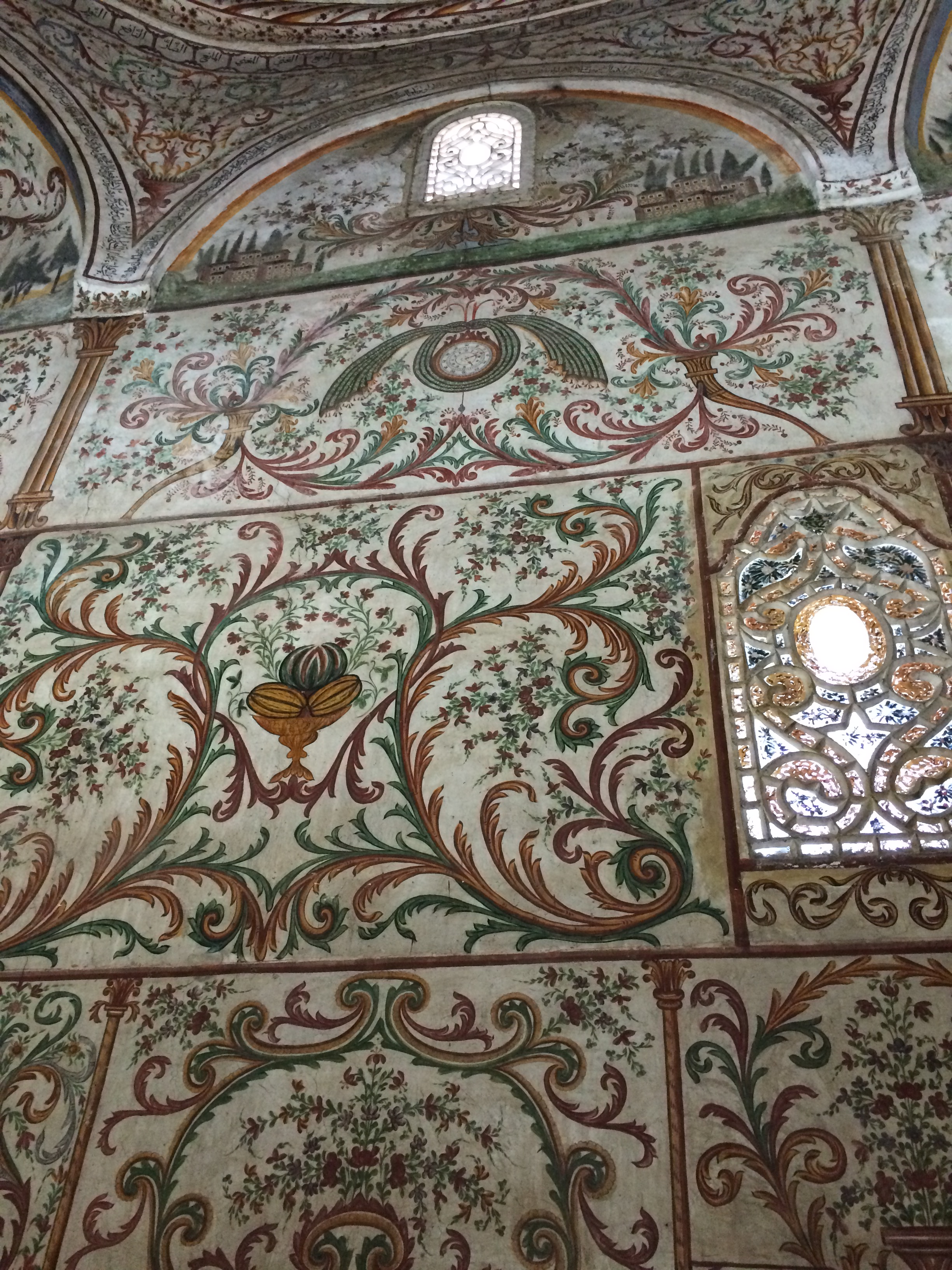
– There aren’t very many old places of interest in Tirana.  One of the oldest is the Et’hem Bey Mosque built in 1823 by Molla Bey, the grandson of Suleiman Pasha, closed under communist rule and re-opened as a house of worship in 1991 after 10,000 people dared to attend without permission from the authorities, an event which marked the rebirth of religious freedom in the country;

The inside of the Et'hem Bey Mosque re-opened as place of religious worship in 1991.

The inside of the Et’hem Bey Mosque re-opened as place of religious worship in 1991.


A detail from the ceiling of the mosque.

A detail from the ceiling of the mosque.


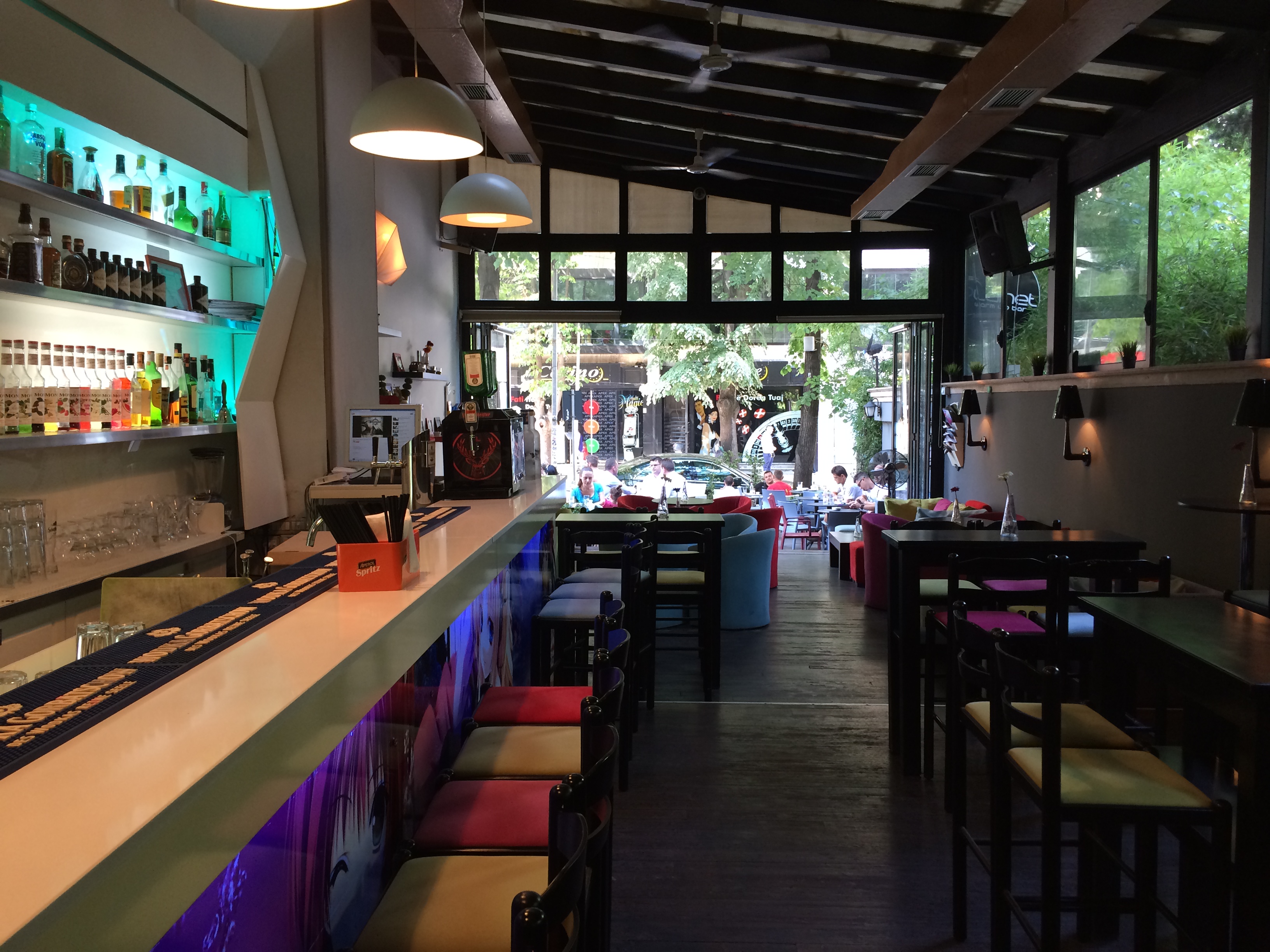
– The section of Tirane which housed Enver Hoxha and certain party officials has now been regenerated into a chic downtown area full of coffee shops and high-end shops;

A cafe within the perimeter of Enver Hoxa's old quarters, now regenerated into a fashionable downtown area.

A cafe within the perimeter of Enver Hoxa’s old quarters, now regenerated into a fashionable downtown area.


It's now a chic modern district.

It’s now a chic modern district.


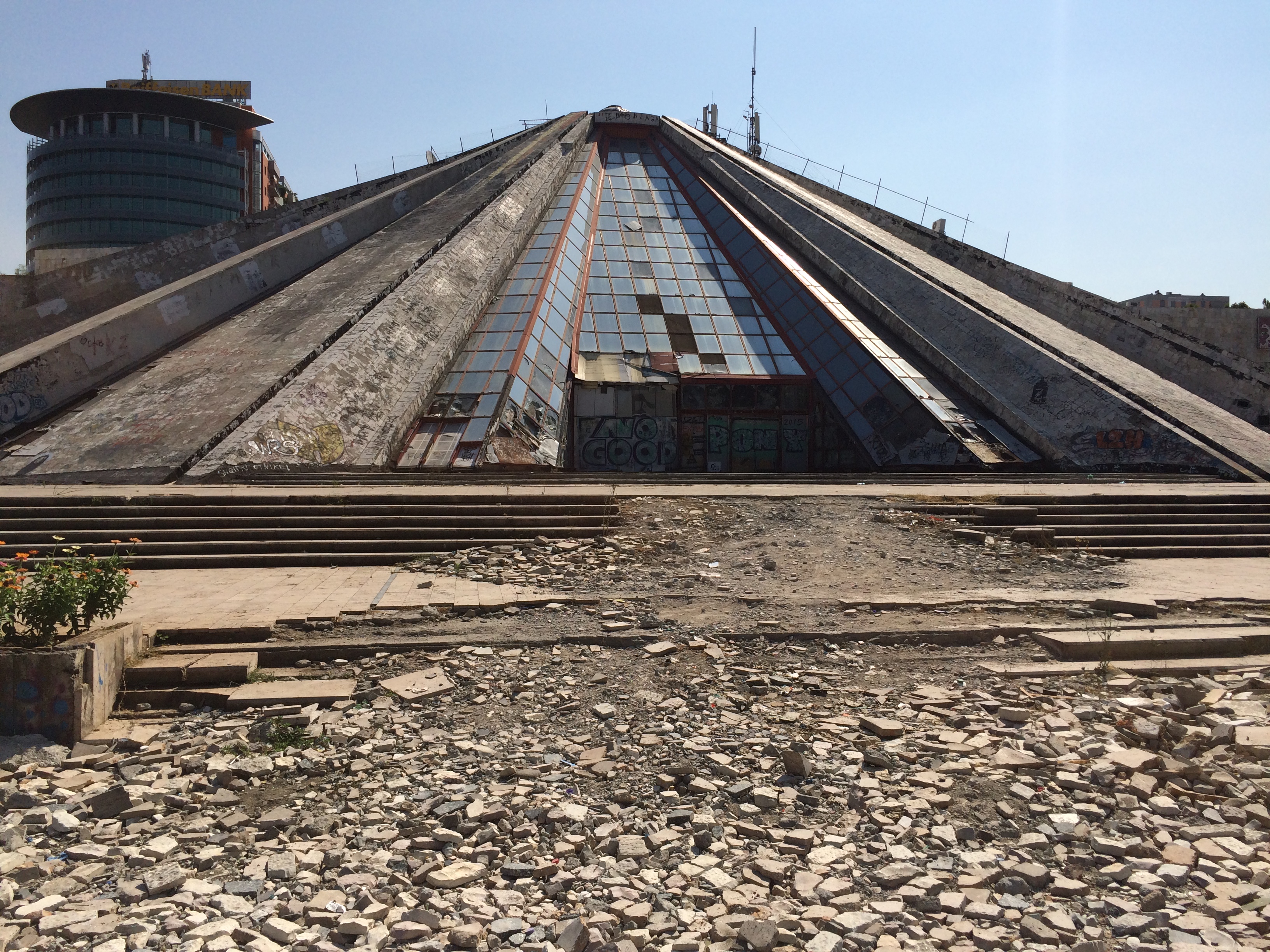
– The ‘pyramid’, dedicated to the achievement of Enver Hoxha and designed by his daughter and son-in-law is now a graffitied ruin and what to do with it is still being hotly debated;

Enver Hoxa's 'pyramid', semi vandalised. Debate continues around what to do with it.

Enver Hoxha’s ‘pyramid’, semi-vandalised. Debate continues around what to do with it.

– Mother Teresa of Calcutta was an Albanian and her order has a convent in Tirane;

– Albania has a problem with street children, mainly Romany children, who are not to be confused with gypsies;

After a brief but fascinating visit to a country as yet untouched by tourism we set off again on our travels to Greece arriving in Ioannina in the early evening.
Modern Albania is eager to integrate with Europe and the rest of the world.

Modern Albania is eager to integrate with Europe and the rest of the world.

The main part of our odyssey ends in Greece staying in Milina, Greece with very dear friends of ours, Rachel and Rob.  A lovely relaxing end to a long and eventful journey.  Our daughter Catherine joined us and a blissful week was had.
IMG_5602

Sunday 2nd to Tuesday 4th August – Bari to Dubrovnik and onto Montenegro

Standard

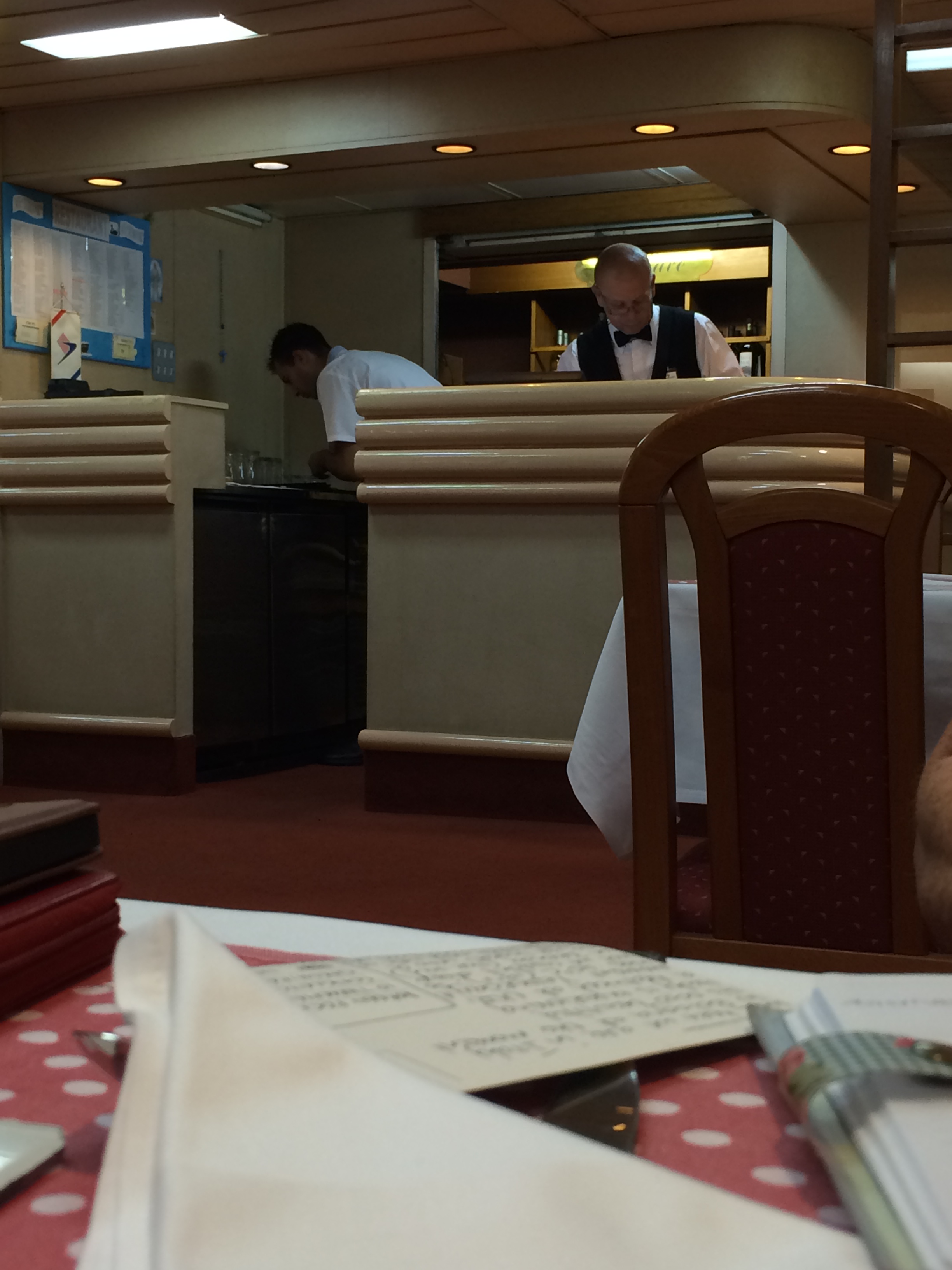
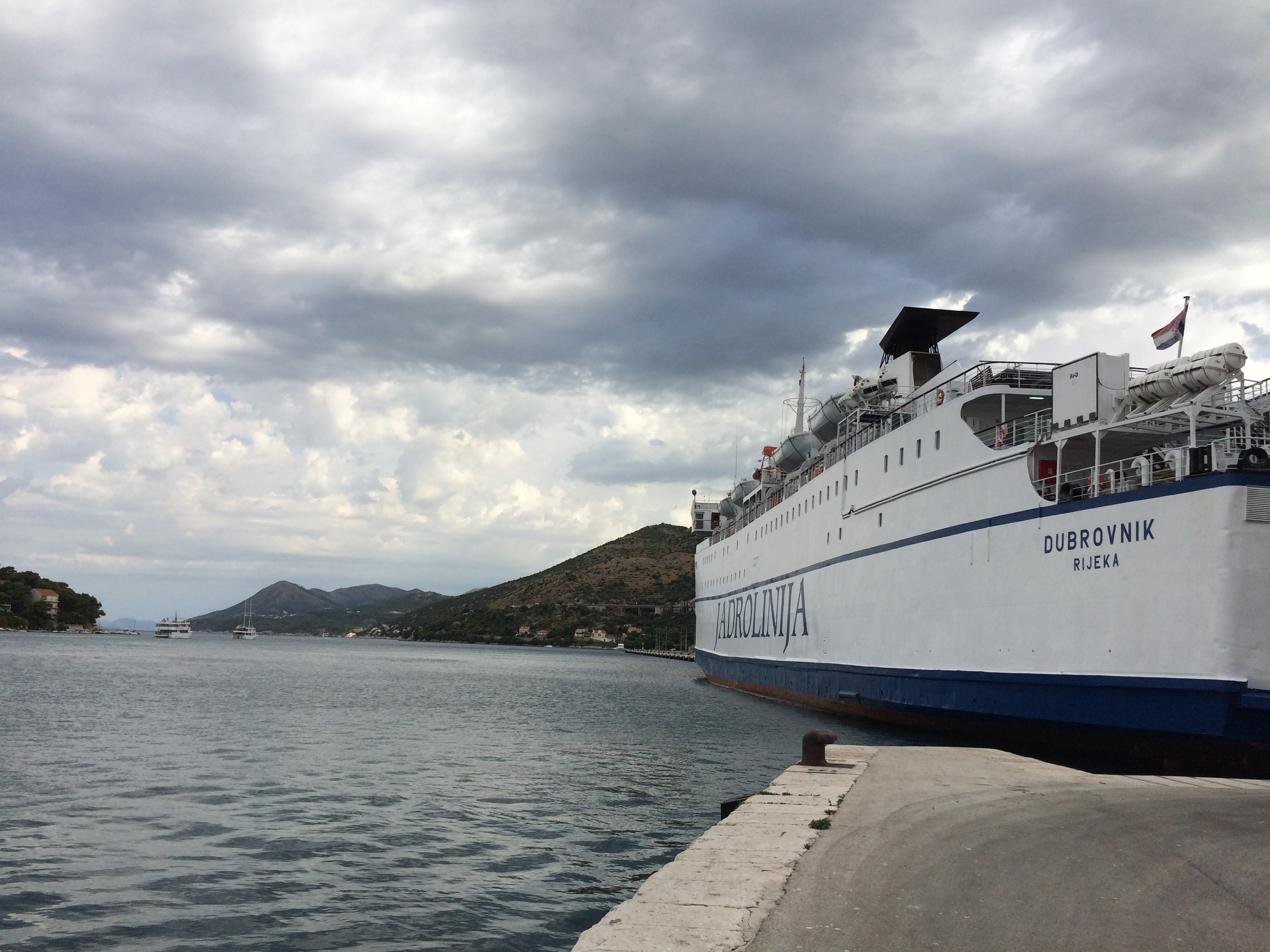
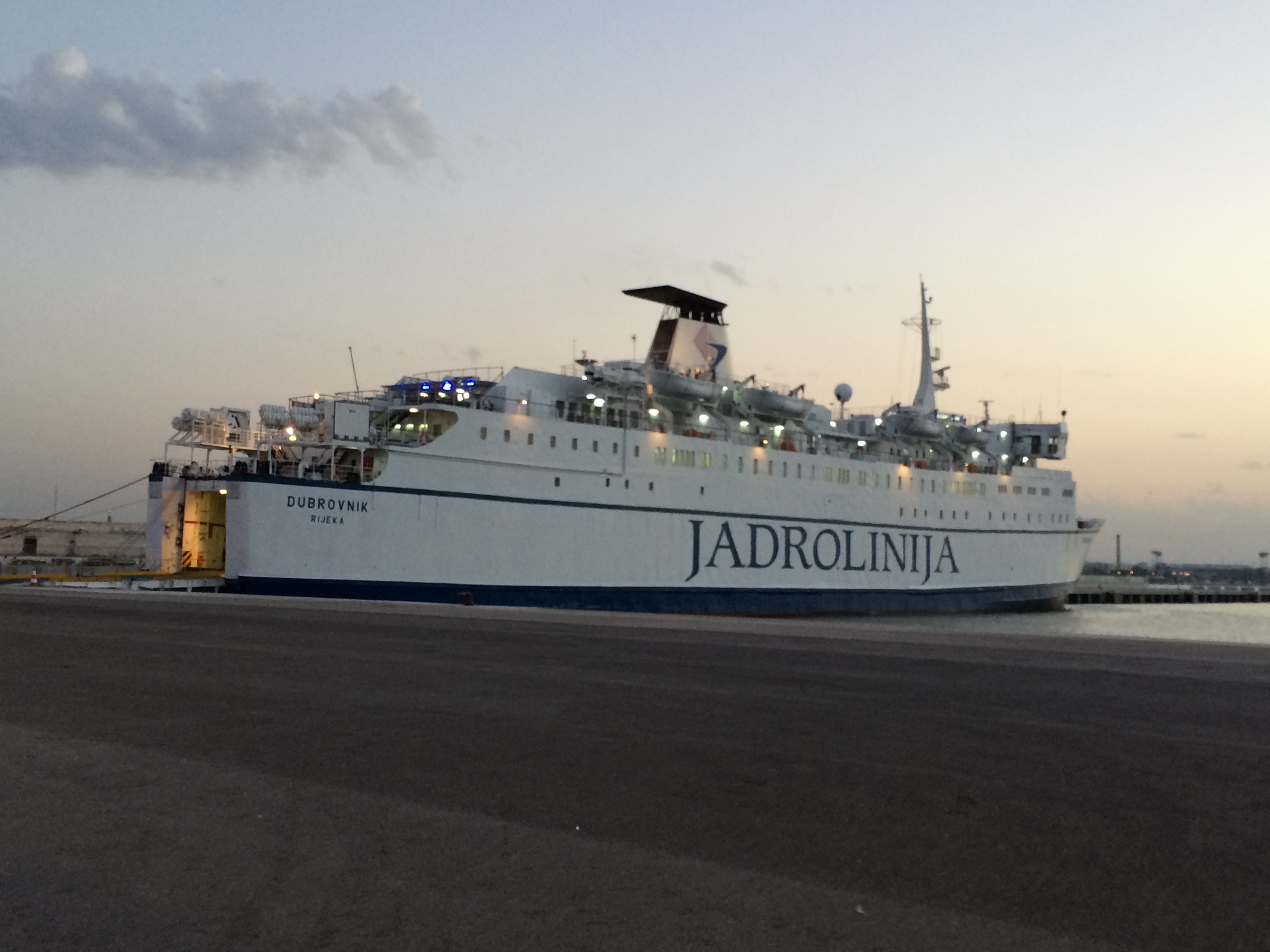
Overnight ferry on a Croatian Jadrolinija ferry to Dubrovnik in Croatia.  Thinking we’d dine on the boat before we retired to our cabin we were disappointed with our dining experience. The waiter had to be the most surly waiter that ever served food on the seven seas. Not only did he lack any customer service skills, he got both our orders completely wrong despite repeating the order back to us and conspicuously jotting everything down in his order book.

Our surly waiter on the Jadrolinija ferry to Dubrovnik.

Our surly waiter on the Jadrolinija ferry to Dubrovnik.

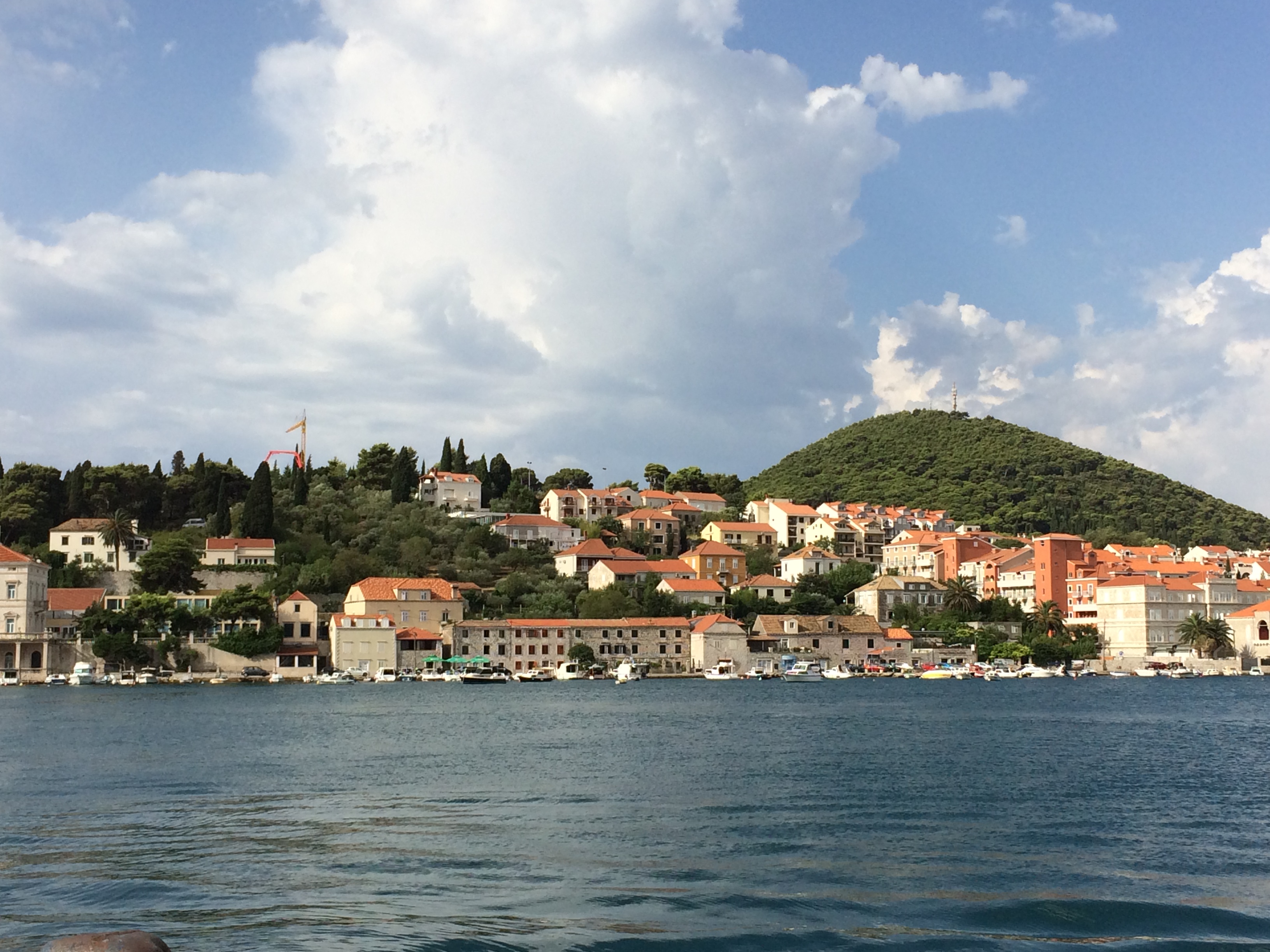
Arrival in Dubrovnik.

Arrival in Dubrovnik.

IMG_5379

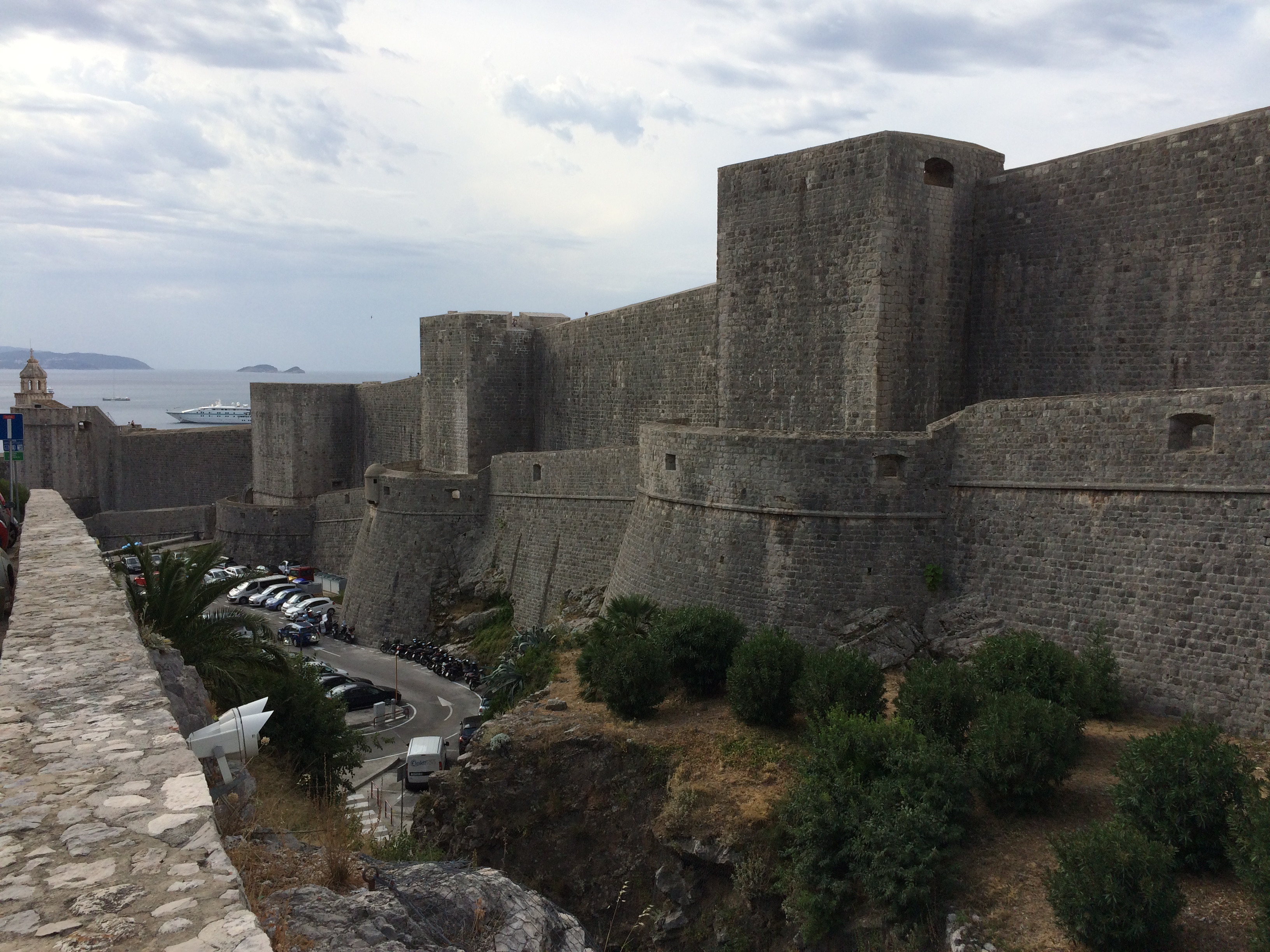
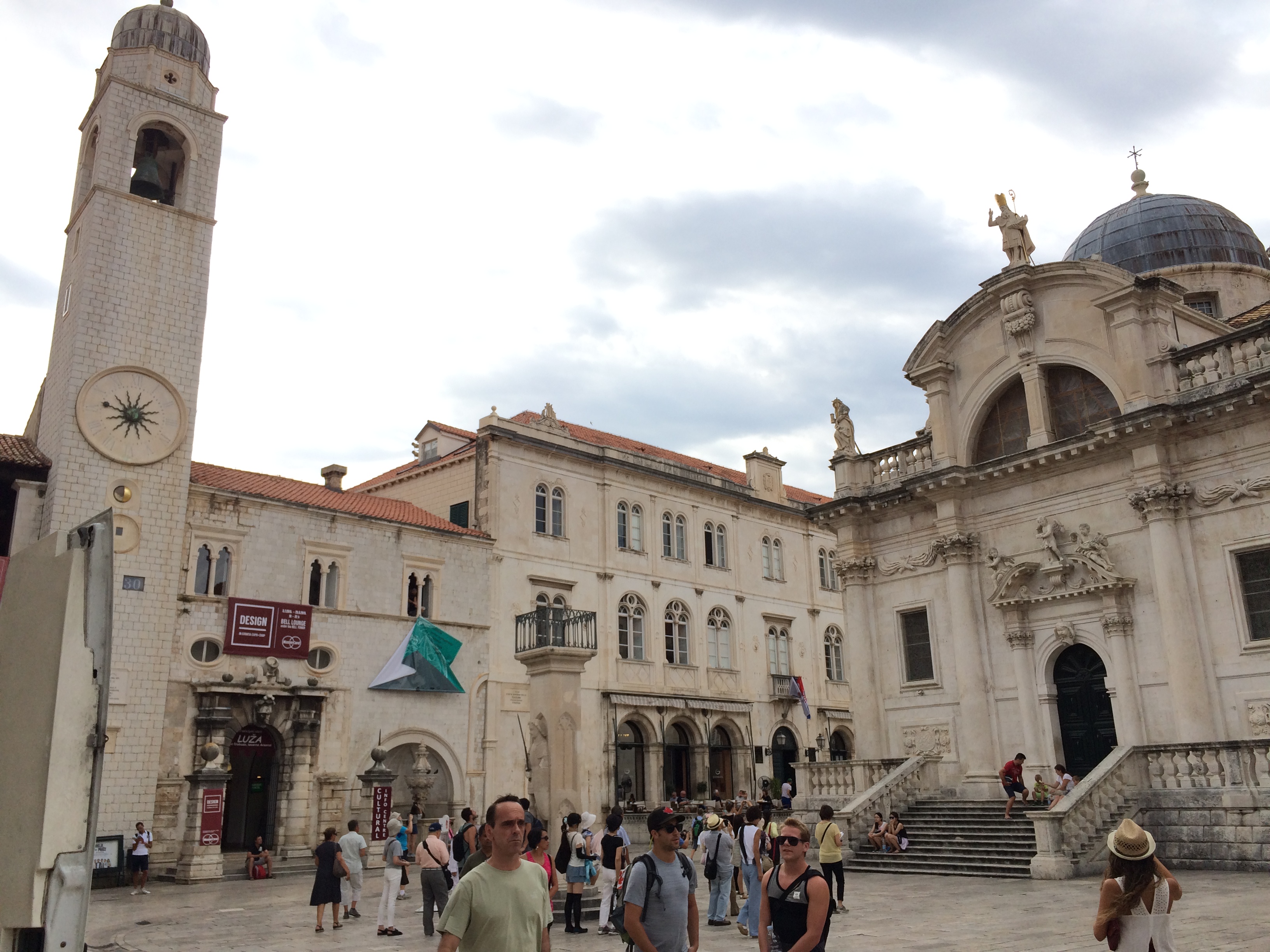
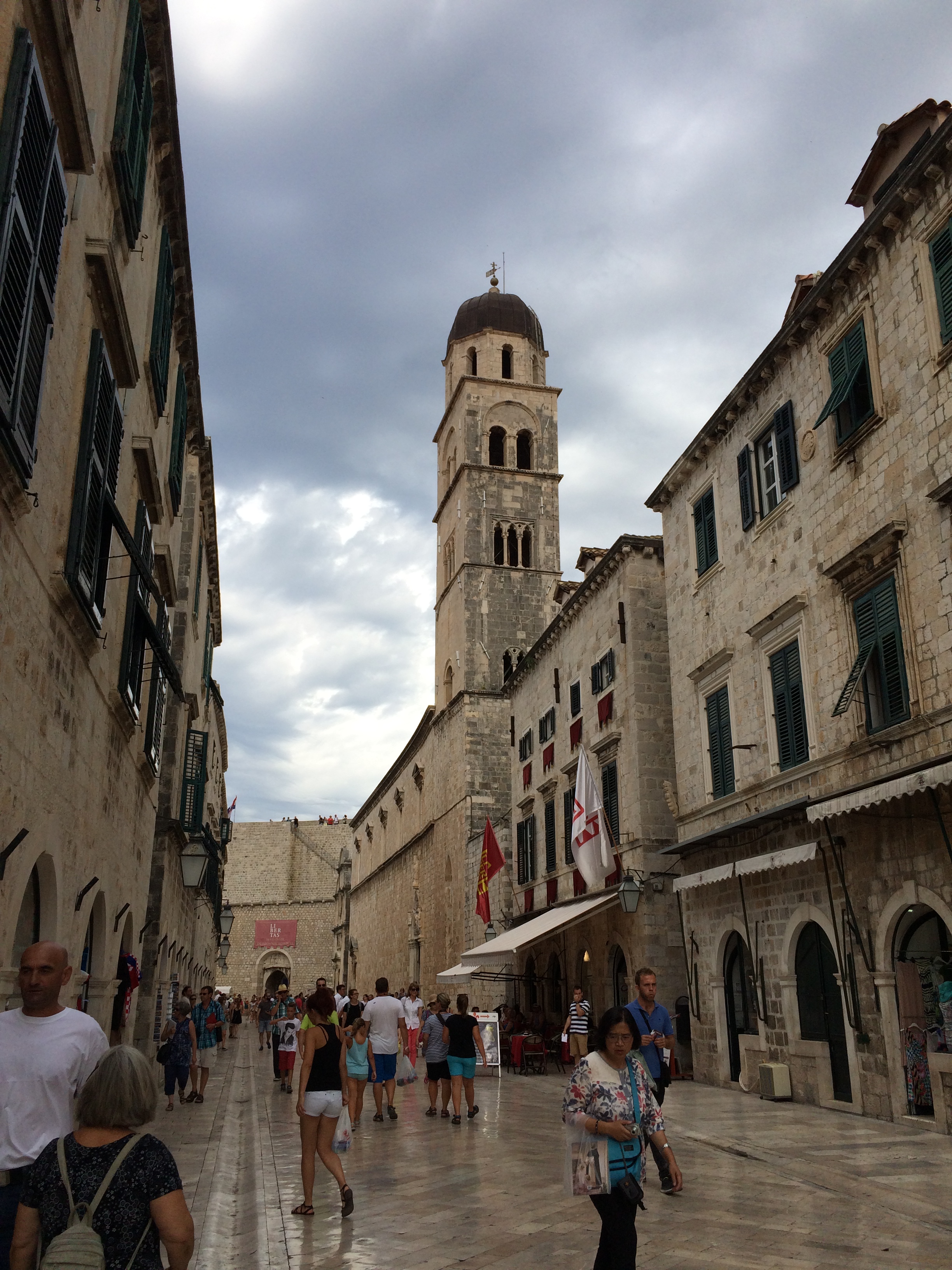
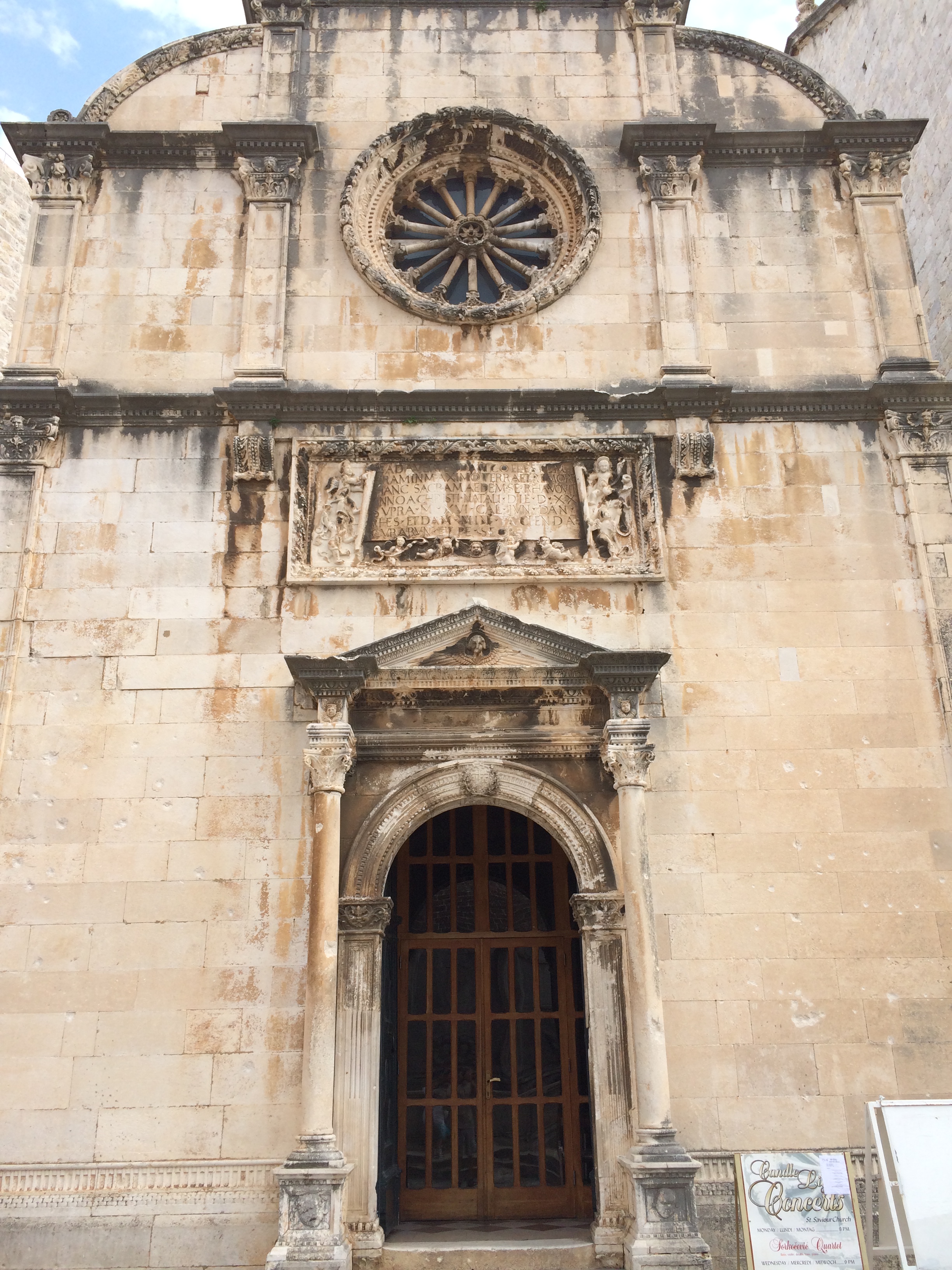
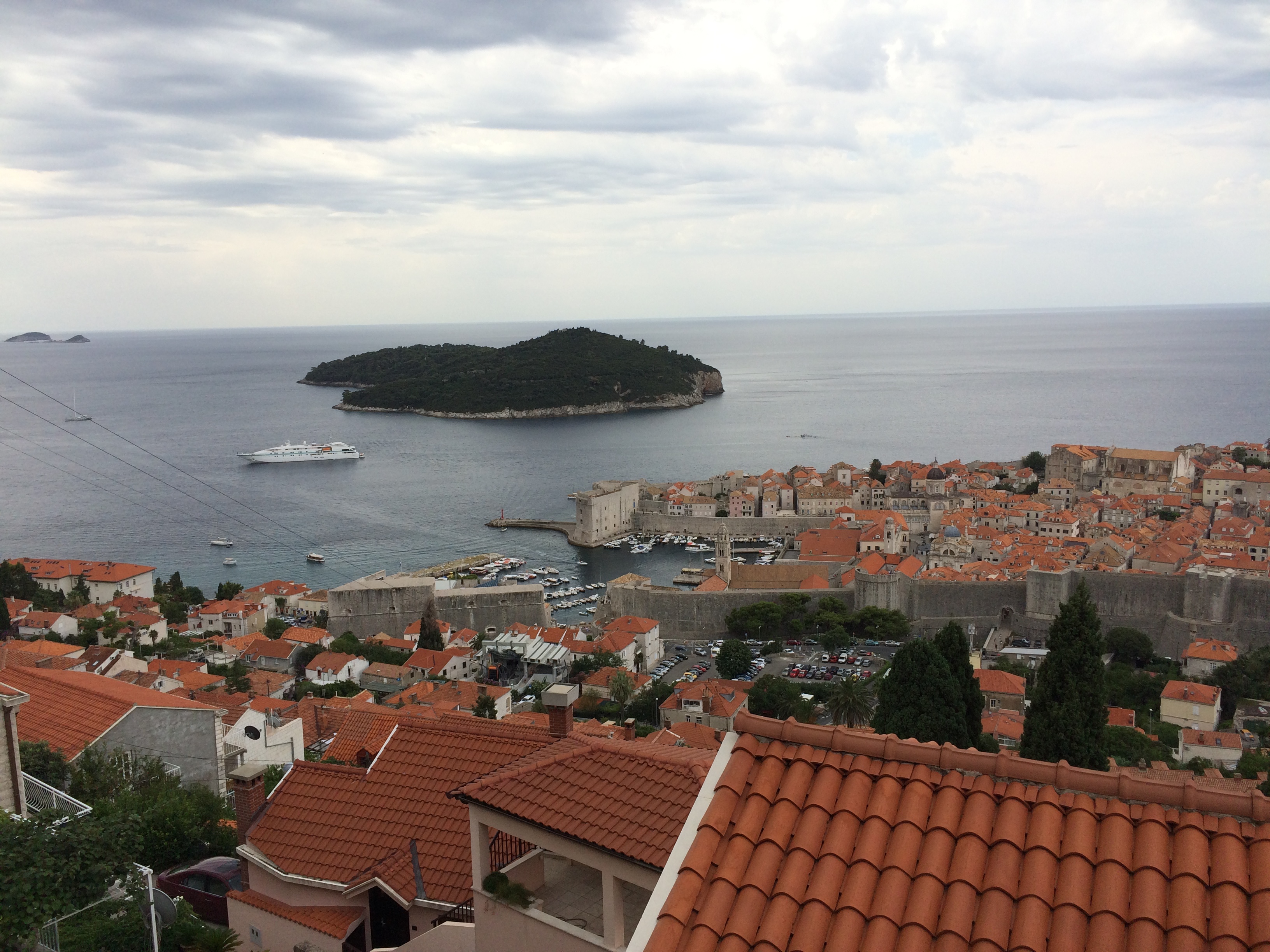
First impressions on leaving the ferry was that Dubrovnik was a beautiful city, the hills sloping down to the port with white houses with terracotta roofs interspersed with cypress trees.  It was unfortunate that we wouldn’t have much time to spend here as the plan was to get to Greece to meet our daughter Catherine who was arriving in Thessaloniki on the 8th.  We did manage a brief visit to the medieval walled city which was truly amazing and was ‘King’s Landing’ in Game of Thrones – indeed tour operators were offering Game of Thrones tours around the city where the series was made.  They have even reconstructed an ‘Iron Throne’.  The walls, encircling the city for almost two kilometres, were at some points six metres wide. The place was very busy with tourists and we kept our visit quite short.
View of Dubrovnik's medieval walled city from the outside.

View of Dubrovnik’s medieval walled city from the outside.

Inside Dubrovnik's medieval city.

Inside Dubrovnik’s medieval city.

A very popular tourist attraction, made more popular by 'Game of Thrones'.

A very popular tourist attraction, made more popular by ‘Game of Thrones’.

D

D

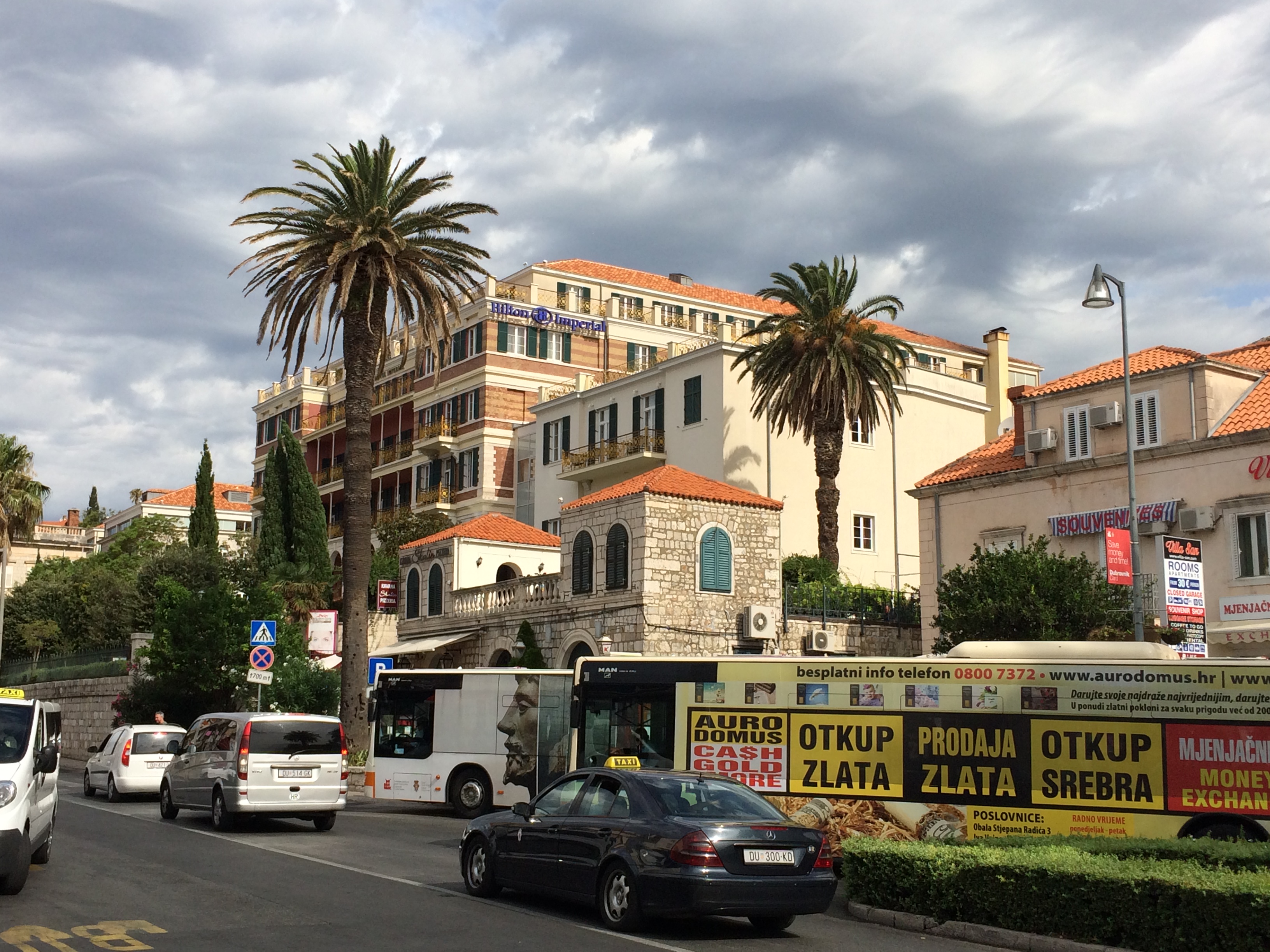
According to Wikipedia, Dubrovnik is one of the most prominent tourist attractions in the Mediterranean, which began with the construction of the Hotel Imperial in 1897.  Sadly, considerable damage was inflicted on Dubrovnik by the forces from Serbia and Montenegro during the breakup of Yugoslavia.

The imposing Hotel Imperial in Dubrovnik.

The imposing Hotel Imperial in Dubrovnik, built in 1897.

IMG_5413

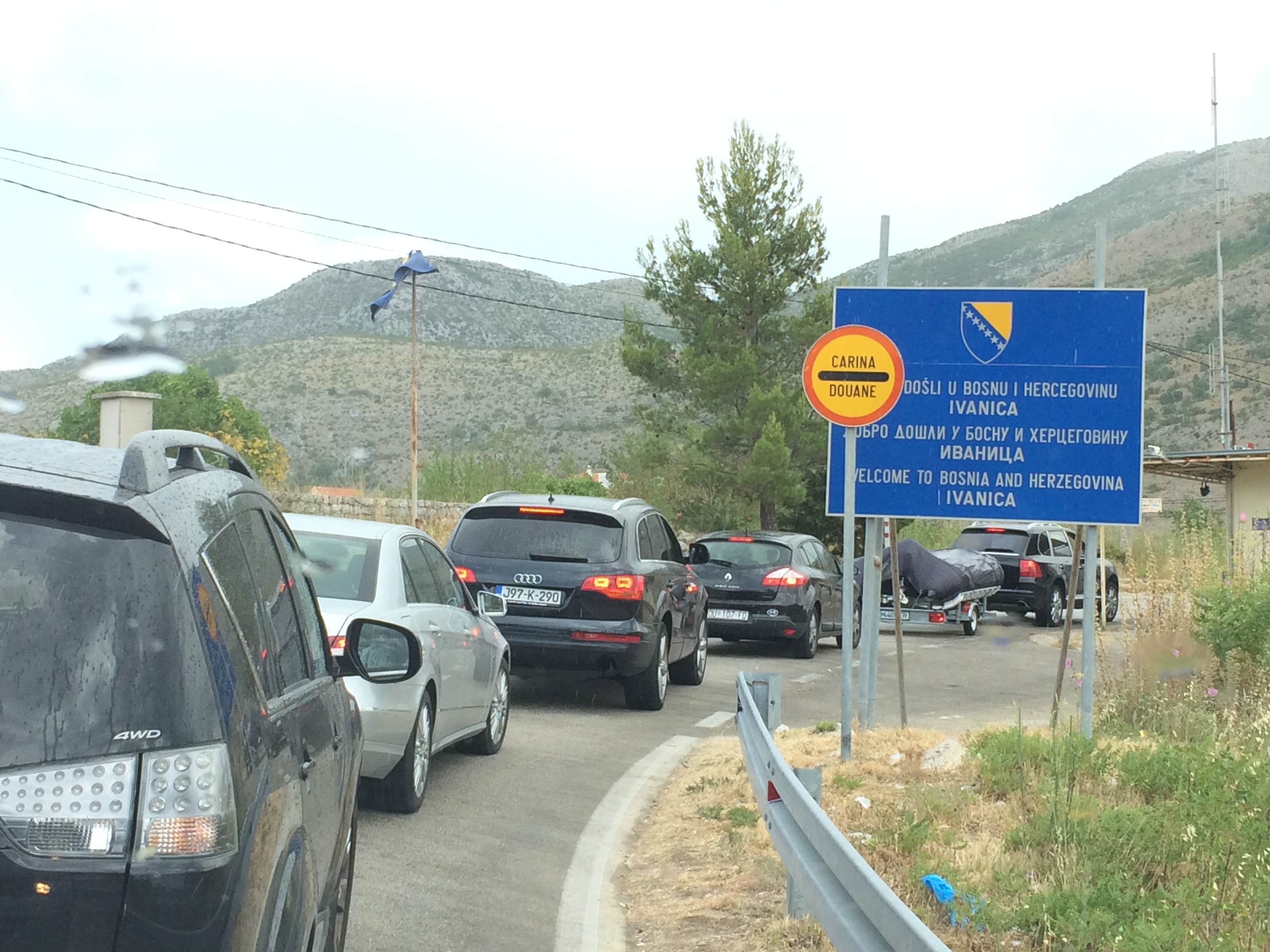
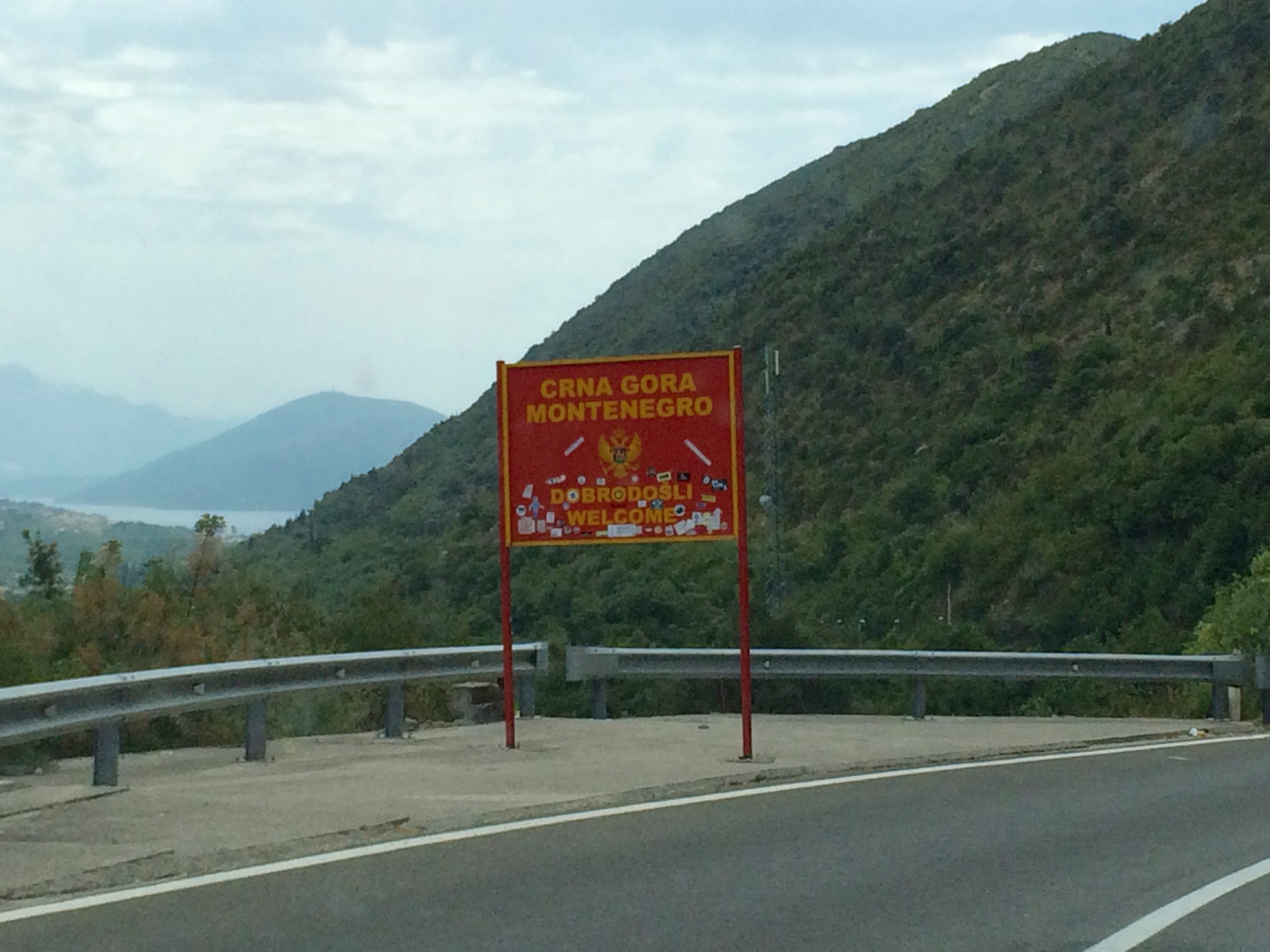
Our original plan included a drive through Bosnia and Macedonia (FYRM) so we left Croatia and drove into Bosnia.  The border guards were so unpleasant and the purchase of a green card so prohibitive that we decided to turn around and go via Montenegro and Albania instead.  However, we can claim to have at least crossed into Bosnia for all of 200 meters or so.

The queue of cars waiting to cross into Bosnia and Herzegovina (or Ivanica as it is called locally).

The queue of cars waiting to cross into Bosnia and Herzegovina (or Ivanica as it is called locally).

We turn round and head for Montenegro instead.

We turn round and head for Montenegro instead.

IMG_5455

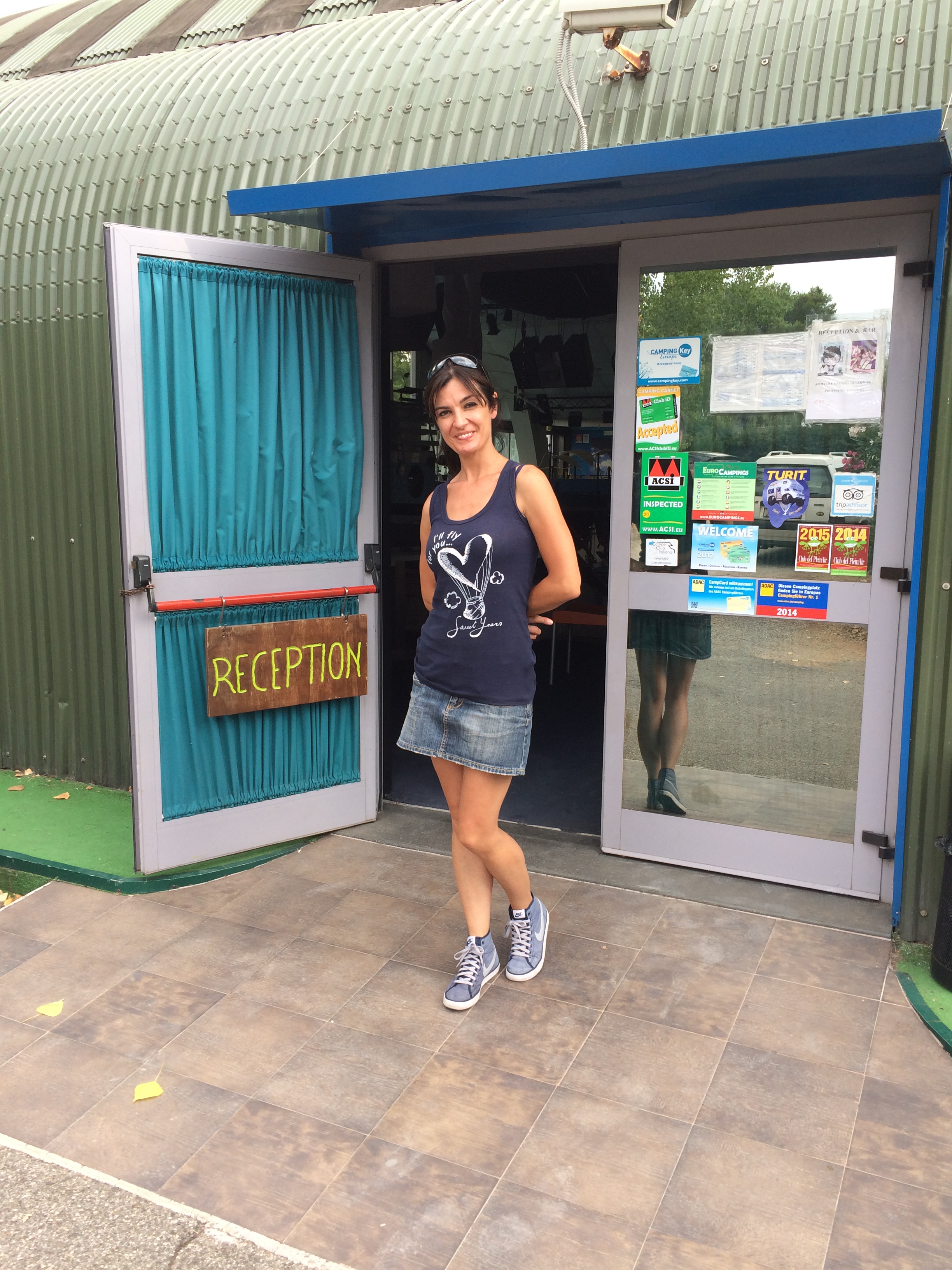
Following Montenegro’s beautiful coastline, we stopped at the picturesque seaside village of Tivat at a small hotel for lunch.  The Carruba Eco Hotel (www.septemberhotels.com) and restaurant overlooking the sea were lovely, the food excellent and the waiters kind and helpful and in marked contrast to our experience on the overnight ferry the night before!  Many Brits are buying second homes in Montenegro and we could see why – the north coast is quite stunning.

The charming small village and hotel where we stopped for lunch.

The charming small village and hotel where we stopped for lunch.

Delicious grilled squid Montenegran-style.

Delicious grilled squid Montenegran-style.

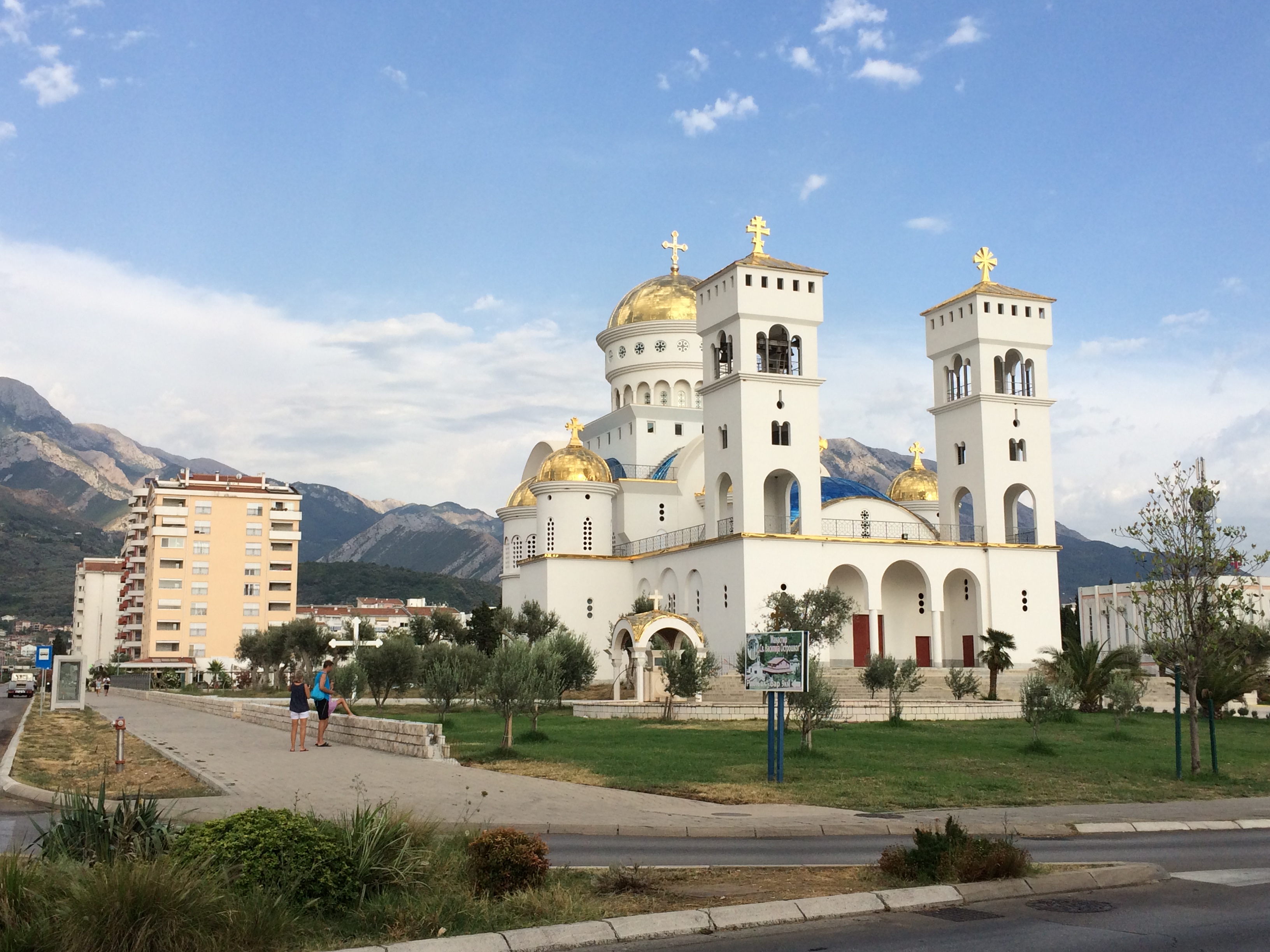
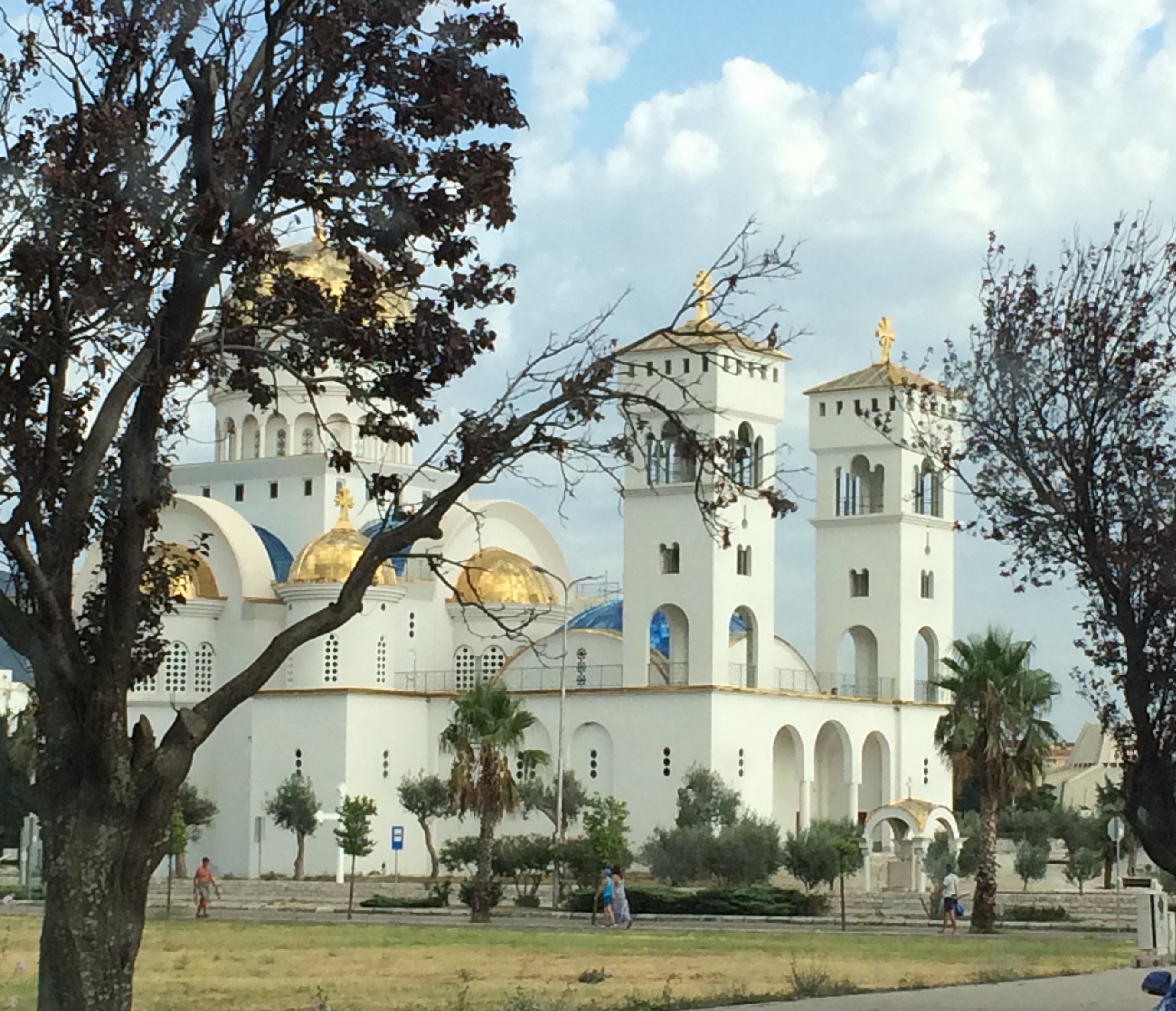
Moving further south we arrive at a town called ‘Bar’ which is of no specific interest and looks quite nondescript, until that is we spot a most magnificent church, newly-built and standing out like the crown jewels in a jumble sale.  We stop to take photos and find out what it’s called.  Everything is in Montenegran and the only other people there admiring it are Polish and unable to help.  We ask an attendant at the petrol station across the road and she has to go inside to ask what it’s called! “Sveti Yohan Vladimir” she comes back saying.  We assume ‘Sveti’ to mean ‘Saint’.

Sveti Yohan Vladimir cathdral

Sveti Yohan Vladimir cathedral in Bar, Montenegro.

Another view of the amazing cathedral in Bar.

Another view of the amazing cathedral in Bar.

Heading further south after leaving Bar, the beaches become more crowded and ‘seaside-like’.   It seemed common for men to walk around bare chested, often in their speedos, walking with a strut which was slightly intimidating.  We spent a long time looking for a campsite without success and decided to find a hotel, also without success.  Lots of signs advertised rooms to let and this is what we did.  Our initial very positive impressions very quickly faded as we were shown to our room which was made even worse as, at that moment, the heavens opened and torrential rain poured down.

As we move further south in Montenegro, evidence of the changing ethnic mix becomes more apparent.

As we move further south in Montenegro, evidence of the changing ethnic mix becomes more apparent.

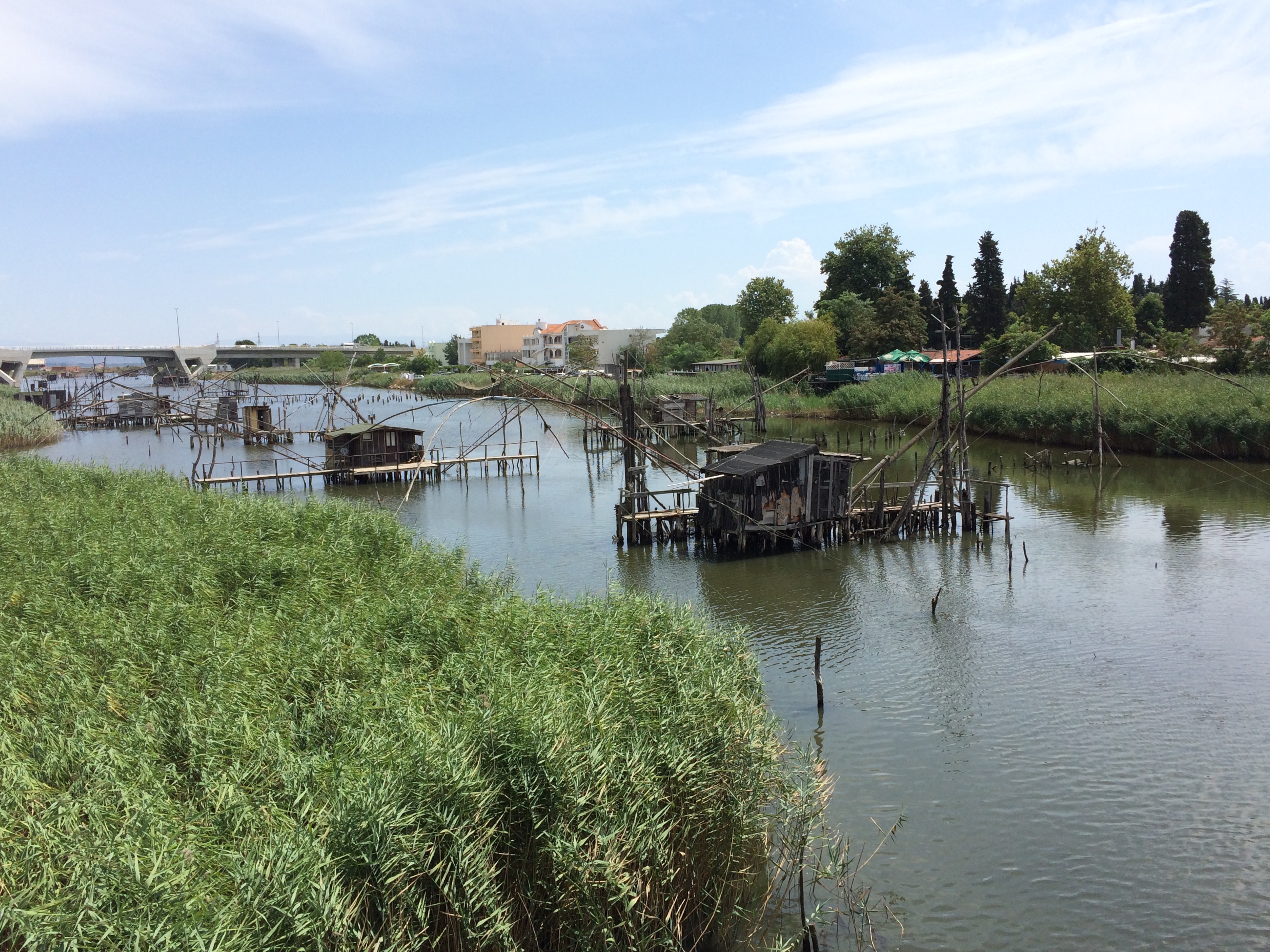
Distinctive river fishing method, reminiscent of the overhanging wooden structures we saw in Vieste in Puglia.

Distinctive river fishing method, reminiscent of the overhanging wooden structures we saw on the Italian side of the Adriatic.

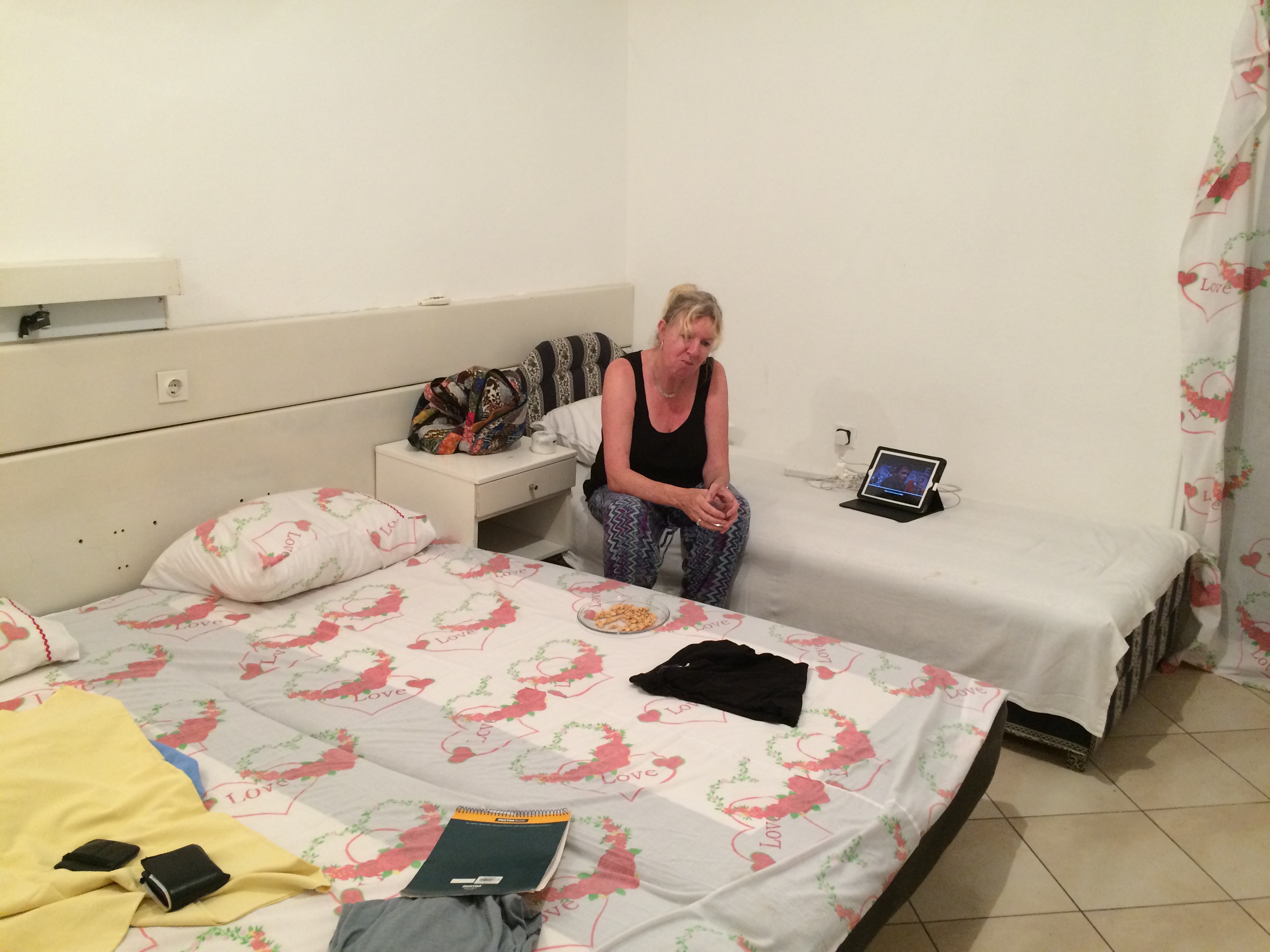
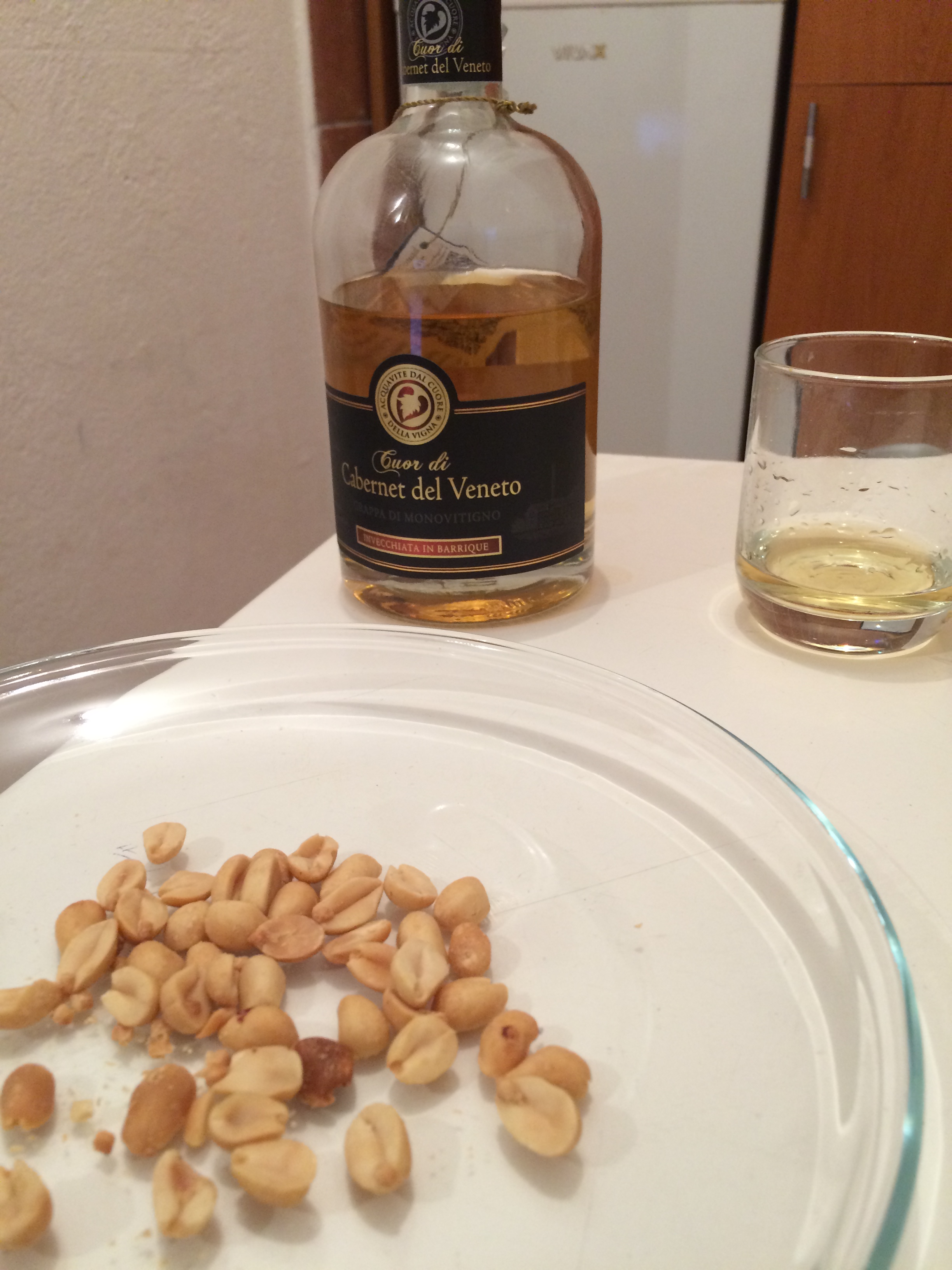
It was a ground floor room which contained two beds, an area that could loosely be described as a kitchenette and a bathroom.  It was dirty, neglected, had broken fittings and no curtains at the windows. When the people upstairs used their bathroom it resonated in ours!  It also cost €50s which was nothing short of robbery.  We got some things from Brenda, put a sheet up to cover the window, ate a supper of peanuts and drank half a bottle of grappa!

The Euro 50 'room' with no curtains and dirty bathroom and dodgy plumbing we were obliged to spend a night in.

The Euro 50 ‘room’ with no curtains, dirty bathroom and dodgy plumbing we were obliged to spend a night in.

A supper of peanuts and half a bottle of grappa to make it bearable.

A supper of peanuts and half a bottle of grappa to make it bearable.

Next morning we left as quickly as possible.  The owner came to say goodbye and had the cheek to ask if we had liked the room!

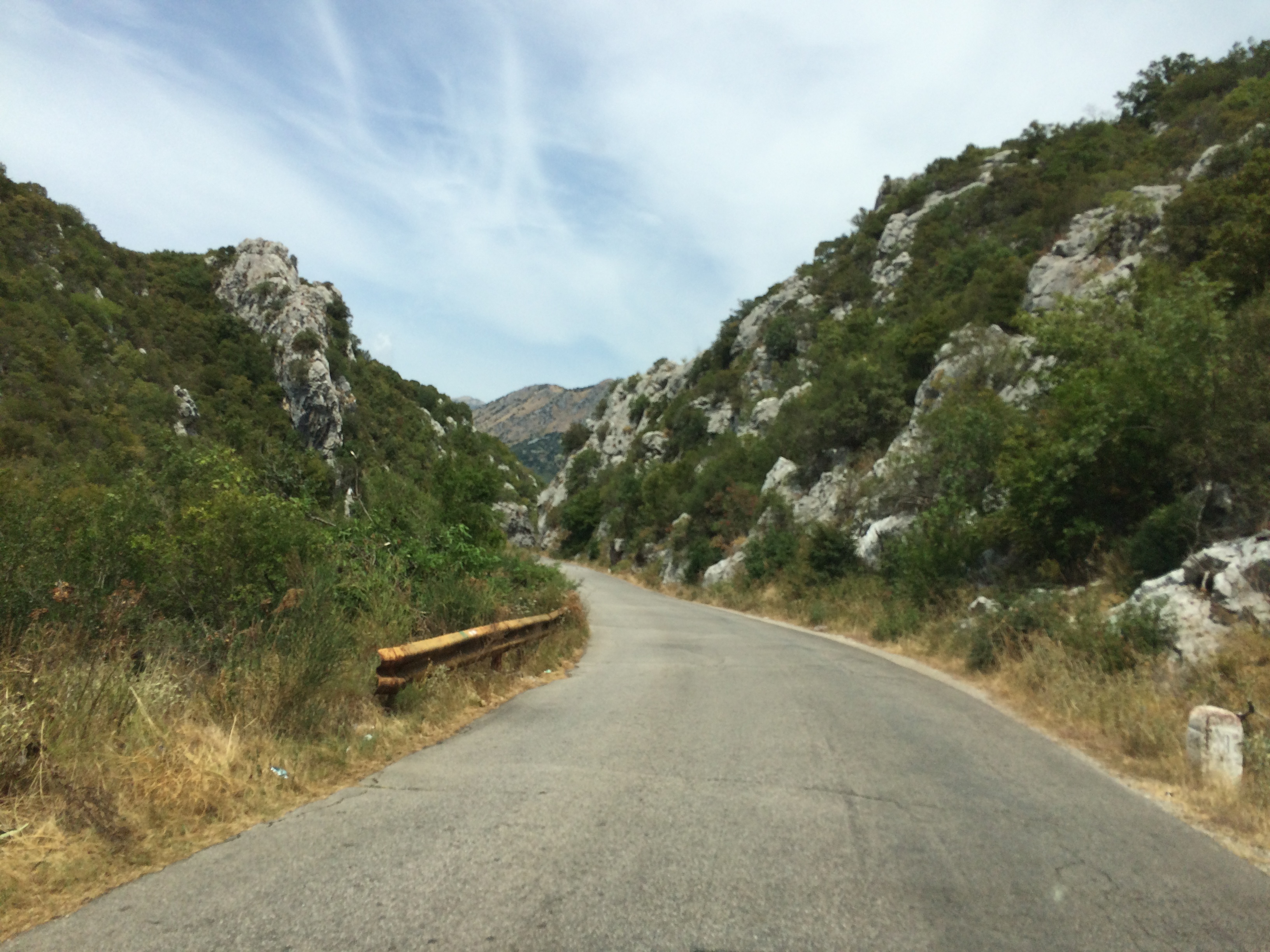
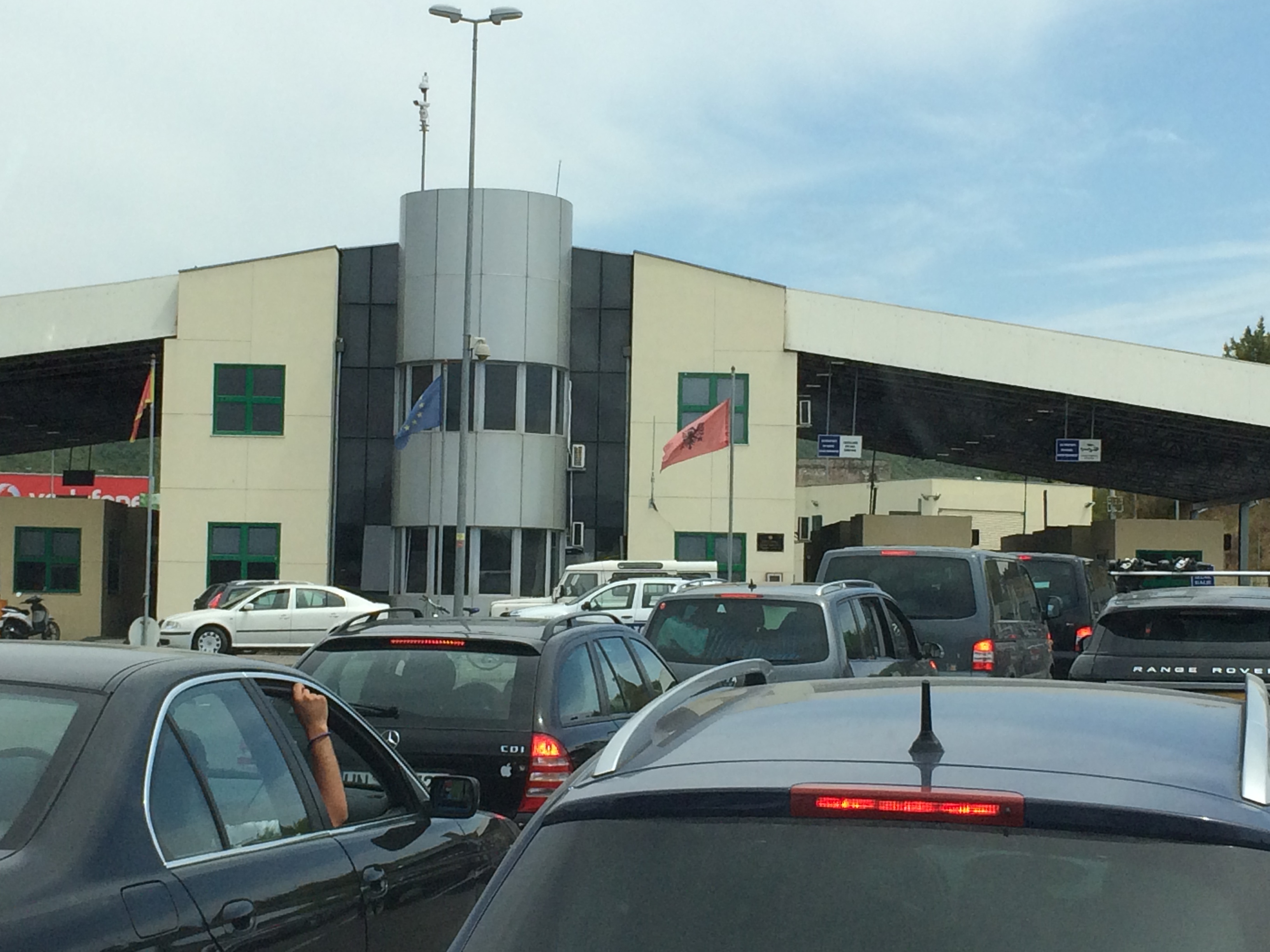
Our next destination was Albania and we were excited and curious to see if much had changed since the demise of Enva Hocker (not that we’d seen it before!).

The road to Albania.

The road to Albania.

The Albanian border.

The Albanian border.

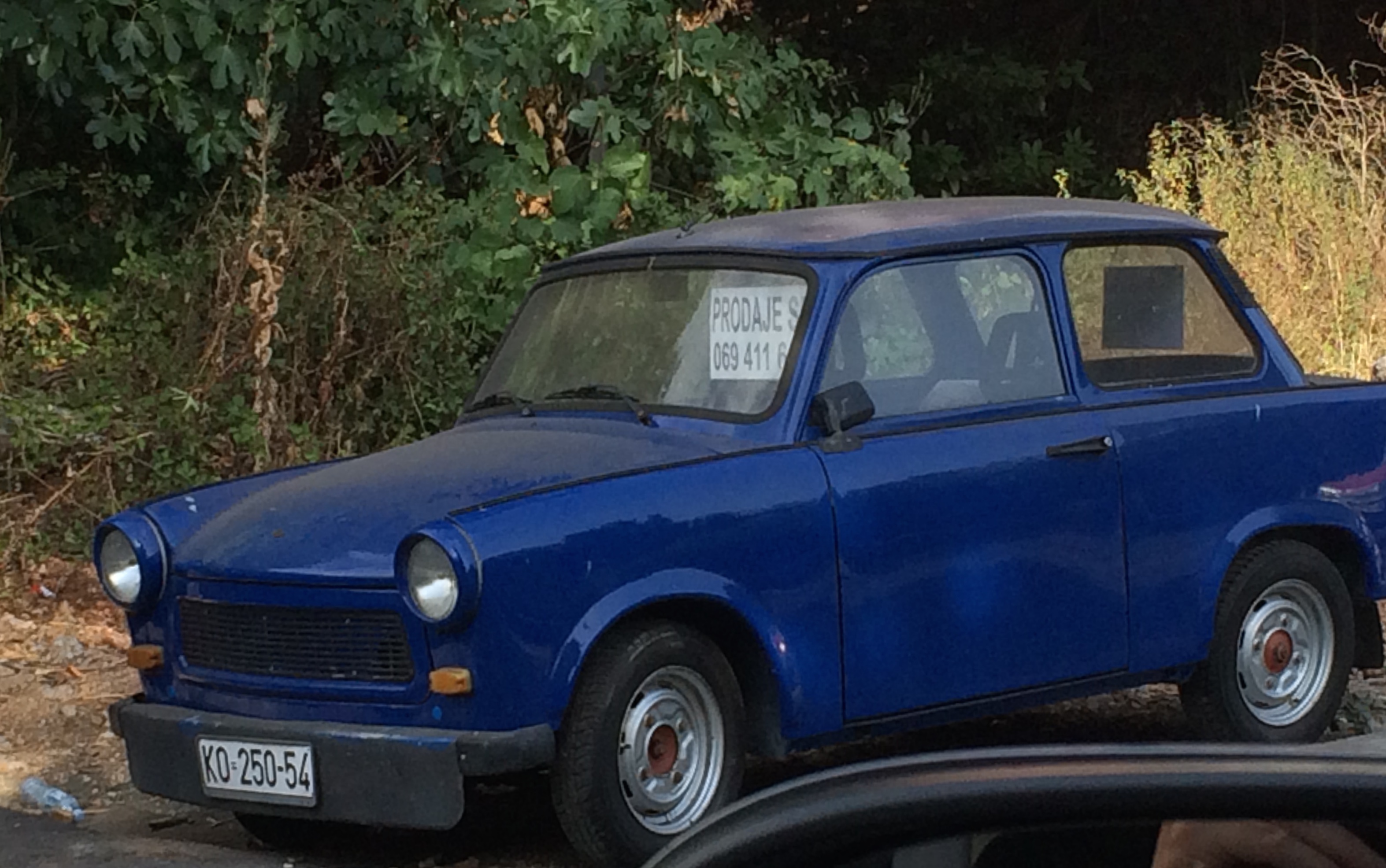
An old Eastern-block era car for sale.

An old Eastern-block era car for sale.

IMG_5459

Saturday 1st – Sunday 2nd August – Alberobello and Lecce

Standard

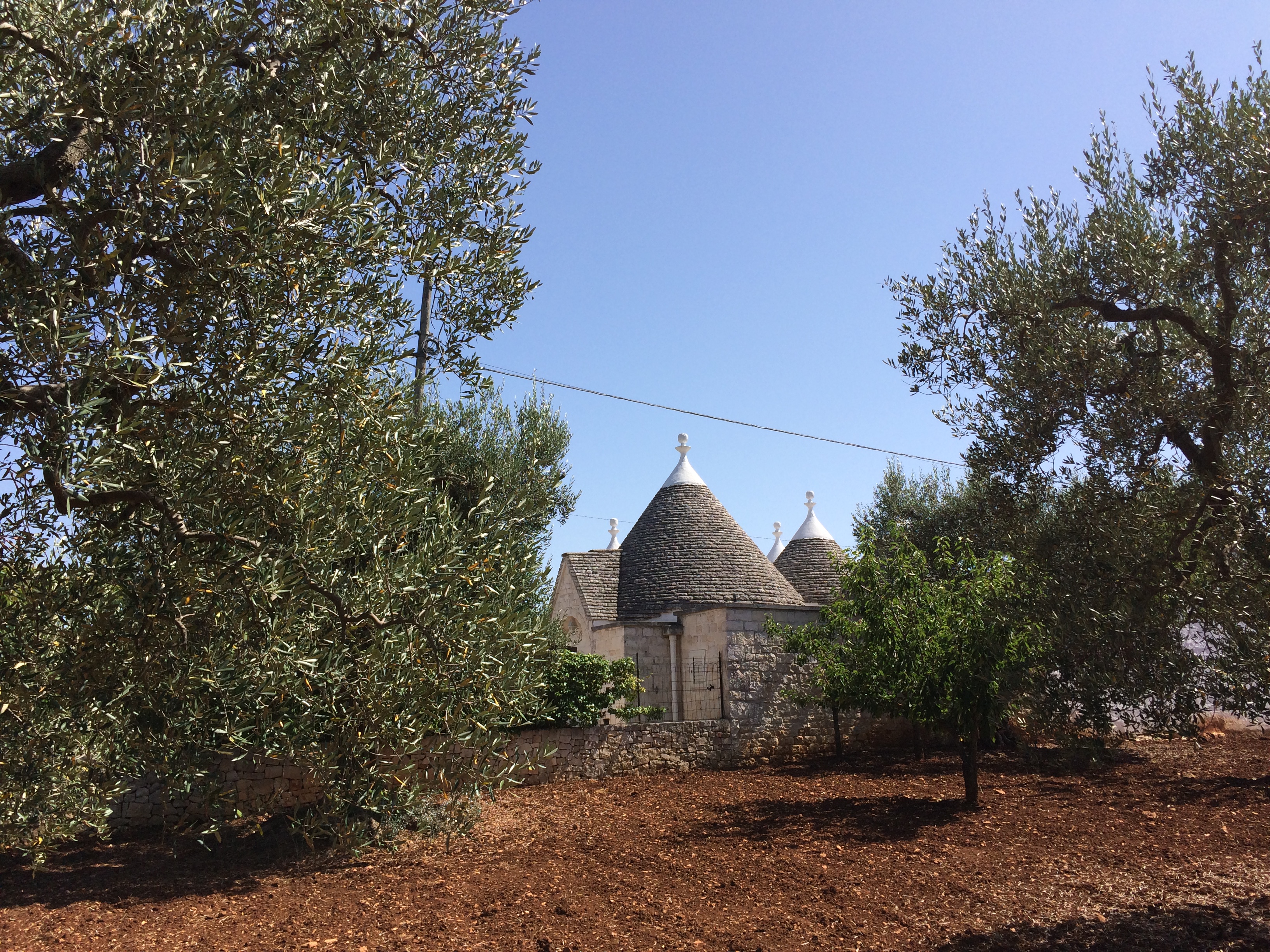
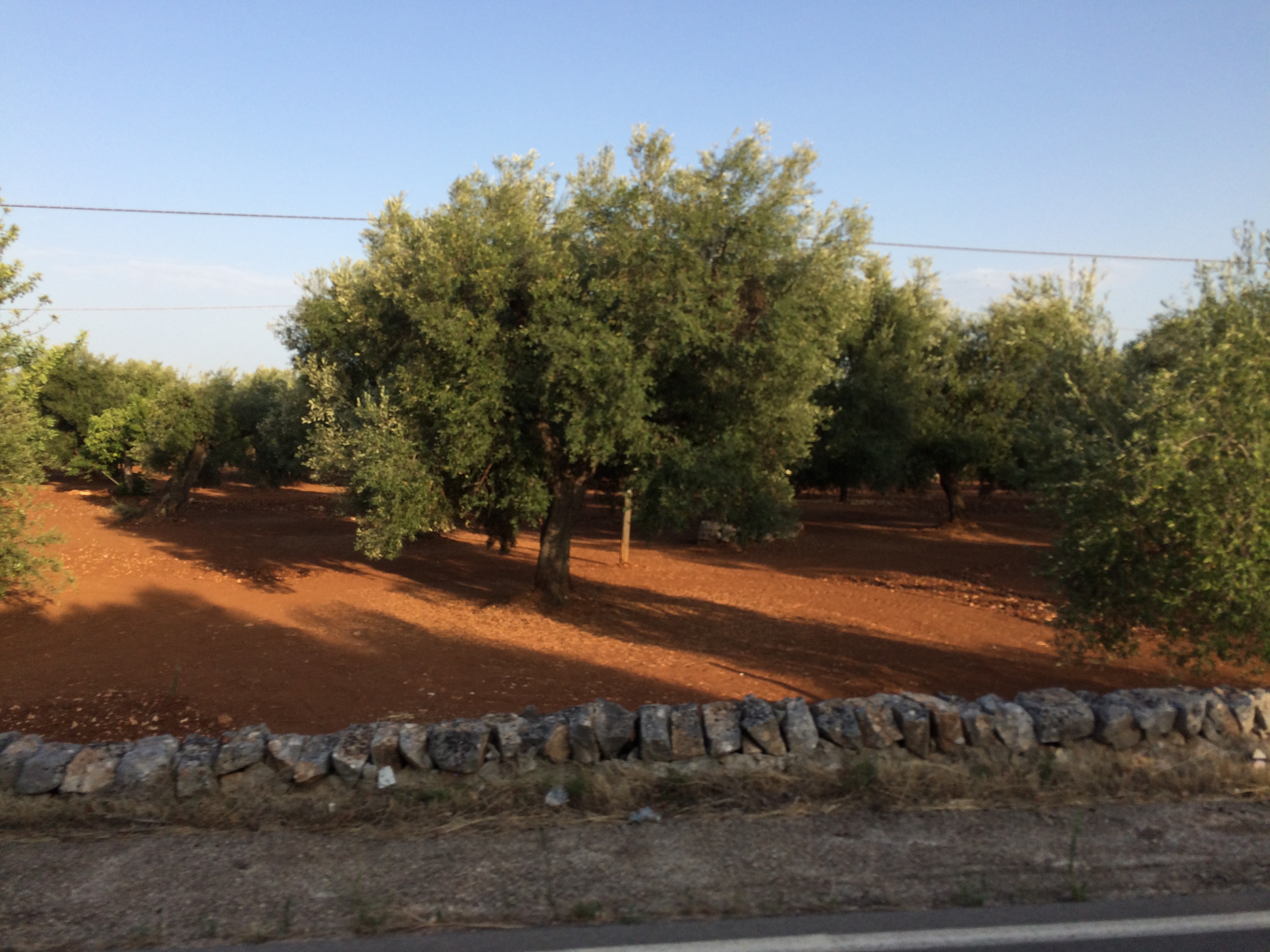
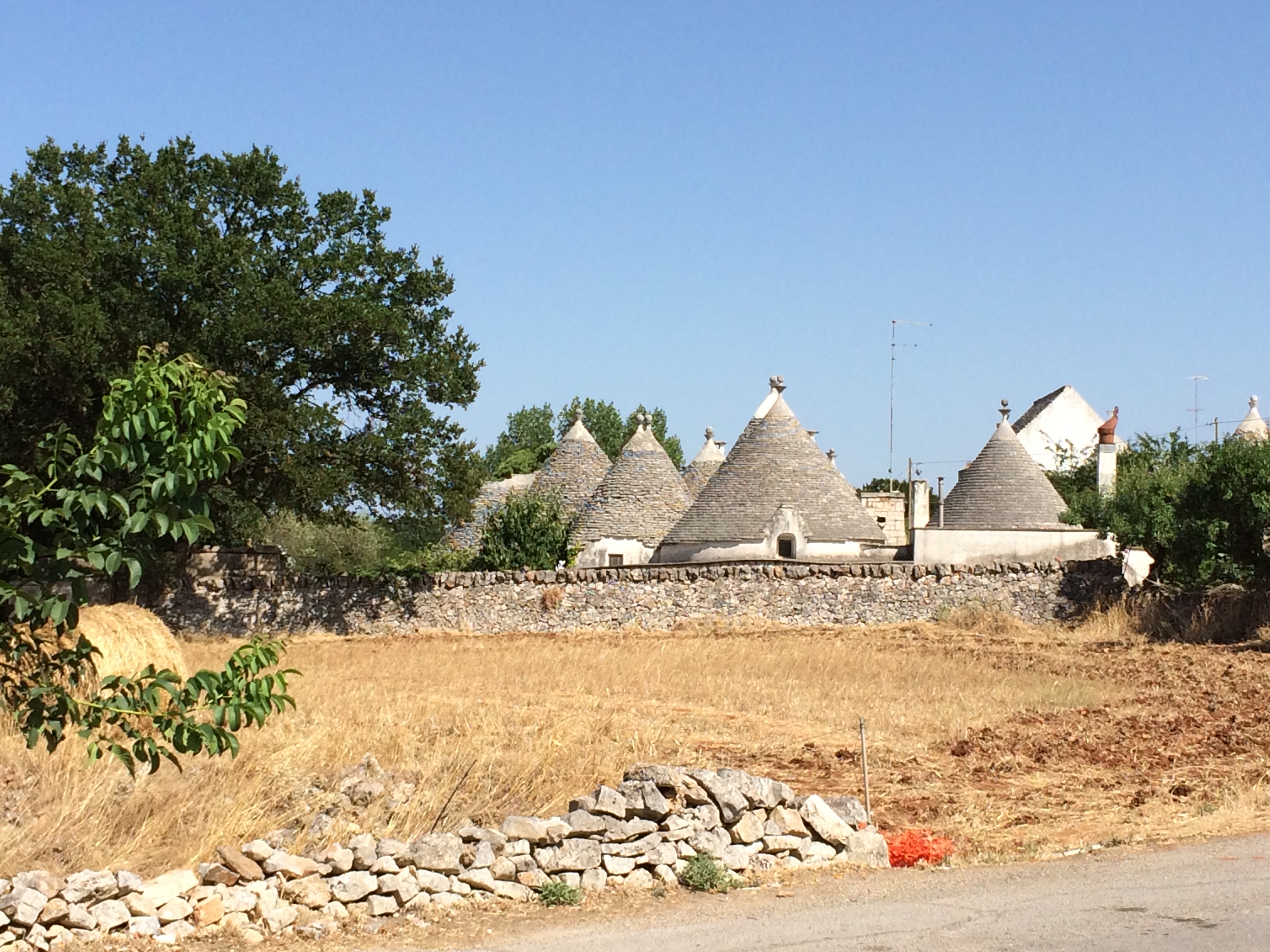
Leaving Bari, we were heading south towards Lecce.  Around Monopoli however, we started spotting small apparently derelict hobbit-like huts in the middle of fields and olive groves.  We’d heard of these and assumed they were around Lecce, but seeing signs to ‘Alberobello – citta dei trelli‘ pointing inland, we thought they’d be worth a quick look and took the turning.  The road took us up beautiful hilly countryside, with more recently-built trulli cottages springing up more and more frequently and rich red clay soil and olive groves all around.  We realized that trulli were not just interesting remnants of old disused dwellings but very much the standard style of cottage people built and lived in in this area.  That’s not to say all houses were trulli but many were and sometimes, cottages were a combination of conventional houses with trulli attached. The overall effect of trulli cottages, olive groves and red soil was very aesthetically pleasing.

Trulli become more frequent as we approach Arbarobello.

Trulli become more frequent as we approach Arberobello.

Rich red soil and olive groves all around.

Rich red soil and olive groves all around.

Trulli in Locorotondo (the round place) on the way from Albarobello to Lecce.

Trulli in Locorotondo (the round place) on the way from Alberobello to Lecce.

IMG_5260

Another thing that was also quite pleasing was that the air at this higher altitude became cooler and less humid. After the last few days of relentless heat and debilitating humidity, it was heaven to be able to breathe some fresher air and there was actually a breeze up here – we’d forgotten what that felt like! It was early evening by the time we reached the outskirts of Alberobello (literally meaning ‘the beautiful tree’) and spotting the ‘Camping dei Trulli’ a few kilometers before reaching the town we had no trouble in deciding that this was where we would spend the night or maybe even the next two nights.  We cycled into Alberobello that evening and drove to Lecce the next day and back to the campsite though that was a longer drive than we’d anticipated and Lecce itself left us, its rather grandiose ostentatious and baroque architecture notwithstanding, somewhat indifferent. To be fair though, it was probably more to do with us reaching saturation point as regards historical city tours.

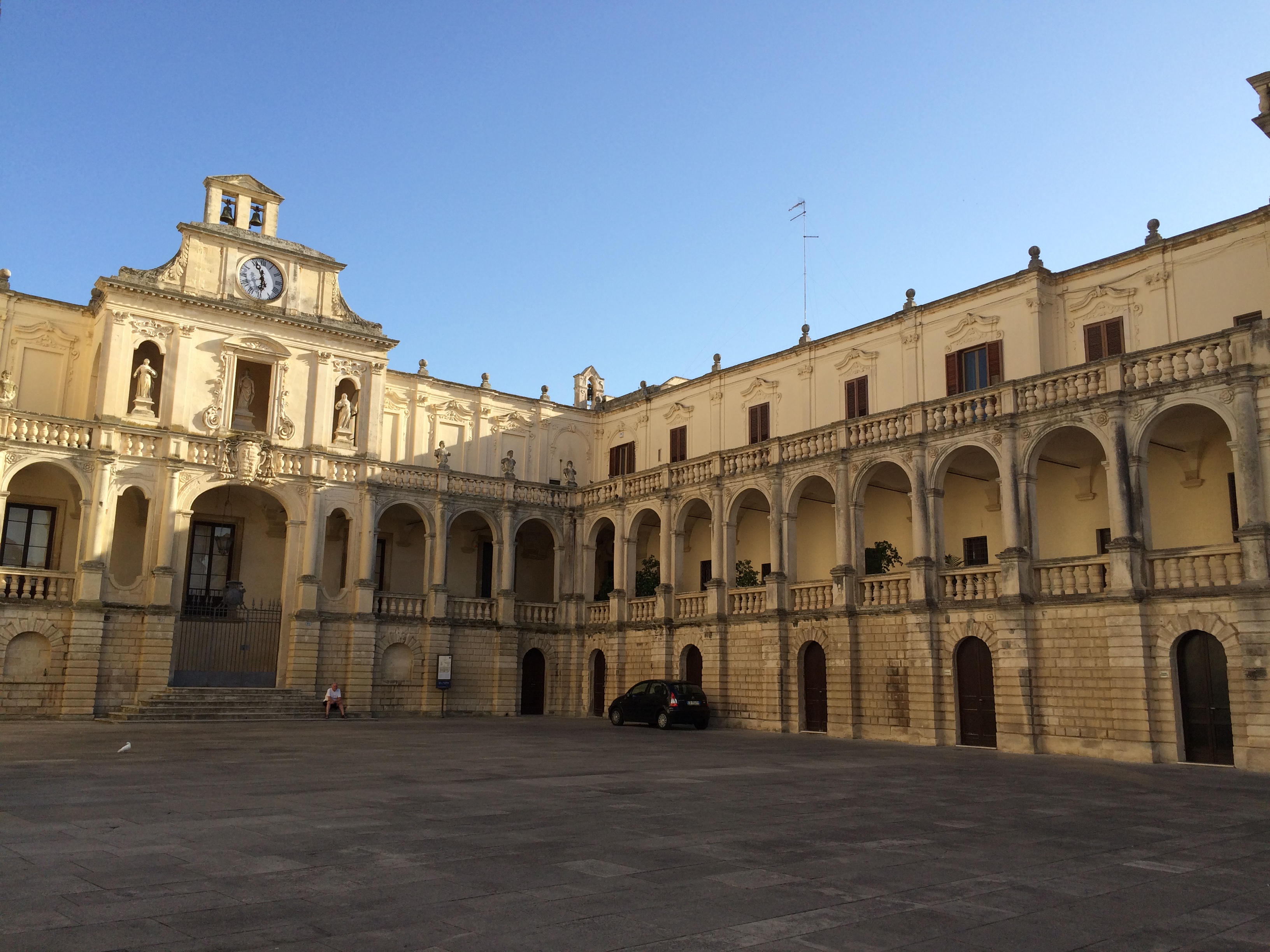
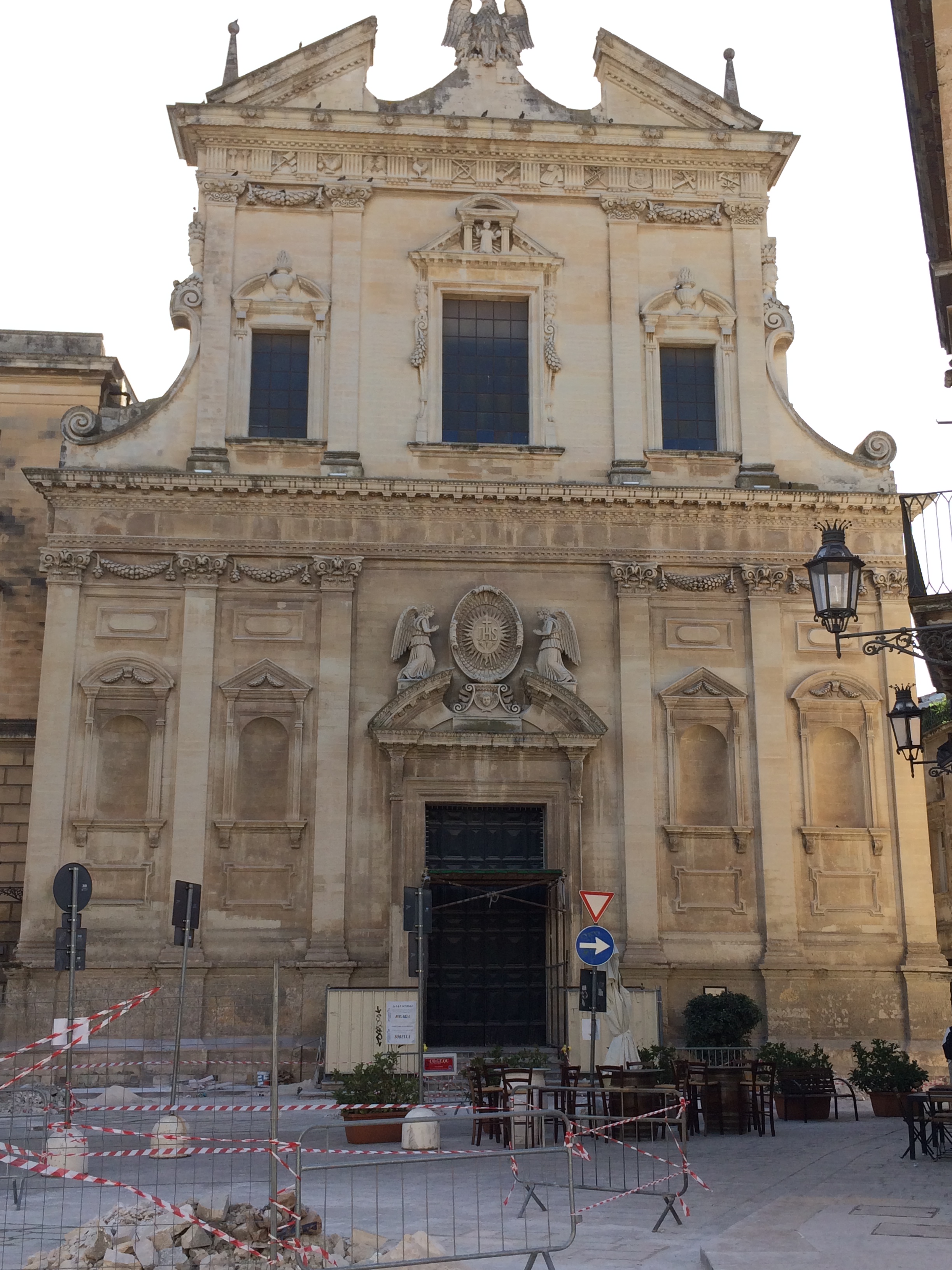
The Piazza Duomo, Lecce.

The Piazza Duomo, Lecce.

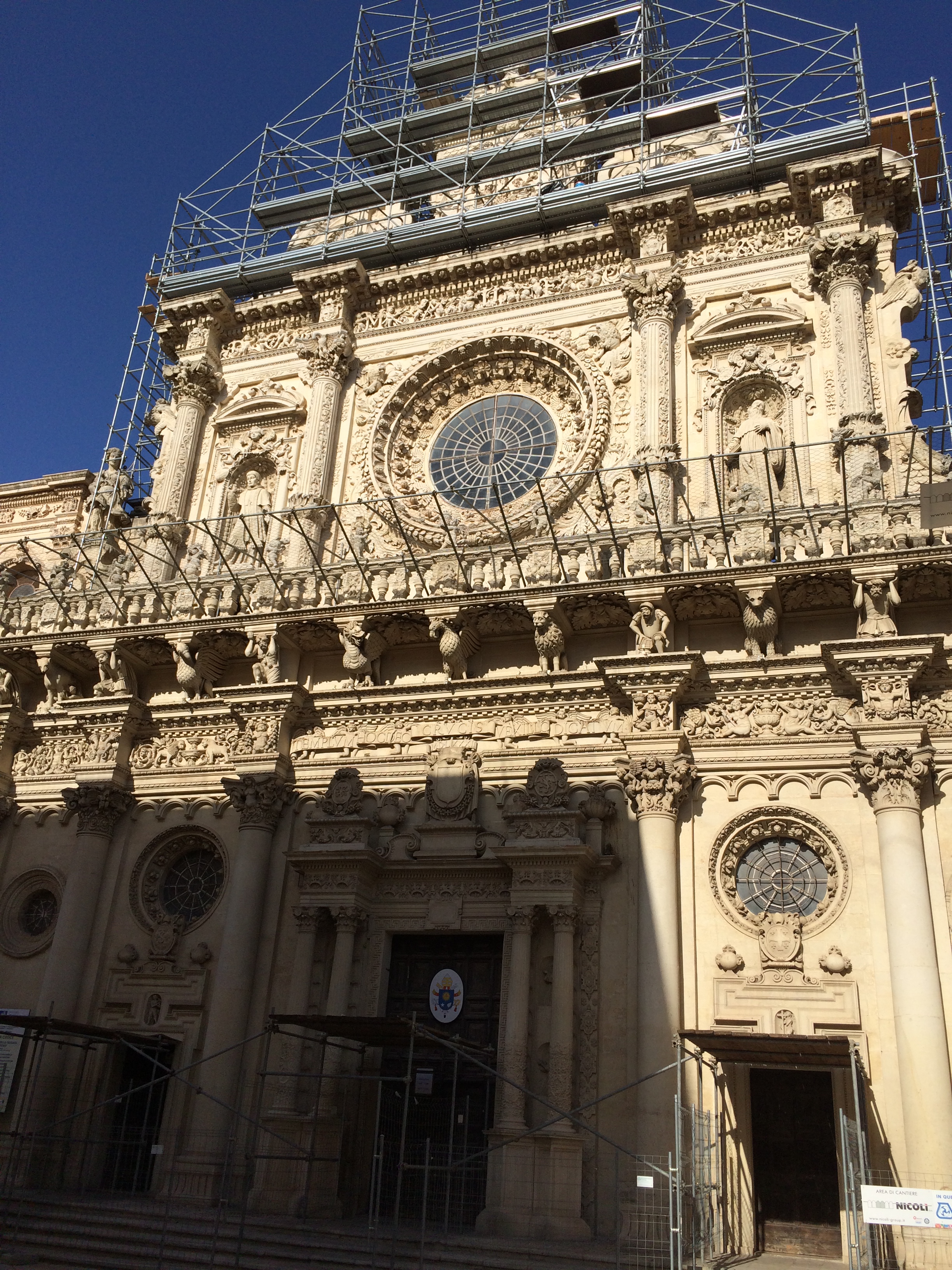
The Basilica and Celestine Convent in Lecce - an example of Leccese Baroque.

The Basilica and Celestine Convent in Lecce – an example of Leccese Baroque.

Another example of florid Lecce Baroque.

Another example of florid Lecce Baroque – the Santa Chiara cathedral.

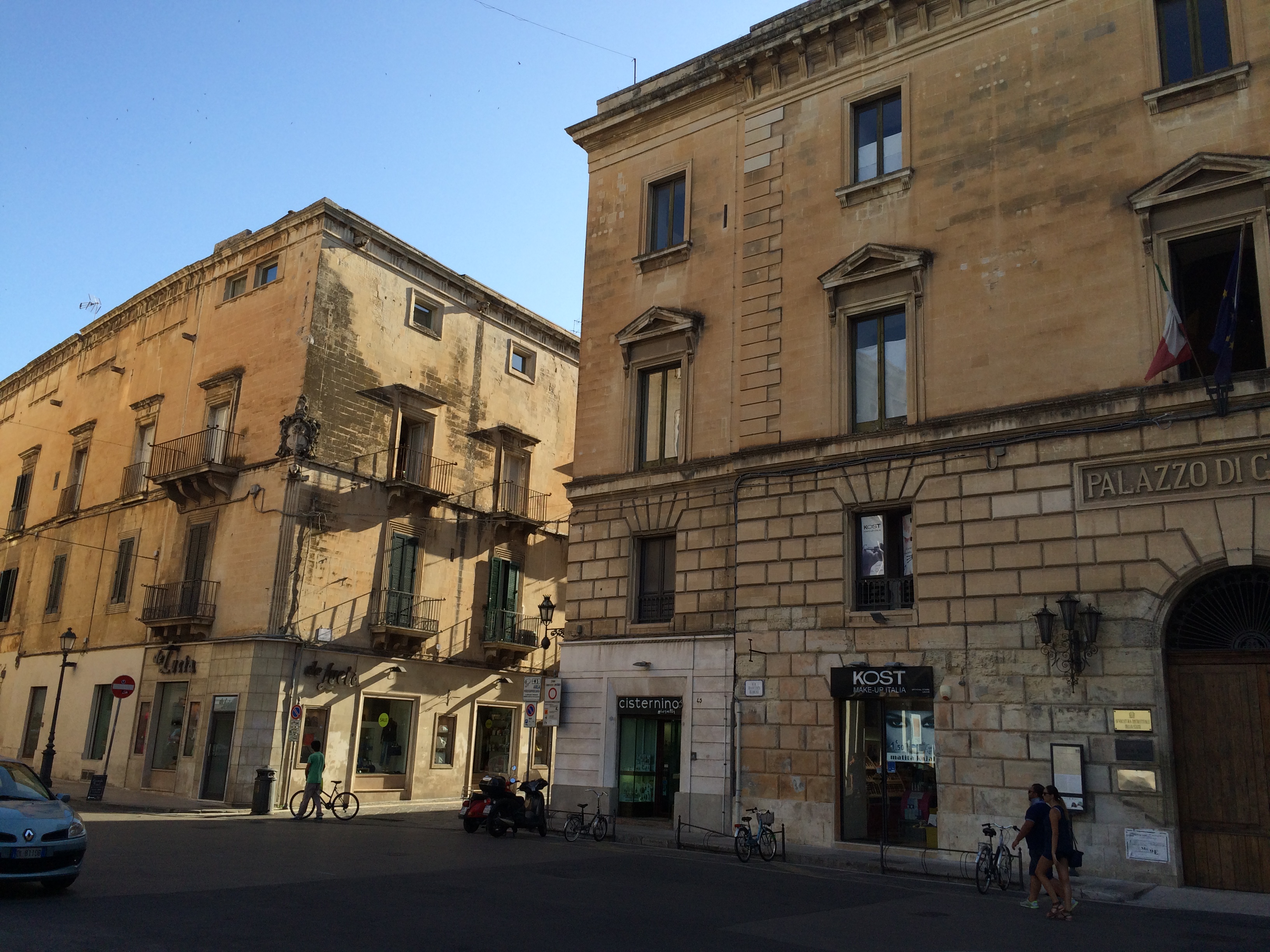
A street near the central square in Lecce.

A street near the central square in Lecce.

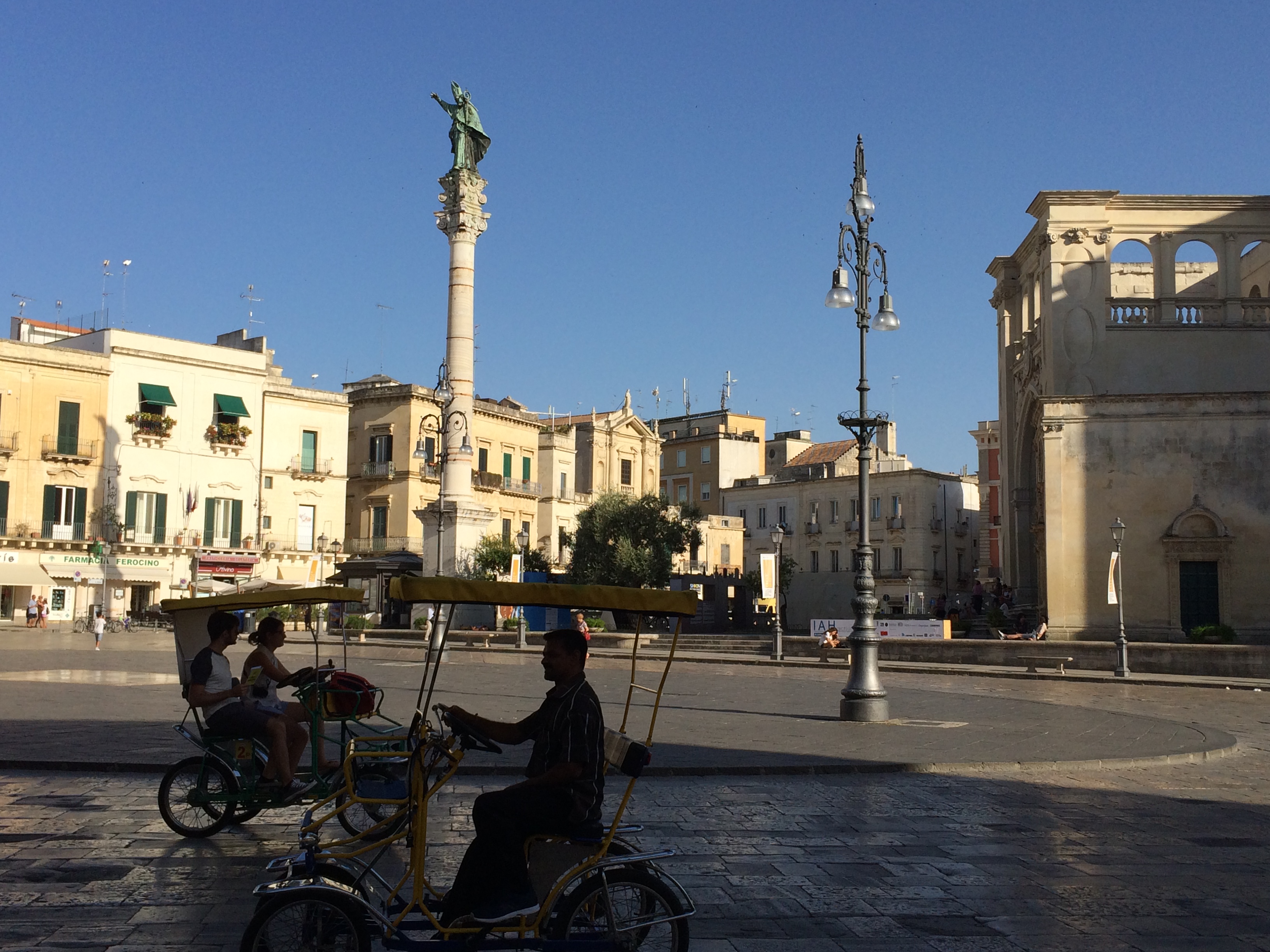
The central square dominated by the statue of a former Pope and the Roman amphitheater beneath it.

The central square dominated by the votive column supporting a statue of the saint-protector of the city, Sant’Oronzo to whom was attributed the fact that the city was spared the plague that ravaged the whole of Southern Italy in 1656.

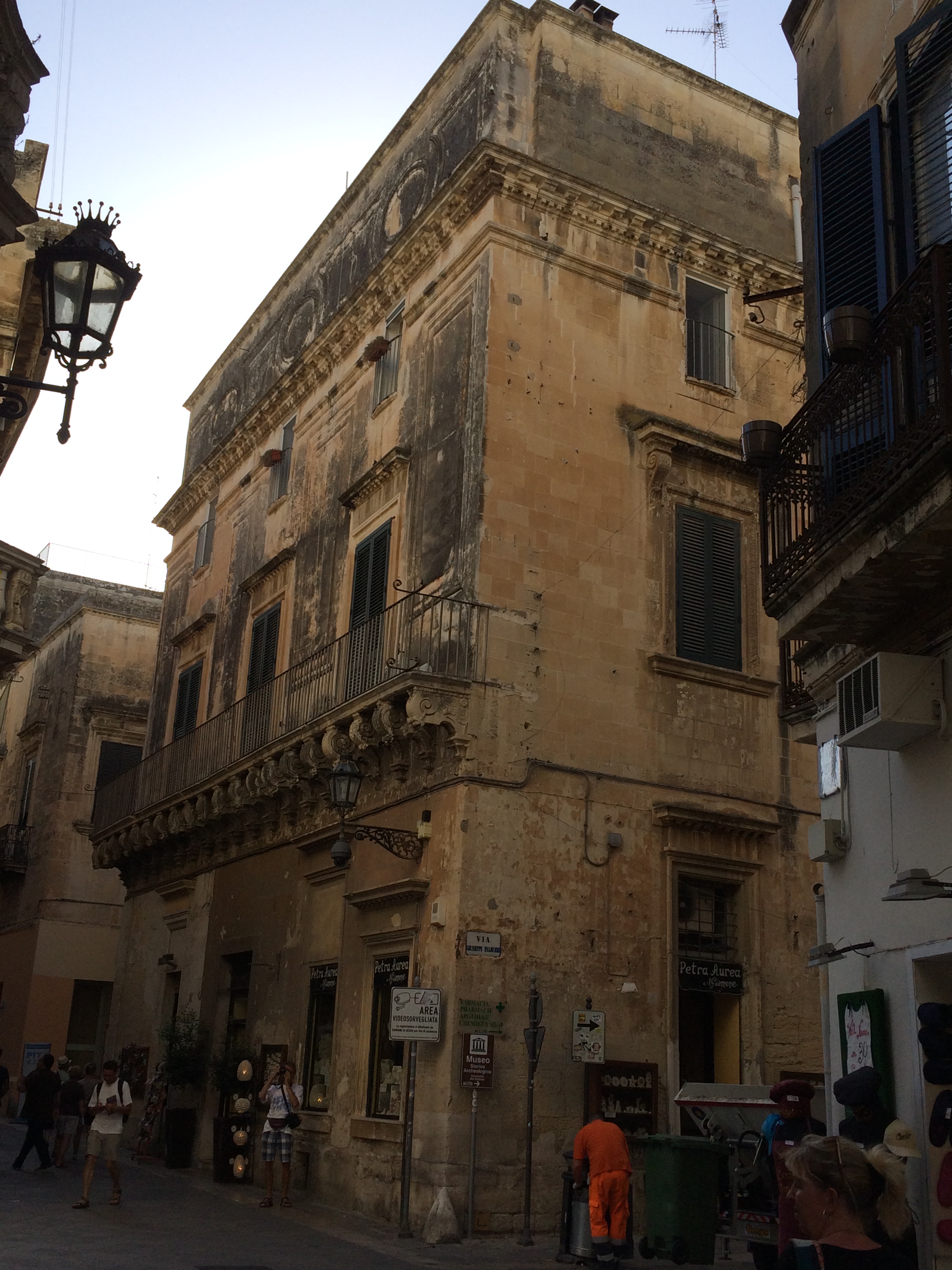
More ornate architecture.

More ornate architecture.

L

L

L

L


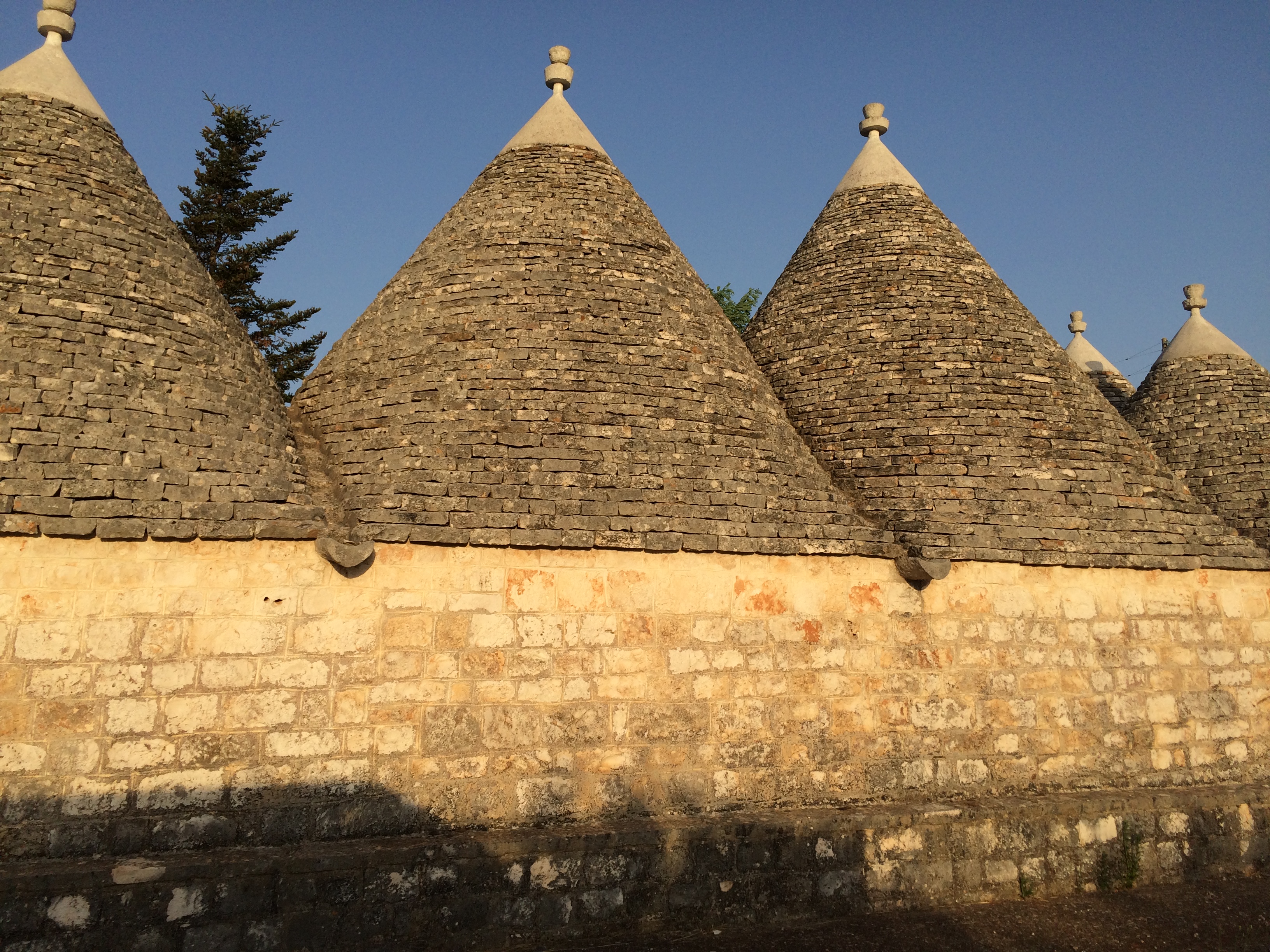
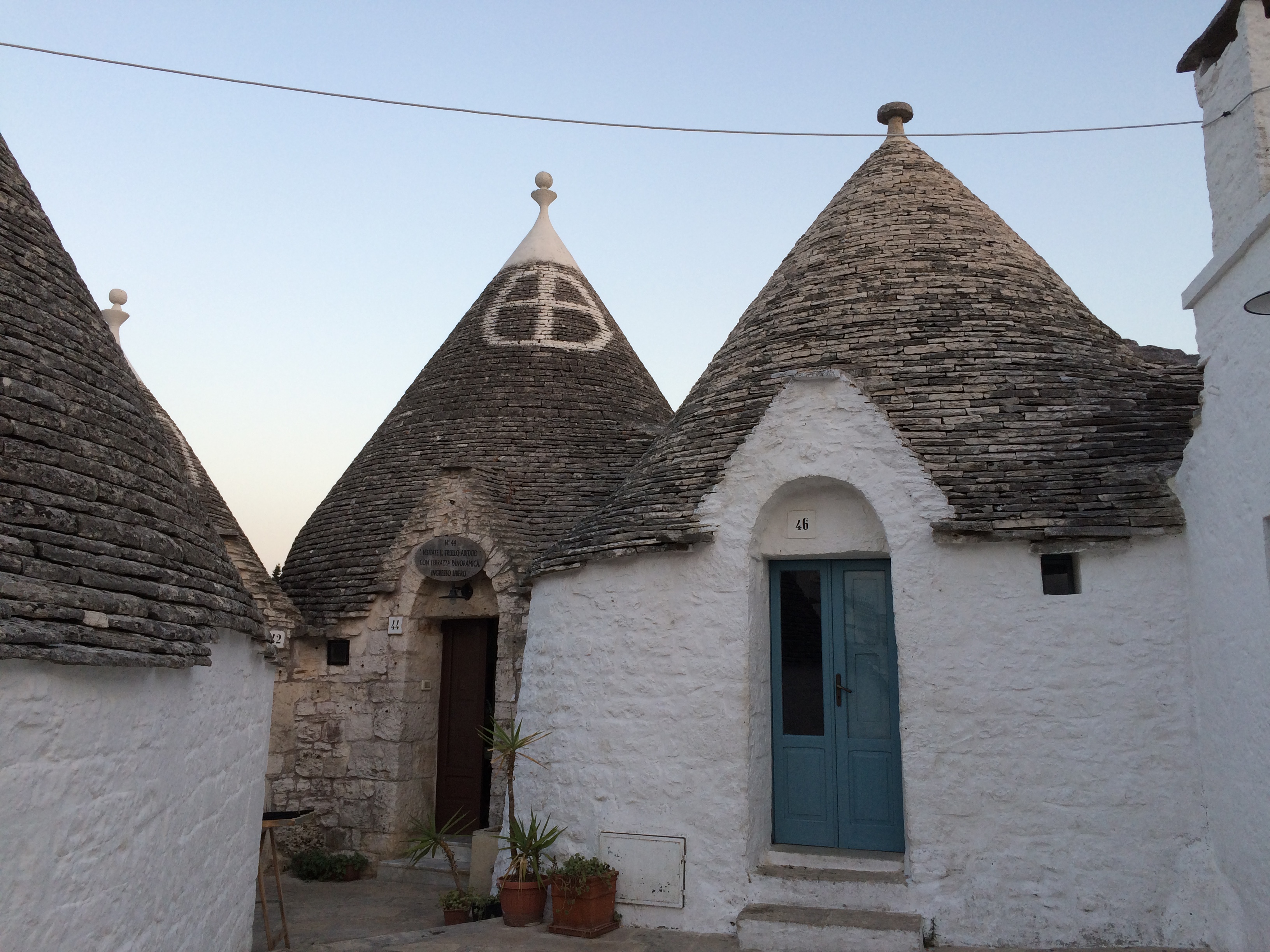
Alberobello is a World Heritage site.  Its famous trulli are dry stone huts with conical roofs which can be seen all around this part of Puglia, where they litter the landscape and look quite distinctive.  The walls are very thick and they were usually built in groups of up to (and never more than) five , with interconnecting doors.  Originally designed for agricultural workers, storage and animal stock they’ve now been incorporated into larger dwellings. Some trulli have signs inscribed on their roofs which denote the stonemason who built them.  It was a little disappointing to find that Alberobello itself had been turned into a little theme-park for tourists with everything in it designed to cater for tourists and little sign of an authentic living, breathing village.  Many houses had signs inviting people to come inside to see what an authentic old trullo looks like indoors, only to find that it was yet another gift and souvenir shop.  It’s of course hypocrisy of the highest order to say this, but one thing we found a bit depressing on this journey was the extent to which anything or place which is of interest being repackaged and served up to the visitor by the tourist industry before you have a chance to discover it for yourself, as would have been the case perhaps not so long ago.

Albarobello village - a World Heritage Site, but a little too touristic.

Alberobello village – a World Heritage Site, but a little too touristic.

Some trulli have signs on the roofs denoting the architect, though it's also claimed they have more ancient origins.

Some trulli have signs on the roofs denoting the architect, though it’s also claimed they have more ancient origins.

J

Judith in Alberobello.

The Camping dei Trulli, catering mainly for Italian campers was lovely if a touch noisy though this seems to be a common feature of Italian campsites at this time of year and from as early as 10am a large loudspeaker at the swimming pool would blare out Italian rap (!).  The pool was a decent size though and a separate lane had been cordoned off for lap-swimmers, a very unusual and highly-appreciated feature – though children clearly neither understand nor respect the concept and swimming laps can easily turn into giving demos of different strokes or having pretend races with assorted kids who wander into the lane!

It was expertly managed by Connie who was not only friendly, helpful and charming the whole time but also very knowledgeable about the history of Puglia.  At one point Flavio found her in animated conversation with another local figure about Frederick II and they were both agreed he was right to be considered the most gifted and extraordinary of the medieval Roman Emperors.  He spoke many languages and was a great diplomatist. Through his early years in Sicily, he knew Arabic and all the Arab rulers.  He was the only one to manage to bring back from Jerusalem the keys to the Holy Sepulcher without spilling a drop of blood – when he went to Rome to present them to the Pope, he was duly ex-communicated for his trouble, they said laughing!

Connie, the very helpful, efficient and knowledgeable manager of the 'Camping dei Trulli'.

Connie, the very helpful, efficient and knowledgeable manager of the ‘Camping dei Trulli’.

We became friends with Guillaume and Fabienne, a French couple who kindly invited us to visit them in Paris on our way back.  It started when Guillaume reversed their car into a tree soon after they arrived and the back window shattered.  We went to their aid with a dustpan and brush saying we admired their their calm and equanimity, to which they joked that they had ‘found their arberobello’.

Guillame, Fabienne, Julos and Salome who we got to know after they 'found their arbaro bello'!

Guillame, Fabienne, Julos and Salome who we got to know after they ‘found their arbero bello’!


The 'arbero bello' at the Camping dei Trulli!

The ‘arbero bello’ at the Camping dei Trulli!


We drove in the late afternoon on the Sunday back to Bari to catch the ferry to Dubrovnik.  We were both sad to be leaving Italy but will be taking the ferry back to Ancona from Greece on 18th August so it is a brief parting.
Back in Bari.

Back in Bari.

Before boarding the Croatian ferry for the overnight crossing to Dubrovnik.

Before boarding the Croatian ferry for the overnight crossing to Dubrovnik.


IMG_5361

Friday 31st July – Bari

Standard

After leaving Trani, we spent an uncomfortable night in the sweltering heat at a campsite in Giovinazzo just south of Bari, poorly mitigated by a difficult swim off the rocky beach nearby.  Later, a Reggae concert on the beach continued well into the night.

The rocky beach off Giovineza south of Bari. Not very pleasant to swim off.

The rocky beach off Giovinazzo south of Bari. Not very pleasant to swim off.

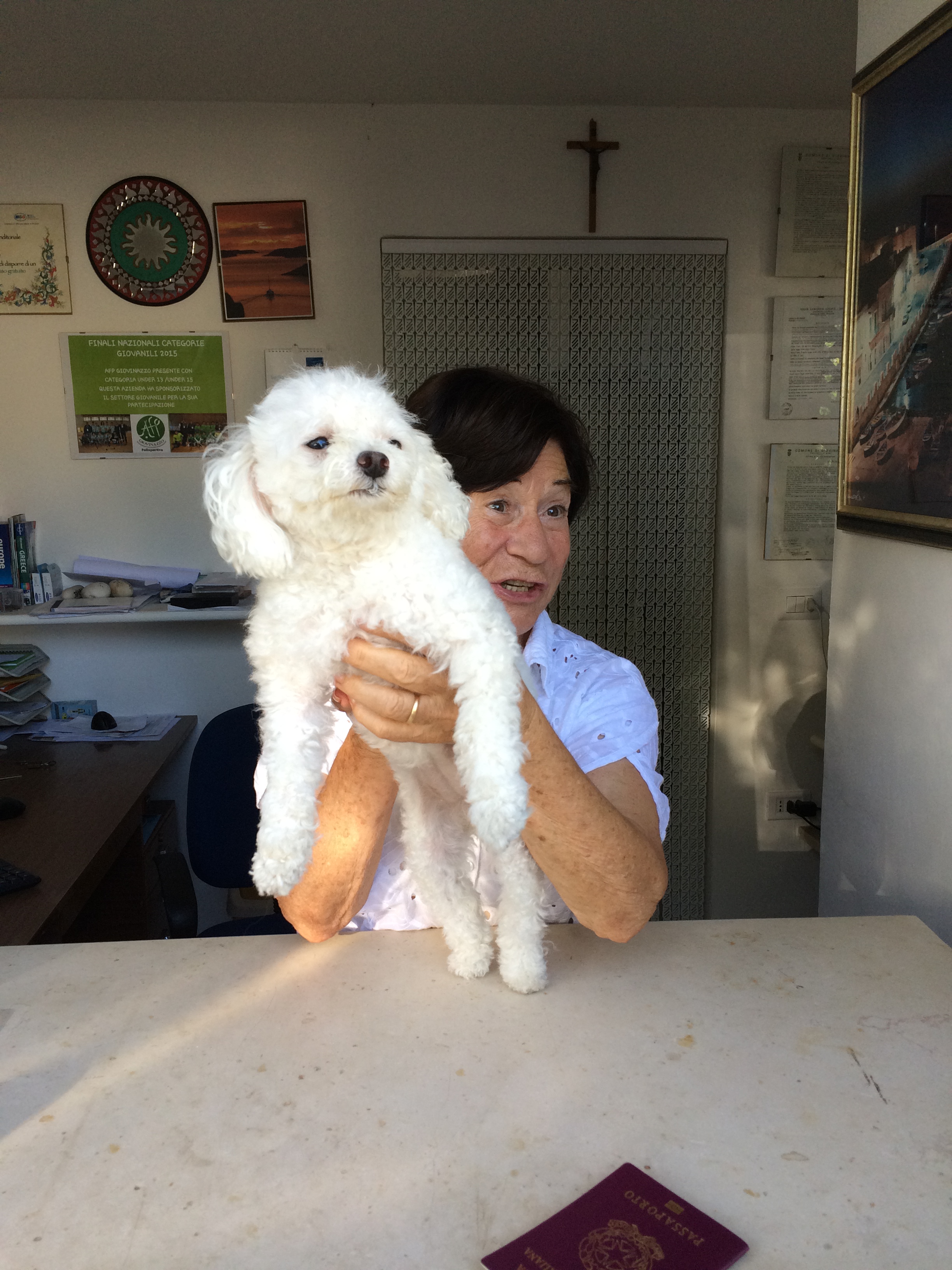
'Sissi' the campsite poodle greeting us at the Gioninazzi campsite.

‘Sissi’ the campsite poodle greeting us at the Giovinazzi campsite.

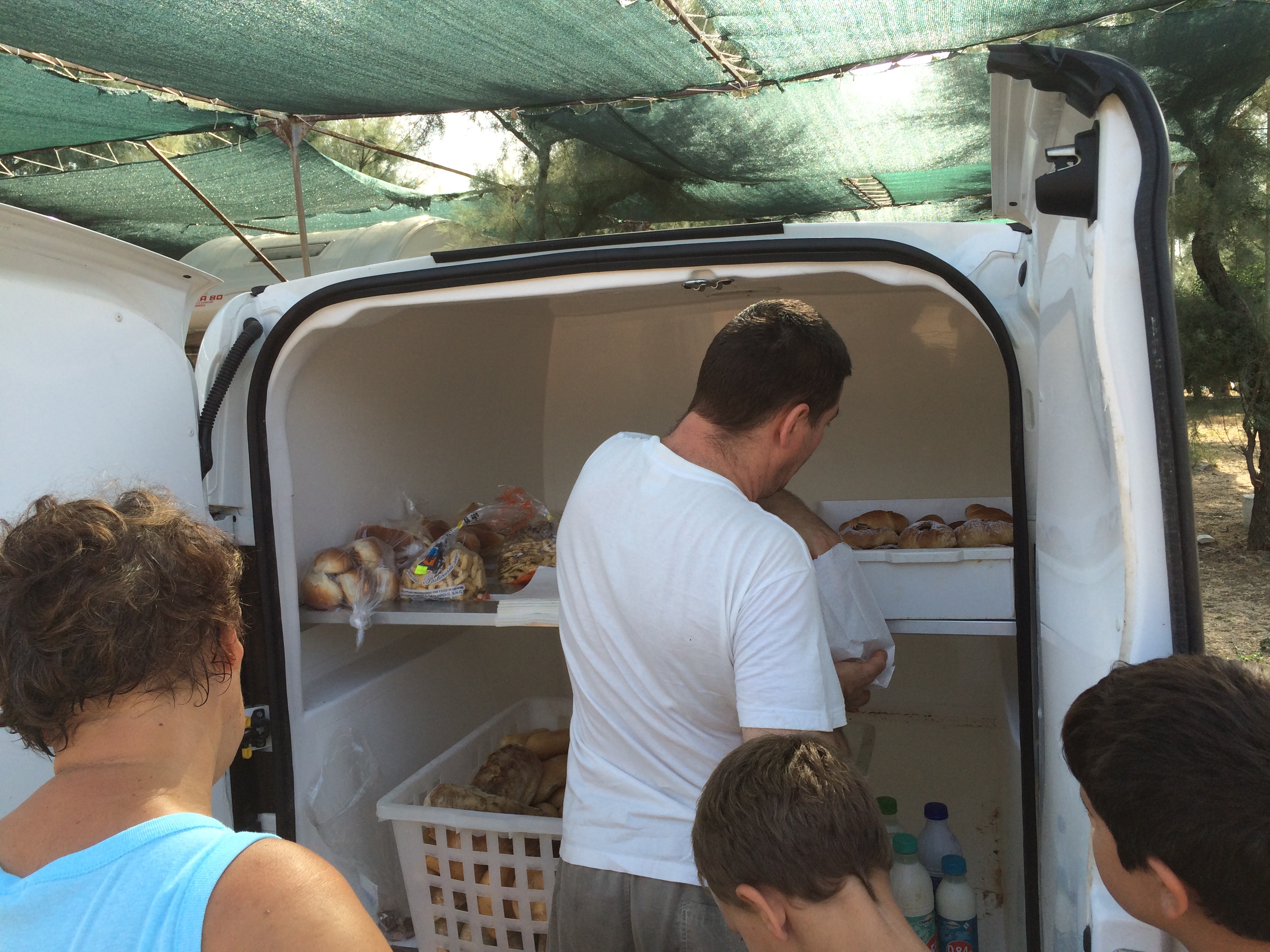
Queuing up for bread at the Giovinazza campsite in the morning.

Queuing up for bread from the ‘fornaio’s’ van at the Giovinazza campsite in the morning.

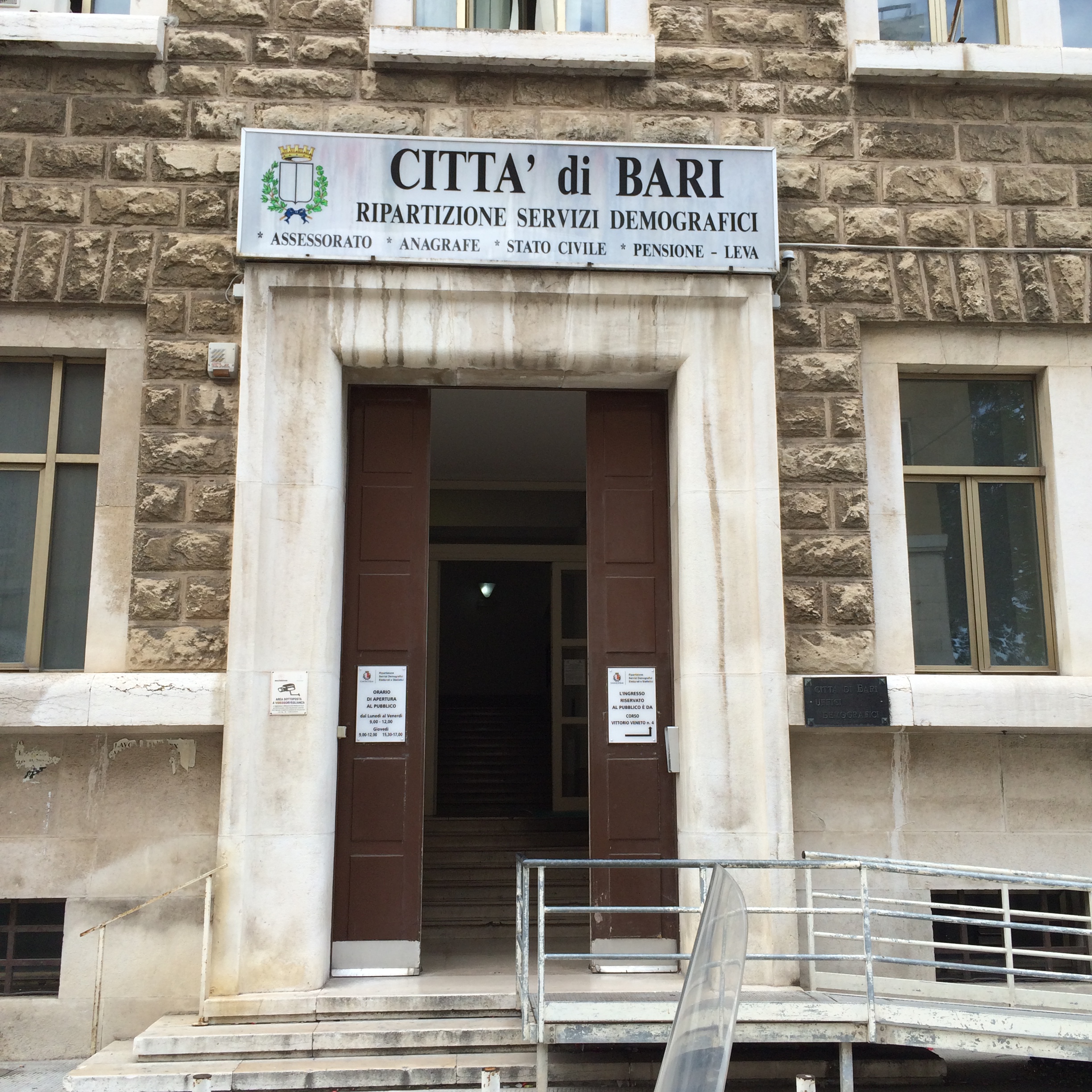
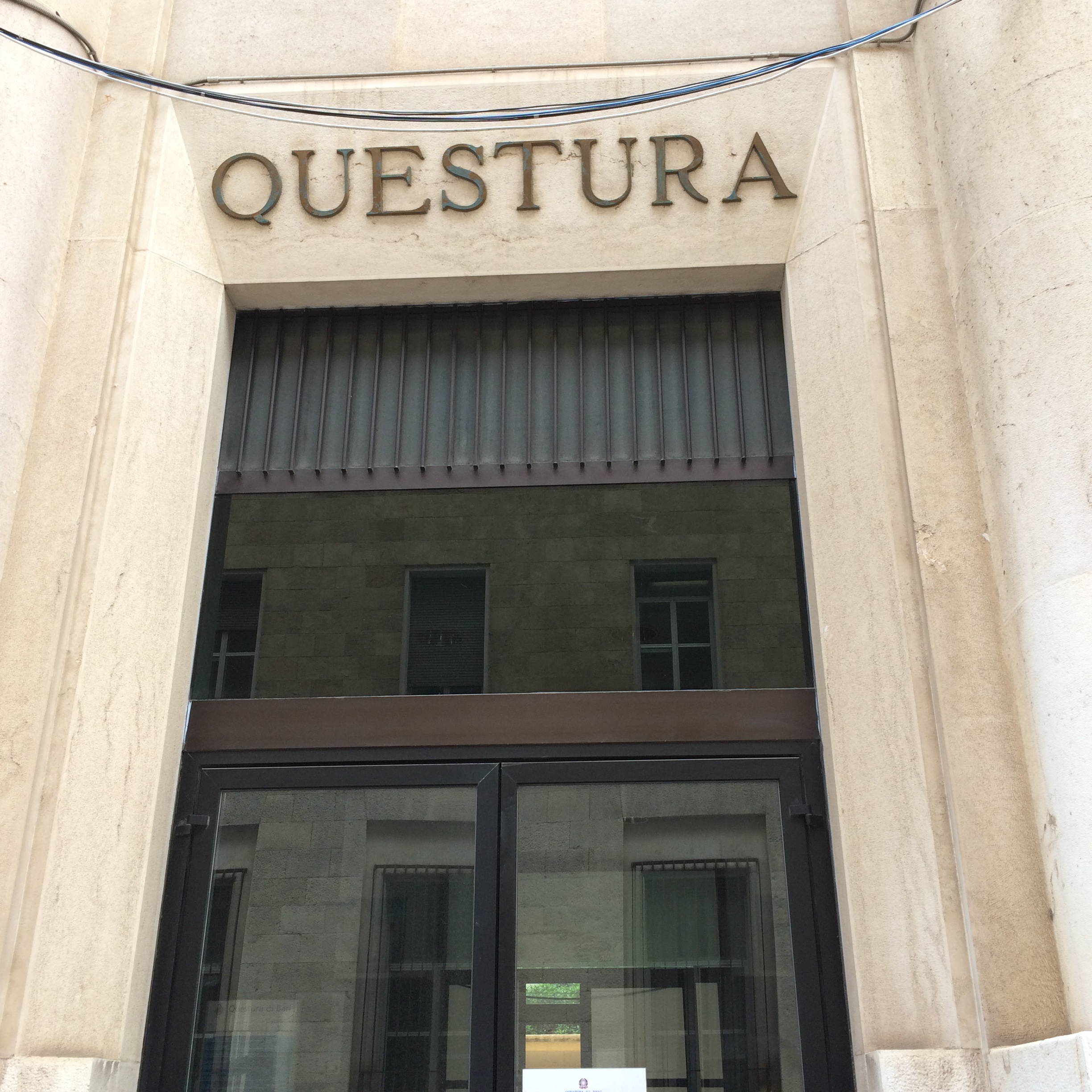
Bari is the capital city of the of the Puglia region on the Adriatic Sea. It’s the second largest city in southern Italy after Naples and a major port and this is where the Centofanti saga continued.  First we went to the Commune di Bari, Demographic Records Office to try to get Galileo’s passport details in the hope his application contained information about his parents only to be told that all passport applications are all held in the Questura for Puglia, (the Police archives in Bari).   So off we go to the Police Station to be told the archive office is closed and that anyway an application should be made in writing before we can proceed with any search.
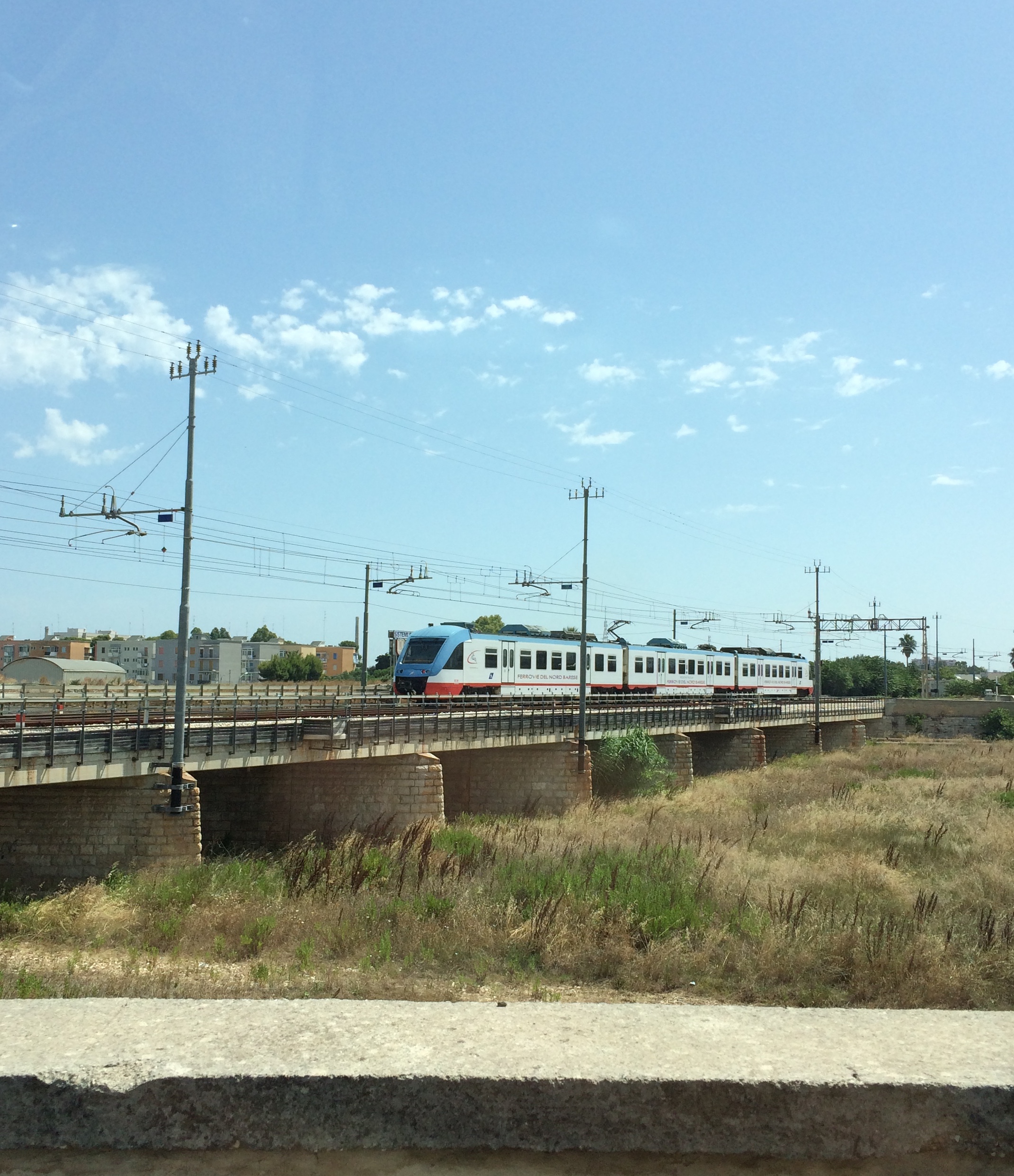
Arriving in Bari. Poor roads but a high-speed train.

Arriving in Bari. Poor roads but a high-speed train.

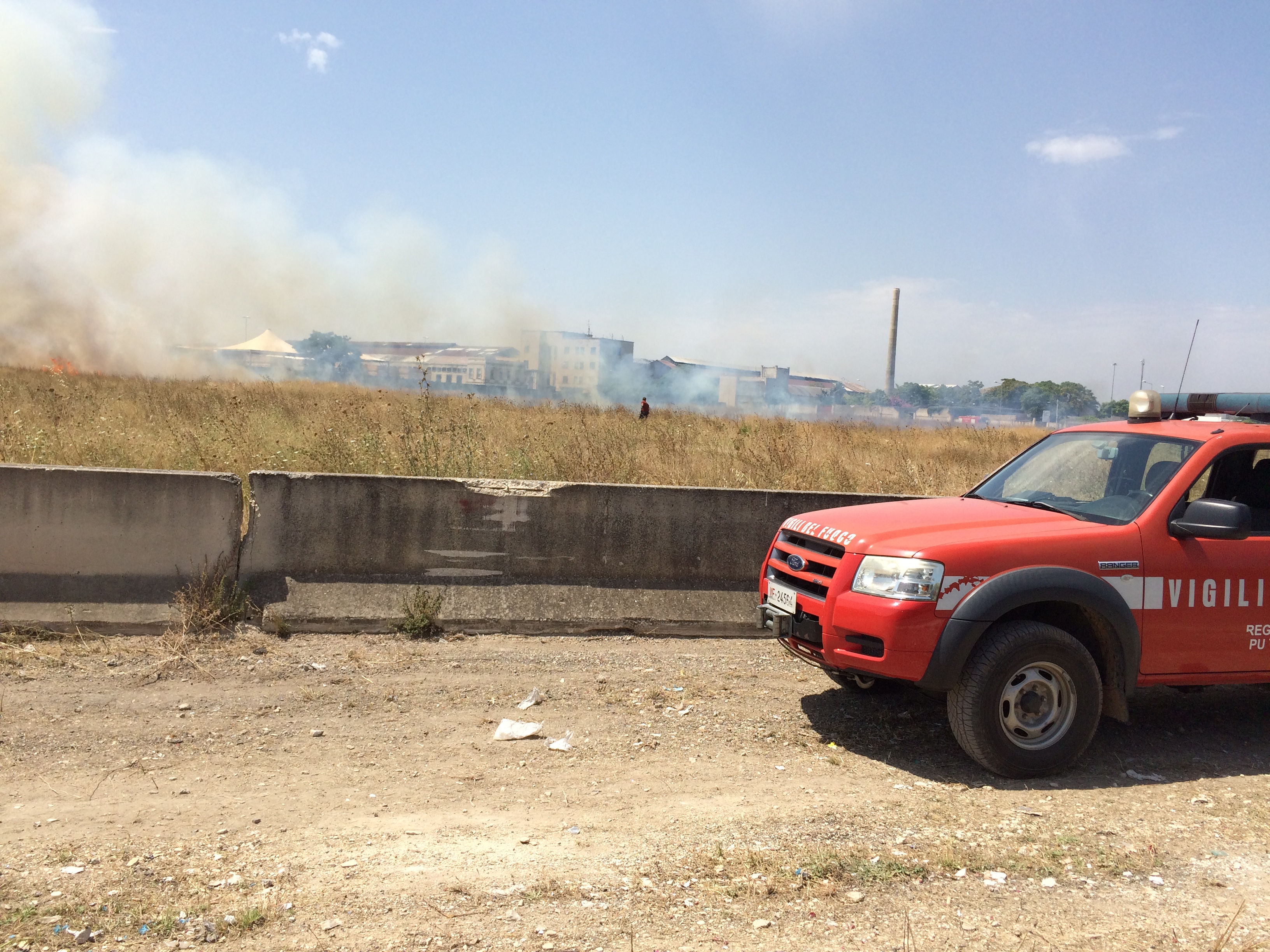
The Fire Brigade battling to control a fire in a field on the outskirts of the city.

The Fire Brigade battling to control a fire in a field on the outskirts of the city. Not surprising fires are igniting given the very hot and arid conditions.

The Registry Office at the Commune is only open from 9-12 except for Thursdays when it also opens in the afternoon. We just make it in time.

The Demographic Records Office at the Commune of Bari is only open from 9-12 except for Thursdays when it also opens in the afternoon. We just make it in time.

The 'Questura' or police station where all records of passport applications are kept.

The ‘Questura’ or police station where all records of passport applications are kept.

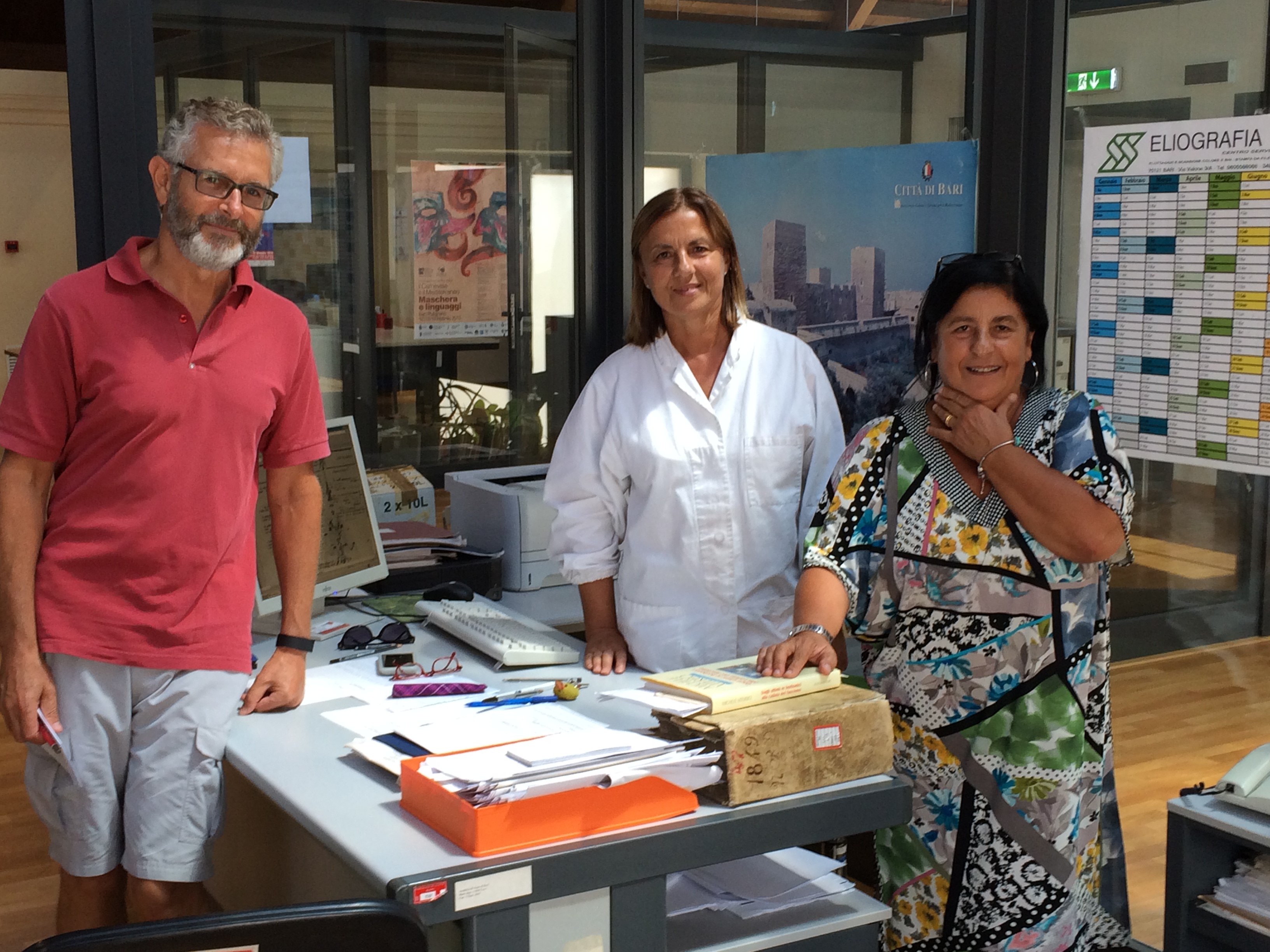
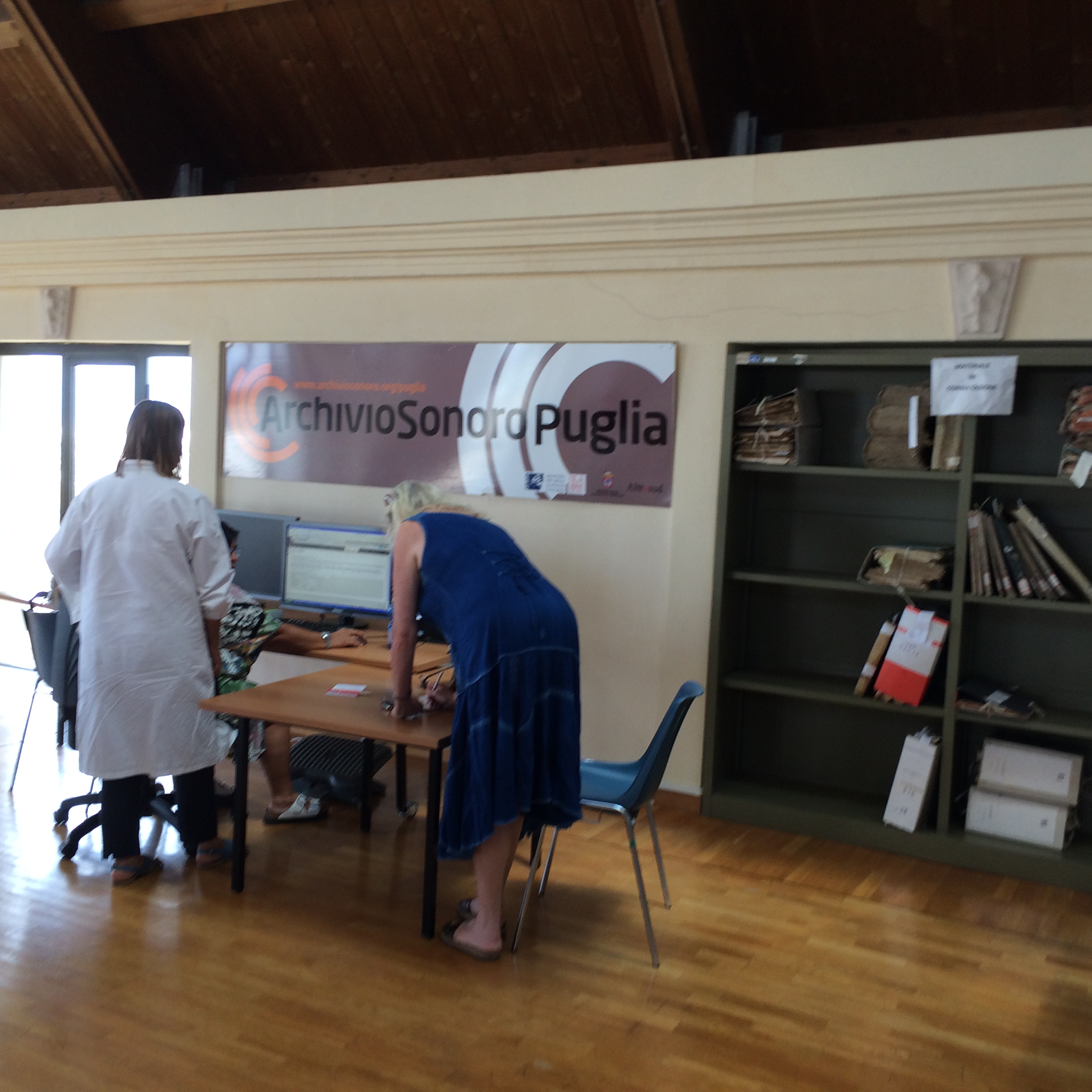
Undaunted we went to the State Archives Office where old registers from Puglia are being filmed and stored online.  Despite attempts at the entrance to put us off, first saying the office was closed and then that everyone was out at lunch and wouldn’t be back as it was the weekend, once inside the people were friendly and welcoming. Two in particular – Rosella Perna and Mariolina Pansini – were absolute gems.  They warmed to our cause, put off their lunch and proceeded to search the Trani registers and bingo! –  there was a Centofanti in the Trani register.  The documents bore the mark (curiously, in English, not Italian) “water damaged” and the writing was very difficult to decipher.  The name “Centofanti”, written in the typical italic calligraphy of the time was however unmistakable but the first name very difficult to make out.  Ms Perna and Ms Pansini complained about how badly people wrote in those days but it was clearly the damage to the documents that was the problem. They thought the name started with an ‘R’ and could have been ‘Renato’ or ‘Rocco’. They gave us details on how to access and search the archives on the portal (‘Il Portale Archivistico degli Antenati‘) and suggested we look at marriage entries as they would give us family details – we should look under the registro ‘Napoleonico’ for 1809-15, ‘Restaurazione’ for 1816-61 and ‘Italiano’ for 1861-1900.  Our search for Flavio’s grandfather would come under ‘Restaurazione’.

The State Archive Office in Bari holding old records for the whole of Puglia.

The State Archive Office in Bari holding old records for the whole of Puglia.

The incredibly kind and helpful Ms Rossella Perna and Ms Mariolina Pansini at the Archivio di Stato, Bari.

The incredibly kind and helpful Ms Rossella Perna and Ms Mariolina Pansini at the Archivio di Stato, Bari.

Judith having a go at deciphering the names on the 'Portale degli Antenati'.

Judith having a go at deciphering the names on the ‘Portale degli Antenati’.

After a short stroll in the city to look for a replacement tent (which we eventually found and bought from the puzzlingly-named “Mercoledi Santo” (Ash Wednesday) camping shop, as well as another unproductive search for a slightly bigger electric fan, which the whole country seems to have run out of thanks to the heatwave, we had 2 days until our ferry out of Bari and decided to spend them venturing a little further south near Lecce.

Bari's 'Teatro Petruzzelli'.

Bari’s ‘Teatro Petruzzelli’.

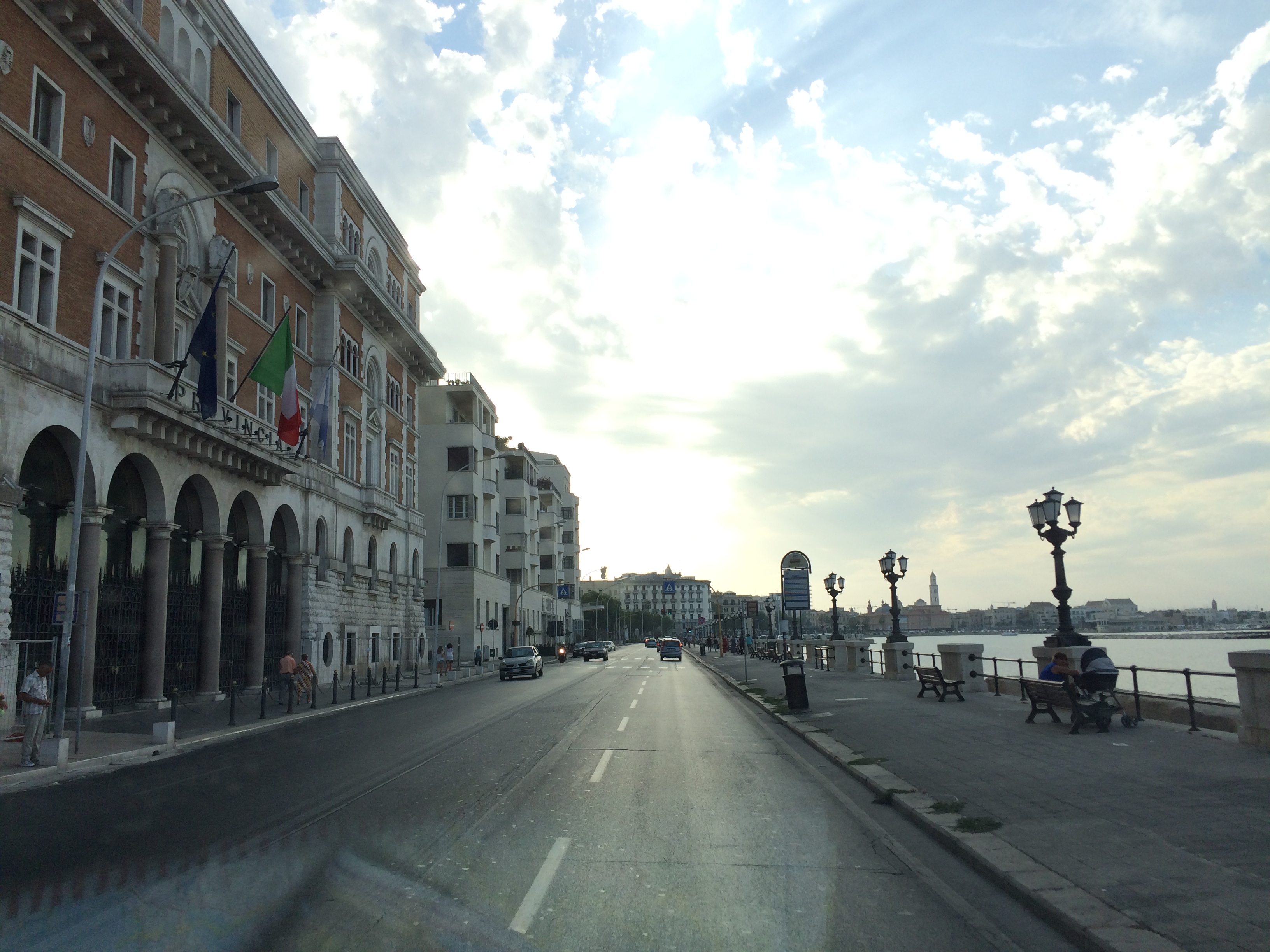
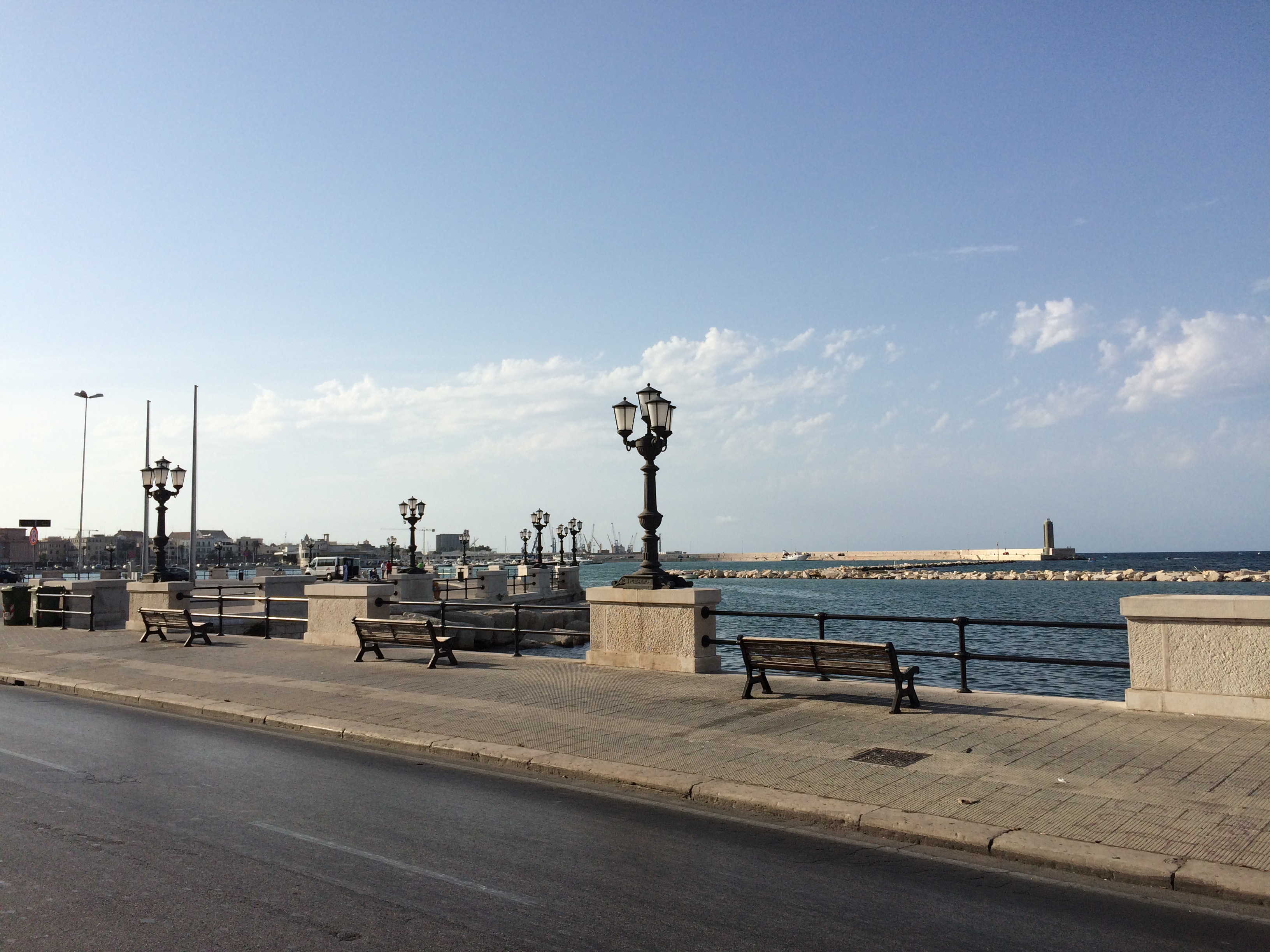
Bari's 'corniche' leading up to the ferry port.

Bari’s ‘corniche’ leading up to the ferry port.

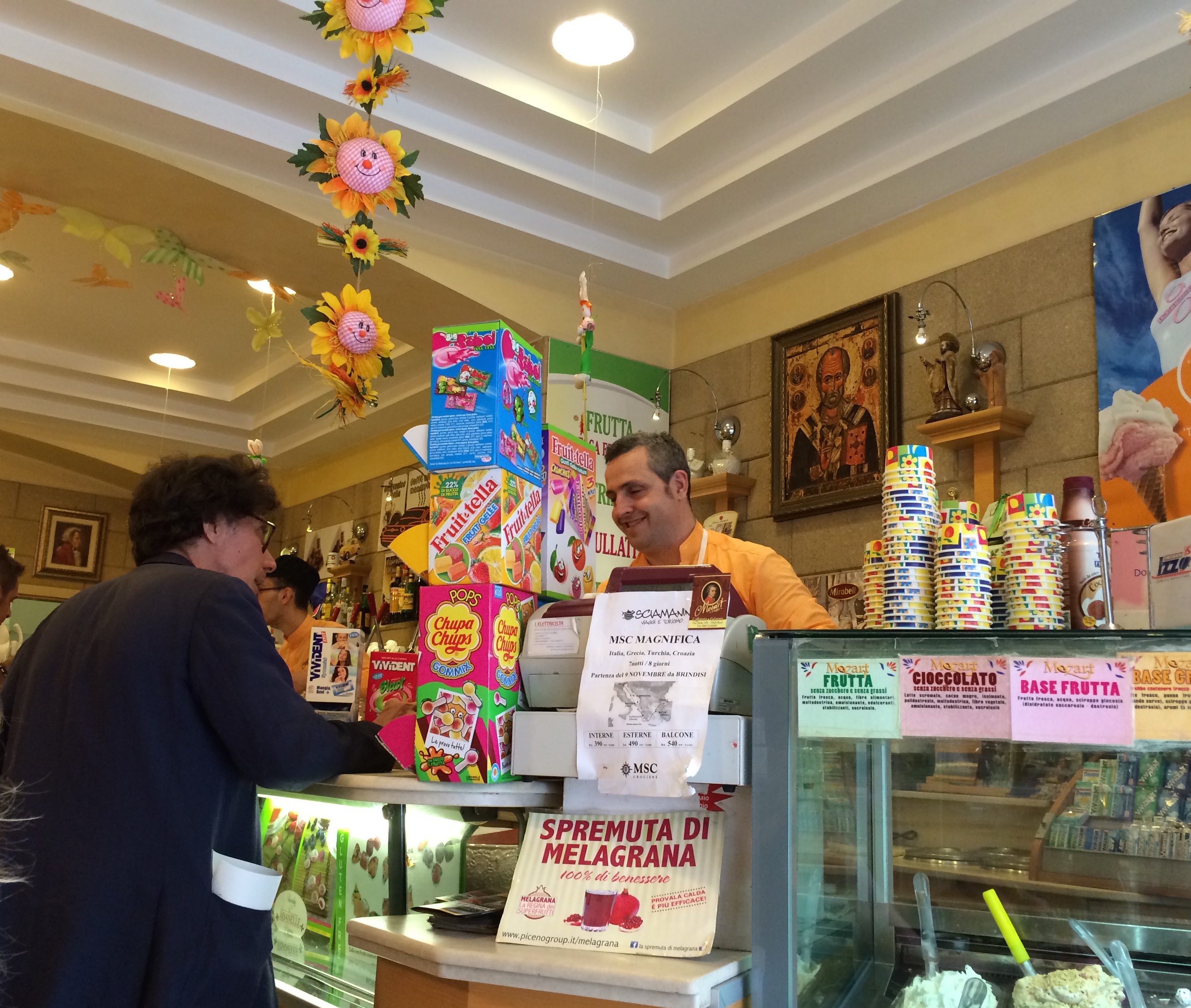
First though, we stopped at the Mozart Caffeteria/Gelateria at the Via Melo for a caffe and gelato, watched over by a rather grumpy-looking San Nicola di Bari.  It seemed to cater for interesting ‘intellectual’ members of Bari society – academics perhaps and professional types.

The Mozart Caffe, Via Melo, Bari.

The Mozart Caffe, Via Melo, Bari.

A very low-fat 'myrtila' gelato.

A very low-fat ‘myrtila’ gelato.

The Mozart Caffe, catering for Bari's intelligentsia.

The Mozart Caffe, catering for Bari’s intelligentsia.

IMG_5227

Tuesday 28th to Thursday 30th July – Trani, the Pearl of Puglia

Standard

Post-script from last post:

We had bought a small tent in France in preparation for our daughter Catherine joining us. We’d used it once in Lake Garda.  It was a lovely little pop-up tent, orange, blue and white and very easy to put up (it just pops open ready to use as the name implies) but proved impossible to fold up and get back into the bag.  Seeing that we were camping amateurs two Dutch fellow-campers rushed over in an impulse of solidarity to give us a hand.  After a marathon struggle involving a good deal of twisting, wrestling, kneeling, head-scratching, almost giving up but then a final last-ditch double-twist tackle designed to catch it off-guard the mother and daughter super-campers somehow succeeded in getting it into the bag.  Much appreciation and gratefulness all round. At Molinella it was still hot and as we were staying 2 nights we decided to put the tent up again.  On opening up the bag, we quickly realized that whilst obtaining the desired result of getting the tent folded and forced into the bag, our altruistic fellow-campers had unwittingly inflicted multiple fractures on both poles of the tent and rendered it quite unusable.   Attempts by Judith to fix the poles with plasters from the first aid box proved futile so sadly our lovely tent ended its days in the Molinella camping village recycling bins. We wouldn’t hazard to infer a moral from this story but there were no hard feelings! Honestly.

The discarded pop-up tent can be seen dumped on the ground after attempts at reconstructing it had been abandoned.

The discarded pop-up tent can be seen in a heap on the ground after attempts at reconstructing it had been abandoned.

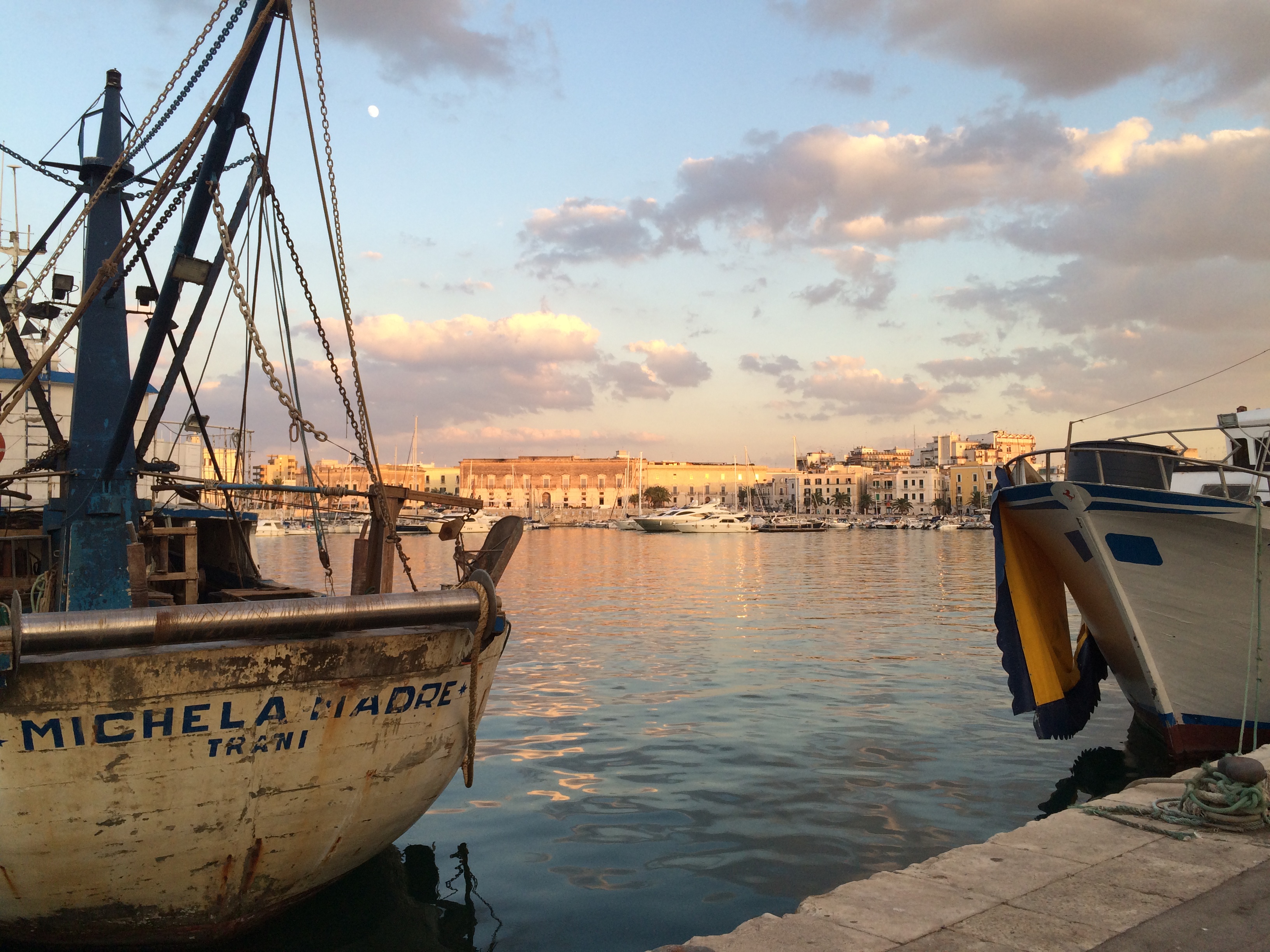
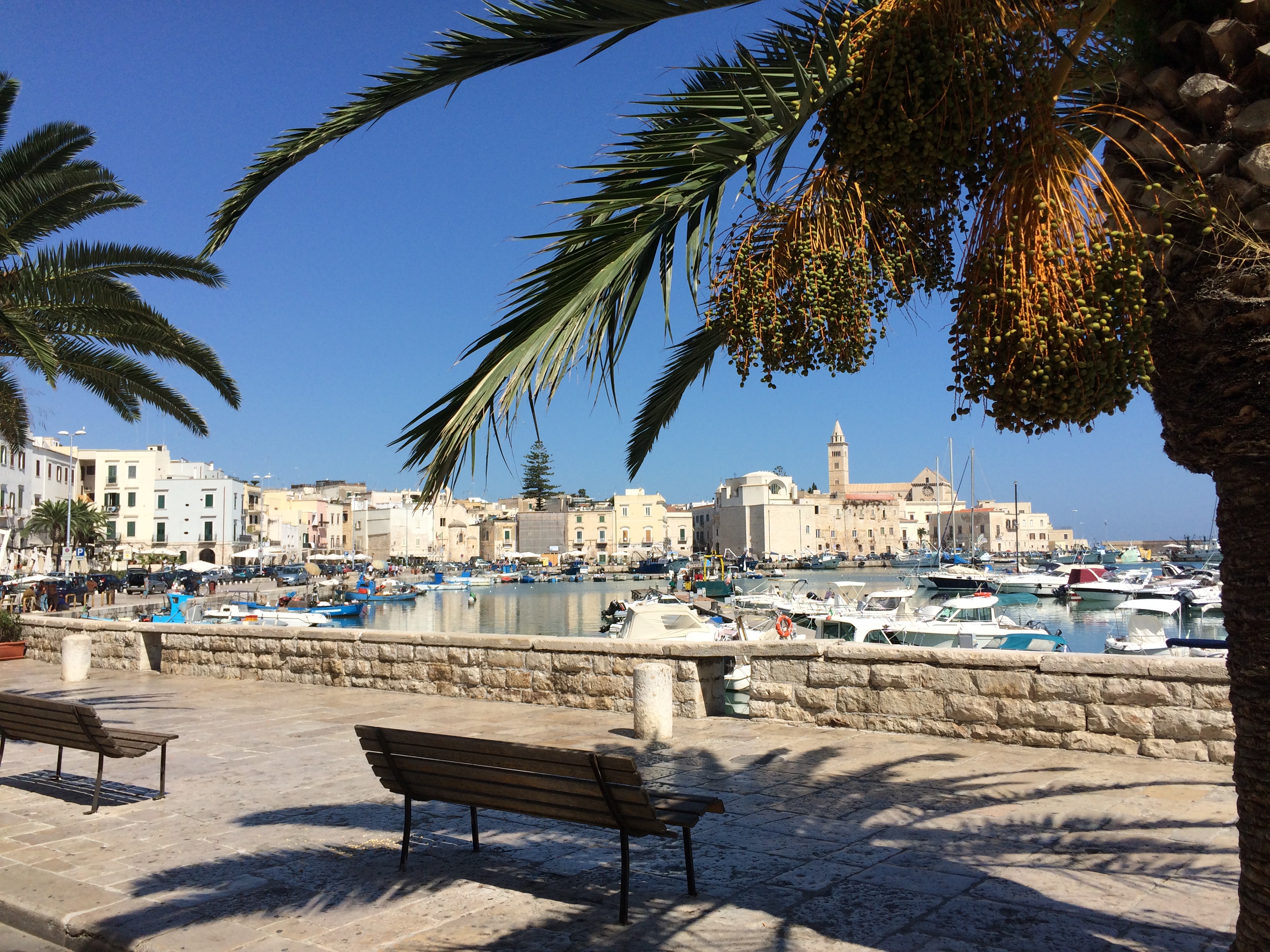
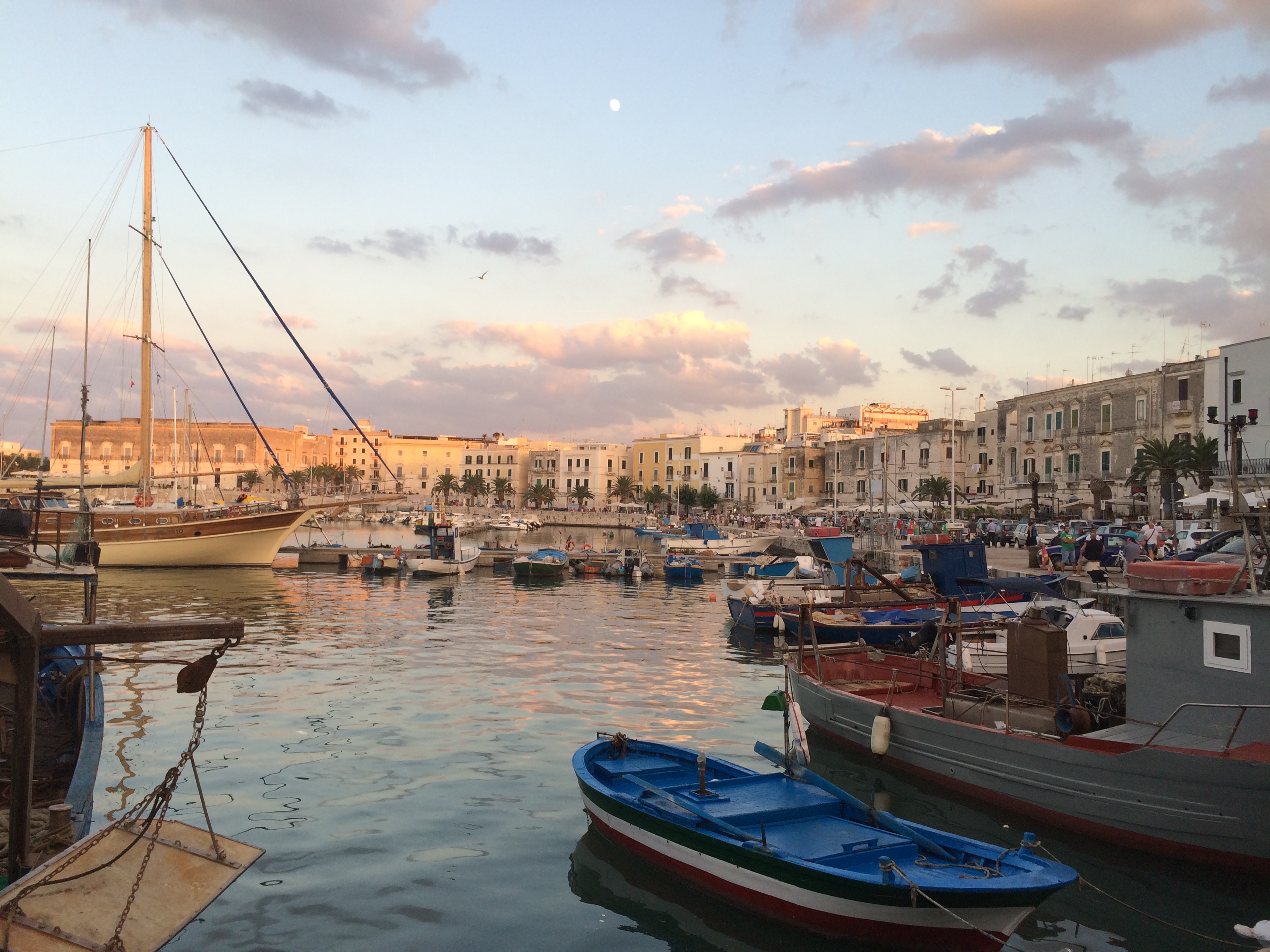
From Vieste and the Gargano we continued following the coastal road down the Golfo di Manfredonia past Monte Sant’Angelo and Cerignola until we started seeing signs to Trani just after Barletta. All around us were hundreds upon hundreds of acres of olive groves insterspersed with the occasional vineyard.  This really was a very different landscape from the north, flat if slightly undulating, very arid and Mediterranean, with seemingly enough olive trees to supply the whole world with olives and olive oil. It was nearly 9pm when we drove into Trani’s Porto Vecchio and the orange glow of the sunset reflected beautifully against the water-front and the old fishing boats.

Around Barletta - acres of olive groves and rows of vines everywhere you looked.

Around Barletta – acres of olive groves and rows of vines everywhere you looked.

Finally, arrival in Trani.

Finally, arrival in Trani.

IMG_4982

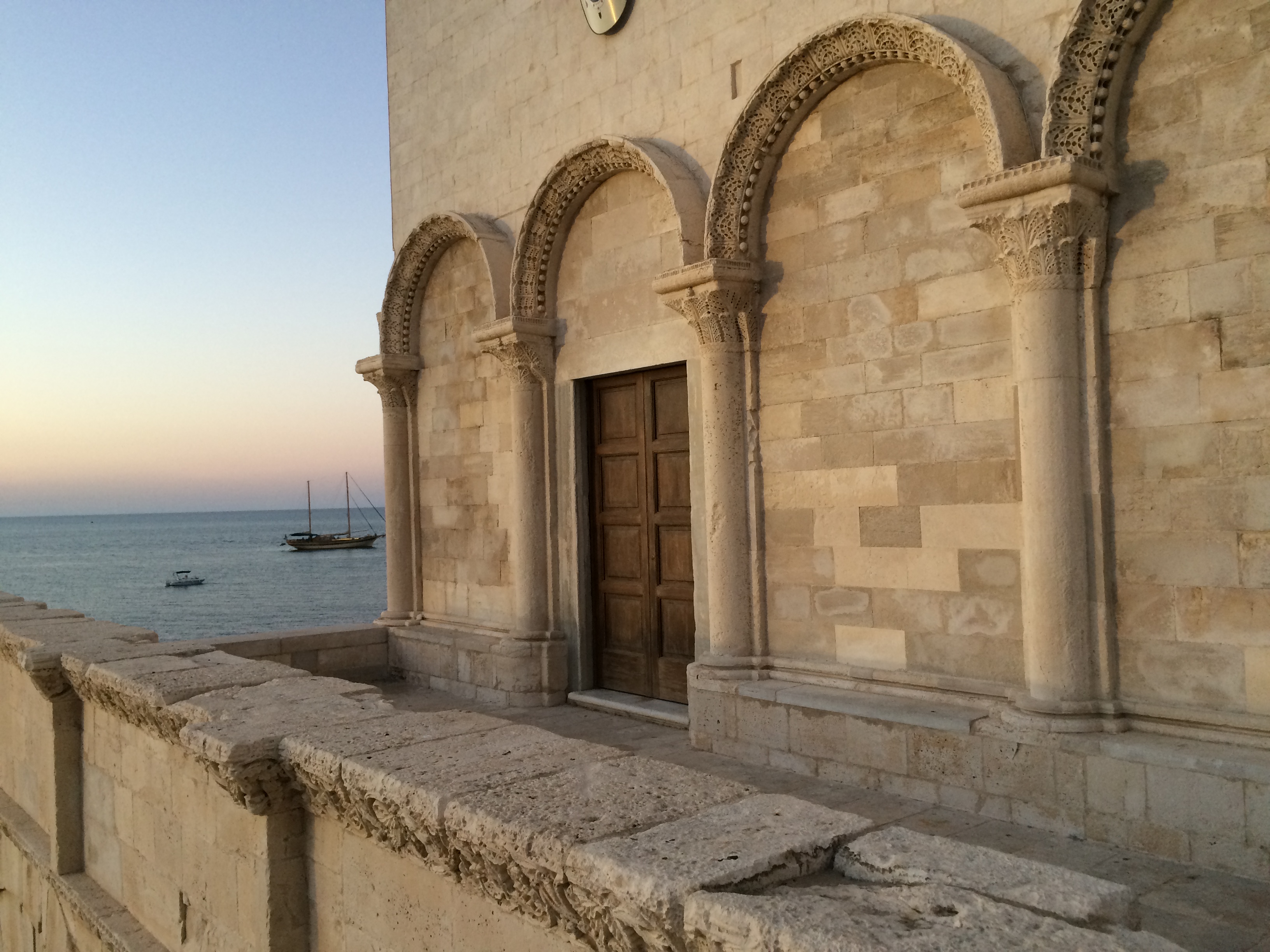
Standing at the point where the Adriatic and Ionian seas meet, Trani was once the Adriatic’s most famous sea port, carrying crusaders to the Holy Land, a famous trading post during the Middle Ages and much later the port southern émigrés leaving Italy went to to join the great Italian diaspora.  Indeed, in the year 1063 Trani issued the ‘Ordinamenta et Consuetudo Maris’, the oldest surviving maritime law code in the Latin West and Frederick II built one of his many castles here, which still stands today.  Trani is now still a busy fishing port but its main economic activity, as it has been for a long time, is quarrying the ‘marma di Trani’ (Trani stone). A beautiful example of this is Trani’s lovely Romanesque cathedral, situated right on the edge of the sea and almost seeming to rise from it, which has become one of the symbols of Puglia.

Trani's beautiful cathedral, one of the symbols of Puglia.

Trani’s beautiful cathedral, one of the symbols of Puglia.

Made of Trani's famous stone, it seems to 'rise out of the sea'.

Made of Trani’s famous stone, it seems to ‘rise out of the sea’.

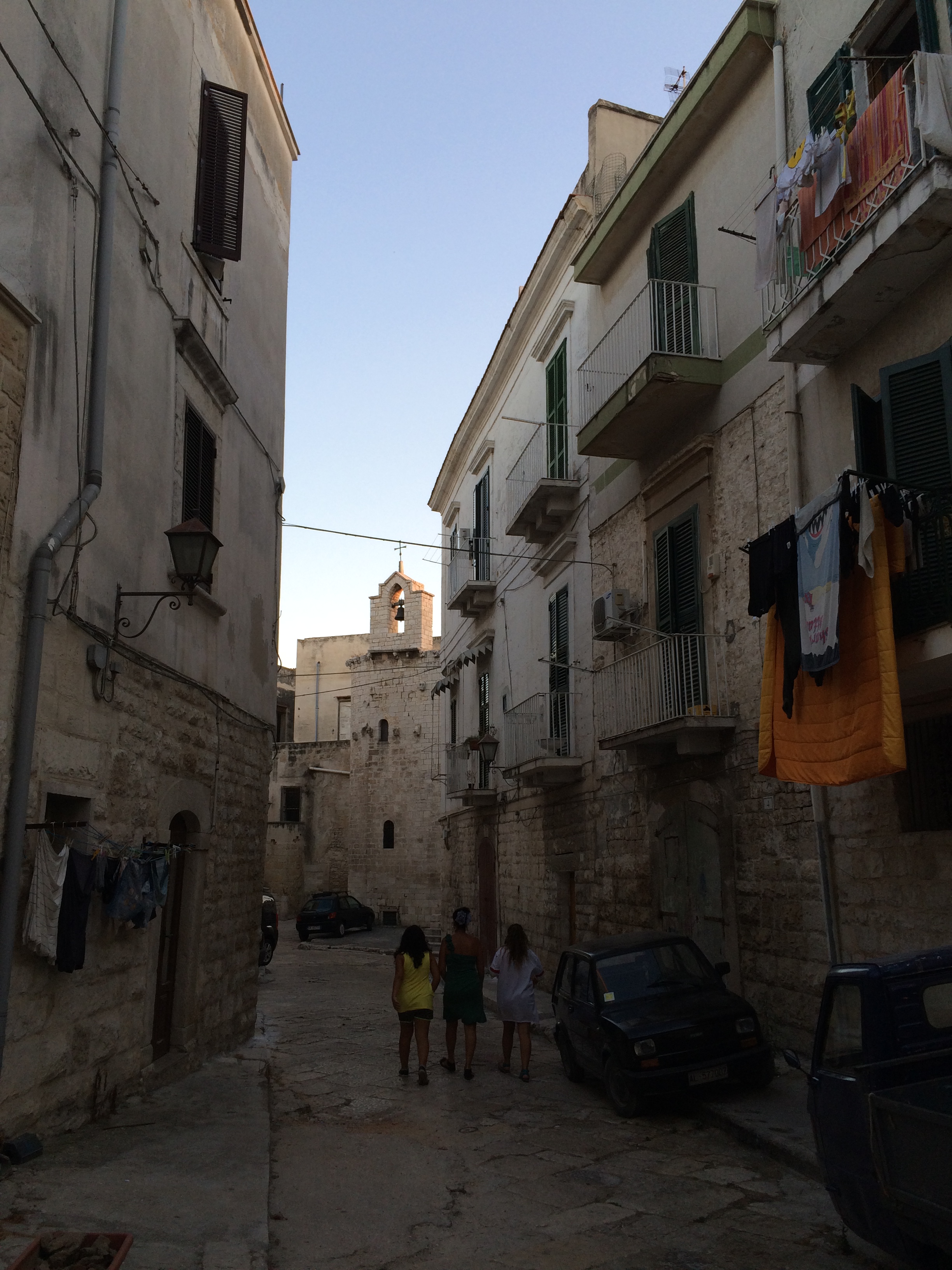
A typical street in old harbour area of Trani.

A typical street in old harbour area of Trani

The old harbour at sunset.

The old harbour at sunset.

Train train station.

Train train station

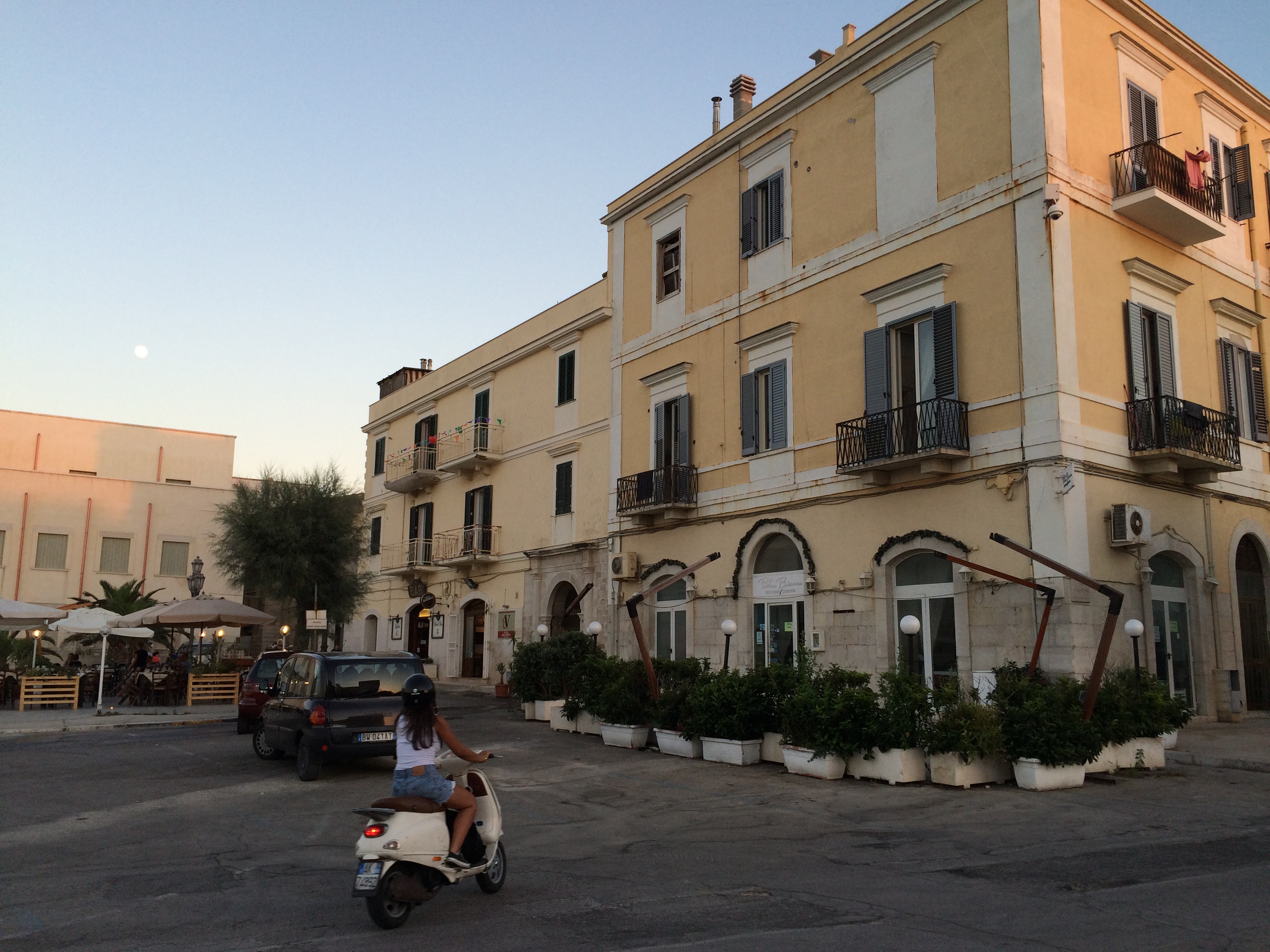
The piazza off the Via Ogni Santo.

The piazza off the Via Ogni Santo.

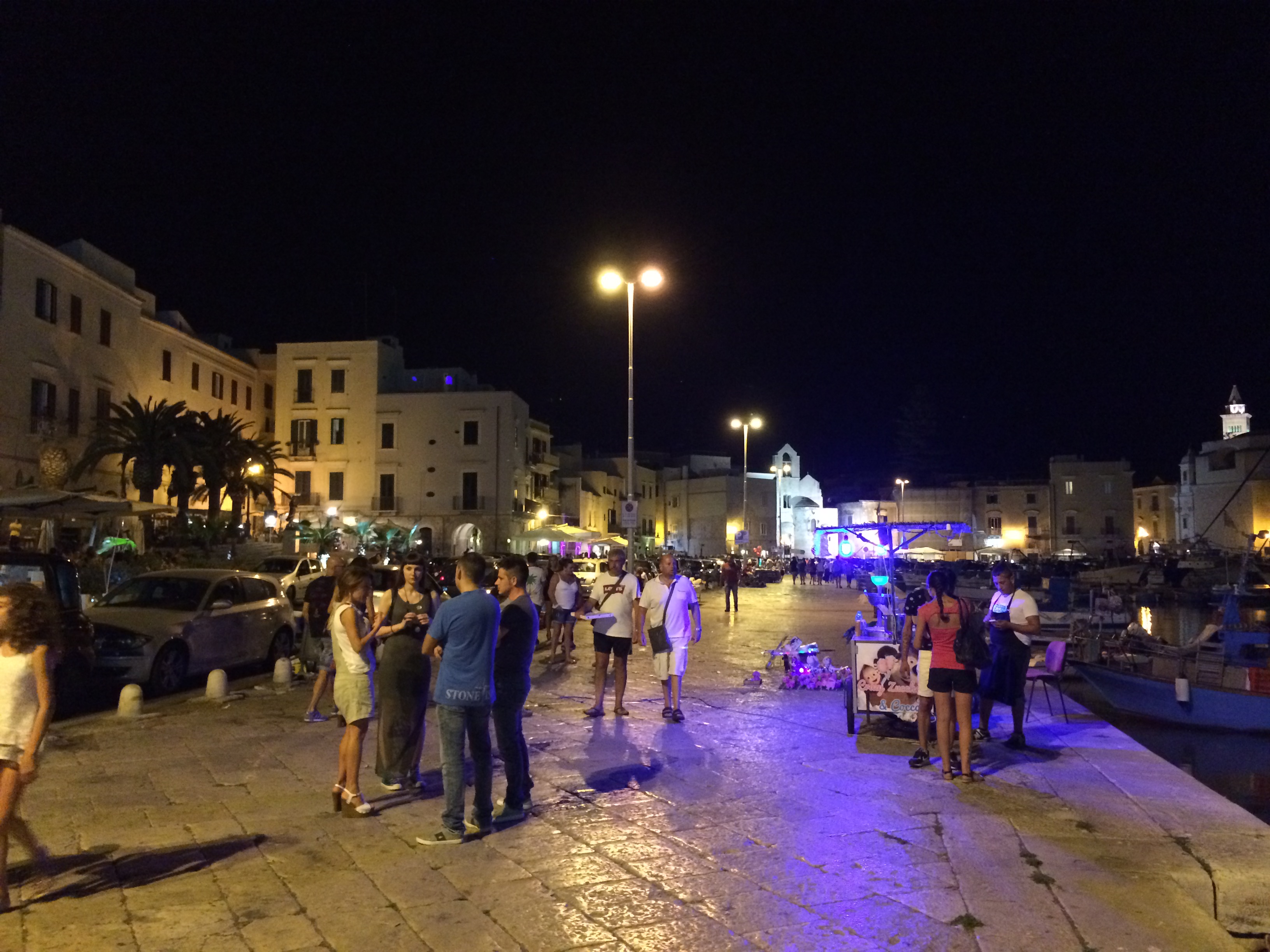
Trani has a lively night-life at least in summer and during feast days.

Trani has a lively night-life at least in summer and during feast days.

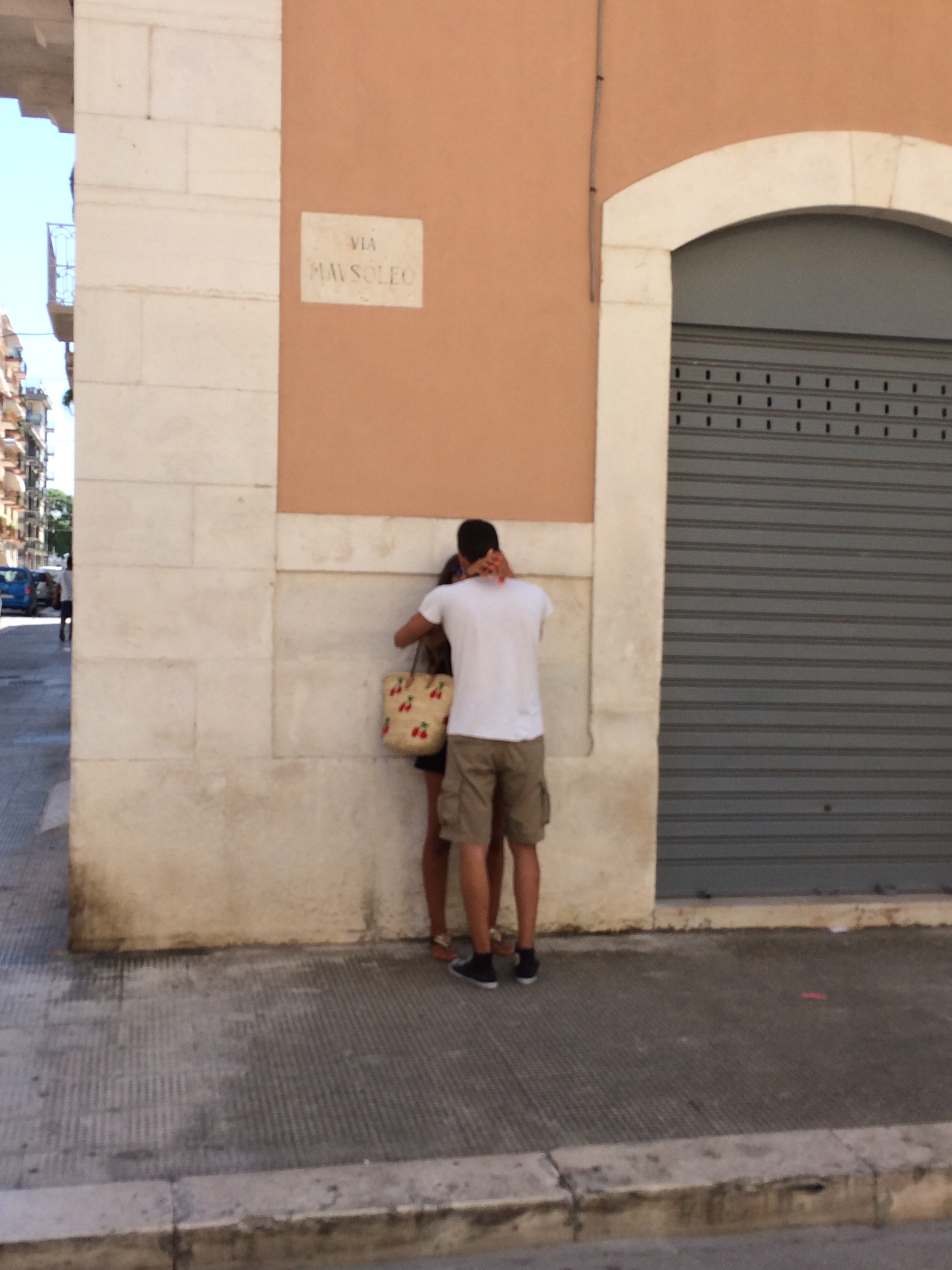
Romance Tranese-style on the Via Mausoleo, Trani.

Romance Tranese-style on the Via Mausoleo, Trani.

The ancient entrance to our B&B, Porto Trani.

The ancient entrance to our B&B, Porto Trani.

Notwithstanding all the above, Trani is also famous for being the ancestral home of the Centofantis and it was here we would begin our search for information on the origins of Flavio’s family.  We checked into the very friendly and welcoming Porto Trani B&B on the harbour which in the evening transforms from fishing port to an attractive hub of restaurants and promenades.

Our first evening was spent in one of the many harbour restaurants with Brenda safely parked, or so we thought, in the Cathedral car park.  Chatting to the waiters after a lovely supper of salcicie and Orechiette con frutta di mare, and ‘Tomaresca’ white wine made principally from the local Minervino Murge grape variety which was a very pleasant discovery for us, we were alarmed by their insistence that we move Brenda to a spot in front of the restaurant as she was not safe.  From what or whom no one would say but the exchange of knowing looks and nods and raised eyebrows were enough to convince us to move her to a spot ‘guaranteed’ by the restaurant would be OK as long as we paid a little something which they would pass to the night watchman! When in Trani, do as the Tranese do, vero o no?

Brenda 'safely' parked next to the restaurant on the water-front.

Brenda ‘safely’ parked near to the restaurant on the water-front.

The orecchiette with seafood and salcicie.

The orecchiette with seafood and salcicie.

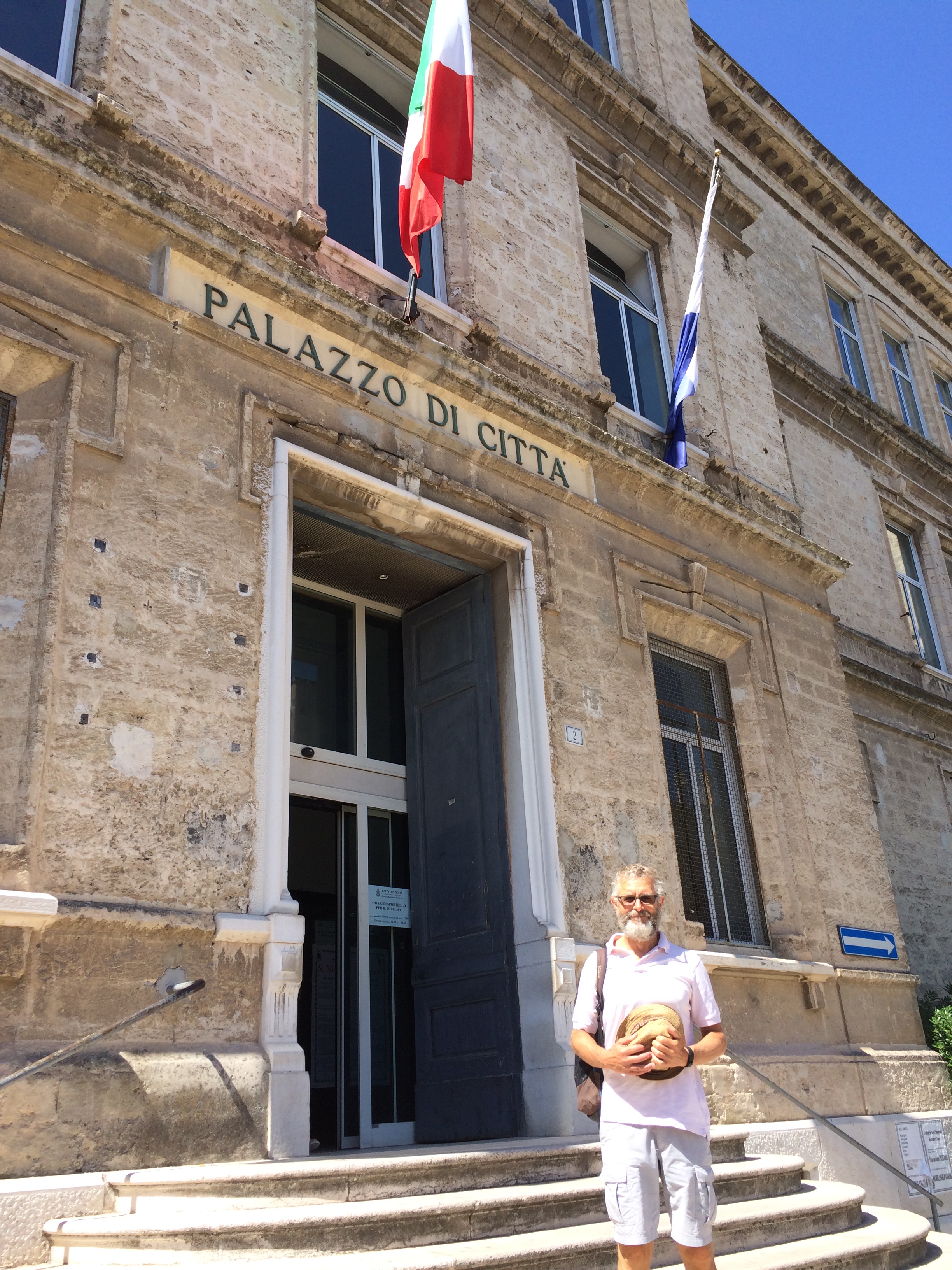
Next morning we set off for the ‘Palazzo di Citta’ of the Commune of Trani and were referred to the ‘Capo Settore of the Servici Demografici’, Dott. Vito Luciano Preciosa. Disappointingly, he told us he hadn’t come across the Centofanti name and that we would need to make a request in writing providing as much information as possible to justify them spending the time on it but that in any case, the person in charge of doing any genealogical research was on holiday and would be back until mid-August.  (Later we were told by the owner of the Giudica souvenir shop that he had actually lost his mind and wouldn’t be coming back! Curiouser and curiouser!)  Despite this everyone was very helpful and made suggestions for a way forward.   We had two problems though: all public offices closed at 12 noon for the day and things being as they are here, only one visit a day was possible; the second was that we didn’t have the full name and details of Flavio’s great grandfather who left Italy to work in Alexandria, Egypt.  We therefore  decided to research Flavio’s grandfather, Galileo Centofanti as his passport application should include his parents’ details.

On the way back, Flavio seeks out a ‘parruchiere’ (literally, a wig provider) for a hair and beard trim he’s finally decided to have for at least some measure of relief against the continuing relentless heat.  As well as being a very good barber, Francesco who’s 58 talks interestingly about the history of Trani. “Yes Trani is famous for its marble but the local industry has all but been destroyed.  The Chinese were buying large quantities then realized that they could simply buy entire quarries, ship the blocks of stone to China and pay the Tranese stone cutters three times their salary to transfer their skills in China.” “There’s a reason why manyTranese emigrated to Egypt and to Argentina – to Egypt to work on cutting the banks of the Suez Canal (something Flavio had suspected for a long time) and to Argentina to work on the National Palace, which was entirely made of Trani stone.” “As well as its Muscato wine, Trani is also known for its eating grapes, which are better than anyone else’s in Puglia.”

About to enter the 'Palazzo di Citta' of the Commune of Trani, a little nervous without knowing why.

About to enter the ‘Palazzo di Citta’ of the Commune of Trani, a little nervous without knowing why.

The Capo Settore, Dott. Vito Luciano Preziosa's name plate.

The Capo Settore, Dott. Vito Luciano Preziosa’s name plate.

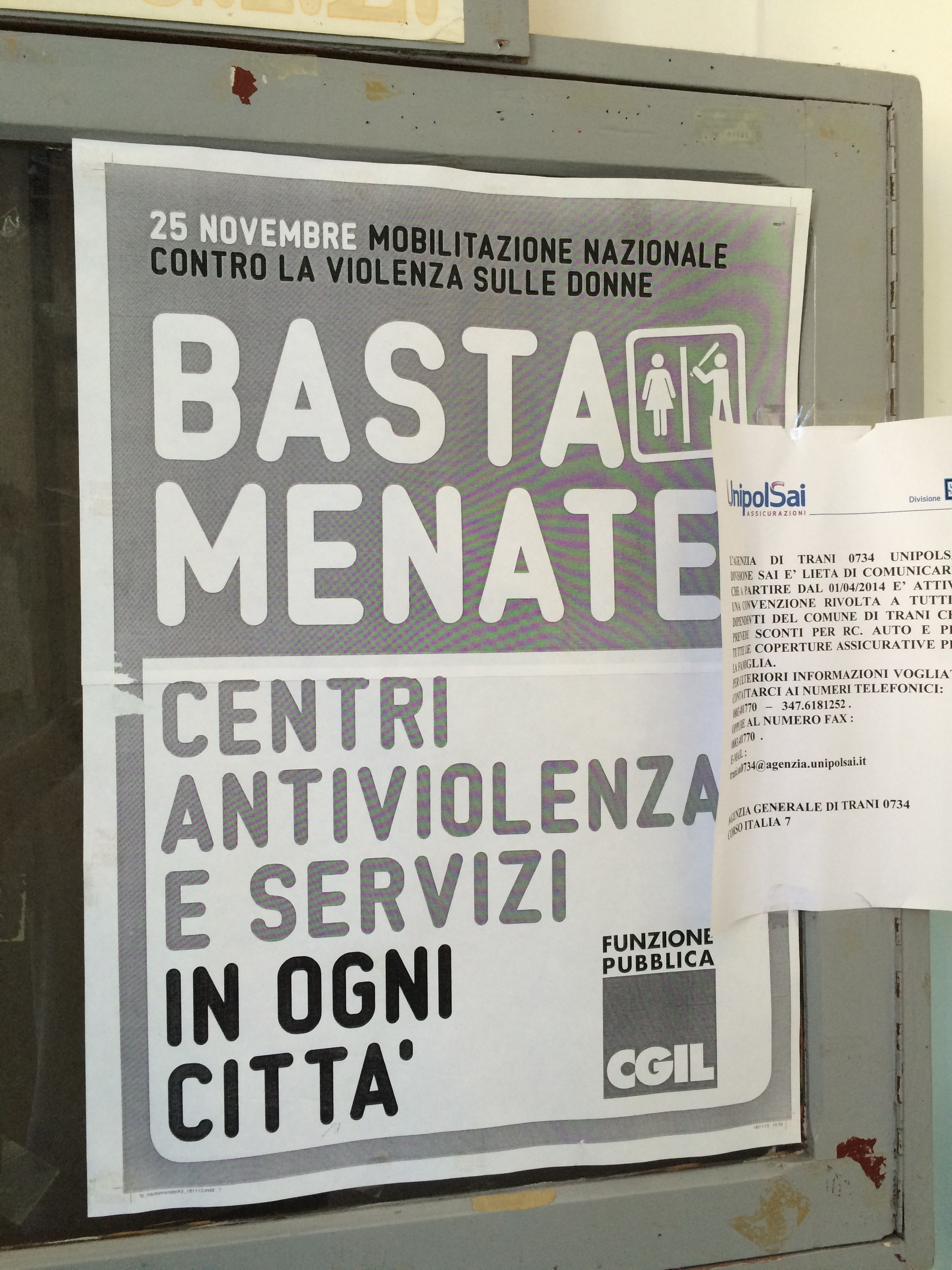
A poster in the Commune raising awareness about violence against women -

A poster in the Commune raising awareness about violence against women – “Stop the threats”.

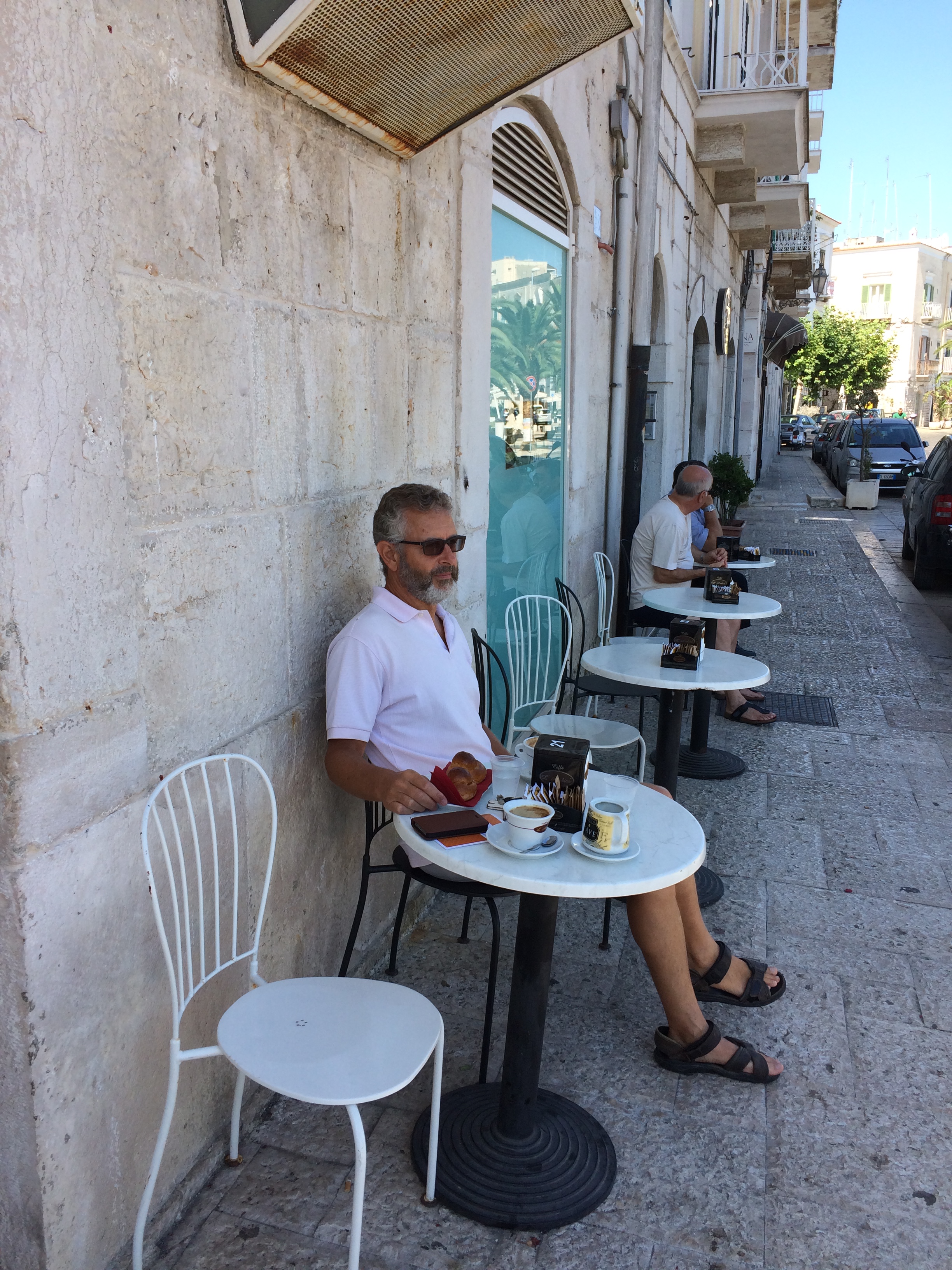
On the way back, Flavio finally decides to have his first beard and hair trim in 11 weeks. Francesco is 2 years younger and a very good barber.

On the way back, Flavio finally decides to have his first beard and hair trim in 11 weeks. Francesco is 3 years younger, a very good barber and talks interestingly about Trani.

We also stop at a very reasonably-priced canteen next to the station for a light lunch.

We also stop at a very reasonably-priced canteen next to the station for a light lunch.

Posters of 'Toto', the hilarious old Italian comedian of our childhood on the walls.

Posters of ‘Toto’, the hilarious old Italian comedian of our childhood on the walls.

Mocking fascism.

Mocking fascism.

The afternoon was spent exploring Trani’s medieval town, a labyrinth of narrow streets and alleys which remain a living community despite the gift shops, artisans workshop and tourist sites. The medieval town has a Jewish quarter which houses the oldest Jewish temple in Europe.  There is a church and hospital once belonging to the Knight’s Templar along with many ancient churches.  Every so often the streets would open onto a piazza with coffee shops and restaurants.  Our tour ended at the cathedral on the harbour.  Walking through Trani we decided to approach local, mainly older people, to see if they recognised the Centofanti name.  It was quite disheartening to keep coming up with blanks.  Later in the evening we stopped in a gift shop and Flavio began chatting to the owner about our reasons for being in Trani.  He was fascinated with our search and said there was a book about old Trani families which he would try and get us a copy of.

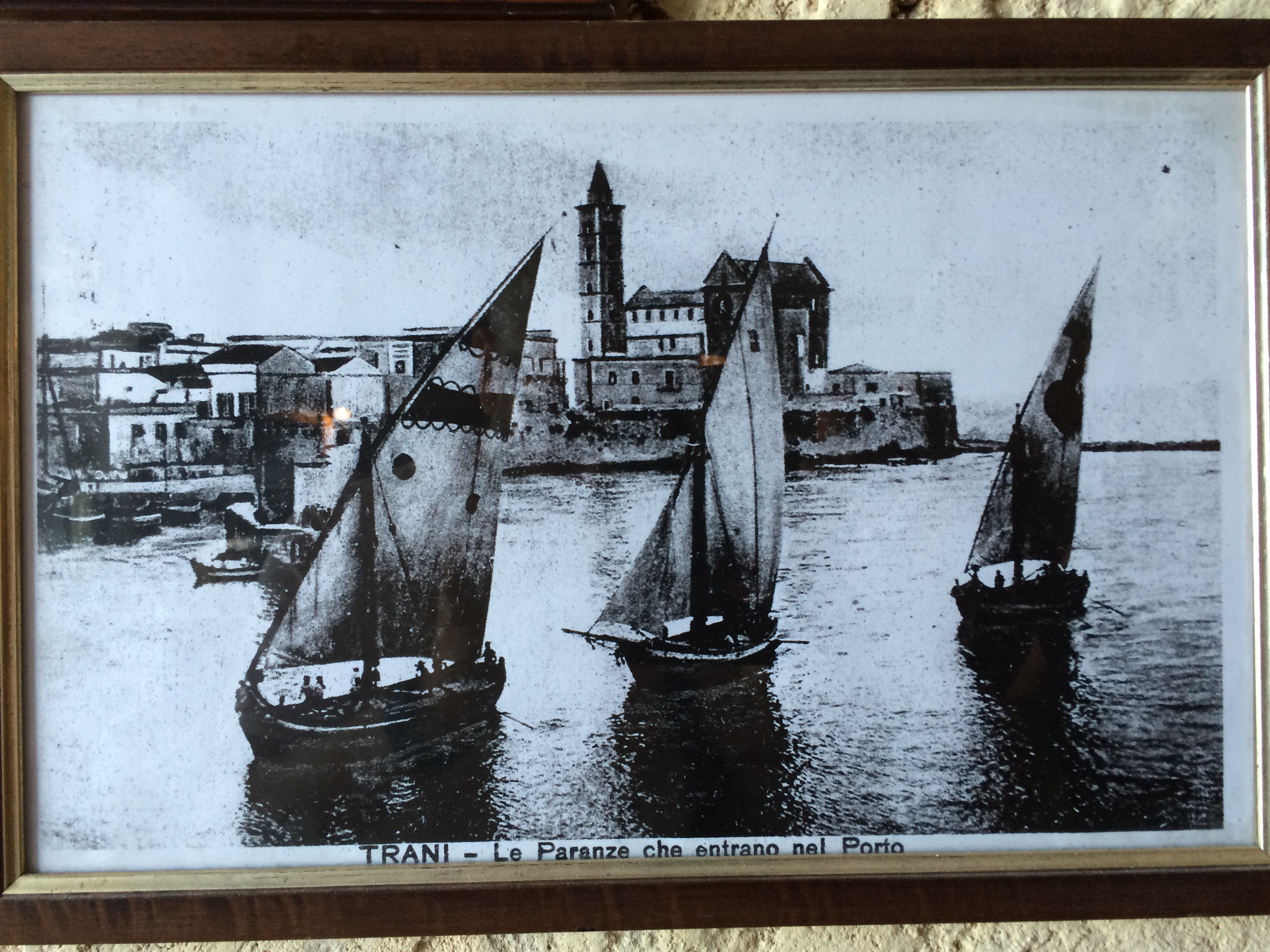
Later that evening, walking past a small unprepossessing cafe/restaurant out of which classical music was blaring, Flavio was stopped by the owner almost as though he had had prior knowledge that he’d pass by and of his search. “Where are you going? Stop.  Let me make you a coffee, or have a bichiere on me.  Who are you?” “Centofanti? ma come no ci sono Centofanti? Come back tomorrow and I’ll take you to some Centofantis.” His name was Marchese and Flavio wasn’t sure whether to be fascinated by or slightly suspicious of his eccentricity.  “Ma si che conosco i Centofanti, they were like us, the Fabiano family.  We both had the best fishing boats.” “I could have guessed you were a Centofanti.  You’ve got a Centofanti face and Centofanti mannerisms.”  “Come back tonight, or tomorrow and I’ll tell you some more.”  Flavio’s sister Laura, who knows Italy better than the rest of us, had told us not to be gullible and always believe what people said and so we were accordingly wary.  He had some interesting old framed photos on the wall and claimed to have met Prince Charles and Lady Di when they stopped in Trani to visit the cathedral shortly after they were married – their first port of call in Italy.

A group of older citizens of Trani chilling out in the late afternoon - they were happy to have their photo taken.

A group of older citizens of Trani chilling out in the late afternoon – they were happy to have their photo taken.

The Via Sinagoga - Trani once had a thriving Jewish community. Jews still come every year to celebrate Hanukah.

The Via Sinagoga – Trani once had a thriving Jewish community. Jews still come every year to celebrate Hanukah.

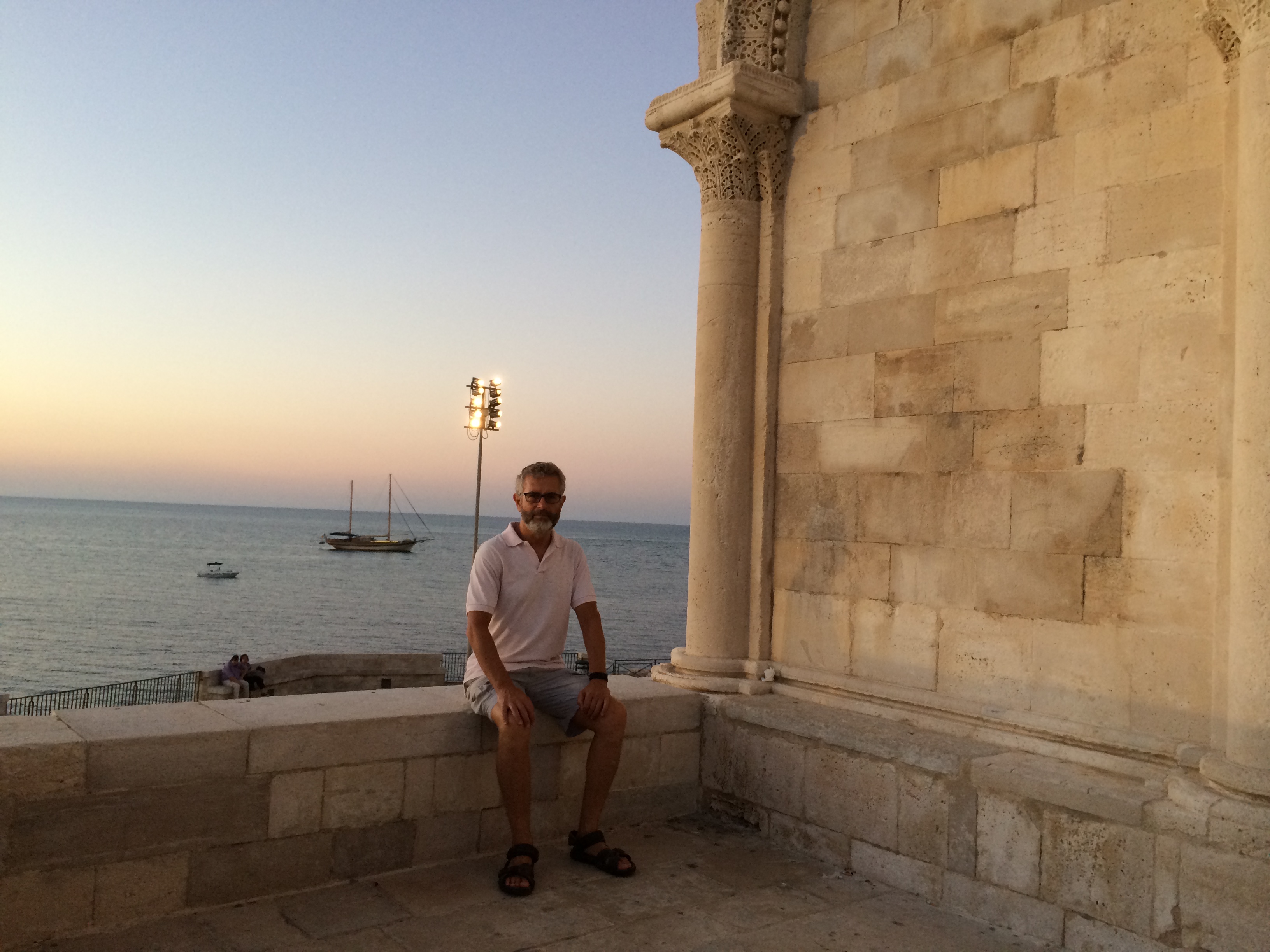
In front of Trani's magnificent cathedral.

In front of Trani’s magnificent cathedral.

Sandro, the friendly and helpful owner of the Giudeca souvenir shop - interested in helping us with our quest.

Sandro, the friendly and helpful owner of the Giudeca souvenir shop – interested in helping us with our quest.

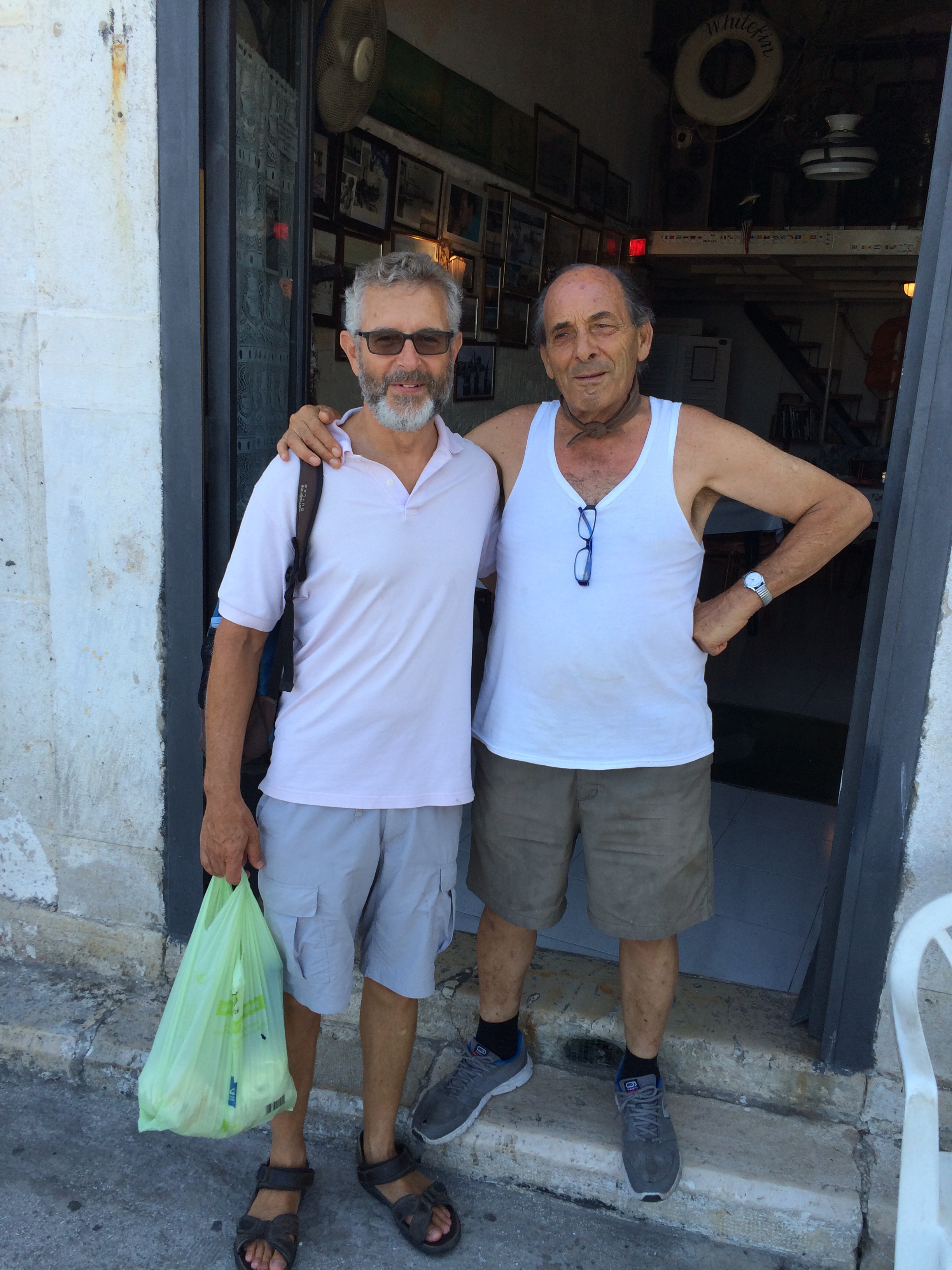
Marchese Fabiano:

Marchese Fabiano: “You’ve got a Centofanti face and Centofanti mannerisms”.

“Ma come non ci sono Centofanti?”

“I Centofanti avevano una barca” said this old Tranese sitting outside the Porto Trani B&B.

One of the old photos on Marchese's walls showing old 19th century fishing boats in Trani.

One of the old photos on Marchese’s walls showing old 19th century fishing boats in Trani.

True to his word, the next day Sandro had a copy of the promised book for us and it turned out that Centofanti was an old Trani family.  One chapter in the book details a massacre in Trani carried out by France’s Nepoleonic army.  Listed amongst the names of the dead was a Centofanti.

The next morning we went to the Ecclesiastical Records office and had a long chat with Monsignor Savino Giannotti,  Vicario General (effectively the Deputy Bishop).  He was very helpful and confirmed immediately and without hesitation “ma si, come non ci sono Centofanti?  Ansi, e una famiglia famosa e nobile” (who says there aren’t any Centofantis. Of course there are – indeed it’s a famous and noble family!)  He took our details and promised, as soon as he received a request from us in writing, to begin his research and get back to us, though nothing would happen until September as the office was about to close for the summer vacation.  He was a lovely amiable chap and gave us a present of a book about St Nicola il Pellegrino, the patron saint of Trani.  Not to be confused with St Nicola of Bari who was an old man like me said Monsignor Giannotti pointing at my grey beard!  “St Nicola il Pellegrino came from Greece and was passing through Trani on his way to doing a pilgrimage in Rome. Being a very simple and devout young man, he spent his time preaching holiness and purity of lifestyle but died in Trani and became our patron saint. ” What did he die of? “Of repeated ‘colpi’ (blows) he got from people for getting up their nose.” How old was he? “18.”

The Vicario General's residence.

The Vicario General’s residence.

Monsignor Giannotti, Vicario General.

Monsignor Savino Giannotti, Vicario General. “Centofanti e una famiglia famosa e nobile”.

Monsignor Giannotti signing a copy of a book on St Nicola il Pelegrino, Trani's patron saint.

Monsignor Giannotti signing a copy of a book on St Nicola il Pelegrino, Trani’s patron saint.

The cathedral where San Nicola il Pellegrino is buried.

The crypt of cathedral where San Nicola il Pellegrino is buried.

Meanwhile Flavio had emailed his cousin Mario in Australia to see if he had any information about their mutual great grandfather.  Mario spoke to his mother and got back to us to confirm that his mother couldn’t remember the name of her grandfather as the ‘family’ didn’t talk about him.  It seems he could have had a partner and child in Italy and a wife and six children in Italy and/or Alexandria, Egypt.

When we married the Italian Consulate in London insisted on taking our original marriage certificate and sending it to Bari.  Whenever Flavio had to renew his passport Judith had to go to the Italian Consulate with proof of marriage and sign the application forms.  When questioned they said it was to prevent Italian men having ‘a wife in each port’.  So maybe it was a problem and Flavio’s great grandfather was just keeping up with tradition?

Leaving Trani for Bari we were informed by the very same waiters we met on the first night that Bari was dangerous and we should be vigilant but they again failed to say why or from whom. So off to Bari we went, praying to the two Saints Nicola to watch over us!

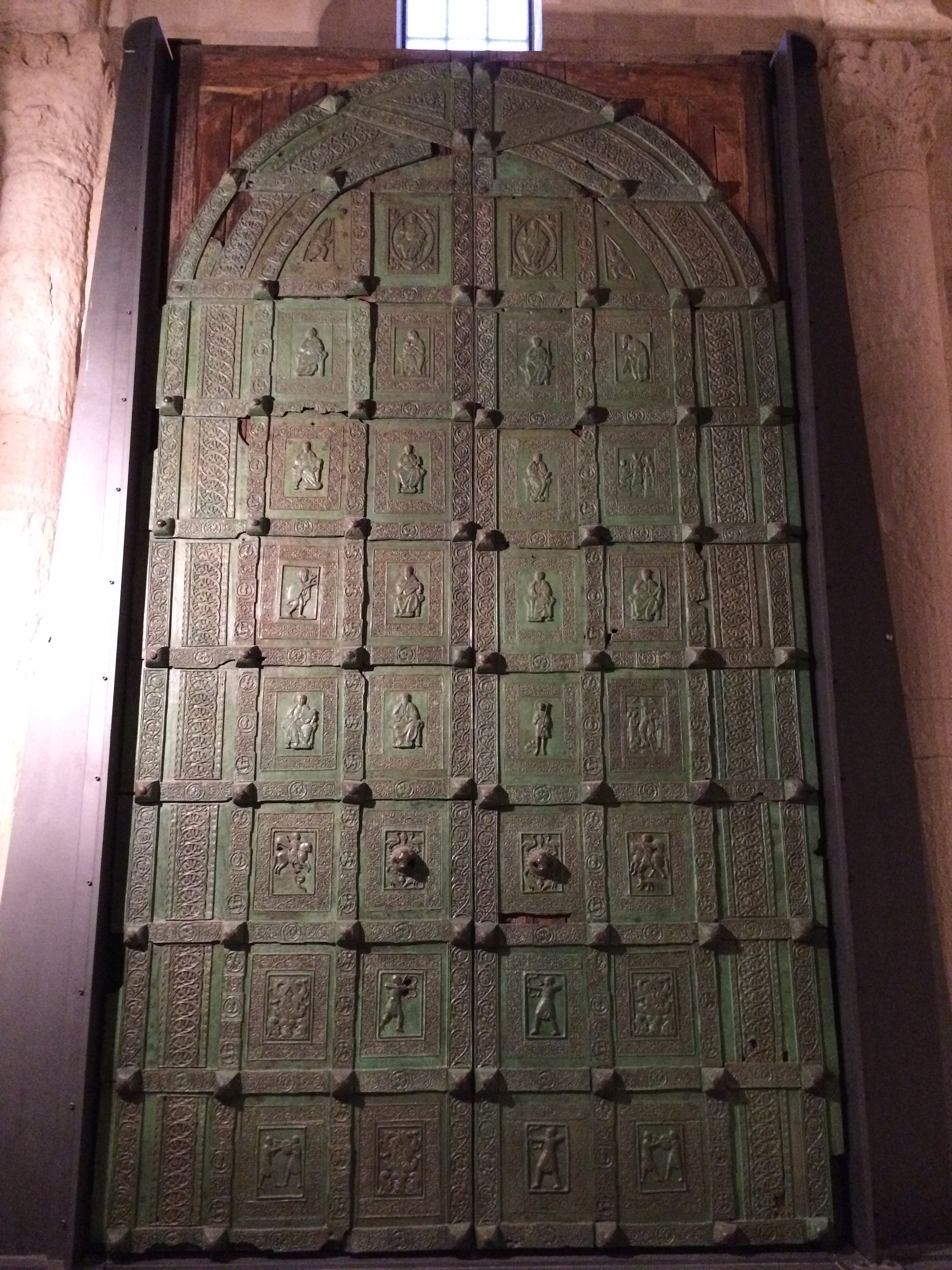
The medieval bronze door of the cathedral.

The medieval bronze door of the cathedral.

A very old fresco in the crypt of the cathedral.

A very old fresco in the crypt of the cathedral.

H

H

F

F

IMG_5136

IMG_4987

Sunday 26th and Monday 27th July – and so to Puglia

Standard

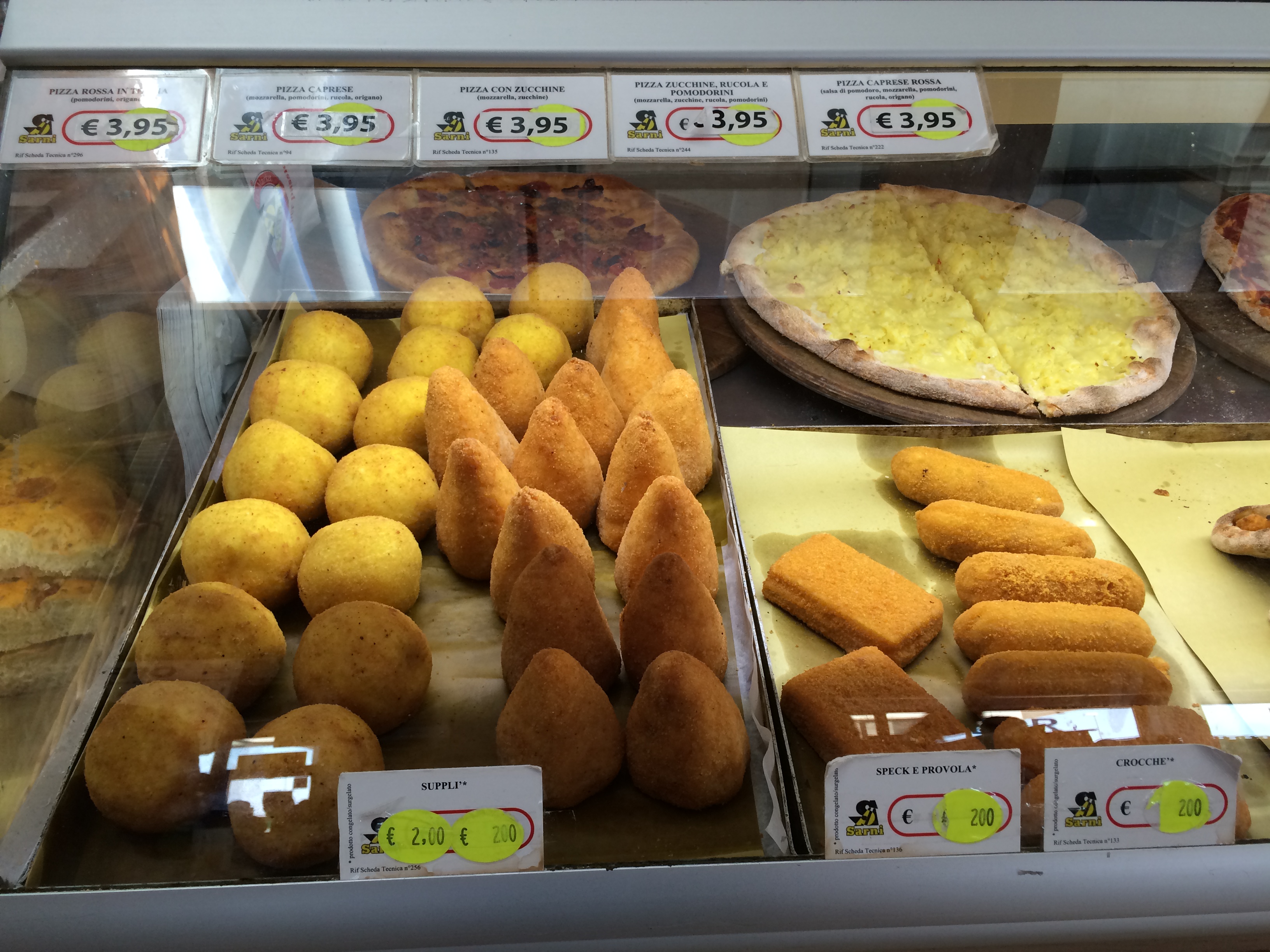
We press on down the Adriatic coast past San Benedetto, Roseto degli Abruzzi, Montesilvano and Pescara which we decide to take a quick look at but finding nothing of especial interest, drive straight out again.  Then further south still past Ortona, Vasto and Termoli and we finally reach Apricena where, stopping at a service station and seeing the array of ‘suppli’ and other Pugliese food on offer we realise we’ve reached Puglia. ‘Suppli’ are mozzarella and ham or meat-filled rice balls or cones often eaten as antipasti. They used to be served at the Italian Club restaurant at the back of the Italian consulate in Boulaq in Cairo – sadly, it’s very doubtful this will still be open after the attack on the consulate not long ago. These suppli were giant-sized and easily make a meal in themselves.

Headed for Trani and Bari in Puglia.

Headed for Trani and Bari in Puglia, Flavio’s ancestral home.

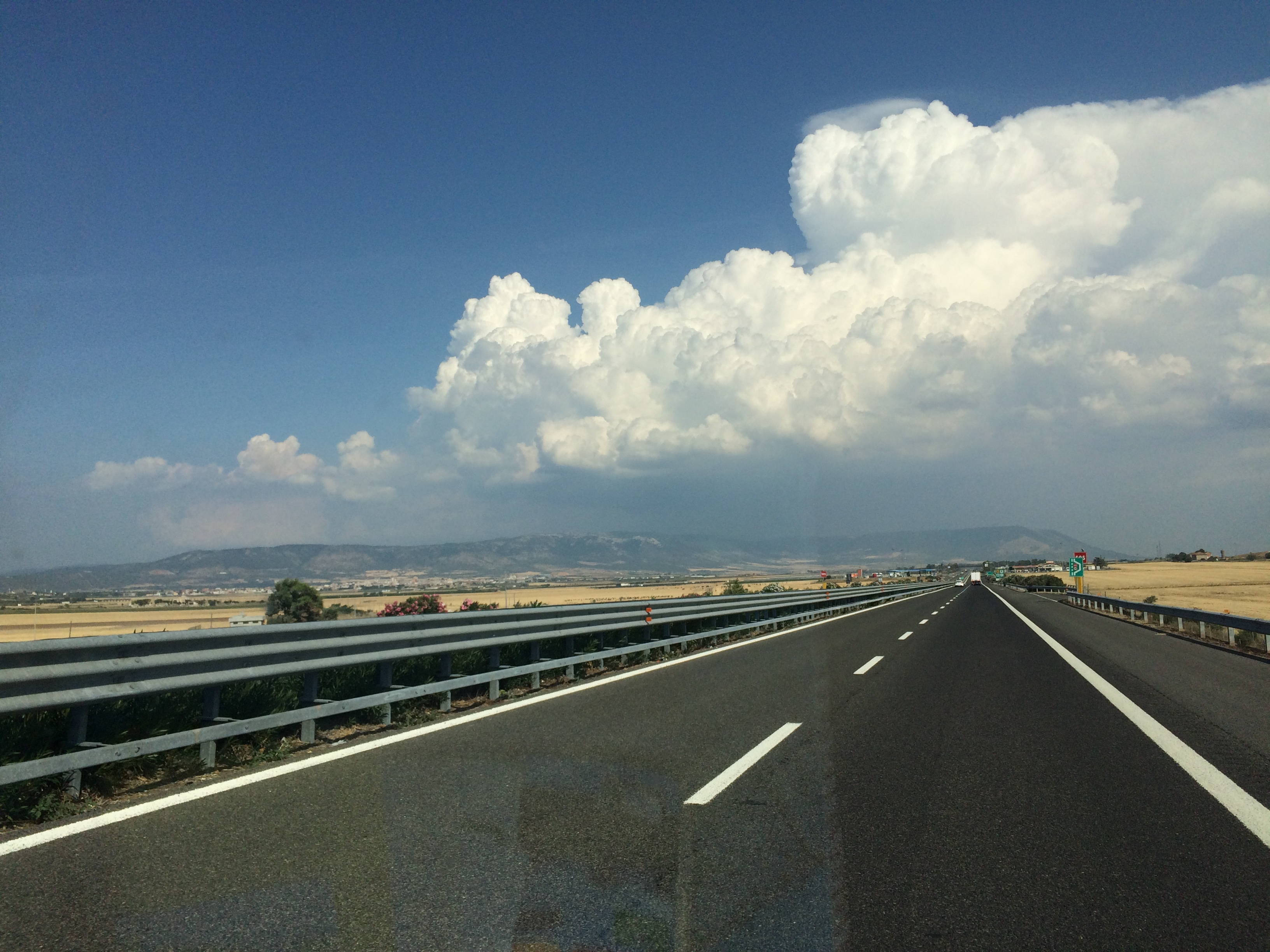
The road at Apricena.

The road at Apricena – pretty good and much less busy than in the north.

Selection of Pugliese food on offer at the service station in Apricena including the famous 'suppli.

Selection of Pugliese food on offer at the service station in Apricena including the famous ‘suppli’.

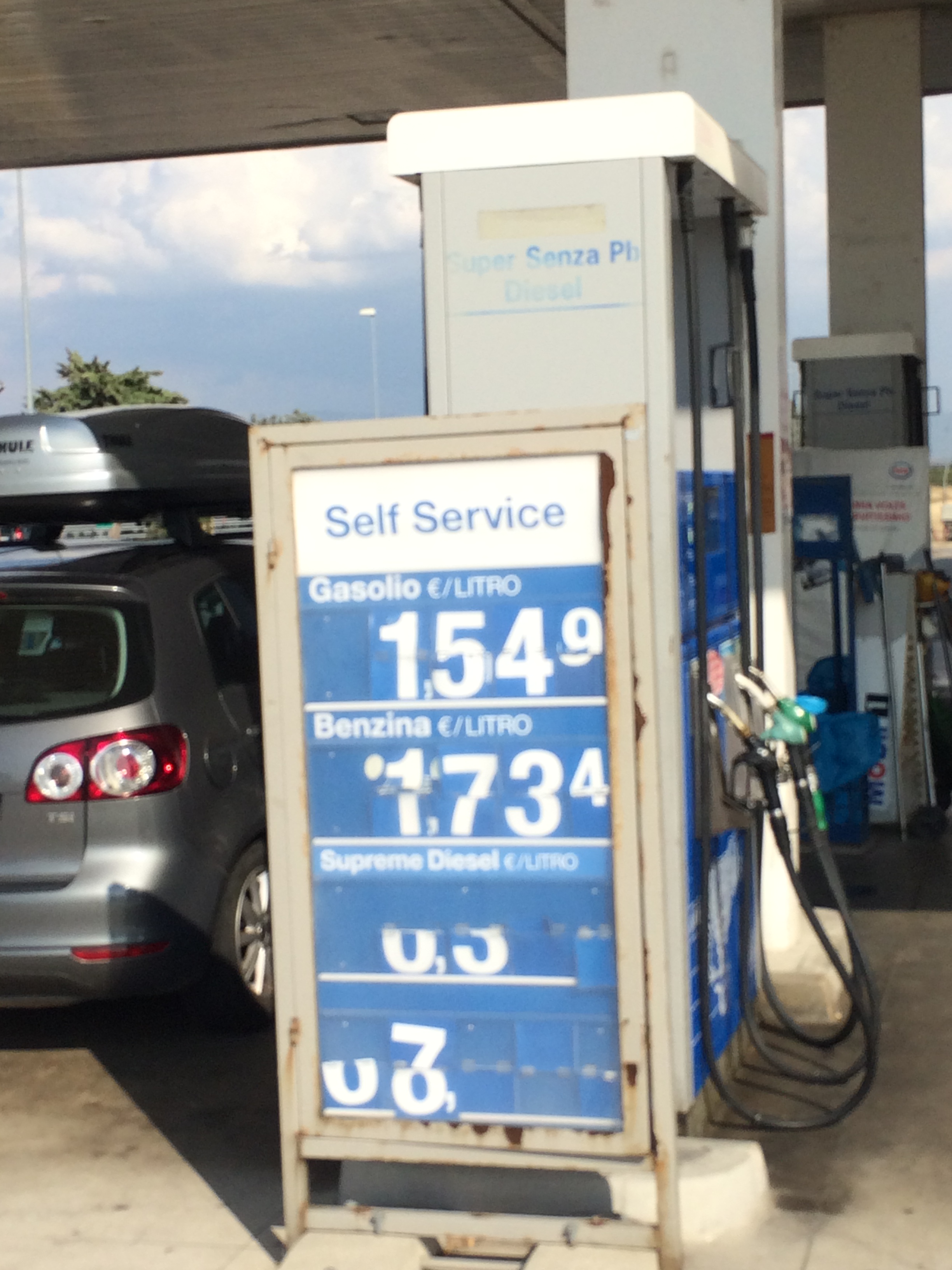
The price of diesel however was the highest we'd come across in all our travels so far.

The price of diesel however was the highest we’d come across in all our travels so far. The cheapest were Portugal and France.

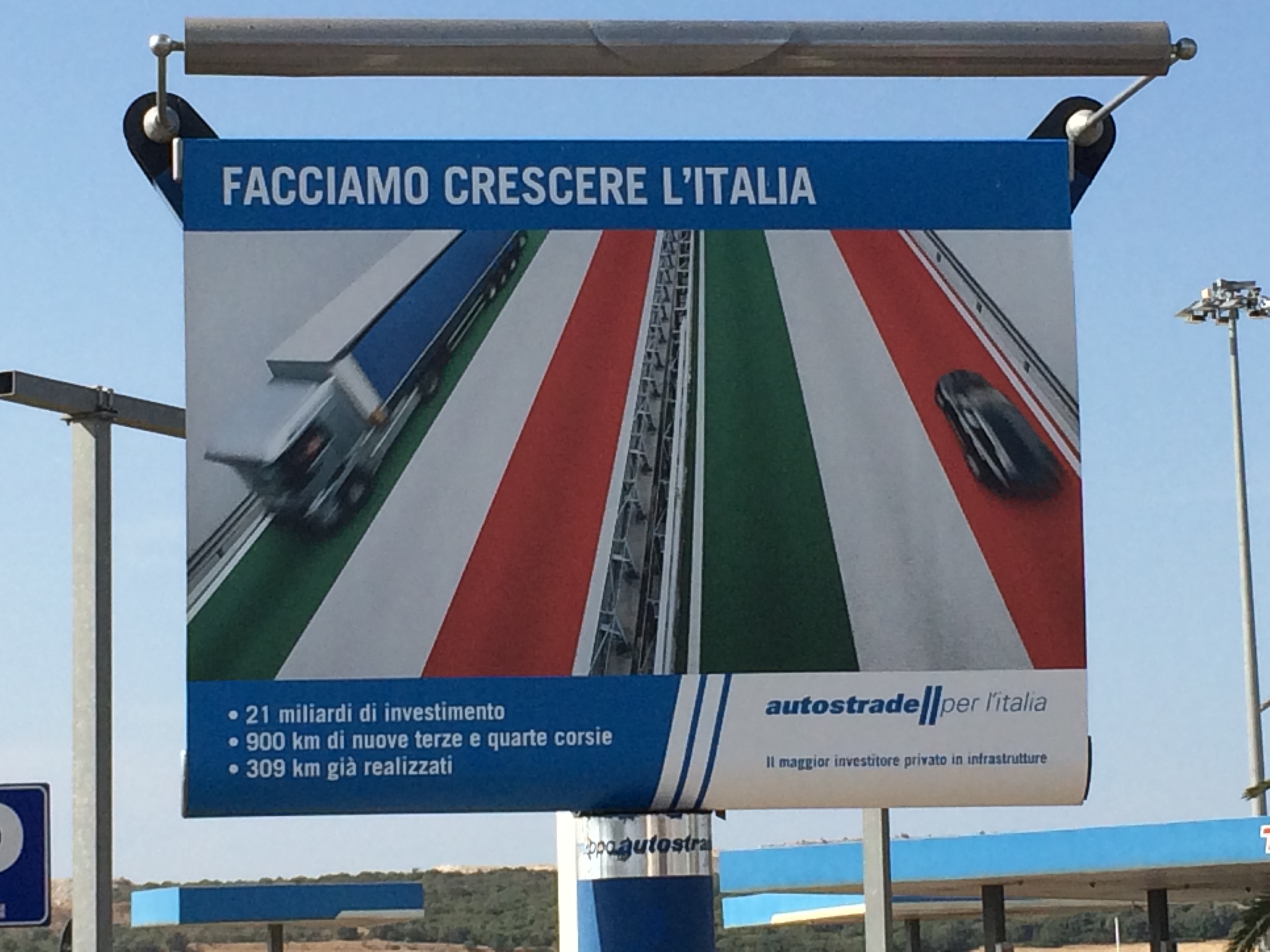
Hoarding at Apricena advertising private infrastructure investor 'Autostrade per Italia's plans to invest Euros 21 bn on 900 kms of new motorways.

Hoarding at Apricena advertising private infrastructure investor ‘Autostrade per Italia’s plans to invest Euros 21 bn on 900 kms of new motorways.

The spur that is the promontory just above the heel of Italy is called the ‘Gargano National Park’.  It is an area of outstanding natural beauty.  Having driven inland on the main autostrada which circumvents it we decided it would be a shame to miss it so we turned eastward at San Severo to rejoin the coastal road. We got onto a very narrow and long natural corridor between the Adriatic to our left and the vast Varano Lake to our  right before negotiating the impossibly windy and mountainous road tracing the outline of the spur.  It was gone 8pm and we had been on the road since lunchtime so were getting quite desperate to find a suitable campsite.  A couple of places we stopped at on the ‘corridor’ turned out to be large holiday camp places that couldn’t be further removed from our idea of relaxation so we pressed on round vertiginous bends as the sun was setting. At one point we had to brake suddenly when an apparently  stray horse appeared on the road.  It had obviously somehow got out of its enclosure and another horse, within the enclosure was looking out with concern. We stopped a car coming out of a country lane further down the road and raised the alarm.  Luckily, they knew who it belonged to saying it had happened before and that they’d deal with it. That was a relief.

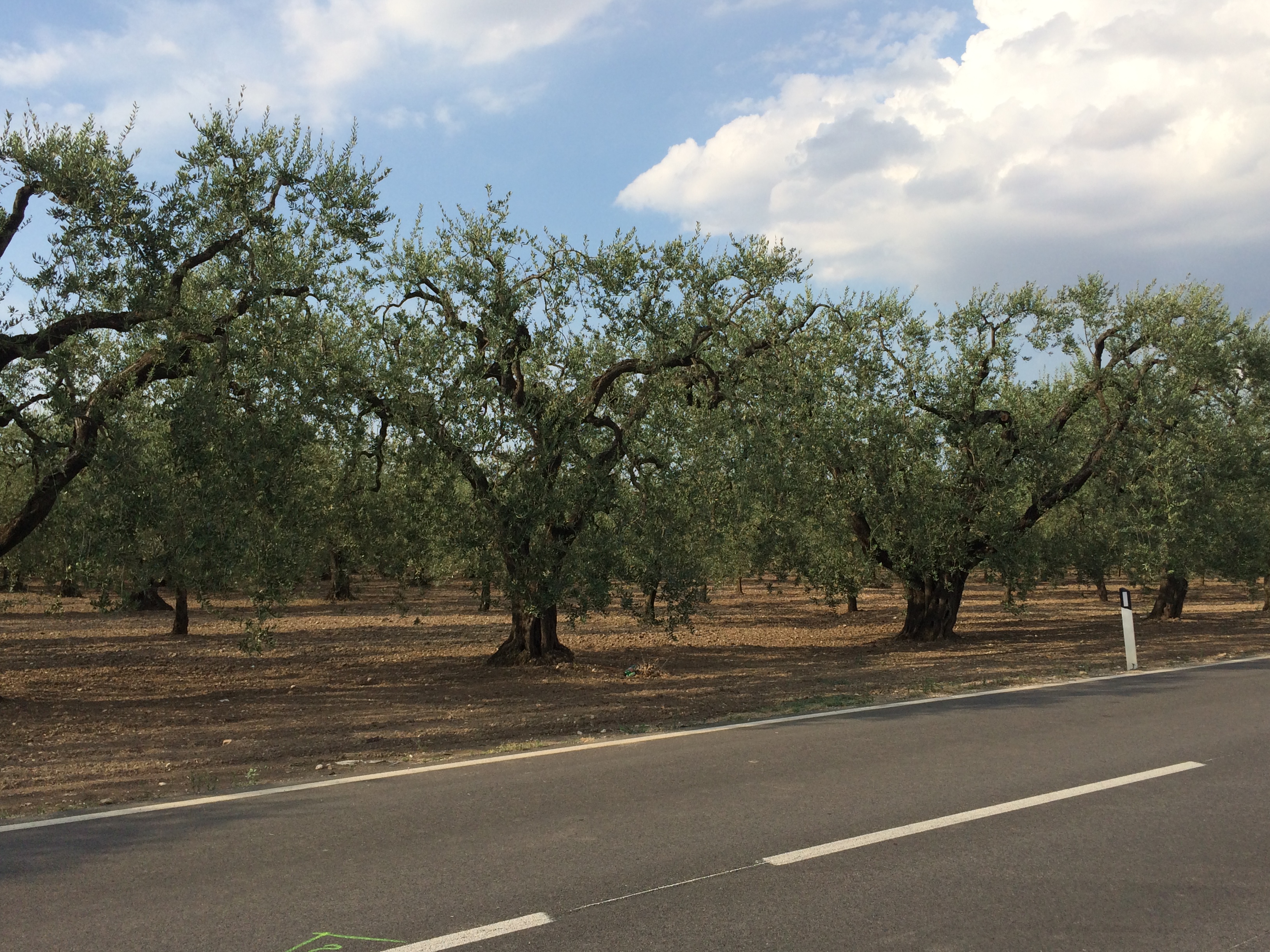
Olive groves line the road at San Severo.

Olive groves line the road at San Severo.

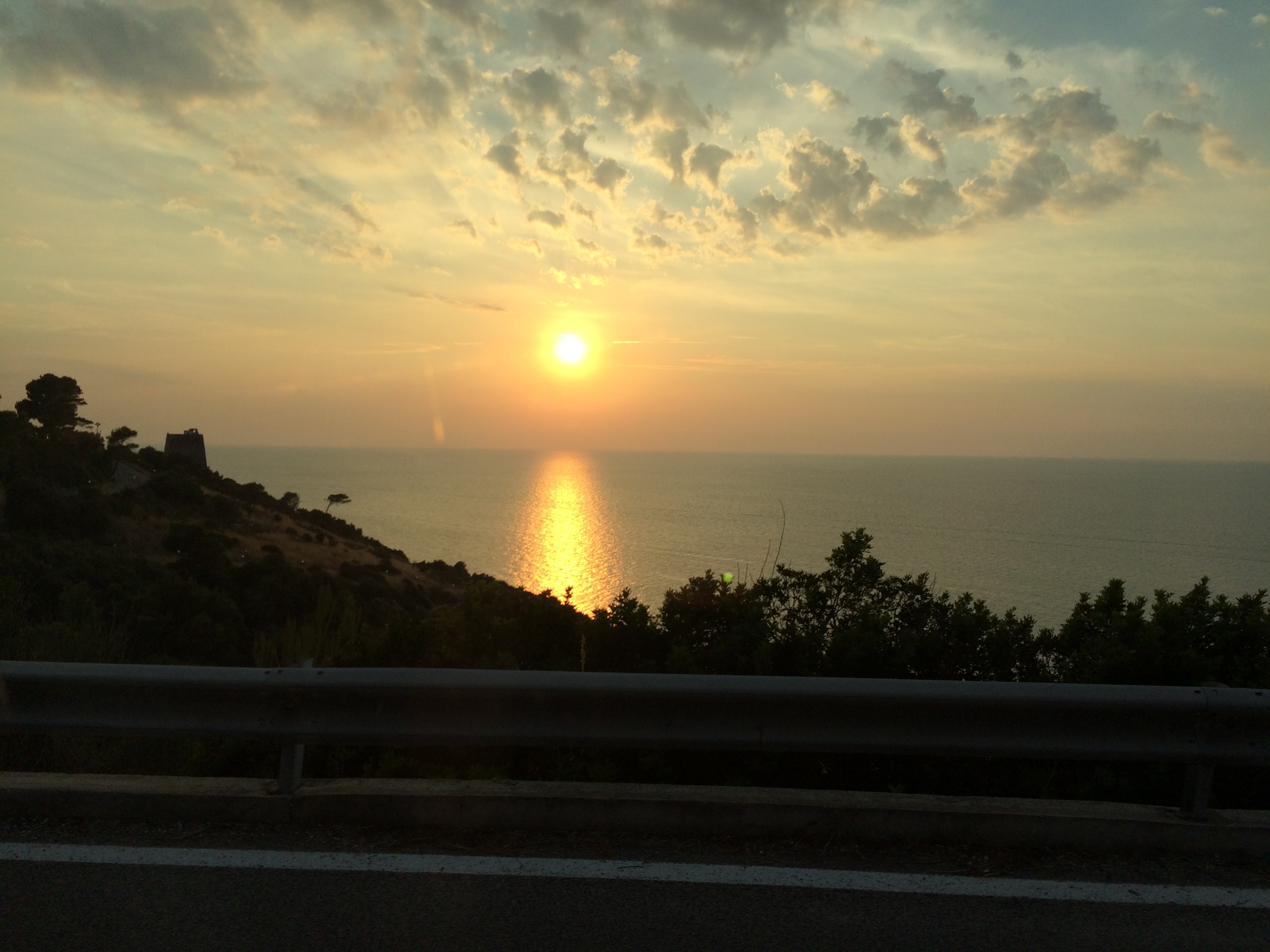
Sun setting as we drive past Peschici in Gargano.

Sun setting as we drive past Peschici in Gargano.

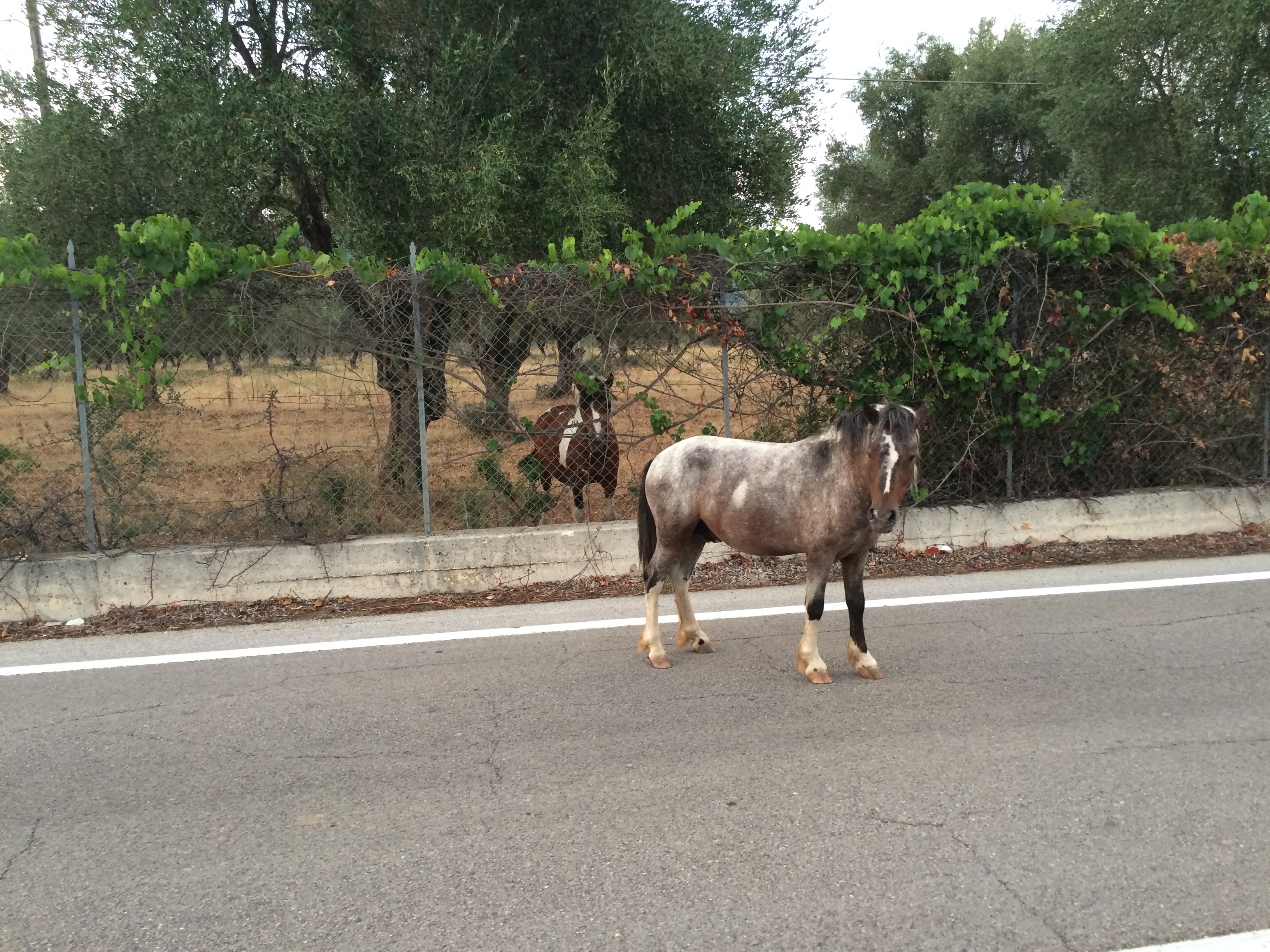
Disoriented-looking horse wandering on main road on its own as we approach Vieste.

Disoriented-looking horse wandering on main road on its own as we approach Vieste. Is this anything to do with ‘cacciacavallo’?

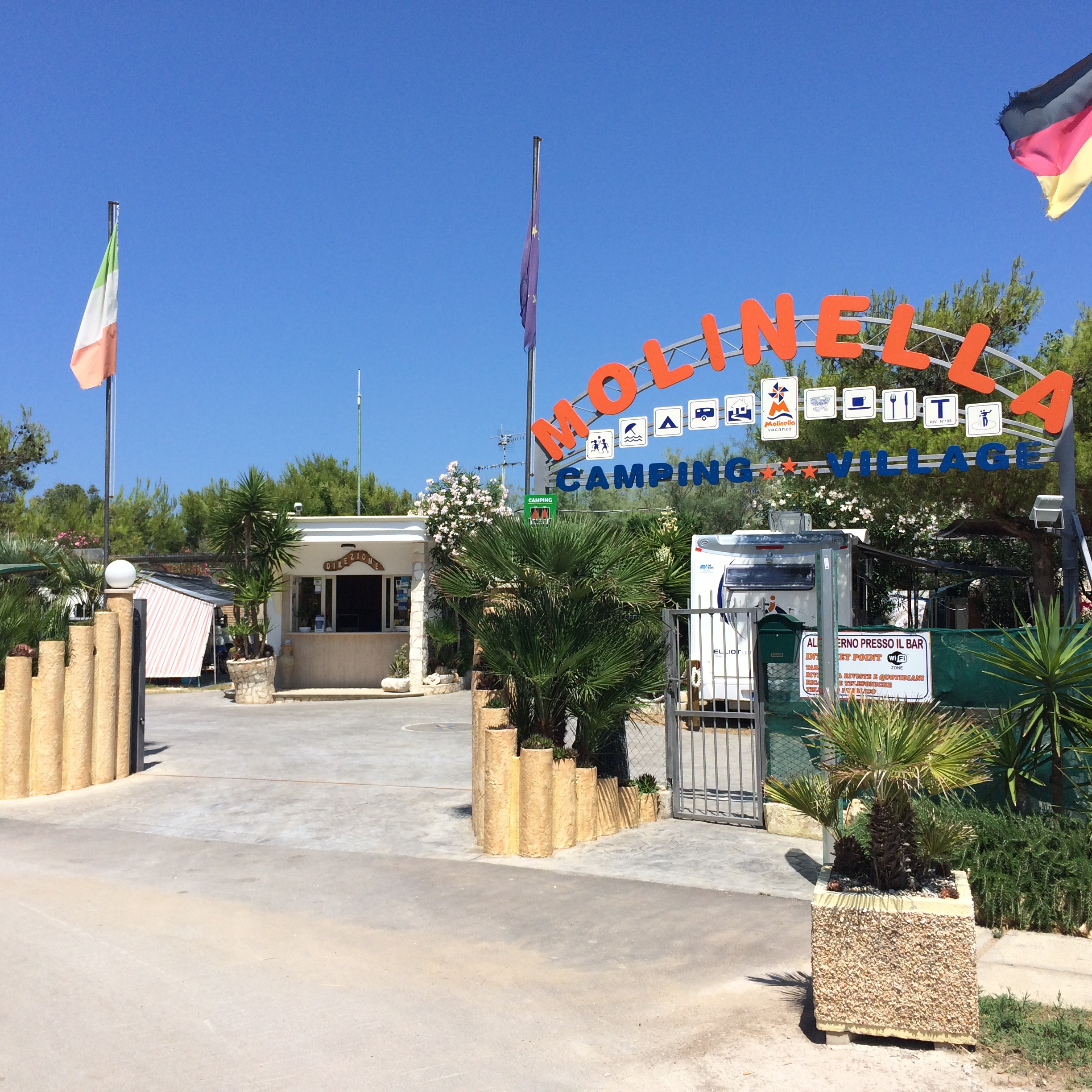
The Molinella Camping Village in Vieste - it ticked all the boxes.

The Molinella Camping Village in Vieste – it ticked a lot of the boxes.

The beach at Molinella with Vieste appearing in the background.

The beach at Molinella with Vieste appearing in the background.

Cycling into Vieste.

Cycling into Vieste.

The place we found in the end – the Molinella Camping Village just south of the beautiful little town of Vieste – turned out to be our best campsite in Italy to date!  Situated at the very tip of the ankle bone in the heel of Italy and looking out to Podgorica or Tirana across the Adriatic. Molinella was a lovely place on the beach and with lots of shade, good loos and very friendly staff and other (mainly Italian) campers, what more could you want.  Fewer and less noisy daytime and evening activities perhaps but that would be going a tad too far! The sea was warm and crystal clear and cried out to be swum in.

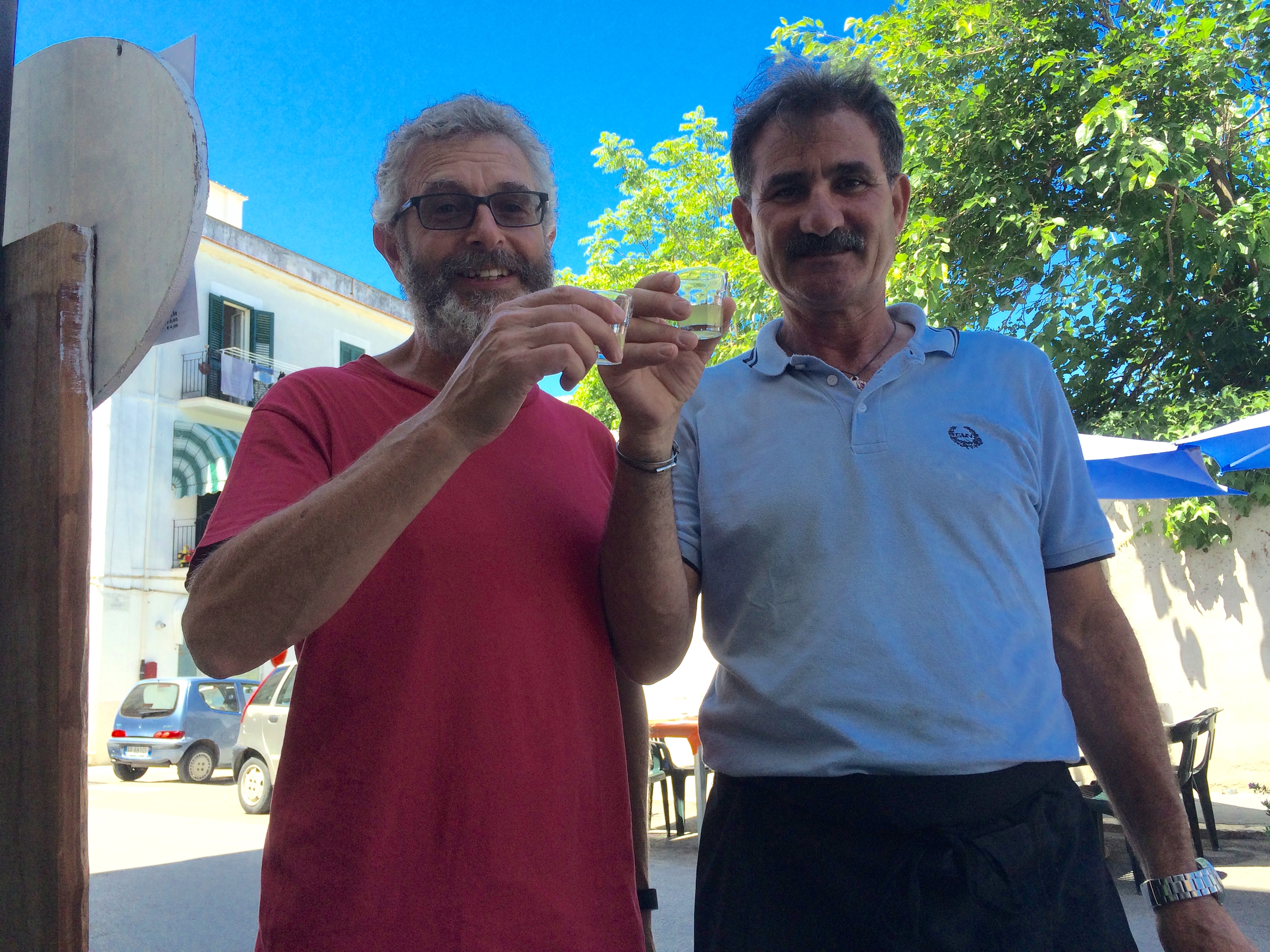
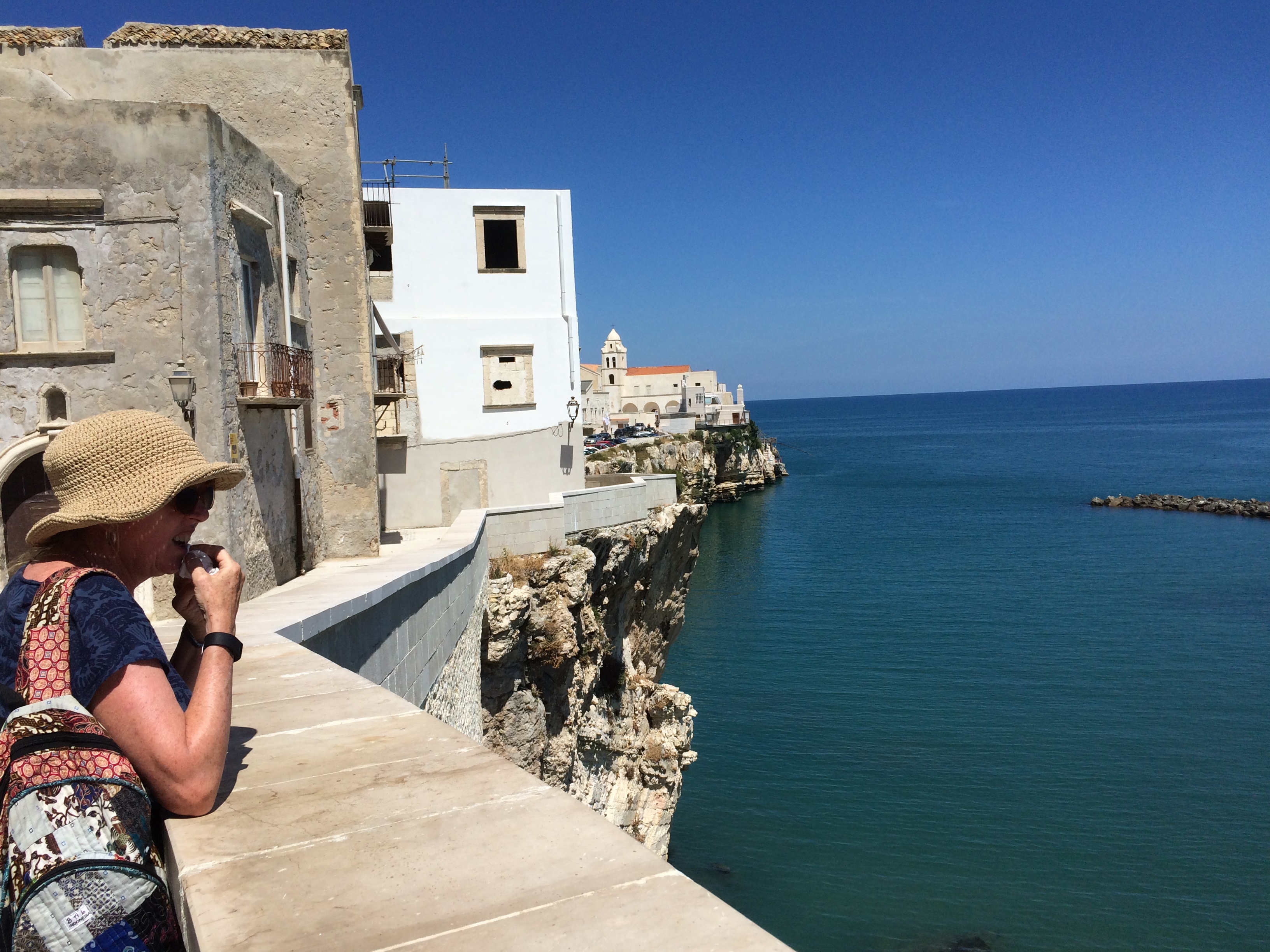
We cycled into Vieste, once a busy fishing port but now dependent almost entirely on the holiday season.  Many of its young people, we were told, leave to look for work in the cities, a tale repeated in many parts of Italy. It had a small fort built by Frederic II who we came to realise is a great hero for the Pugliese, who refer to him variously as ‘Puer Apulia’ (son of Apulia), Frederick of Swabia and ‘stupor mundi’ (wonder of the world).  In medieval times, Vieste was frequently attacked by pirates and Saracens and the enemies of the Kingdom of Naples. According to Wikipedia, in 1554 around 5,000 inhabitants were executed by the Turks on the grounds that they were too elderly or infirm to merit transportation into slavery. As we climbed up to the fort we asked an elderly man if that was true. “Hanno ucciso 2,000” he said, so locals still remember it even if the figures differ.  For lunch we picked the least fussy little restaurant with barely room for a few tables on the pavement but which  served revived old Pugliese recipes.  Flavio got on particularly well with Nicola the owner who, when he found out they were exactly the same age (61) rushed in and came out again with two shots of Limoncello. Explaining that Nicola (pronounced with the stress on the ‘o’) is the most popular name in Bari – after its patron saint – he launched into a song by Nicola di Bari Flavio likes very much called “Il cuore e uno zingaro” (the heart is a gypsy).

“Che colpa ne ho s’el cuore e uno zingaro e va, Catene non ha, il cuore e uno zingaro e va, Finche trovera il prato piu verde che c’e, Raccogliera le stelle su di se, E si fermera chissa e si fermera.”  (What can I do, if the heart wanders like a gypsy, Chains it has not, the heart wanders like a gypsy, Till it finds the greenest of prairies, It can but continue gathering stars for itself, And one day, who knows, it will stop..it will stop..)

IMG_4889

The old fort built by Frederick II.

The old fort built by Emperor Frederick II.

A typical old square in Vieste.

A typical old square in Vieste.

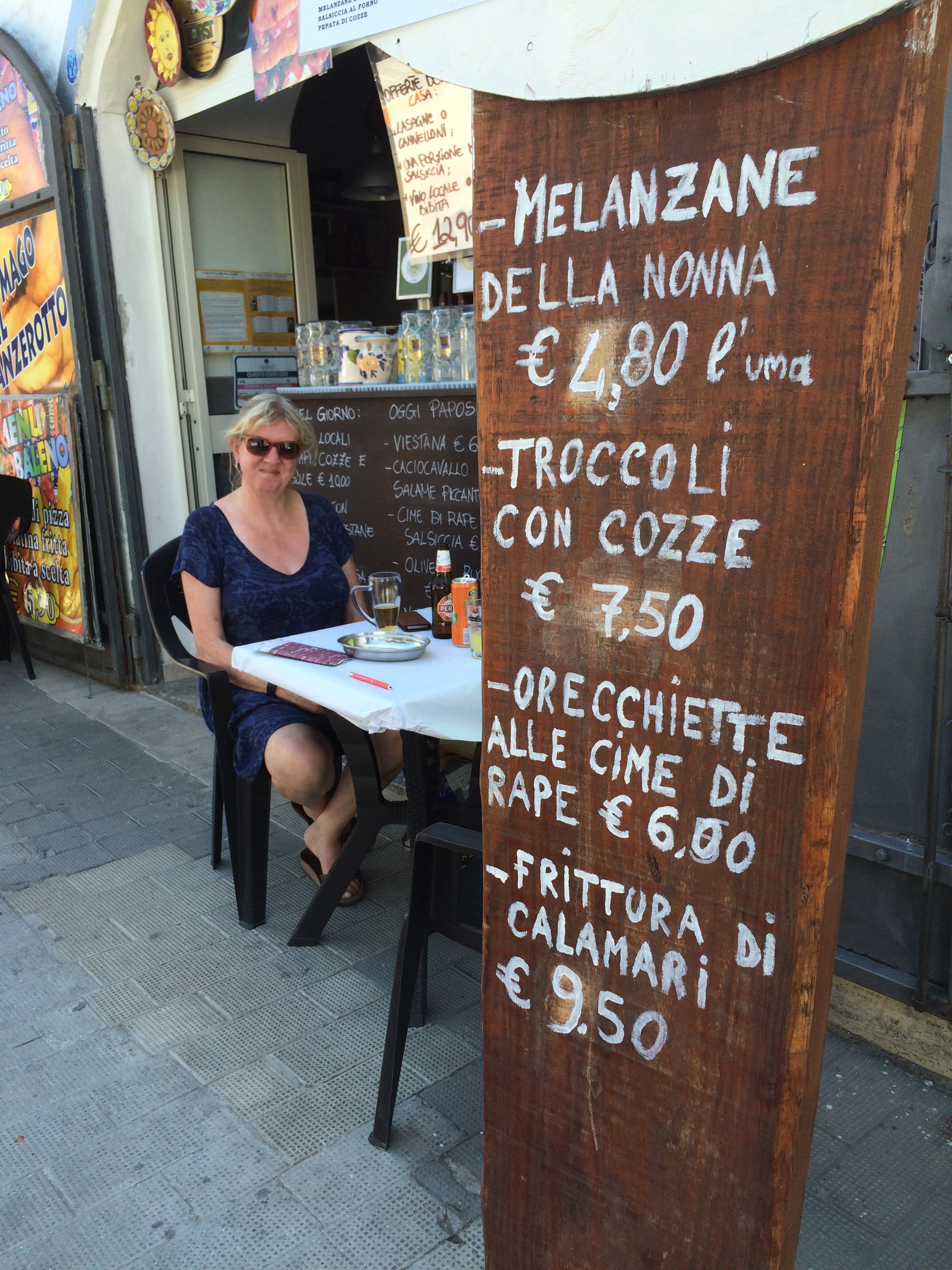
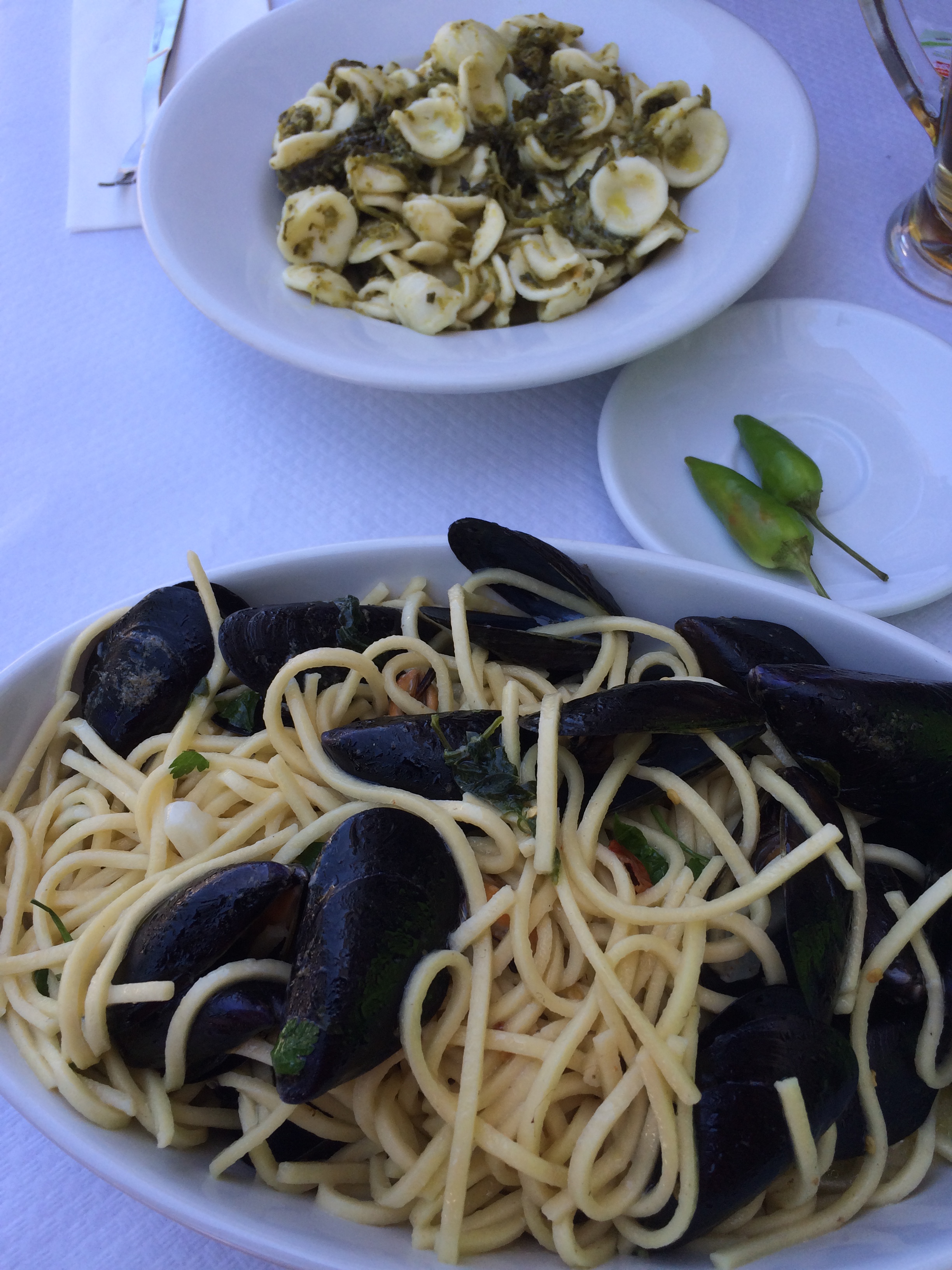
Local and simple specialities offered by Nicola - Aubergines grandma-style, Thick tagliatelle with mussels, Ear-shaped pasta with local greens.

Local and simple specialities offered by Nicola – Aubergines grandma-style, Thick tagliatelle with mussels, Ear-shaped pasta with local greens.

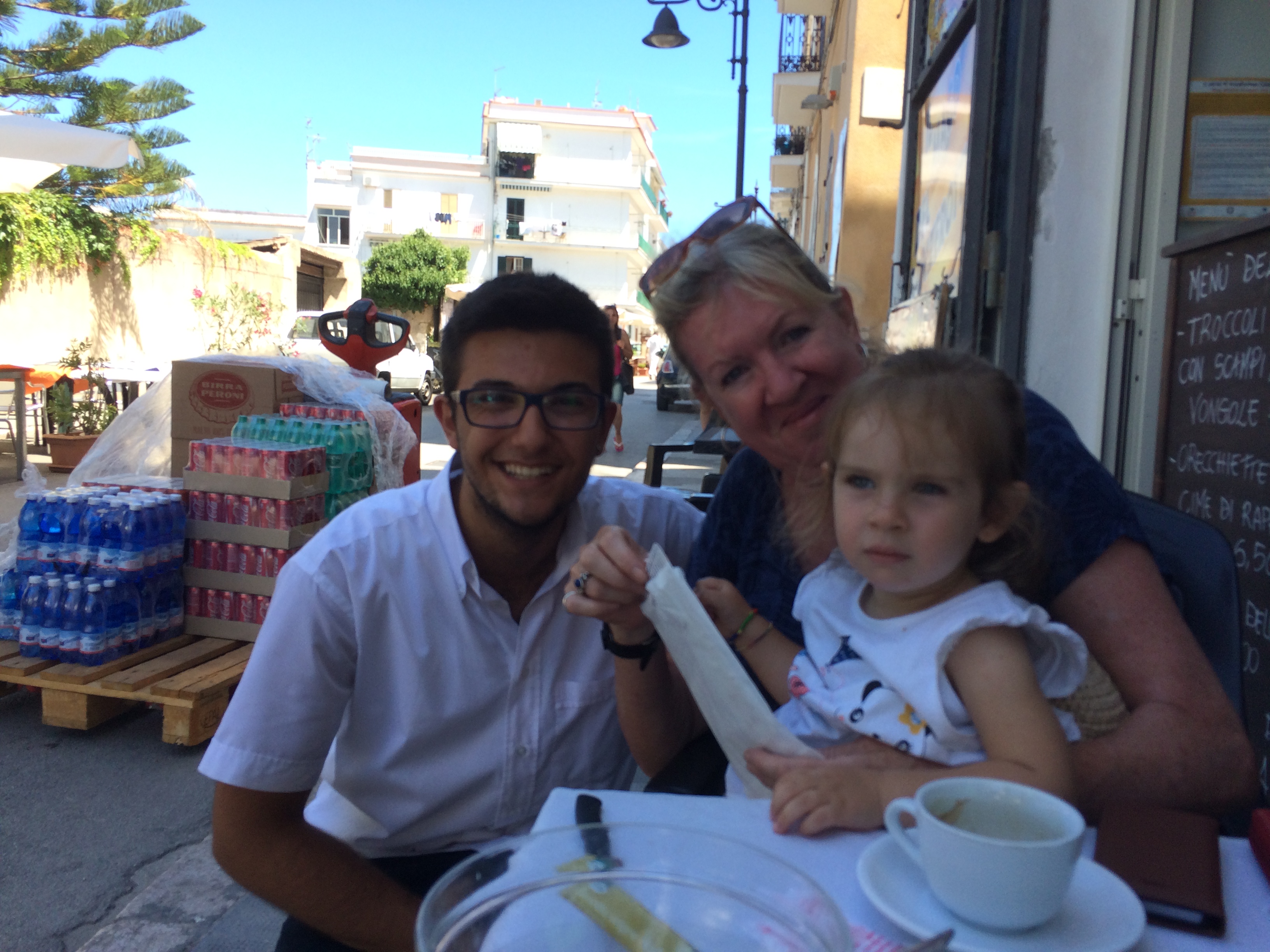
With Nicola at the 'Mago del Panzerotto' in Vieste - celebrating being the same age.

With Nicola at the ‘Mago del Panzerotto’ in Vieste – celebrating being the same age.

The 'troccoli con cozze' and 'orecchiette alle cime di rape'. Reasonably-priced.

The ‘troccoli con cozze’ and ‘orecchiette alle cime di rape’. Reasonably-priced.

Judith with Nicola's son and granddaughter. His son Antonio was about to go to Sutton, England to study English.

Judith with Nicola’s son and granddaughter. His son Antonio was about to go to Sutton, England to study English.

'Panzerotti' -  tasty local batter-based snack.  They normally come with a vegetable or caciocavallo cheese stuffing.

‘Panzerotti’ – tasty local batter-based snack. They normally come with a vegetable or caciocavallo cheese stuffing.

Vieste is a maze of picturesque old alleyways, piazzas and arches.

Vieste is a maze of picturesque old alleyways, piazzas and arches.

Father (Saint) Pio is also revered in the area, being from the region.

Father (Saint) Pio is also revered in the area, being from the region.

Back at Molinella, it was siesta time.  The sign said quiet must be maintained between 2-5pm.

The road back to Molinella from Vieste.

The road back to Molinella from Vieste.

Siesta time is sacred.

Siesta time is sacred.

Taking advantage of the quiet time to catch up on the blog at the cafe, pretty soon surrounded by a group of kids noisily setting about doing their holiday ‘compiti’ (homework). Non-stop chatter of course. Hard to concentrate. A brother and sister start squabbling and one simple question about what the problem is and they’re off.  Nicole, Alessandro, Martina, Julia and Georgia are all asking and answering questions at the same time.  “What? no holiday homework in England?  What? Only 6 weeks summer holidays?” “Are you two sisters?”  No, she’s my sister, says Alessandro – I wish she wasn’t, I’d be much happier if she wasn’t”.  “When do you start learning English at school?” ” Prima elementare for a first language and prima secondaria for a second.” What do you choose?” Either French, Spanish or German.”  French seemed to be the favourite.  “We come here every year.  We haven’t met anyone from England who speaks Italian like you.” “I’m an Italian from Egypt” “Ooh, Egitto?” “What do you know about Egypt?”  Everyone gets up and starts striking pharaonic poses and dances.  “There’s more to Egypt than that.” “Do I speak with an accent?” “Maybe a little bit”. “It’s been lovely to meet you all.  Good luck with your compiti”.

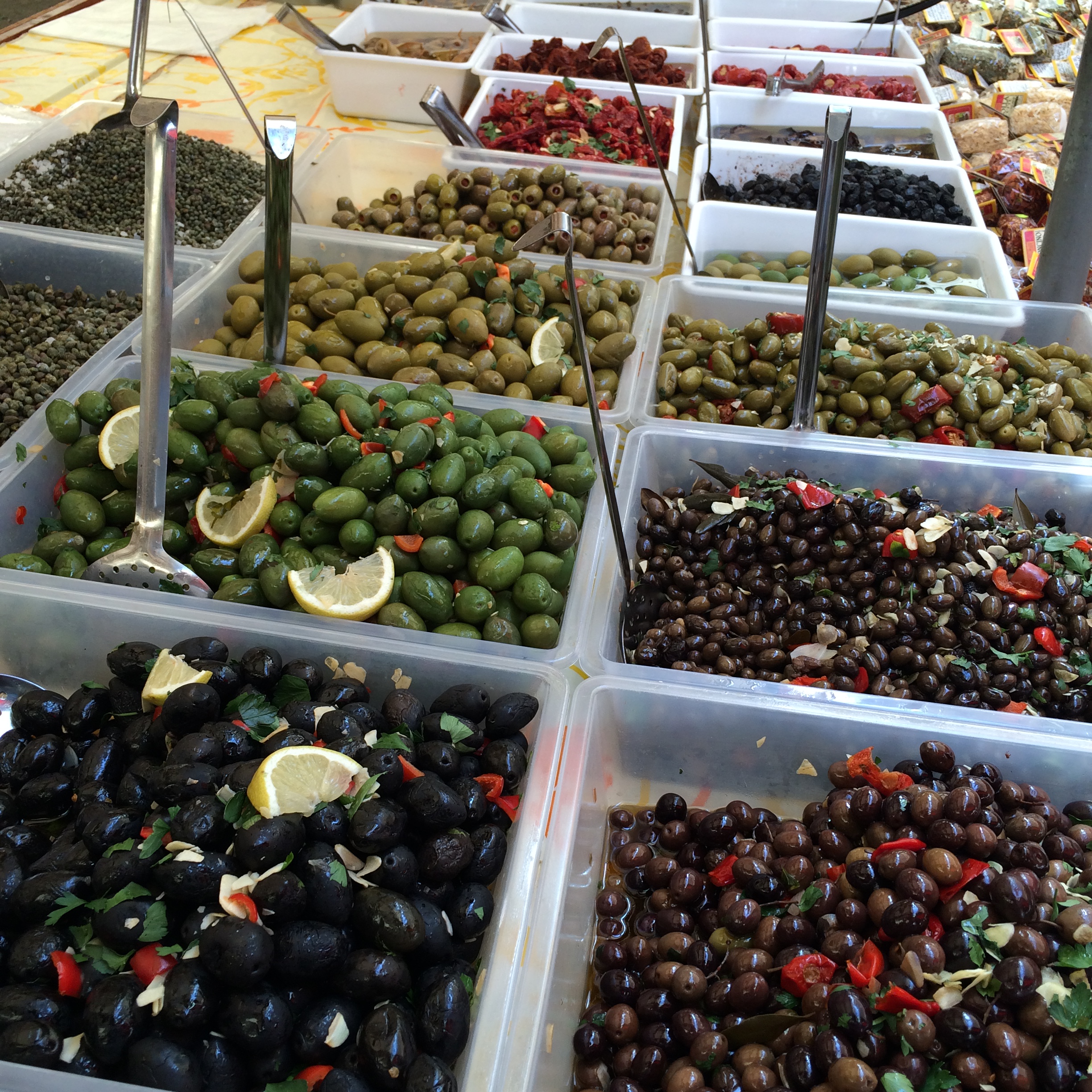
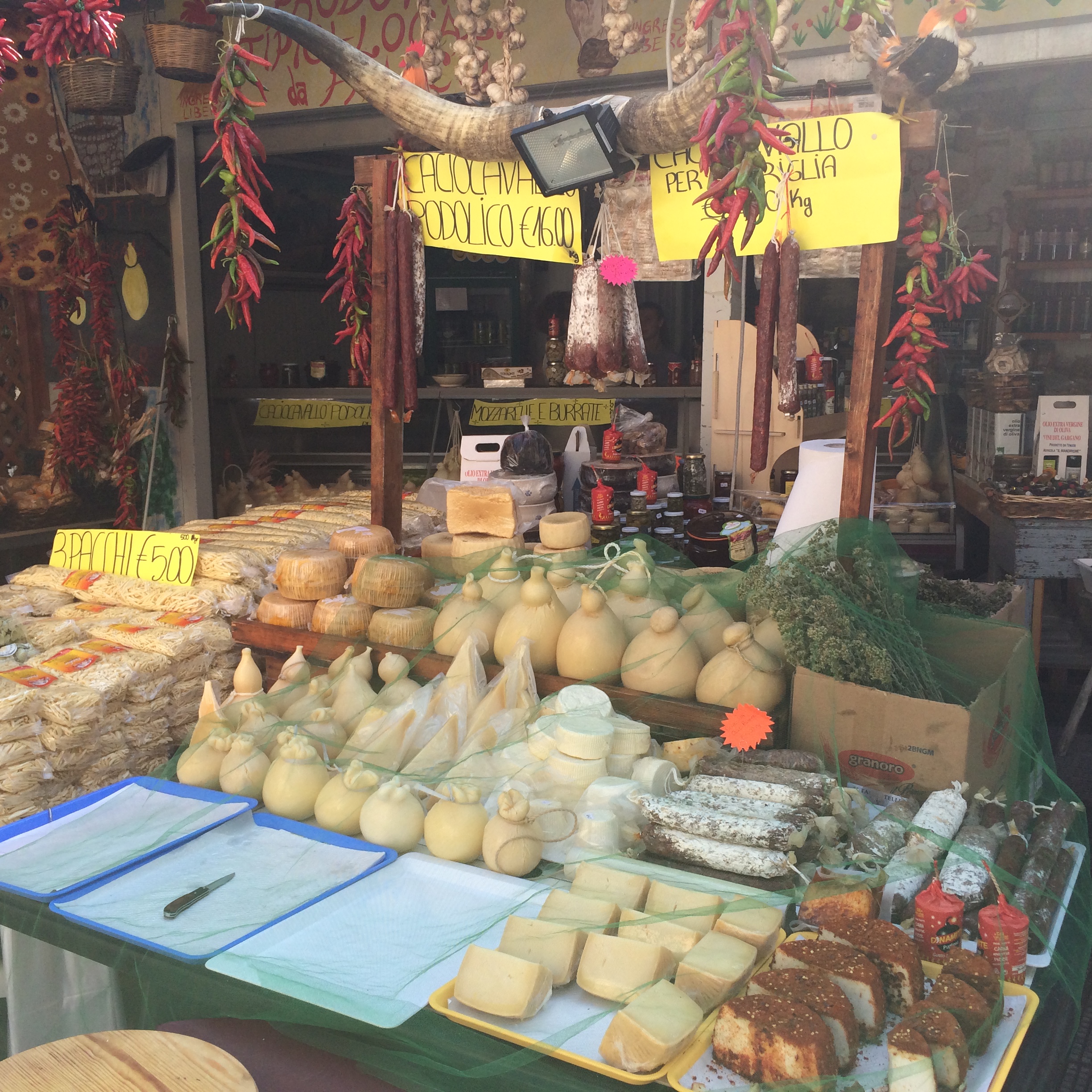
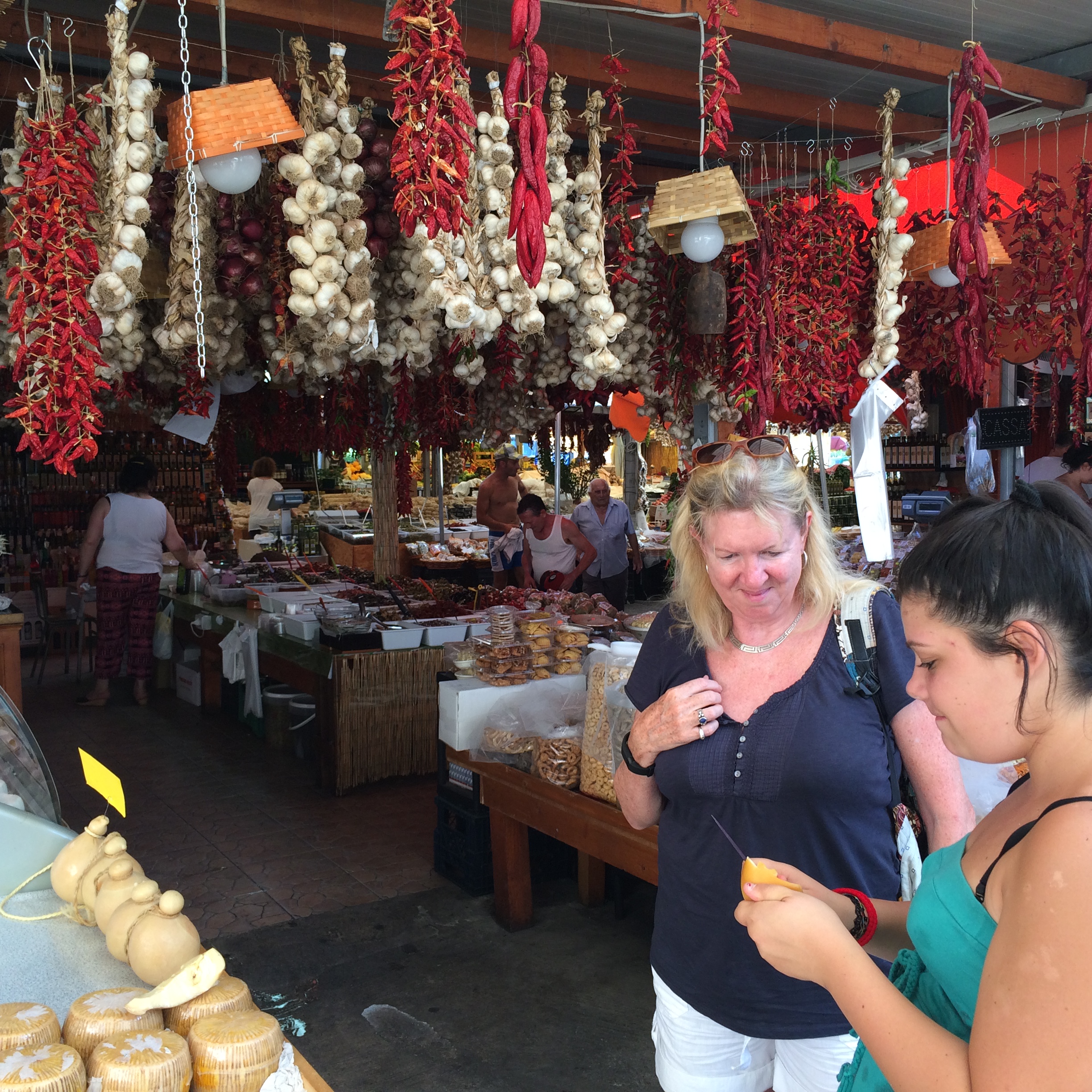
Leaving Molinella we have to pass through Vieste again.  A market seems to be in full swing.  It’s so refreshing to see a market bursting with colorful and irresistible local produce – endless varieties of olives, peppers, herbs, olive oil, salamis and cheeses.  Though we mustn’t as nothing keeps for long in Brenda, we feel obliged to purchase something so pick up some fresh oregano and cacciacavallo cheese (which, four countries later in Greece, we still haven’t quite finished).  Cacciacavallo by the way is where the popular Egyptian ‘cashcaval’ comes from.

Endless variety of olives at the market in Vieste.

Endless variety of olives at the market in Vieste.

.. and cheeses.

.. and cheeses.

..and peperoncini..

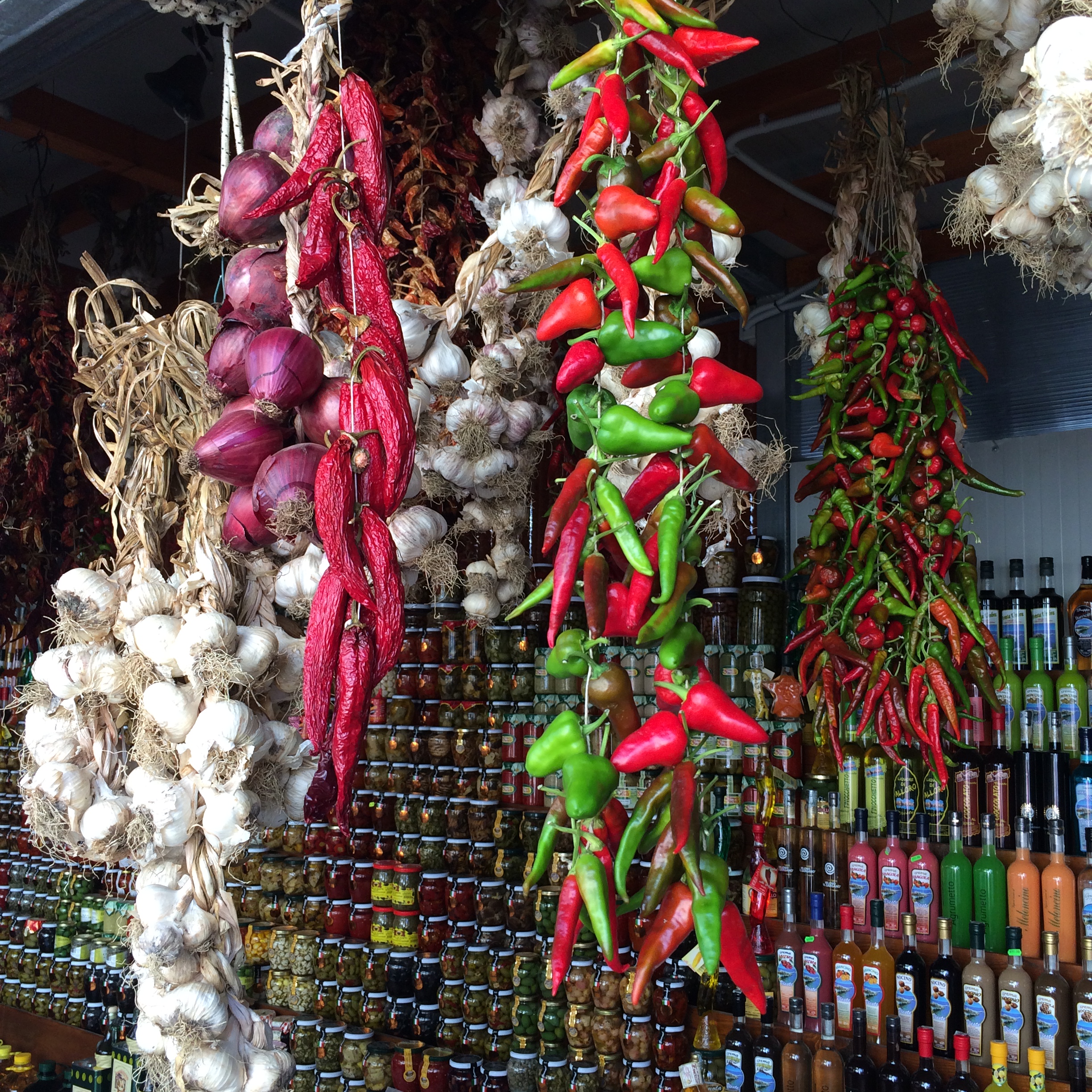
..and peperoncini, onions, garlic..

Judith buys some cacciacavallo.

Judith samples (and buys) some cacciacavallo.

IMG_4882

Saturday 25th to Monday 27th July – Ancona down to Adriatic coast.

Standard

Leaving Pesaro, we continued down the Adriatic coast past Fano, Senigallia and Marina di Montemarciano and generally the popular resort area known as ‘Le Marche’.   As evening fell, we stopped at what was to be our very first and possibly last stop at a ‘Camper stop’ at Porto Recanati just past Ancona.  These are free or relatively cheap places to park overnight for camper vans and there are many throughout Europe.  This one was called ‘Disco-Kart’ as it doubled as a Go-Karting as well as a disco place! Facilities were basic to say the least and extras, such as a shower were an additional cost.  Two euros bought approximately 30 seconds in the shower and as we ran out of change we were forced to share a shower.  Our fellow campers were however very friendly and the beach next to the camper stop was exceptional.

Fano, south of Pesaro on the Adriatic coast.

Fano, south of Pesaro on the Adriatic coast.

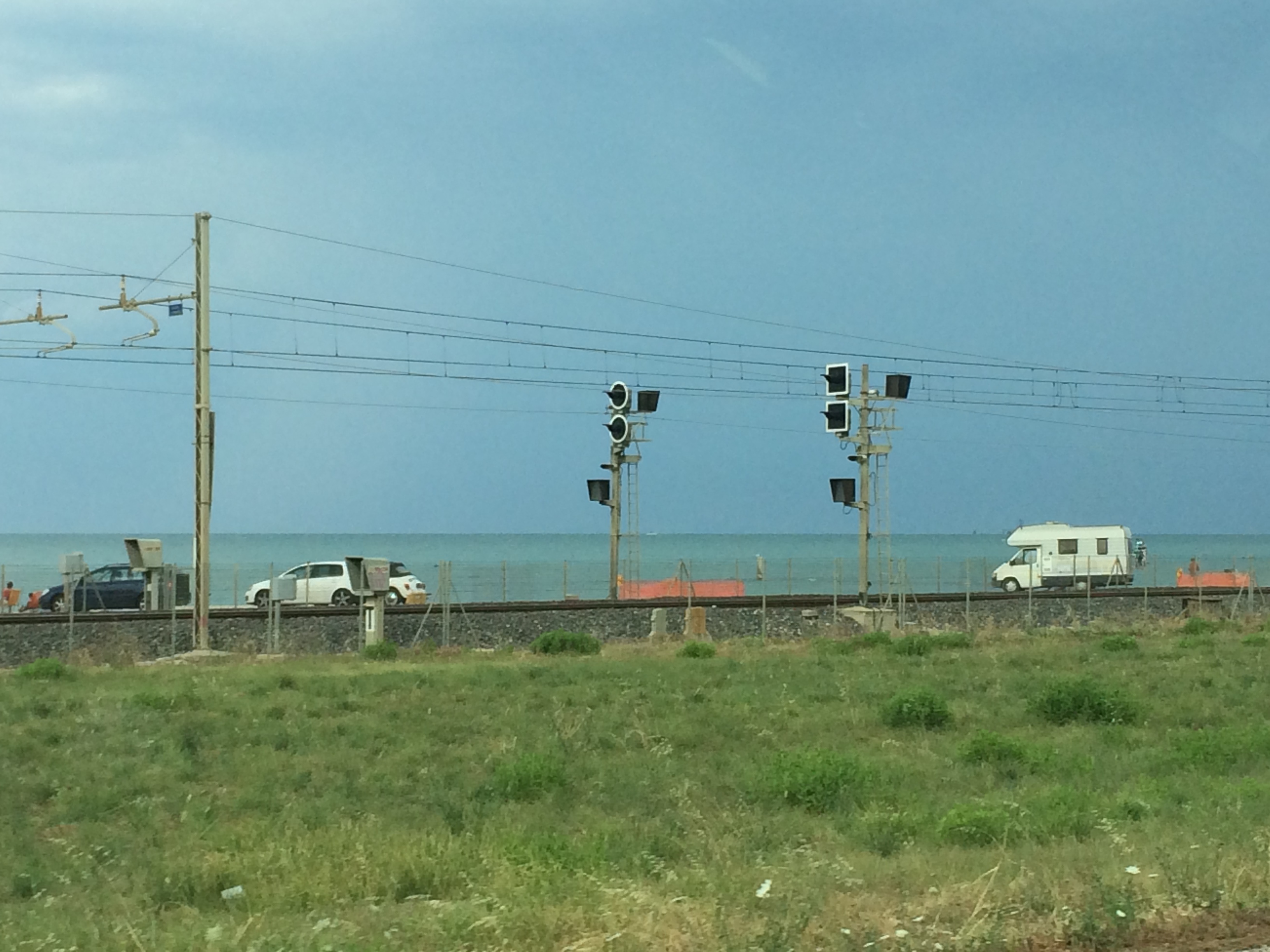
Marina di Montemarciano - a railway line runs all along the coast between the sea and the road.

Marina di Montemarciano – a railway line runs all along the coast between the sea and the road.

Porto Recanati.

Porto Recanati.

The 'Disco-Kart' camper-stop at Porto Recanati had a Go-Kart tack next to it!

The ‘Disco-Kart’ camper-stop at Porto Recanati had a Go-Kart tack next to it!

At least it had a good beach.

At least it had a good beach.

Dinner of left-overs by candle-light at the very basic camper-stop at Porto Recanati.

Very basic dinner by candle-light at the very basic camper-stop at Porto Recanati.


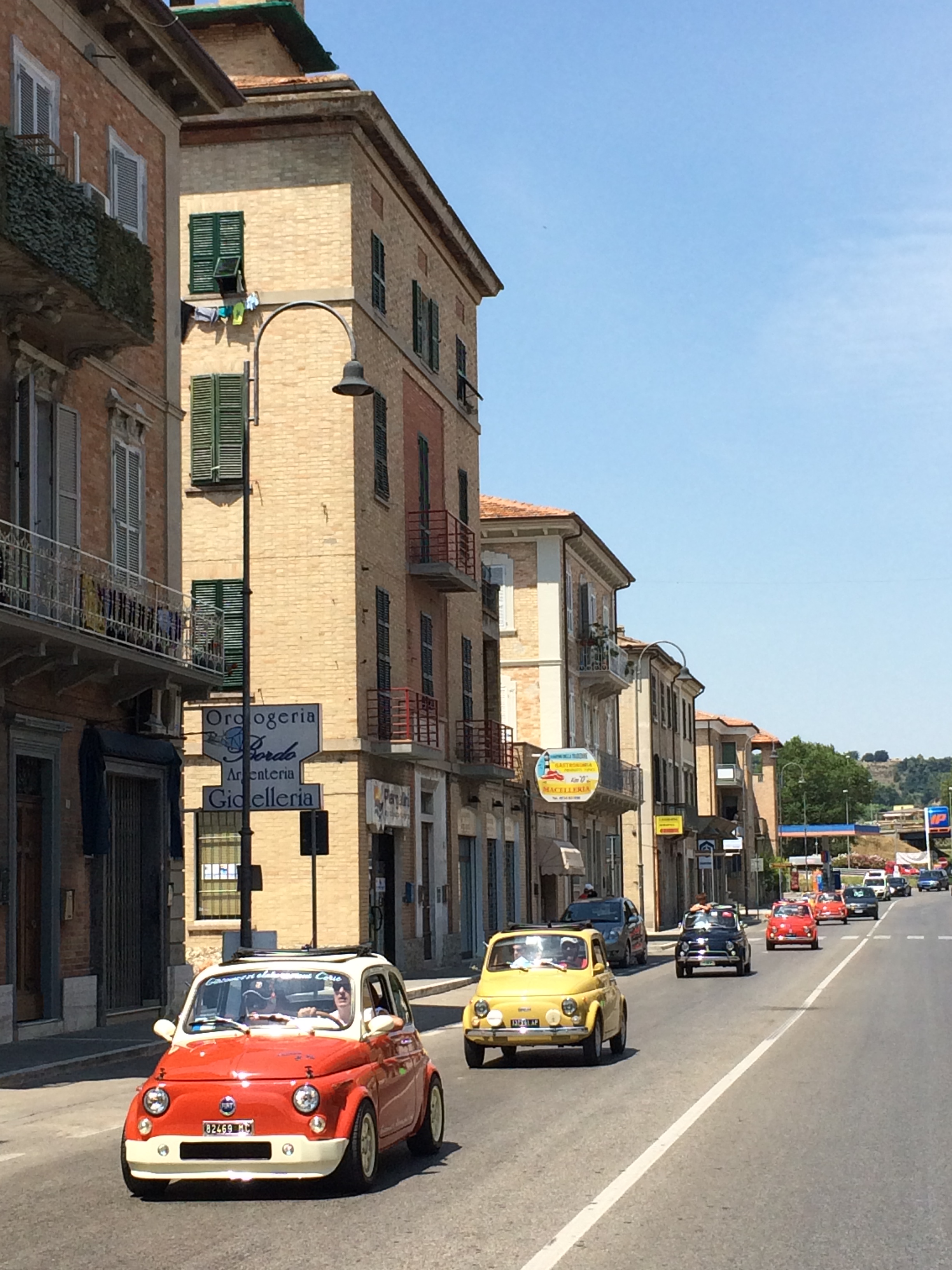
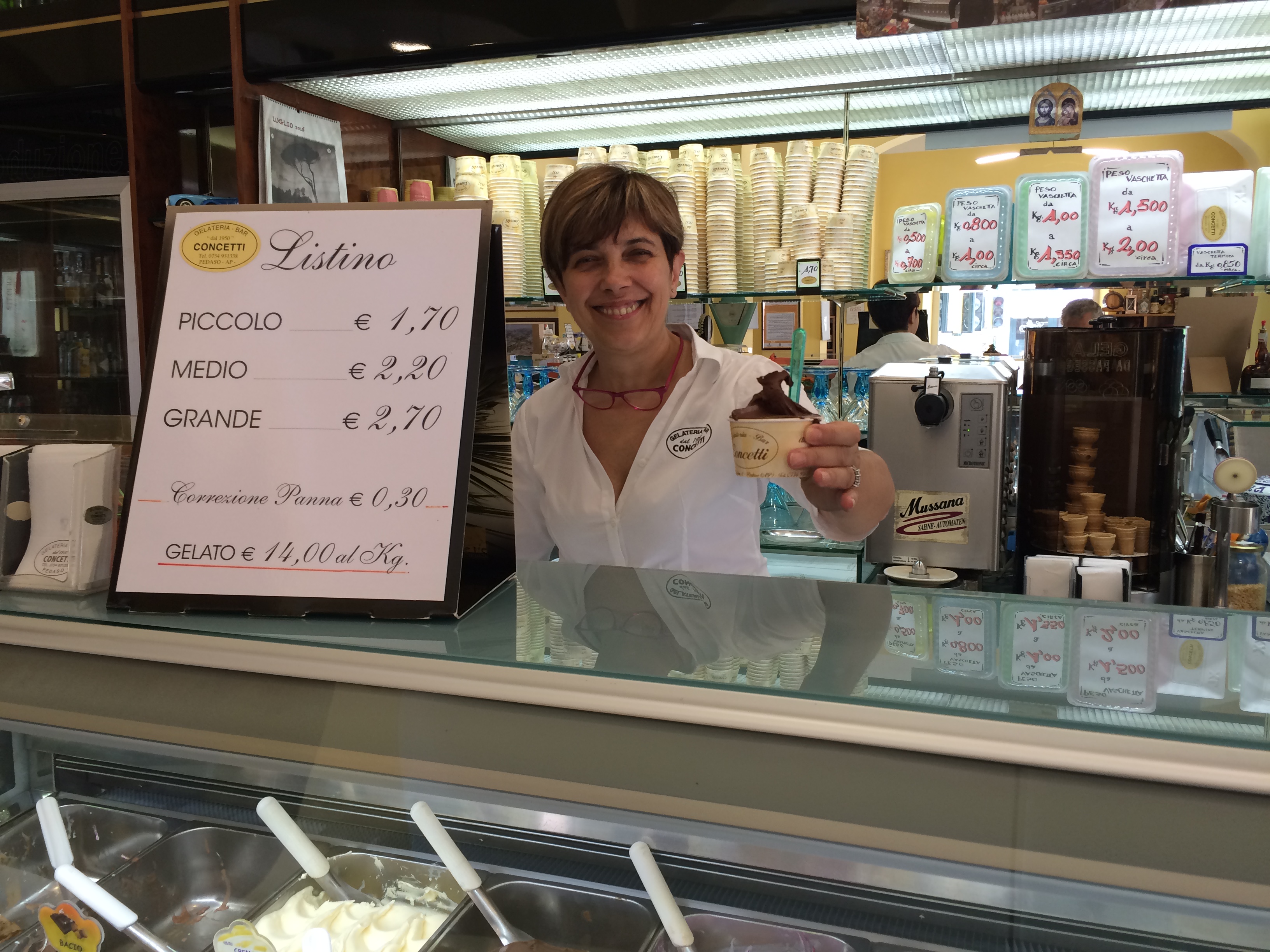
The next morning, conscious of our deadline of 2nd August to catch our ferry from Bari to Dubrovnik we pressed on headed for Gargano in Puglia. On the way we passed Loreto, Porto Potenza, Porto San Giorgio, Pedaso, Colonnella, Tortorello, Montesilvano, Pescara, Fossacesia, Vasto and Camporino.  It was a long drive. With temperatures rising all the time (it was official – Italy was in the grip of a ‘scirocco’ from Africa), we stopped in Pedaso for a cool drink,  ice cream and coffee to perk us up.  Cliches apart, the quantity of ‘gelato’ eaten in Italy in summer must be phenomenal with ‘gelaterie’ at every corner and every few steps you take. Often, the cafes are ‘cafeterie’, ‘pasticerie’,  ‘gelaterie’, ‘rosticerie’ and bar all at the same time.  Lingering at such a place in Pedaso, we found it hard to get going again due to the sheer heat and humidity which induces intense lethargy and listlessness but move on we had to.  While sitting in the cafe, a sudden collective blowing of horns reminiscent of a wedding in the Middle East turned out to be a procession of vintage and colourful cinquecenti.

Taking a quick look at the sea-front, in the middle of a peaceful and shaded little park, we see a monument and tribute to ‘Ai caduti del mare’ (to the victims of tragedies at sea) which we find quite moving.

Porto Potenza Picena.

Porto Potenza Picena.

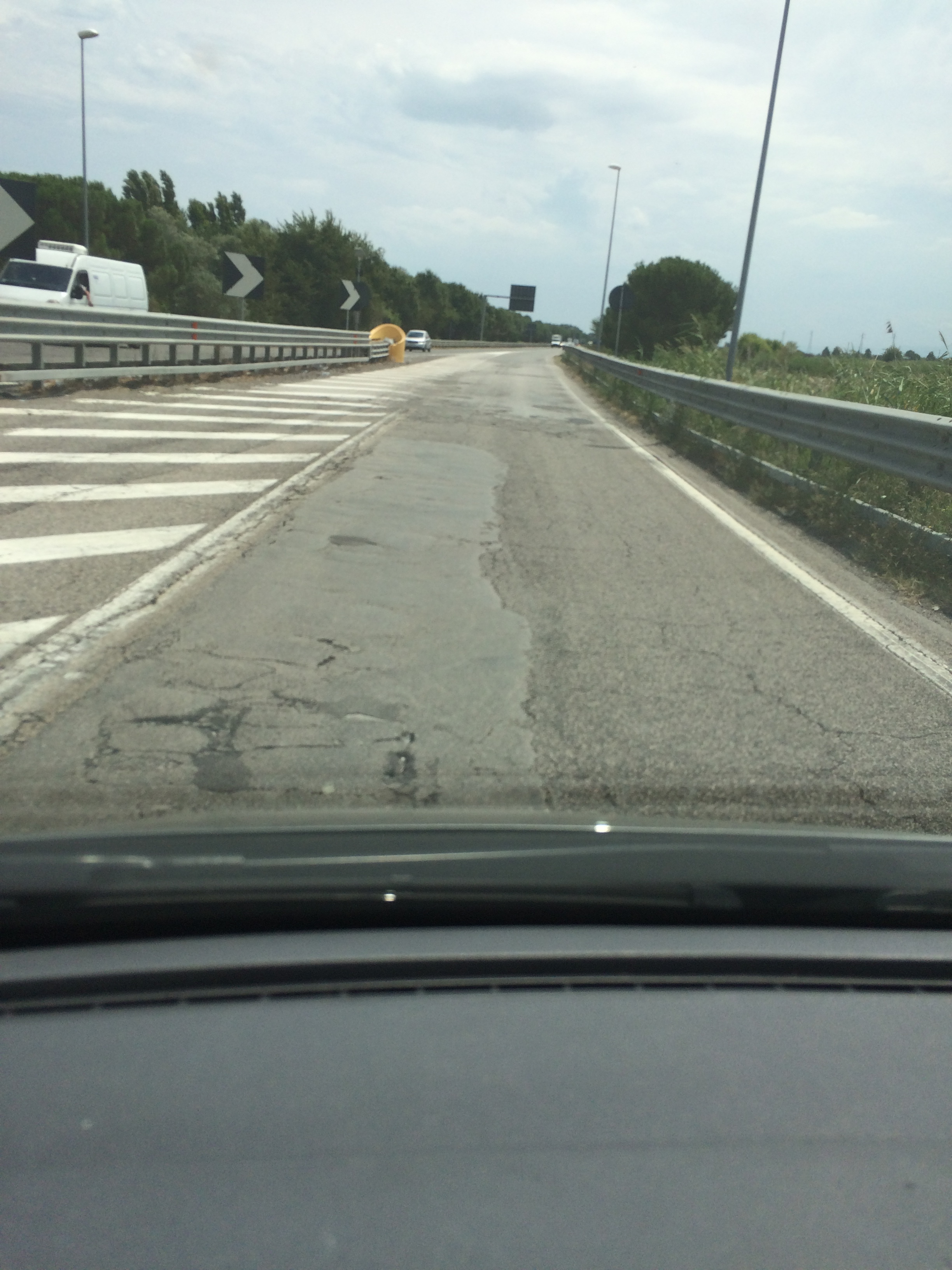
Poor road maintenance along much of the route.

Poor road maintenance along much of the route – sign of the economic downturn?


Vintage 500s parade in Pedaso.

Colourful vintage 500s parade in Pedaso.

The obligatory gelato - at the cafe-bar-gelateria in Pedaso.

The obligatory gelato – at the cafe-bar-gelateria in Pedaso.


A quick look at the 'Gazetta dello Sport' front page - congratulates Vincenzo Nibali on his stupendous win of the La Toussuire stage and quotes him "Froome said things I cannot repeat".

A quick look at the ‘Gazetta dello Sport’ front page – congratulates Vincenzo Nibali on his stupendous win of the La Toussuire stage and quotes him “Froome said things I cannot repeat”.

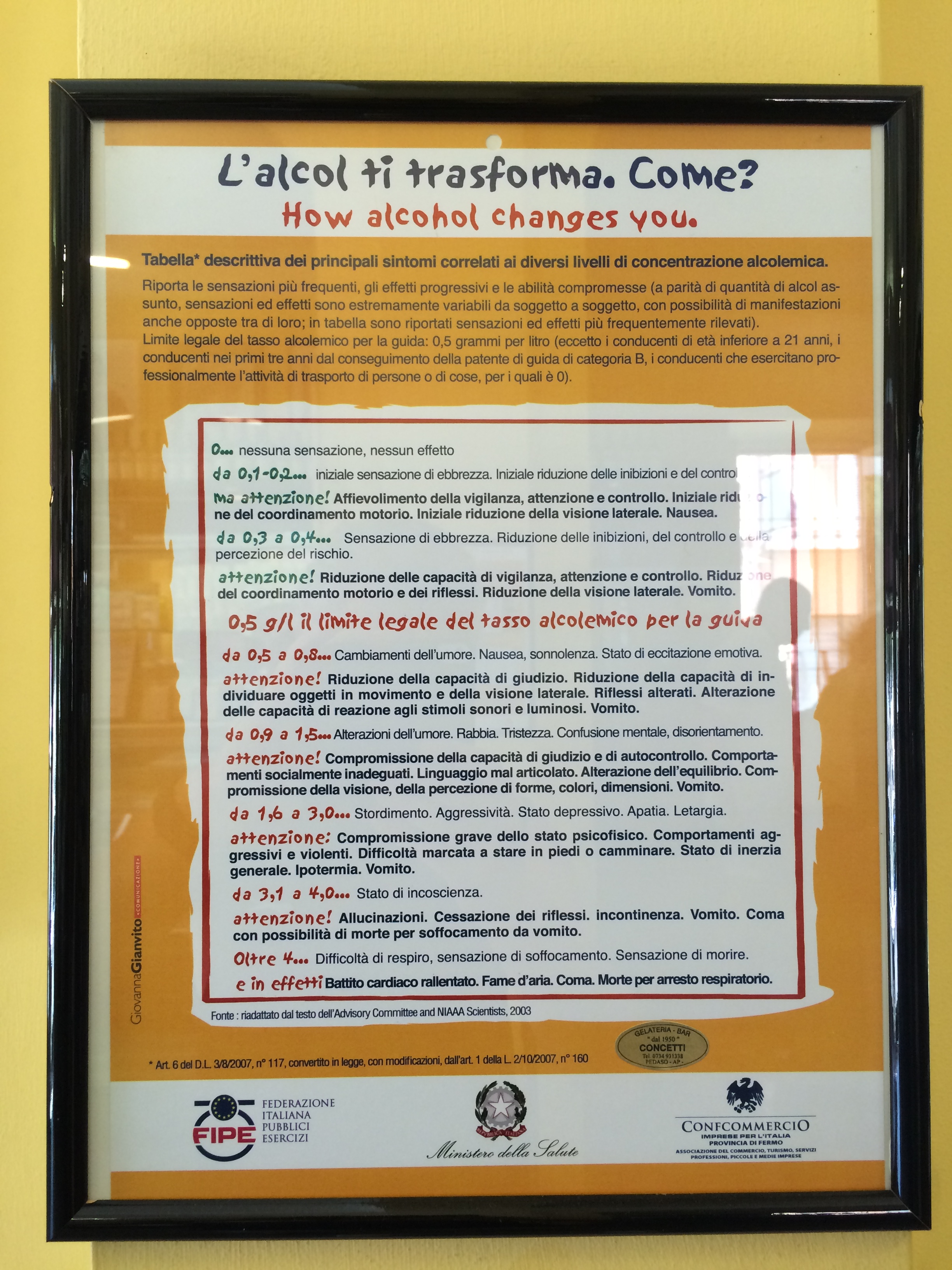
In the cafe-bar, as in many others, a very detailed Ministry of Health notice warning the public about the influence of alcohol on the body depending on exactly how much you drink.

In the cafe-bar, as in many others, a very detailed Ministry of Health notice warning the public about the influence of alcohol on the body depending on exactly how much you drink.


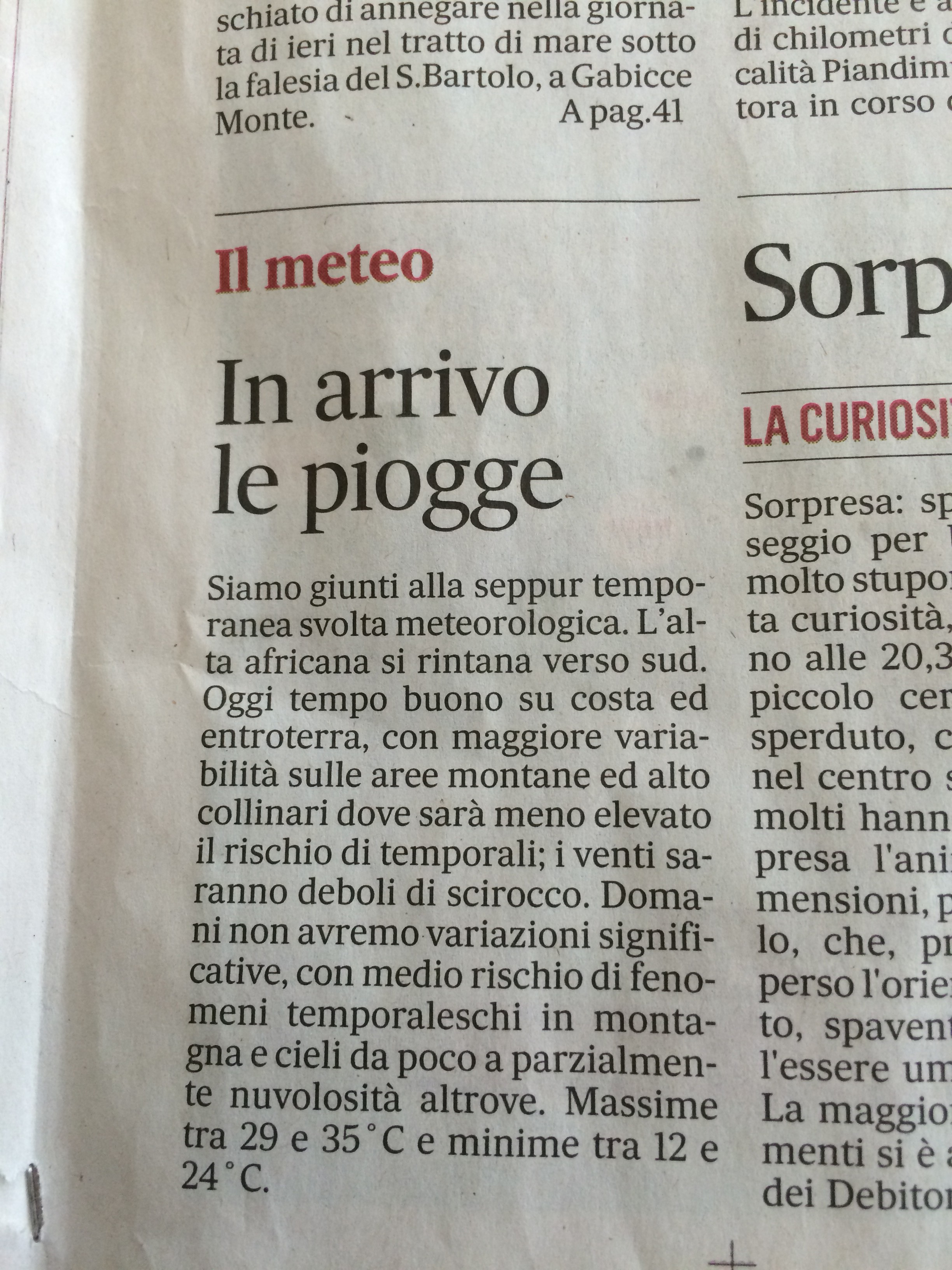
Announcing the end of the 'scirocco' and arrival of rains.

Announcing the end of the ‘scirocco’ and arrival of rains.

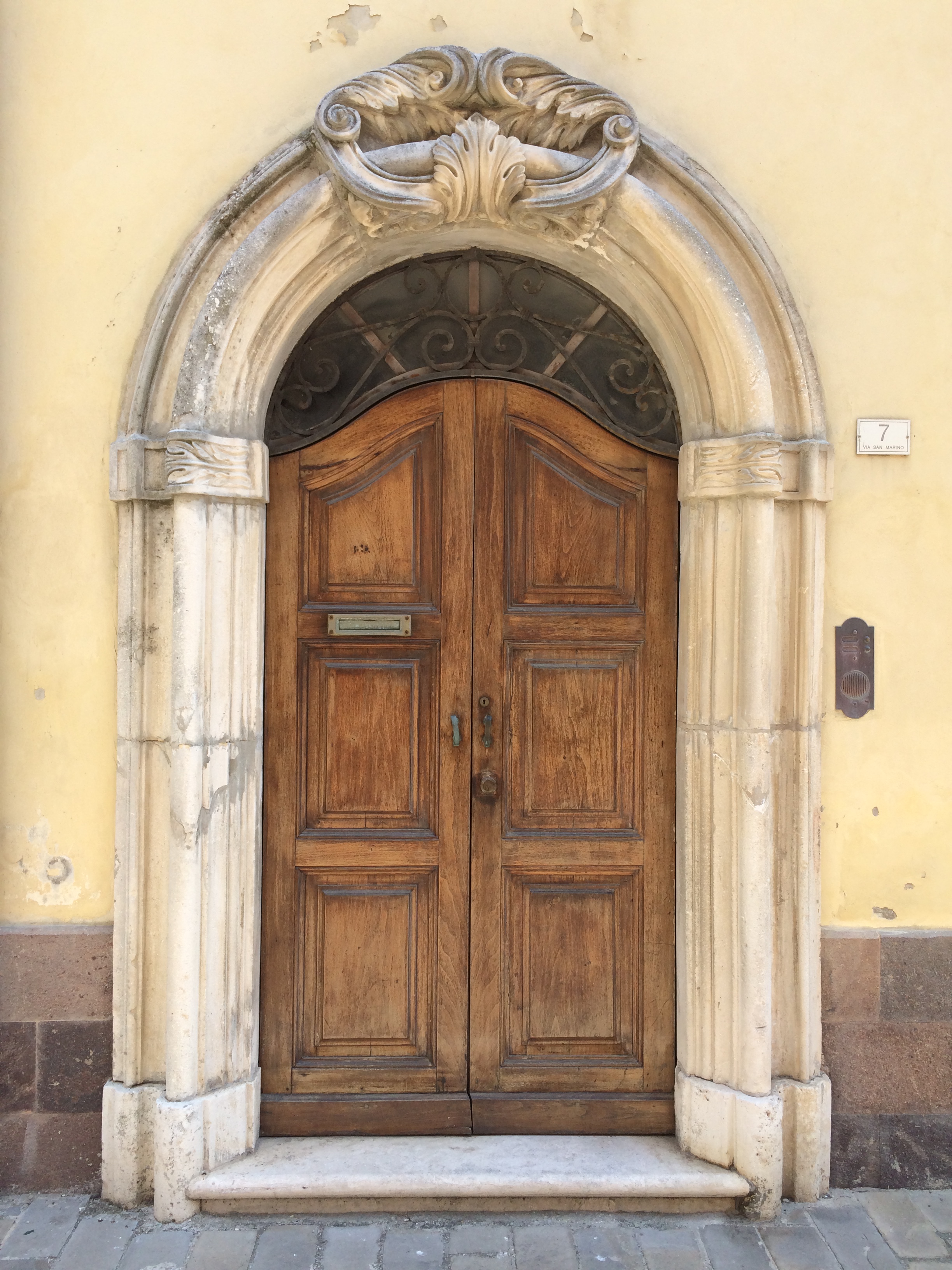
A splendid doorway in Pedaso.

A splendid doorway in Pedaso.


IMG_4764


Thursday 23rd to Friday 24th July – down the Adriatic coast: Ravenna to Pesaro.

Standard

We spent two days in an unimpressive, noisy but friendly campsite near Ravenna – the Pineta di Ravenna. It was on the beach but the sea was quite murky and the off-shore oil rig didn’t add to the appeal of the place. We swam but it wasn’t particularly enjoyable.  Our nearest neighbours were holidaying with their two grandchildren.  Even though we communicated only through nods and hellos, by the end of the two days we felt we’d got to know them fairly well as we were privy to all their non-stop chatter. The eldest boy of about five was called Allessandro.  Granny spent most of the day shouting ‘Allessandro, vieni qui?’ ‘Dove sei?’ ‘Cosa fai?’ ‘ Quante volte ti devo dire..’ (come here, what are you doing, how many times do I have to tell you..)  But if Grandad dared do the same she’d shout him down with ‘Ma perche urli come un pazzo?’ (Why are you yelling like a madman?)

If one thinks of this as a microcosm of what was going on pretty much throughout the campsite, you get an idea of what the general atmosphere was like.  On an Italian campsite in mid-summer there is no such thing as grabbing a quiet coffee in the cafe at 10am while catching up on the blog.  By 10am the place is already in full swing with various inter-connecting groups of youngsters and older people forming noisily and spontaneously, separating then re-merging in different combinations, occupying all available chairs and tables whilst children are running amok and announcements about later activities are being called out on loudspeakers.  Privacy is an esoteric concept. Little girls will run enthusiastically  towards us as we’re coming back from the beach to ask inquisitively all about us – ma voi di dove siete? (Where are you from? .. I love the ‘ma’ (but)).  Really sweet and endearing.  Sometimes, you get so used to the constant chatter around you involving more often than not several in the group talking at the same time or repeating what the other says in a slightly different way or with a different intonation, that you forget to notice that you’re being asked a question: “Voi giocate il poker?” (Do you play poker?) No, lasciateci in pace (leave us in peace) you want to say, but not really as it’s all lovely and uniquely Italian!  At least we’re too old to be asked to play volley-ball!

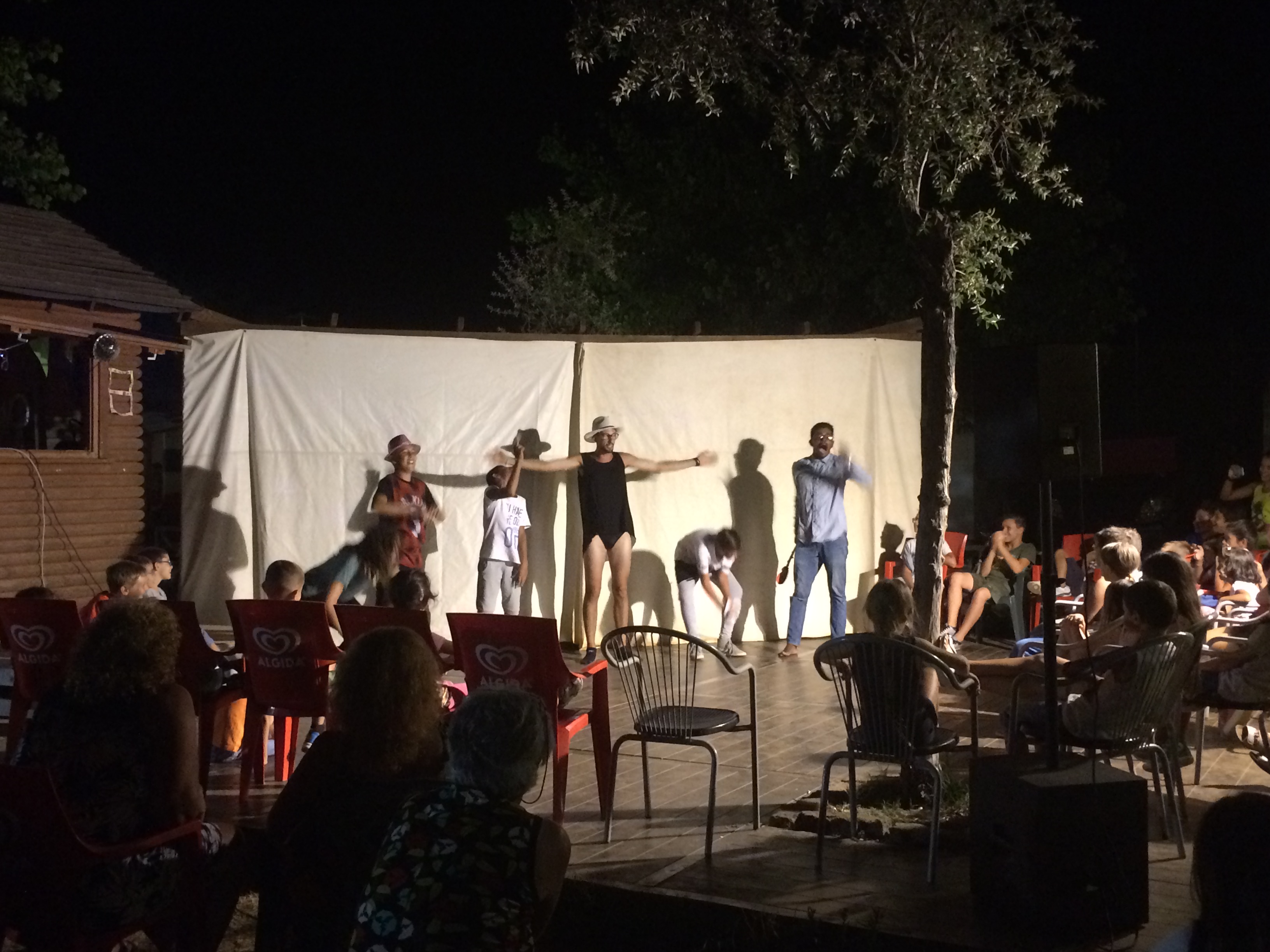
The only respite to be had is at the obligatory siesta time (2pm-5pm) after which the activities and general tumult begin again and go on well into the night.  At Pineta a stage was erected and various slapstick scherzi sketches were performed mostly by teenagers and very much enjoyed by children and older people sitting behind them.

The Riserva Naturale Pineta di Ravenna campsite - an Italian campsite in mid-summer is a unique experience.

The Riserva Naturale Pineta di Ravenna campsite – an Italian campsite in mid-summer is a unique experience.


Our pitch at the Pineta di Ravenna campsite - often you're cheek by jowl with your neighbours.

Our pitch at the Pineta di Ravenna campsite – often you’re cheek by jowl with your neighbours.


A short slapstick sketch being enjoyed by all alike at the Pineta campsite.

A short slapstick sketch being enjoyed by all alike at the Pineta campsite.


The Pineta campsite beach, with the rig appearing on the horizon.

The Pineta campsite beach, with the rig appearing on the horizon.


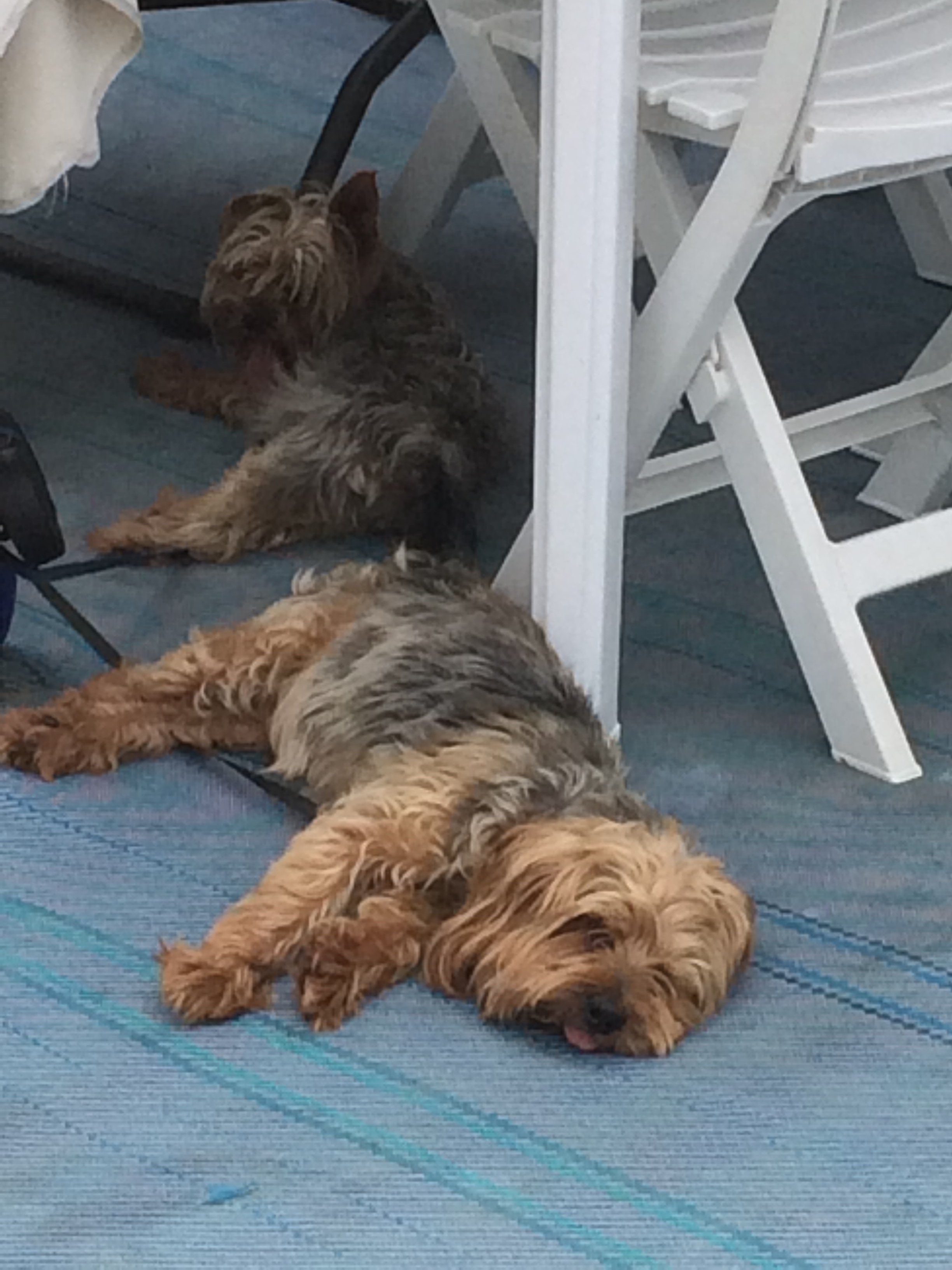
Many people have dogs on campsites and they were suffering from the oppressive heat.

Many people have dogs on campsites (Yorkshires and other small dogs are very popular in Italy) and they were suffering from the oppressive heat.


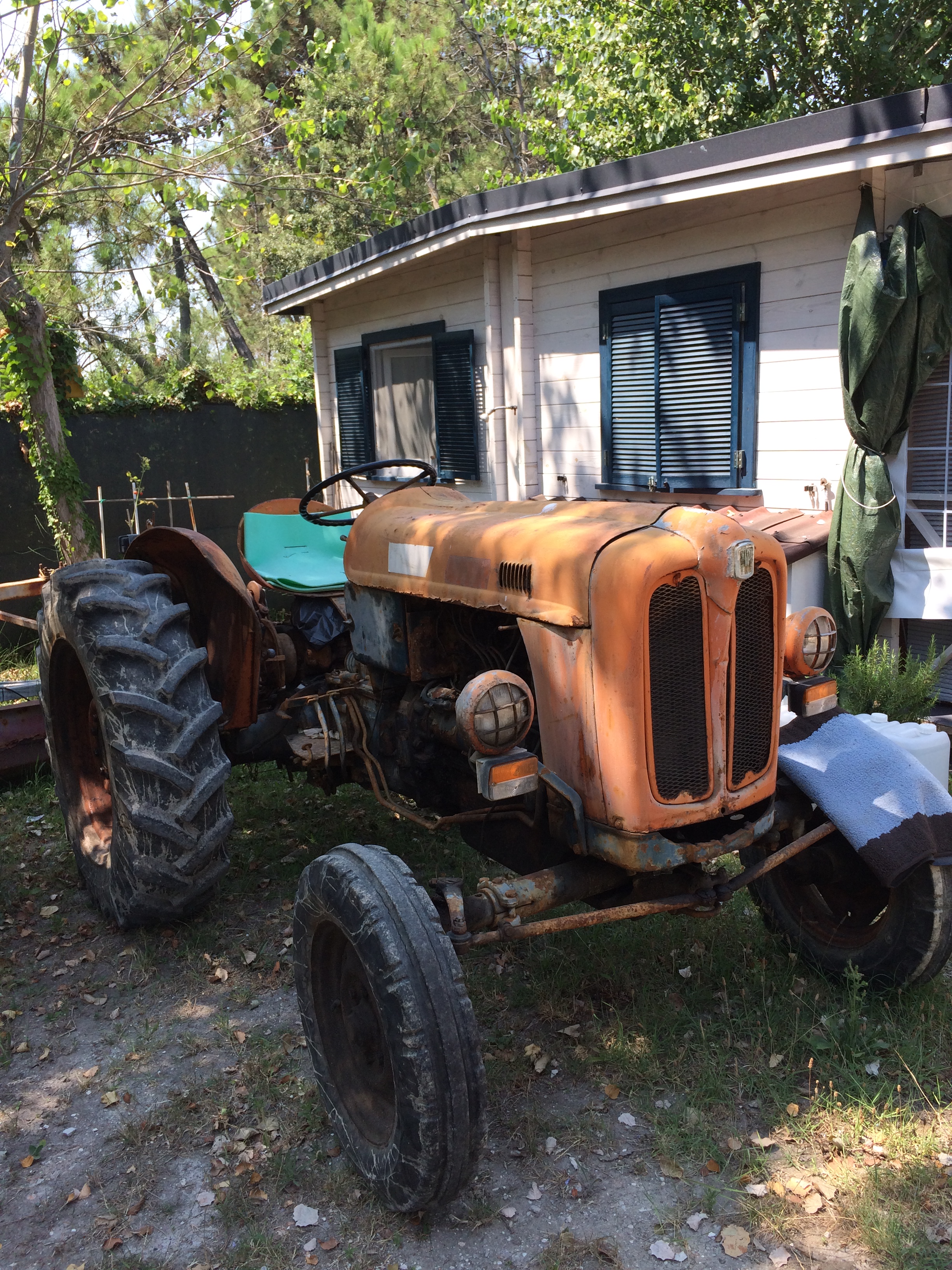
Very old and quaint Fiat tractor at the campsite.

Very old and quaint Fiat tractor at the campsite.


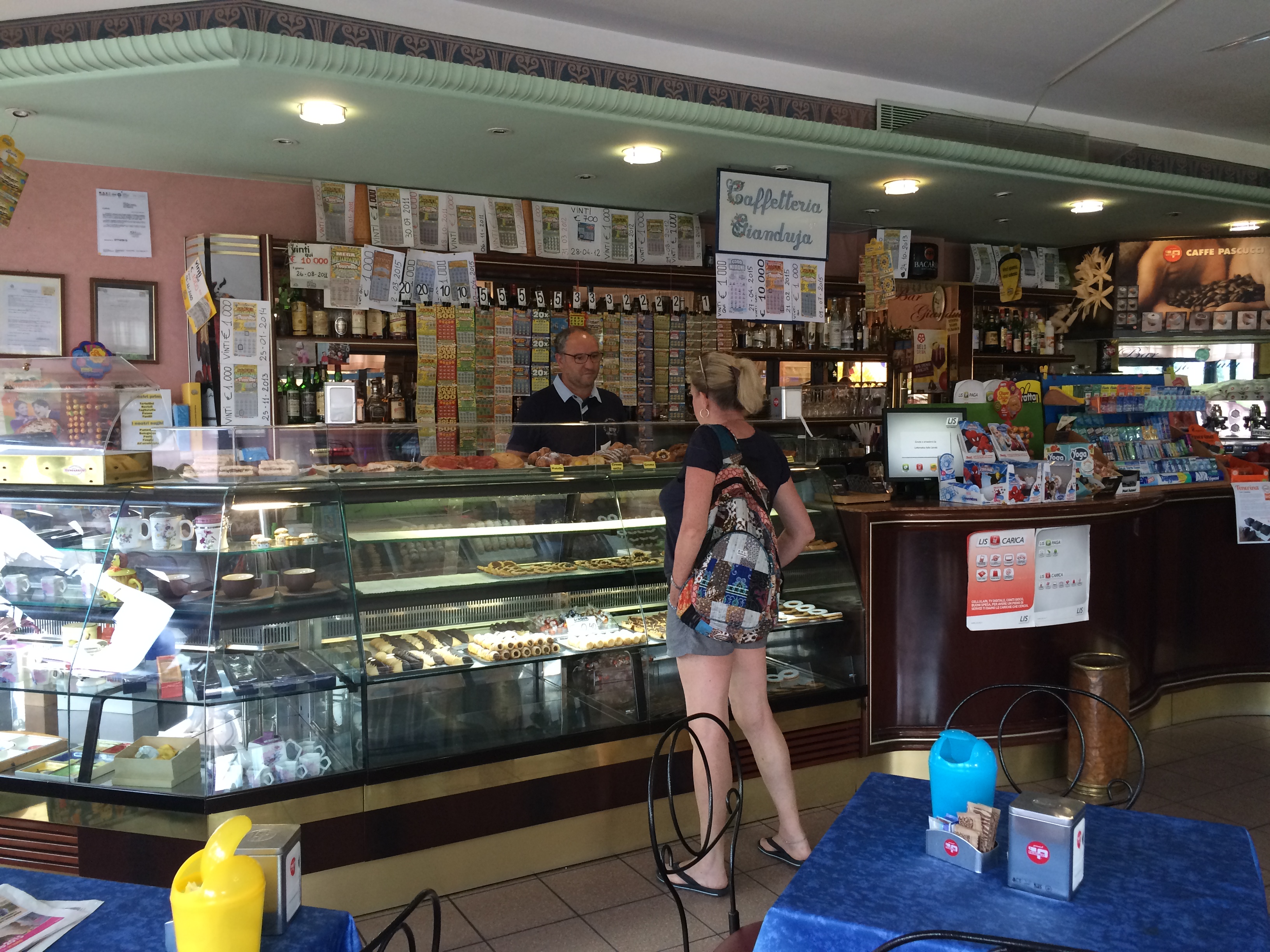
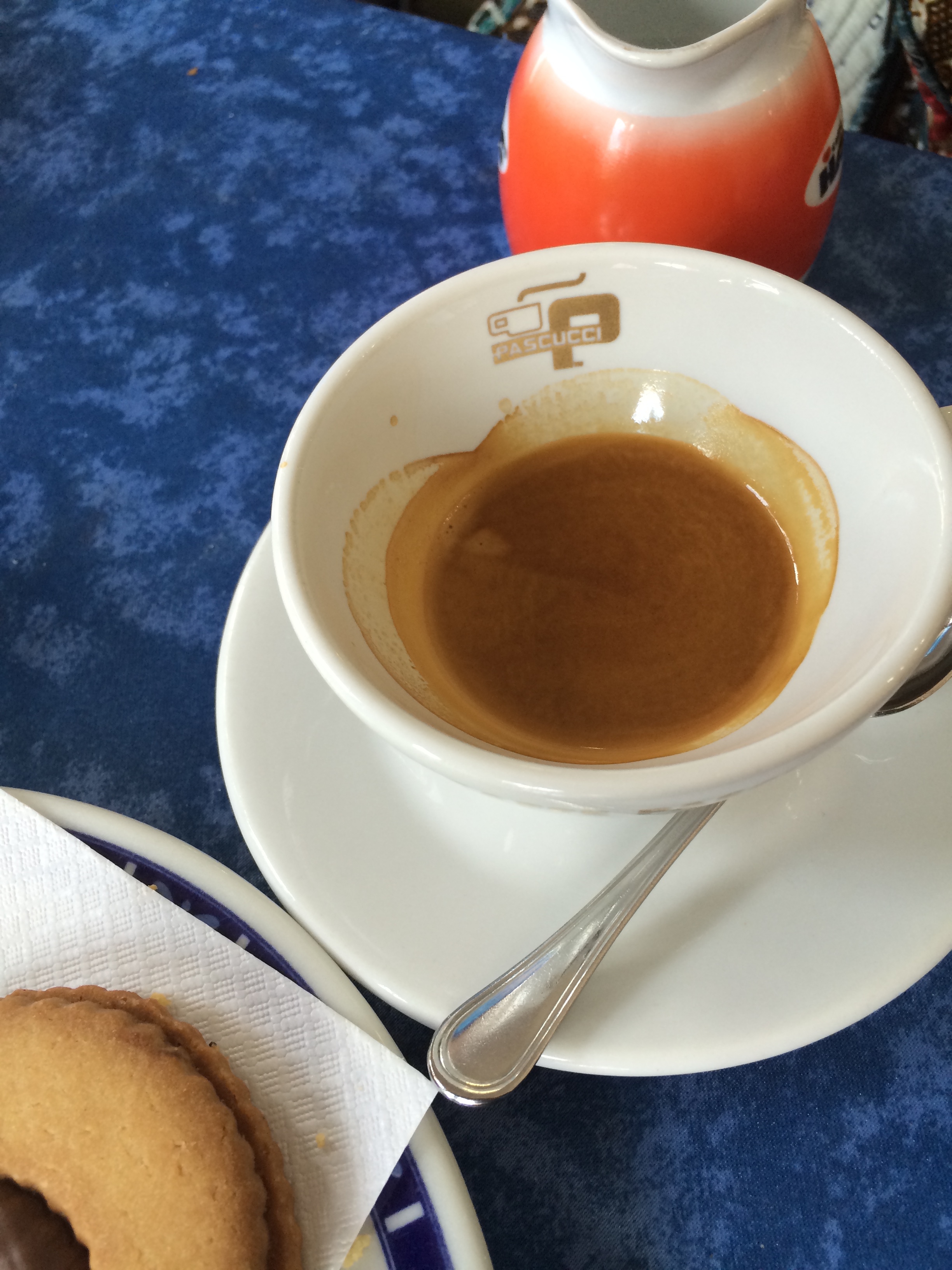
Moving further south down the Adriatic coast, we stopped at Pesaro for a coffee and cake.  The chocolate ones were called “Occhio del bue” (Eye of the Ox).  It was an excellent bar-cum-cafe and it occurred to us that there surely must be a gap in the market in the UK for places like this – part cafe, part bar.  According to Fulvio the owner from Brazil, people tend to eat the buns for breakfast and the cakes in the afternoon.

Typical cakes from the area.  The chocolate ones are called Eye of the Ox.

Typical cakes from the area. The chocolate ones are called Eye of the Ox.

The cafe at Pesaro.

The cafe at Pesaro.


IMG_4672

Wednesday 22nd and Thursday 23rd July – Bologna, authentic and unassuming

Standard

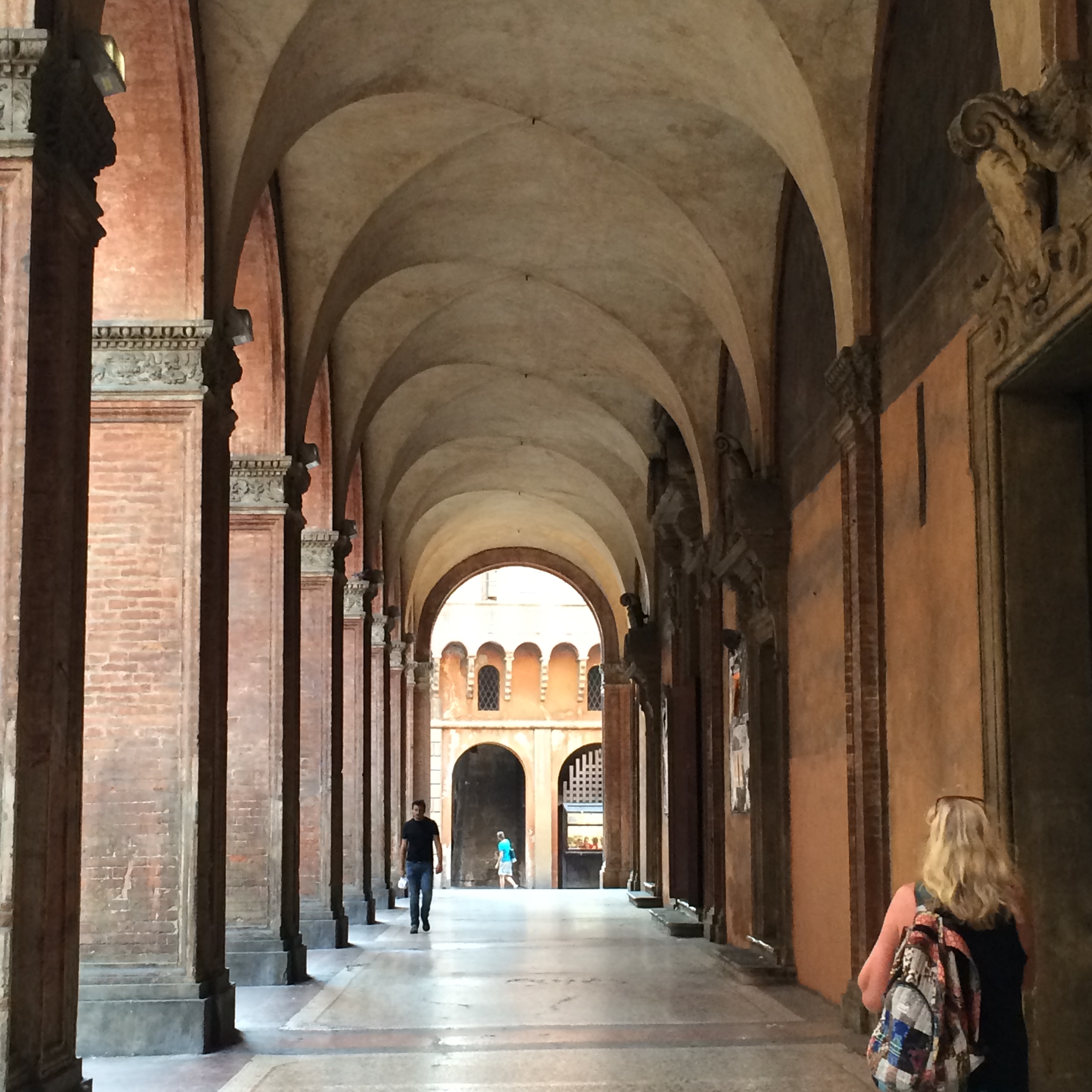
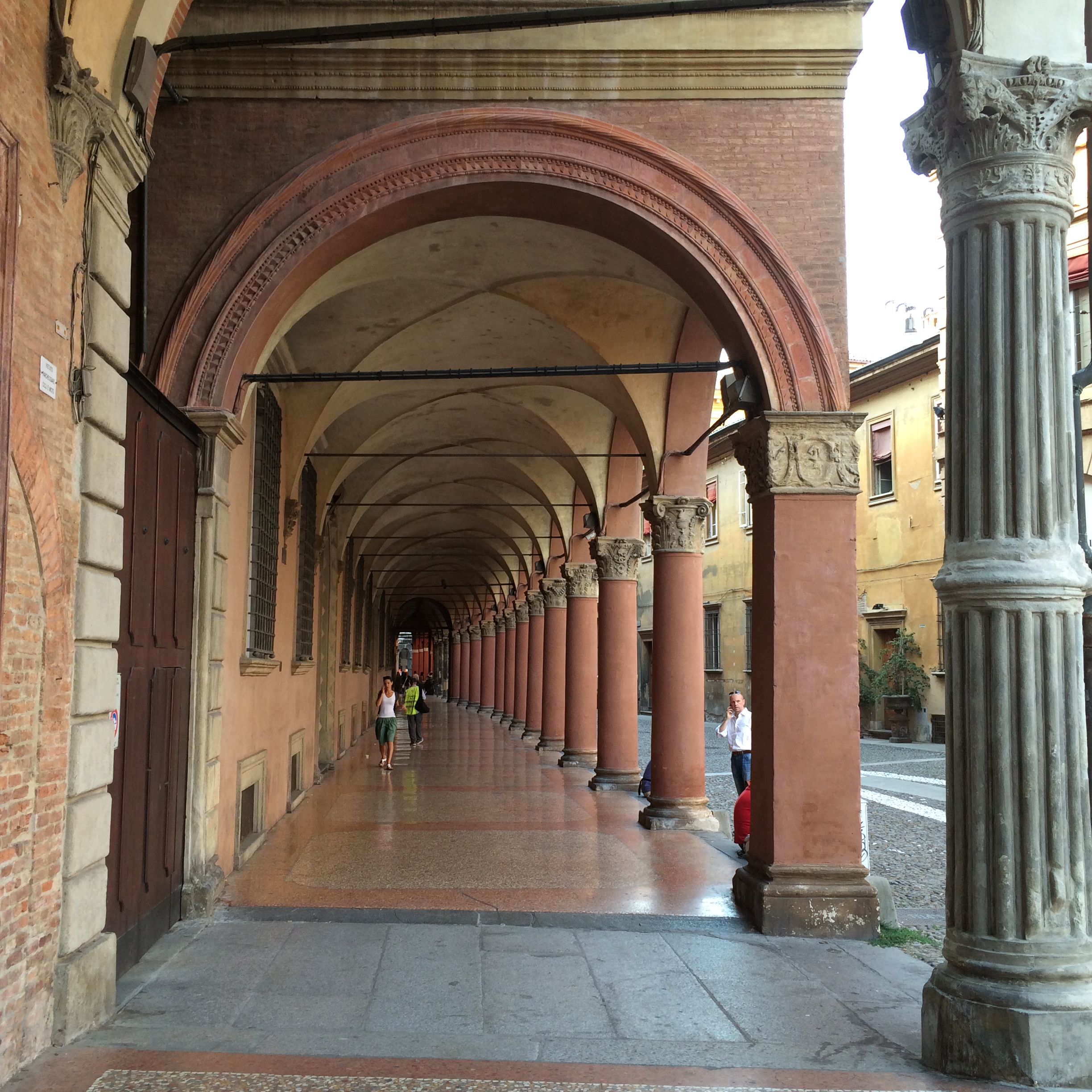
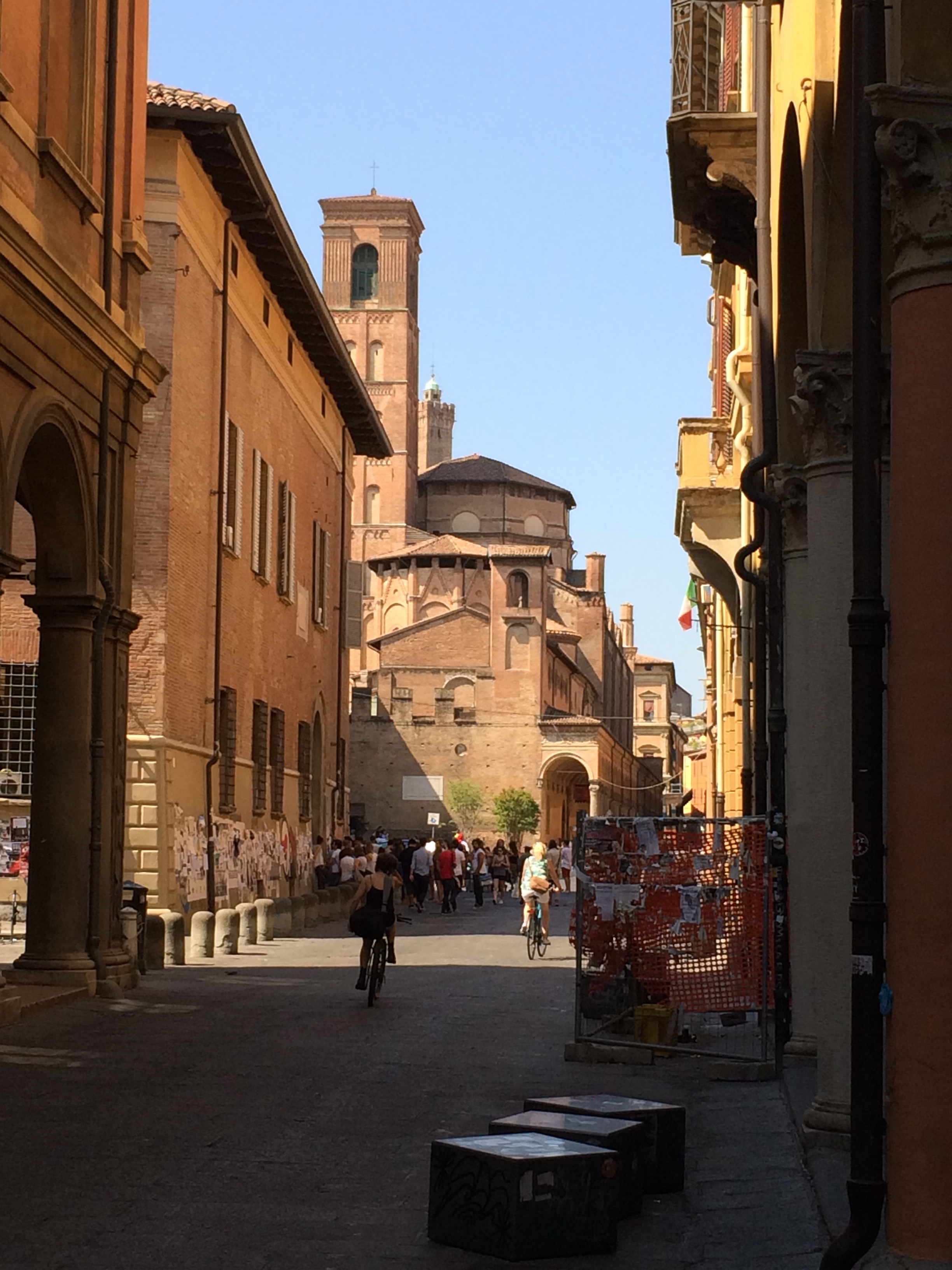
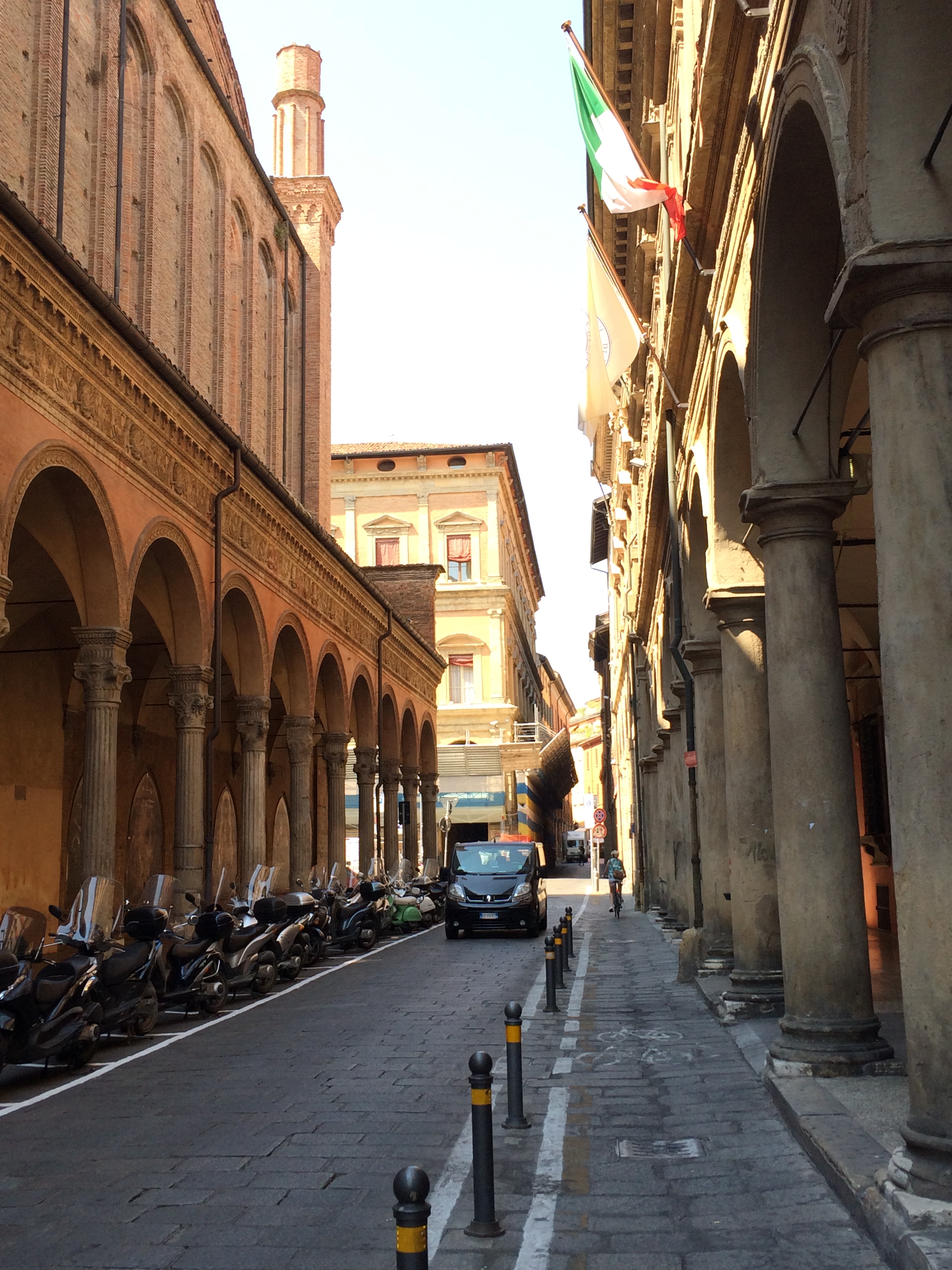
Back into Brenda and in air-conditioned glory we drove on to Bologna.  We were planning on a quick visit and then onto a nearby campsite but we were so enchanted by Bologna that we decided to book into a lastminute.com hotel. In the evening we strolled through the old part of the city marvelling at the arched colonnades for which Bologna is famed, built high enough to enter on horseback, as well as the medieval and Renaissance structures and the leaning medieval towers, one of which, the Asinelli Tower, you can actually climb up – 497 steps!  On the first anniversary of the Bologna Train Station bombing, on 31st August 1981 100,000 people crammed into Via Rizzoli to hear Carmelo Bene recite Dante’s Divine Comedy  from the base of the Asinelli Tower. It will have sounded something like this: “Qual pare a riguardar la Carisenda.  Sotto il chinato quando un nuovol vada. Sovr’essa si, ch’ella in contrario penda: Tal parve Anteo a me che stava a bada Di vederlo chiamare….”  We’d almost forgotten about the train station bombings. What was that about? Who claimed responsibility and why? What was happening at the time – 20 years before 9/11?

Bologna, famed for its porticos and colonnades.  One line stretches for 3 kms.

Bologna, famed for its porticos and colonnades. One line is said to stretch for 3 kms.

Porta Ravegnana, Bologna.

Porta Ravegnana, Bologna.

Bologna has the oldest university in the world and is also a cycle-friendly city.

Bologna has the oldest university in the world. It’s also a cycle-friendly city.

The leaning towers

The two medieval leaning towers of Bologna.

Porta Ravegnana.

Another view of Porta Ravegnana.

A recently-graduated Chemistry student gets the age-old graduation ritual.

A recently ‘laureato’ pharmacy student is put through his paces in keeping with the age-old tradition. (It consists of eating popcorn out of a bowl on the ground with hands tied behind the back while being pelted with water-filled balloons.)

The 'Zona Universitaria' in Bologna.

The ‘Zona Universitaria’, Bologna.

Bologna - Ghetto.

Bologna – Ghetto.

Via Zamboni, Bologna.

Via Zamboni, Bologna.

Porta Ravegnana, Bologna.

Porta Ravegnana.

Neptune Square, Bologna.

Neptune Square, Bologna.

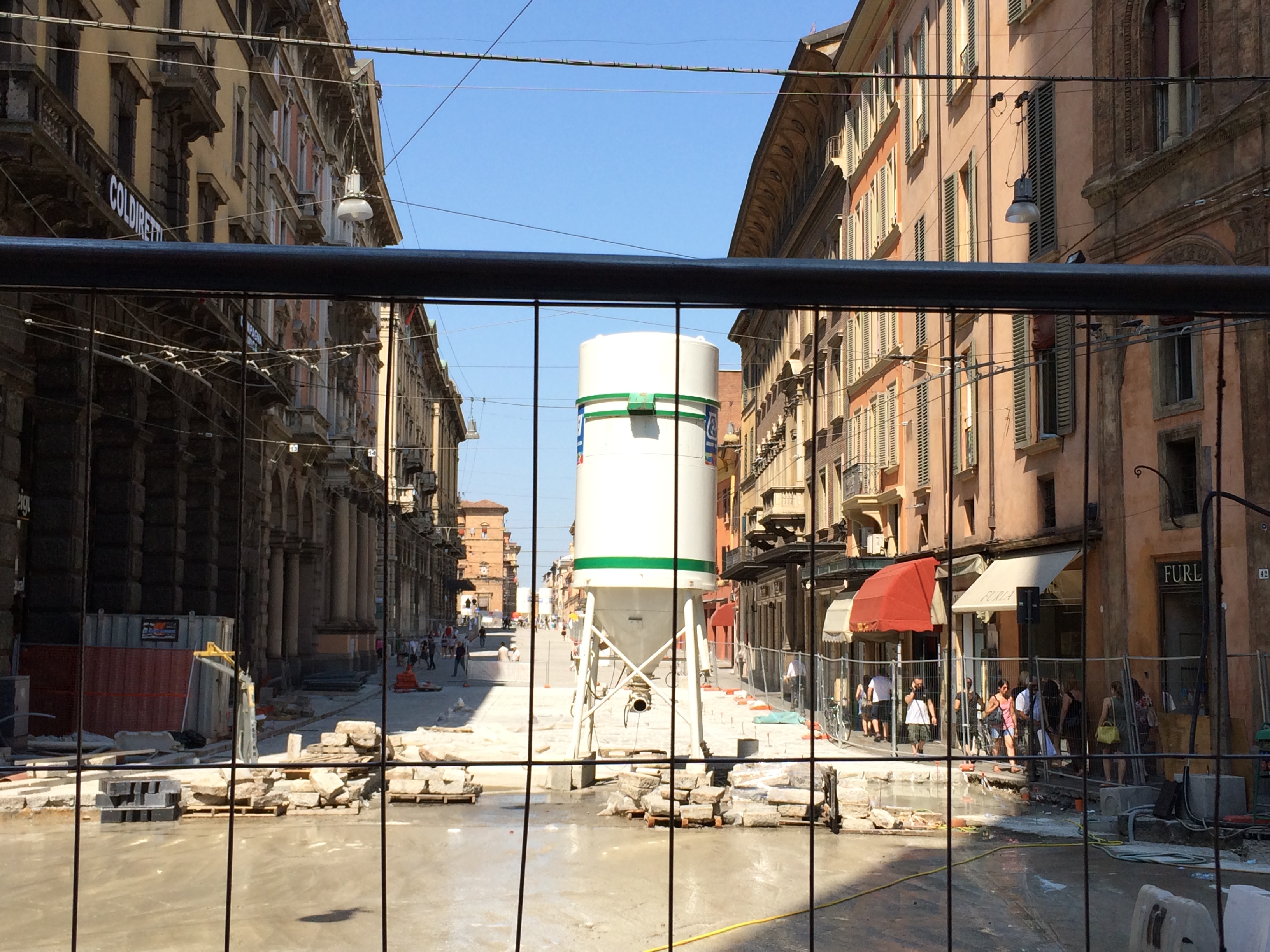
Bologna owes much of its current charm to the restoration work started in the 1970's.  More renovation was still underway.

Bologna owes much of its current charm to the restoration work started in the 1970’s. More renovation was still underway.


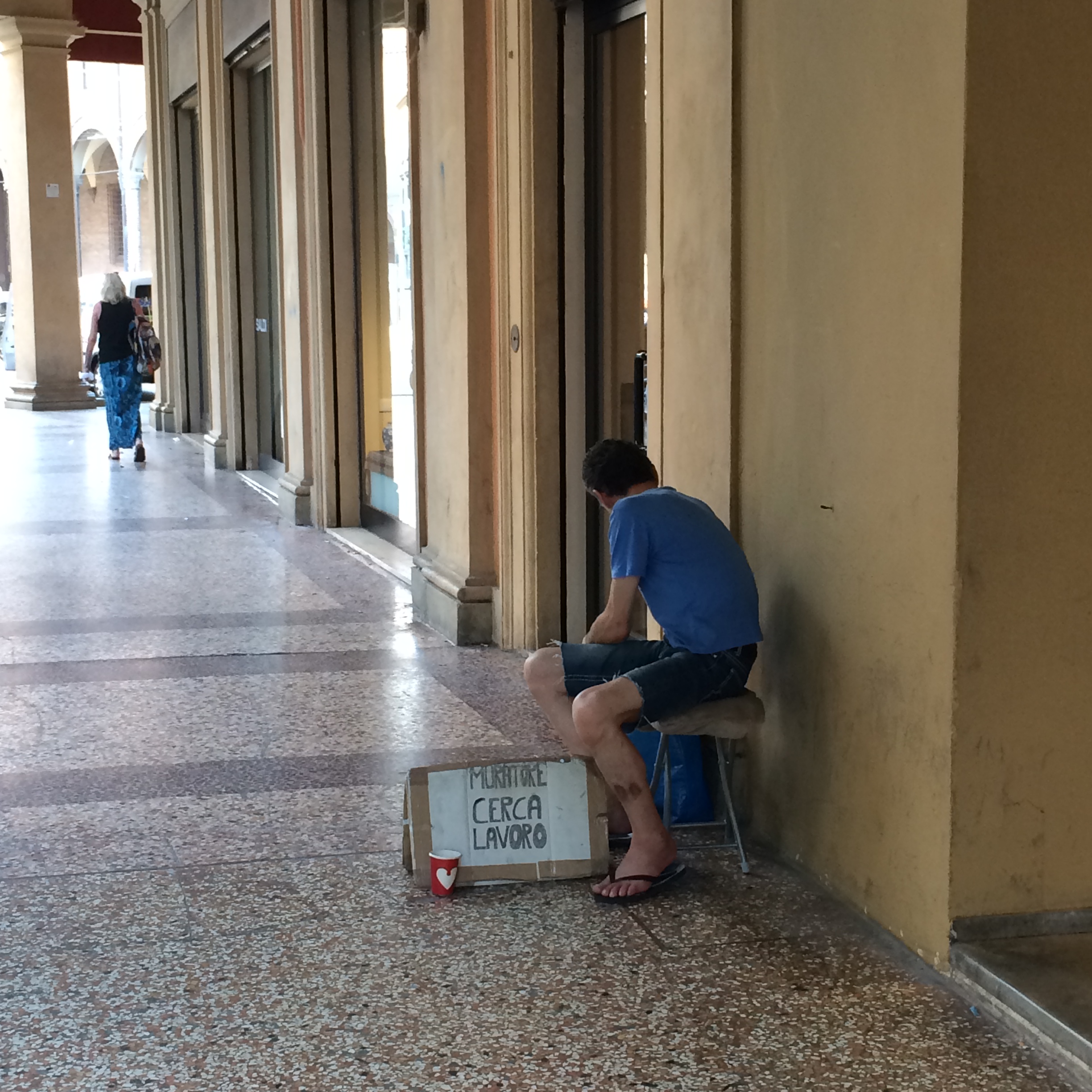
An out of work decorator

Bologna still has its economic problems. An out of work plasterer seeking work (and some spare change) on the Porta Ravegnana.


An interesting-looking wine-shop in central Bologna.

An interesting-looking wine-shop in central Bologna.


Student graffiti making some sort of statement about ISIS?

Student graffiti making some sort of statement about ISIS?


In the evening, we ate in the Trattoria Oberdan round the corner from our hotel and the wonderfully named Via dei Malcontenti, which could have been part of a film set for a 1930s gangster film.  The food was just what you’d expect from the gastronomic capital of Italy, the service attentive and reassuring as only the Italians know how, and once he got going, Antonino the Sicilian head waiter, was a veritable encyclopedia of information about both local cuisine and that of other regions in Italy.

The old-fashioned Osteria Ramazotti, Bologna.

The excellent old-fashioned Trattoria Oberdan, off Via dei Malcontenti.

Salumi misti with 'stracchino' cheese and 'tigelle', typical unleavened buns from the Emilia Romagna region.

Salumi misti with ‘stracchino’ cheese and ‘tigelle’, typical unleavened buns from the Emilia Romagna region.

Arrosto di Vitello and Fettuccini ai funghi.

Arrosto di Vitello and Fettuccini ai funghi.

Nino (Antonino), head waiter at the Ramazzotti Restaurant.

Nino (Antonino), the personable and knowledgeable  head waiter at the Trattoria Oberdan.


Tagliatelle alla bolognese - couldn't leave Bologna without having a taste of the real thing.

Tagliatelle alla bolognese – couldn’t leave Bologna without having a taste of the real thing.


Here is a quick summary of Nino’s thoughts about Italian cuisine:

Bologna and Emilia Romagna: “La grassa” cuisine; pasta fresca; gnocchi; bollito misto; arrosti con puree and salsa verde, “l’abruzzo” – agnello castrato; salcicie.

Roma: L’agnello piccolo; Coda di Vitello; trippa; carcioffi alla Romana; carbonara; matriciana.

Toscana: Firorentine di carne chianina (in Chianti or Siena area). He didn’t think Tuscan cuisine was very noteworthy.

Puglia: Cuccina a base di verdure; pasta con pomodori; basilico; orecchiette con verdura; pesce.

Sicilia: Cuccina povera; pasta alla Norma (made with melenzane fritte, pomodoro, olio and basilica with grated hard-baked ricotta) – sounds great; pesce con verdure; pesce azzurro (small fish like sardines); paste alle sarde.

Next morning, after an early breakfast (after getting the puncture on Flavio’s bike repaired by Gianfranco the friendly and helpful owner of the ‘Sensa Benzo’ cycle shop off the Via Zamboni, we cycled round the city and through the lengthy porticoes, visited the Basilica di Santo Stefano, which started out as a Roman Temple but became a medieval religious complex which once had seven churches.  Bologna also boasts the world’s very first university which was founded in 1088.  Bologna is very similar to Verona but without the hoards of tourists.  A wonderful city and certainly worth a second visit.  After a pasta lunch at our favourite restaurant we set off again, heading south.

The inner courtyard of the Basilica di Santo Stefano.

The inner courtyard of the Basilica di Santo Stefano.

One of the seven old churches in the Basilica di Santo Stefano complex.

One of the seven old churches in the Basilica di Santo Stefano complex.

Entrance to the Chiesa del Martyrium in the Basilica di Santo Stefano.

Entrance to the Chiesa del Martyrium in the Basilica di Santo Stefano.

An old fresco in the Basilica di Santo Stefano.

An old fresco in the Basilica di Santo Stefano.

Gianfranco at the Sensa Benzo cycle shop gives Flavio's bike a bit of TLC.

Gianfranco at the Sensa Benzo cycle shop gives Flavio’s bike a bit of TLC.

IMG_4550


IMG_4547