Back into Brenda and in air-conditioned glory we drove on to Bologna. We were planning on a quick visit and then onto a nearby campsite but we were so enchanted by Bologna that we decided to book into a lastminute.com hotel. In the evening we strolled through the old part of the city marvelling at the arched colonnades for which Bologna is famed, built high enough to enter on horseback, as well as the medieval and Renaissance structures and the leaning medieval towers, one of which, the Asinelli Tower, you can actually climb up – 497 steps! On the first anniversary of the Bologna Train Station bombing, on 31st August 1981 100,000 people crammed into Via Rizzoli to hear Carmelo Bene recite Dante’s Divine Comedy from the base of the Asinelli Tower. It will have sounded something like this: “Qual pare a riguardar la Carisenda. Sotto il chinato quando un nuovol vada. Sovr’essa si, ch’ella in contrario penda: Tal parve Anteo a me che stava a bada Di vederlo chiamare….” We’d almost forgotten about the train station bombings. What was that about? Who claimed responsibility and why? What was happening at the time – 20 years before 9/11?
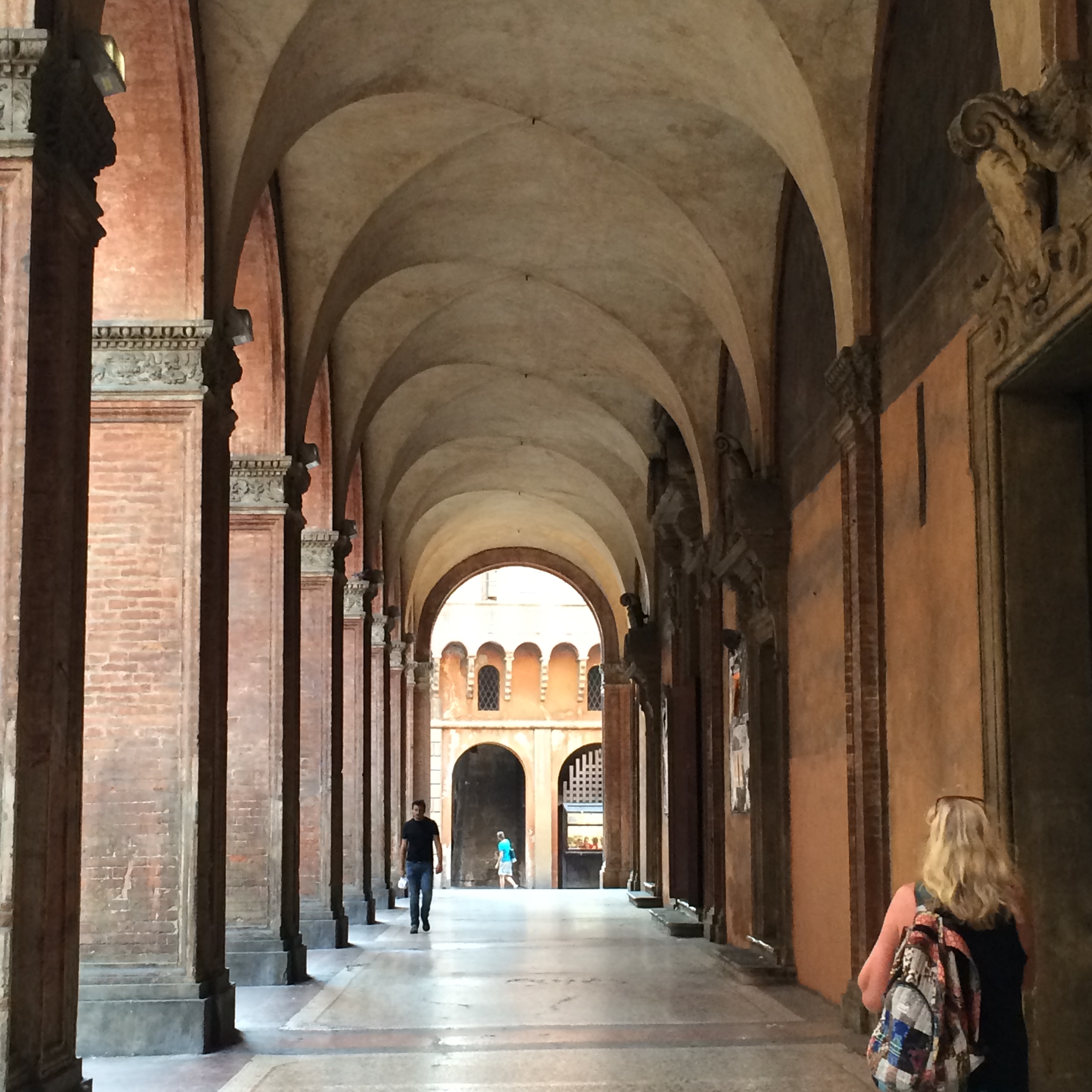
Bologna, famed for its porticos and colonnades. One line is said to stretch for 3 kms.
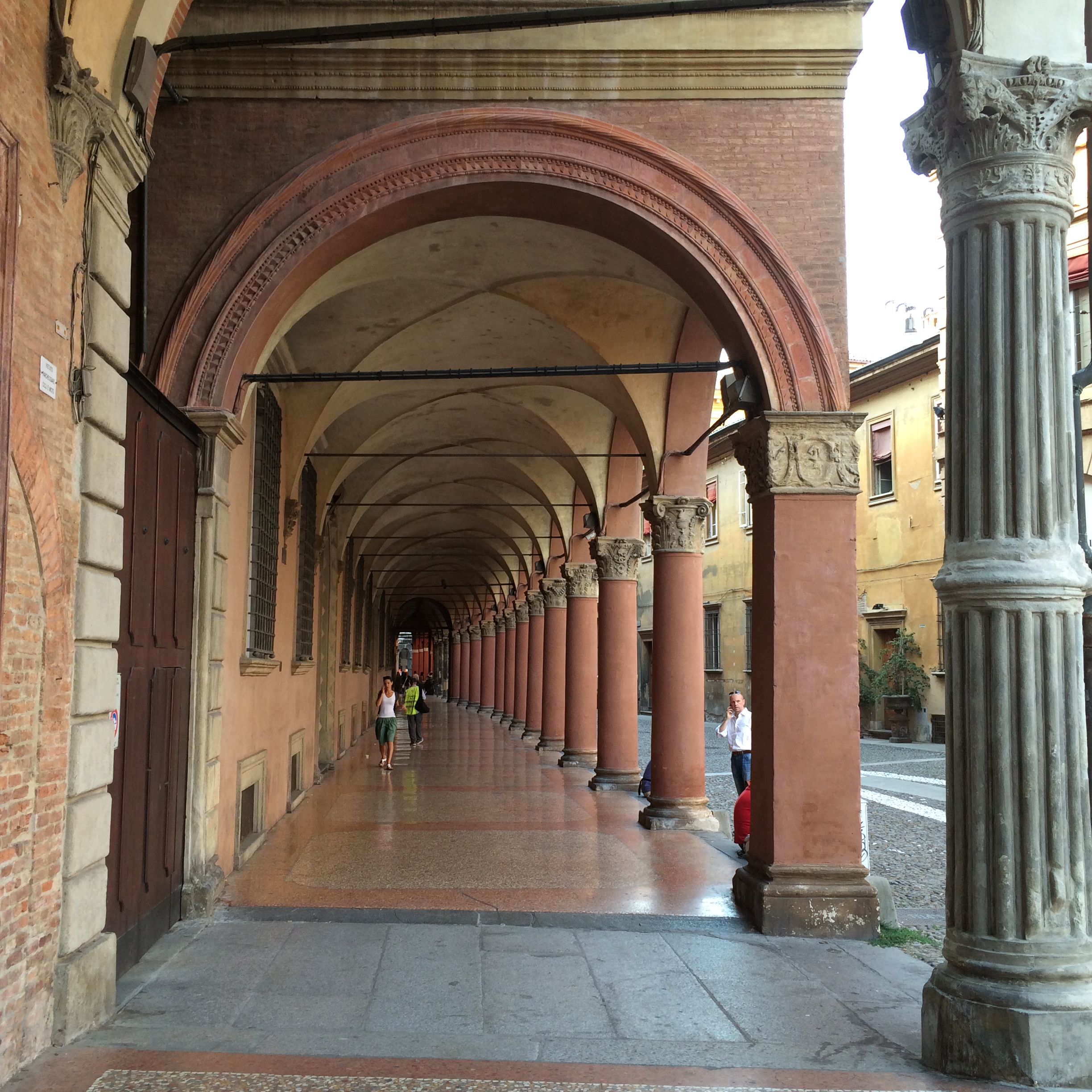
Porta Ravegnana, Bologna.

Bologna has the oldest university in the world. It’s also a cycle-friendly city.

The two medieval leaning towers of Bologna.

Another view of Porta Ravegnana.

A recently ‘laureato’ pharmacy student is put through his paces in keeping with the age-old tradition. (It consists of eating popcorn out of a bowl on the ground with hands tied behind the back while being pelted with water-filled balloons.)

The ‘Zona Universitaria’, Bologna.

Bologna – Ghetto.
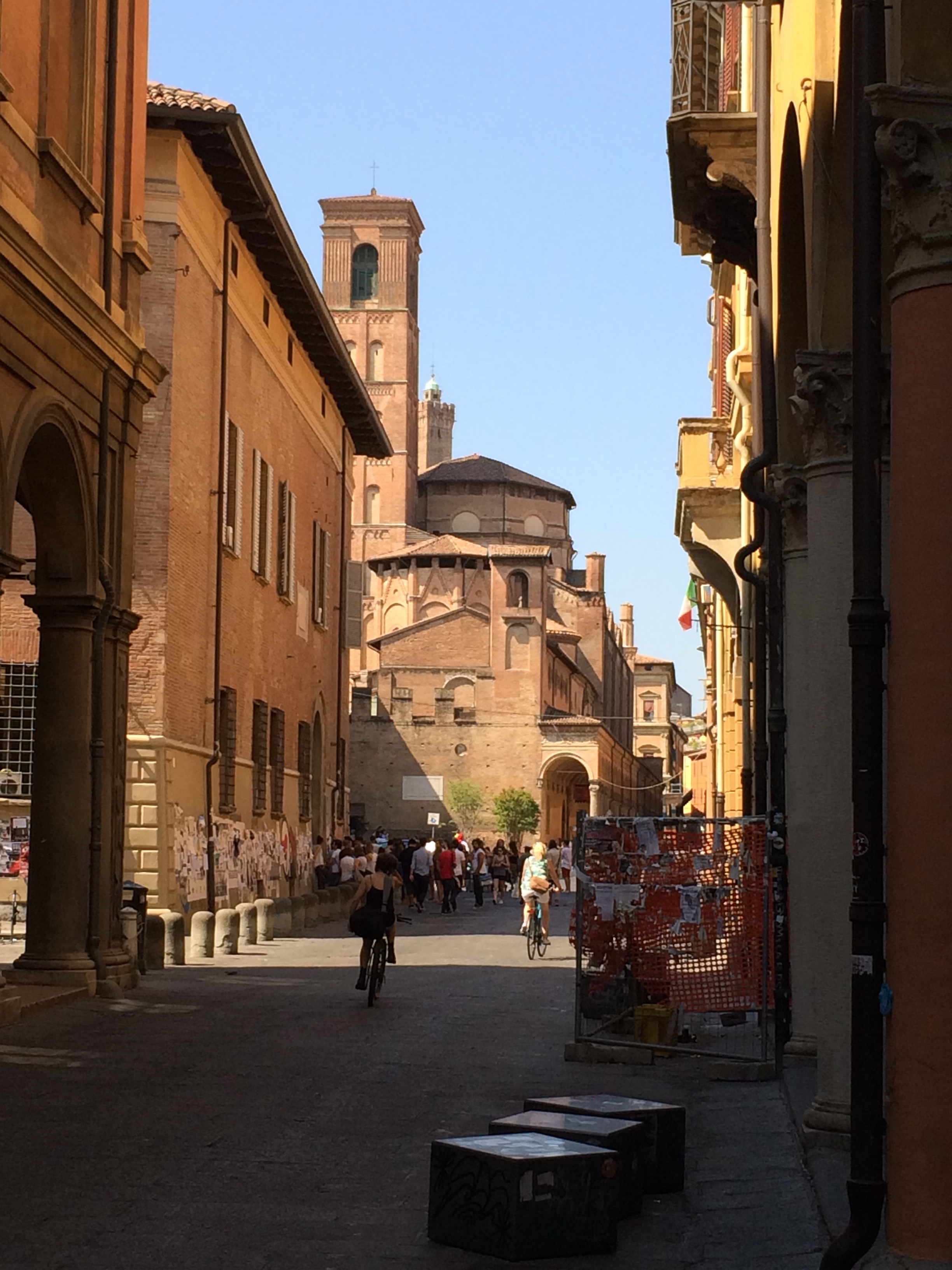
Via Zamboni, Bologna.
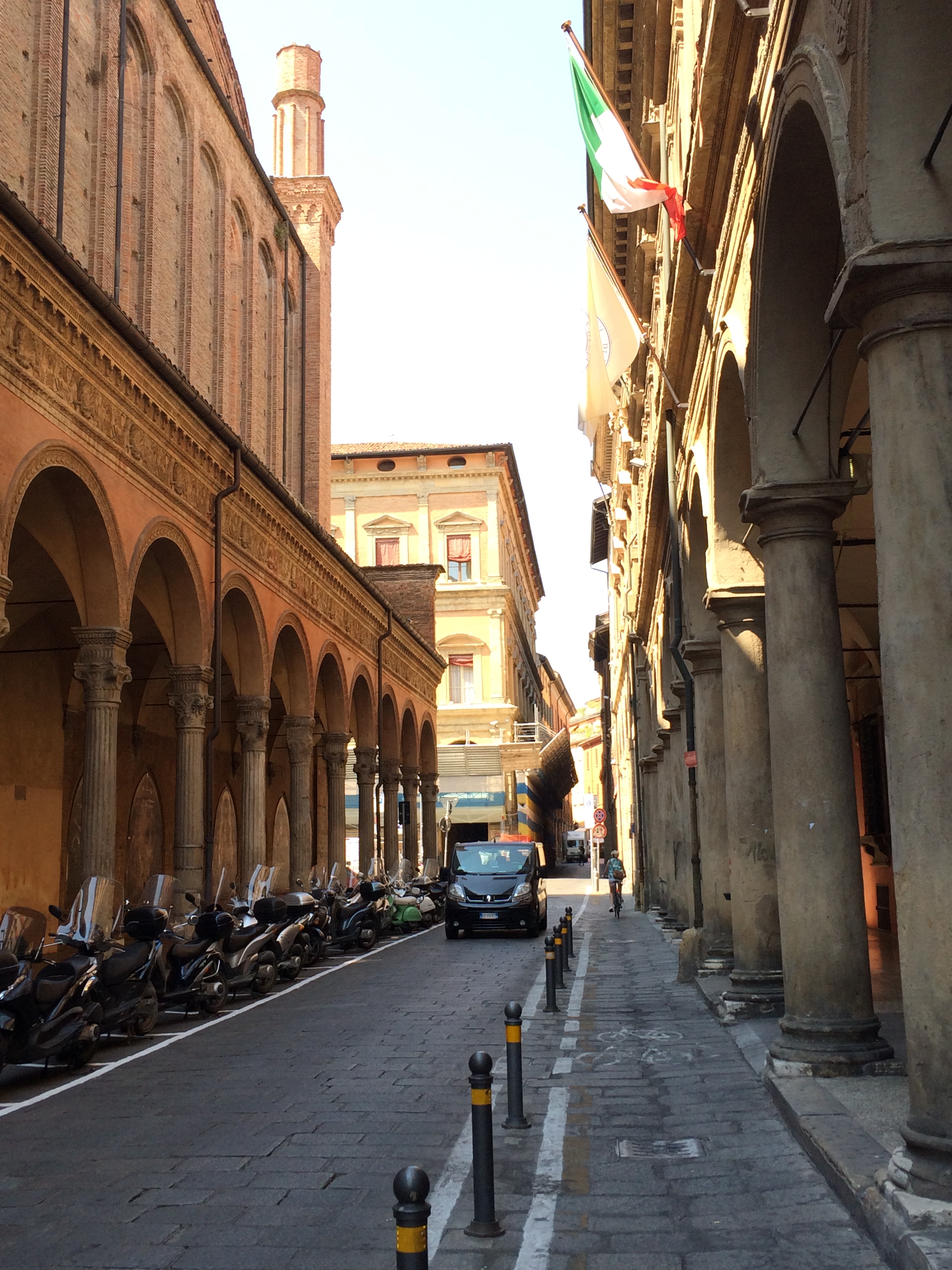
Porta Ravegnana.

Neptune Square, Bologna.
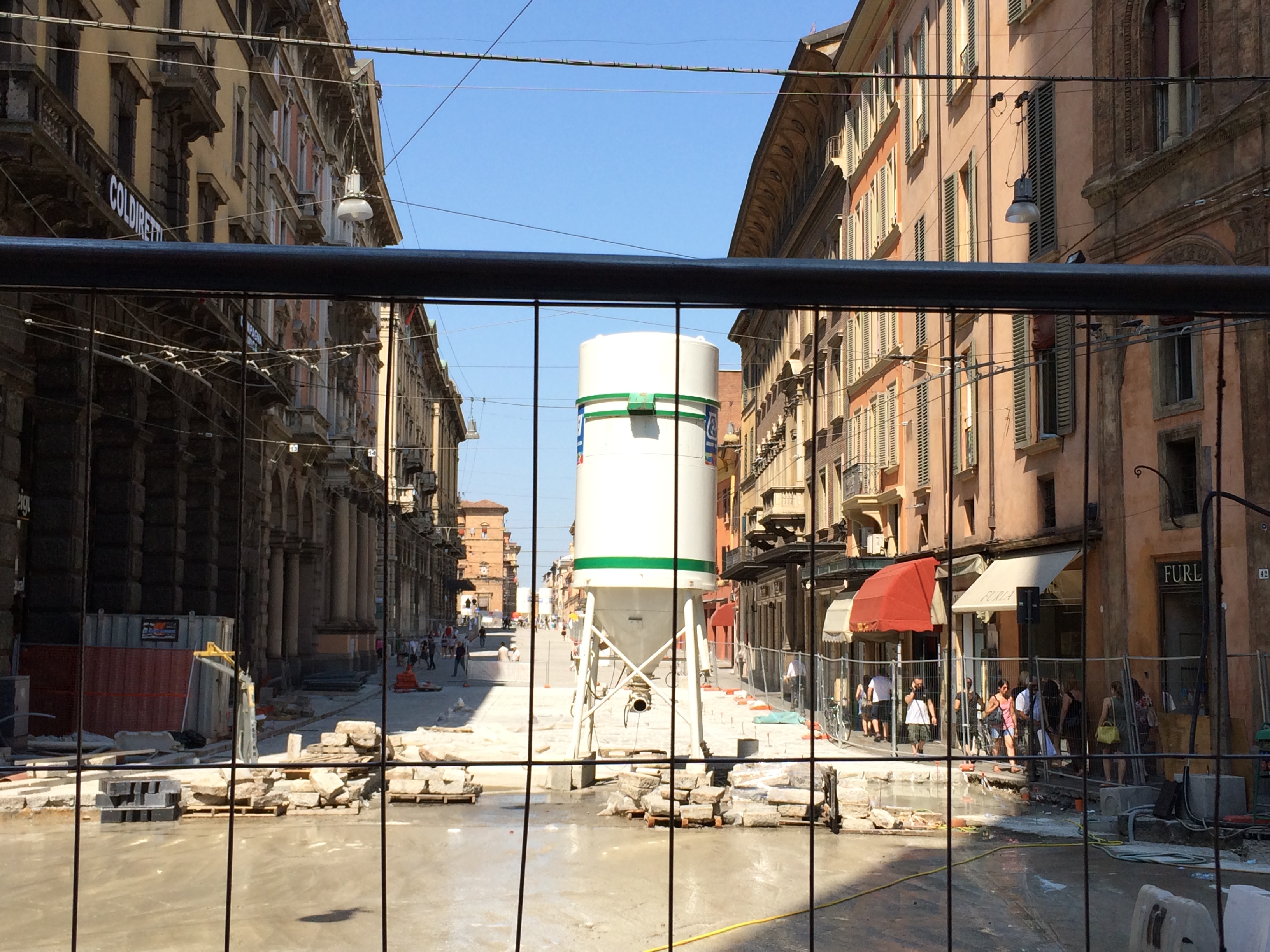
Bologna owes much of its current charm to the restoration work started in the 1970’s. More renovation was still underway.
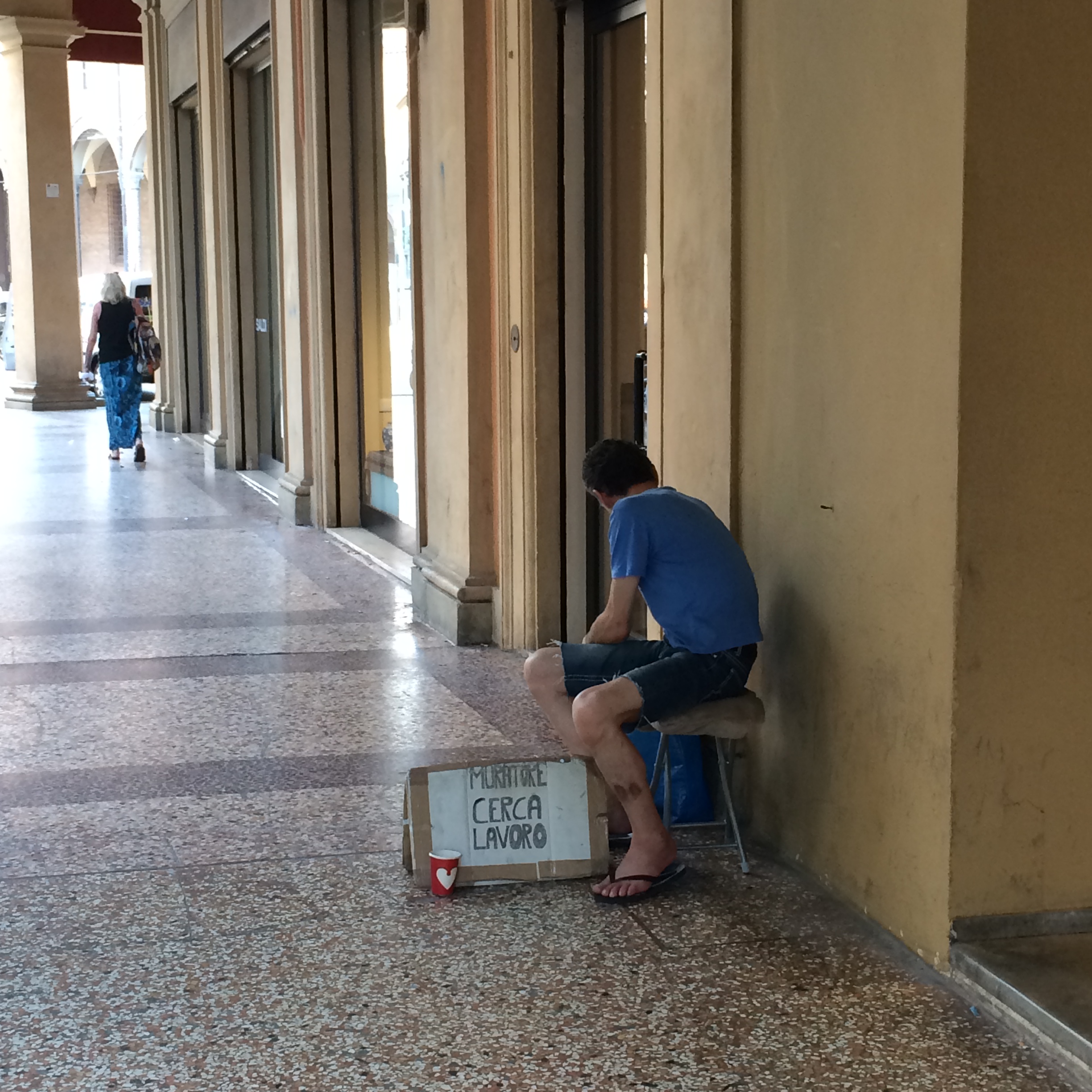
Bologna still has its economic problems. An out of work plasterer seeking work (and some spare change) on the Porta Ravegnana.
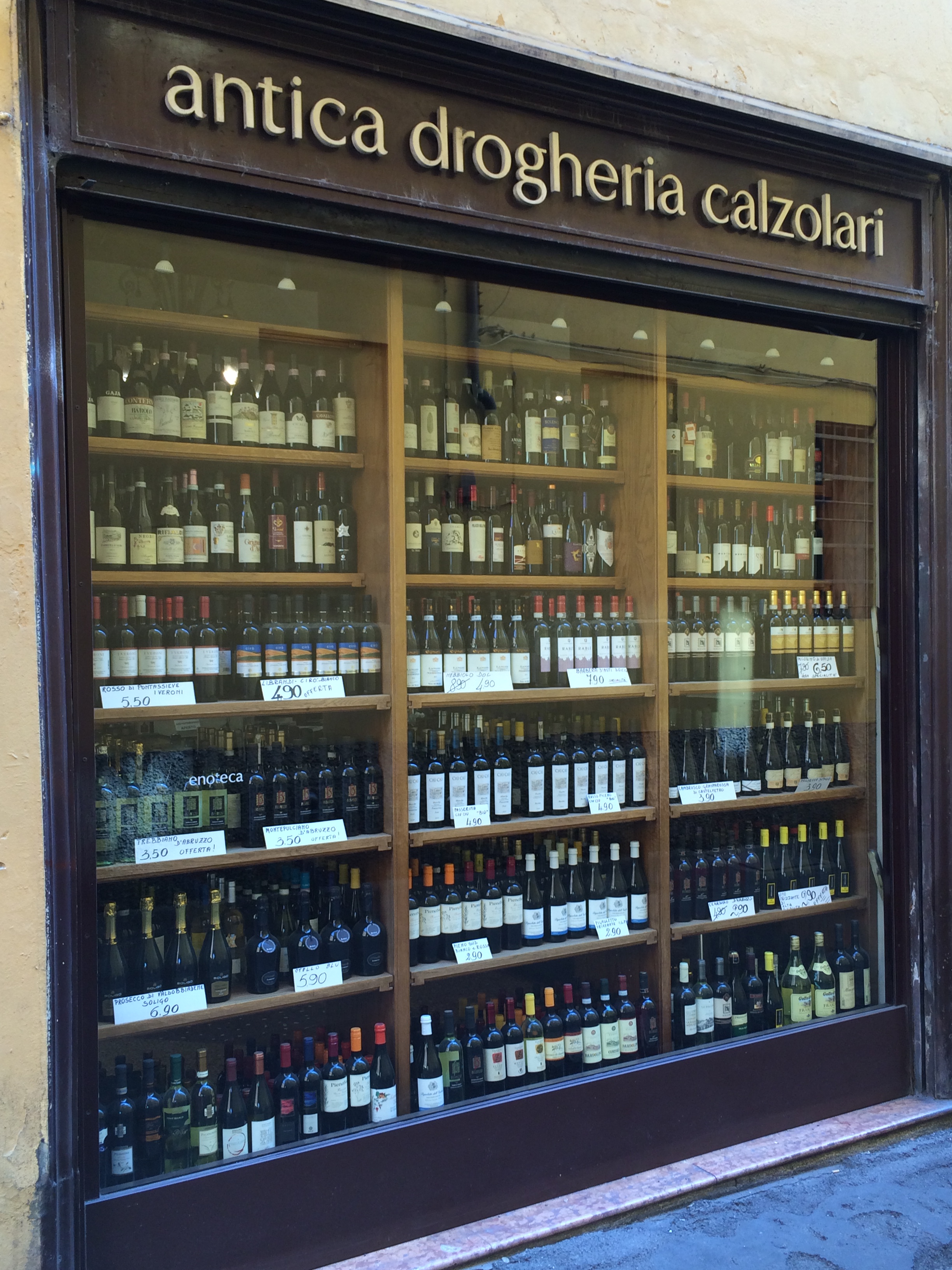
An interesting-looking wine-shop in central Bologna.

Student graffiti making some sort of statement about ISIS?
In the evening, we ate in the Trattoria Oberdan round the corner from our hotel and the wonderfully named Via dei Malcontenti, which could have been part of a film set for a 1930s gangster film. The food was just what you’d expect from the gastronomic capital of Italy, the service attentive and reassuring as only the Italians know how, and once he got going, Antonino the Sicilian head waiter, was a veritable encyclopedia of information about both local cuisine and that of other regions in Italy.

The excellent old-fashioned Trattoria Oberdan, off Via dei Malcontenti.
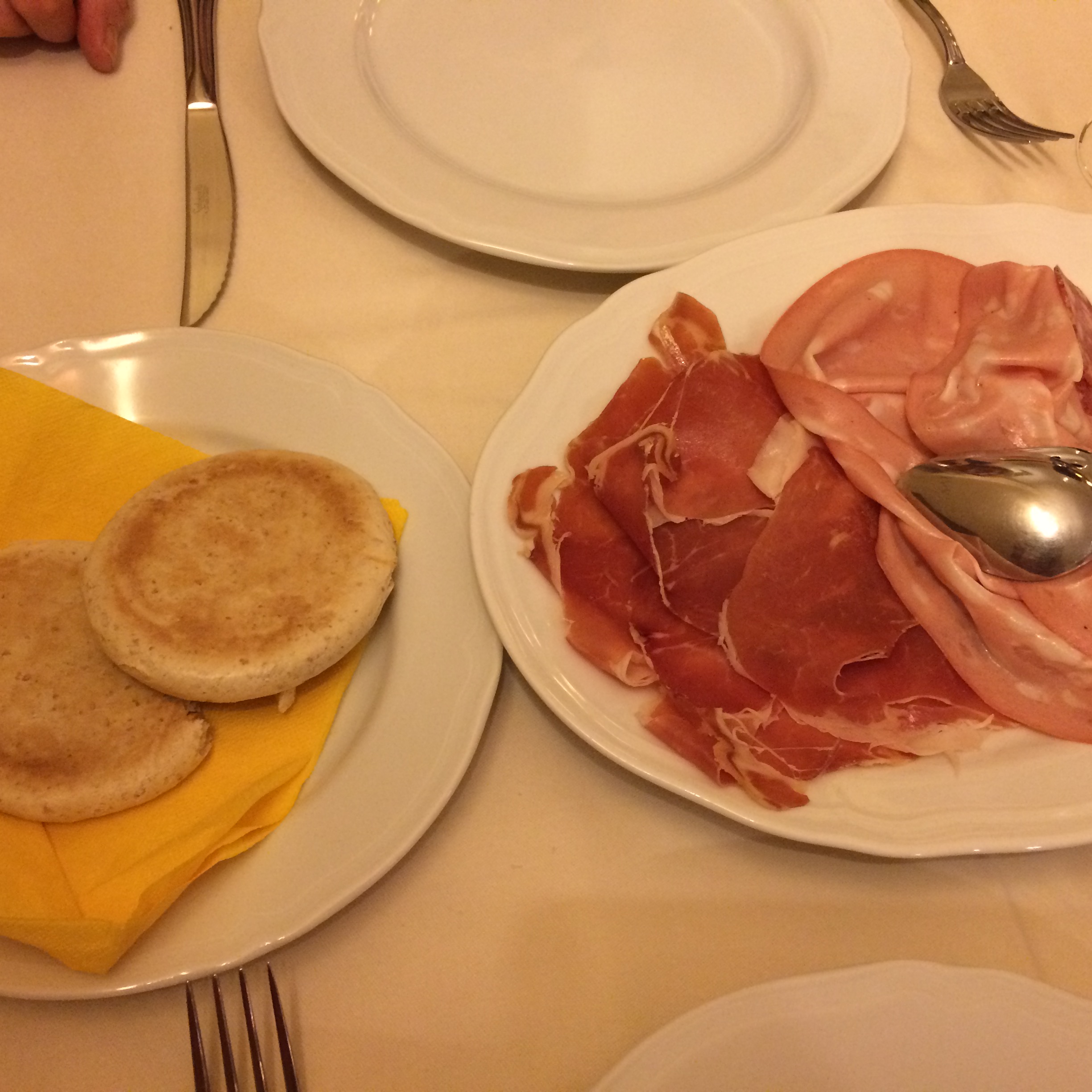
Salumi misti with ‘stracchino’ cheese and ‘tigelle’, typical unleavened buns from the Emilia Romagna region.

Arrosto di Vitello and Fettuccini ai funghi.

Nino (Antonino), the personable and knowledgeable head waiter at the Trattoria Oberdan.
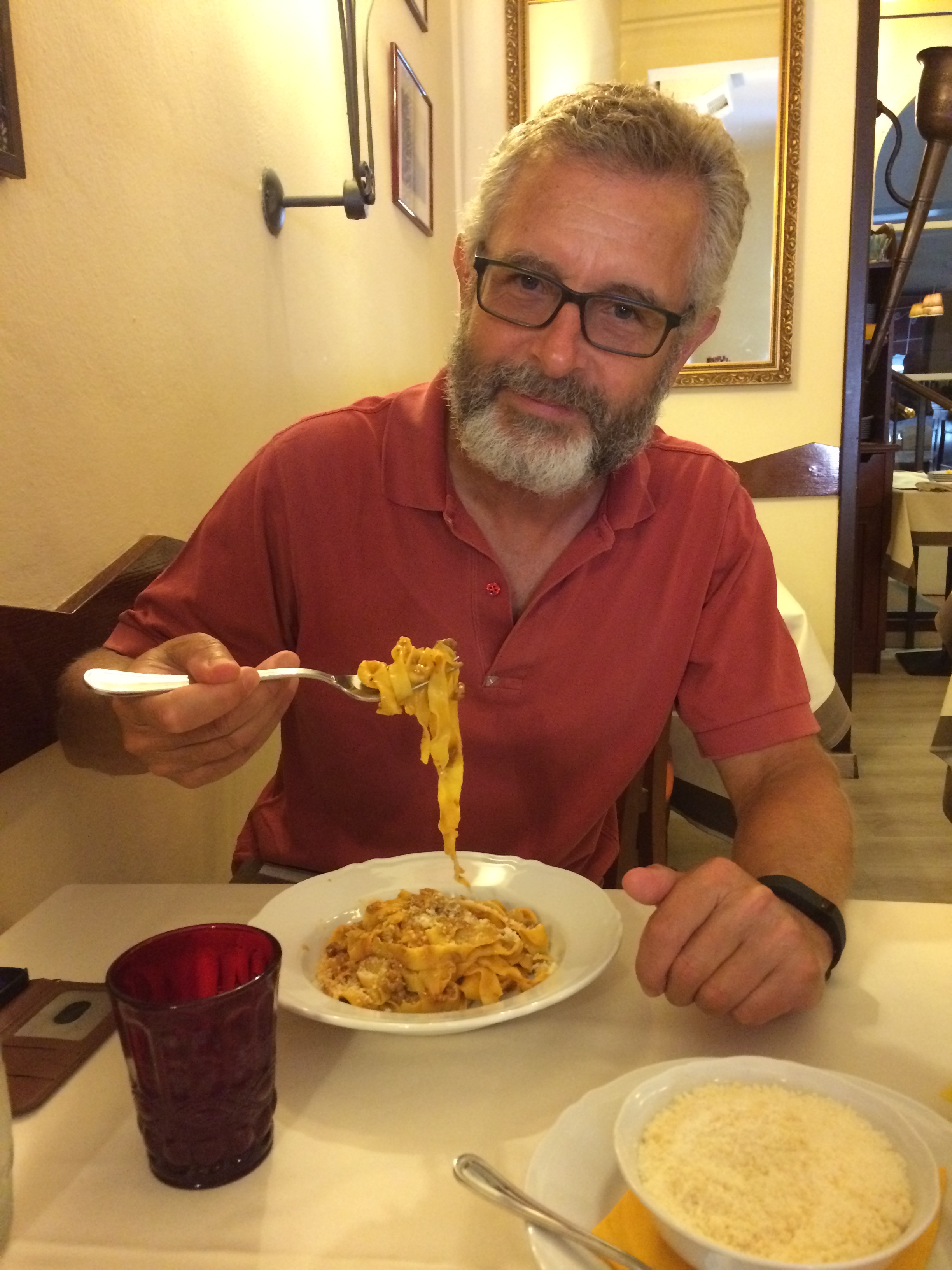
Tagliatelle alla bolognese – couldn’t leave Bologna without having a taste of the real thing.
Here is a quick summary of Nino’s thoughts about Italian cuisine:
Bologna and Emilia Romagna: “La grassa” cuisine; pasta fresca; gnocchi; bollito misto; arrosti con puree and salsa verde, “l’abruzzo” – agnello castrato; salcicie.
Roma: L’agnello piccolo; Coda di Vitello; trippa; carcioffi alla Romana; carbonara; matriciana.
Toscana: Firorentine di carne chianina (in Chianti or Siena area). He didn’t think Tuscan cuisine was very noteworthy.
Puglia: Cuccina a base di verdure; pasta con pomodori; basilico; orecchiette con verdura; pesce.
Sicilia: Cuccina povera; pasta alla Norma (made with melenzane fritte, pomodoro, olio and basilica with grated hard-baked ricotta) – sounds great; pesce con verdure; pesce azzurro (small fish like sardines); paste alle sarde.
Next morning, after an early breakfast (after getting the puncture on Flavio’s bike repaired by Gianfranco the friendly and helpful owner of the ‘Sensa Benzo’ cycle shop off the Via Zamboni, we cycled round the city and through the lengthy porticoes, visited the Basilica di Santo Stefano, which started out as a Roman Temple but became a medieval religious complex which once had seven churches. Bologna also boasts the world’s very first university which was founded in 1088. Bologna is very similar to Verona but without the hoards of tourists. A wonderful city and certainly worth a second visit. After a pasta lunch at our favourite restaurant we set off again, heading south.
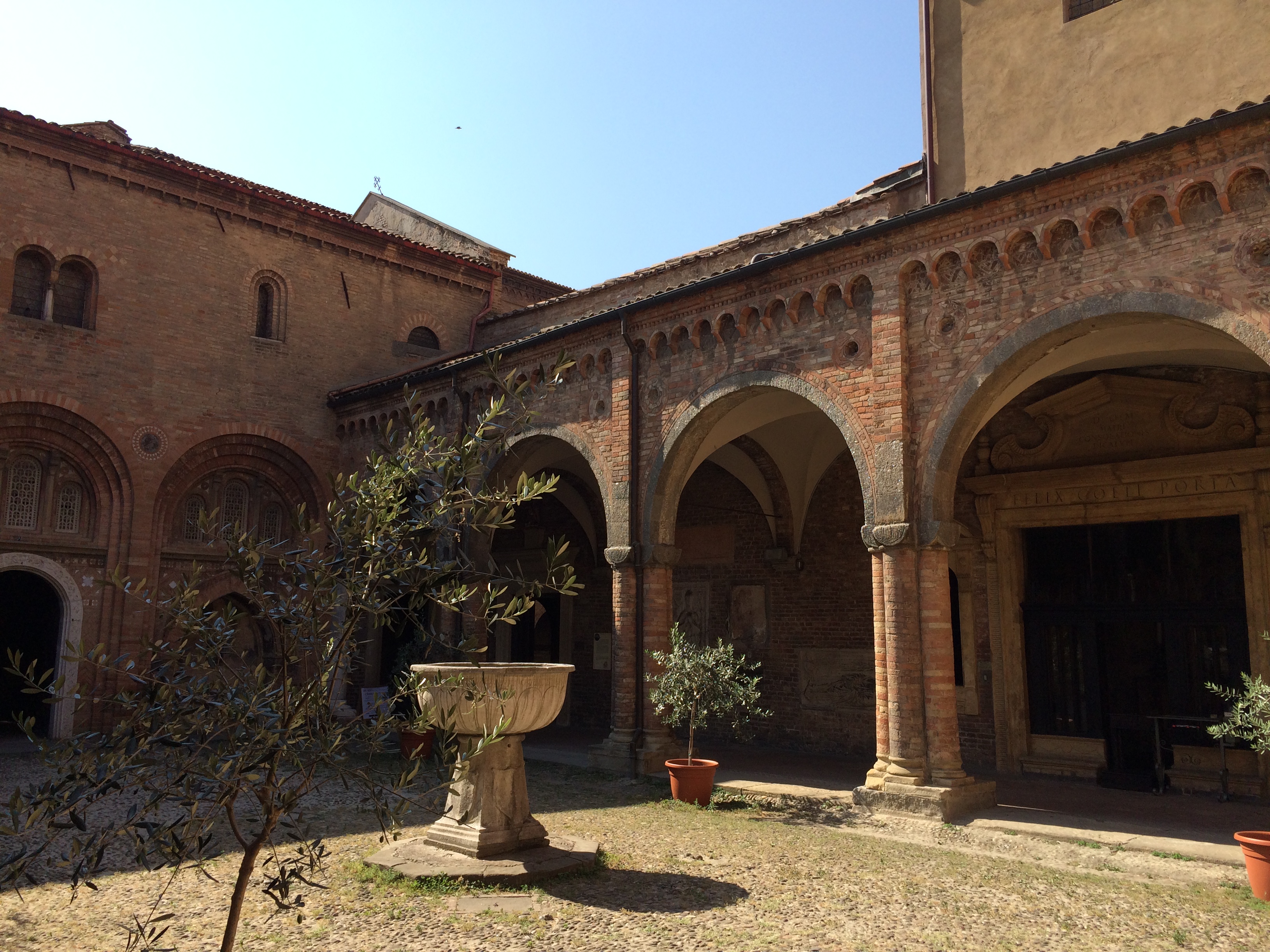
The inner courtyard of the Basilica di Santo Stefano.

One of the seven old churches in the Basilica di Santo Stefano complex.
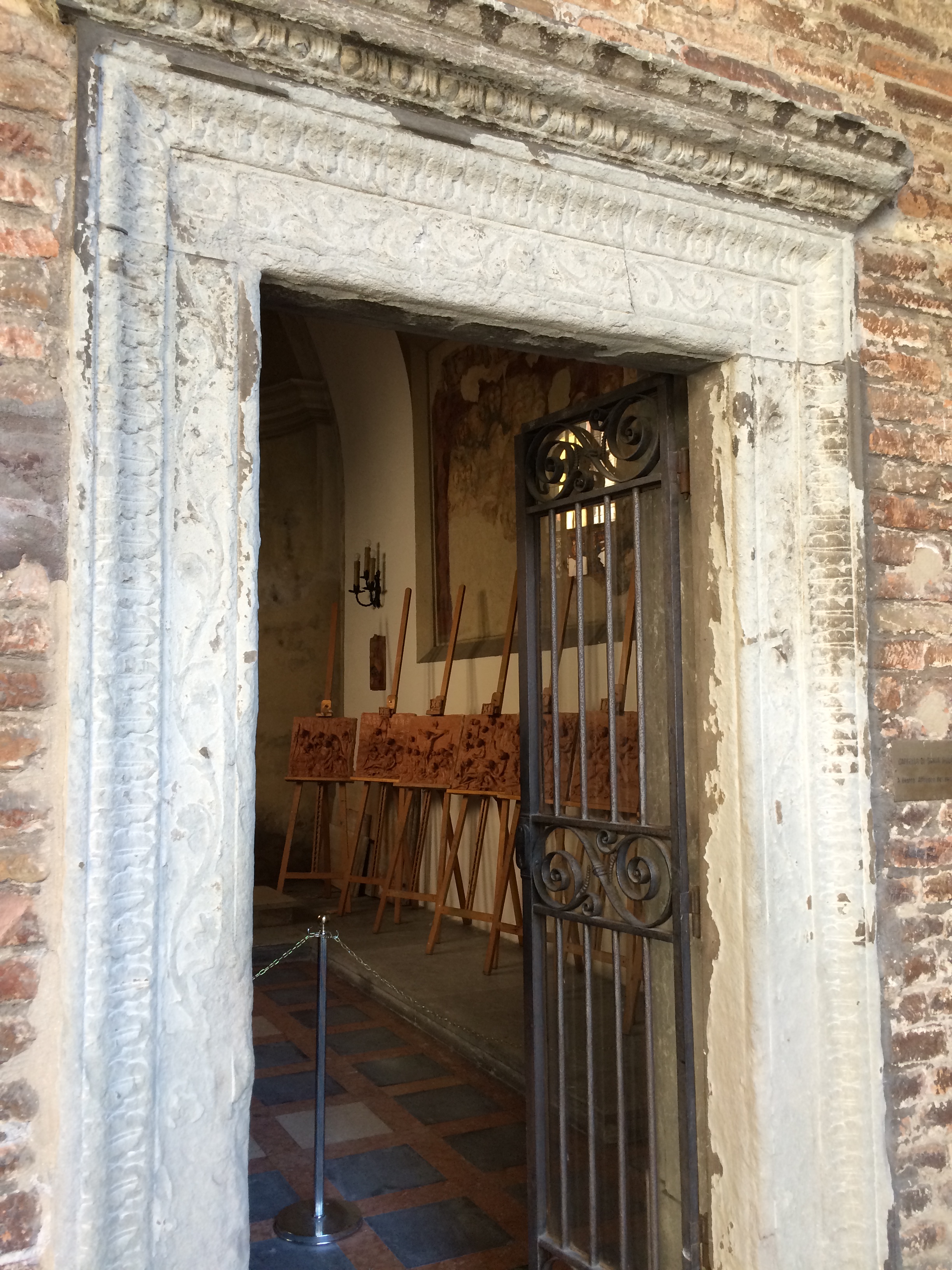
Entrance to the Chiesa del Martyrium in the Basilica di Santo Stefano.
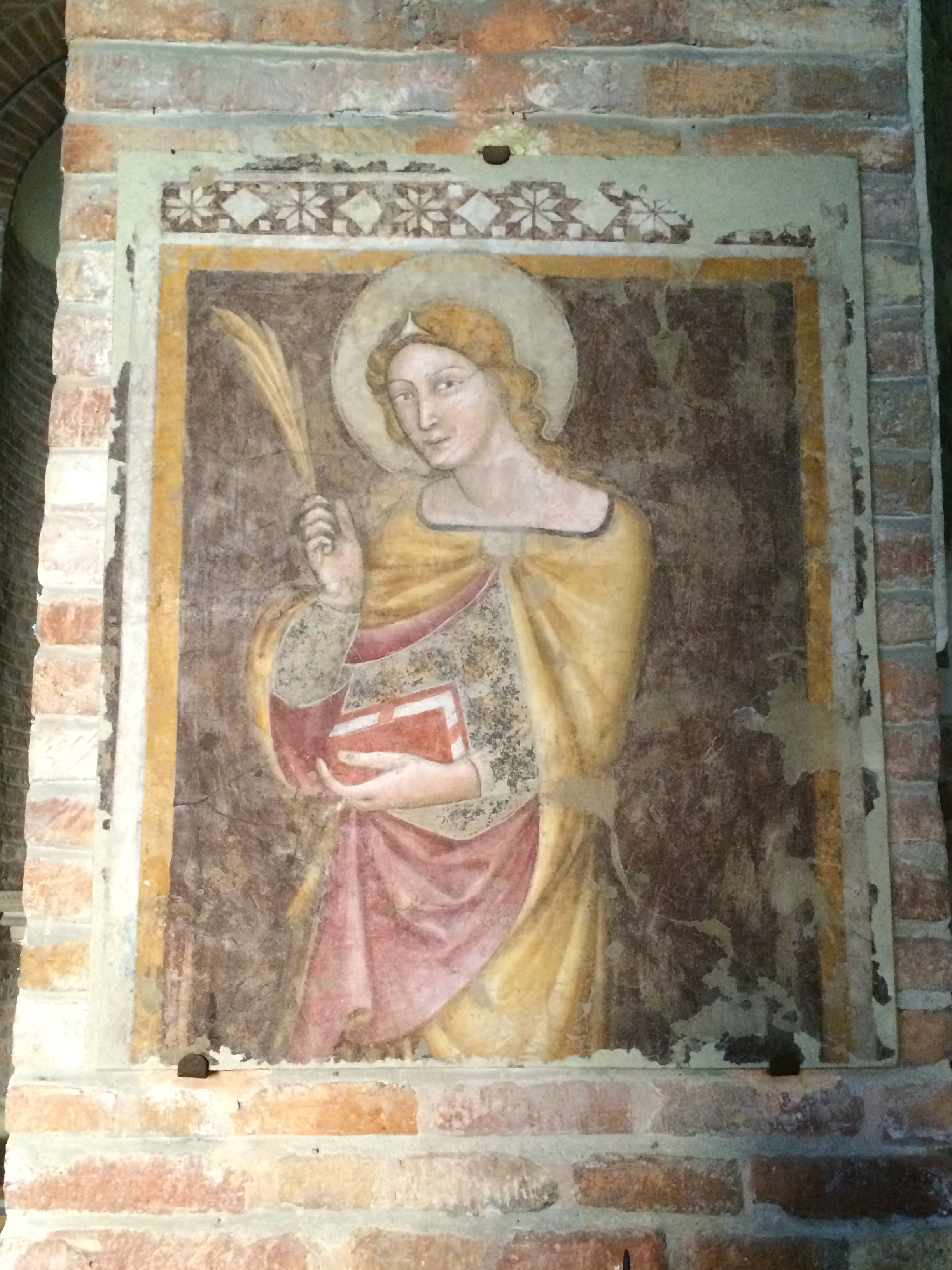
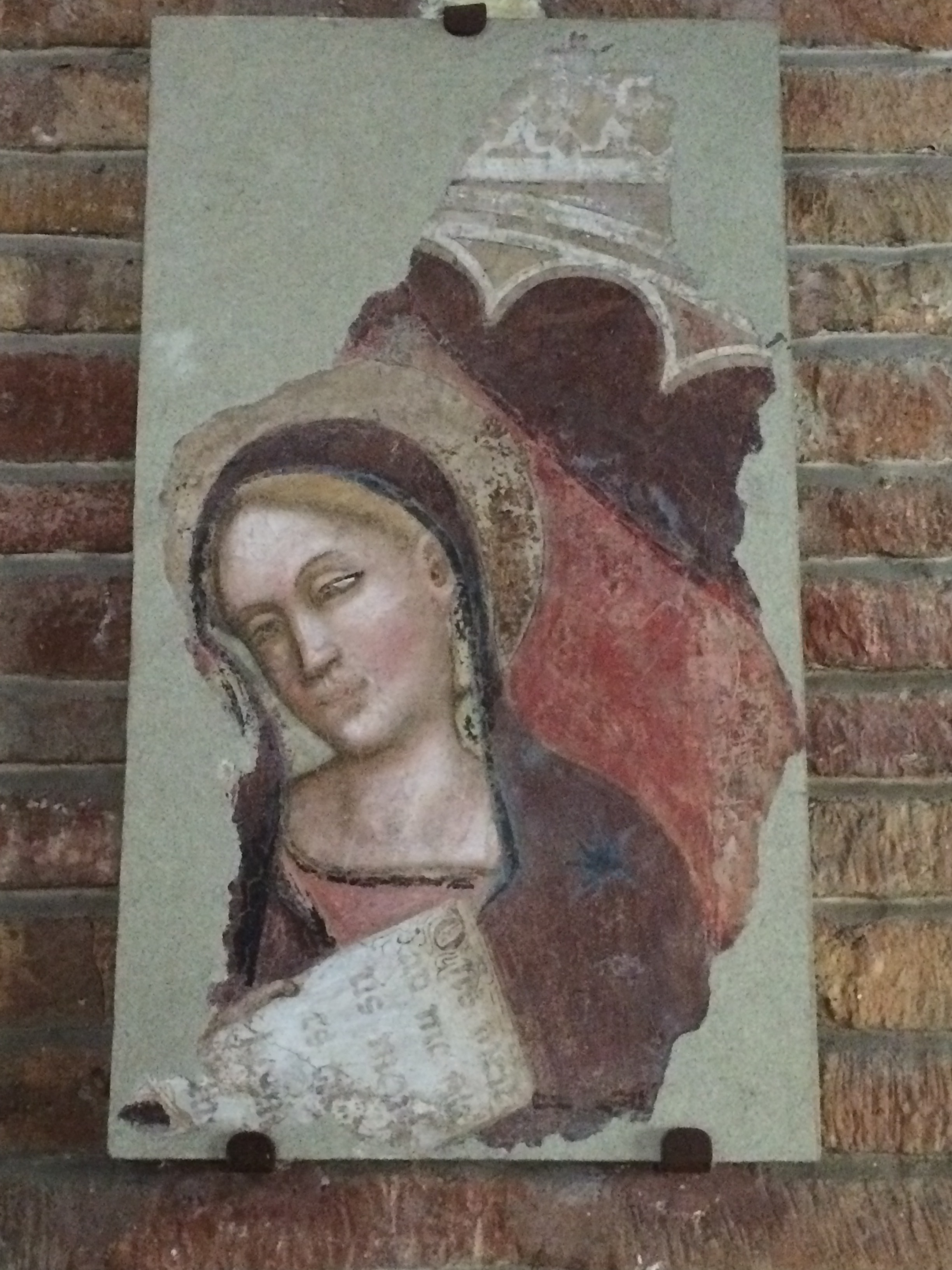
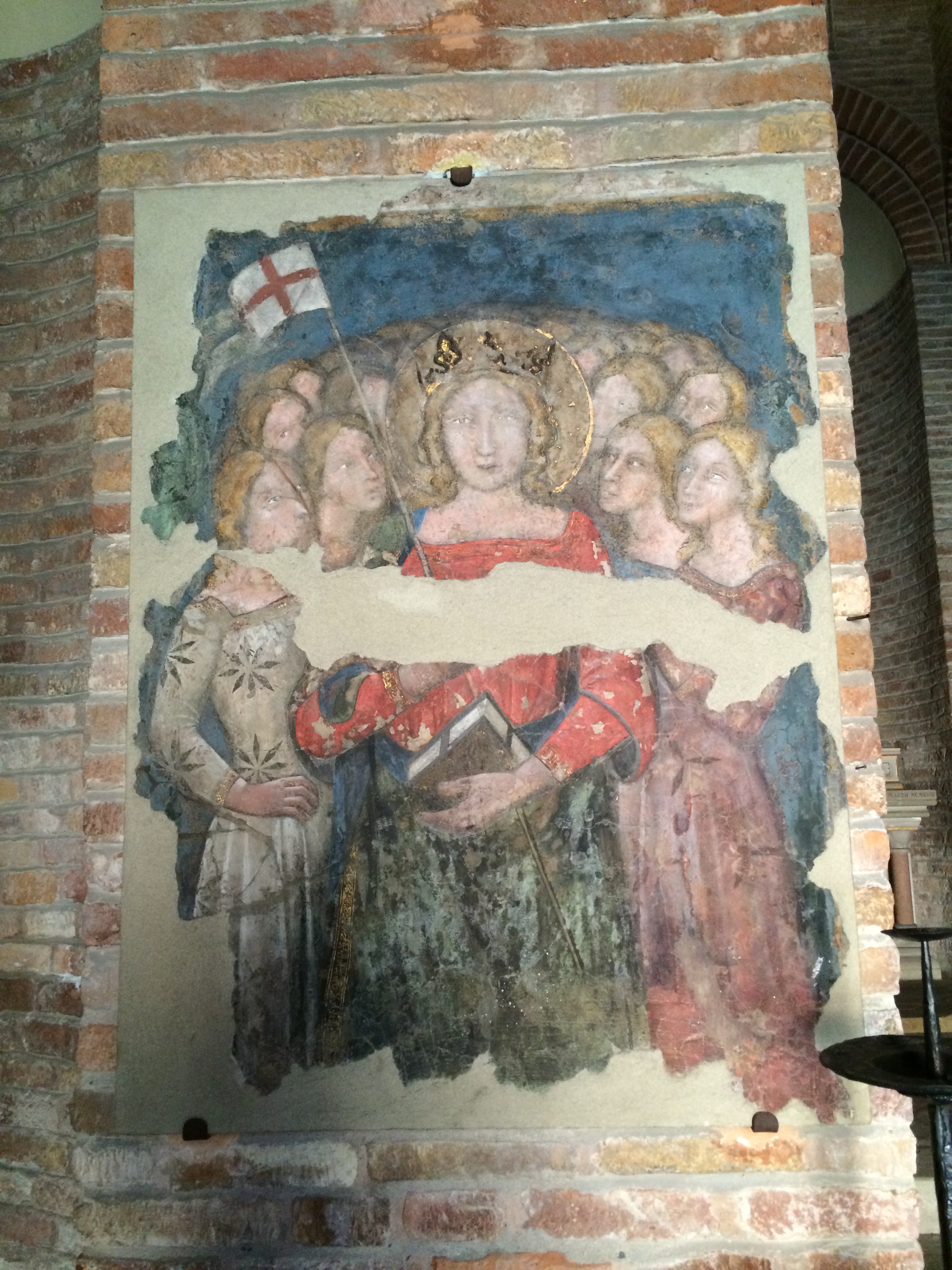
An old fresco in the Basilica di Santo Stefano.
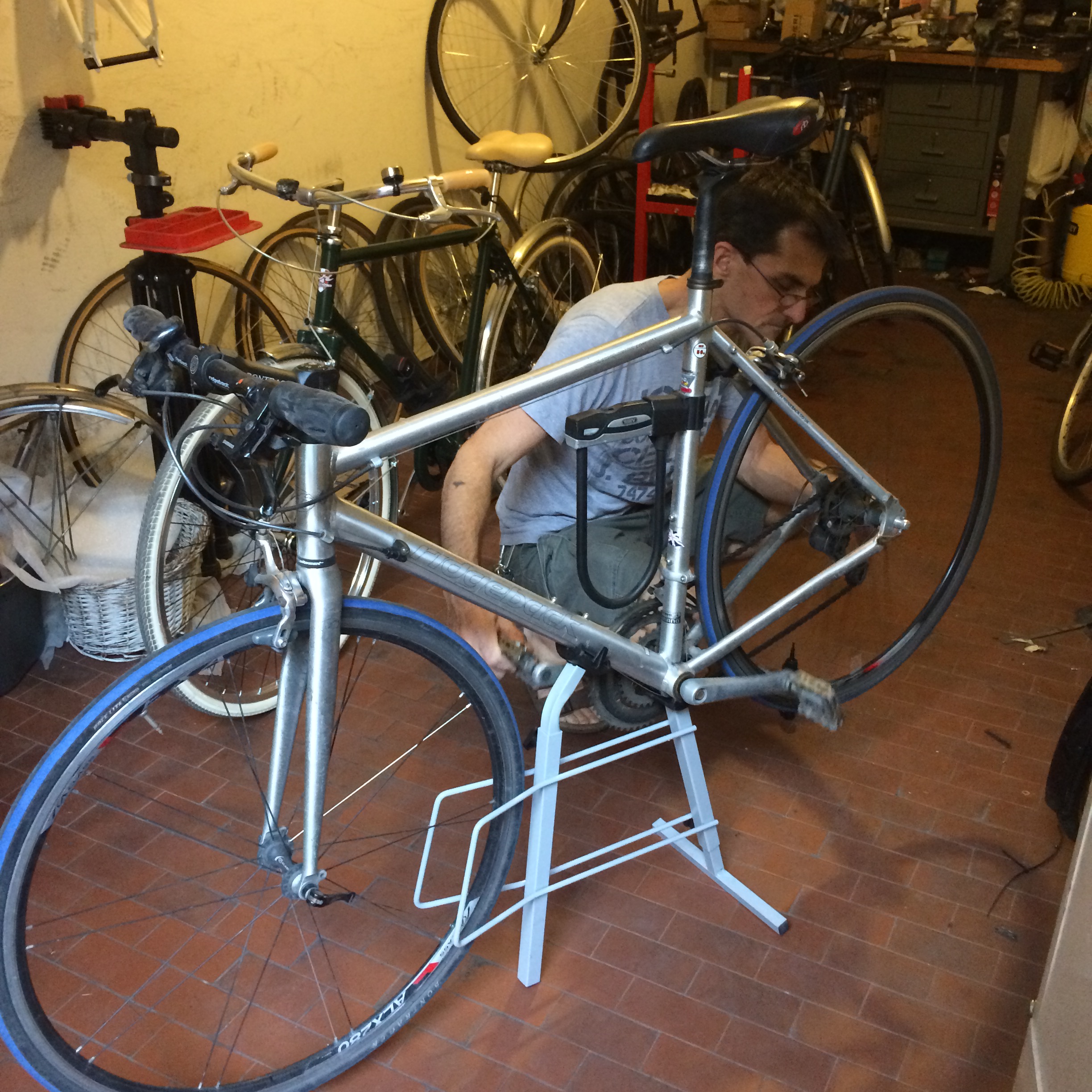
Gianfranco at the Sensa Benzo cycle shop gives Flavio’s bike a bit of TLC.
 Travels with our van