Leaving Bari, we were heading south towards Lecce. Around Monopoli however, we started spotting small apparently derelict hobbit-like huts in the middle of fields and olive groves. We’d heard of these and assumed they were around Lecce, but seeing signs to ‘Alberobello – citta dei trelli‘ pointing inland, we thought they’d be worth a quick look and took the turning. The road took us up beautiful hilly countryside, with more recently-built trulli cottages springing up more and more frequently and rich red clay soil and olive groves all around. We realized that trulli were not just interesting remnants of old disused dwellings but very much the standard style of cottage people built and lived in in this area. That’s not to say all houses were trulli but many were and sometimes, cottages were a combination of conventional houses with trulli attached. The overall effect of trulli cottages, olive groves and red soil was very aesthetically pleasing.
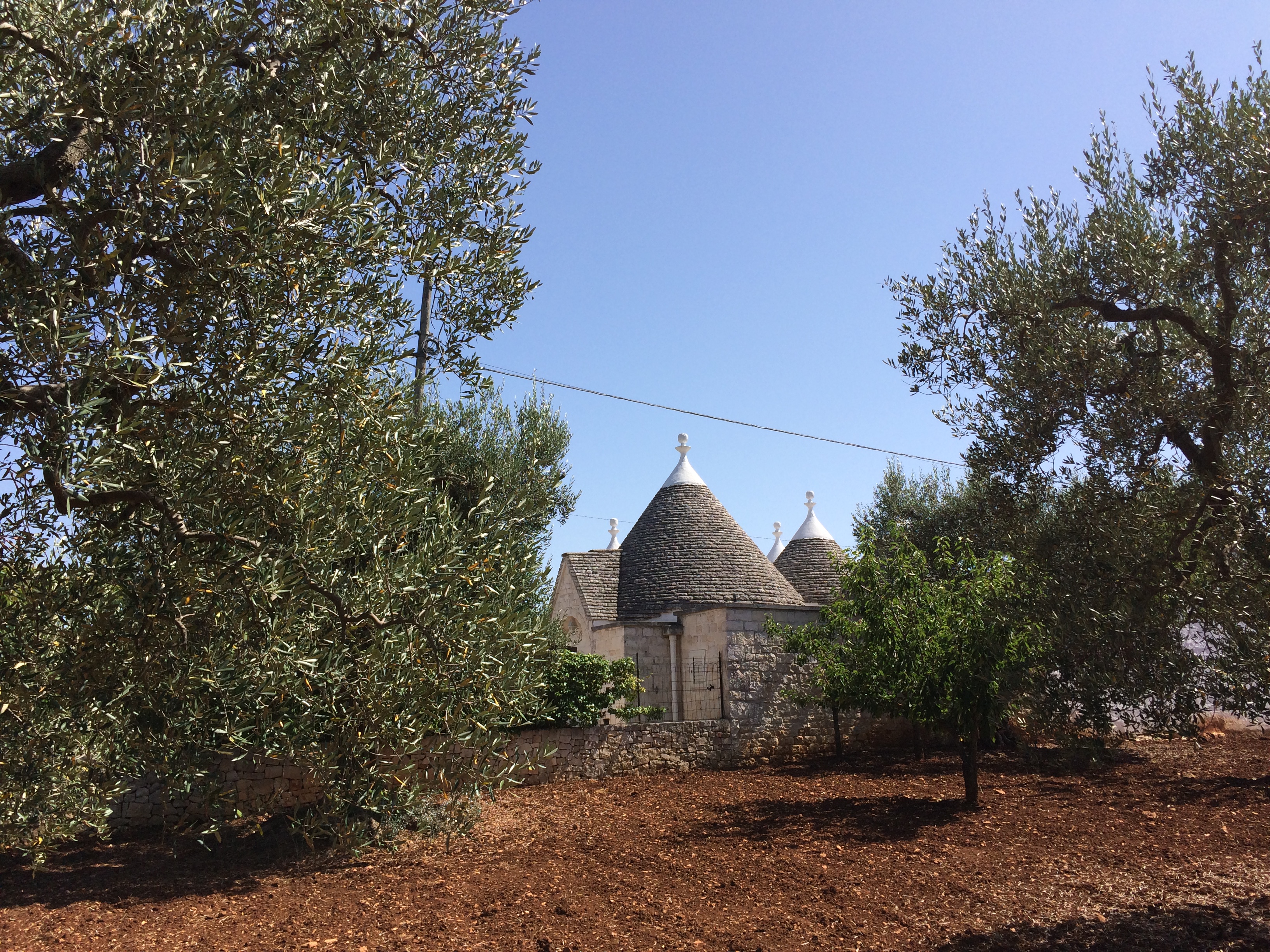
Trulli become more frequent as we approach Arberobello.
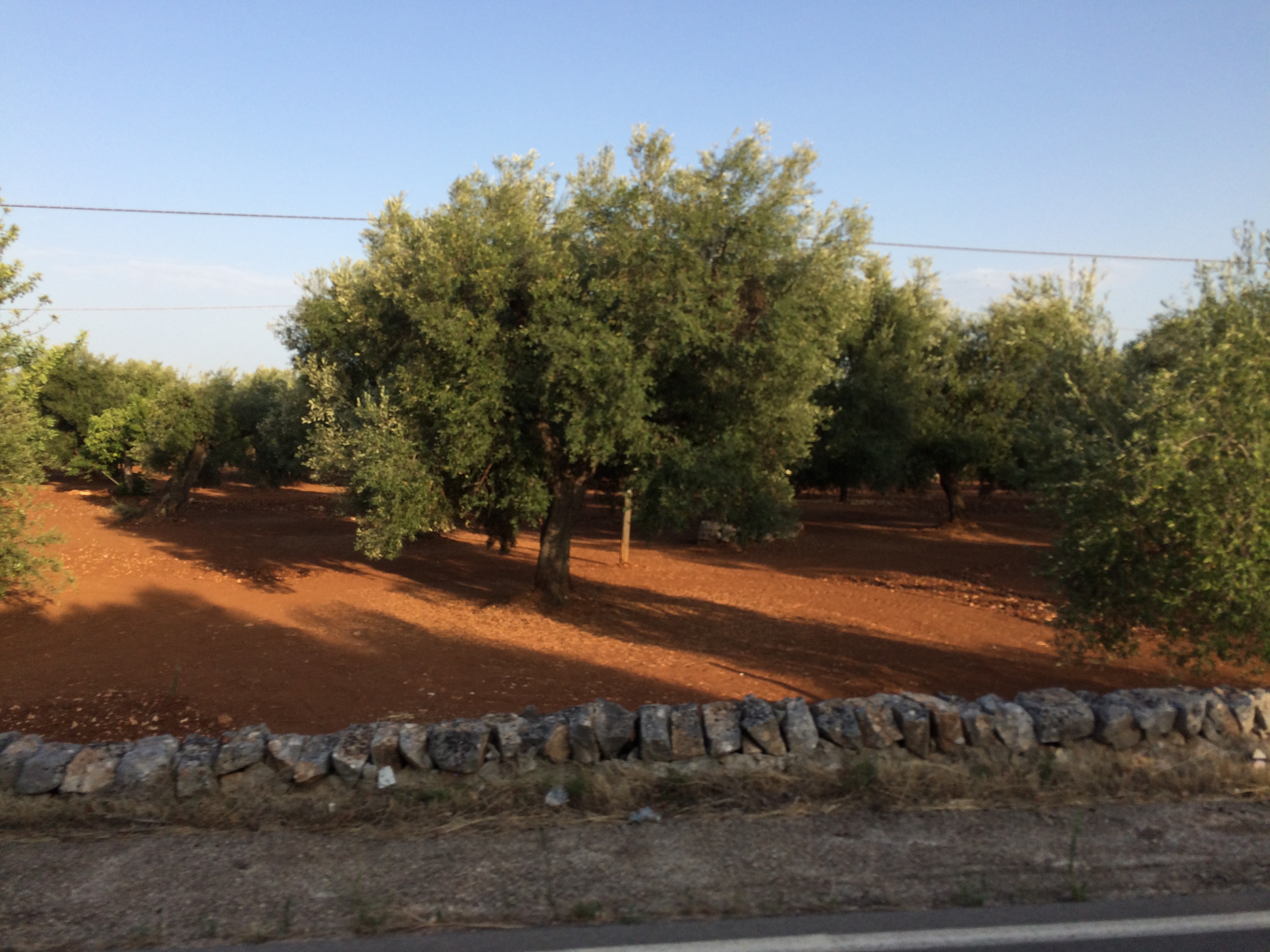
Rich red soil and olive groves all around.
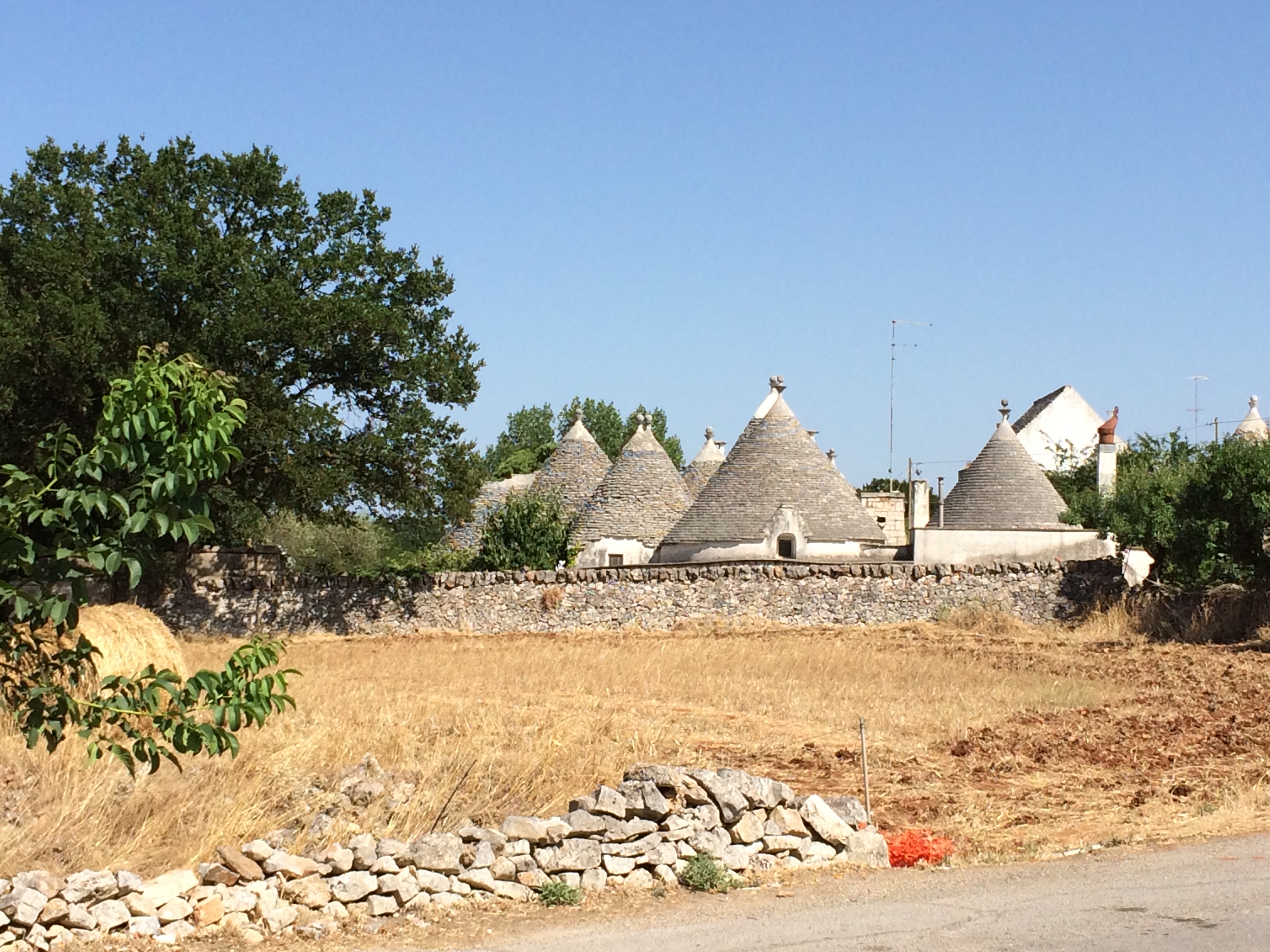
Trulli in Locorotondo (the round place) on the way from Alberobello to Lecce.
Another thing that was also quite pleasing was that the air at this higher altitude became cooler and less humid. After the last few days of relentless heat and debilitating humidity, it was heaven to be able to breathe some fresher air and there was actually a breeze up here – we’d forgotten what that felt like! It was early evening by the time we reached the outskirts of Alberobello (literally meaning ‘the beautiful tree’) and spotting the ‘Camping dei Trulli’ a few kilometers before reaching the town we had no trouble in deciding that this was where we would spend the night or maybe even the next two nights. We cycled into Alberobello that evening and drove to Lecce the next day and back to the campsite though that was a longer drive than we’d anticipated and Lecce itself left us, its rather grandiose ostentatious and baroque architecture notwithstanding, somewhat indifferent. To be fair though, it was probably more to do with us reaching saturation point as regards historical city tours.
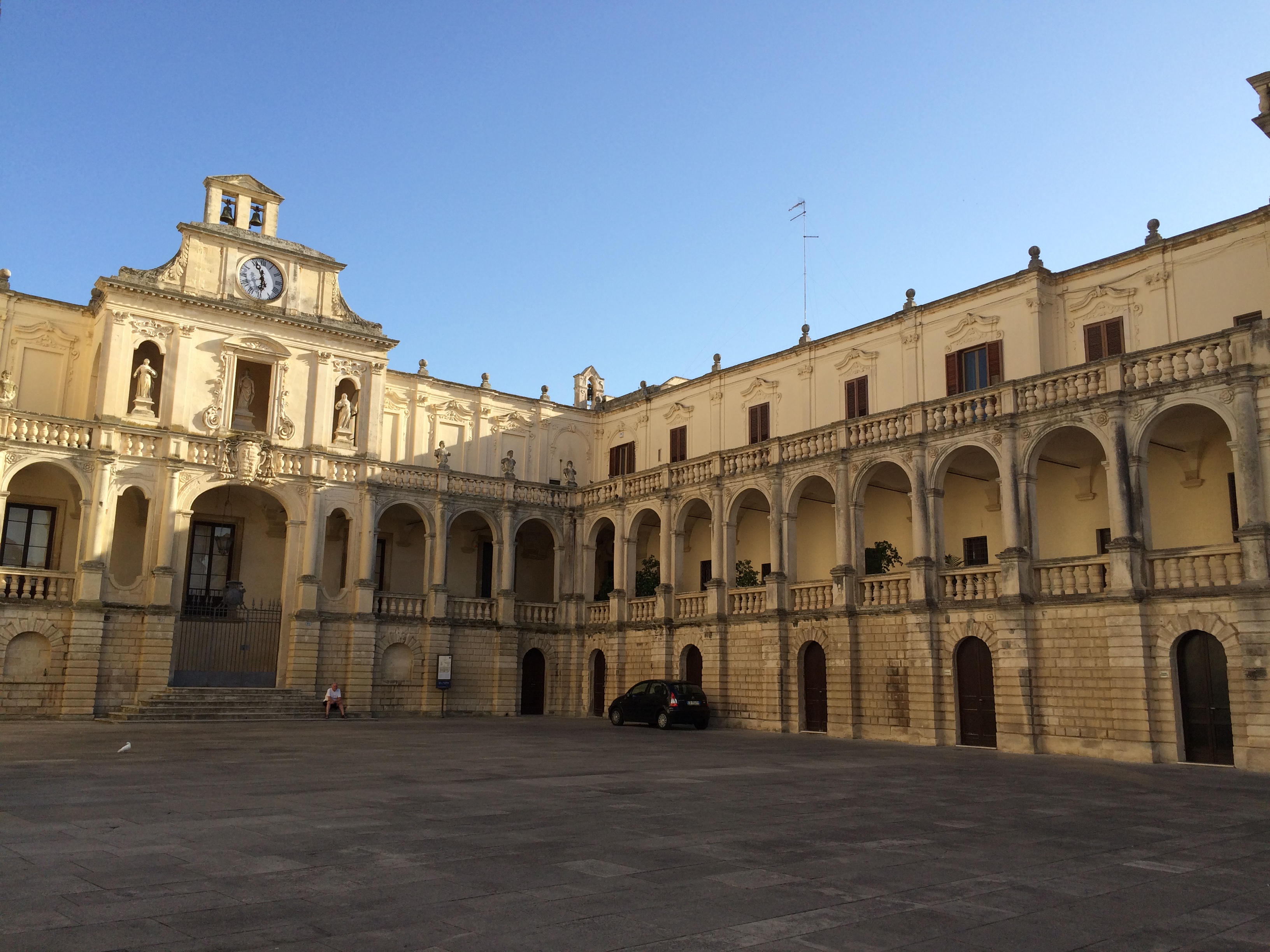
The Piazza Duomo, Lecce.
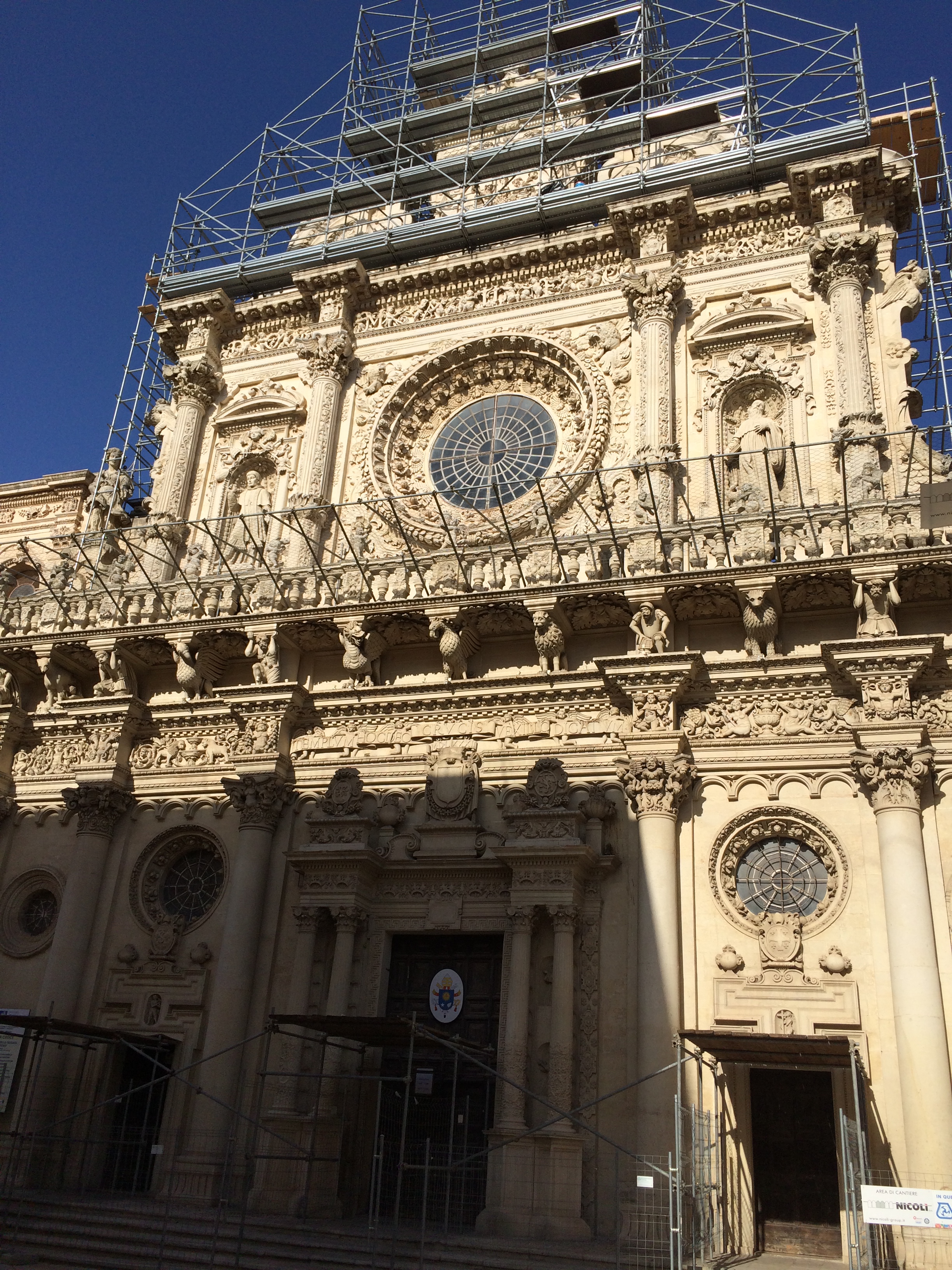
The Basilica and Celestine Convent in Lecce – an example of Leccese Baroque.
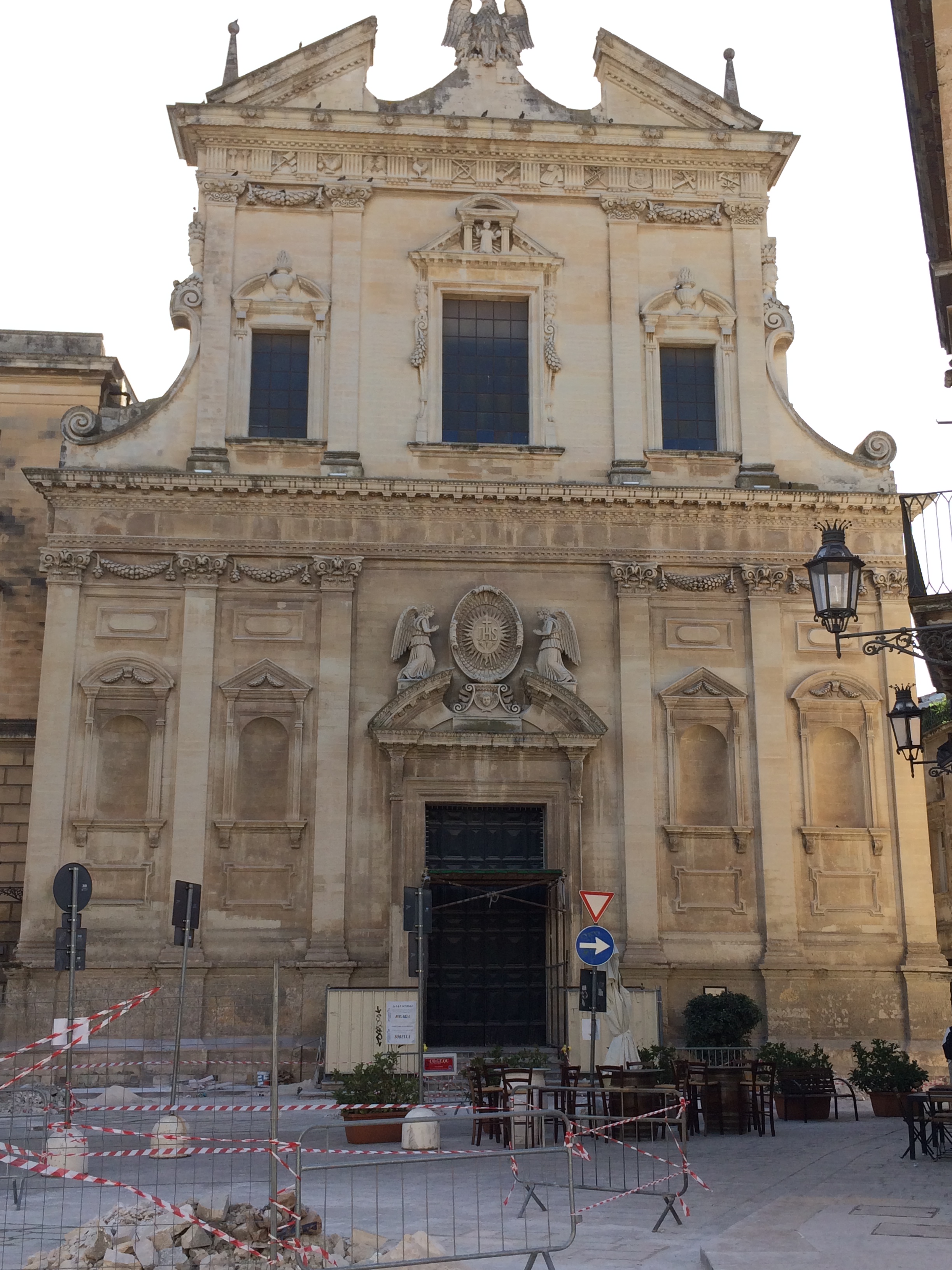
Another example of florid Lecce Baroque – the Santa Chiara cathedral.
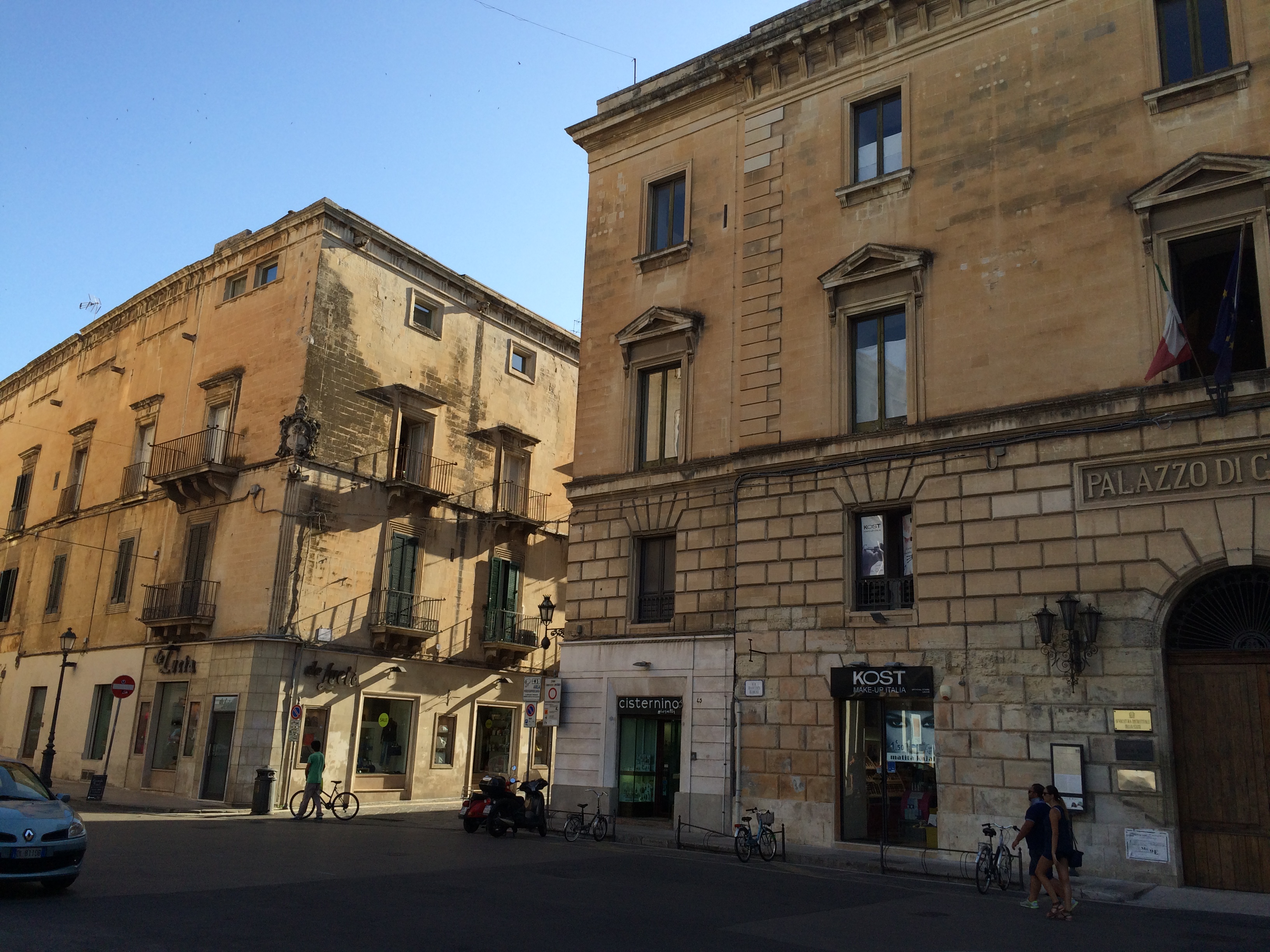
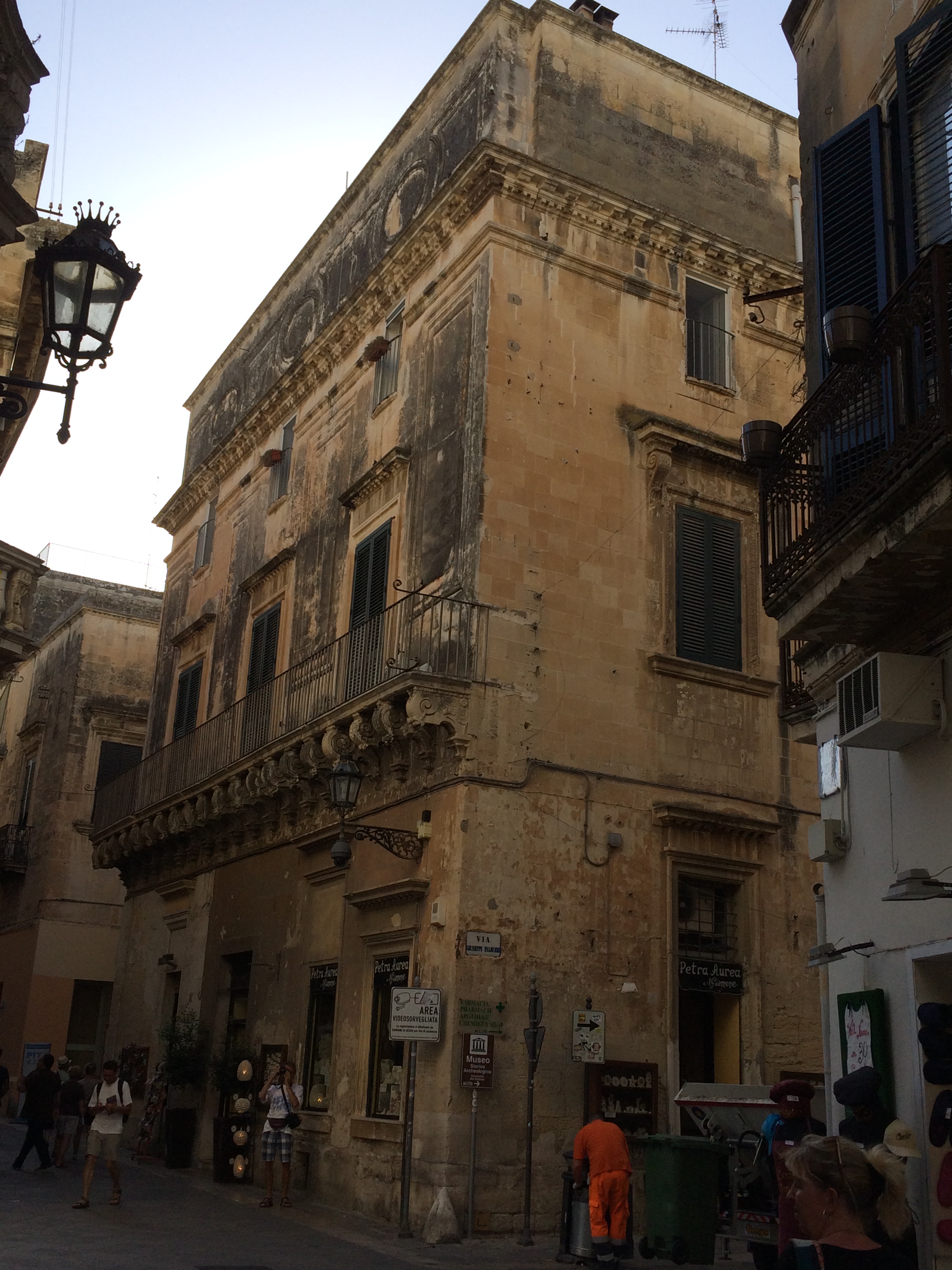
A street near the central square in Lecce.
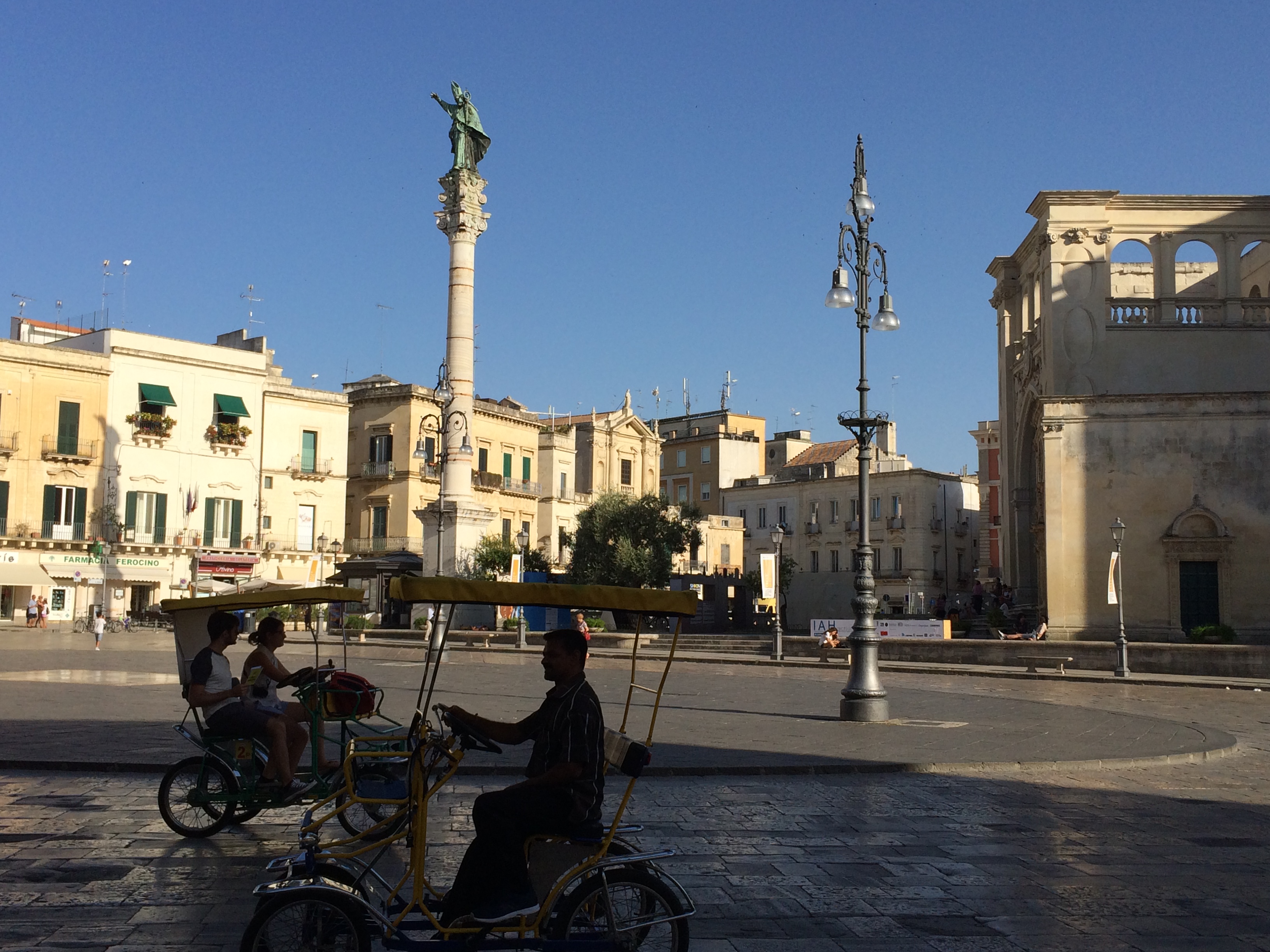
The central square dominated by the votive column supporting a statue of the saint-protector of the city, Sant’Oronzo to whom was attributed the fact that the city was spared the plague that ravaged the whole of Southern Italy in 1656.

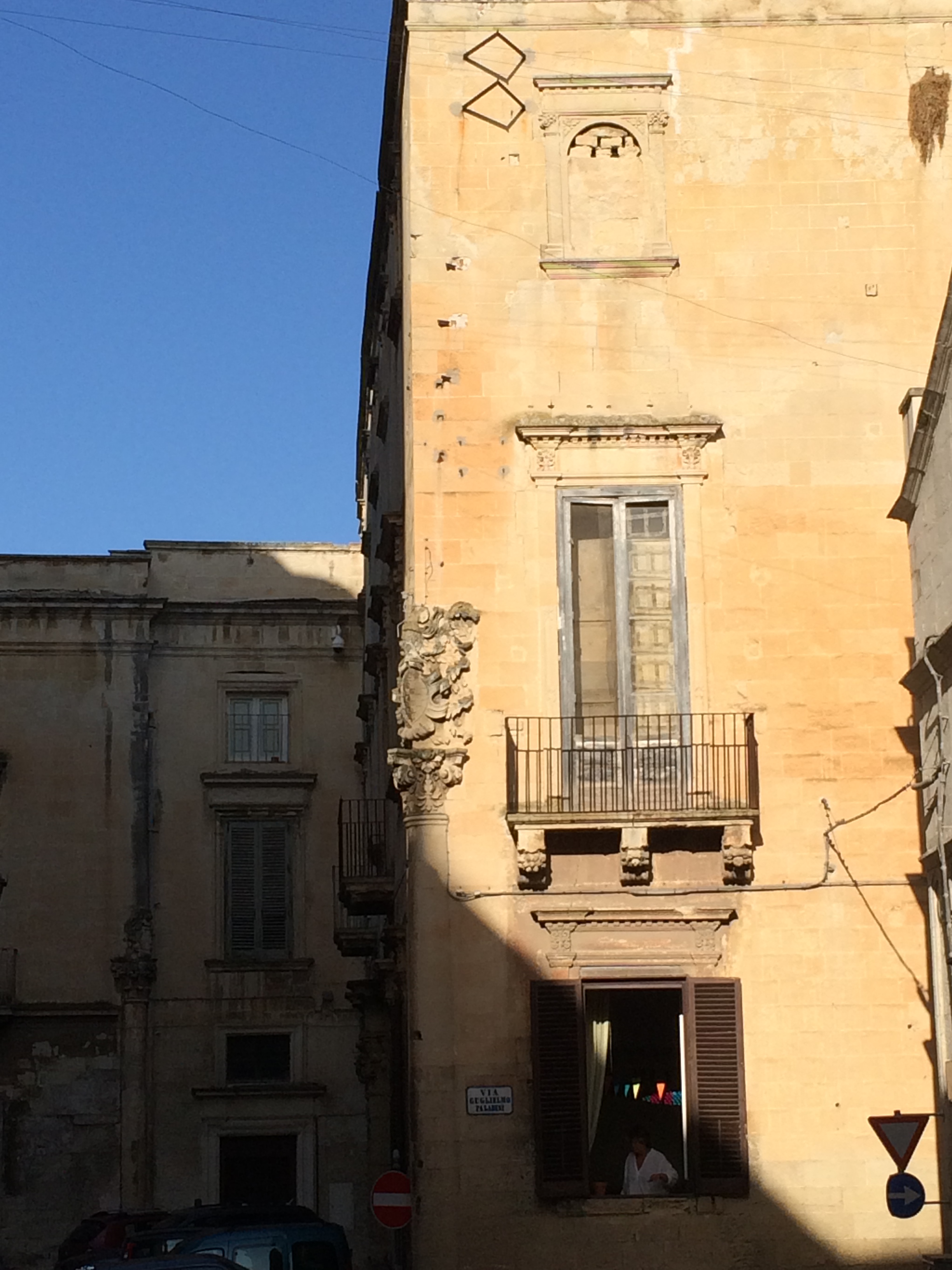
More ornate architecture.
L
L
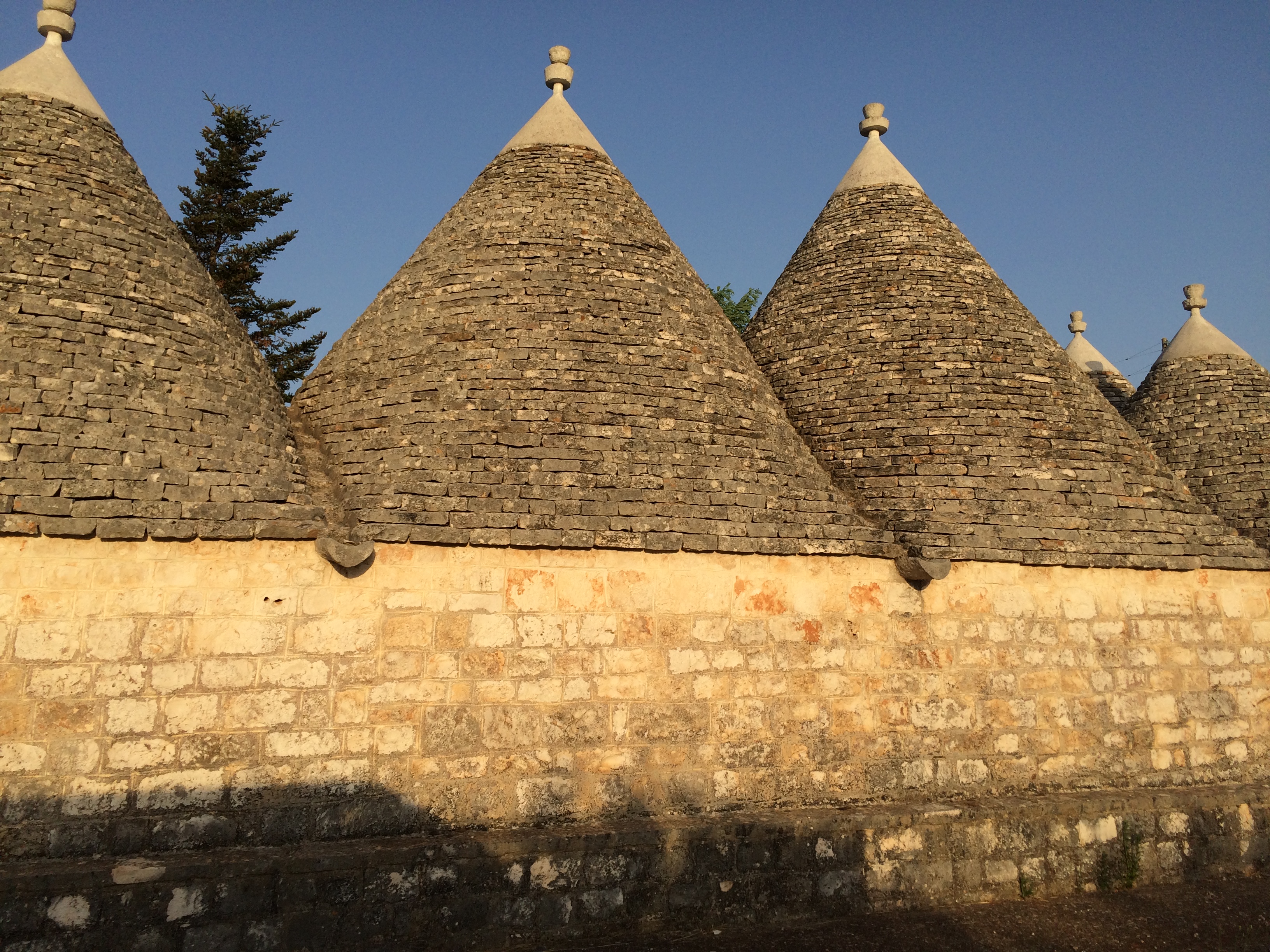
Alberobello is a World Heritage site. Its famous trulli are dry stone huts with conical roofs which can be seen all around this part of Puglia, where they litter the landscape and look quite distinctive. The walls are very thick and they were usually built in groups of up to (and never more than) five , with interconnecting doors. Originally designed for agricultural workers, storage and animal stock they’ve now been incorporated into larger dwellings. Some trulli have signs inscribed on their roofs which denote the stonemason who built them. It was a little disappointing to find that Alberobello itself had been turned into a little theme-park for tourists with everything in it designed to cater for tourists and little sign of an authentic living, breathing village. Many houses had signs inviting people to come inside to see what an authentic old trullo looks like indoors, only to find that it was yet another gift and souvenir shop. It’s of course hypocrisy of the highest order to say this, but one thing we found a bit depressing on this journey was the extent to which anything or place which is of interest being repackaged and served up to the visitor by the tourist industry before you have a chance to discover it for yourself, as would have been the case perhaps not so long ago.
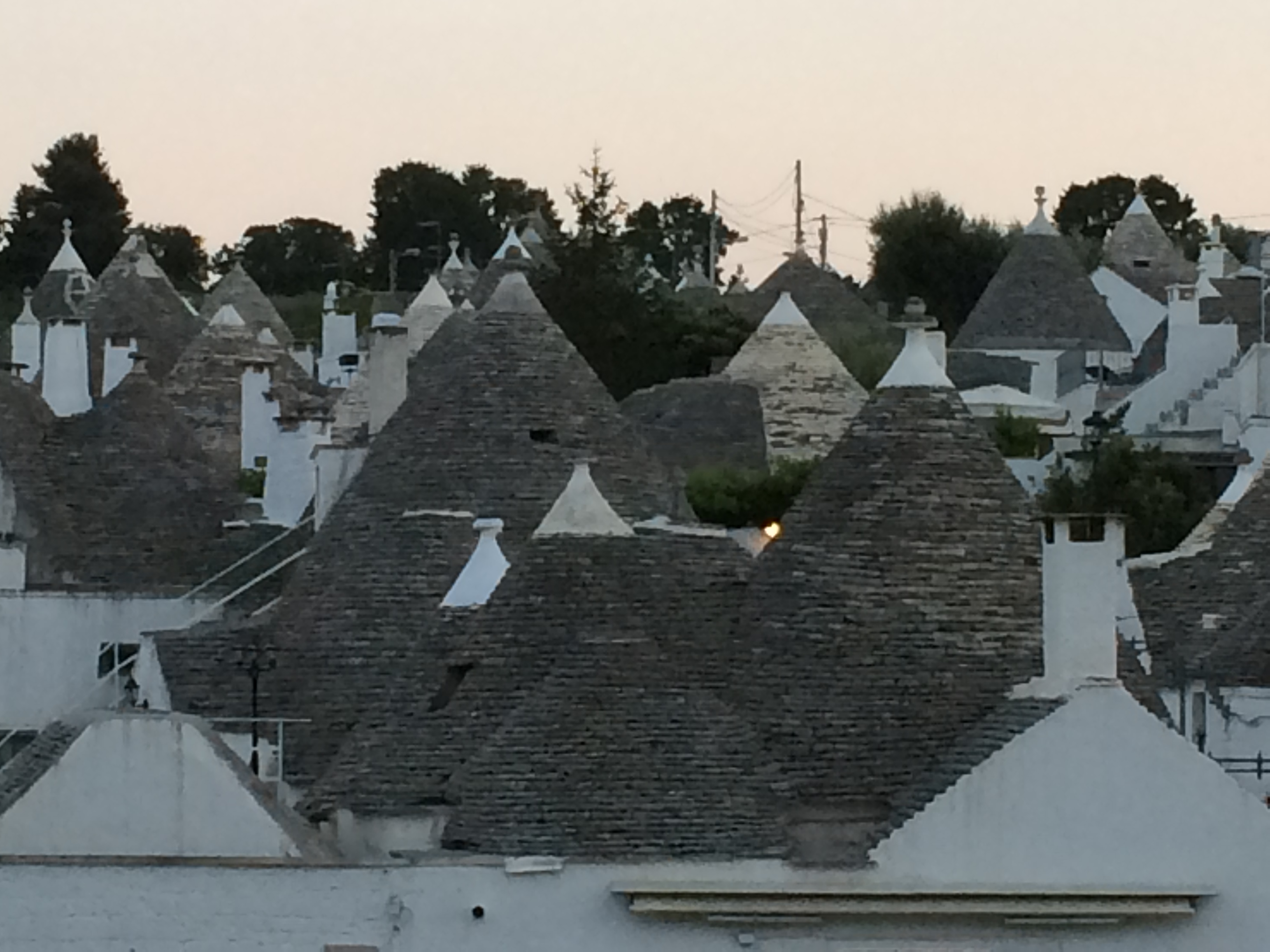
Alberobello village – a World Heritage Site, but a little too touristic.
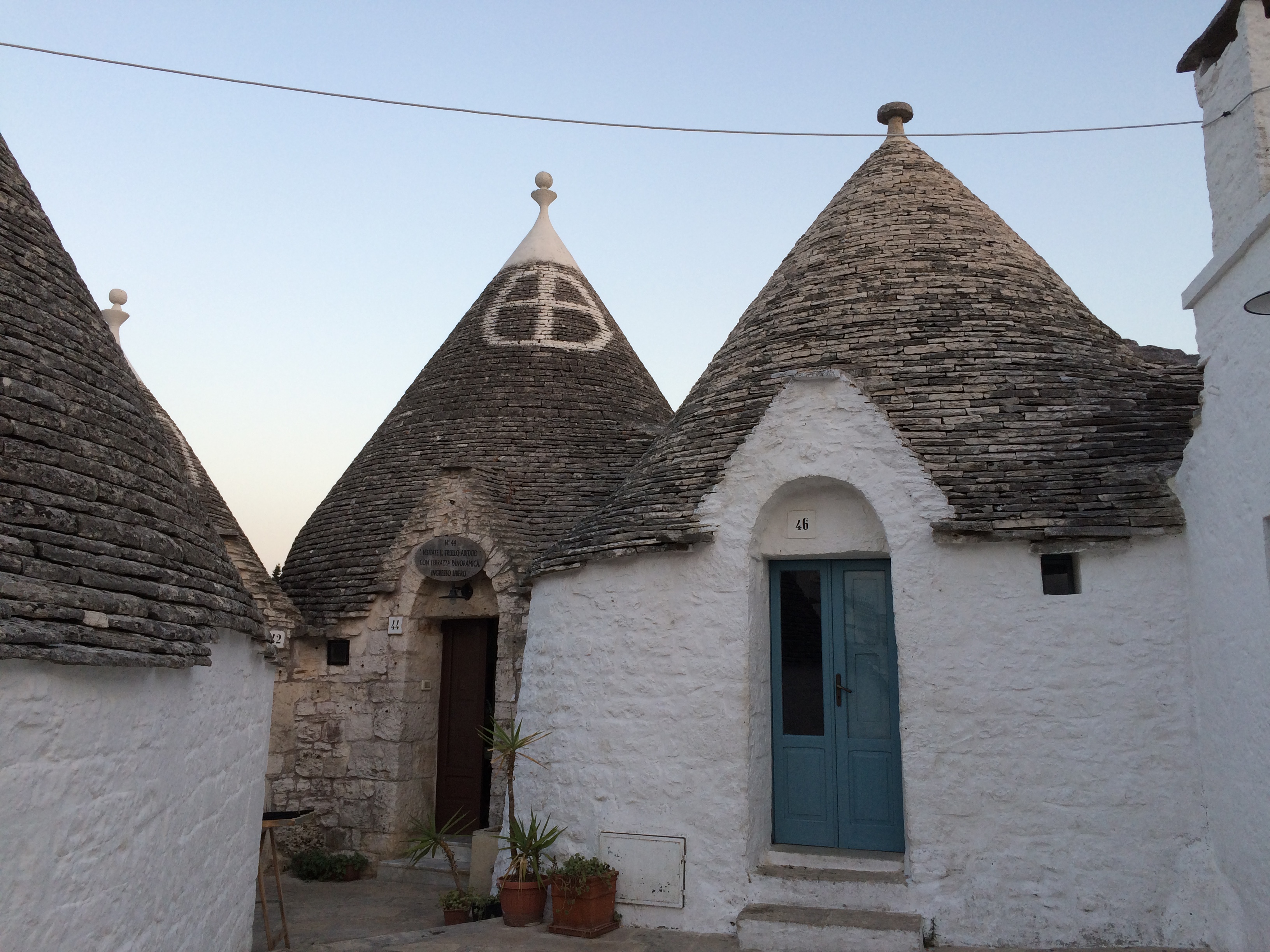
Some trulli have signs on the roofs denoting the architect, though it’s also claimed they have more ancient origins.
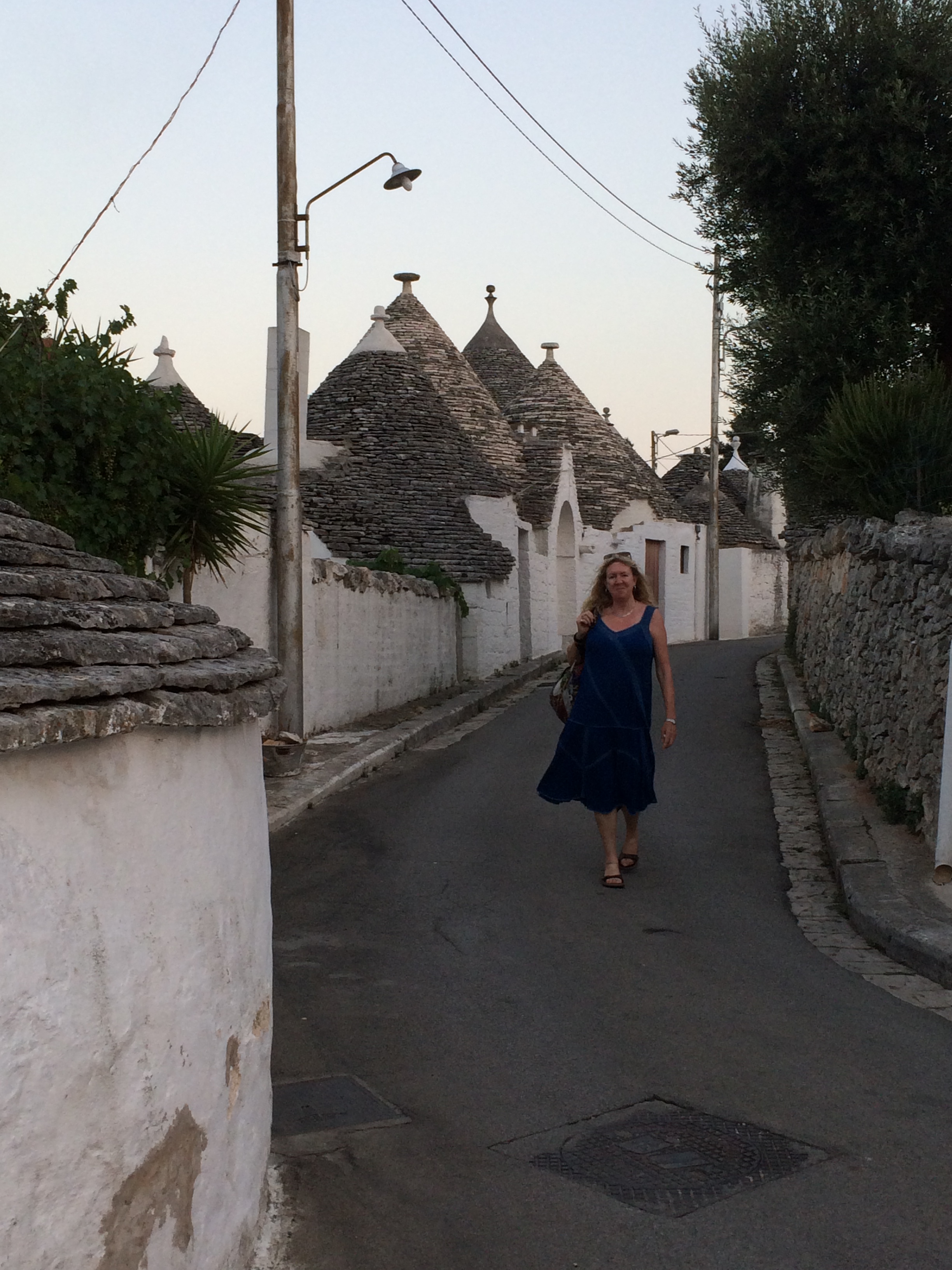
Judith in Alberobello.
The Camping dei Trulli, catering mainly for Italian campers was lovely if a touch noisy though this seems to be a common feature of Italian campsites at this time of year and from as early as 10am a large loudspeaker at the swimming pool would blare out Italian rap (!). The pool was a decent size though and a separate lane had been cordoned off for lap-swimmers, a very unusual and highly-appreciated feature – though children clearly neither understand nor respect the concept and swimming laps can easily turn into giving demos of different strokes or having pretend races with assorted kids who wander into the lane!
It was expertly managed by Connie who was not only friendly, helpful and charming the whole time but also very knowledgeable about the history of Puglia. At one point Flavio found her in animated conversation with another local figure about Frederick II and they were both agreed he was right to be considered the most gifted and extraordinary of the medieval Roman Emperors. He spoke many languages and was a great diplomatist. Through his early years in Sicily, he knew Arabic and all the Arab rulers. He was the only one to manage to bring back from Jerusalem the keys to the Holy Sepulcher without spilling a drop of blood – when he went to Rome to present them to the Pope, he was duly ex-communicated for his trouble, they said laughing!
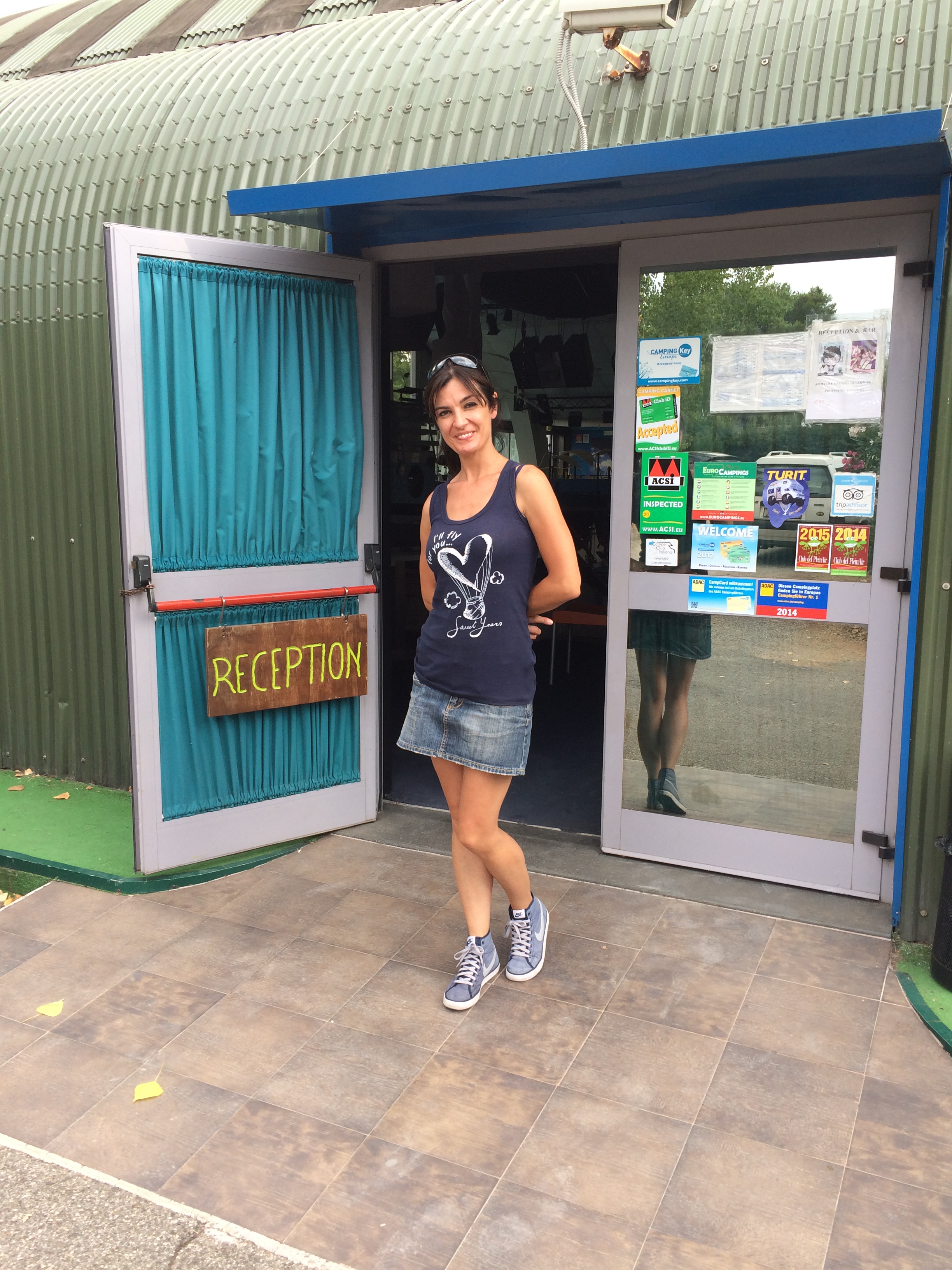
Connie, the very helpful, efficient and knowledgeable manager of the ‘Camping dei Trulli’.
We became friends with Guillaume and Fabienne, a French couple who kindly invited us to visit them in Paris on our way back. It started when Guillaume reversed their car into a tree soon after they arrived and the back window shattered. We went to their aid with a dustpan and brush saying we admired their their calm and equanimity, to which they joked that they had ‘found their arberobello’.

Guillame, Fabienne, Julos and Salome who we got to know after they ‘found their arbero bello’!

The ‘arbero bello’ at the Camping dei Trulli!
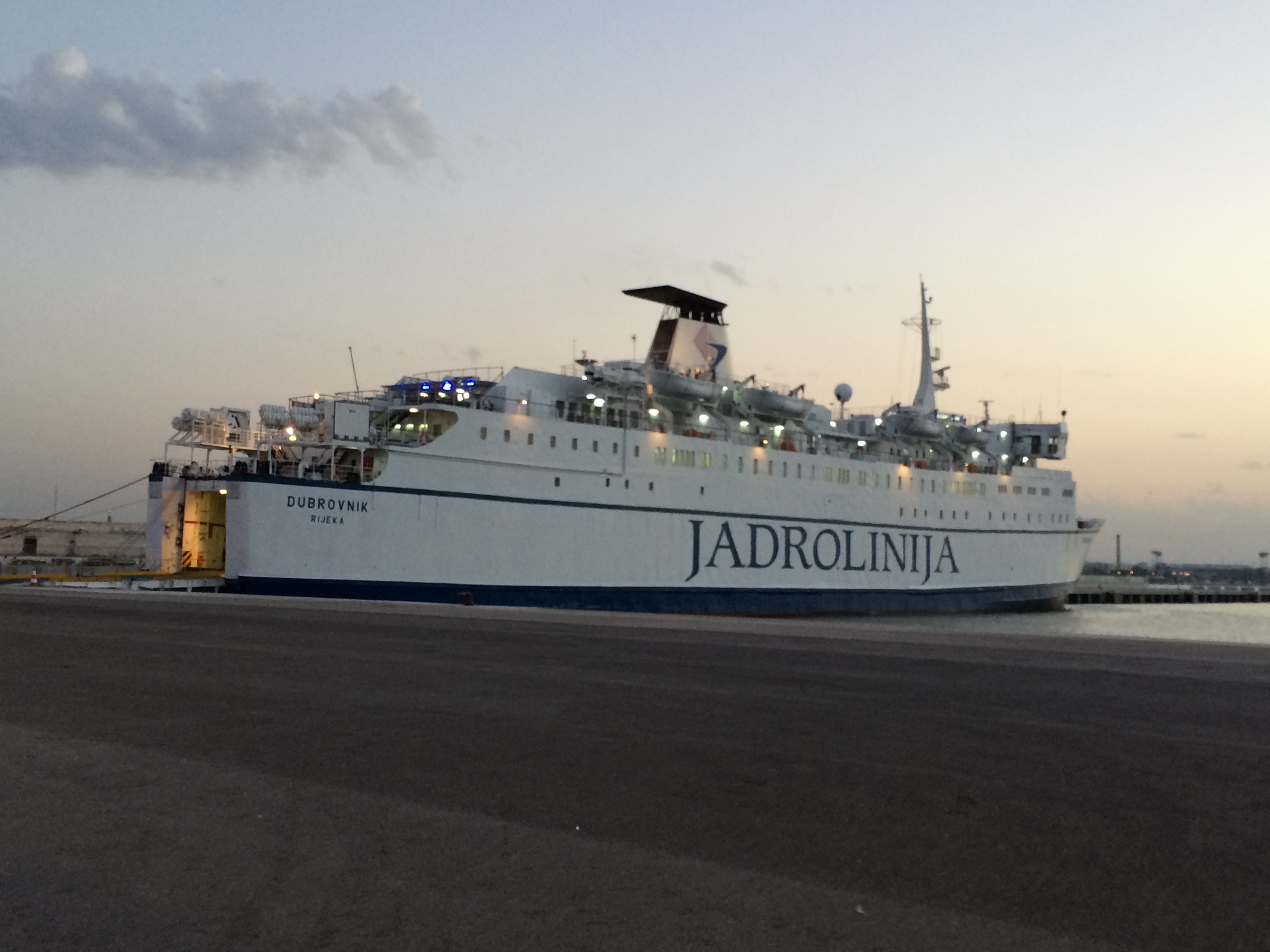
We drove in the late afternoon on the Sunday back to Bari to catch the ferry to Dubrovnik. We were both sad to be leaving Italy but will be taking the ferry back to Ancona from Greece on 18th August so it is a brief parting.
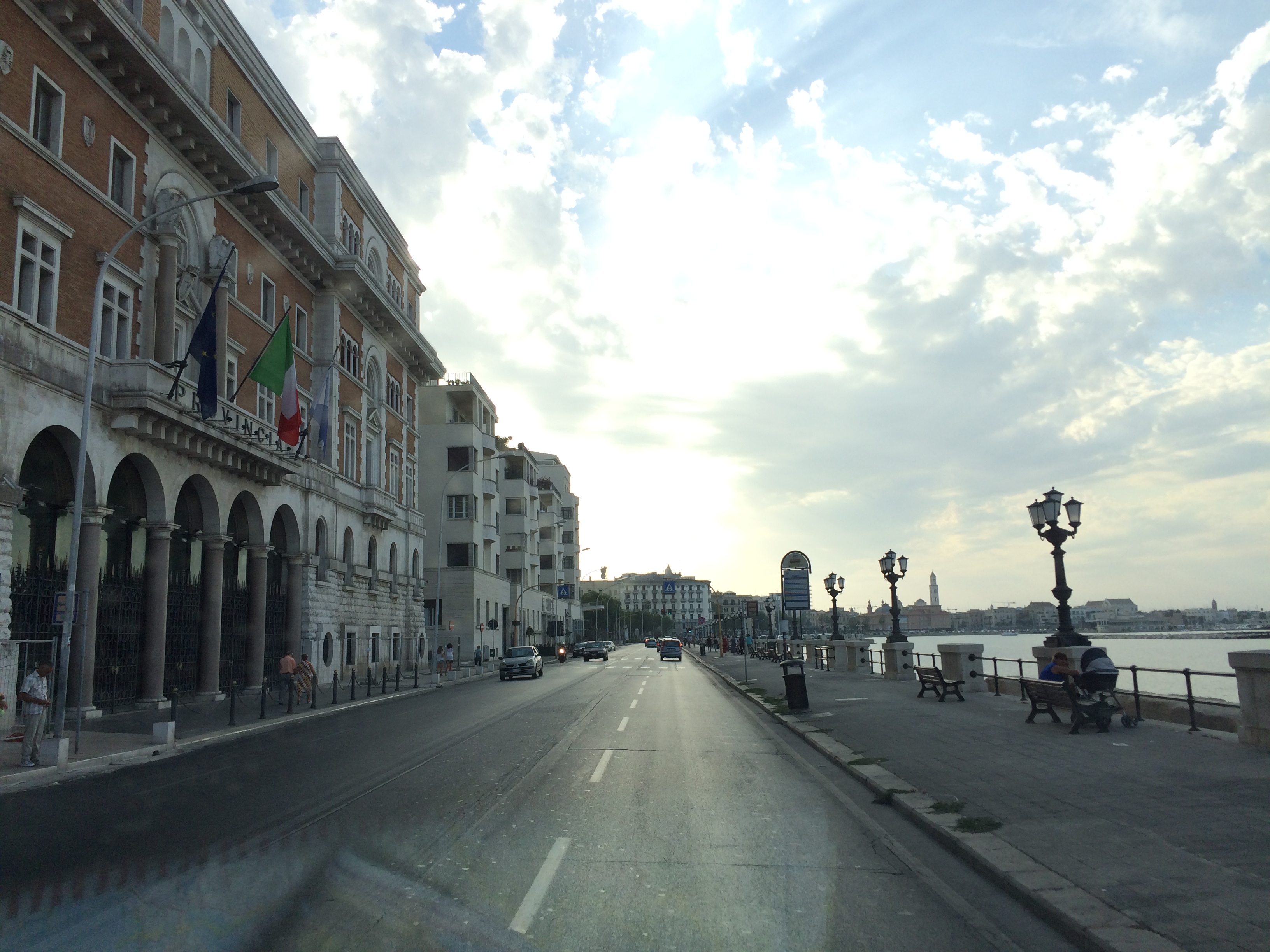
Back in Bari.

Before boarding the Croatian ferry for the overnight crossing to Dubrovnik.
 Travels with our van