
We hadn’t planned to come through Albania but it was quite exciting being in what was until not long ago one of the last bastions of Soviet-style communism (though it inclined more towards Maoism).
We entered Albania with some trepidation after reading reports of appalling road conditions and dare-devil drivers but were pleasantly surprised by both the good roads (apparently built by the Italians) and the driving. Whoever wrote such alarming reports had obviously never been to Cairo!
Until the demise of the communist system in 1991/2 there had only been c600 cars on the roads, all belonging to party officials. The communist regime which came to power in 1947 banned religion, long hair, beards and Levi’s amongst other things. They did however introduce many improvements. Land reforms led to Albania becoming self-sufficient in food. Educational reforms meant that by 1955 adult literacy had been eliminated.
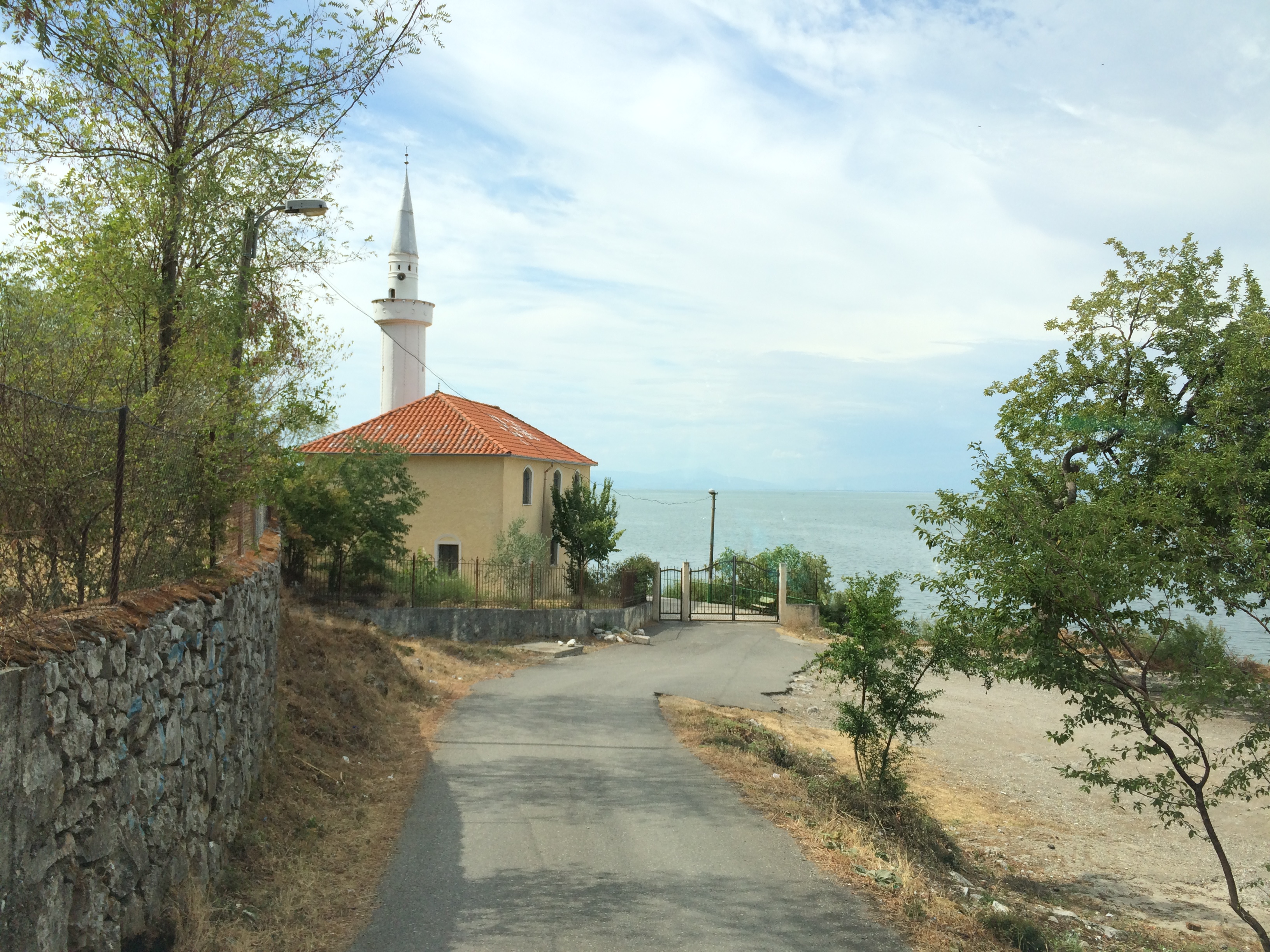
Albania now seems to be at pains to distance itself from its recent communist past while still retaining its predominantly secular character.
And a universal healthcare service. (Apart from that, what did Communism do for us..? :)) Once the regime fell much of the country’s wealth was invested in pyramid banking schemes which collapsed during the late 90s leading to mass protests. Parliamentary democracy was established in 1998 but old habits die hard and the main political parties are reported to employ the system of patronage that existed before for party members, so every four years when the government changes so do the beneficiaries of the patronage. This corrupt practice we were told was the main impediment to continuity and consistency in government policies.
Shortly after crossing the border we stopped for something to eat in a little place called ‘Zusi’ on the confluence of the Buna and Drina rivers. It was a charming little restaurant-cum-resthouse run by a lovely lady called Stella. She had no English or Italian at all but we somehow managed to communicate and had a sort of Albanian lesson thrown in for free with our very tasty and inexpensive meal. She was very keen that we try the fresh fish as well as what seemed to be a staple dish in Albania – Taz – a kind of tagine made of lamb, cottage cheese and egg. After the meal, Stella brought out all her pet tortoises to show Judith and with an endearing child-like innocence, insisted that she sit with her to play with them on the lawn and, like two little girls, they did just that. All in all, we had a busy and fun time and Stella did her best to retain us as long as possible – she seemed reluctant to let us go!
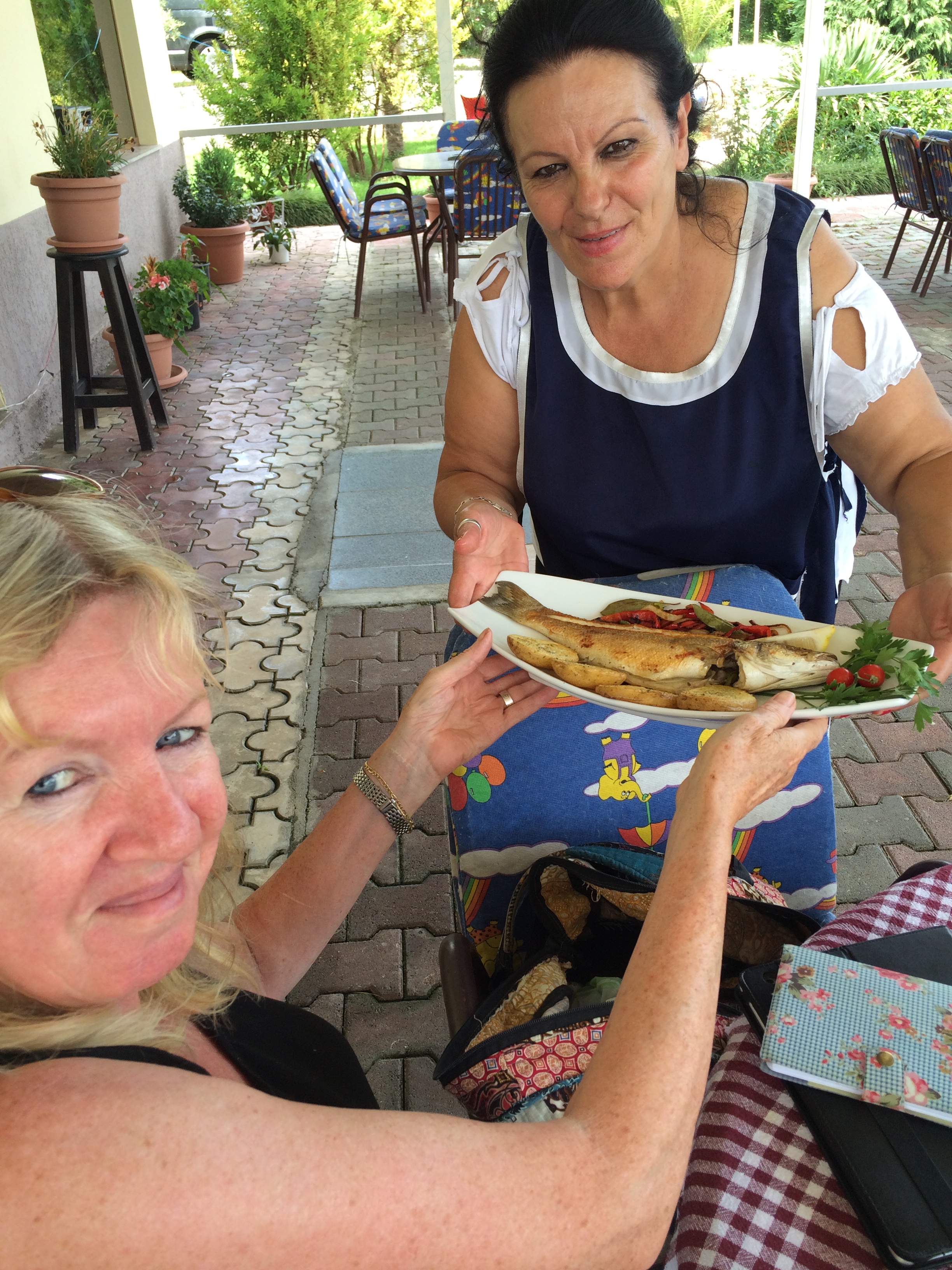
The lovely Stella lovingly serving us our lunch at her charming little restaurant in the village of Zusi close to the border.
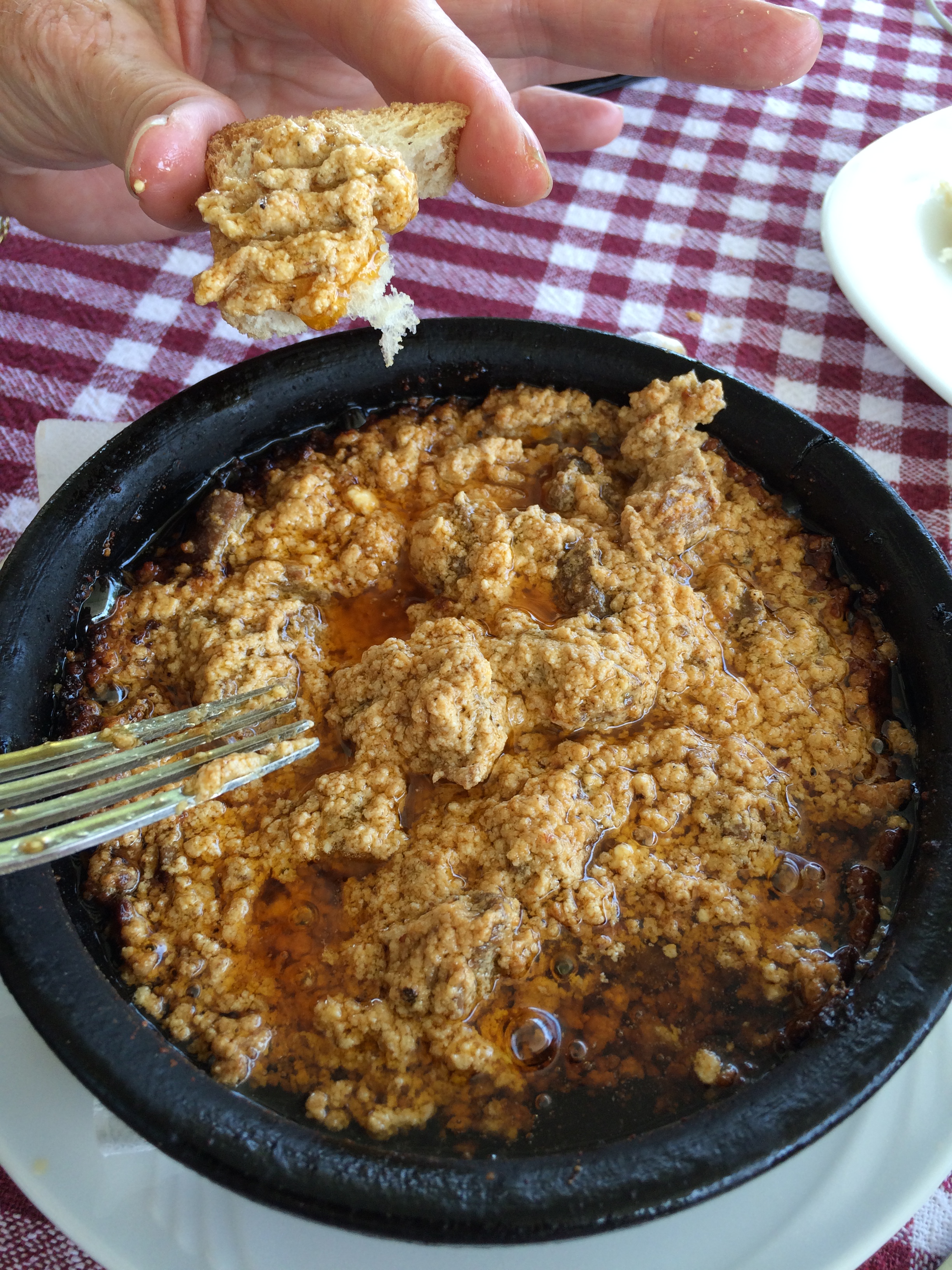
The tasty staple dish of ‘Taz’ – sort of Albanian comfort food made of cooked cottage cheese, lamb and egg to scoop us with bread.
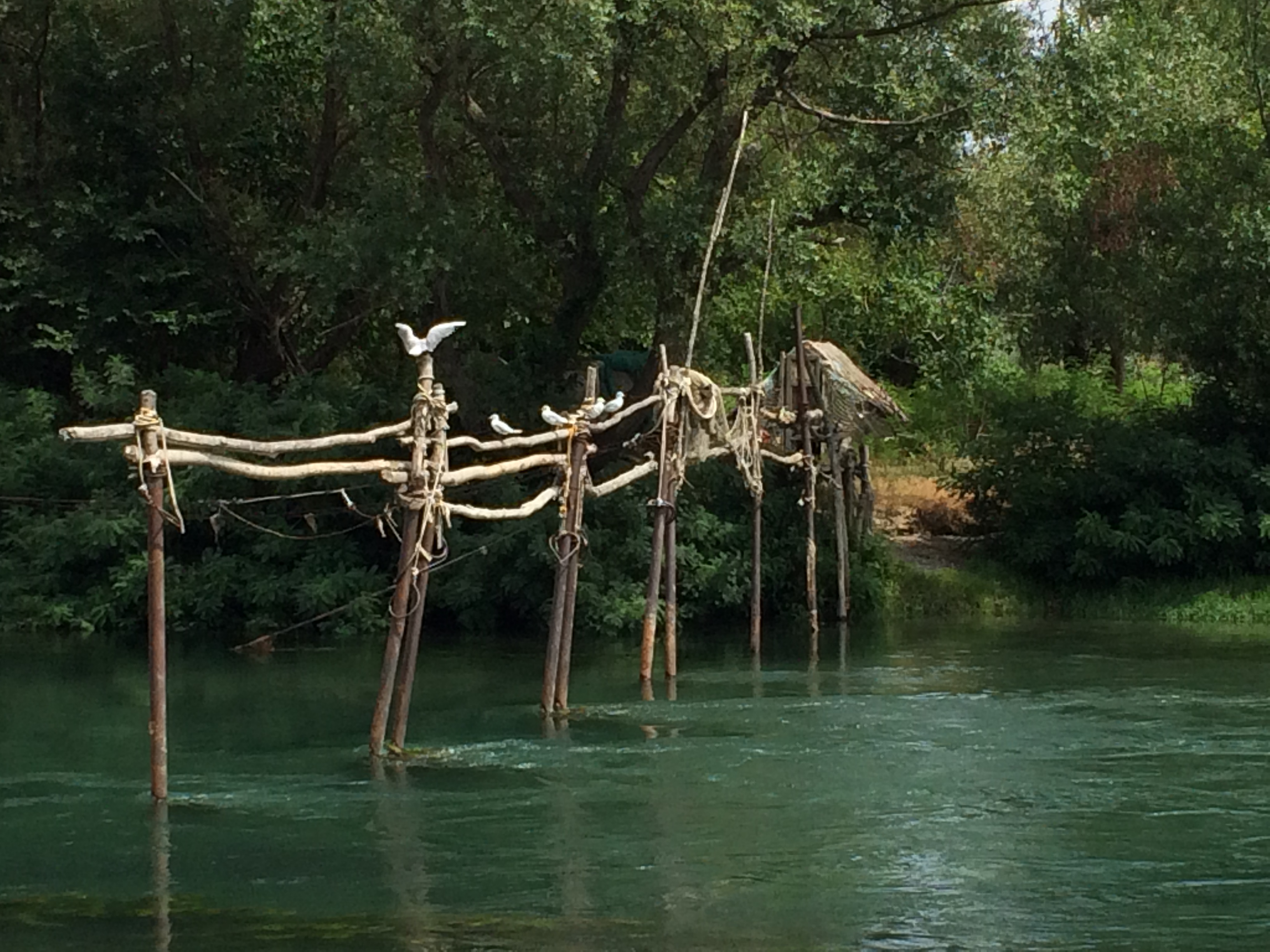
Stella’s place lies on the banks of the confluence of the Buna and Drina rivers. Again, a similar fishing system consisting of a primitive wooden structure could be seen across from the restaurant.
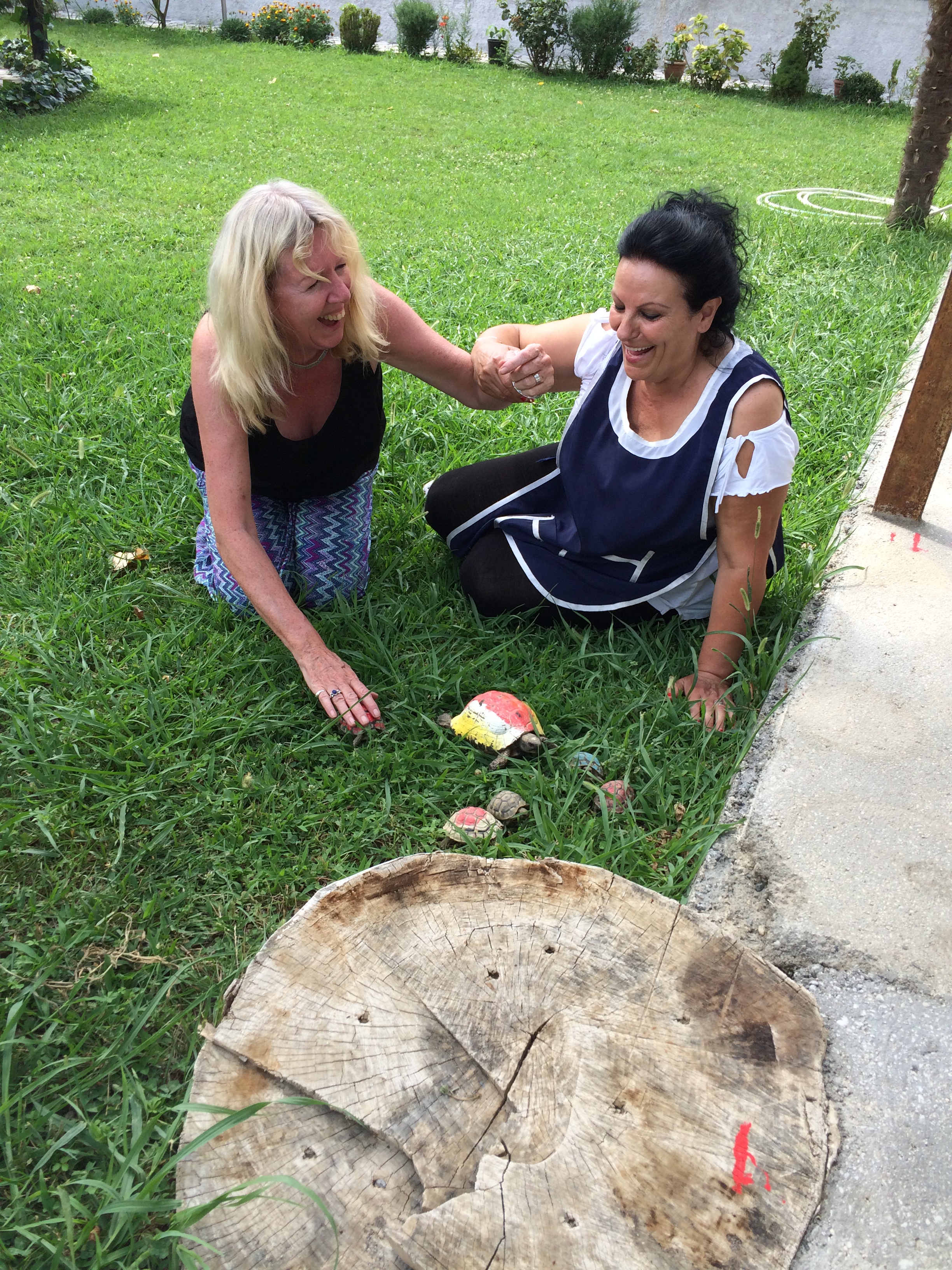
After lunch, Stella deploys tactics to keep us longer – like bringing out her tortoises for Judith to play with!
Nicely satiated and armed with the word ‘thank you’ (faliminderit) we set off for Tirane. We had trouble with the signs though and taking a wrong turn on the outskirts of the key northern town of Shkodeir we drove along a very narrow road by the coast. We asked an old woman if we were on the road to Tirane and she shook her head. One thing we had read was that for yes Albanians shake their heads and for no they nod, so thinking she meant yes we continued until the road suddenly came to an abrupt end. Later we discovered that some Albanians now follow the Western nods and shakes, very confusing. The hour or so it took to get back wasn’t wasted however as the road took us along the banks of a remote and stunningly beautiful large lake. Here and there, the odd locals could be seen taking a dip or enjoying sitting by the lake but it was mostly completely unspoilt and mesmerizingly primitive – on 3 or 4 occasions we were forced to brake to let a herd of sheep or cows decide which way they wanted to go as they nonchalantly crossed the road.
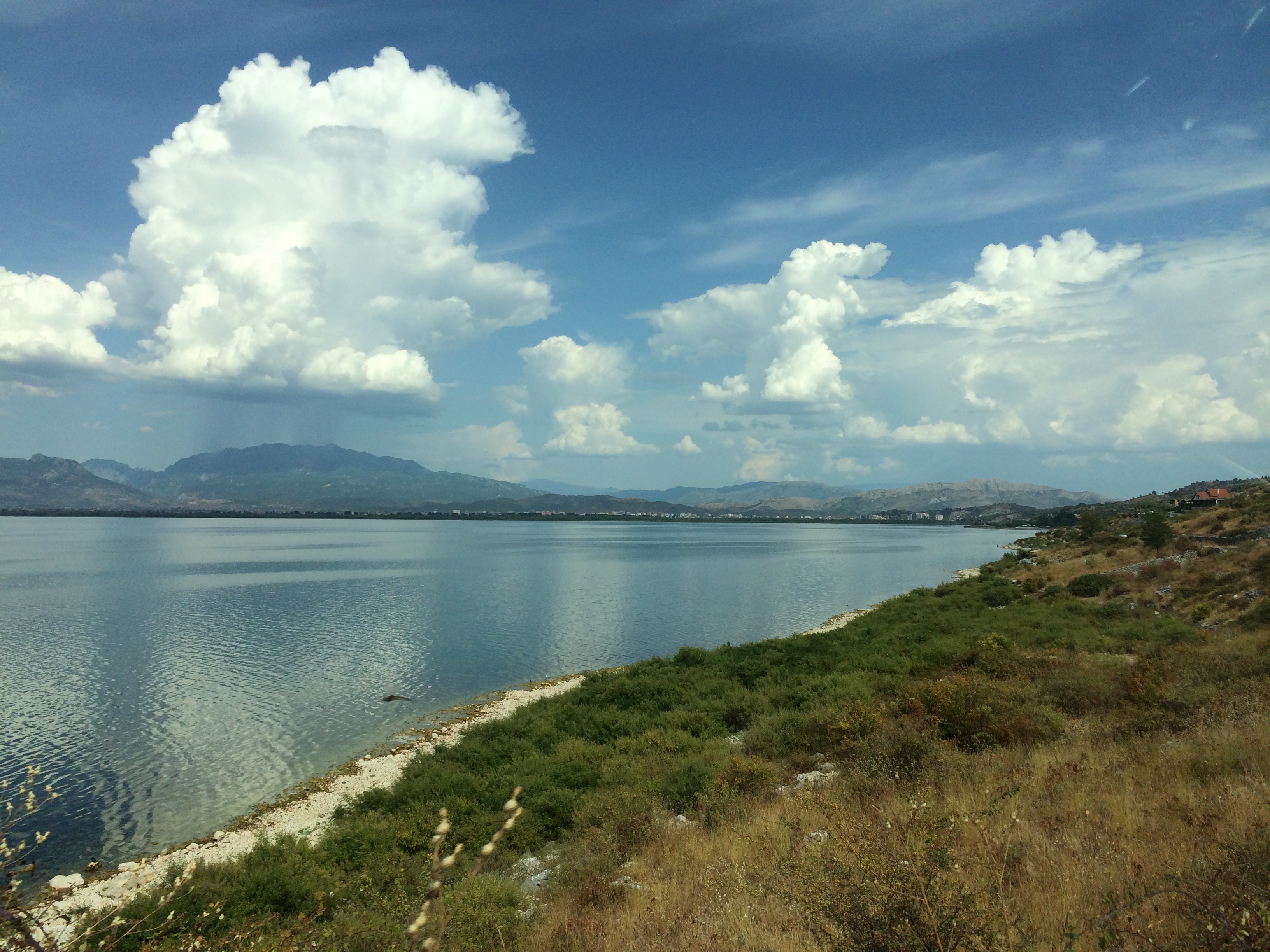
The stunningly beautiful lake near Shkodeir we accidentally discovered.

The lake near Shkodeir – mesmerizingly beautiful.
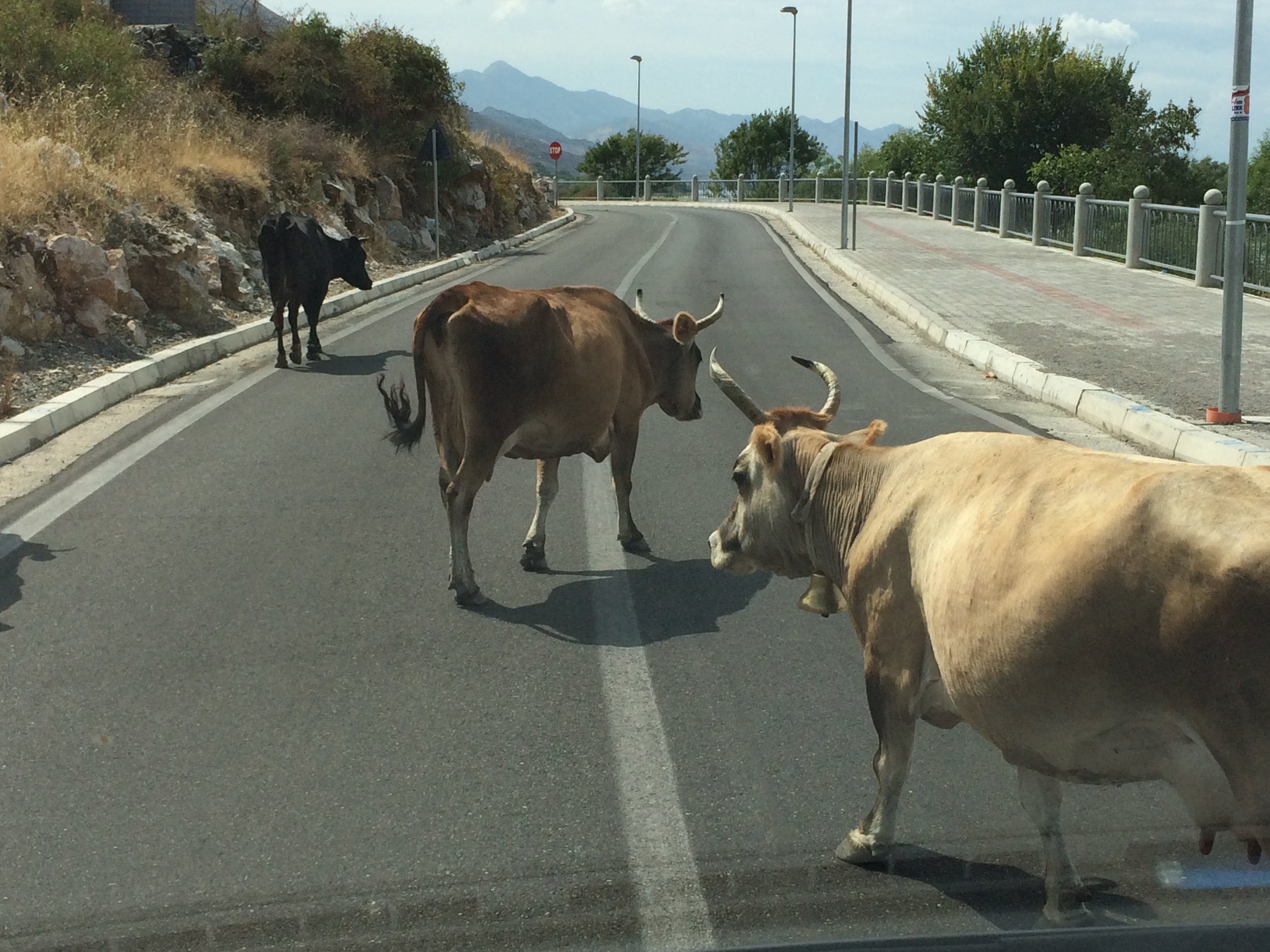
..and cows wandering across the road.
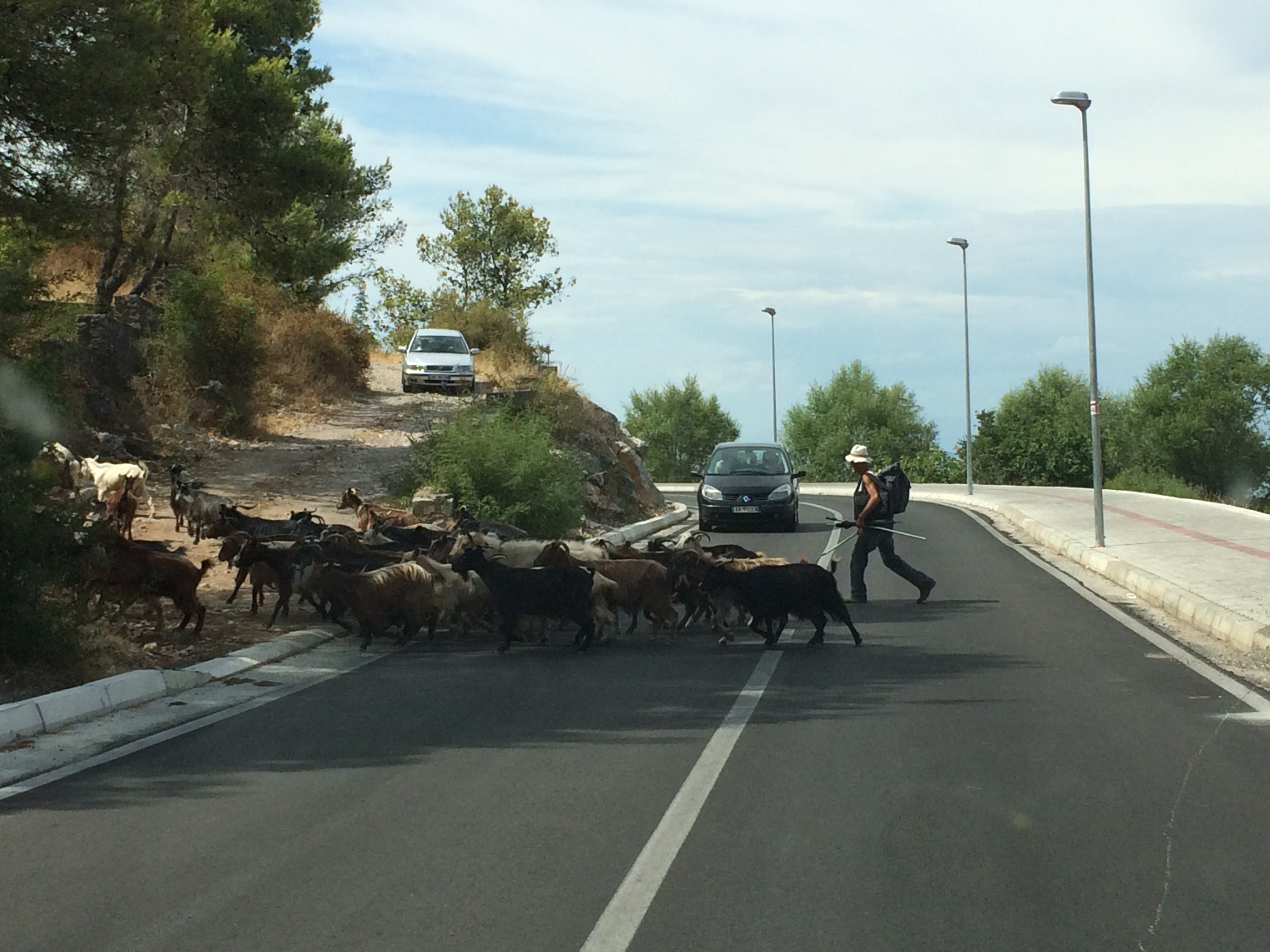
Sheep crossing..
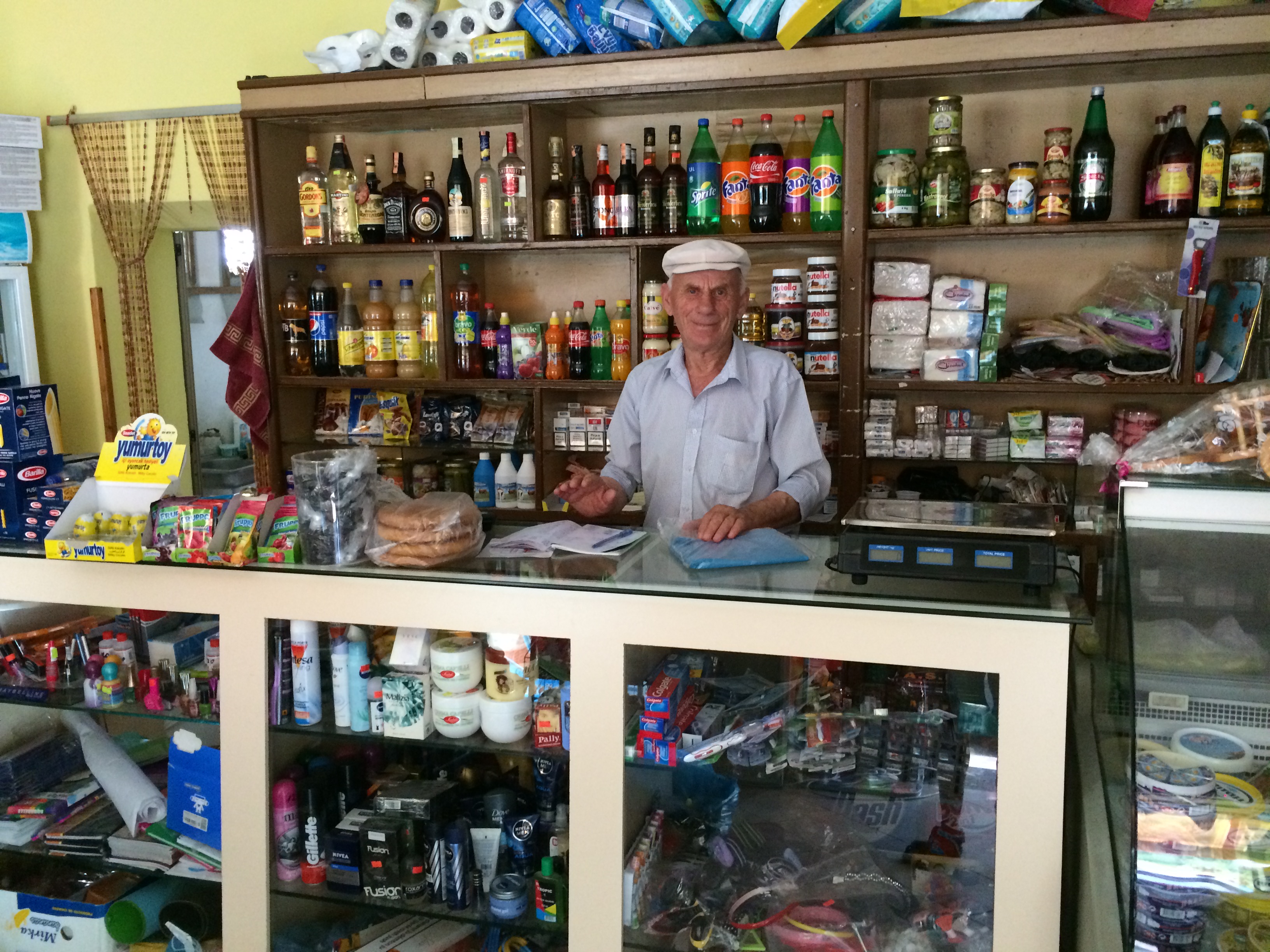
A grocery store we stopped at to ask the way.

S
We eventually did get onto the right road and had an uneventful journey to the capital. We marvelled at the number of petrol garages along the road along with the number of shrines, testament to those killed in road accidents.
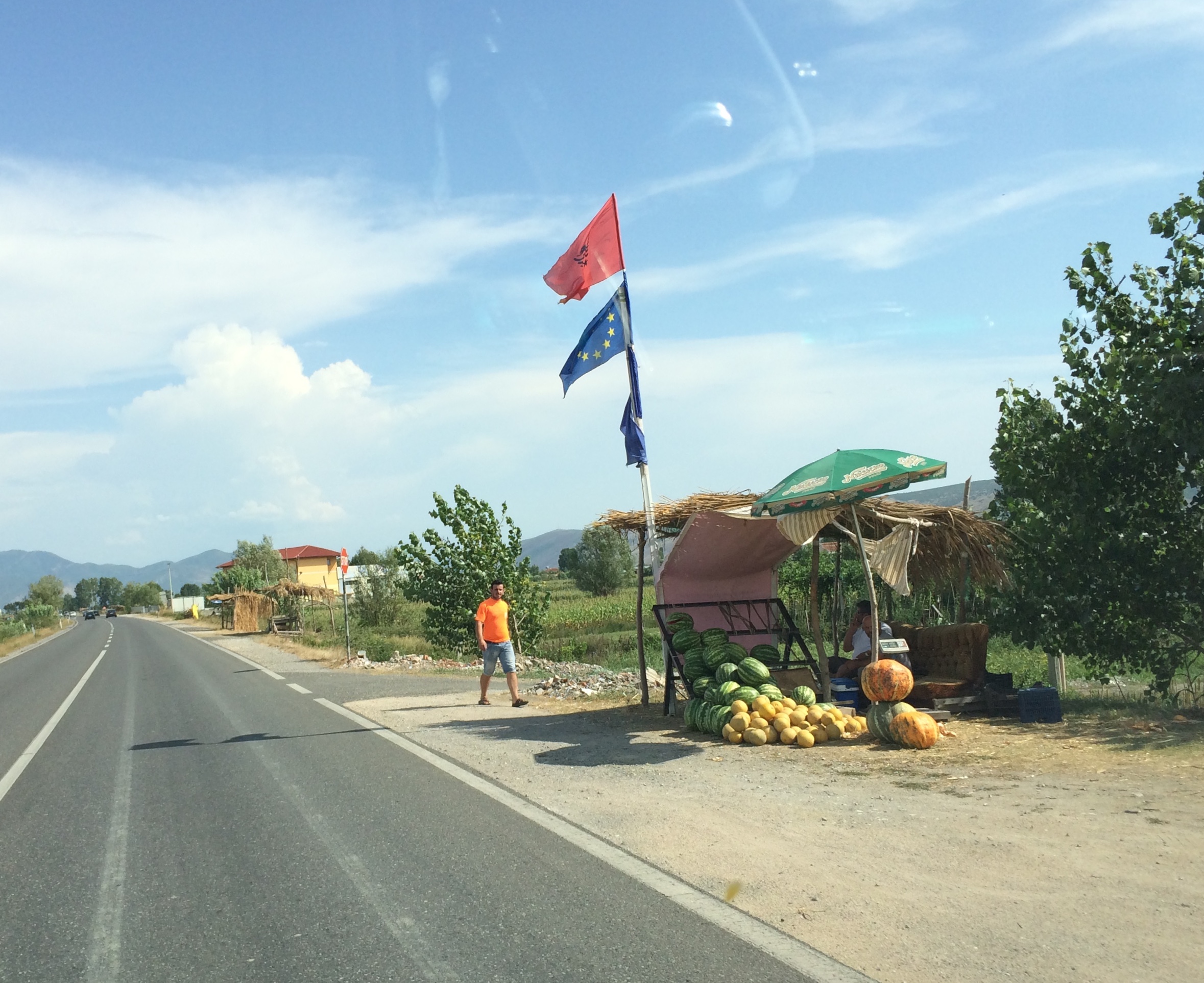
The road to Tirane – the EU flag often fluttering next to the Albanian flag pointing to aspirations for deeper integration with Europe.
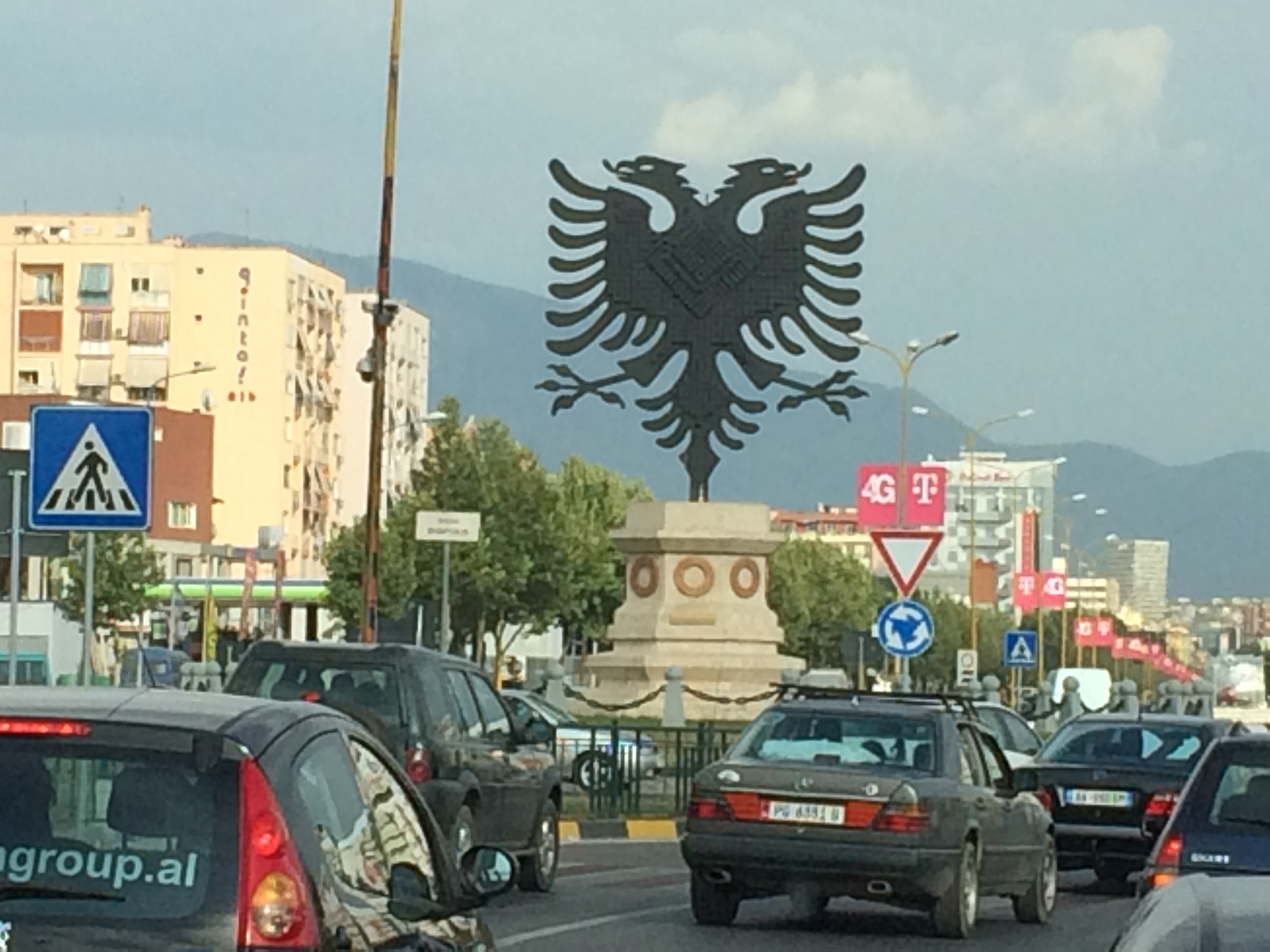
Arrival in Tirana.
First impressions on arriving in Tirane was of a modern, well organised city. We headed straight to the tourist information and got maps and details of a hotel. Whilst looking at the maps we were kindly helped by Claudi, a Swiss man who has lived in Albanian for 18 years, is married to an Albanian, worked first with an aid agency supporting street children but now as a tour guide and speaks fluent Albanian. After checking in to our hotel, we went with Claudi for supper at a restaurant that specialised in traditional Albanian food, which was excellent and Albanian beer which was even better.
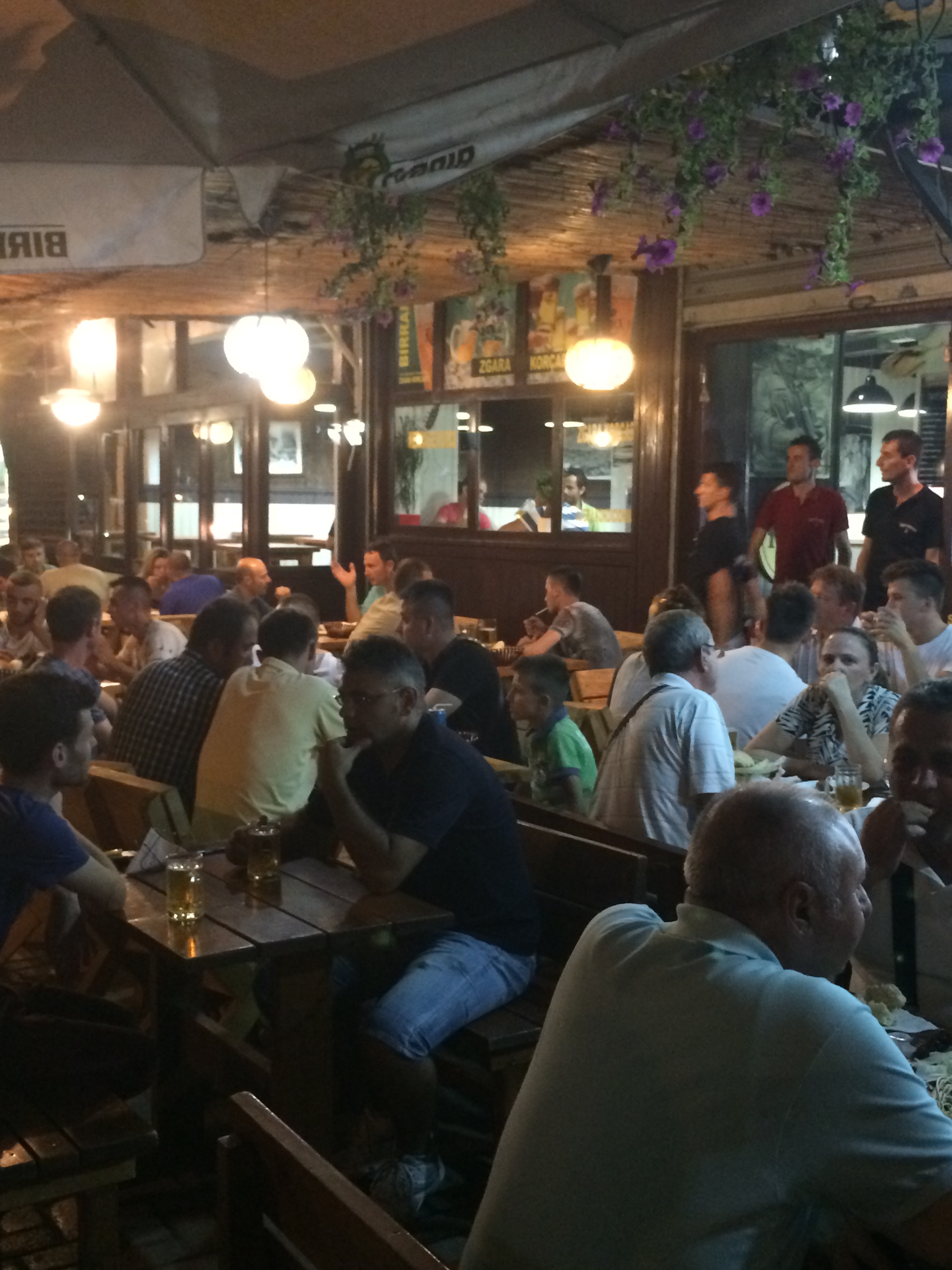
Tirana has a lively cafe culture with people seen drinking beer often even in the morning.
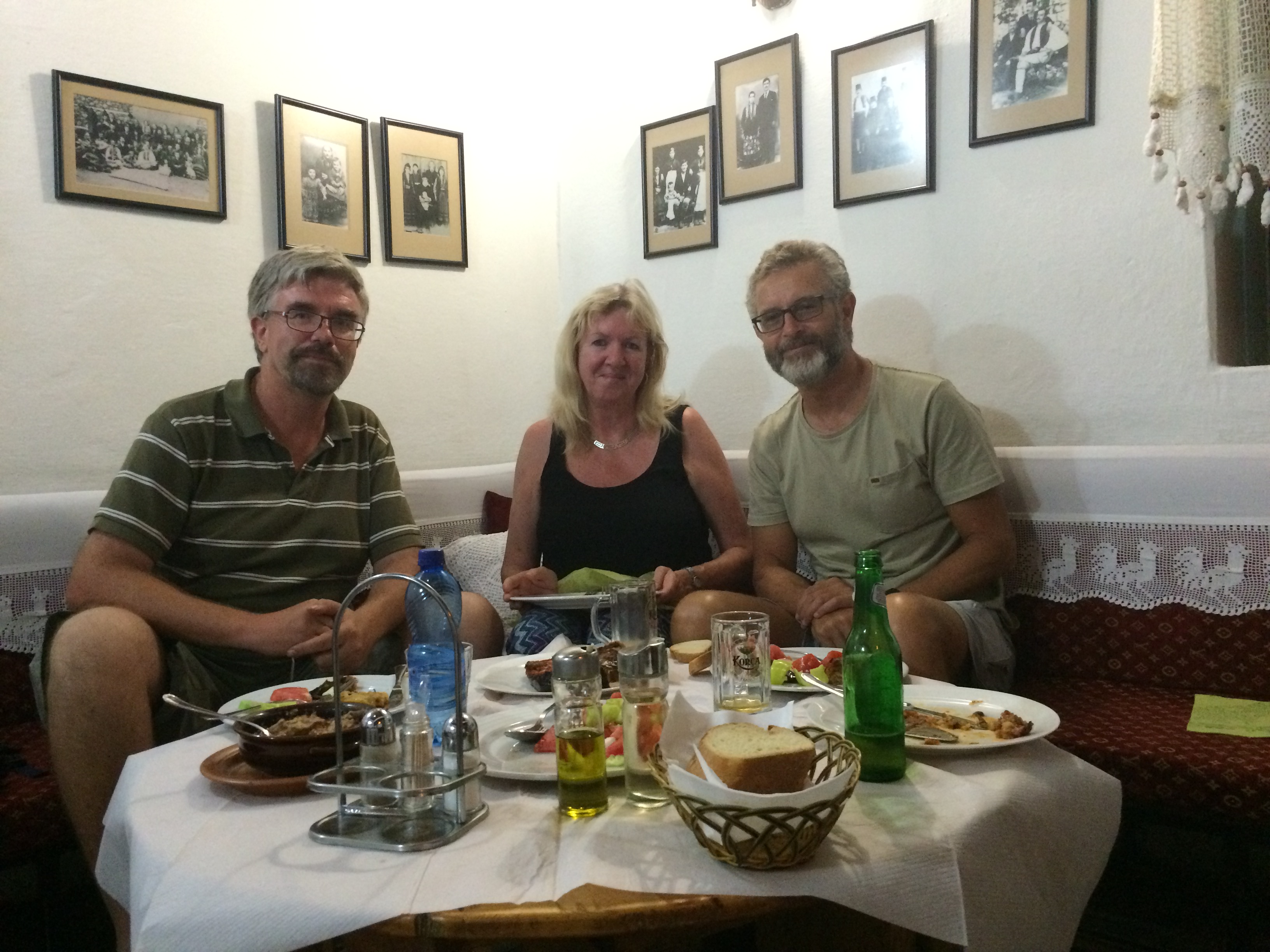
With Claudi who came to rescue us an was a brilliant guide and a fountain of knowledge on all things Albanian.
Claudi talked at length about Albania since the fall of communism which was fascinating and we learnt that :
– Albania is full of concrete bunkers that were built to defend Albania against foreign decadent invaders and which was really a ploy to keep the population insecure and dependent on the regime for protection. Debate is still raging about the future of the bunkers – should they be kept, utilised and transformed into useful edifices or destroyed as ugly reminders of a despotic old regime;
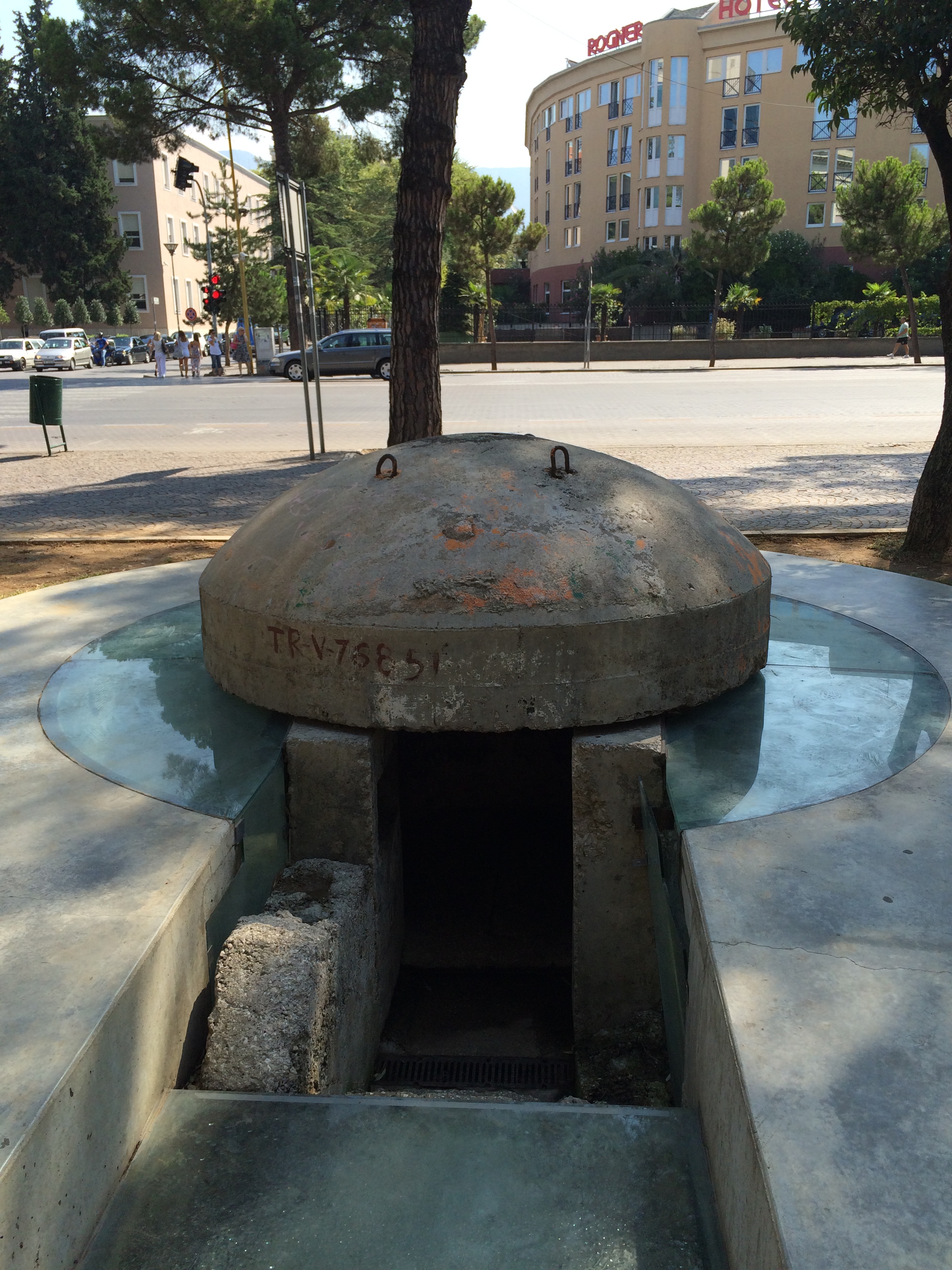
One of the thousands of bunkers dotting the country – a legacy of Enver Hoxa.

Another bunker on the road to Castrolezij in the south.
– Most Albanians spoke some Italian as, during the communist regime, to access news from outside Albania they had to tune their radios into Italy, the nearest place to receive a signal. Many homes had illegal ariels which went up at night time;
– Waste disposal was a serious problem (Albania’s most serious problem according to Claudi), particularly the flow of raw sewage into the sea;
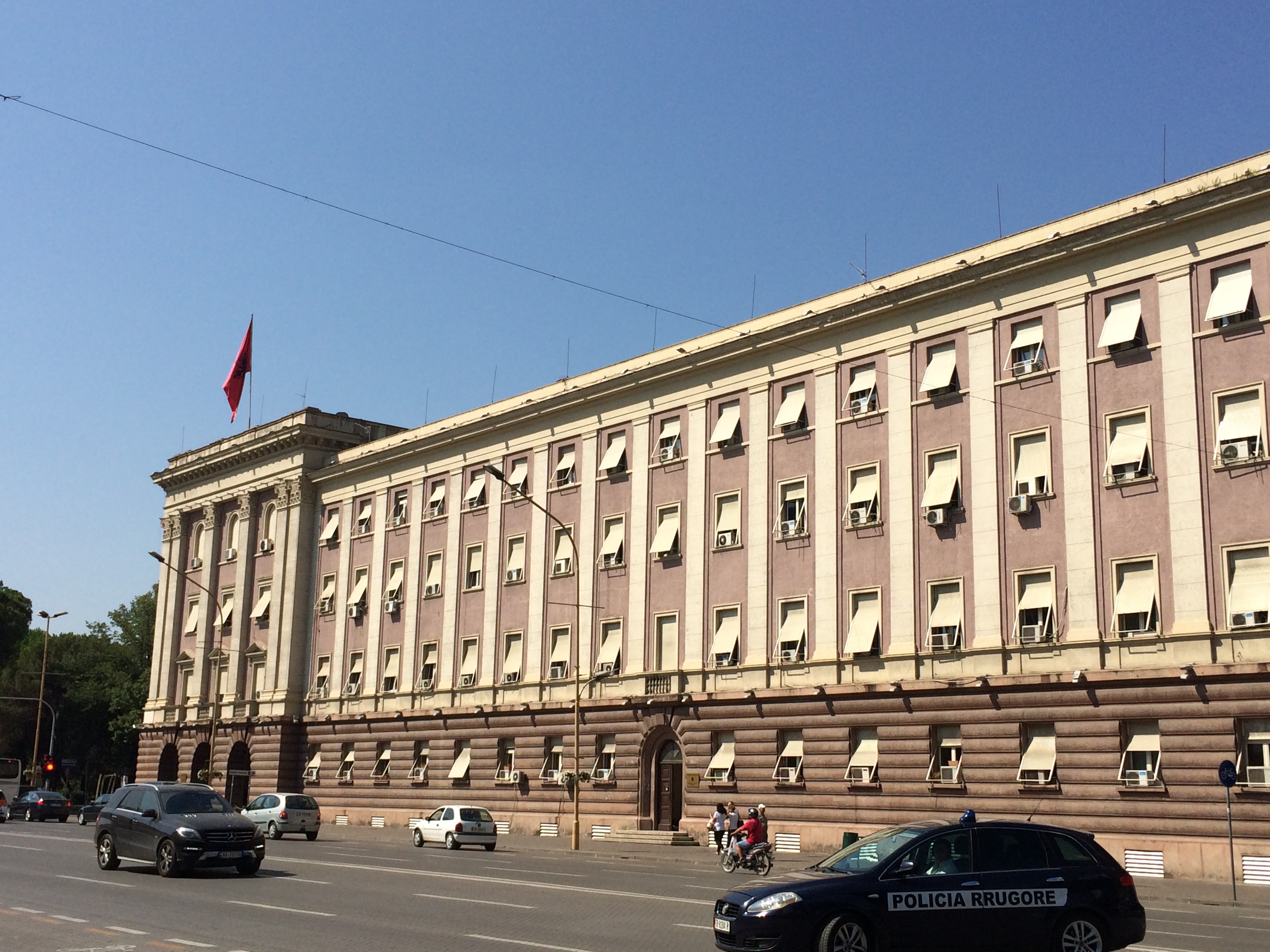
A governmental building in central Tirana.

A church in central Tirana.
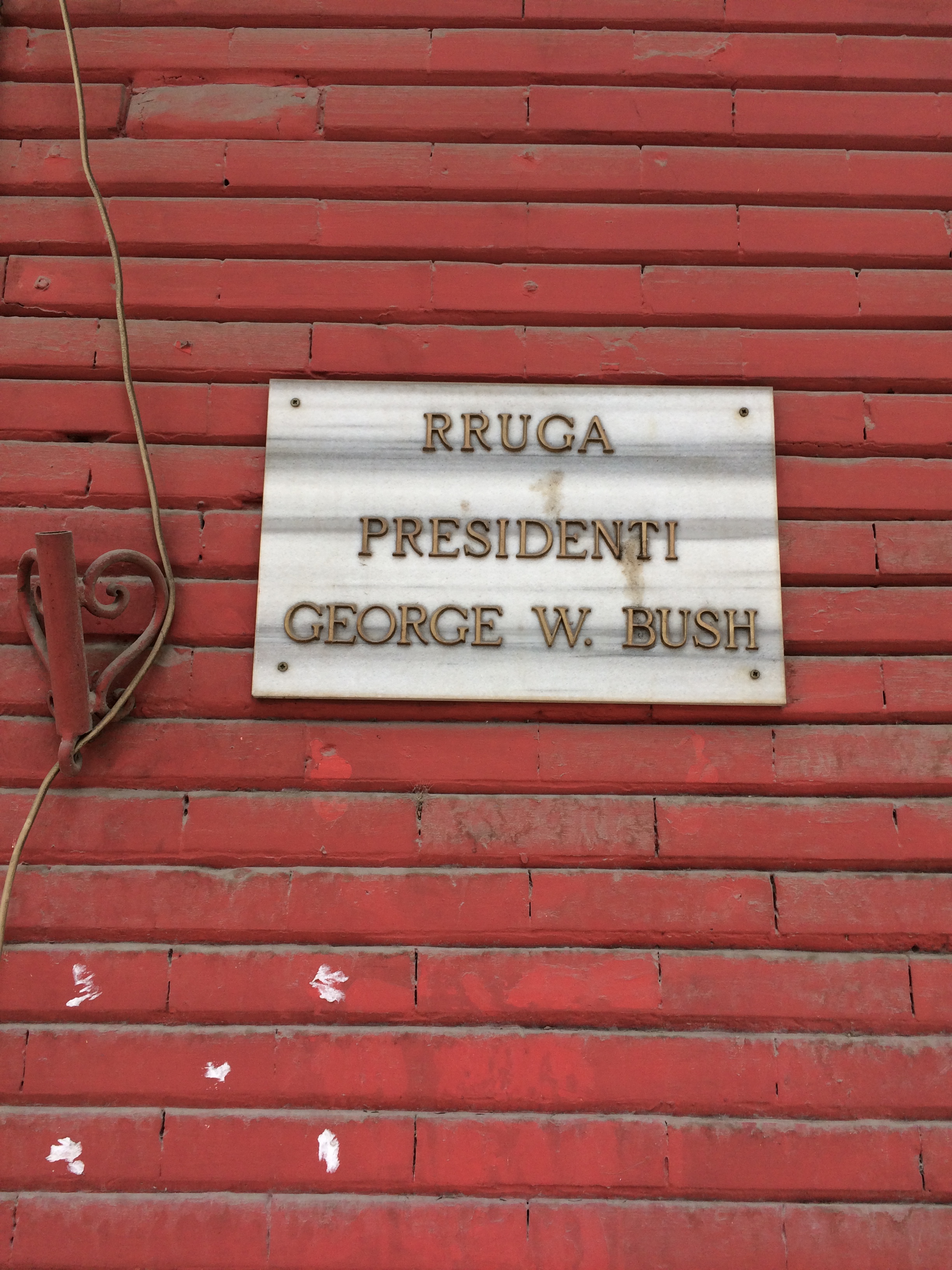
There’s even a George W Bush street in Tirana.
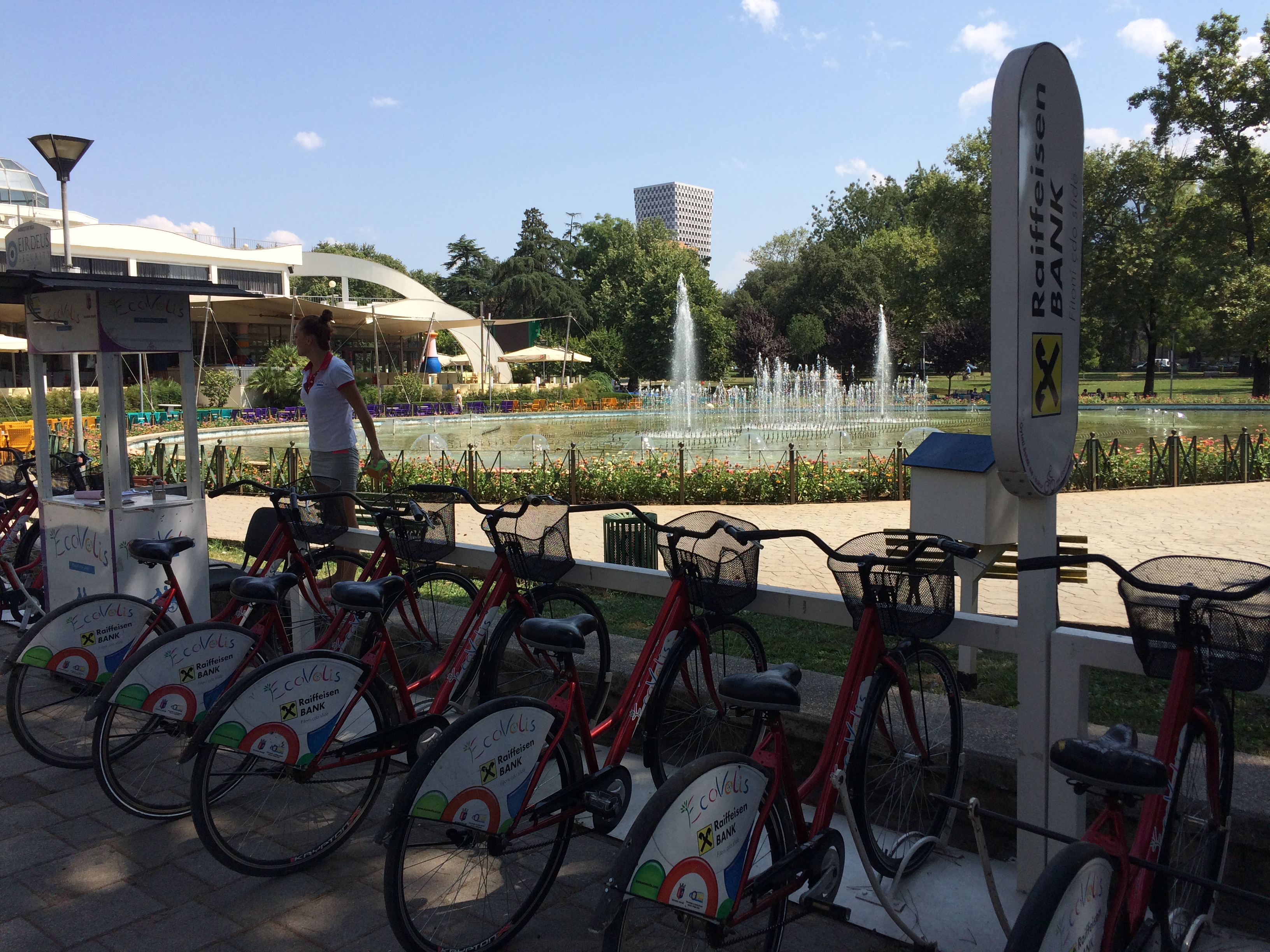
City bikes in Tirana.
– The most revered historical figure was Skanderberg or Iskander or Gjergj Kastrioti, the former Ottoman ruler of Albania who fought the Turks and defeated them in 13 attempted invasions to create an independent state;
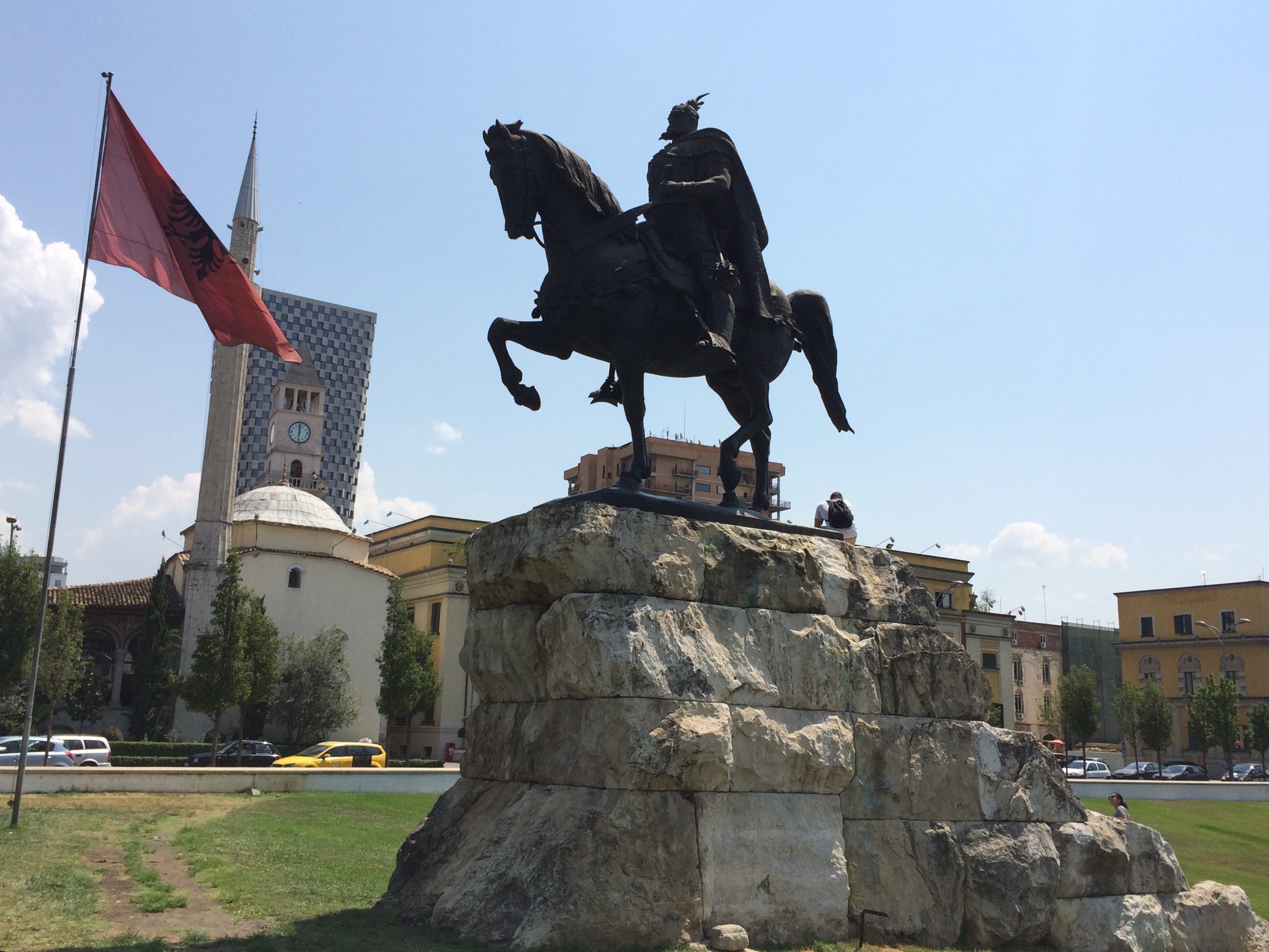
Albania’s hero – Skanderberg or Iskander or Gjergj Kastrioti who repelled repeated Turkish invasions and founded Albania as an independent state.
– Albanians are distancing themselves from both their Islamic and Communist past, maintaining their secular state and looking toward Western Europe;
– There aren’t very many old places of interest in Tirana. One of the oldest is the Et’hem Bey Mosque built in 1823 by Molla Bey, the grandson of Suleiman Pasha, closed under communist rule and re-opened as a house of worship in 1991 after 10,000 people dared to attend without permission from the authorities, an event which marked the rebirth of religious freedom in the country;
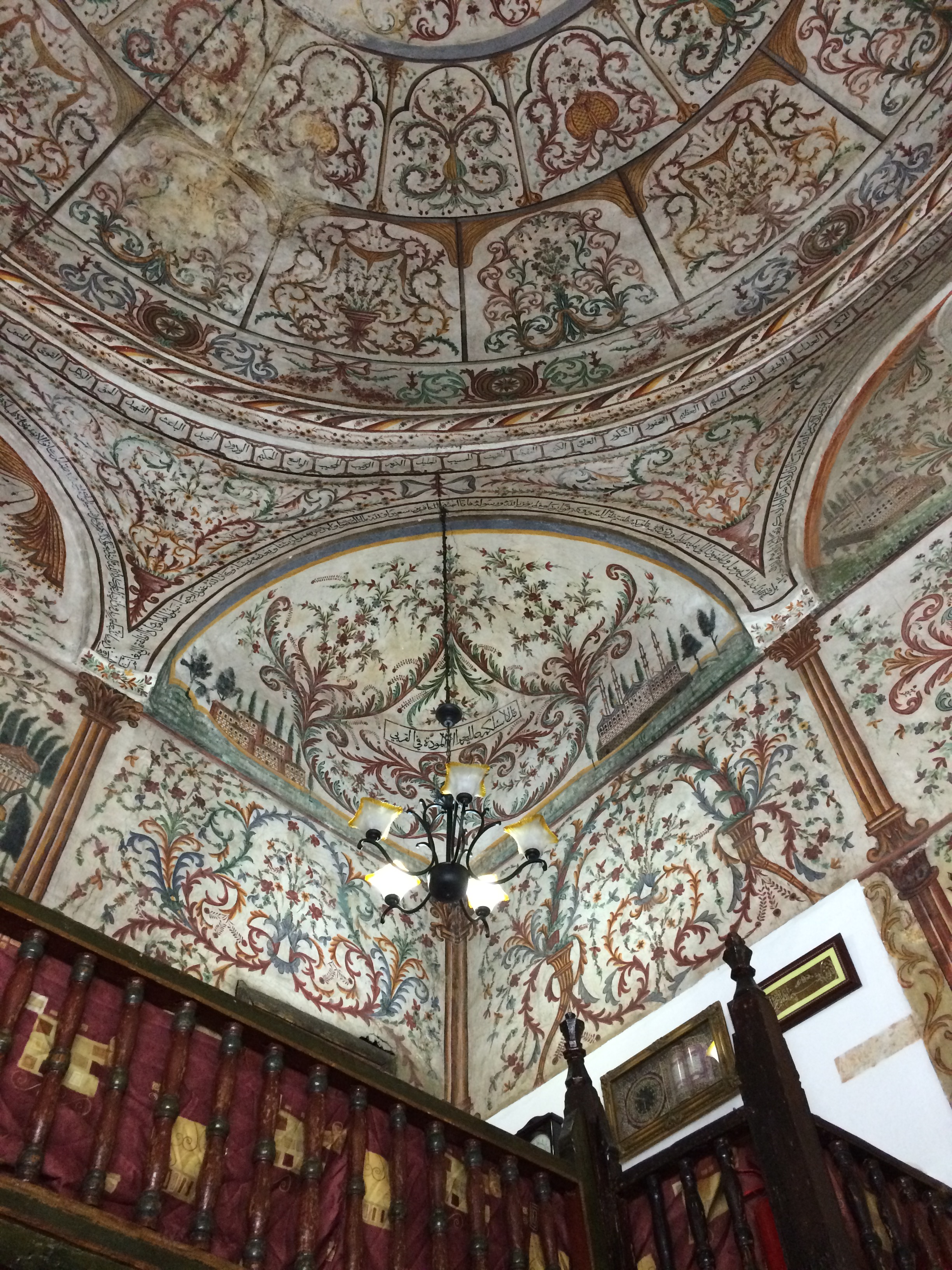
The inside of the Et’hem Bey Mosque re-opened as place of religious worship in 1991.
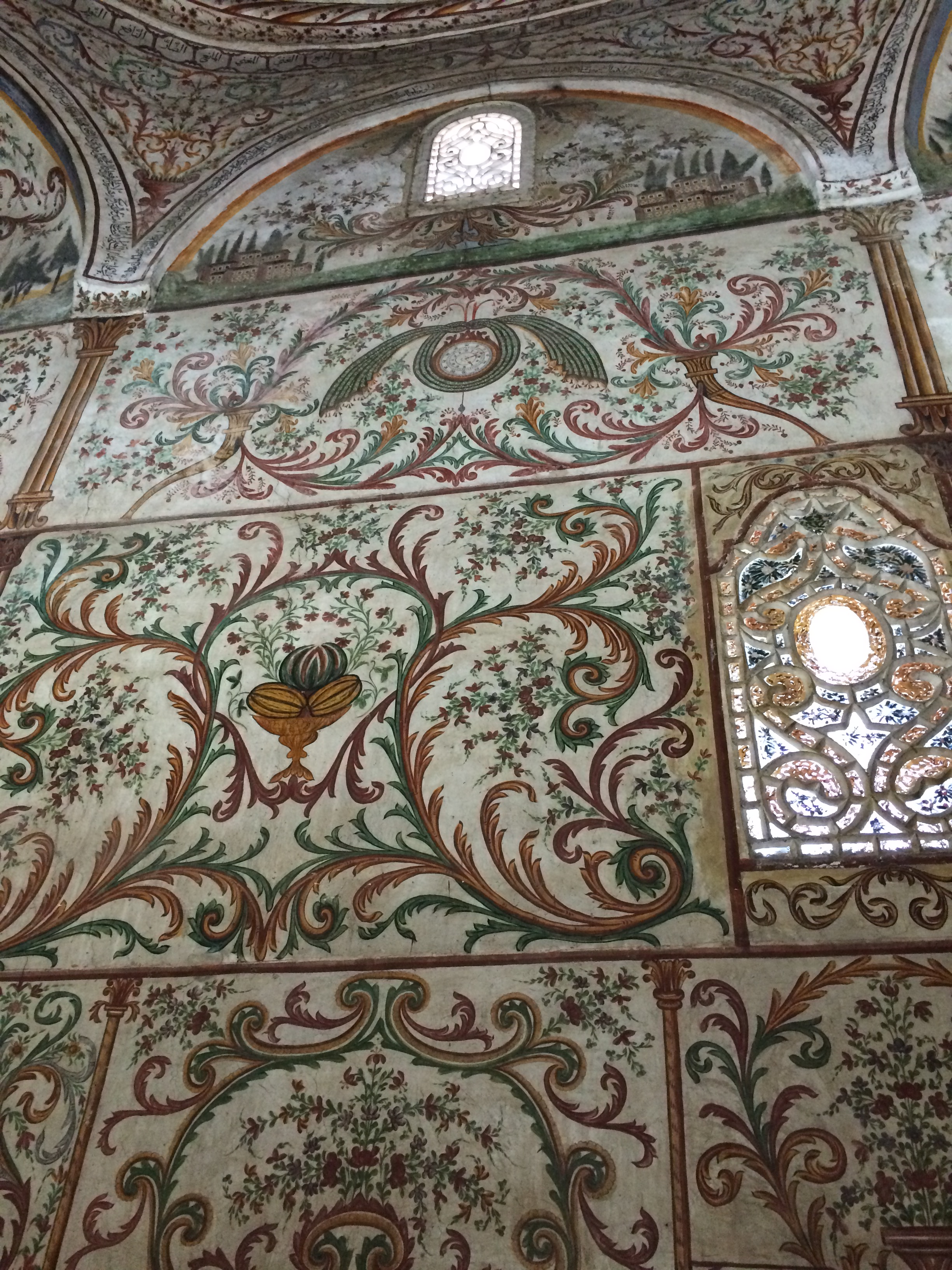
A detail from the ceiling of the mosque.
– The section of Tirane which housed Enver Hoxha and certain party officials has now been regenerated into a chic downtown area full of coffee shops and high-end shops;
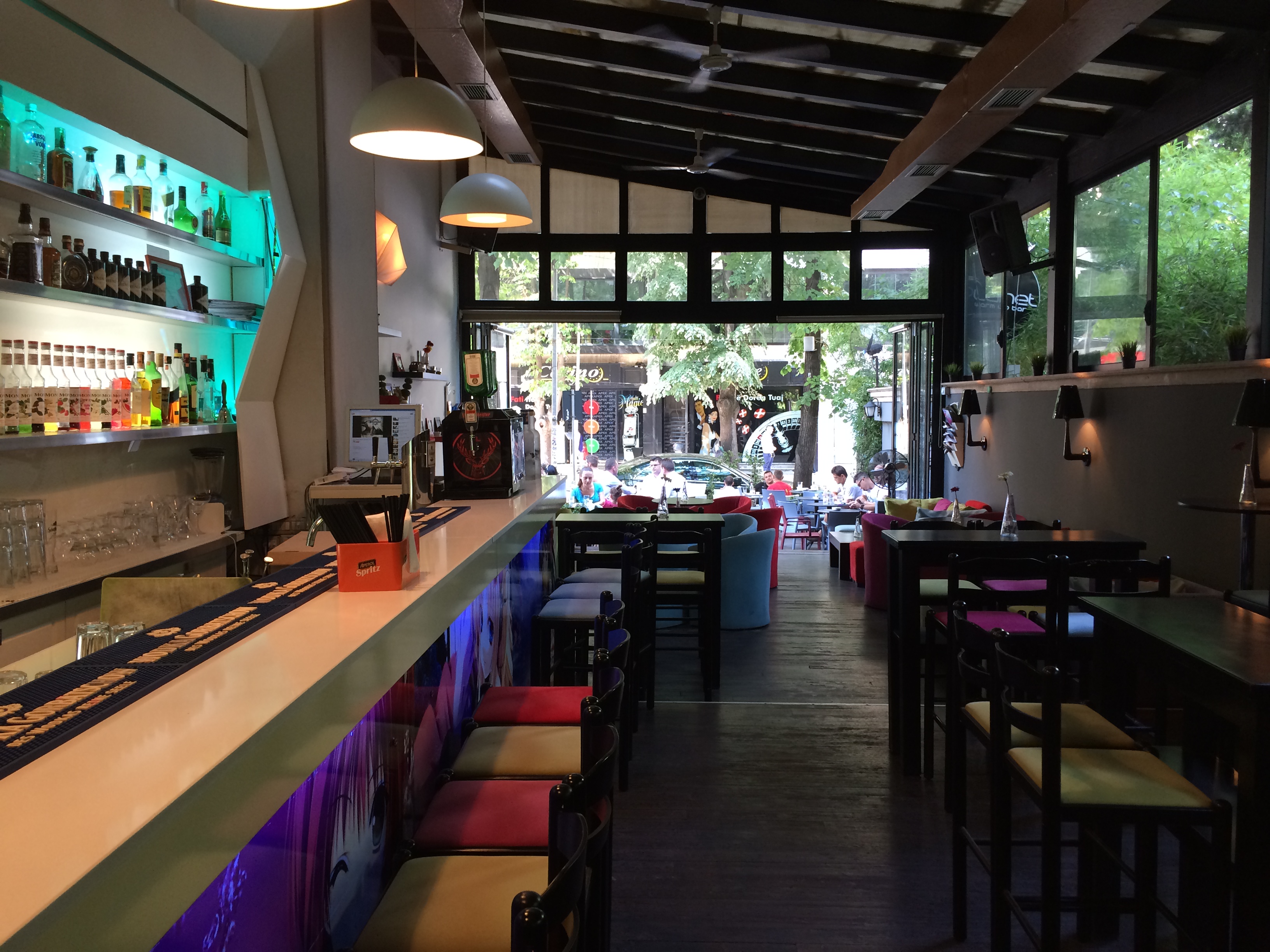
A cafe within the perimeter of Enver Hoxa’s old quarters, now regenerated into a fashionable downtown area.
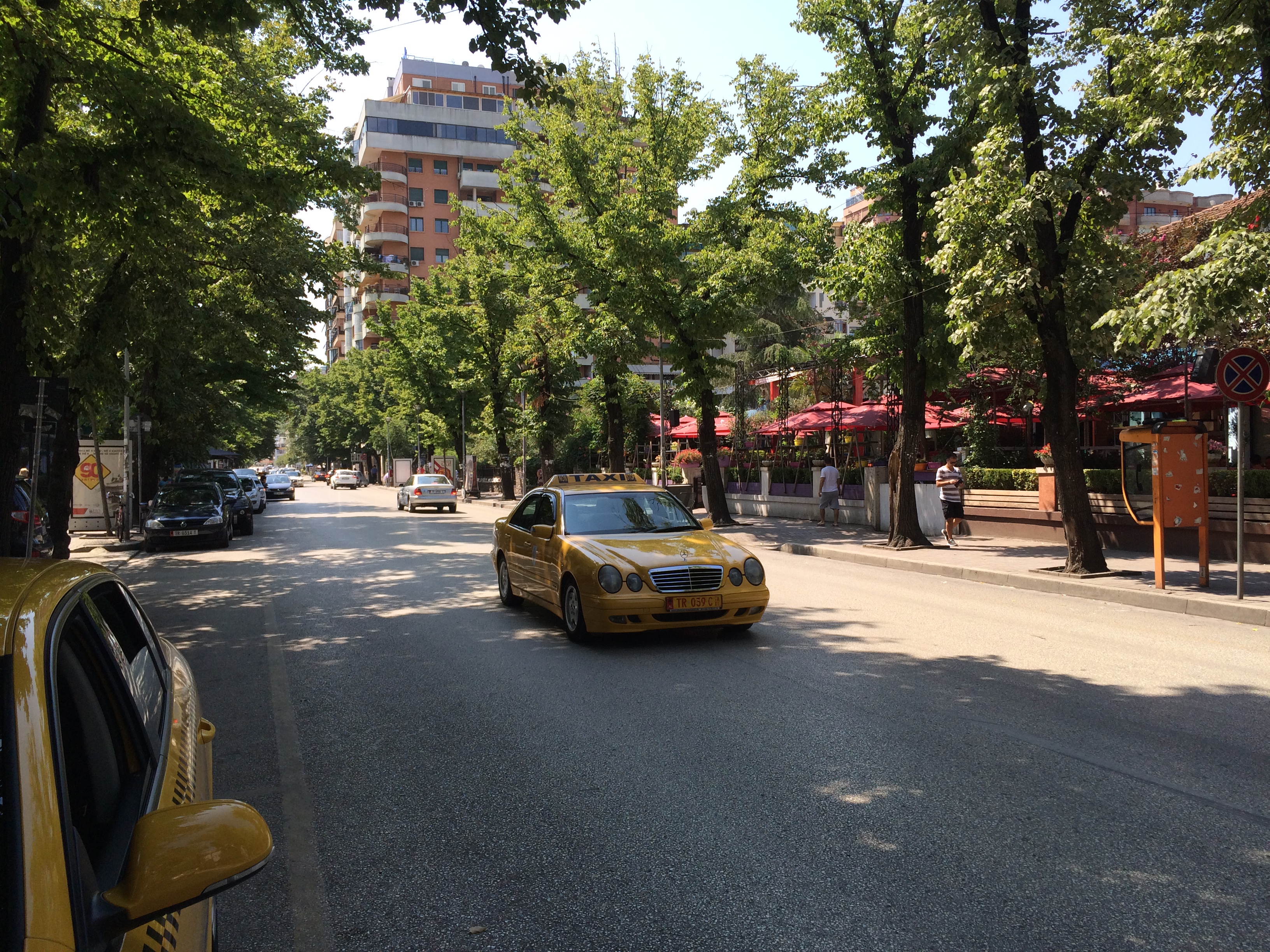
It’s now a chic modern district.
– The ‘pyramid’, dedicated to the achievement of Enver Hoxha and designed by his daughter and son-in-law is now a graffitied ruin and what to do with it is still being hotly debated;
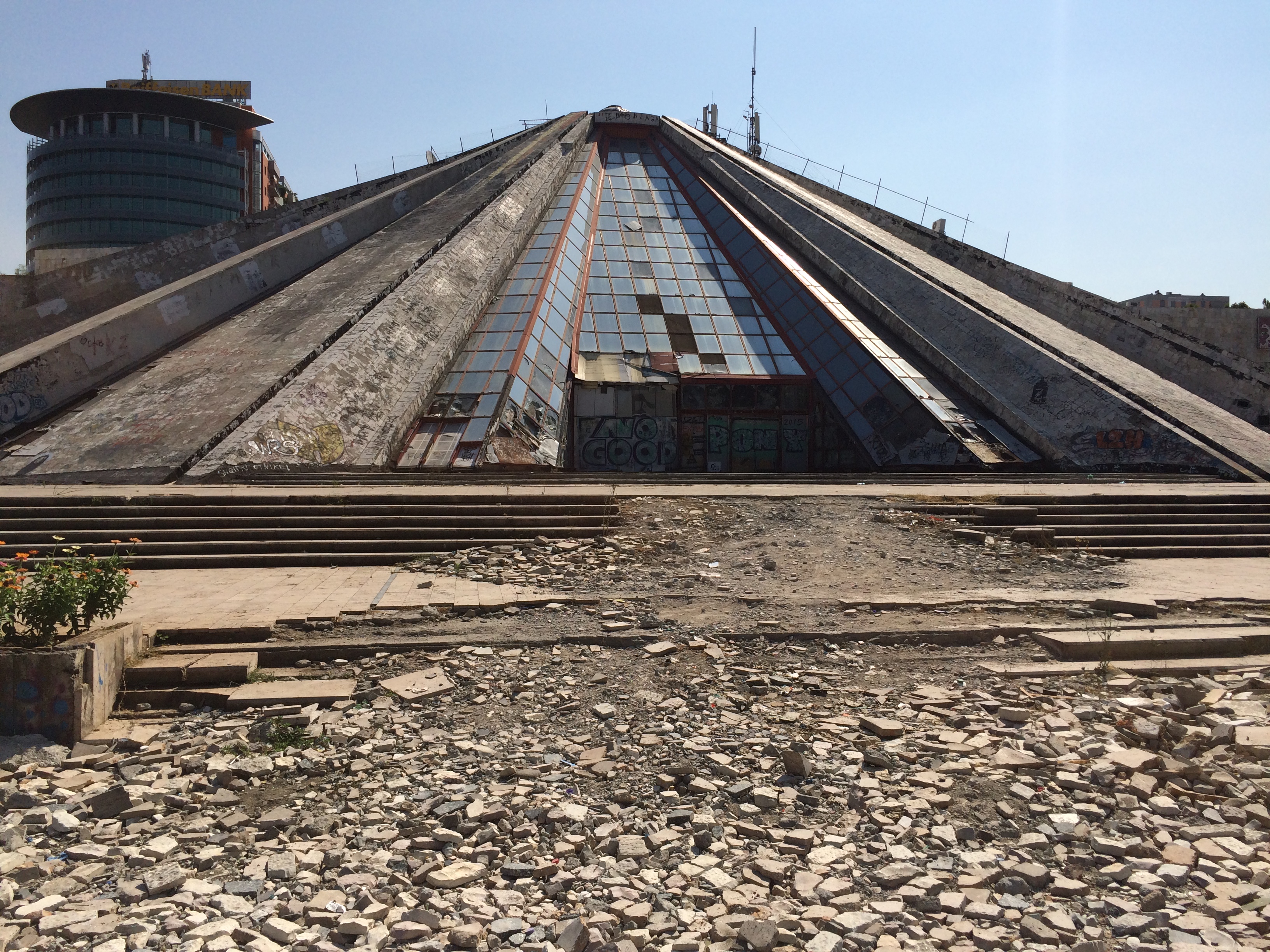
Enver Hoxha’s ‘pyramid’, semi-vandalised. Debate continues around what to do with it.
– Mother Teresa of Calcutta was an Albanian and her order has a convent in Tirane;
– Albania has a problem with street children, mainly Romany children, who are not to be confused with gypsies;
After a brief but fascinating visit to a country as yet untouched by tourism we set off again on our travels to Greece arriving in Ioannina in the early evening.
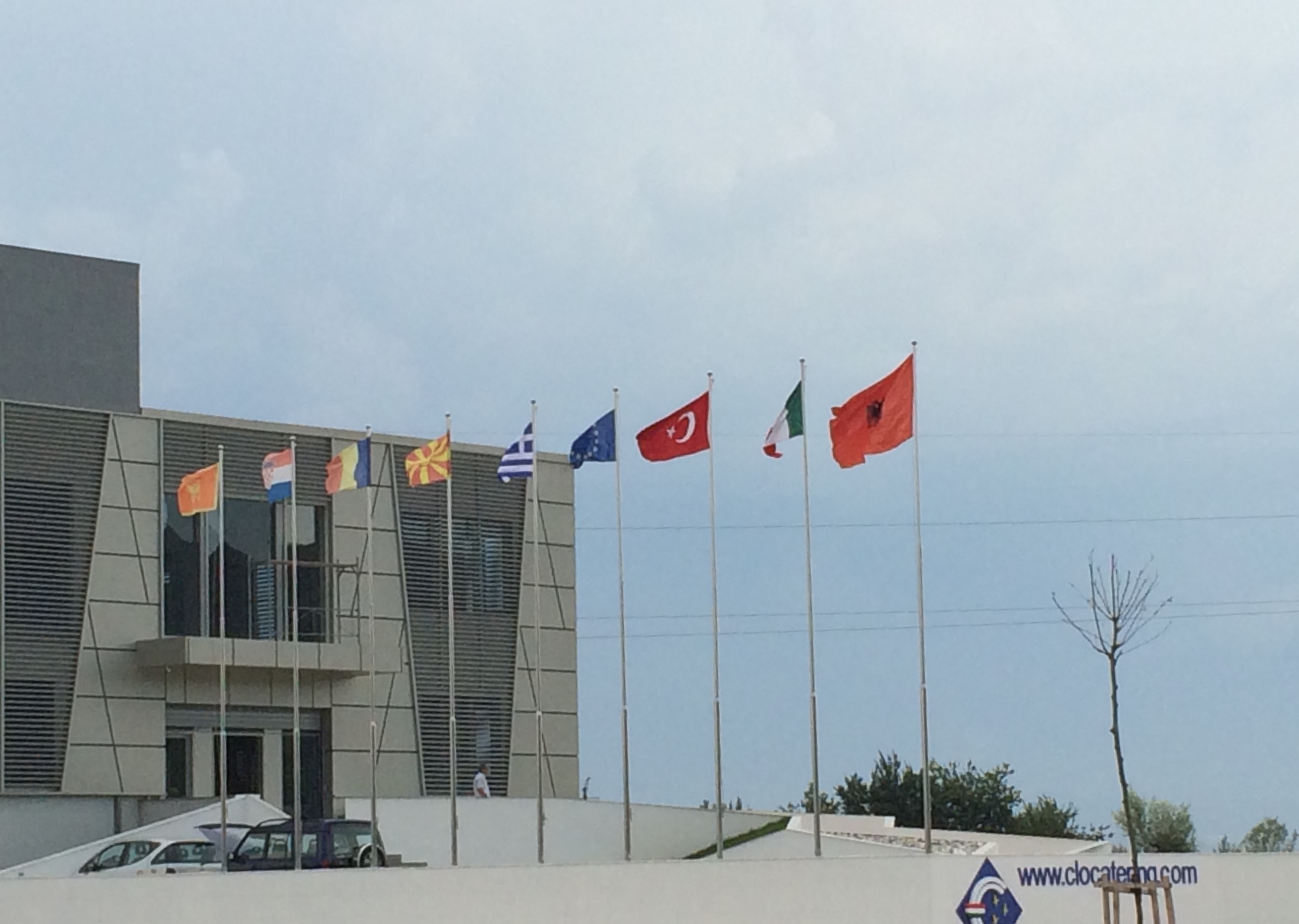
Modern Albania is eager to integrate with Europe and the rest of the world.
The main part of our odyssey ends in Greece staying in Milina, Greece with very dear friends of ours, Rachel and Rob. A lovely relaxing end to a long and eventful journey. Our daughter Catherine joined us and a blissful week was had.
 Travels with our van
This part of the journey sounds exciting and interesting,you are both looking very well,keep posting xx
LikeLike
Thanks Maigread. It’s pretty much over now. We spent a week in Greece then took a ferry back to Italy and are now in France on our way to Brittany (where it’s wetter and colder than London at the moment!). Hope all well with you. Lol xx
LikeLike
Excellent visit to Albania!
LikeLike
Thanks Richard. Should be back in London next month and look forward to seeing you at the Lido (if the water temperature is still bearable!). Best wishes.
LikeLike