Entering Verona under the Roman gate Porta Borsari we were astonished at how beautiful Verona was, a city well deserving of its World Heritage status. It has an amazing Roman Amphitheater Arena, second-largest after the Collosseum, which hosts regular musical events. It has medieval buildings, Juliet’s house being a small medieval palace, (disappointingly, we discovered the balcony was added in the 1930’s), beautiful Renaissance buildings, a Venice without the canal. That such a beautiful city could have a dark past was surprising. Verona became a fascist centre during the Second World War, a key interrogation centre of resistance fighters and a transit point for Italian Jews sent to Nazi concentration camps.
Walking around unsurprisingly we found ourselves surrounded by throngs of tourists. It was after all the city in which Shakespeare set Romeo and Juliet. We shuffled along with a large crowd to see Juliet’s home and all dutifully took photographs of the balcony and then shuffled out. The portico you entered through had graffiti and post-it love messages to Juliet. It was hot and airless, the temperature was around 43 C and we found ourselves, not exactly ‘star-crossed lovers’ but very definitely hot-cross lovers.

The Porta Nuova, at the entrance to Verona’s old centre
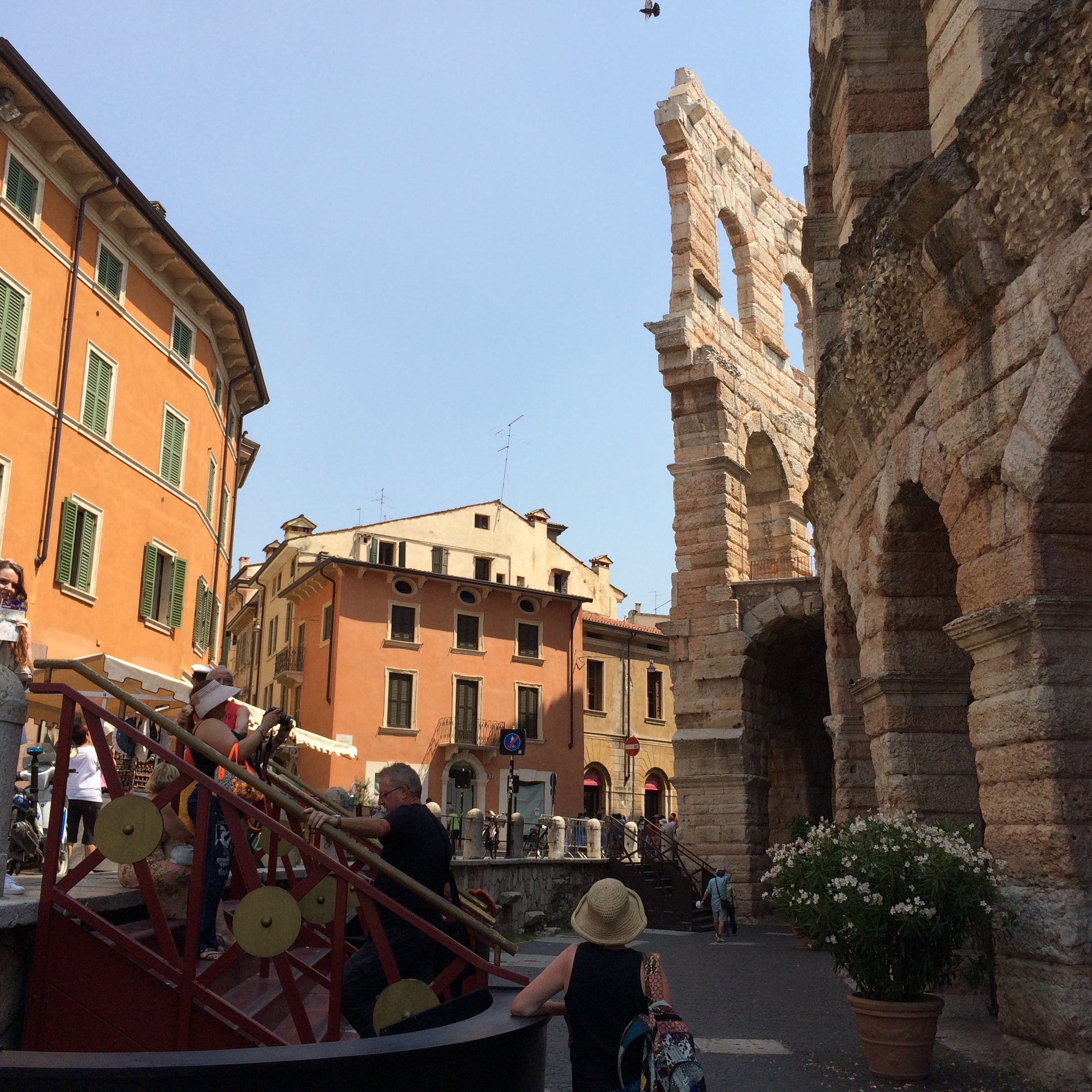
Verona’s Roman remains and its Renaissance past blend in well together. Here part of the Amphitheatre is visible.
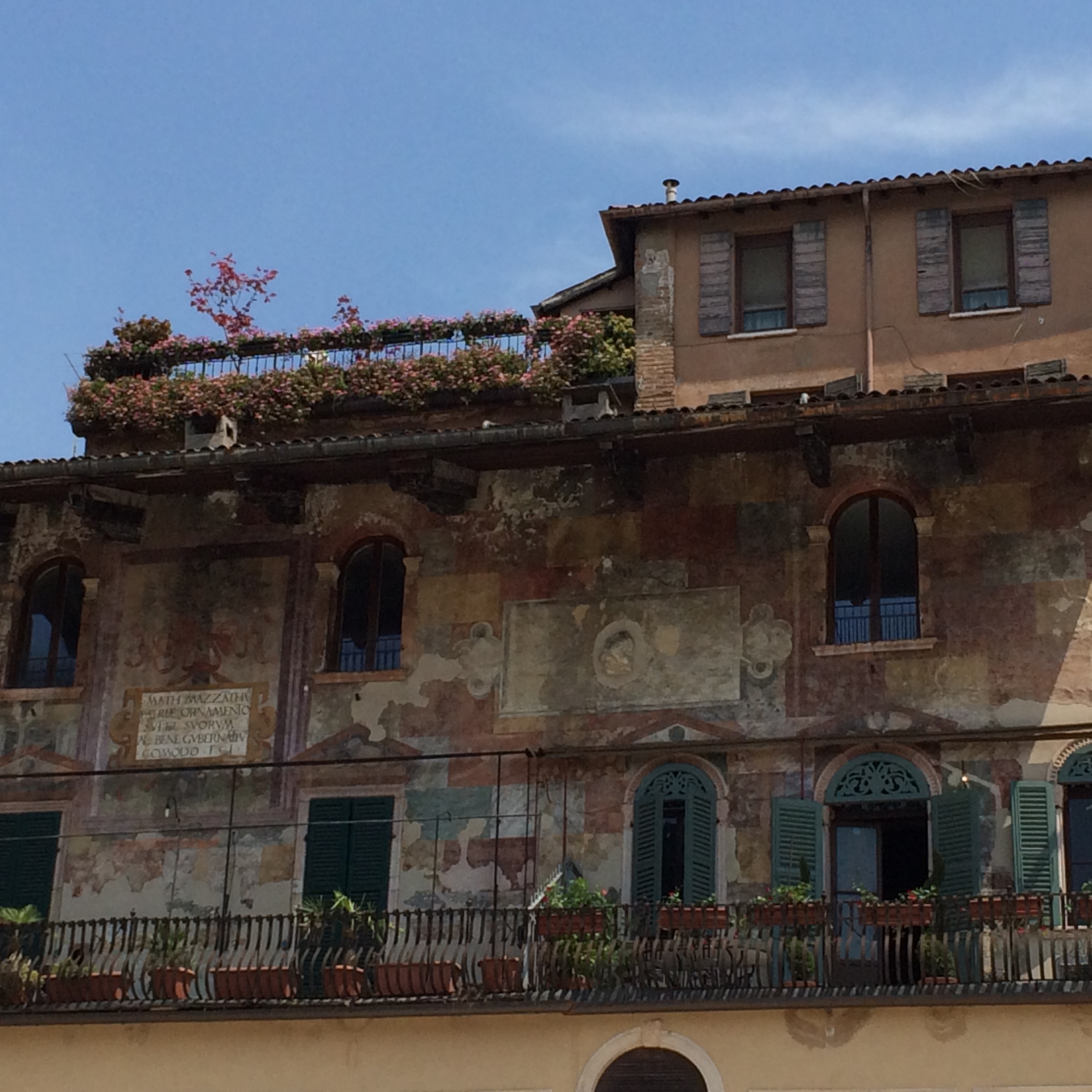
Verona – Centro Storico
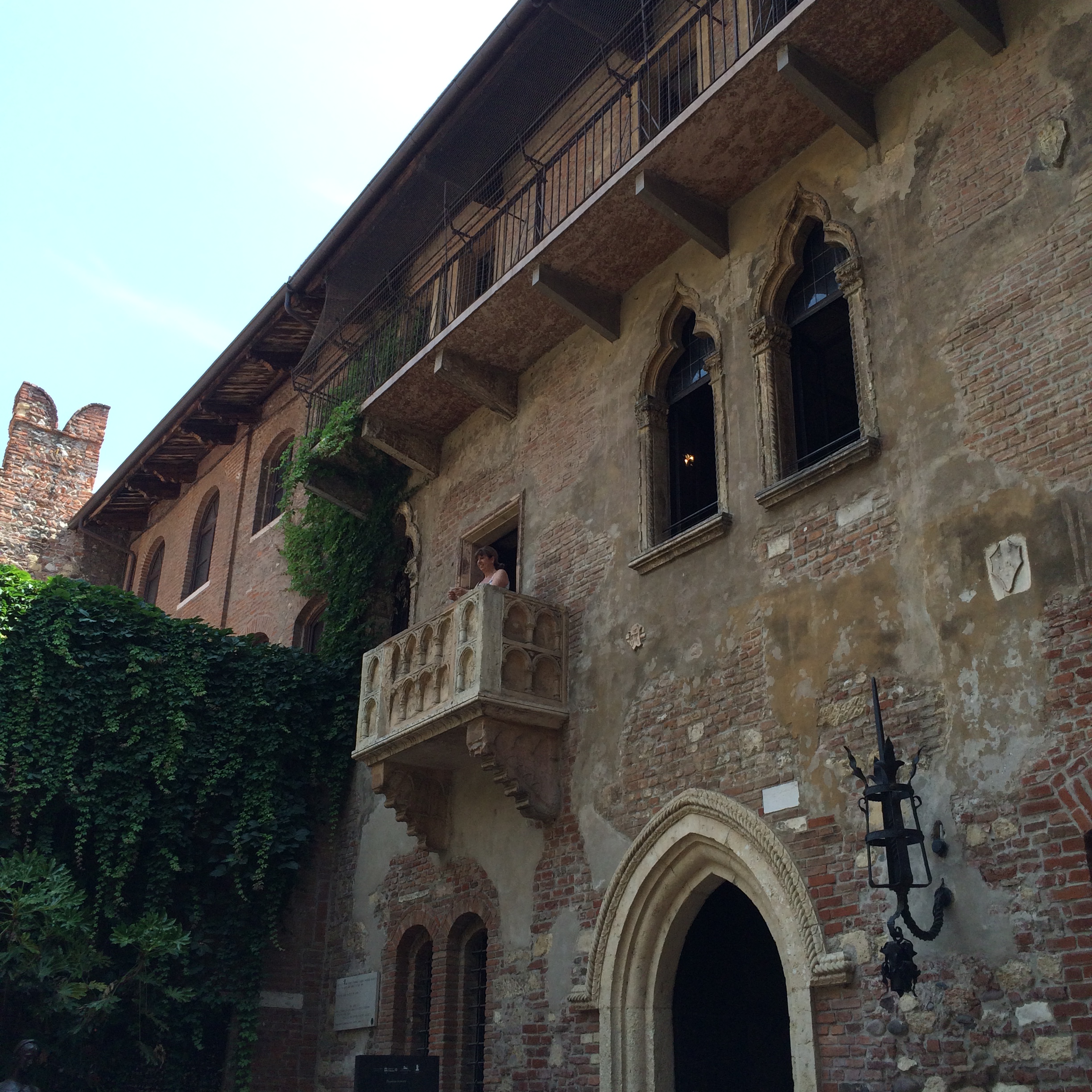
Juliet’s balcony at the House of the Capuleti (actually added later) but a major tourist attraction.

Just a few of the zillions of messages to Juliet left by tourists.
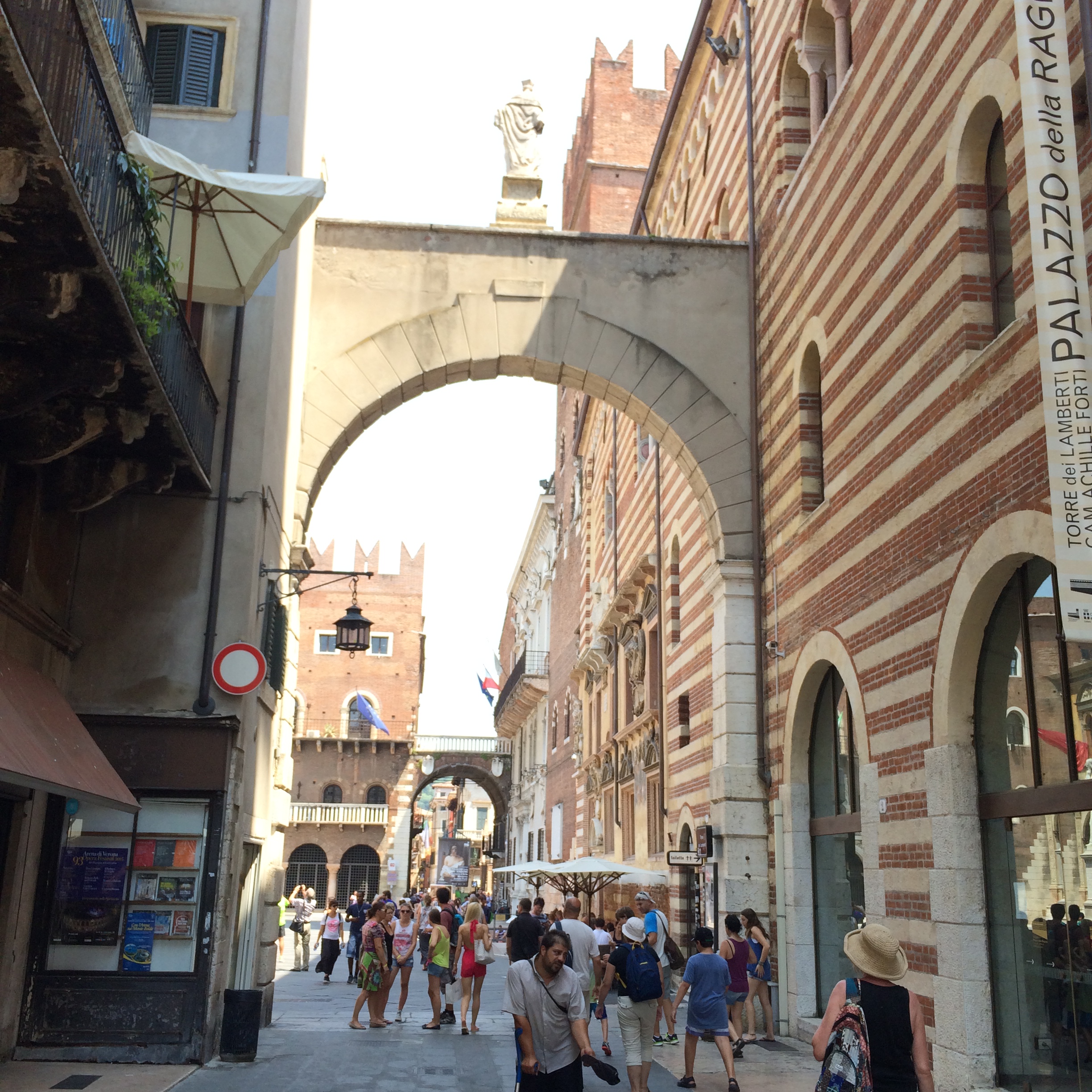
Near the ‘Mercato Vecchio’, Verona.
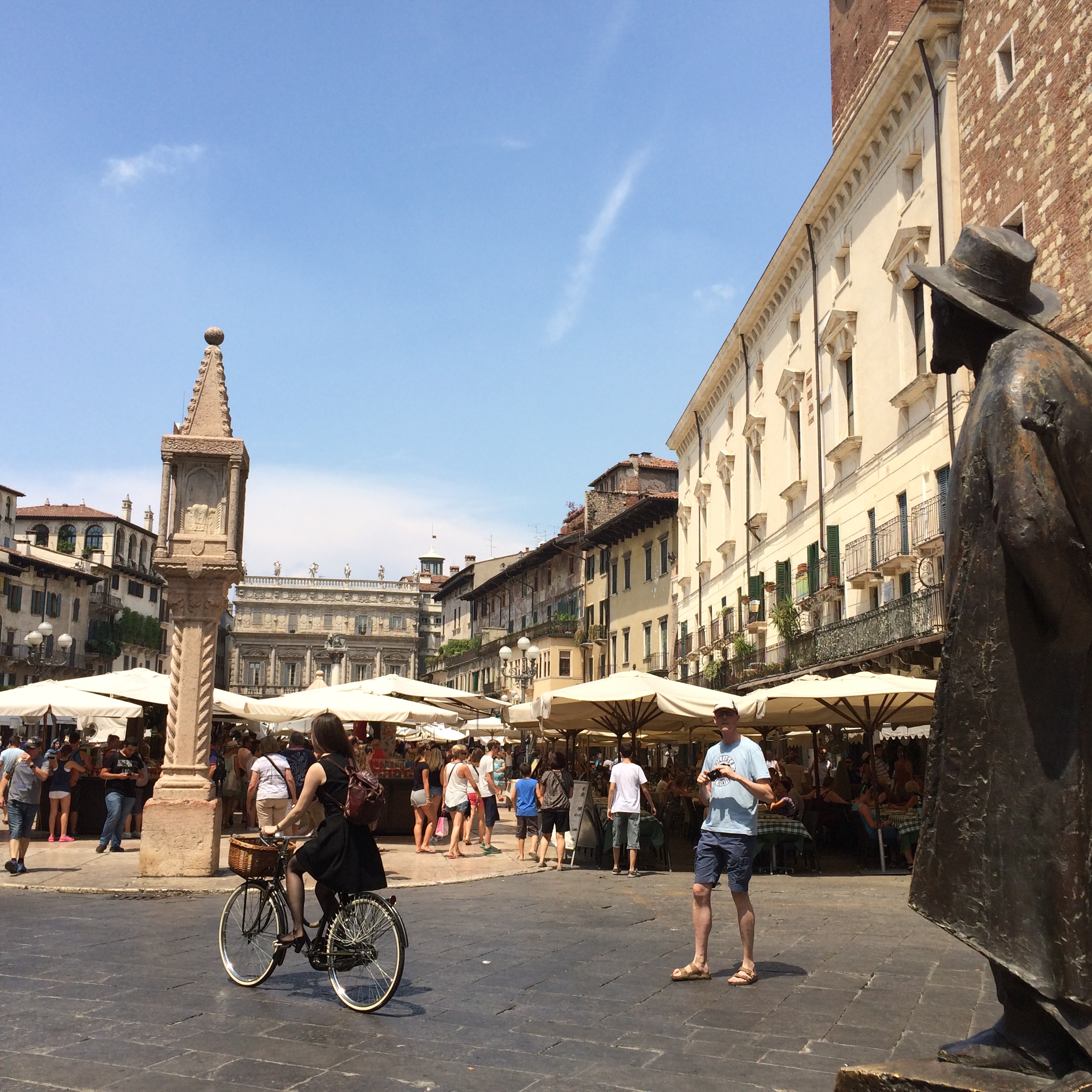
The Piazza dei Signori, Verona.

“Dal luogo sacro la civiltà Italica arra di Liberta e Giustizia tende la spada”.
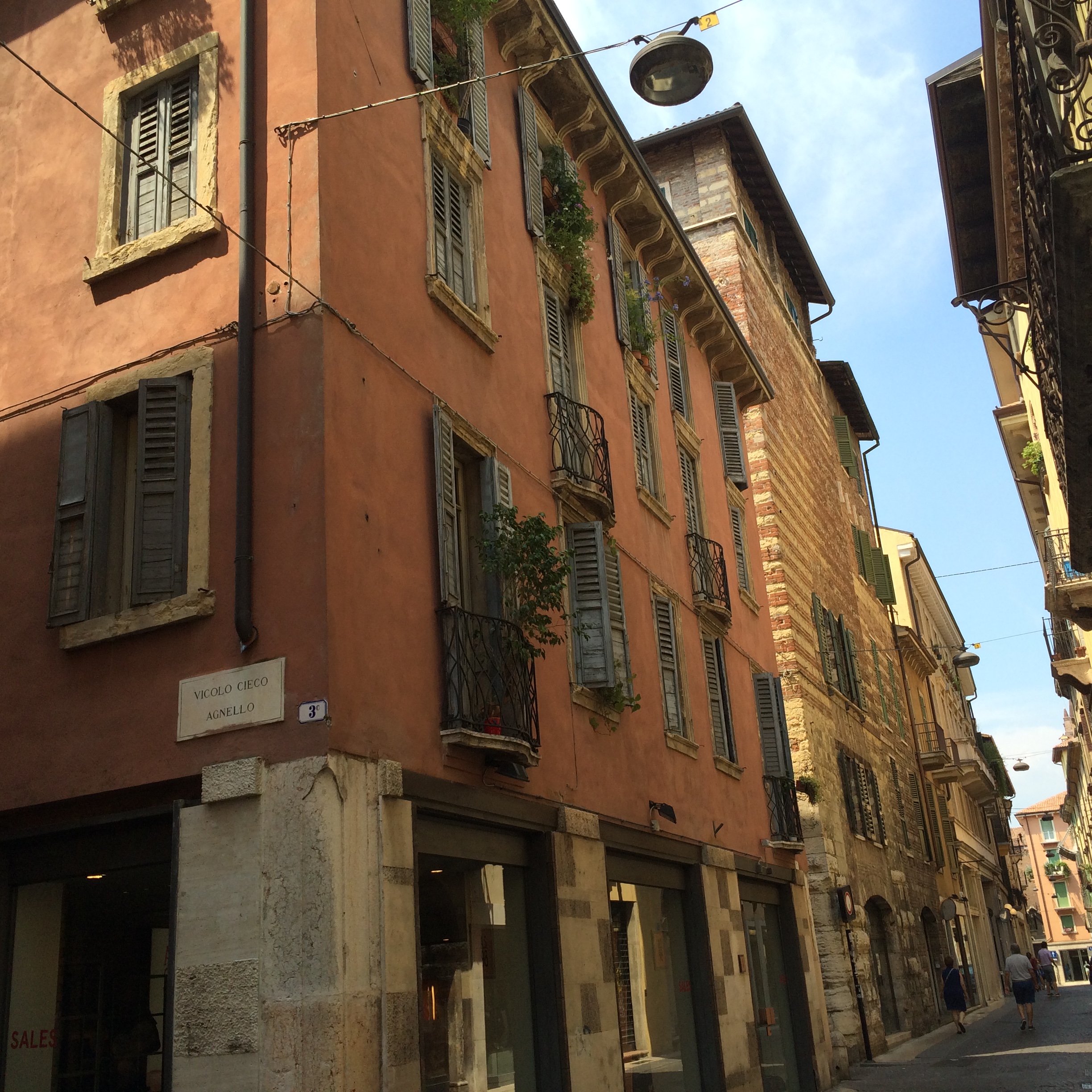
Via S. Rocchetto, Verona.
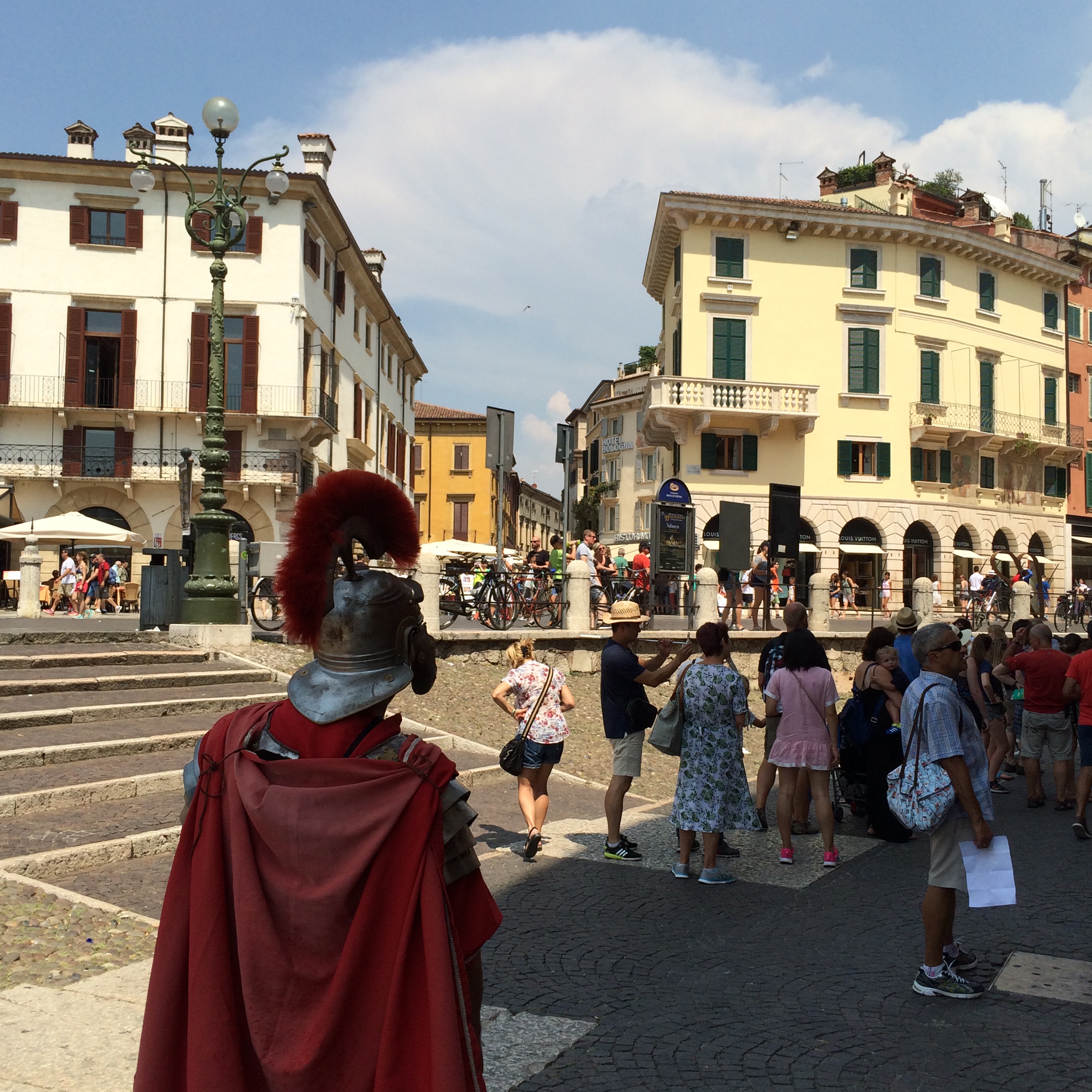
 Travels with our van