From Porto, we took the motorway north past Braga and crossed the border into Galicia at Tui, left Vigo to our left and Pontevedra to our right and headed for a charming little campsite at the end of a promontory on the Ria de Pontevedra estuary, extremely busy with locals returning home after a weekend on the coast, but a lovely spot in a place called Sangenjo (Sanxenxo in Galician) run by a very friendly and jocular man called Evencio.

Some friendly riders crossing a bridge as we pass through Villa Nova de Cerveira just south of the Spanish border.
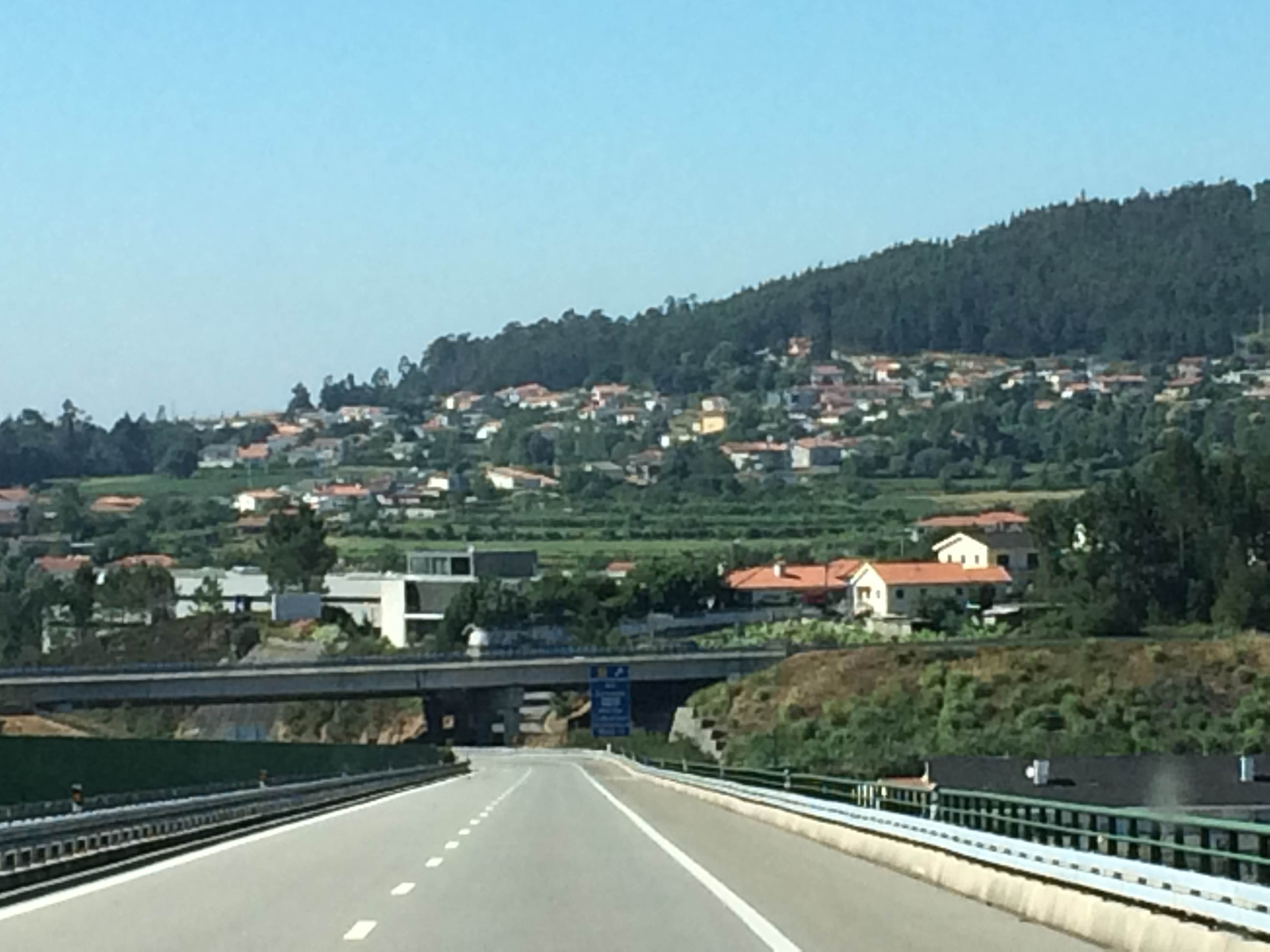
The road past Braga.
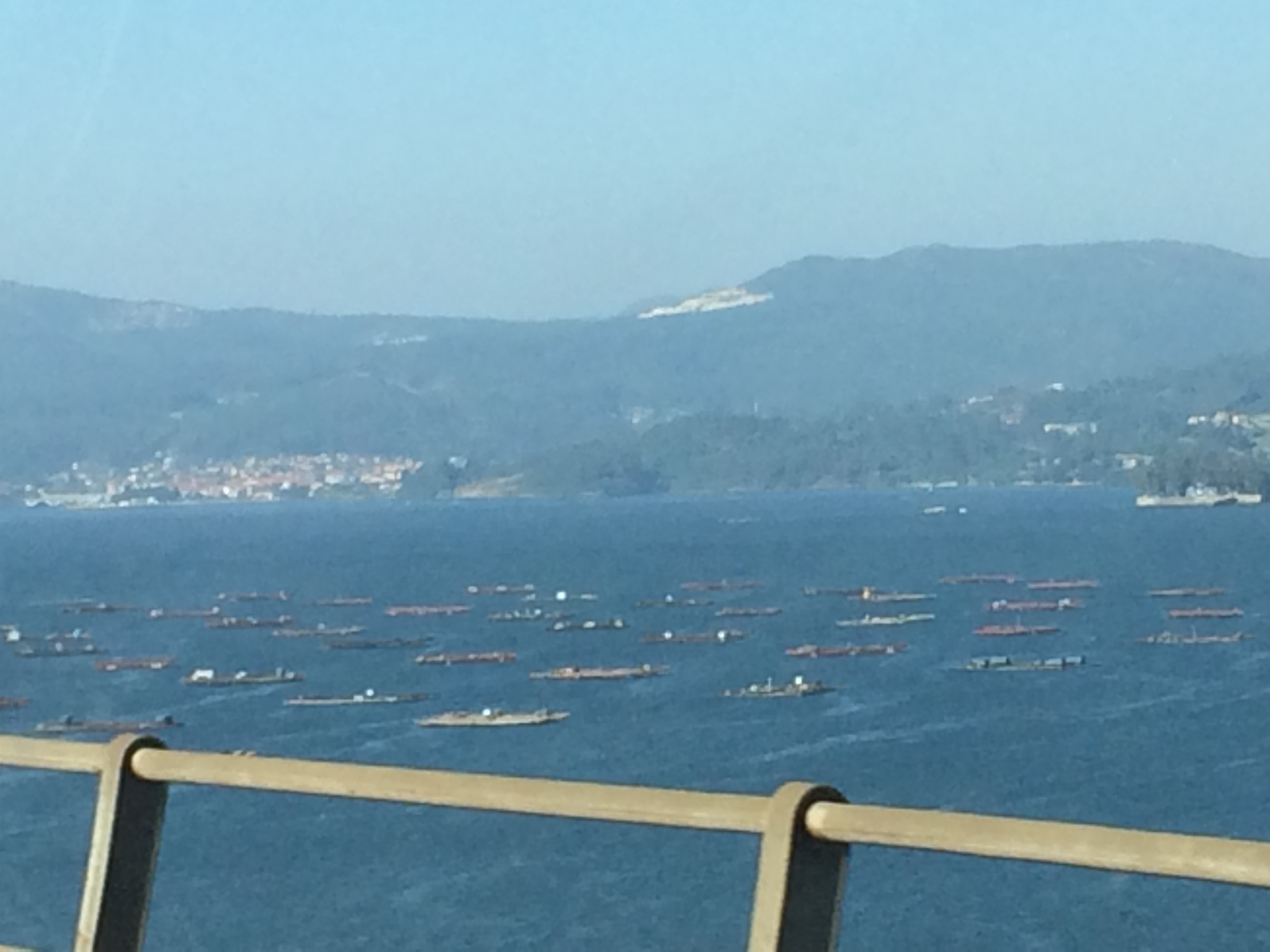
Going over the Ria de Pontevedre estuary.
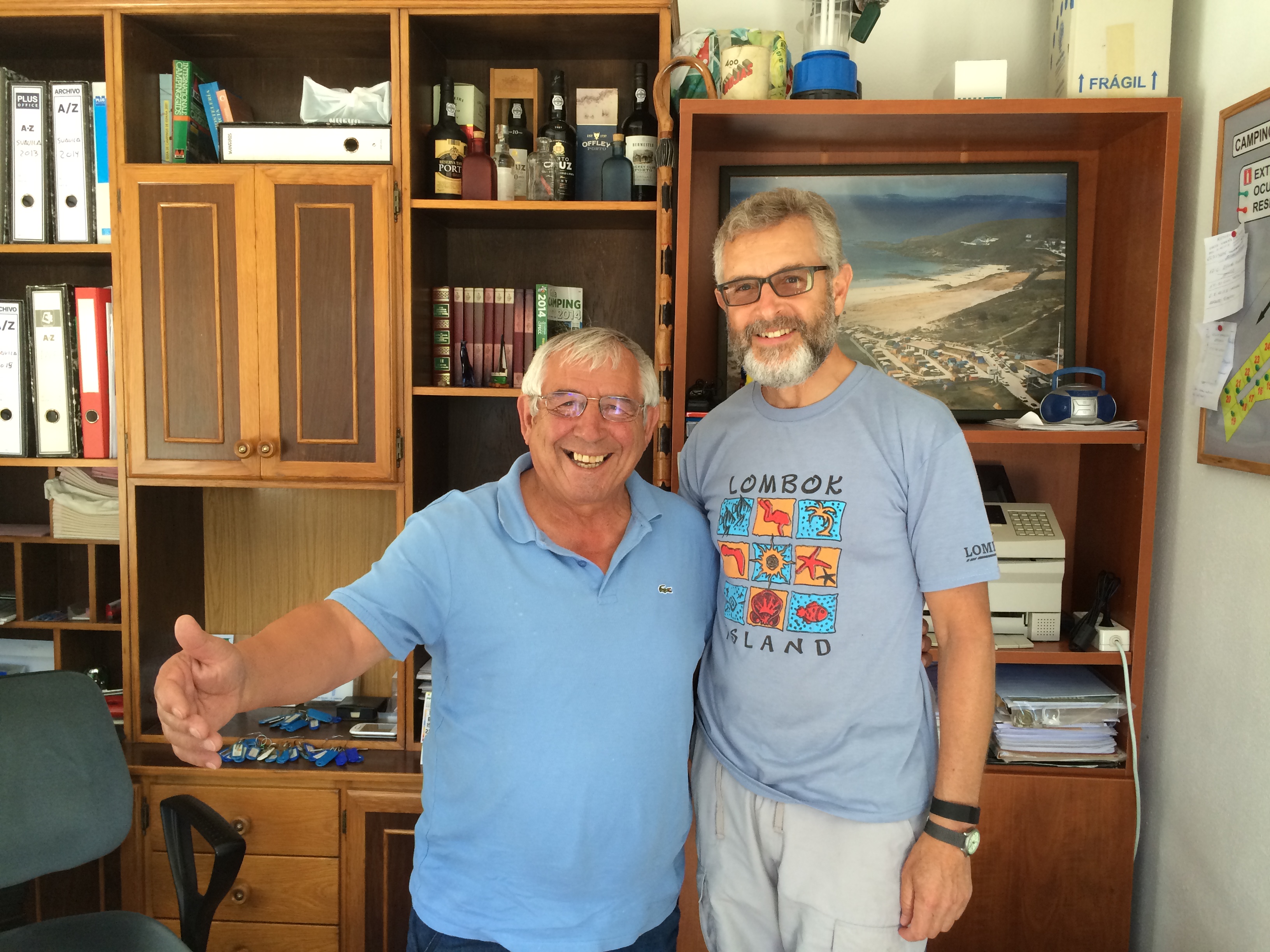
Evencio, the friendly jocular owner of the Camping Suavila campsite in Sanxenxo.
Camping Suavila (“your home”) is two thirds full of Spanish families in semi-permanent encampments of varying sizes and degrees of sophistication and it feels very homely and as if we’ve been allowed into an established little community as temporary guests. “But don’t they have to go to work?” we ask Evencio. “The fathers go to work Mon-Fridays then join their families on the coast at the weekend the whole summer”. Hence the endless line of traffic going back into town as we were making our way there. What a nice way to live – all you need is a nice beaches and a good climate. Talking of which we went down to investigate the sea and it looks so appealing, with soft white sand and clear calm water (though chilly) we instantly decide to go in for a satisfying swim.
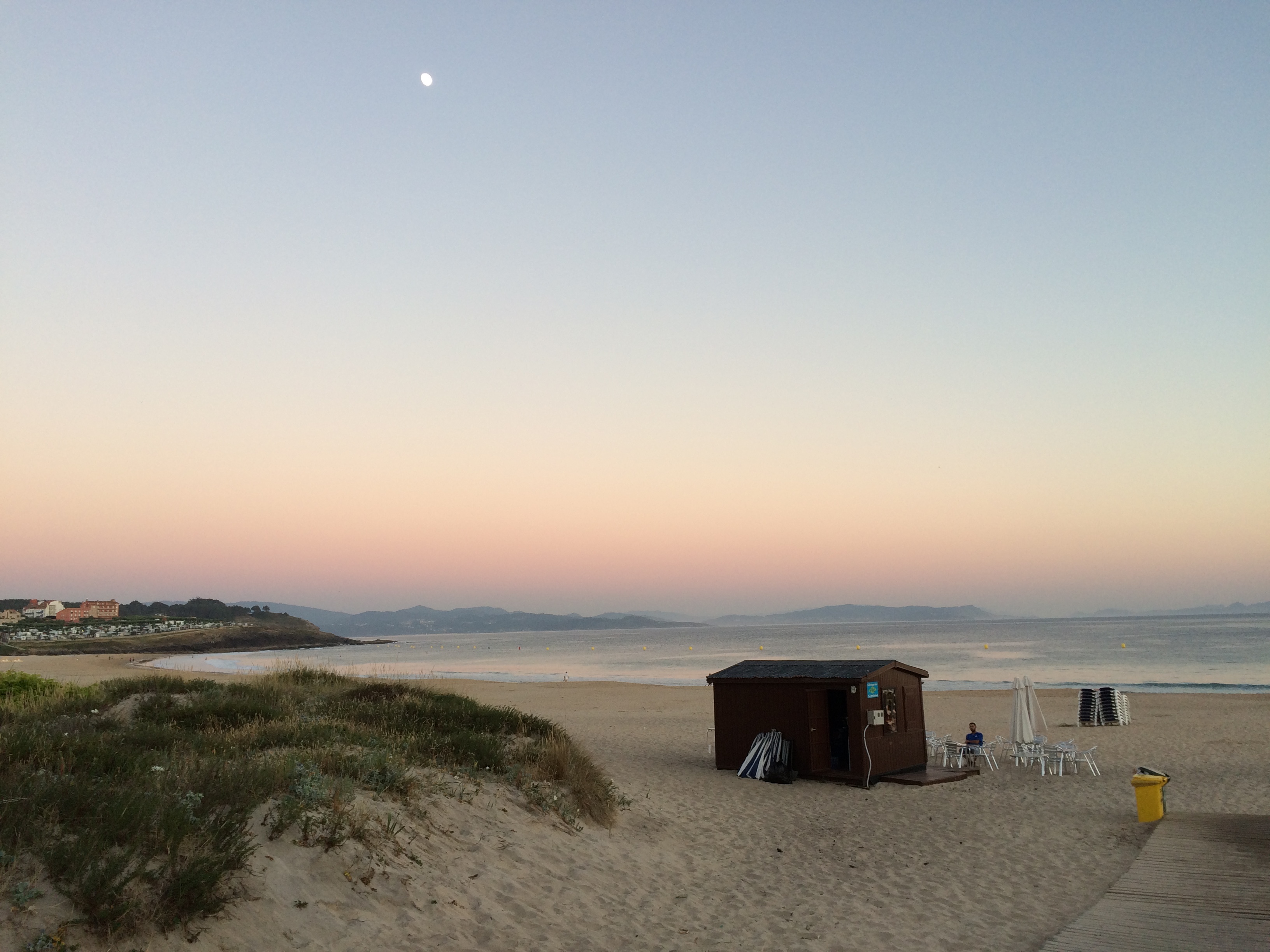
The beach at Sanxenxo at sunset.
Evencio invites us to try out some white wine made by the family. His niece who serves us says when I ask how his name is spelt that he’s the only Evencio she’s ever come across and his brother was called Belarmino, which again was a very rare name, as was that of their mother who named them. Evencio has trouble talking audibly as he’s has some vocal chords cut in an operation (which must be a severe disadvantage in Spain where people tend to talk let’s say quite emphatically!). But it doesn’t stop him communicating and joking – he’s full of joie de vivre. And why wouldn’t he be? It’s a nice little business, a lovely spot, and there doesn’t seem to be much economic hardship in this tranquil part of the country.
In characteristic style by now, we arrived in Santiago de Compostella at around midday. Our arrival coincided with the arrival of a heat wave so in temperatures of 38 and rising we started the climb which would lead to the Cathedral of Santiago de Compostel and visit the final destination of Camino pilgrims. Had we been earlier we could have joined the pilgrims on their way to the midday pilgrims mass. Pilgrims received the compostela,a certificate of accomplishment for having completed the Way (walking a minimum of 100 km or cycle at least 200 km) on arrival at Santiago de Compostele after producing their pilgrims passport with the required stamps.
The Compostela is an indulgence which reads, in Latin: ‘The CHAPTER of this holy apostolic and metropolitan Church of Compostela, guardian of the seal of the Altar of the blessed Apostle James, in order that it may provide authentic certificates of visitation to all the faithful and to pilgrims from all over the earth who come with devout affection or for the sake of a vow to the shrine of our Apostle St. James, the patron and protector of Spain, hereby makes known to each and all who shall inspect this present document that [Name] has visited this most sacred temple for the sake of pious devotion. As a faithful witness of these things I confer upon him [or her] the present document, authenticated by the seal of the same Holy Church.
The Cathedral has been adapted and added to over the centuries following the discovery of the tomb of St James in 814 and is now a magnificent ‘Romanesque structure visited by hundreds and thousands of pilgrims each year. Although we missed the pilgrims Mass we were able to climb via a narrow passage behind the altar to reach the statue of Saint James, rises above the main altar, to witness pilgrims kissing the saint’s mantle
In the crypt, below the main altar houses the relics of Saint James and two of his disciples, Saint Theodorus and Saint Athanasius. This is the final destination of the pilgrimage where pilgrims stand or kneel in silent prayer.
Outside the cathedral, the medieval quarter of the city is home to Santiago de Compostela University, housed in various beautiful buildings throughout the quarter, some of which you could visit. Behind the cathedral was the Paradors Hotel, built originally as a hospital for pilgrims by Queen Isabella and King Ferdinand of Spain, the architects of the Inquisition. The surrounding streets were bustling with bars, cafes and shops selling Compostela regalia – staffs, shells and crosses in abundance. People were seen wearing tee-shirts proclaiming that they had ‘Done the Camino 2015’. The visible commercialisation did detract somewhat from the meaning and intention of the Camino de Santiago de Compostela.
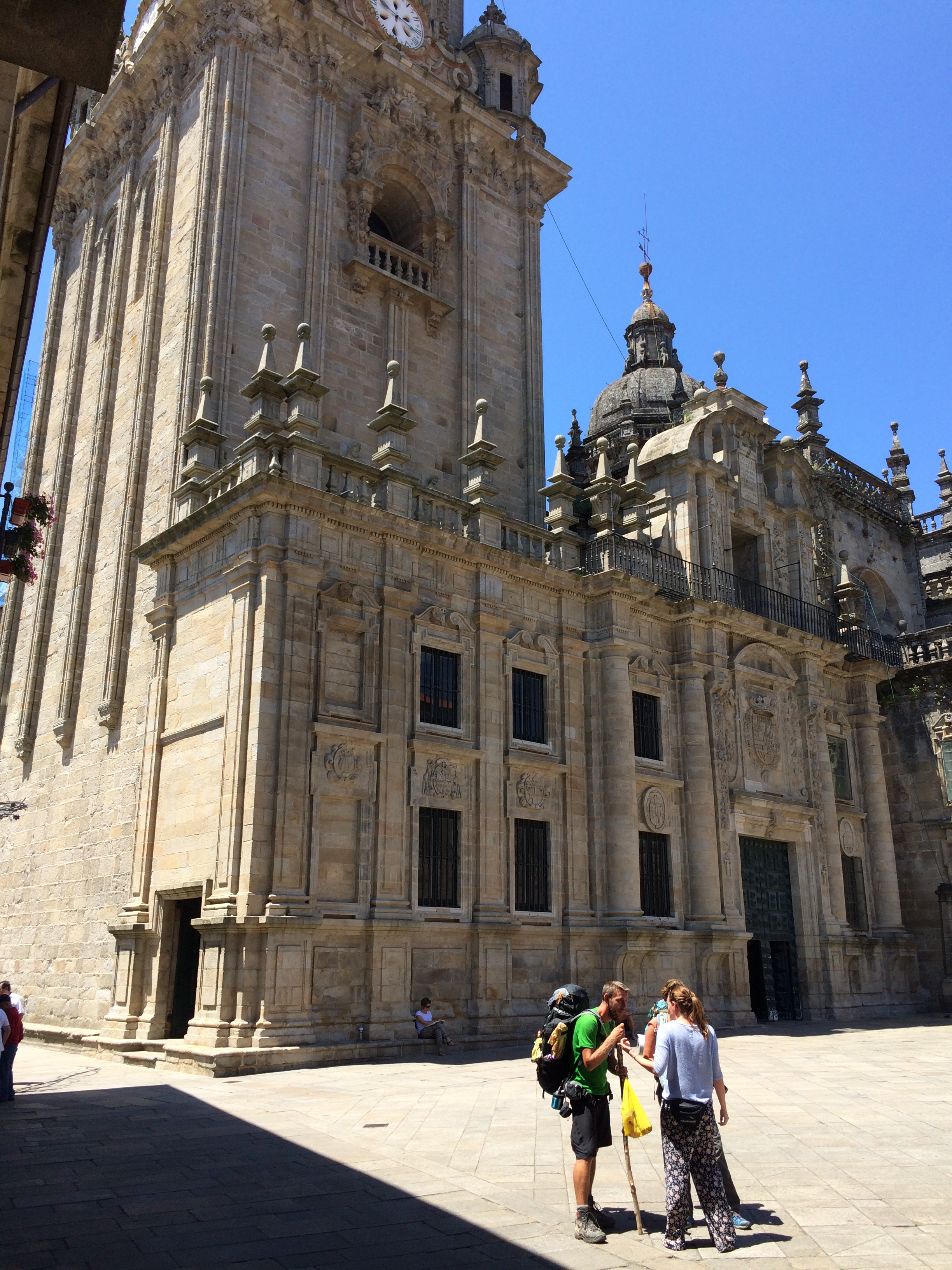
Pilgrims outside Santiago’s Cathedral where the relics of St James are held.

The ornate altar of Santiago’s Cathedral behind which lies a statue of St James that pilgrims ritually touch or hug at the end of their long pilgrimage.
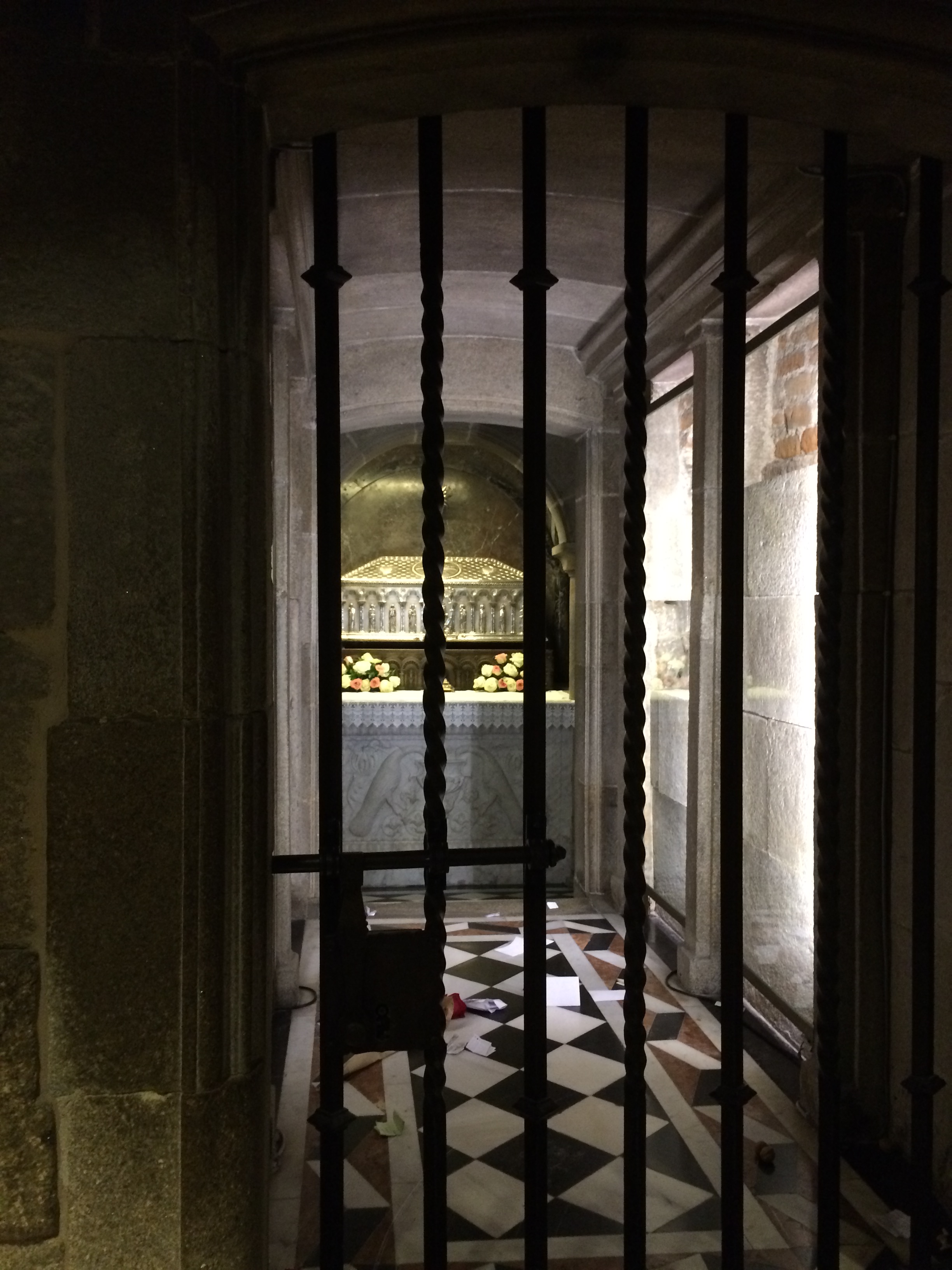
The sepulcher holding the remains of St James.
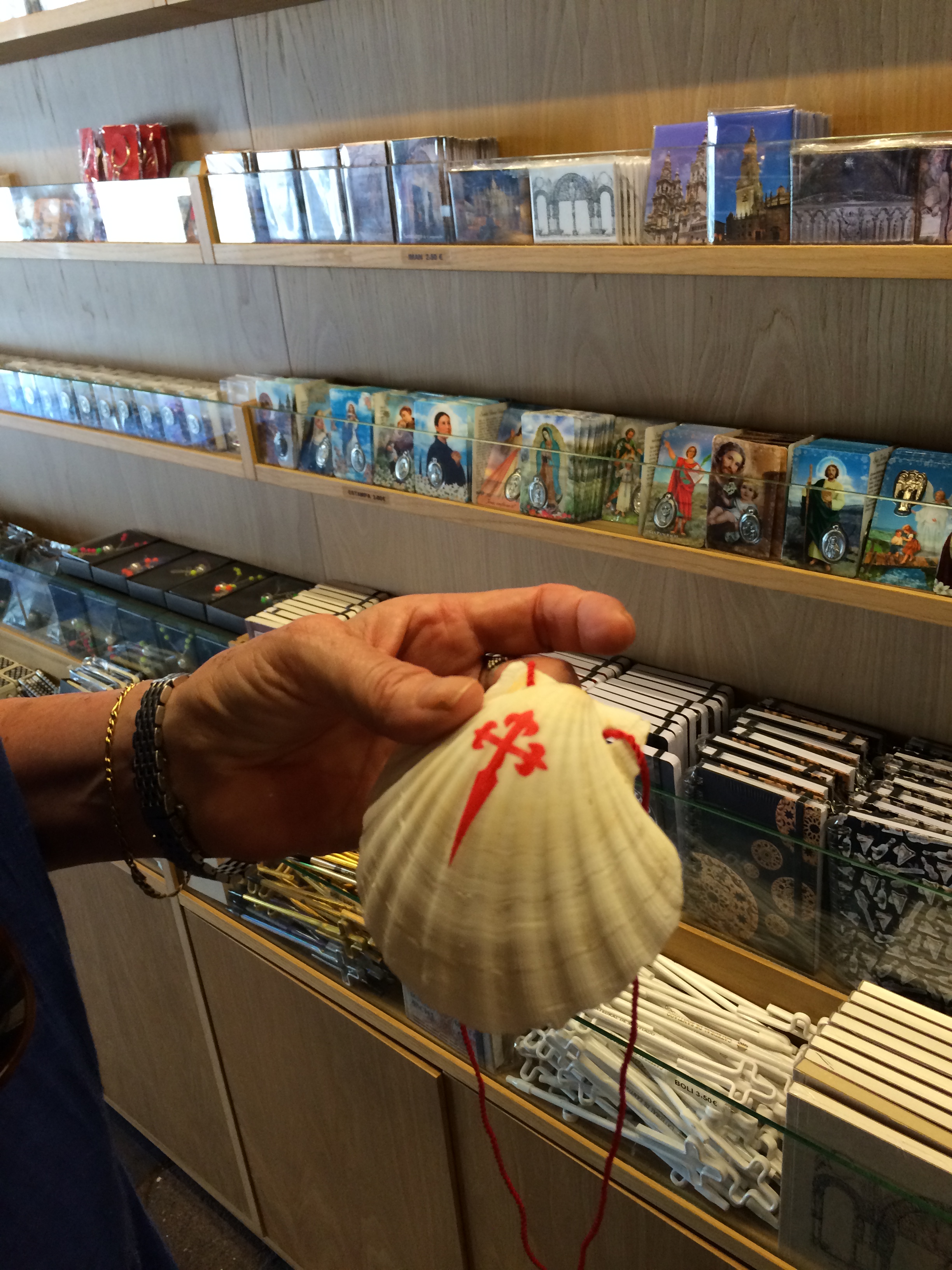
The St James shell pilgrims are traditionally given when they complete the pilgrimage.

The symbol of the shell engraved everywhere.

Young pilgrims refreshing themselves in the fountain outside the Cathedral.
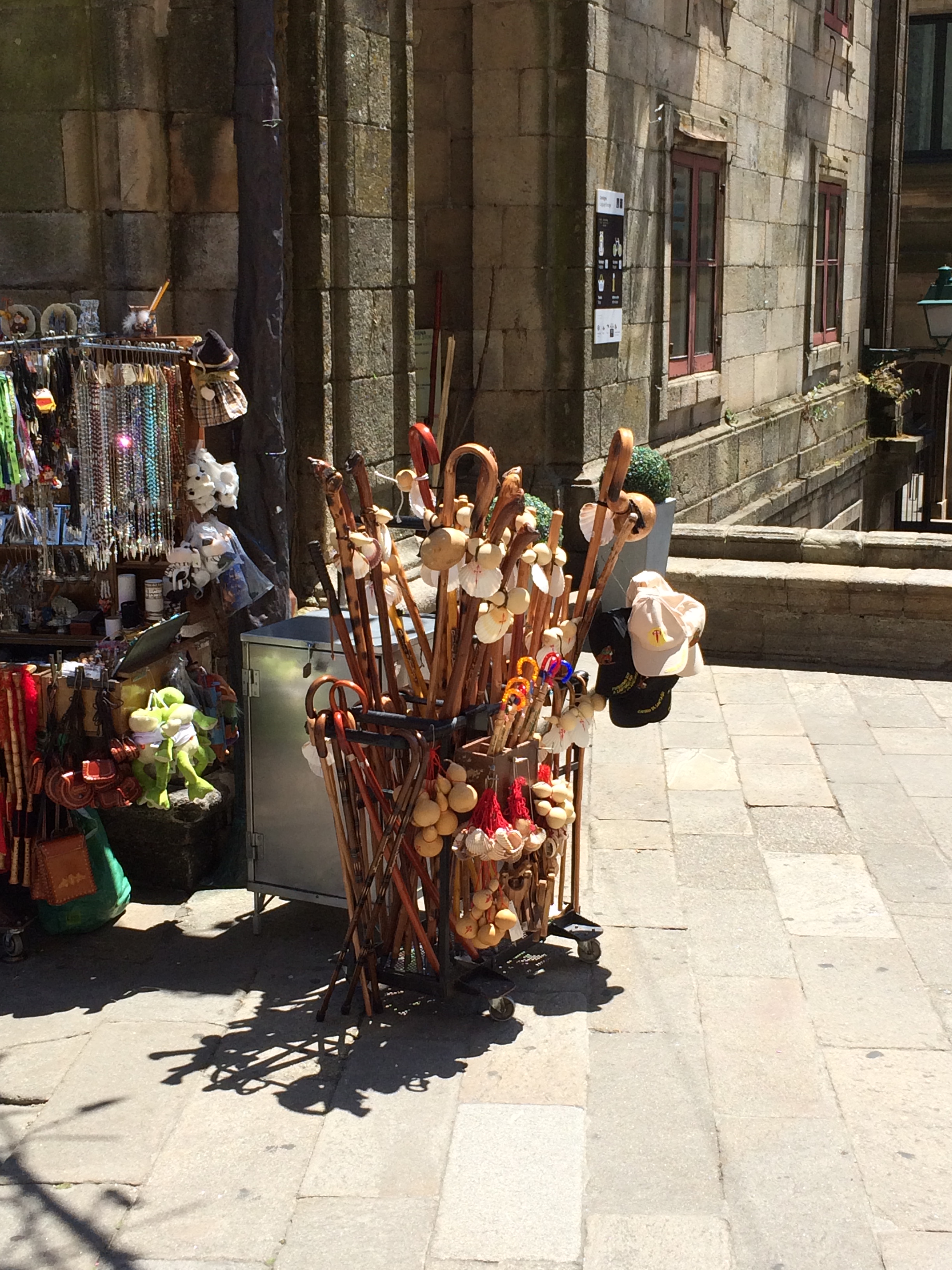
All manner of walking sticks are used by pilgrims. Seems odd having them on sale at the end point – these are presumably just souvenirs.

Some do the camino on a bike.
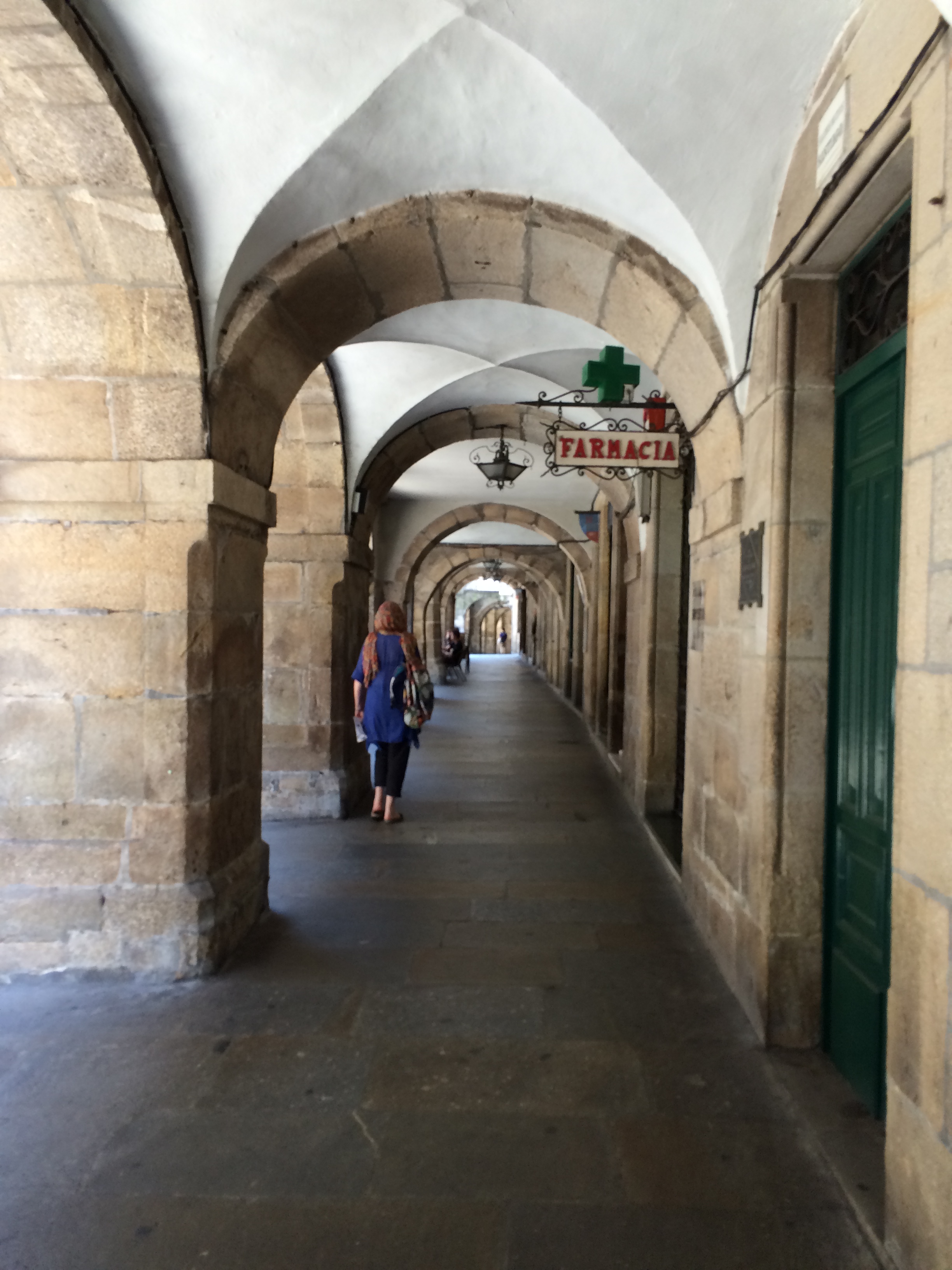
Strolling through the covered archways in Santiago’s old town.

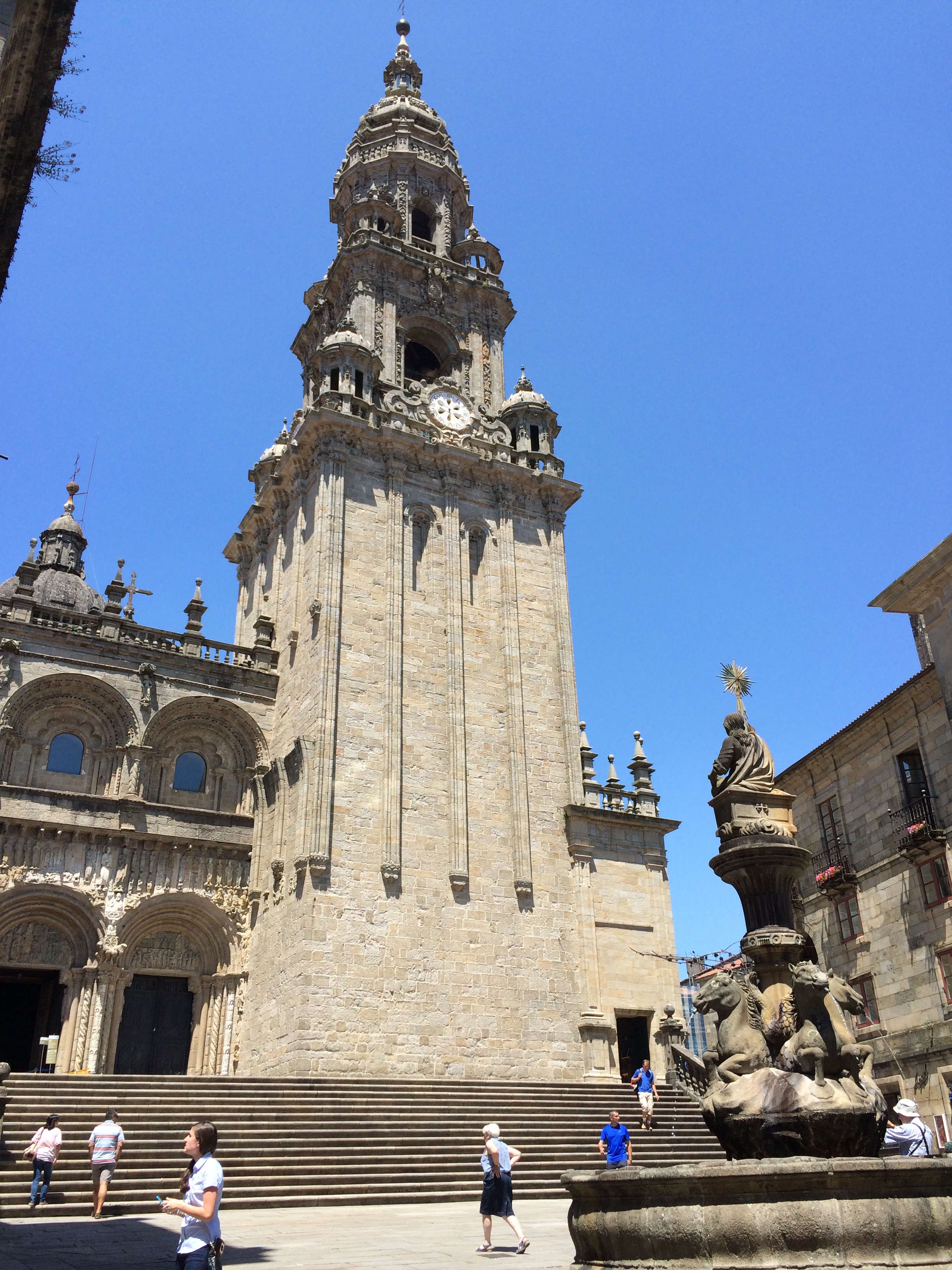
The Cathedral seen from the Praza do Obradoiro, undergoing some upkeep.
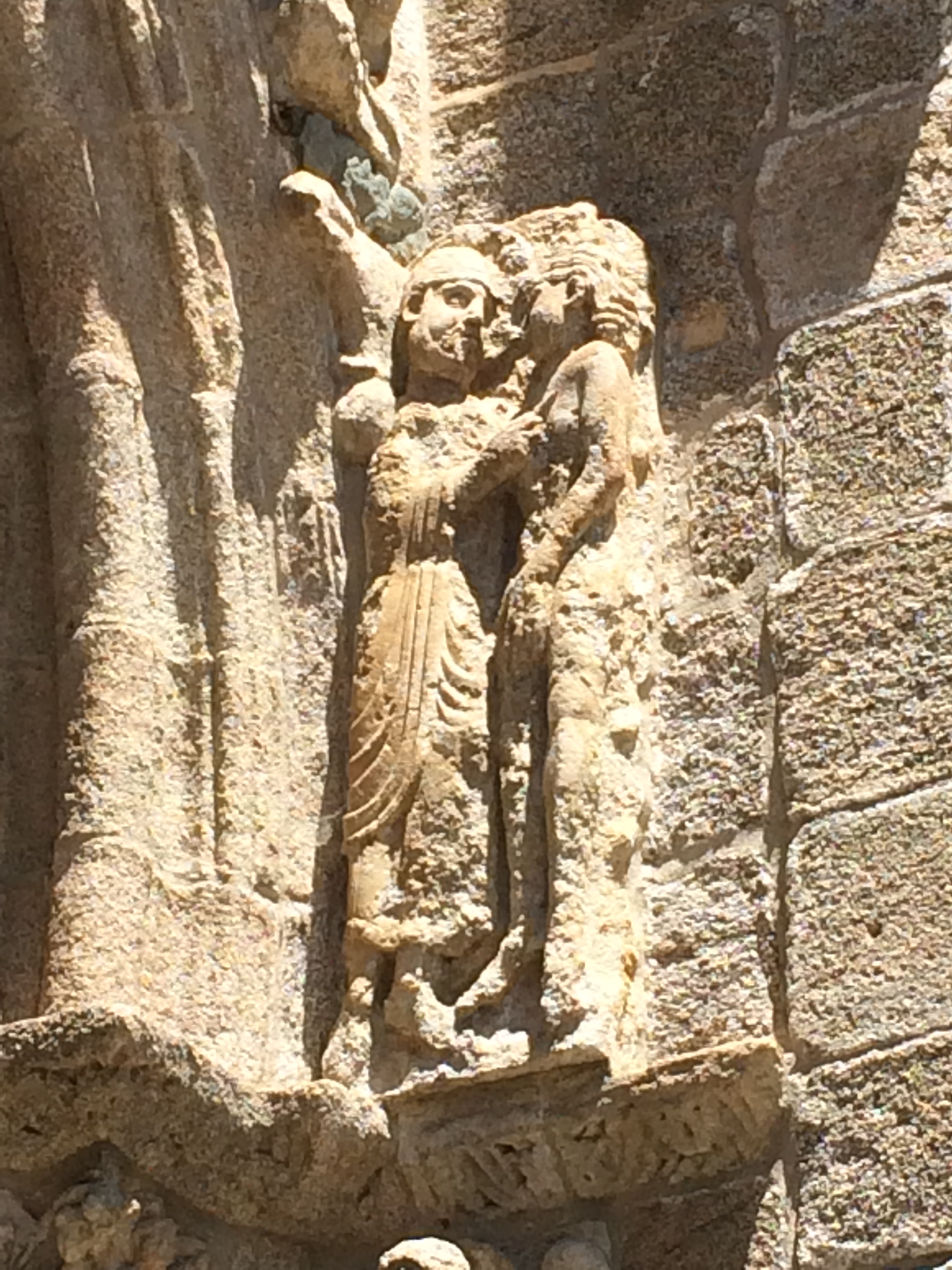
Unusual depictions on the outside of the Cathedral.
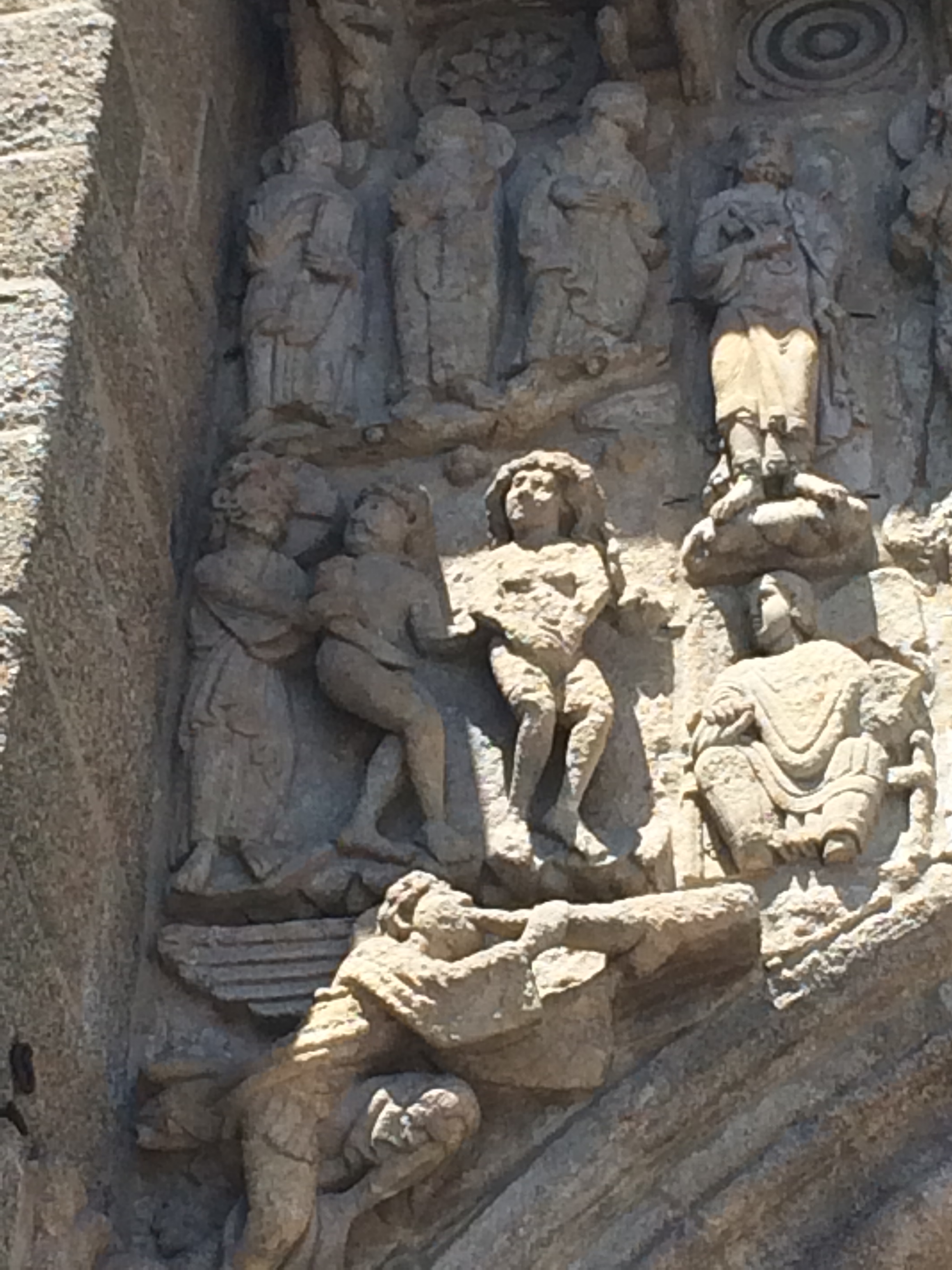
Not sure what they signify.
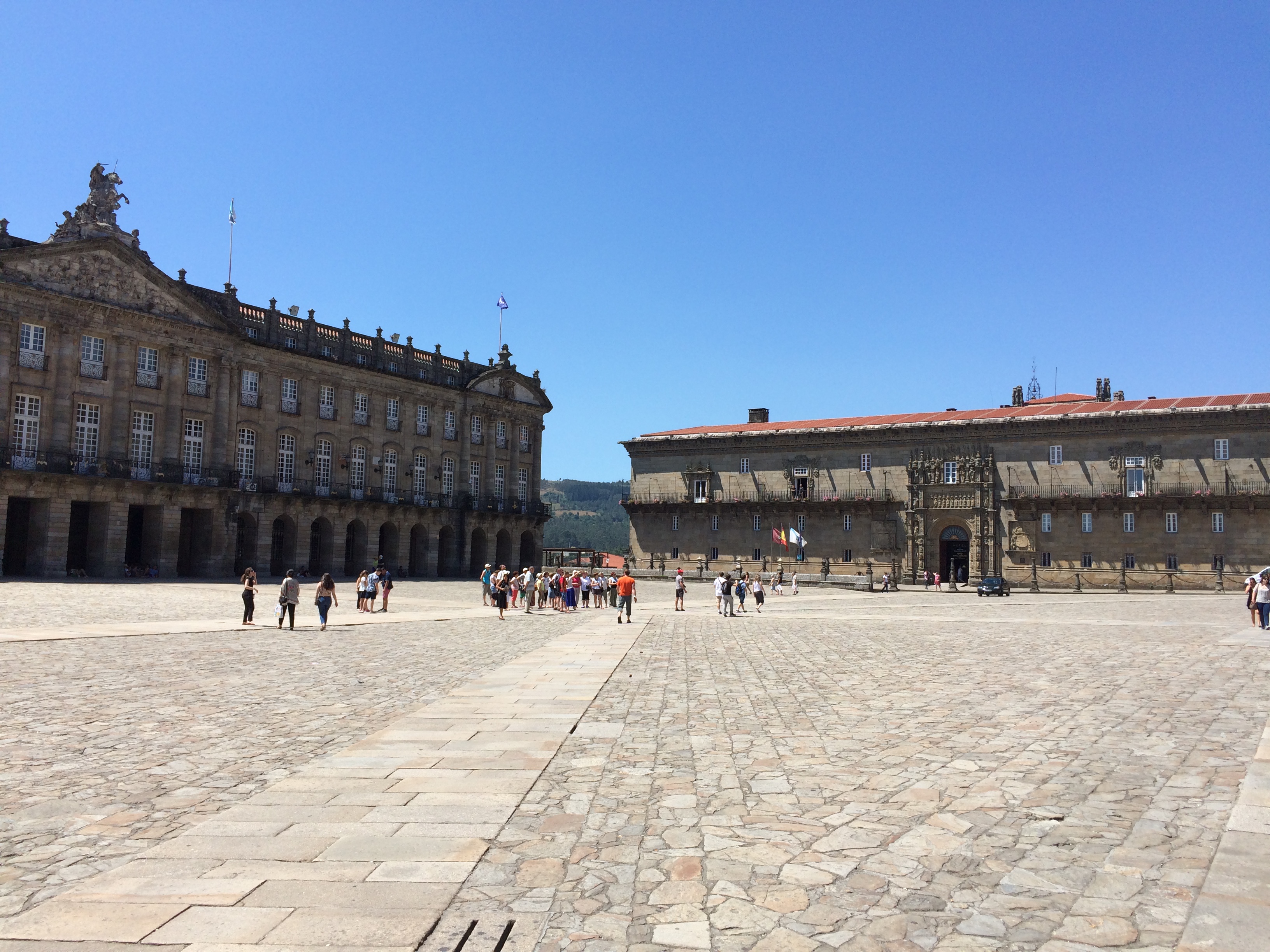
The Praza do Obradoiro showing the Hostal dos Reis Catolicos in the background.

The Hostal dos Reis Catolicos, commissioned by Queen Isabella and King Ferdinand as a hospital for the Pilgrims.
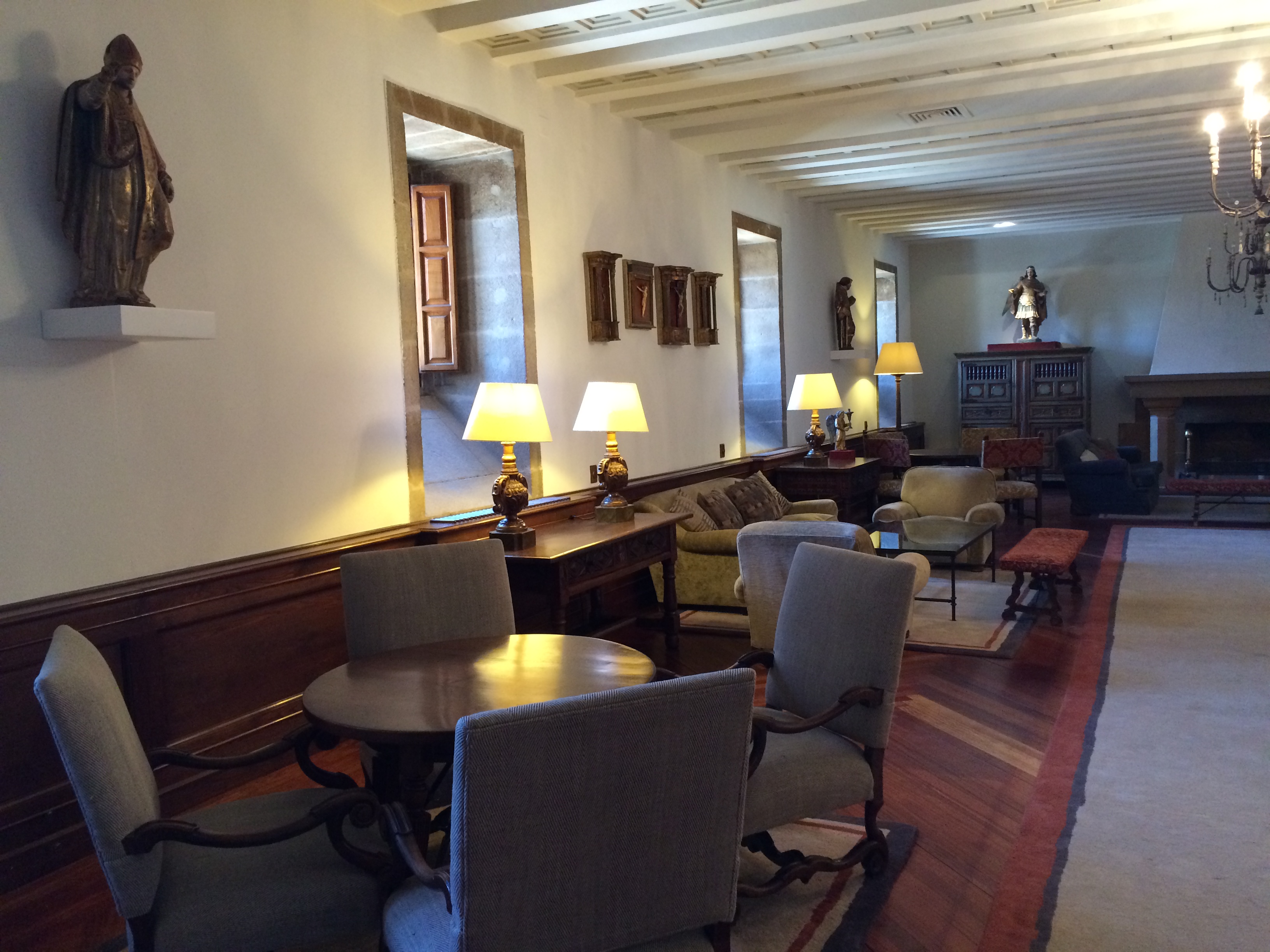
The plush interior of the Hostal dos Reis Catolicos (now the luxury Paradors Hotel) commissioned the year Ferdinand and Isabella started the Inquisition.

An old wooden engraving in the Hostal dos Reis Catolicos depicting the Good Samaritan.
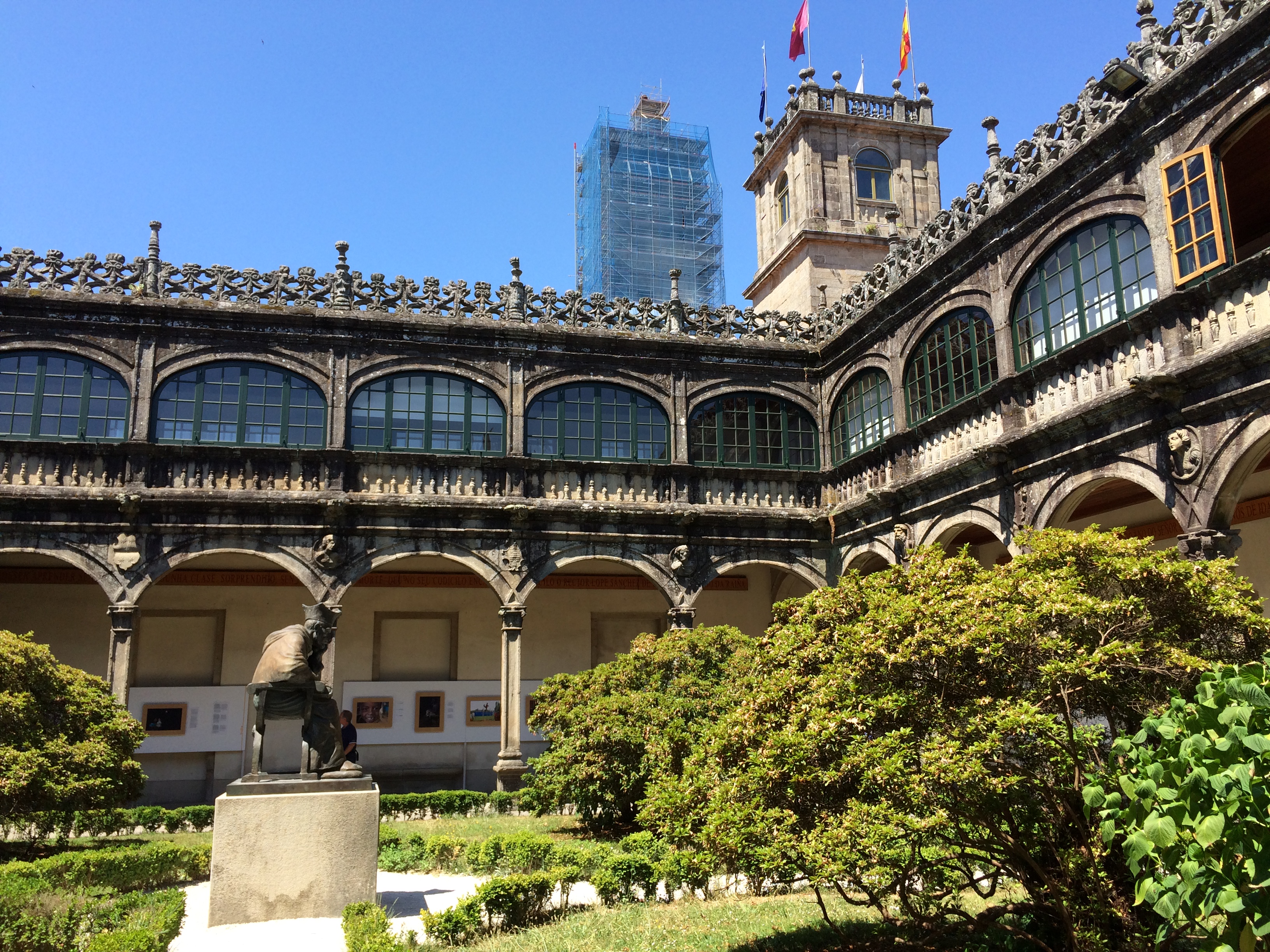
The old university library in Santiago. Unfortunately we weren’t allowed a look inside.
Next stop was La Coruna (or A Coruna in Galician) lying on the north west corner of Spain. We found a campsite in Santa Cruz on the other side of the wide bay on a hilltop overlooking a seemingly very popular beach. Though large, it was teeming with people who looked like ants from the hilltop, both in and out of the water. A swim seemed de rigueur but once in the water, it was more wading through a thick broth of seaweed and wasn’t pleasant in the least. So it was back at the campsite and a 2 km walk to Santa Cruz village for a taste of the local cuisine. There were several busy seafront bars and restaurants but we avoided these and found in a side street the Meson Pulpeira which was empty but where the chef/owner greeted us warmly and talked us convincingly through the menu and the Galician and Asturian specialities. It was worth every penny. We ordered some Mejillonada de Zamburinas as la Cavalcanti (Mussels and Coquille St Jacques in a very tasty sauce) and grilled Pulpo (octopus) with garlic for starters and a Rape a la Plancha (grilled local fish) and Cordero Asado (roast mutton) as a main. All washed down with a local regional white made with the Godello grape which was very much like a good Sauvignon.
We asked why they didn’t put some tables outside to attract more people like other restaurants were doing. Because their food needs to be served straight away and they couldn’t do this if they had tables outside as well as in without employing more staff, and that was too complicated. They preferred to serve to fewer regular discerning customers than to a large number of visitors. In any case, it was only 8.30pm and still quite early for Spanish diners – the place would start filling up later. Sure enough a large group of 12 regulars arrived shortly before we left.

The excellent Meson Pulpeira restaurant in Santa Cruz.
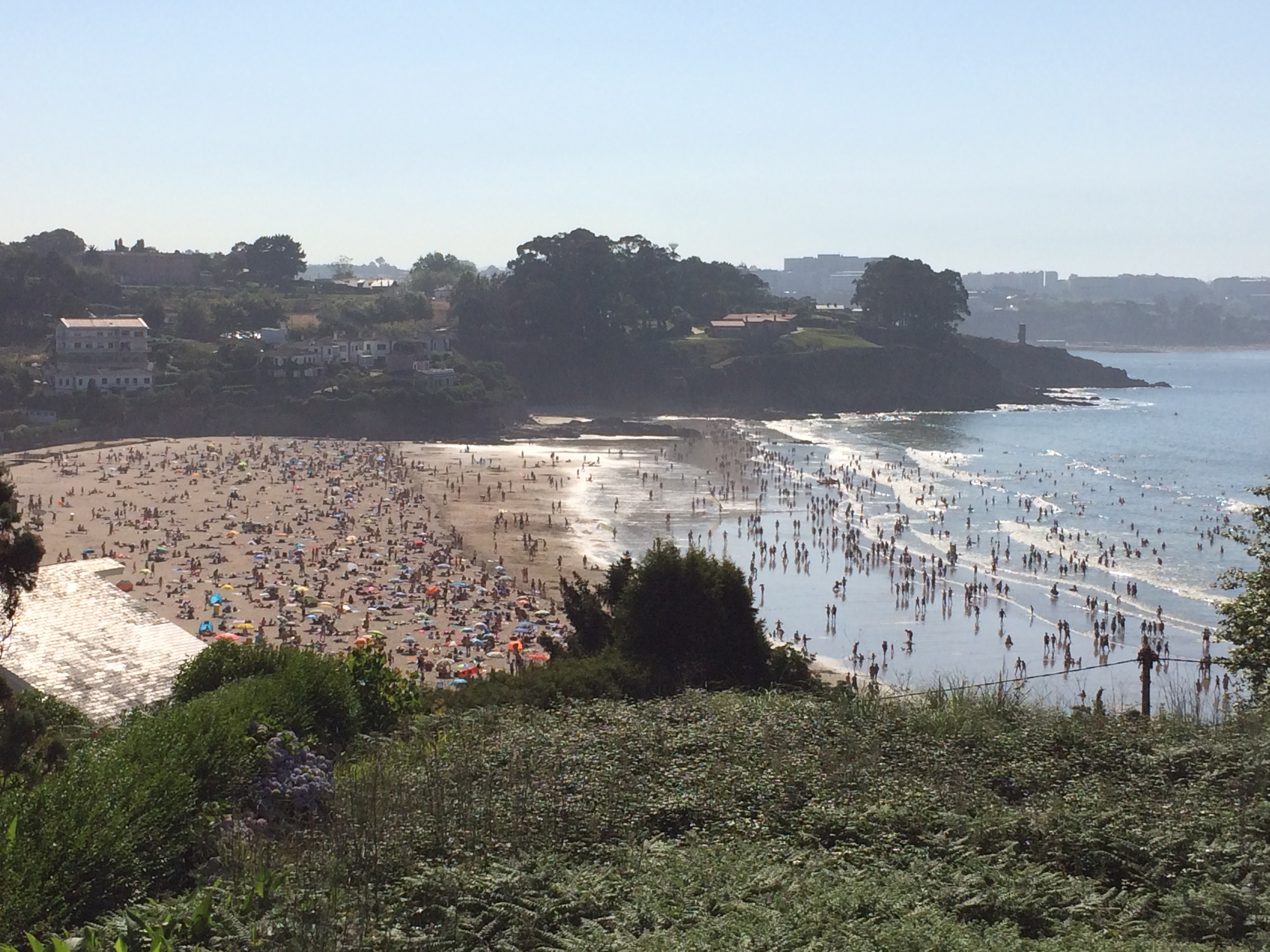
The campsite at Santa Cruz overlooking the popular beach at 6pm.

A mouthful of pulpo, a speciality of the region.
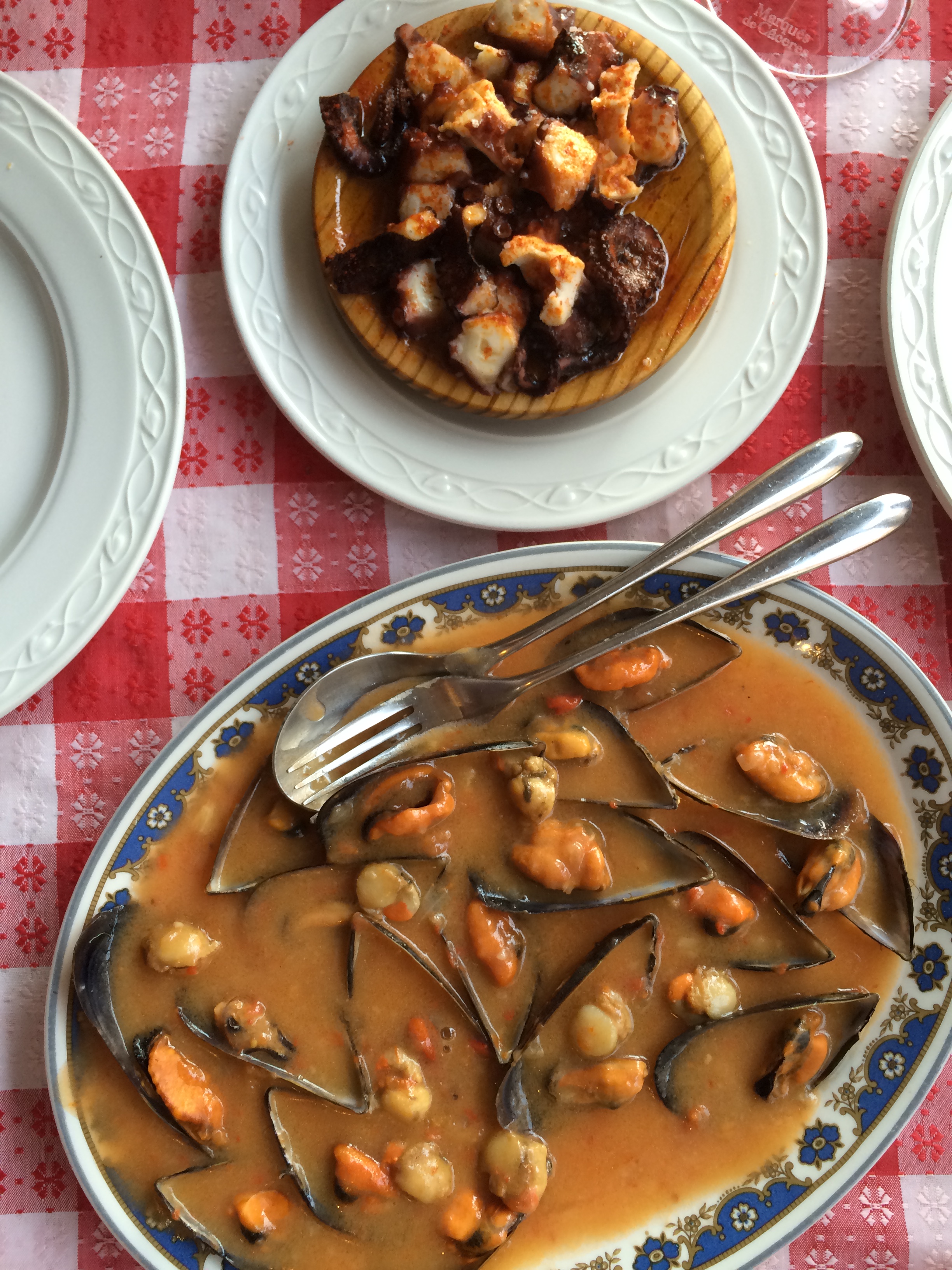
Grilled pulpo and mejillonada de zamburinas a la cavalcanti.

Walking back from Santa Cruz fishing village.

































































 Travels with our van