Saturday 13th to Tuesday 16th June – Calatayud to Valencia via Orhuela del Tremedal and Sagunto

Standard

We leave Camping Sevinan and the ants on the morning of Saturday the 13th heading in the direction of Valencia where at least the weather forecast appears more propitious. We’re now in the plains of the Sierra de Solorio and no sooner have we set off than dark clouds start to gather again.
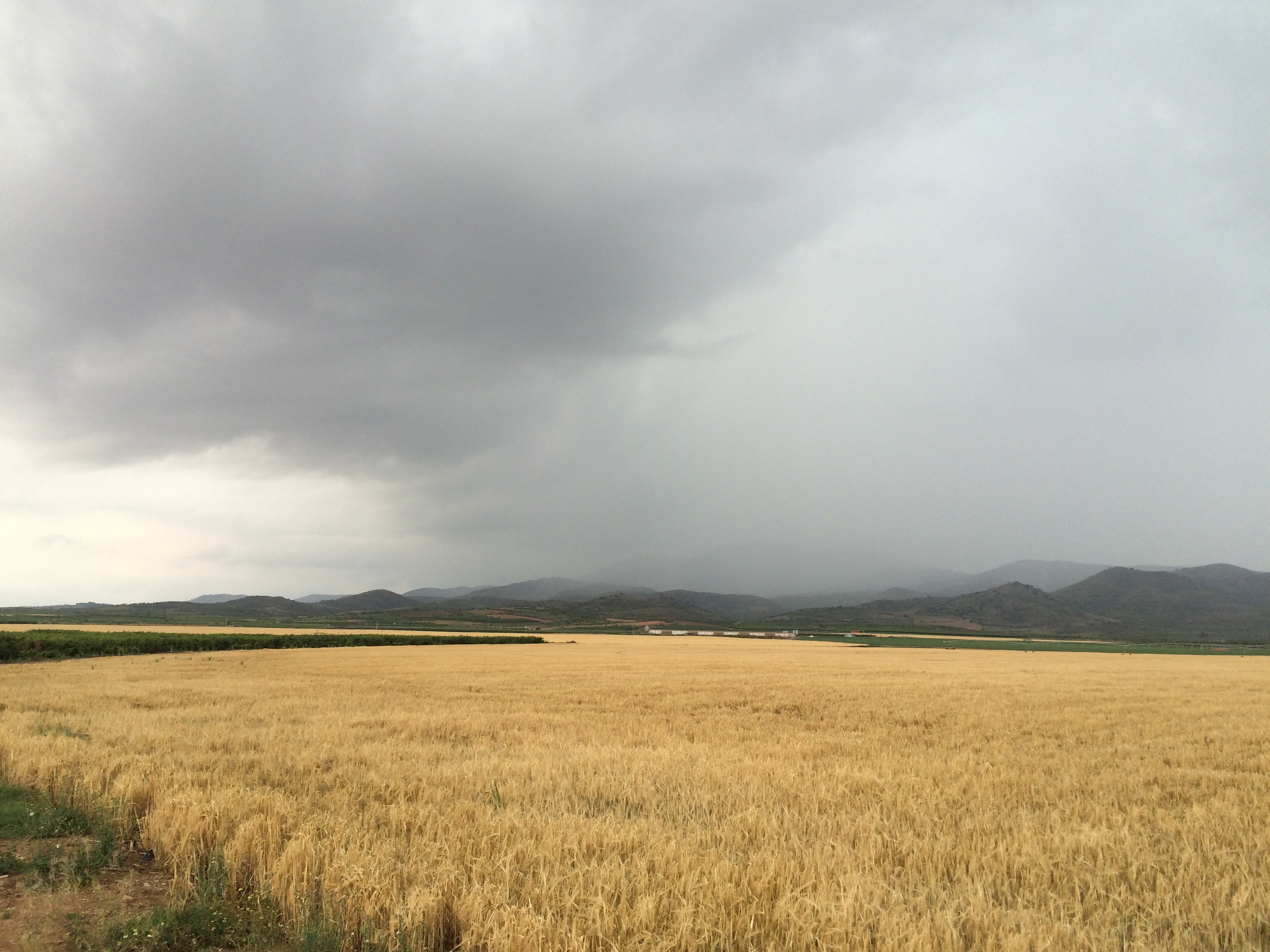
Dark clouds gather over the horizon in Almonacid de la Sierra.

Dark clouds gather over the horizon in Almonacid de la Sierra.

We go past Carinera, Paniza, Calamocha as the rain starts lashing down and strong winds pick up. By the time we reach Villafranca and Singra the windscreen wipers can barely cope with the almighty downpour. Brenda is a high-top and is being seriously buffeted by the wind. It might be true that the rain in Spain falls mainly on the plain but at the moment it seems to be falling absolutely everywhere and all the time! We pass a motorcyclist who’s had to slow right down to avoid being swept off the road and we smile sympathetically at him. He smiles back through the visor in his bell helmet. I used to be a biker and know only too well how miserable it is riding in heavy rain and wind.
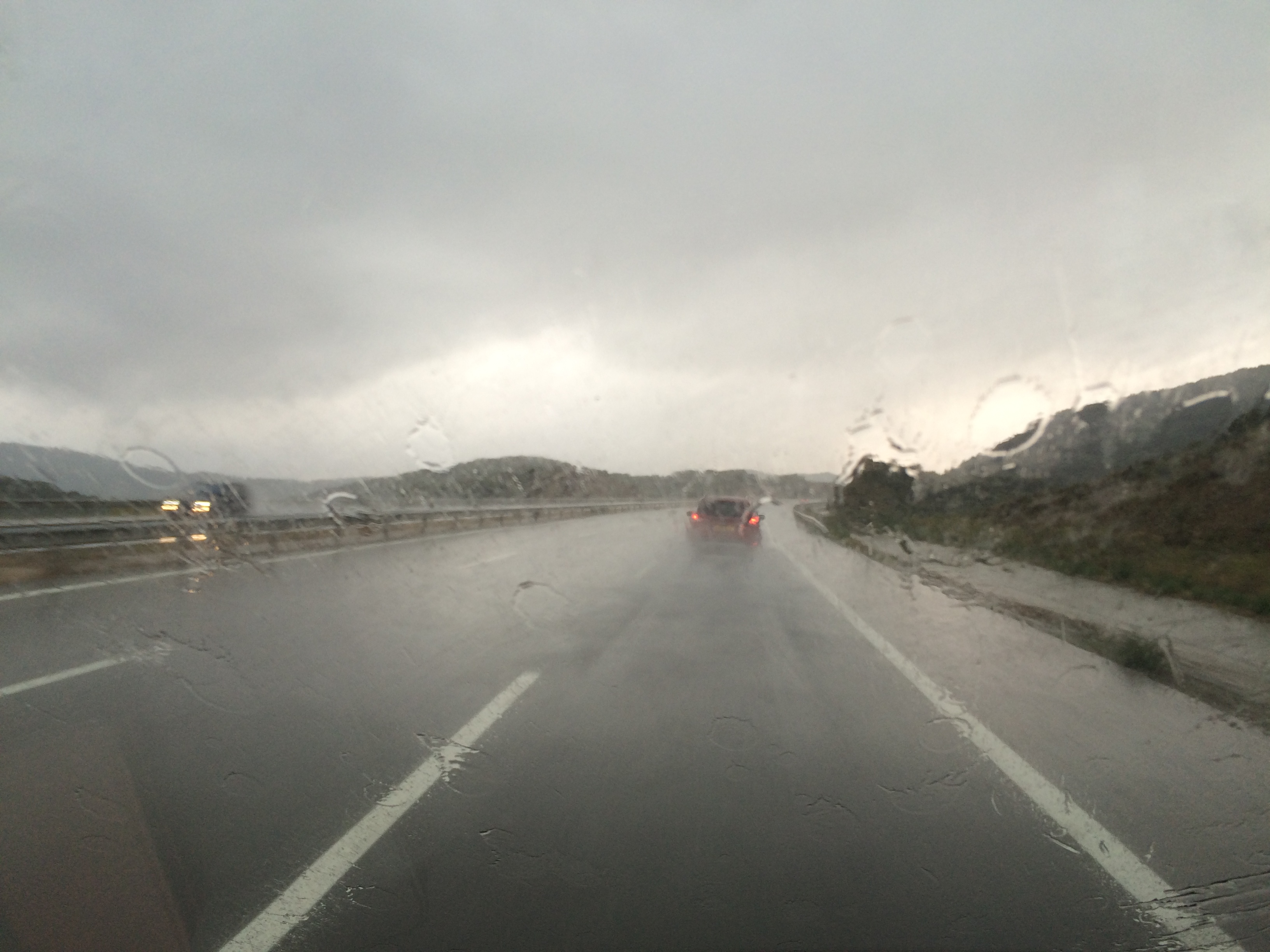
Strong winds and heavy rain as we pass Paniza.

Strong winds and heavy rain as we pass Paniza.

The downpour is relentless over Villafranca.

The downpour is relentless over Villafranca.

As we reach Torrelarcel, there’s a temporary dramatic parting of the dark clouds as lighter clouds take their place – the sky looks like something on the ceiling of the Sistine Chapel. Maria Callas is singing La Wally by Catalani with all her soul and her divine voice adds to the dramatic effect. The motorcyclist overtakes us slowing down slightly as he does so to smile and give us a V sign (the polite one!) then he rides off – we’re too slow, pity that would have been a nice photo. The respite is only a short one however – as we arrive at Santa Eulalia, it’s looking apocalyptic again.
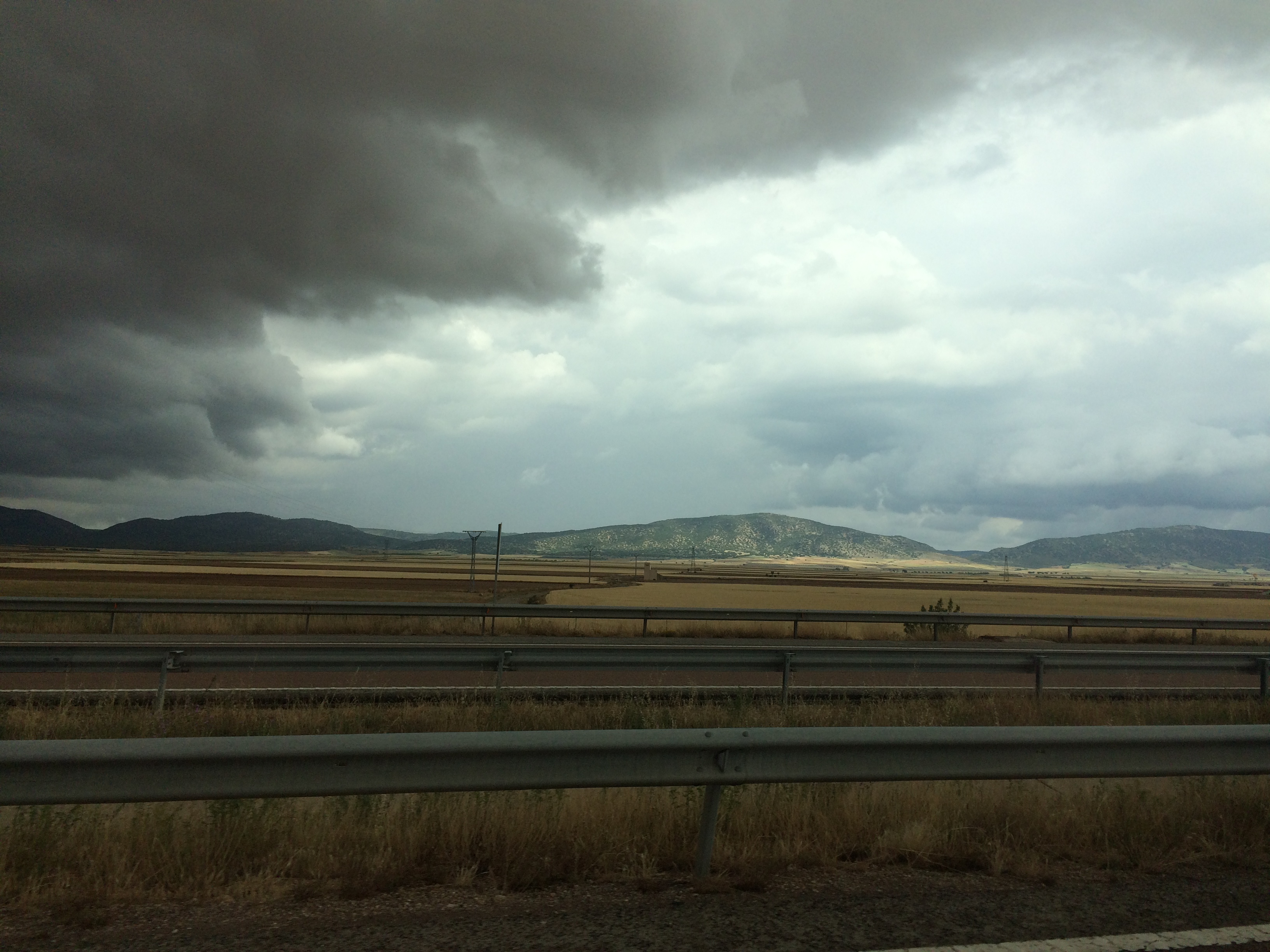
Dramatic sky over Torrelacarcel as the dark clouds begin to part.

Dramatic sky over Torrelacarcel as the dark clouds begin to part.

.. but come back as we reach Santa Eulalia.

.. but come back as we reach Santa Eulalia.

It’s still raining when we get to Pozondon with a sign next to it saying it’s a heritage site (‘Centro interpretacion arquitectura traditional’). Old ramshackle crumbling homesteads line the road. We drive through the village and stop briefly to take photos. Not a soul in sight. It’s like a ghost town. We drive out again having seen Pozondon but none of its inhabitants.

Pozondon is advertised as a heritage site but no sign of any people.

Pozondon is advertised as a heritage site but no sign of any people.

It’s been such a dreadful journey, we decide to stop at a campsite nearby in the Sierra de Albarracin. It’s in a place called Orhuela del Tremedal but what we don’t realize is that we’ve been gradually climbing for quite a while and Orhuela as we’re told by the Campsite owner, lies 1500m high. The site is pretty basic and we get the feeling we’re intruding on something when we arrive at the reception-cum-bar where the owner and a group of friends still seem to be finishing off a boozy lunch at 5pm. It’s a little bit fresh when we arrive and install ourselves at the very basic site.
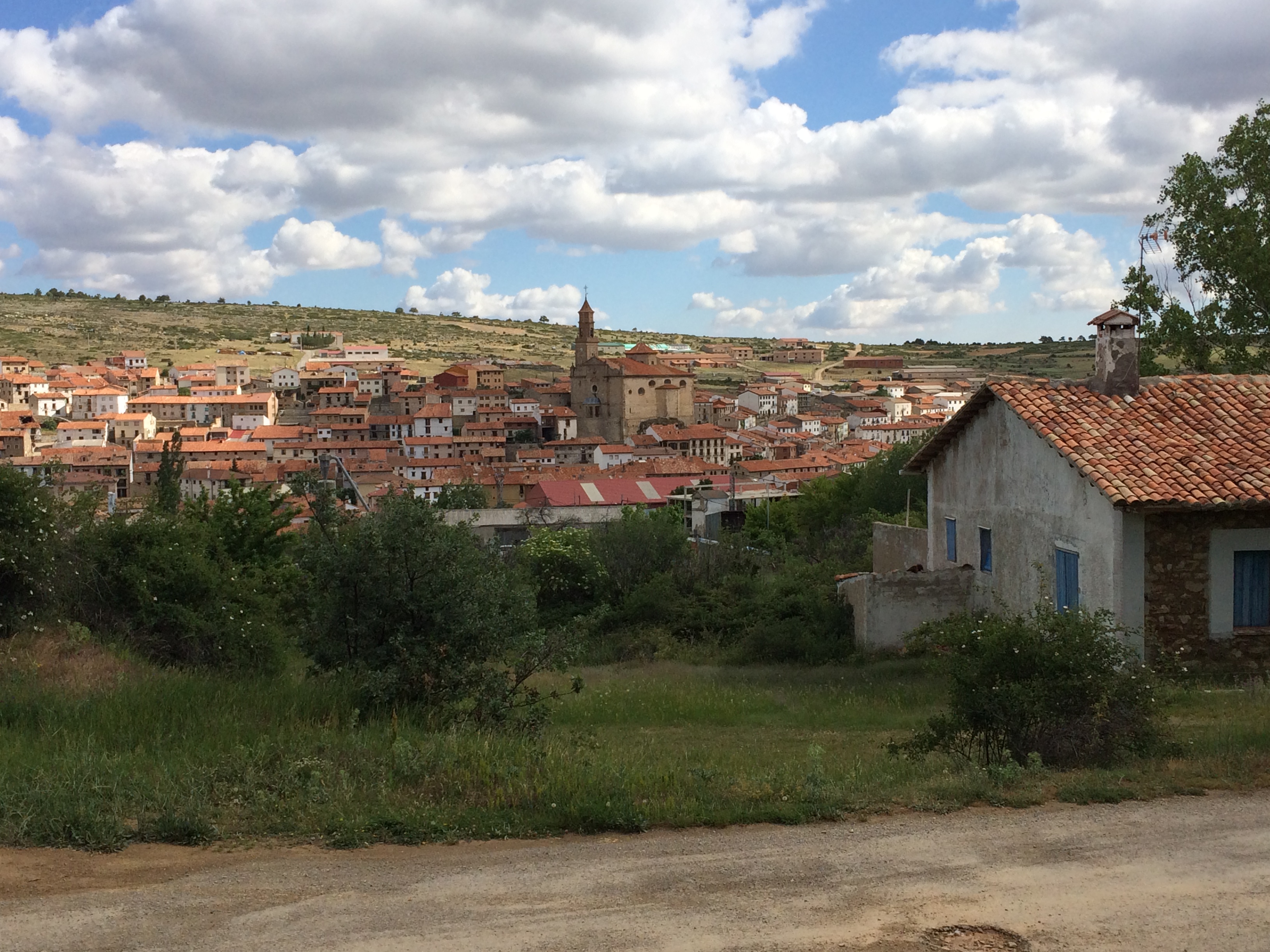
View of Orihuela from the 1500m high campsite where we froze that night.

View of Orihuela from the 1500m high campsite where we froze that night.

But the temperature drops quickly. We put on a jacket and walk down and back up again into Orhuela village to try and find a restaurant. It’s a pretty looking old village from a distance but closer up, it’s clearly struggling economically. We go into a bar that looks like it could also serve food but are greeted by about 10 pairs of eyes staring unwelcomingly at us. Again that feeling that we’d interrupted something – this time, apart from the drinking, a bull-fighting tournament they were watching on the TV on the wall – honestly! We turn and go straight back out again and ask some women sitting outside where we can find somewhere that serves food – they point to the end of the road and say something about ‘ultima’. The place we find looks more promising as it says restaurant outside, but yet again, as soon as we step inside we interrupt a small group of people sitting at the bar and busy drinking – “nada comido”.

Judith beginning to feel chilly as the temperature drops.

Judith beginning to feel chilly as the temperature drops.

The rustic but unwelcoming village of Orihuela - we're at a loss to find somewhere that serves food.

The rustic but unwelcoming village of Orihuela – we’re at a loss to find somewhere that serves food.

So it’s back to the campsite and that chicken consommé and tin of cassoulet we’d fortunately bought in a Carrefour City (that’s their equivalent to Tesco Express or other mini-marts) before we left France. Actually, it was just the ticket as it was staring to get quite nippy. In fact that was just the beginning –the temperature dropped so low during the night that we had to sleep fully clothed and we still froze as of course we’d left warm blankets in Brittany and had only kept thin cotton ones. The wind had also picked up again and there was a terrible cold draft in the van all night – in a word, we had an awful night and slept very badly.

The best thing for it therefore was to have a hot shower in the morning, eat some hot porridge and set off as soon as physically possible, which is what we did. The aim was to get to the warm coast around Valencia and absorb some of that Mediterranean sun at last. Maria Callas again, this time she’s singing plaintively: “Reponds a ma tendresse, reponds a ma tendresse” in Saint Saens’s Samson and Delila . We stopped at Terual as it looked nice from a distance but in fact offered nothing of any particular interest. We had in fact yet to drive through a village or small town which, as happens in France all the time, immediately looks inviting with its boulangerie, café bistrot offering the day’s ‘formule’ and obligatory little town square and mairie. We did find a café though and had a coffee and Spanish pasties.
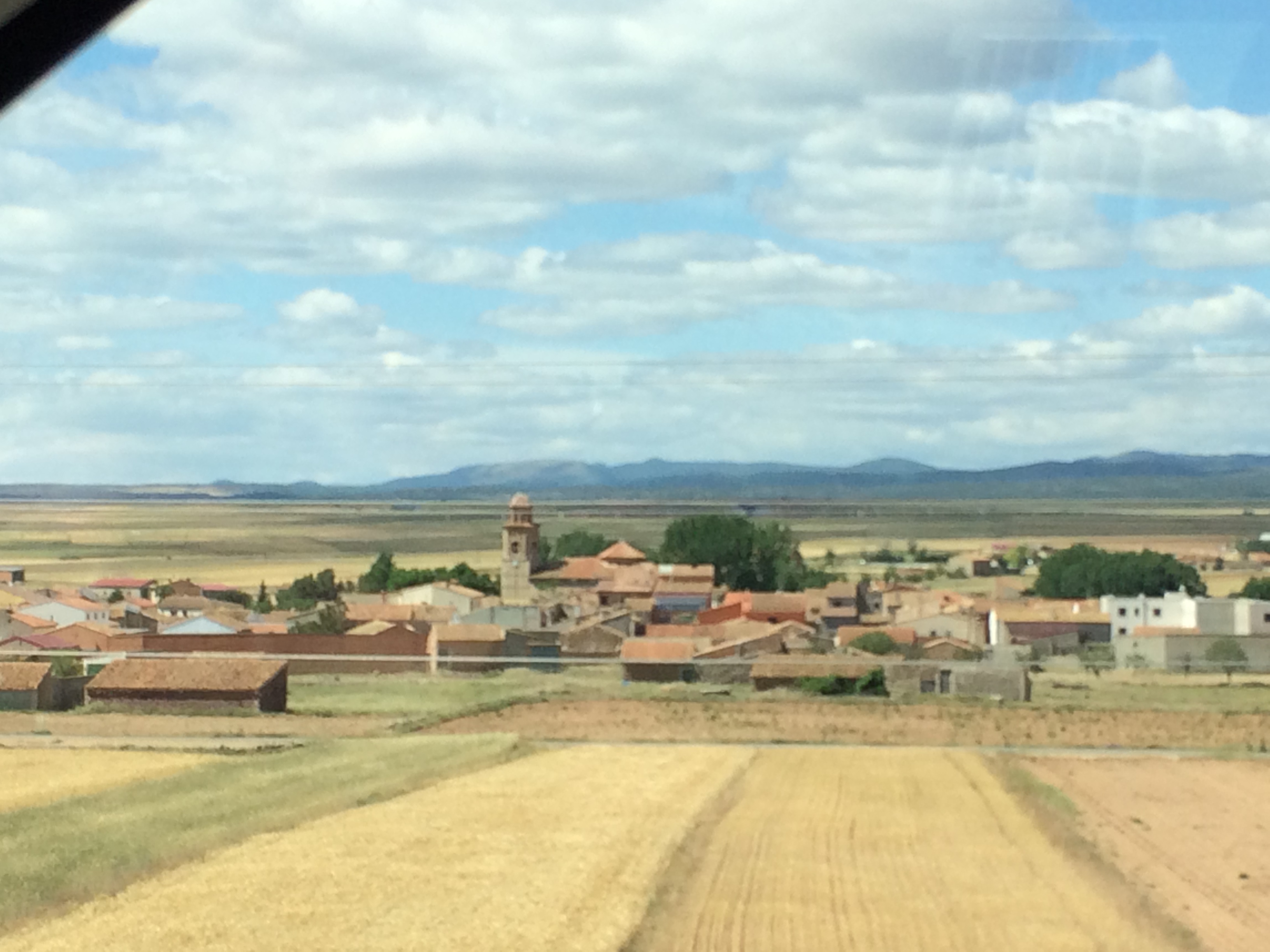
The town of Terual on the way to Sagunta near Valencia.

The town of Terual on the way to Sagunta near Valencia.

A brief stop in Terual for a coffee and Spanish savoury pasties.
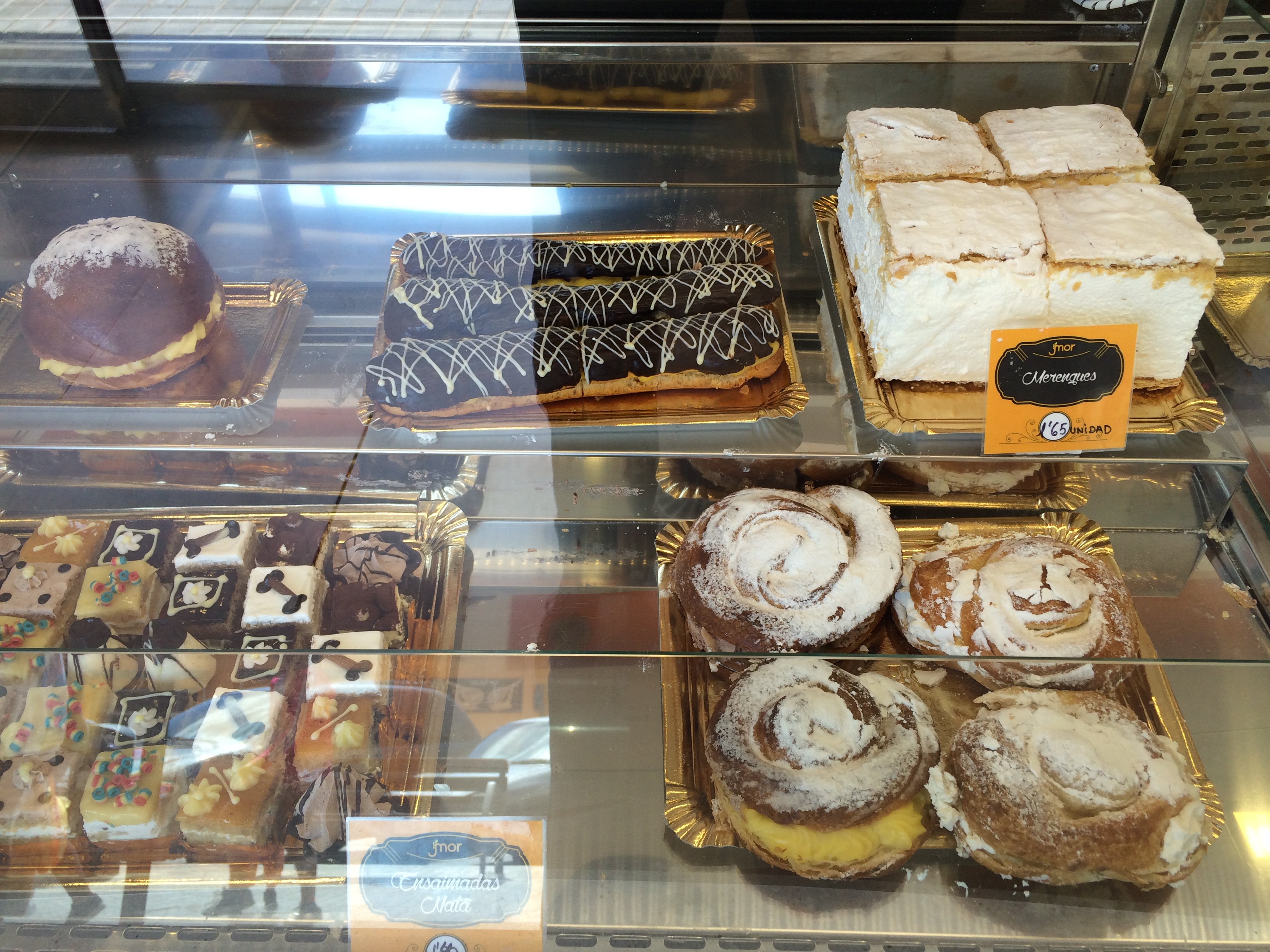
A brief stop in Terual for a coffee and Spanish savoury pasties.

We agree the cakes don't look particularly appetizing.

We agree the cakes don’t look particularly appetizing.

Sagunto lies 40 kms or so north of Valencia but had been advertised as a site right by the sea with its own beach, which was just the antidote we needed to the arctic conditions of the night before. It was busy when we arrived, with quite a few children – it must be a place popular with locals at weekends. It’s warm but very windy and the sea is a bit rough but this doesn’t deter us and we’re soon in the water after setting ourselves up. The site is more like a caravan park and is very settled – there seem to be a few people there who are more or less permanently encamped and have enlarged their encampments with additional tents, small caravans, awnings and plants and little gardens. There are also permanent ‘casitas’ on the site complete with small inner courtyards surrounded by bright red and white bougainvilleas.
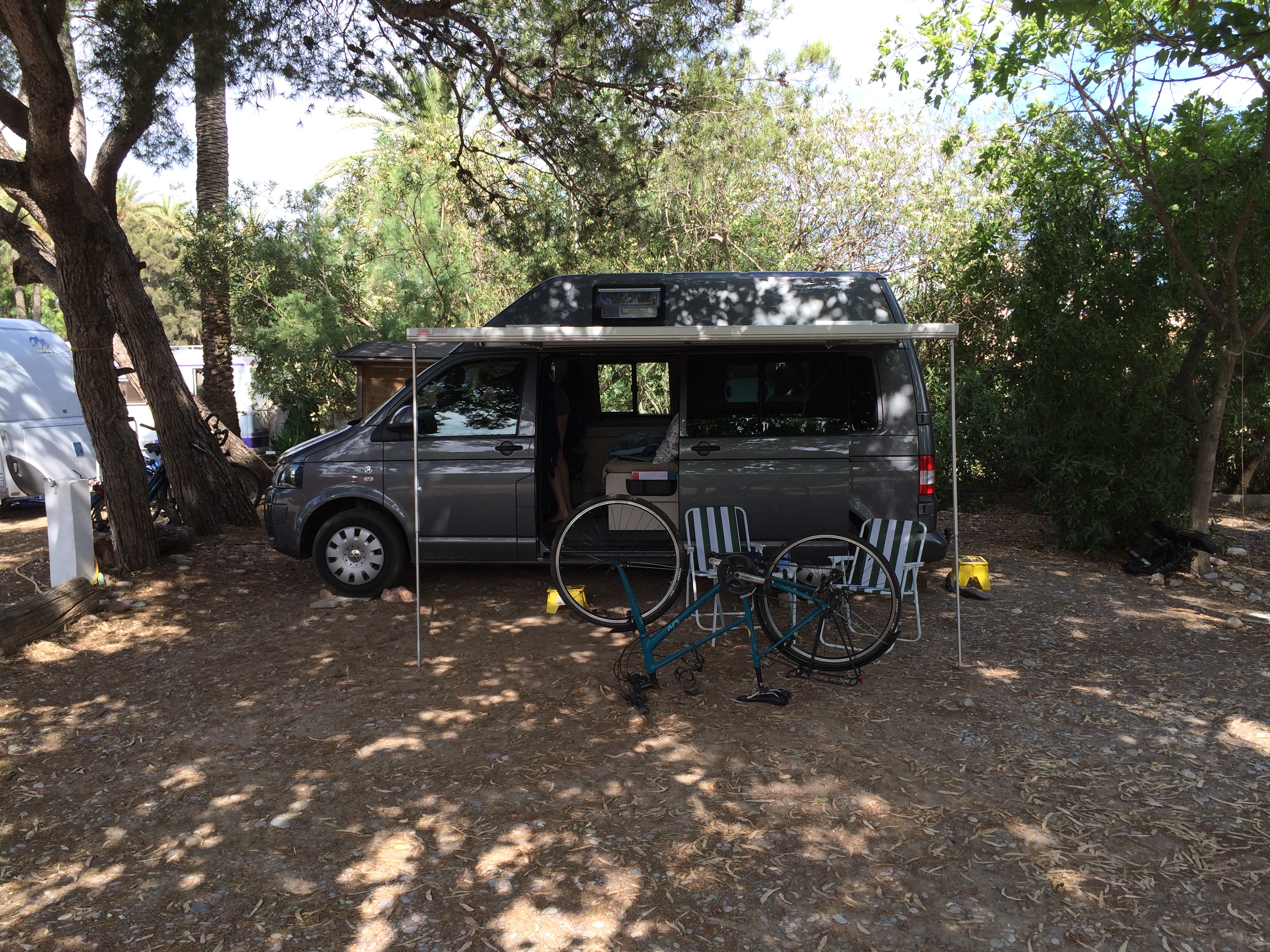
The campsite at Sagunto.
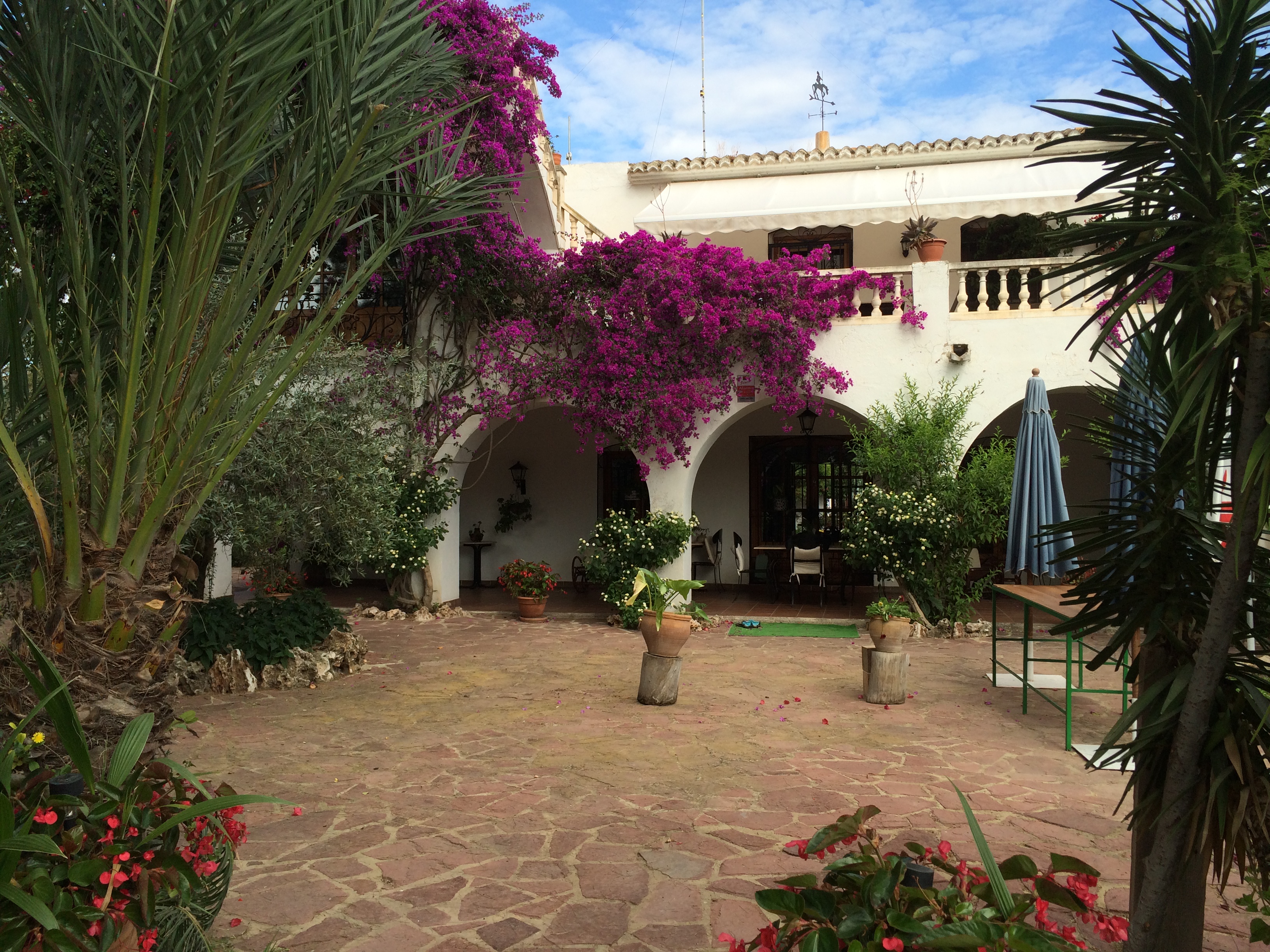
The campsite at Sagunto.

A pretty little villa at the Sagunto campsite.

A pretty little villa at the Sagunto campsite.

The sea at Sagunto - it had calmed down the next morning - time for a good swim before we set off again.

The sea at Sagunto – it had calmed down the next morning – time for a good swim before we set off again.

After an early dinner of pesto pasta and good catch-up with the blog, we set off again in the morning for a quick tour of Valencia before heading to our next destination – Cartagena just south west of Murcia, avoiding the busier holiday destinations of Alicante, Benidorm etc on the coast.

Valencia immediately strikes us as a very appealing and vibrant city. The trouble we encounter, as happened in other places, is that all the car parks we see signs to are underground and have a height restriction of 2m or 2.2m maximum, which is too low for the high-topped Brenda who is 2.5m. After finding ourselves going round the city centre for the third time and trying unsuccessfully to fit in the one parking space on the road we could find, we abandon the idea of stopping and content ourselves again with just a drive around the city. It’s a pity as it looked like a very agreeable place to stop at for a coffee or a bite to eat and to explore further and the weather was perfect. Still, at least we know we like it and will come back again sometime in the future. The central Plaza was particularly beautiful.

The main Plaza in beautiful Valencia. It had a statue of a wise-looking Arab man in the centre. We didn't find out who it was.

The main Plaza in beautiful Valencia. It had a statue of a wise-looking Arab man in the centre. We didn’t find out who it was.
Valencia city centre.

Valencia city centre.

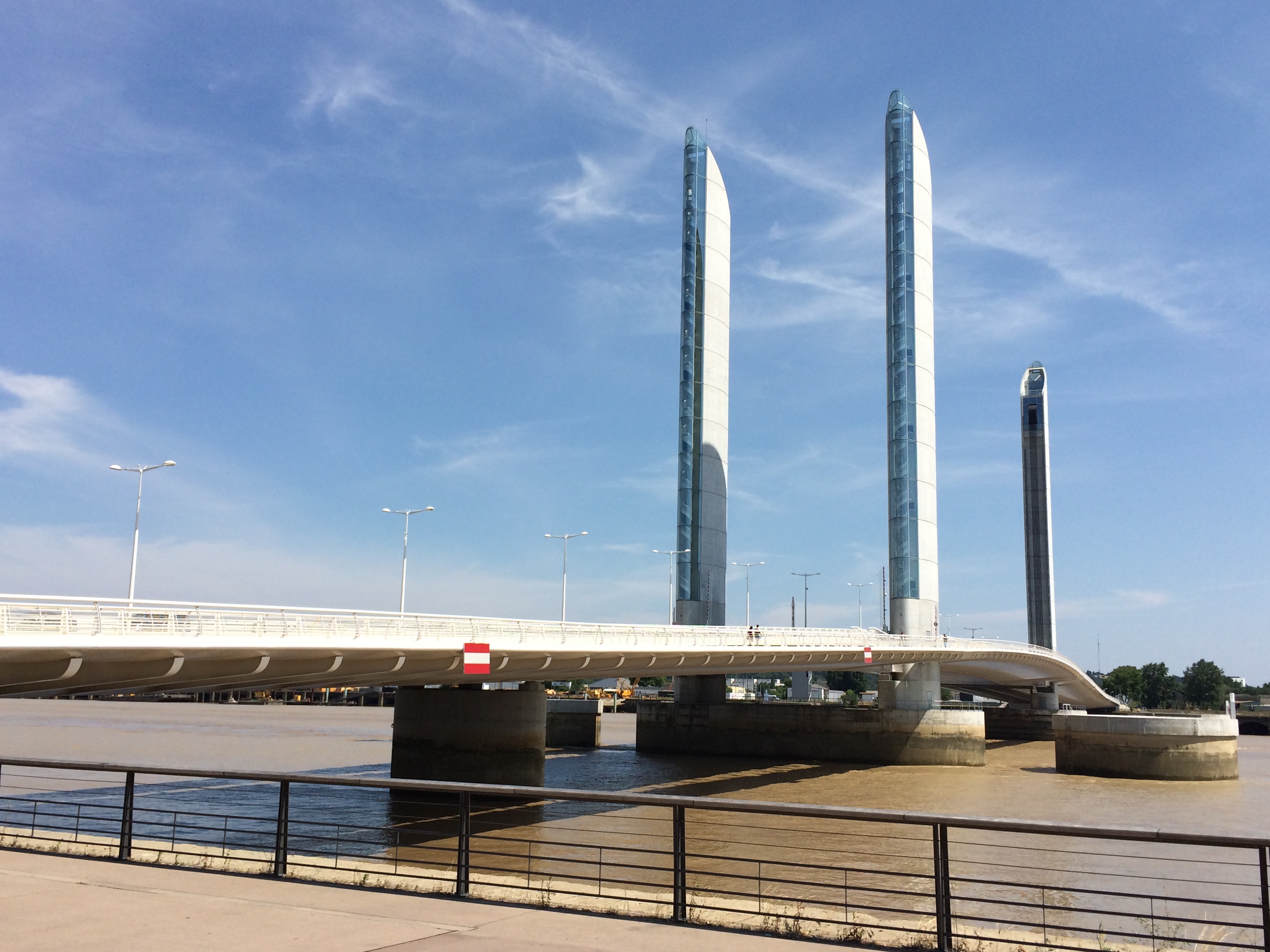
An interesting-looking bridge in Valencia.
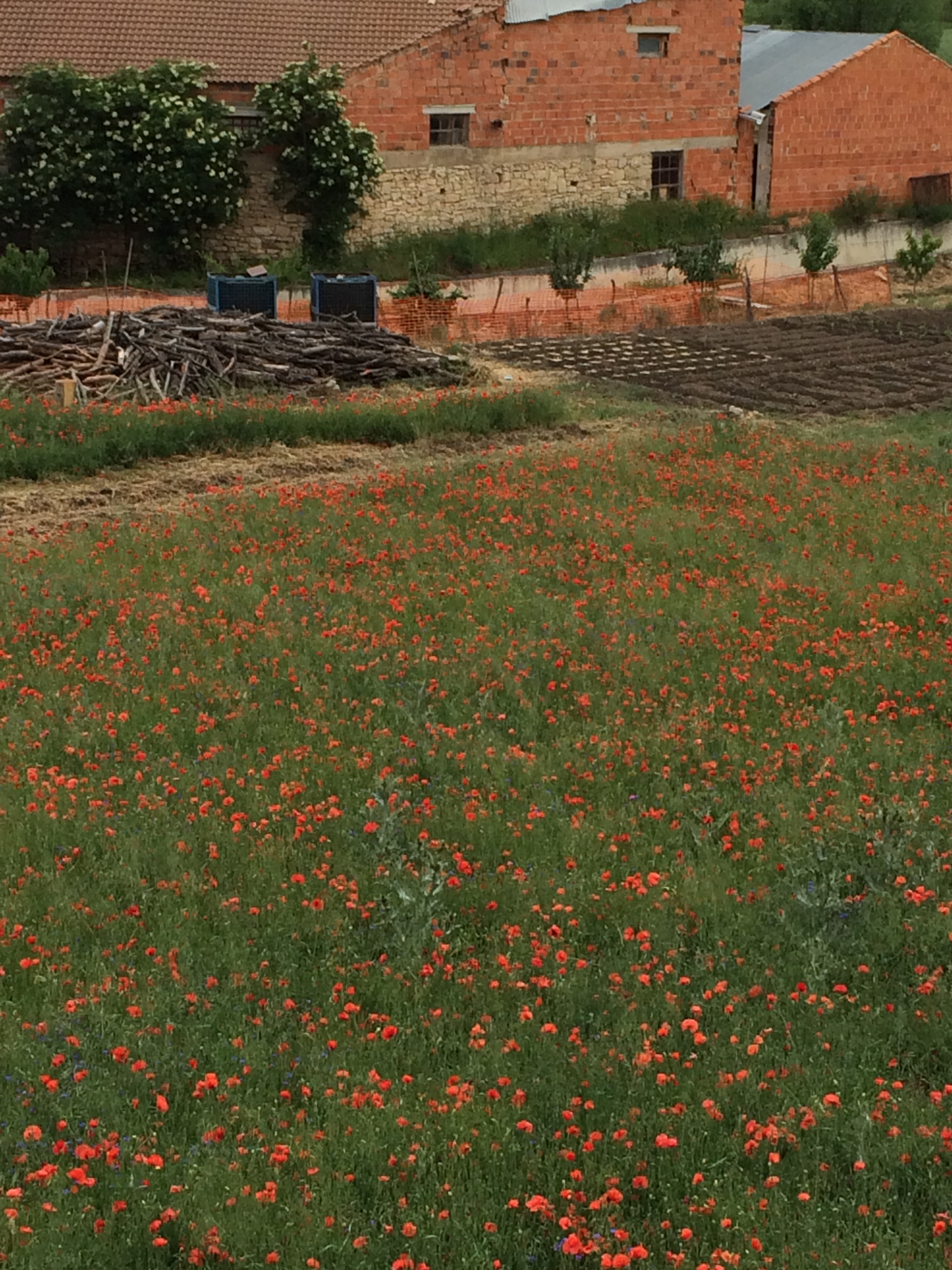
An interesting-looking bridge in Valencia.
IMG_2358

Friday 12th – Zaragoza to Calatayud

Standard
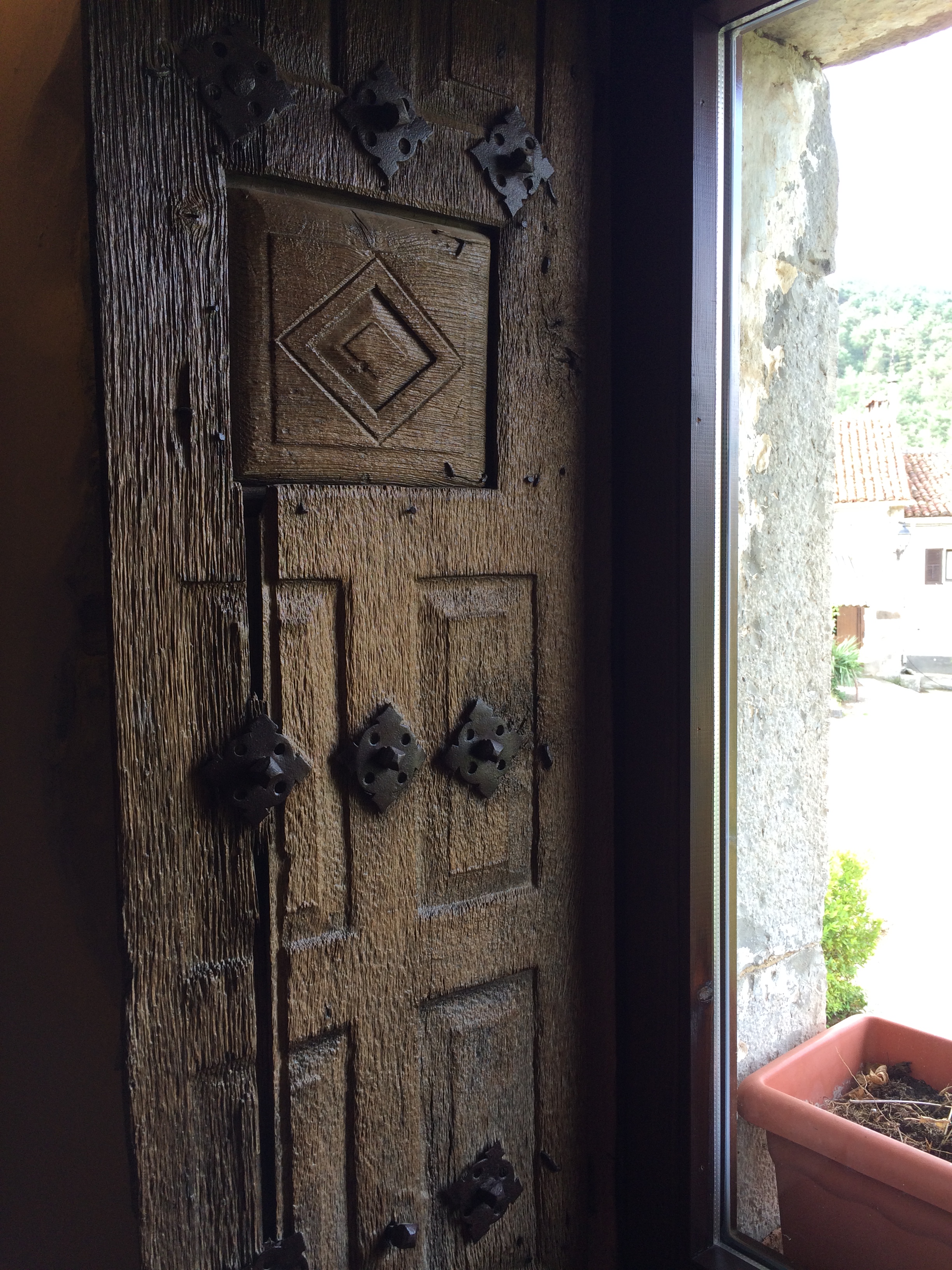
Old wooden shutter at the Akerreta Hotel.

Old wooden shutter at the Akerreta Hotel.

And so we reluctantly left our temporary refuge at the Akerreta Hotel restored by a hot bath and a warming meal with bona fide pilgrims in the convivial little pilgrims’ restaurant in the nearby village of Larrasoana the night before.

Our plan was to escape the unsettled weather and head south west to Valencia then Murcia and Granada before entering Portugal from the south.  But it seemed sensible to turn slightly east first to take a look at Zaragoza as it was close and sounded intriguing.  My grandfather had visited it a long time ago when he’d travelled there by sea from Alexandria and had spoken fondly of it. And the name sounded a bit like Zarathustra and Zoroaster – would we find there a clue to the mystery of the ‘eternal recurrence of events’?

True to what was now becoming a bit of a pattern in our sightseeing, we only had a couple of hours in the end to take a look at the city.  The first thing that struck us was that most shops seemed to be shut – so it was really true that everything stops for a long lunch and siesta in Spain until 5pm.  Another thing we were surprised at was that Zaragoza was Muslim-ruled between AD 714 and AD 1118 – that’s 400 years!  And that there were in fact power-struggles between different Muslim ruling clans within Spain.  Was there a Sunni / Shia schism even then? I guess we’ll find out more when we explore Granada and Seville.  It is said that Muslim influence reached as far north as Tours in France at one point, so it’s really no surprise that it lasted so long in Spain.  The Aljaferia Palace is of course the most obvious remnant of the period but the Catedral de la Seo also clearly betrays its Islamic origins, with its light blue tiled domes and spires that were obviously once minarets.  But even the Our Lady of the Pilar Basilica (so called because St James was said to have seen a vision of the Virgin Mary on a pillar) looked unmistakably Islamic in architecture. Unfortunately we weren’t able to see the inside of any of them but we strolled around the city and took in its atmosphere.

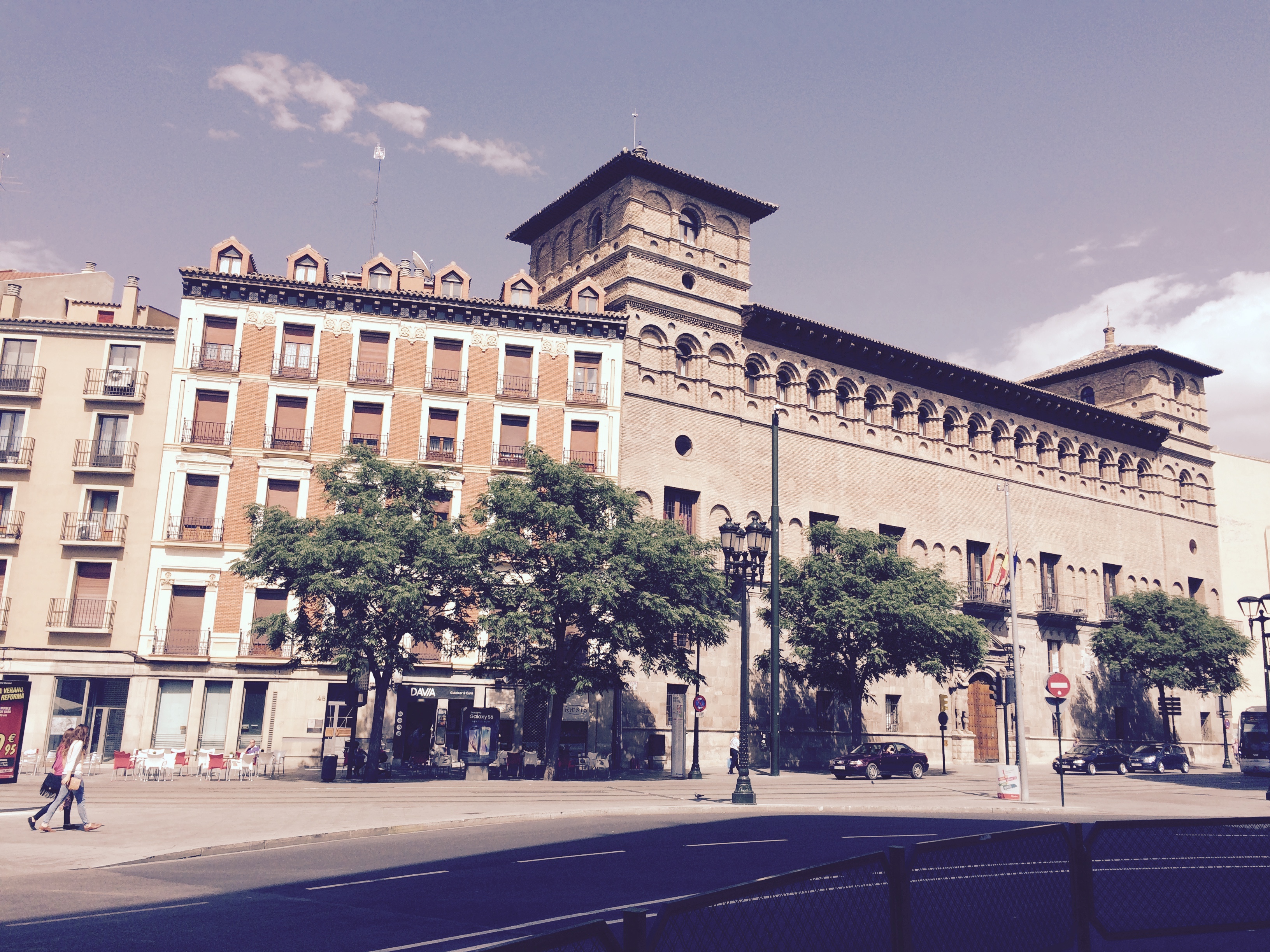
The Justice Palace in Zaragoza.
The Justice Palace in Zaragoza.
The Islamic origin of the architecture is evident.

The Islamic origin of the architecture is evident.


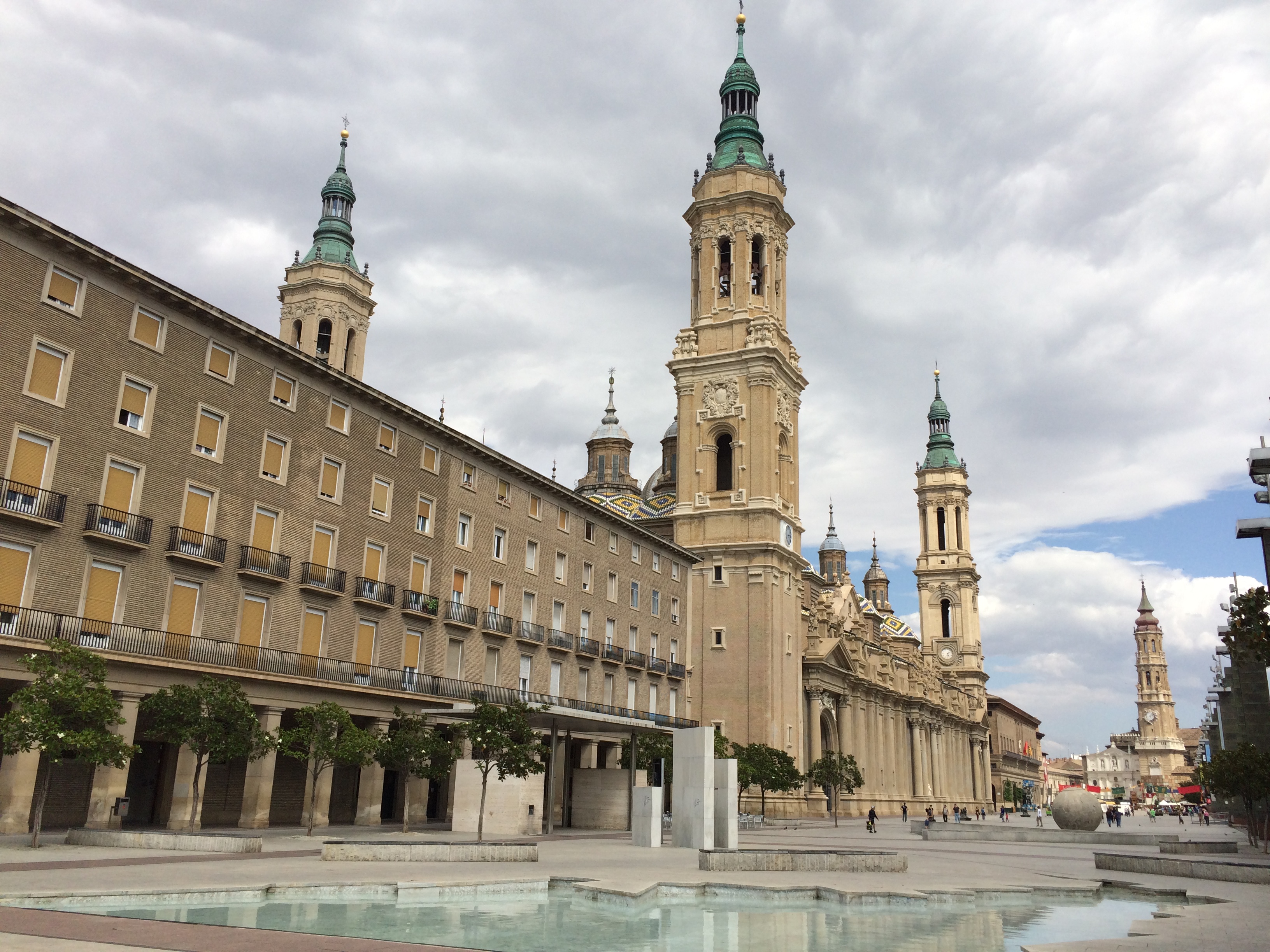
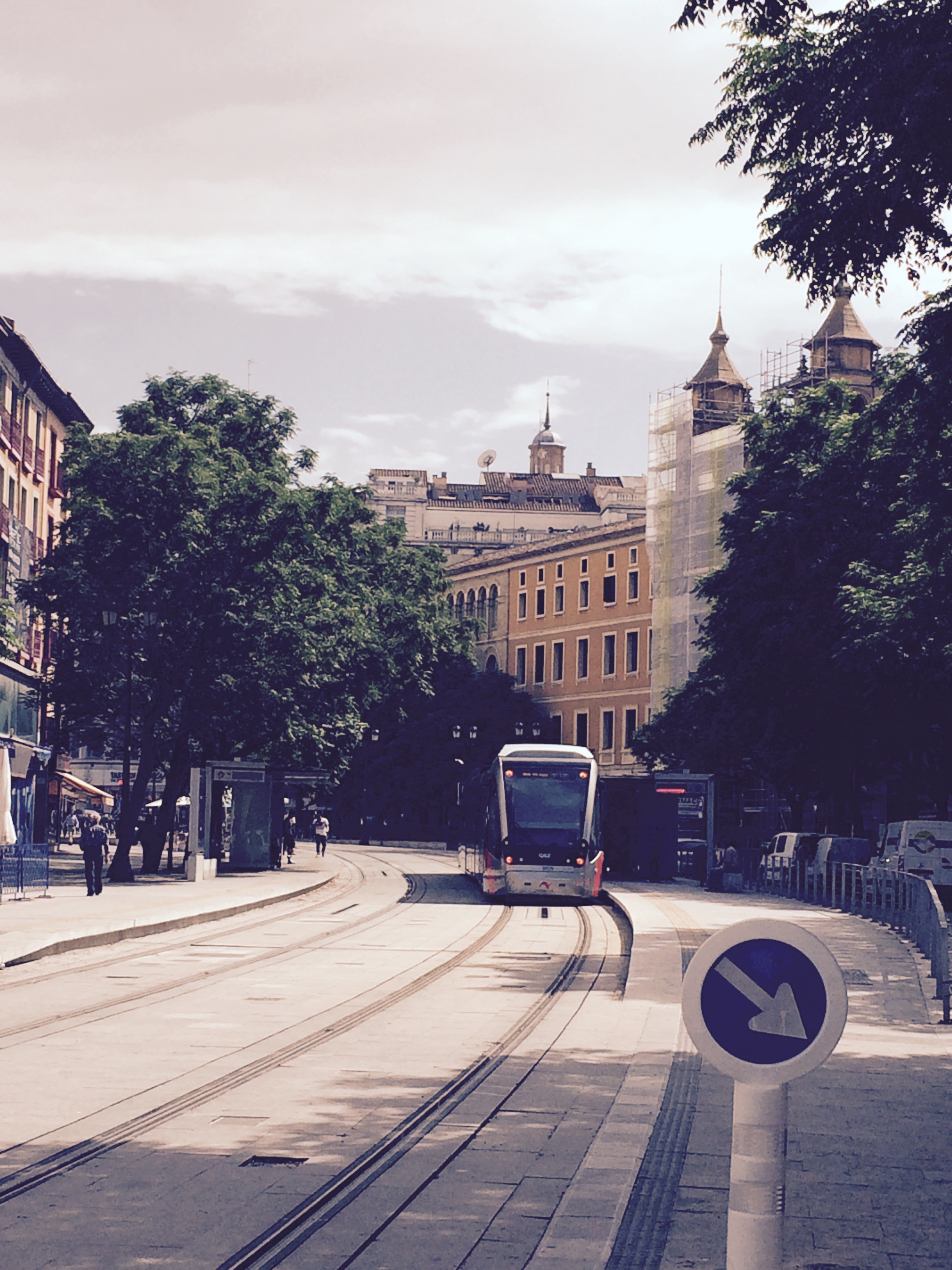
Our stroll takes us through avenues served by a modern tramway system, pleasant squares and even a red light district.  The city seems however somehow to lack vitality except when we reach the Plaza del Pilar, outside the Basilica, a huge plaza with, in one corner and continuing round surrounding alleyways, a lively outside market with stalls selling all kinds of produce – ham, sausages and saucissons featuring prominently. The square itself was reminiscent of the large midan outside the main mosque in Isfahan.

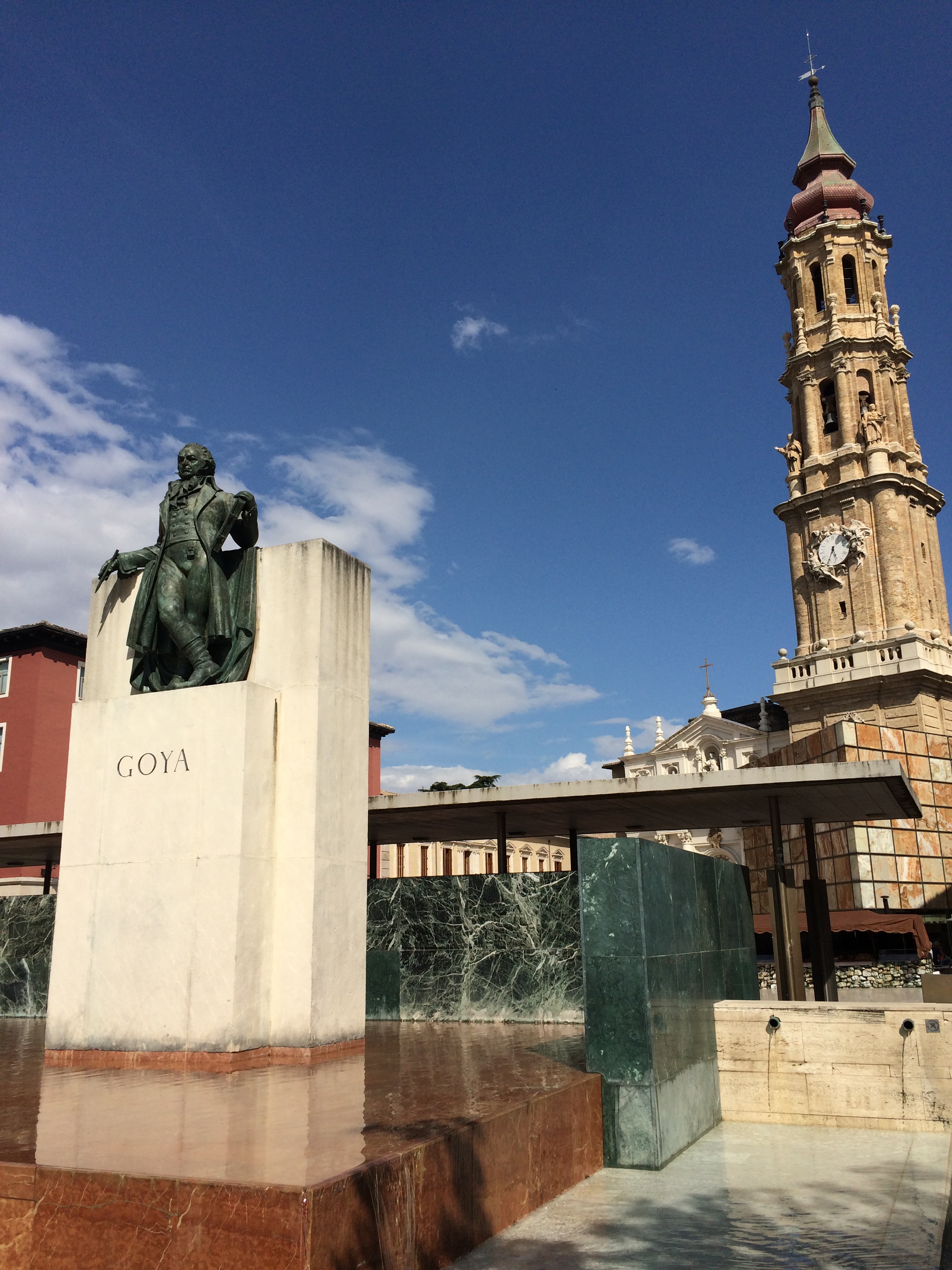
A statue of Goya on the Plaza del Pilar with in the background, the Cathedral of La Seo.

A statue of Goya on the Plaza del Pilar with in the background, the Cathedral of La Seo.


The Basilica and Plaza del Pilar, reminiscent of the large square outside the main mosque in Isfahan.

The Basilica and Plaza del Pilar, reminiscent of the large square outside the main mosque in Isfahan.


Ham, sausage and saucisson shop off the Plaza del Pilar market.

Ham, sausage and saucisson shop off the Plaza del Pilar market.


An avenue in central Zaragoza.

An avenue in central Zaragoza.
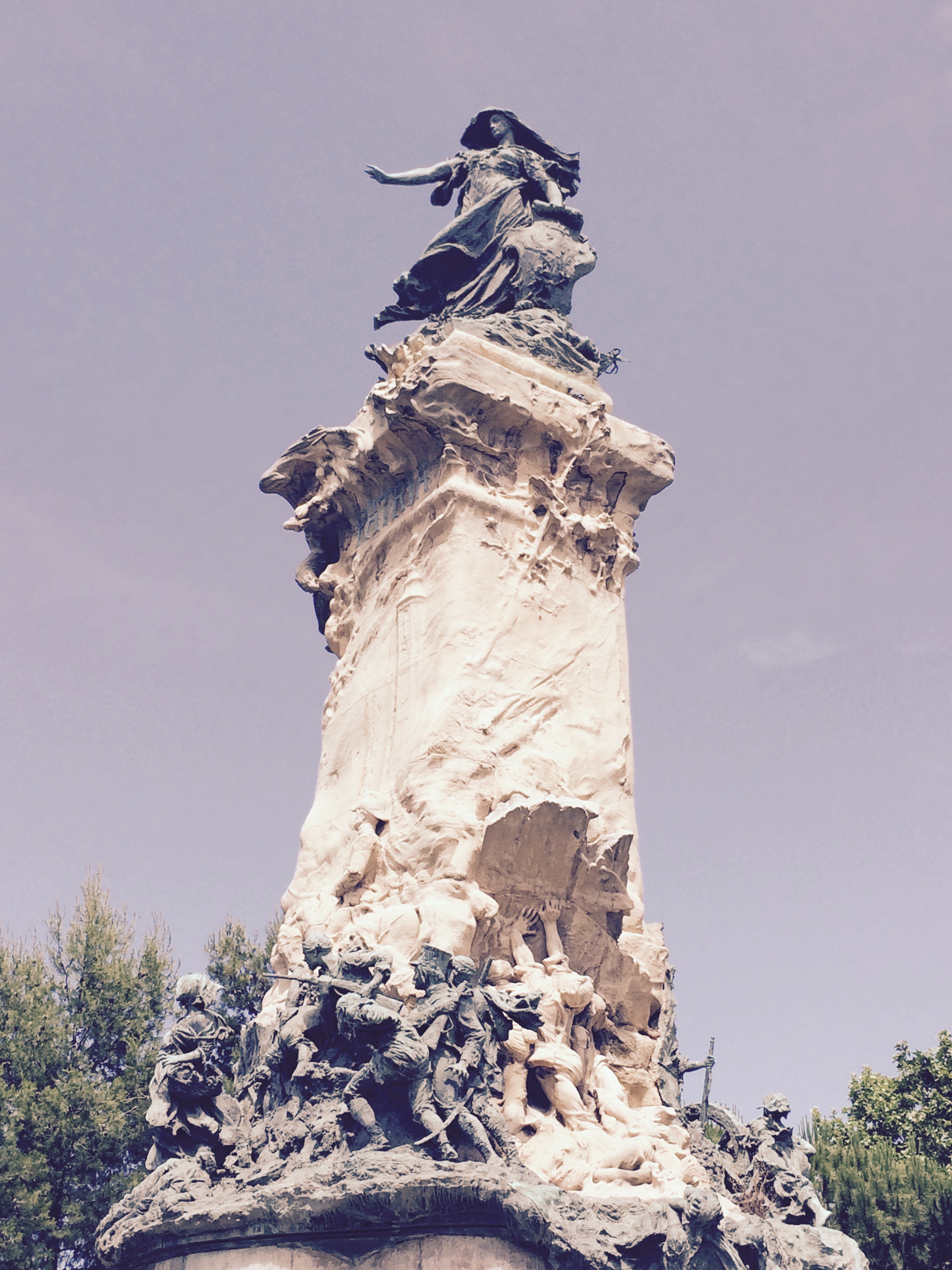
Zaragoza was of course at the heart of Aragon culture. On the way back to the van, we come across a father and daughter, spectacularly dressed up in full Aragon military uniform getting ready to take part in a commemorative event in the Plaza De Los Stilos which has at the centre of it a striking monument to all the heroes of the sieges of Zaragoza.

Getting ready to take part in commemorative event in the Plaza De Los Stilos.

Getting ready to take part in commemorative event in the Plaza De Los Stilos.


The monument in the Plaza de Los Stilos dedicated to all the defenders of the sieges of Zaragoza.

The monument in the Plaza de Los Stilos dedicated to all the defenders of the sieges of Zaragoza.


Judith contemplating whether Aragon fashion would suit her.

Judith contemplating whether she’d look fetching in a cheeky little Aragon dress.

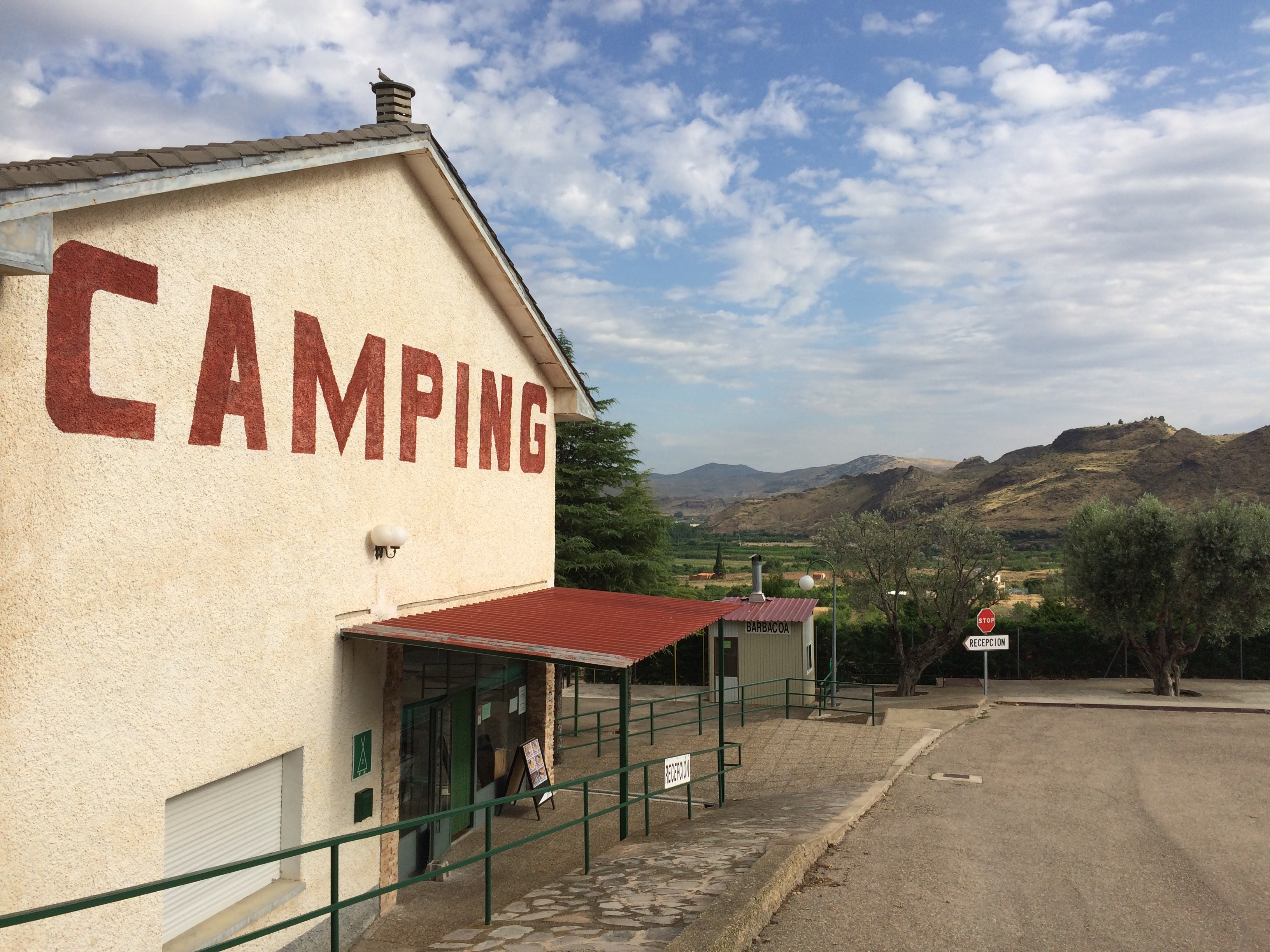
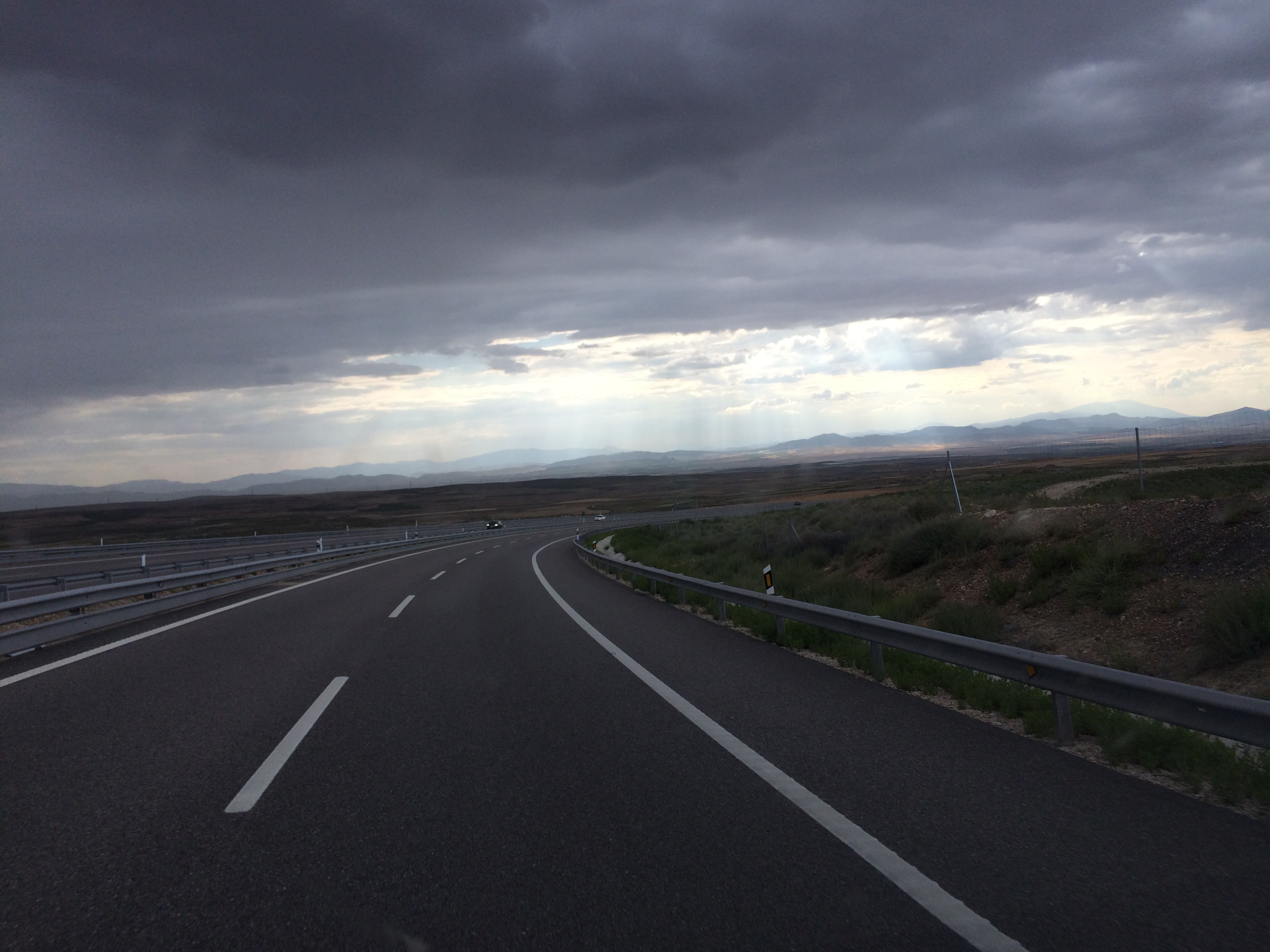
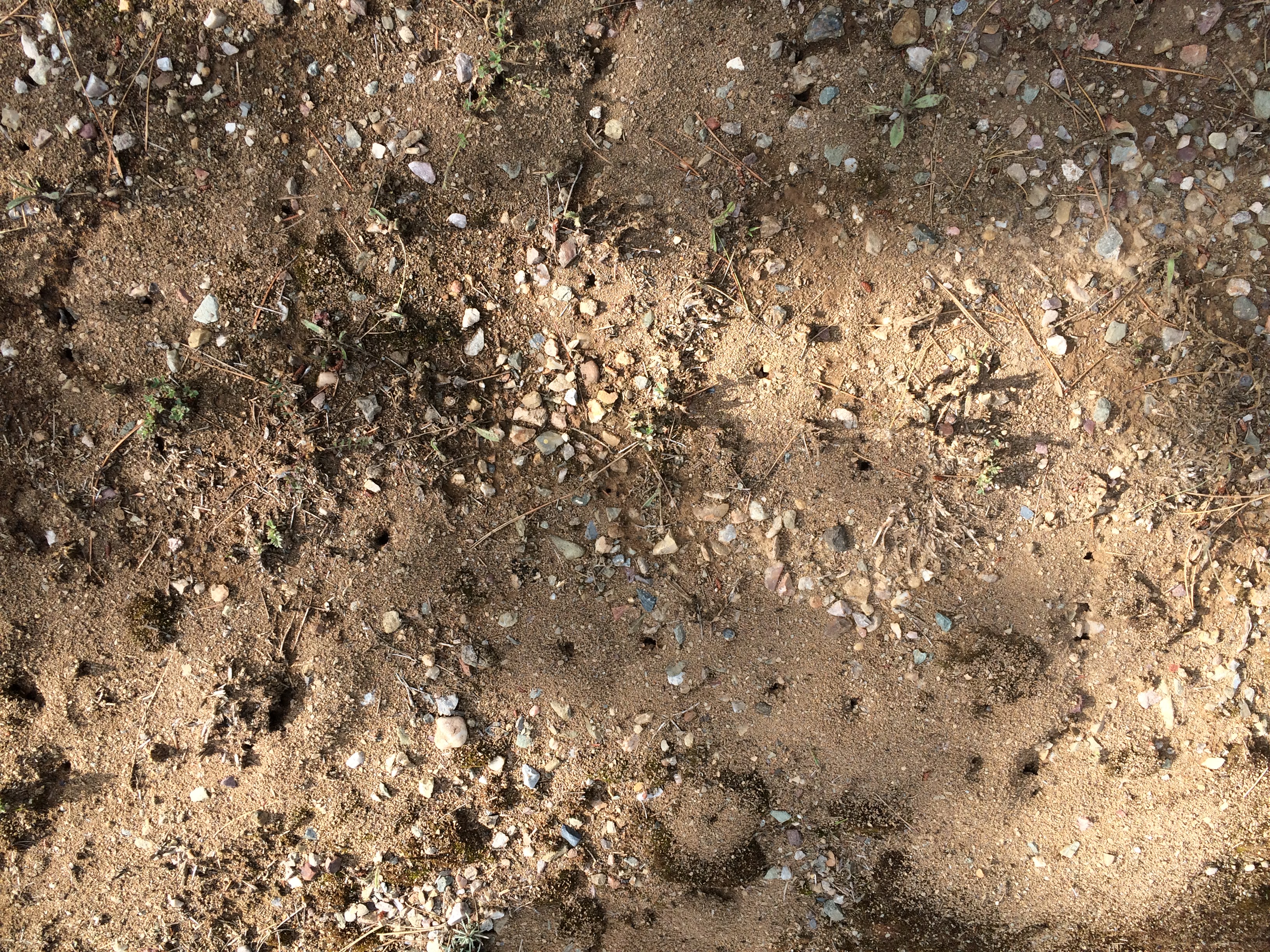
Back on the road, dark foreboding clouds fill the horizon, but somehow we manage to evade the thunderstorms this time. Johnny Cash is singing ‘Hurt’ which seems to go with the brooding scenery. We find a campsite in the area of Calatayud (again very obviously an Arabic name meaning Citadel of Ayud) just 150 kms or so west of Zaragoza in the direction of Madrid.  It’s the Camping Sabinan and it’s already 7pm by the time we arrive.  As campsites go, it’s not the best kept we’ve had so far, has basic facilities and, as we quickly find out, is infested with ants.  It takes us a while to find a patch that is relatively ant-free.

Camping Savanna - promising setting but poor facilities.

Camping Savanna – promising setting but poor facilities.

Dark clouds fill the horizon as we leave Zaragoza heading for Calatayud to the west.

Dark clouds fill the horizon as we leave Zaragoza heading for Calatayud to the west.


And infested with ants!

And infested with ants!

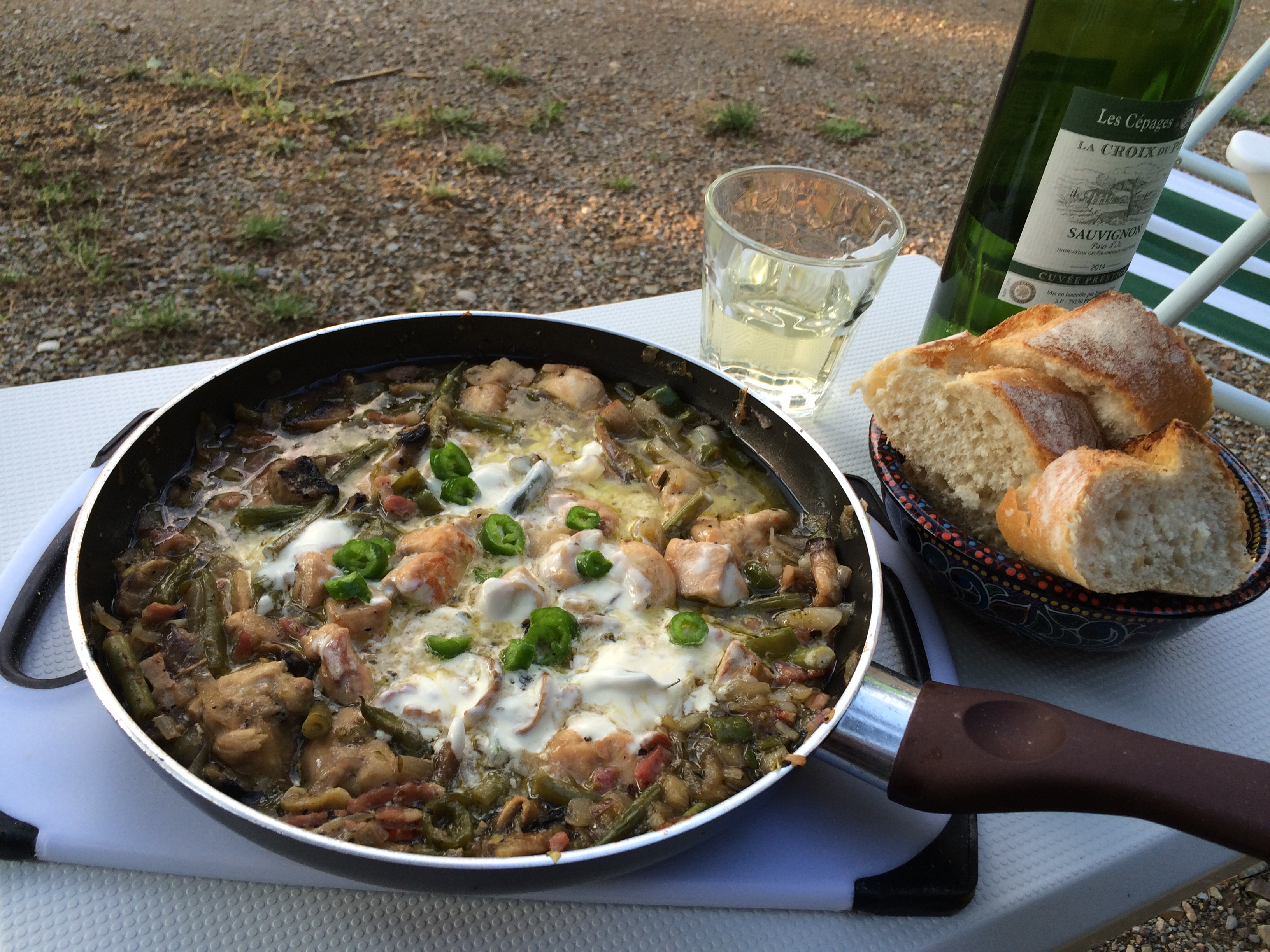
We do our best to ignore the ants and set about making a dinner of chicken in mushrooms and white wine with the ingredients we’d bought in Zaragoza.  A very simple and tasty recipe with the added advantage that it requires opening a bottle of dry white wine which you can sample, Galloping Gourmet style, as you’re preparing the dish.

Chicken and mushrooms in white wine

Start by putting some lardons (or beef bacon) in a frying pan with a drop of olive oil.  When the fat from the lardons has started to melt, add some goujons of chicken breast.  Make sure they’re starting to brown slightly then add a finely chopped white onion or a couple of shallots and allow to sweat for a few minutes.  Keeping the heat quite high add the white wine (enough to just cover the chicken) or some chicken or vegetable stock and bring to the boil then turn down the heat (but not too much).  Then add the roughly chopped mushrooms and either some chopped green and red peppers or, as in this case, the sweet pimentos we had left from France (keeping a few raw ones to sprinkle on top).  Add a bit of hot water or more stock to stop the sauce being too intense.  Then season to taste and add a herb like tarragon or fines herbes or herbes de Provence.  Turn down the heat and cook for a further 15 minutes or so then voila – it’s ready, all that’s needed just before serving is the addition of a couple of spoonfuls of creme freche or sour cream and possible a sprinkling of paprika or cayenne pepper and serve with basmati rice and salad or new potatoes and thin green beans (al dente).  Or, as we did because we were hungry and it was late, just some cut up baguette. Bon appetit!

Chicken with mushrooms and white wine.

Chicken and mushrooms in white wine.

Thursday 11th and Friday 12th June – The Accidental Pilgrims

Standard

Faced with torrential rain our plans to tour the north coast of Spain were rapidly revised to setting off in a southernly direction away from dark forbidding clouds. Our first stop was at a campsite 6km outside Pamplona, the Ezcaba, which left much to be desired as mentioned earlier. Camping in the rain is no fun, particularly when the campsite you’re staying in is dreary, waterlogged and overpriced.


Bogged down after a night of torrential rain at the Camping Ezcaba near Pamplona.

Bogged down after a night of torrential rain at the Camping Ezcaba near Pamplona.

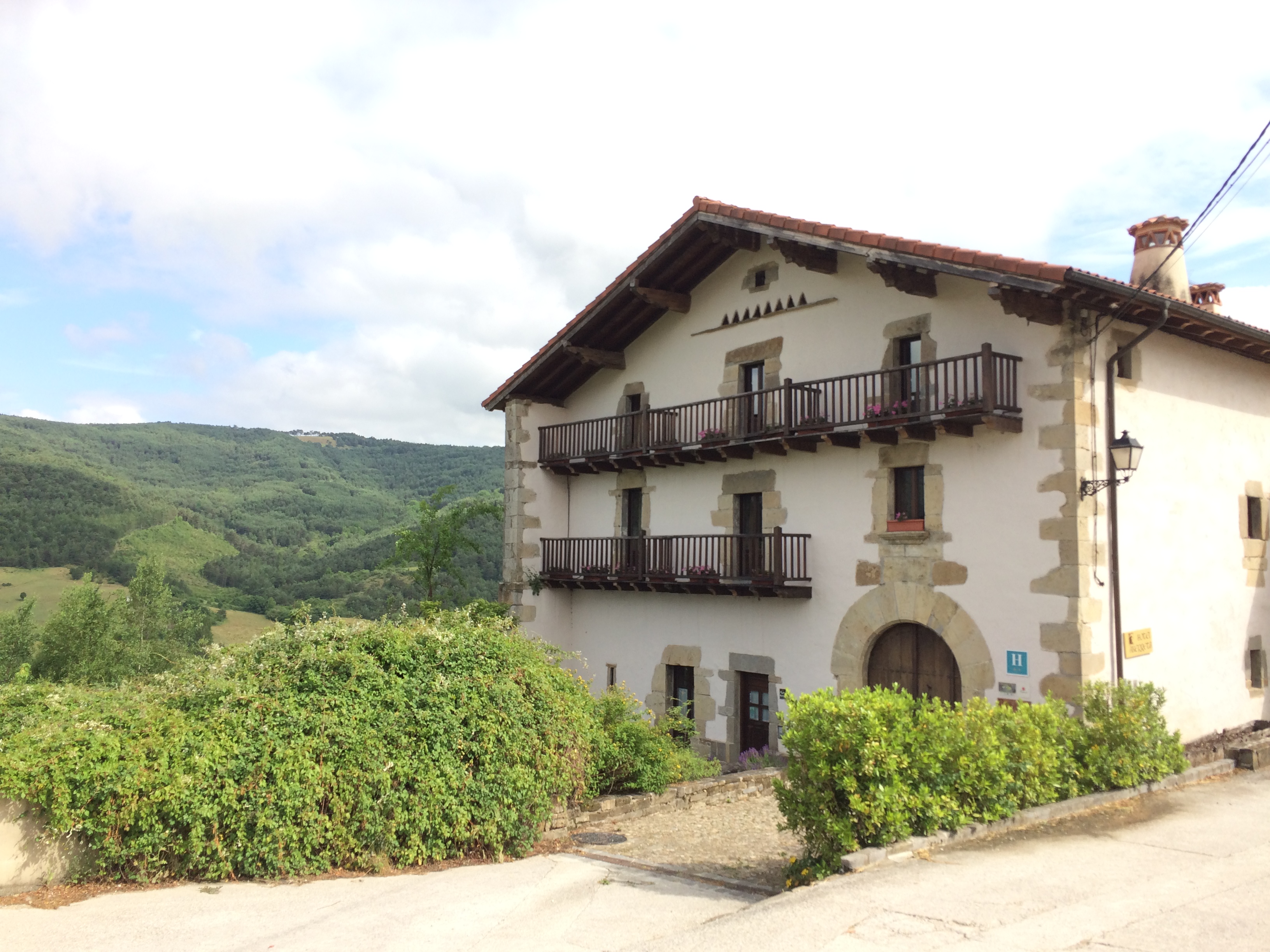
After a restless night kept awake by rain and thunderstorms we set off next morning to visit a hotel on the route of the Camino de Compostella de Santiago recommended by a dear friend of ours who stayed there when walking the Camino. The Hotel Akerreta, an 18th century converted farmhouse in the Basque region (12km from Pamplona) was delightful and we were so enchanted it was quickly decided to forsake Brenda and spend the night in a warm, comfortable and dry room (thank you Matt).

www.hotelakerreta.com

The delightful Hotel Akerreta on the Santiago de Compostella route provided welcome temporary relief from the trials of camping in the cold and rain.

The delightful Hotel Akerreta on the Santiago de Compostella route provided welcome temporary relief from the trials of camping in the cold and rain.

The Hotel Akerreta before it was lovingly restored 10 years ago by the very welcoming and genial owner, Joseph and his family.

The Hotel Akerreta before it was lovingly restored 10 years ago by the very welcoming and genial owner, Joseph and his family.

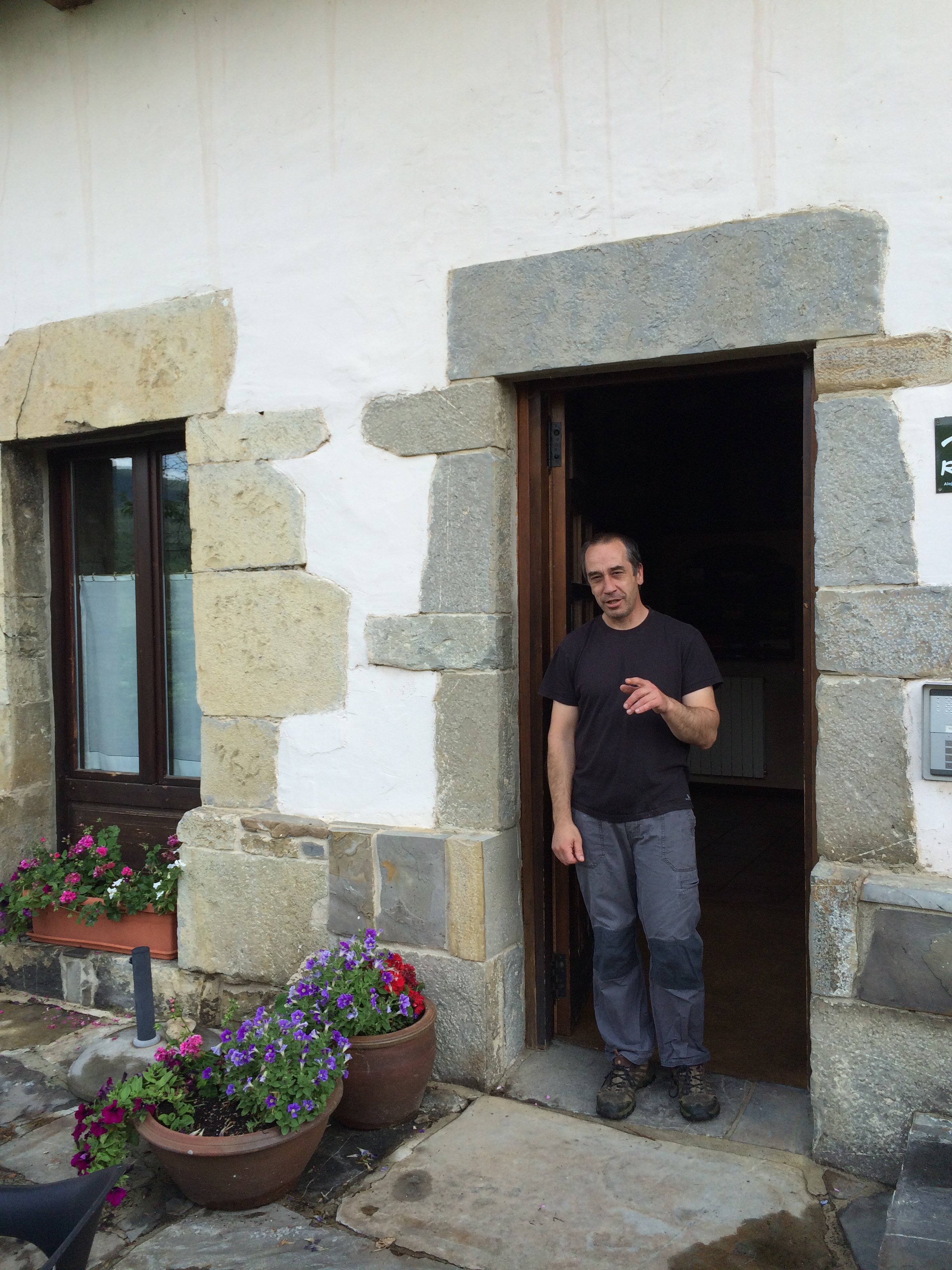
Joseph, the friendly owner and restorer of the Hotel Akerreta appeared to us like a Good Samaritan when he told us he had just one room available for the night.

Joseph, the friendly owner and restorer of the Hotel Akerreta appeared to us like a Good Samaritan when he told us he had just one room available for the night.

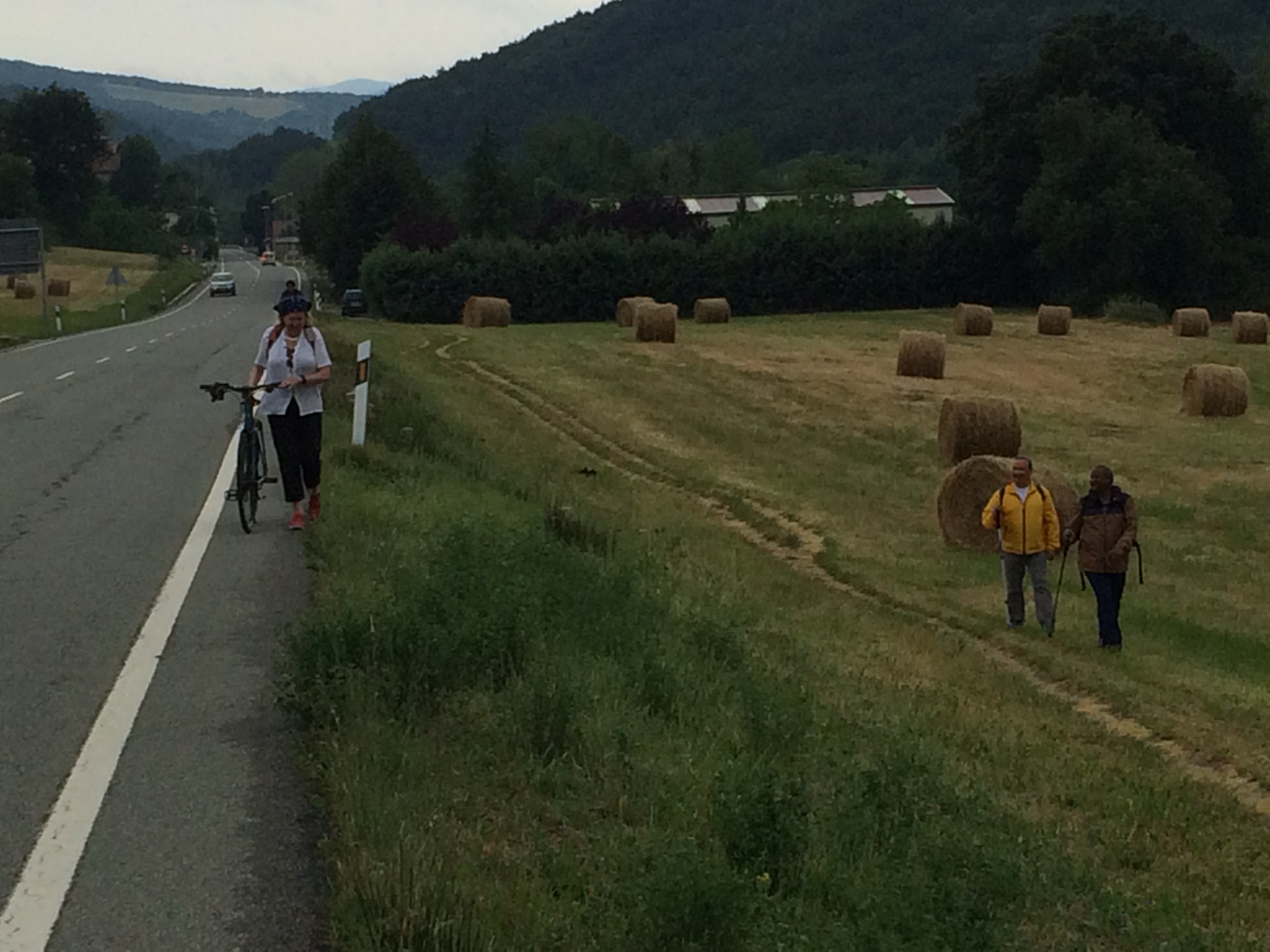
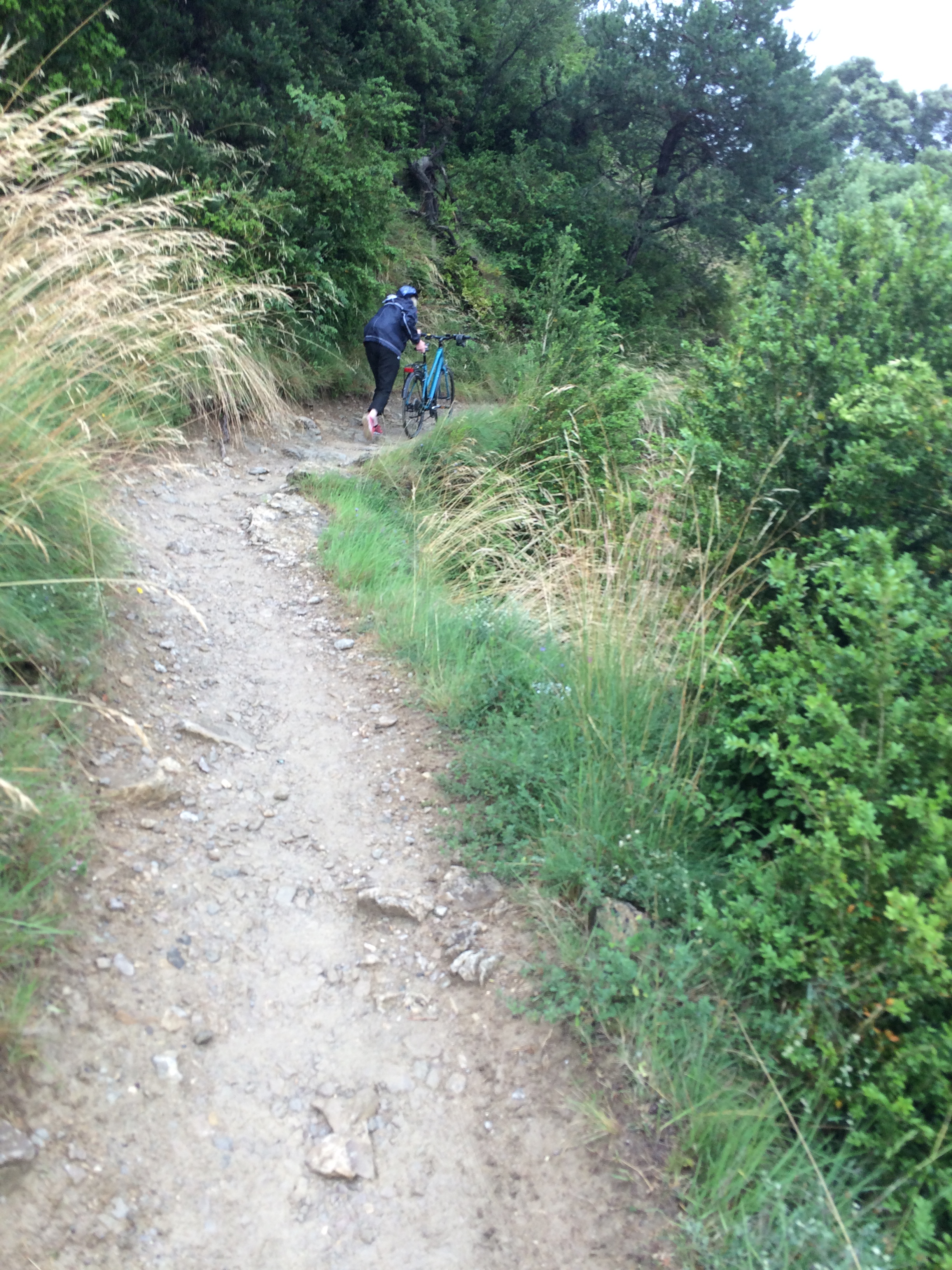
Inspired by seeing the pilgrims we decided to cycle to Pamplona on the route for pilgrims on bikes, unfortunately barely 2 kms into the cycle I developed a puncture and pushing our bikes we joined the narrow, steep pilgrims’ path and made our way to the nearest rest stop where hopefully we could repair the puncture. Having no luck at the rest house, we left our bikes there and joined the other pilgrims on foot to follow the Camino!

Judith meeting pilgrims, including a Muslim from Niger, after developing a puncture.

Judith meeting pilgrims, including a Muslim from Niger, after developing a puncture.

According to the 12th century manuscript Codex Calixtinus,The pilgrim route is a very good thing, but it is narrow. For the road which leads us to life is narrow; on the other hand, the road which leads to death is broad and spacious. The pilgrim route is for those who are good: it is the lack of vices, the thwarting of the body, the increase of virtues, pardon for sins, sorrow for the penitent, the road of the righteous, love of the saints, faith in the resurrection and the reward of the blessed, a separation from hell, the protection of the heavens. It takes us away from luscious foods, it makes gluttonous fatness vanish, it restrains voluptuousness, constrains the appetites of the flesh which attack the fortress of the soul, cleanses the spirit, leads us to contemplation, humbles the haughty, raises up the lowly, loves poverty..’……so off we set!

Judith pushing her bike up a steep path along the Camino on the way to the rest house hoping to repair the puncture.

Judith pushing her bike up a steep path along the Camino on the way to the rest house hoping to repair the puncture.

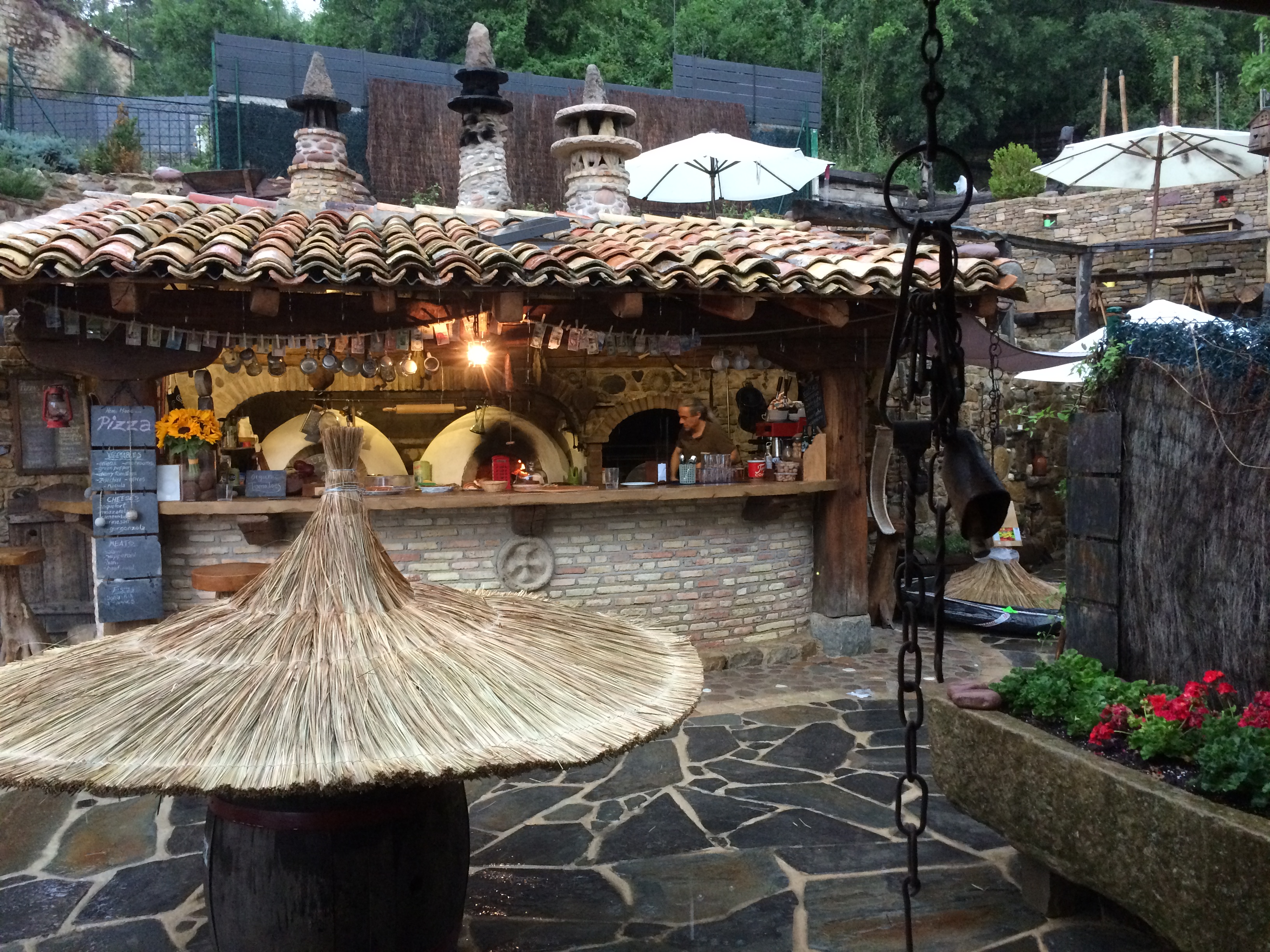
The rest house where we join other pilgrims sheltering from the heavy downpour and leave our bikes before setting off on foot to Pamplona.

The rest house where we join other pilgrims sheltering from the heavy downpour and leave our bikes before setting off on foot to Pamplona.

Why do people walk the Camino? Many take up this route as a form of spiritual path or retreat for their spiritual growth. Some walk for spiritual reasons, some for the challenge, some for the opportunity to walk in beautiful countryside, some to get away from the more materialistic elements of life were varied others walking the same path, and and the reasons why, inspiring and humbling. People come from all over the world to walk the Camino.

It’s difficult to describe the qualities of all the pilgrims we met en route. The sense of camaraderie and the connection between walkers was immediate despite the many varied reasons why people were walking the Camino.   This connection with others on the same path is surely what makes the Camino so special.

We met Christians, a Muslim from Niger, an artist on his third Camino who paints beautiful watercolours of places along the way, an Australian violinist currently playing with the Norwegian State Orchestra. A couple from America whose husbands’ health is deteriorating with Usher’s Syndrome and who are raising money to support medical research into the disease. Whatever the reason the friendliness and compassion we experienced was inspirational and next year we too will be walking the Camino.

What is the Camino de Santiago (the Way of St. James)? Briefly it is the name of any of the pilgrimage routes to the shrine of the apostle St. James the Great in the Cathedral of Santiago de Compostela in Galicia in northwestern Spain, where tradition has it that the remains of the saint are buried. It was one of the most important Christian pilgrimages during the Middle Ages.   The symbol of the Camino de Santiago is the scallop shell and is seen frequently along the way to guide pilgrims. Many pilgrims wear the shell identifying themselves as walking the Camino

Apart from spiritual enlightenment the Catholic Church, who employ a system of rituals to atone for sin, known as penance, used pilgrimages as a suitable form of expiation for those guilty of certain sins. Apparently, there is still a tradition in Flanders of pardoning and releasing one prisoner every year] under the condition that this prisoner walks to Santiago wearing a heavy backpack, accompanied by a guard.

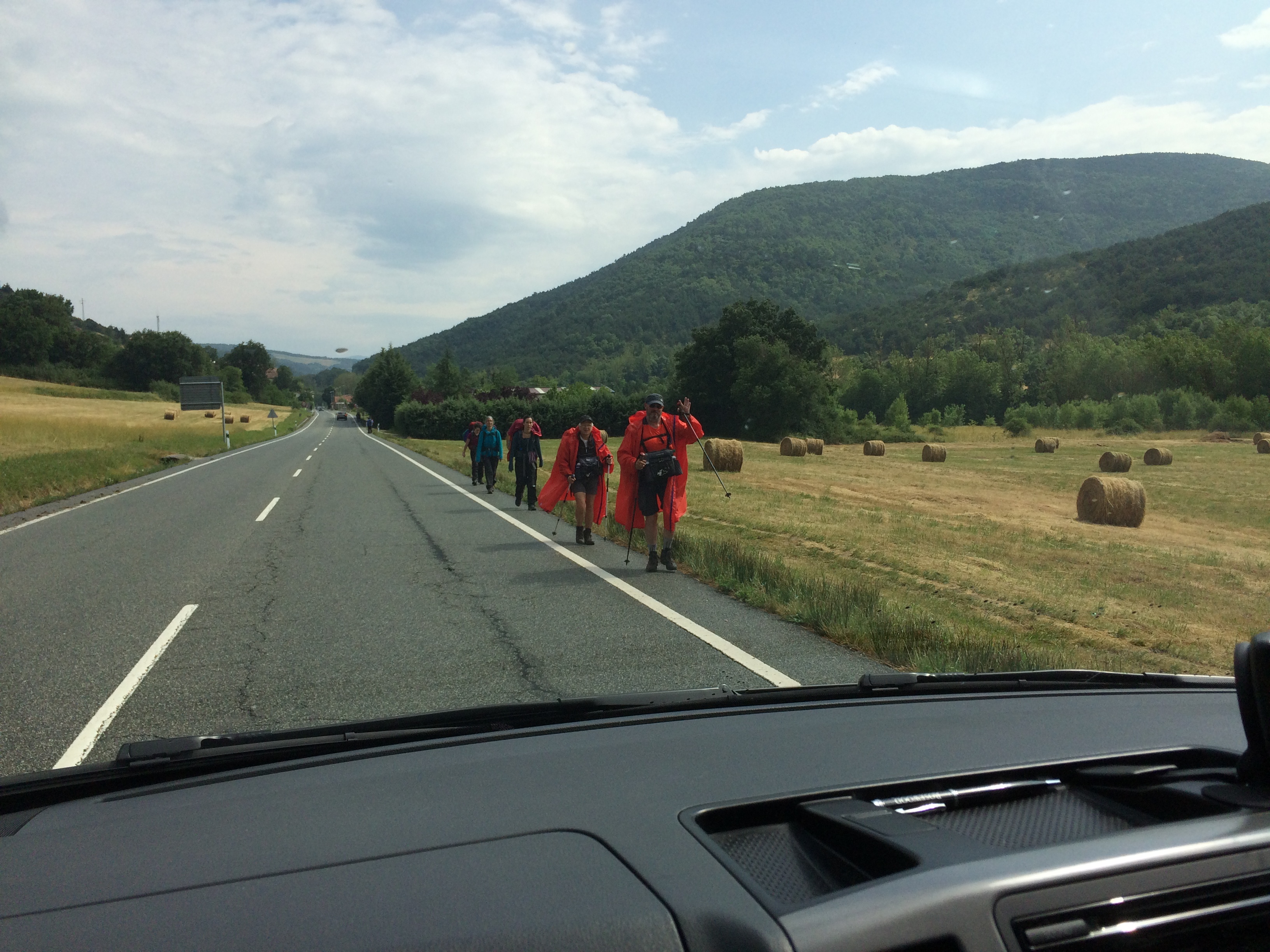
Pilgrims on the Camino brave the elements, motivated by religious or spiritual reasons or just by the challenge.

Pilgrims on the Camino brave the elements, motivated by religious or spiritual reasons or just by the challenge.

The path is steep, rocky and narrow and on this occasion, very wet.

The path is steep, rocky and narrow and on this occasion, very wet.

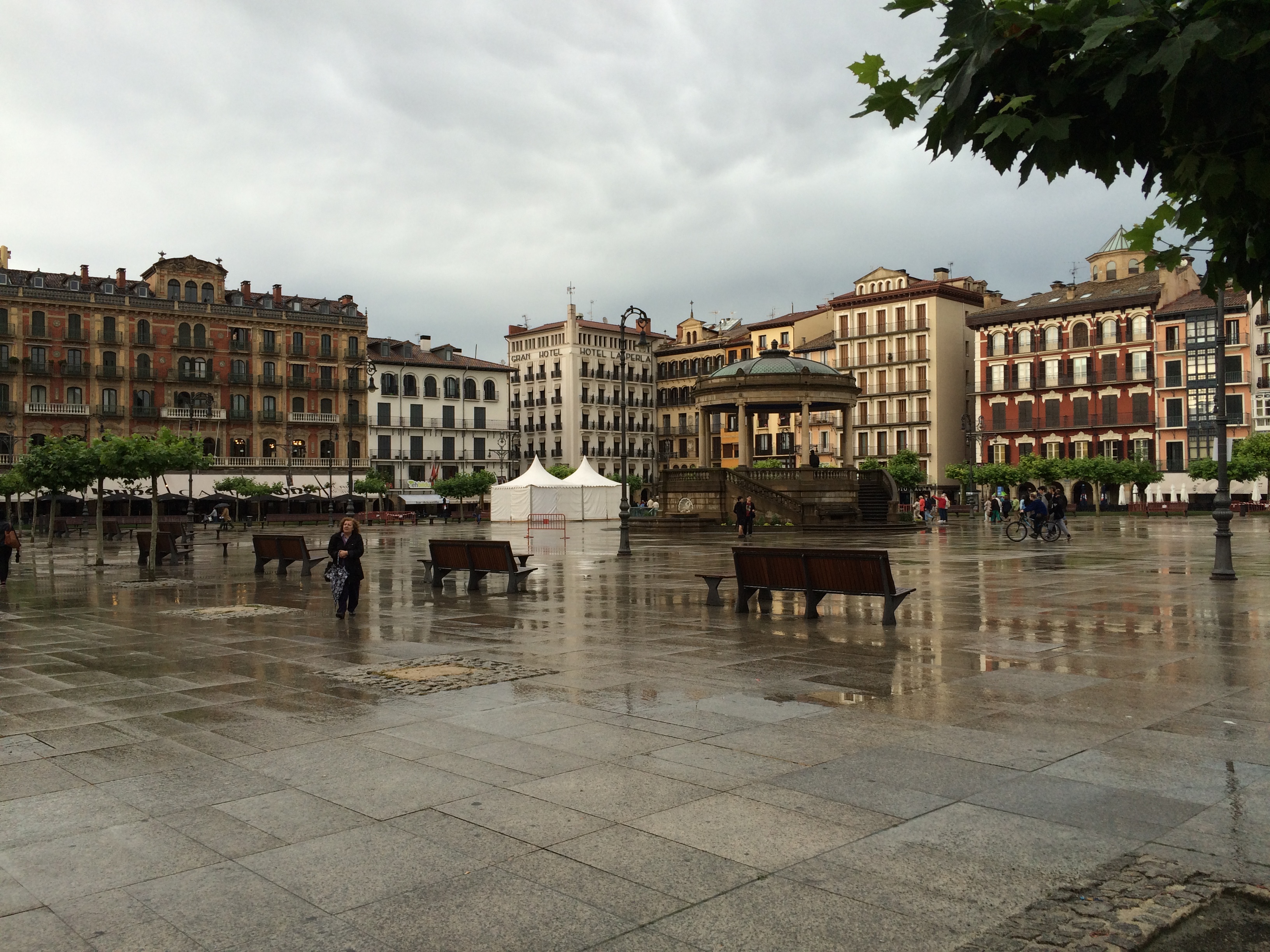
We arrived in Pamplona, tired, with aching feet but having an incredible sense of achievement. We walked over the medieval bridge of Mary Magdalene, walked between the old fortifications and entered the medieval city over an ancient drawbridge. We reached the Plaza del Castillo, the main square in the city, which once housed a bull ring; we sat in Café Iruna, once frequented by Earnest Hemmingway and drank their famous hot chocolate, a thick syrupy extremely cholocatey sweet drink which needed a spoon to get it down.

The main Plaza de Castillo in Pamplona.

The main Plaza del Castillo in Pamplona.

The Cafe Iruna in Pamplona which Ernest Hemingway liked to sit in.

The Cafe Iruna in Pamplona where Ernest Hemingway liked to while away his time.

The luxuriously rich hot chocolate drink which Cafe Iruna is famous for.

The luxuriously rich hot chocolate drink which Cafe Iruna is famous for.

A bus journey back to Larrasoana and a wonderful supper sitting with pilgrims from France, Switerland and Australia in a small bar which catered for pilgrims and then Joseph, the landlord of the Akerreta very kindly took us back to the hotel, to a hot bath and a comfortable, warm and dry bed (thank you again Matt).

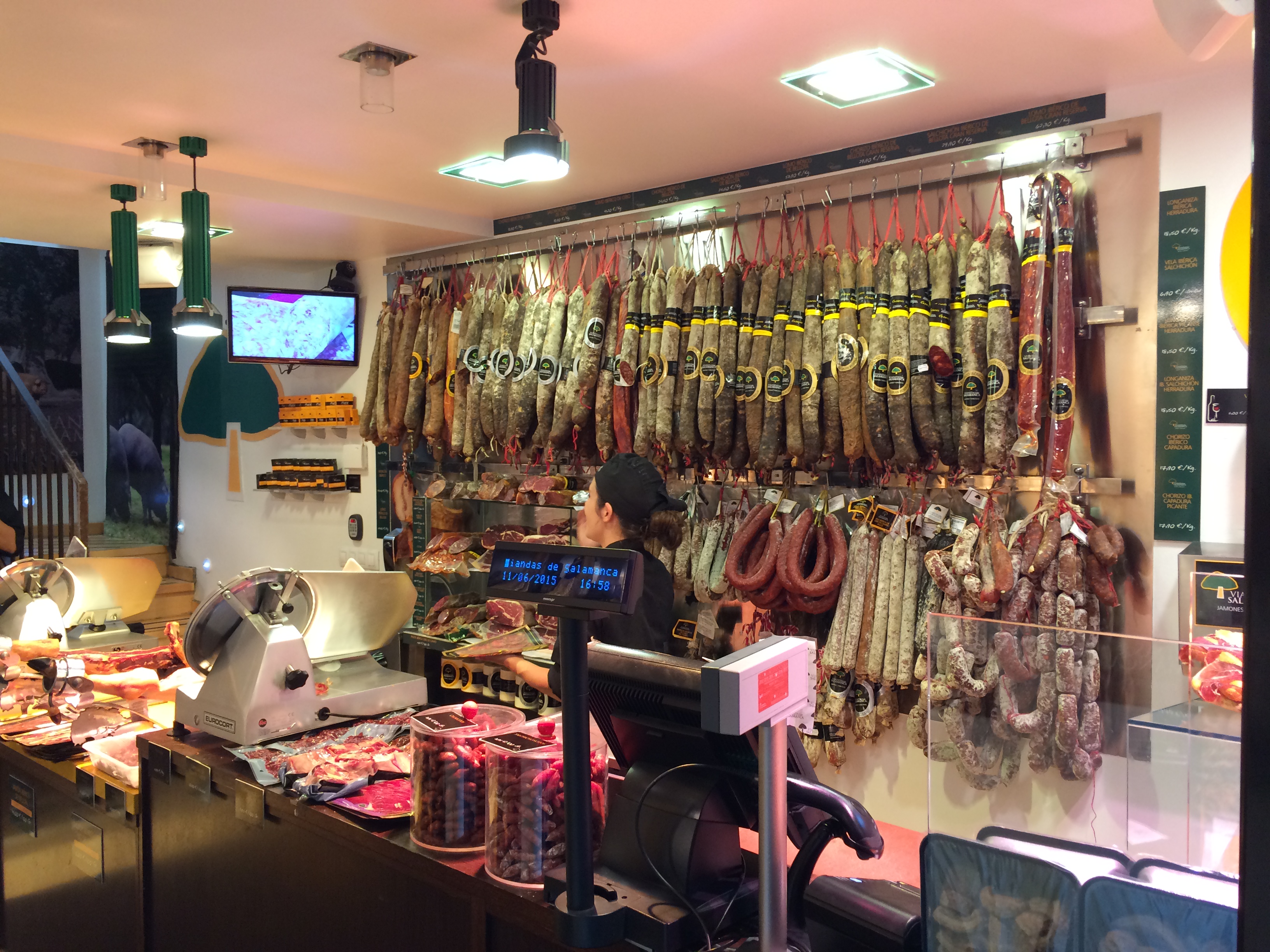
A sausage and salame shop in Pamplona.

A sausage and salame shop in Pamplona.

My Fitbit gave me a ‘slam dunk’ (whatever that is?) for walking in exccess of 26K steps and walking over 19km. Did we also get a plenary indulgence?

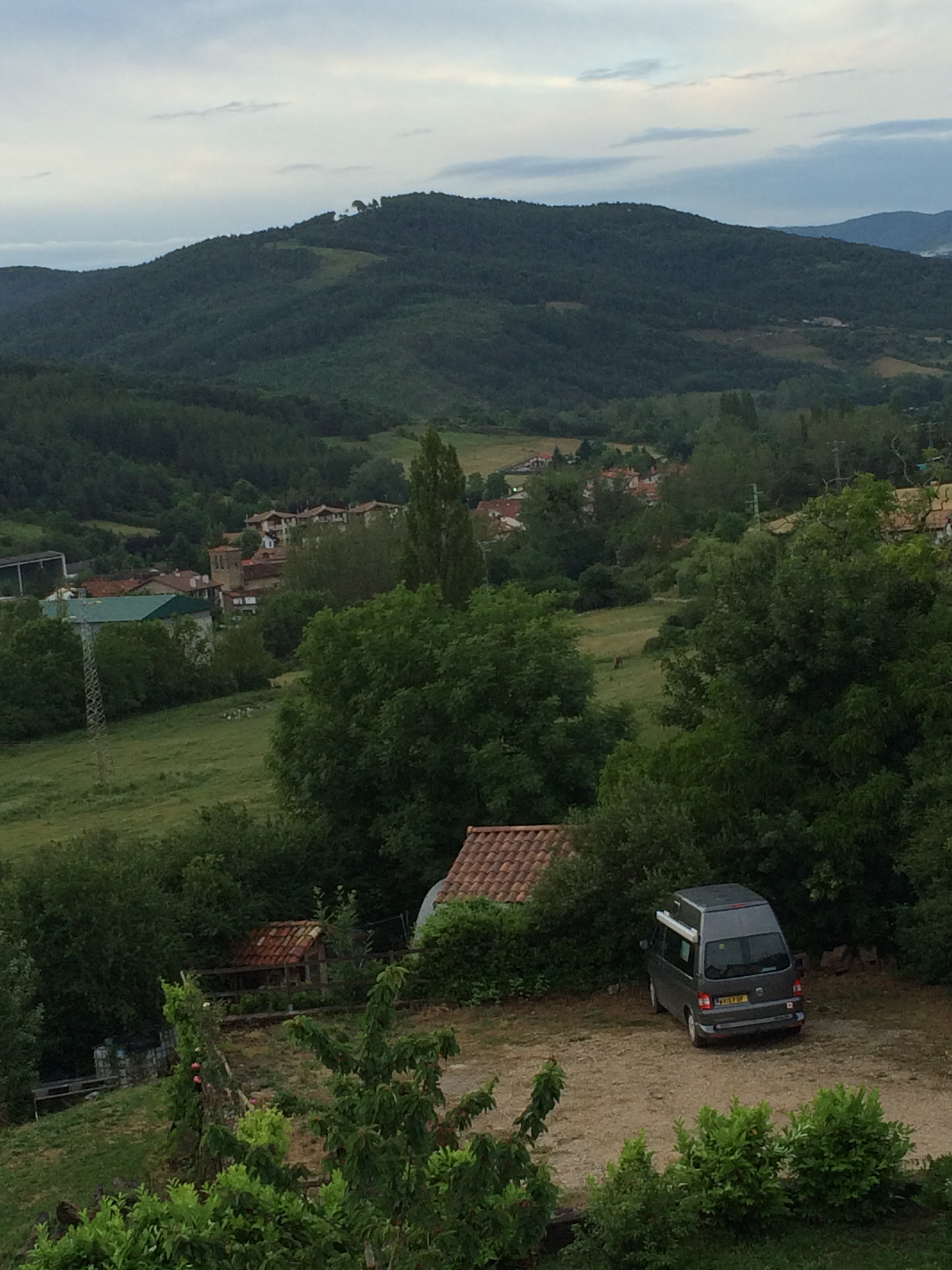
View from our window back at the Akerreta Hotel with Brenda parked in the car park.

View from our window back at the Akerreta Hotel with Brenda parked in the car park.

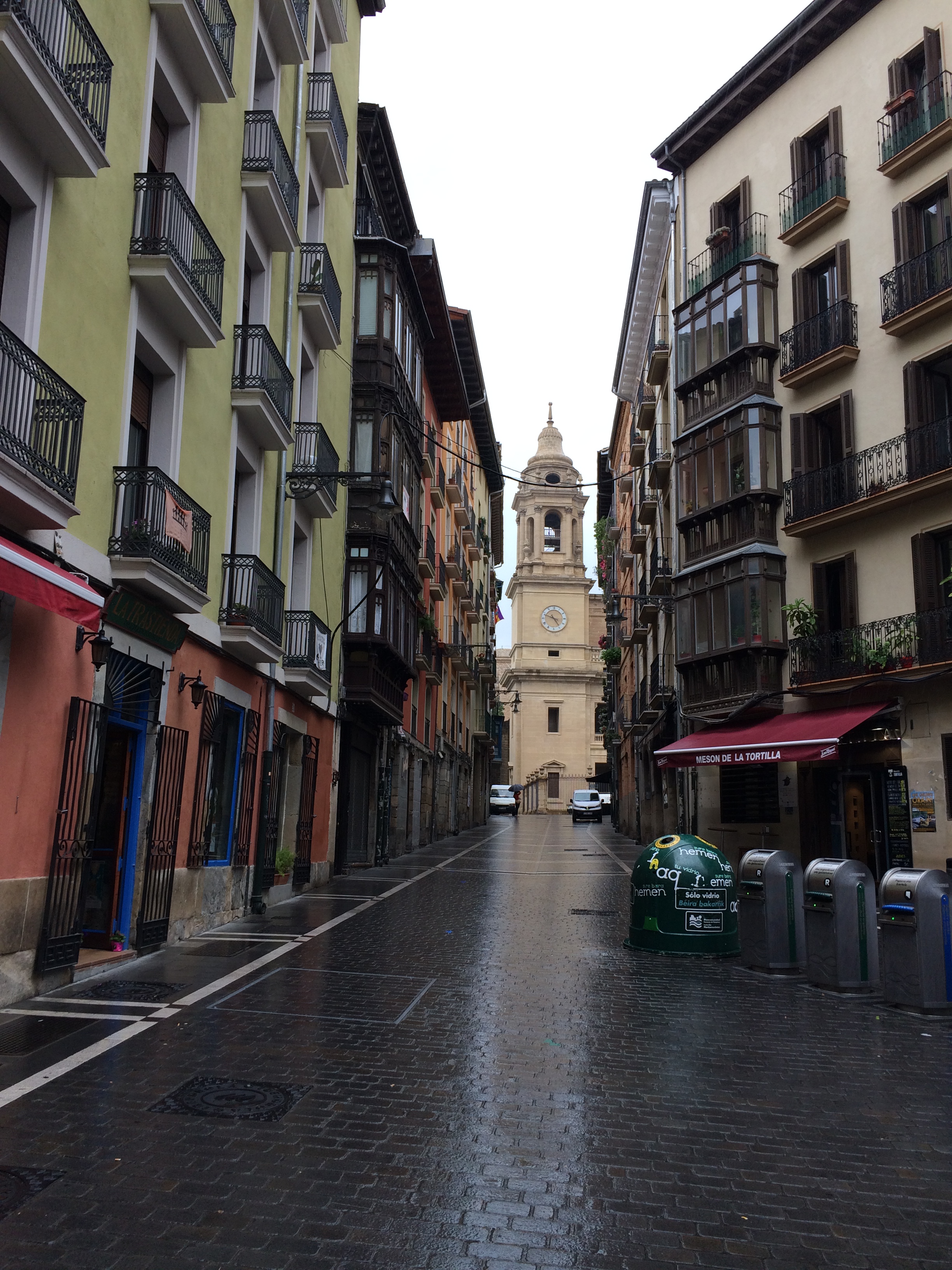
A street in Pamplona - it rained throughout our visit.

A street in Pamplona – it rained throughout our visit.

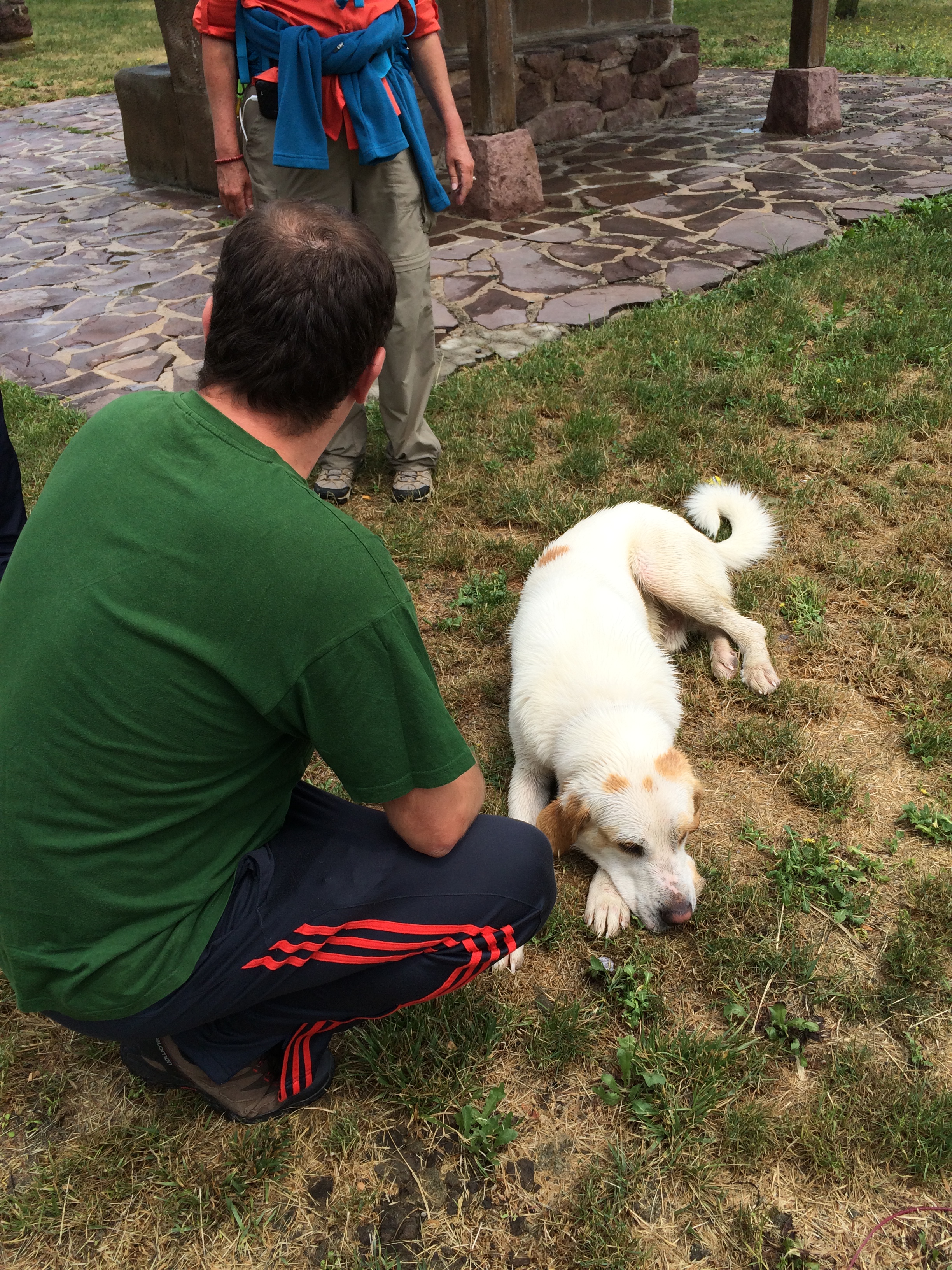
The dog at the Rest House decided to accompany us for a couple of kms - he must have sensed we were novices.

The dog at the Rest House decided to accompany us for a couple of kms – he must have sensed we were novices.

When his owner comes to fetch him, he evades him at first but then finally submits!

When his owner comes to fetch him, he evades him at first but then finally submits!

IMG_2208

Wednesday 10th June – to the outskirts of Pamplona via St Jean de Luz and Hendaya – dreadful campsite and even worse weather.

Standard

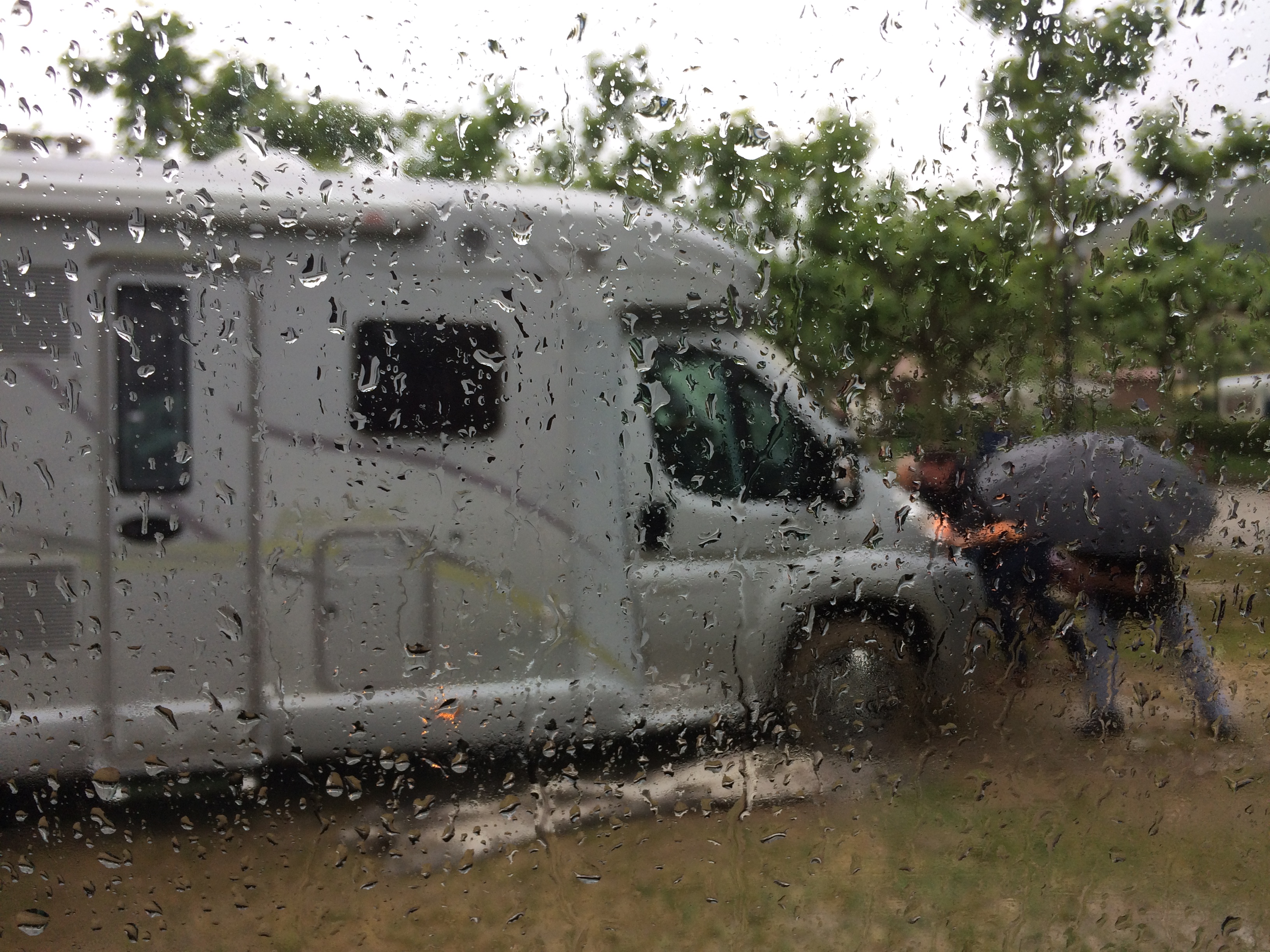
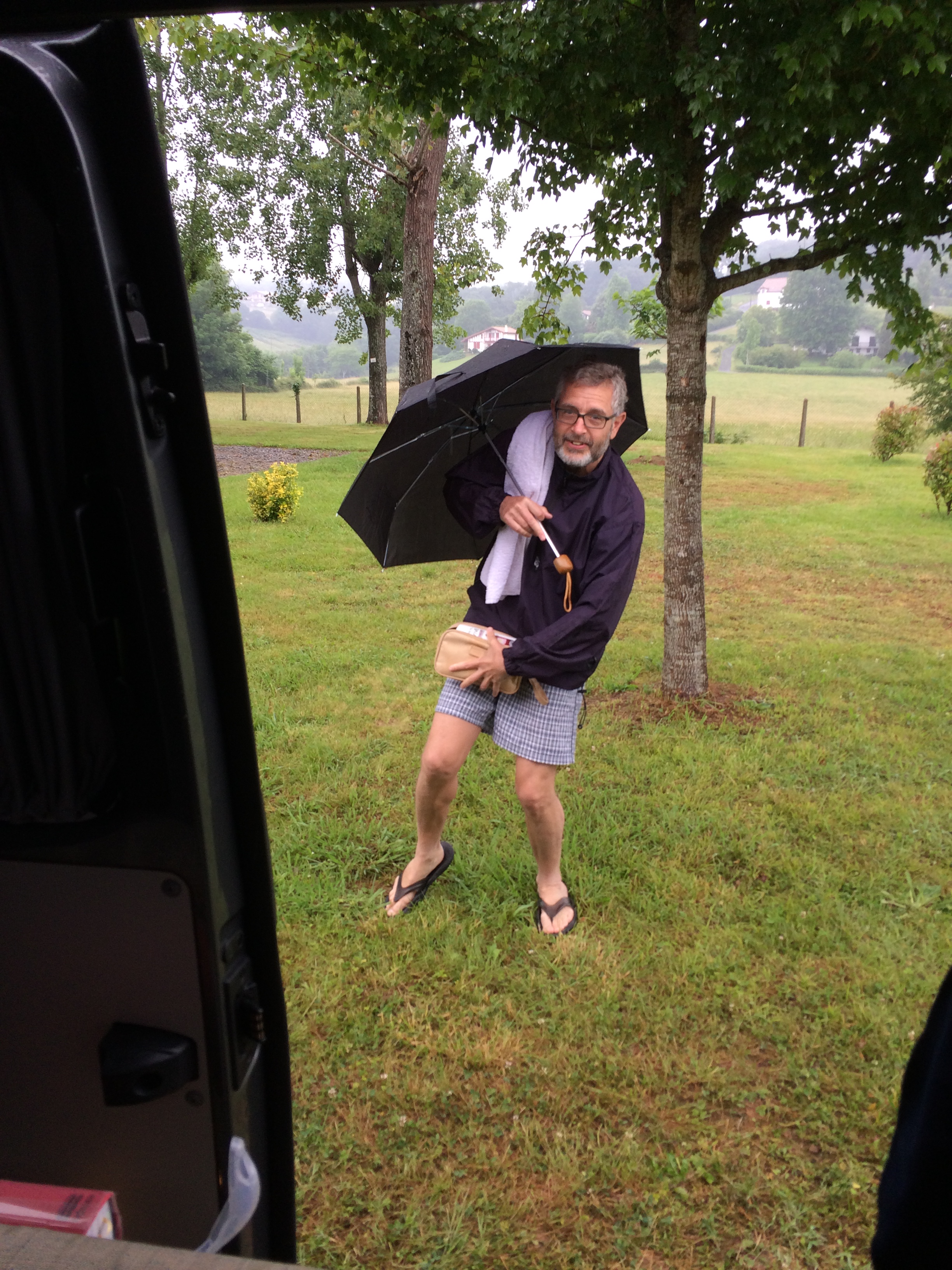
The mega-efficient manager of the Goyatchea had warned us the weather would change, and that the ‘meteo’ as they call it, was not good for the next week, which was highly unusual as they’d had very little rain for the past 5 months. The storm began with some droplets in the evening but the heavens opened up good and proper during the night. It was our first experience of real rain in Brenda. The sliding door at the side is on the side I sleep on and I stupidly mustn’t have slammed it shut properly on my return from a nightly excursion to the toilet. I was faintly aware of a discomfort in my left shoulder during the night and then, more worryingly, a dampness. By 6am my shoulder had seized up and I realized it was not only cold but wet, as were half my pillow and the upper part of my thin Egyptian blanket (we’d left all warm clothes and blankets in Brittany expecting the rest of the journey to be all heat and sunshine). It was still chucking it down and by that time I’d lost all inhibitions and trotted off to the bathrooms in the shower-proof top holding the umbrella we’d luckily forgotten to leave in Brittany, flip-flops and nothing else. I came back for some shorts but I’d also lost all coordination so juggling with the soap bag, towel and brolly proved almost impossible after a night of trauma. Judith had one of those uncontrollable fits of laughter but managed to capture the moment!

After a night getting soaked and rheumatism in my left shoulder I lost all coordination and inhibitions.

After a night getting soaked and rheumatism in my left shoulder I lost all coordination and inhibitions.

Just getting to the bathrooms was a real challenge.

Just getting to the bathrooms was a real challenge.


We needed a nourishing warming breakfast after that and so it was good old porridge with bananas, prunes and apricot jam from Lidl which was starting to ferment. Amazingly, despite the weather, I did manage another swim before breakfast.   All good preparation for returning to year-round swimming at the Tooting Bec Lido in Streatham in the autumn (all being bueno).

Hot porridge after a night of discomfort.

Hot porridge after a night of discomfort.

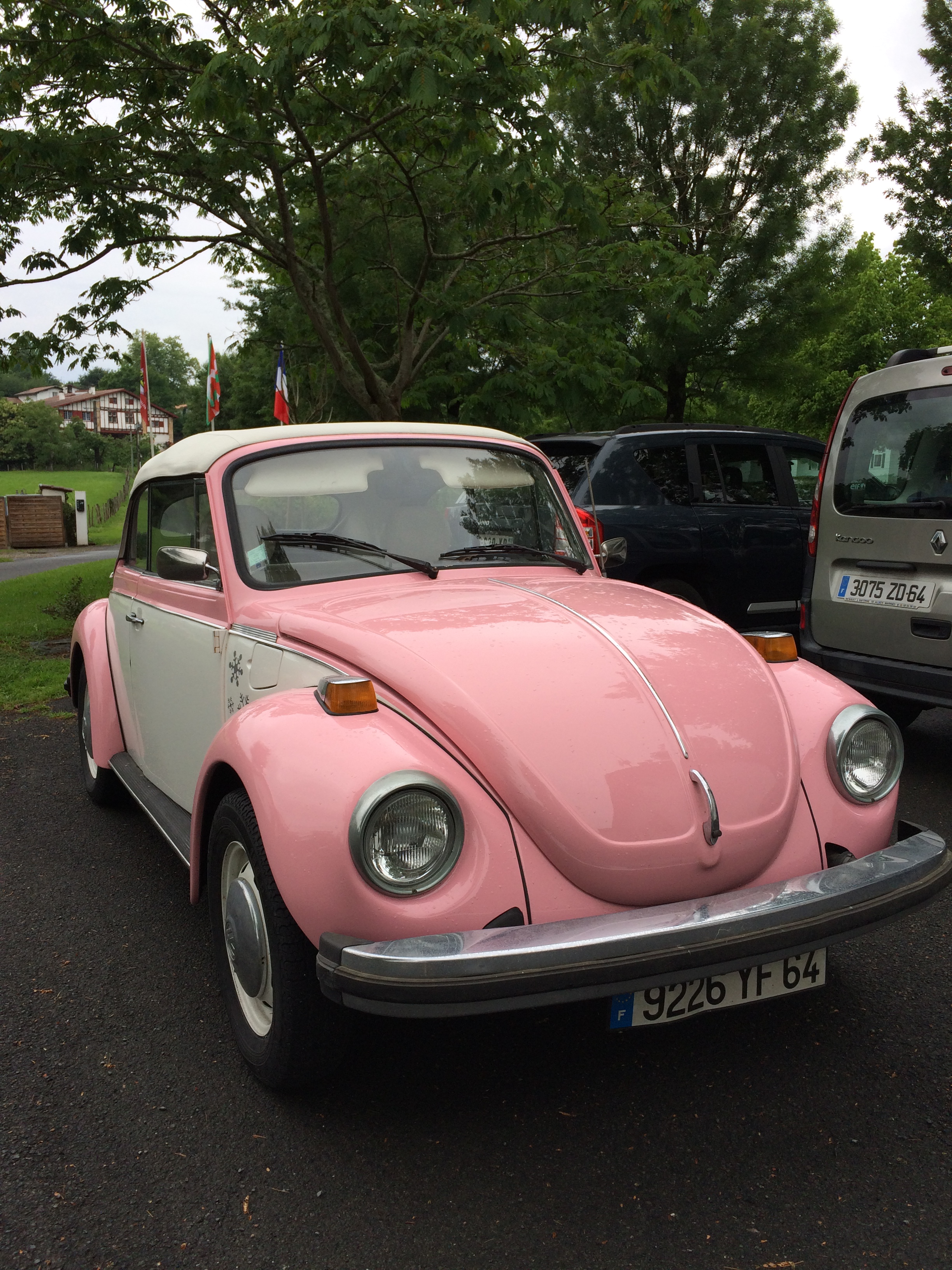
As we leave, we spot another classic car, an old 1970s VW Beetle in an unusual pink and white get-up.

Cheered up by sight of pink and white Beetle.

Cheered up by sight of pink and white Beetle.

And so we left the charming Goyatchea and headed towards Biarritz and St Jean de Luz.


Non-stop rain on the way to Saint Jean de Luz.

Non-stop rain on the way to Saint Jean de Luz.


Considering the fact that the weather was showing no sign of improving, that we’d already had a brief glimpse of Biarritz, that it would be no fun in the relentless drizzle and that it would be likely to be busy for the ‘Waves & Wheels’ festival, we decided to skip Biarritz and take a longer look at St Jean de Luz just down the coast from it. We had driven through a little bit of Biarritz anyway the day we arrived at the bikers’ campsite and could sort of imagine what the rest of it would be like: part fin de siecle splendor and ‘belle epoque’ architecture and part surfer’s paradise.   Our son Simon had been on a trip with fellow-surfers from Newquay a few years ago and though he’d slipped on the boat on the way over and had cut his knee rather badly I remember him saying he found the waves so irresistible he had to go in. It was only when we realized afterwards how bad the cut had been that the full extent of his foolhardiness had become apparent. But then surfers are like mountaineers – why do you have to ride that wave? Because it’s there!

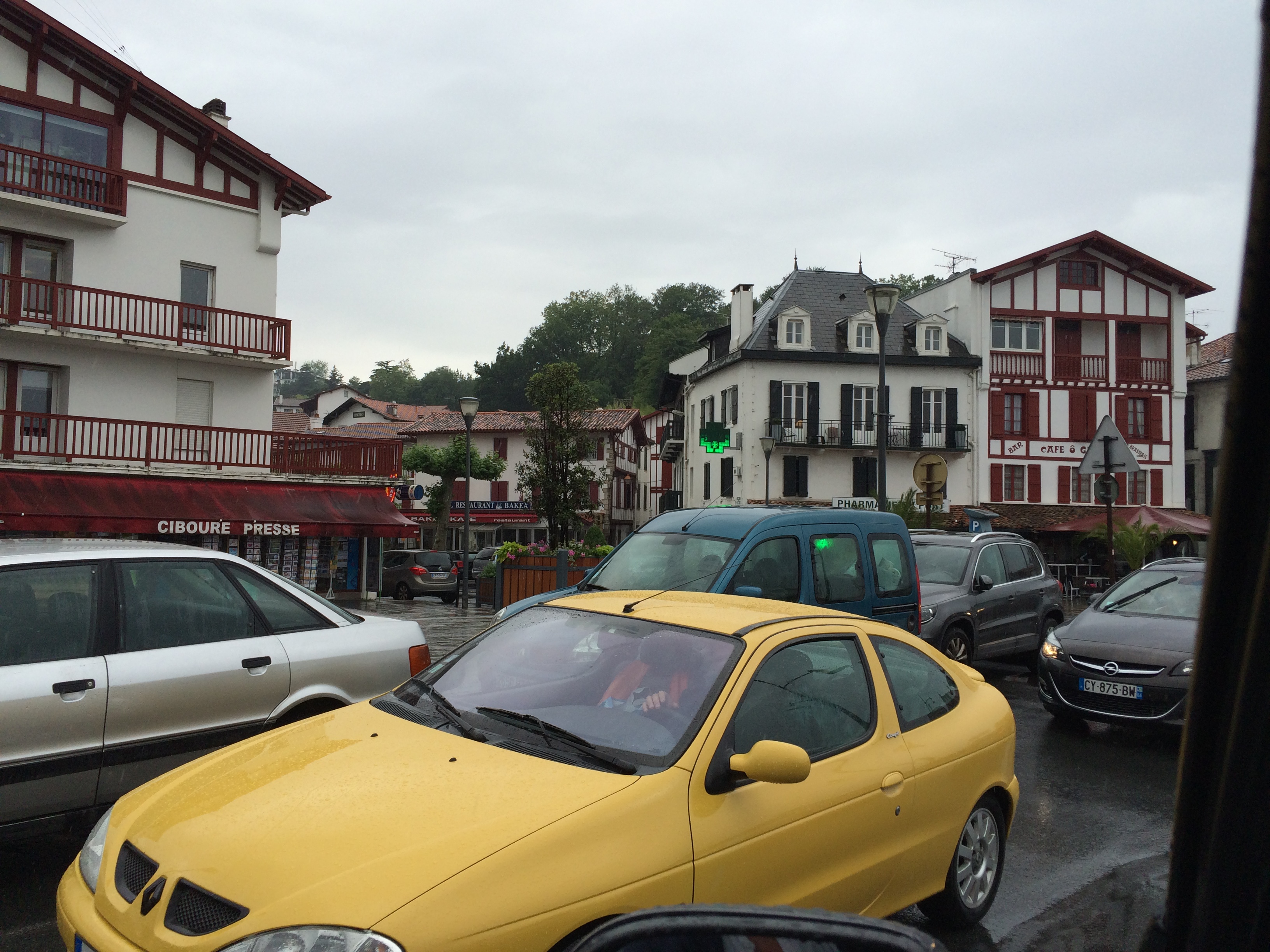
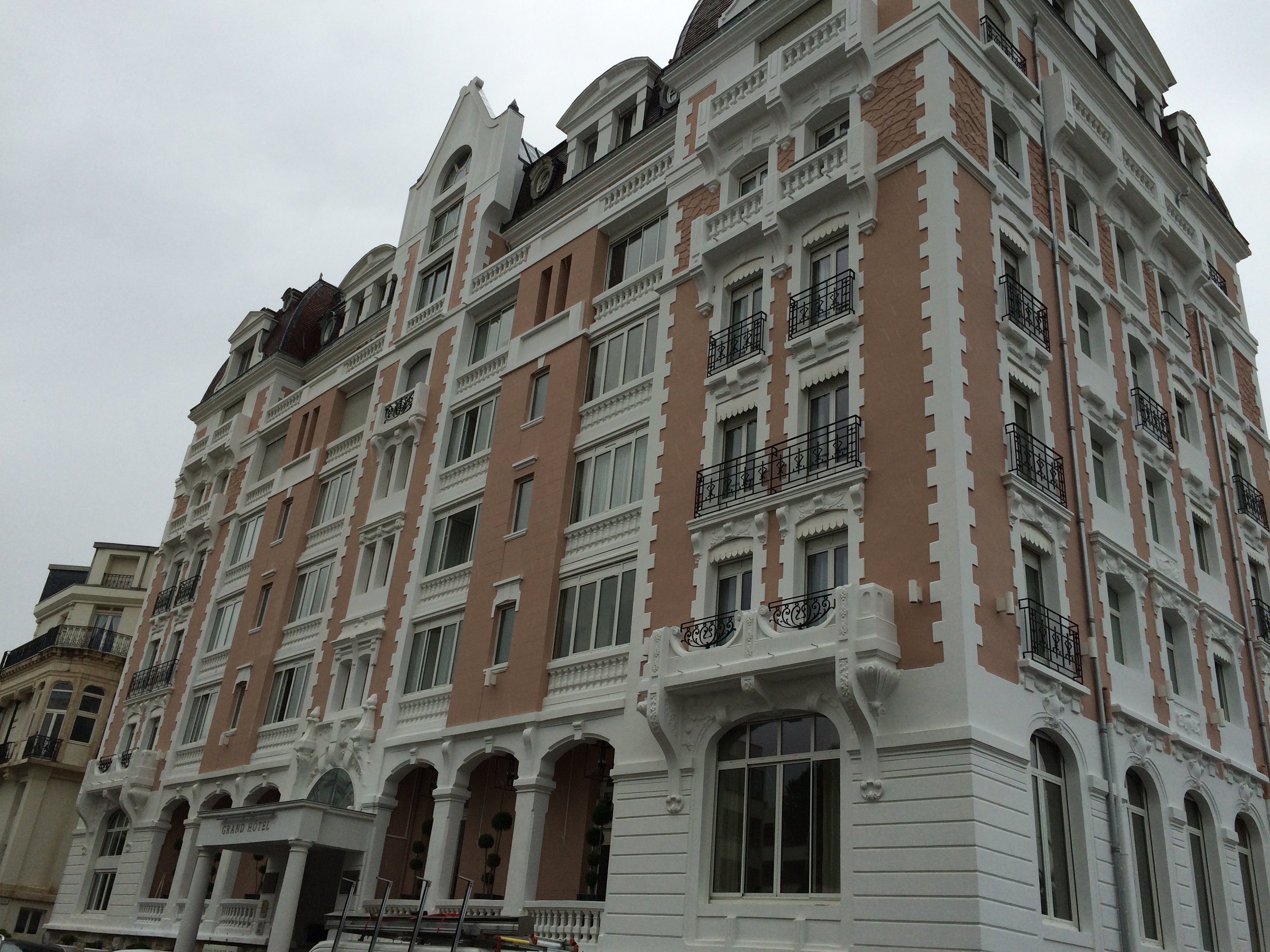
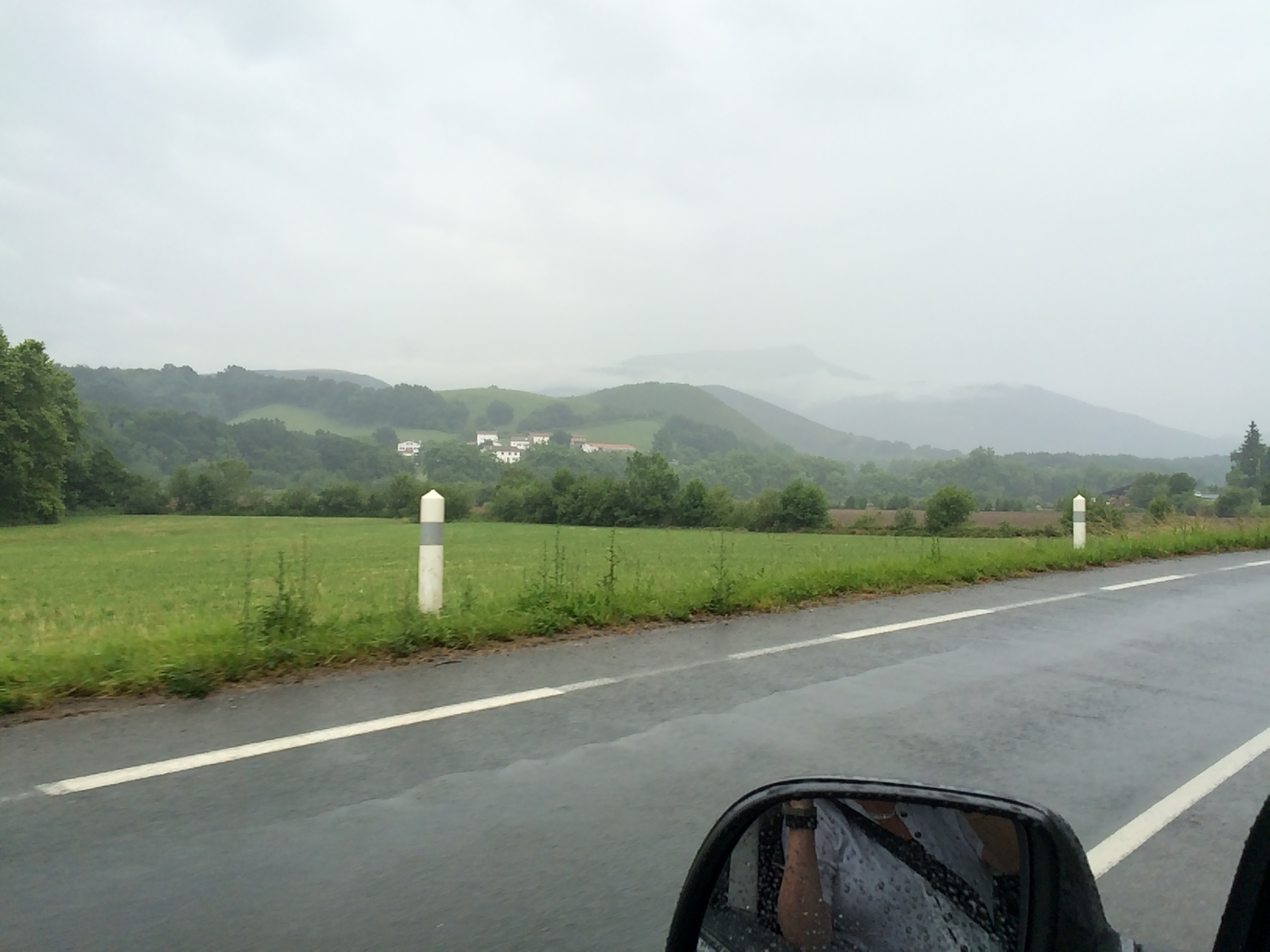
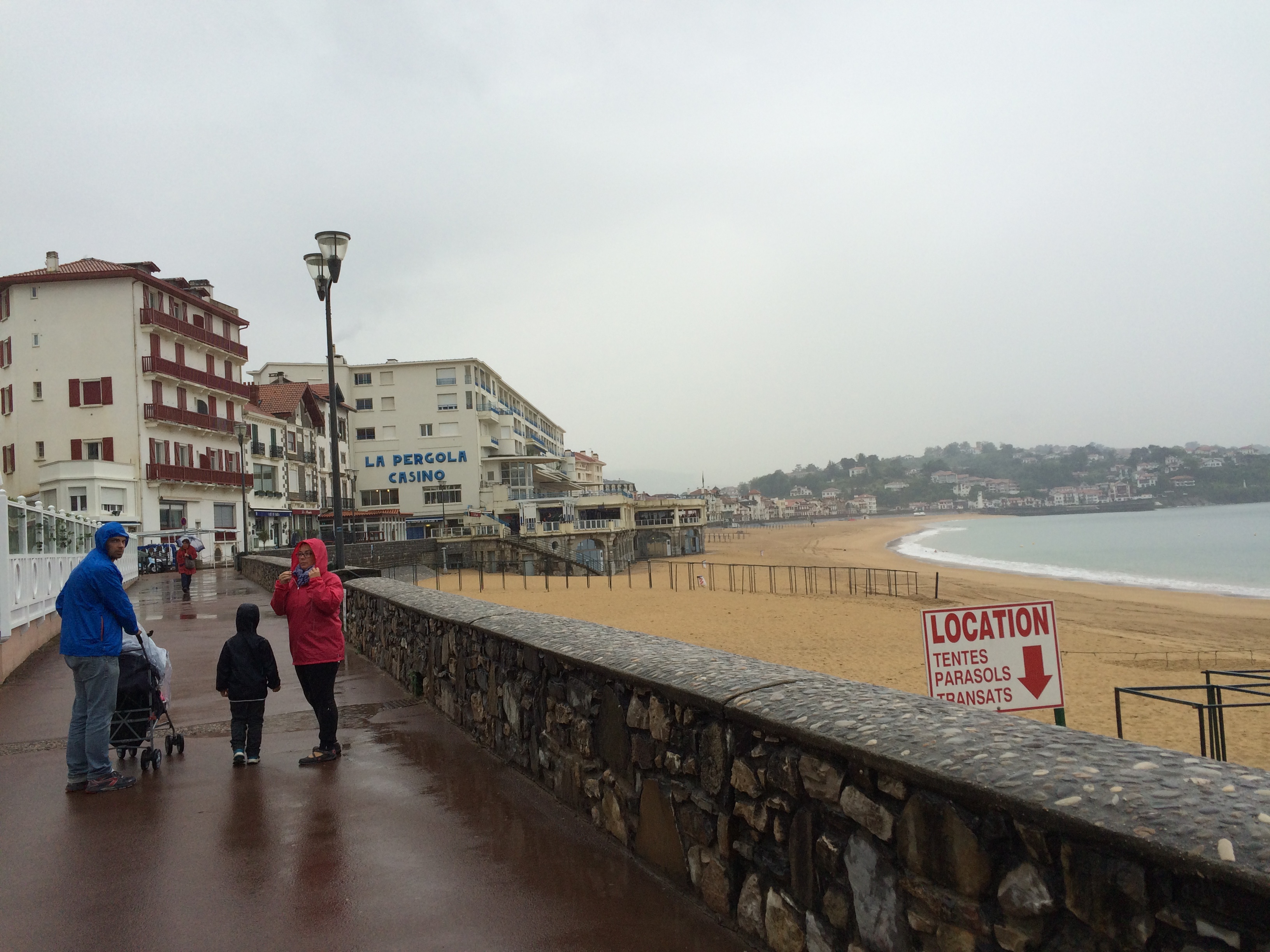
The drizzle has turned to heavy rain again by the time we reach St Jean de Luz. It really isn’t conducive to taking a leisurely stroll on the sea front or the city centre. We drive past the Grand Hotel and the magnificent long sandy beach all along the bay. The architecture looks strangely Alpine rather than what you’d expect in a seaside resort. We realize later that this is the characteristically Basque style of houses and we see echoes of it all the way down to Pamplona and Zaragossa.

It's raining heavily again as we arrive in St Jean de Luz.

It’s raining heavily again as we arrive in St Jean de Luz.


The architecture in St Jean de Luz looks strangely Alpine.

The architecture in St Jean de Luz looks strangely Alpine.


The Grand Hotel in St Jean de Luz.

The Grand Hotel in St Jean de Luz.

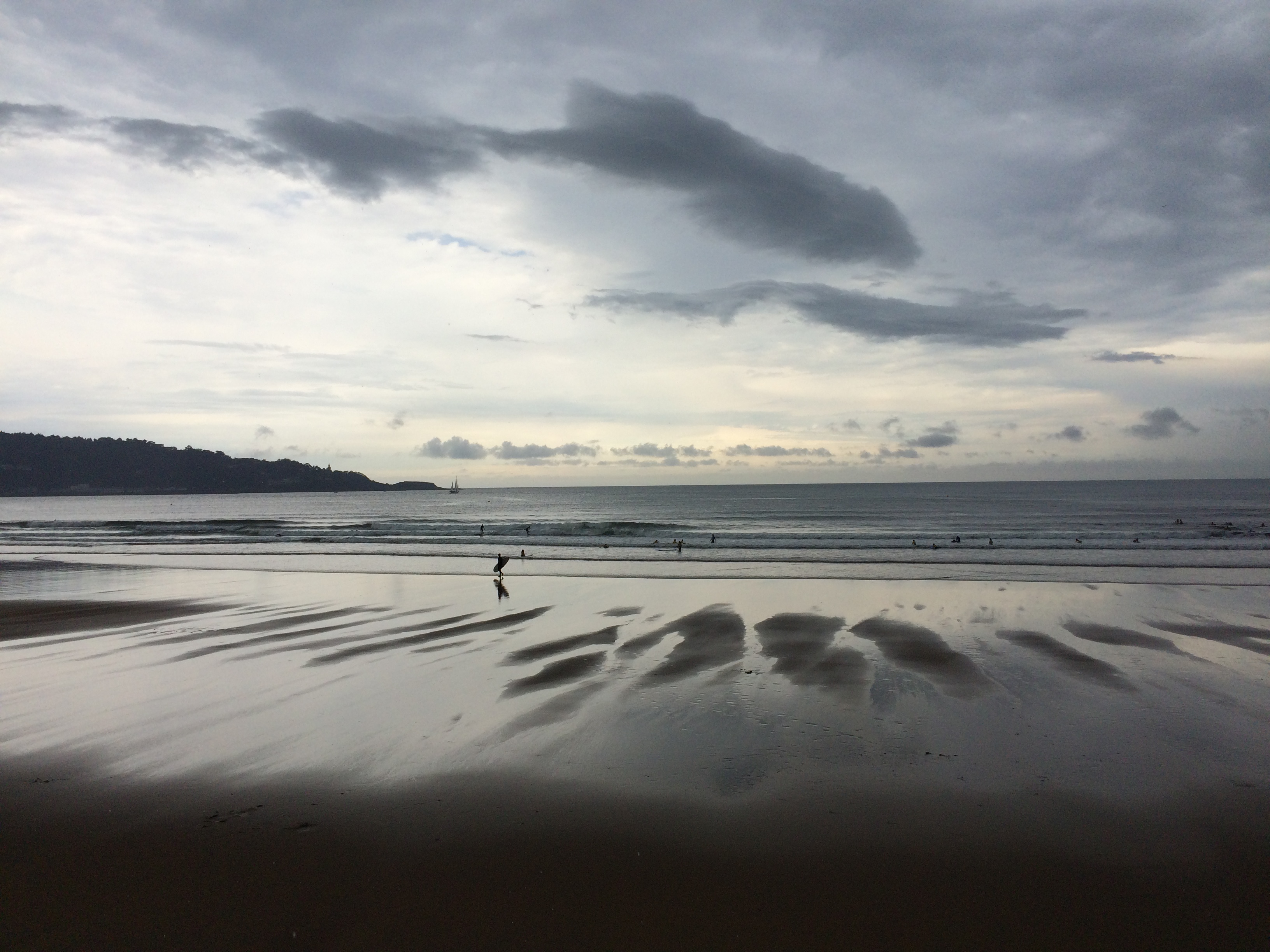
We drive past another bay in adjoining Cibourne. It’s still raining but the sea is calm as a lake, a perfect turquoise and looks very inviting. I’m very tempted to go in but decide it would be selfish and anti-social, especially as we’d agreed to stop there to have our sandwich and cup of tea. At that moment I spot a swimmer in a wetsuit swimming methodically round the bay and feel envious. He completes his swim in no time at all and is out of the water and getting changed right next to us, his wife and kids waiting patiently in the car. He’s thin as a rake. I give him the thumbs up and point to my baguette to ask whether he’d like us to make him one too? He says no so I wind down the window to talk to him. He’s a local and has that southern twang which you also find in Provence, though I’m not sure I’d be able to tell the exact difference between different southern accents. He’s training for a triathlon taking place here at the weekend, consisting of a 750 metre swim round the bay followed by a 25 km ride and 5 km run. I feel a pang of regret that I didn’t do more triathlons when I could and to start with a swim in this magnificent bay would have been fantastic.

The inviting bay in Cibourne.

The inviting bay in Cibourne.


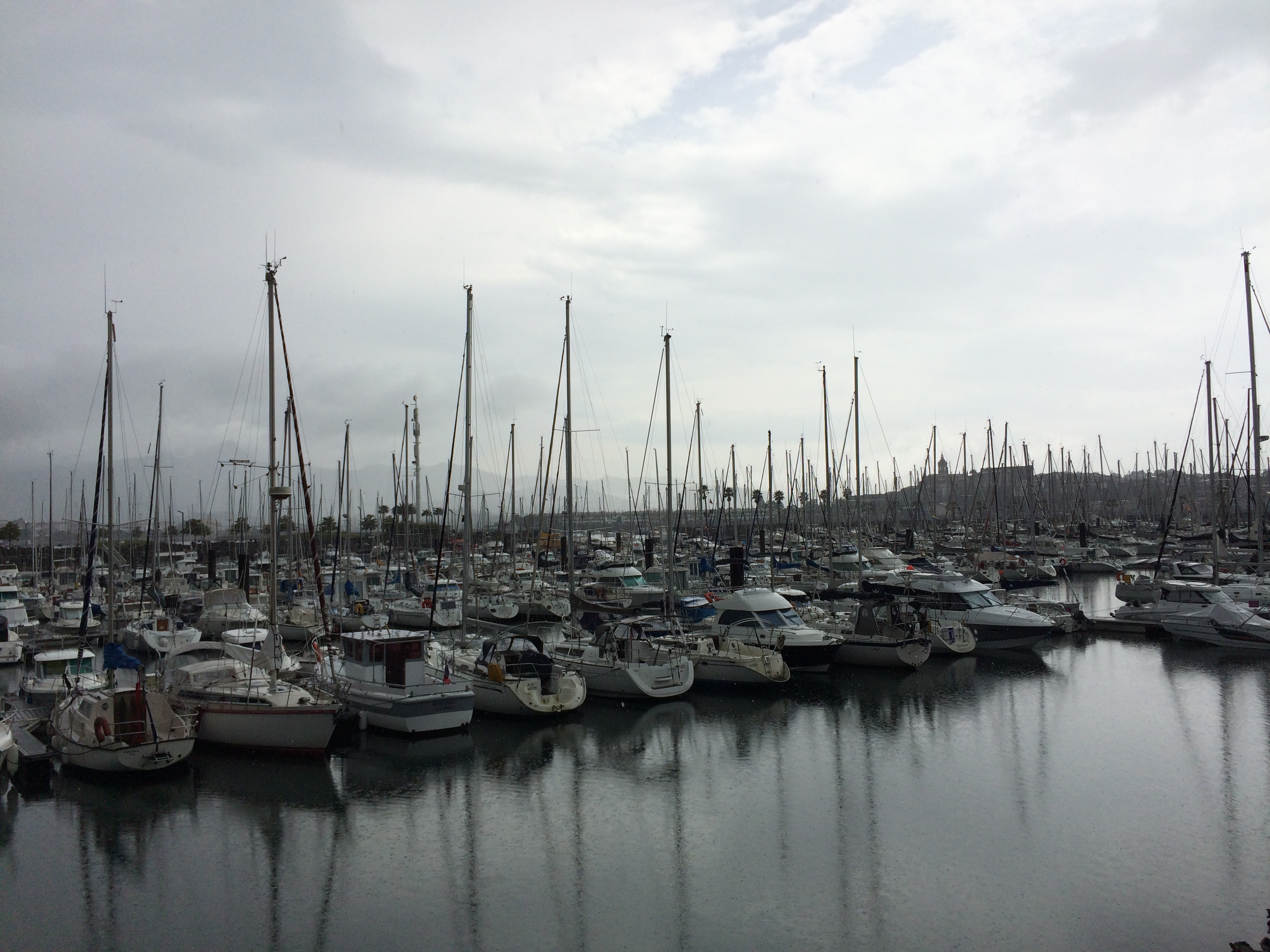
We move on in the direction of San Sebastian in Spain expecting that to be our next point of interest. But only a few kilometres out of St Jean de Luz we find ourselves in an adjoining town with the puzzlingly Arabic-sounding name of Hendaya. Though again we only literally drive through it, it strikes us as a very pleasant place indeed and clearly a major focal point for surfers and sailing enthusiasts alike.   It had a nice feel about it and we decided we’d be happy spending a holiday en famille here sometime.

Hendaya - apparently a great surfing spot.

Hendaya – apparently a great surfing spot.


But also popular with sailing enthusiasts.

But also popular with sailing enthusiasts.


We press on and before we know it, we’re over the Spanish border, without any border controls or specific point at which we realized we’d crossed it. The road seems suddenly busier and the scenery is not unlike Surrey or elsewhere in southern England, woody and slightly hilly. We arrive in San Sebastian and, like the brother and sister in Jean Cocteau’s Les Enfants Terribles who visited the Louvres by running straight through it just to be able to say they’d seen it, we again simply drove through it to get a feel of the place. Upon arriving, we glimpsed a statue – it could have been either Jesus or the Virgin Mary – atop a hill overlooking the city, reminiscent of Sao Paolo. It’s a busy, modern city with several fountains, which is something we hadn’t seen in any other French city in the South West, other than the Mirroir d’Eau in Bordeaux.

On arrival in St Sebastian.

On arrival in St Sebastian.


Fountains abound in St Sebastian.

Fountains abound in St Sebastian.


St Sebastian 'centro'.

St Sebastian ‘centro’.

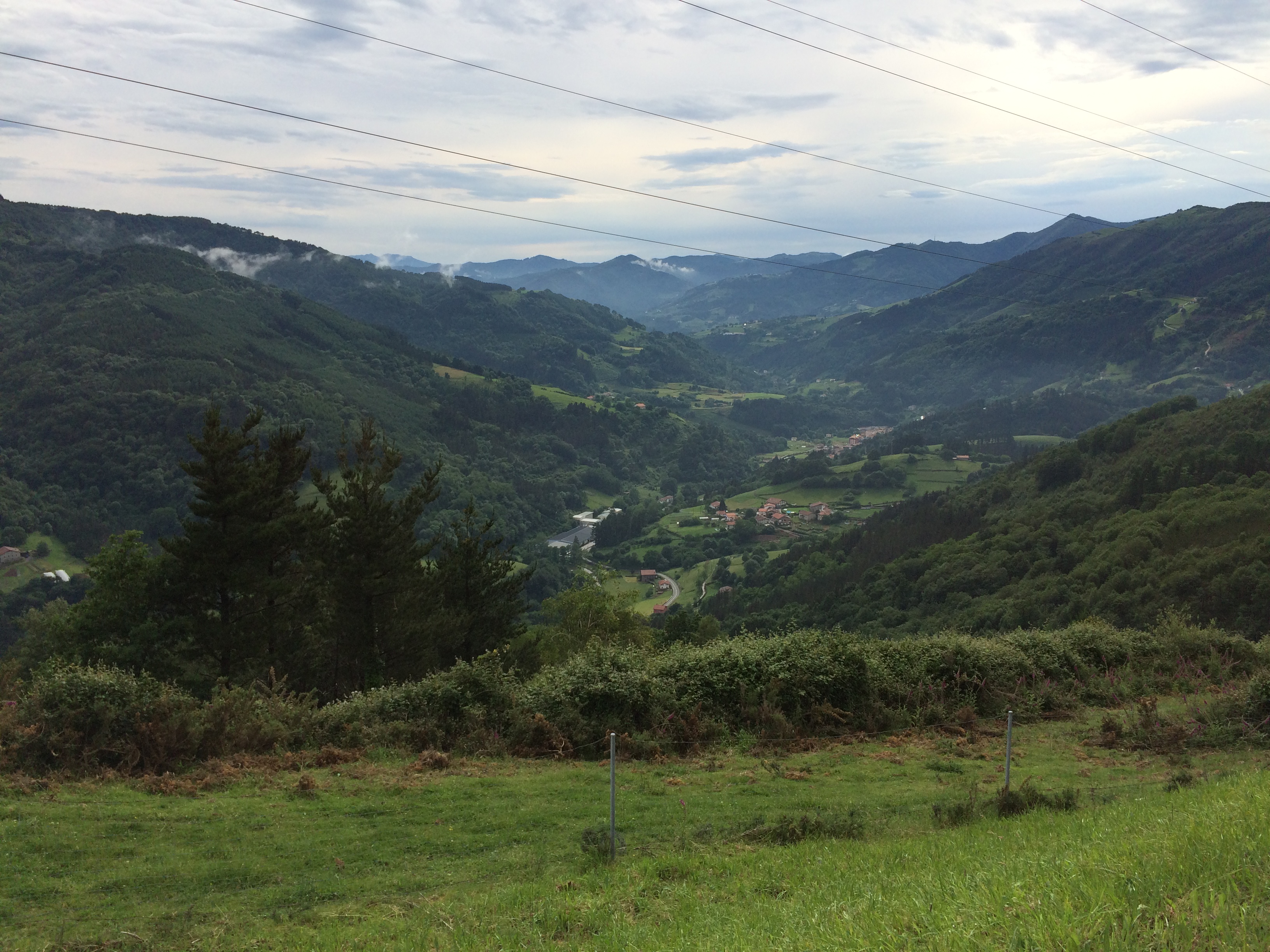
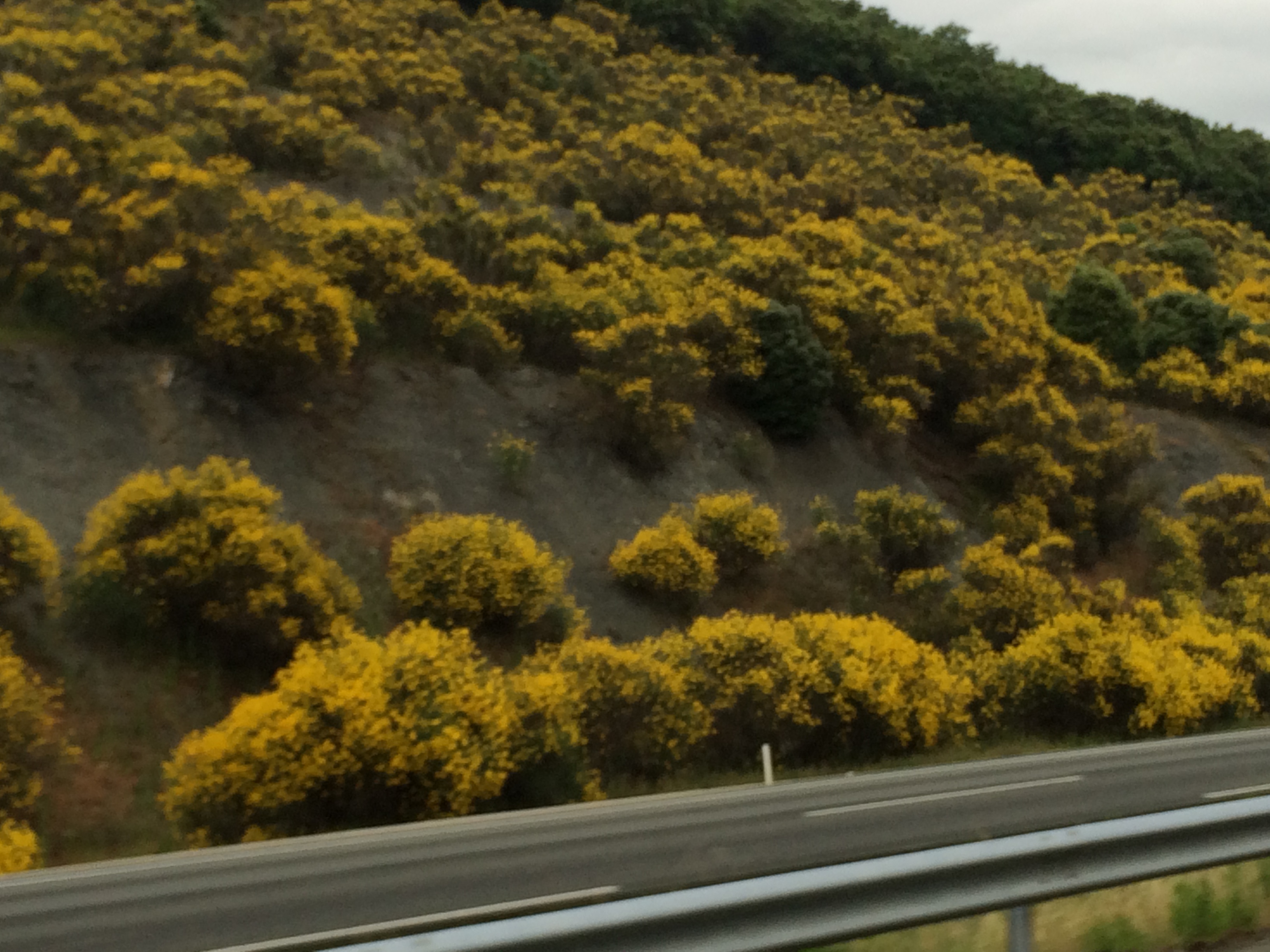
We press on further and the landscape becomes more dramatic. We’re going back into the Pyrenees, but on the Spanish side this time. We take the motorway heading for Pamplona but the climbs are still incredibly steep and the scenery is spectacular, particularly around Elduain, Irurtzun and Arakil. We reach some very high altitudes indeed, going other cloud-covered mountains. Glowing yellow broom lines the roads and motorways everywhere we look. An interesting historical detail Judith chanced upon was that broom was the symbol adopted by Geoffrey, Count of Anjou and Duke of Normandy, who married Matilda, daughter of Henry I. Their son Henry became Henry II of England and also adopted the broom, thus starting the Plantagenet line, the word originating from the Latin word for broom.

Scenery turns more spectacular on the way to Pamplona.

Scenery turns more spectacular on the way to Pamplona.


Broom lines the roads and motorway everywhere in the Spanish Basque country.

Broom lines the roads and motorway everywhere in the Spanish Basque country.


The Caravan Club book of campsites advised there was only one campsite around Pamplona – the Camping Ezcaba. The owners clearly took full advantage of this as this turned out to be our worst campsite experience to date. The pitches were badly maintained, the facilities extremely poor and the service indifferent. As it was late we decided to eat in the campsite restaurant but the food was reheated and lukewarm and the ‘recepcion and hospitalidad’ non-existent. We were made to feel our presence could barely be tolerated.

As if that wasn’t enough, the heavens opened up again that night – and this time it really did feel like ‘le grand deluge’. There was no let-up the entire night and we were finally forced to resort to using Brenda’s toilet for the first time during the night. With the poor condition of the pitches, as we were starting to stir in the morning, our Dutch neighbours got into difficulties trying to move off. They got seriously bogged down and had to be towed out by the campsite’s tractor. I managed to capture the moment, which looked very comical from the relative safety and dryness of our van. We fully expected to be punished for our wickedness by becoming stuck as well but we were mercifully spared.

IMG_2162


IMG_2156

Tuesday 9th June – day of rest in Saint-Pee-sur-Nivelle

Standard

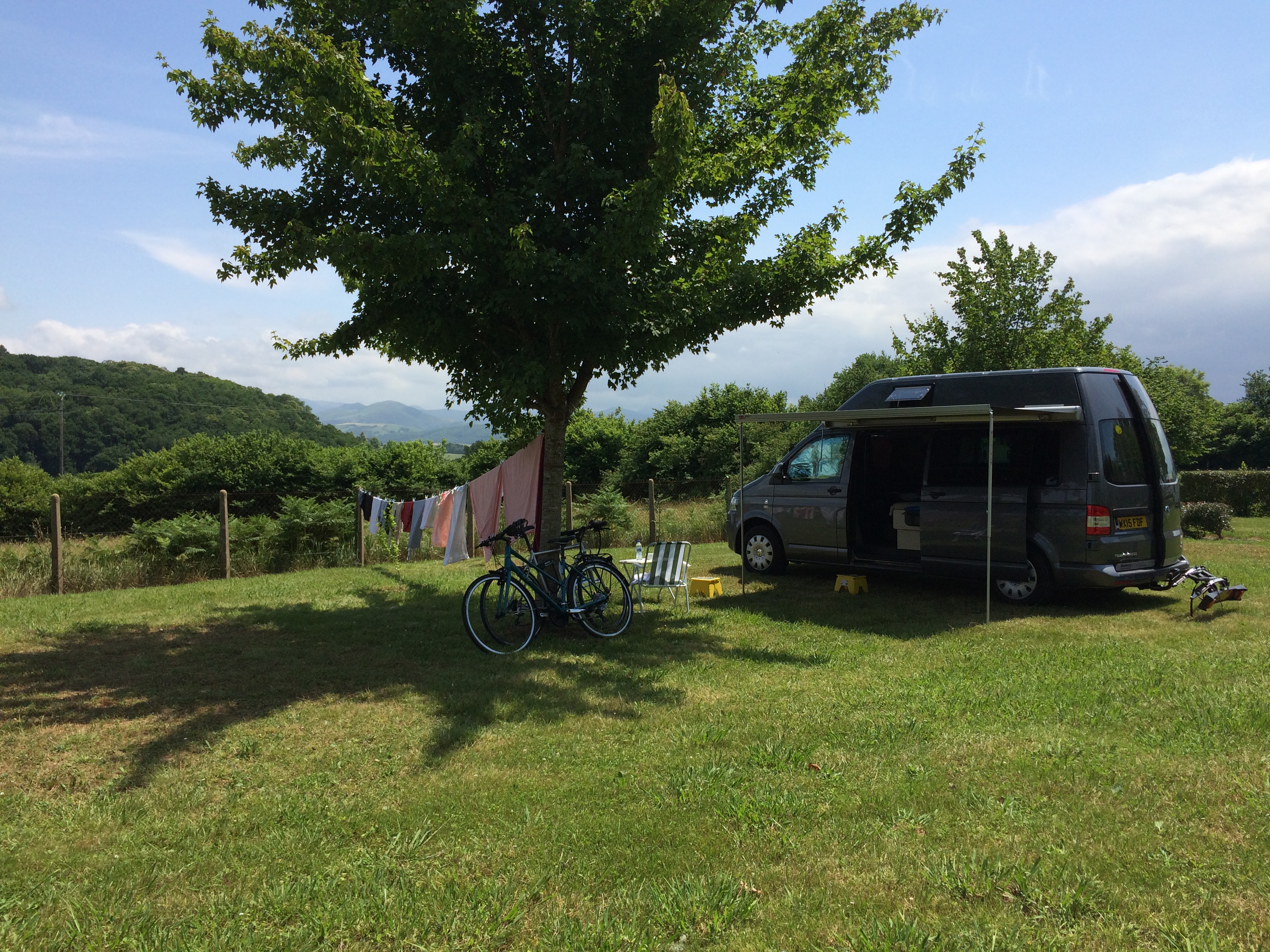
 We liked ‘Goyetchea’ so much that we decided to stay two nights there. In any case we needed some time to recuperate, take stock, do some washing and plan the next stage of our journey. There were plenty of free spaces so we had our pick of the best and we chose a spot with a magnificent view of the undulating countryside and the Pyrenees in the background.

The magnificent views from Goyatchea campsite

The magnificent views from Goyatchea campsite


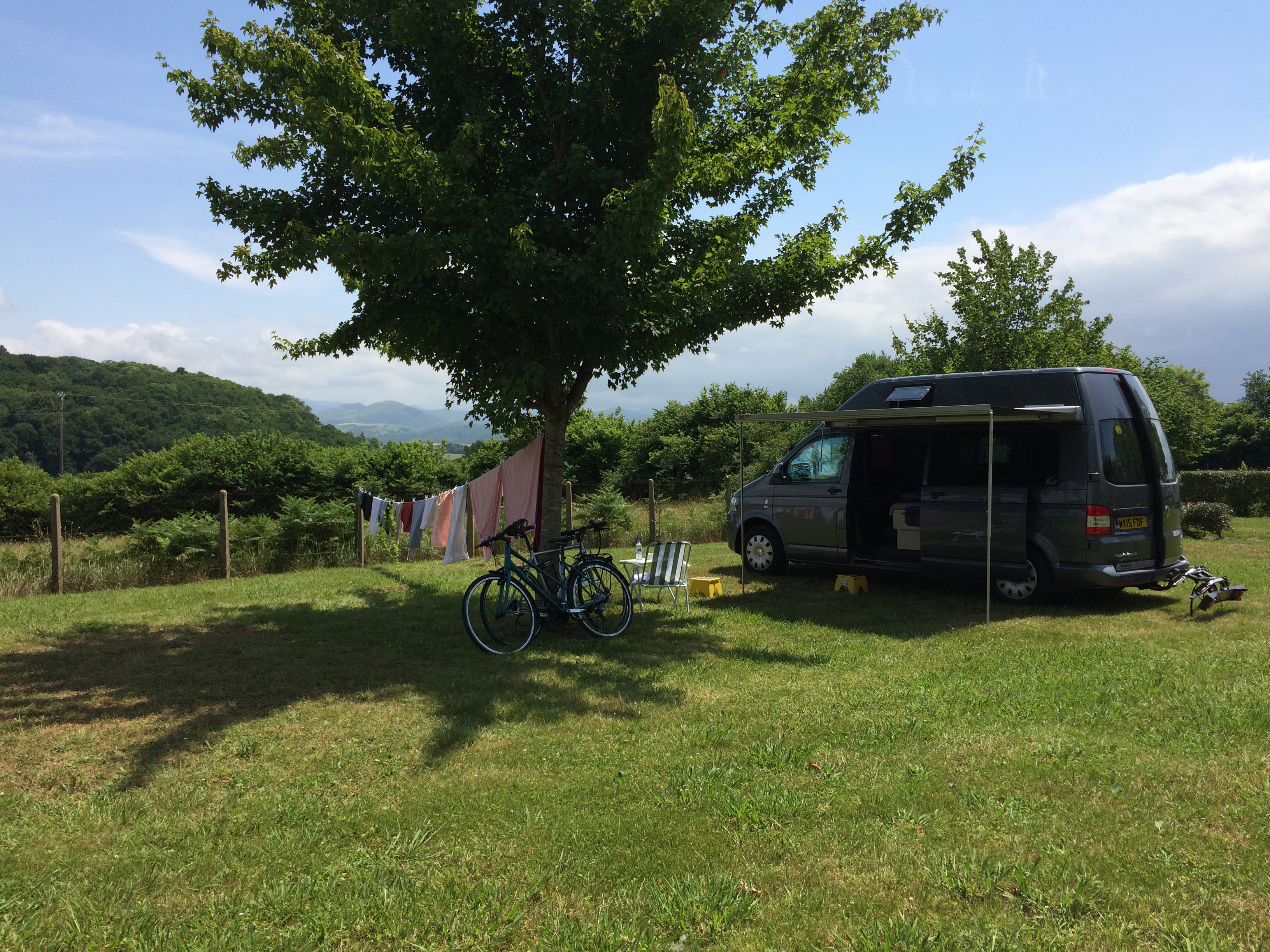
Our very comfortable pitch at Goyatchea.

Our very comfortable pitch at Goyatchea.


We had a plan to take our bikes and explore the villages in the area despite the steep slopes but Judith was feeling below par (the culprit possibly being the steak tartare in Bayonne) and we generally felt we needed a day devoid of any rushing and catching up with the blog so we took it easy. I must admit to wanting the use the pool there as much as possible being an important contributory factor for me! It was a decent-sized pool and looked like it might be a bit cold, as the temperature at this height dropped considerably at night, but it was a pleasant 24 degrees and so I managed half a mile or so on three occasions. I had to watch the shallow end as it was barely 0.80 metres and I scraped my knees doing the breaststroke and my hand doing the crawl a couple of times.

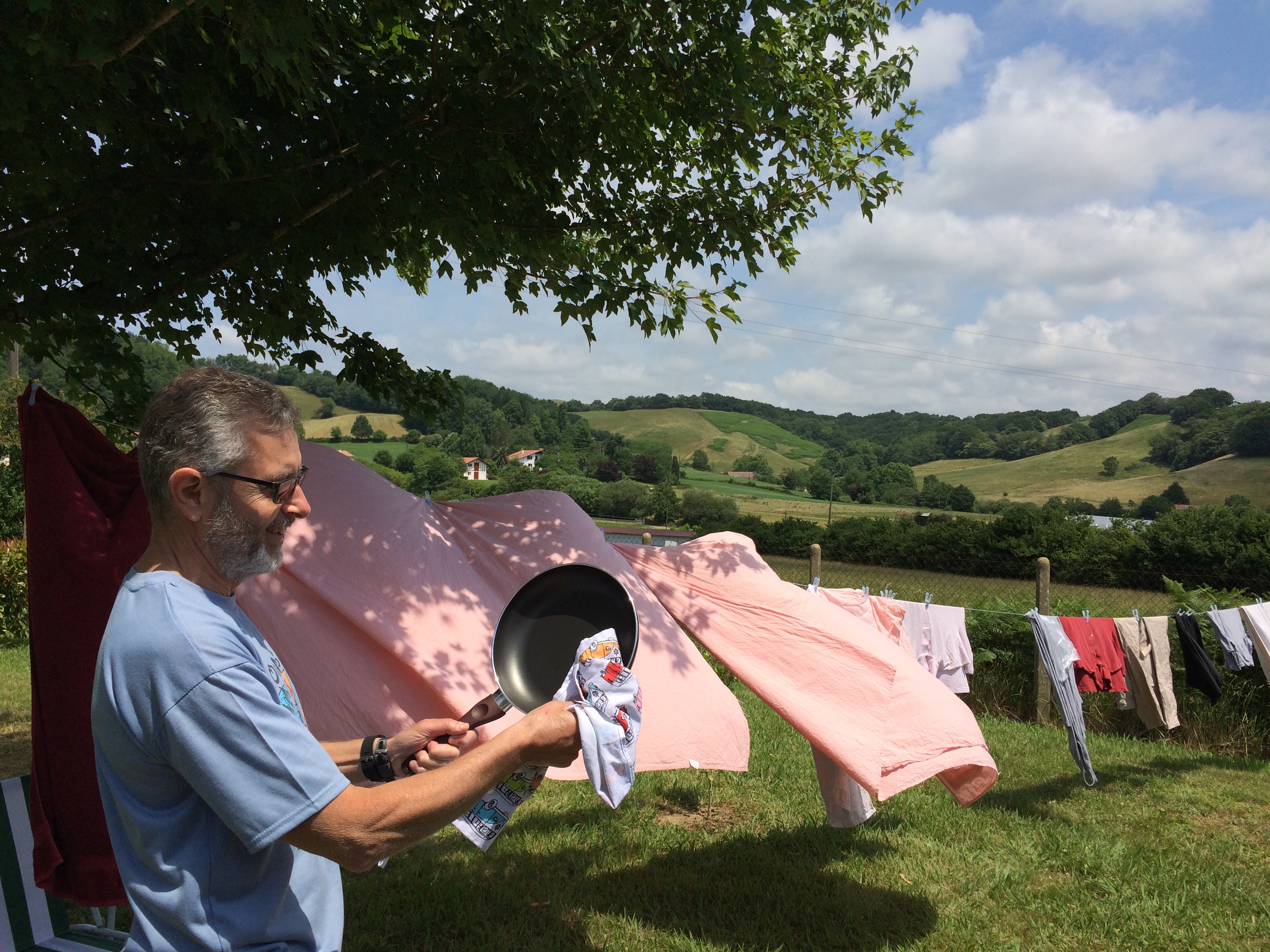
Catching up with some washing etc.

Catching up with some washing etc.


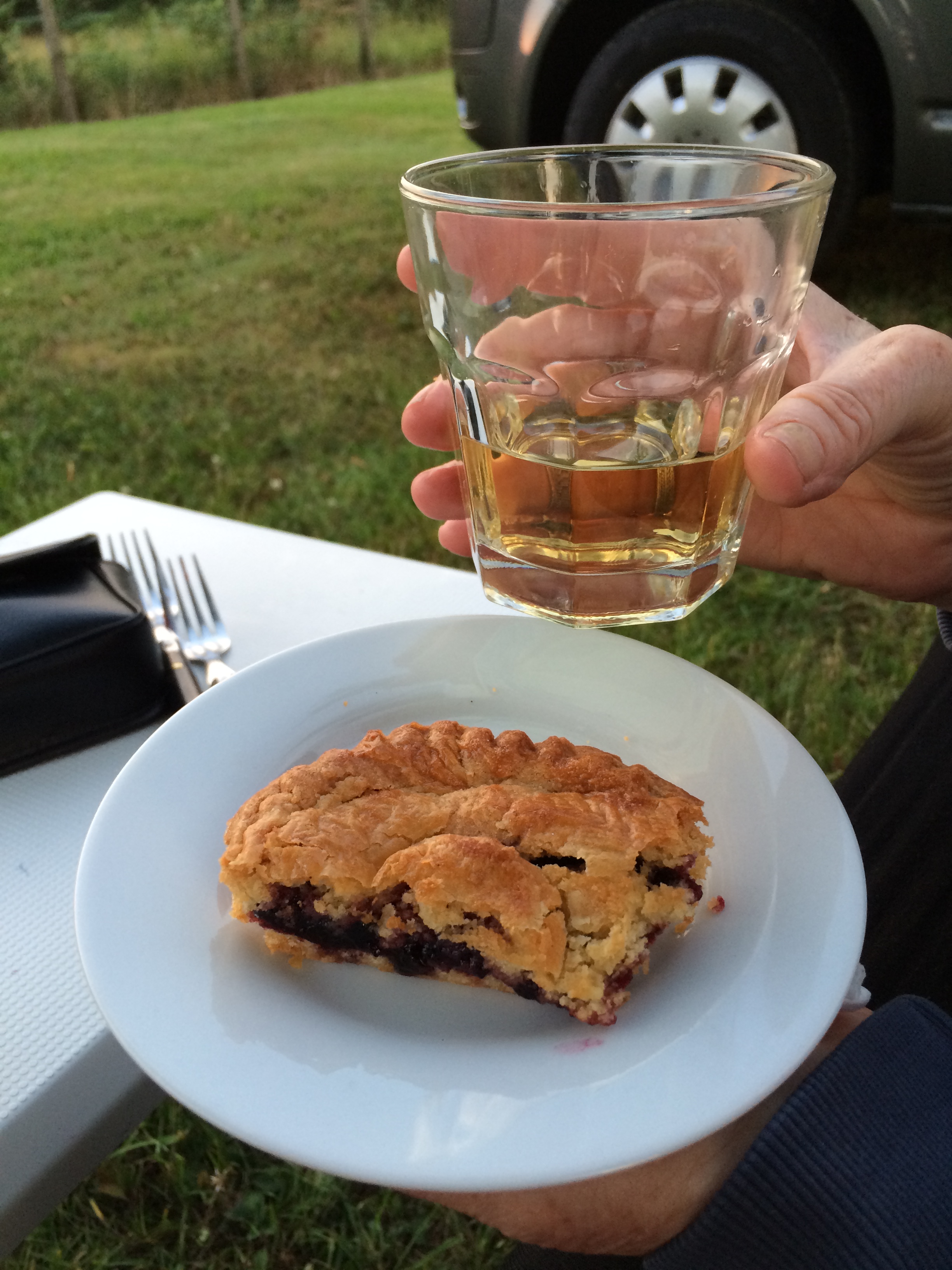
The evening we arrived we had a cherry-filled Basque pasty we’d bought from Bayonne for pudding together with a small drop of our vin doux from St Emilion. Cherries are widely grown in the Basque region and indeed in the whole area of Navarre and Aragon in Spain as well, as we were to find out.


Basque cherry pie and vin doux.

Basque cherry pie and vin doux.


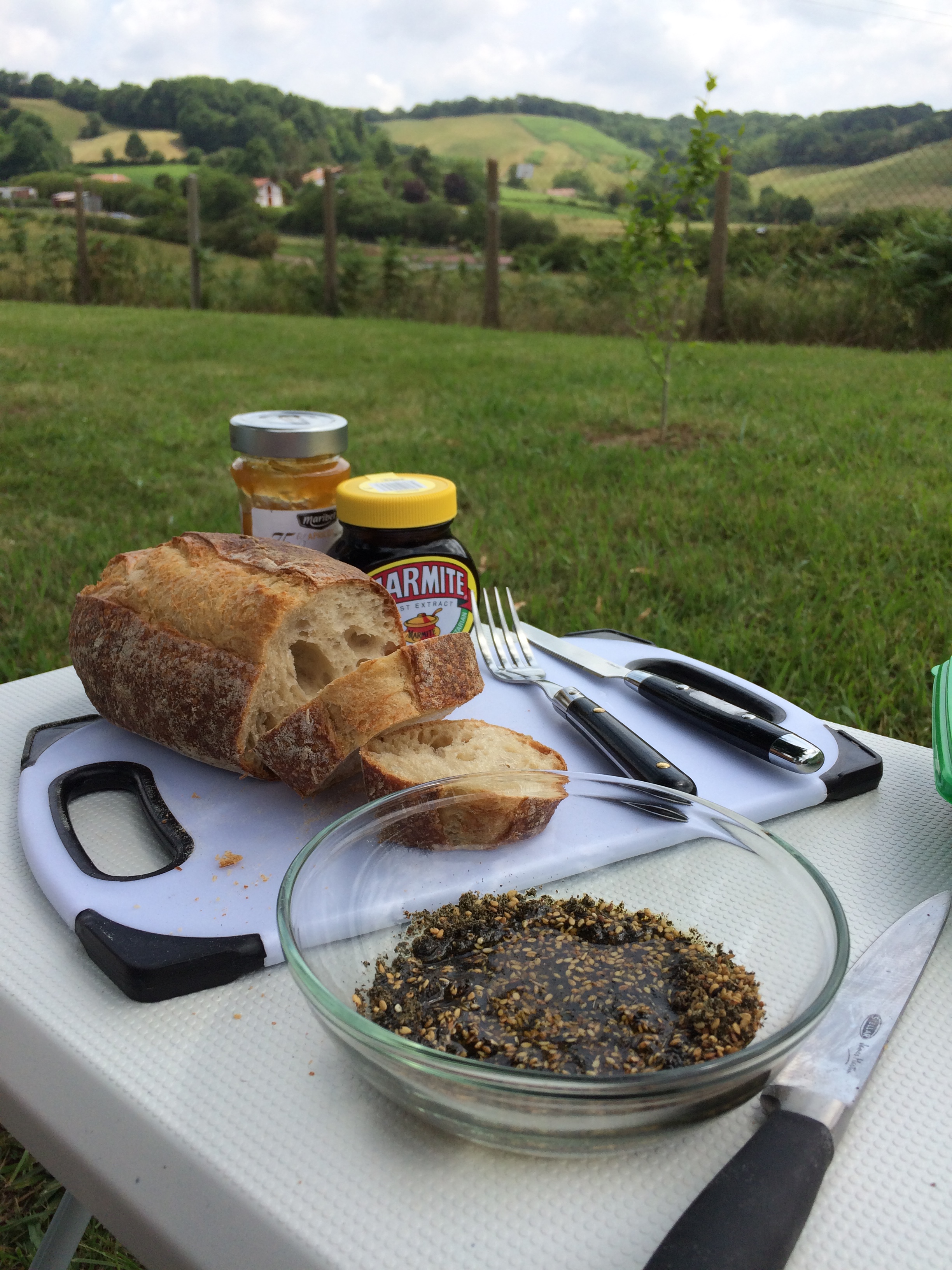
In the morning, we didn’t have very much for breakfast but looking through our tiny cupboards, we found the jar of ‘zaatar’ (or ‘doqqa’ as it’s called in Egypt), basically a mixture of roughly ground thyme, sesame seeds and salt which my sister Laura had had the presence of mind to persuade us to take with us for emergencies. For the uninitiated, you break off bits of bread and dip these in olive oil then in the zaatar mixture and the zaatar sticks to it. But of course it’s supposed to be ‘shami’ (Syrian) bread – which is what pitta bread is called in the ME. This zaatar is part of a big bag of it given to me by my friends at the Palestinian Ministry of Education in Ramallah the day they gave me a wonderful surprise send-off before my retirement in February. I’ll never forget that, nor their kindness or that of all our other dear friends in Egypt and the rest of the region.

Zaatar, olive oil and pain de campagne for breakfast.

Zaatar, olive oil and pain de campagne for breakfast.


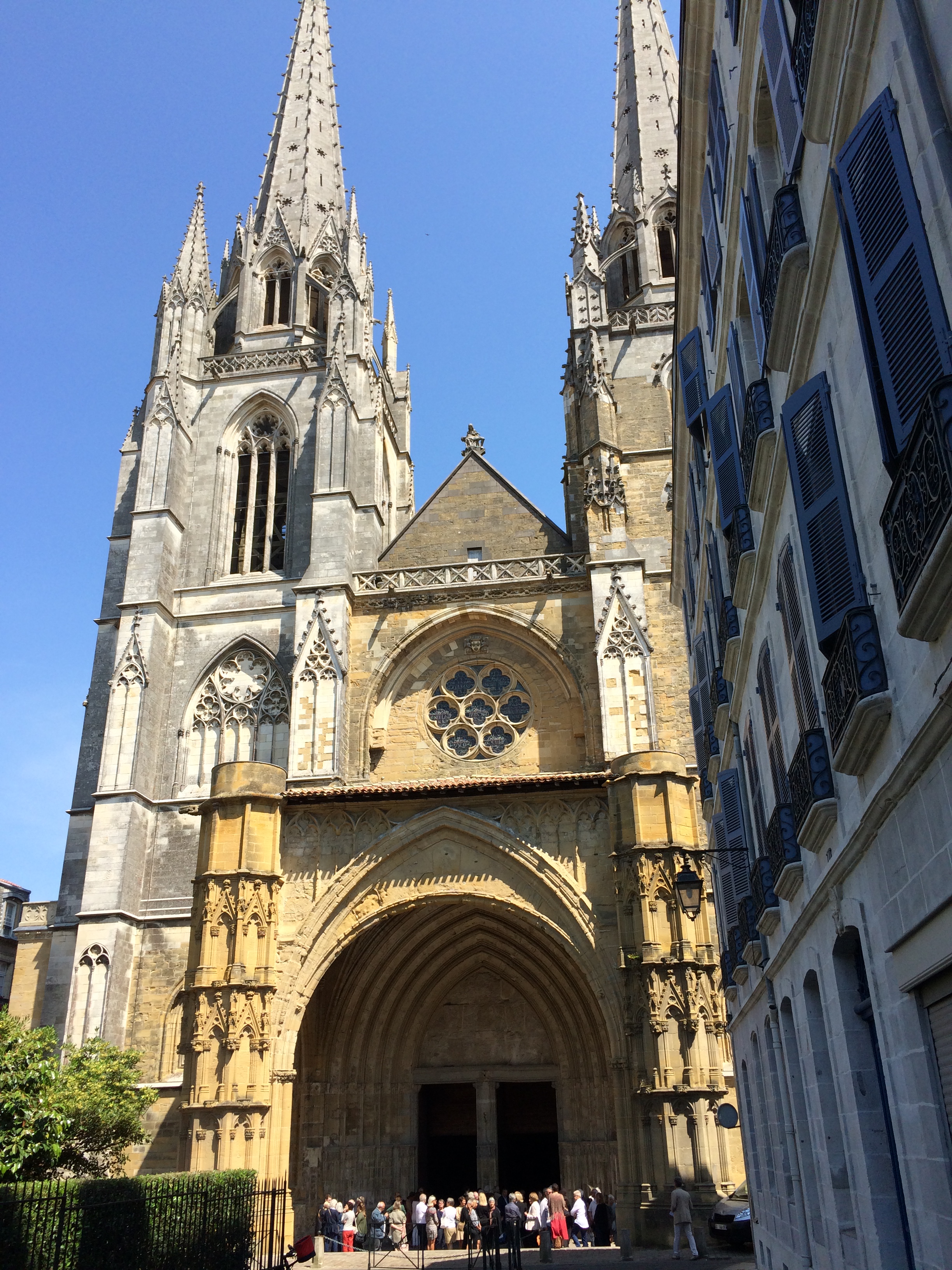
So this is what we had with the pain de campagne we’d bought from Bayonne at the same time as the cherry pie from a marvelous little bakery in a side street round the corner from a church where a funeral was being held. A memory came back of the mournful sound of church bells and quite a lot of people gathering outside the church and starting to enter. There’s always something moving about the sight of a large number of people maintaining a respectful silence, and the bells, tolling singly at two-second intervals made the scene more poignant and brought a lump to our throats. It’s not a sound you often hear in England. ‘Elles sont jolies, les cloches’ I said to the baker as he handed us the bread and cherry pies. ‘Oui, mais ce n’est pas gai aujourd’hui’.IMG_2113

Church in Bayonne where a funeral service was taking place.

Church in Bayonne where a funeral service was taking place.

It rained most of the night

It rained most of the night

Monday 8th June – the enchanting city of Bayonne

Standard

Now the point about this blog is that it is meant to be neither a travel guide nor a recounting of the history of the places we visit. The short time we can allow ourselves to spend in any one town or city can only give us a glimpse of the place and leave us with an impression of its character and atmosphere. In the process we realize we may not be doing justice to every place we visit. But log our progress, experiences and impressions is all we can do.

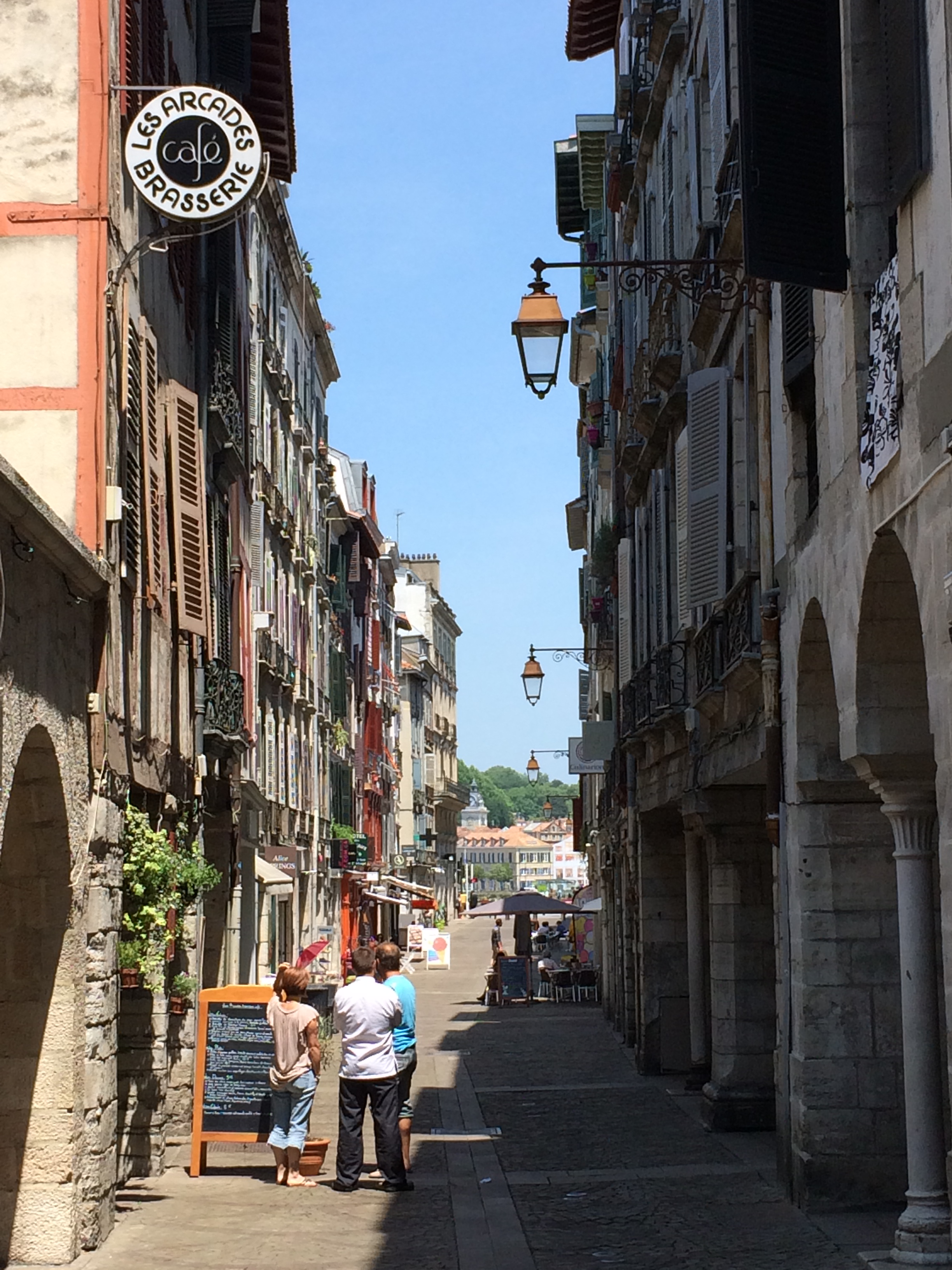
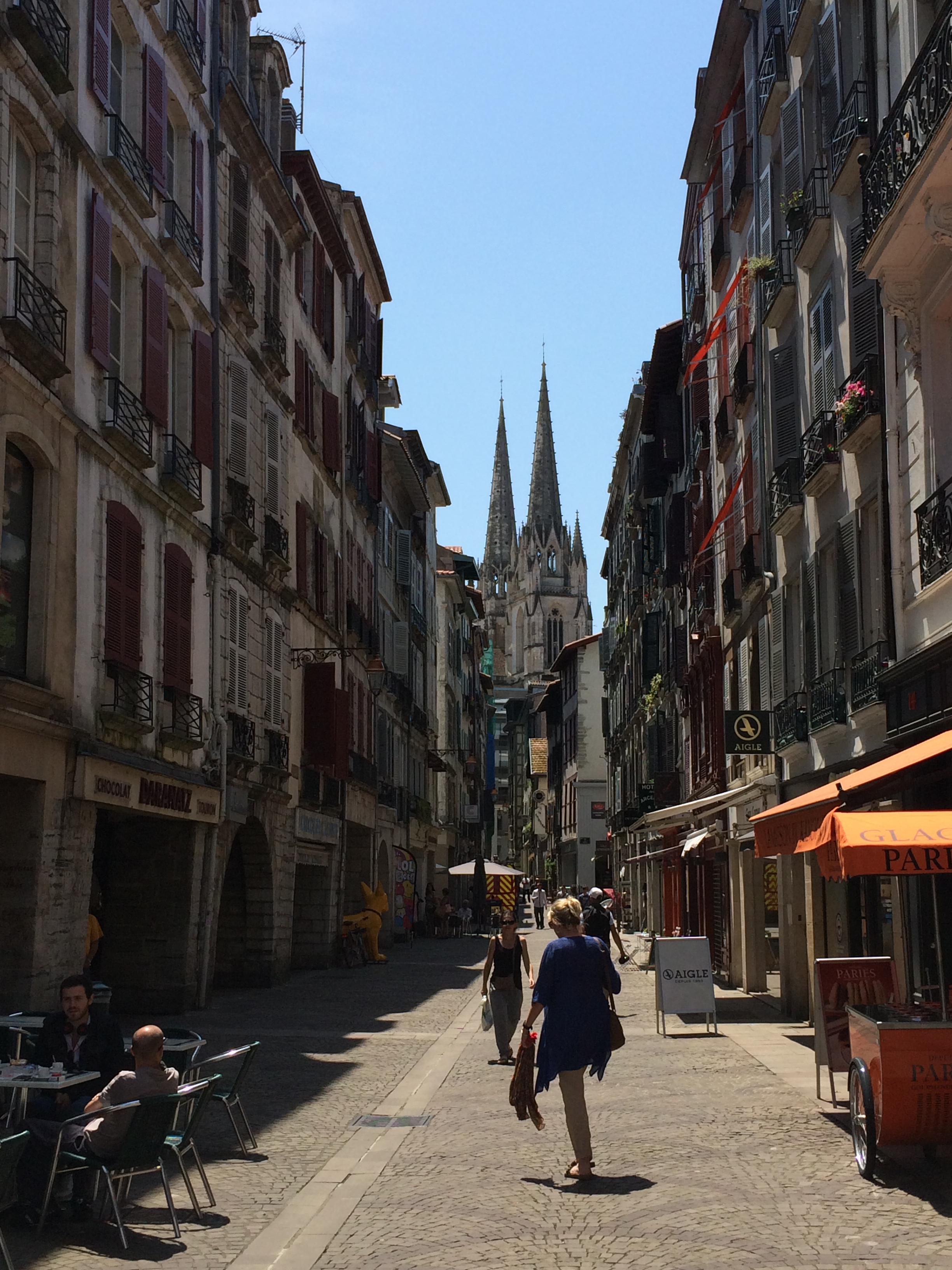
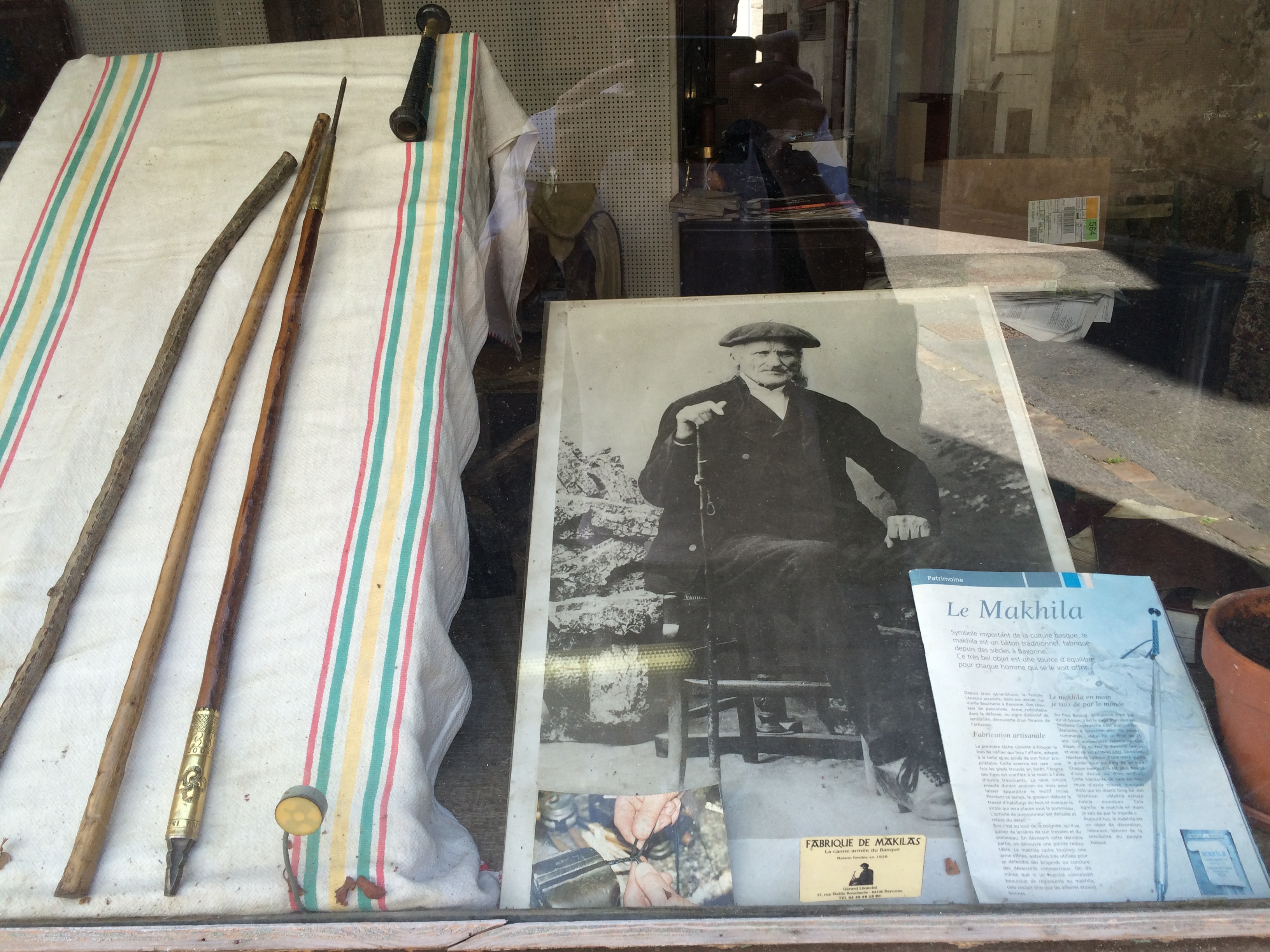
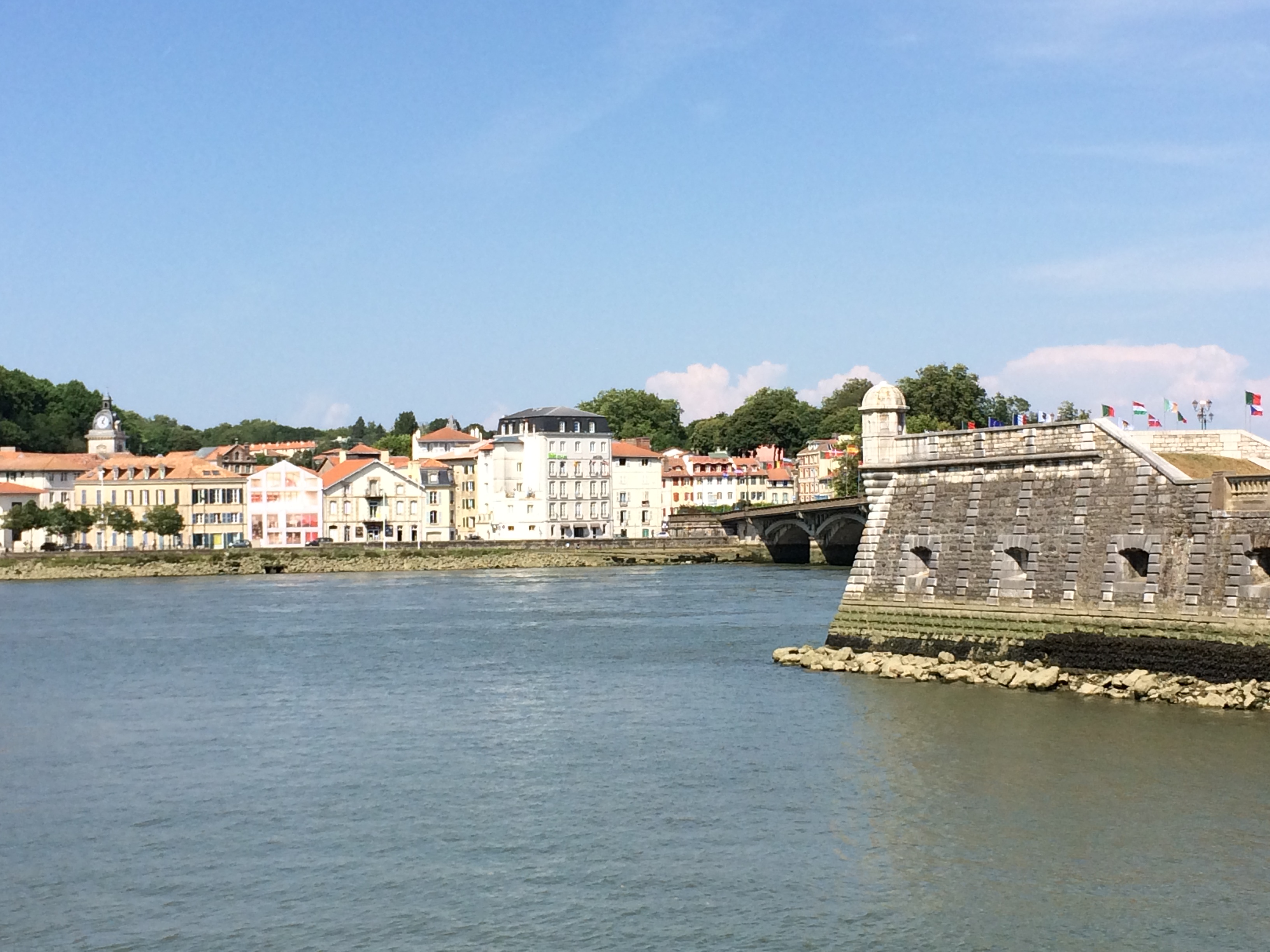
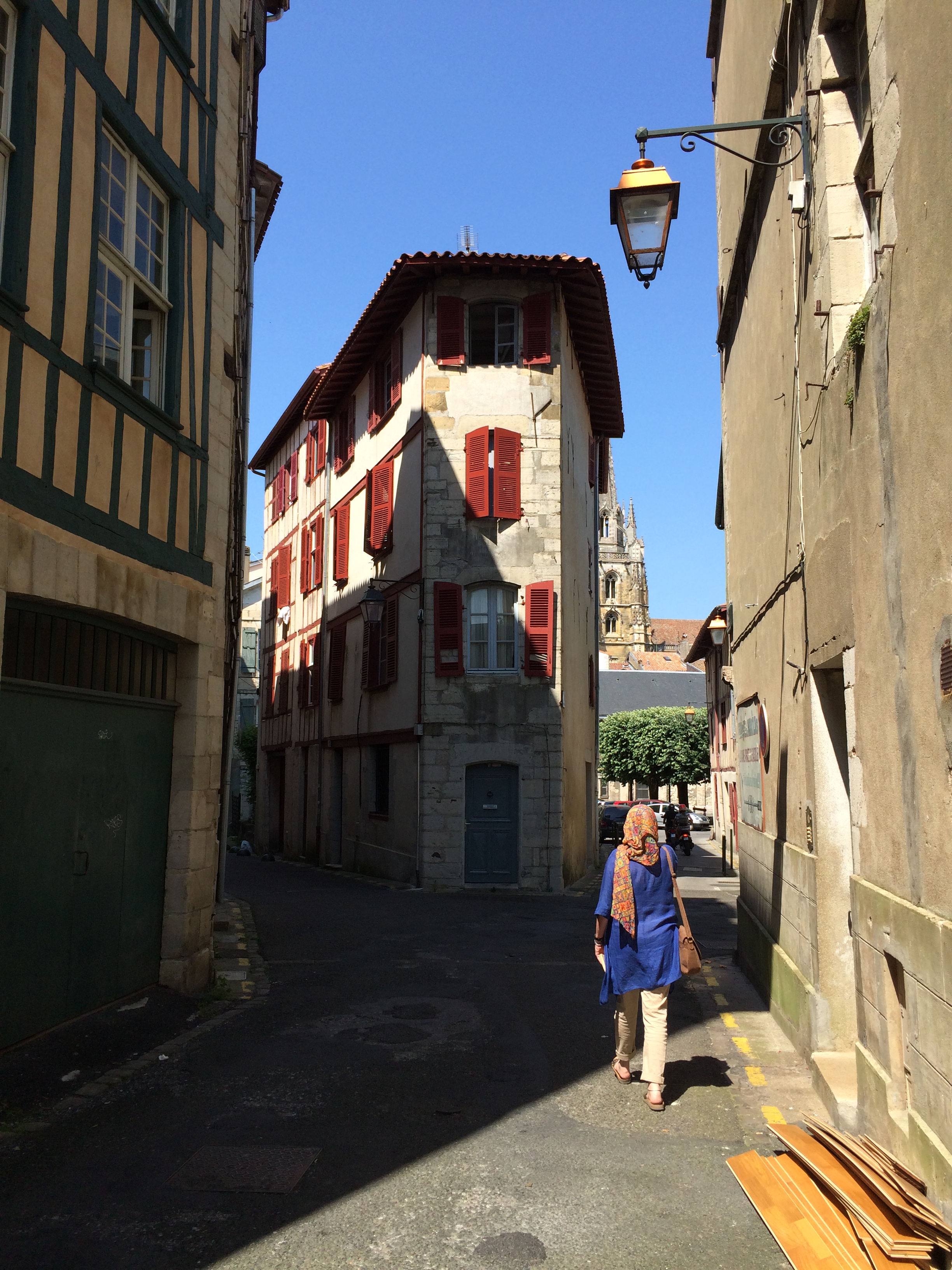
In contrast to Bordeaux, we were bowled over by Bayonne. Quite simply, there wasn’t one part of it we saw that we didn’t find architecturally fascinating, well preserved and aesthetically pleasing. It seemed to have one gorgeous avenue after another. Much restoration work was also underway. It wasn’t swarming with tourists and the shops and restaurants seemed to cater for discerning locals rather than visitors. It just had the feel of a place where locals tried hard to preserve the beauty of their surroundings and local traditions with no sign of the big brands. Here a furniture restorer, there a traditional book binder, an artisan chocolatier or a cafe selling vinyl records (Judith spotted a old poster advertising a Blind Faith concert, which took her back!) or a shop still making the ‘Makhila’, the traditional walking stick which has been made in Bayonne for centuries and is an important symbol of Basque culture.

The charming avenues and alleyways of Bayonne.

The charming avenues and alleyways of Bayonne.


Bayonne city centre.

Bayonne city centre.


Old shop still making the 'Makhila', the traditional Basque walking stick and symbol of Basque culture.

Old shop still making the ‘Makhila’, the traditional Basque walking stick and symbol of Basque culture.


Old book-binding shop.

Old book-binding shop.


La Tour Vieille (the Old Tower) - part of an old defence system dating back to Roman times.

La Tour Vieille (the Old Tower) – part of an old defence system dating back to Roman times.

Bayonne was of course the capital of the Basque region. Its ‘Chateau Vieux’ was built on the site of a Roman castle and, the plaque says, was inhabited by Don Alphonso the Fighter, King of Navarre (1130); the Black Prince; Don Pedro the Cruel, King of Castille (1367); Louis IX (1463); Francis I (1526); Charles IX (1565); Louis XIV (1660); Marie Anne of Neubourg, Queen of Spain (1706) and General Palafox, Defender of Saragossa (1809). So lots of history there and a reminder of the tug of war between France and Spain the city must have been at the centre of for centuries.

On arrival in Bayonne.

On arrival in Bayonne.


Bayonne is a relaxing and quaint city to stroll around in.

Bayonne is a relaxing and quaint city to stroll around in.


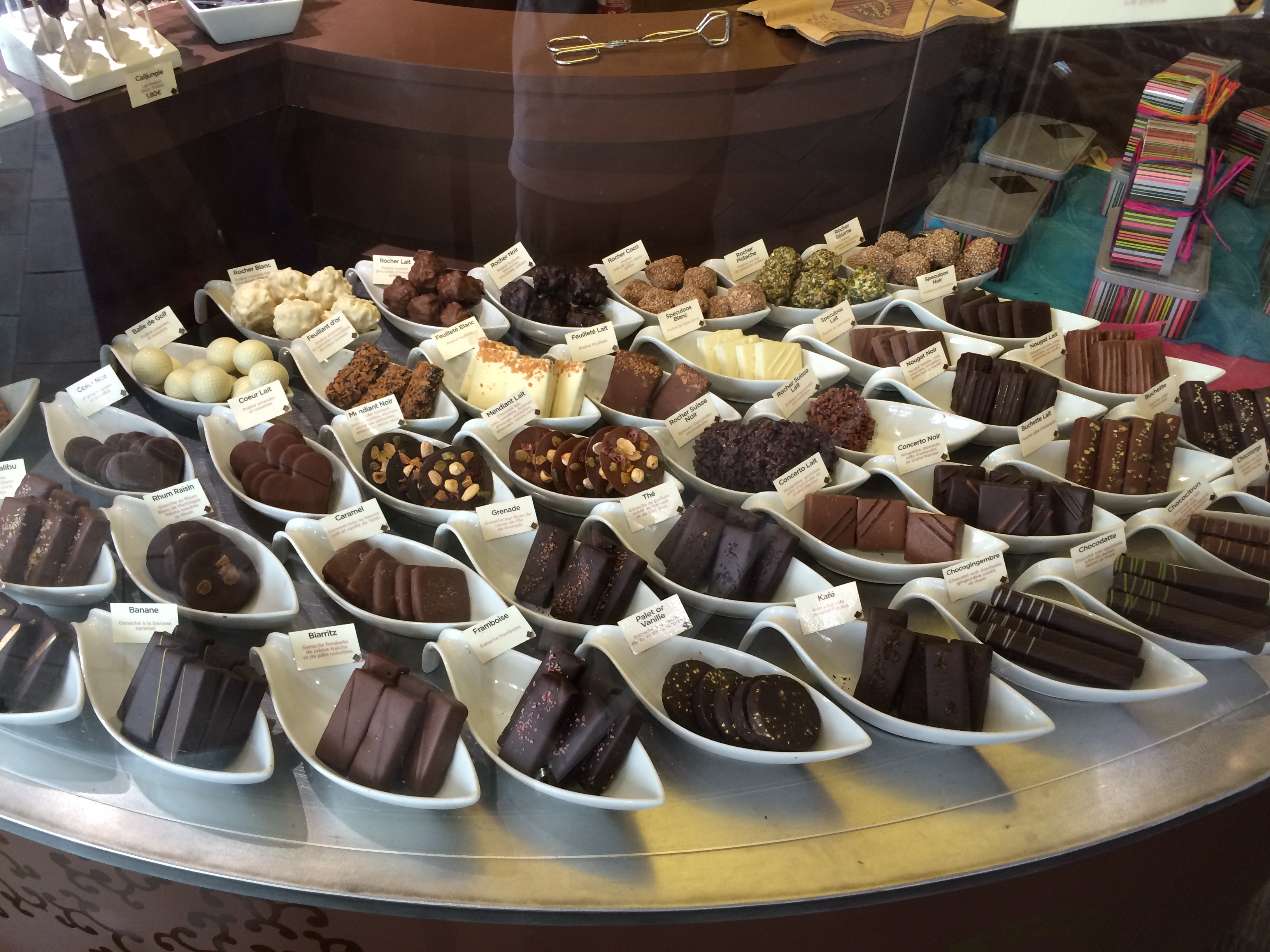
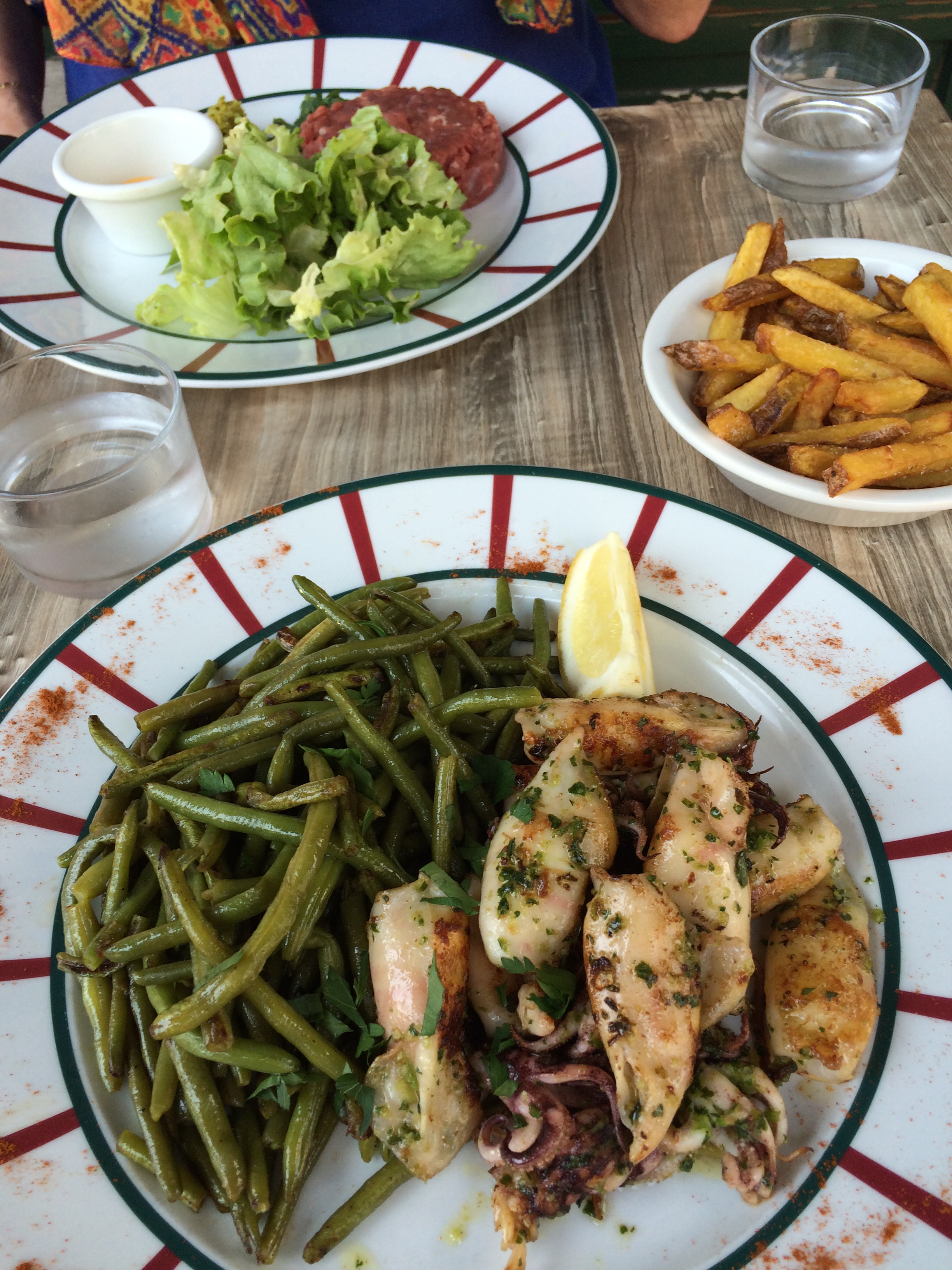
We find a chocolatier the like of which we have never seen before. We’re tempted but it’s too warm to carry chocolate in our backpacks all day and the prices are guilt-inducing anyway. Later we see somewhere a reference to the city’s less illustrious past as a trading centre for slaves and with the slave ships came the cocoa bean – so that explains it. We find a restaurant which agrees to serve us just coffee and a sandwich but we’re so seduced by the menu and the aromas from the kitchen that we decide to sample some Basque food. I have a fantastic dish of ‘chipirons grilles a la plancha’ – ultra fresh grilled calamari with green beans and garlic and herbs and Judith almost chooses an ‘axoa’, a Basque-style veal piccata but the waitress tells her she probably won’t want veal as she is English and persuades her to go for a steak tartare instead.

Bayonne's less illustrious past as a slave-trading port means it's also famous for its excellent chocolate-making.

Bayonne’s less illustrious past as a slave-trading port means it’s also famous for its excellent chocolate-making.


'Chipirons', Basque-style grilled calamari tossed in garlic and herbs with green beans cooked al dente. They were scrumptious.

‘Chipirons’, Basque-style grilled calamari tossed in garlic and herbs with green beans cooked al dente. They were scrumptious.


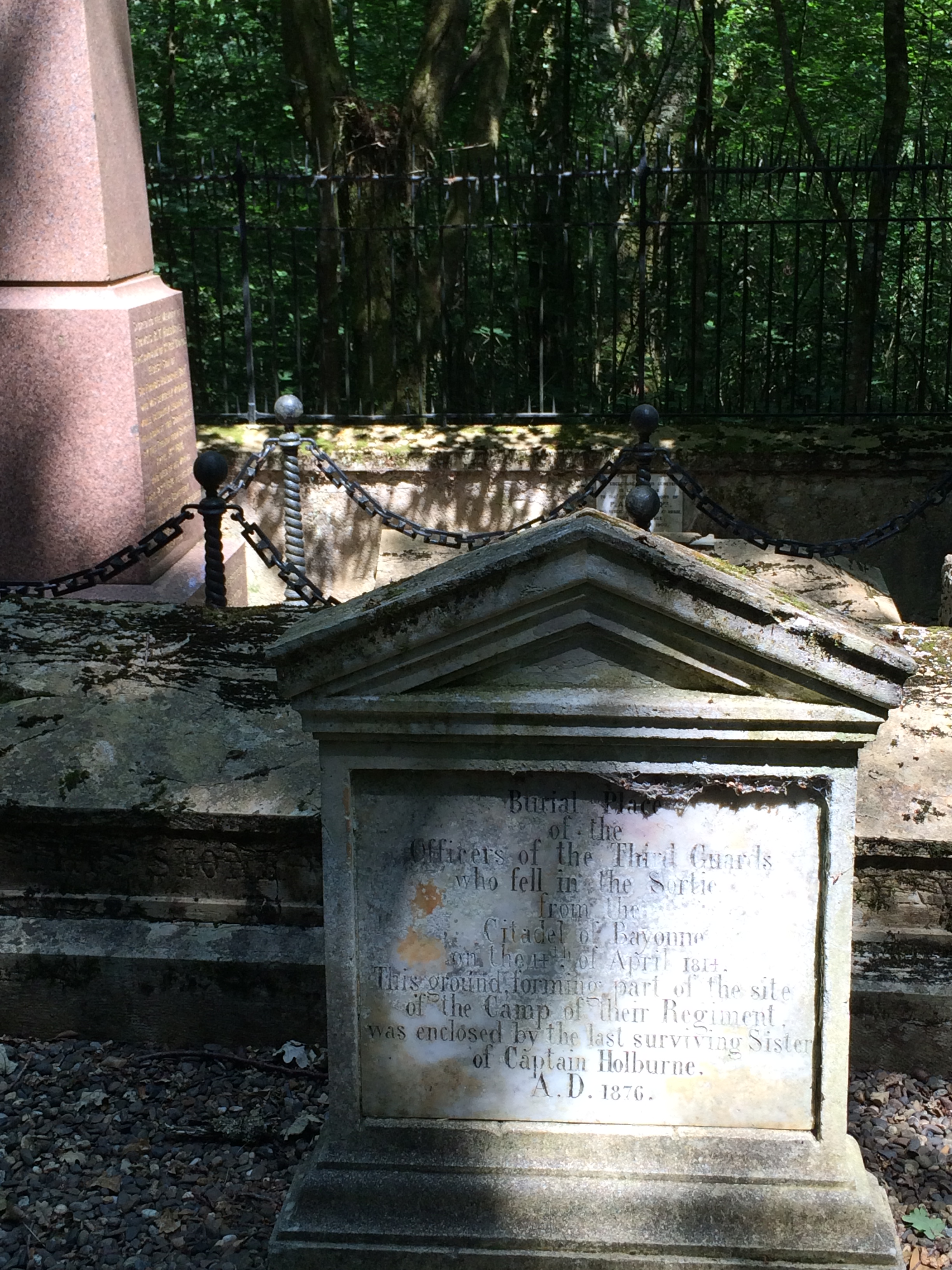
On the way to Bayonne, we had been intrigued by a sign pointing to the ‘Cimetiere des Anglais’ (English cemetery) and stopped the car to investigate. Which Anglais? Why did they die there? In the Middle Ages or more recently? Despite the sign, it wasn’t easy to find and when we did find it in a small clearing in a wood, it was a small burial ground of no more than 6 square metres containing a dozen or so headstones. One read: “ Burial Place of the Officers of the Third Guards who fell in the Sortie from the Citadel of Bayonne on the 14th of April 1814. This ground forming part of the site of the Camp of their Regiment, it was enclosed by the last surviving Sister of Captain Holburne, A.D. 1876.” Another read: “Sacred to the Memory of Francis R.T. Holburne, … who was severely wounded while gallantly leading his men against the sortie made by the French from Bayonne April 14th 1814 and died of his wound April 23rd 1815. He lies buried in the cemetery. His loss was deeply deplored by his afflicted family and all who knew him.”

Headstone in honour of the officers of the Third Guards who fell in a French sortie on 14 April 1814 at Le Cimetiere des Anglais.

Headstone in honour of the officers of the Third Guards who fell in a French sortie on 14 April 1814 at Le Cimetiere des Anglais.

So while Britain prepares to celebrate the 200th anniversary of Waterloo, it’s interesting to note that there was fighting deep in south western France only a year earlier and that the English got a beating there. Poor Captain Holburne died of his wounds just 2 months too early to hear the consoling news of Wellington’s victory.

Commemorative stone in honour of Captain Francis Holburne who died of wounds inflicted on 14 April 1814 at the Cimetiere des Anglais near Bayonne.

Commemorative stone in honour of Captain Francis Holburne who died of wounds inflicted on 14 April 1814 at the Cimetiere des Anglais near Bayonne.


After Bayonne, we drive to what’s advertised as the only campsite in Biarritz. We feel lucky to have found a space as it seems really busy. But having installed ourselves we realize that it is in fact full of motorcycle enthusiasts awaiting the start of a “Waves and Wheels” festival. It doesn’t take too many bikers revving up their machines to make us decide to leave and find a quieter spot. And this time we strike lucky, with the  Camping Goyetchea (which means ‘The House on Top’), perched at the top of a hill, near the village of Saint-Pee-Sur-Nivelle, with beautiful views of the Pyrenees all around, a hardworking and helpful campsite manager and a decent-sized pool as well. The only drawback as it would turn out was the freak weather!

Bliss at the Camping Goyetchea (The House on Top) in Saint-Pee-Sur-Nivelle.  Delightful to stay at with wonderful views of the Pyrenees.

Bliss at the Camping Goyetchea (The House on Top) in Saint-Pee-Sur-Nivelle. Delightful to stay at with wonderful views of the Pyrenees. We’d definitely come back here again.

IMG_2067

Sunday 7th June – Bordeaux

Standard

The advice we’d been given was not to attempt to go into Bordeaux city centre but leave the van at a ‘P & tram’ car park on the outskirts and take the futuristic tram into town. After failing to find a car park that allowed vehicles of more than 2.5 metres high, we gave up and drove into town after all. The main bridge leading to the city was also closed meaning more time wasted being redirected. It was lunchtime by the time we arrived.

Lying at the mouth of the mighty muddy-watered Garonne river, Bordeaux not only evokes ‘grands vins’ but is also an important port. The sight of cruise ships moored alongside the embankment was unexpected and quite striking.

The mouth of the Garonne is in fact big enough to surf in with waves high enough, it is said, to carry you for kilometers.

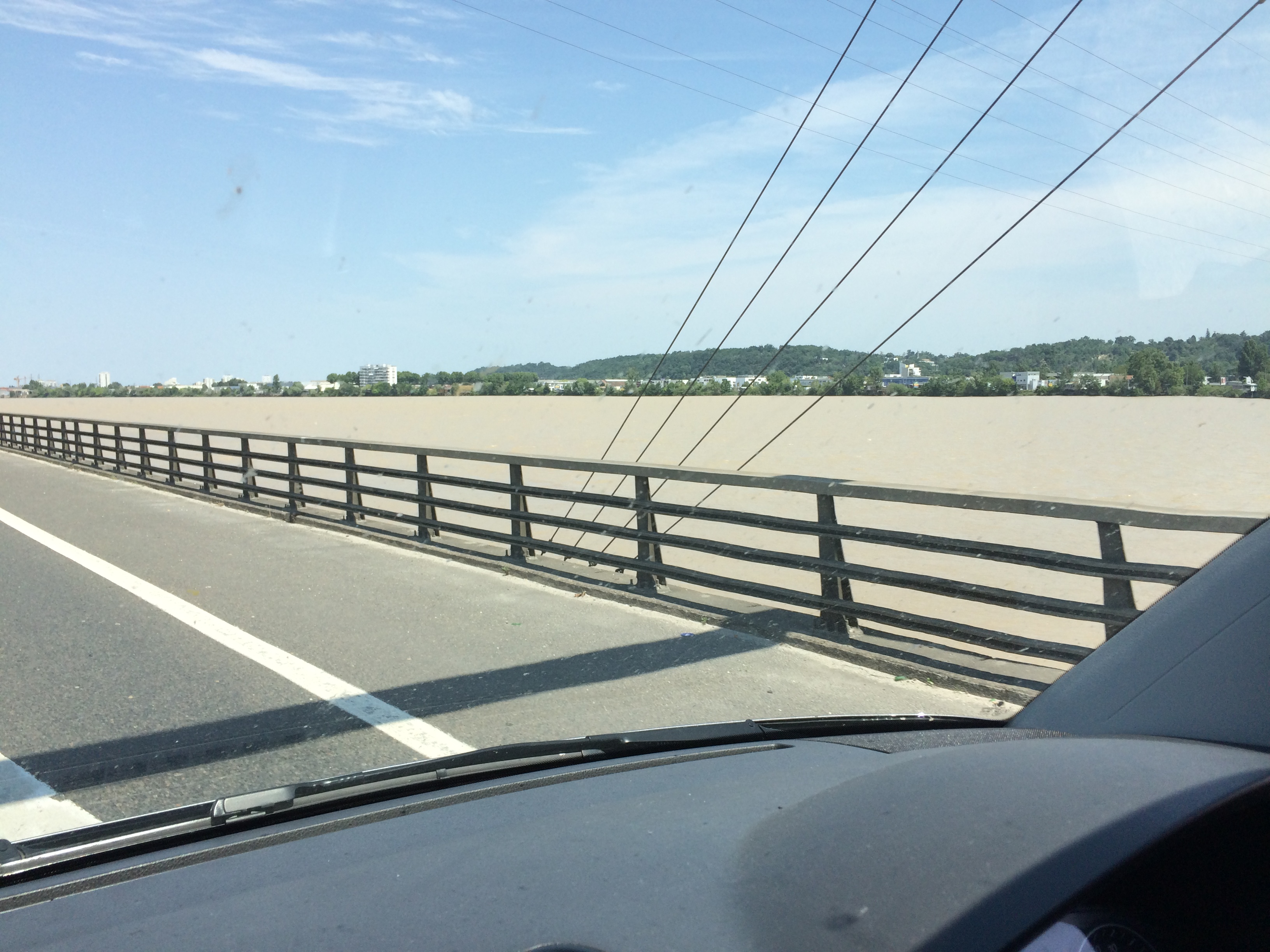
The Garonne river, on entering Bordeaux.

The Garonne river, on entering Bordeaux.

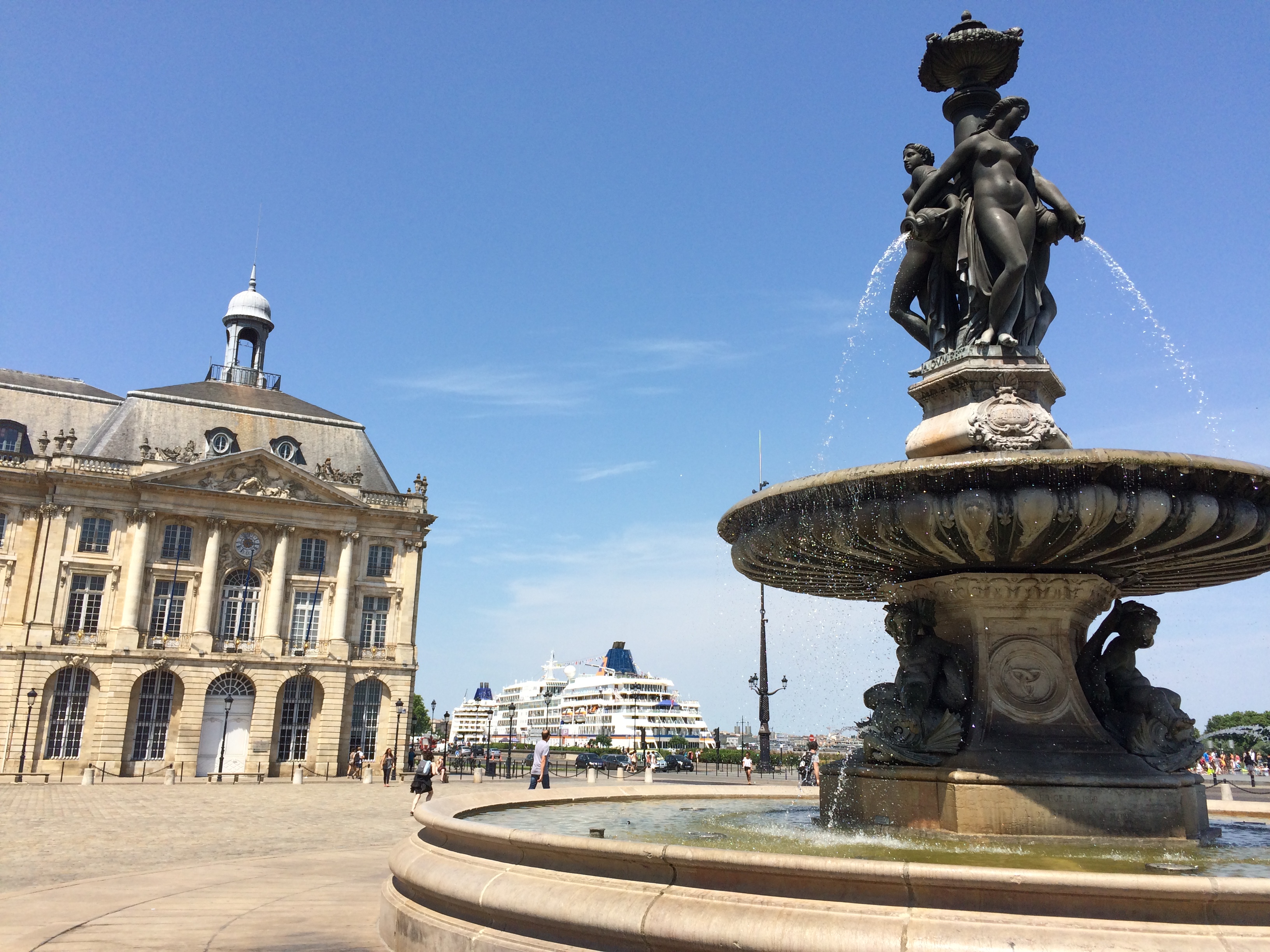
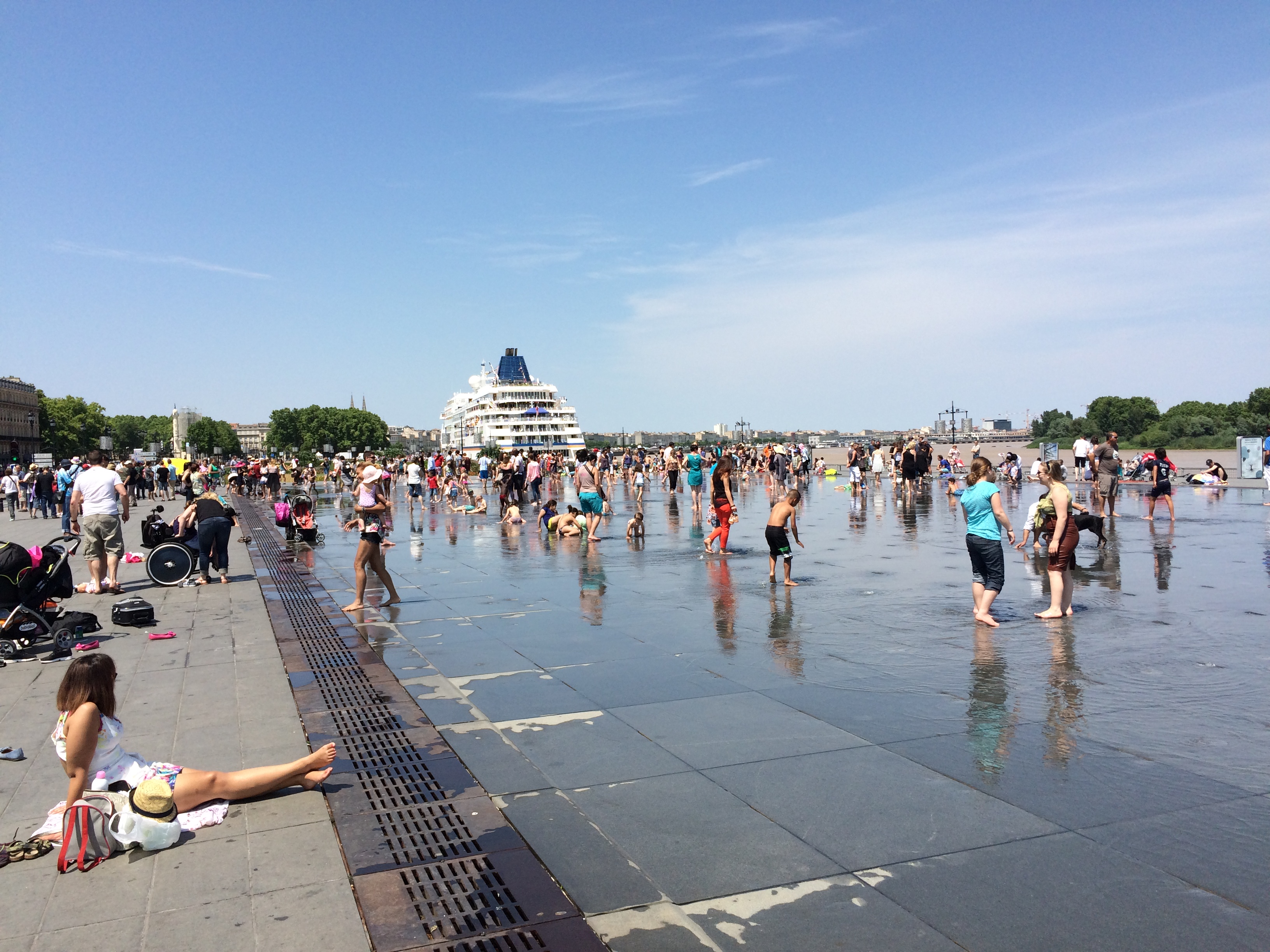
As we effectively had just the afternoon, we contented ourselves with a stroll in the city centre. I’m not sure what we were expecting – perhaps a bigger version of St Emilion or Bergerac – with much evidence of it being the greatest of all wine cities and with masses of charm and character. Instead, we found an overall rather run down, slightly grimy and characterless place. We make our way to the Place de la Bourse and cross the road the see the ‘Mirroir d’Eau’ (Mirror of Water), essentially an ingenious giant paddling pool which keeps children and adults alike cool and is a great attraction.

Place de la Bourse, Bordeaux, with cruise ship visible in the background.

Place de la Bourse, Bordeaux, with cruise ship visible in the background.

'Mirroir d'Eau', Bordeaux.

‘Mirroir d’Eau’, Bordeaux.


'Marche des puces' outside the cathedral, Bordeaux.

‘Marche des puces’ outside the cathedral, Bordeaux.

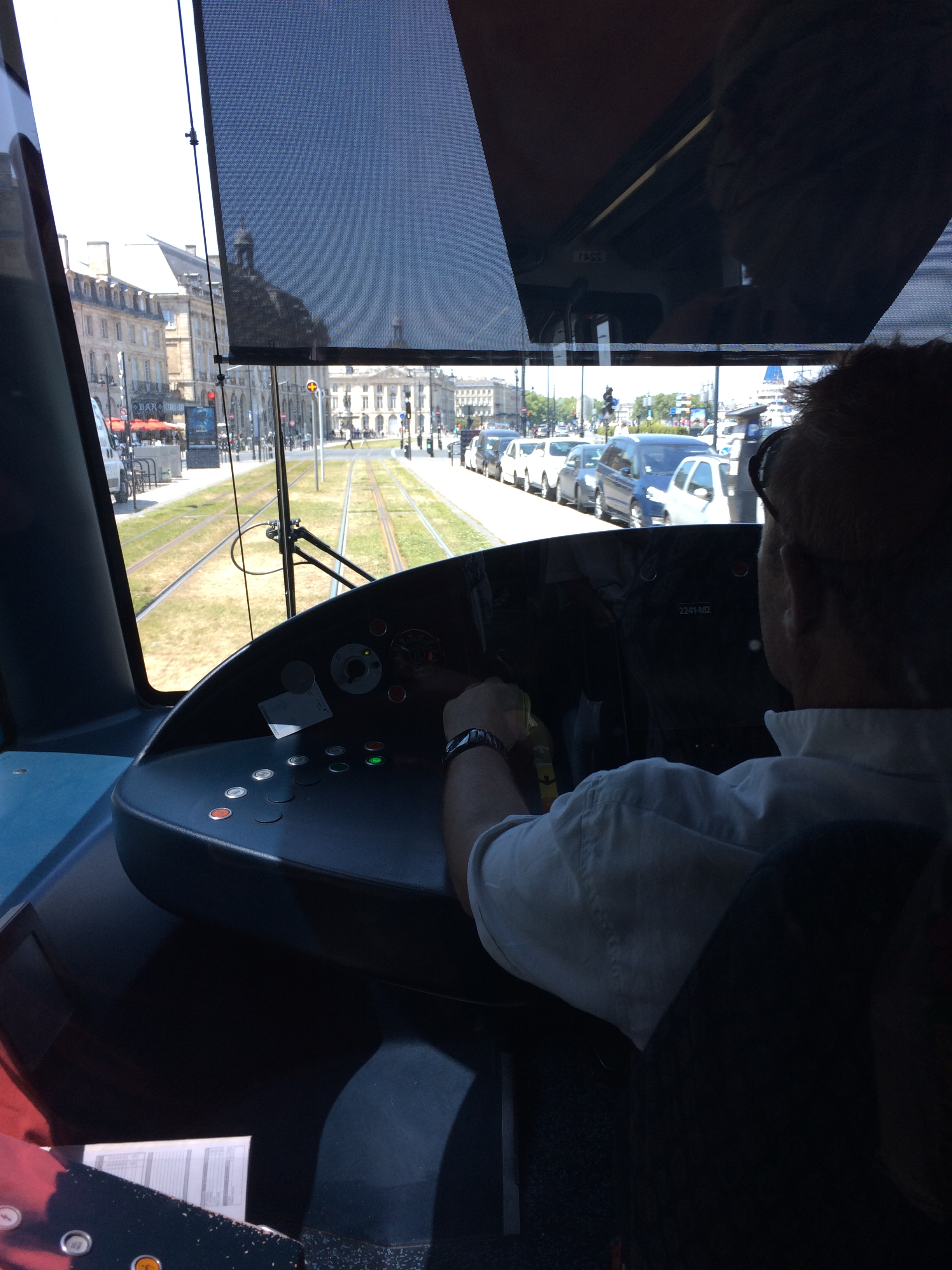
We then take the tram to the Bassin a Flots, the spruced-up old harbour housing art galleries and other cultural attractions but appears in fact to consist mainly of up-market shops. As for the ‘Mirroir d’Eau’, we find the Bassin a Flots somewhat underwhelming. And the tram was just a tram, with nothing particularly futuristic about it, although we liked the fact that it drove over grass-lined tracks.

Bassin a Flots, regenerated old harbour, Bordeaux.

Bassin a Flots, regenerated old harbour, Bordeaux.

Tram going over grassy tracks, Bordeaux.

Tram going over grassy tracks, Bordeaux.

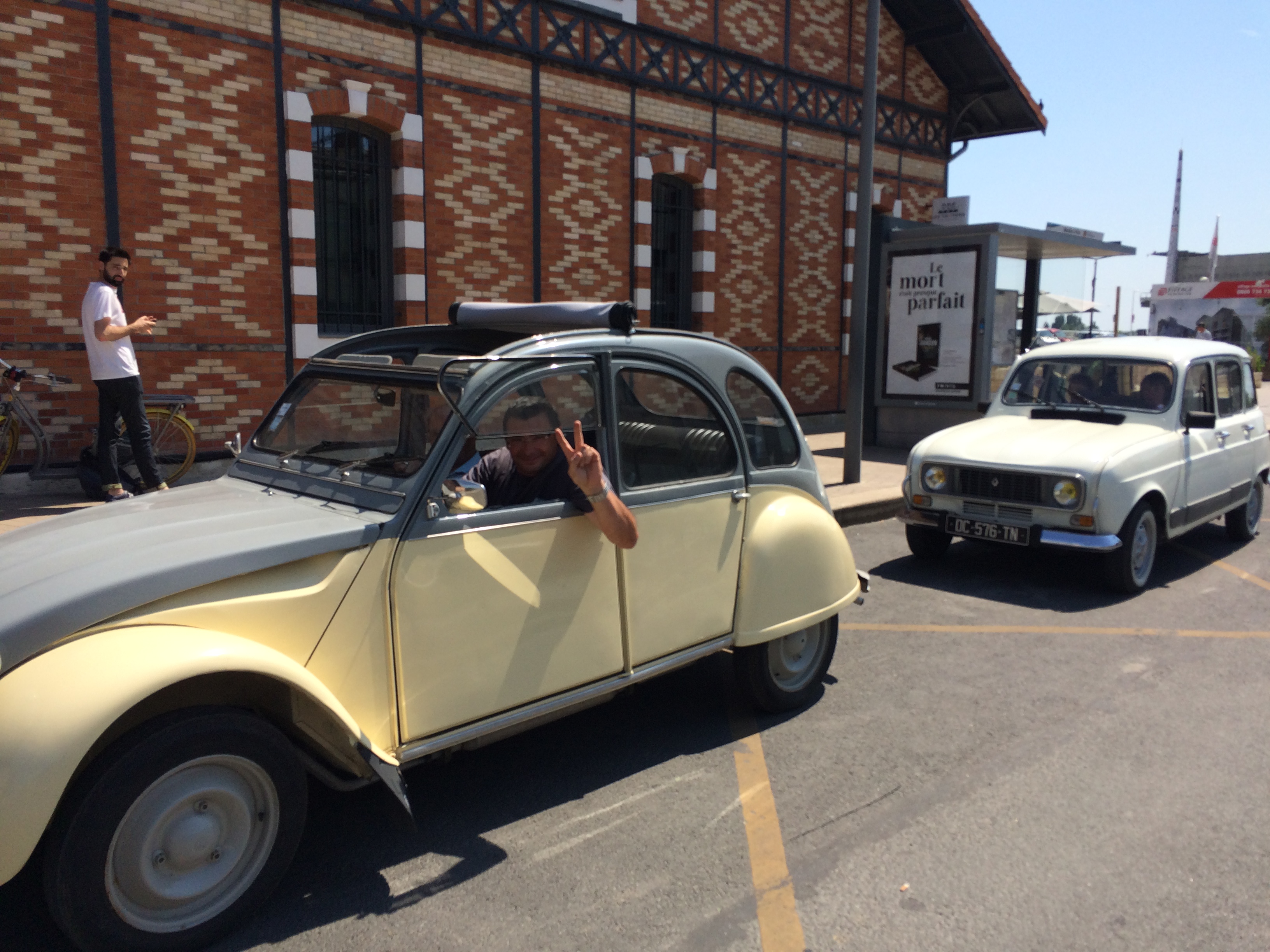
To continue the vintage car theme though, we come across an old Citroen 2CV at the Bassin a Flots. When we ask if we can take a photo, the driver asks us to wait for his wife who drives an old Renault 4 (or a ‘Quatrelle’ as he called it) to arrive so they can both be in the photo.

The classic Citroen 2CV and Renault 'Quatrelle', sadly becoming rarer in French cities.

The classic Citroen 2CV and Renault ‘Quatrelle’, sadly becoming rarer in French cities.

All in all, the afternoon we spent in Bordeaux probably didn’t do it justice and we would have liked to spend more time exploring the area west of Bordeaux, the Gironde, to contrast it with the Dordogne. Very crudely speaking, the soil and climatic conditions in the latter suit the growing of the merlot grape variety while in the former, the more hardy cabernet-sauvignon cepage. Thus while a St Emilion or Lussac will consist of 70% merlot and 30% cabernet sauvignon and cabernet franc, it will be the other way round with wines from the Gironde such as a Medoc or a Graves. As I’m partial to the more austere cabernet sauvignon wines I regretted not having had time to see the Gironde. But we had to make tracks and so took the toll road down into Les Landes (the scenery was mainly woodlands anyway and didn’t warrant taking the slower scenic route) and we found a small site in a place called St Martin de Seignanx just north of Bayonne and Biarritz for the night.

Old shop in run-down part of town, Bordeaux.

Old shop in run-down part of town, Bordeaux.

M & Mme Barret who welcomed us at L’Arrayade were very sweet though the place was so small it did feel a bit like camping in their back garden. Their guests were mainly Dutch or English, they said, and mostly people on their way to Spain or stopping on their way back from Spain. The Spanish had also started coming and had even started buying properties but this had stopped since the changes in the tax laws. They had a considerable vegetable garden and were very proud of their sweet pimentos which they used to make the popular local dish ‘piperade’ (a sort of ratatouille with tomatoes and pimentos) or they also put them in omelets or just in salads. As for our supper, we had little else other than a bit of cheese and wine left but it did the trick and we were tired after a longish drive.

Monsieur Barret, lovingly tending his vegetable patch including at St Martin des Seignanx.

Monsieur Barret, lovingly tending his vegetable patch at St Martin des Seignanx.

The left-over cheese and wine from St Emilion for supper.

The left-over cheese and wine from St Emilion for supper.

Saturday 6th June – ambling through the cobbled ‘tertres’ of St Emilion and an evening in Bergerac

Standard

Our plan was to visit Bordeaux then head for Bergerac for the night. The town of St Emilion was roughly on the way and we were intrigued by the reputation of the wine to see what that would be like. As it turned out, it was such a lovely place, despite it clearly being a popular destination for wine enthusiasts looking to get a good deal on good vintages as well as tourists generally, perhaps on the Camino on their way to Spain, that we decided not to rush it and make the most of our visit and aim to arrive in Bergerac at a reasonable time.

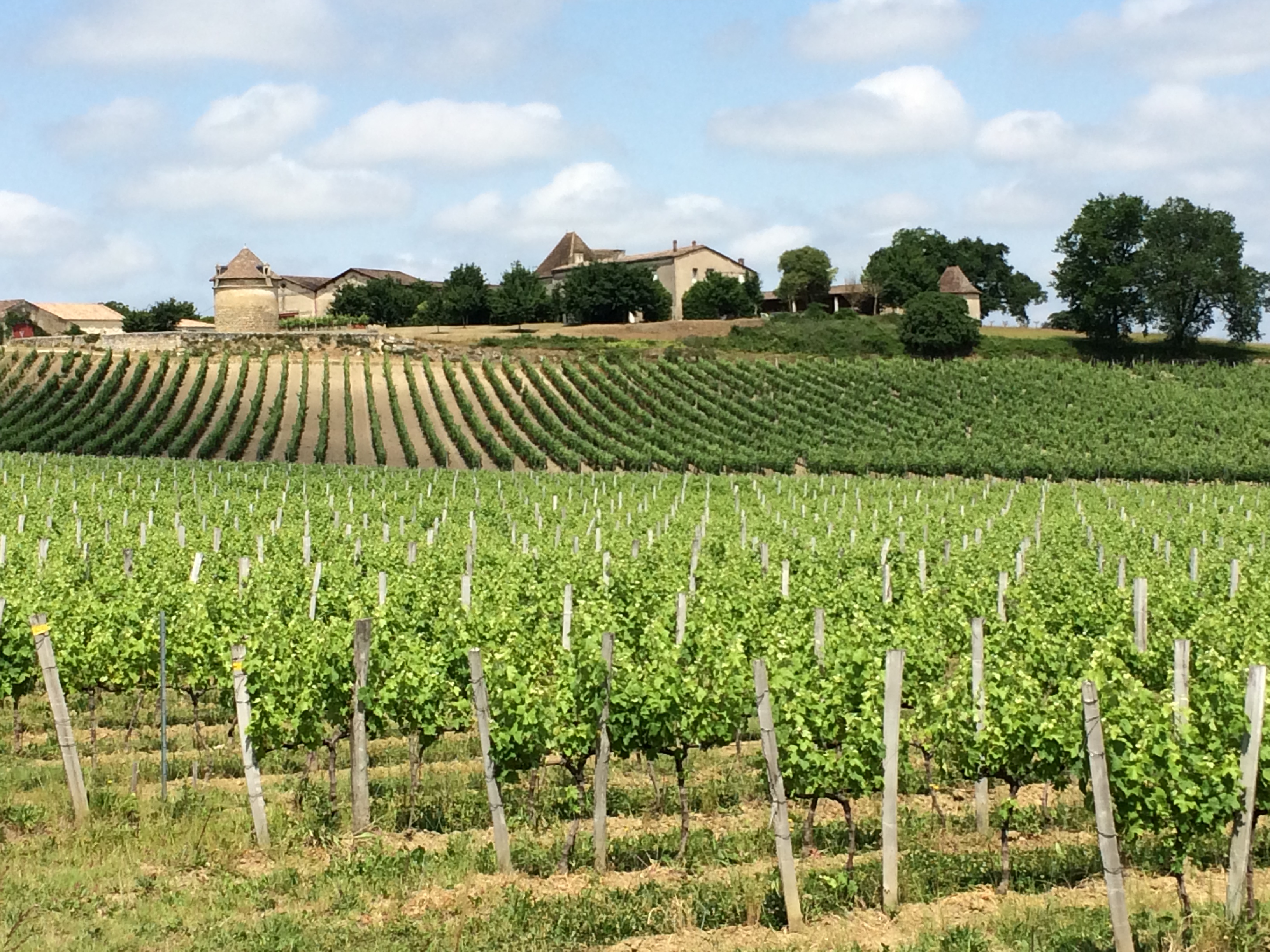
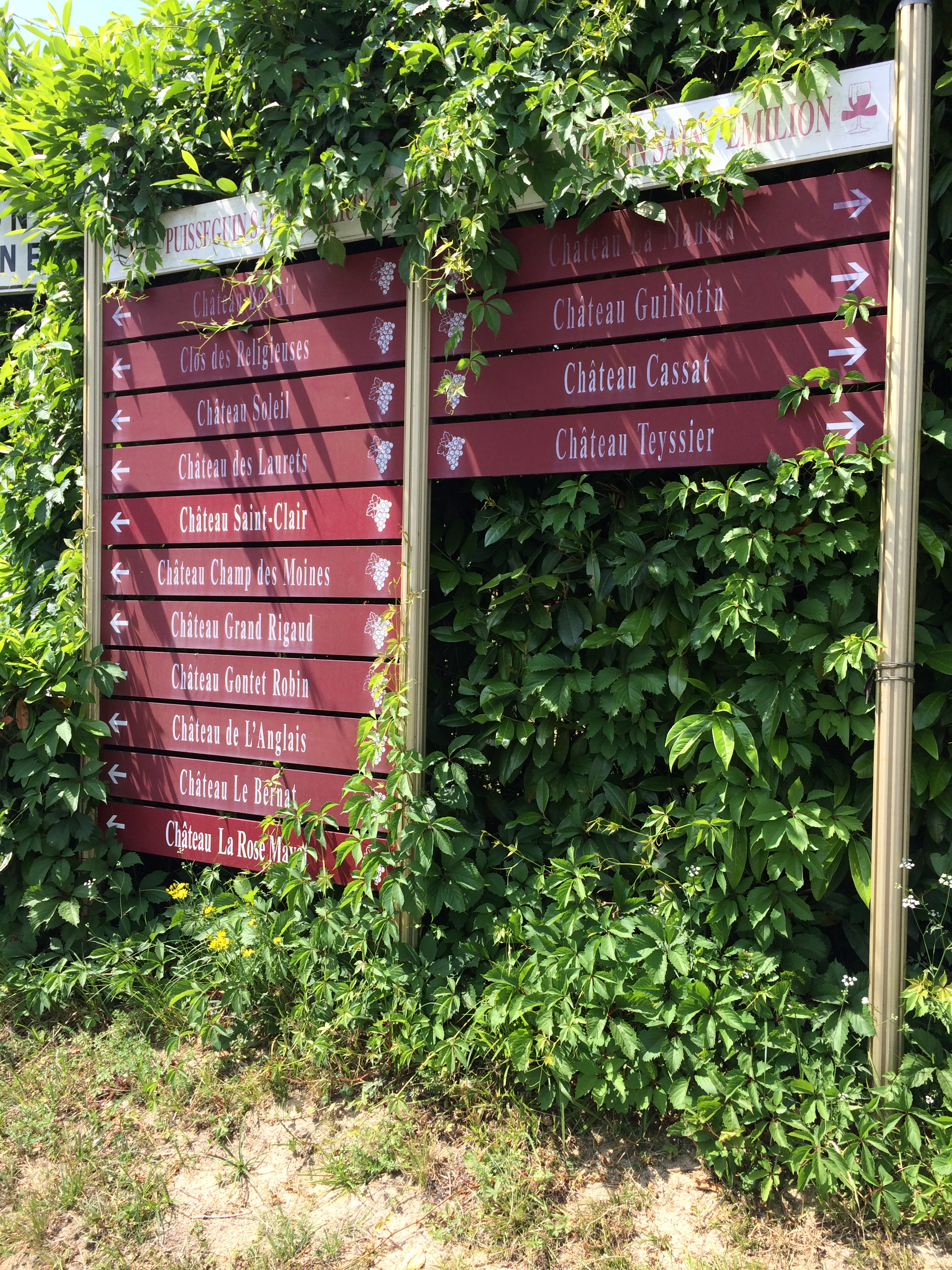
The landscape changes quickly. No sooner have I said to Judith “where are all the vineyards?” than we’re suddenly surrounded by them everywhere we look. As we approach St Emilion we come to a fork in the road with a sign pointing to no less than 15 different chateaux, all within the St Emilion appellation.

Chateaux and vineyards surround us - here, Chateau Puy-Fromage in the background.

Chateaux and vineyards surround us – here, Chateau Puy-Fromage in the background.


We come to a fork in the road where a sign points to 15 chateaux.

We come to a fork in the road where a sign points to 15 chateaux.


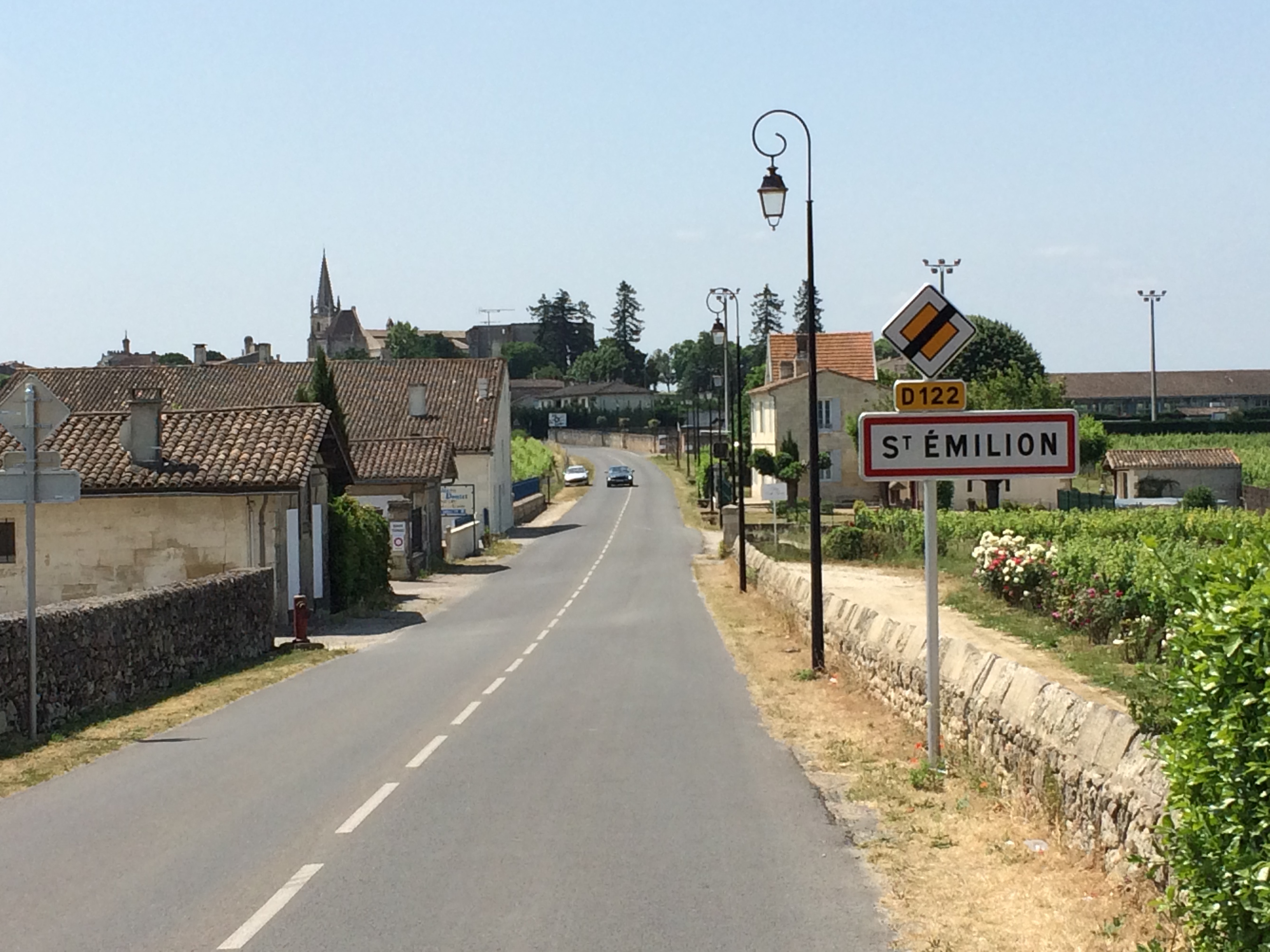
As we enter St Emilion, it’s immediately apparent that it’s a popular spot and the car park we’re directed to is nearly full. Judith makes sandwiches with the ‘baguettes tradition’ (the farmhouse type which looks like it’s better for you) we bought before leaving Menesterol, and the two slices of ham, half tomato and half avocado we have left in the fridge. We sit in the shade in a nearby park to eat them, joining a few other people doing the same and realizing as we’re doing this that we’re picking up the French habit of stopping wherever you are between midday and 1pm to have your lunch whatever it takes as this is absolument ‘de rigueur’. Another thing we realize is that the combination of baguette ‘tradition’ and mushy avocado and tomato isn’t a very happy one as the bread, while undoubtedly good for you, is chewier and thus results in some of the contents getting squeezed out and ending up where they weren’t intended to.

Arrival at St Emilion.

Arrival at St Emilion.


St Emilion rests on a limestone plateau. The stone contains a great many fossils dating back 32 million years!

St Emilion rests on a limestone plateau. The stone contains a great many fossils dating back 32 million years!


Saint Emilion takes its name from a Breton monk who settled there in the 8th century and founded a monastic centre. The valley’s limestone-rich soil, enriched by the waters of the Dordogne and unique micro-climate turned the town and its surrounding 8 communes into a rich wine-producing ‘terroir’ or ‘Jurisdiction’ (created by the English Crown under the Anglo-Gascon Union!) In 1999, the cultural landscape of the communes comprising the Jurisdiction was listed as a World Heritage Site by UNESCO and the 100 or so winegrowers who currently make up the Jurisdiction still wear bright red robes on special occasions that look very ecclesiastical. Further proof of the traditional link between wine-growing and monasticism.

After seeing the cathedral, a wander into town soon takes us into the labyrinthine cobbled alleys or ‘tertres’ that make up the small town. Now we understood what the reference to ‘… des Tertres” was on those wine bottle labels. St Emilion has 4 cobbled tertres, each steeper and more potentially lethal than the other. No one we saw seemed to manage to handle them without difficulty, whether going up or down!

Wine cellars lining the cobbled 'tertres'.

Wine cellars lining the cobbled ‘tertres’.

Steep cobbled alleys.

Steep cobbled alleys.


More steep alleys. Some women were taking their shoes off for a better grip.

More steep alleys. Some women were taking their shoes off for a better grip.


More 'celliers' and 'caves'.

More ‘celliers’ and ‘caves’.


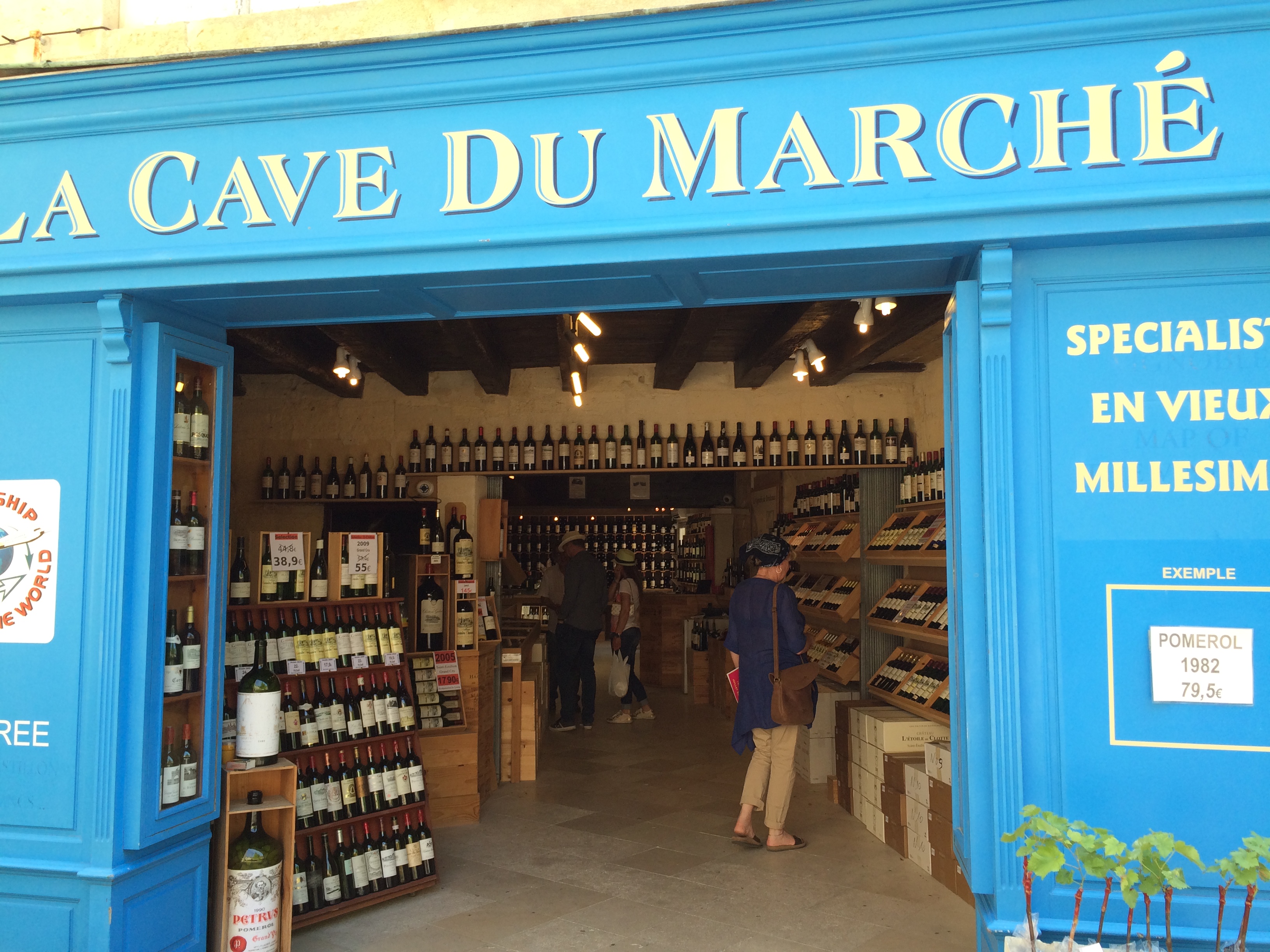
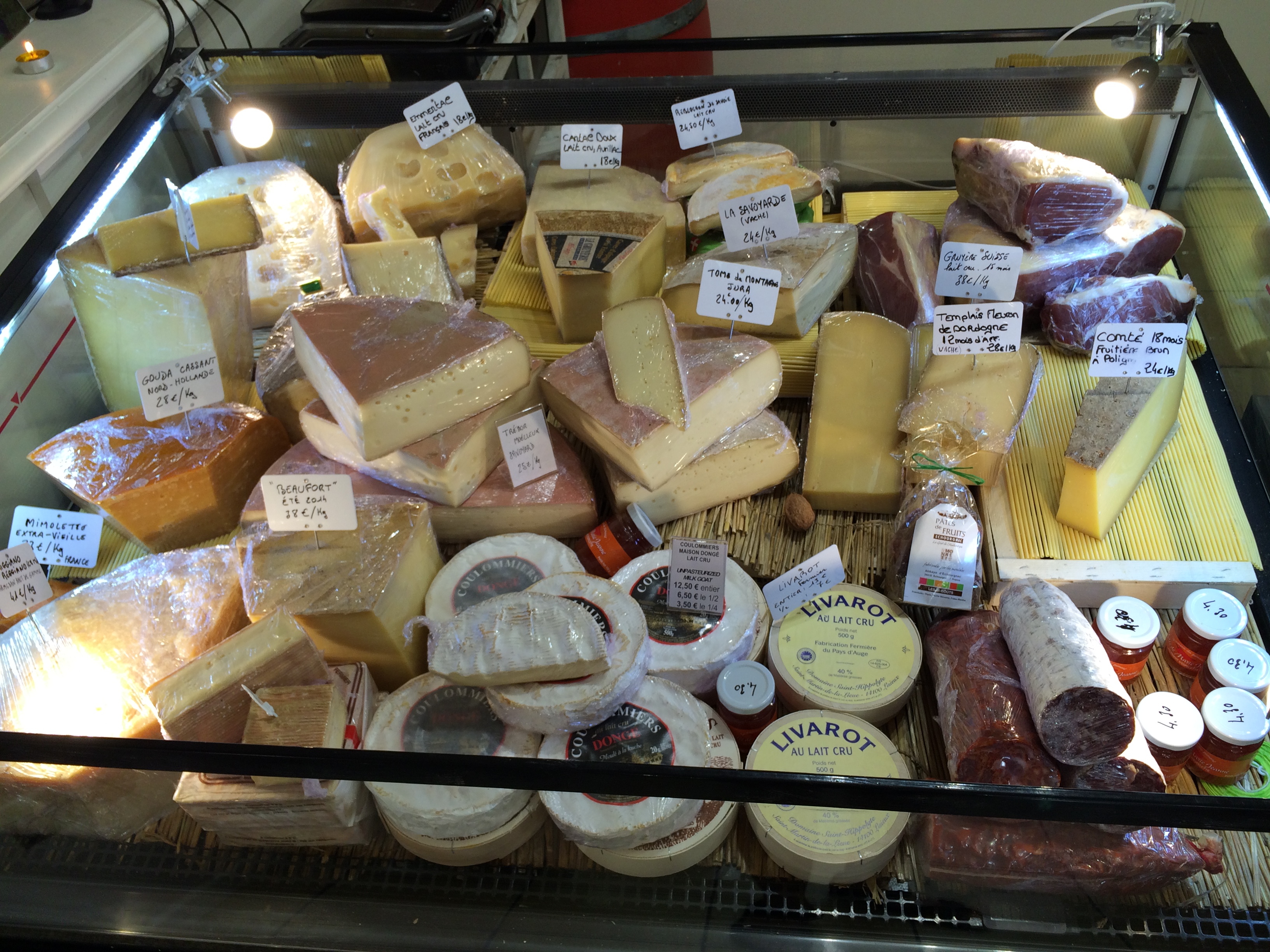
Lining the roads are wine merchants offering the best deals as well as the occasional cheese shop and restaurants. We are lured first by the dazzling array of cheeses in a formagerie and buy a heavenly semi-soft cheese infused with walnut liqueur by the local nuns as well as a small ‘chevre’ from the region. Opera music is playing in the shop – “I find it goes well with choosing cheese” says the owner who has the air of someone who’s wondering how long he can keep this lark up. I ask if it’s true that a Cornish cheese was actually voted the best cheese in the world, half expecting a physical assault. “Even if that’s true, no one has more cheeses than the French or the most widely eaten cheese in the world – the Conte.” How many exactly, I ask. “More than 500. Didn’t De Gaule say: “How can I govern a country that has more than 500 cheeses?”

Fantastic array of cheeses including the world's favourite, the Conte.

Fantastic array of cheeses including the world’s favourite, the Conte.

'How can you govern a country that makes more than 500 cheeses?'

‘How can you govern a country that makes more than 500 cheeses?’


We then have to purchase our two obligatory bottles of St Emilion (2012 Chateau Les Cabannes with good balance but little structure, the young shop assistant admits, which makes it highly drinkable straight away). We also buy a half bottle of 2010 Chateau Loupiac dessert wine – not too ‘moelleux’ so can be drunk as an aperitif too.

On the way back to the car park, we take a quick look inside the wine museum and learn a bit more about the many stages that go into the making of wine including, most surprisingly towards the latter stages the addition of egg whites for the ‘lees’ (impuretes) to cling to and drop to the bottom.

Back at the car park we see a display of old French cars in the park where we’d eaten our sandwiches earlier. They appear to be there for no other reason than for the sheer pleasure of seeing people admire them. Ah, c’est ca etre Francais!

A display of vintage cars - for the sheer pleasure of it! "On aime tout ce qui est beau et c'est tout".

A display of vintage cars – for the sheer pleasure of it! “On aime tout ce qui est beau et c’est tout”.

Remnants of the old walls at St Emilion.

Remnants of the old walls at St Emilion.


IMG_1975 

We make our way to Bergerac which we were attracted to by photos we saw of it and arrive at the Camping La Pelouse right on the bank of the Dordogne across the river from the old town and the local rowing club. Once again, it’s another beautiful spot but with more people this time, mainly Dutch it appears.   As soon as we’ve freshened up, we take a stroll along the bank of the river then over the bridge and into old Bergerac. We’re instantly entranced by the magnificent and well-preserved Elizabethan buildings, and so many of them. The old quarter is like a museum.

Bergerac - the old medieval town.

Bergerac – the old medieval town.

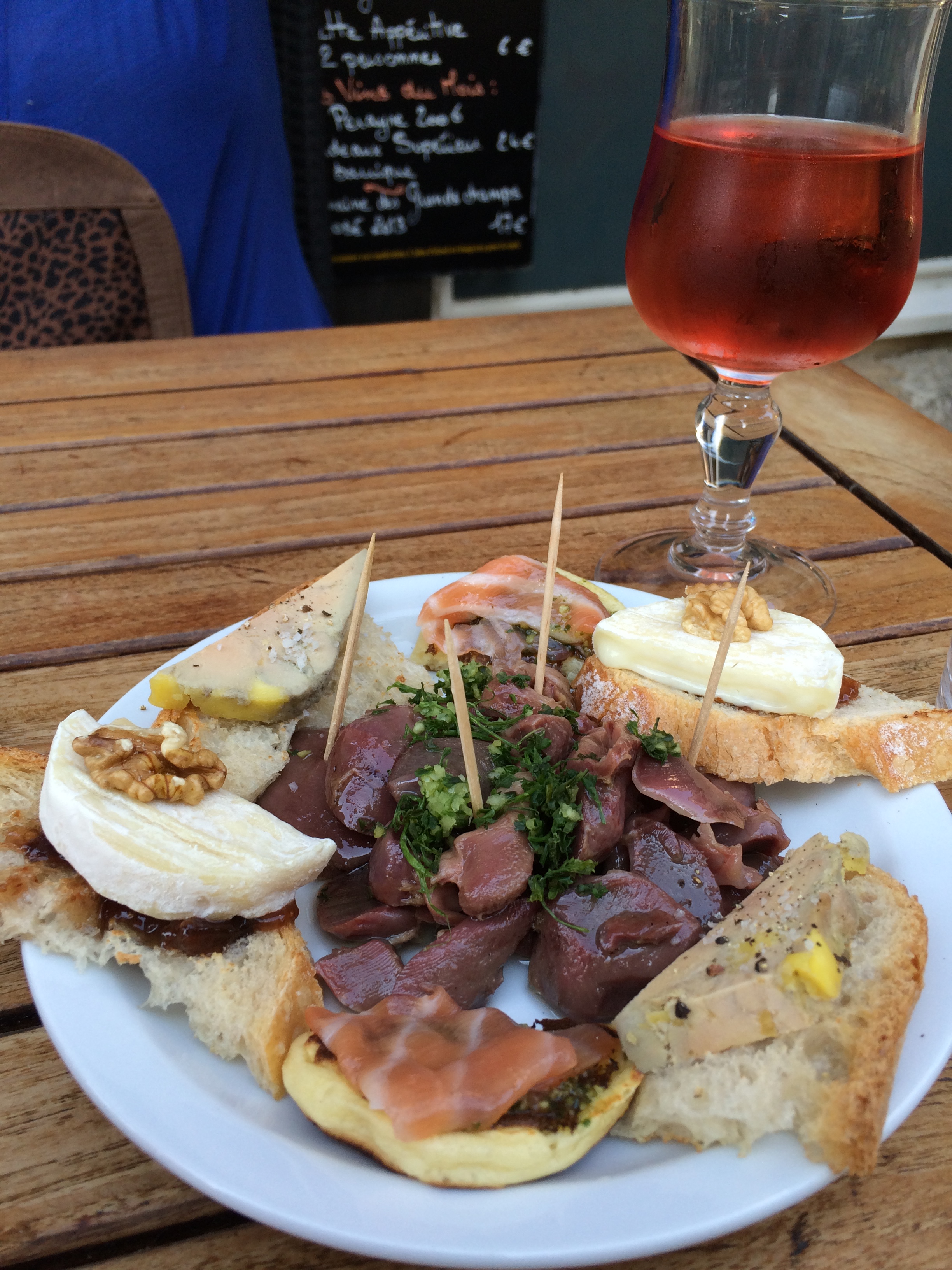
We decide to have an aperitif and are tempted by an ‘assiette de gourmandises’ which turns out to be mainly the local delicacy – ‘geziers’ or duck/goose gizzards with some foie gras and chevre on toast. We try a few but find the geziers a little too rich or ‘ecoeurants’ for our taste.

Dish of local appetizers including 'geziers' which we weren't too keen on.

Dish of local appetizers including ‘geziers’ which we weren’t too keen on.

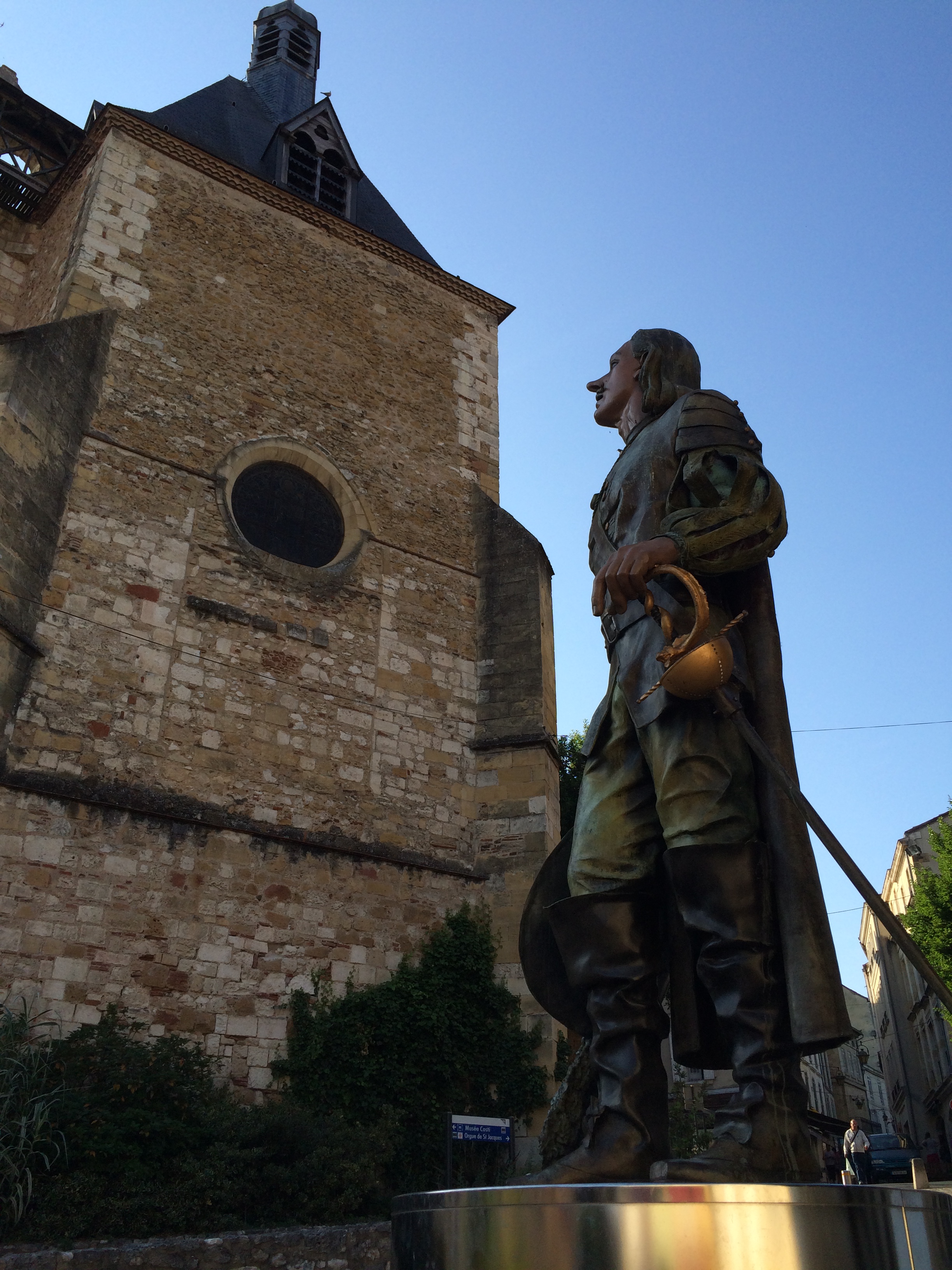
Impossible to avoid also were the two statues of Cyrano de Bergerac, the brash poet, musician and duelist plagued by self-doubt because of his large nose and immortalized in Edmond Rostand’s play which is a fictionalized version of his life. There’s again something very French about an at once dazzling and talented as well as self-doubting and unattractive man being revered as a hero. Without him we wouldn’t have had the word ‘panache’.

Cyrano de Bergerac - local hero.

Cyrano de Bergerac – local hero.

On the way back to the campsite, a large and noisy motorcade is crossing the bridge blowing their horn, ululating and waving Algerian flags. We smile and wave. It looks slightly incongruous but is another aspect of ‘La Nouvelle France’.

The beautiful bridge over the Dordogne at Bergerac.

The beautiful bridge over the Dordogne at Bergerac.

Friday 5th June – a day of rest in Menesterol

Standard

The spot is so pleasant and restful, we decide to stay on an extra day to explore the surroundings. But it’s 7pm and we hadn’t bought any provisions so go into the town/village for a bite to eat.  As is often the case in rural France though, the place is already deserted and we have a job finding somewhere open.  Eventually, we find a restaurant, La Chaumiere, reminiscent of a 1970 restaurant in Hampstead, with matching decor and offering ‘plats du terroir’ (good country food).  Two of the other couples there are also from the UK, one announcing to us jollily that they’d been celebrating their 55th wedding anniversary – “I’ve been married to him for 55 years” says the woman pointing to her partner staggering behind her in his dark pink chinos.

For the first time since leaving the UK, we take our bikes down and go for a cycle along the river Ile and across country roads lined by golden wheat and corn fields – we’re surprised not to see any vineyards yet. We come across an amazing old small rural house dating back to the 14th century with its own tiny open porch with trough and room enough for two horses.

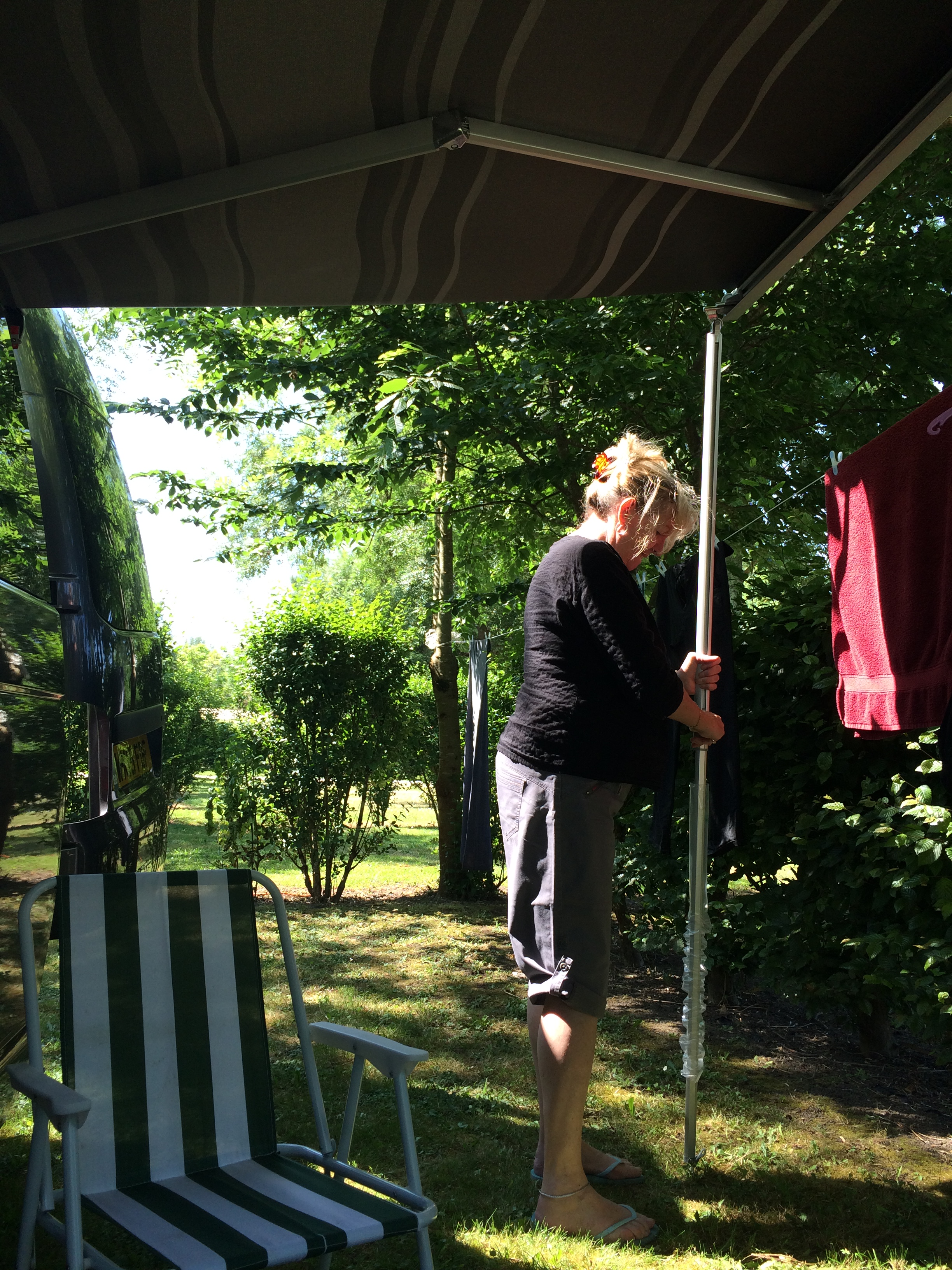
As we're staying an extra day, Judith puts up the 'Fiamma' awning at La Cigaline.

As we’re staying an extra day, Judith puts up the ‘Fiamma’ awning at La Cigaline.

Menesterol is already deserted at 7pm - we eventually find a place, La Chaumiere, for a bite to eat.

Menesterol is already deserted at 7pm – we eventually find a place, La Chaumiere, for a bite to eat.

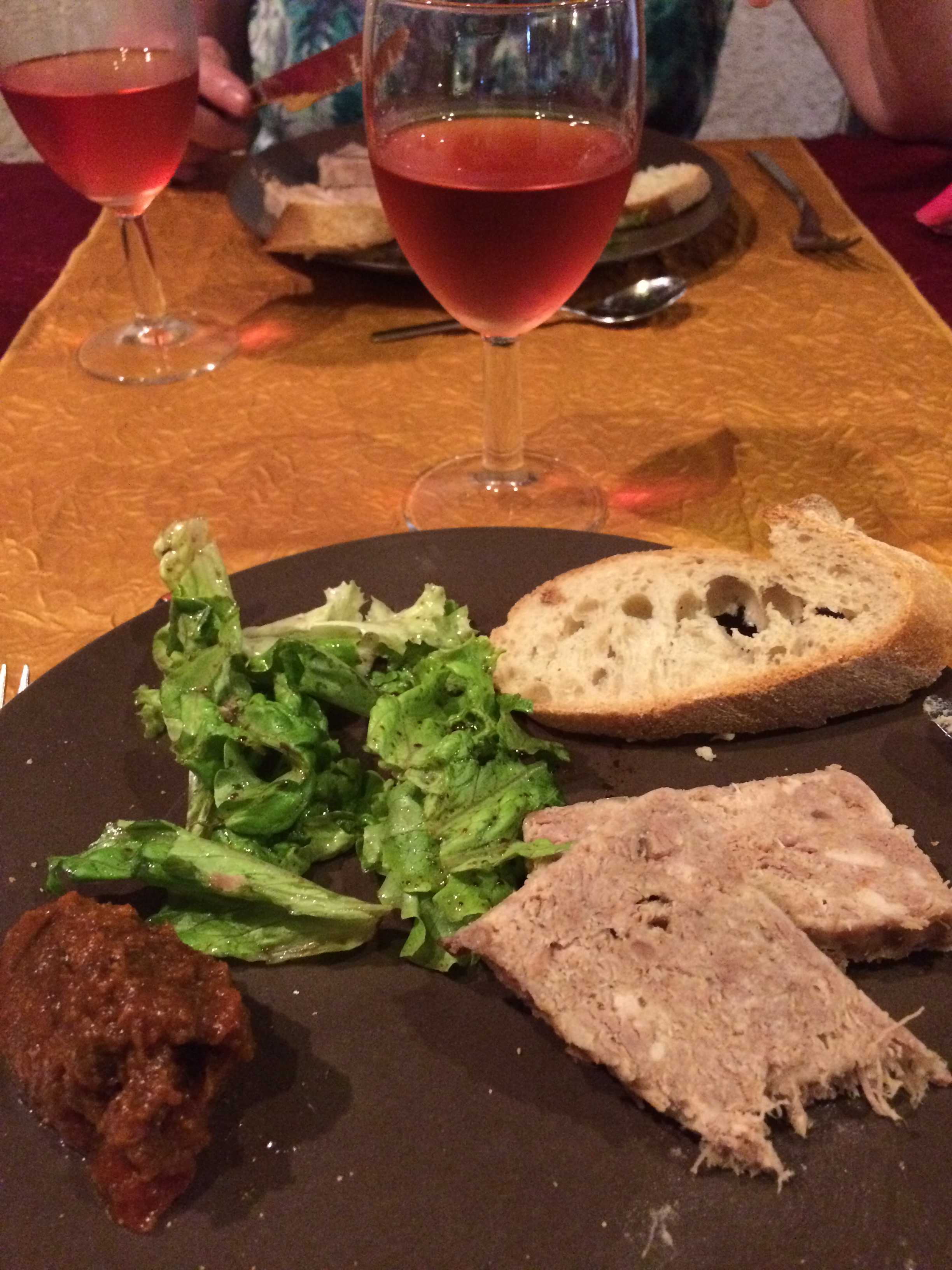
Rillettes de canard maison starter  at La Chaumiere.

Rillettes de canard maison starter at La Chaumiere.


14th century country house with outside porch and trough.

14th century country house with outside porch and trough.


Cycling along country lanes in Menesterol.

Cycling along country lanes in Menesterol.


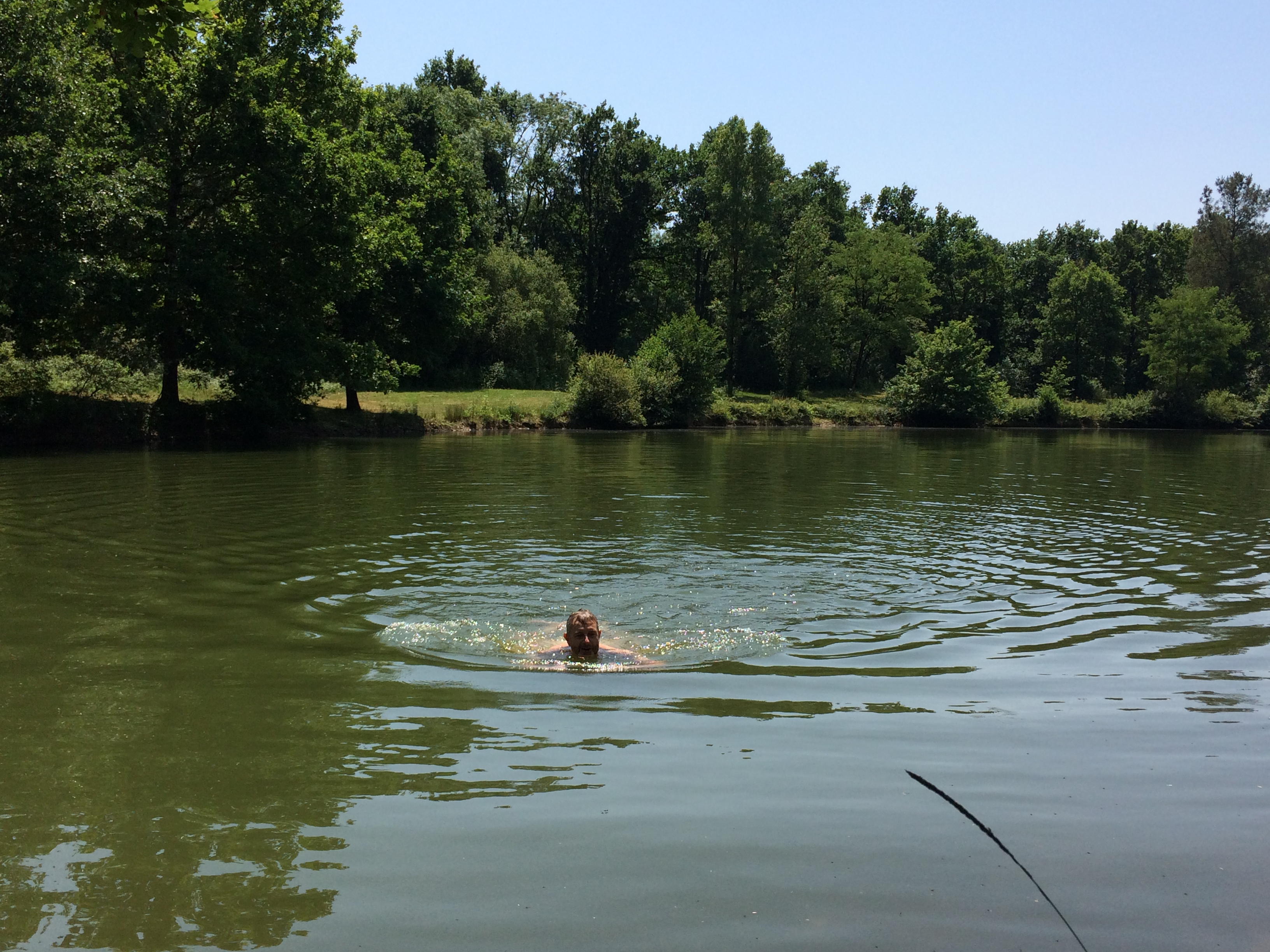
We find a small lake and once again, I cannot resist the temptation to indulge in some ‘wild swimming’.  This one’s a little more daunting as it’s hard to see what’s underneath but the water is a nice temperature.

Another spot of wild swimming to cool off after the cycling.

Another spot of wild swimming to cool off after the cycling.

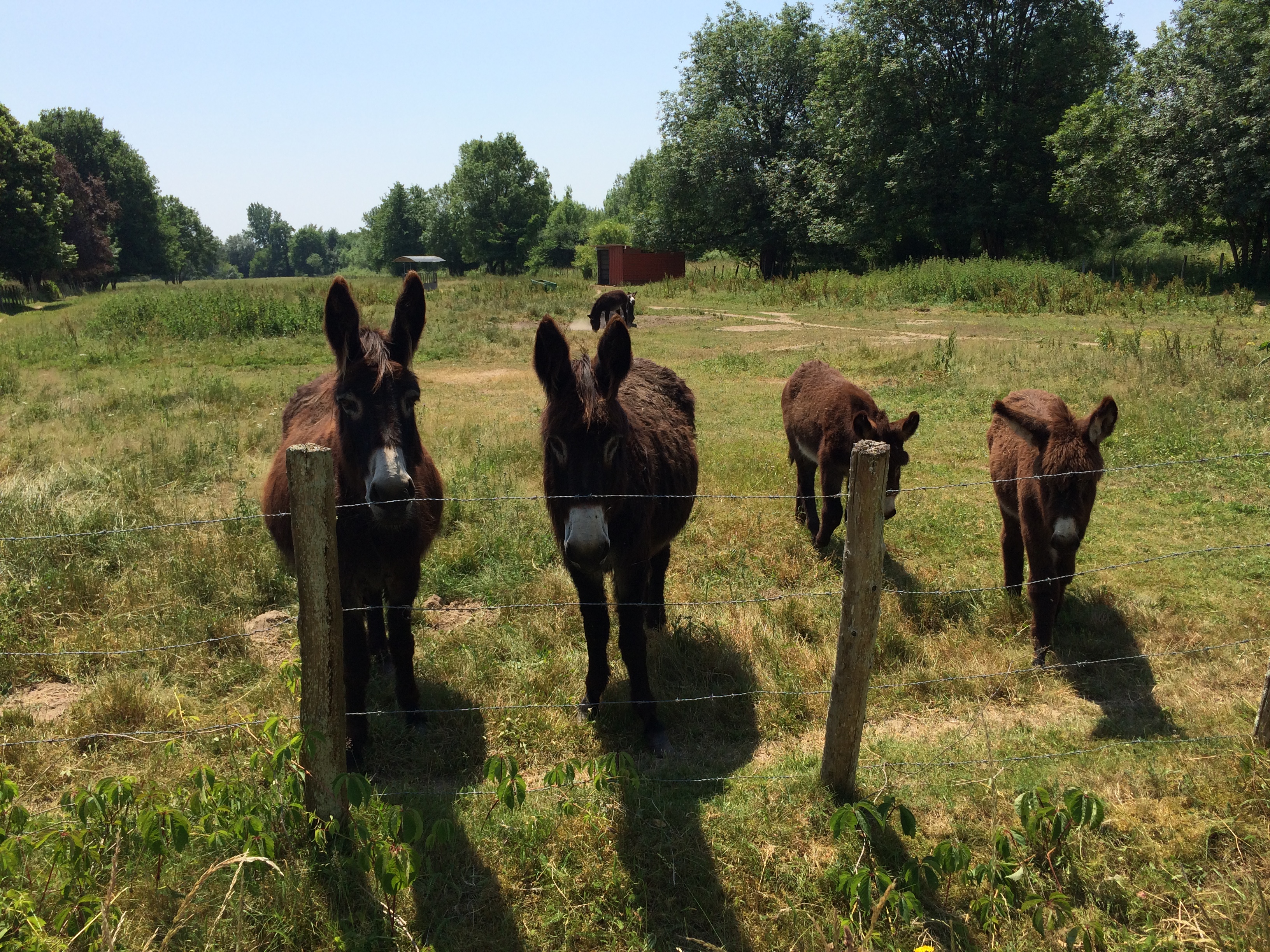
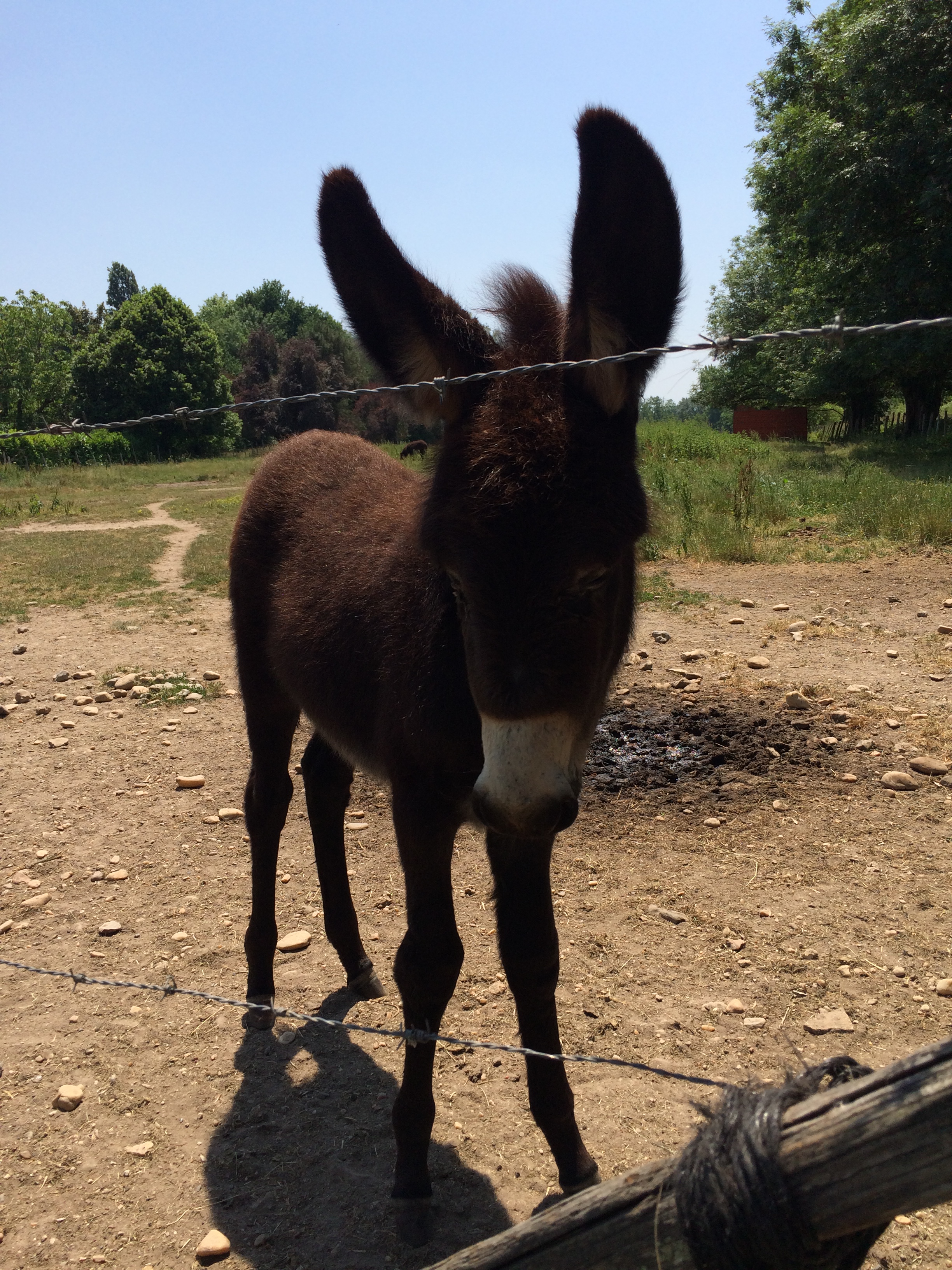
We encounter a family of contented-looking donkeys with no work to do, apparently.

We encounter a family of contented-looking donkeys with no work to do, apparently.


On the way back, we meet a family of happily-grazing donkeys who come over inquisitively.  If we could communicate I would have told them how lucky they were compared with their hard-labouring and leaner cousins in Cairo.

We also stop at a local Bar Restaurant for a glass of coke and a sandwich but again find that they serve only lunch so we go for local trout fillets and salad which is in fact tastier and healthier than a sandwich.  Someone’s left that day’s issue of the ‘Sud Ouest’ – nothing of great interest but a photo on the cultural page catches our eye.  It’s about a concert in Perigueux devoted to a fusion between East and West.  One of the numbers brings together the Egyptian singer Hind Hassan with Carlos Arenas and PJ Chabot.

The Egyptian singer Hind Hassan sings at a concert in Perigueux.

The Egyptian singer Hind Hassan sings at a concert in Perigueux.


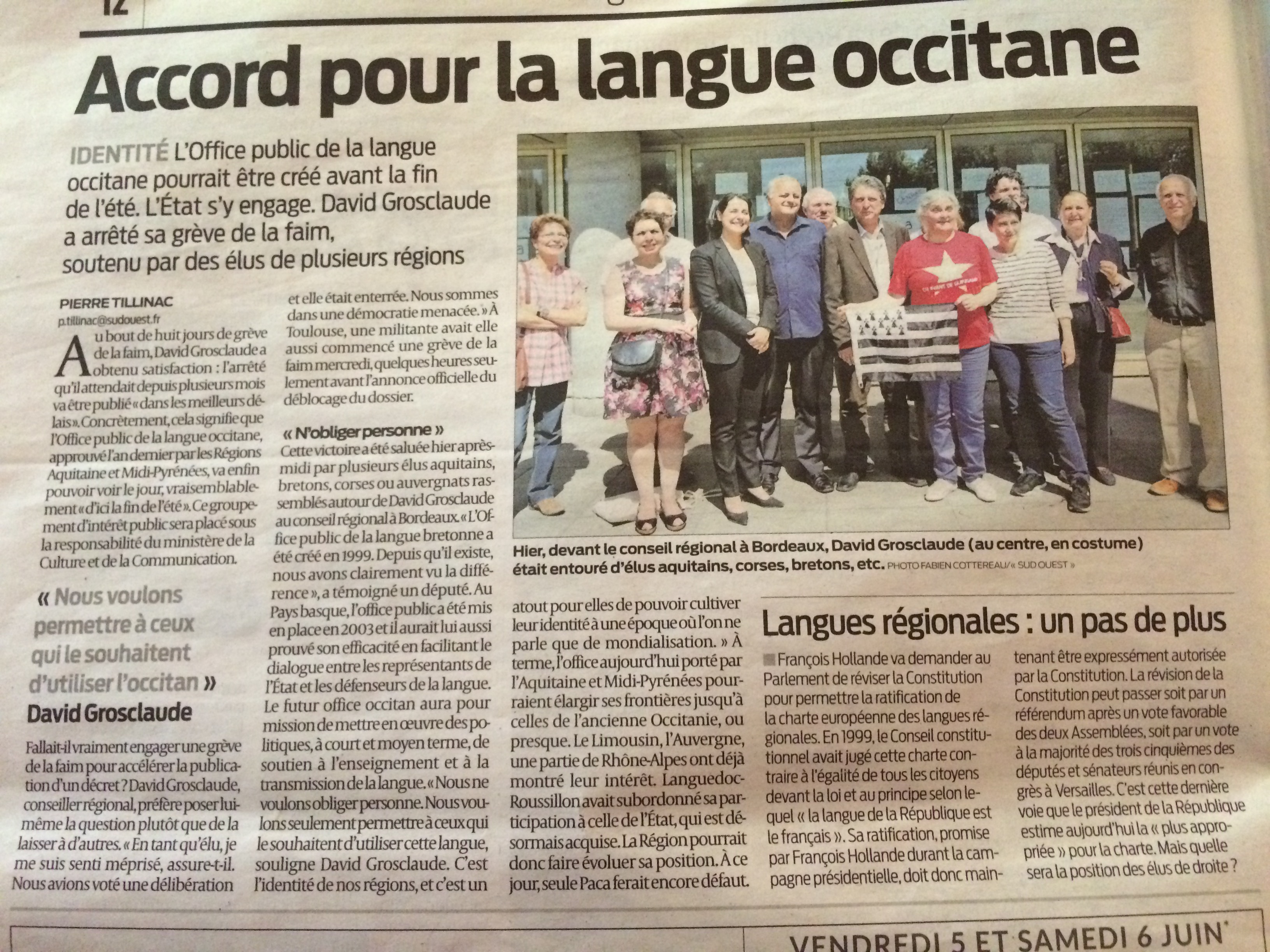
Campaign to preserve the Occitane language of the region.

Campaign to preserve the Occitane language of the region.


The Cafe is outside the old church of Menesterol which also houses a very old organ which unfortunately we’re unable to see as the chapel is closed.

The old 13th century church at Menesterol.

The old 13th century church at Menesterol.


Golden wheat-fields on the bank of the river Ile.

Golden wheat-fields on the bank of the river Ile.


And so it’s back to the Cigaline campsite for a quiet evening and updating the blog, which proves difficult owing to the poor connection, as we’re finding is often the case.

IMG_1905


Thursday 4th June – La Rochelle to Montpon-Menesterol (ancient capital of Aquitaine)

Standard

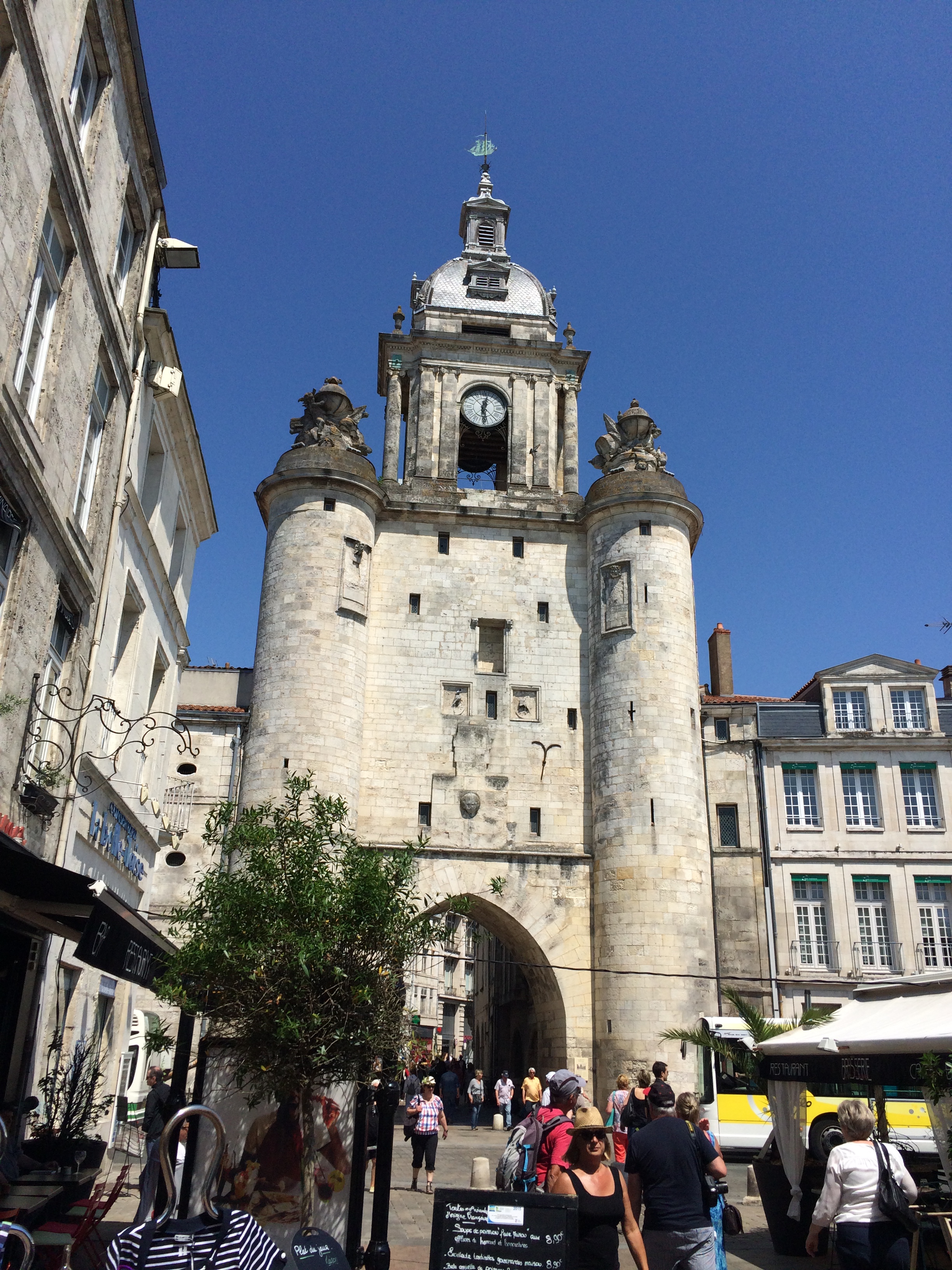
We spend the morning in La Rochelle, in the old quarter called ‘Le Quartier de la Chaine’ which in the 13th century would have been bustling with noisy and drunken sailors and full of insalubrious inns and cabarets. The ‘chaine’ referred to the chain that was stretched between the towers at night, says the information poster on the main square, the Cours des Dames, rather frustratingly without further explanation. The poster also says that with the development of the fishing industry in the 19th century, the Bretons, especially from the Isle of Groix, moved in in large numbers, mistakenly giving the place the nickname of the ‘Greek Quarter’.


Cours des Dames, La Rochelle.

Cours des Dames, La Rochelle.


Le Quartier de la Chaine, La Rochelle.

Le Quartier de la Chaine, La Rochellle.


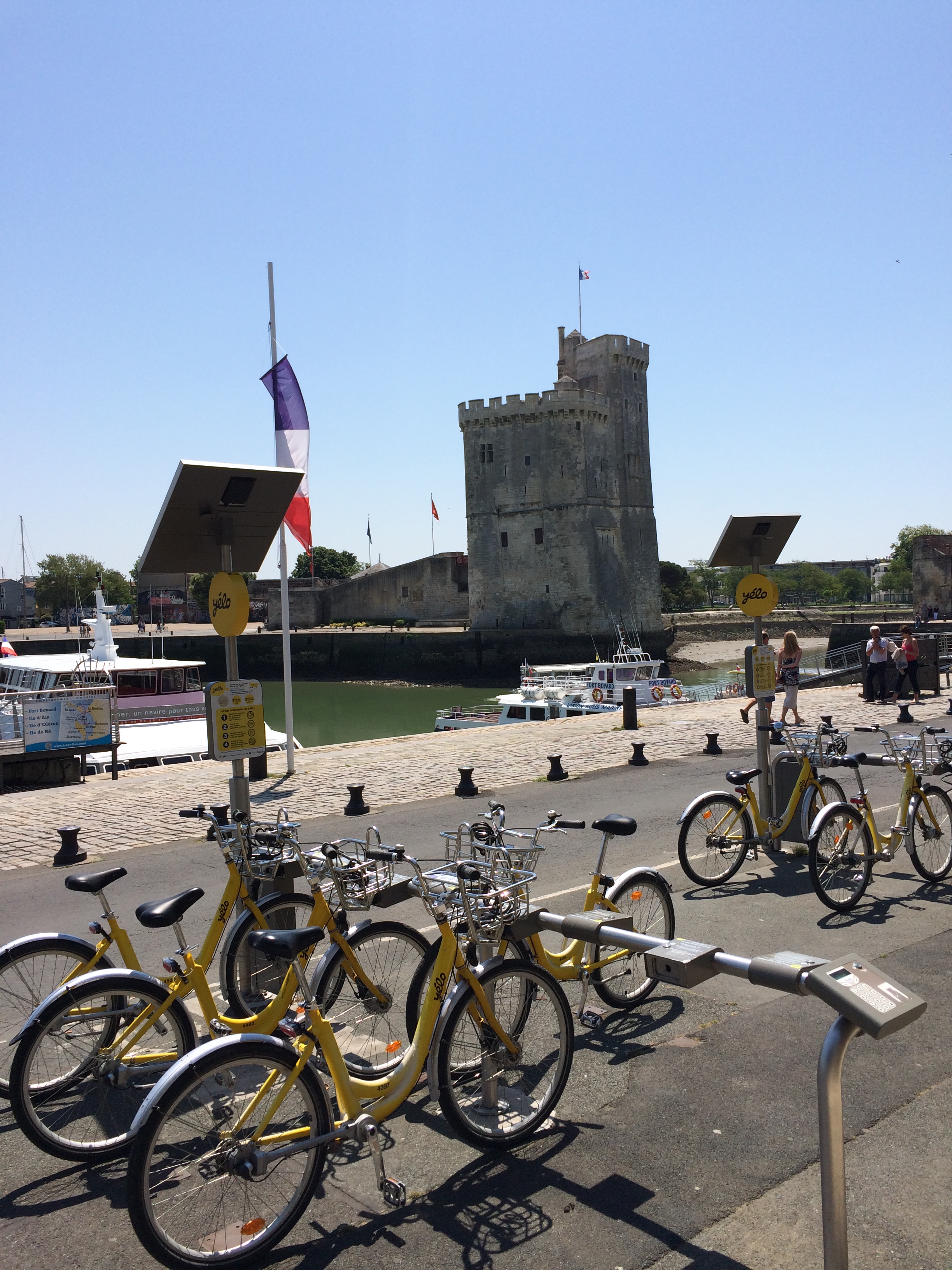
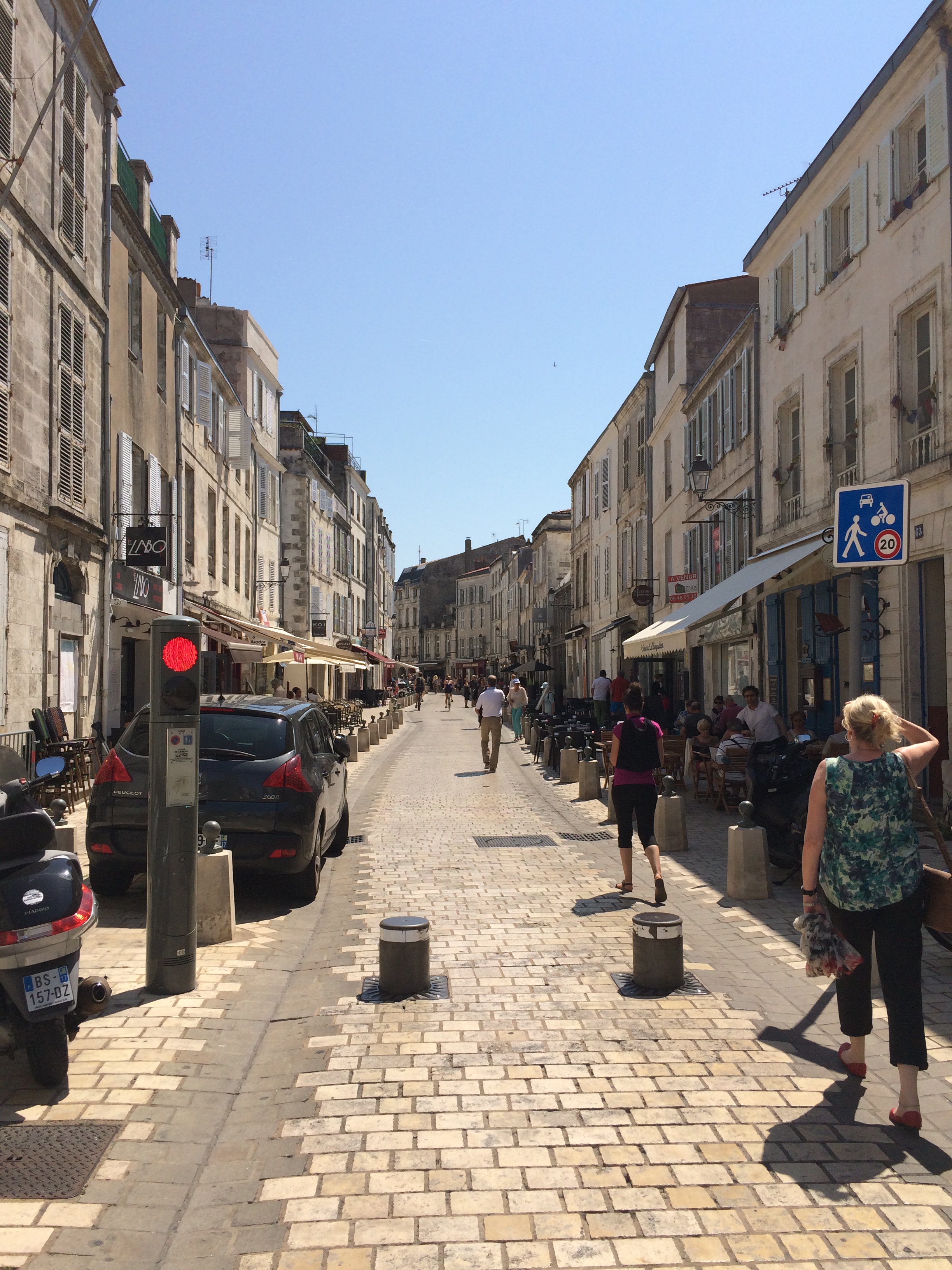
It’s easy to see the town’s appeal and easy elegance, with its smart town houses, well-tended gardens, cycle-lanes and yellow bikes and up-market restaurants, especially around the area of the Rue Saint Jean du Perot.

Rue Saint Jean du Perot, La Rochelle.

Rue Saint Jean du Perot, La Rochelle.


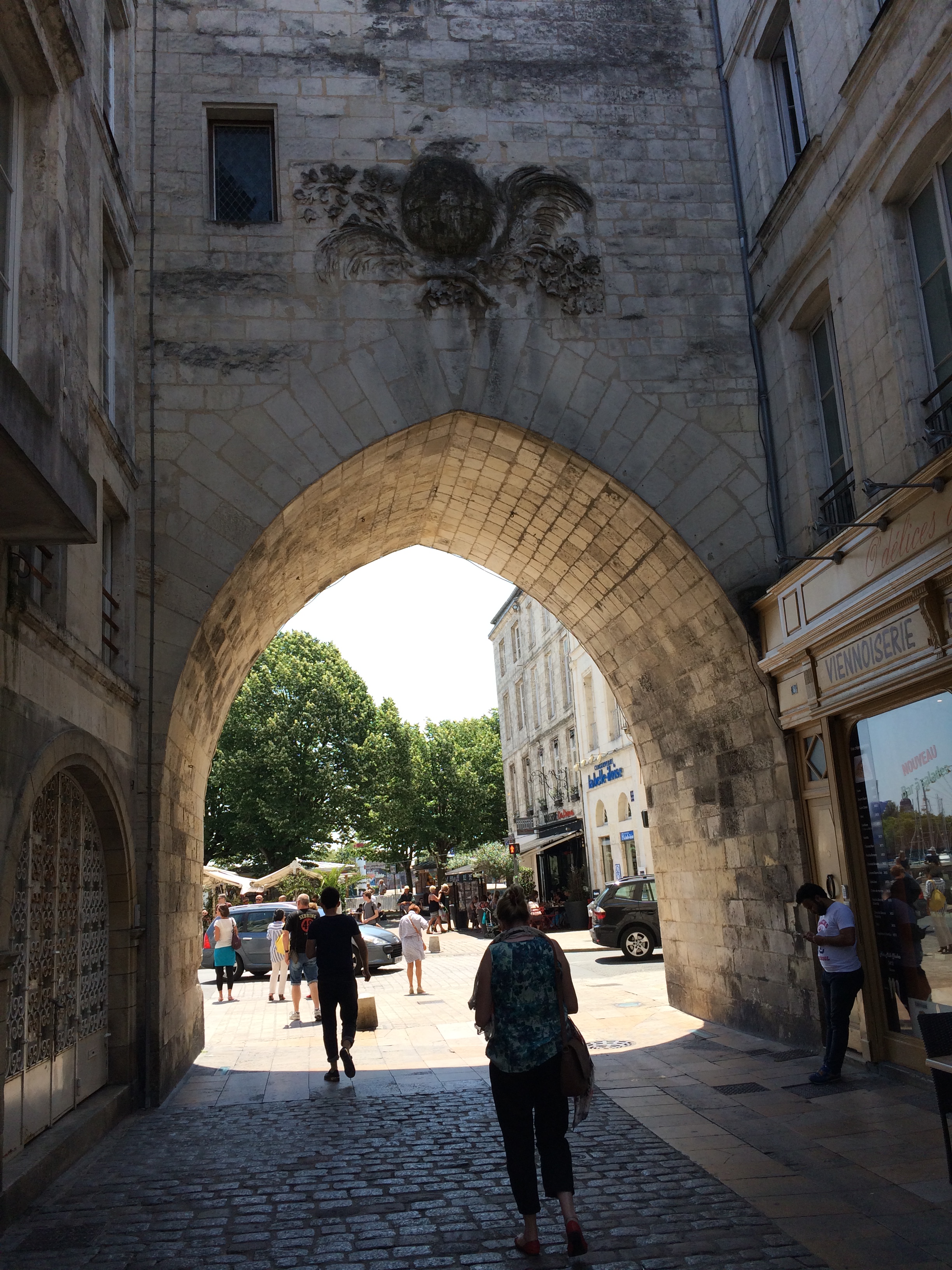
Archway leading to Cours des Dames, La Rochelle.

Archway leading to Cours des Dames, La Rochelle.


We decide to stop for a coffee and a sandwich and realize once again how hard it is in France to find a place at lunchtime that will serve anything other than a full ‘formule’ lunch.   What if you don’t want a copious 3-course lunch, especially if you’ve only had your porridge at 10 o’clock? We do eventually find a place near a statue of Eugene Fromentin, the 19th century writer and painter from La Rochelle known for his romantic depictions of the Orient.

Statue of Eugene Fromentin, writer and artist from La Rochelle known for his Romantic depictions of the Orient.

Statue of Eugene Fromentin, writer and artist from La Rochelle known for his Romantic depictions of the Orient.

Now in ordering coffee, it’s important to know what to ask for. If you ask for a café, you basically get an espresso. If you want an Americano, you ask for an ‘allonge’, the equivalent of a ‘lungo’ in Italian – that is, an espresso that is ‘lengthened’ with extra hot water. However, this may not be ‘allonge’ enough, as is the case with Judith, so additional hot water should be asked for on the side. A ‘grand café’ is a double strength coffee in a bigger cup. A ‘petit crème’ is an espresso with hot milk and a ‘grand crème’ is a grand café with milk. I usually ask for a normal allonge to avoid the excessive caffeine in a grand café but invariably end up ordering a second one so I might as well have had a grand café in the first place.

A 'cafe allonge' - the nearest thing to an Americano.

A ‘cafe allonge’ – the nearest thing to an Americano.

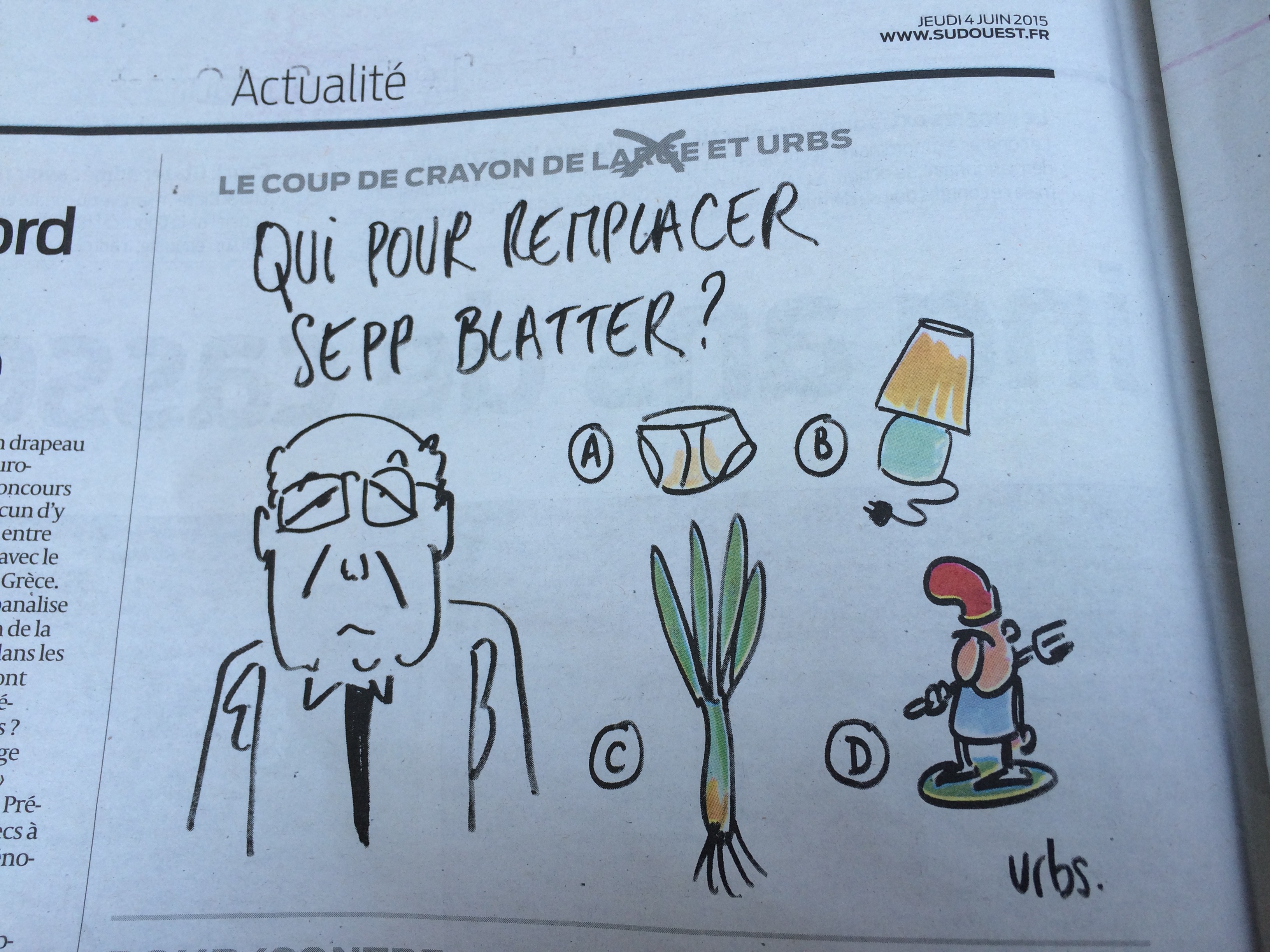
We take a look at the headlines in the local ‘Sud Ouest’ newspaper in the café. “Ban on use of pesticides in cities as from 2017” (seems to refer to their use just in cities rather than in agriculture). “FIFA: how to manage it post-Blatter” (accompanied by a cartoon which asks “who can replace Blatter” and gives a choice of a pair of underpants, a lamp, a leek and a garden gnome!). And most interestingly, a piece about the 200th anniversary of the Battle of Waterloo, saying it will be the biggest re-enactment of any battle ever staged and that Frenchmen will be among the 5,000 carefully-selected mock combatants on the 18-21 June. The piece claims that “the disaster of Waterloo in no way diminished the prestige of the Emperor and 200 years later, Napoleon still remains the master of the site, much more so than Wellington”.

"Who to replace Sepp Blatter?"

“Who to replace Sepp Blatter?”

We drive across the Charente Maritime, past Rochefort, Saintes and Cognac (which we would have liked to stop at but decide to leave perhaps for the way back), down the Aquitaine and find a charming quiet campsite in Montpon-Menesterol on the river Ile which is a tributary of the great Dordogne. Menesterol was apparently the capital of Aquitaine but is now little more than a village which was so quiet when we arrived we had trouble finding somewhere open that served dinner. The campsite itself though – the Cigaline – was absolutely lovely and our favourite so far, just next to the river.


The village of Archiac.

The village of Archiac.


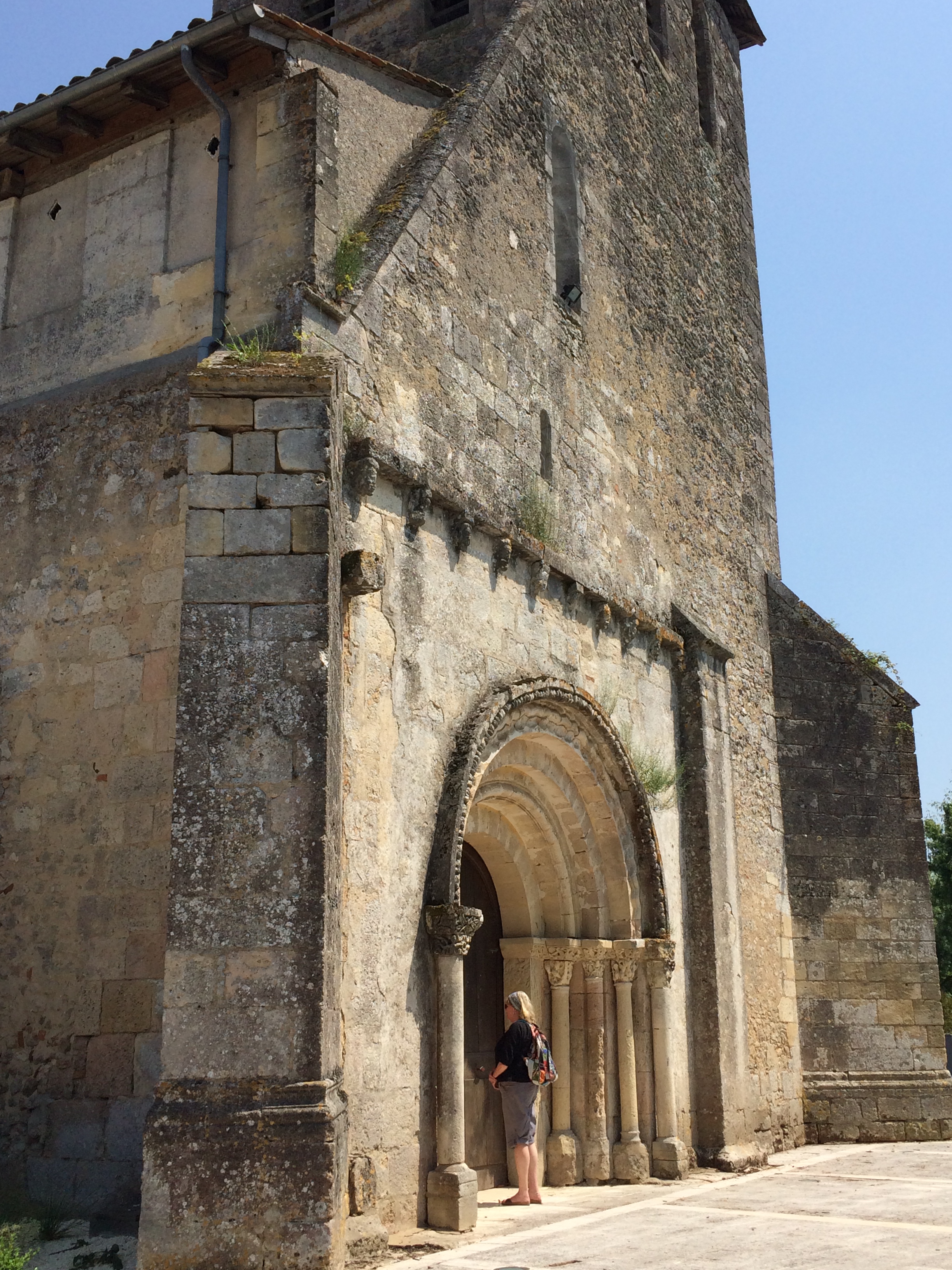
The 12th century church at Chillac (built before the  hundred years' war) and chateau behind it.

The 12th century church at Chillac (built before the hundred years’ war) and chateau behind it.


The Chateau at Chillac - "attention au chien".

The Chateau at Chillac – “attention au chien”.


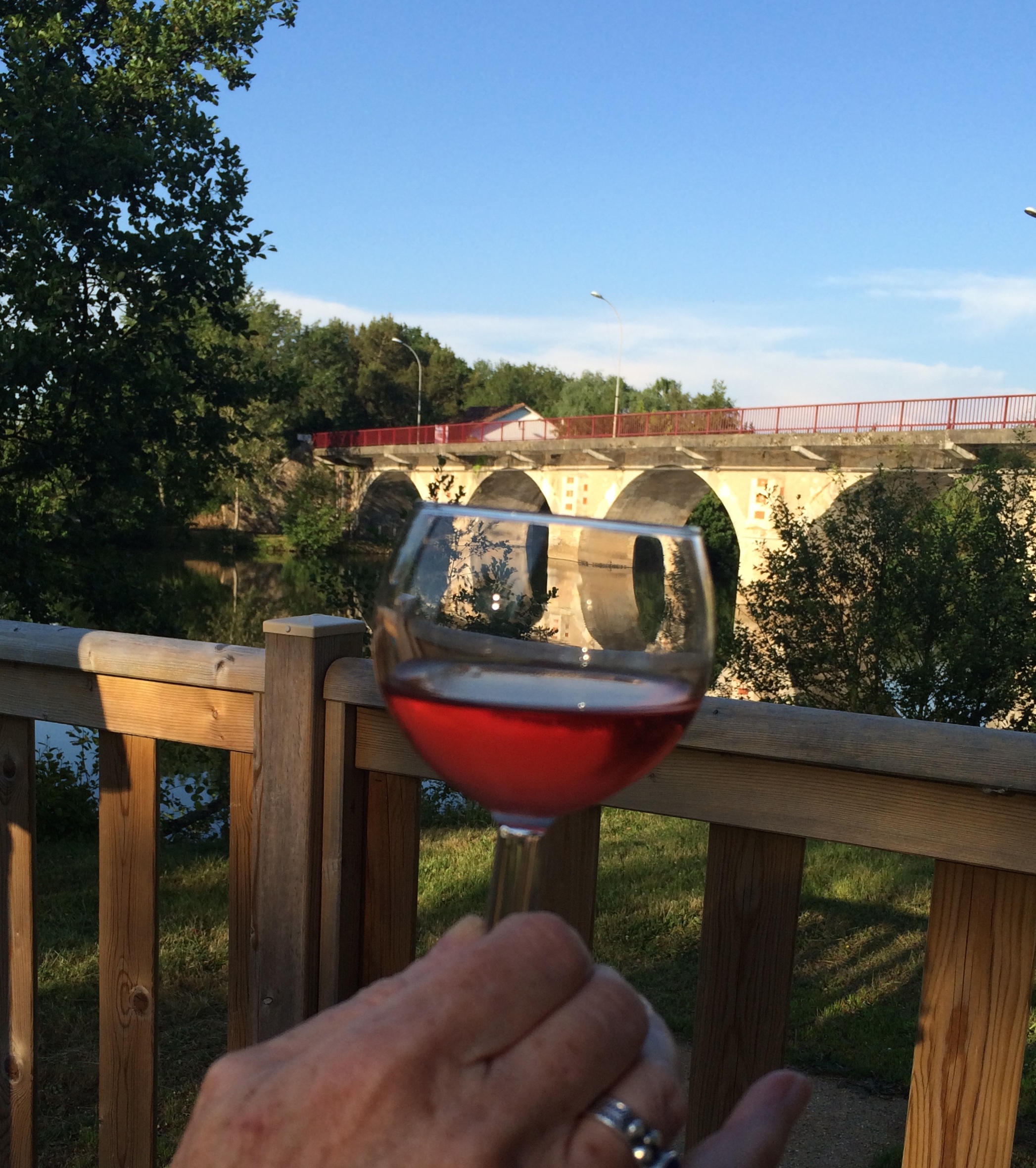
Arrival at the charming La Cigaline campsite in Menesterol, greeted by a glass of dry Rose from Bergerac.

Arrival at the charming La Cigaline campsite in Menesterol, greeted by a glass of dry Rose from Bergerac.


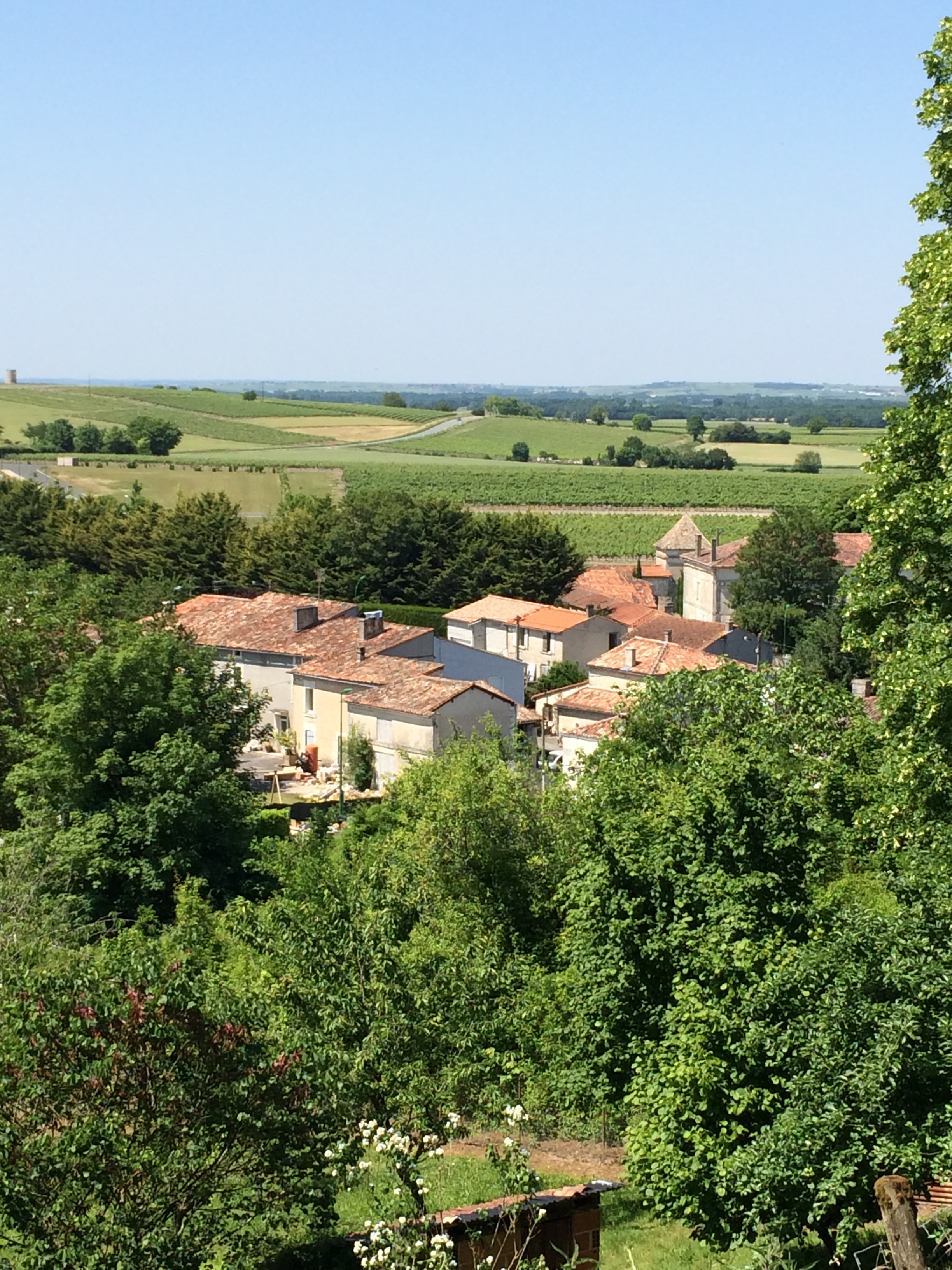
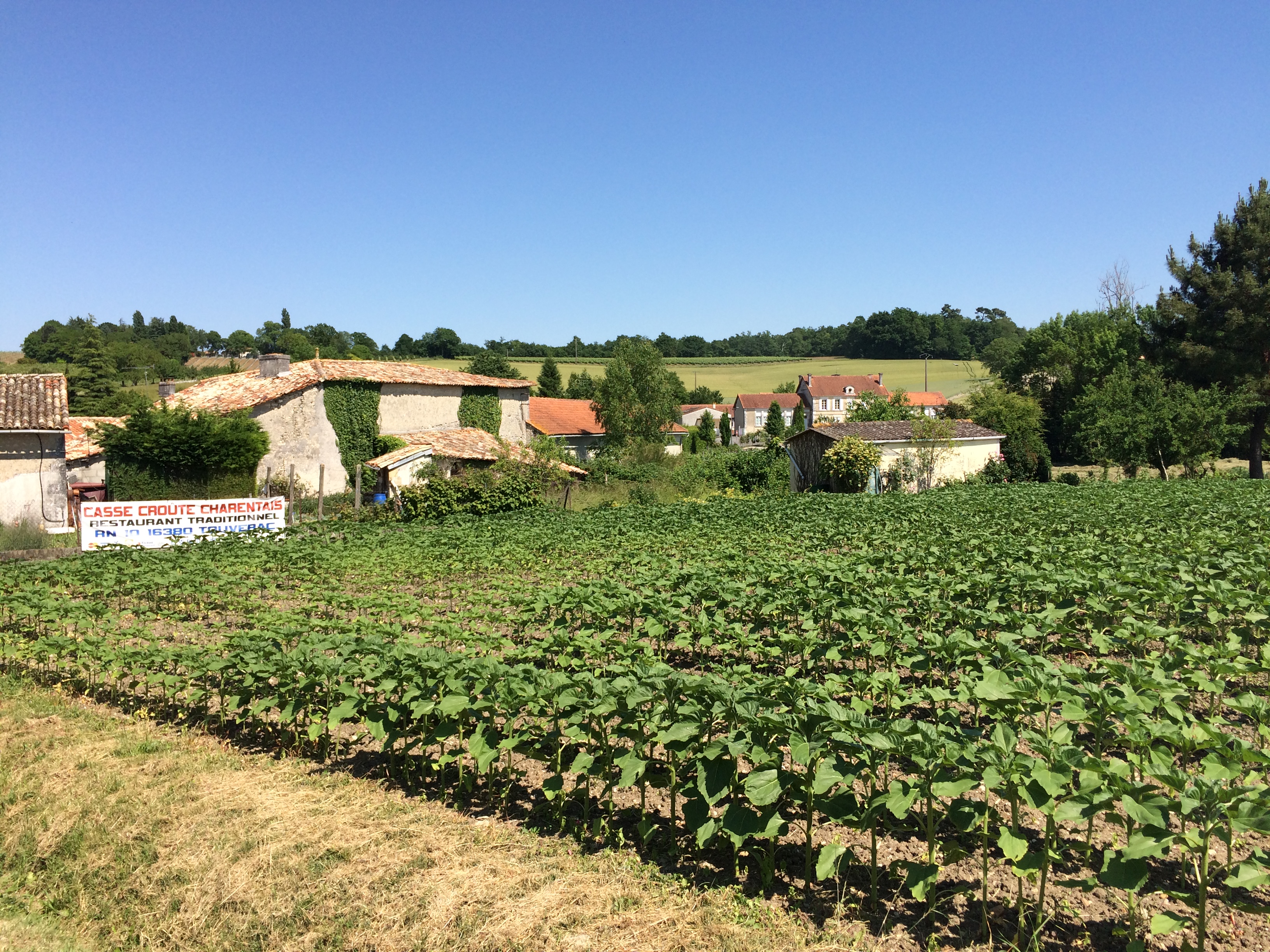
Typical countryside in the area.

Typical countryside in the area.