It’s lunchtime by the time we leave Seville and we take a straight road to the border which takes us through San Juan de Aznalfarache, Cartaya, Lepe and Villablanca until we reach the bridge over Rio Cuadiana at Avamonte at just after 3pm.

Driving past Cartaya.
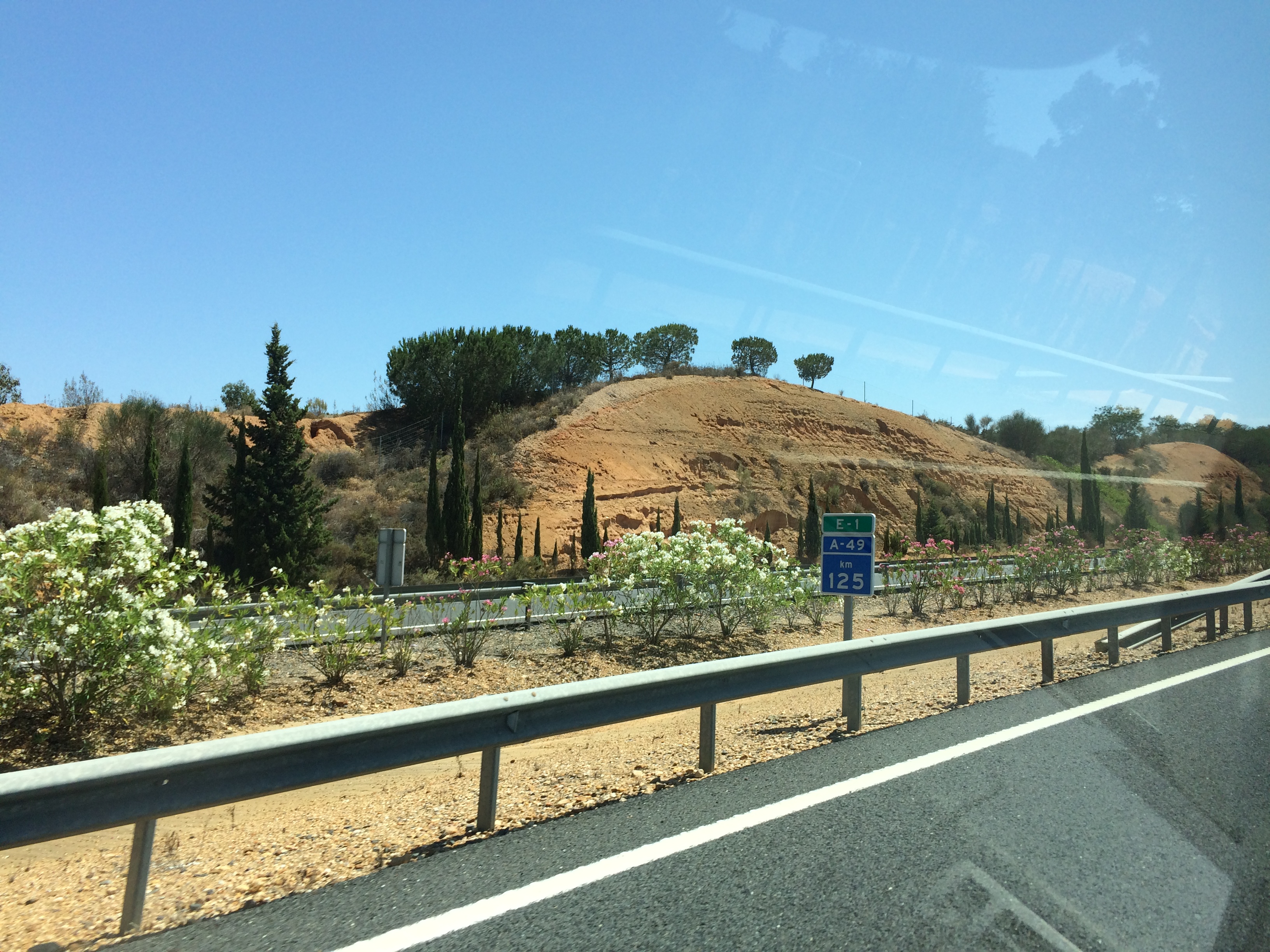
Avamonte – almost at the border.
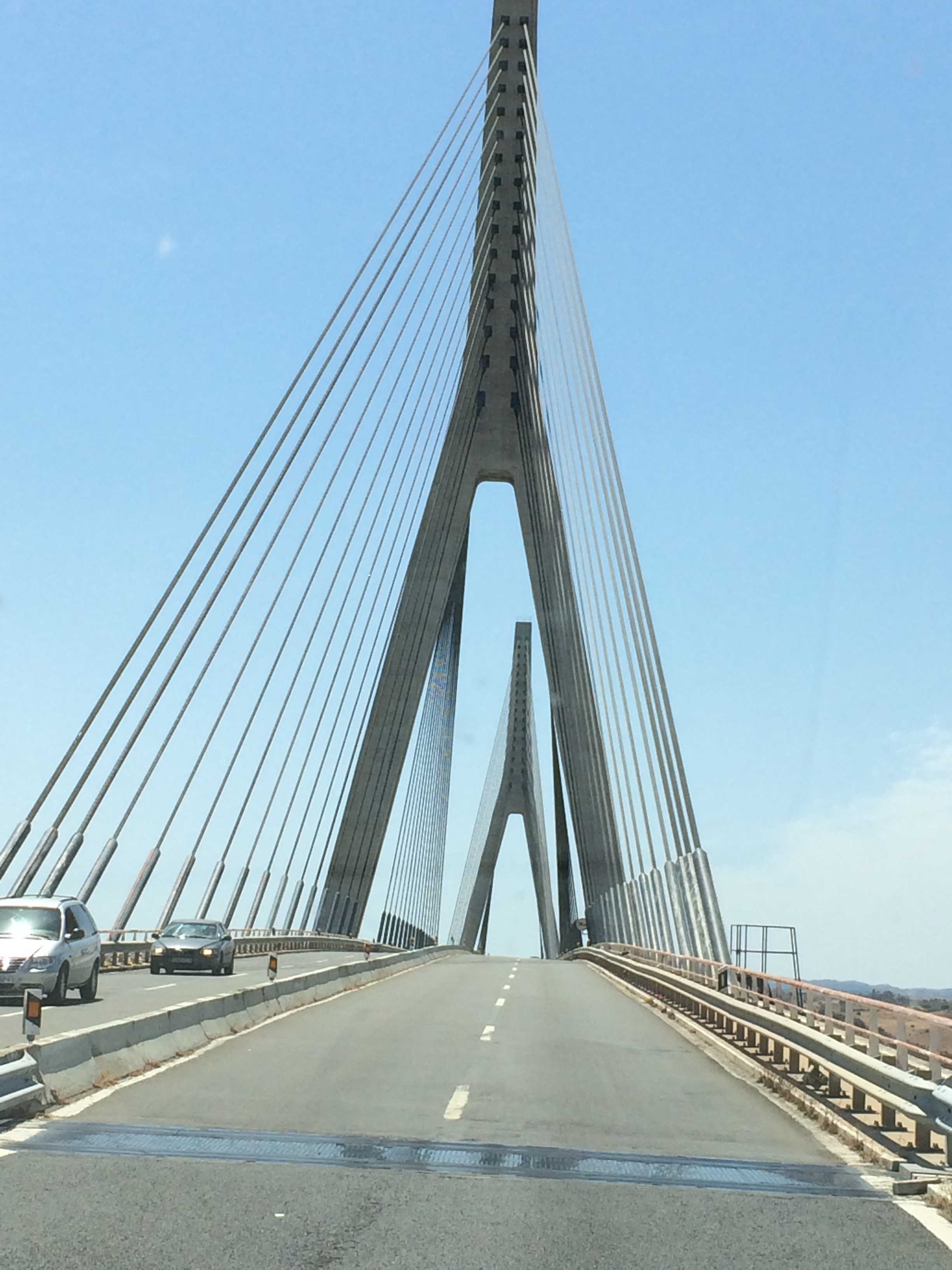
The bridge over Rio Guadiana at Castro Marim crossing over to Portugal.
Over the bridge at Castro Marim and a banner over the road wishes us “Bem-vindo Algarve”. It feels exhilarating – this is a place neither of us has been to before and we’re also reaching the furthermost western point in our journey. It feels at once like we’ve broken a psychological barrier and that the real adventure has begun.
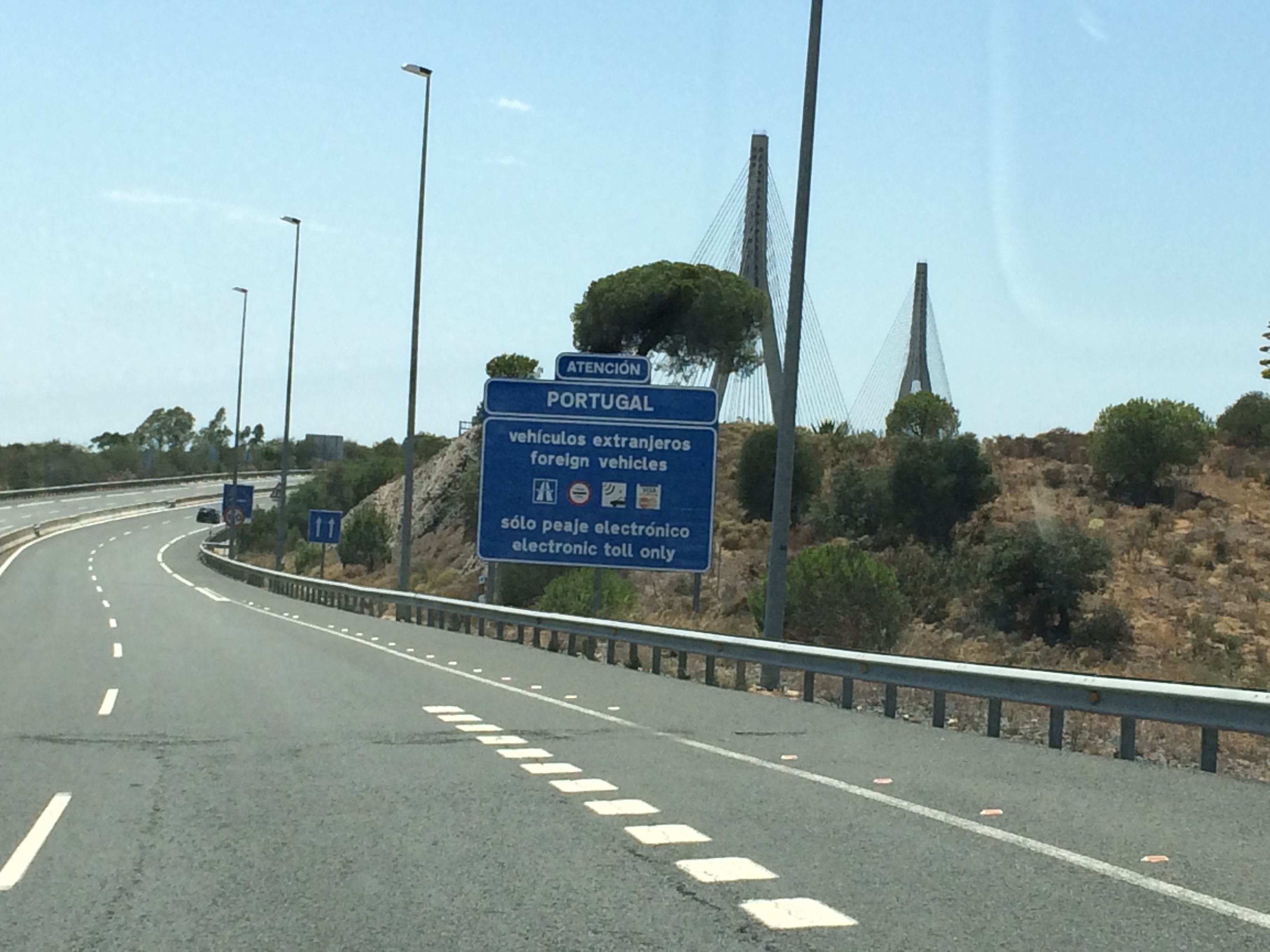
Arrival in Portugal.
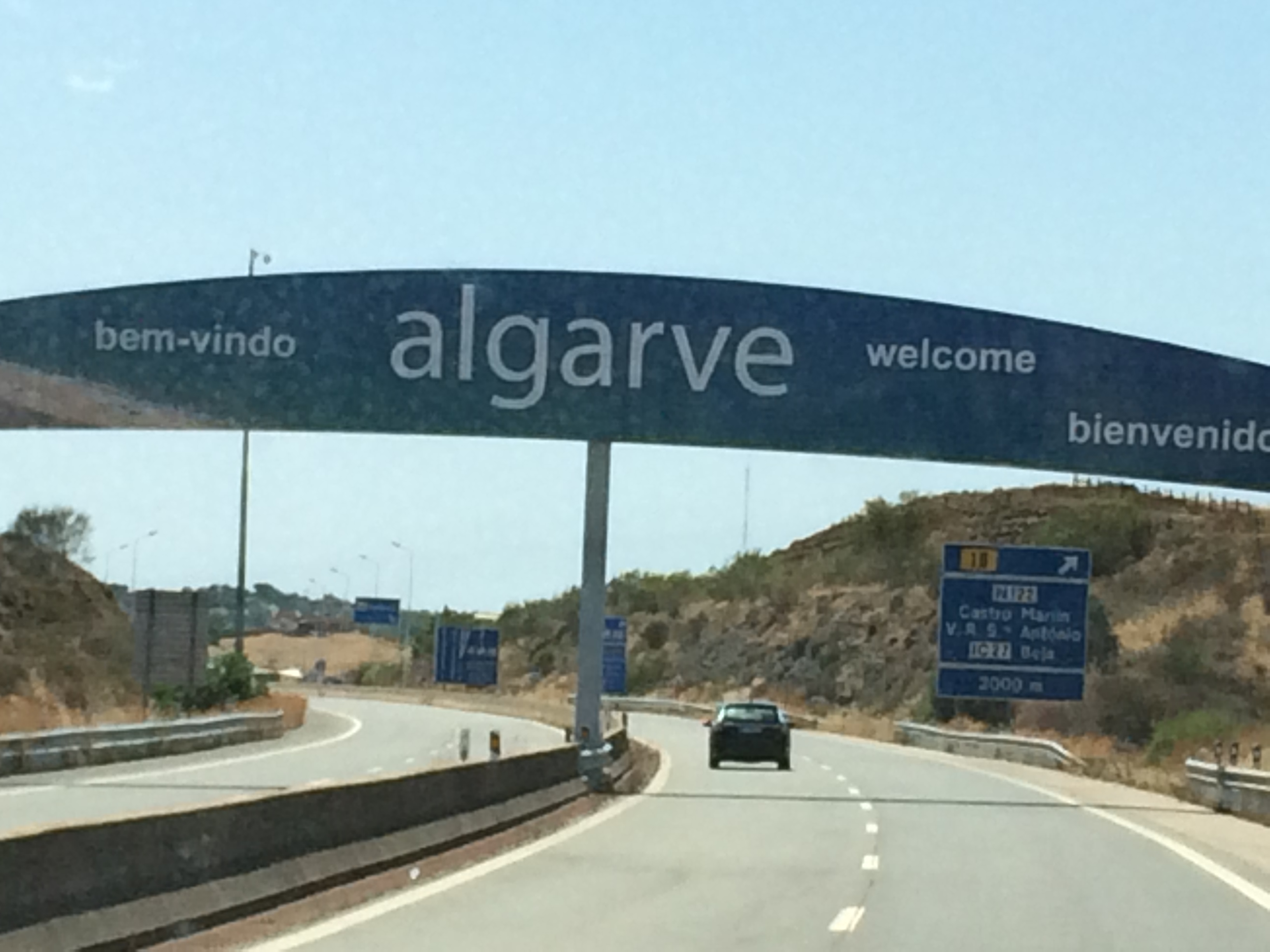
And in the Algarve.
We drive past the small towns of Tavira and Luz before arriving at Olhao where we were to camp for the next two nights. Though basic, it’s a friendly site, close to a fishing village and a popular beach on a lagoon.
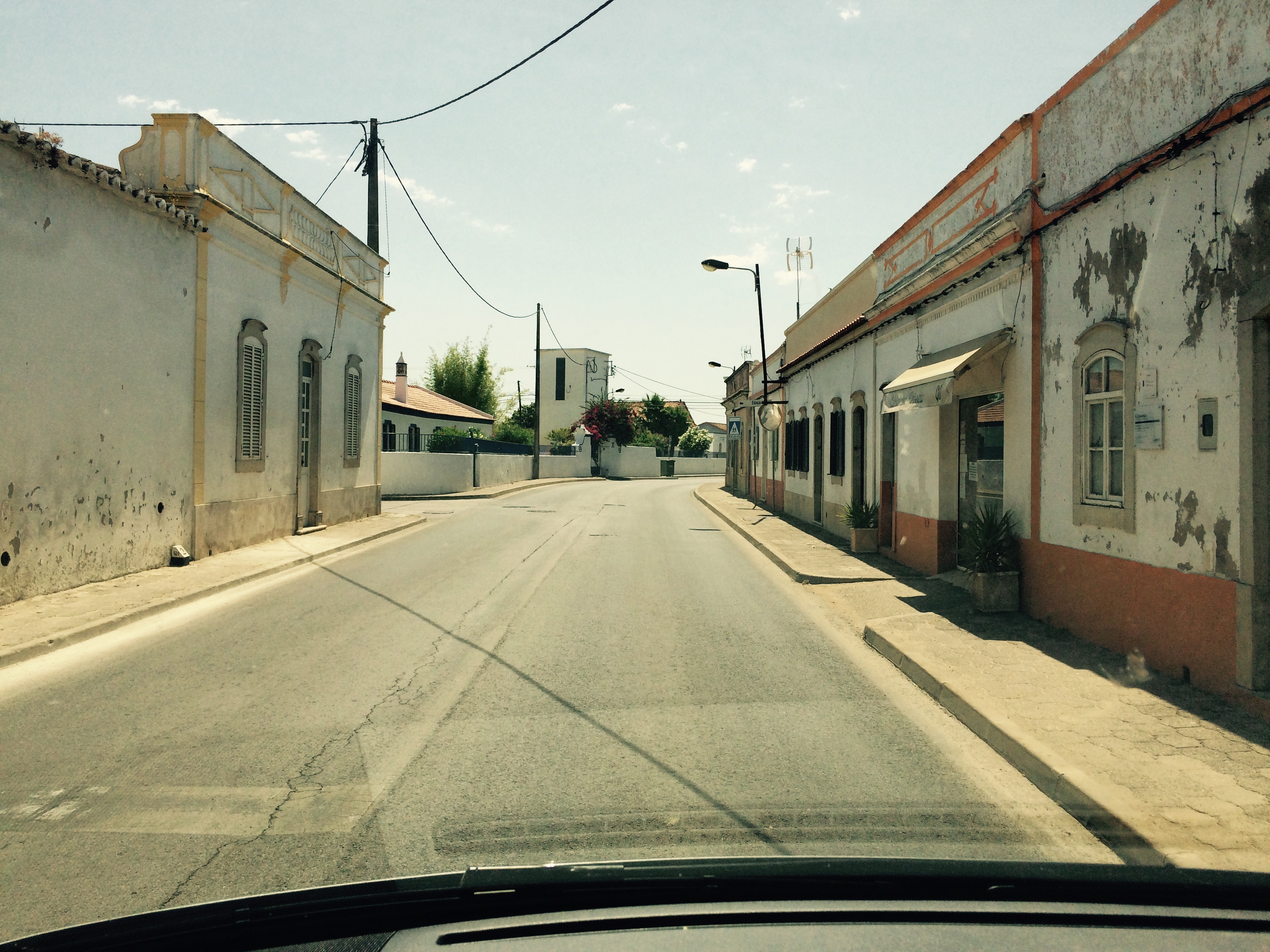
Driving through slightly shabby Luz.

The simple and friendly ‘Campismo’ at Olhao.
Miguel welcomes us and is quite chatty. He’s amused to find out my name as his full name is actually Flavio Miguel. There is a town near Porto in the north where all the Flavios (or ‘Flaviencen’) as he says, come from. Naturally, we decide we must try and visit it. He also talks about what a tough time Portugal has had economically, but the Algarve has done better, deriving half its revenue from tourism and the other half from fishing. The campsite has done well recently and the latest big influx has come not from the Dutch but from the French – and they come with very smart and expensive campervans – are they selling their houses and just travelling around? I’d do that if I could says Flavio Miguel.
Once set up and hooked up, we head for the lagoon for a refreshing dip. Though nearly 6pm the beach is teeming with people in a sea of multi-coloured umbrellas. The water is a little colder than we’d expected but it revives us. Then it’s time for a wander through the fishing village where we have an excellent simple grilled fish meal from a selection of fresh fish we’re asked to choose from. ‘Batata frita o cusida?” (chips or boiled potatoes?) asks our jovial waiter whose name is actually ‘Joka’. (Interesting that they say ‘batata’ (as in Arabic) rather than ‘patata’. When we ask for the bill he thinks for a while then says 20. Not bad at all.

Olhao village.
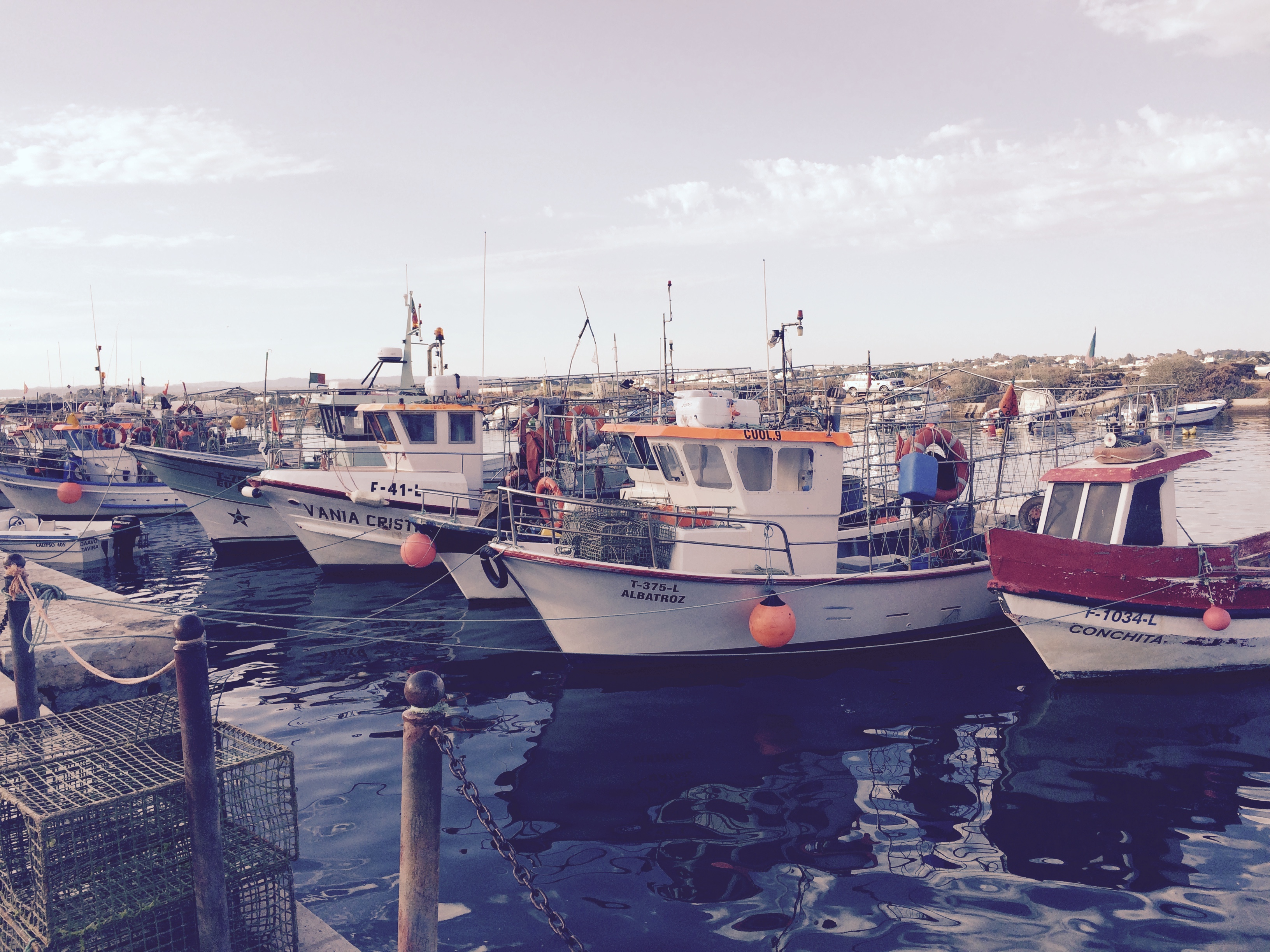
The picturesque fishing port of Olhao.
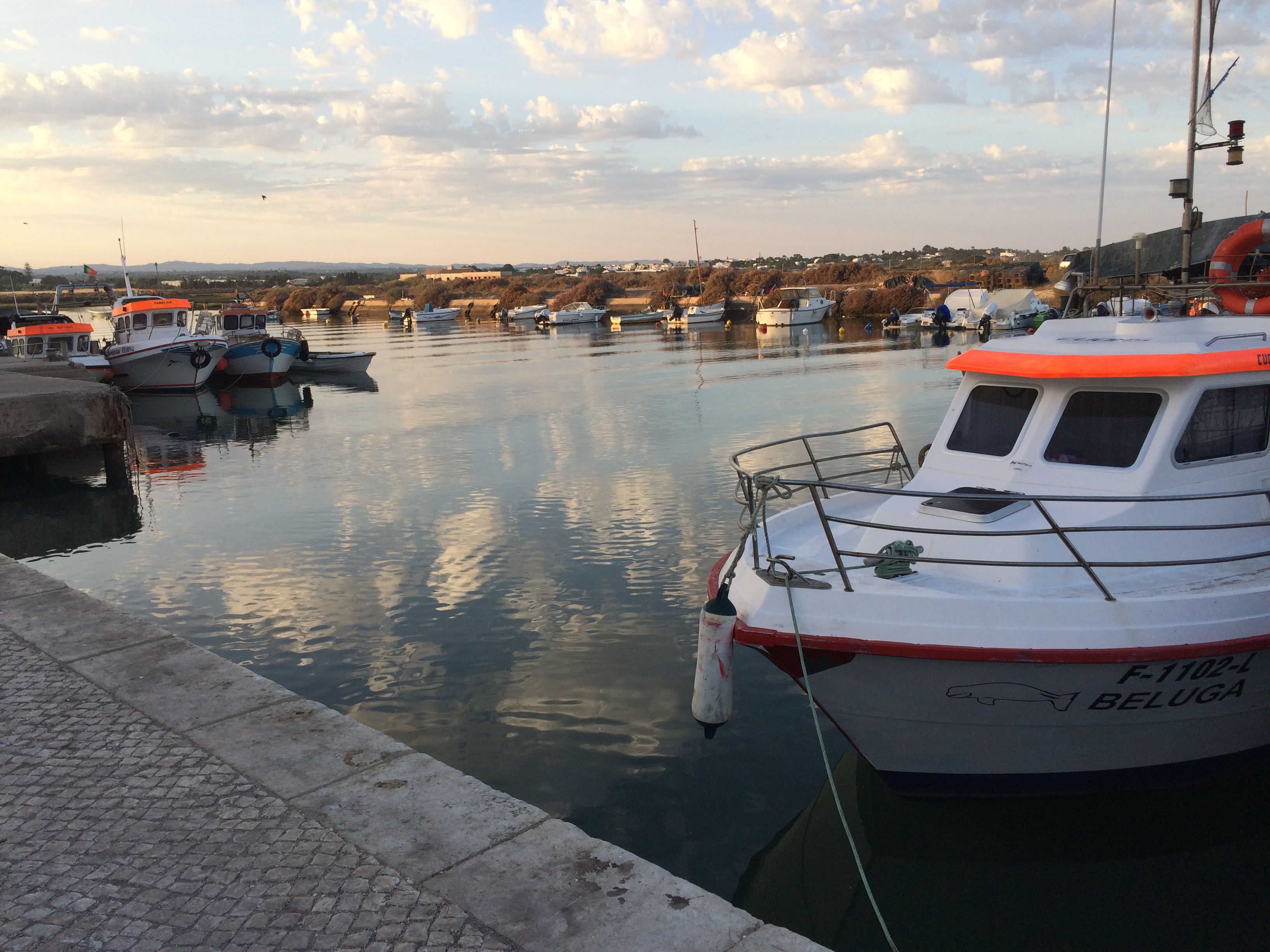
Olhao fishing port at sunset.
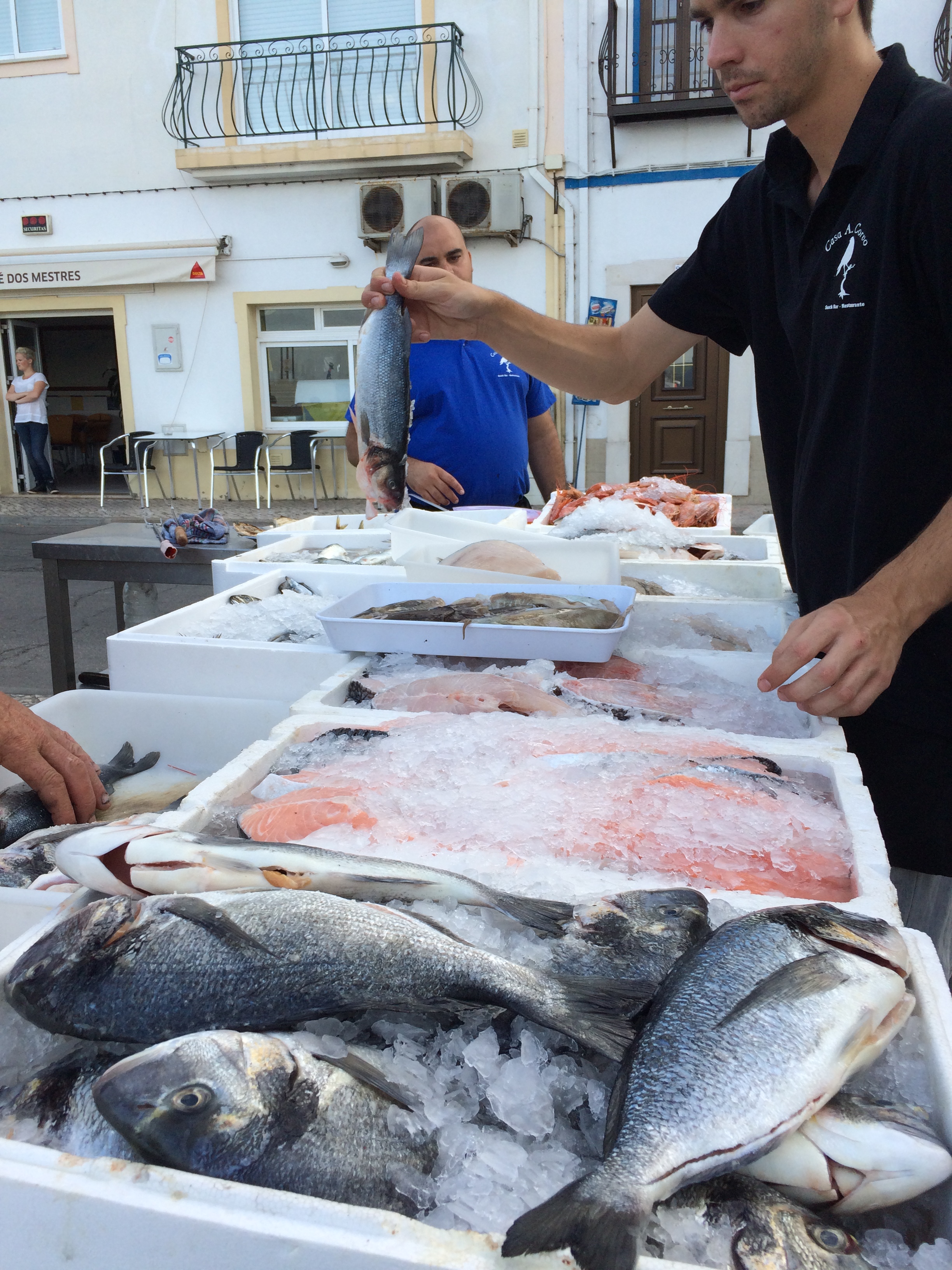
We must select our fish for grilling at the restaurant.
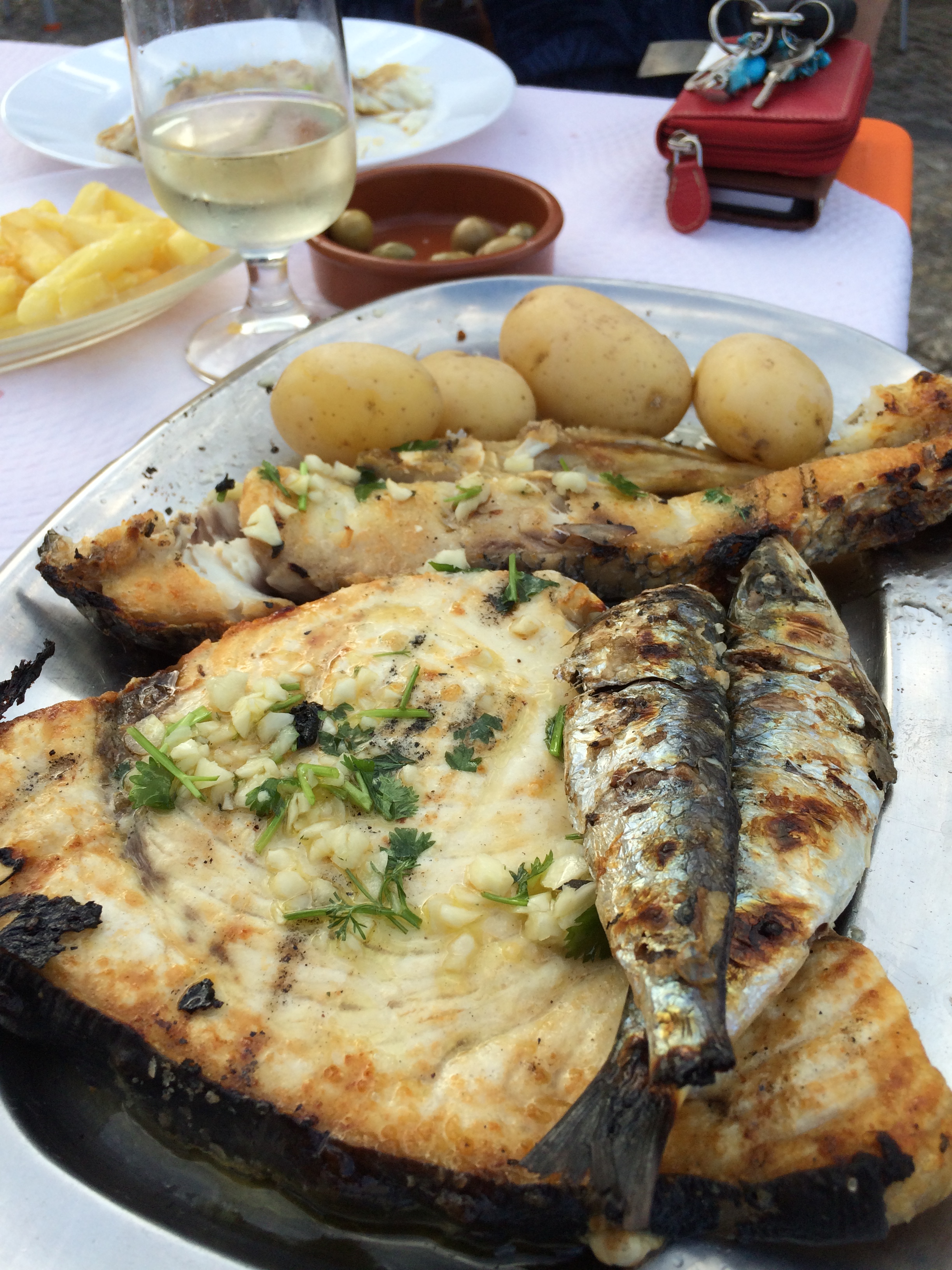
And now grilled, with chopped coriander and garlic and ‘batata cusida’.
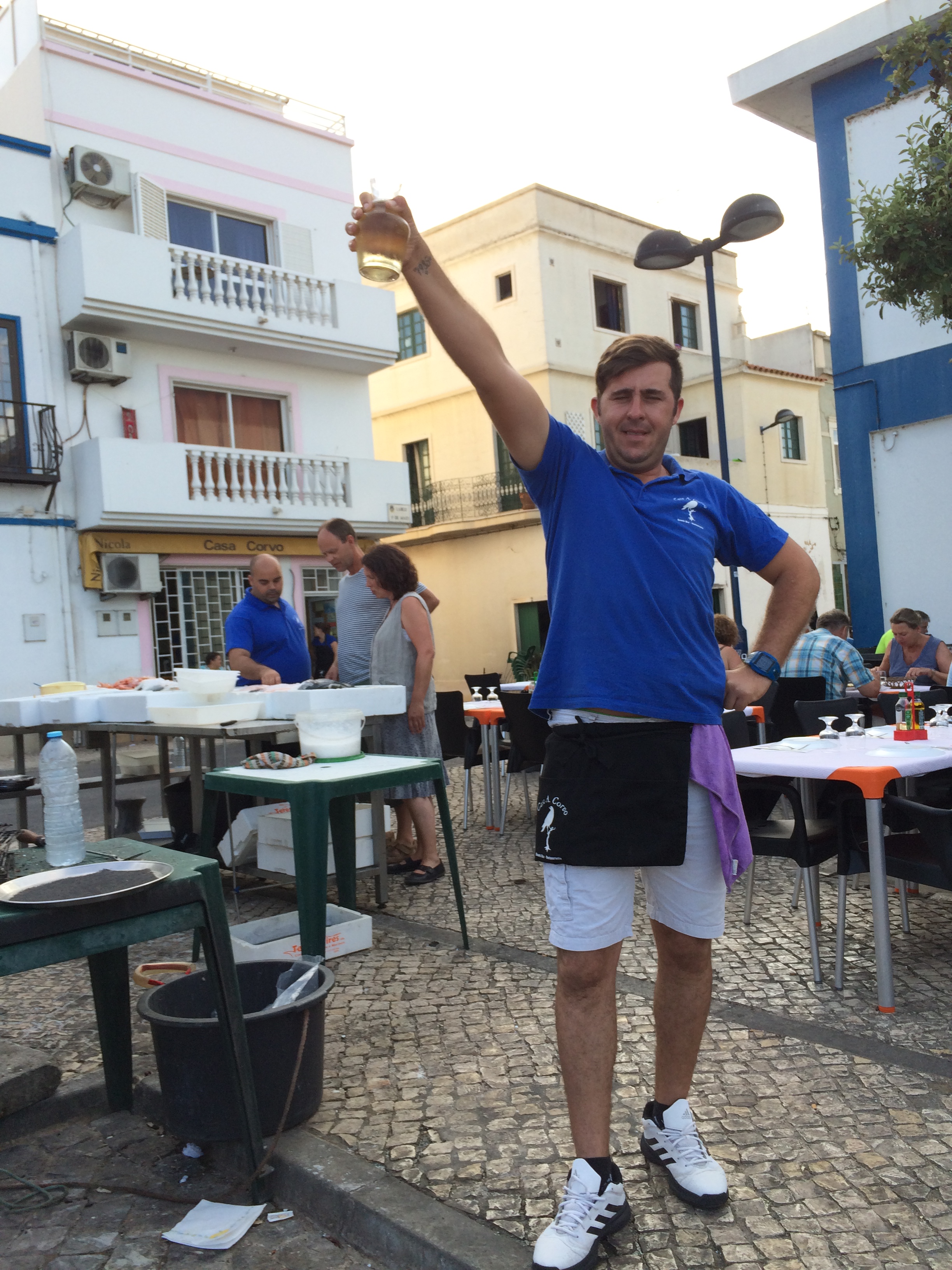
Joka our playful waiter.
The next day is spent ‘chilling’ and generally recharging our batteries. Longer swim in the morning followed by some catching up with the blog. The tide is low so I swim to the other side of the lagoon where men are squatting digging up cockles from just below the wet black sand. The low point of the day is when Judith is stung on the arm by a wasp and has a hyper-reaction. The ‘Allergex’ cream we’d brought from Egypt helps as do the anti-histamine tablets but it takes a full 3 days for the redness and swelling to subside. Poor thing!
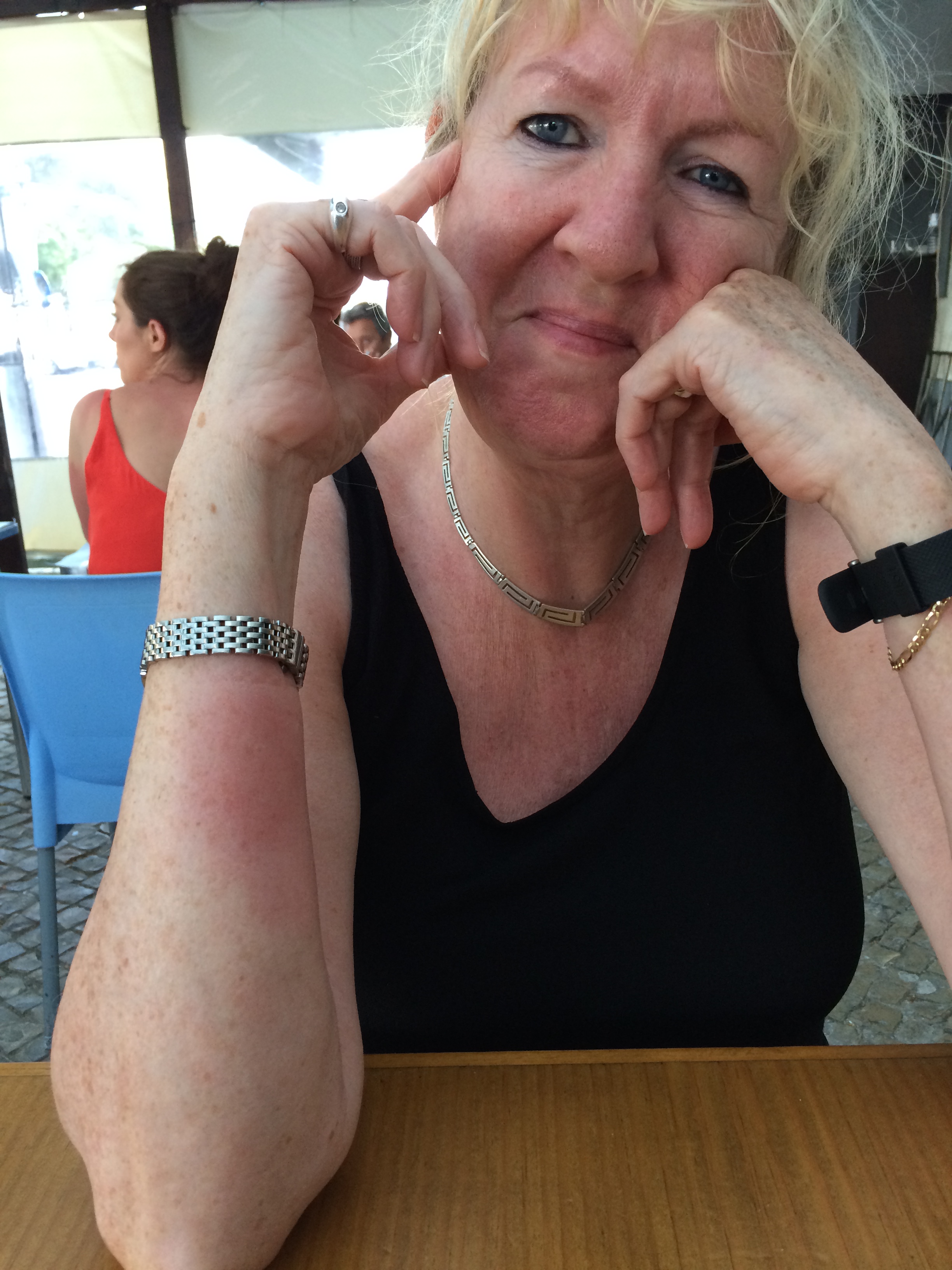
Judith’s nasty wasp sting.

Cool-looking ‘Quattrelle’ spotted on our way back to the campsite.
On Monday 22nd, we set off straight due north for Evora, which is roughly half way to Lisbon. In doing so we’re sadly missing out the south west corner of the Algarve as it would take too long, and we decide it would only be beaches and holiday destinations anyway. (Later, we meet some Austrians at the campsite in Evora who tell us they’ve come from there and it is spectacularly beautiful. Ah well.)
The Tomtom frustratingly takes us almost all the way back to the Spanish border before turning us north again. We travel through the northern Algarve and then the plains of Alentejo on fairly empty roads and past forests and forests of cork trees (or Quercus suber to use their proper botanical name) – in fact, apart from some eucalyptus, the odd vineyard and olive grove, there was nothing but cork trees the entire way, clearly cultivated, some young, others quite old. They look like small oak trees (they are in fact a type of oak) and some looked naked with their bark stripped off from the ground to three quarters of the way up. It was clear to see why Portugal produces 50% of the world’s cork.

Forests of cork trees on the Alentejo plains.
Other interesting facts about cork trees:
- They’re also found in Spain, Algeria, Morocco, France, Italy and Tunisia.
- They have a thick insulating bark that is waterproof and also resistant to fire so protects the tree from forest fires.
- When the bark is extracted, a new one grows making it a renewable resource.
- Harvesting does not harm the tree, provided it’s not stripped too deep.
- It can be harvested every 9-12 years and a tree can be harvested about 12 times in its lifetime.
- Harvesting is done entirely by hand, using a small axe.
- Cork trees live to about 150-250 years.
- It’s illegal to cut down cork trees in Portugal without permission from the Ministry of Agriculture.
- The European cork industry produces 300,000 tonnes a year at a value of Euros 1.5bn and employing 300,000 people.

Young cork trees near Beja.
The route takes us through the beautiful and historical little town of Mertola situated in an area of outstanding beauty. It has a fort which was originally built by the Romans, reinforced by the Arabs and finally the crusaders as well as a church which still has essential features (like the mihrab) of the mosque it once was.
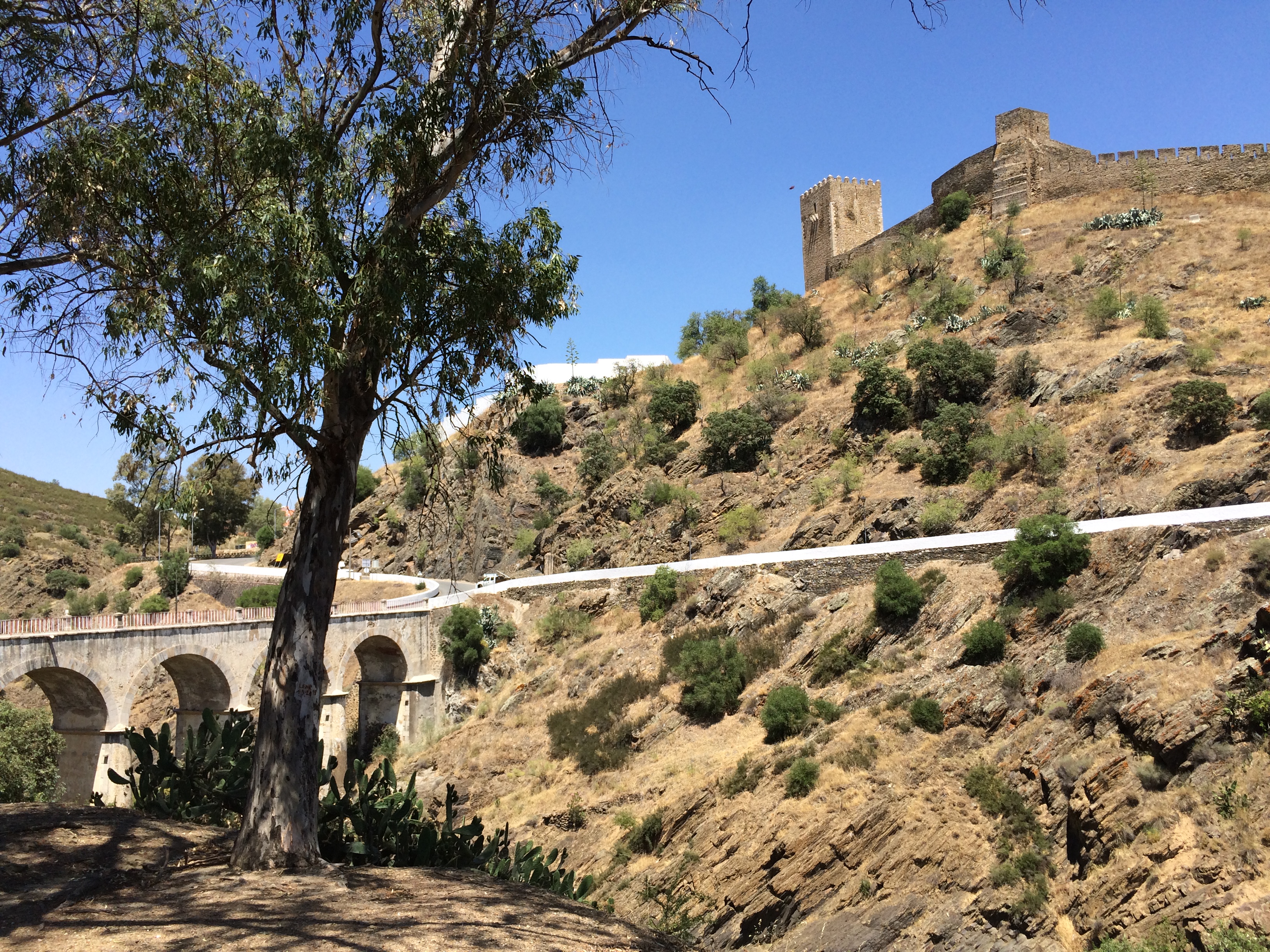
The charming little old town of Mertola with the old Roman/Arab/crusader fort high up.
We stopped for an ice cream (‘gelado’) which we’re starting to do more and more frequently we’ve noticed.

The gelado seller in Mertola.

We seem to be eating more of these!
Apart from cork trees, the other interesting feature of this region, at this time of year at least, are the storks nesting on top of telegraph poles. The sight of them perched on top of a whole line of telegraph posts is quite astonishing.

A line of stork nests along the side of the road.
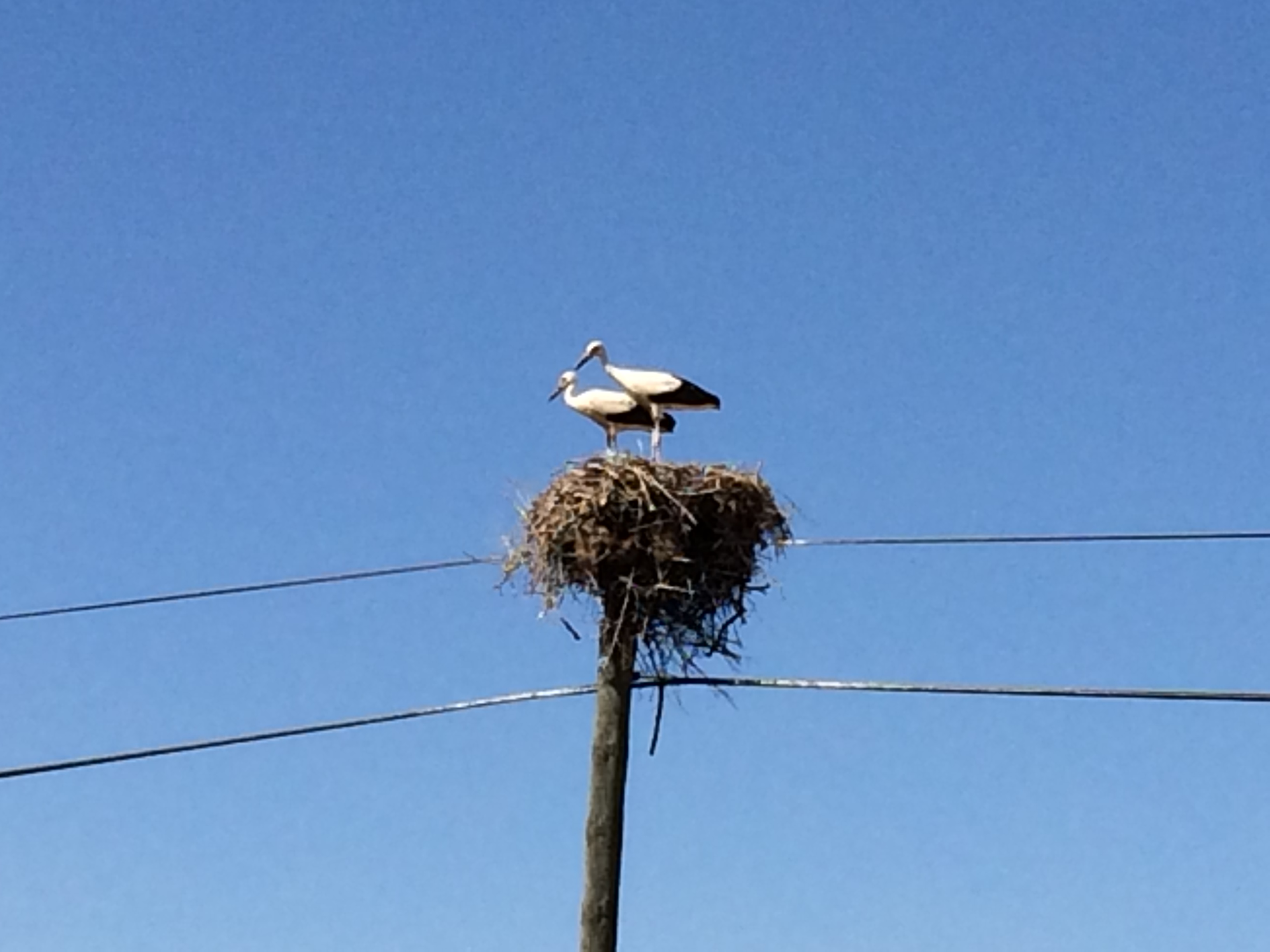
Seen from closer up, there was always a pair of storks but sometimes three storks in a nest.
The road continues, empty and peaceful, to the celestial sound of Mozart’s Agnus Dei. We drive past Beja, Vidigueira, Portel (where we see a large estate probably belonging to a ‘cork baron’) until we reach our campsite at Evora.

Evora, called Yabura by the Arabs.


Wasps! Corks! Storks!
LikeLike
Sorry if it doesn’t come up to your expectations Bonnie, but that’s what we were up against and therefore what went in the blog! 🙂
LikeLike