“Kill them all. God will know his own.” Thus spoke the battle commander, Cistercian Abbott and holy man, Arnaud Amaury, in charge of the sacking at Beziers at the start of the Albigensian crusade in 1209. The only crusade against a Christian country, instigated by Pope Innocent III which killed more than half a million men, women and children in the Languedoc over two decades.
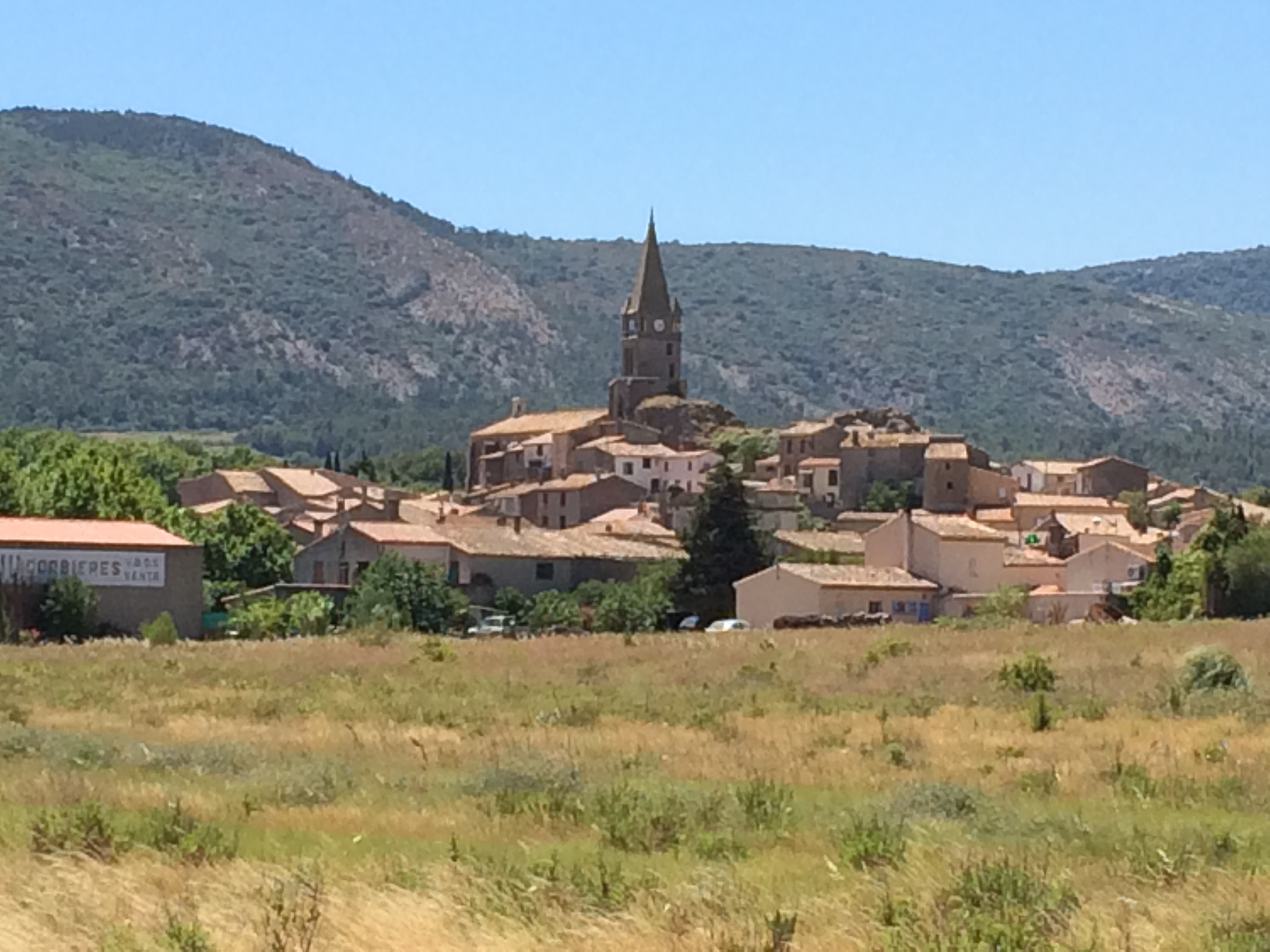
The village of Fontcouverte in the Languedoc.
The Languedoc, also called Pays Cathare (Cathar country) as is the whole Departement of the Aude, consists of the central region of the south of France including the western Mediterranean coast, stretching from the Rhone valley in the east to the Spanish border in the south west, and is one of France’s major wine-growing areas and known for its Cotes de Rhones and of course, Chateau-Neuf-du-Pape. It is breathtakingly beautiful – vast fertile lands, mountains, valleys and, as you drive through, the fortresses and abbeys high in the hills giving witness to the time of the Cathars. It’s impossible to talk about the Languedoc without reference to the Cathars. Who were they?
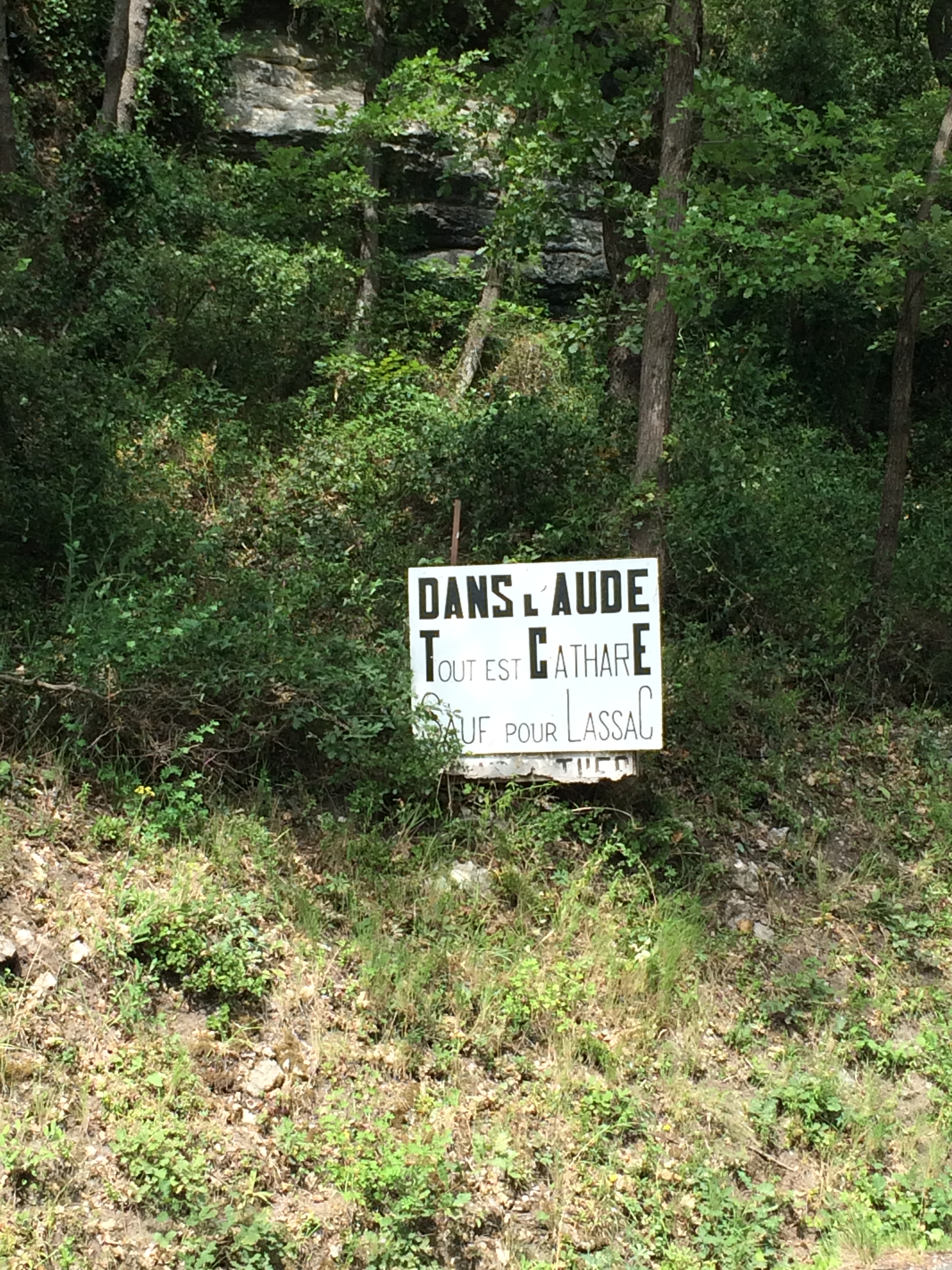
All along the route to Lastours, banners proclaiming “In the Aude, all is Cathar except Lassac” in a protest against plans to set up a landfill site there.
The origins of the Cathars remain a mystery but they first appeared in Europe in the 11th century. As ‘Dualists’ they believed in two principles – a good creator God and his evil adversary, the devil. Cathars called themselves Christians but rejected any idea of priesthood or the use of church buildings. Cathar faith consisted of believers, secular people and ‘Parfaits’ (good Christians) who had renounced worldly pleasures and lived a monastic life. They were the ‘clergymen’ who had received baptism (consolamentum) and would administer the baptism of the dying to secular believers. They had one prayer, the Lord’s Prayer, they were strict in their adherence to poverty, honesty, not killing and not swearing oaths. They regarded women as equals and that all non-procreative sex was better than procreative sex. Apropos this, Catholic propaganda of the time referred to this as ‘bugger’, from the word Bougre.
Prior to the crusade the Languedoc was known for its wealth, high culture, tolerance and liberalism. It was the land of the Troubadour and chivalry. The language of Oc was the language of culture. The Cathar faith became the major religion in the area, supported by the nobility as well as the common people. This was most probably in response to the corrupt and decadent Roman Catholic Church of the time which tried to fight Catharism with propaganda, debate, creating new religious orders that embraced poverty. When all proved unsuccessful, there was only one option left – the Albigensian Crusade.
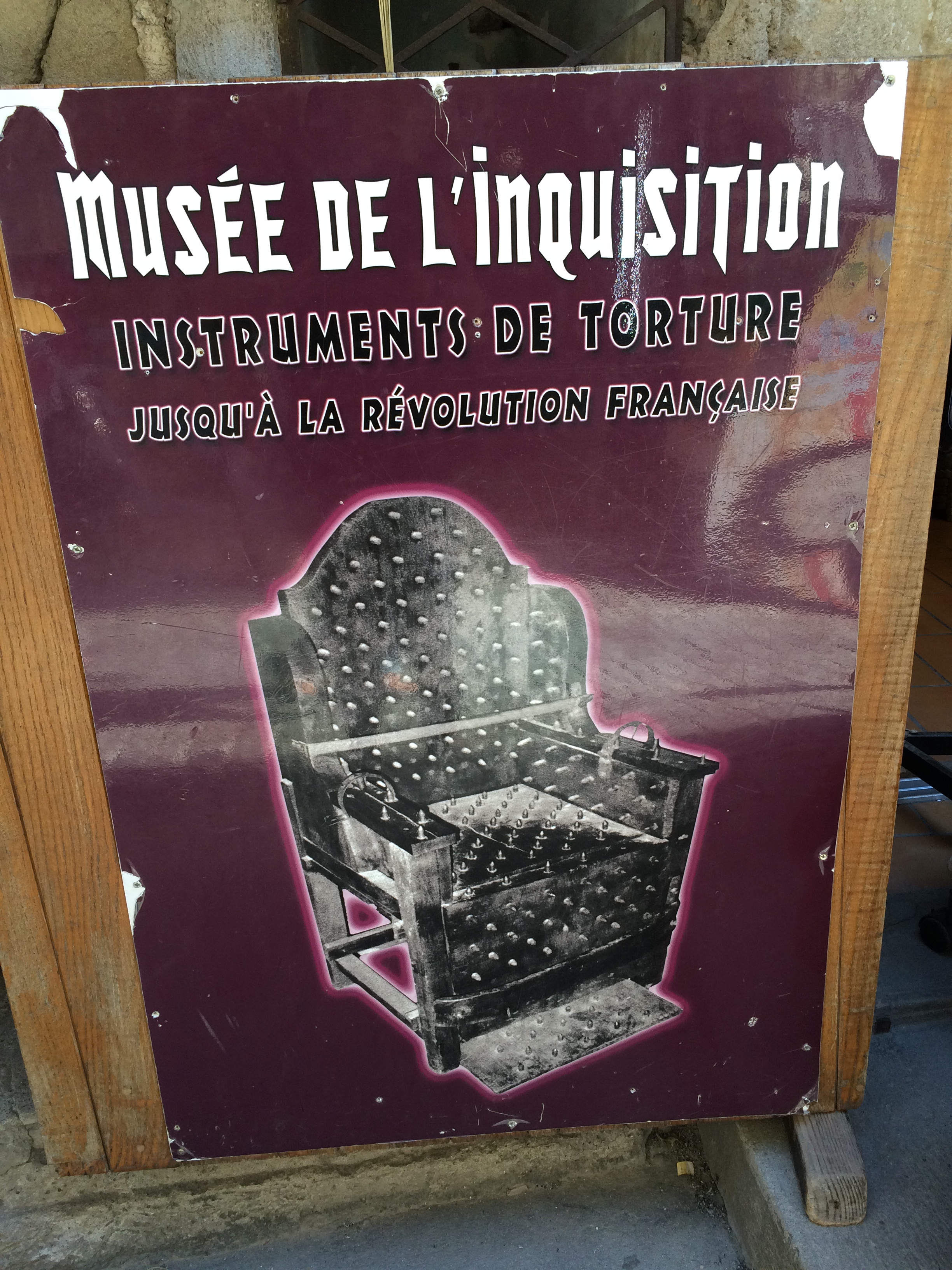
The ‘Inquisition’ spread to include heretical catholics in the Albigensian crusade.
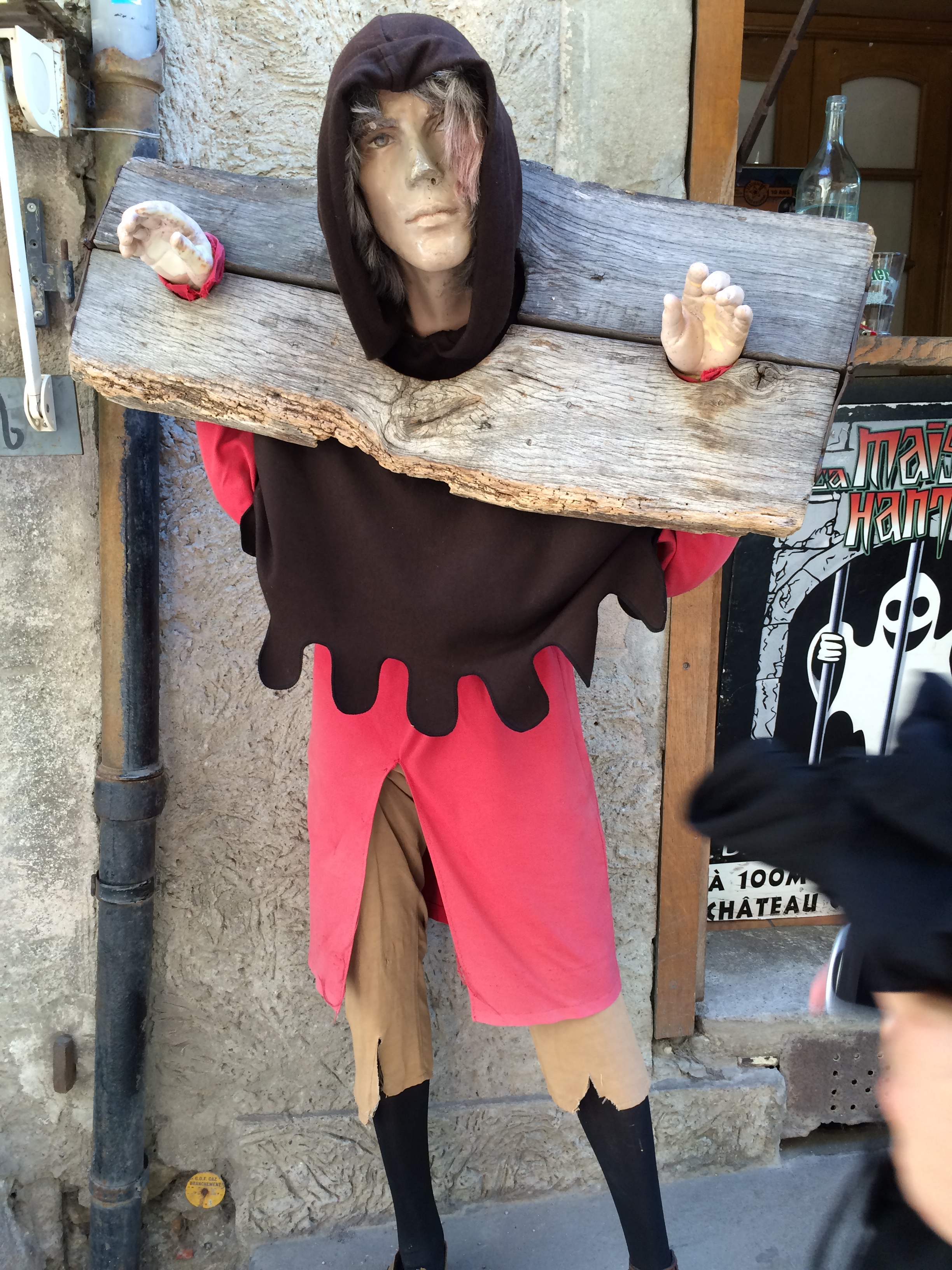
The annihilation of the Cathars laid the groundwork for later inquisitions.
From 1209, a war of terror was waged against the indigenous population of the Languedoc and their rulers. The Crusaders killed locals indiscriminately, Catholics as well as Cathars. Lands were annexed to France. Educated and tolerant Languedoc rulers were replaced by much less tolerant ones. Dominic Guzmán (later Saint Dominic) founded the Dominican Order, which became a ‘papal police force’, to wipe out the last vestiges of resistance. Persecution of Jews and other minorities was initiated and the culture of the Troubadours and their sophisticated world-view was lost. Lay learning was discouraged and the reading of the bible became a capital crime. The end-result was the economic decline of the Languedoc to become the poorest region in France. The language of the area, Occitan, once the foremost literary language in Europe became a disparaged regional dialect referred to as patois.
The crusade provided proof that a sustained campaign of genocide and terror can work and the annihilation of the Cathars laid the groundwork for later inquisitions and genocides. As Voltaire said “there was never anything as unjust as the war against the Albigensians”.
Despite this, as you travel around there is an enduring echo of the Cathars in the Languedoc which we became very aware of during our stay. Our campsite, the Camping de Montolieu, was a small, relaxed, friendly and family-run campsite just outside Montolieu, a lovely village which rivals Hay on Wye in second-hand book shops. Despite the shortage of space in Brenda Flavio managed to purchase two old hardbacks – Corneille’s Tragedies and JJ Rousseau’s Emile.
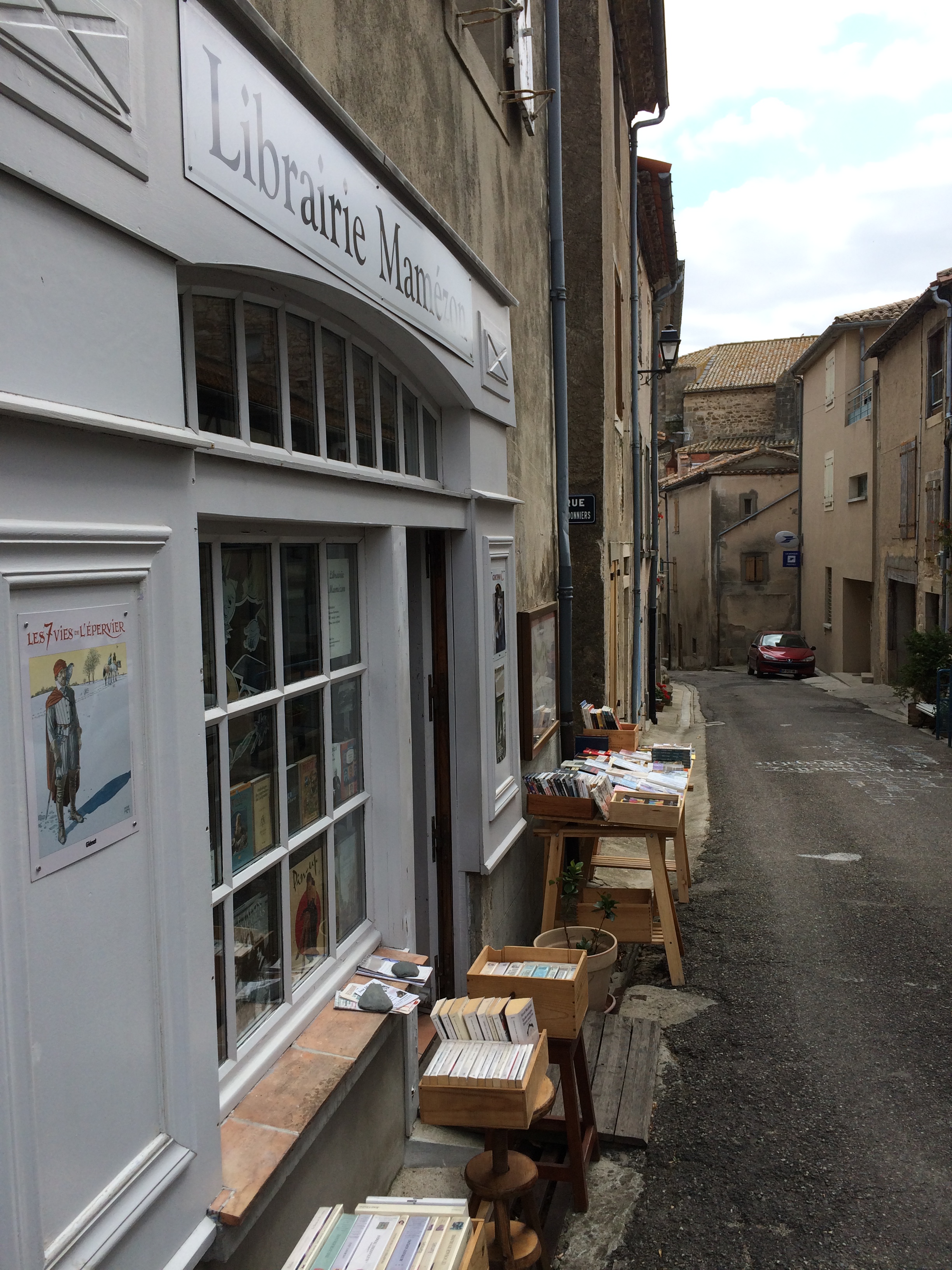
Montolieu – “village du livre”.
What better way to start our journey of discovery of the Pays des Cathars than from such a charming campsite – that was until a group of ‘travellers’ arrived to challenge our liberal views and the nerves of all other campers on the site. The party consisted of three families of 18 adults and children who proceeded to turn the campsite into a noisy, disruptive nightmare. A buffer zone was soon established as campers quietly moved to positions farther away. The travellers left after two days to a collective sigh of relief from the remaining campers and the charming owners, Nicole and Andre. They left behind a trail of destruction and took with them a bicycle from the camp and a bra of Judith’s from the washing line. Despite them we had a great time and they in fact created a bonhomie among fellow campers and kept us all going through dinner that evening.

The charming small and (usually) quiet Camping Montolieu and its convivial atmosphere.
Whilst there we cycled into Carcasonne partly along the
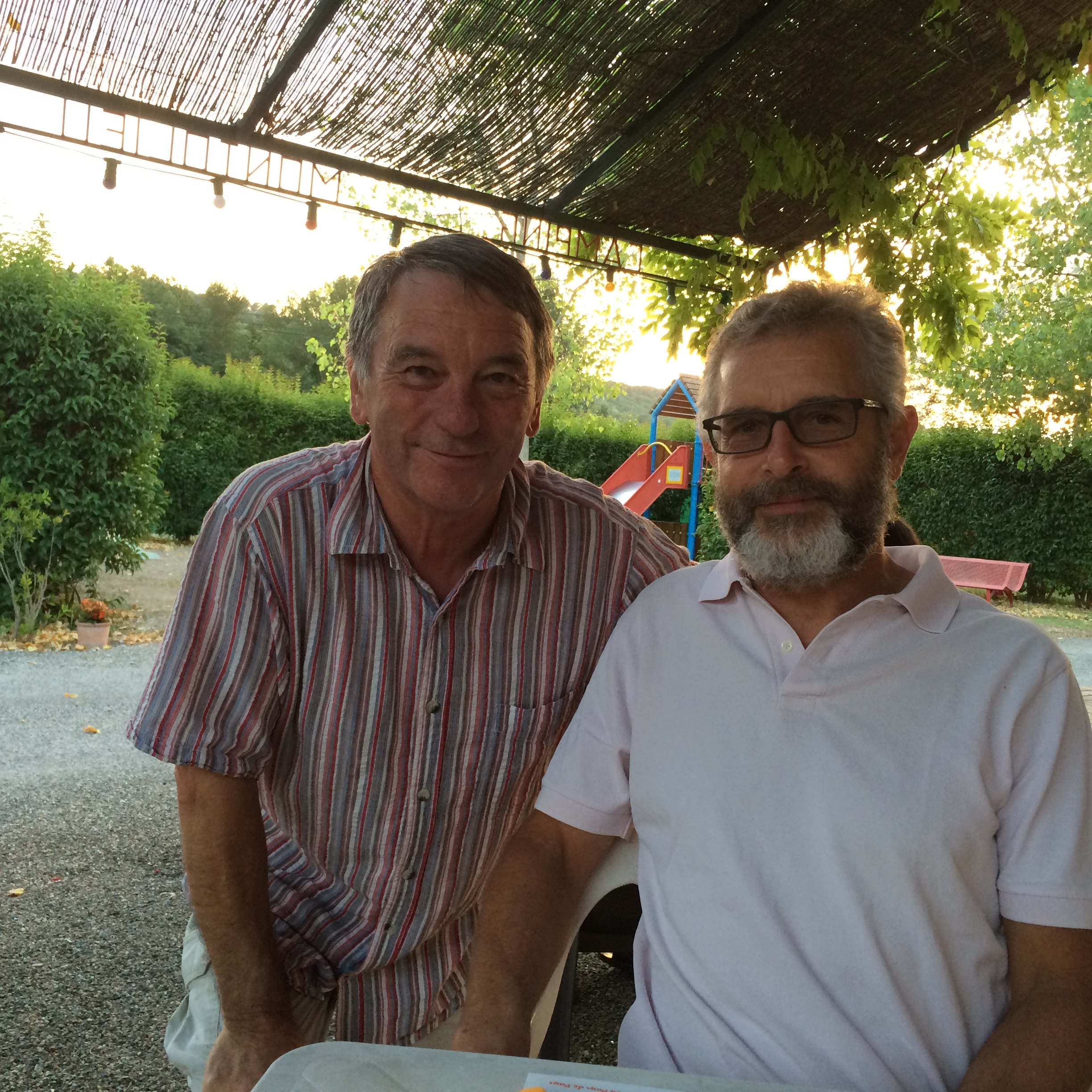
We really liked Andre who runs the Camping Montolieu with Nicole. Loved the accent and the way he rolled his ‘rs’ like a lot of people from the region.
Midi canal. Carcasonne is famous not only for Kevin Costner and Alan Rickman in ‘Robin Hood Prince of Thieves’ there but also for its medieval fortress, Cite de Carcasonne with two outer walls, 53 towers, a drawbridge and ditch. Carcassonne played a role in the Albigensian Crusades, when the city was a Cathar stronghold. In August 1209 the crusading army of the Abbot Arnaud Amalric forced the surrender of the city. The Viscount of Carcassonne, Raymond-Roger de Trencavel was imprisoned whilst negotiating his city’s surrender and died in mysterious circumstances three months later in his dungeon.

Cycling to Carcassonne, we lost the path and had to cross through vineyards.
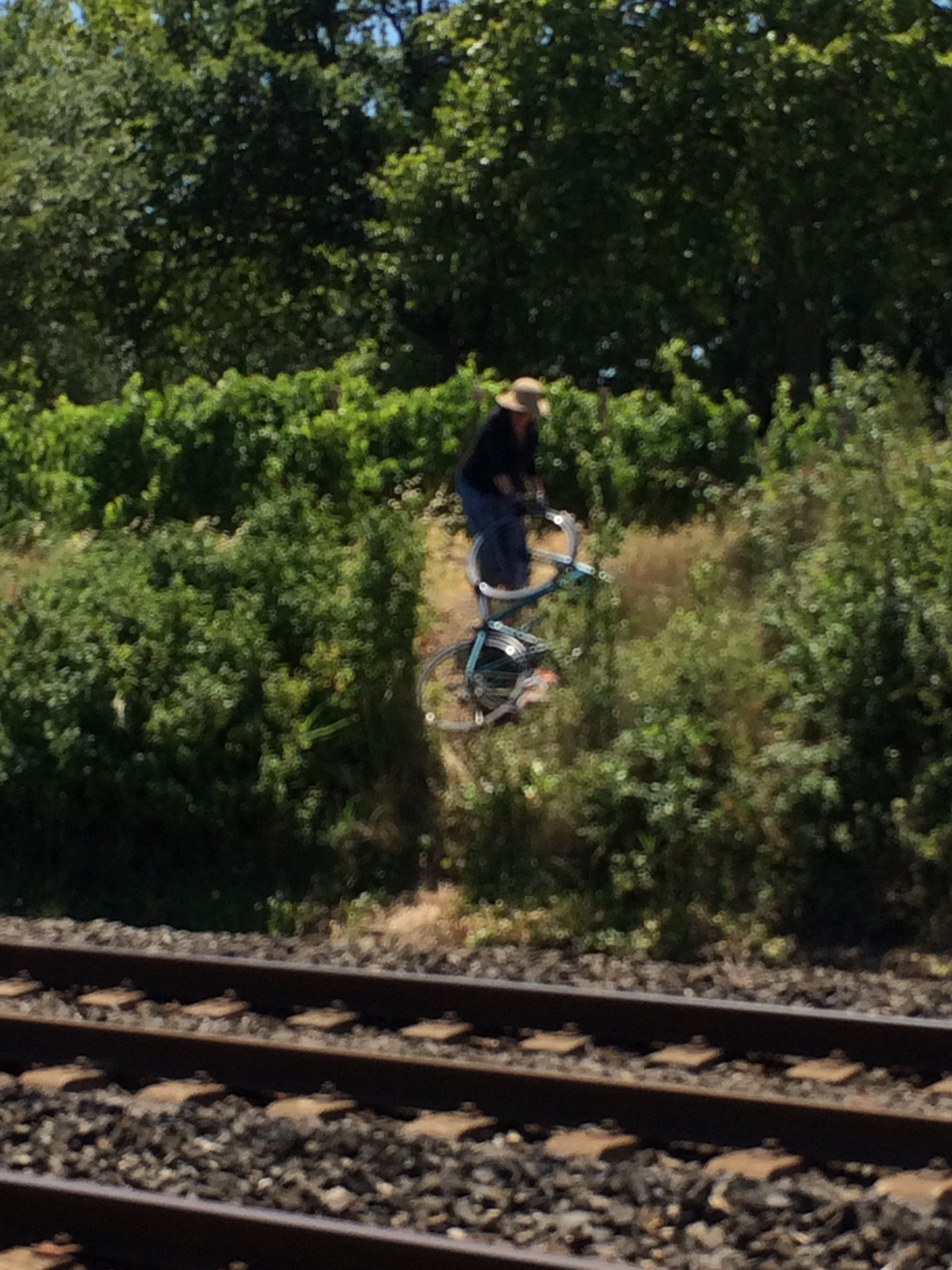
.. and over railway tracks!
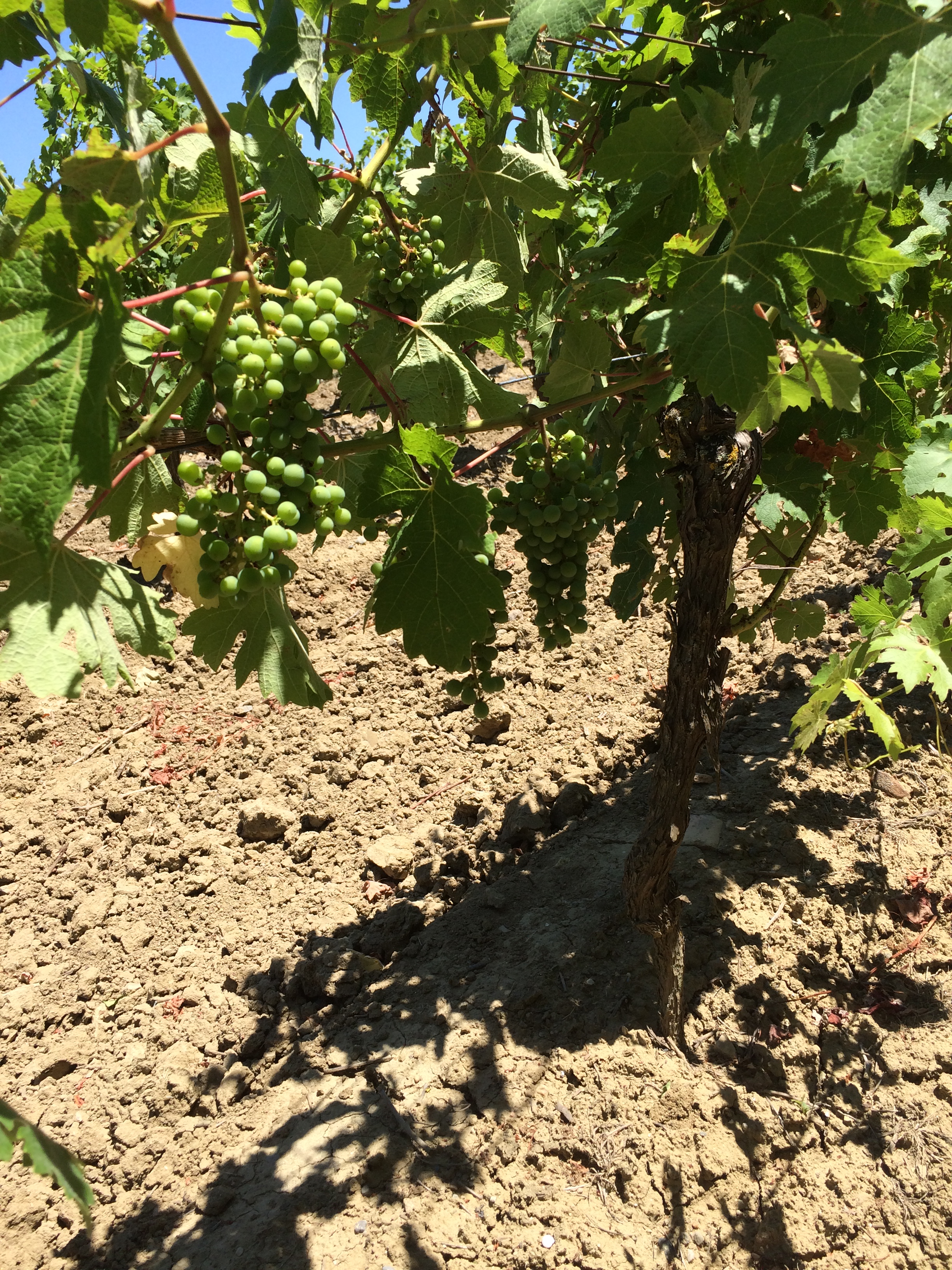
After a long drought, the soil was very dry and grapes not well-formed for the time of year. The sunflowers too were very small.
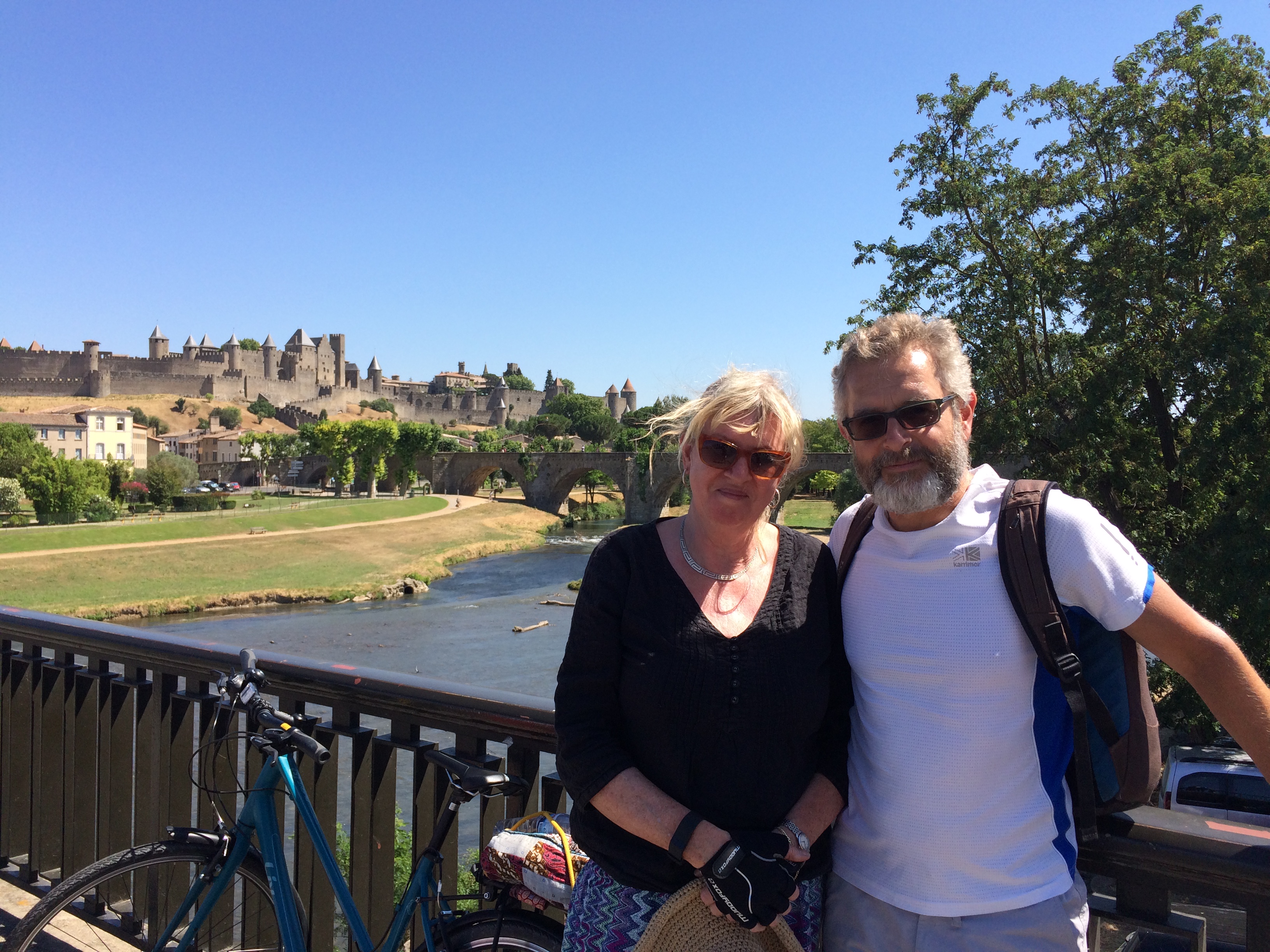
Finally, arrival in Carcassonne – had our photo taken by a friendly Chinese student.
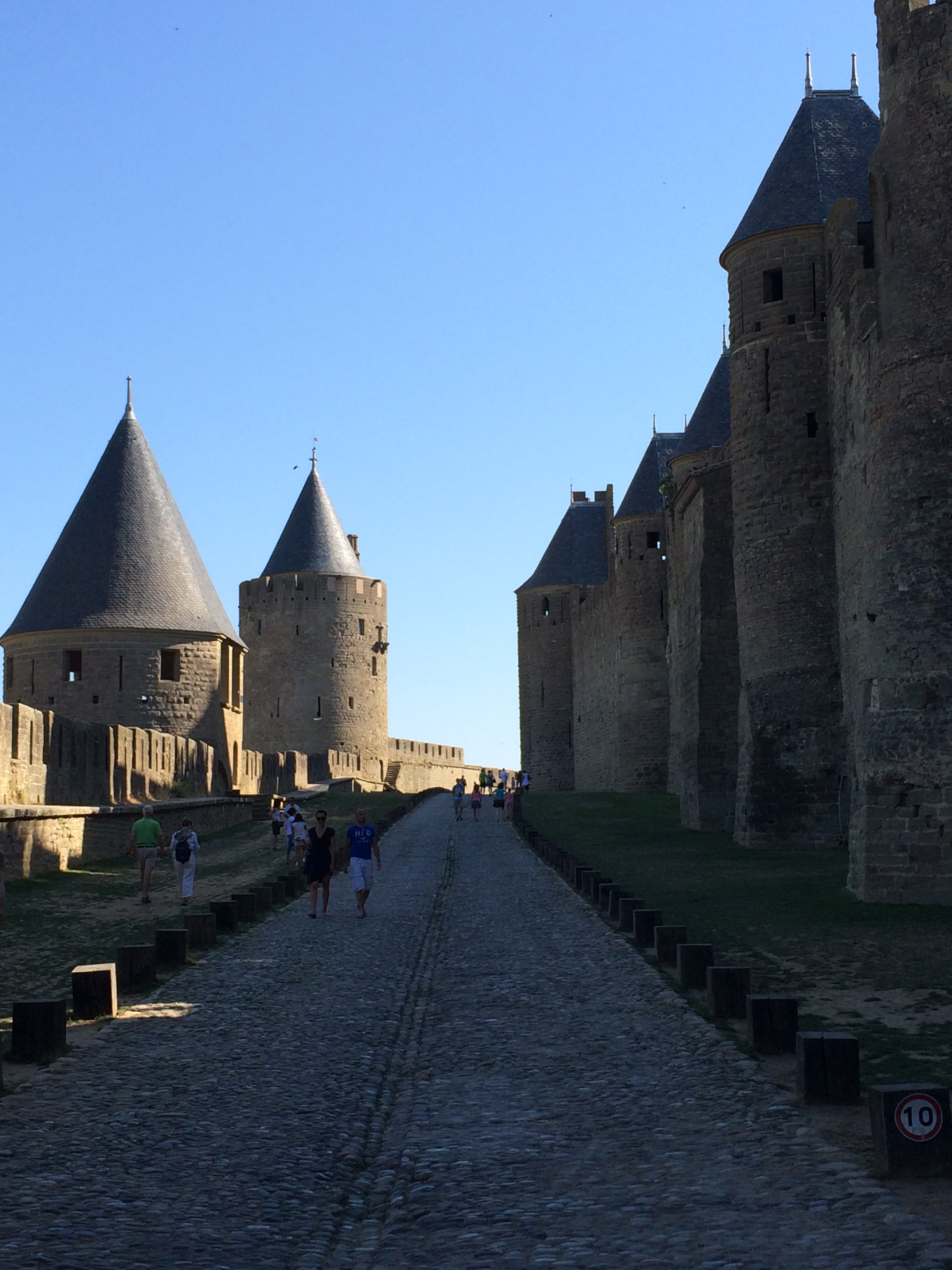
A view of the amazingly well-preserved Cite de Carcassonne from within the old walls.

Outside, a series of 9 sculptures by Guy Ferrer spelling the word “TOLERANCE”.
We also visited the four Cathar castles – Cabaret, Surdespine, la Tour Régine and Quertinheux – on a rocky spur above the village of Lastours. They were built at an altitude of 300m along a rock wall just 400m long by 50m wide. It was a long, hot climb and descent which played havoc with our knees. During the Albigensian crusade they were closely linked to the followers of Catharism with the Lords and villages surrounding the castles welcoming many Cathars. In fact Cabaret became the seat of the Cathar bishop of Carcassès. Eventually the villages and the castles were plundered and then rebuilt to become royal fortresses. Interestingly, in the 16th century, the castles provided sanctuary to French Huguenots (Protestants).

The village of Lastours above which lie the remnants of the four Cathar fortresses.
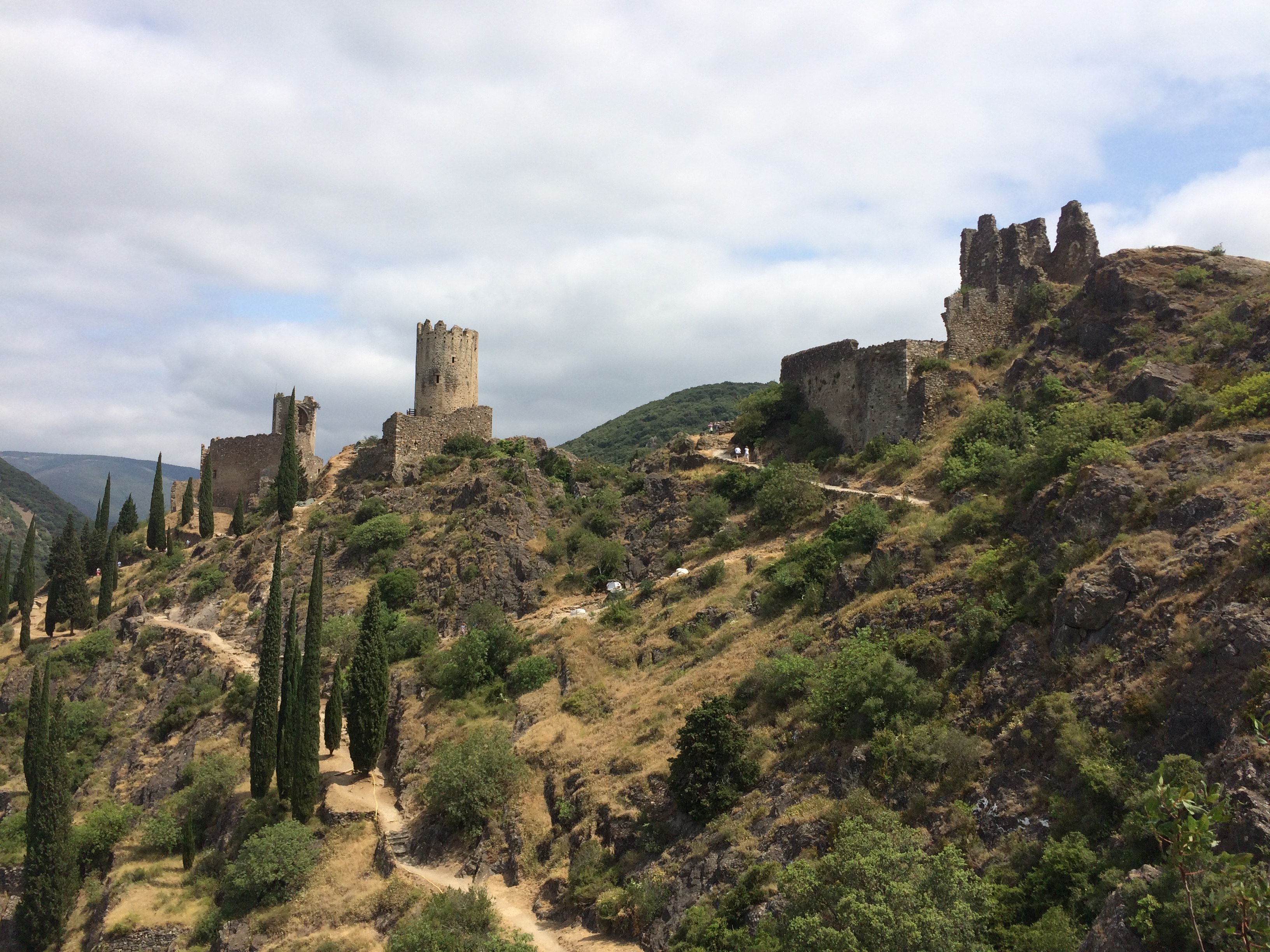
Three of the castles are visible here.

.. hard climb..
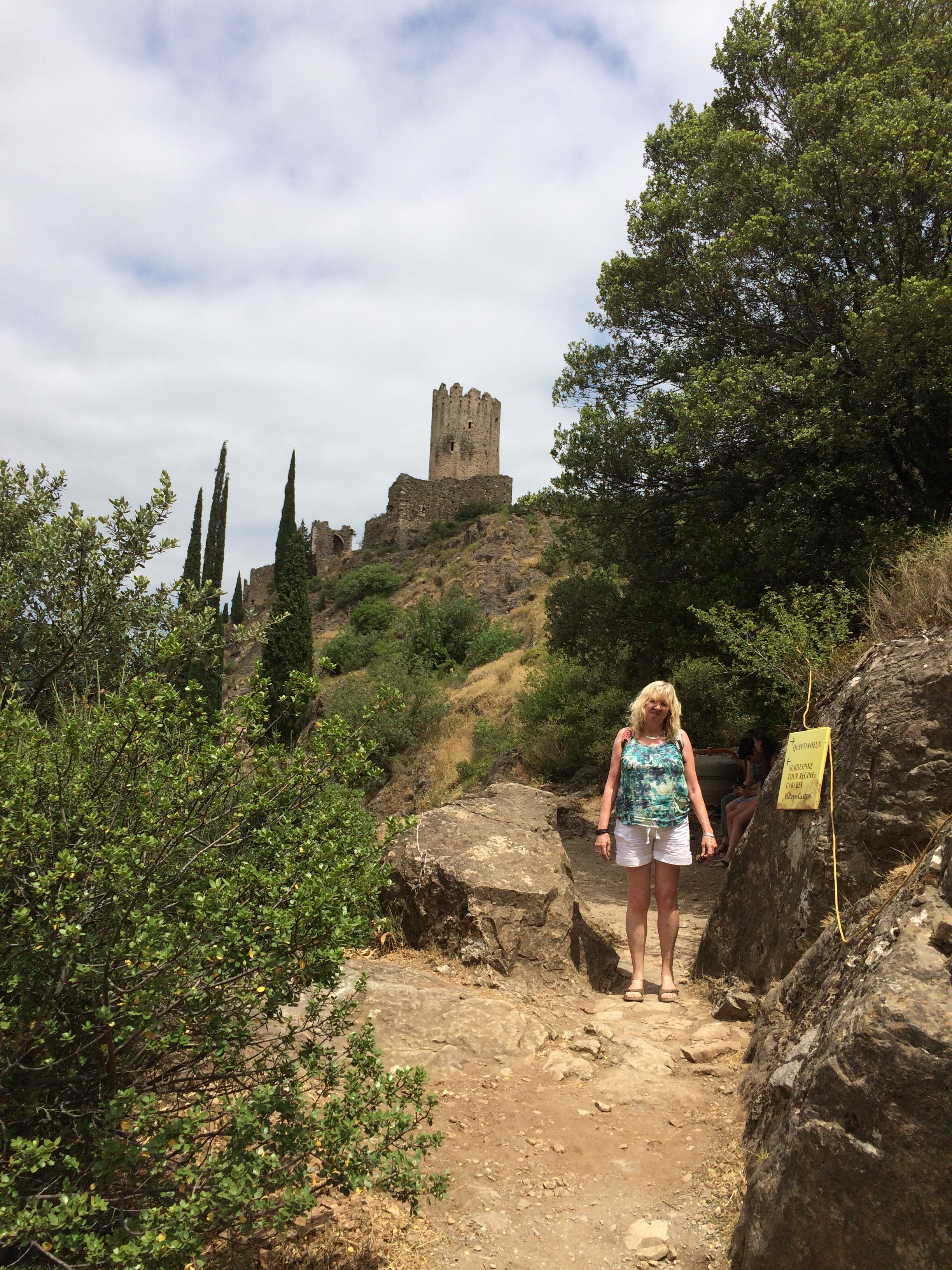
It was a long..

.. but we made it. Impossible to conceive though of what it must have been like for people living here.
During lunch, Flavio, forgetting that the Cathars had been all but exterminated in the thirteenth century, spied a chap in a long grey habit and mistook him for a Cathar Parfait. You can imagine his disappointment when going to speak to him that he turned out to be a monk from the order of St John. an order established following dissatisfaction from some quarters of the Catholic church to the second Vatican Council, which brought modernising reforms to the church. When asked what his take was on the Cathars, Brother Arnaud said they ‘had an idea of purity which was isolationist’ and that people looked at them now with a romantic eye but in the context of their own time they were in reality quite aggressive – “ils tuaient des gens” (they killed people too).
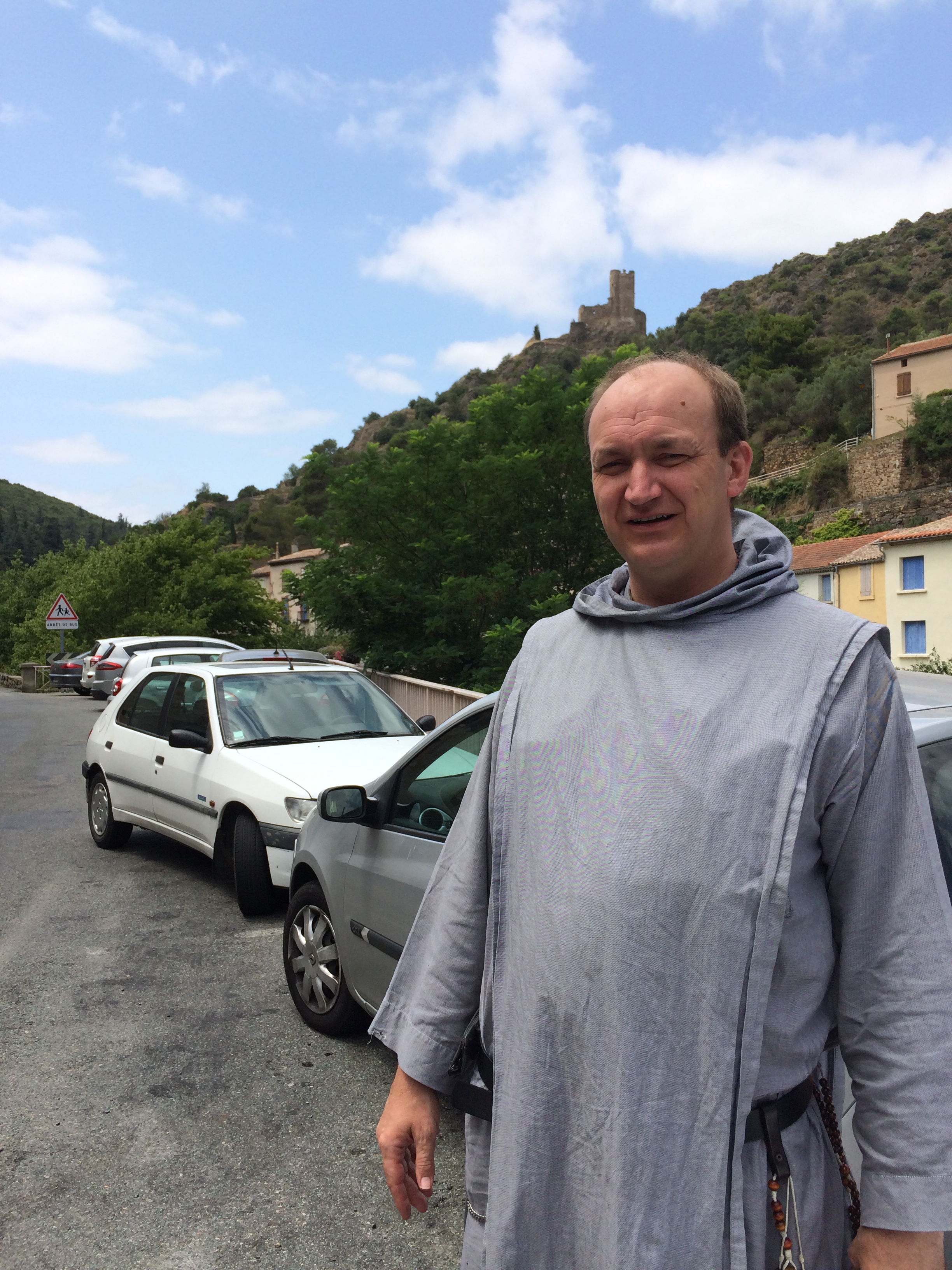
Brother Arnaud who Flavio comically mistook for a Cathar ‘Parfait’. “The Cathars had an idea of purity which isolated them”, he said.
We left the Languedoc with every intention of returning and exploring more of this hauntingly beautiful region.

Acres of vineyards in the Cabardes area (where Montolieu is situated).

View of Cite de Carcassonne from the old bridge.
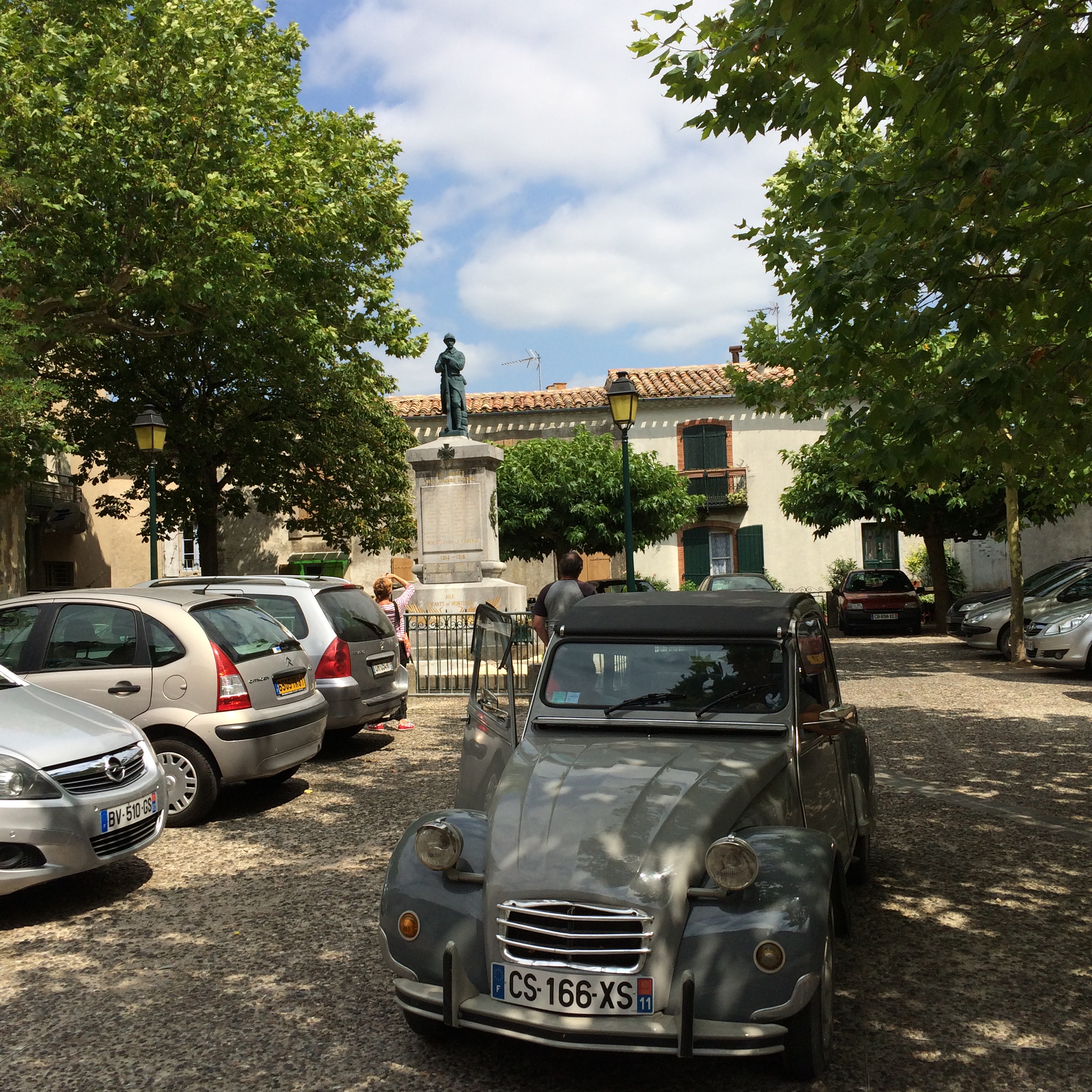
An old 2 CV in Montolieu.

Rue de la Mairie, Montolieu.
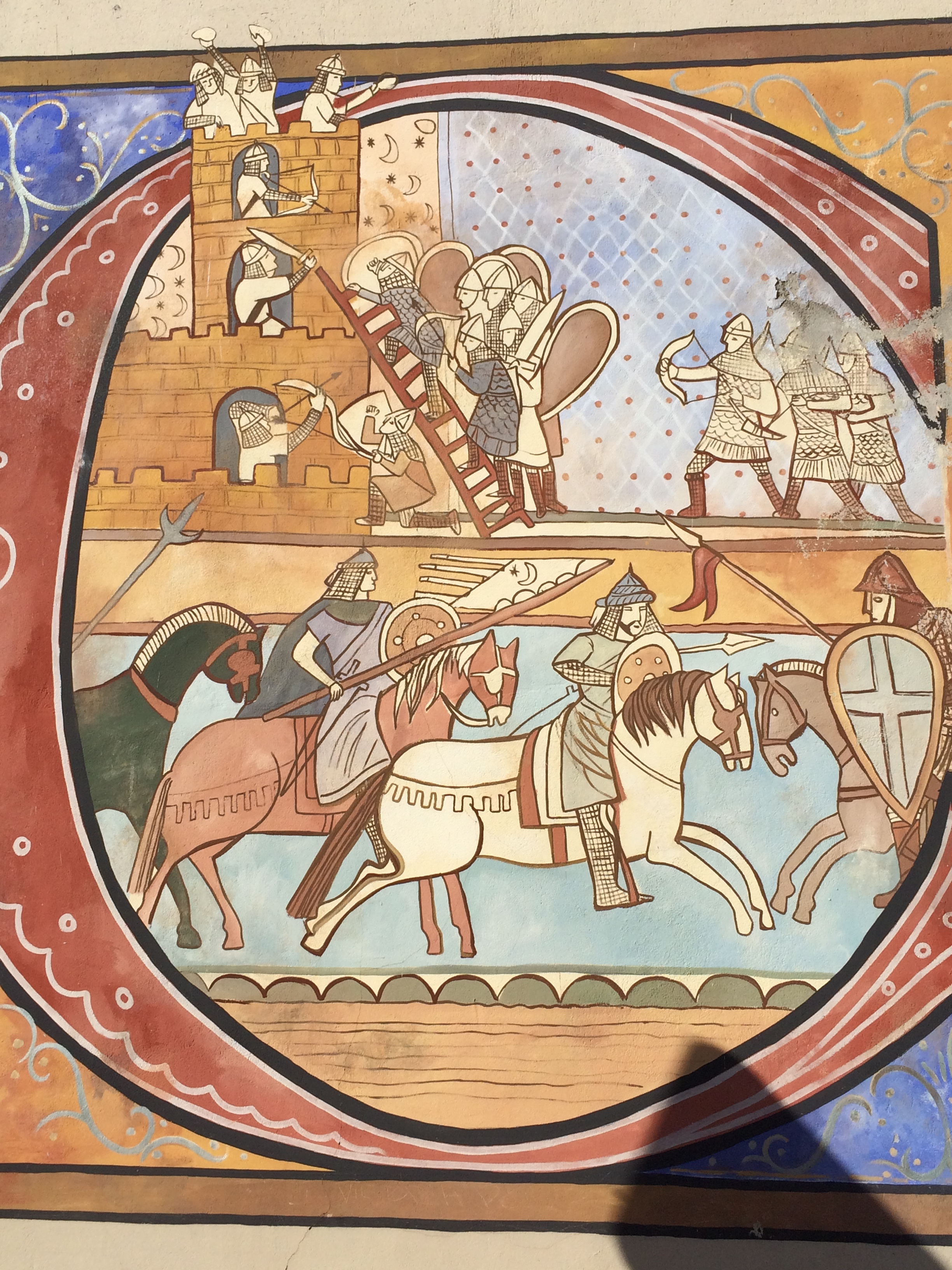
 Travels with our van
Lovely to see you both in Montolieu, caro/cara. My parents’ house is a few km away, in Alzonne. Oh, the irony of Brother Arnaud’s comment!
Btw… a QI-type correction… the crusade against the Cathars was not the only one against a Christian country. Remember the Bogomils! http://www.novinite.com/articles/128890/Bulgaria,+Bogomils+and+Italy
LikeLike
Hi Andy, really good to hear from you and thanks for following our blog! Judith (she’s the historian!) agrees about the Bogomils but wants to point out the Albigensian crusade could be deemed to be the only one in Europe against what was effectively a whole sovereign state at the time and was indiscriminate as it targeted not only ‘heretics’ but whoever gave them refuge. (It’s like the old debates at the King’s Head! :)) Amazing that your parents live there and that you know the area well. Hope you enjoyed your stay in Bilbao and that all is well with you generally. Best.
LikeLike
Nice one. All the history of the Crusade against the Cathars was new…we (Christians) have so much to answer for….Glad you’re taking it a bit easier…it sounds more fun.
LikeLike
Hi Bonnie
The Catholic Church was responsible for the Albigensian Crusade and still refer to the Cathars as ‘the Great Heresy’!!!!
LikeLike
Hi F &J,really enjoying the blog,sounds as if you are having a good time.love M
LikeLike
Hi Maigread, thanks for this and very good to hear from you. Very grateful for your support and encouragement. Badly needed as we’re quite a bit behind at the moment! Hope all very well with you and that we’ll be able to see you when we’re back. Lol F&J.
LikeLike